This post is also available in:


Looking for things to do in Katowice? The city is one hour from Kraków and two and a half hours from Warsaw by train. Most foreign visitors still know it only from flight listings – Wizz Air and Ryanair fly to Pyrzowice airport – or as a stop on the way to Kraków. Yet the city itself is worth more than an arrival and a quick transfer onwards.
Katowice is the capital of Upper Silesia: 279,000 residents live in the city and over two million in the metropolitan area, which grew together around it from about forty towns. The coal that built the city is no longer mined here. What it left behind are brick miners’ colonies, giant mine headframes in the middle of a park and interwar modernist architecture.
This guide is written for three situations: as a day trip from Kraków, as a weekend in the city for anyone who likes industrial heritage and twentieth-century architecture, and as a stopover on the way to Kraków or Warsaw. The excursions in this article stay within twenty minutes of the centre – anything further is better done from a base elsewhere.
Why Katowice Is Worth the Trip
Until the mid-19th century Katowice was a village. It only received town rights in 1865, and then grew so fast that it became known in interwar Poland as the “Polish Chicago” – coal, steel, banks and modernist architecture that was among the boldest in Europe at the time. The city belonged to Germany until 1922; after three Silesian Uprisings and a plebiscite it passed to Poland and became the capital of the autonomous Silesian Voivodeship, with its own parliament.
This double past is visible at every step. German brick workers’ houses stand next to interwar functionalist palaces, the socialist-era Spodek shaped like a flying saucer and glass towers from the last fifteen years. Don’t look for a historic old town with arcades.
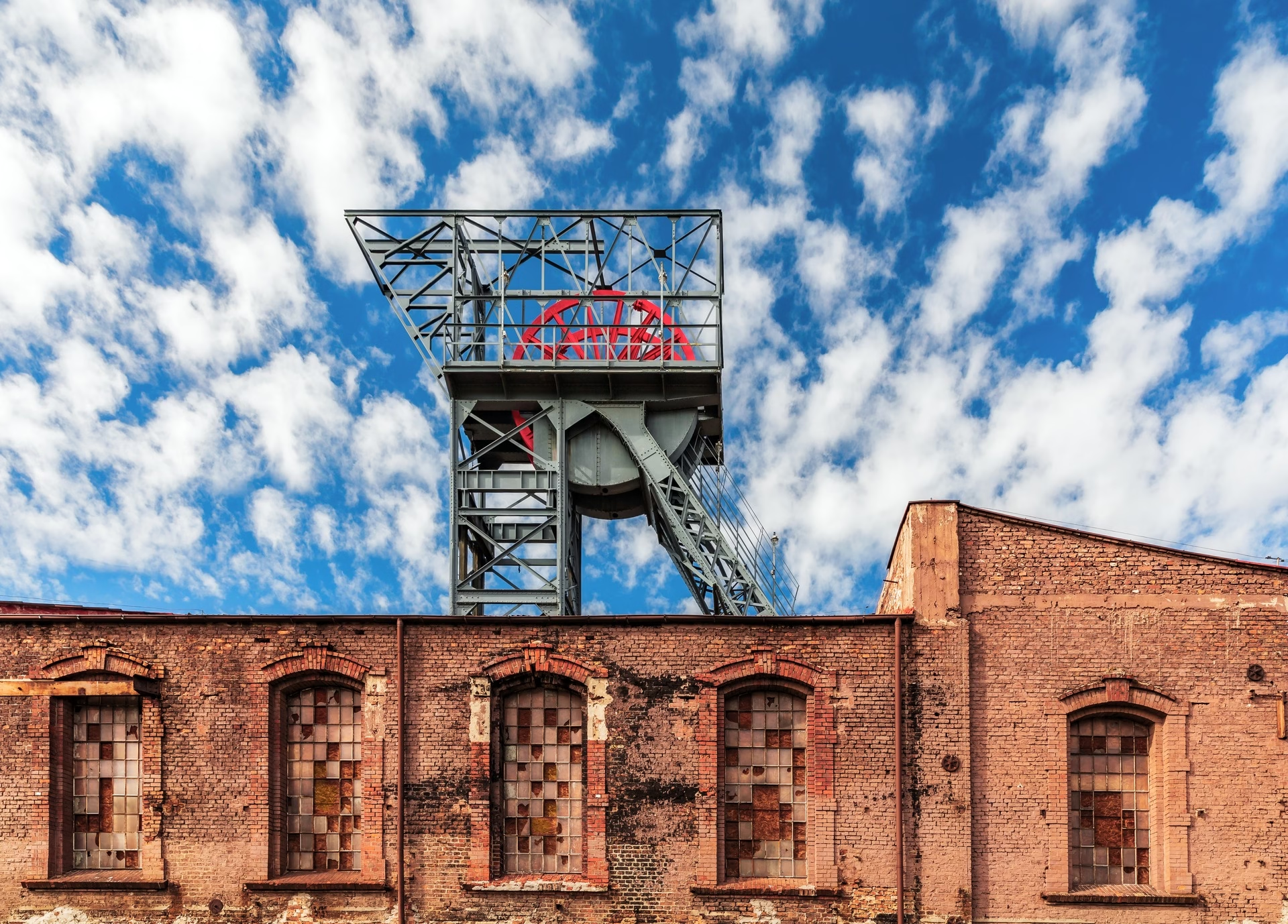
Three places will stay with you. Nikiszowiec, a brick miners’ colony from 1908–1918 protected by the state as a Monument of History. Strefa Kultury (the Culture Zone) on the site of the closed Katowice mine, home to the Silesian Museum with exhibitions underground, a congress centre with a lawn on its roof and the concert hall of the Polish National Radio Symphony Orchestra. And the city centre itself, with the Cathedral of Christ the King, the largest in Poland.
A practical bonus: Katowice is the transport hub of the whole metropolitan area. From the main station trains run to Zabrze in twenty minutes, to Kraków in an hour and to Warsaw in two and a half. You can get around the city and the metropolis by tram – you don’t need a car.
How Long to Stay and How to Plan Your Days
The city itself needs one day; the city plus surroundings calls for a weekend. If you add the underground attractions in Zabrze, you’ll fill three days – and don’t plan more than that in Katowice.
One day
Morning in the centre: the Rynek (main square), Mariacka Street, Christ the King Cathedral and the interwar skyscrapers around Żwirki i Wigury Street. Afternoon at Strefa Kultury – the Silesian Museum, including the climb up the viewing tower, takes two and a half to three and a half hours. Dinner on Mariacka.
If you have only one day in Katowice and must choose, sacrifice the centre, not Nikiszowiec. You won’t find a brick colony like this elsewhere in Poland; a square with cafés you will.
Two days
Day one: the centre and Strefa Kultury. Day two: Nikiszowiec with the museum of a miner’s flat, then Galeria Szyb Wilson in neighbouring Janów and an afternoon stroll in Kościuszko Park or the Three Ponds Valley (Dolina Trzech Stawów). You’re still in the city, and you’re still not riding the same tram.
Three days
The third day belongs to Zabrze: the Guido Mine and the underground boat trip in the Queen Louise Adit (Sztolnia Królowej Luizy) will take the whole day, and it’s the strongest experience in the entire metropolis. Families with children may prefer to swap Zabrze for Chorzów and the Silesian Park.
Don’t look for a fourth day in Katowice. The city is not an ideal base for exploring Silesia – most other destinations lie in such directions that you end up travelling back through Katowice anyway. If you have more time, continue to Kraków or Warsaw and keep Katowice as one night on the way.
The ideal time to arrive is a weekday. The centre is livelier at weekends, but on Sundays Polish shops are closed and many museums keep different opening hours than on weekdays.
Top 10 Things to See and Do in Katowice
A quick overview of what in the city and its immediate surroundings is worth your time:
- Nikiszowiec – a brick miners’ colony protected as a Monument of History
- Silesian Museum (Muzeum Śląskie) – exhibitions underground in a former mine, free entry on Tuesdays
- Spodek – an arena from 1971, an icon of Polish modernism
- NOSPR – the concert hall of the Polish National Radio Symphony Orchestra
- Cathedral of Christ the King – the largest cathedral in Poland
- Galeria Szyb Wilson – the largest private gallery in Poland, in a former mine building
- Mariacka Street – a pedestrian zone with cafés and bars, the city’s evening centre
- Kościuszko Park – a 15th-century wooden church and a parachute tower
- Guido Mine in Zabrze – a descent to 320 metres, twenty minutes by train
- Queen Louise Adit in Zabrze – the longest underground boat trip in Europe
Strefa Kultury: A Museum in a Mine, a Concert Hall and Spodek
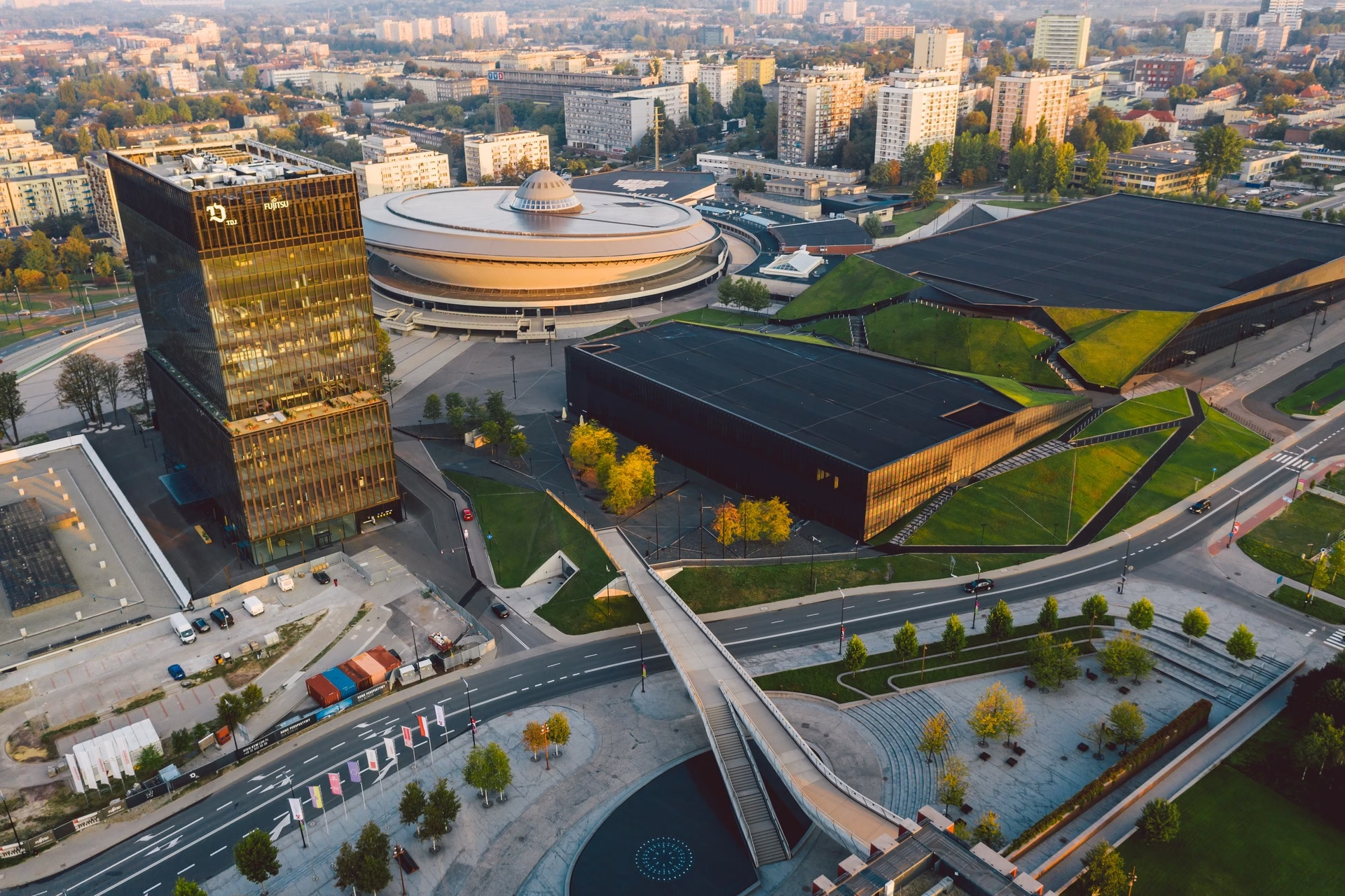
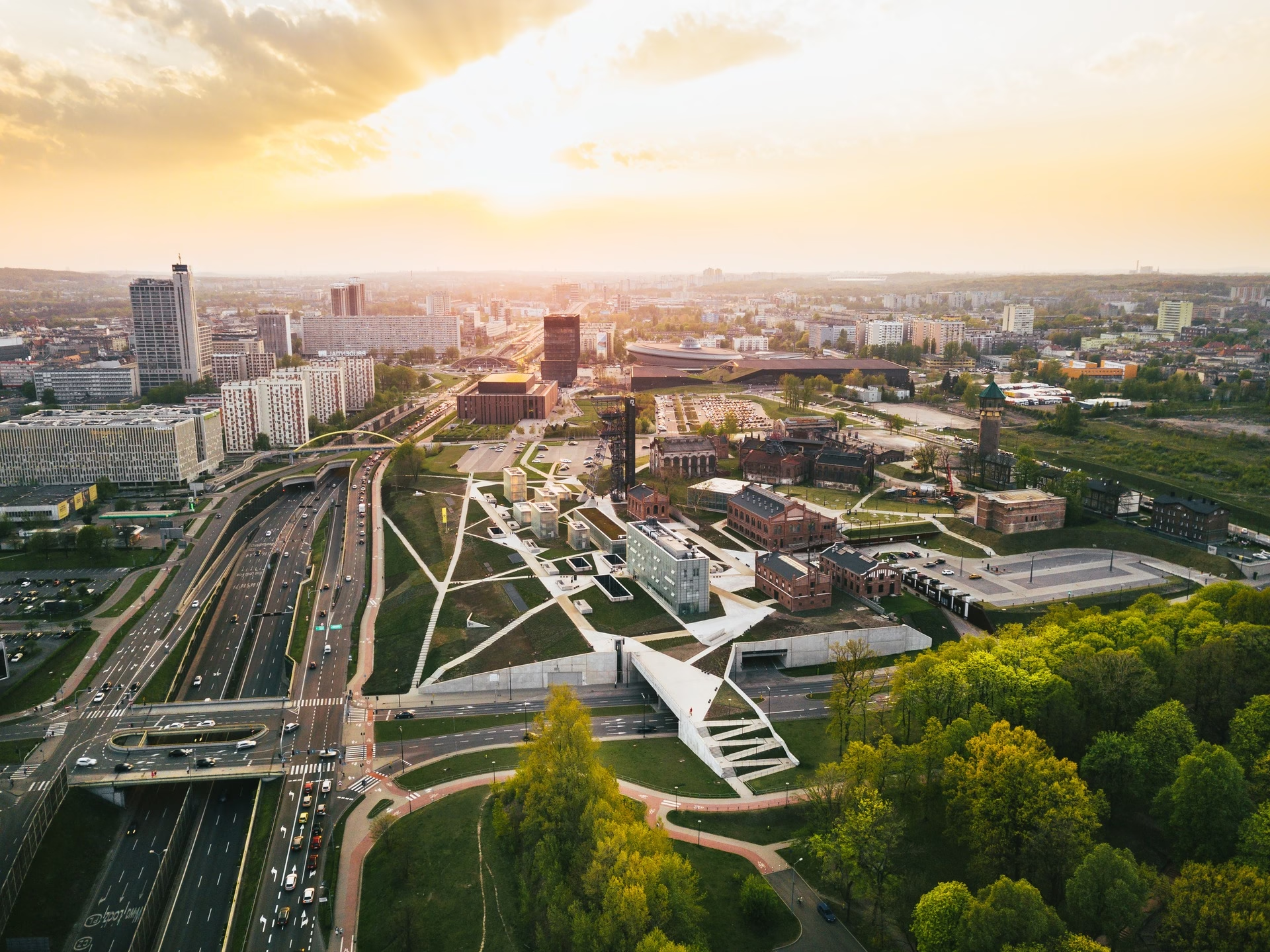
Until 1999 the Katowice coal mine was still working on the northern edge of the centre. Today four buildings stand on its site, collectively known as Strefa Kultury – a museum, a concert hall, a congress centre and the Spodek arena. The investment exceeded a billion zlotys and it is the most striking thing Katowice has built in the last twenty years.
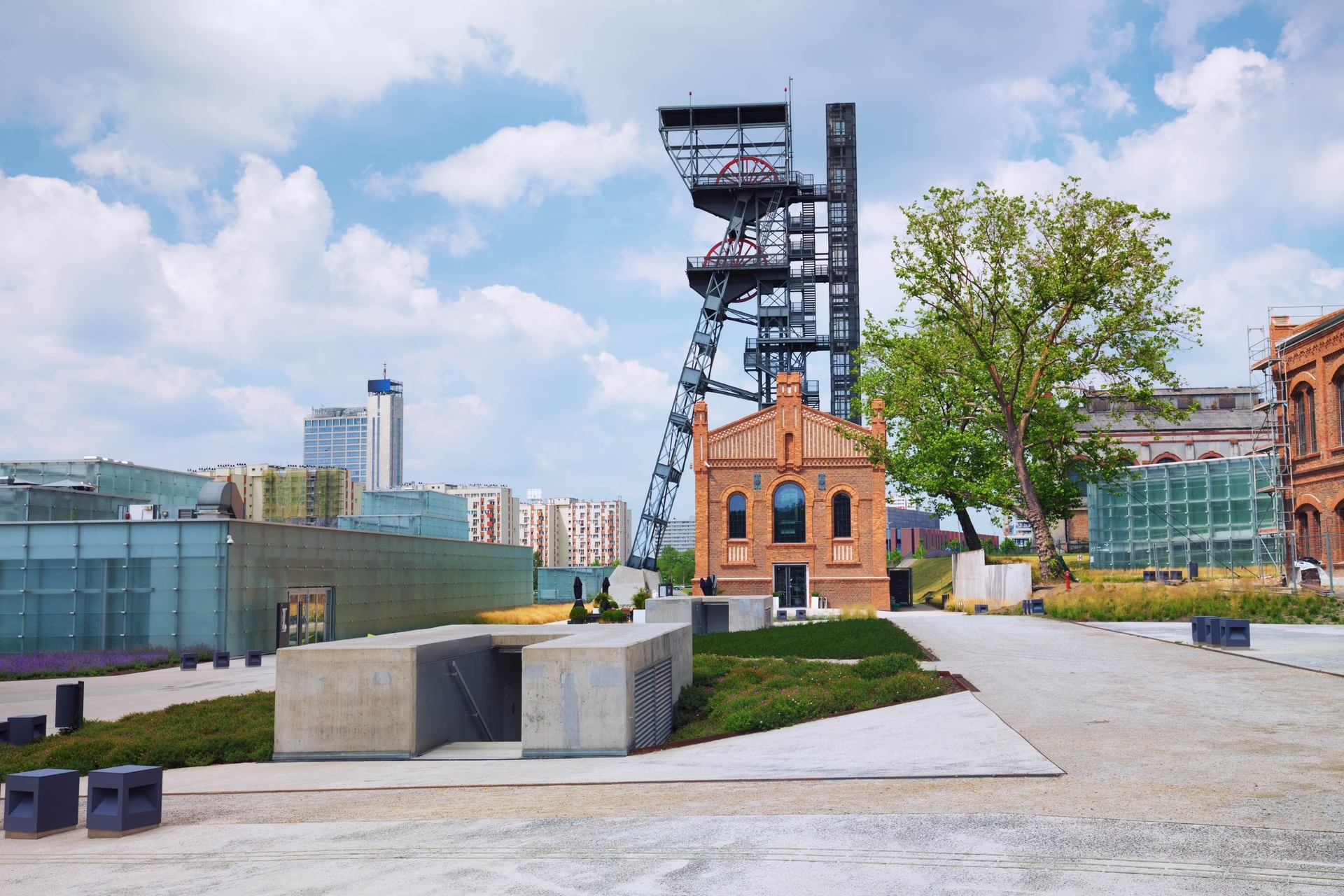
The area is open to walk through and is worth exploring even without a ticket. The original mine headframes and brick mine buildings were left standing between the new ones, so you can always see where you are.
Silesian Museum (Muzeum Śląskie)
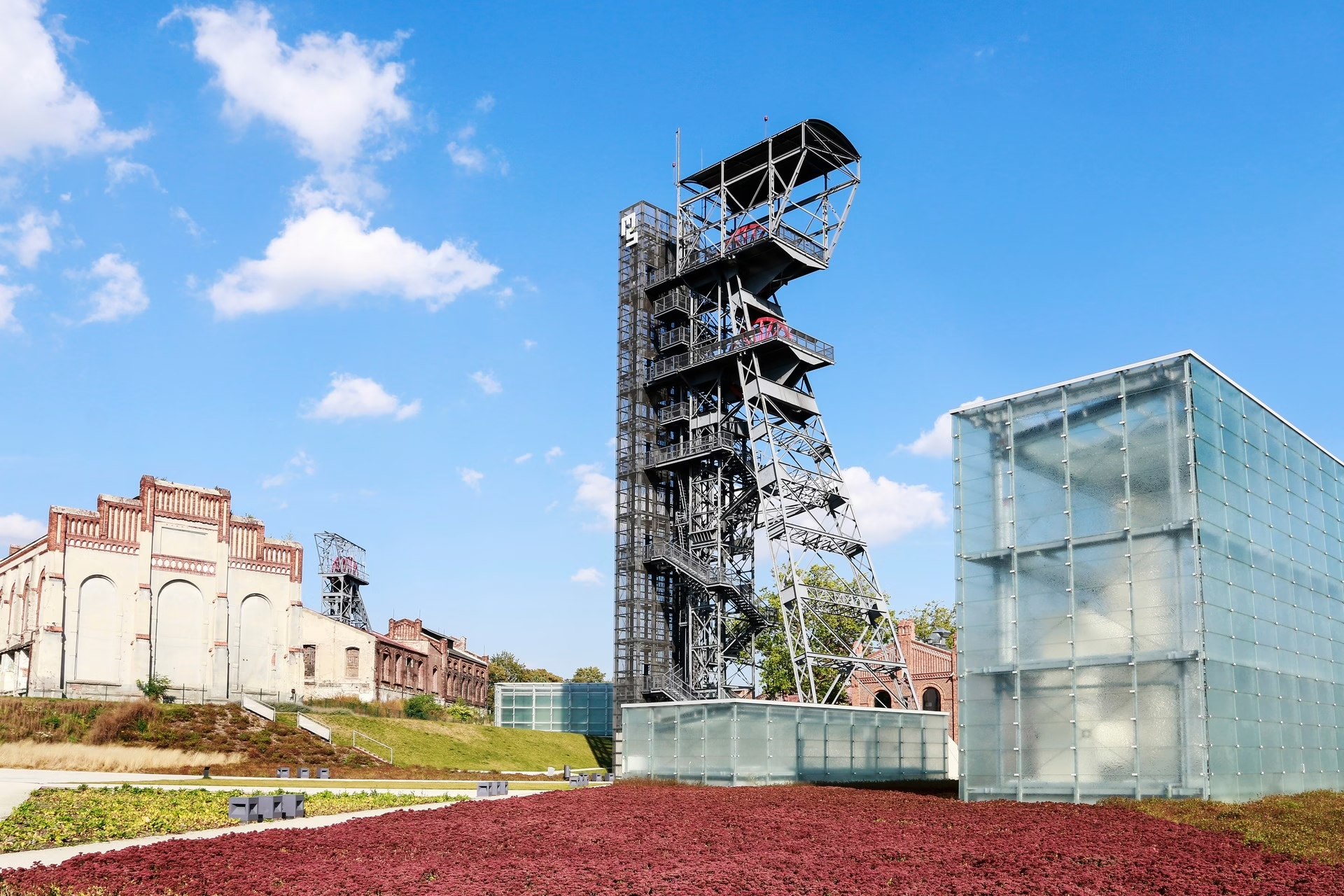
The city’s main museum and the most interesting building in the complex. The exhibitions lie almost fifteen metres underground, and at the surface you see only glass prisms that let daylight fall into the depths – that’s the design of the Graz studio Riegler Riewe, which won the competition, and the museum opened in 2015.
The permanent exhibition on the history of Upper Silesia is the main reason to come – it explains why people speak Silesian here, why the border between Germany and Poland ran exactly here and what happened in the region in the twentieth century. There is also a gallery of Polish painting and the Centre of Polish Scenography with a collection of ten thousand exhibits.
- Address: ul. T. Dobrowolskiego 1
- Open: Tuesday–Sunday 10:00–20:00, closed on Mondays
- Admission: 29 zł, reduced 19 zł, family 69 zł
- Entry is free for everyone on Tuesdays
- Viewing tower: 7 zł, reduced 5 zł, tickets only at the box office
- Allow two and a half to three and a half hours
The viewing tower is a former winding tower of the Warszawa II shaft with a glazed cabin at the top. For seven zlotys it’s the cheapest view of Katowice you’ll find in the city.
NOSPR – home of the Polish National Radio Symphony Orchestra
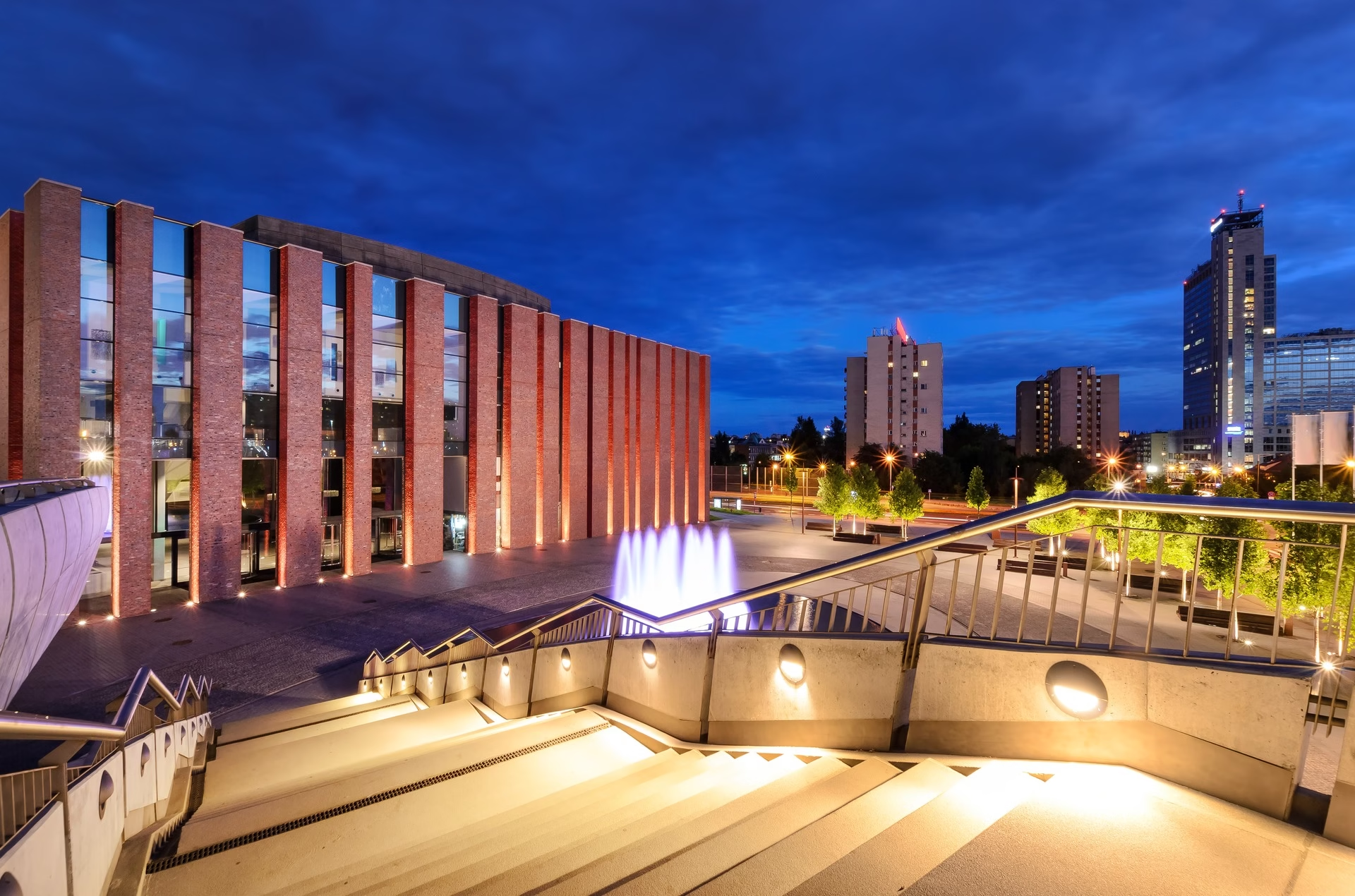
The home of the Narodowa Orkiestra Symfoniczna Polskiego Radia (NOSPR) opened on 1 October 2014, designed by Katowice architect Tomasz Konior. The brick block built around an inner courtyard hides a hall for 1,666 people, whose acoustics were tuned by the Japanese Yasuhisa Toyota – the same man who worked on Disney Hall in Los Angeles and the Elbphilharmonie in Hamburg.
Concert tickets start at around 33 zł for chamber programmes, subscription concerts in the main hall start at around seventy, and for visiting stars you can go past 300 zł. The programme is usually published for the whole season in advance, so you can plan a weekend in Katowice around a specific concert.
You can get inside even without a concert. A guided tour lasts 75 minutes, costs 20 zł (reduced 15 zł) and takes you backstage and into the hall. Capacity is limited, so buy tickets in advance.
International Congress Centre (Międzynarodowe Centrum Kongresowe)
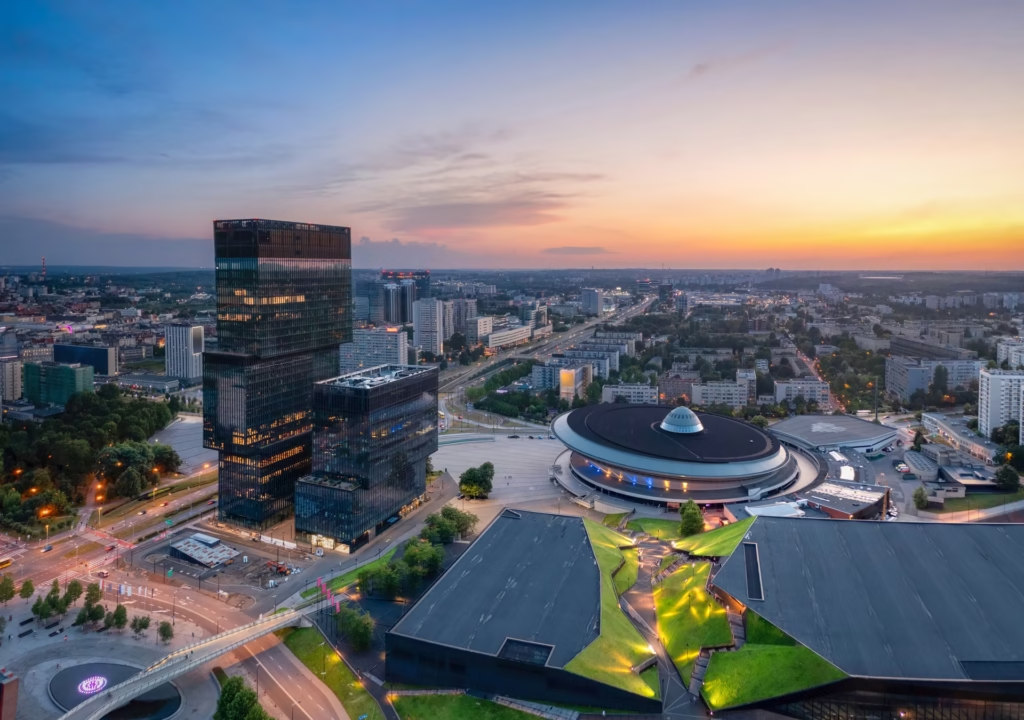
The congress centre from 2015 by the Warsaw studio JEMS Architekci is a black block with a green valley running right through it – a grass-covered roof shaped like a ravine, which you can walk across from one side of the building to the other. From the ridge there are views of Spodek and the centre.
Spodek
The flying-saucer arena is the most photographed building in the city. It was built in 1964–1971 to a design by Maciej Gintowt and Maciej Krasiński, holds 11,036 people, and since it opened on 8 May 1971 everyone from Deep Purple to Metallica to Sting has played here. The structure, suspended on steel cables, was at the edge of what was technically possible in the year it was completed.
You can get inside outside of events, but only with a guide. The Kosmiczny spacer (Cosmic Walk) tour lasts about a hundred minutes, goes backstage and under the roof of the arena and costs around 20 zł. It doesn’t run daily – dates are released in batches and tend to sell out in advance, so check the arena’s website before you plan your day.
Nikiszowiec: The Miners’ Colony That Is Reason Enough to Visit Katowice
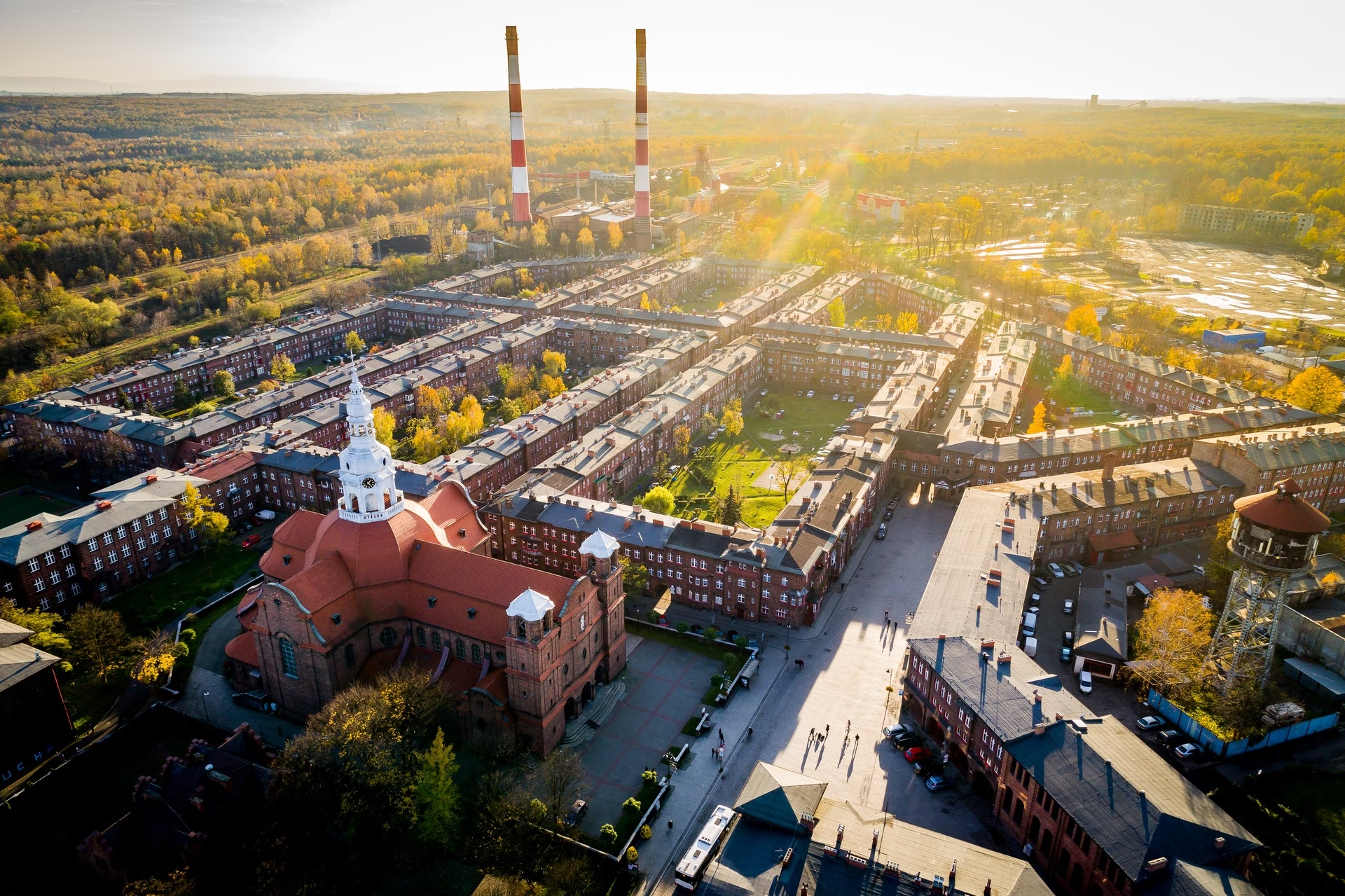
The brick district on the eastern edge of the city is the strongest thing Katowice has. Nikiszowiec was built in 1908–1918 by the coal company Georg von Giesches Erben for miners of the Giesche mine and designed by the cousins Emil and Georg Zillmann from Berlin. Since 2011 the entire colony has been protected as a Monument of History (Pomnik Historii), the highest category of heritage protection in Poland.
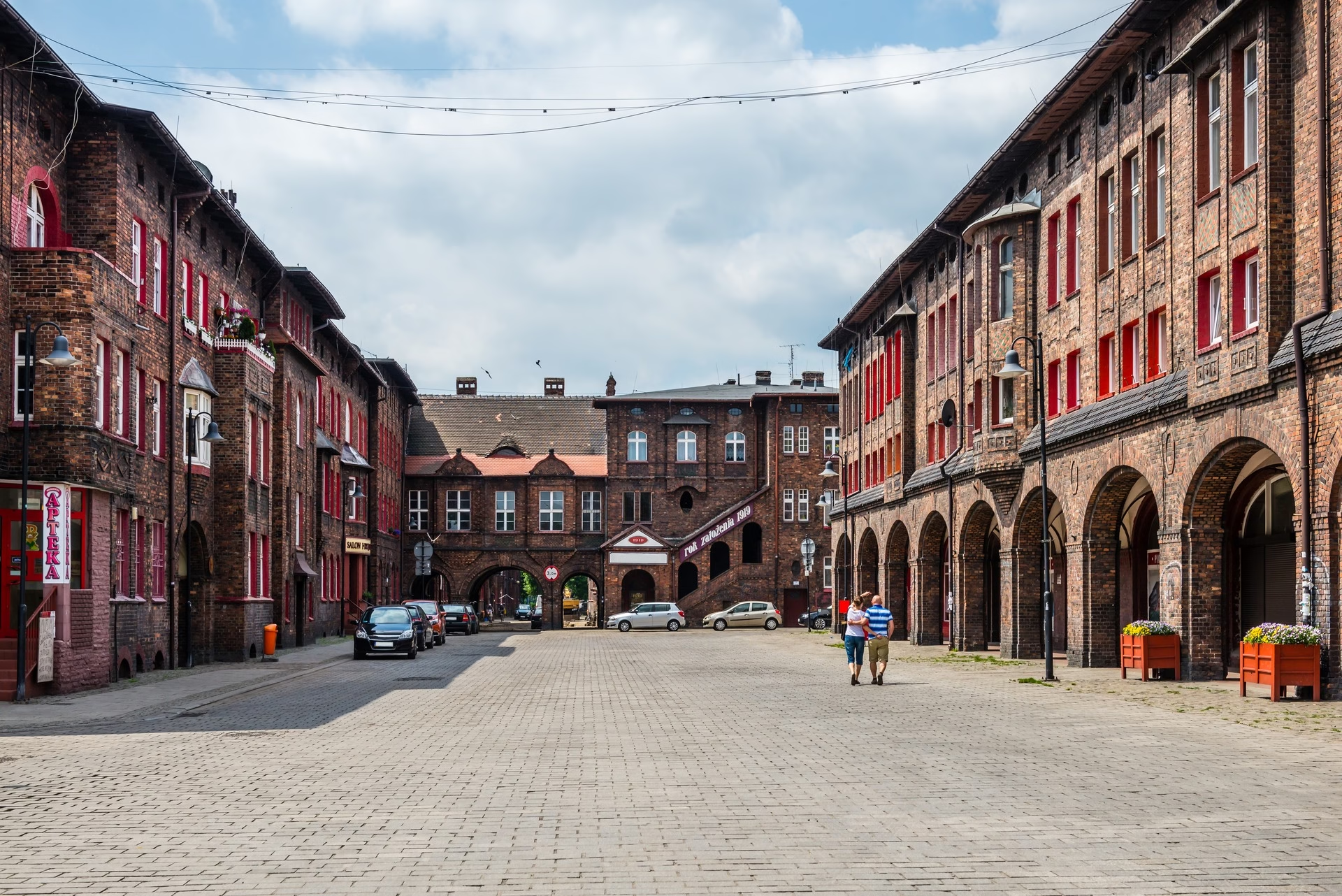
Nine enclosed blocks of unplastered red brick are connected by gateway passages and inner courtyards. These are no slum tenements: the buildings have three storeys, oriel windows, niches and façades that look more like middle-class urban housing. The colony was self-sufficient – it had its own shops, bakery, laundry, school, baths and church.
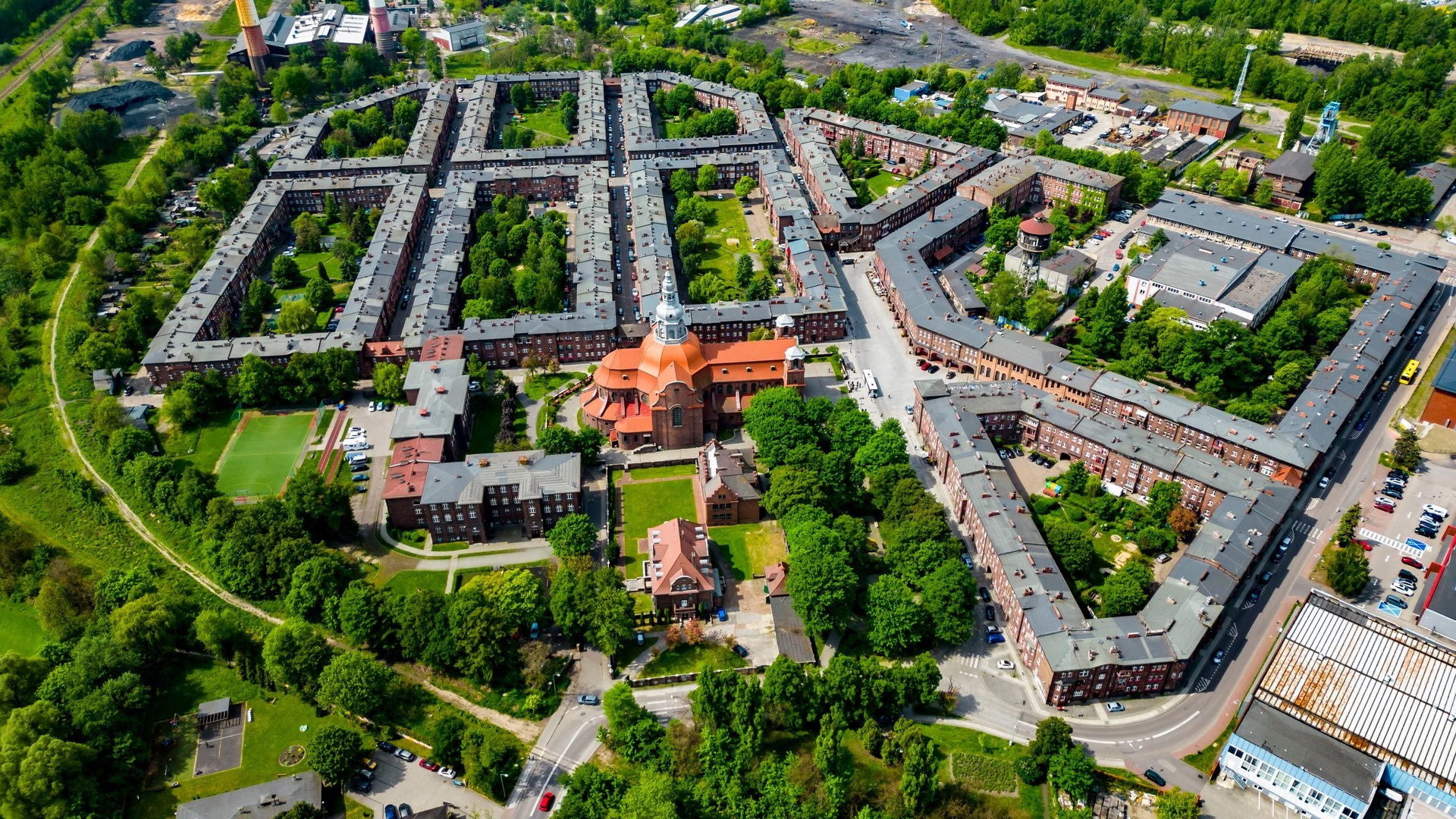
People still live here, and you can feel it as you walk. You pass through their courtyards and in front of their windows, so the same restraint applies as in any inhabited neighbourhood. It is, however, so photogenic that people come here to take pictures from all over Europe.
What to See in Nikiszowiec
- Plac Wyzwolenia – the central square of the colony with a church and cafés, the only open space in an otherwise tightly packed layout
- St Anne’s Church – the neo-baroque brick landmark of the square, built 1914–1927 by the same architects as the whole colony
- Katowice History Museum, Ethnology Department (Muzeum Historii Katowic, ul. Rymarska 4) – a furnished miner’s flat, “U nos w doma na Nikiszu”, and an exhibition on the colony’s laundries and hygiene
- Inner courtyards and passages – the main thing you’ll take away from here is not any particular building, but the walk between them
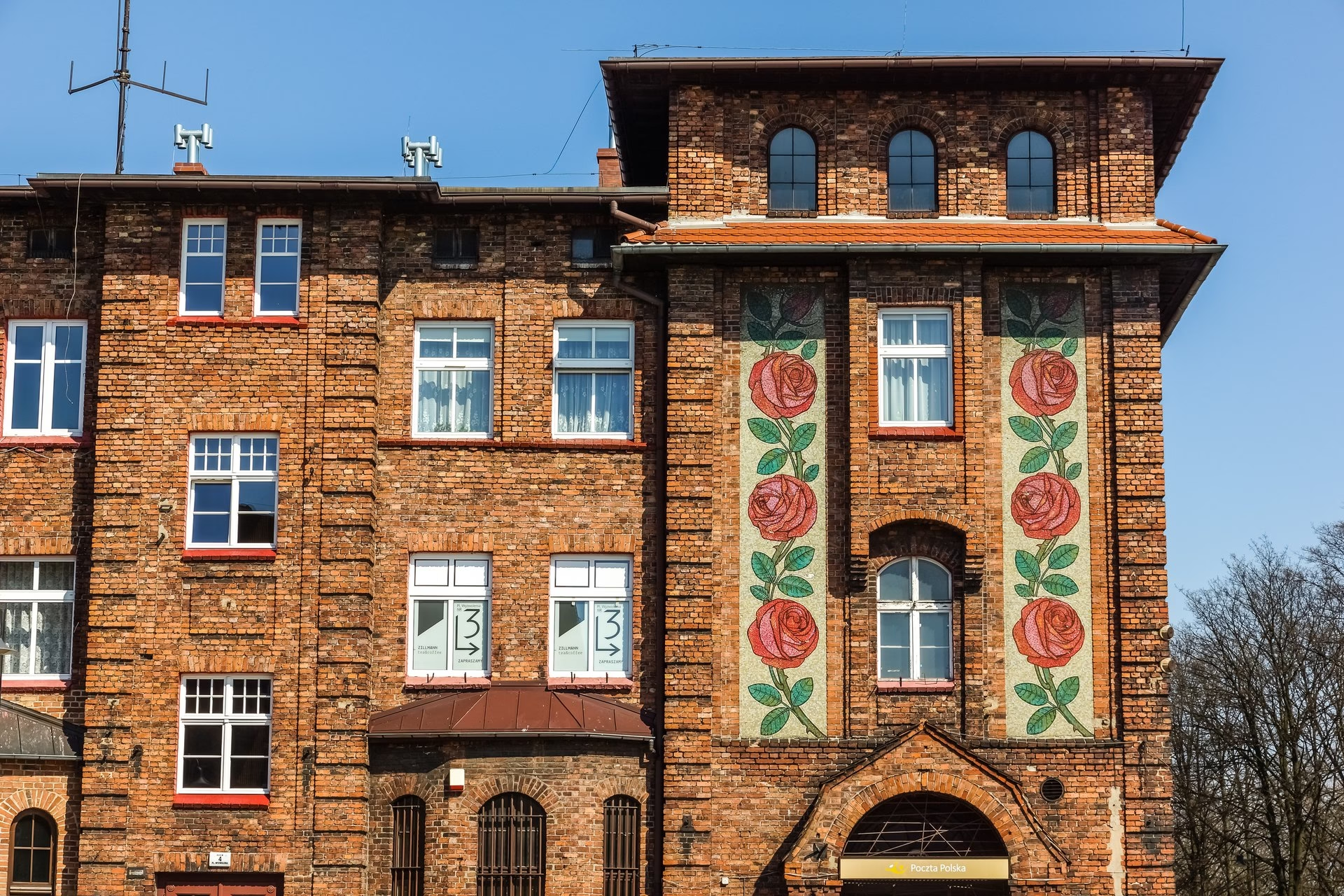
The museum is open Tuesday to Friday 10:00–18:00, Saturday until 16:00 and Sunday 11:00–15:00; it is closed on Mondays. Standalone admission is 15 zł, a combined ticket with the main museum building in the centre costs 25 zł and is valid for seven days. Entry is free on Tuesdays.
Galeria Szyb Wilson
Ten minutes from Nikiszowiec, in neighbouring Janów, the buildings of the former Wilson shaft house the largest private gallery in Poland – over 2,500 square metres of exhibition space in premises from 1826, designed by the same Zillmanns. The gallery was founded in 2001 by the Bros couple and, besides exhibitions, hosts concerts and festivals.
It’s a logical continuation of a visit to Nikiszowiec, because both share the same story: the coal ended, the buildings stayed and someone found a new purpose for them.
Giszowiec
Nikiszowiec’s older sibling lies three kilometres to the south. Giszowiec was built in 1907–1910 by the same architects but on a completely different principle – as a garden city. Instead of blocks, low houses with gardens, spread out in the forest, with a square in the middle. It turned out so expensive that for Nikiszowiec the company switched to a more economical, dense layout.
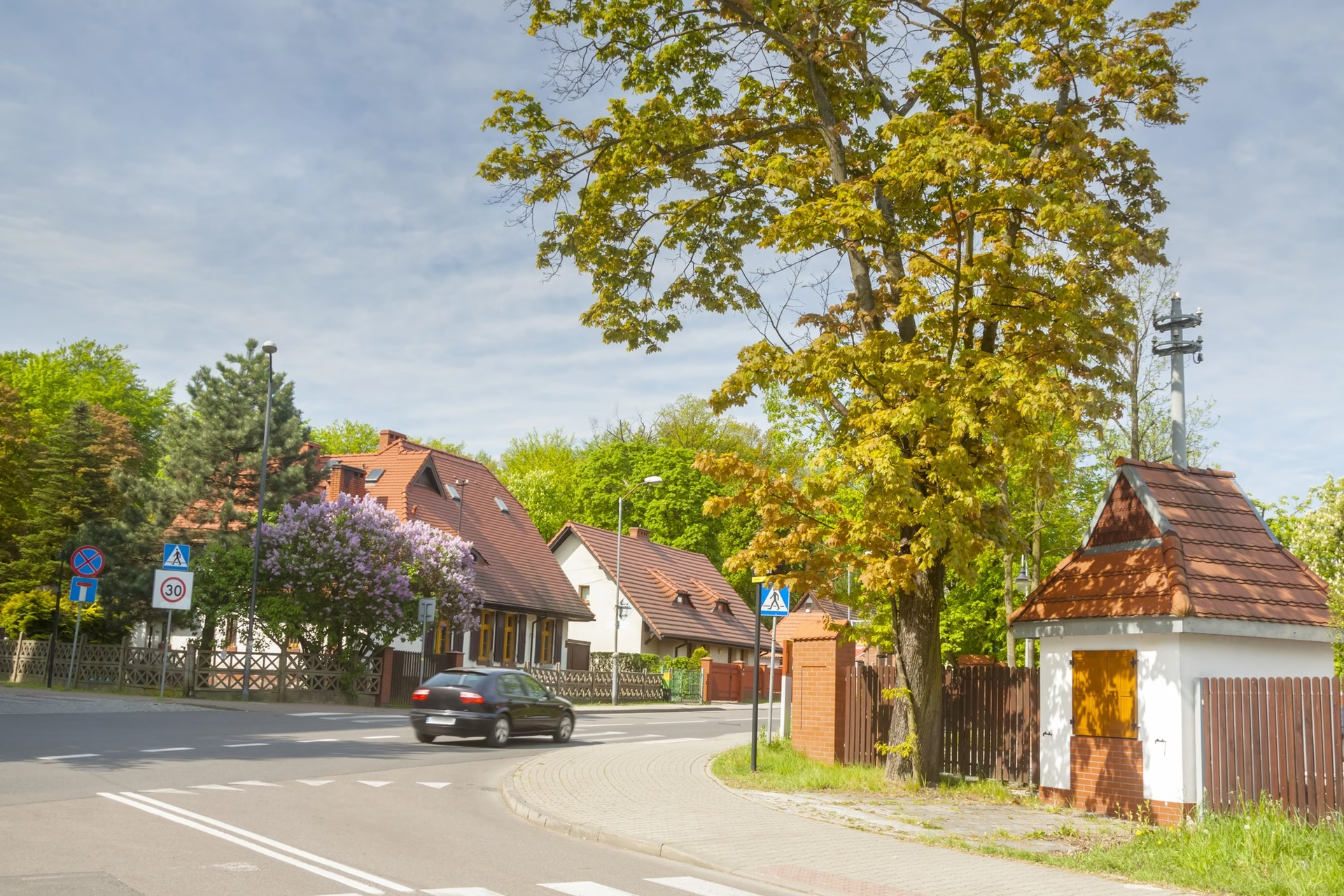
Part of the original colony vanished under a socialist-era housing estate, but the surviving part is worth a detour if you’re interested in urban planning. If you only have two days in Katowice, stick with Nikiszowiec.
How to Get to Nikiszowiec
From the centre, bus number 930 leaves from the bus station and the journey takes roughly 25 minutes. You can also go by tram, but with a change, so the bus is simpler. By car allow fifteen minutes and park around the square – cars don’t enter the colony. If you’d like to see Nikiszowiec with commentary and cover several districts at once, there is a bike tour of Katowice and Nikiszowiec.
What to See in the Centre of Katowice
You can walk around the centre in two to three hours. Anyone arriving with expectations of a Polish Kraków will be disappointed. Anyone coming for the twentieth century will be busy.
The Rynek and Mariacka Street
The main square went through a six-year reconstruction completed in 2016. The cars and the tram loop are gone; greenery, benches, a playground and flower pavilions were added. The Rawa river, around which the city was founded, flows culverted beneath the paving and only a decorative trace recalls it on the surface. It’s a place to sit and to host events – Christmas markets stand here in December, and in summer there’s live music.
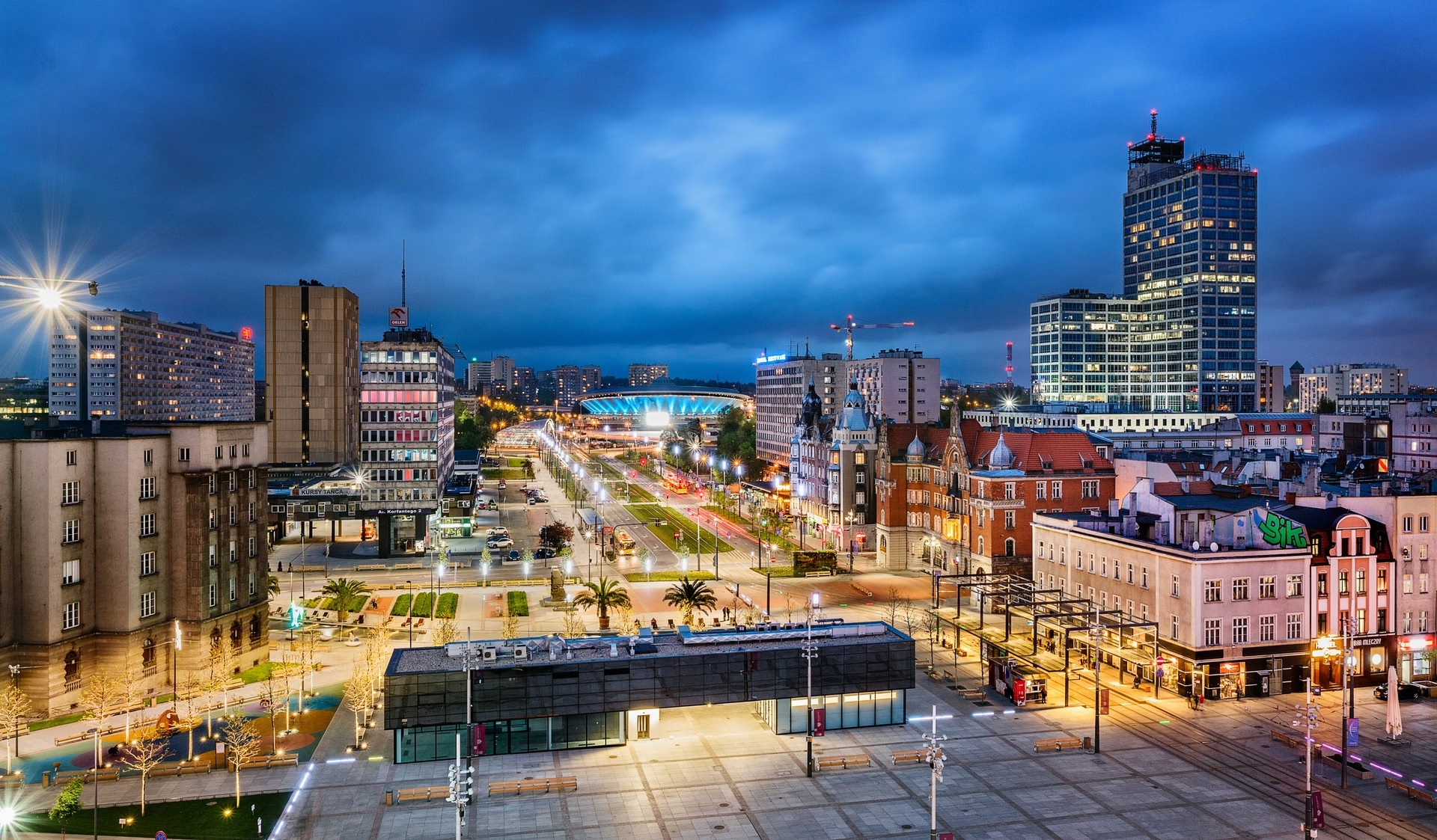
In the evening the city retreats two streets further, to Mariacka Street. This pedestrian zone lined with townhouses is the densest concentration of cafés, pubs and bars in the city and is packed from Thursday to Saturday. On a weekday, by contrast, it’s a pleasant street for coffee.
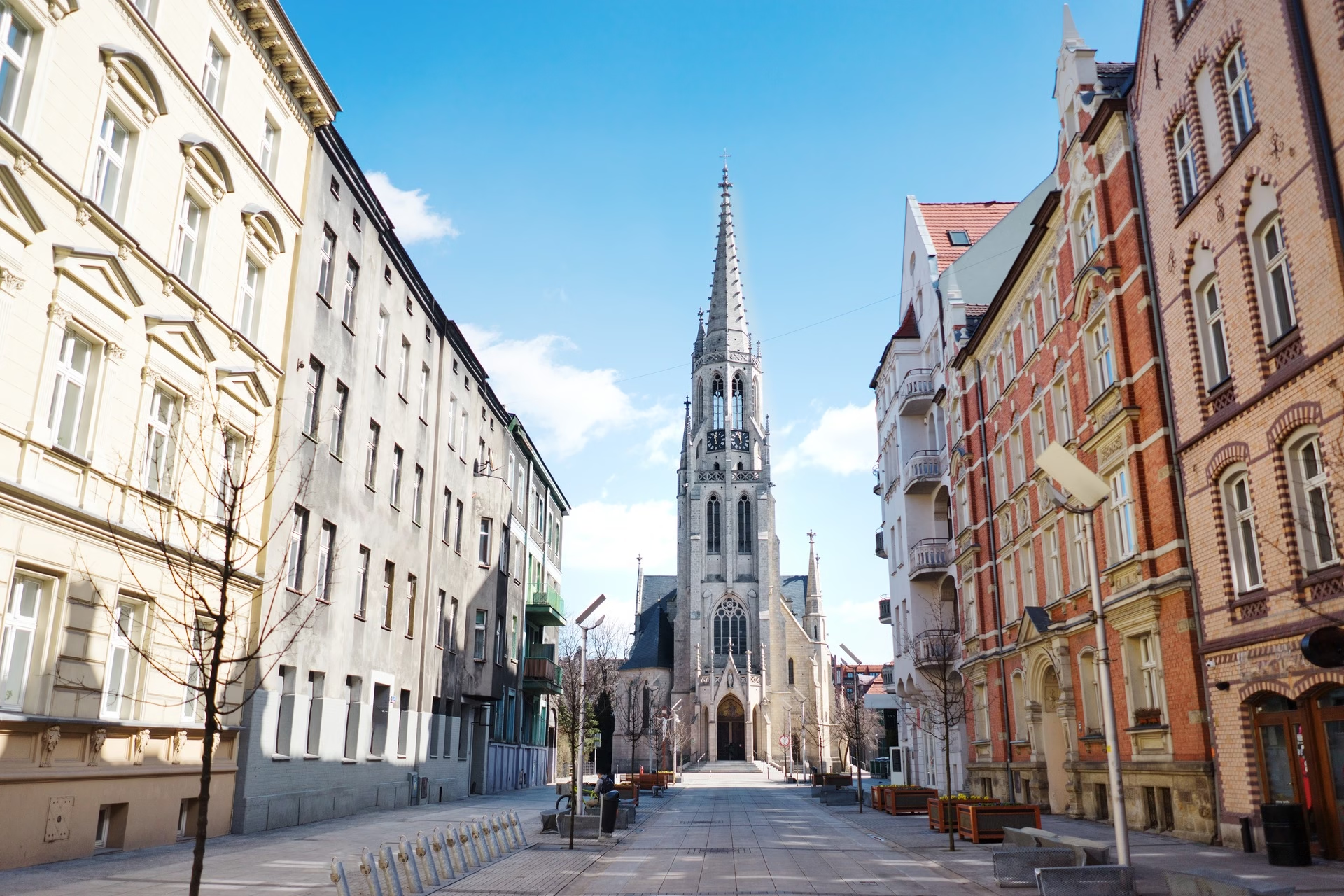
It ends at the neo-Gothic Mariacki church from 1862–1870 by the Wrocław architect Alexis Langer – the oldest surviving church in the centre and a reminder that a town stood here before coal blew it up to its present size.
Cathedral of Christ the King
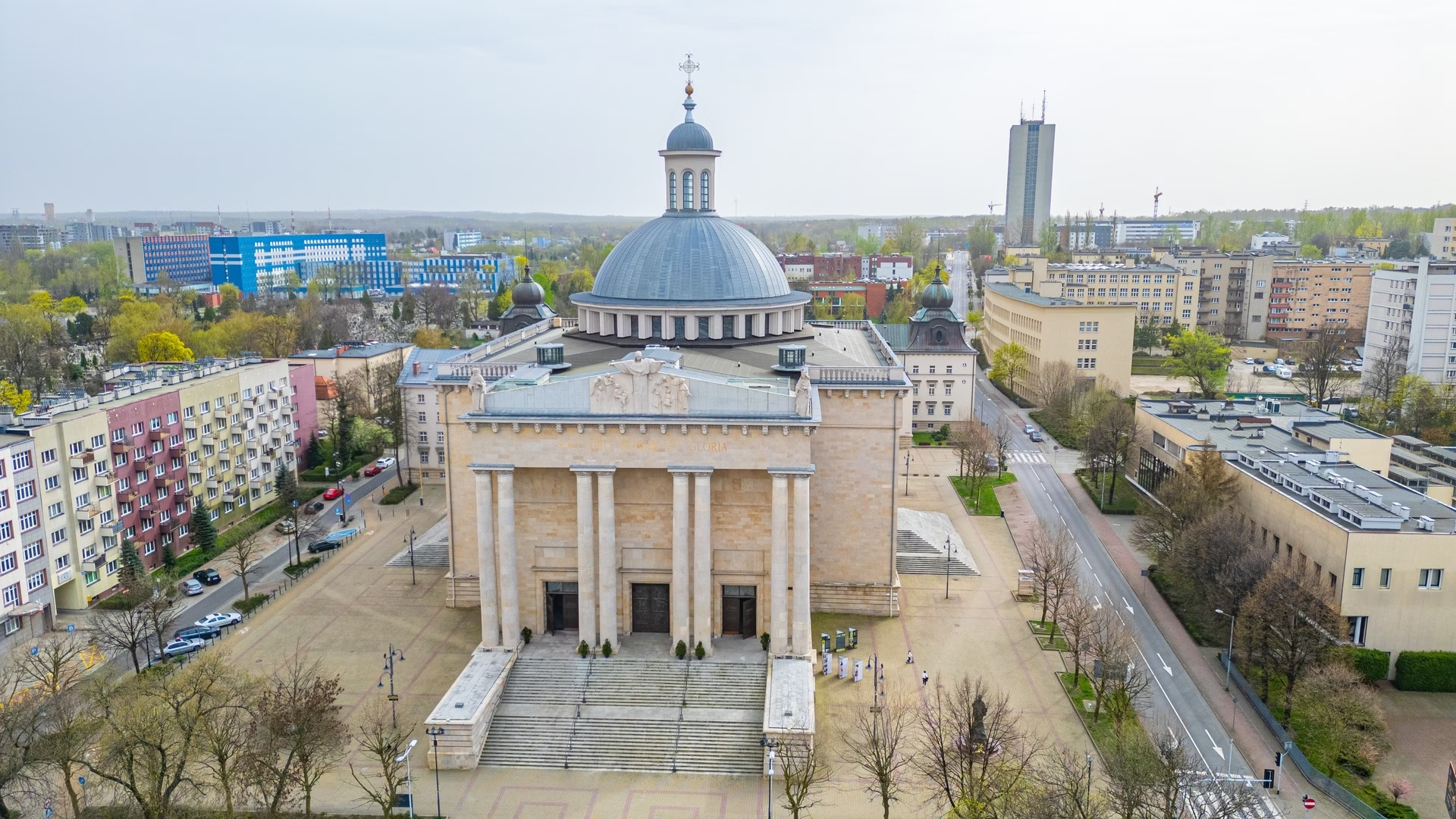
The largest cathedral in Poland and the only one built there in the twentieth century. Construction began in 1927 and it was consecrated only in 1955 – in between came the war and then the communist authorities, who made completion conditional on lowering the dome by 38 metres compared with the design. Hence the squat shape that doesn’t quite suit the building.
The sandstone church measures 101 metres long and 50 wide. Inside there is light, calm and almost no tourists. It stands on Plac Sejmu Śląskiego, next to the Silesian Sejm building – the interwar parliament of the autonomous voivodeship, itself a fine example of what Katowice could afford at the time.
Interwar Skyscrapers
Around Żwirki i Wigury Street stands the district people come to Katowice to see for modernism. The dominant building is the Drapacz Chmur (Skyscraper) from 1929–1934, a reinforced-concrete frame by engineer Stefan Bryła and architect Tadeusz Kozłowski, which was briefly the tallest building in Poland. Around it are several blocks of functionalist apartment buildings from the same era.
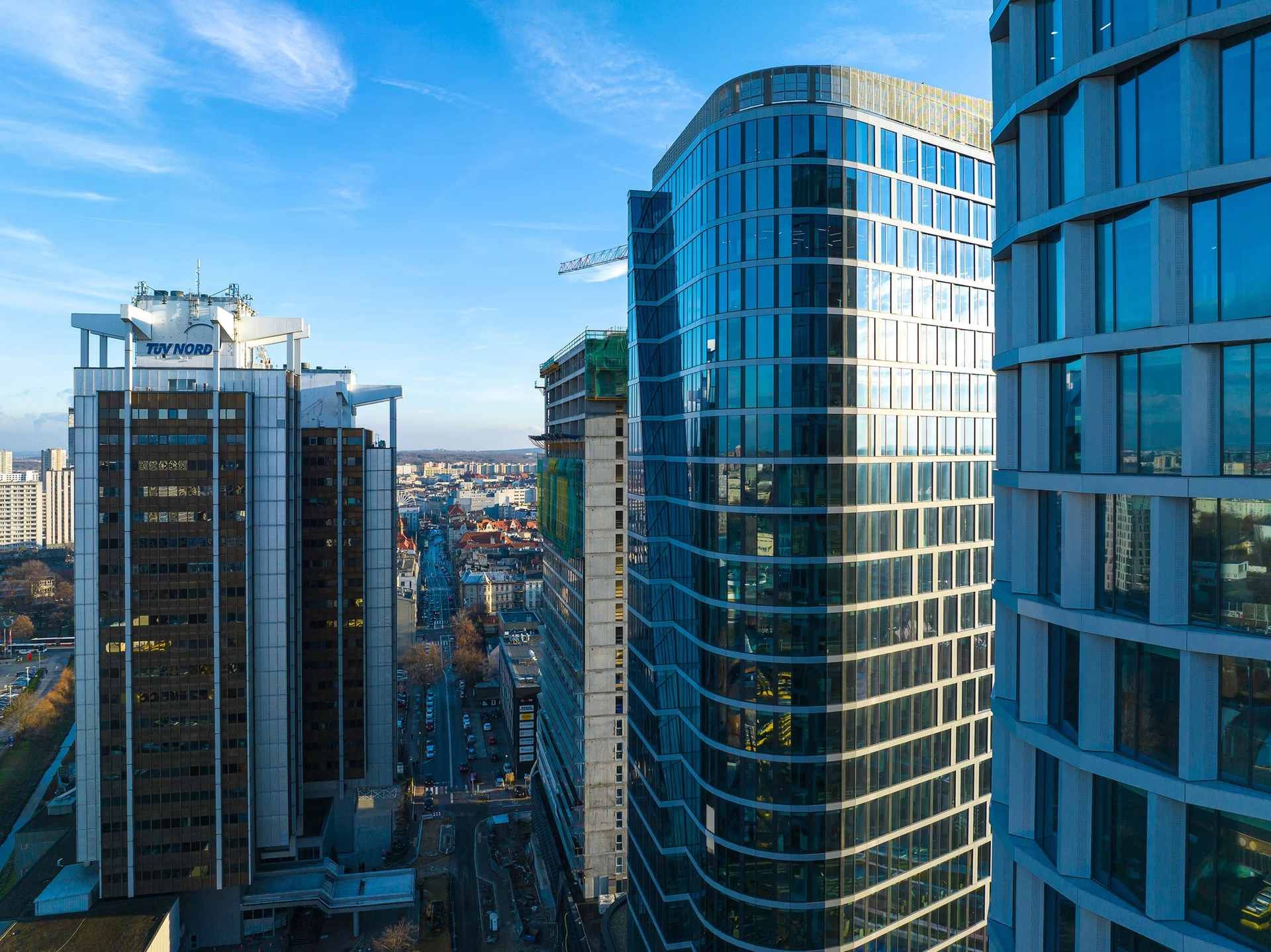
You can’t go inside – it’s a residential building. But walking around it and seeing how they built in a city that in 1930 had money and ambition is worth twenty minutes.
Themed Trails Around the City
The city has four marked trails that make Katowice a much better destination than the map suggests. All can be walked, and their websites have maps and descriptions of each stop.
- Szlak Moderny (Modernism Trail) – 5.5 kilometres and sixteen interwar modernist buildings, each with an info kiosk. The best way to explore the centre with a theme rather than at random
- Szlak Neonów (Neon Trail) – fourteen historic neon signs from the 1950s to the 1980s, some of them restored to their original look
- Szlak Murali (Mural Trail) – large-format paintings on building gables, many of them around the centre
- Szlak Śląskiego Bluesa (Silesian Blues Trail) – places linked to the Silesian blues scene from which the Rawa Blues festival grew
Superjednostka and Post-War Katowice
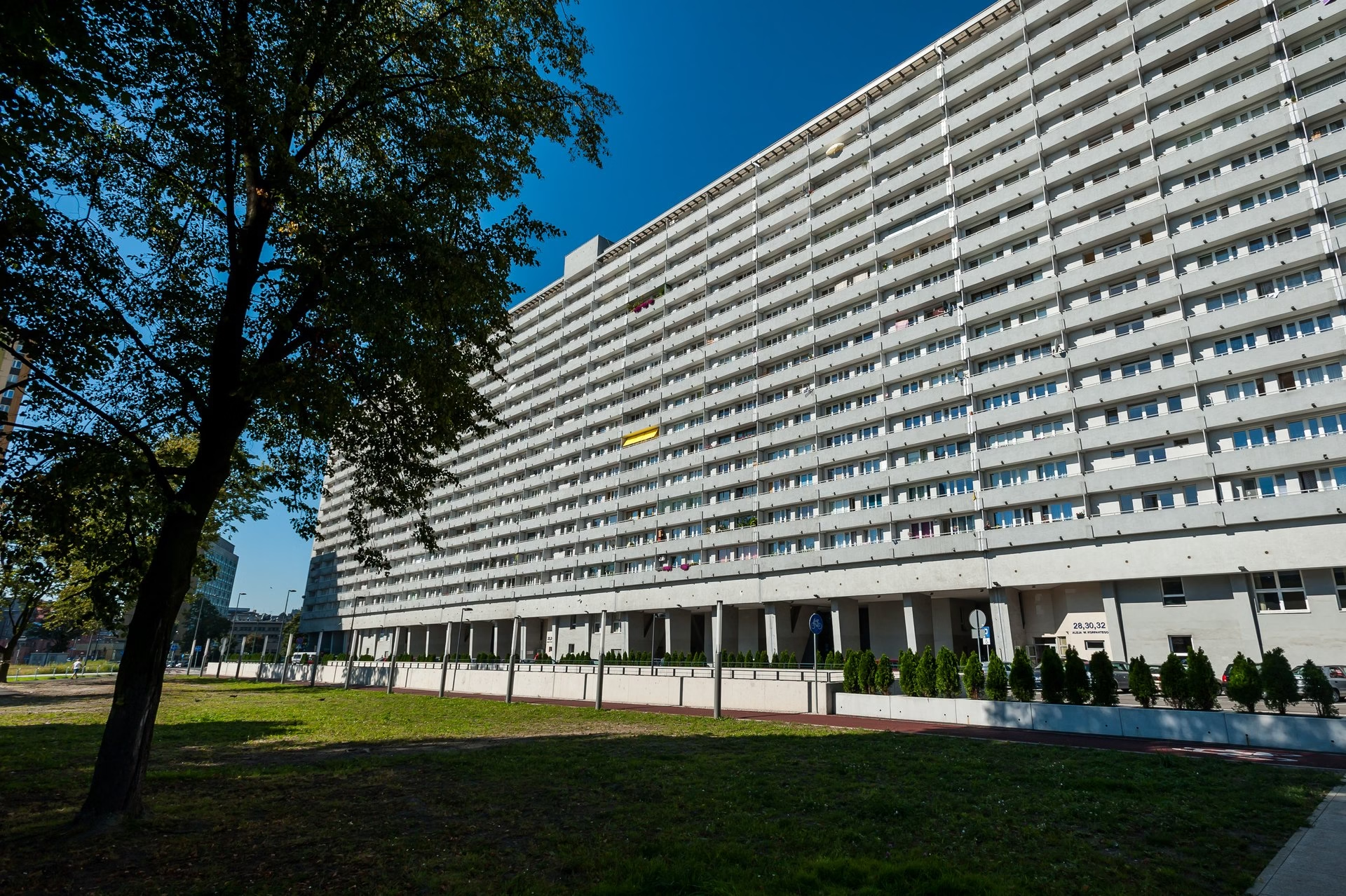
The counterpoint to the interwar district stands a little further along Korfantego Avenue. The Superjednostka is a fifteen-storey residential block from the late 1960s, built by Mieczysław Król on the model of Le Corbusier’s Marseille unit – only fifty metres longer. It holds 762 flats for almost three thousand people, more residents than many a small town.
You can’t get inside; people live there. But together with Spodek and the surrounding tower blocks it forms the panorama that appears in every second photo of Katowice.
Monument to the Silesian Insurgents
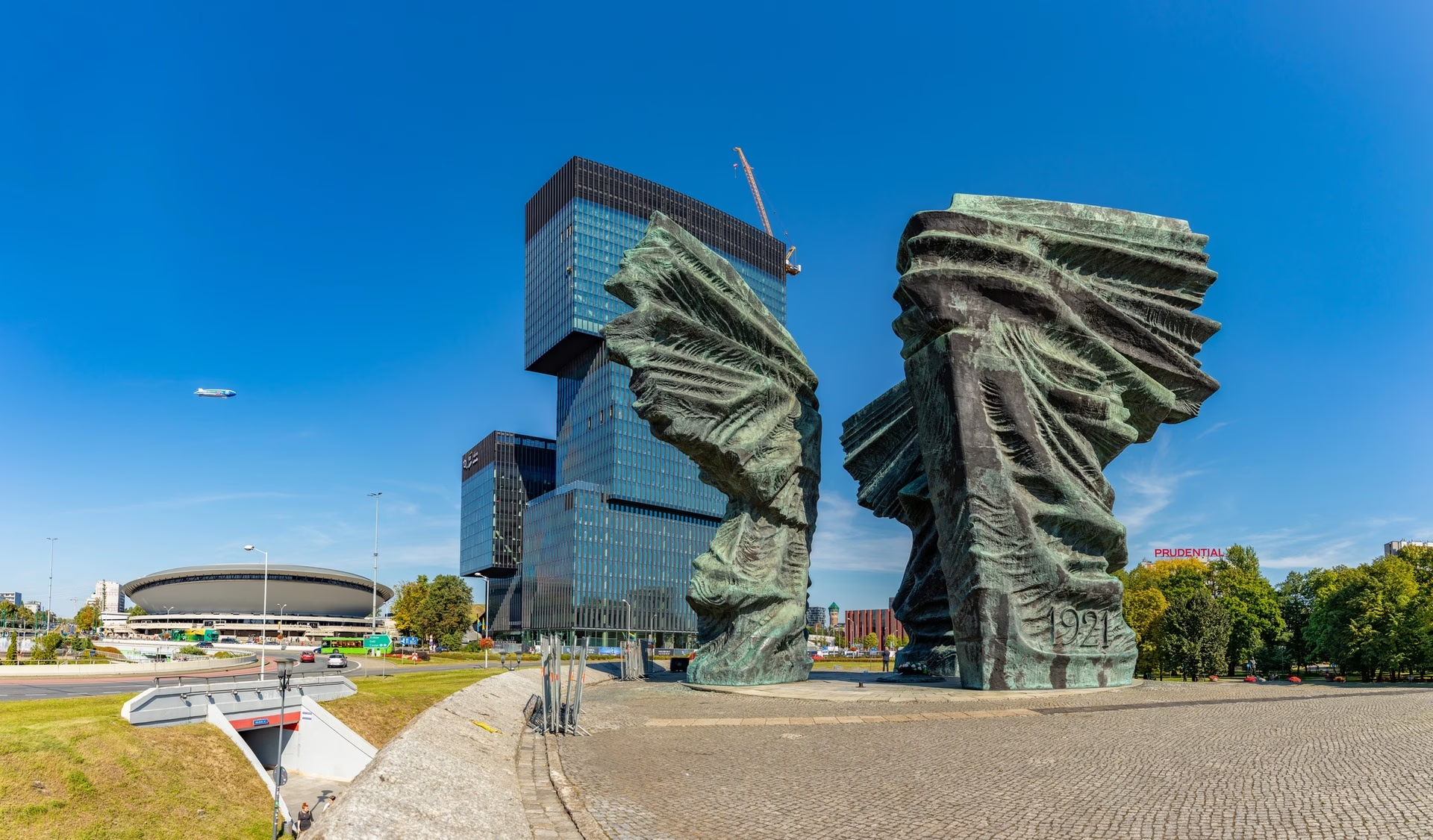
The three bronze wings by the General Ziętek roundabout commemorate the three armed uprisings through which Upper Silesia declared for Poland in the early 1920s. The bronze weighs 60 tonnes, and since 2024 the monument has been listed as a voivodeship heritage site. Without those three uprisings Katowice would be a German city today – which is why it is the most important monument in the city, even though it looks like an abstract sculpture.
Katowice History Museum
A smaller museum in a townhouse at Szafranka 9 tells the history of the city from village to metropolis. It is open Tuesday to Friday 10:00–18:00, Saturday until 16:00 and Sunday 11:00–15:00; admission is 15 zł and free on Tuesdays. The combined ticket for 25 zł is valid for seven days and also gets you into the department at Nikiszowiec.
Where to Get a View of Katowice
- Silesian Museum viewing tower – 7 zł, the cheapest and closest to the centre
- Green roof of the congress centre – free, a view of Spodek
- 27th floor of the Altus tower – 125 metres above the city, the highest venue in Katowice. The restaurant takes reservations; the cocktail bar is walk-in from six in the evening
Parks, Water and Greenery
Katowice has a reputation as a black city, but greenery covers almost half of its area. A belt of forest stretches from the centre to the southern edge through the districts of Muchowiec, Brynów, Giszowiec and Ochojec, and you can walk in it all day without leaving the city.
Kościuszko Park
The oldest park in the city, founded in 1888 and listed as a heritage site since 1993. Besides the ordinary park there are two things worth the walk:
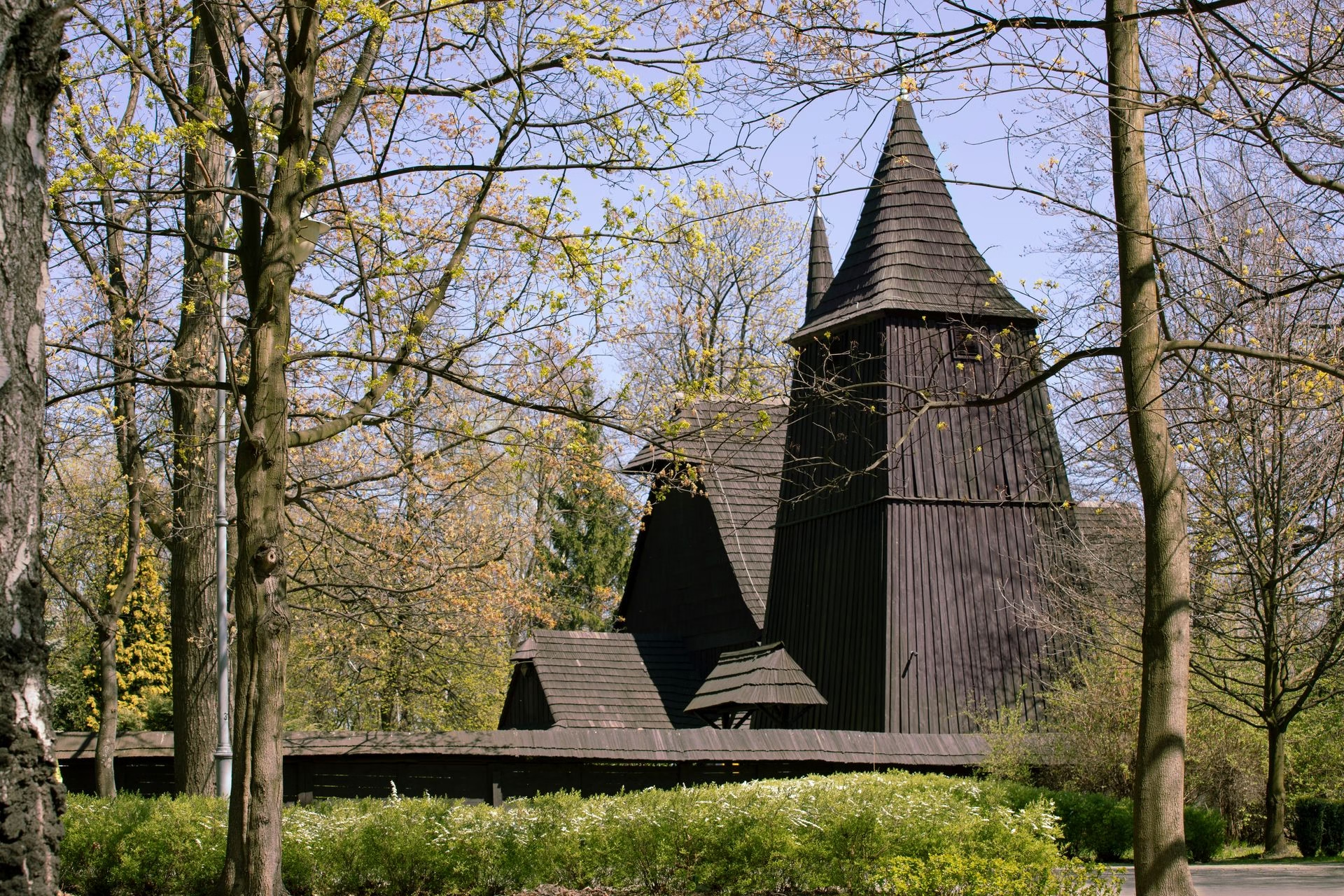
- Wooden Church of St Michael the Archangel – a Gothic log building from the 15th century, moved here before the war from the village of Syrynia. In the middle of an industrial city it’s an unexpected piece of old village architecture
- Parachute tower – a steel structure over thirty metres high, on which Silesian scouts defended the city on 4 September 1939. Today’s tower is a post-war replica and serves only as a memorial; you can’t climb it
Dolina Trzech Stawów (Three Ponds Valley)
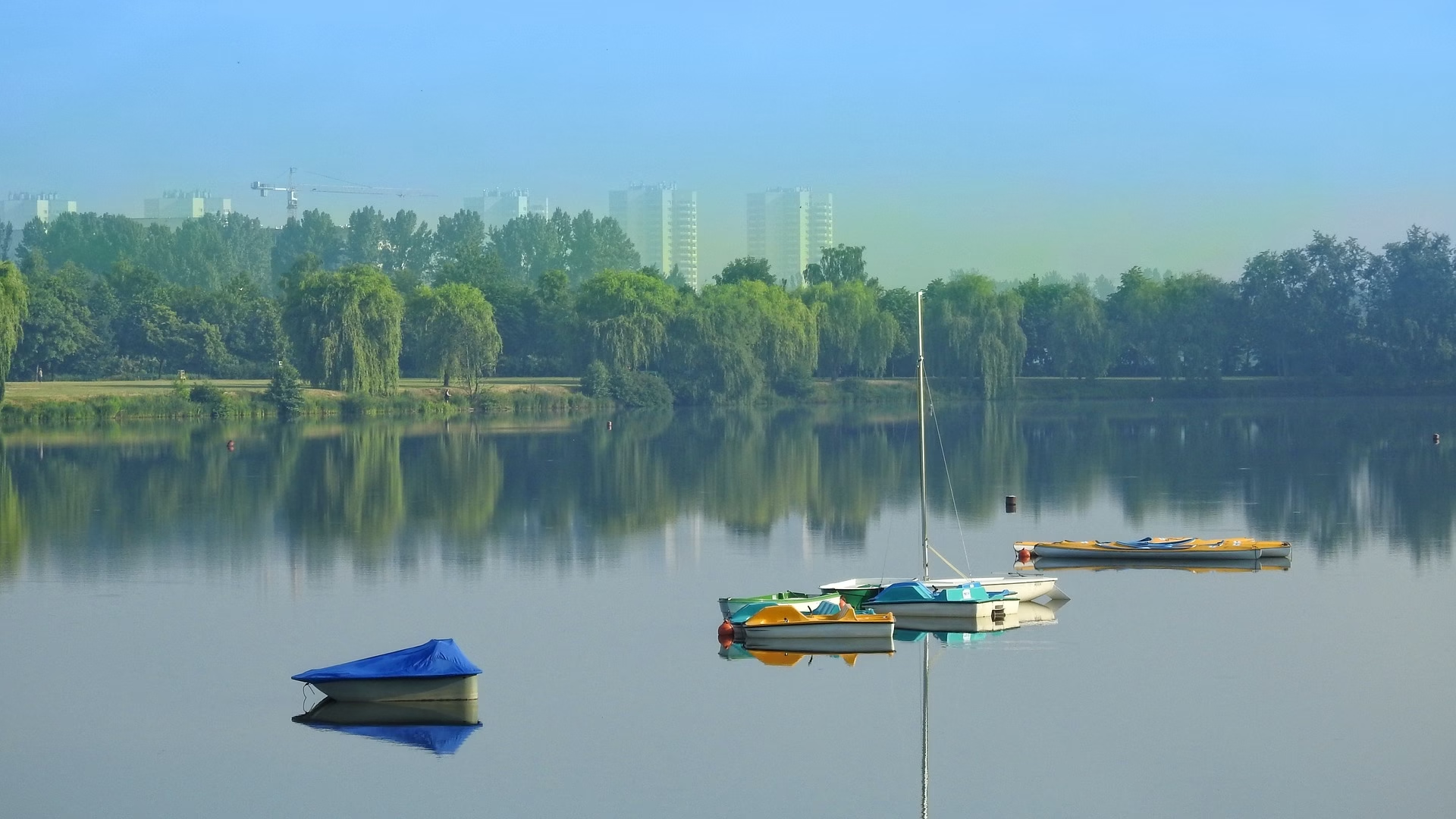
The Three Ponds Valley is 65 hectares of water and greenery right in the city, on the site of flooded mine pits. Besides the three large ponds there are eleven smaller reservoirs, beaches, a cycle path, a playground and a water playground with jets that saves an afternoon with small children on a hot day. The OFF Festival takes place here in August.
From the centre it’s about half an hour by tram and on foot, ten minutes by car. For a family with children it’s the best free half-day in the city.
Culture, Festivals and What Happens When
Since 2015 Katowice has been part of the UNESCO network as a City of Music – the first in Central and Eastern Europe. It isn’t a marketing label: the city is home to a radio orchestra and a music academy, and twenty-seven music festivals take place here every year.
Four dates matter when planning a visit. The city is full around them and accommodation gets pricier, but they’re also the best reason to come at exactly that time.
- Katowice JazzArt – end of April, concerts all over the city
- Tauron Nowa Muzyka – early June, electronic music right in Strefa Kultury on the site of the former mine
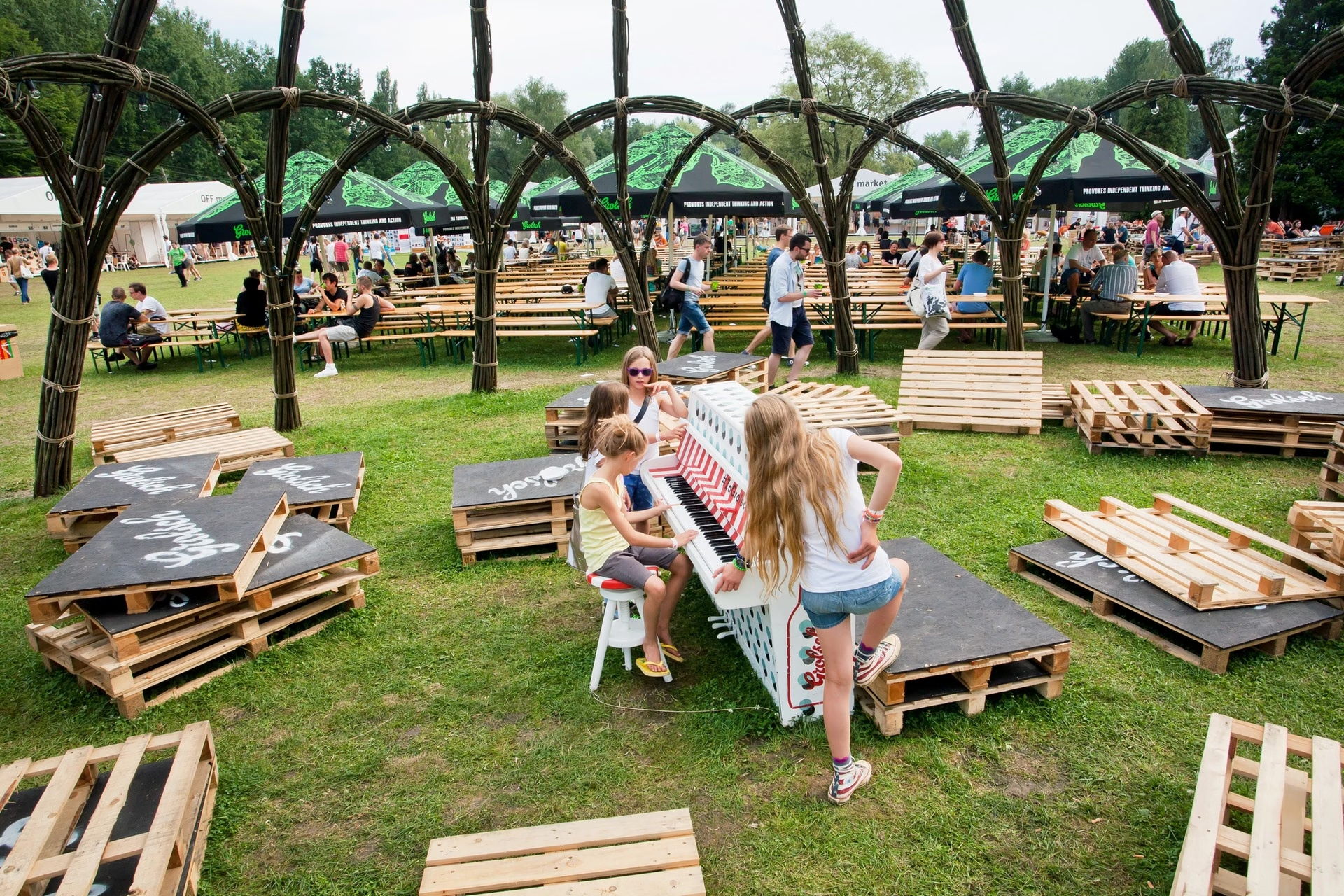
- OFF Festival – early August in the Three Ponds Valley, five stages and around eighty bands, one of the best alternative festivals in Central Europe
- Rawa Blues – October, the oldest blues festival in Poland
Besides music, the city lives for esports. Big tournaments at Spodek fill hotels across the centre, so if you’re planning a weekend and accommodation prices suddenly double, check the arena’s programme – a tournament or concert is usually the cause.
In mid-June comes Industriada, the festival of the Industrial Monuments Route. Fifty industrial sites across the voivodeship open at once, including facilities you can’t normally get into. If Silesia’s industrial heritage appeals to you, it’s the best weekend of the year.
In winter, from the end of November until Christmas, Christmas markets with ninety stalls stand on the Rynek and Plac Wolności, open daily from eleven to ten in the evening. On Plac Wolności there is also a free-entry ice rink from December, with skates for hire at 15 zł per hour.
If you have to choose one thing from a Katowice December, go to the Jarmark na Nikiszu. The Christmas market in the brick miners’ colony is among the biggest craft fairs in Poland, draws around 180 exhibitors and has a free shuttle bus from the centre. Nikiszowiec with Advent lighting looks different from the rest of the year.
Day Trips from Katowice and Nearby Excursions
Katowice has merged with some forty other towns into one conurbation, so a “nearby trip” here means twenty minutes by tram or train, not a half-day transfer. Two of the destinations are worth a day on their own; the rest can be fitted into an afternoon.
Silesia has much more to offer – the palace in Pszczyna, the UNESCO silver mine in Tarnowskie Góry, the Gliwice radio tower. But all of it lies thirty to forty kilometres in different directions and from Katowice you travel there and back through the city. If you want to explore the region properly, stay closer to your destination, not in Katowice.
Chorzów: Silesian Park
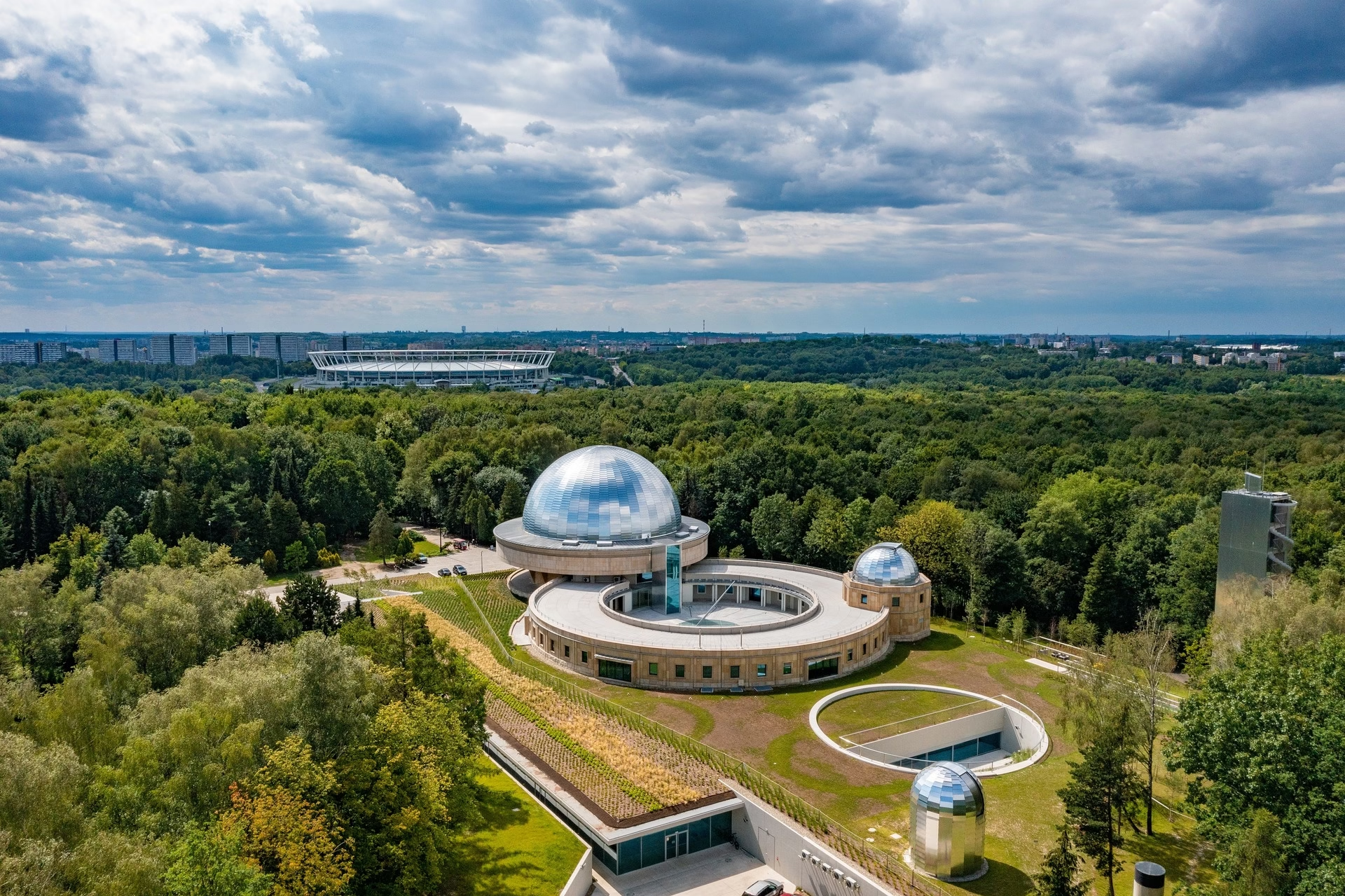
Six kilometres from the centre, twenty minutes by tram. The Silesian Park covers 600 hectares and is one of the largest urban parks in Europe – inside are a zoo, a planetarium, an open-air museum, an amusement park, a stadium and a cable car. With children it’s a full day.
- Silesian Zoo – 40 zł in summer, 20 zł in winter, family 110 zł
- Planetarium Śląskie – the largest in Poland after its renovation; show 20 zł, family ticket for four 50 zł
- Open-air museum (Górnośląski Park Etnograficzny) – 25 zł, free on Mondays; from November to April just a walk around the grounds for 10 zł
- Legendia – an amusement park, tickets 119–159 zł depending on age and how far ahead you book; the main season ends in mid-September
- Elka cable car – runs on two sections between the stadium, Legendia and the planetarium; a third section is being completed and the entire original route is due to be restored around the turn of 2026 and 2027
Zabrze: Guido Mine and the Queen Louise Adit
The strongest trip from Katowice and the best reason to come back a second time. Zabrze is twenty minutes by train, and both sites are a quarter of an hour’s walk from the station.
At the Guido Mine you descend by cage to 320 metres and walk through original mine workings where coal was still being extracted in the 1980s. There is also a restaurant and pub at level 320 where you can sit after the tour. The standard route costs 65 zł (reduced 55 zł), a tour in a foreign language 95 zł; it takes up to two and a half hours and is for ages six and up.
The Queen Louise Adit (Sztolnia Królowej Luizy), a little further on, offers the longest underground boat trip in Europe: a two-kilometre route, more than a kilometre of it by boat in a flooded tunnel. Admission is 75 zł, reduced 60 zł, about two and a half hours in total. The combined SuperTicket for both costs 100 zł and is valid for half a year, so you can split the two over separate days.
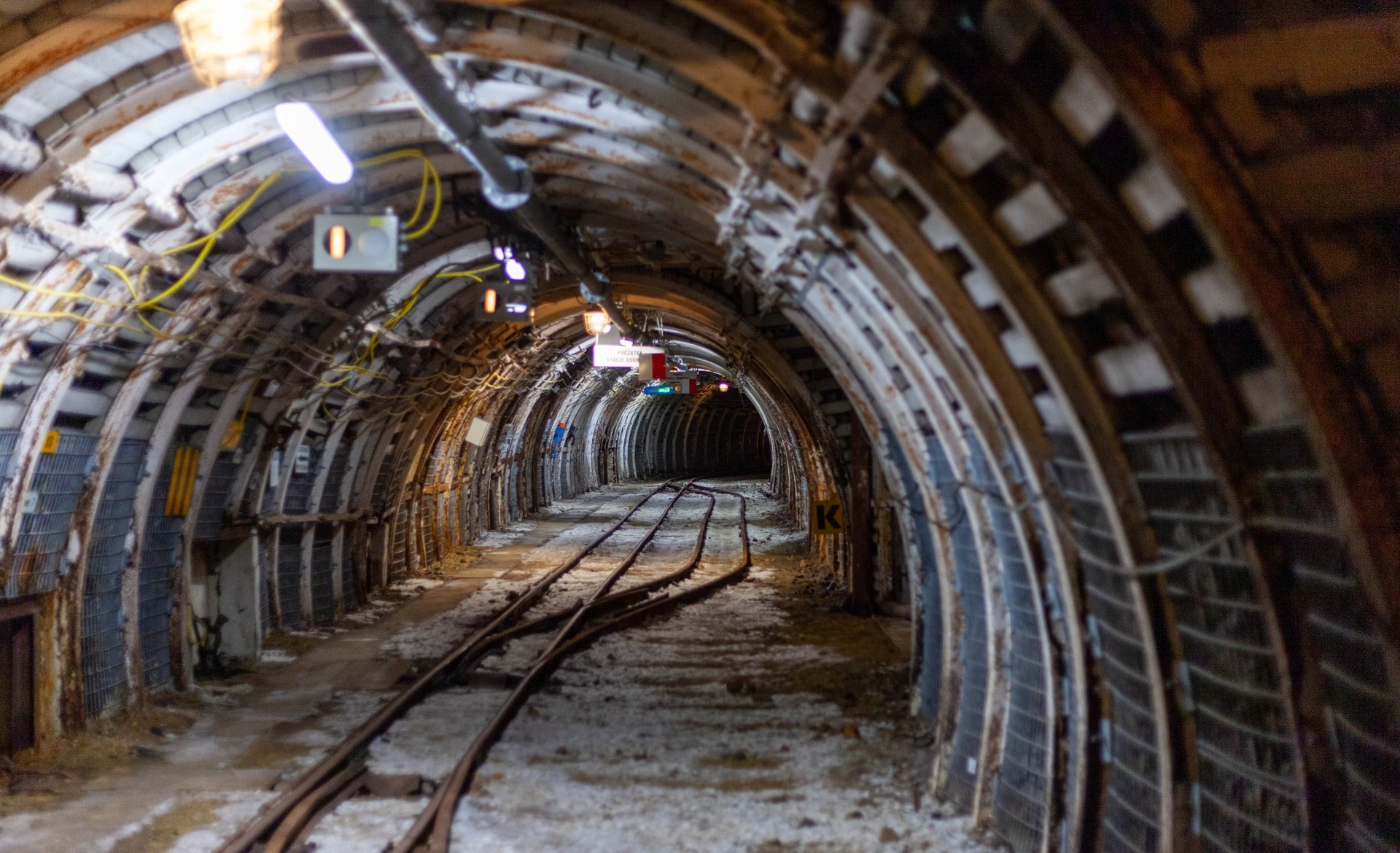
Underground it’s 13 to 16 °C all year round, so a hoodie and sturdy shoes are a must even in August. Book both in advance; weekends are often full. If you don’t want to deal with tickets and transfers, you can also take an guided tour of the Guido Mine with a transfer from Katowice.
For Half a Day: Bytom, Będzin and Tychy
- Bytom (15 km, by tram or train) – an Art Nouveau centre and the Upper Silesian Museum for 10 zł, free on Sundays. From June to mid-September on weekends the world’s oldest continuously operating narrow-gauge railway departs from here along a twenty-one-kilometre line
- Będzin (15 km) – a Gothic stone castle with a tower above the town, admission 15 zł, 25 zł with the Mieroszewski Palace. The underground passages beneath the town have reopened after a two-year renovation, accessible only with a guide and by reservation
- Tychy (20 km) – Tyskie Browarium, a tour of a 19th-century brewery in the original brewhouse with copper kettles. Two and a half hours including a tasting, 35 zł, tours are also in English and German. Book in advance; weekends are often full several weeks ahead
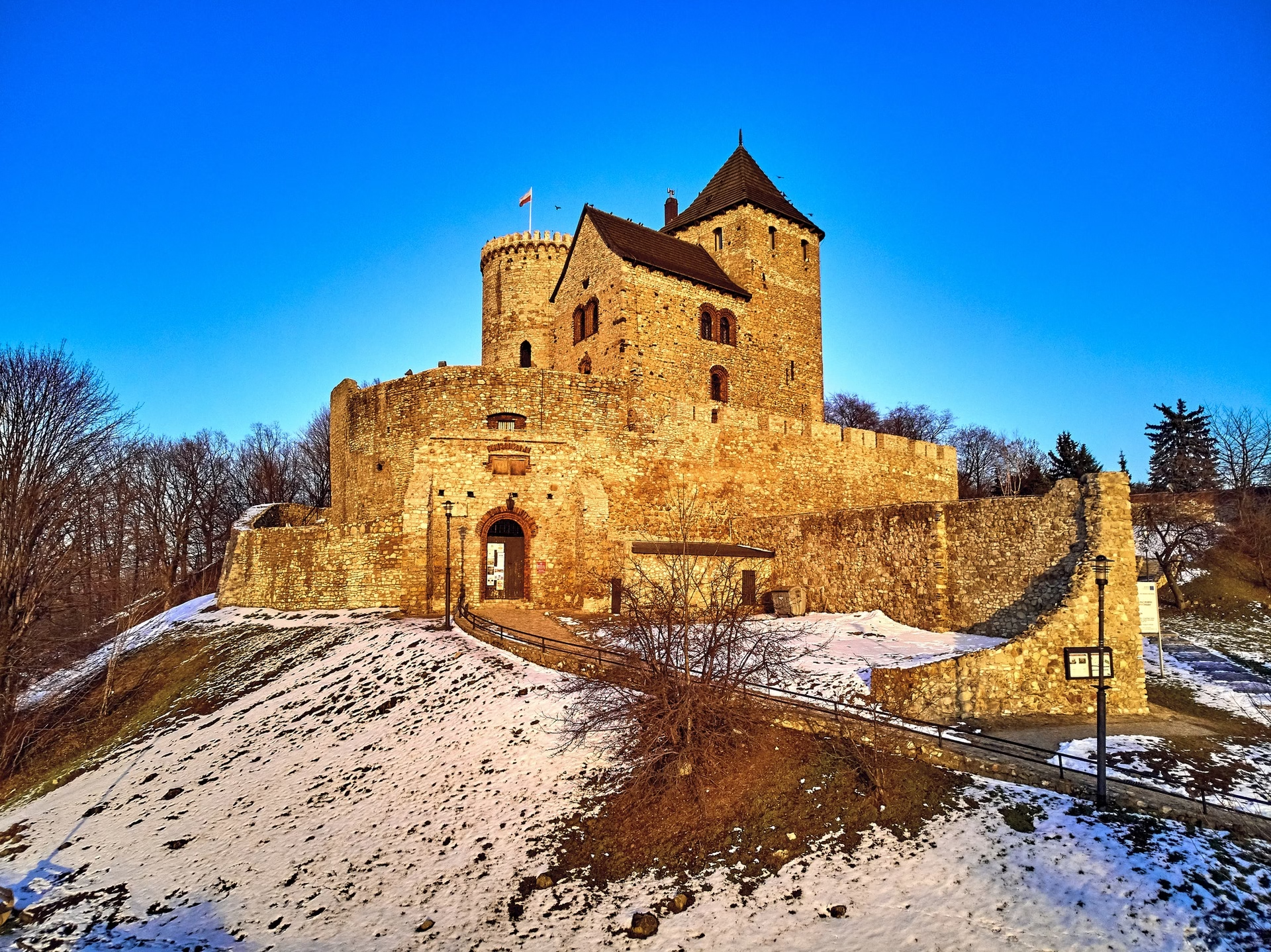
All three are on the Industrial Monuments Route of the Silesian Voivodeship, as are the Guido Mine and the Queen Louise Adit. On a weekend in mid-June all fifty sites on the route open at once during Industriada, including facilities you can’t normally get into.
Katowice as a Stop on the Way to Kraków or Warsaw
The most sensible way to fit Katowice into a longer trip: one night on the way. Kraków is an hour along the A4 motorway, Warsaw is two and a half hours by train, and in both cases Katowice is a stopover, not a destination.
A layout that works: arrive in the afternoon, walk through the centre and Strefa Kultury, have dinner on Mariacka, sleep, and the next morning fit in Nikiszowiec before moving on. Katowice is cheaper than Kraków or Warsaw, so it pays off financially too.
Kraków deserves two days and is a completely different city from Katowice – read what to see in Kraków, including how to arrange Wawel, Kazimierz and a trip to Oświęcim (Auschwitz).
You can reach Oświęcim from Katowice in three quarters of an hour by car, but the vast majority of visitors go to Auschwitz-Birkenau from Kraków – and the museum recommends a minimum age of 14.
Warsaw is closer to Katowice by train than you’d expect – in a separate guide we cover what to see in Warsaw.
If you fly into Pyrzowice and continue by car, pick up your rental car right at the airport – from Katowice, Kraków is then an hour away and you can stop wherever you like along the way.
Browse accommodation in Kraków
Katowice with Kids
Katowice is one of those cities where you can spend several days with children without them getting bored. Most of the best is in Chorzów in the Silesian Park, which you reach from the centre by tram.
- Planetarium Śląskie – the largest in Poland after its renovation; a show lasts 45 minutes and costs 20 zł, family ticket for four 50 zł
- Legendia – an amusement park with roller coasters, main season until mid-September
- Silesian Zoo – 40 zł in the summer season, family 110 zł
- Dolina Trzech Stawów – a large playground and a water playground with jets right in Katowice, free
- Kąpielisko Fala in the Silesian Park – a swimming complex with water slides, daily 9:00–19:00 from the end of June, 47 zł adult, family 140 zł
- Silesian Museum – has a children’s zone, a detective room and weekend workshops; entry is free on Tuesdays
Of the trips nearby, even younger children can manage the Bytom narrow-gauge railway, which runs at weekends in summer. The underground is a different league – the Guido Mine and the Queen Louise Adit admit children from age six. Always bring a hoodie; it’s 13 to 16 °C down there.
Food and Places to Eat
Silesian cuisine is a regional cuisine of its own, and in Katowice you can eat well and cheaply. A main course in a restaurant costs 35 to 55 zł, a set lunch menu 25 to 40 zł and lunch in a cheaper place comes to around 38 zł. Coffee costs around 12 zł, and a half-litre of beer about the same.
At an exchange rate of around 4.4 zł to the euro, that means lunch for roughly nine euros and a beer for just under three. Katowice is one of the cheaper Polish cities, with food prices below the national average.
What to Try
- Rolada śląska – a beef roll with bacon, onion and pickled gherkin in a dark sauce. Classically served with kluski and blue cabbage, and in Silesian families it’s the Sunday lunch, not an everyday dish
- Kluski śląskie – potato dumplings with a dimple in the middle, there to hold the sauce. The most recognisable Silesian dish
- Modra kapusta – braised red cabbage, slightly sweet, obligatory with the rolada
- Krupniok – a blood sausage made with groats and meat, fried with onion. Sold from stalls at Christmas markets
- Wodzionka – a soup of dry bread crust, garlic and lard. A miners’ breakfast from the days when nothing was thrown away
- Karminadle – Silesian meat patties, a sure bet in any canteen
- Żurek – a sour soup made with rye sourdough, served with egg and sausage
- Kołocz śląski – a yeast cake with curd cheese, poppy seed or apples and a crumble topping. It has EU protected geographical indication and was traditionally given to wedding guests
Where to Eat in Katowice
The cheapest option is bary mleczne (milk bars), subsidised self-service canteens where a complete lunch comes to 25 to 38 zł. It’s not a nostalgic open-air museum – students and office workers eat there and the food is honest.
Restaurants and cafés cluster around Mariacka Street and the adjacent streets; you’ll find a food-hall operation with several kitchens under one roof in Supersam. The further from Mariacka, the better the value.
Where to Go for Coffee and Beer
The café and bar scene is packed into Mariacka Street and a few streets around it. From Thursday to Saturday it’s the liveliest spot in the whole of Upper Silesia; on a weekday you can sit there quietly with a coffee.
Where to Stay in Katowice
Katowice is a congress city, so there are plenty of hotels for its size, and prices are low compared with Kraków or Wrocław. A double room in a four-star hotel in the centre typically costs 400 to 600 zł, an apartment in a quieter district 270 to 340 zł.
One exception: when there’s a big concert or an esports final at Spodek, prices in the centre jump and availability vanishes within days. Before you book, check the arena’s programme – it will save money and nerves.
We’ve divided the options by what matters most in Katowice: whether you arrive by train or by car, and whether you want to be a short walk from Mariacka in the evening.
City Centre, the Rynek and Mariacka Street
Head here if you want to walk everywhere and return from a bar in the evening without a tram. You can reach everything from the centre in ten minutes, including Strefa Kultury.
- Hotel Diament Plaza Katowice – A four-star hotel three minutes from the Rynek and three hundred metres from the main station. Air-conditioned, a good choice when you arrive by train and want the station around the corner.
- Apartament Sorello – Katowice Centrum – An apartment a hundred and fifty metres from the Rynek with a view of the city. The best location in the whole selection and ratings to match.
- Mercure Katowice Centrum – A chain hotel with a terrace three minutes from the square. Free cancellation and payment at the property, which is handy when you’re still fine-tuning your dates.
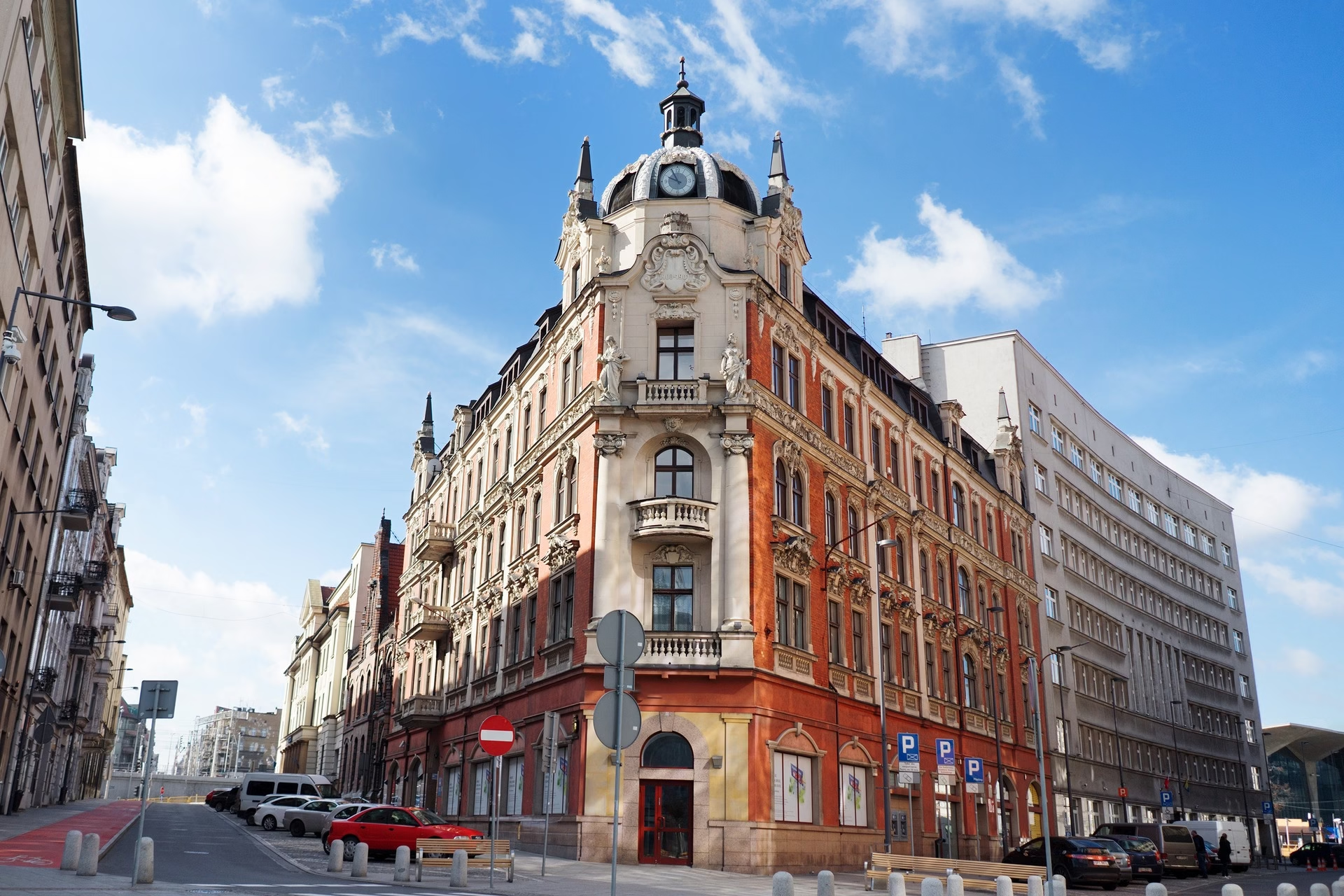
- Hornigold “W Zielonej Kamienicy” – An aparthotel in the modernist Green Tenement House – you stay in one of the buildings people come to Katowice to see for its architecture. For the price of an ordinary hotel you stay in a landmark.
- Qubus Hotel Katowice – Two hundred metres from the Rynek, with its own car park and breakfast included. Pricier, but the most proven hotel in the centre.
Browse all accommodation in Katowice
Near the Main Station
A practical choice for anyone arriving by train and planning trips around the metropolis. The station is connected to the Galeria Katowicka shopping centre, so you have trains, buses and evening shopping under one roof.
- Q Hotel Plus Katowice – Four hundred metres from the station, air-conditioned rooms and a restaurant. You don’t pay extra for the location by the trains.
- Vienna House Easy by Wyndham Katowice – A modern chain hotel ten minutes’ walk from the station, a reliable standard without surprises.
- Stawowa 13 – A compact apartment with a kitchen close to both the station and Spodek. The cheapest option in the centre, if twenty-five square metres is enough for you.
Near Spodek and Strefa Kultury
Head here if you’re going to a concert or an event. In the morning it’s a short way to the Silesian Museum and in the evening you can walk back.
- Kostecki Exclusive Apartments & Spa, Garage, Spodek, Centrum, Jacuzzi, 19 piętro – An apartment on the nineteenth floor with a jacuzzi and a view of Spodek, plus its own garage. The most striking accommodation in Katowice and our top pick.
- Courtyard by Marriott Katowice City Center – A hotel in the tallest building in Katowice, with room views to match. Five minutes from the centre.
- voco Katowice by IHG – A four-star hotel with private parking, six hundred metres from Spodek.
- Spodek Residence Katowice – The apartment closest to Spodek of all our picks, six minutes’ walk.
Quieter Districts with Parking
If you arrive by car, this is a more sensible choice than the centre – Katowice has paid parking zones, and in the narrower centre you pay on Saturdays too.
- Luxury Heaven Apartment – 116 m2 Fireplace 3 bedroom – Free Parking – 116 square metres, three bedrooms, a fireplace and a jacuzzi, free parking. For a family or two couples it’s cheaper than two hotel rooms.
- Apartament Dzierżonia 12 – Quiet Ligota, a garden, a bike to borrow and its own parking. A pick for travellers by car who can take the tram into the centre.
- Katowice Apartamenty Hetmańska 4 – An apartment with a terrace in Ligota, solid standard at a reasonable price.
- Silesia Apartments – Two kilometres from the centre towards Silesia City Center. The cheapest complete apartment in this selection.
Hostels
- Good Times House – A hostel with a garden, terrace and its own car park five minutes from the centre. The most reviews of any Katowice hostel.
- Hostel Gwarek – The cheapest accommodation in our selection, with a garden and free parking. A quarter of an hour’s walk to the centre.
You can’t stay in Nikiszowiec itself – the colony is inhabited and there is practically no visitor accommodation there. Treat it as a day-trip destination, not an address for the night.
Katowice Travel Guide: Practical Information
How to Get to Katowice
By car from the west, from the German border at Görlitz, you take the Polish A4 motorway via Wrocław straight to Katowice and on to Kraków. From the south you drive through Czechia and Ostrava (from Prague it’s 327 kilometres, from Ostrava 96) and from the border continue on the Polish A1 motorway or the S1 expressway. If you drive through Czechia, you need an electronic motorway vignette for its motorways.
Cars pay nothing on the motorways around Katowice. In Poland tolls apply to cars only on three concession sections, and only one is relevant for you: the A4 from Katowice to Kraków costs 36 zł for two toll gates. The A1 stretch from the Czech border northwards is free.
In Poland you drive with headlights on all year round, twenty-four hours a day; the motorway limit is 140 km/h and in built-up areas 50. The alcohol limit is 0.2 per mille, stricter than the 0.5 per mille common in most of Europe. You must carry a fire extinguisher and a warning triangle; a first-aid kit is not yet compulsory.
By train it’s an hour to Katowice from Kraków and two and a half from Warsaw. The city lies on the main international route to Warsaw, so EuroCity trains pass through without a change: three times a day from Vienna and three times a day from Prague, both via Ostrava.
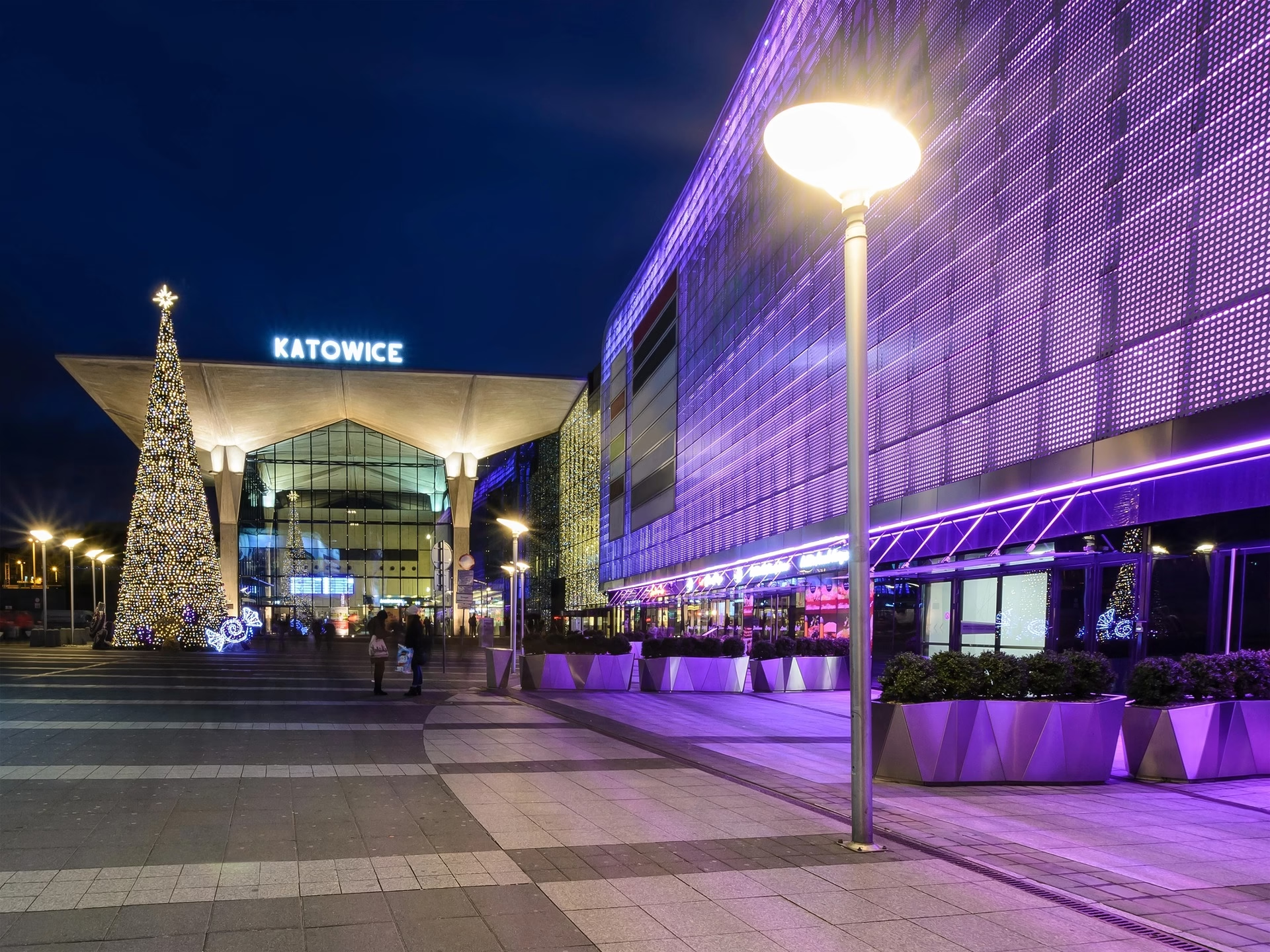
Since December 2025 there has also been a daily RegioJet service on the route Prague – Olomouc – Ostrava – Katowice – Pyrzowice airport – Warsaw, the only one that stops right at the airport.
By bus, RegioJet runs on the Ostrava – Katowice – Kraków line eight times a day, and FlixBus also serves Katowice.
Katowice-Pyrzowice Airport
The airport lies about 30 kilometres north of the city, half an hour to forty minutes by car. In the summer season 65 routes to 56 airports in twenty-four countries operate from here, mainly Wizz Air and Ryanair. Alongside Kraków’s airport it’s the main gateway to southern Poland.
- ZTM bus line AP from the centre (Katowice Sądowa stop) takes about fifty minutes to the airport and a regular public transport ticket is valid – the 120-minute one costs 6.60 to 7 zł
- Direct Matuszek transfer – 20 zł one way when bought in advance, ten zlotys more on the spot
- RegioJet train on the Prague – Warsaw route stops right at the airport
Getting Around the City and the Metropolis
Katowice’s public transport belongs to the metropolitan Transport GZM, which is good news for visitors: one ticket is valid on trams, buses and trains across the whole metropolis. The fare system is time-based.
- 20 minutes – 4.60 zł paper, 4.20 zł electronic
- 40 minutes – 5.60 zł / 5.20 zł
- 120 minutes – 7.00 zł / 6.60 zł
- Day ticket – 13 zł
- 24-hour Metrobilet – 24 zł, also valid on Koleje Śląskie and POLREGIO trains across the metropolis. The best choice for a day full of trips
- Group ticket for up to five people for 120 minutes – 12.80 zł electronic
You can pay with a contactless card directly on the vehicle – the system calculates the fare itself based on journey time. An electronic ticket is always a few groszy cheaper than a paper one from the driver. Children under seven travel free, and there’s no fare for a bike, dog or luggage.
Shared Metrorower bikes are good for getting around the centre: half an hour costs 1 zł, an hour 2.50 zł. The system covers eight cities in the metropolis, so you can ride to neighbouring Chorzów too.
Parking
The centre has two paid parking zones with a progressive tariff – the longer you stay, the more each additional hour costs.
- Zone A (narrower centre): up to half an hour 3 zł, up to an hour 6 zł, second hour 7.20 zł, third 8.40 zł. Three hours therefore cost 21.60 zł
- Zone B (wider centre): roughly a third cheaper
- Paid hours are 7:00–17:00, and be careful: in zone A you pay on Saturdays too, in zone B only on weekdays
- You pay at a machine or via an app; enforcement is by cars that scan number plates
If you’re coming for the whole day, park straight away in one of the multi-storey car parks at the shopping centres in the centre and don’t drive into the zone.
Money, Prices and Paying
You pay in Polish zlotys; euros aren’t accepted anywhere. In 2026 the exchange rate hovered around 4.4 zł to the euro. You can pay by card practically everywhere, including on public transport; you only need cash at the market.
- Main course in a restaurant 35–55 zł (roughly 8 to 13 euros)
- Set lunch menu 25–40 zł
- Coffee 12 zł, half-litre of beer 12.60 zł
- Two-hour public transport ticket 7 zł
- Admission to the Silesian Museum 29 zł, free on Tuesdays
Tipping isn’t compulsory, but ten per cent is customary.
When to Go and What About Smog
The most pleasant months are May and June and then September. July is the warmest (around 19 °C on average) and also the rainiest. In January the average is −1.2 °C.
Katowice and the whole of Upper Silesia have long been among the most polluted places in Poland, especially in the heating season from autumn to spring, when surrounding villages heat with local boilers. In summer the air is fine. If you’re travelling in winter and have a small child or an asthmatic at home, check current readings the day before – the city runs its own monitoring and the data is public.
Autumn and winter have their own reasons to visit: Christmas markets, the ice rink on Plac Wolności and the Nikiszowiec Christmas fair, which is probably the strongest argument in this article for a December trip.
Shopping and the Sunday Trading Ban
In Poland shops are closed on Sundays. In 2026 there are eight trading Sundays in the whole year – there’s not a single one in February, May, July, September, October or November. Small shops where the owner serves customers personally, petrol stations and convenience stores stay open. Plan your shopping for Saturday.
Restaurants and cafés are exempt from the ban, so lunch on a Sunday is no problem. The Galeria Katowicka shopping centre by the station and Silesia City Center on the site of a former mine are open until ten in the evening on weekdays.
For other things worth keeping in mind in Poland – from payments to road customs – see our Poland travel guide.
Frequently Asked Questions
Is Katowice worth visiting if it’s an industrial city?
It is, but you need to know what you’re going for. Katowice has no historic old town with arcades, and anyone hoping for a second Kraków will be disappointed.
It has something else: the Nikiszowiec brick miners’ colony protected as a Monument of History, a museum underground in a former mine, interwar modernism on a marked trail and the Spodek arena. It’s a city for anyone who likes the twentieth century and industrial heritage.
What is Katowice famous for?
Above all for its coal-mining heritage turned into culture. The best-known sights are Nikiszowiec, a red-brick miners’ colony from 1908–1918 protected as a Monument of History, the Muzeum Śląskie with exhibitions underground on the site of the former Katowice mine, and the Spodek, a flying-saucer-shaped arena from 1971.
Katowice is also known for interwar modernism – between the wars it was nicknamed the “Polish Chicago” – and for music: since 2015 it has been a UNESCO City of Music, home to the Polish National Radio Symphony Orchestra (NOSPR) and to festivals such as OFF Festival and Rawa Blues.
How many days do you need in Katowice?
One day is enough for the city itself – the centre in the morning, Strefa Kultury in the afternoon. With Nikiszowiec and Galeria Szyb Wilson it’s two days.
A third day only makes sense for Zabrze, home to the Guido Mine and the underground boat trip in the Queen Louise Adit. Don’t look for a fourth day in Katowice – the city doesn’t work as a base for exploring Silesia, because every other destination means travelling back and forth through it. If you have more time, continue to Kraków or Warsaw.
How do you get to Katowice without a car?
By plane or train. Katowice-Pyrzowice airport is served mainly by Wizz Air and Ryanair, and from there you reach the centre by ZTM bus at the price of a regular ticket. By train it’s an hour from Kraków and two and a half from Warsaw.
Direct EuroCity trains run three times a day from Vienna and three times a day from Prague, both via Ostrava. Since December 2025 there has also been a daily RegioJet service Prague – Ostrava – Katowice – Pyrzowice airport – Warsaw, the only one that stops right at the airport.
How much does public transport cost in Katowice and which ticket is best value?
The fare system is time-based: twenty minutes costs 4.60 zł, forty minutes 5.60 zł and 120 minutes 7 zł. Buying in the app or paying with a contactless card on the vehicle makes the ticket a few groszy cheaper.
For a day full of journeys the 24-hour Metrobilet for 24 zł is the best value – it’s also valid on Koleje Śląskie and POLREGIO trains across the metropolis, including for trips to Zabrze, Chorzów or Bytom.
Is Katowice worth a stop on the way to Kraków or Warsaw?
Yes, and it’s the most sensible way to fit it in. Kraków is an hour along the A4 motorway, trains to Warsaw take two and a half hours and Katowice lies right on the route.
Allow one night: centre and Strefa Kultury in the afternoon, dinner on Mariacka, Nikiszowiec in the morning and then move on. Accommodation here is significantly cheaper than in Kraków or Warsaw, so the extra night pays off financially too.
How far is Katowice from Kraków?
About an hour by train and about an hour by car on the A4 motorway; the Katowice–Kraków section costs 36 zł in tolls at two toll gates. That also makes Katowice an easy day trip from Kraków.
Warsaw is two and a half hours away by train, so Katowice works well as a one-night stop between the two cities.
Can you visit Auschwitz from Katowice?
Yes – Oświęcim, where the Auschwitz-Birkenau Memorial and Museum is located, is about three quarters of an hour from Katowice by car. Most visitors, however, go there from Kraków.
The museum recommends a minimum age of 14.
Is there smog in Katowice?
In the heating season from autumn to spring, yes – Katowice and the whole of Upper Silesia have long been among the most polluted places in Poland, because surrounding villages heat with local boilers.
In summer the air is fine. If you’re travelling in winter with a small child or with someone bothered by dust, check current readings the day before; the city has its own monitoring network and publishes the data.
Are shops open on Sundays in Poland?
Mostly not. The Sunday trading ban leaves only eight trading Sundays in the whole of 2026, and there is not a single one in February, May, July, September, October or November.
Small shops where the owner serves himself, petrol stations and convenience stores stay open. Restaurants and cafés are exempt from the ban. Plan your shopping for Saturday.
How do you get from Katowice-Pyrzowice airport to the city centre?
Cheapest is the ZTM bus line AP, which takes about fifty minutes to the centre (Katowice Sądowa stop) and accepts a regular public transport ticket at 6.60 to 7 zł. The direct Matuszek transfer costs 20 zł when bought in advance.
By car it’s half an hour to forty minutes; the airport lies about 30 kilometres north of the city. The daily RegioJet train on the Prague – Warsaw route also stops right at the airport.
Related Articles on Czech Travellers
We cover Poland city by city and region by region, so there’s plenty to continue with from Katowice.
- Poland travel guide – prices, transport and practical advice for the whole country.
- Kraków – an hour along the motorway, the biggest tourist draw in southern Poland.
- Wrocław – the other big Silesian city, two hours to the west.
- Warsaw – two and a half hours by train, on the route Katowice lies on.
- Kłodzko – a fortress town in the Kłodzko Valley near the Czech border.
- Jelenia Góra – the gateway to the Polish Giant Mountains.
- Cieszyn and Český Těšín – a Polish-Czech twin town divided by the Olza river.
- Duszniki-Zdrój and Zieleniec – spas and trips in the Kłodzko region, well connected to other Polish towns.
- Polanica-Zdrój – a spa town in the Kłodzko Valley, a calmer alternative to bigger destinations.
- Toruń – a historic city on the Vistula, Gothic architecture, Copernicus and gingerbread.
- Kudowa-Zdrój and the Table Mountains – a spa town by the Czech border and a starting point for the Table Mountains.
- Karpacz – the Giant Mountains from the Polish side, hikes up Śnieżka and mountain trips.
- Poznań – a big city in western Poland, markets, food and a weekend atmosphere.