This post is also available in:


Welcome to Cape Verde – a country where you will find some of the most beautiful beaches in the world, diverse nature, and a fascinating cultural heritage reflecting two cultures – African and European. The locals live by the motto “no stress,” and almost every visitor falls in love with their friendly nature, sincere smiles, and, above all, their calm, unhurried lifestyle. In recent years, this destination has been gaining more and more popularity. So, please accept our invitation to the islands of the green cape, or Cabo Verde.

Why go to Cape Verde?
Cape Verde, a mysterious archipelago in the Atlantic Ocean, is becoming one of the most sought-after tourist destinations, and for good reason. This place offers not only magnificent sandy beaches and crystal-clear water but also fascinating culture and history. There is something for everyone – from adventurers who want to explore to those who just want to lounge and relax. Thanks to its location near the west coast of Africa, the climate is ideal for those looking for a sunny vacation throughout the year.
Sal, Boa Vista & More: Which Cape Verde Island to Visit
Cape Verde is an archipelago made up of ten islands, 9 of which are inhabited. Each one is unique, but they are all worth seeing.

The most visited islands are Sal and Boa Vista, which have seen very rapid tourism development in recent years. Both offer beautiful beaches that invite long walks and are perfect for water sports. During the windiest period (from December to March), they become a paradise for kite-surfers from all over the world. In summer, they attract nature lovers as they are one of the most important nesting sites for turtles caretta caretta (loggerhead sea turtle) in the world.

The volcanic island of Fogo with the still active Pico do Fogo volcano, the “carnival” island of São Vicente, or the greenest island of Cape Verde, Santo Antão, which many consider the most beautiful island of the entire archipelago due to its natural beauty, are definitely worth a visit.

How to get to Cape Verde?
There are regular and charter flights from all over Western Europe, with TUI and Easyjet flying mainly from the UK. In addition to a standard ticket and a classic package tour with a travel agency, it is also possible to buy a separate charter flight ticket. Prices start at €150 for a round-trip ticket without checked baggage.
If you are flying to Cape Verde from the USA, Canada, or other countries outside Europe, you will fly either with TAP Air Portugal via Lisbon, via Zurich with Swiss and Edelweiss Air, or fly to London Gatwick and buy a separate ticket with Easyjet or TUI Fly.
Given the ever-increasing popularity of the destination, it is a good idea to book your flight in advance, especially during the most popular holiday periods (summer, Christmas, and New Year’s Eve).

Best Time to Visit Cape Verde
A huge advantage of Cape Verde is that it is a year-round destination. Thanks to its location near the equator, you can enjoy almost equal day and night lengths and pleasant temperatures all year round. In summer, the thermometer often climbs to 38°C and the sea is beautifully warm at 27 degrees. Even in winter, daytime temperatures hover around 25°C and the lowest sea temperature is usually 23°C.
Expect a practically constant wind on the northern windward islands (Sal, Boa Vista, Santo Antão, São Vicente, São Nicolau). The period with the least wind in Cape Verde is summer. This is also the warmest time, creating ideal conditions for swimming. Conversely, in winter (December–March), it’s the right time to go and enjoy the strong winds for kitesurfing and other water sports.

August, September, and October are the rainy months. However, it rarely rains for more than a few hours at a time and certainly not every day. For example, this year it rained very little, and the usually wettest September surprised us with beautiful sunny weather and no precipitation.
Personally, I recommend visiting the Cape Verde Islands in the fall, after the rainy season – towards the end of October or in November. The usually parched islands of Sal and Boa Vista turn beautifully green, and their landscape transforms beyond recognition after the rains.
Visas and entry requirements
Citizens of the EU, UK, Canada, and US can enjoy visa-free entry for 30 days. However, you must pay an entry fee of 31 euros at the airport. You need a passport valid for at least 6 months after your planned departure from the country.
You can find current information on the official Cape Verde Islands website.
Don’t forget to arrange quality travel insurance before your trip. We use True Traveller or SafetyWing.
What money should I take to Cape Verde?
The Cape Verdean currency is the escudo, which has a fixed exchange rate of 110.265 CVE = 1 €. On Sal and Boa Vista, it is possible to pay with euros practically everywhere. If you head to other, less touristy islands, you will need the local currency. Watch out for US dollars – you can’t pay with them in Cape Verde. The only option is exchange, but the rate is nowhere near as favorable as with the euro.
Cards are usually only accepted in hotels, and even then, not always all types (Visa is usually fine, with Mastercard there’s a chance it won’t work). You can only withdraw local currency from ATMs at the official rate, and the maximum per withdrawal is 20,000 CVE, which is 181 euros.
Wherever you go abroad, don’t forget to bring multiple payment cards. Our favorite card, not just for travel, is Revolut.

What are the prices like in the Cape Verde Islands?
In Cape Verdean supermarkets (often owned by Chinese proprietors who sell everything from food and alcohol to iPhone cases), you will probably be surprised by the prices. Cape Verde is unexpectedly expensive.
I am mainly referring to the two most popular tourist islands, Sal and Boa Vista. The reason is that due to their aridity and poor conditions for agriculture, almost everything must be imported – from basic foodstuffs to electronics or cosmetics. Prices are often the same, or higher than in the Czech Republic, but the quality doesn’t always match.
On the other hand, greener and agriculturally focused islands, such as Santiago and Santo Antão, are generally very cheap. Just for comparison – a kilogram of bananas will cost around 30 euro cents on Santo Antão, but easily ten times that on Boa Vista.
- Accommodation: from €20 for a very simple guesthouse, €40 for an apartment, from €60 and up for a simple 3* hotel. Hotel and apartment prices often change according to the season. There are very few hostels in Cape Verde; guesthouses (called residencial) are more common. In some areas, it’s possible to find accommodation with locals, which isn’t luxury, but makes for a much greater experience.
- Food: €5-10 in an ordinary local restaurant, from €15 and up in a tourist restaurant.
- Sights: there aren’t many sights on the islands that charge admission. For example, however, at the Pedra de Lume salt mines on Sal island, the entrance fee is €5.
- Drinks: a bottle of bottled water €1.5, local Strela beer also €1.5.
Local transport
Air transport
The airline Binter Cabo Verde flies between the individual islands. Most routes go through Sal and Santiago, where the most important airports are located. The price of a ticket (€100 to €300) also depends on the number of transfers.
If, for example, you fly from Boa Vista to São Vicente, you will have one transfer on Santiago, or even another one on Sal. Binter replaced the original carrier TACV this August and doesn’t yet have enough planes to connect all islands with direct flights.

Boat transport
is of course possible, but it has a few disadvantages – some routes are irregular, transport over longer distances often takes many hours, and few people can handle the high waves without seasickness.
On the other hand, for Santo Antão, it’s the only transport option because the airport there was closed. The hour-long ferry ride from São Vicente is quite pleasant and offers beautiful views of both islands. It currently costs 8 euros, and you can just buy tickets right before departure from the port in Mindelo on São Vicente.
Cars and car rentals
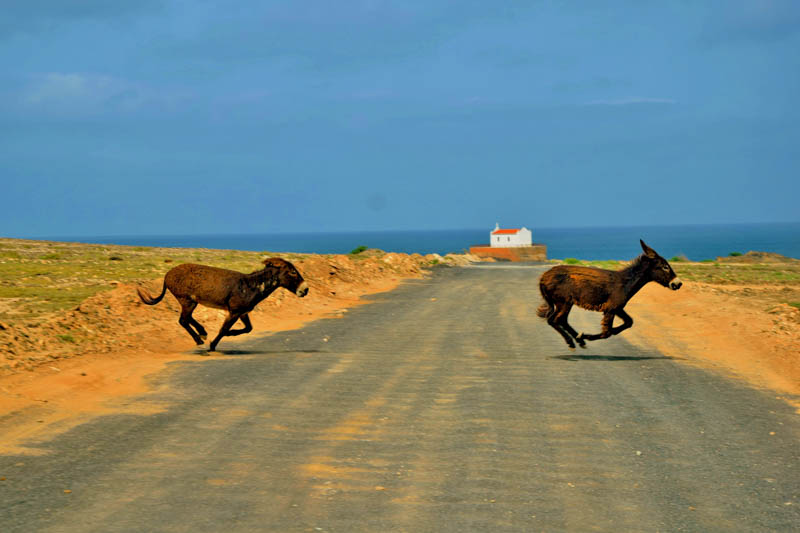
A car can be rented on all islands, but it’s better to get an off-road vehicle – the Toyota Hilux is the most popular. Some of the islands have really poor road conditions and most roads are unpaved; for example, on Boa Vista, there are only 4 real paved roads. Decent roads can be found on Sal and Santo Antão, for instance.
Renting a car for the first time? Read How to rent a car abroad and what to watch out for.
Be aware of potential risks; there is no phone signal in many places. If you get stuck in the sand dunes, for example, all you can do is wait for someone to drive by (and hope they don’t have bad intentions – unfortunately, robberies or car break-ins do occur occasionally, especially in tourist areas).
Car rental costs €60–90/day; also expect a €200 deposit, which is very easy to lose – a broken window or a flat tire is enough. A standard driver’s license is sufficient; an international one is not needed.
Find a car on Rentalcars
Bicycles
Cycling enthusiasts won’t find much in Cape Verde – the terrain is mostly unsuitable for bikes, roads are poorly maintained, or there are steep climbs and dangerous cliffs in the mountains (e.g., on Santo Antão).
On Boa Vista, e-bikes are a big hit and can be rented for rides along the beach. A two-hour rental costs 25 euros.
Taxi
Taxis are, of course, the most expensive type of transport, but in many places there’s no other choice because you practically won’t find regular bus lines or classic public transport in Cape Verde, except for a few lines in large cities like Praia on Santiago and Mindelo on São Vicente.
Don’t look for a meter in the cars; the price is usually fixed in advance and you agree on it with the driver. Night rides are always a bit more expensive.
Most taxi drivers are easygoing and won’t try to cheat you. On the contrary, you can often arrange half-day/full-day transport to interesting places on the island – it’s often a safer and better solution than renting a car and risking getting stuck in the dunes, for example.
Aluguers
Public transport and buses are replaced by a somewhat regular service called aluguer. These are jeeps, or vans for 8–12 people, that run on certain routes connecting towns and villages. The situation is a bit different on each island – on Santiago they are very frequent, while on Boa Vista there are places where they only run twice a day. Don’t look for schedules; instead, ask the locals, who will know very well where the aluguers stop, where they go, and when.
Quads
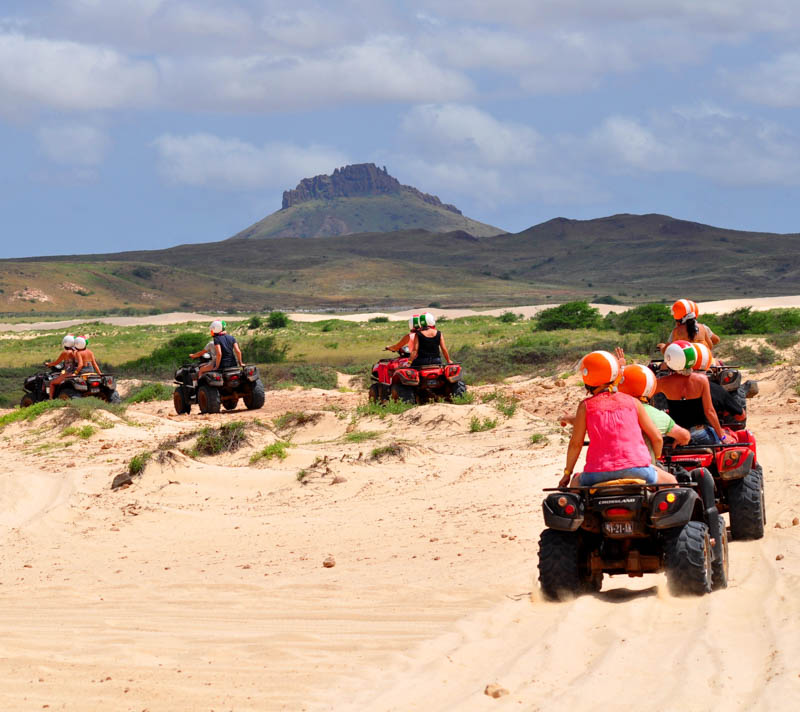
are an incredibly popular way to get around and a sought-after excursion option on Sal and Boa Vista. With a guide, you can easily see local attractions while enjoying a bit of adrenaline and a lot of fun. Definitely use a scarf over your mouth due to the dusty terrain, and your clothes can go straight into the washing machine after the trip. Driving a quad isn’t complicated, and again, a standard driver’s license is perfectly fine.
Food
The local cuisine is diverse and interesting, blending African influence with elements of Portuguese gastronomy. We are on islands, so the local fish and seafood are really worth tasting. The most typical fish is tuna, which you can find prepared in various ways. It’s usually served with rice, fries, and salad. Garoupa is also an excellent local fish and seafood lovers will be delighted by lobsters and crabs.
The traditional national dish is cachupa rica – prepared with corn, beans, sweet potatoes, vegetables, meat, and fish. There are various local variations, and Cape Verdeans love their cachupa so much that they even have it for breakfast – if they have any left over from the previous day, they fry it with onions and add an omelet or fried sausage (cachupa guisada).

Goat cheese is also an inherent part of Cape Verde. You can enjoy it as a savory appetizer (grilled, or cut into pieces and seasoned with oregano and olive oil), or sweet with papaya jam (locals call this Romeo and Juliet).
You can eat on the streets mainly during various local celebrations and holidays – chickens are often grilled and pork skewers with onions are prepared – called pinche, which can be bought on the street for €1. If you eat on the street, it’s better to be a little cautious – it’s important to see how the food is prepared and the overall hygiene of the stall.
Cape Verdean dishes are usually not spicy on their own, but locals like to add a spicy malagueta sauce made from chili peppers, which is usually on the tables in restaurants ready to use. Most dishes are based on fish and meat, however, vegetarians could enjoy beans – feijoada, sweet potatoes, cassava, vegetables, and goat cheese.
Vegans will have it harder – they will have to rely on fruit and vegetables. Cassava and sweet potatoes are very filling, and local fruit is also great (especially bananas, papaya, and mango). On Santiago and Santo Antão, these foods will be cheapest and freshest because you are right at the source; conversely, on Sal and Boa Vista, they will be more expensive than back home.

Drinks go with food – Cape Verdeans love their Strela beer, which is brewed on Santiago and is very good. Definitely don’t miss the Cape Verdean wine brand Chã das Caldeiras or Sodade from Fogo island, where it grows in a volcanic crater. It boasts 14% alcohol and excellent taste.
Every traveler should especially taste the local spirit grogue (made from sugar cane). It has 40% alcohol and locals, with a bit of exaggeration, use it to solve all physical and psychological problems. If you were to get the flu in Cape Verde, they’d get you through it with a mixture of grog, hot water, honey, and limes. Sweet lovers will also enjoy ponche – grogue spirit enriched with cane honey (30% alcohol). If you want to experiment a bit, try mixing both spirits together – the result is called stomperot.
Accommodation
Cape Verde is known mainly for luxury vacations with travel agencies, but backpackers and low-cost travelers will also find their place. You won’t find many hostels for solo travelers on the islands, but the Surf House Hostel in Santa Maria and Simabo’s Backpackers’ Hostel in Mindelo are definitely worth mentioning.
On the other hand, the islands are riddled with hotels, apartments, and villas, so you will have a really large choice in every place you visit. For us, don’t miss La Fora Ecolodge in São Filipe.
Diseases and hygiene
No mandatory vaccinations are required, but Hepatitis A and B can be useful. On Santiago, malaria and dengue fever can occur exceptionally (during the rainy season). Otherwise, Cape Verde is a very safe country in this regard – no dangerous animals or serious diseases await you here.
Tap water is not drinkable; it’s usually seawater from a desalination plant that our bodies aren’t used to. It’s safer to stick to bottled water, otherwise you risk intestinal problems. It’s also important to be careful with street food and overall food hygiene. Diarrhea and stomach bugs are common, which are usually short-lived but can be quite unpleasant.
The most common problems for visitors (especially in the hot summer months) are sunstroke, heatstroke and allergic reactions to the sun. Due to the proximity to the equator, the sun is very strong here – it’s necessary to protect yourself with a head covering and use sunscreen with a higher factor. Don’t forget to stay hydrated.
Of course, travel insurance is a must. If health problems occur, the assistance service should be a reliable partner to help you resolve the situation. Be aware that the level of healthcare is much lower than we are used to in Europe, and on some islands there isn’t even a fully equipped hospital with surgical facilities – Boa Vista is an example of this.
Safety
Cape Verde is generally one of the safest countries in Africa. Unfortunately, due to the development of tourism, petty theft and occasional robberies have started to spread. If you rent a car or quad and go to some remote places (e.g., on Sal or Boa Vista), there is a risk of robbery. These are not organized groups, but rather individuals with a knife who wait for you and take advantage of the opportunity.

I have personally helped resolve similar cases several times. If you go somewhere alone or just as a couple, don’t take too many things or money with you and don’t provoke with expensive handbags, watches, etc. Valuables should ideally stay in the hotel safe.
From my personal experience, the police in the archipelago are very slow and ineffective. In the case of theft and robbery, the chance of catching the perpetrator is slim. Many police officers don’t even speak English properly and you’ll wait several days for a police report (and you’ll even pay for it).
On the beach and in towns in tourist areas, Senegalese traders, who consider themselves self-appointed guides, will often join you. Their goal is primarily to lure you into their shop with souvenirs and African art. They can be very persistent, so you need to take an assertive stance and, of course, bargain. You’ll find beautiful things with them, but definitely don’t accept the first price.
Religion, holidays, traditions
The vast majority of Cape Verdeans identify with the Catholic faith, followed by Protestants. Sunday masses in local churches are a great experience that is worth it – you’ll see dressed-up children and young people in their best clothes, singing in the choir and playing guitars and drums. The whole mass is very cheerful and positive, and the atmosphere in the church is indescribable. Often the churches are so full that people stand on the sidewalk and peek inside. Be sure to dress nicely for church; women should have at least their shoulders and cleavage somewhat covered.
In addition to the main religions, there are also smaller ones – Seventh-day Adventists, Mormons, or Jehovah’s Witnesses. Conversely, there are very few Muslims – Islam is practiced almost exclusively by immigrants from the African continent.
Although most locals like to go to church often, their lifestyle is very liberal and free-spirited – this is also indicated by the fact that very few men commit to marriage and, conversely, many of them have children with more than one partner.
The biggest event of the year is definitely the carnival – the one on São Vicente is even considered the second best in the world after Brazil. If you want to go, it’s important to book accommodation well in advance because people from all over the world flock there. The most important day of the carnival is Tuesday (before Ash Wednesday). Nowadays, it’s possible to see carnival on basically all islands and its popularity grows year by year, just as the costumes and masks of the performers are constantly improving.
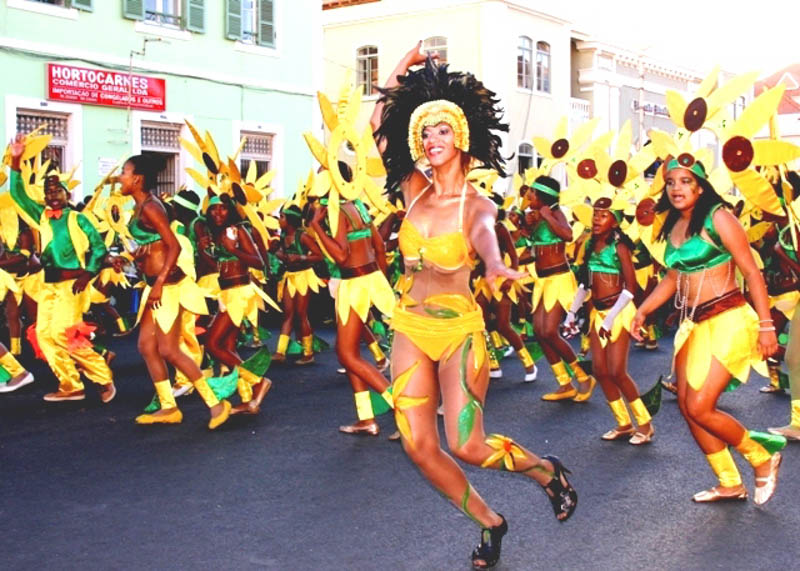
The feast of St. John the Baptist (June 24) is very popular. You’ll enjoy these celebrations most on Santo Antão, where they are combined with a typical procession, drumming, and the rhythmic cola san jon dance.
What else you should know about Cape Verde
- The official language is Portuguese, but most of the population communicates in Creole.
- Sockets in Cape Verde are of the European type.
- Most hotels have Wi-Fi at the reception, rarely in the room. Nothing is easier than buying a SIM card with data for your phone – for example, you pay about €10 for 3 GB. Local operators Unitel and CVMovel provide relatively fast and reliable internet connections. Alternatively, use an eSIM; we prefer the ones from Revolut.
- You might be surprised that in contrast to the very modest conditions and dwellings of the locals, the vast majority of Cape Verdeans have smartphones. Given the large families, often living on several different islands, it’s a vital way for them to communicate.

- Women and girls traveling alone have nothing to fear, but it’s good to know what to prepare for. European women are usually the center of attention for the locals, and there will be no shortage of offers to spend a pleasant night (or even father a child).
- If you don’t know each other well, it’s good to take a new acquaintance with a grain of salt – most locals have a partner and often several children. Even so, there are functioning relationships between European women and locals – I am proof myself, and there are more of us.
- On your travels, you will often encounter children who are very cute, friendly, and not afraid of foreigners; on the contrary, they often run up to you expecting to get something. It’s not ideal to give them money, but you can help with a piece of fruit, crayons, or school supplies. It’s often best to turn to a delegate, guide, or perhaps someone local who knows the environment, and through them give to a specific family or school/kindergarten. School supplies are expensive here, and with a large number of children (the average family has five), equipping a schoolchild is a major hit to the family budget. By donating a small item like a few pens or notebooks, you can help the locals very easily.

Best Places to Visit in Cape Verde: Beaches, Volcanoes & Islands
Shipwreck of the Santa Maria on Boa Vista island
On the Costa Boa Esperança coast, the wreck of a cargo ship that ran aground here has been resting since 1968. Fortunately, the crew survived, but they did not continue their journey to Latin America. The local residents lived off the food that was part of the cargo for an entire year.
The ship has remained in its place to this day, although only a third of it remains due to the effects of seawater. It is an unwritten symbol of Boa Vista and one of the places you must see with your own eyes. You will be captivated by the size of the ship, the atmosphere of this exceptional place in the middle of the wilderness, and the rough waves on the coast. If you want to return here one day, build a stone cairn like many before you.
Given that this is a very remote place reached by an unmarked, difficult rocky path, do not go here completely alone – lone tourists have been robbed here several times. There are several ways to get to the wreck – as part of an organized tour in off-road vehicles, an adrenaline-filled quad bike ride, or with a local taxi driver.

Santa Monica Beach on Boa Vista island
This renowned natural beach, 18 km long, is considered the most beautiful beach in Cape Verde and one of the most magnificent beaches in the world. No hotels, bars, or umbrellas – and that’s the point. Your only company will be white sea crabs and the brown-necked raven overhead. You can get here during a jeep or quad tour, or with a taxi driver.
Unfortunately, this idyll won’t last forever. A huge hotel resort has been under construction at the southern end of the beach for two years now. Investors from all over the world are flocking to the site to be part of the largest and most ambitious project in the history of Boa Vista.
Pedra de Lume Salt Mines on Sal island
A unique attraction that almost every visitor to Sal won’t miss. Salt was mined here in the past; today you can enjoy a bath in the salt lake, where the salt concentration of the water resembles the Dead Sea. Just lie on your back, relax, and enjoy the unique atmosphere. The view of the salt pans in the middle of a volcanic crater is unforgettable, as is a walk among the pink-colored lakes.
Currently, an entrance fee of 5 euros is charged. You can see the salt pans during an organized tour, or get here by taxi or car. It is located 6 km from Espargos, the capital of Sal.

Volcano on Fogo island
The only still active volcano is located on Fogo island. At 2829 meters, Pico do Fogo is the highest mountain in Cape Verde. Staying in the Fogo National Park itself is a once-in-a-lifetime experience. Sporty travelers can climb the volcano – it will take several hours and it’s better to take a local guide for help.
A major eruption on Fogo took place in 2014–2015 and lasted three months. The locals managed to escape in time, but two villages and several hotels, restaurants, wineries, and the brand new Fogo National Park center remained under the lava… Today, the locals aren’t giving up and are returning to the crater to build new houses, as the conditions up there are ideal for agriculture.

Cidade Velha and Praia on Santiago island
Not only history buffs will be thrilled by a visit to the remains of the oldest settlement in Cape Verde. This is where it all began more than 500 years ago. Not much is left of the first cathedral in West Africa, built since 1556. Conversely, the nearby church of Nossa Senhora do Rosário is very well preserved and has a unique charm and atmosphere. You will also love the colorful Rua Banana street. Cidade Velha has been on the UNESCO World Heritage List since 2009.
The “Old Town” is located near the current capital of Cape Verde – Praia. This capital is definitely worth seeing, especially the historic city center – the Plató district and, nearby, the colorful Sucupira market, a visit to which is an experience for all the senses.

Ribeira do Paul on Santo Antao island
The view of the endless greenery of Santo Antão island is a pleasant refreshment. The view into the valley is simply breathtaking. The beauty of the island never ceases to fascinate me; it’s like a fairytale. High mountains with jagged rocks alternate with green terraced fields overflowing with an abundance of bananas, papayas, mangoes, and coconuts.
The locals are incredibly kind and hospitable. They live a simple, laid-back lifestyle in harmony with nature, which keeps them perfectly fit. Almost everyone here grows something or raises animals. Their cuisine is excellent, and organic vegetables and fruit from local sources are literally dirt cheap at the market. Not to mention the delicious local spirit, distilled here using traditional methods (definitely don’t hesitate to take the chance to visit a distillery).
From the Cova de Paul crater leads a beautiful trek with unforgettable views. Don’t forget proper shoes and plenty of water. It’s definitely a good idea to take a map or head out with a local guide.
Video of the most successful contemporary local group, Cordas do Sol, will give you a taste of the Cape Verdean laid-back atmosphere, diverse culture, and smiling locals.

What else to experience in Cape Verde?
If you want to enjoy your holiday in Cape Verde to the fullest, we have a few more tips on what not to miss.
- Tarrafal Camp – A historic camp on Santiago Island, used as a prison during the colonial era, it serves as a powerful reminder of national history and the struggle for independence.
- Monte Verde – A mountain peak on São Vicente Island offering stunning panoramic views, it’s an ideal spot for hiking and birdwatching.
- Ponta Preta – A renowned surf spot on Sal Island that attracts surfers from all over the world.
- Fogo Wine Vineyards – Vineyards at the foot of the Pico do Fogo volcano, where you can taste excellent local wines and explore the unique volcanic soil.
- Buracona – A natural pool with crystal-clear water on Sal Island known as the Blue Eye, a fascinating natural phenomenon where sunlight creates a beautiful blue reflection in the water.
- Serra Malagueta National Park – Located on Santiago Island, this national park offers beautiful hiking trails, biodiversity, and stunning views of the surrounding landscape.
- Maio Biosphere Reserve – This reserve on Maio Island is home to many endemic plant and bird species and is an ideal place for nature lovers and ecotourism.
- São Filipe – A picturesque town on Fogo Island with charming colonial architecture, friendly locals, and excellent dining options where you can taste traditional Cape Verdean cuisine.
Book a trip with locals
Are you tempted to experience an unconventional holiday in Cape Verde? Check out activities with locals to spice up your stay on the islands. Or just get some inspiration here for what to do on the islands.
Where can I find more info
In bookstores, you can find a book by Petra de Brito, who lives on Sal Island. Most of the basic information still applies, although some details regarding restaurants and hotels may have changed since publication (2015).
A blog about the Cape Verde Islands including tips for trips and accommodation.

Dagmar Sučová
I am a representative, guide, and adventure lover all in one. I’ve been working in Cape Verde for almost two years and I’m completely enchanted by their laid-back lifestyle without rush and stress, the smiling locals, fascinating nature, diverse culture, and pleasant climate. You can follow me on the Milujeme Kapverdy page or contact me via email at dagmar.sucova@hotmail.com.