This post is also available in:


Krakow attractions draw visitors from every corner of the globe — and for good reason. This city is a rare gem where centuries of history collide with a buzzing modern scene, creating an atmosphere that captivates you day and night. Let yourself be swept up in Krakow’s energy, venture into its surroundings, and you’ll struggle to know when to stop exploring.
We cover other Polish cities in dedicated guides:
Why Visit Krakow?
Founded according to legend by the mythical Prince Krak, this city will amaze you at any time of year, at any hour of the day. Whether you’re a family, a student, an older couple, or a solo traveller of any age, you’ll always find something here for you. The city offers a rich cultural life, plenty of sports and entertainment, and activities for children too.
Throughout the centuries, Krakow has always played a significant role. Princes, kings, and bishops all held court here, and it once served as the capital of Poland — today it’s the capital of the Lesser Poland Voivodeship. Krakow was not destroyed during World War II (unlike many other Polish cities), and its history has been preserved for future generations. The city and its surroundings are incredibly rich in cultural, technical, historical, and natural heritage.
Top Krakow Attractions to See and Visit
Only a handful of cities in the world can match the sheer number of things to see and do that Krakow offers its visitors. Whether it’s your first time or your fifth — you’ll always find places you missed before. Come and let the city absorb you completely. We guarantee you won’t want to leave.
Main Square: Rynek Główny
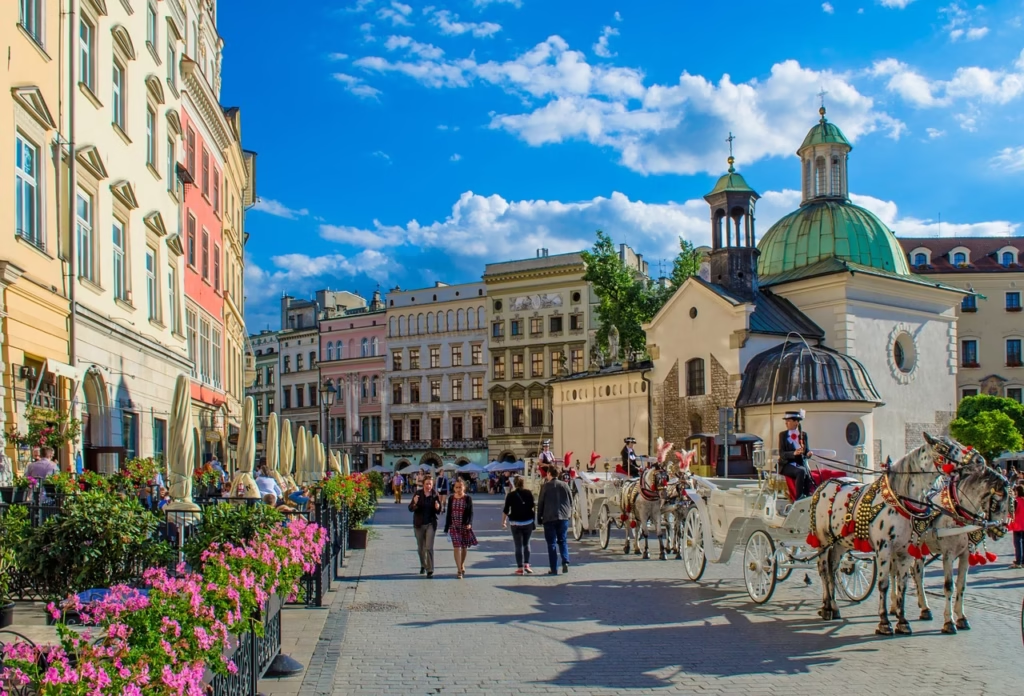
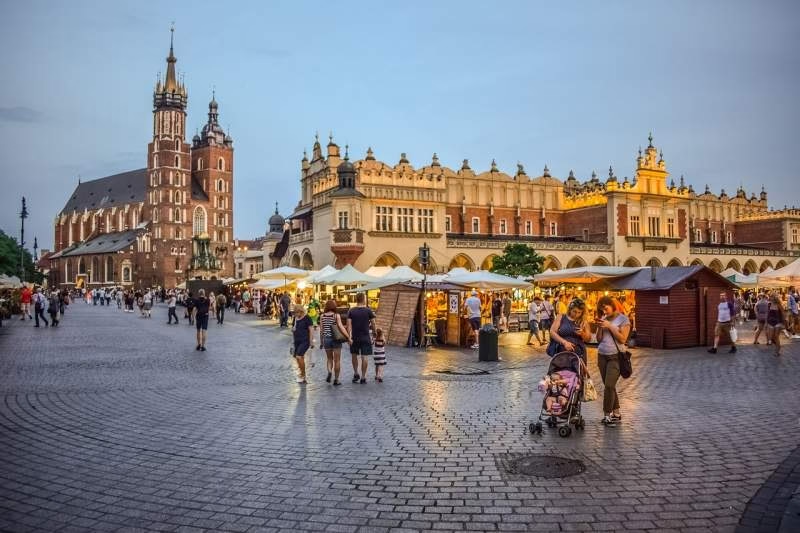
One of the largest medieval squares in Europe, Rynek Główny will enchant you with its atmosphere. Surrounded by beautiful historic buildings — including the Cloth Hall (Sukiennice) — it’s the perfect place for a stroll, picking up souvenirs, and sampling local delicacies. Watch the street performers and soak up an atmosphere you won’t forget.
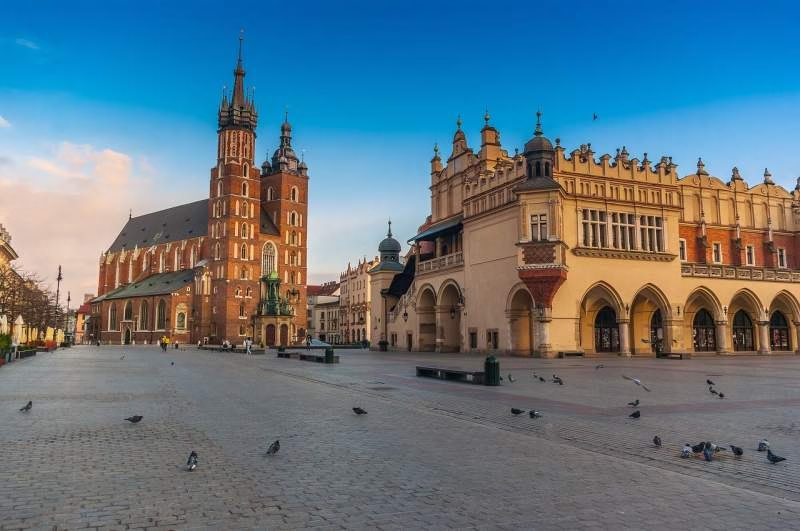
The University Route
Krakow’s Old Town is unmissable — it’s the very soul of the city. But instead of following the Royal Road that the crowds take, try walking the University Route instead. You’ll be pleasantly surprised by what you discover, and you might even prefer it to the classic path. Like the Royal Road, it starts at the Barbican and is marked with signposted maps. From the end of the route, continue on to Poland’s most famous castle — Wawel.
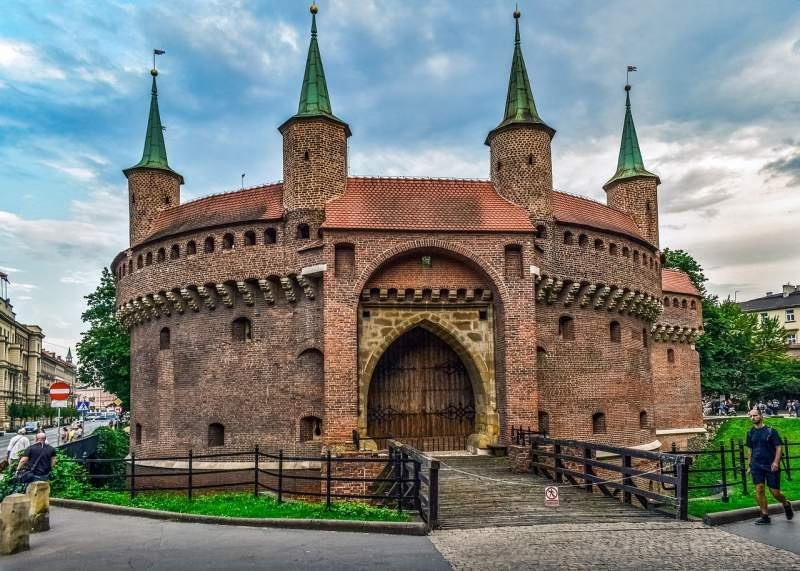
The John Paul II Sanctuary
Recently built and fairly modern yet undeniably elegant, this church is dedicated to Krakow’s most celebrated figure — Cardinal Karol Wojtyła, later Pope John Paul II, who spent most of his life in the city. The two-storey sanctuary is vast and radiates a uniquely powerful, hard-to-describe atmosphere. The pilgrimage complex includes a museum and education centre. The surrounding area is still under development.
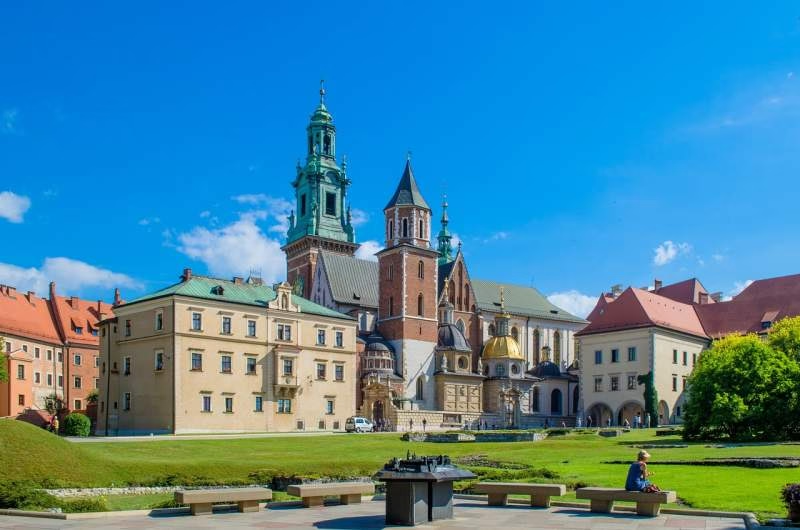
Wawel Royal Castle
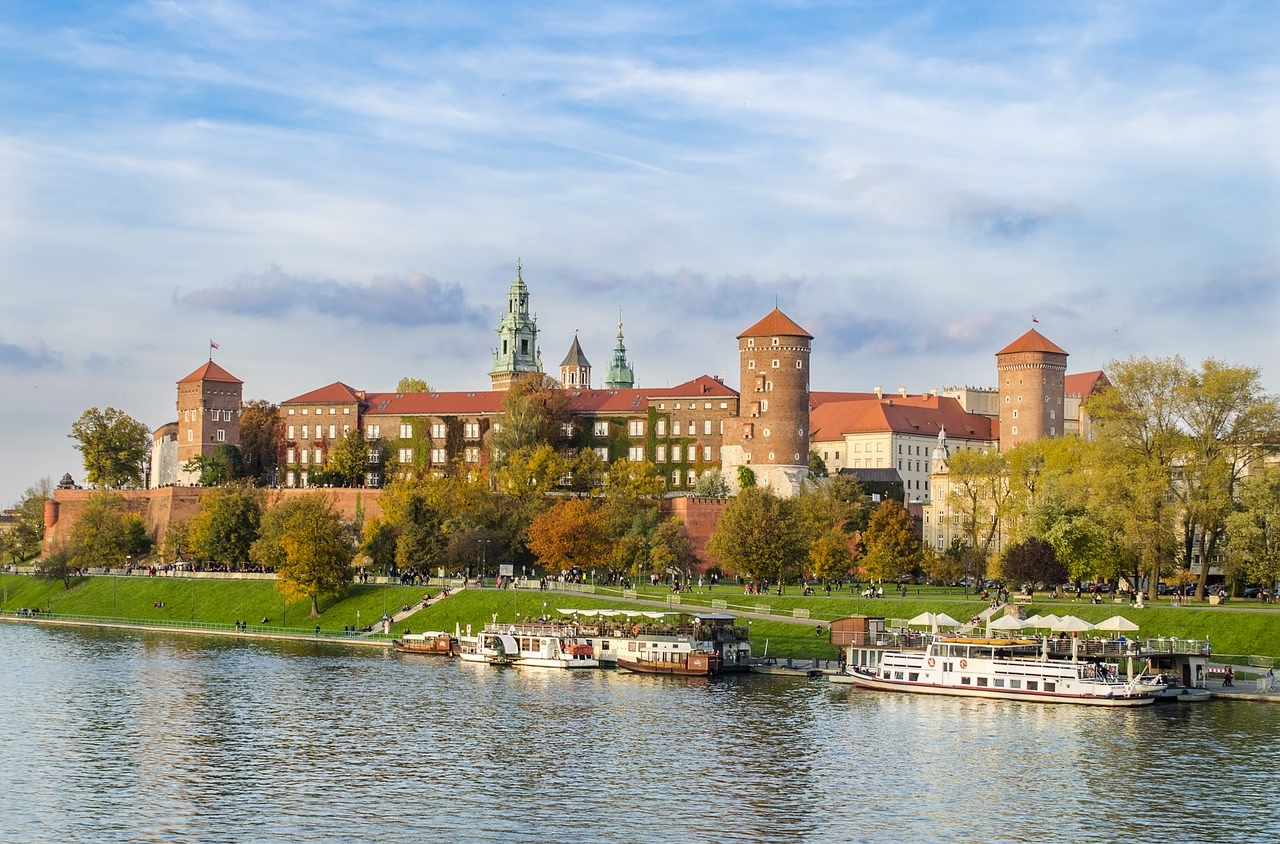
This majestic castle perches atop a hill and dominates the Krakow skyline. Explore its stunning interiors, visit the royal apartments, and enjoy breathtaking views over the Vistula River. History and culture surround you at every step.
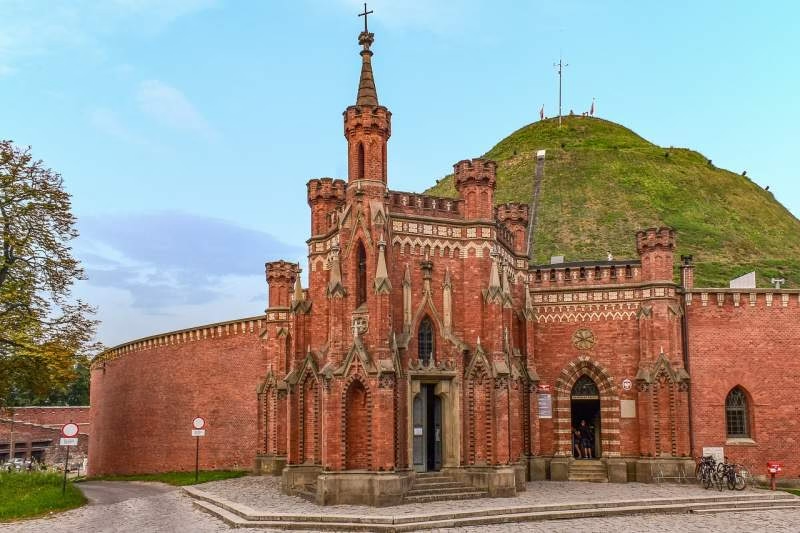
Kościuszko Mound
On the outskirts of Krakow stand four man-made earthen mounds. All of them offer lovely views, but the best and highest is the Kościuszko Mound, built within a fortress. It has the finest panoramic view and the complex houses several museums. The most fascinating exhibit covers the mound’s construction — you can even read how many buckets of earth were needed to build it. In flat Poland, raising an artificial mound is a way of honouring great figures. And Tadeusz Kościuszko certainly deserves the honour: regarded as a hero of two worlds, he was a general and military engineer who fought for American independence and, on returning to Poland, led the uprising of 1794.
Polish Painting
The National Museum holds impressive collections of Polish painting spanning the centuries. Try to visit at least one of the exhibitions — ideally the one on the first floor of the Cloth Hall on the main square.
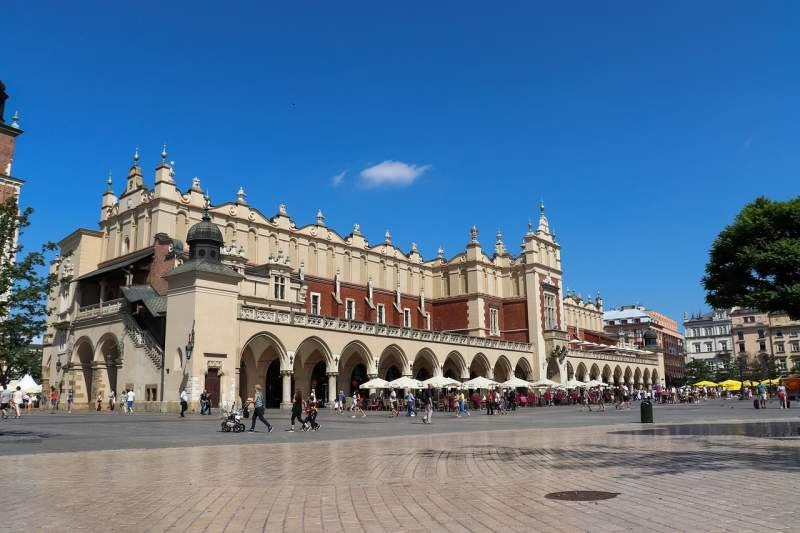
Leonardo da Vinci’s Famous Painting
The world-famous Lady with an Ermine by Renaissance master Leonardo da Vinci has had a turbulent history — changing hands and locations many times before finally finding a home in the collections of the National Museum in Krakow.
Explore Krakow with Locals
Mogiła
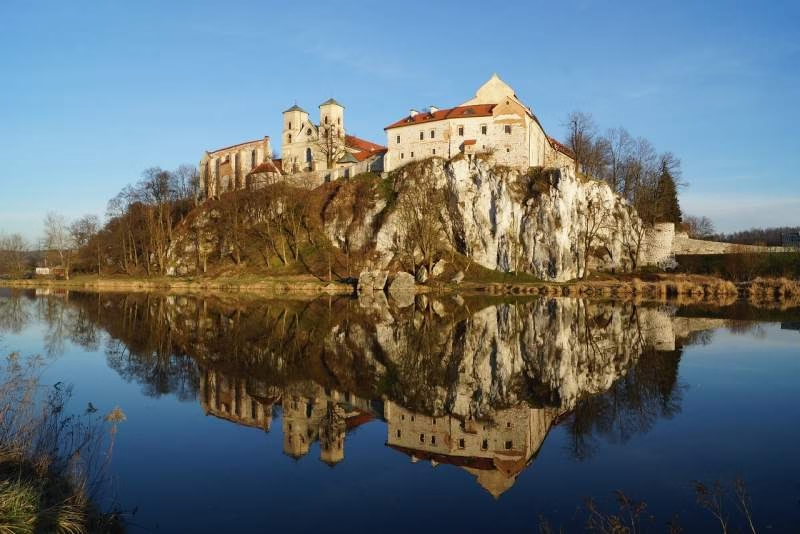
In the Mogiła district, you’ll find a beautiful Cistercian abbey and, directly opposite it, a small wooden church — the oldest in the region.
The Jewish Quarter: Kazimierz
This bohemian and vibrant neighbourhood is known for its alternative atmosphere and artistic spirit. Wander its streets and you’ll stumble across independent galleries, hipster bars, and laid-back cafés. Yet the quarter is also full of historical monuments, including the Old Synagogue (Stara Synagoga), a reminder of the area’s rich Jewish heritage.
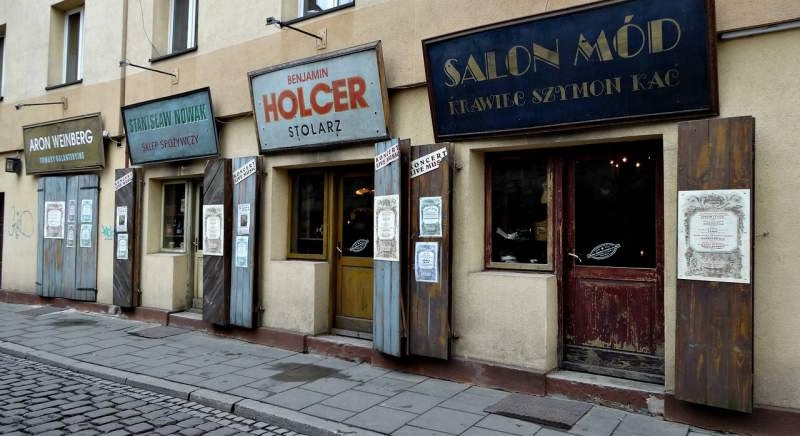
Schindler’s Factory
Made famous by the film Schindler’s List, this historic factory tells the remarkable story of Oskar Schindler and his rescue of Jewish workers during World War II. The interactive exhibition brings the wartime period to life and offers a profound insight into those dark times.
Unmissable Krakow Experiences
The Krakow Singing Lesson
This is a collective sing-along on the main square. A stage is set up, a live band plays, a choir performs, and a host leads the event. Song lyrics are projected onto a screen and attendees receive free songbooks. The event is held several times a year — usually on national holidays — with each session built around a particular theme. The result is a unique kind of concert, even better if you actually join in the singing. Events typically take place at Christmas, Easter, early May, early July, mid-August, and around 11 November.
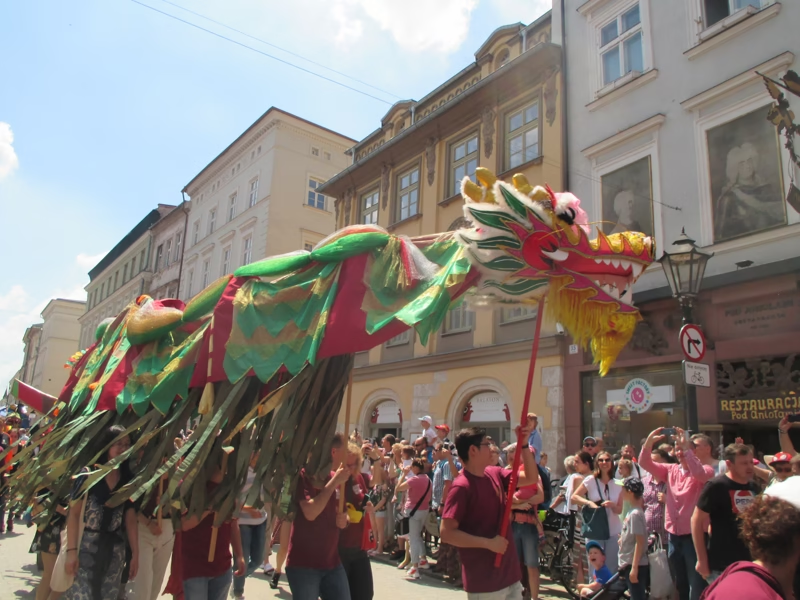
Dragon Festival
The dragon is woven into the very founding legend of Krakow — and as you’ll quickly notice, it’s also the city’s best-selling souvenir. On the weekend at the turn of May and June, the city hosts the Dragon Festival: dragon models are displayed, a dragon parade winds through the streets, and a spectacular fire-breathing dragon show takes place on the Vistula in the evening, accompanied by a full cultural programme. Kids will absolutely love it.
The Vistula River
The Vistula flows through the city for many kilometres, flanked by cycling paths and walking trails, and you can even take a boat trip on the river. Wherever you walk, cycle, or cruise, the river views are consistently beautiful and the atmosphere around the water is wonderfully relaxed. For some of the most spectacular views of the river, head to the Tyniec monastery on the city’s outskirts — reachable by public bus or along the cycle path.
A Walk Through the Green Spaces of Podgórze
Krakow has green space everywhere, but make a point of walking through the parkland in the Podgórze district. Even though you’ll be practically in the city centre, you’ll feel as though you’re deep in the countryside, with stunning views of the city throughout — and the route doubles as a history lesson.
Start at the site of the former Płaszów concentration camp. Today it’s a meadow with information boards and memorials, and it’s a strikingly beautiful place. However, please be mindful: this is a site of remembrance. Please stick to the marked paths, dress appropriately, and do not eat or picnic here.
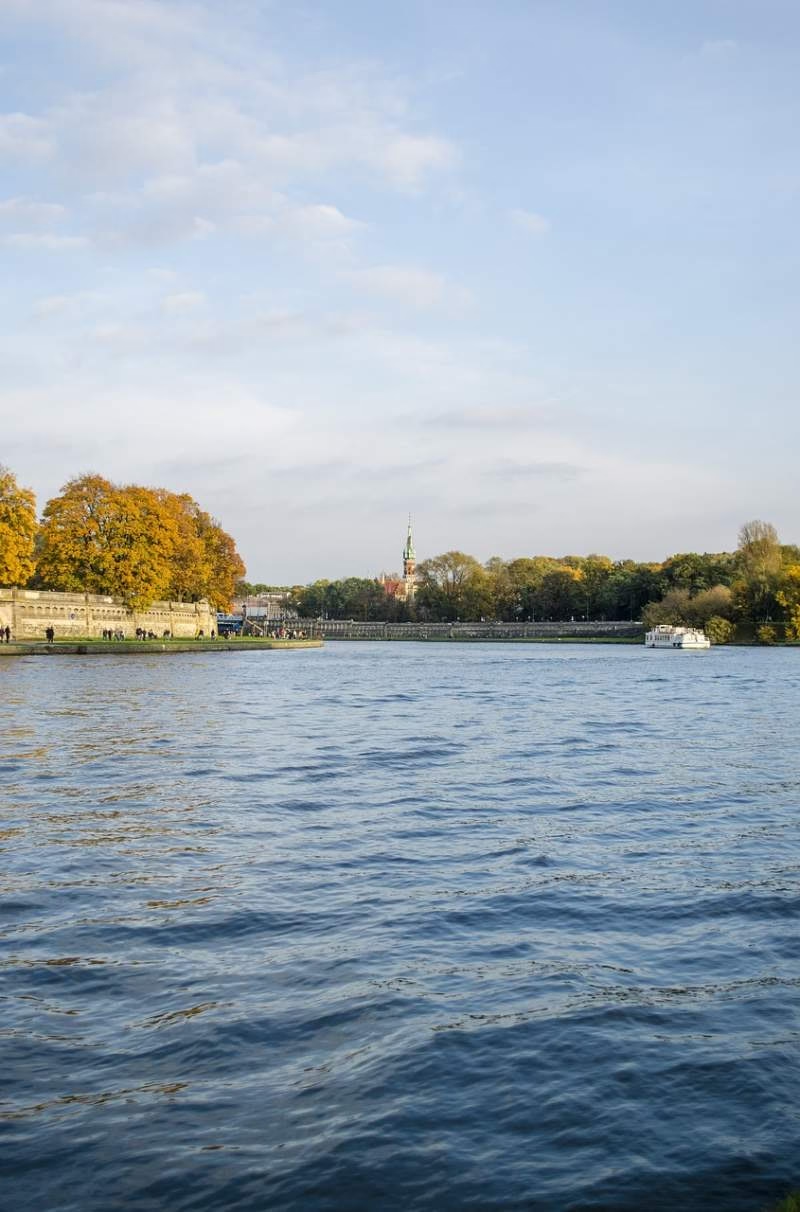
From there, continue past the old closed quarry towards Krakus Mound, visible from a distance. This is a favourite spot for locals to gather and relax — the perfect place to have a picnic and soak up the local atmosphere. From the top, you’ll enjoy a sweeping panoramic view over the city. Follow the signs down into Podgórze, where the beautiful Church of St Joseph awaits. Budget roughly 2 hours for the whole route if you skip the picnic.
Rynek Główny at Night
The main square at the heart of the Old Town takes on a completely different character after dark. Come here to soak up the atmosphere after sunset, once the attractions have closed for the day.
Where to Eat in Krakow
Krakow is the capital of the Lesser Poland Voivodeship and Poland’s second-largest city. As a cultural and educational hub, it has long attracted people from across the country — and with them, their regional cuisines. In recent years an international wave of restaurateurs has added even more variety. There’s no single “Krakow cuisine” as such; instead, what you’ll find in local restaurants is incredibly diverse.
You’ll find everything from traditional Polish food to Georgian, Ukrainian, and Jewish specialities — especially in the Kazimierz quarter. Whatever cuisine you feel like, chances are there’s a restaurant serving it somewhere in Krakow.
Two things you absolutely must try:
- Krakow bagels (obwarzanki krakowskie) — ring-shaped, unsweetened, lightly salted baked goods, sprinkled with poppy seeds, sesame, or coarse salt. They’re sold from mobile carts wherever tourists gather. They’ve been baked in the city since the mid-14th century, and their production was once strictly regulated by a guild.
- The Wawel chocolate factory is based in Krakow. You can find its products in supermarkets across Poland, but here you can visit the flagship store right on the main square.
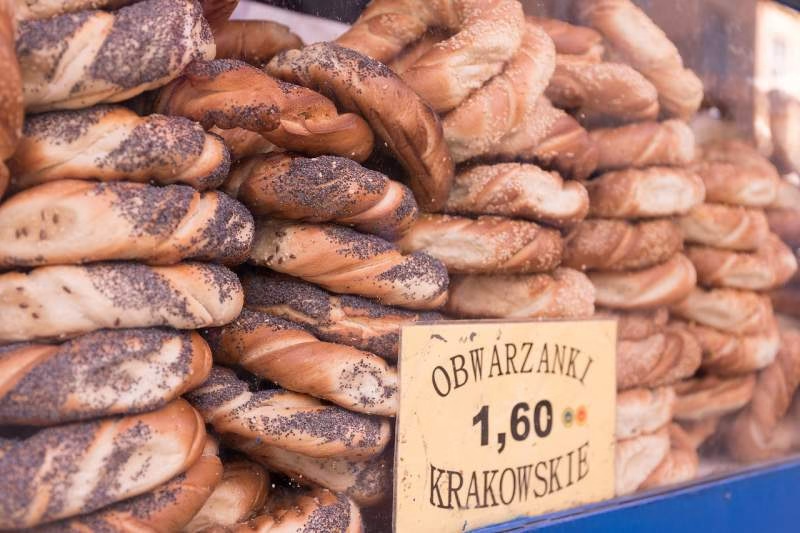
If you’d like to try making Krakow bagels at home, a recipe is just a click away.
Where to Stay in Krakow
Krakow offers a wide range of accommodation for every budget, from hostels to five-star hotels. The most important decision isn’t which hotel to pick — it’s where to be based. Stay in the historic centre or within easy walking distance of it. The city is alive day and night, and being central means you’re always in the thick of things. The Old Town is full of hostels and small hotels.
Even though the city is always packed with tourists, you can generally find a bed. Just be aware that prices spike significantly around public holidays and New Year’s Eve. Larger international chain hotels tend to be outside the historic centre — staying on the outskirts and relying on public transport doesn’t make sense in Krakow.
Accommodation Tips for Krakow
Budget & hostels
- Ginger ApartHostel — a quieter hostel near Wawel with both dorm and private rooms.
- Dizzy Daisy Downtown Hostel — affordable and well-located between the main station and the historic centre.
- Greg & Tom Beer House Hostel — a lively social hostel right on Floriańska Street.
Good-value hotels
- Sky Hotel Kraków — modern hotel right by the main station, about ten minutes on foot from Rynek.
- Leonardo Boutique Hotel Krakow Old Town — well-placed between Wawel, Kazimierz and the Old Town.
- B&B Hotel Kraków Centrum — straightforward and good value across the river from Wawel.
Families
- Aparthotel Stare Miasto — spacious apartments with kitchenettes right by Rynek.
- PURO Kraków Stare Miasto — a modern hotel at the main station, practical for families arriving by train.
- Metropolitan Boutique Hotel — a quieter option between Kazimierz and the Old Town with family rooms.
Luxury
- PURO Kraków Kazimierz — a design hotel near the cafés and restaurants of Kazimierz.
- Hotel Wawel Queen — a boutique hotel below Wawel Castle, ideal for a weekend away.
- H15 Palace — a luxury hotel in a historic palace near the Florian Gate.
Krakow Nightlife
Krakow has one of Central Europe’s liveliest nightlife scenes — by some counts the Old Town has the highest concentration of pubs and bars of any European city. Krakow never sleeps: streets stay busy until the early hours, and some bars run round the clock. Three districts each have their own character.
- Stare Miasto (Old Town): the busiest and most touristy, with traditional Polish pubs hidden in medieval cellars right around Rynek Główny. Good for stag groups, large venues, and craft beer bars along Floriańska and Szewska streets.
- Kazimierz (Jewish Quarter): the bohemian and alternative heart of Krakow’s nightlife. Look for atmospheric jazz and klezmer bars like Alchemia and Mleczarnia, mismatched vintage furniture, and a laid-back local crowd.
- Plac Nowy: the late-night hub at the centre of Kazimierz, with cheap drinks, a circular building selling iconic zapiekanka (open-faced baguette pizza) until dawn, and student-friendly bars all around the square.
For something different, head west of the Old Town to Forum Przestrzenie, a converted communist-era hotel turned riverside bar and event space with great views of Wawel. Check the city’s advertising boards and event websites for festivals, gigs and pop-up venues.
How to Get to Krakow
Ryanair, EasyJet and Wizz Air operate direct flights to Krakow (KRK) from many major European airports. Jet2 operates direct flights from the UK. Also the Polish flag carrier LOT can be a good option, especially if you are coming from the U.S. or Canada (direct or 1 connection in Warsaw).
Budget fares can be very competitive, though standard one-way prices vary by season and availability.
By train, Krakow is well connected from across Central Europe. Direct services run from Warsaw, Katowice, Wrocław, Prague and Vienna, making it an easy destination by rail. The journey from Warsaw takes around 2.5–3 hours; from Prague, roughly 7 hours by day train or overnight by sleeper.
By bus, Flixbus and a range of national coach operators connect Krakow with major Polish cities and destinations across Europe. Buses are a budget-friendly option with several departures daily.
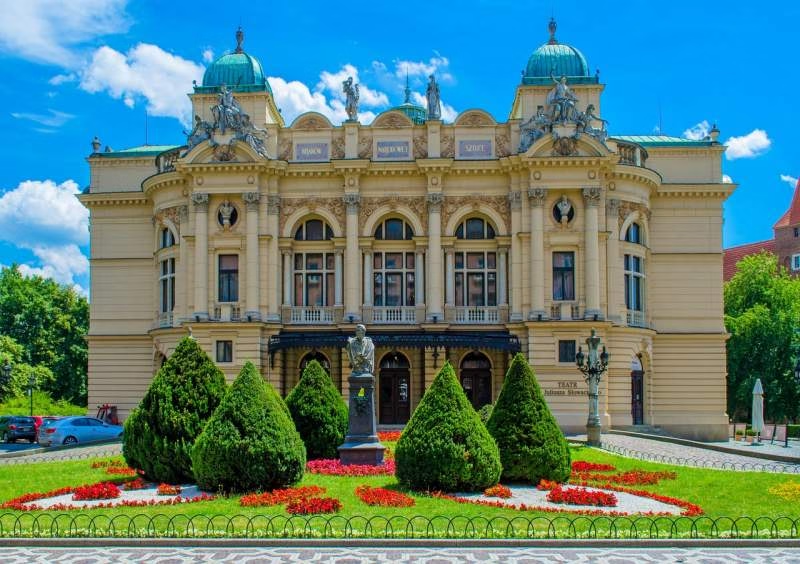
Getting Around Krakow
Getting from the Airport
The quickest link is the train to Kraków Główny station — around 20 minutes and 20 PLN. The platform is connected to the terminal by a covered walkway; buy your ticket at a machine, online or on board.
Two daytime bus routes also serve the centre: lines 209 and 300, with night bus 902 after hours. A 60- or 90-minute ticket valid for suburban zones costs around 8–9 PLN. Worth it if the bus stops near your accommodation.
A taxi to the centre runs around 100–150 PLN in normal traffic.
Getting Around the City
Krakow has a well-organised public transport system of buses and trams. Up-to-date information on routes and fares can be found on the official MPK website.
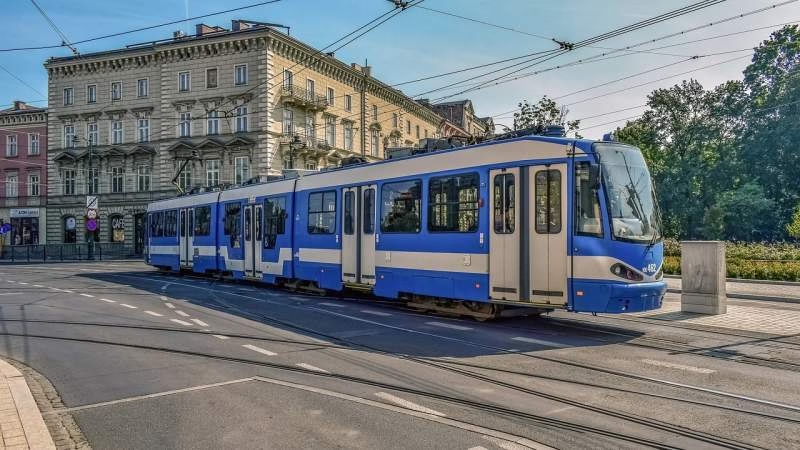
The entire historic centre is within walking distance of the main train and bus stations. Walking is by far the best way to explore the centre.
Tickets can be purchased at newspaper kiosks, ticket machines at most stops, and on board almost every vehicle. Note that machines vary — some don’t give change, some accept coins only, others take banknotes or contactless payment. Always check before you board.
The ticketing system is fairly complex, with options for 30 minutes, 50 minutes, 90 minutes, a single journey with no transfers, or a 24-hour pass.
A practical approach is to explore the historic centre on foot, then buy a 24-hour pass to reach the sights further out.
Families (2 adults and up to 5 children) visiting on a weekend can buy a family day ticket for 16 PLN (around €4).
Explore Krakow at your own pace with the Krakow City Pass. It covers 37 museums and includes unlimited public transport. Find out more on GetYourGuide.
Money and Approximate Prices
Poland has its own currency — the złoty (PLN). Krakow is generally considered an affordable European city with a good level of value for visitors.
- Accommodation: hostel dorm from around €8/person/night; hotel double room from around €25/night.
- Food: restaurant meal from around €8; cafeteria from around €3; street food from around €3.
- Drinks: 1.5l bottle of water from a shop around €0.80; draught beer (0.5l) from around €1.50; bottle of wine in a shop from around €6.
- Attractions: most sights cost 30–70 PLN (around €7–17). Kościuszko Mound is 34 PLN (around €8) from April 2026. Many National Museum branches have one free day per week — check in advance as free spots are limited.
- Public transport: 24-hour ticket 20 PLN (around €5); 90-minute single journey 9 PLN.
Leave nothing to chance — get a Revolut card, at least as a backup. With real interbank exchange rates, free ATM withdrawals up to your monthly limit, and instant transaction notifications, it’s a smart travel companion anywhere in Europe and beyond.
Krakow Weather and Best Time to Visit
Krakow has a temperate continental climate with four distinct seasons. The best time to visit Krakow is from May to September, when temperatures are mild to warm, the days are long, and the city’s outdoor cafés, beer gardens and squares come alive.
- Spring (April–May): 10–18°C, blossoming parks and fewer crowds — a sweet spot before peak season.
- Summer (June–August): 20–28°C, the busiest months with the warmest weather and a full festival calendar; expect crowds in the Old Town and higher accommodation prices.
- Autumn (September–October): 12–18°C, golden colours and noticeably quieter — many travellers’ favourite time.
- Winter (November–March): -3 to 5°C, often with snow. December brings the Christmas markets and a magical festive atmosphere; January and February are cold but cheap and atmospheric.
If you want the perfect balance of good weather, manageable crowds and reasonable prices, aim for May, June or September. For Christmas market enthusiasts, plan your trip for the first three weeks of December.
Krakow Christmas Markets
The Krakow Christmas Market on Rynek Główny is one of the most atmospheric in Central Europe. Wooden stalls fill the main square from late November until 26 December (some years stretching into early January), with the Cloth Hall and St. Mary’s Basilica as a postcard backdrop. Entry is free, and the market is open daily from morning until late evening.
What to look for:
- Grzane wino — Polish mulled wine, spiced and sweet, served in souvenir mugs.
- Oscypek z żurawiną — grilled smoked sheep’s cheese from the Tatra mountains, served with cranberry jam.
- Pierogi and bigos — hot dumplings and hunter’s stew, perfect for warming up between stalls.
- Pierniki — traditional Polish gingerbread, sold as ornaments or to eat.
- Handicrafts — ceramics, amber jewellery, wooden Christmas decorations and woollen slippers made by local artisans.
The market pairs naturally with a winter weekend break — pack warm layers, sturdy waterproof shoes, and book accommodation early as December weekends sell out fast.
Visa and Entry Requirements
Poland is a member of the EU and the Schengen Area. EU and EEA citizens do not need a visa — a national ID card is sufficient. Citizens of most other countries can also enter visa-free for short stays; check the requirements for your specific nationality before travelling.
Good to Know Before You Visit
- Tourist information centres: InfoKraków has several branches around the city where you can pick up maps, find out about current events and get help planning your itinerary. The Kids in Kraków guide and children’s city map are also available online in English and Polish.
- Book tickets in advance: The Rynek Underground, Schindler’s Factory and some Wawel tours use timed entry and can sell out on weekends — secure your slot before the day of your visit.
- Shops may be closed on Sundays: Poland has Sunday trading restrictions. Restaurants, cafés, petrol stations and owner-run shops generally remain open; museums may have reduced hours on public holidays.
- Children and seniors travel free: Children under 4 and passengers aged 70 or over can use Krakow public transport free of charge. Carry proof of age.
- The National Museum is not one building: It has several branches across the city — the Gallery of Polish Painting is in Sukiennica (the Cloth Hall), the Lady with an Ermine is in the Princes Czartoryski Museum, and further collections are spread across smaller branches.
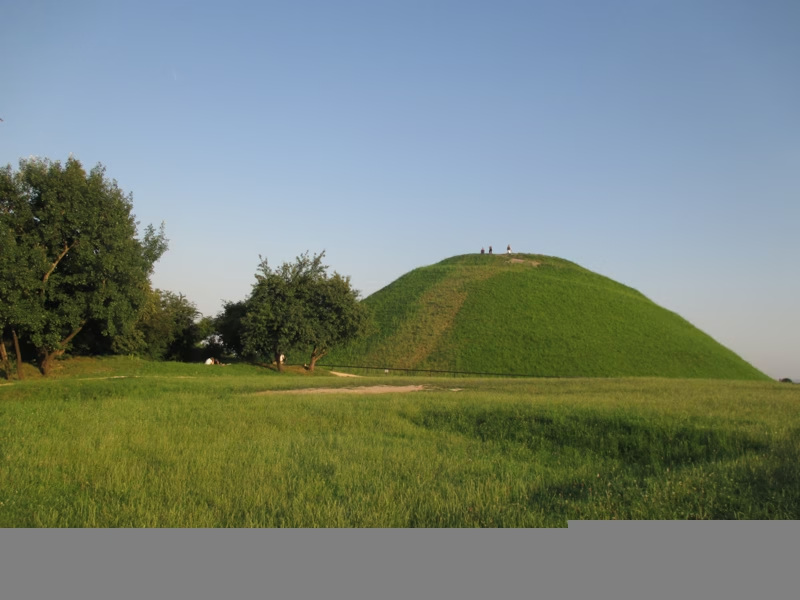
- Krakow is a city of legends: The mythical founder Prince Krak is said to be buried in Krakus Mound, while his daughter Wanda has her own mound in Nowa Huta. The story linking Krak to the Czech Duke Krok is an intriguing folk connection, though not historically documented.
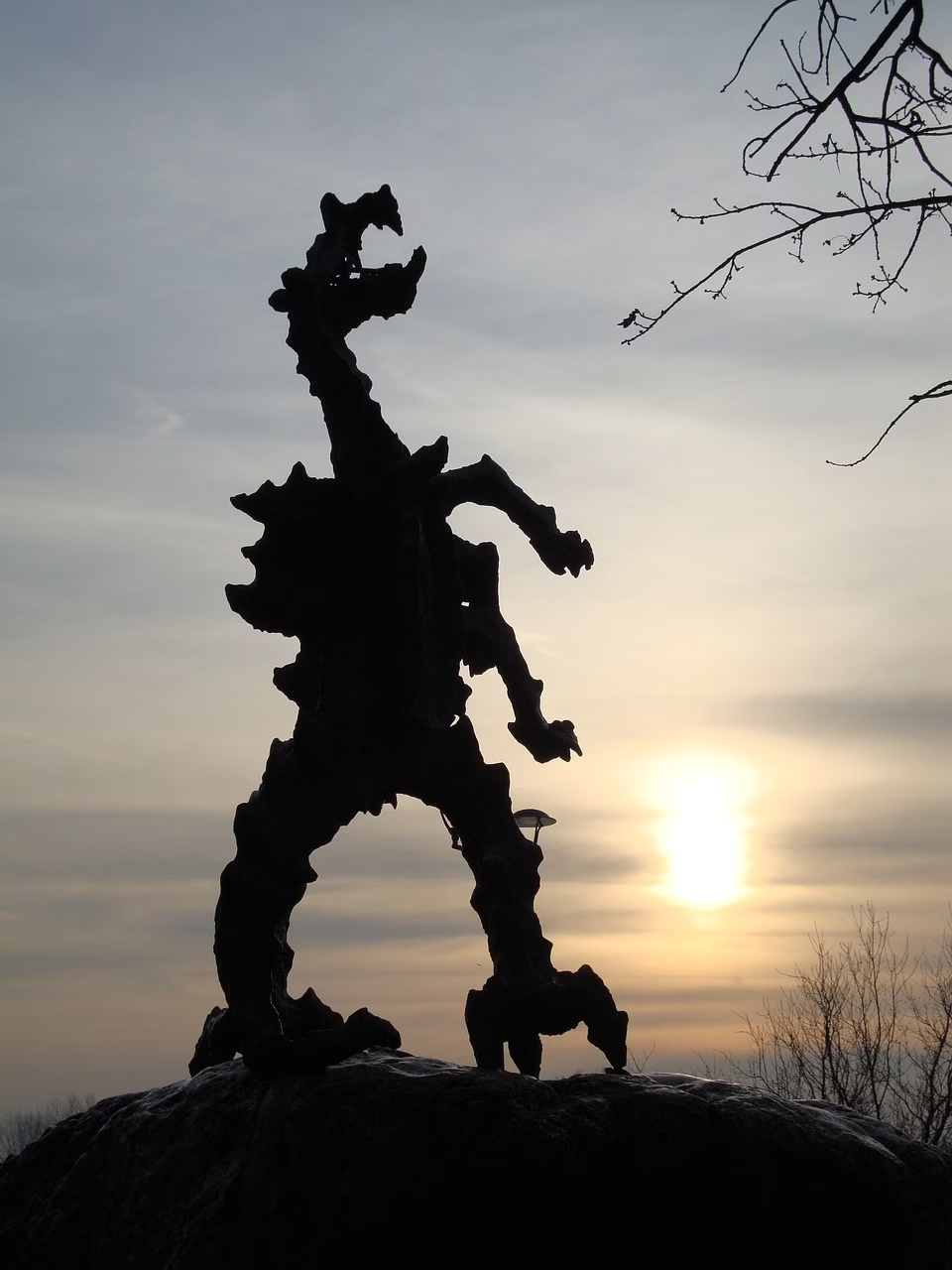
- The Wawel Dragon really does breathe fire: The dragon statue stands at the foot of Wawel Castle on the Vistula embankment and shoots flames at regular intervals. His cave beneath the castle is also open to visitors.
- On the western edge of the city, a beautiful white monastery peers out from the forested hilltop — but be aware that this is the Camaldolese Monastery at Bielany, where women are barred from entering on all but a handful of days per year. Men may visit daily, but only during strictly limited hours.
How Long to Spend in Krakow
That’s a tough one. If you only want to see the Old Town, one day will do — though you won’t get inside any museums or monuments. To cover everything worth seeing within reach of public transport, you’d need about a week.
For the main city centre highlights, a few museums, and a handful of sights on the outskirts, three to four days is the sweet spot.
If you want to explore everything in the surrounding region — maybe give it two months. However long you stay, you’ll never run out of things to do.
Day Trips from Krakow: Don’t Miss These
Krakow’s surroundings are exceptionally rich. Seeing everything reachable by public transport on single-day trips would take the best part of a month.
Salt Mines
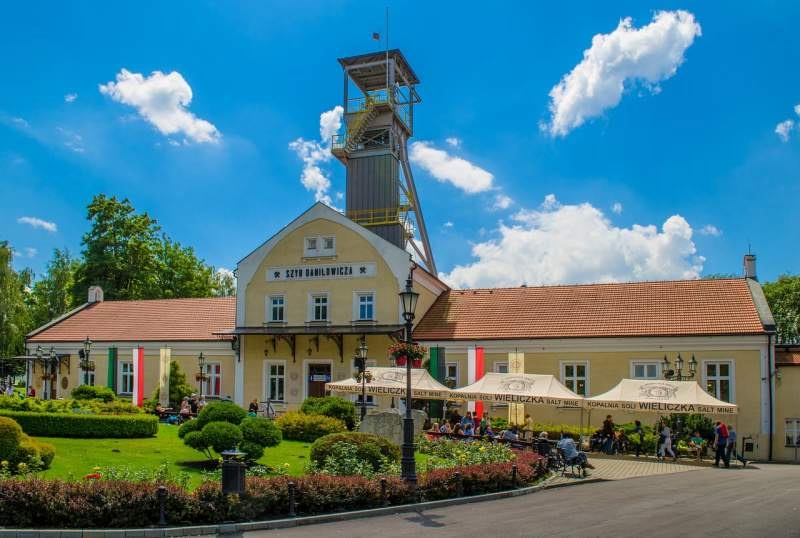
The Wieliczka Salt Mine is the most popular day trip from Krakow — a UNESCO World Heritage site that has been mined continuously for over 700 years. Visitors descend 135 metres along the Tourist Route, passing salt-carved chapels, underground lakes, and the breathtaking Chapel of St. Kinga, which is entirely sculpted from salt.
- Address: ul. Daniłowicza 10, Wieliczka — about 14 km south-east of Krakow city centre.
- Opening hours: 7:30 to 19:30 from April to October; 8:00 to 17:00 from November to March. Closed on 1 January, Easter Sunday, 1 November, 24 and 25 December.
- Ticket prices: the standard Tourist Route costs around 130 PLN (about €30) for adults and 100 PLN (€23) reduced; the Miners’ Route is similarly priced. All visits are guided and last around 2.5 to 3 hours.
- How to get there: the easiest option is the Train Lajkonik from Kraków Główny station (~25 minutes, ~9 PLN). Alternatively, take bus 304 from Galeria Krakowska (~40 minutes). For a hassle-free experience, book a guided day tour from Krakow that includes return transport.
- Booking tip: tickets often sell out for weekend slots in summer and around Christmas — book online at least a few days in advance.
For a quieter alternative, the salt mines in Bochnia (about 40 km east of Krakow) offer a similar underground experience with fewer crowds, lower entry prices, and a longer underground stay of around three hours.
Trail of the Eagles’ Nests
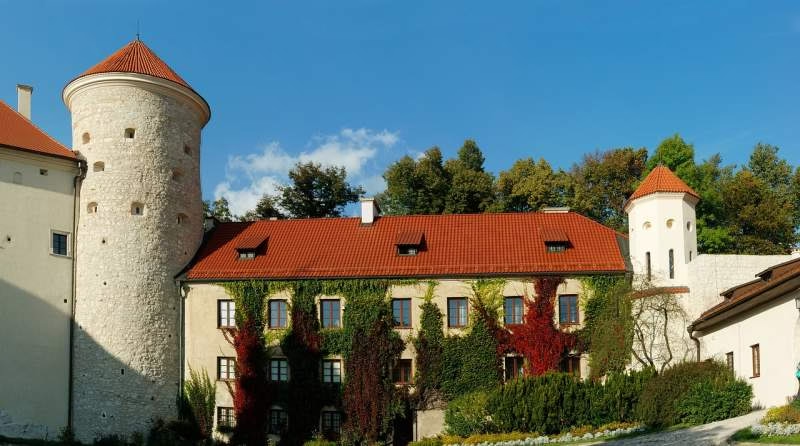
This is a roughly 160 km route linking castles and manor houses between Krakow and Częstochowa. The closest highlights to Krakow are Ojców Castle and Pieskowa Skała manor. The trail is waymarked and can be walked, cycled, or driven. Both of these sites are accessible by public transport from Krakow.
Ojców National Park
Poland’s smallest national park, about 25 km from Krakow, is a natural and historical gem: limestone rock formations, caves, the ruins of Ojców Castle and the Renaissance Pieskowa Skała manor are all within the same valley. A day trip lets you combine a walk through the park with visits to both castle sites. Note that parking fills up fast at weekends — consider taking the bus from Krakow.
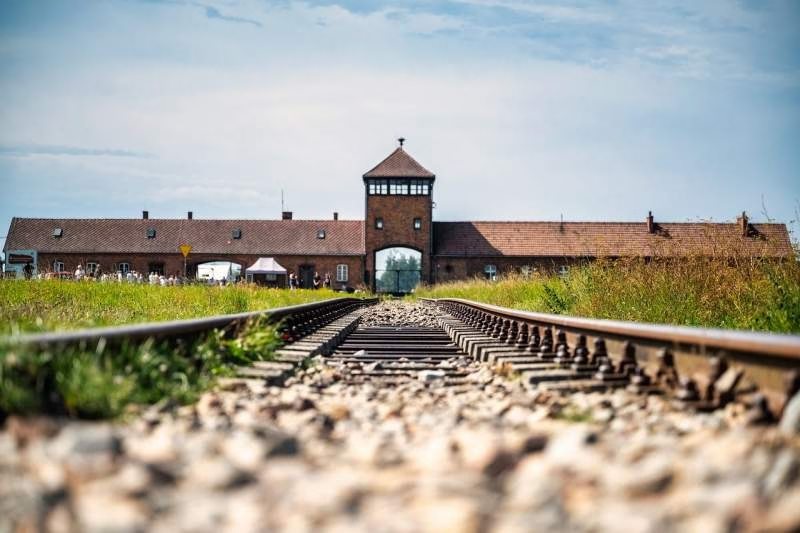
Concentration Camps Auschwitz and Birkenau
Near Krakow, in the town called Oswiecim, lie places connected to one of Europe’s darkest chapters. The concentration camps of Auschwitz and Birkenau are accessible as day trips.
National Parks
There are five national parks within striking distance of Krakow. Besides the Ojców National Park to the north, you can reach Babia Góra National Park to the west, the Tatra Mountains to the south, Gorce National Park to the southeast, and Pieniny National Park a little further beyond.
Pilgrimage Sites
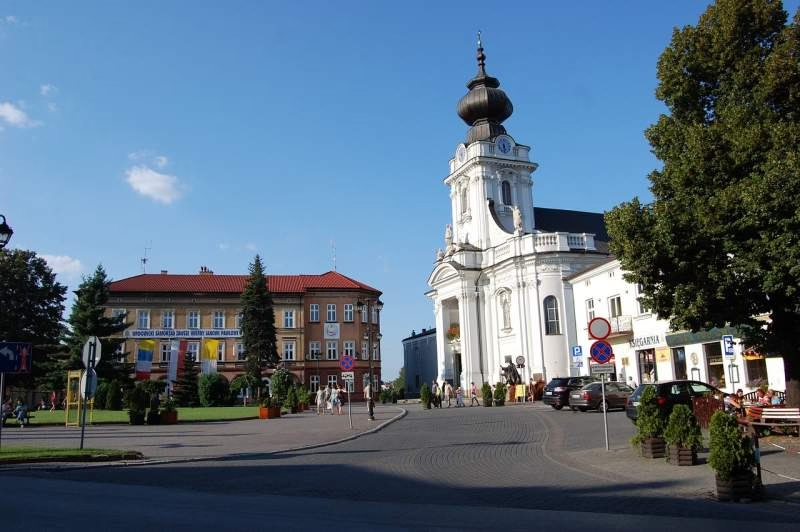
Not far from Krakow lies Wadowice, the birthplace of Pope John Paul II. Nearby is the pilgrimage site of Kalwaria Zebrzydowska, with a magnificent cathedral on a hilltop above the town and two pilgrim walking circuits.
Nearby Towns
There are many towns in the region, but two stand out. Bielsko-Biała is a historic city bisected by the Biała river, which once marked the boundary between two regions and even two countries. One half of the city is Art Nouveau in style, the other Renaissance and Baroque. Tarnów is another historic city that also boasts the title of the warmest place in Poland, with a long-term annual average temperature of 8.6°C.
Frequently Asked Questions
Is Krakow worth visiting?
Yes — Krakow is one of Central Europe’s most rewarding city break destinations. The medieval Old Town and Rynek Główny (one of Europe’s largest medieval squares) survived World War II almost untouched, and the Royal Wawel Castle, the bohemian Kazimierz Jewish Quarter and the haunting Auschwitz-Birkenau memorial are all within easy reach. Add affordable prices, excellent Polish food and lively nightlife, and Krakow offers more variety than most weekend-break cities.
What is the best time to visit Krakow?
The best months are May, June and September, when temperatures are pleasant (15–25°C), days are long and crowds are manageable. July and August are warm but the busiest and most expensive months. December is a wonderful time for the Christmas markets on Rynek Główny, while January and February are cold but offer the lowest prices and a quieter, atmospheric city. Spring blossoms in April and golden autumn in October are both lovely for photography.
How many days do you need in Krakow?
Plan a minimum of three days to see the highlights at a relaxed pace — one for the Old Town and Wawel, one for the Jewish Quarter and Schindler’s Factory, and one for a day trip to Wieliczka Salt Mine. Four days lets you add Auschwitz-Birkenau, and five gives you breathing space for Kościuszko Mound, Nowa Huta or the Tyniec abbey. Most travellers find Krakow has enough to fill a long weekend or a full week without feeling rushed.
Is Krakow safe for tourists?
Yes — Krakow is consistently ranked among the safest large cities in Europe. Violent crime against tourists is rare and the Old Town is well lit and busy until late. The usual big-city precautions apply: watch your belongings around crowded squares and on packed trams, agree taxi fares before getting in (or use Uber, Bolt or FreeNow apps), and stick to well-lit streets late at night. Solo travellers and women travelling alone generally report feeling very comfortable here.
Useful Resources
The official city tourism website.
Krakow’s cultural events calendar.
Veronika Škvárová
Veronika has been fascinated by Poland since the mid-1990s and has been travelling there ever since. Despite no single trip lasting longer than 14 days, she has spent well over a year in the country in total, visiting all of its voivodeships and exploring both major attractions and lesser-known gems. Even after more than a hundred trips to Poland, she keeps discovering something new. Krakow alone she has visited thirty times — and each visit still brings a fresh surprise. You can contact her at skvarova@volny.cz.