This post is also available in:


Kudowa-Zdrój sits just minutes from the Czech border — roughly ten kilometres from Náchod, and under two hours by road from Central Europe. Yet most travellers know it only as a sign on a motorway rather than a destination in its own right. This Kudowa-Zdrój travel guide changes that.
A spa centre with mineral springs, the unique Skull Chapel (Kaplica Czaszek) in Czermna, and above all the Table Mountains (Góry Stołowe) with their sandstone labyrinths — together with the Czech borderlands, these attractions easily fill several days.
This guide covers what to see in Kudowa-Zdrój, how to plan your days, where to head in the surrounding area, and what to sort out before you leave.
We give particular attention to the Table Mountains (Góry Stołowe), since they are the main draw for many visitors, and there is a dedicated section on travelling with children.
Why Visit Kudowa-Zdrój?
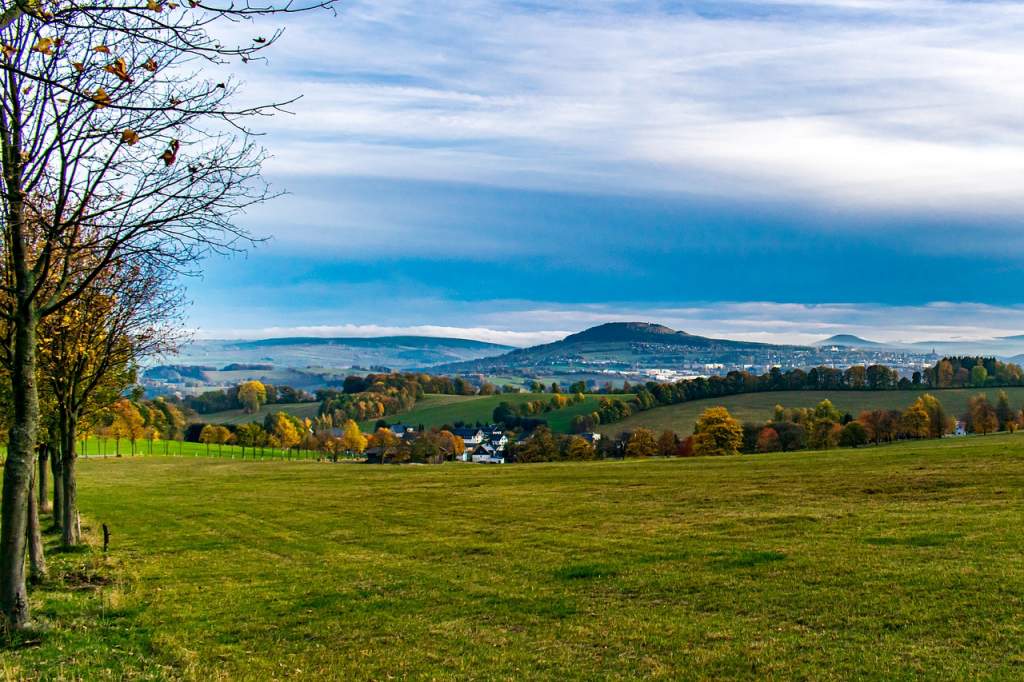
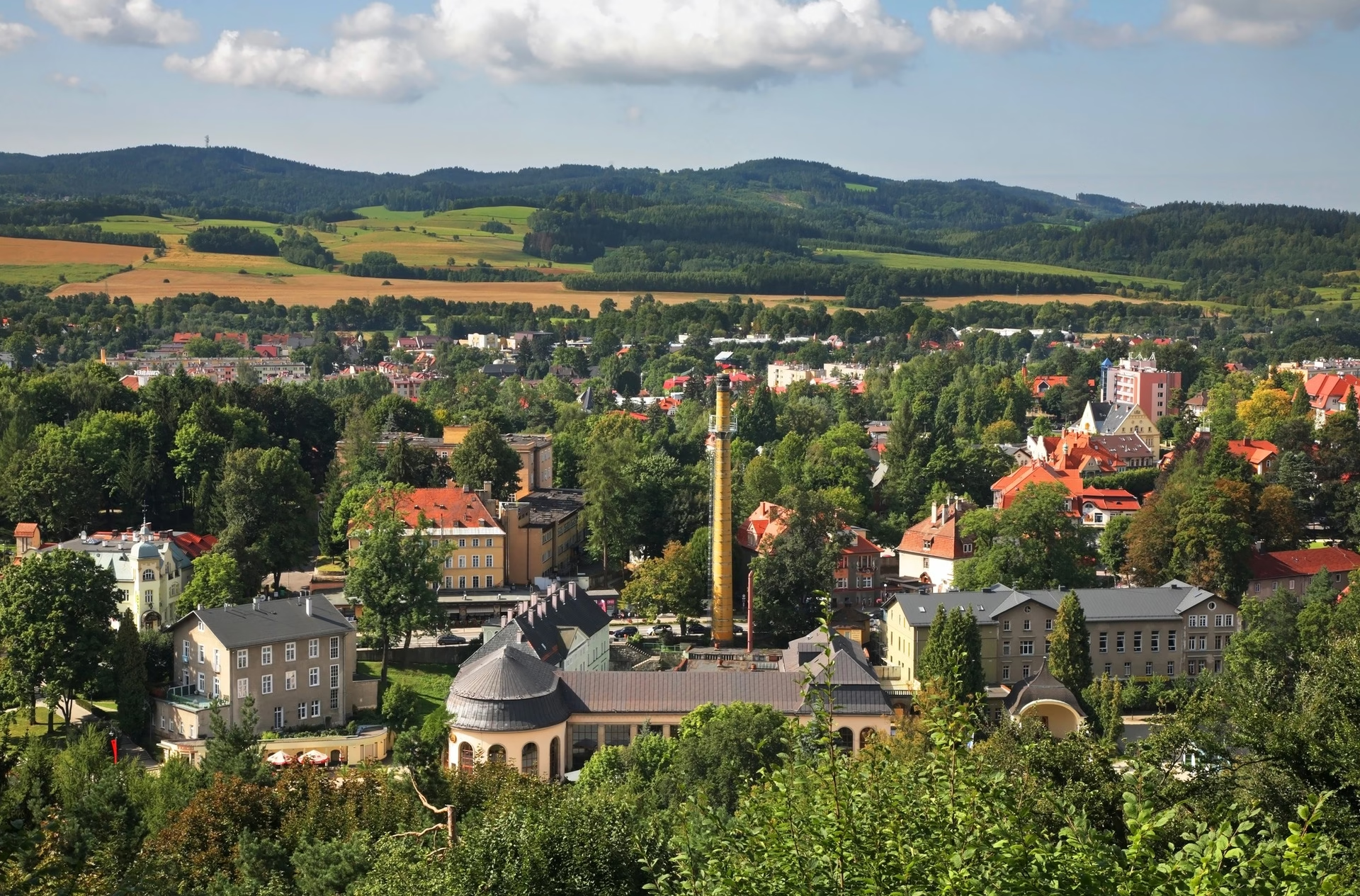
Kudowa-Zdrój combines spa-town tranquillity with beautiful beech-forested mountains right on the doorstep and a fascinating border history.
The town itself is worth half a day — a stroll through the park, a taste of the mineral water, and a visit to one of the local museums. Then drive twenty minutes in the afternoon and you are standing beneath Szczeliniec Wielki, the highest peak in the Table Mountains.
The second reason is location. Kudowa-Zdrój lies in the Kłodzko Valley, a basin ringed by mountains on every side, and sits directly on the Czech border. Less than half an hour away you’ll find Kłodzko and its fortress Twierdza Kłodzko — the historic heart of the whole region — as well as the pilgrimage site of Wambierzyce.
Kudowa-Zdrój is also far less crowded than Polish mountain resorts such as Karpacz or Zakopane. Even in peak season you can find a table at a café without any trouble and there is no battle for a parking space in the centre.
Crowds tend to concentrate on the mountain hiking trails, where they are managed by a timed-entry reservation system. More on that below.
How Long to Stay and How to Plan Your Days
One day is enough for the town itself — Park Zdrojowy and the Pijalnia Wód mineral drinking hall in the morning, the Skull Chapel and one of the museums in the afternoon.
If you want to add the Table Mountains, budget at least two days. Szczeliniec and the Errant Rocks each deserve their own half-day.
For a longer stay of three to four days, spreading the itinerary like this works well:
- Day one: the town,
- Day two: the mountains,
- Day three: Wambierzyce and Duszniki-Zdrój,
- Day four (optional): Náchod and the Czech borderlands.
This pace lets you linger and miss nothing essential.
If you are only here for a weekend and have to choose between the town and the mountains, choose the mountains. Park Zdrojowy is lovely, but similar spa parks exist elsewhere in the region.
Szczeliniec Wielki and the Errant Rocks (Błędne Skały), on the other hand, are genuinely unique and unreachable without a car or a longer hike.
Top Highlights at a Glance
- Szczeliniec Wielki – sandstone formations and sweeping panoramas from the highest point in the Table Mountains.
- Errant Rocks (Błędne Skały) – a labyrinth of narrow rock corridors in the Skalniak massif.
- Skull Chapel (Kaplica Czaszek) – the only charnel house of its kind in Poland.
- Park Zdrojowy – the spa park with the Pijalnia Wód Mineralnych and three medicinal springs.
- Aquapark Wodny Świat – salt, non-chlorinated water, a 92-metre water slide and a sauna zone included in the entry price.
- Wambierzyce – the “Silesian Jerusalem”, with a monumental basilica and a moving nativity scene.
- Duszniki-Zdrój – Chopin’s manor and the oldest paper mill in Poland.
- Náchod – a chateau just across the border, a short hop by car.
What to See and Do in Kudowa-Zdrój
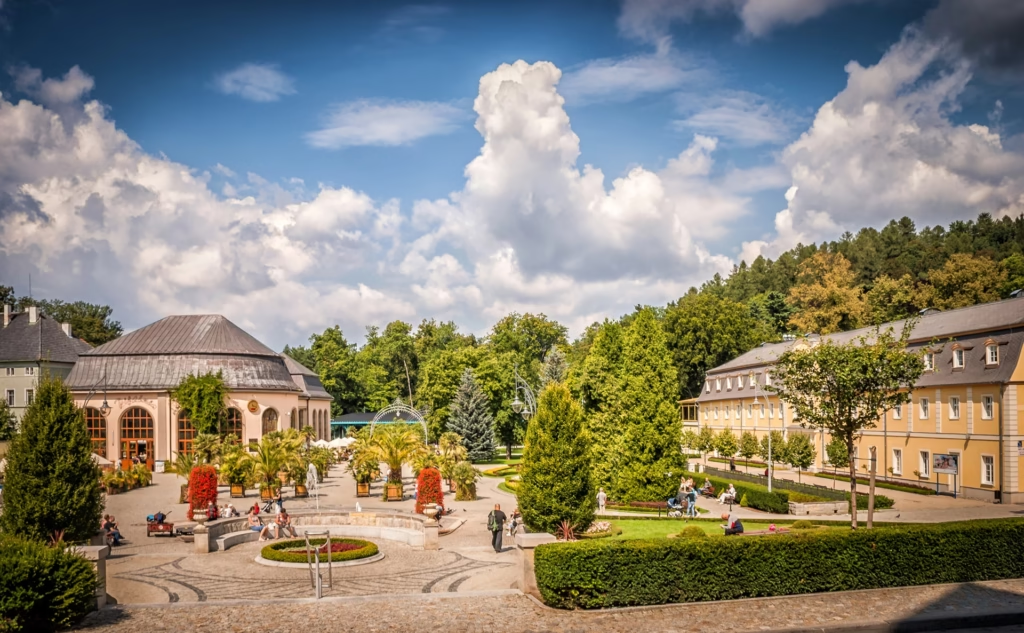
Park Zdrojowy and the Pijalnia Wód Mineralnych
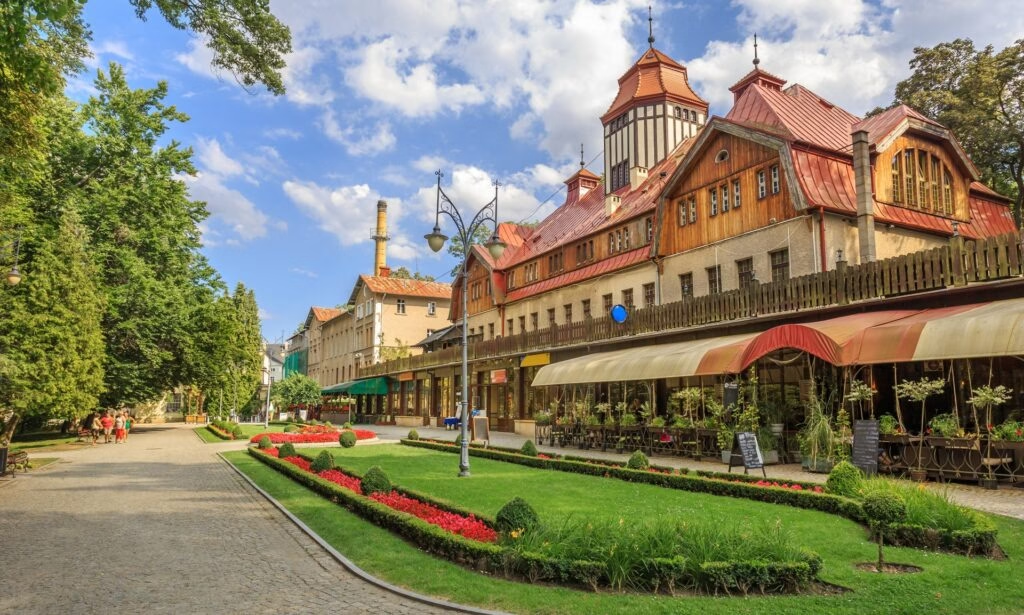
The heart of the spa town was established in the late 18th century by Baron von Stillfried on the site where mineral springs bubble up at the foot of Góra Parkowa.
The park was designed along the lines of English landscape gardens and underwent its most significant transformation at the start of the 20th century, when the present Pijalnia Wód was also built.
A walk through the park leads past a pond with carp and swans all the way to the Czech border, which lies literally behind the last line of trees.
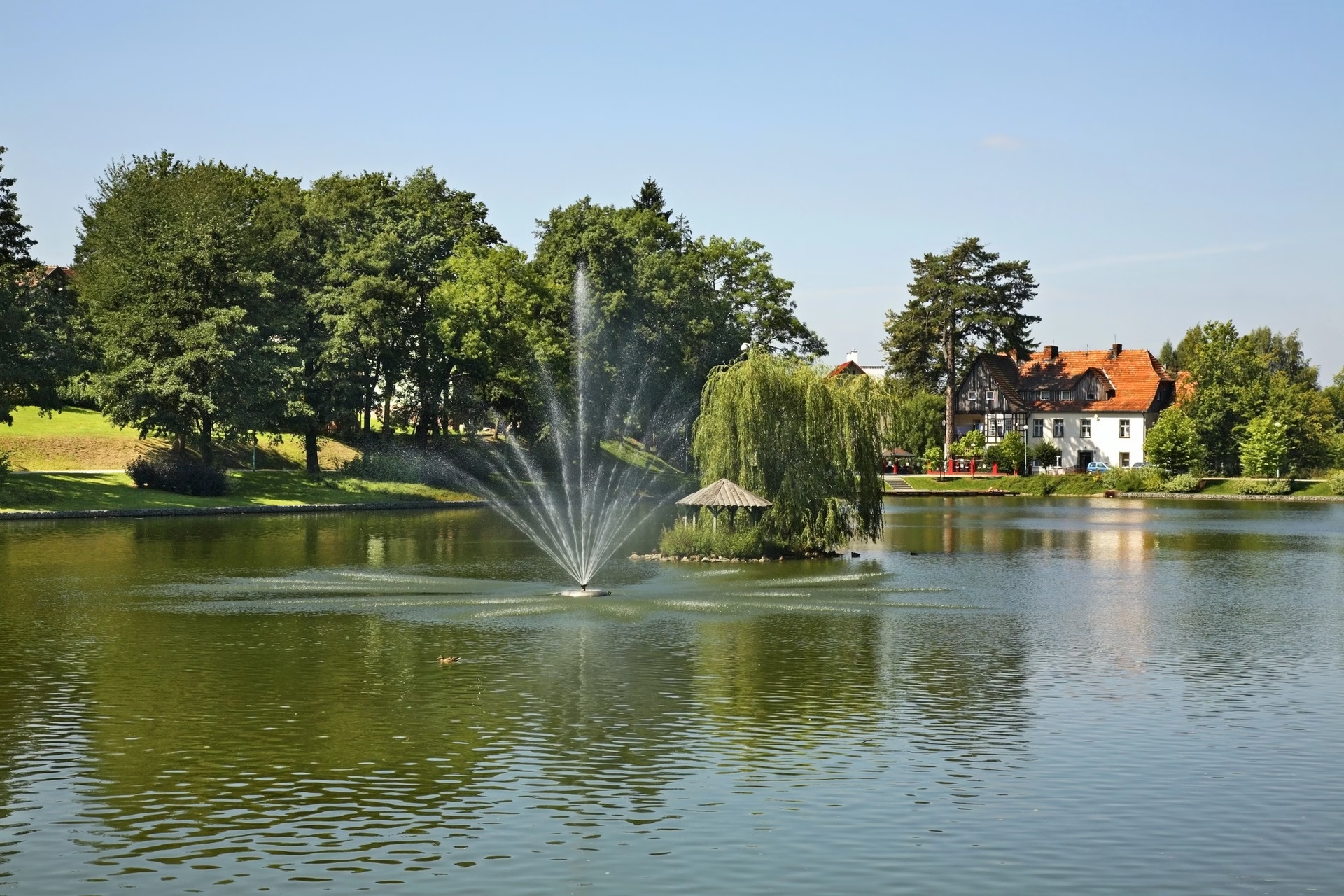
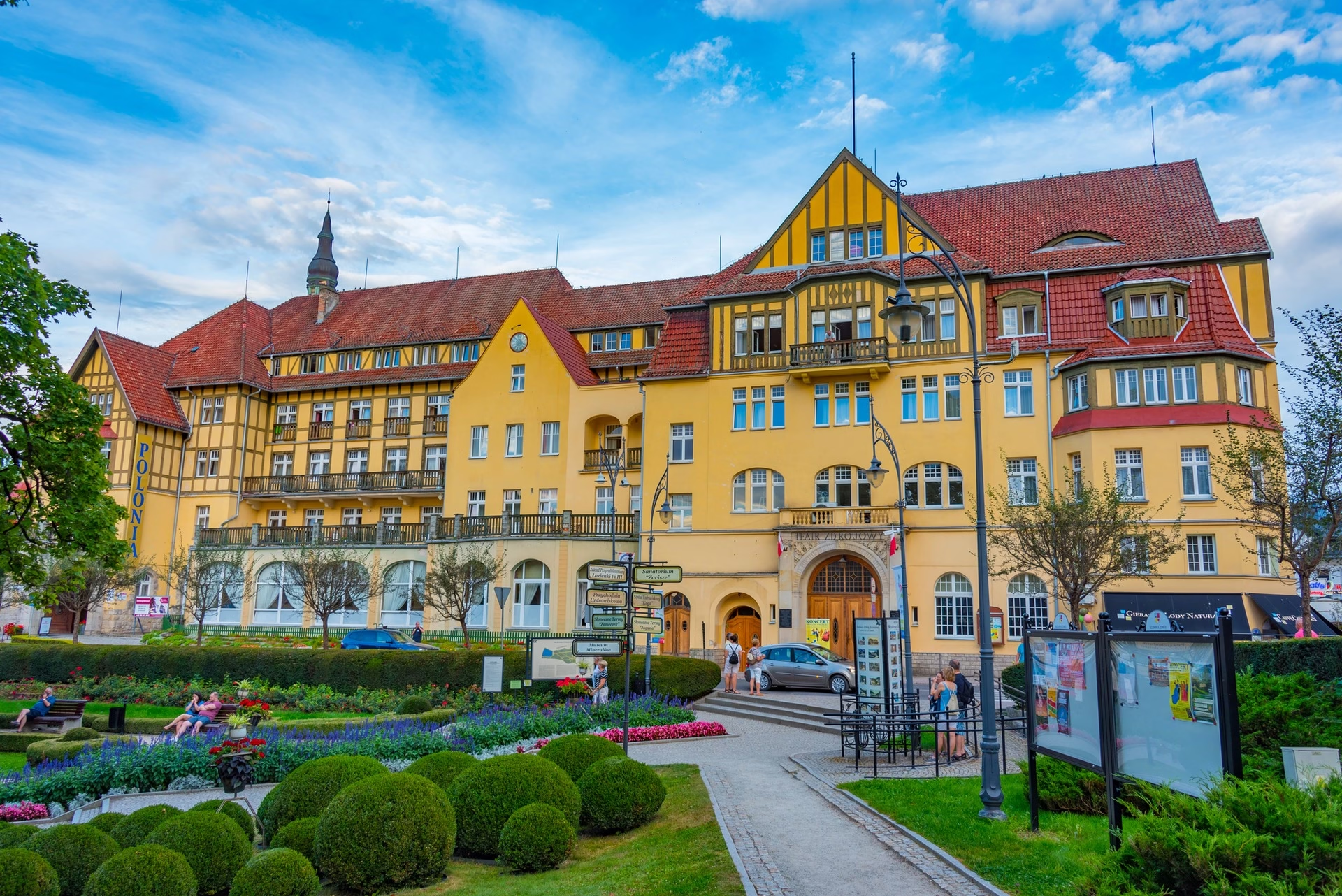
Along the way you pass the Art Nouveau sanatorium buildings of Zameczek and Polonia, before arriving at the semicircular Pijalnia Wód Mineralnych. Its interior is decorated with frescoes by the Hungarian painter Árpád Molnár, depicting Lower Silesia at the turn of the 20th century.
At the drinking hall you can sample three types of medicinal water — Śniadecki, Marchlewski and Moniuszko — each with a slightly different mineral composition.
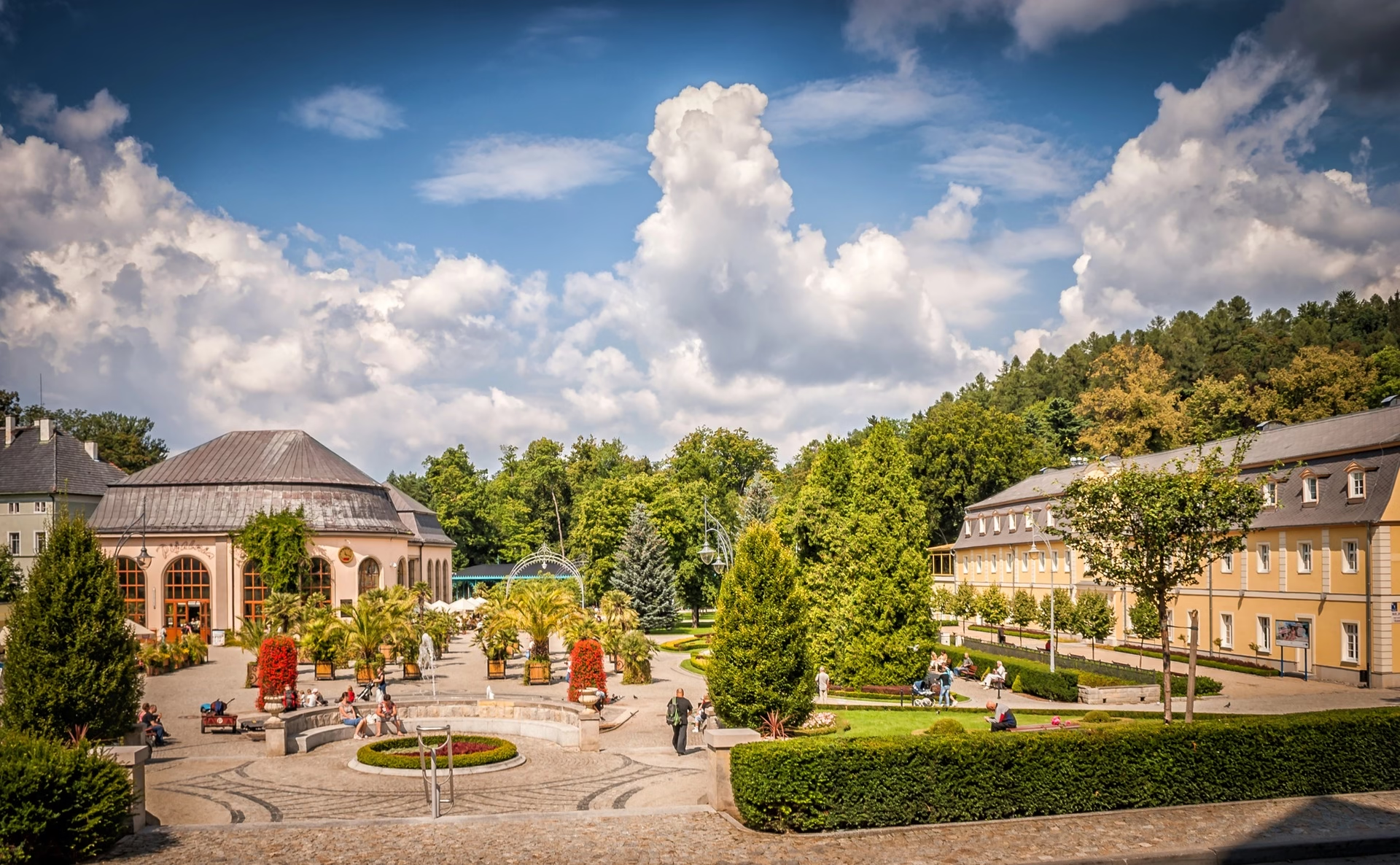
Entry to the building is free; a small fee is charged for access to the spring (in recent years around 1.50 zł), after which you can drink as much as you like.
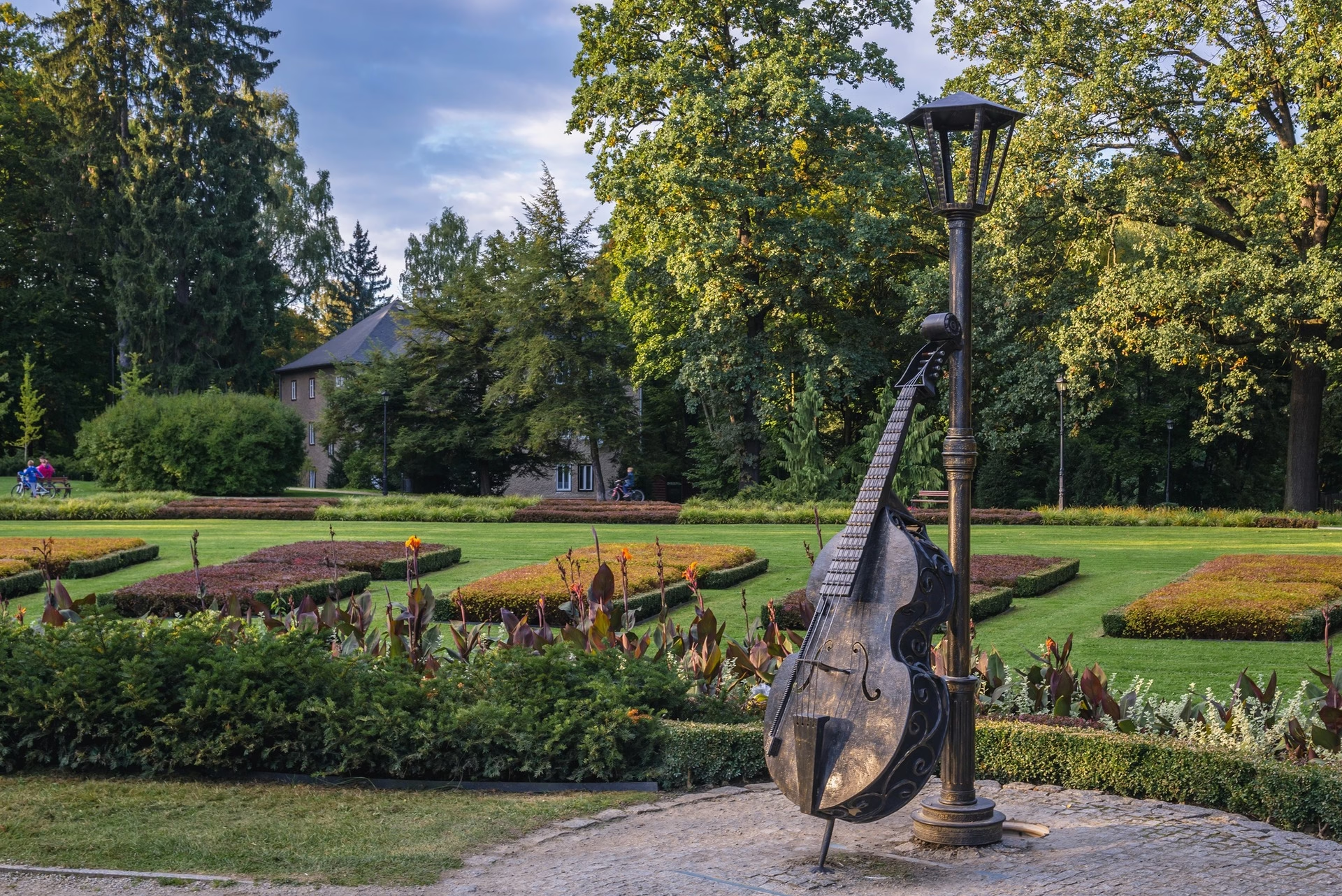
The Pijalnia is usually open weekdays from 7:00, weekends from 9:00, generally until 19:00 — but check the current hours before you visit.
For a bird’s-eye view of the whole area, climb Góra Parkowa hill to the Altana Miłości viewpoint, which overlooks the entire town.
Skull Chapel (Kaplica Czaszek) in Czermna
A short distance north of the centre, in the district of Czermna, stands a small Baroque chapel that ranks among the most unusual sights in the whole region. From outside it looks unassuming; inside, it is an entirely different story.
The walls and ceiling are covered with thousands of human skulls and bones, and beneath the floor lie the remains of a further tens of thousands of people.
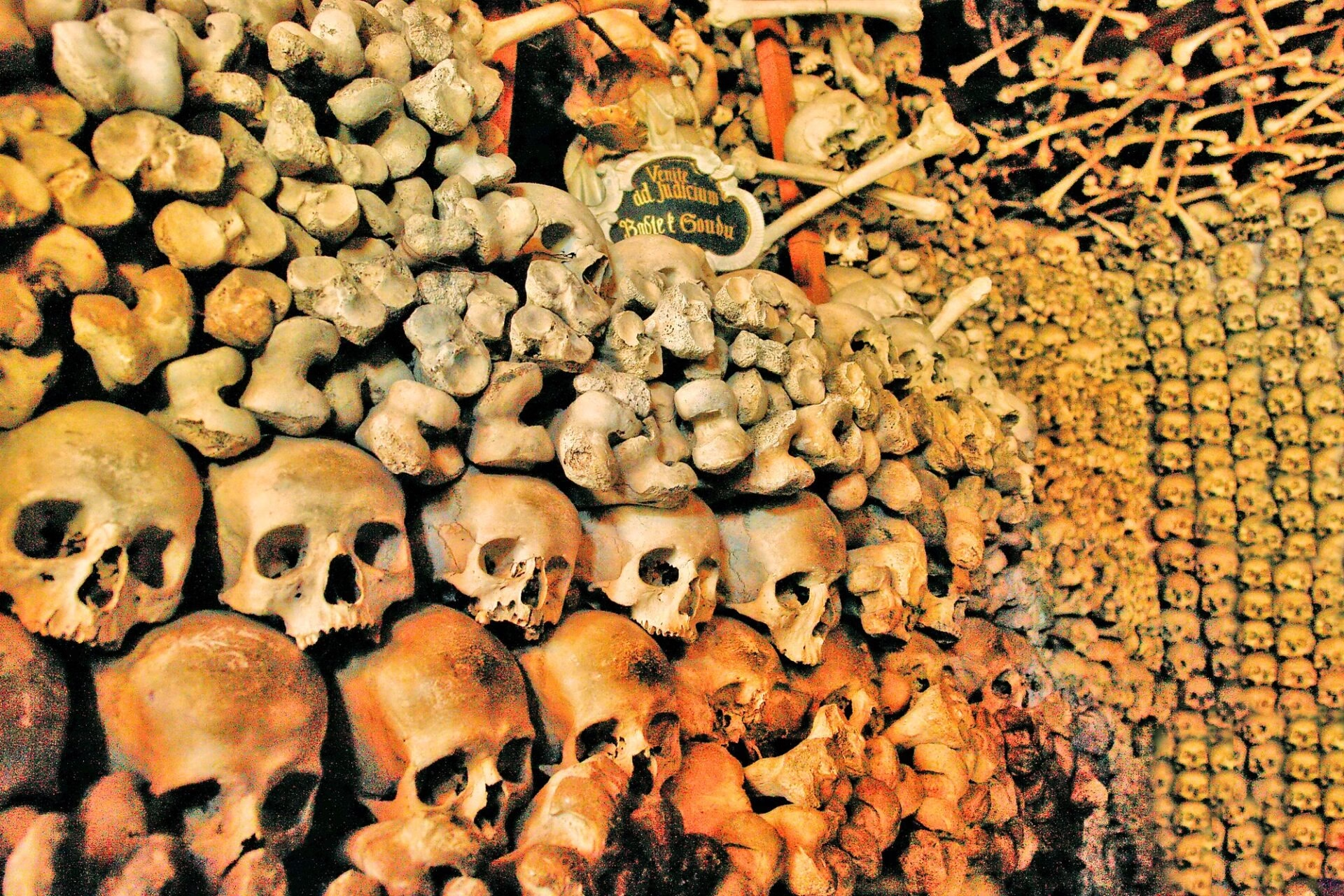
The chapel was commissioned in the late 18th century by the local priest Wacław Tomaszek after he discovered the remains of victims of the Silesian Wars and the epidemics of the 17th and 18th centuries in the area around the church.
It is the only structure of its kind in Poland and one of three comparable sites in all of Europe — alongside the ossuary in Sedlec, for example.
The visit lasts around fifteen to twenty minutes and takes place in groups — you cannot wander in freely. Photography is not permitted.
The chapel is open daily from 9:30 to 17:00. Admission is 20 zł for adults, 15 zł for seniors over 65 and 12 zł for children and young people aged 6 to 18; children under six enter free. Tickets are purchased at the ticket office opposite the chapel and cannot be booked in advance.
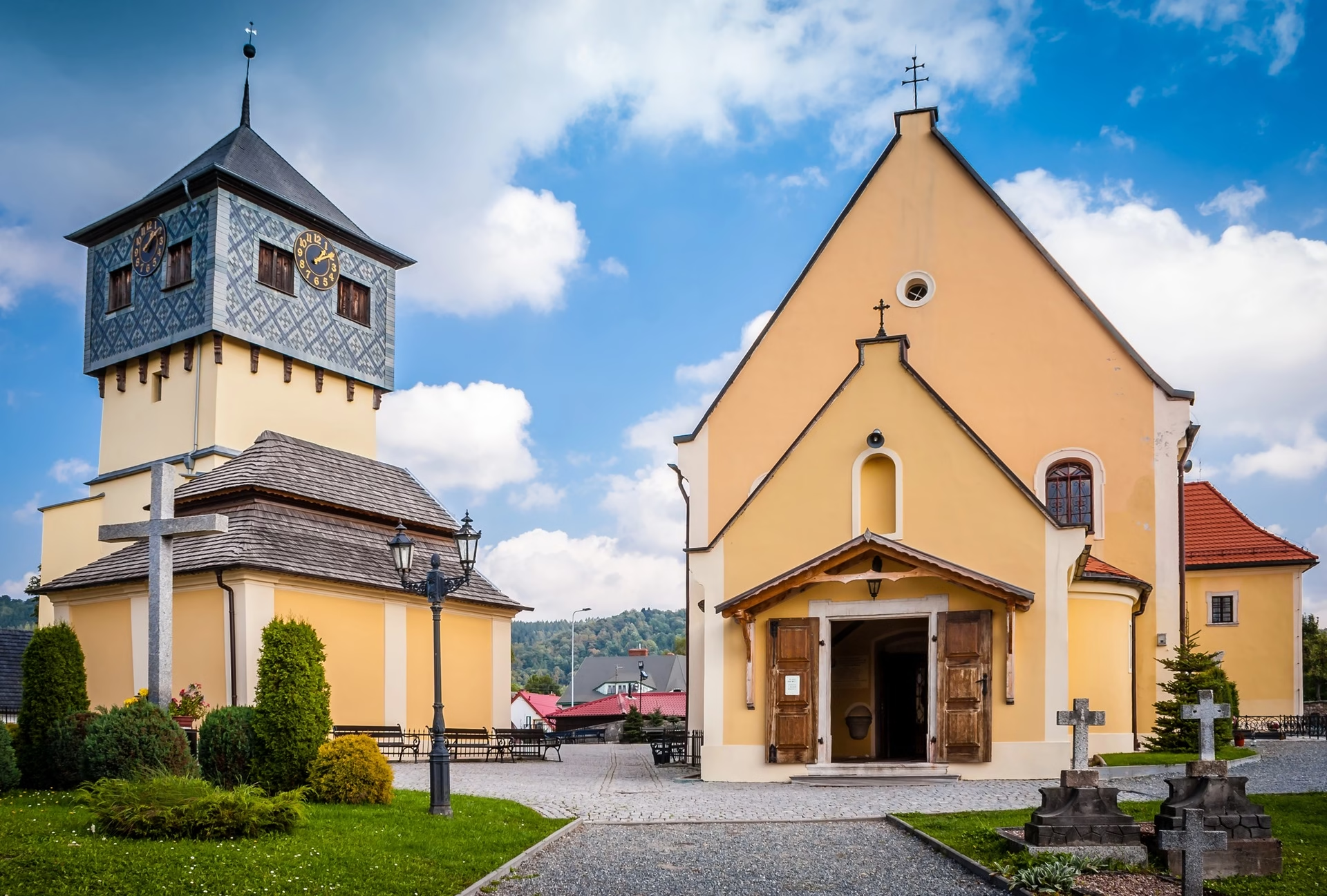
Arrive just before opening time. Group capacity is limited and in high season a queue forms at the door.
Muzeum Zabawek – Poland’s Largest Toy Collection
Poland’s largest toy exhibition covers 400 square metres and displays more than five thousand exhibits spanning from antiquity to the 1990s.
This is not just a children’s attraction — many adults end up spending just as long here as their kids, recognising toys from their own childhoods.
The exhibition is arranged chronologically across twelve halls, so it makes sense to move through it in order. Alongside classic dolls, toy cars and construction sets, you will also find film props, folk toys and military miniatures.
There is no time limit on visits, so you can set your own pace.
The museum is open year-round. From May to August: 9:00 to 18:00; in September from 10:00 to 18:00; and outside the season from 10:00 to 17:00.
Admission is 34 zł for adults and 29 zł concessions; a family ticket for two adults and two children costs 118 zł. Children under four enter free.
National Park Eco-Centre (former Frog Museum)
The Góry Stołowe National Park Eco-Centre houses an exhibition about the nature of the Table Mountains, which from 2019 replaced the earlier Muzeum Żab — Poland’s very first museum dedicated to frogs. Its collection comprised around three thousand exhibits from twenty countries and six continents, and part of it has been retained in the new exhibition.
The compact exhibition is ideal for families with children as a complement to a walk through the park, or as a solid option for a rainy afternoon.
A visit usually includes an explanation of amphibian conservation in the Table Mountains — which pairs nicely with a trip to the national park itself.
Entry is free, but advance booking via the Eco-Centre website is required — you will not be admitted without a reservation. From 1 May to 30 September it is open 9:00–17:00, outside the season until 16:00 and in December until 15:00. Closed on Mondays.
Aquapark Wodny Świat
On the edge of the spa park sits Aquapark Wodny Świat, which has one key difference from a standard swimming pool — the water is salt-based and non-chlorinated. The operator says the salinity matches that of the Baltic Sea, making this the only pool of its kind in the region.

The complex offers a full-length swimming pool, a leisure area with massage jets, geysers and a lazy river, a 92-metre waterslide, a jacuzzi, and a paddling pool for young children. The sauna zone is included in the ticket price, and there is also a two-lane bowling alley and a gym.
Open weekdays from 9:00 to 21:00, at weekends and on public holidays from 10:00; last entry is roughly one hour before closing.
An hour costs 25 zł for adults and 19 zł concessions; two hours 41.50 zł; and an all-day ticket is 69 zł. Children under four enter free; families with two children under sixteen pay a reduced rate.
For a rainy afternoon or a day when you don’t fancy the mountains, this is the most reliable backup plan in Kudowa.
Spa Treatments and Wellness in Kudowa-Zdrój
Kudowa-Zdrój is primarily a cardiac spa resort — its carbon dioxide baths are prescribed for heart conditions, high blood pressure and circulatory disorders in the limbs. Digestive conditions, musculoskeletal problems and anaemia are also treated here. For respiratory conditions, Duszniki and Polanica tend to be the regional specialists.
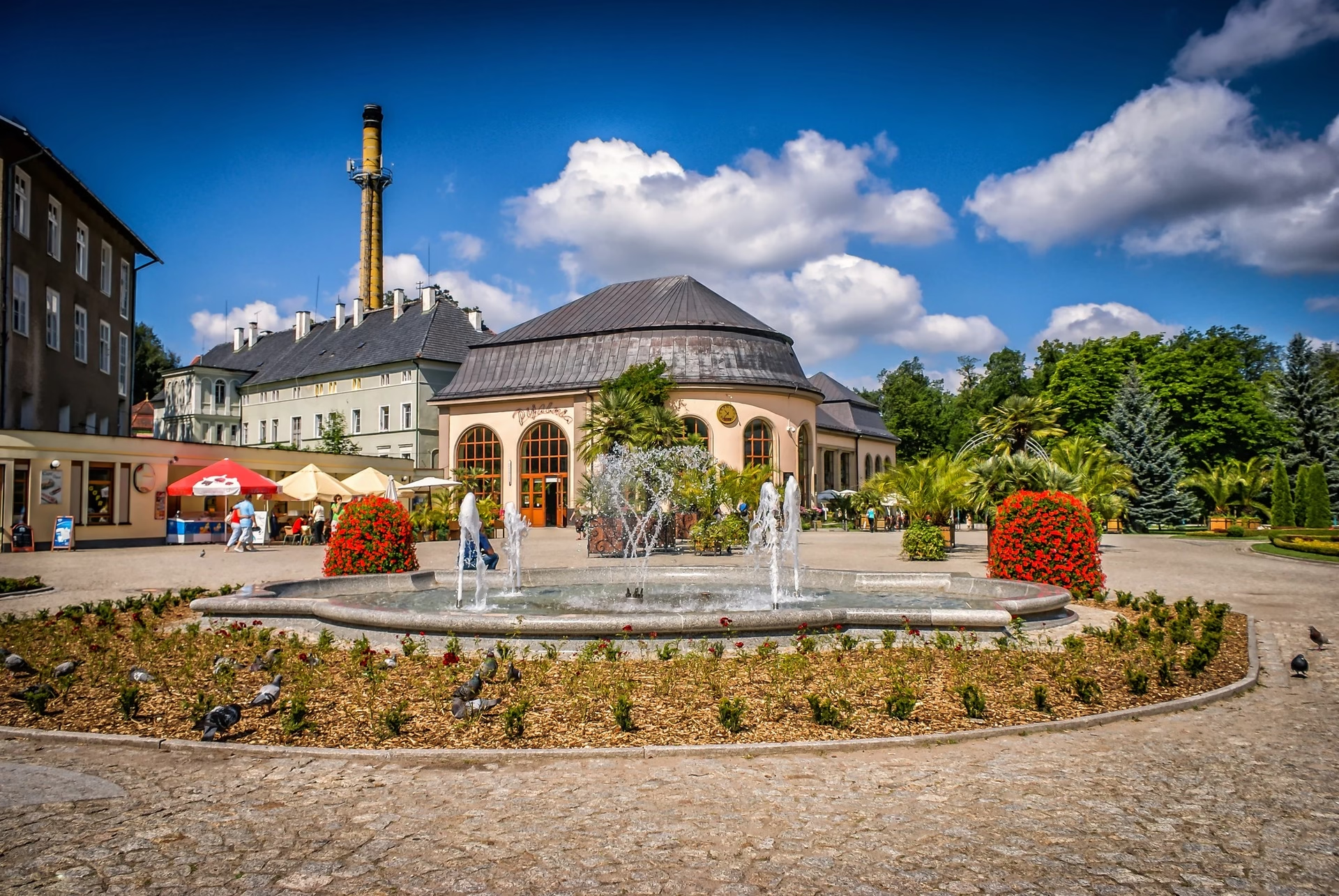
The Moniuszko and Marchlewski springs are sodium-calcium bicarbonate mineral waters enriched with iron and boron. The spa facilities offer over fifty different treatments.
Five properties belong to the Uzdrowiska Kłodzkie group. The best known are Sanatorium Polonia, which houses the Teatr Zdrojowy (spa theatre), and Sanatorium Zameczek, set right inside Park Zdrojowy. The town also has a military spa hospital and Sanatorium Bristol.
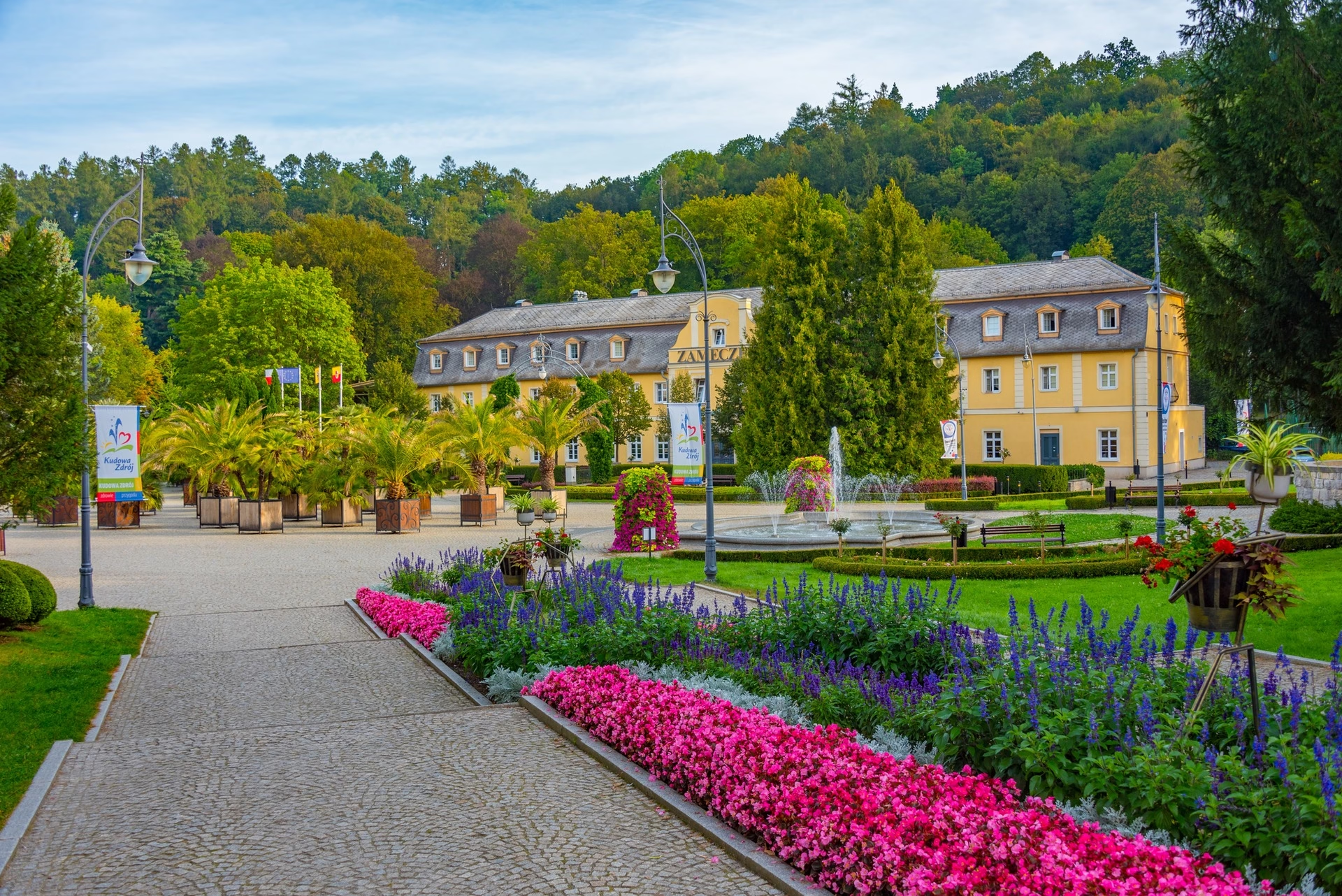
Visitors not on a full spa programme can most easily access Słoneczne Termy near Zameczek — featuring a pool with underwater massage jets, a Finnish sauna, a steam bath, a snow sauna, a salt cave and a fitness centre.
The current price list is available on the spa resort website; individual treatments should be booked by phone in advance.
More to Explore: Szlak Ginących Zawodów, the Open-Air Museum in Pstrążna, and the Rope Park
Szlak Ginących Zawodów (the Trail of Disappearing Crafts) brings to life trades that have almost vanished from everyday life. It was created as an educational route connecting several stops around Kudowa-Zdrój, offering something more hands-on than a conventional museum.
Visitors can try demonstrations of traditional crafts and see how artisan production worked a hundred years ago. The route suits a relaxed afternoon rather than a headline attraction.
Open daily from May to September, 10:00 to 18:00; outside the season until 16:00. Admission is 35 zł for adults and 30 zł concessions; children under four enter free. For an extra charge you can add a pottery workshop (20 zł) or taste homemade country bread (5 zł). Parking at the entrance is free.
The open-air museum in Pstrążna, the Muzeum Kultury Ludowej Pogórza Sudeckiego, showcases folk architecture and rural life in the Sudeten foothills. The site was created by relocating original timber buildings from surrounding villages.
Inside the cottages you’ll find period household furnishings and farming equipment; the whole museum functions as a vivid portrait of rural life from a century or more ago. For families with children there’s a pleasant bonus: a small animal corner within the grounds.
Open Tuesday to Sunday from May to mid-October, 9:30 to 18:00; the rest of the year until 15:30. Closed on Mondays; last entry is one hour before closing. Admission is modest — 15 zł standard and 10 zł concessions. Note that cash only is accepted here.
Park Linowy Kudowa on Góra Parkowa offers rope courses at various difficulty levels for children and adults alike, including night-time runs in low visibility.
It works well as an active addition to a walk through the park — ideal for an hour or two between other sights, especially if you are travelling with teenagers who are not particularly drawn to traditional museums.
Generally open Monday to Saturday 10:00 to 19:00 and Sunday until 18:30; the last ticket is sold half an hour before closing. Prices range from 44.99 zł for the green course to 54.99 zł for the blue; children under sixteen pay five złoty less.
Operations depend on the weather, and outside the season tickets can only be bought online — so check the current status before you go. At the moment three courses are running, while the remaining ones are being rebuilt.
Food and Drink
Restaurants
- Cech. Restauracja – a great modern restaurant serving burgers, pizza, grilled dishes and Czech and Polish classics.
- Restauracja Merkury – Italian, regional and American cuisine under one roof: pizza, pasta and steaks.
- Restauracja Cafe Domek – a welcoming restaurant with a terrace, pizza, sharing platters and home cooking.
- Cafe Amalia – the ground-floor restaurant at Hotel Amalia, with a classic Polish menu.
- Wypoczęty Wół Restauracja – a steakhouse specialising in steaks and burgers, also offering pizza, pasta and desserts.
- Uliczny Burger – a popular burger joint in the town centre.
Cafés
- Cafe Sissi – good coffee in a lovely historic setting.
- Caffe Gieraccy – specialty coffee in a pleasant atmosphere, one of the highest-rated cafés in town.
For truly excellent coffee, consider a short trip to Náchod — try StayCafe or HotSpot.
Where to Stay in Kudowa-Zdrój
Central and Nearby
- La Park Aparthotel – A modern aparthotel with an indoor pool, hot tub and sauna, a short walk from the centre and the forest. Spacious rooms with balconies and a shared kitchen — ideal for families.
- Hotel Kudowa Manufaktura Relaksu – A spa hotel with its own wellness centre, indoor pool, hot tub and sauna. Breakfast is among the most highly rated in town; there is also a restaurant serving Mediterranean cuisine.
- Willa San Remo – A family-run guesthouse on a quiet street, three hundred metres from the aquapark and five hundred metres from the spa park. Breakfast is outstanding; free parking right outside.
- Domki Paula – Small, renovated chalets with a private kitchen and terrace, ten minutes on foot from the centre. BBQ facilities, free parking, close to the aquapark.
Away from the Centre, Close to Nature
- Domki w Zacisznej Zagrodzie – Chalets in the village of Jerzykowice a few minutes’ drive from Kudowa, with an outdoor pool, garden, trampoline and mountain views. Breakfast available, including vegan and gluten-free options.
- Apartamenty Słoneczne Wzgórze – A renovated old forester’s lodge on the hillside above town, surrounded by forest, with a tennis court and mountain views. Total peace and quiet, yet just a short distance from the centre.
Table Mountains (Góry Stołowe): Szczeliniec Wielki and the Errant Rocks
The Góry Stołowe National Park is the main reason many people visit Kudowa-Zdrój even if they have no interest in spa treatments whatsoever.
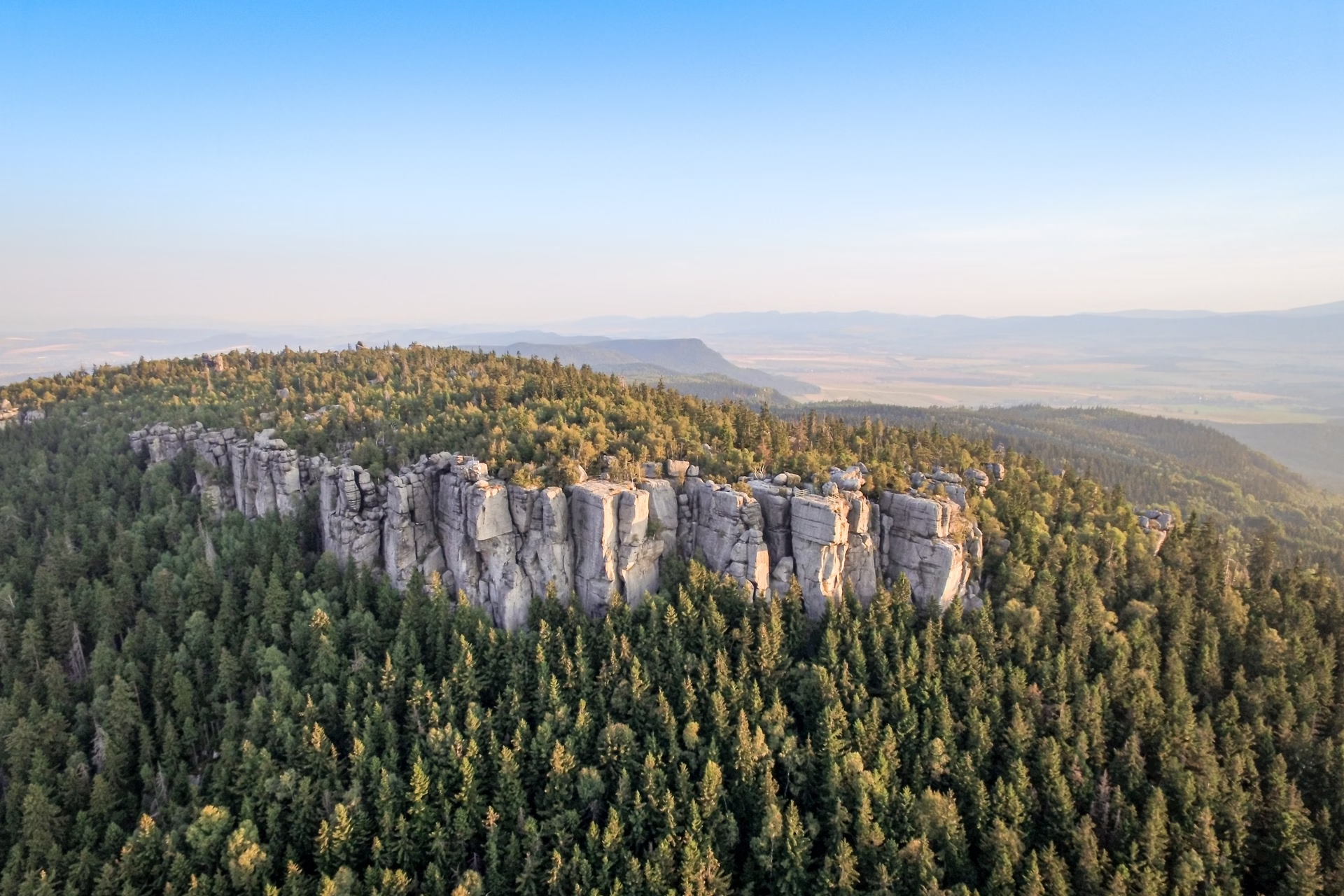
The sandstone table mountains here have produced formations found nowhere else in Poland or the Czech Republic — deep rock labyrinths, towers, columns and viewing platforms spread across a high plateau.
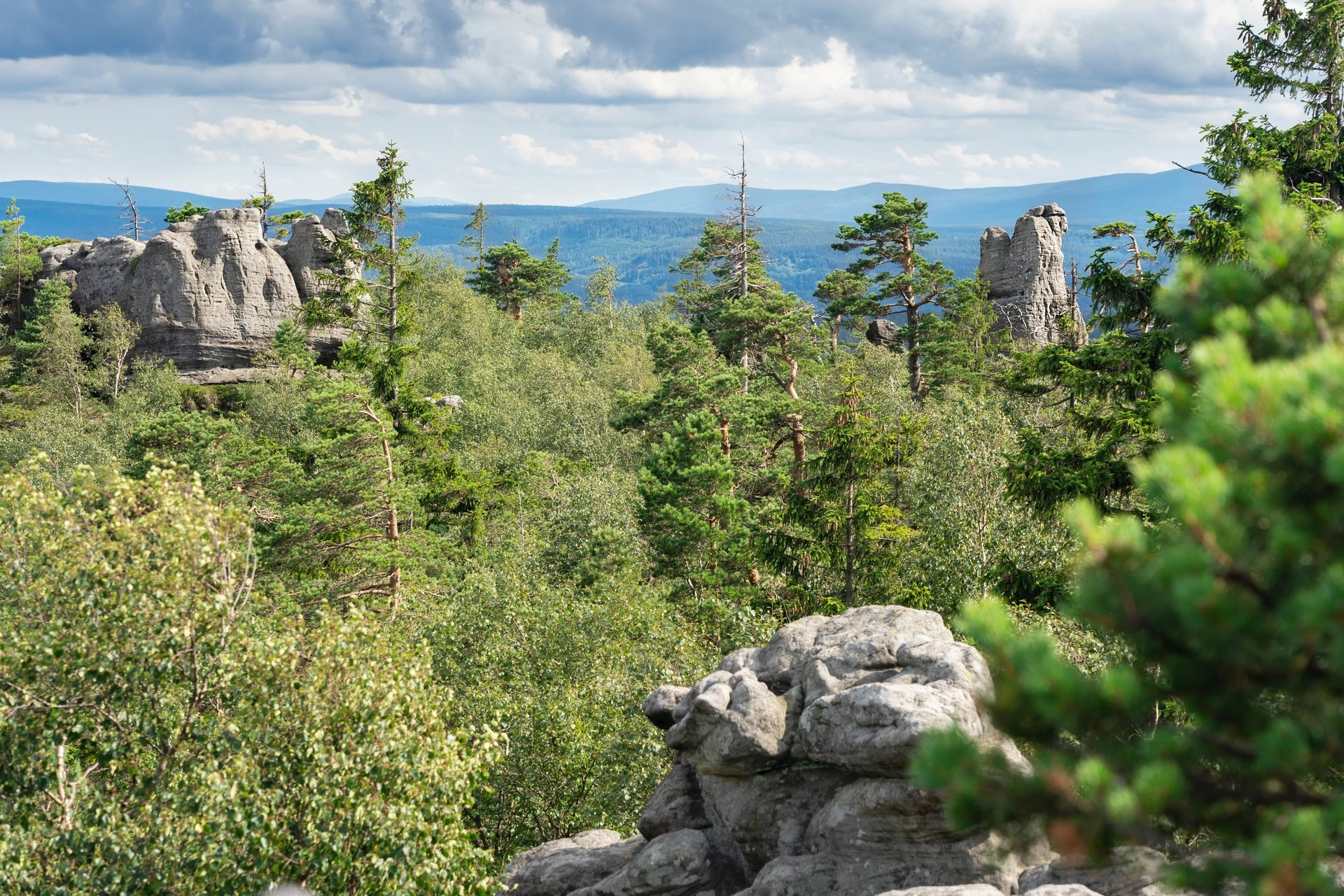
Both key sites — Szczeliniec Wielki and the Errant Rocks — operate a ticketing system with a limit on the number of visitors per hour.
This makes spontaneous visits slightly trickier, but it also means that even on summer weekends you can walk the narrow rock corridors without unnecessary queuing.
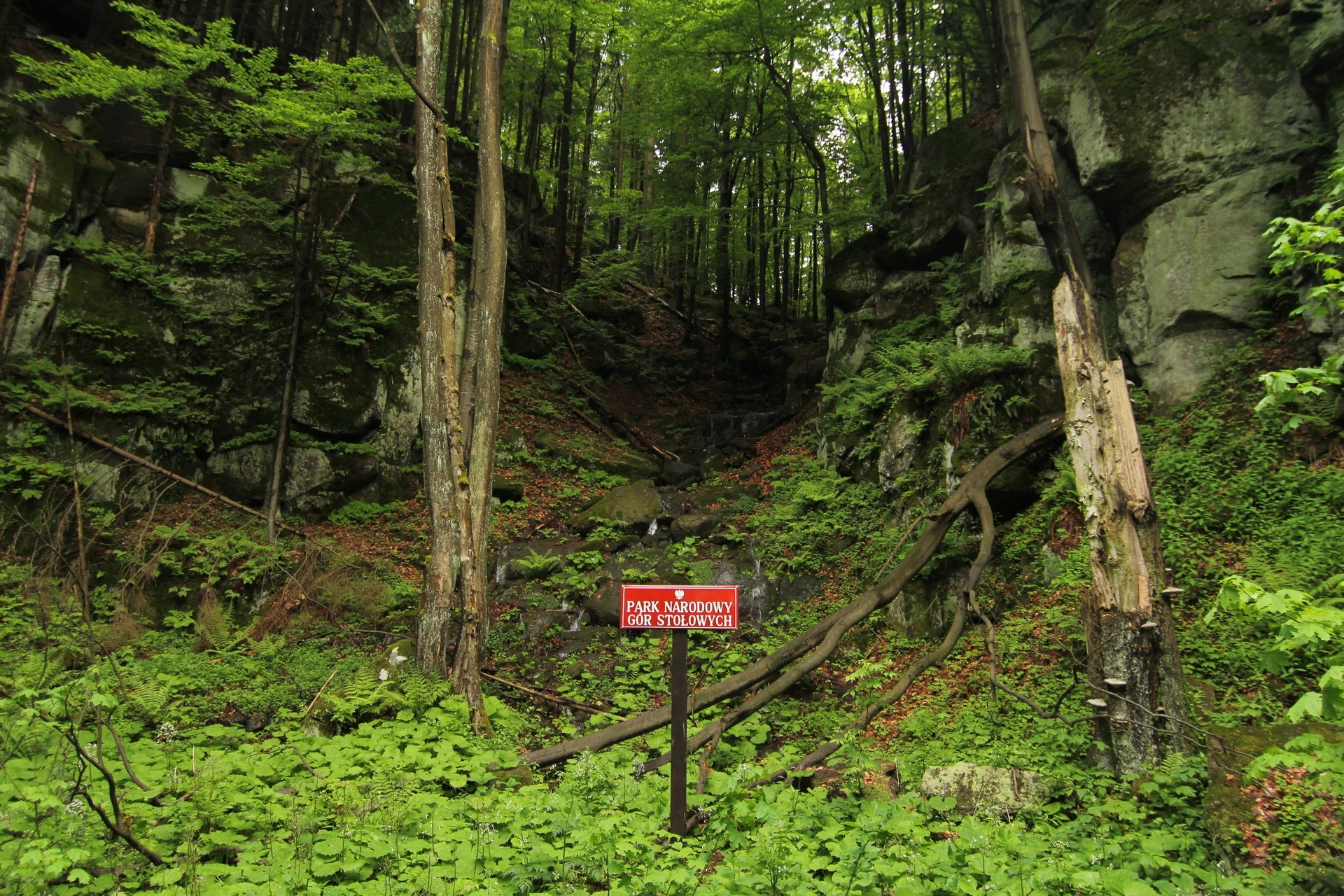
I would also strongly recommend walks — or cycling trips — away from the main national park attractions. The trails wind through deep beech forests and occasionally open up to unexpected views of smaller rock formations or the surrounding countryside.
Szczeliniec Wielki
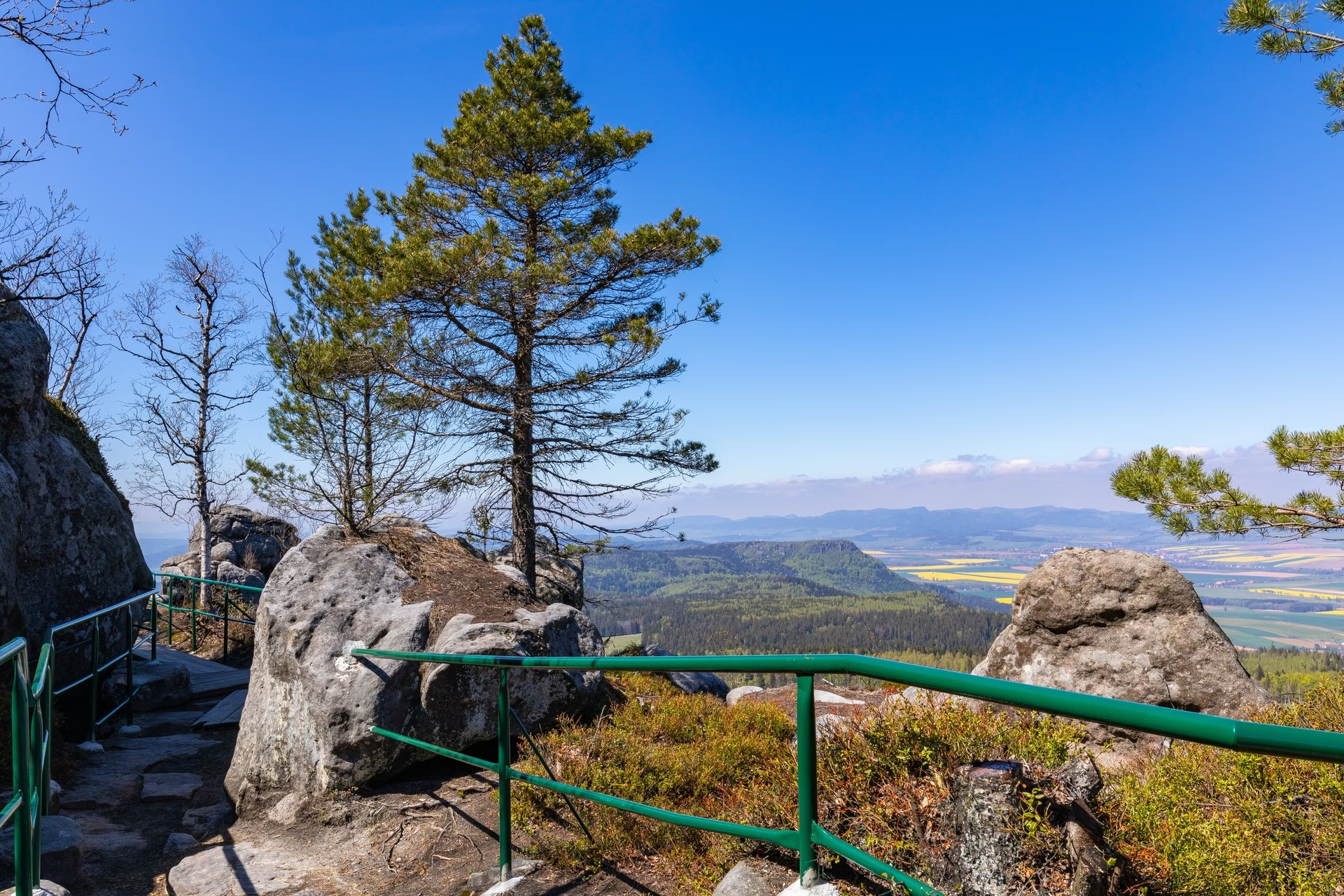
The highest peak in the Table Mountains stands at 919 metres and is also the most-visited spot in the entire park.
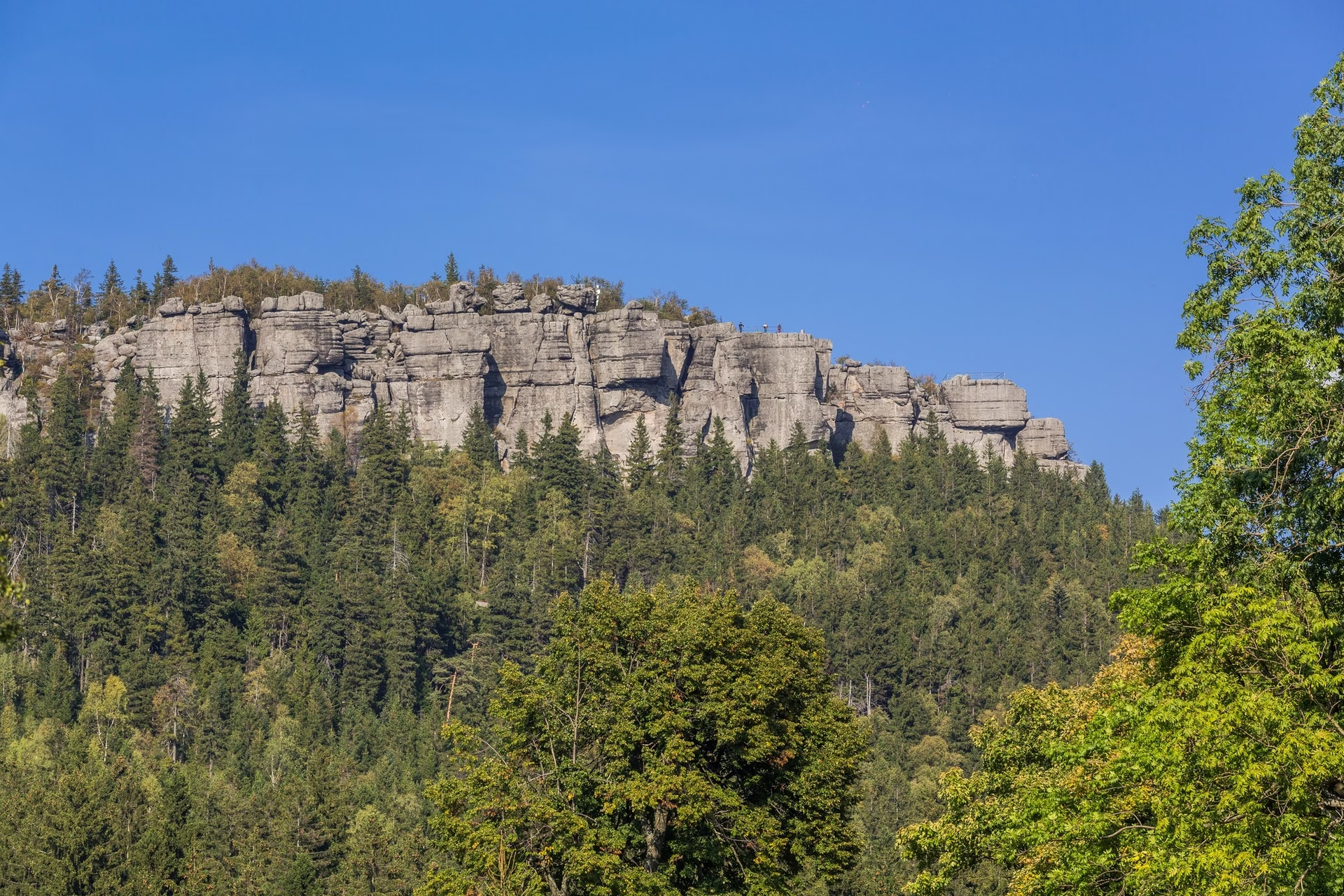
Stone steps lead to the summit from the car park in Karłów; the ascent plus a tour of the viewing terraces takes around an hour and a half.
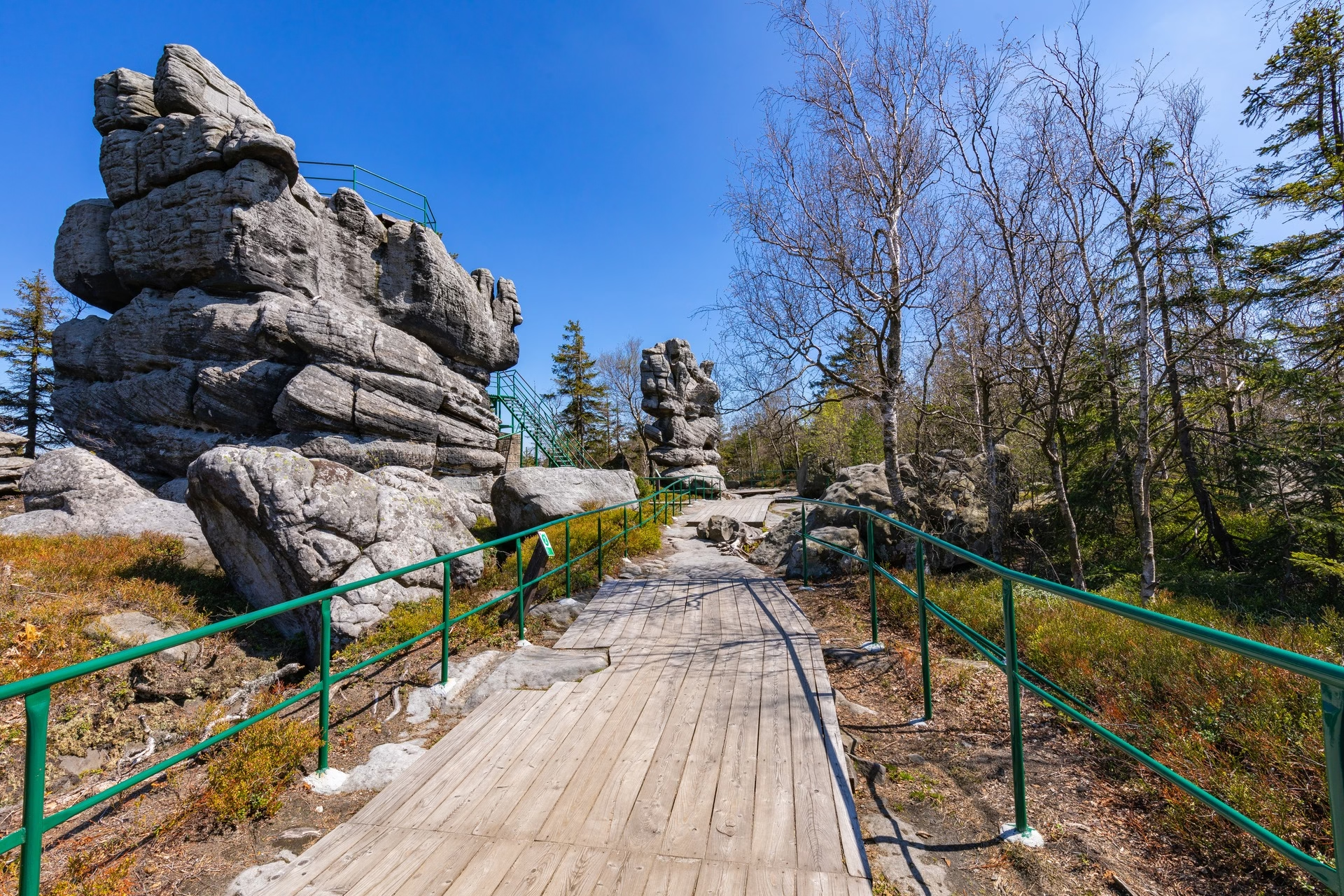
Along the way and on the summit plateau you will encounter sandstone formations with their own names — Wielbłąd (the Camel), Fotel Pradziada (Grandfather’s Armchair) or the deep crevice called Piekiełko (Little Hell).
From the viewing terraces at the top, on a clear day you can see far into the distance, including across the Czech border.
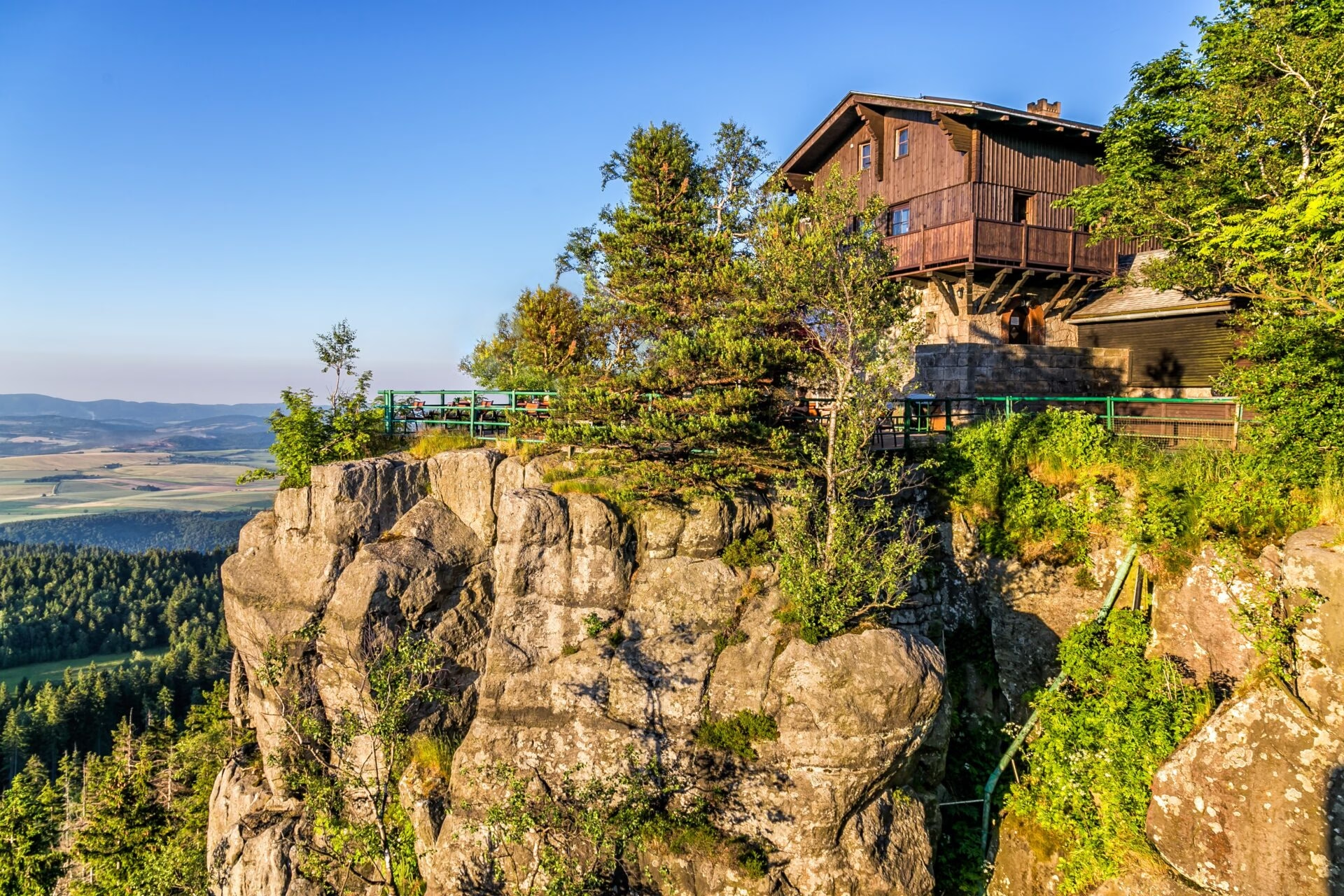
The trail runs one way up and a different way down, so visitors do not meet each other on the narrow sections. Difficulty is moderate — it is mainly a matter of altitude gain and the number of steps; technically the route is not demanding.
Errant Rocks (Błędne Skały)
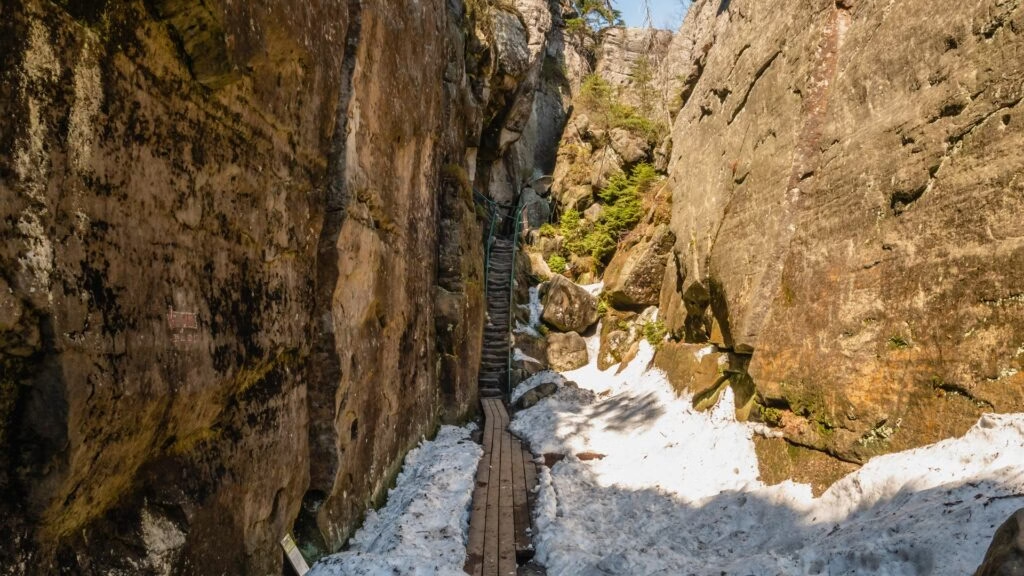
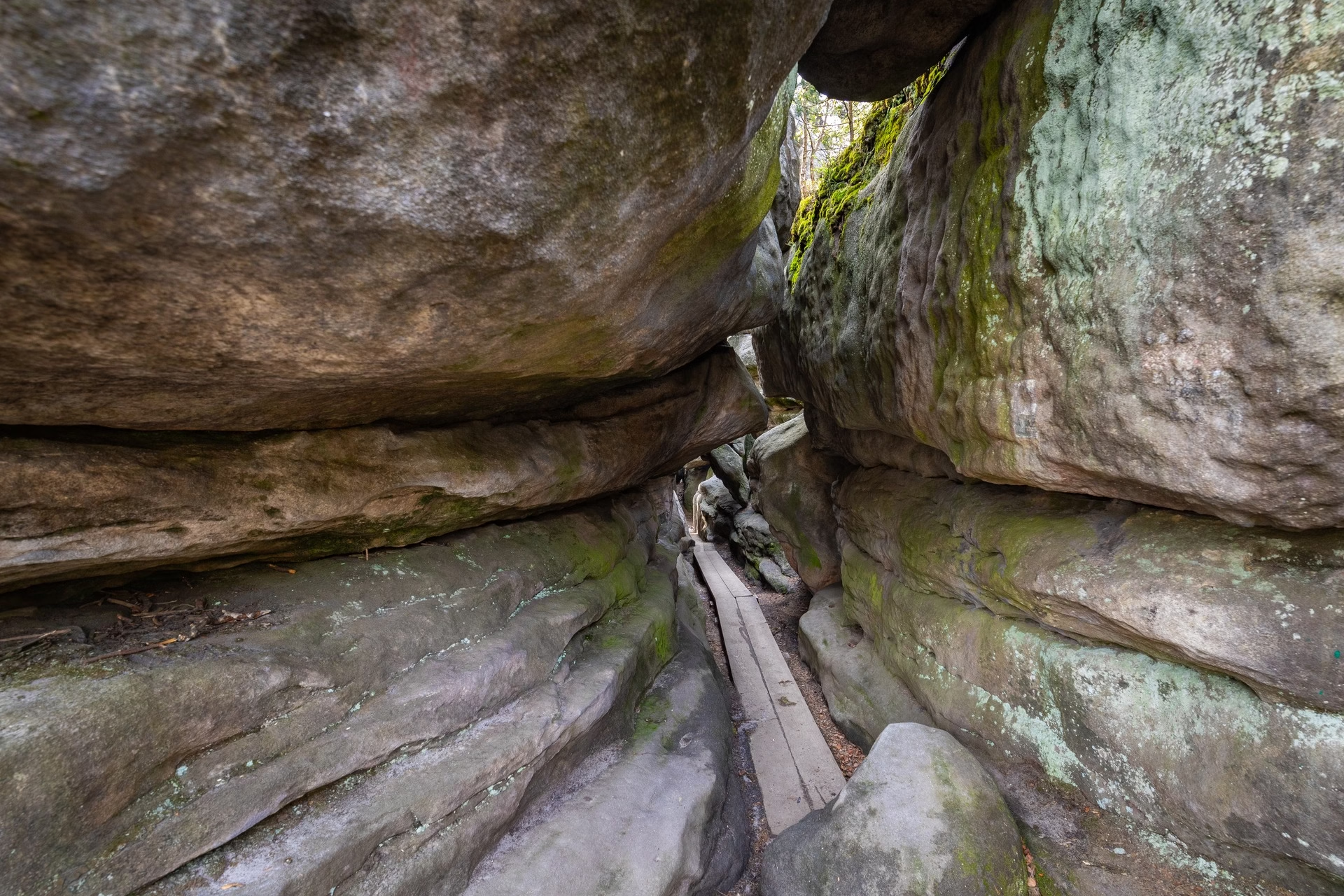
The rock labyrinth in the Skalniak massif works on a different principle from Szczeliniec — instead of a viewing trail, you thread your way through narrow gaps between towering rock blocks, some barely a few dozen centimetres wide.
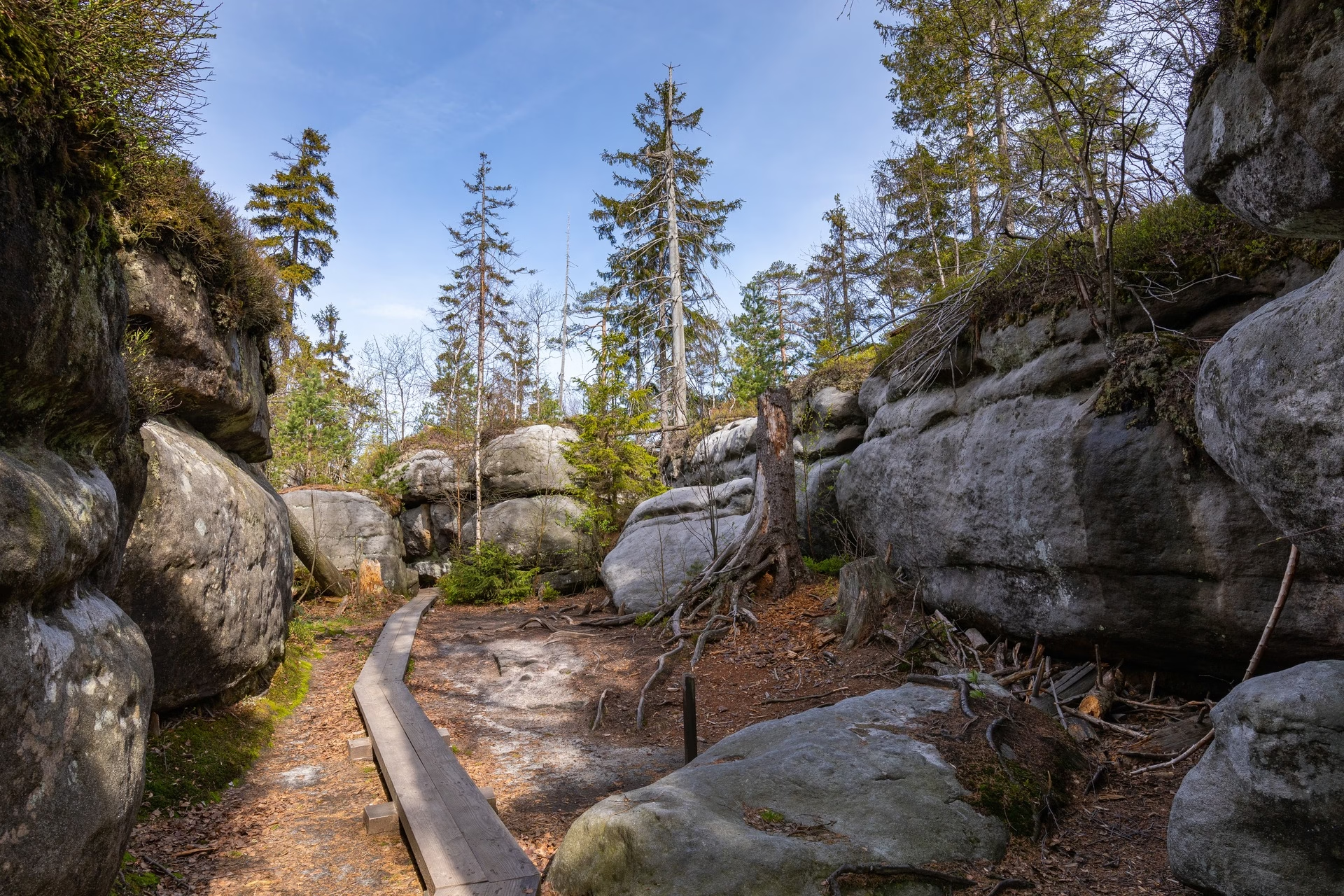
Walking the entire labyrinth takes around forty-five minutes.
Anyone who suffers from claustrophobia or is carrying a large backpack should be aware that some passages are genuinely tight — you often have to take your pack off and push it through separately.
Both sites can be linked by a walking route along the Główny Szlak Sudecki (red trail); the traverse between them takes around two and a half hours. If you would rather not hike between them, drive and visit each separately within the same day.
Tickets, Booking and Parking
Admission to both trails is the same in 2026 — 16 zł for a standard ticket and 8 zł concessions. There is no combined ticket; a separate ticket is purchased for each trail. Card payment is accepted.
The entry limit is 400 people per hour at Szczeliniec Wielki and 350 people per hour at the Errant Rocks. Quotas are calculated separately for each full hour, so when booking you select a specific entry time.
In peak season — especially at weekends — online capacity sells out fast. The park itself warns that between 10:00 and 15:00 there may be no tickets available at the ticket office at all, since only whatever remains from the online quota is sold on the door.
The only reliable option is to book in advance through the official website pngs.gov.pl/kup-bilet.
Tickets cannot be refunded.
Entry to the upper car park at the Errant Rocks costs 40 zł per car and is purchased online in the same way as the ticket. Nearby, the YMCA car park charges 5 zł per hour — capacity is limited, so arrive early. At Szczeliniec in Karłów, parking is on private and municipal lots not operated by the park, so prices vary and cash is often required.
If you want to visit both sites in one day, book tickets with a generous gap between entry times — the drive between Karłów and the Errant Rocks, including parking, takes over half an hour.
Day Trips from Kudowa-Zdrój
Wambierzyce – the Silesian Jerusalem
Wambierzyce lies between three hills near Radków and earned its nickname “Silesian Jerusalem” from the surrounding peaks named Sinai, Tabor and Zion, and a stream flowing through the village called the Cedron.
The centrepiece is the Basilica of the Visitation of the Blessed Virgin Mary, approached by monumental stone steps. The official sanctuary source cites 56 steps, whose number carries symbolic meaning — the middle 33 commemorate the years of Christ’s life.
The building’s façade looks more like a Renaissance palace than a church, decorated with a colonnade and statues of the Apostles along the balustrade.
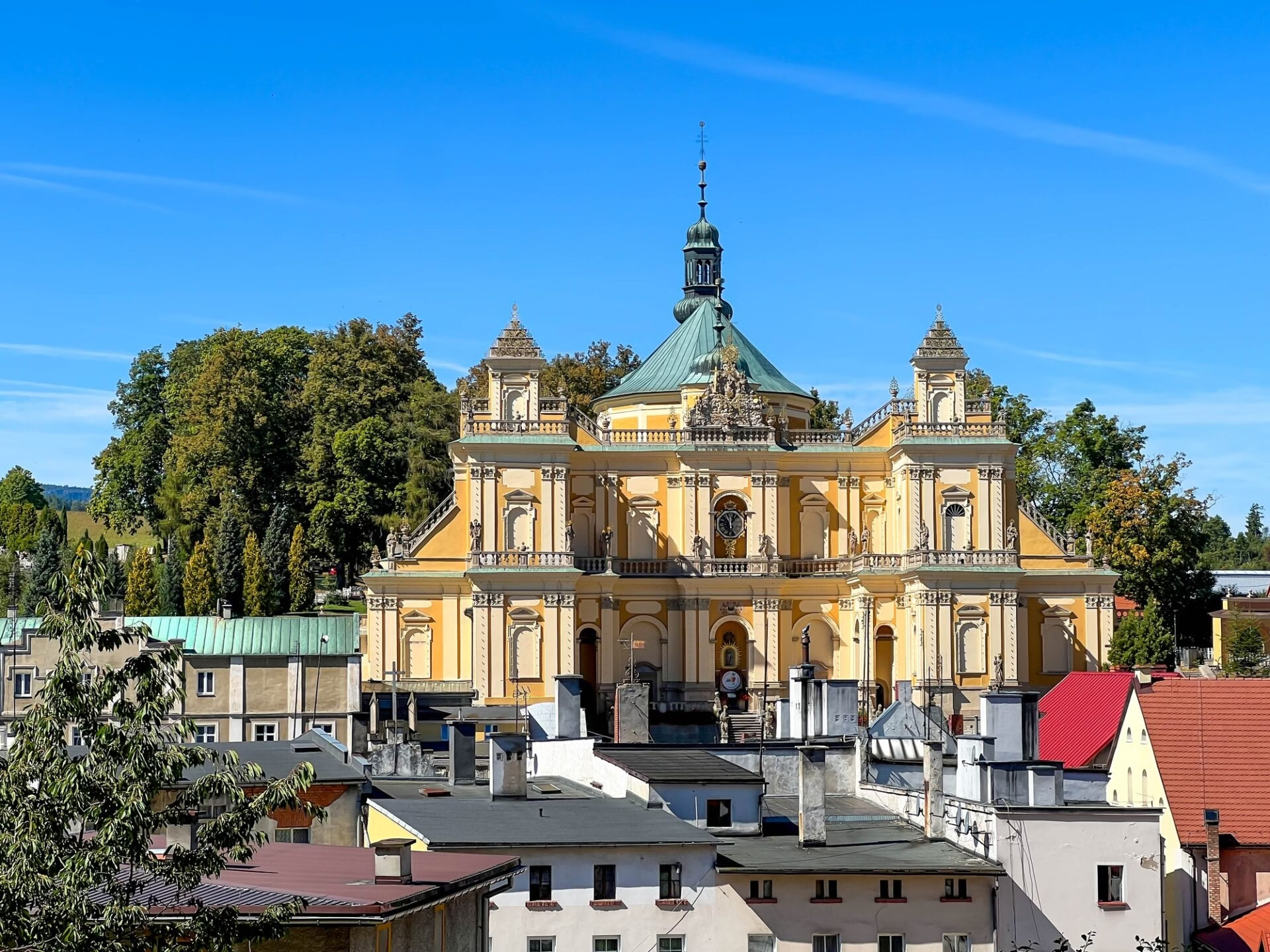
Surrounding the basilica is a calvary with almost a hundred chapels spread across the surrounding hills — one of the largest of its kind in Europe.
Both the basilica and the calvary are free to enter and need no guide; the basilica is generally open daily from 7:00 to 19:00. Walking the full Way of the Cross requires four to five hours.
The only paid attraction is the Ruchoma Szopka, a mechanical moving nativity scene from the second half of the 19th century, located at the foot of the calvary. It contains around eight hundred figures, approximately three hundred of which move.
Showings run every half-hour, from May to September 9:00 to 18:00 and outside the season 10:00 to 16:00. Admission is 12 zł standard, 10 zł concessions and 8 zł for children and young people aged three to eighteen.
Allow around three hours for a full visit to Wambierzyce. The village is thirty kilometres — just under forty minutes’ drive — from Kudowa-Zdrój and can easily be combined with Duszniki-Zdrój.
Duszniki-Zdrój – Chopin and Paper
Duszniki-Zdrój is another spa town in the Kłodzko Valley and offers a combination you will not find elsewhere — Poland’s oldest surviving paper mill and a place closely associated with Fryderyk Chopin.
The Muzeum Papiernictwa (Paper Museum) is housed in a beautifully restored mill whose history stretches back to before 1562, making it the only working monument to the papermaking craft of that age in the country.
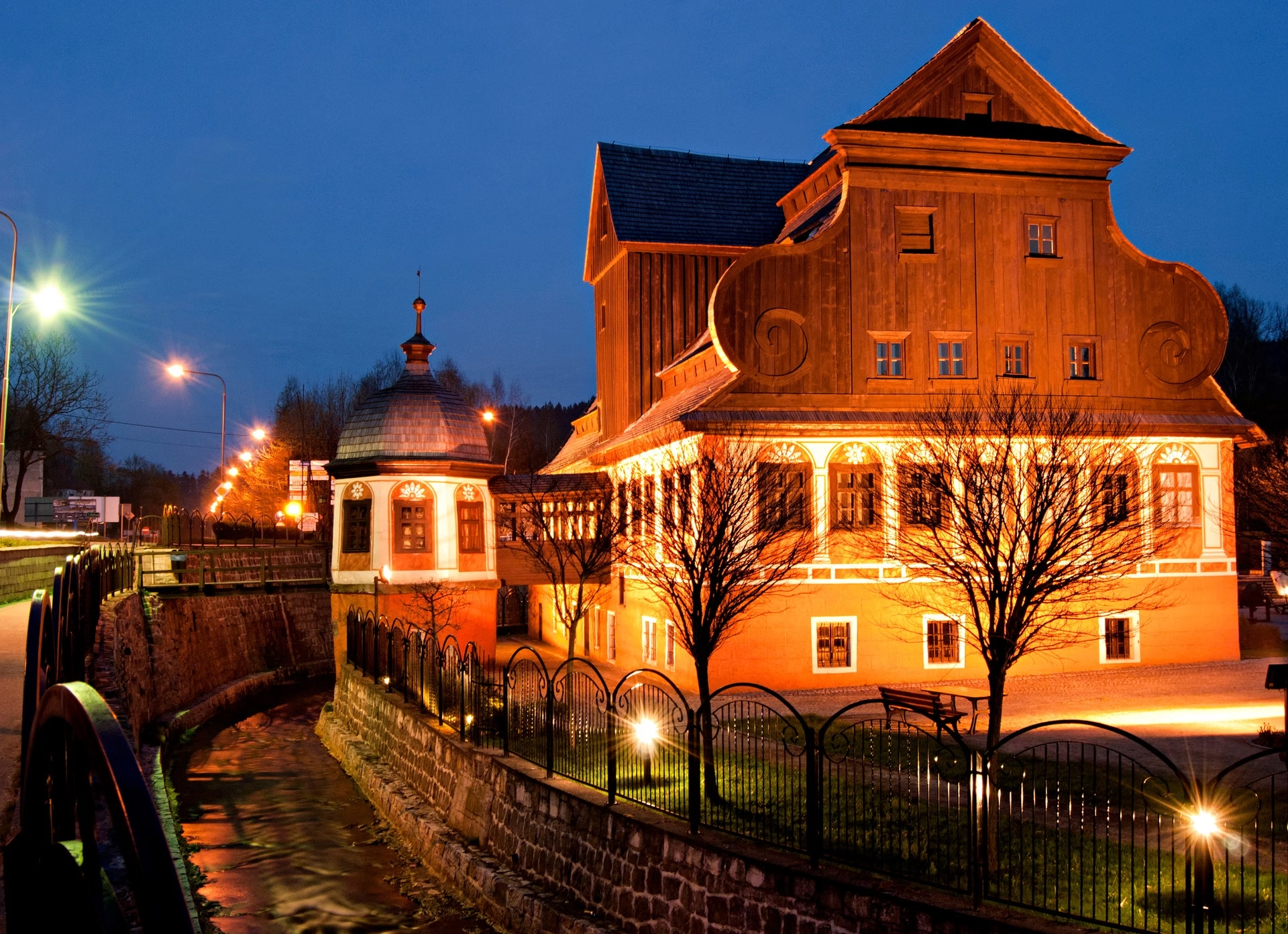
Visitors can try making paper by hand themselves. The workshop starts on the hour, costs extra, and you take your finished sheet home with you.
Allow around an hour and a half for the full museum and make use of the free audio guide, available in English. From May to August the museum is open Monday to Saturday 9:00 to 18:00, Sunday until 16:00. Admission varies by route, roughly between 20 and 30 zł — the exact price list is published in the booking system.
The last weekend of July sees the Święto Papieru (Festival of Paper) in the grounds — in 2026 it reached its twenty-fifth edition.
Dworek Chopina (Chopin’s Manor) commemorates the young composer’s stay in Duszniki and hosts a hall where the International Chopin Festival takes place every August — the oldest continuously running piano festival in the world.
In 2026 the eighty-first edition ran from 7 to 15 August.
The manor’s exhibition is worth a visit even outside the festival season, though bear in mind it primarily operates as a cultural centre and is sometimes closed during concerts and private events.
The Park Zdrojowy and Pijalnia Wód Mineralnych in Duszniki offer tastings of further springs — Jan Kazimierz, Pieniawa Chopina, Agata, Jacek and B4 — each with different therapeutic properties.
Duszniki-Zdrój is fifteen kilometres from Kudowa in the direction of Kłodzko. Regional PKS Kłodzko buses run here via Lewin Kłodzki, but the timetable changes seasonally — check services in advance.
Náchod and the Czech Borderlands
Náchod Castle stands on a rocky spur above the town of the same name, with a history stretching back to the mid-13th century, when Hron of Načeratice founded an early Gothic fortress here to guard the trade route into Poland.
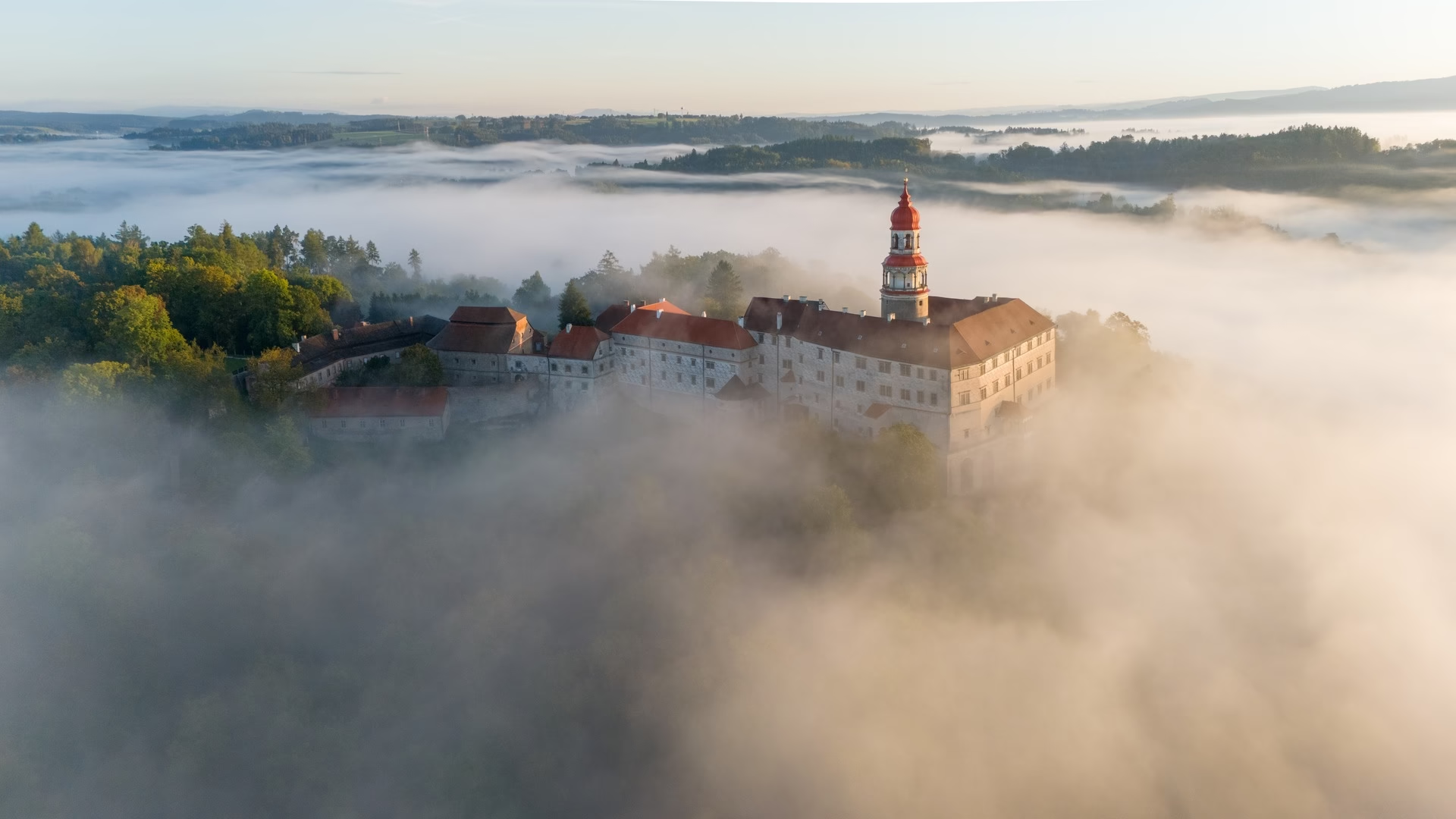
Over the centuries it passed through the hands of the Smiřický, the Italian Piccolomini, the Courland and the Schaumburg-Lippe dynasties, all of which left their mark on the current interiors.
The complex comprises five courtyards, a dominant defensive tower with a viewpoint and an extensive English-style park. Among the most prized exhibits is a collection of 17th-century Brussels tapestries.
The castle offers four tour routes — State Rooms, Private Apartments, a self-guided From the Cellars to the Tower trail, and a special children’s tour. The main circuit costs 220 CZK for adults, 180 CZK for seniors and students, and 70 CZK for children aged six to seventeen; the tower ascent costs an additional 100 CZK.
Opening hours vary by month. In July and August the castle is open Tuesday to Sunday, 10:00 to 17:00; in May, June and September until 16:00; in April and October weekends and public holidays only.
One thing to note: the bear moat has been empty since 2025. The last bear, Ludvík, passed away and the keeping of bears at the castle has ended permanently — a taxidermied specimen is now displayed inside. Also check the current access situation — the main gate is closed for roof restoration.
Náchod is only about ten kilometres from Kudowa-Zdrój; you cross the border without any checks or delays. For visitors arriving from Central Europe it makes a logical stop en route; for Polish tourists it is an easy cross-border trip to a country with a different currency and cuisine.
Kudowa-Zdrój with Children
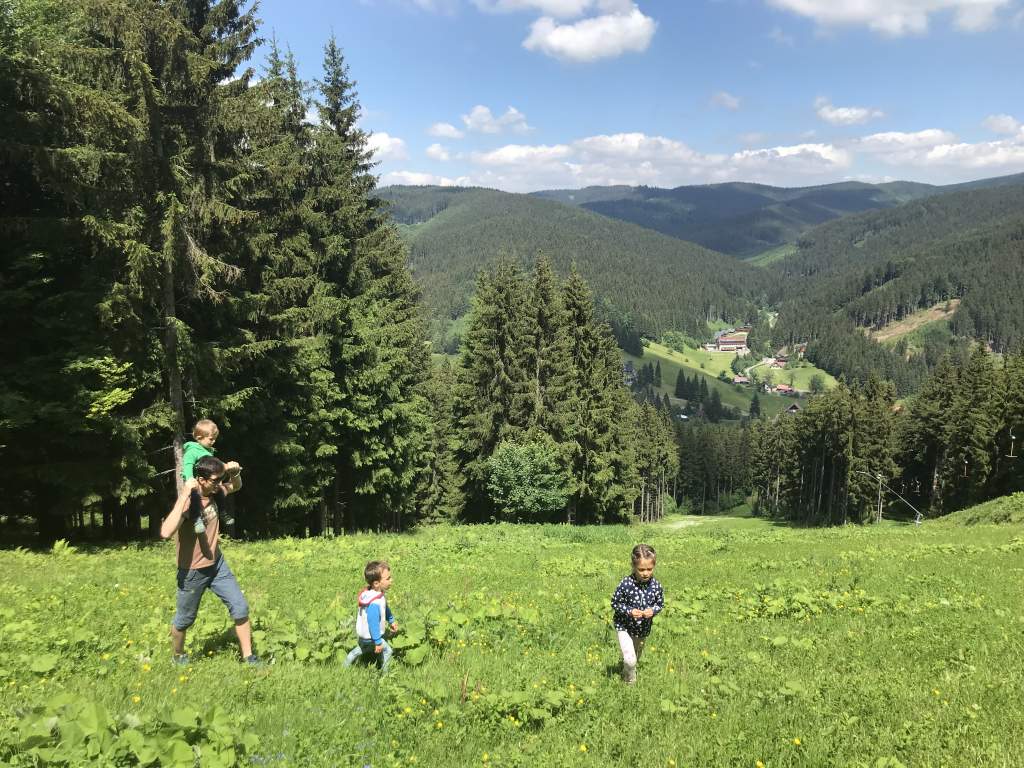
Kudowa-Zdrój is a destination where families with children hardly need to improvise — the programme practically arranges itself. Most of the main town attractions are designed with families in mind, and that goes beyond the standard museums.
A good morning start is the Muzeum Zabawek. There is no time limit on the visit, so children can explore the exhibition at their own pace while parents spend just as long rediscovering toys from their own childhoods.
Right next door, the national park Eco-Centre with its free exhibition is ideal as a shorter add-on or a rainy-day alternative. The Aquapark Wodny Świat fills the same role — you can easily spend a whole afternoon there.
For the afternoon, a walk through Park Zdrojowy with a boat ride on the pond is a great option, or head to Park Linowy on Góra Parkowa, where even younger children will find a rope course matched to their level. Older children and teenagers tend to prefer the more demanding routes, including the night-time runs.
If you have more than one day, consider adding the open-air museum in Pstrążna with its small animal corner, or Wambierzyce, where the combination of the calvary, the basilica steps and the mechanical nativity scene works as a natural adventure without needing to explain much.
With small children, avoid the Errant Rocks — the narrow rock passages are challenging even for adults with a backpack, let alone with a pram or a tired child in your arms.
Szczeliniec Wielki is more manageable, though even here you should expect a proper climb up stone steps rather than a flat stroll.
If you are visiting in peak season and want to tackle Szczeliniec with small children, head to the car park in Karłów as early in the morning as possible — it is quieter and cooler, which you will appreciate when climbing the steps with kids.
Practical Information
Getting to Kudowa-Zdrój
Trains operated by Koleje Dolnośląskie run from Wrocław on line D90; the journey takes roughly two hours and there are only a handful of services per day.
There is one important caveat: due to track repairs, trains in 2026 will not reach Kudowa. The section Polanica-Zdrój – Kudowa-Zdrój is served by a replacement bus (ZKA). Your ticket covers the full journey, but bicycle transport on replacement buses is restricted.
The alternative is a coach — either a long-distance FlixBus to Wrocław, or regional services. Journey time is around two and a half hours.
The most comfortable option is to drive via Náchod — the border crossing has no passport controls and from Náchod town centre to Kudowa-Zdrój takes under fifteen minutes. Travelling from further afield in Central Europe, allow around two hours, depending on your route.
Coming from Germany, allow around 3.5 hours from Dresden via Prague, or around 4.5 hours from Berlin via Cottbus.
Kudowa-Zdrój’s railway station is just under two kilometres from Park Zdrojowy — about half an hour on foot. With luggage, a taxi or local bus is the sensible choice.
Getting Around the Area
The town centre is small and easily walkable. Regional buses connect Kudowa-Zdrój with the neighbouring spa towns of Duszniki-Zdrój and Polanica-Zdrój several times a day, with a journey time of around twenty minutes.
For the Table Mountains — both Szczeliniec Wielki and the Errant Rocks — a car is the most practical option. Public transport here is limited, and in peak season the roads to the car parks can be congested.
In summer at weekends, it is well worth setting off early in the morning before the Karłów car park fills up.
Weather and Best Time to Visit
Kudowa-Zdrój sits in a sub-mountain basin, so weather can change faster here than in the lowlands. For hikes in the Table Mountains, bring layered clothing and a waterproof jacket even in summer — the high plateau is noticeably cooler and windier than the town below.
The best period for hiking is May to October, when there is the highest chance of trails being open and unaffected by weather.
In winter, the nearby Zieleniec operates as a ski resort; the Table Mountains themselves offer more of a tranquil, snow-covered walk in winter months than serious hiking.
Safety and Things to Watch Out For
Kudowa-Zdrój and the whole Kłodzko Valley are safe areas with no elevated crime risk. General tips on travelling in Poland are available in our full country guide.
The practical hazards to be aware of are specific to the Table Mountains trails — tight passages in the Errant Rocks, slippery stone steps on Szczeliniec in wet weather, and the need to have tickets booked in advance, since without them you simply will not get in during the season.
Frequently Asked Questions
How much does entry to Szczeliniec Wielki and the Errant Rocks cost?
Admission is the same on both trails in 2026: 16 zł for a standard ticket and 8 zł concessions. There is no combined ticket — a separate ticket is purchased for each trail.
Also factor in the upper car park entry at the Errant Rocks (40 zł), or 5 zł per hour at the YMCA car park.
Do I need to book tickets for the Table Mountains in advance?
In practice, yes. Only whatever remains from the online quota is sold at the ticket office, and the park itself warns that between 10:00 and 15:00 in peak season there may be no tickets available at the door at all.
Booking is done through the official website pngs.gov.pl/kup-bilet. Tickets cannot be refunded.
How much does the Skull Chapel cost and when is it open?
The Skull Chapel in Czermna is open daily from 9:30 to 17:00. Admission is 20 zł for adults, 15 zł for seniors over 65, and 12 zł for children and young people aged 6 to 18; children under six enter free.
Visits are guided only and photography is not permitted. Be aware that some tourist sites still list old prices of around 5 to 8 zł.
How far is Kudowa-Zdrój from the Czech border?
The Náchod–Kudowa border crossing is about ten kilometres from the town centre and takes under fifteen minutes by car. There are no border checks.
From further afield in Central Europe, allow around two hours depending on your route.
How many days should I plan for Kudowa-Zdrój?
One day is enough for the town itself. If you want to add the Table Mountains, plan for at least two days — Szczeliniec Wielki and the Errant Rocks each deserve their own half-day.
The ideal stay is three to four days, which also allows for Wambierzyce, Duszniki-Zdrój and Náchod.
Is Kudowa-Zdrój good for families with children?
Yes — it is a destination where the family programme practically arranges itself. The Muzeum Zabawek, the national park Eco-Centre, the rope park on Góra Parkowa and the open-air museum in Pstrążna are all designed with children in mind.
Avoid the Errant Rocks with small children — the rock passages are genuinely tight. Szczeliniec Wielki is more manageable, but it is still a climb up stone steps.
Related Articles
- Guide to Kłodzko – the fortress, underground tunnels and Gothic bridge less than half an hour from Kudowa.
- Jelenia Góra and trips in the area – a second base for exploring the Polish Sudetes.
- Wrocław – the capital of Lower Silesia, with direct train connections to the region.
- Karpacz – a ski and hiking resort on the Polish side of Śnieżka.
- Poland – complete travel guide – transport, costs and practical tips for the whole country.
Pre-Trip Checklist
- Book tickets for Szczeliniec Wielki and the Errant Rocks online in advance.
- Note that in 2026 the train from Wrocław only reaches Polanica-Zdrój — a replacement bus covers the rest of the route.
- Pack layered clothing and sturdy footwear for the mountain trails.
- Remember that the Eco-Centre and the open-air museum in Pstrążna are closed on Mondays (the Skull Chapel is open daily).
- Plan your Table Mountains day with a generous time buffer between Szczeliniec and the Errant Rocks.
- Check the current festival programme in Duszniki-Zdrój if you are travelling in summer.