The oldest working paper mill in Poland, a hall where a sixteen-year-old Chopin once played concerts, and right above town the largest ski area in the Eagle Mountains – all of that fits into a town of barely five thousand people, just a stone’s throw from the Czech border.
Duszniki-Zdrój is one of those places in the Kłodzko Valley where you can base yourself for a full week and never run out of things to do – rock cities, peat bogs and mountain forests in summer, and 32 kilometres of ski slopes in winter, at a price comparable to smaller resorts across the border.
Why Visit Duszniki-Zdrój
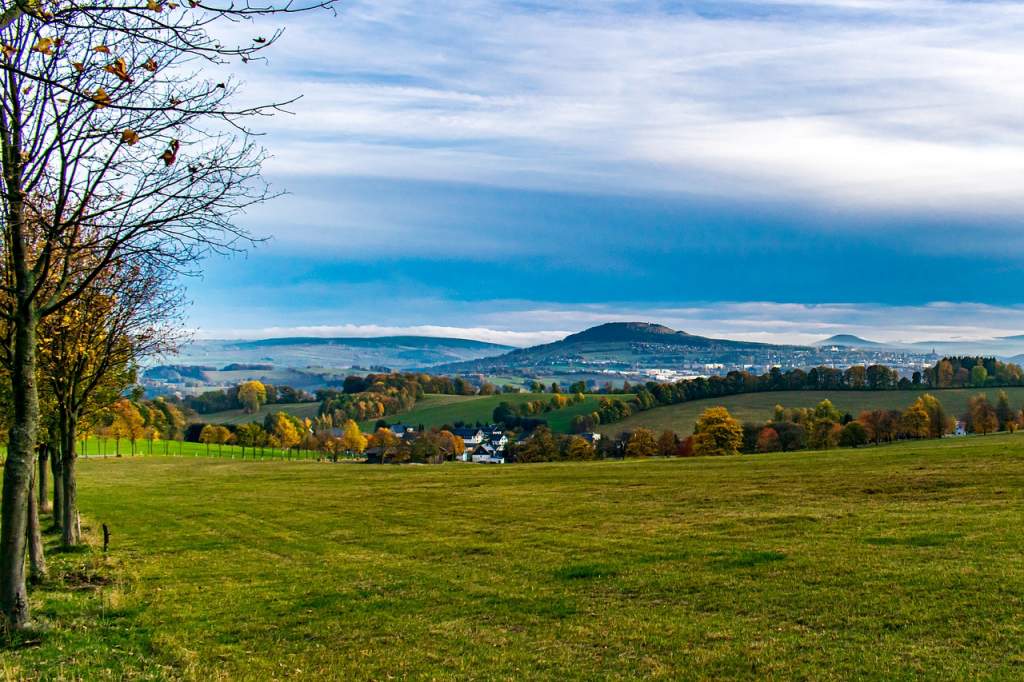
The town of Duszniki-Zdrój sits in the valley of the Dusznica stream, squeezed between the Table Mountains and the Eagle Mountains. Almost everything else follows from that location.
You can cover the town itself in half a day. Walk the spa park with its pump room, the baroque Rynek square, a church with a pulpit shaped like a whale’s mouth, and a paper mill that’s been a Polish national historic monument since 2011. The rest of your stay belongs to the surrounding area.
The main draw is Szczeliniec Wielki. The highest peak of the Table Mountains is just 11 kilometres and a quarter of an hour’s drive away – closer than from Kudowa-Zdrój, which is the more obvious base for the rock cities. Błędne Skały (the “Errant Rocks”) are half an hour away, as is Kłodzko with its fortress. Hiking and cycling trails through the Eagle Mountains start right behind the town.
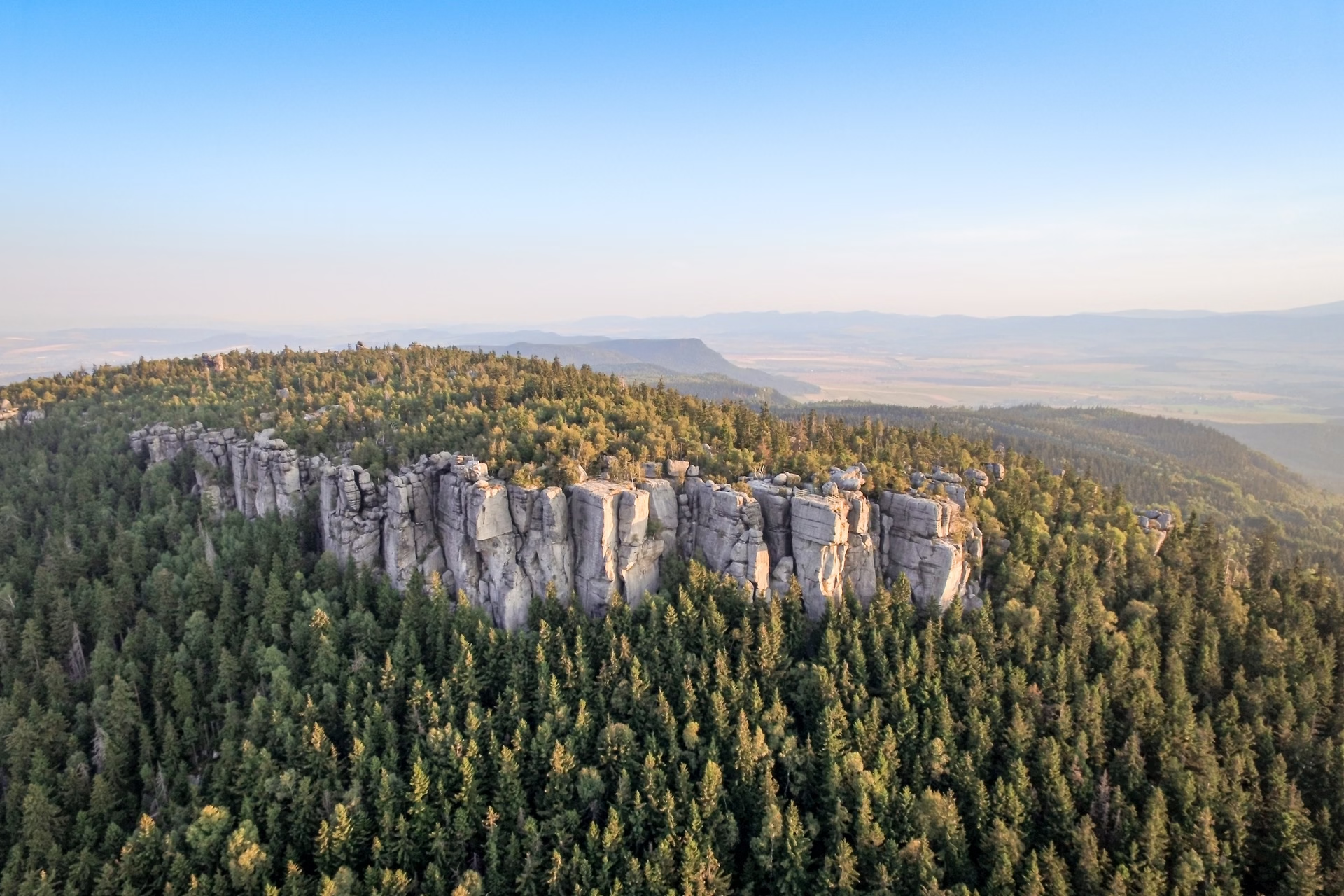
You’ll find a full guide to the neighbouring spa town, including the Skull Chapel and a detailed breakdown of the Table Mountains, in a separate article – read what to see in Kudowa-Zdrój and combine both towns into one trip.
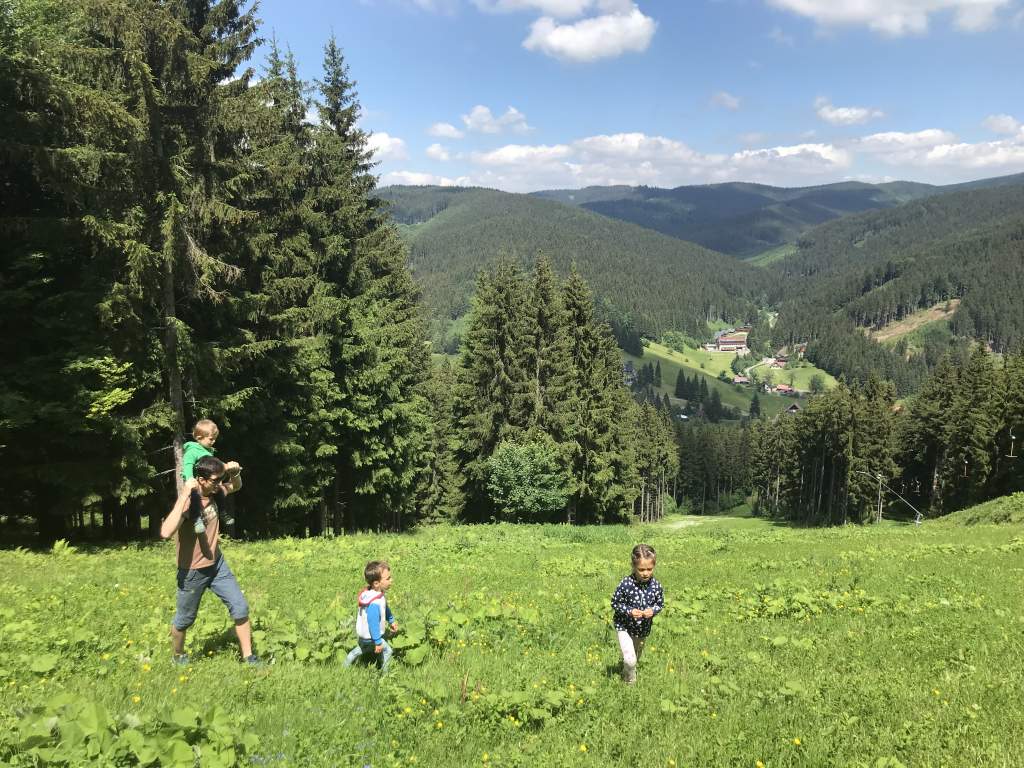
The second reason to visit – especially in winter – is Zieleniec. Administratively it’s part of Duszniki, but in practice it works as a separate mountain settlement twelve kilometres above the town.
With 31 lifts and cable cars, it’s the largest ski resort on either side of the Eagle Mountains. Snow holds here for up to 150 days a year – a record by Polish standards.

How Long to Stay
Duszniki has three ways to visit it, depending on how much time you have.
A day trip pays off mainly if you’re already nearby – Kłodzko and the Czech border town of Náchod are both under half an hour away. You’ll manage the Paper Museum including the workshop, a walk through the park, and Szczeliniec in the afternoon.
A long weekend is the sweet spot. One day for the town and the paper mill, one day for the Table Mountains (Szczeliniec in the morning, Błędne Skały in the afternoon), one day for Kłodzko or Bystrzyca Kłodzka. In winter, two of those three days turn into skiing.
A week can handle more distant targets too – the Bear’s Cave in Kletno, Międzygórze with the Wilczka waterfall, the Srebrna Góra fortress, and trips to the Czech side of the Eagle Mountains or to Broumov.
Top Tips to Get You Started
- Paper Museum – a 16th-century paper mill where you can make your own sheet of paper by hand and take it home.
- Szczeliniec Wielki – a rock labyrinth on the highest peak of the Table Mountains, a fifteen-minute drive away.
- Zieleniec Ski Arena – 31 lifts and 47 slopes.
- Church of St Peter and St Paul – a whale-shaped pulpit, unique anywhere in Europe.
- Dworek Chopina – the oldest continuously running piano festival in the world.
- Torfowisko pod Zieleńcem – a boardwalk through a peat bog, free entry.
- Pijalnia Wód Mineralnych – a spa drinking cure in the Park Zdrojowy.
A Short History of Duszniki-Zdrój
Duszniki didn’t start out as a spa town but as a craft and mining settlement. The first written mention dates to 1366, and from the 16th century two trades kept the town alive side by side: weaving and papermaking.
The paper mill on the Dusznica stream was already operating before 1562, and the name of the first known papermaker, Ambrosius Tepper, has survived to this day. That’s why the town holds the oldest surviving paper mill in the country – it wasn’t a random building, but the backbone of the local economy.
The Thirty Years’ War practically wiped the town out. According to records from the time, only twenty-five townsfolk remained after it ended. Recovery came in the 18th century with cloth-making – by 1751 the town had 106 master weavers at work.

The turning point came in 1796, when the Zimny Zdrój spring was scientifically verified and classified among the healing springs of the Prussian monarchy. That marked the start of the spa era.
The real boom came in the 19th century under mayor Paul Dengler, who ran the town from 1867 to 1903 and built much of the spa infrastructure you can still see today.
Until 1945 the town was called Bad Reinerz and was German. After the war came the expulsion of the German population and the arrival of Polish settlers. The paper mill became part of a state enterprise, and only later became a museum.
What to See and Do in Duszniki-Zdrój
The town can be walked in a morning. The spa quarter with the park lies south of the centre, while the paper mill sits at the northern edge by the river, about a kilometre from the Rynek. The historic core sits in between.
Paper Museum (Muzeum Papiernictwa)
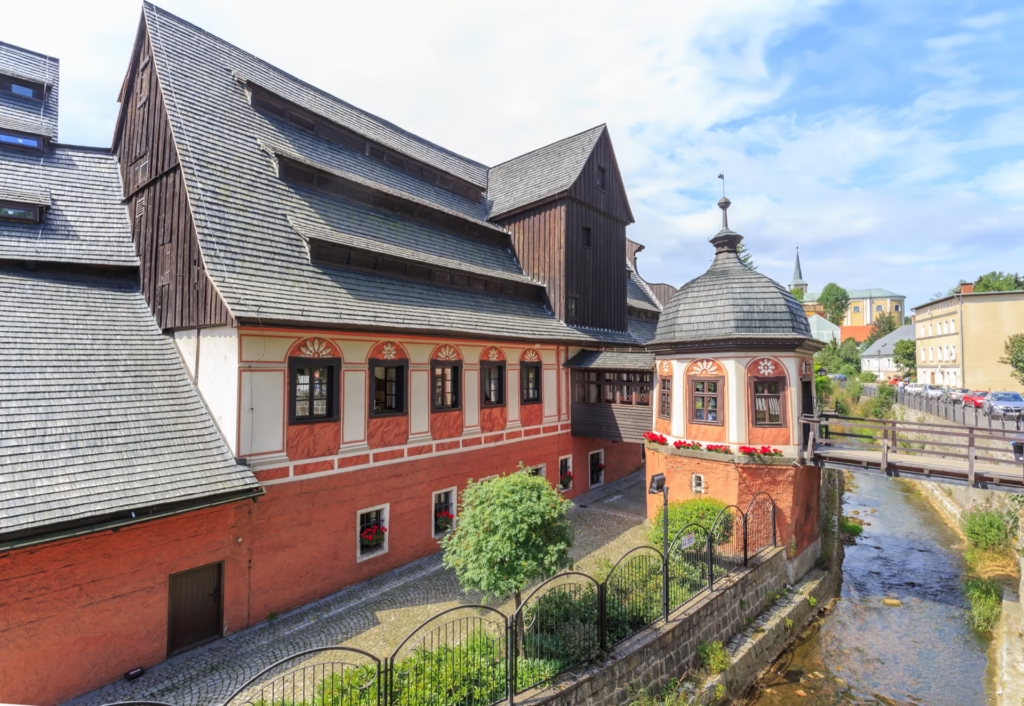
The paper mill on the Dusznica, worth the trip to Duszniki on its own, dates from before 1562 and is the oldest surviving paper mill in Poland. Since 2011 it has held the status of Pomnik Historii – a Polish national historic monument.
The building itself is worth a look – a baroque shingle mansard roof and half-timbered gable make it look more like a country manor than an industrial site. Inside there’s an exhibition on the history of papermaking, original machinery, a collection of watermarks, and a drying loft.
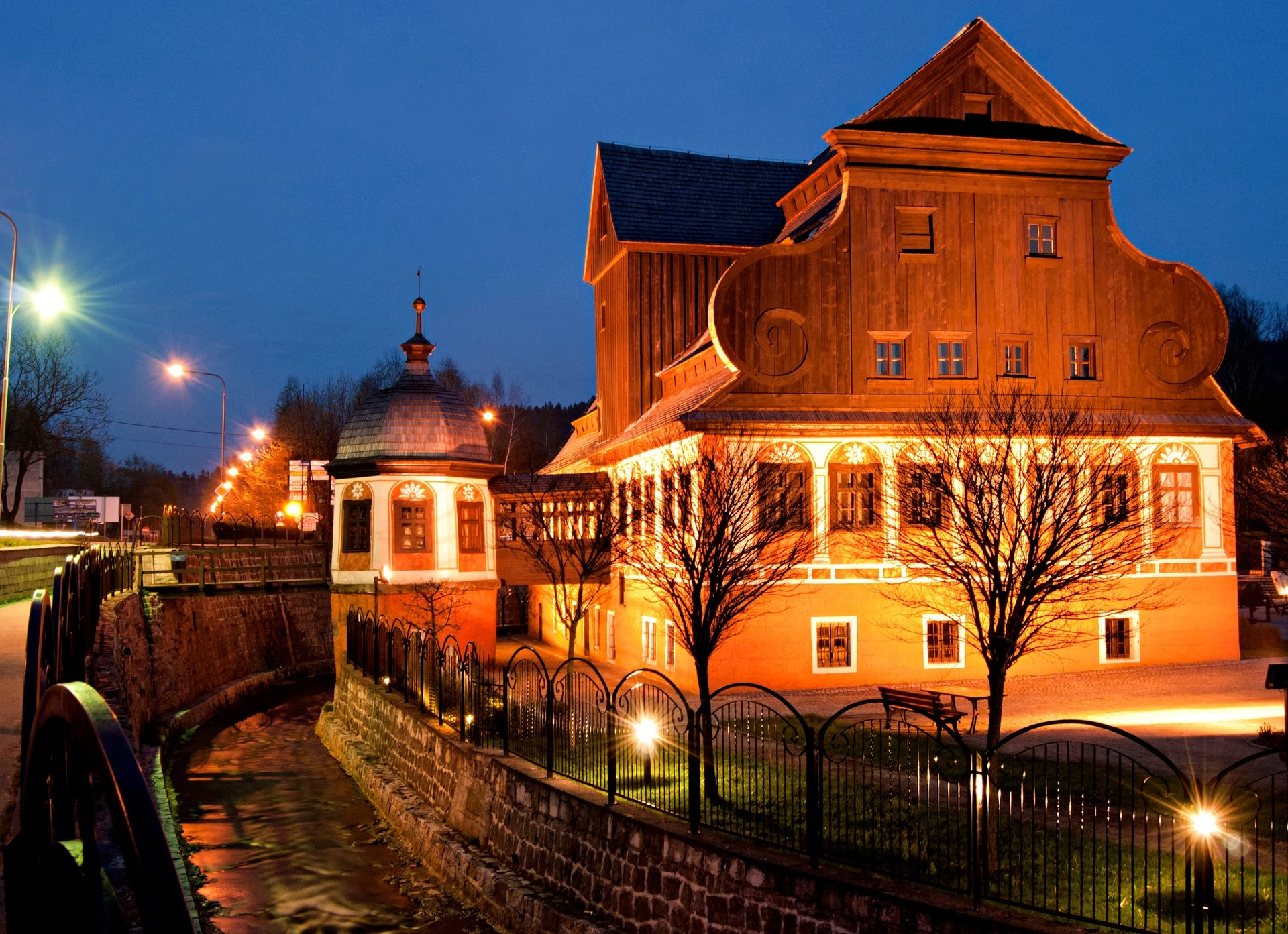
The highlight, though, is the hand-papermaking workshop. You scoop your own sheet from the mould, press it, and take it home. It takes about 20 to 30 minutes and comes as an add-on to the basic entry ticket.
Set aside an hour and a half for the whole museum. An audio guide is available, including an English version.
Admission varies depending on whether you choose just the exhibition or the combo with the workshop – standard admission is 30 PLN (roughly €7), reduced 22 PLN, and a family ticket for two adults with a child is 72 PLN, with each additional child at 16 PLN.
On the last weekend of July, the site hosts Święto Papieru, a papermaking craft festival with demonstrations, workshops and a market.
Dworek Chopina and the Chopin Festival
Sixteen-year-old Fryderyk Chopin arrived in Duszniki in August 1826 for treatment and gave two charity concerts there. That’s the tradition that continues to this day.
Dworek Chopina, today also the Teatr Zdrojowy, stands in Park Zdrojowy and dates from 1802 to 1805. Since 1946 it has hosted the International Chopin Festival – the oldest continuously running piano festival in the world.
It’s held every August and runs for about nine days. Individual tickets go on sale in spring; a full festival pass costs around two thousand złoty. Check the current dates and programme on the festival’s official website.
Outside festival days, the manor functions as a cultural centre with exhibitions and concerts. If Chopin isn’t your thing, it’s not a stop worth changing your plans for.
Park Zdrojowy and Pijalnia Wód Mineralnych
Park Zdrojowy is a classic spa park – a promenade, mature trees, a concert shell with summer open-air concerts, and a modern playground with a tree-shaped lookout tower. A colourful fountain has been added too, and it’s gradually becoming a symbol of the town.
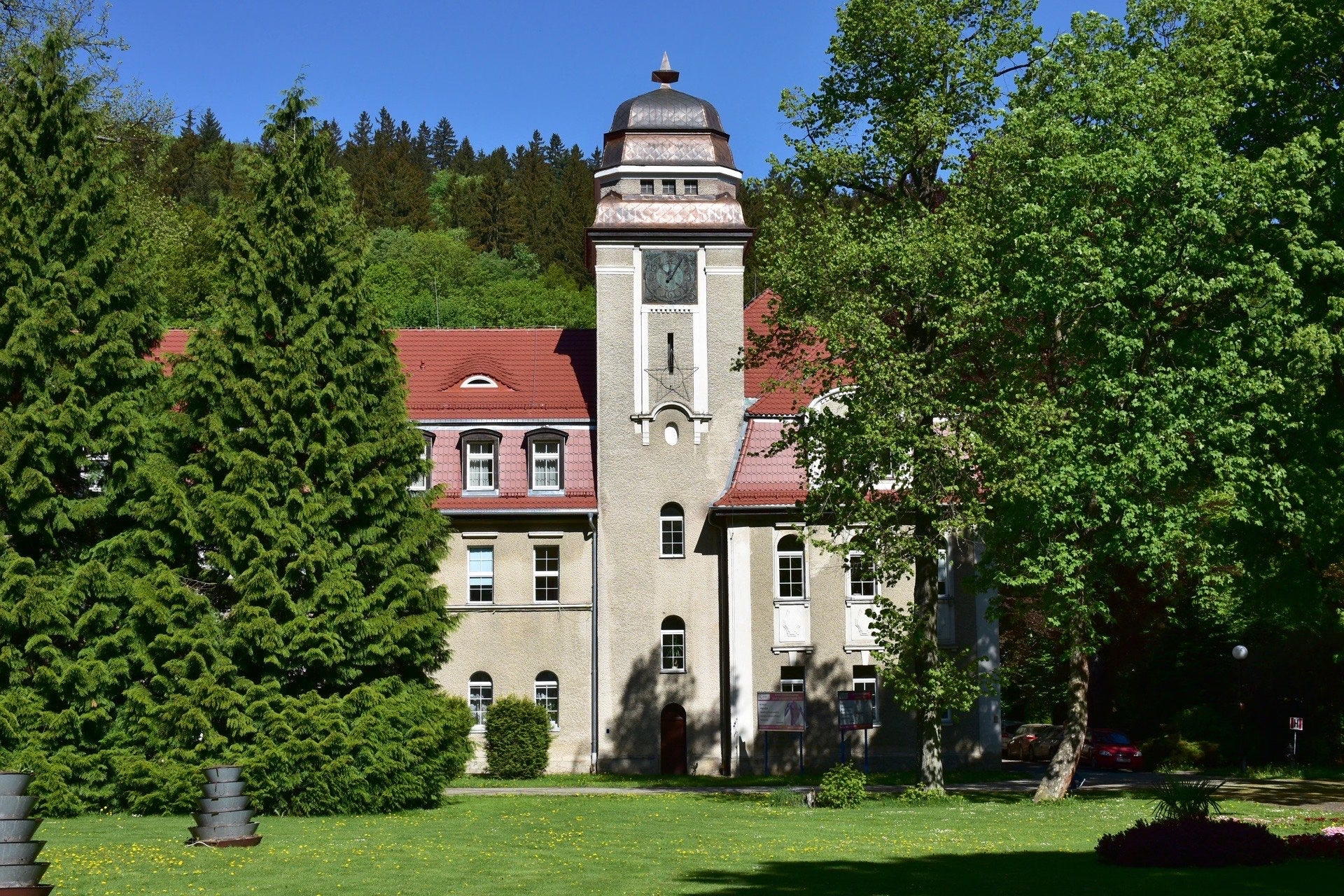
The Pijalnia Wód Mineralnych, in a 19th-century building, serves the local mineral waters. The main one, Pieniawa Chopina, is a bicarbonate-calcium-sodium water with iron and carbon dioxide, 18°C, drawn from 78 metres. The second spring, Jan Kazimierz, is sulphurous.
Fair warning: the sulphur water smells, and taste-wise it’s an experience for the brave. Check opening hours and whether the cure is free or paid on the spot – it changes seasonally.
Church of St Peter and St Paul and Its Whale Pulpit
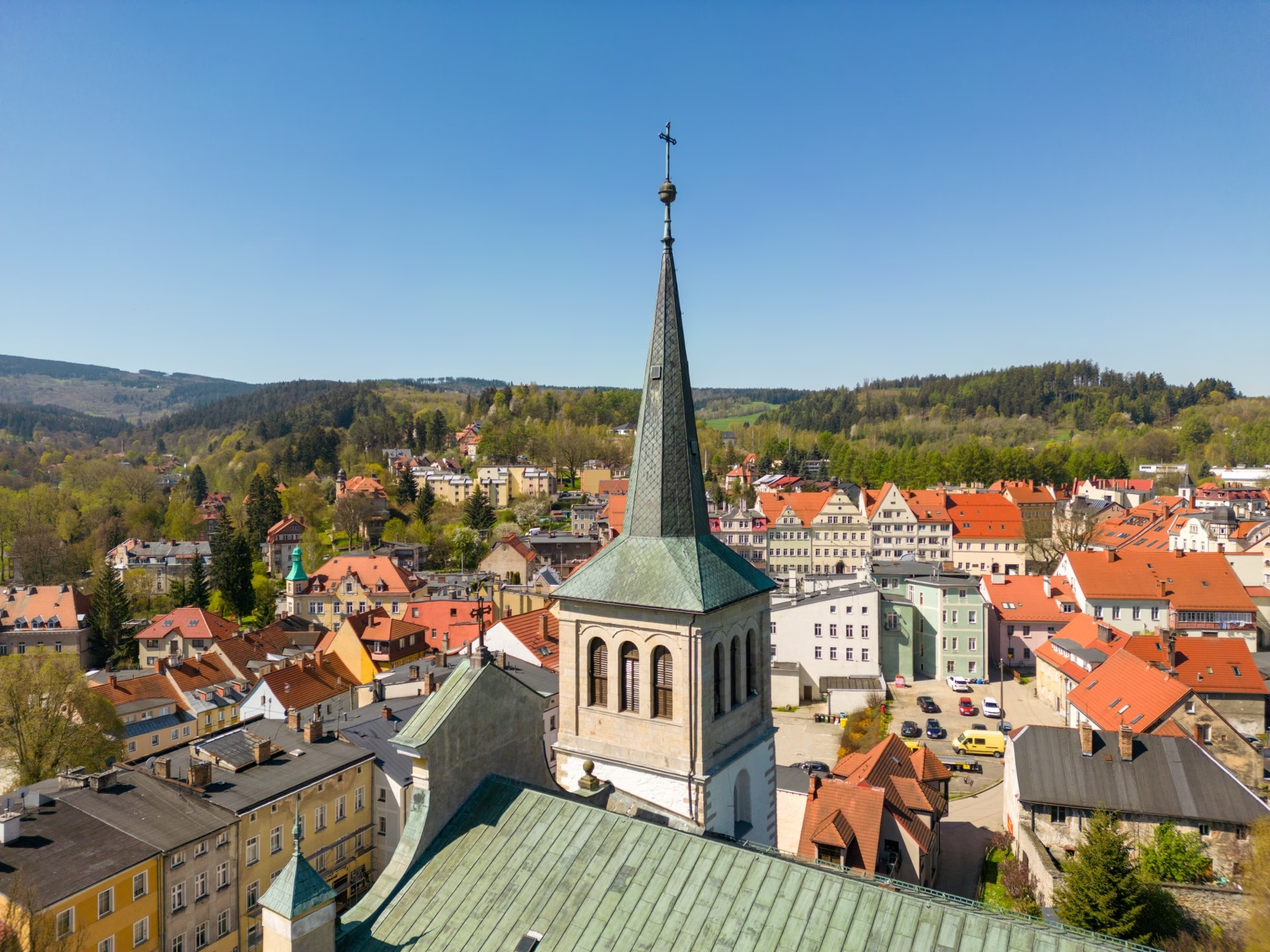
The baroque church at the edge of the centre hides something you won’t find anywhere else in Europe. The pulpit from 1720–1722 by Michał Kössler is shaped like a whale’s mouth – the preacher literally spoke from inside the fish that swallowed the prophet Jonah.
The structure is nine metres tall, and together with the surrounding baroque decor it makes for a stop worth the visit even if you usually skip churches. Outside of services it opens irregularly, so check the times on the spot or ask at the tourist information centre.
Rynek and the Historic Centre
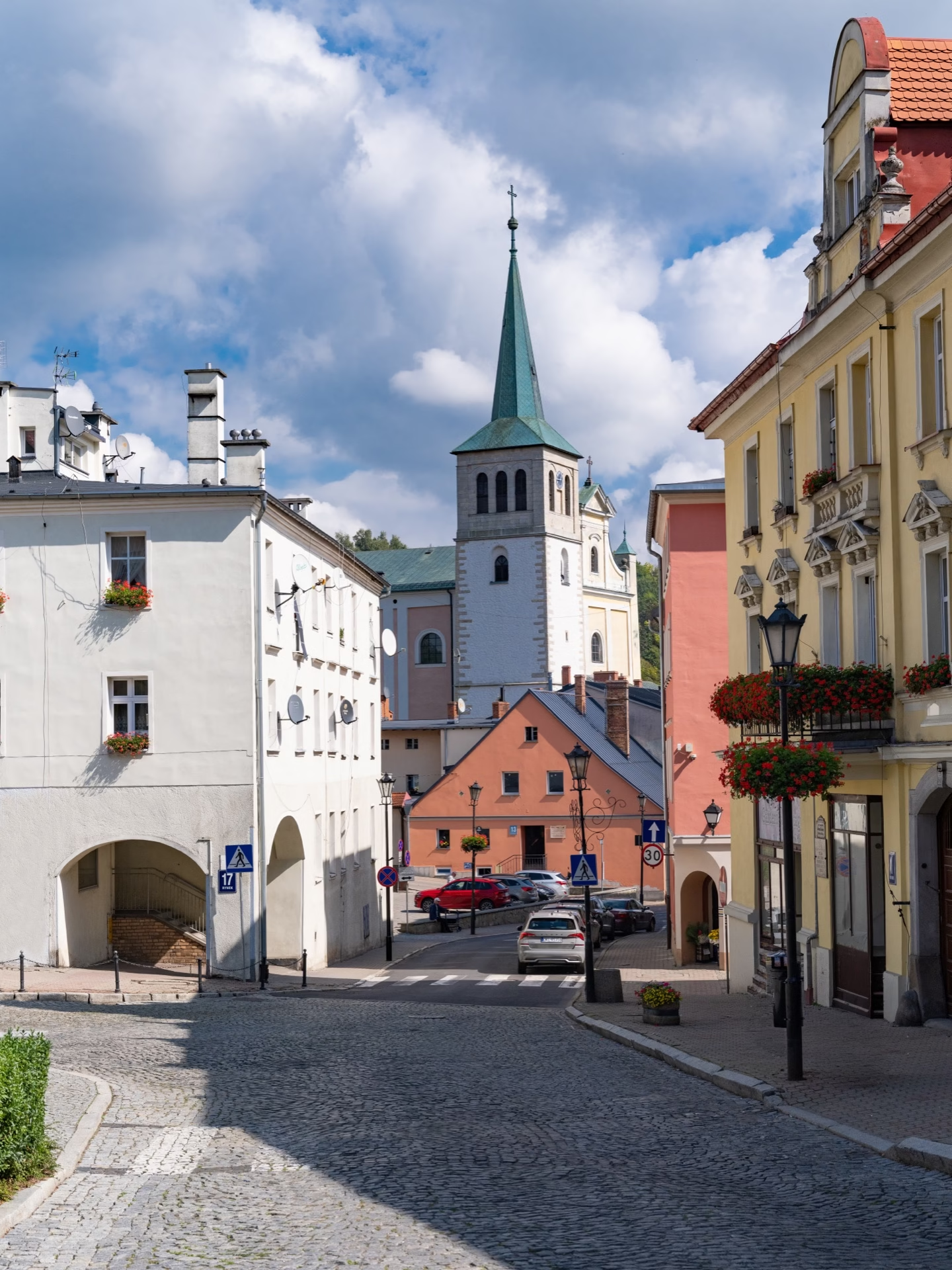
The Rynek is lined with baroque and Renaissance buildings with gabled façades. In the middle stands a votive column of the Virgin Mary from 1725, and a pillory has survived too. It’s a fifteen-minute square, not an hour, but you’ll want a coffee there.
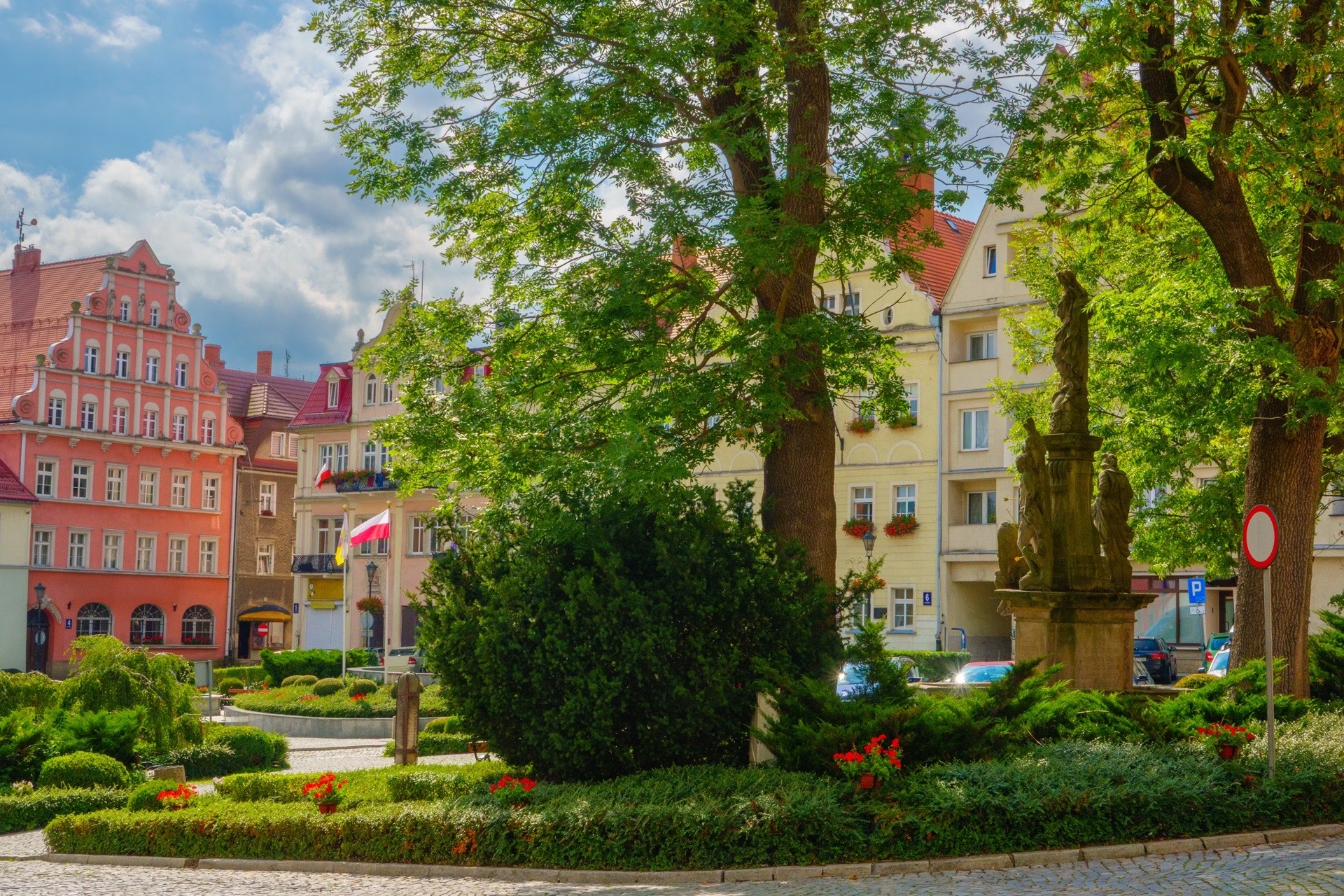
Around it you can explore the spa architecture – Art Nouveau villas, sanatoriums and guesthouses from the turn of the century, a reminder that the town was German until 1945 and was called Bad Reinerz.
Spa, Thermal Baths and Wellness
The spa facilities in town are run by the Uzdrowiska Kłodzkie group, the same one operating in Polanica and Kudowa. Zakład Przyrodoleczniczy offers mineral baths, mud wraps, hydrotherapy, salt inhalations and therapeutic massages. Week-long treatment stays start at around 1,500 złoty (roughly €340) per person.
For visitors who don’t want a full spa treatment programme, the more interesting option is Słoneczne Termy “Jan Kazimierz” on Zielona street – a pool with hydromassage, a Finnish sauna, a steam bath and a gym.
The pool is open to the public without a spa stay, which isn’t a given at Polish spas. An hour costs 20 PLN (reduced 18 PLN) and every extra minute 30 groszy. A family ticket for two adults with a child comes to 44 PLN per hour, and a five-hour pass costs 95 PLN.
Duszniki is a spa town through and through, so evenings are quiet and life happens in the park rather than in bars. If you’re after nightlife, head elsewhere.
Zieleniec: Skiing and Mountains Above Town
Zieleniec is administratively part of Duszniki but functions as an independent mountain settlement twelve kilometres above town, on the ridge of the Eagle Mountains. The road climbs for about twenty minutes, and in winter it’s a stretch where good winter tyres and chains on hand come in handy.
Zieleniec is a genuine discovery for many visitors, largely because it sits in the Eagle Mountains – a range known on the Czech side for a couple of smaller resorts. On the Polish side of the same ridge stands a ski area several times larger.
Zieleniec Ski Arena – Slopes and Lifts
Zieleniec Ski Arena isn’t one single area, but a connected network of smaller sections under a single ski pass. The central part comprises Winterpol and Gryglówka, with Nartorama and Diament to the south.
Together that’s 31 lifts and cable cars, including six chairlifts and one D3 Diament chair gondola. There are 47 slopes, with a combined length of 32 kilometres according to the operator.
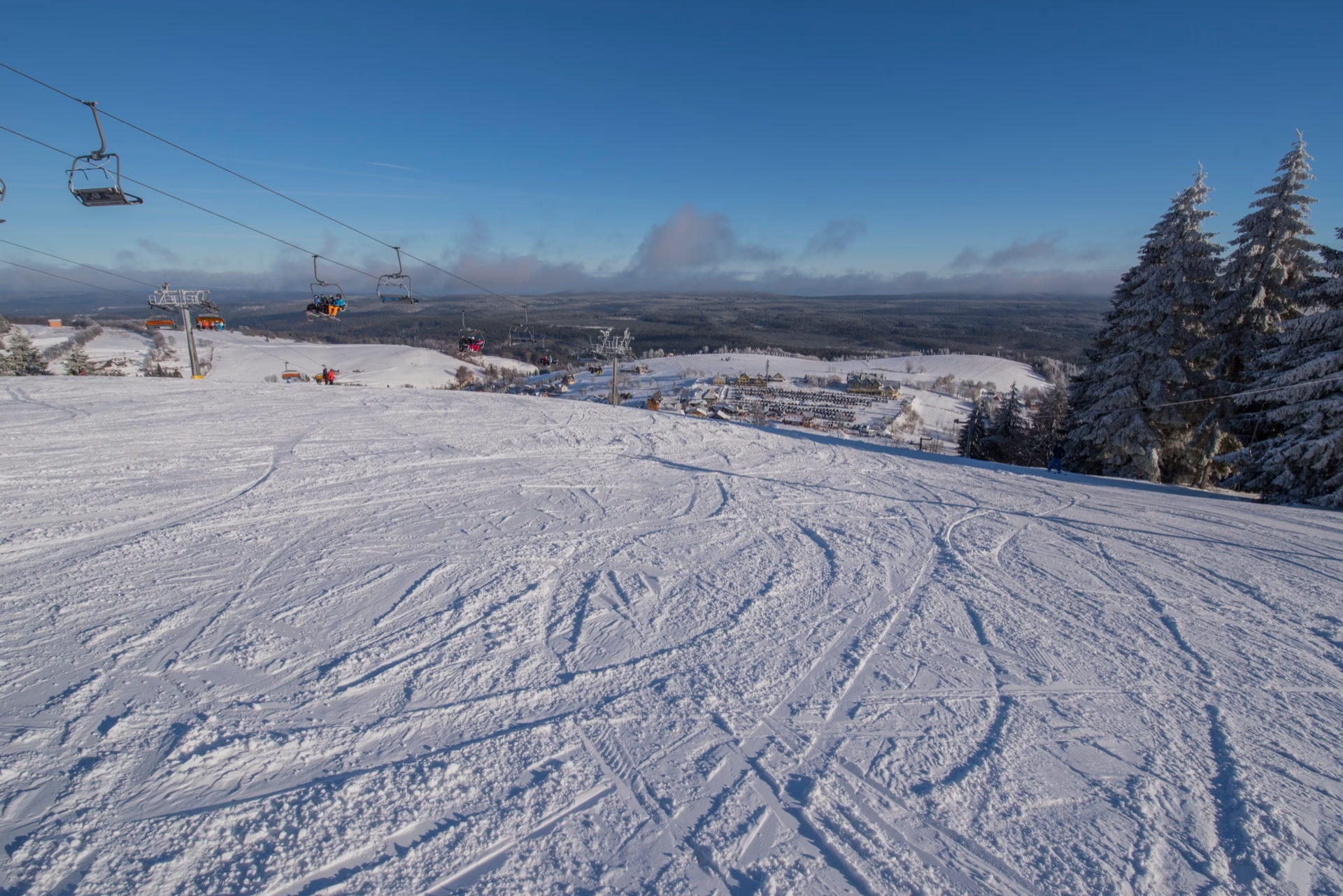
- Difficulty: roughly 62% blue, 34% red and 3% black runs. It’s a resort for beginners and intermediates, not for skiers chasing a challenge.
- Longest run: 2.8 kilometres.
- Altitude: from 800 to roughly 1,025 metres, so the vertical drop is only around 225 metres.
- Night skiing: 13.8 kilometres of floodlit runs, operating into the evening.
- Snowpark: next to lift W6.
- Parking: free, with capacity for roughly 3,380 cars.
The small vertical drop is the main weakness. Two hundred and twenty-five metres means short runs and frequent trips back to the lift. Zieleniec wins on breadth of terrain and number of runs, not on the length of any single descent – if you want long runs, head to the Alps, or at least to the Krkonoše mountains.
Ski Passes and Prices
One ski pass covers all the connected areas, which given their number is a major advantage. Prices below reflect the last published high-season price list; a new one usually comes out in autumn, so double-check before you travel on the resort’s website.
- Full day: 160 PLN (reduced 140 PLN) — roughly €37 (€32)
- 2 hours: 105 PLN (reduced 95 PLN)
- 4 hours: 135 PLN (reduced 120 PLN)
- 4 hours after 4pm (night skiing): 105 PLN (reduced 95 PLN)
- 6 days: 750 PLN (reduced 640 PLN) — roughly €173 (€147)
High season runs roughly from Christmas to early March. Before and after it prices drop, and in spring they fall by roughly half – and since snow lingers here for a long time, March skiing at half price is one of the smartest moves you can make in Zieleniec.
There are several ski schools and rental shops in Zieleniec, and each has its own price list – there’s no central one. You’ll find equipment near the slopes and at hotels, including children’s protective gear and helmets.
Why the Snow Lasts Longest Here in Poland
Zieleniec has a reputation as Poland’s most snow-reliable resort, and it comes down to a combination of location and technology. The Eagle Mountains ridge catches moist airflow from the northwest, so it gets considerably more precipitation than the surrounding valleys.
According to the operator, snow lies here for up to 150 days a year. On top of that, the resort has snowmaking across roughly twenty kilometres of runs, so even a milder winter still keeps most of the resort open.
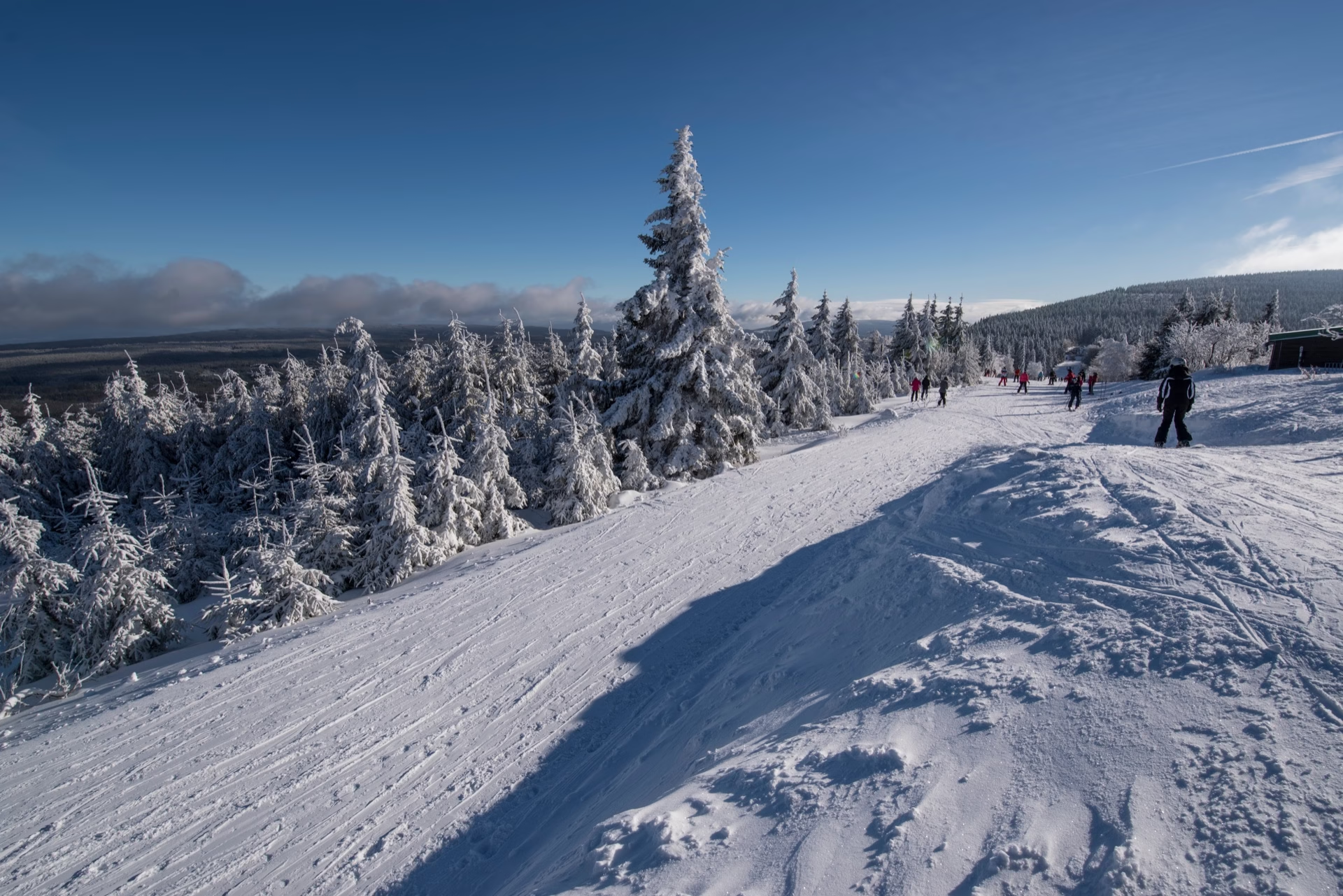
The practical result: Zieleniec opens earlier and closes later than resorts on the other side of the same mountains. In a good winter you can still be skiing here in the second half of March, when neighbouring resorts have already closed for the season.
Cross-Country Skiing and Jamrozowa Polana
Duszniki is a traditional centre for cross-country skiing, and the Jamrozowa Polana facility is its heart. It has hosted the Summer Biathlon World Championships and IBU Cup races; today it’s run by the COS-OPO Olympic training centre.
The facility is open to the public but not free. Access to the snow-covered track costs 25 PLN (reduced 15 PLN); in summer you can run or roller-ski on the paved loop for 10 PLN.
For cross-country skiers, this is one of the best-maintained tracks in the whole Sudetes – a professional sports facility, not a municipal loop.
Zieleniec in Summer
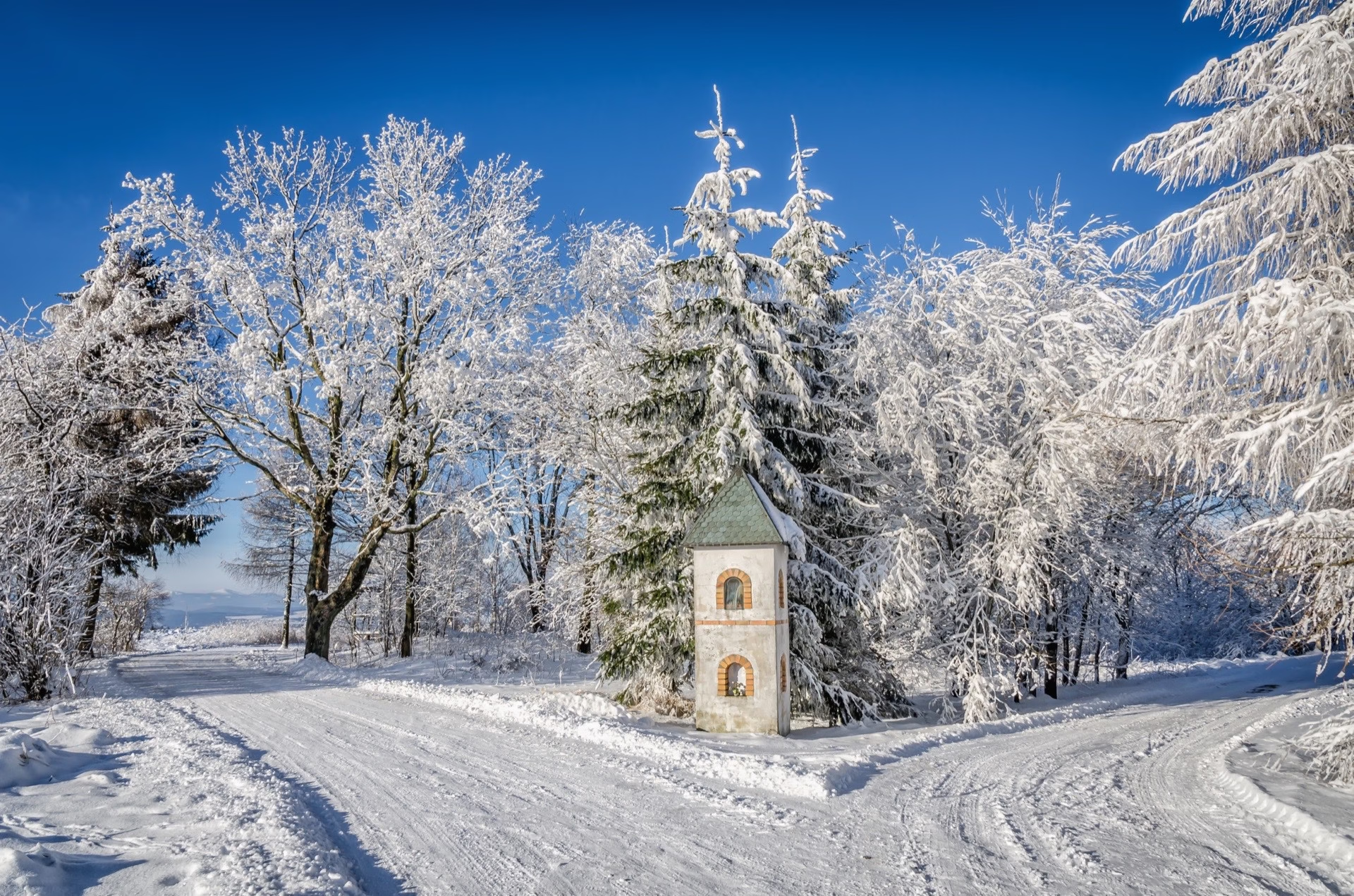
In summer, Zieleniec becomes a launchpad into the Eagle Mountains, and two cable cars keep running.
Gryglówka will take you up and back for 32 PLN (children 20 PLN), while the Nartorama SkyWay Express cable car costs 40 PLN (children 25 PLN).
Family Bike Park Zieleniec offers six trails totalling over eleven kilometres. A day pass covering the lift with your bike costs 110 PLN (reduced 95 PLN), and bike rental runs 150 to 200 PLN a day.
The surrounding ridges connect to the Singltrek Glacensis trail network.
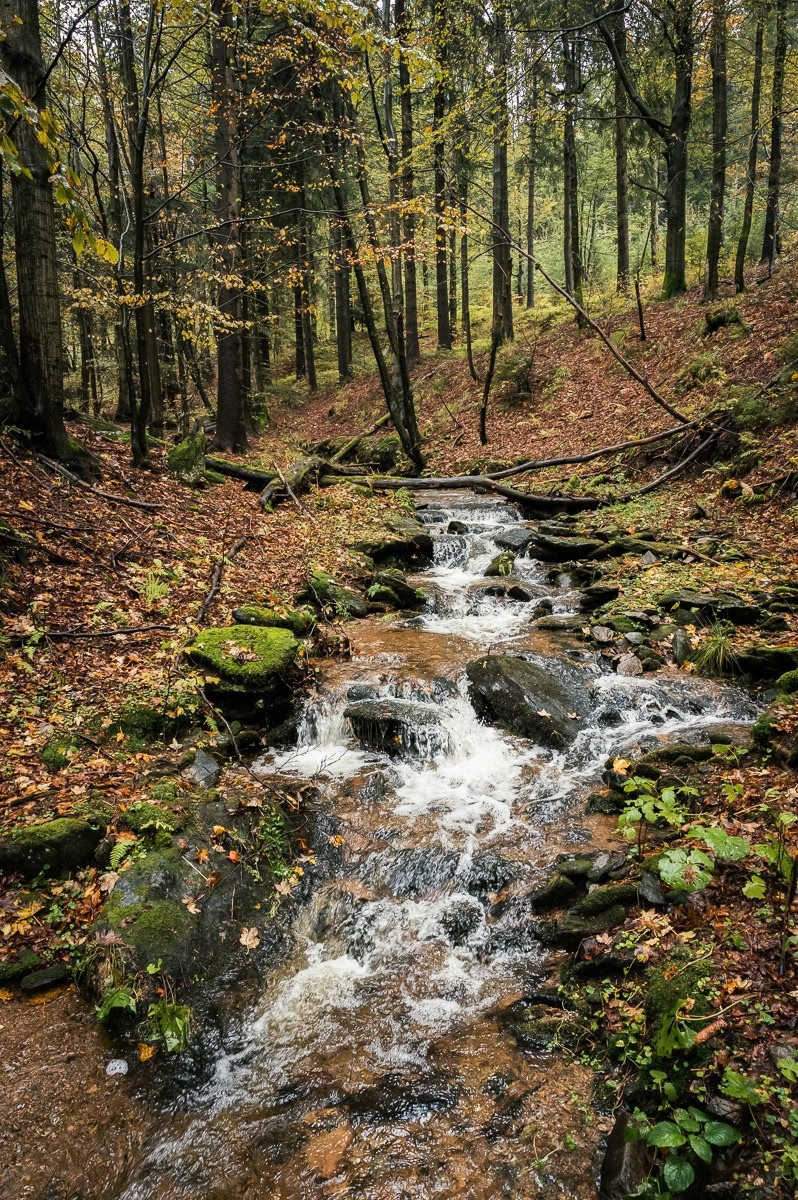
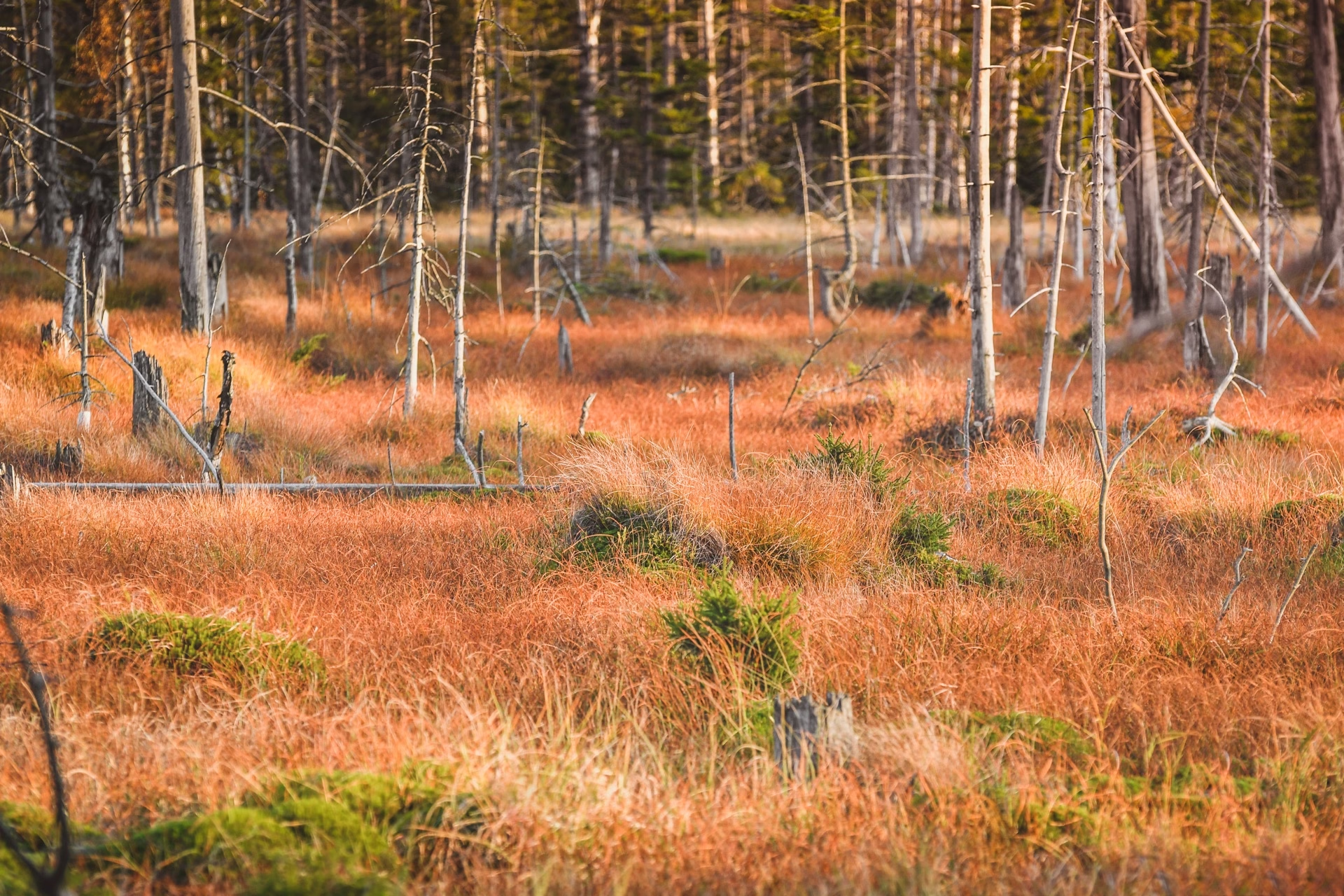
Torfowisko pod Zieleńcem is a 232-hectare reserve of peat bog, mountain pine and boardwalk trail. The nature trail is three kilometres long and entry is free. It’s the prettiest easy walk in the area, and in fog it has an atmosphere you won’t find anywhere else in the Sudetes.

Above the peat bog rises Orlica, with a lookout tower at 1,084 metres and views on both sides of the border.
Browse accommodation in Zieleniec
Zieleniec, or the Smaller Resorts Nearby?
- Zieleniec: 31 lifts and cable cars, 47 slopes, 32 km of runs. Day ski pass 160 PLN, roughly €37.
- Nearby smaller resorts on the Czech side of the Eagle Mountains: typically 3–8 lifts and just a handful of runs, totalling only a few kilometres of pistes, at similar day-pass prices around €35–36.
For roughly the same price, Zieleniec gives you eight times as much terrain. A day pass comes to about the same cost as at the smaller Czech-side resorts, just a few euros more, but the difference in what’s on offer is on a whole different scale.
The smaller resorts have two advantages. Children’s ski passes are cheaper there compared to the reduced-rate pass in Zieleniec. And there’s no border crossing involved, which matters mainly for a quick day trip when the forecast looks shaky.
A sensible rule of thumb: for a single day with small children, stick to the smaller local resorts. For a weekend or longer stay, the drive over to Zieleniec pays off, because after two days, four kilometres of slopes gets boring even for beginners.

Getting to Zieleniec
By car from Duszniki along the road, twelve kilometres and about twenty minutes. In winter this is a mountain road with a climb – winter tyres are mandatory, and it’s worth setting off early when it’s snowing.
During high season there’s a ski bus from Duszniki, usually running roughly from Christmas to early March. The current timetable is posted on the town’s website.
Day Trips from Duszniki-Zdrój
Duszniki sits roughly in the middle of the Kłodzko Valley, so you can head out almost anywhere from here. The destinations below are listed from closest to furthest.
Table Mountains: Szczeliniec Wielki and Błędne Skały
Szczeliniec Wielki is the highest peak of the Table Mountains (Góry Stołowe), and from Duszniki it’s a fifteen-minute drive. A staircase leads up, followed by a loop across the plateau between sandstone blocks, crevices and viewpoints.
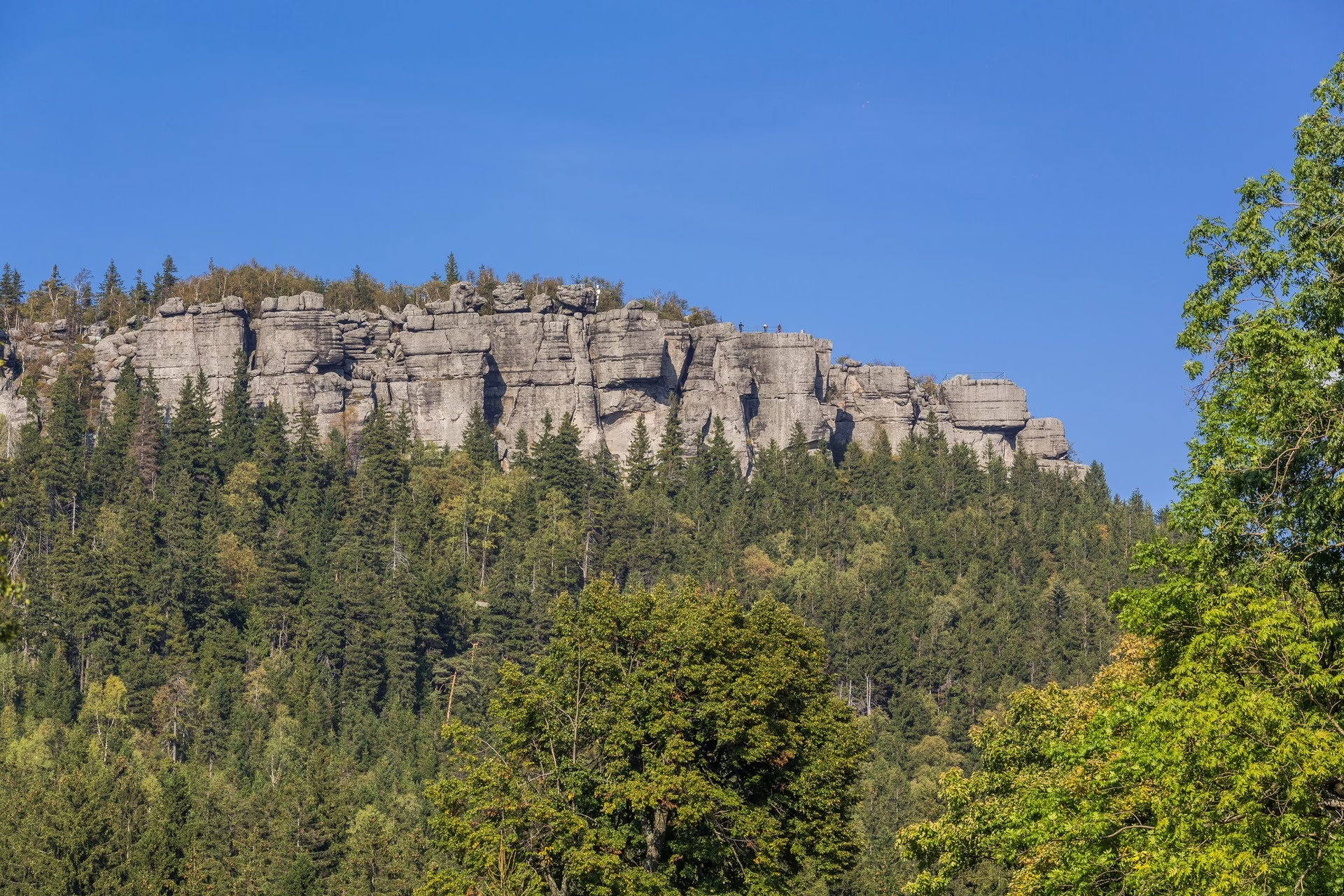
Błędne Skały (“Errant Rocks”) are 23 kilometres away, about half an hour’s drive. It’s a stone maze you squeeze through, along narrow gaps between sandstone blocks – sometimes so tight that a large backpack won’t fit.

Both sites are managed by Park Narodowy Gór Stołowych and share the same rules. Trail admission costs 16 PLN, reduced 8 PLN. The key detail is the hourly cap – Szczeliniec allows 400 people per hour, Błędne Skały 350.
Buy tickets online in advance. In summer and on weekends the hourly slots sell out, and you won’t be able to pick a time on arrival. Błędne Skały also has a one-way road with a traffic light system, letting cars up for only fifteen minutes each hour. Parking up top costs 40 PLN.
We’ve broken down the Table Mountains in detail, including both trails, bookings and timing, in a separate guide – read how to plan Szczeliniec Wielki and Błędne Skały.
Polanica-Zdrój
Twelve kilometres, a quarter of an hour. The third of the Kłodzko Valley’s spa trio, a bit bigger and more polished than Duszniki. It has an expansive spa park with a fountain and is the nearest place with an emergency hospital.
Kłodzko and Its Fortress
Twenty-three kilometres in the other direction, just under half an hour. The historic hub of the whole region, with the monumental Twierdza Kłodzko, underground tunnels beneath the Old Town, and the Gothic St John’s Bridge, which looks like a scaled-down Charles Bridge.

We cover the fortress, the underground labyrinths and the rest of the town in their own article – see what to see in Kłodzko, including prices and opening hours.
Wambierzyce – the Silesian Jerusalem
Twenty-eight kilometres, 35 minutes. A pilgrimage site whose founding is, by tradition, attributed to the Czech king Ottokar II around 1253. The Basilica of the Visitation of the Virgin Mary stands atop a wide staircase and is open daily from 7am to 7pm.

The site’s oddity is a moving nativity scene – the largest in Poland, with roughly 800 figures, around three hundred of them mechanised. It was built in the 19th century by local clockmaker Longin Wittig. Viewing is only possible with a guide.
Bystrzyca Kłodzka
Twenty-nine kilometres, 36 minutes. A town with a preserved medieval layout and remnants of its walls, one most tourists pass right by.
It’s home to the Muzeum Filumenistyczne – Poland’s only museum of matches and lighters, founded in 1964 in a former Protestant church.
Międzygórze, Śnieżnik and the Bear’s Cave
This is a full-day trip, not an afternoon stop.
Międzygórze is 52 kilometres away, about an hour and a half’s drive – the most distant sensible target. The village in the Wilczka stream valley is nicknamed the Pearl of the Sudetes. The Wilczka waterfall drops 22 metres, the second highest in the Polish Sudetes, accessible around the clock and free.
Ogród Bajek, the “Fairy Tale Garden,” is an open-air collection of wooden fairy-tale figures about half an hour’s walk above the village. Admission 13 PLN, reduced 10 PLN, free for children under two. Bring cash.
Above Międzygórze rises Śnieżnik – 1,425 metres, the highest peak of the Eastern Sudetes, with a new observation tower built in 2021 and 2022. The climb is a full-day undertaking.
Jaskinia Niedźwiedzia, the Bear’s Cave in Kletno, is 44 kilometres away and is the most beautiful dripstone cave in Poland. Tours last about 45 minutes.
Srebrna Góra Fortress
Forty-nine kilometres, roughly an hour. The largest mountain fortress in Europe, a Prussian 18th-century structure spread along a ridge. It combines well with a return route via Kłodzko.
The Czech Borderlands
The border is so close from here that day trips to the Czech side pretty much suggest themselves.
- Náchod – 21 km. A castle above town and the nearest larger Czech town.
- Nové Město nad Metují – 30 km. A Renaissance square and a chateau with Jurkovič’s design touches.
- Adršpach – 43 km. The Adršpach-Teplice Rocks, the Czech counterpart to the Table Mountains.
- Nearby smaller Czech ski resorts in the Eagle Mountains – around 35 km, but nearly an hour along mountain roads.

Hiking and Cycling Routes from Duszniki-Zdrój
Duszniki sits right at the foot of the Eagle Mountains ridge, so you can head out on a hike straight from town, with no need to drive.
On Foot
- The Duszniki – Orlica – Zieleniec route is the local classic. Across the ridge it’s roughly 13 to 15 kilometres with about 600 metres of elevation gain, so four to five hours. At the top stands the Orlica lookout tower at 1,084 metres, with views on both sides of the border. You can take a bus back down.
- The loop version of the same route measures about 20 kilometres and takes a full day.
- Duszniki – Zamek Leśna near Szczytna runs past the Pod Muflonem mountain hut and measures roughly 11 kilometres, so just under four hours one way.
- Wolarz is a short loop right from the spa centre – a family-friendly morning route.
- Torfowisko pod Zieleńcem, with its three-kilometre boardwalk, is the easiest option and manageable for anyone.

By Bike
Dozens of marked routes weave through the countryside around Duszniki, and the most interesting is Singltrek Glacensis – a network of singletracks along the border ridge that connects to the Family Bike Park in Zieleniec.
A popular loop runs from Zieleniec over the Orlica ridge down to Duszniki and back up by cable car. A classic, easy route links Duszniki with Kudowa-Zdrój and is manageable even with kids on trekking bikes.
Bikes can be rented right in Zieleniec, for around 150 to 200 PLN a day.
What to Do in Duszniki-Zdrój When It Rains
Summer here is the wettest season of the year, so this list comes in handy.
- Paper Museum including the workshop – an hour and a half indoors and the best attraction in town.
- Słoneczne Termy – pool, sauna and steam bath for 20 PLN an hour.
- Church of St Peter and St Paul with its whale-shaped pulpit.
- Muzeum Filumenistyczne in Bystrzyca Kłodzka – half an hour’s drive, matches and lighters in a former church.
- Bear’s Cave in Kletno – it’s raining inside the cave either way. Just book your slot in advance.
- Kłodzko Fortress with its underground tunnels.
On rainy days, skip the rock cities. Wet sandstone is slippery, the staircase up Szczeliniec becomes dangerous, and you won’t see a thing from the viewpoints anyway.
Duszniki-Zdrój with Kids
Duszniki is better for families than you’d expect from a spa town. Most attractions can be managed without long drives, and there’s something here for kids of every age.
- Paper Museum – the papermaking workshop is the most fun thing in town for kids, and they get to take their own creation home.
- Playground in Park Zdrojowy with a tree-shaped lookout tower and slide, right next to the colourful fountain.
- Ogród Bajek in Międzygórze – wooden fairy-tale figures in the forest, ideal for preschoolers.
- Zieleniec in winter – ski schools and gentle blue runs.
- Family Bike Park in Zieleniec for older kids in summer.
- Torfowisko pod Zieleńcem – a flat, three-kilometre boardwalk, manageable even for small children.
Where to Stay in Duszniki-Zdrój
The choice comes down to a single question: are you here to ski, or to soak? Between the town and Zieleniec there’s twelve kilometres of mountain road, so this isn’t a detail you can figure out once you’ve arrived.
In the Centre and Spa Zone
The base for a summer stay, trips to the rock cities, and the spa programme. From here you can walk to the park, the pump room and the museum.
- Impresja Art Resort – A resort right in Park Zdrojowy, three minutes from the pump room. Large, modernly furnished, with a buffet breakfast including gluten-free options. The best location in town.
- Medical Wellness & SPA Werona – Two connected buildings with three pools, saunas, a hot tub and gym. Higher-end category, guarded parking, an Italian-Polish restaurant.
- Zlote Modrzewie – Family apartments with kitchenette and balcony with mountain views. Outdoor kids’ playground, barbecue and free parking – a solid choice for families.
- Apartament Parkowy – A whole apartment to yourself, fully equipped kitchen and washing machine. Two minutes from Dworek Chopina, free parking. One of the more budget-friendly options in town.
- Studio z sauną – A studio with its own sauna and mountain views, a hundred metres from the centre.
In Zieleniec by the Slopes
The obvious choice for a winter stay. You’ll skip the daily morning drive up the snowy road, and some accommodation sits literally at the lift.
- Alpejski Zieleniec – The chairlift is four metres from the building – you can put your skis on at the door. Ski school and rental on-site, kids’ playroom, free parking. The best ski-in/ski-out spot in Zieleniec.
- Orlicka Skała – A four-star wellness resort with an indoor pool with a view, spa, sauna and hot tub. Family restaurant with vegan and gluten-free options.
- Apartamenty Zieleniec – Apartments with a fully equipped kitchen and their own sauna, right by the slopes. On-site mini-market and ski rental.
- Hanka Relax & Spa – Fifty metres from the cable car station, with free access to an indoor pool and a kids’ playground. A sensible family choice.
- Domki Osada Zieleniec – Standalone chalets with gardens, good for families and larger groups.
Quiet, Away from the Centre
An option for those travelling by car who want quiet, a garden and a view instead of the spa promenade.
- Agroturystyka Słoszówka – A farmhouse in a meadow a kilometre and a half from the centre, with a garden and mountain views. The quietest address around.
- Nowoczesny domek GoldBach – A modern cottage two kilometres from the centre, with a shared living area.
- Domek Nad Strumykiem – A cottage by a stream, less than a kilometre from the centre, with a barbecue and garden.
- Magic Places 57-340 – An apartment with a terrace and garden, two kilometres from the centre.
Find accommodation in Duszniki-Zdrój
How to Get to Duszniki-Zdrój
Duszniki sits on road 8 between Kłodzko and the Czech border, so it’s easy to reach from either country. The most convenient option is a car, which also comes in handy for day trips around the area.
- From the Czech side: via the Náchod – Kudowa-Słone border crossing, from which it’s 21 km, just under half an hour. Roughly 2 hours 10 minutes from Prague, 2 hours 40 minutes from Brno. A long-distance FlixBus from Prague also stops directly in Duszniki.
- From within Poland: 23 km from Kłodzko, just under half an hour; roughly 115 km and about two hours by road 8 from Wrocław. Trains run via Kłodzko – a line modernisation is due to finish in October 2026, so check the current status on the Koleje Dolnośląskie website.
Getting Around and Parking
Parking in the centre currently has no blanket paid zone; fees only apply at individual car parks. That tends to change often in spa towns though, so watch the signage.
Parking in Zieleniec is free, with roughly 3,380 spaces, so you won’t be circling even on weekends. During ski season, a ski bus runs to Zieleniec from Duszniki.
Practical Information
Money and Prices
Poland uses the złoty (PLN), not the euro. The exchange rate hovers around 4.30 PLN to the euro, so a hundred złoty comes to roughly €23.
Card payment works pretty much everywhere, including small businesses. At ATMs and card terminals, always decline the dynamic currency conversion – it costs you a few percent extra for nothing. A multi-currency card like Revolut is a solid way to avoid these fees altogether while travelling in Poland.
Spa Fee
Duszniki holds official spa-town status, so you’ll pay the opłata uzdrowiskowa – a spa fee per person, per night. It runs around 4.50 PLN, roughly €1, with a legal cap of just under five złoty.
It’s collected by the accommodation provider and is usually paid in cash on arrival, even if you’ve already paid for your stay by card in advance. It’s not a scam, just a surprise. Check the exact rate when booking.
When to Go
Duszniki sits at an altitude of 554 metres, the Zieleniec settlement roughly 300 metres higher, and the slopes reach over 1,000 metres, so it’s cooler here than in the lowlands, and the weather genuinely differs between the town and the ridge.
- Summer (June–August): around 17°C on average, but also the wettest season. Peak season for the rock cities – booking entry in advance is a must.
- Autumn (September–October): the best compromise. Beech forests in the Table Mountains turn colour, crowds thin out, and accommodation gets cheaper.
- Winter (December–March): temperatures around -3 to -5°C, with ski season in Zieleniec. The town is quiet, and some businesses keep shorter hours.
- Spring (May): green, empty and cheap, but the rock cities aren’t in full swing yet.
- Shoulder season (November and April): the weakest time of year. Some businesses in Zieleniec close, the town’s opening hours shrink, and the mountains are more mud than snow or leaves.

Frequently Asked Questions
How far is Duszniki-Zdrój from the Czech border?
From the Náchod – Kudowa-Słone border crossing it’s about 21 kilometres, just under half an hour’s drive. It takes roughly 2 hours 10 minutes from Prague, 2 hours 40 minutes from Brno.
How much does entry to the Paper Museum in Duszniki cost?
Standard admission is 30 PLN, reduced 22 PLN, and a family ticket for two adults with a child is 72 PLN, with each additional child at 16 PLN. The hand-papermaking workshop comes as an add-on, and you take the sheet you make home with you. Check the museum’s website for the current price list and bookings.
Is it worth skiing in Zieleniec instead of at smaller resorts nearby?
For a weekend or longer stay, yes. Zieleniec has 31 lifts and cable cars and about 32 kilometres of slopes, while nearby smaller resorts across the border typically offer just a handful of lifts and a few kilometres of runs. Day ski passes are priced similarly on both sides. For a single day with small children, though, it may make more sense to stick with a smaller, closer resort — children’s passes tend to be cheaper there and there’s no border crossing involved.
When is the snow best in Zieleniec?
High season runs roughly from Christmas to early March. Zieleniec has a reputation as Poland’s most snow-reliable resort, with snow lasting up to 150 days a year, and snowmaking covers around twenty kilometres of runs. March is also worth considering, when ski pass prices drop by roughly half and snow usually still holds.
Do I need to book entry to Szczeliniec Wielki and Błędne Skały in advance?
Effectively, yes. Trail admission costs 16 PLN, and hourly caps apply — Szczeliniec allows 400 people per hour, Błędne Skały 350. In summer and on weekends, hourly slots sell out, so buy tickets online in advance. Błędne Skały also has a one-way road with a traffic light system.
How many days should I plan for a visit to Duszniki-Zdrój?
The town itself takes half a day. A long weekend is the sweet spot — one day for the town and the paper mill, one day for the Table Mountains, and one day for Kłodzko or Bystrzyca Kłodzka. A week can accommodate more distant destinations like the Bear’s Cave, Międzygórze or the Srebrna Góra fortress.
Is Duszniki-Zdrój suitable for families with kids?
Yes. The workshop at the Paper Museum, the playground in Park Zdrojowy with its tree-shaped lookout tower, the pool at Słoneczne Termy, and in winter the ski schools and gentle blue runs in Zieleniec can fill several days easily. Just be aware that Szczeliniec Wielki has a steep staircase and isn’t stroller-friendly.
Can I get to Duszniki-Zdrój by train?
There’s no direct train connection from the Czech Republic. A rail line runs from Kłodzko to Duszniki, currently undergoing modernisation — trains are scheduled to return in October 2026, so check the current status on the Koleje Dolnośląskie website. FlixBus runs here from Prague, and a cross-border line connects Náchod with Kudowa-Zdrój.
Is there a spa fee in Duszniki?
Yes, Duszniki holds official spa-town status, so a spa fee (opłata uzdrowiskowa) applies per person per night. It runs around 4.50 PLN, roughly €1. It’s collected by the accommodation provider and usually paid in cash on arrival, even if you’ve already paid for your stay by card in advance.
Is the pool at Słoneczne Termy open without a spa stay?
Yes. An hour costs 20 PLN, reduced admission 18 PLN, with every extra minute at 30 groszy. A family ticket for two adults with a child comes to 44 PLN per hour. Besides the hydromassage pool, it includes a Finnish sauna, steam bath and gym.
Related Guides
- Kudowa-Zdrój Travel Guide – the neighbouring spa town, the Skull Chapel, and a detailed look at the Table Mountains
- Kłodzko and Twierdza Kłodzko – the fortress, underground labyrinths, and the region’s historic hub
- Neratov – the glass-roofed church on the Czech side of the Eagle Mountains
- Poland Travel Guide – what to see across the country and how to plan a route
- Karpacz – Poland’s largest resort in the Krkonoše mountains