This post is also available in:

Looking for the best things to do in Poznan? This city is exactly the kind of place you can properly “get a feel for” over a weekend without feeling like you’re just ticking off landmarks. It’s a big Polish city, but the centre isn’t sprawling, the atmosphere is pleasantly local, and you can plan a trip with lots of walking and very little commuting between sights.
In this guide you’ll find everything you should know before heading to Poznan — what to see, where to walk, where to take a break, what to avoid, and how to get there without hassle.
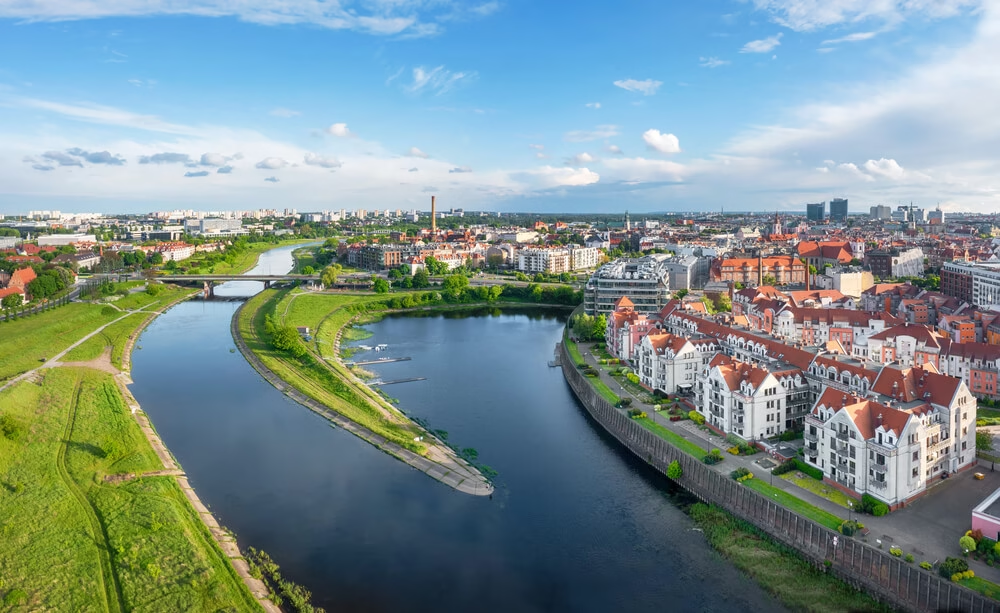
We cover other Polish cities in dedicated guides:
What to See and Visit in Poznan
Stary Rynek (Old Market Square)
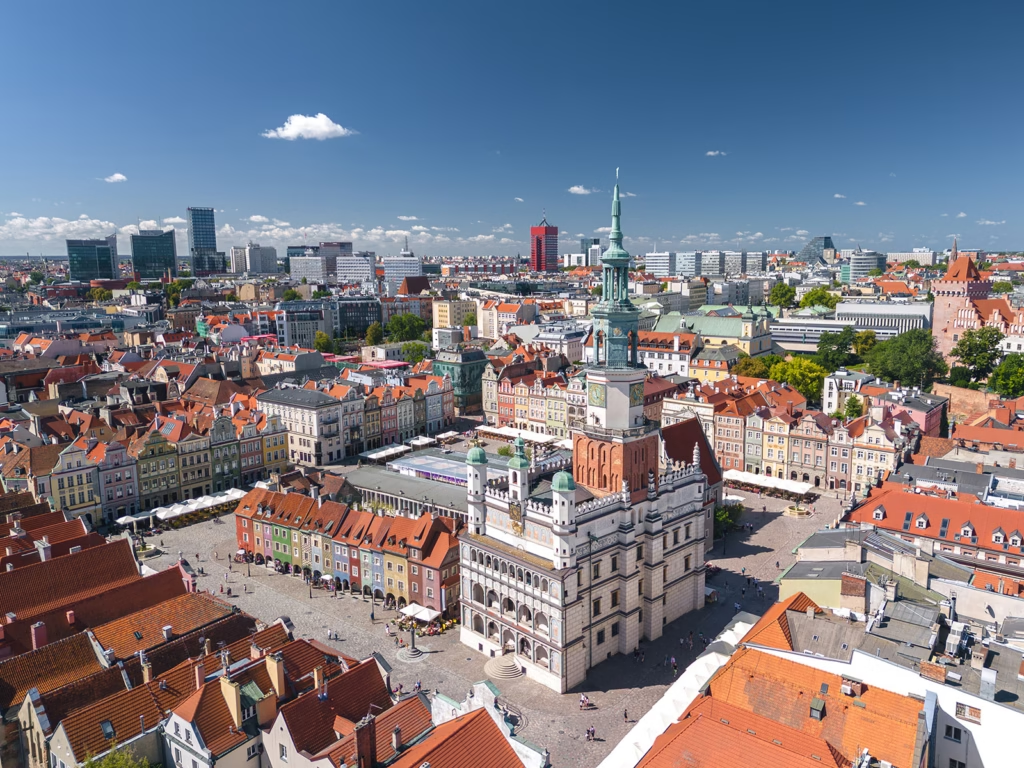
The Old Market Square is the true heart of Poznan and one of the largest and liveliest historic squares in Central Europe. It’s lined with colourful Renaissance townhouses with arcades, cafés, restaurants and several museums — and that combination makes it a place where you can easily spend a few hours. Just stroll around, grab a coffee on a terrace, or enjoy dinner with a view of the historic architecture in the evening.
For most visitors, Stary Rynek is the first stop, since it’s a convenient gateway to the rest of the old town. But it’s worth taking your time and exploring the surrounding lanes — step just one street away and the buzz of the square drops noticeably. You’ll find smaller shops, bars and quieter corners.
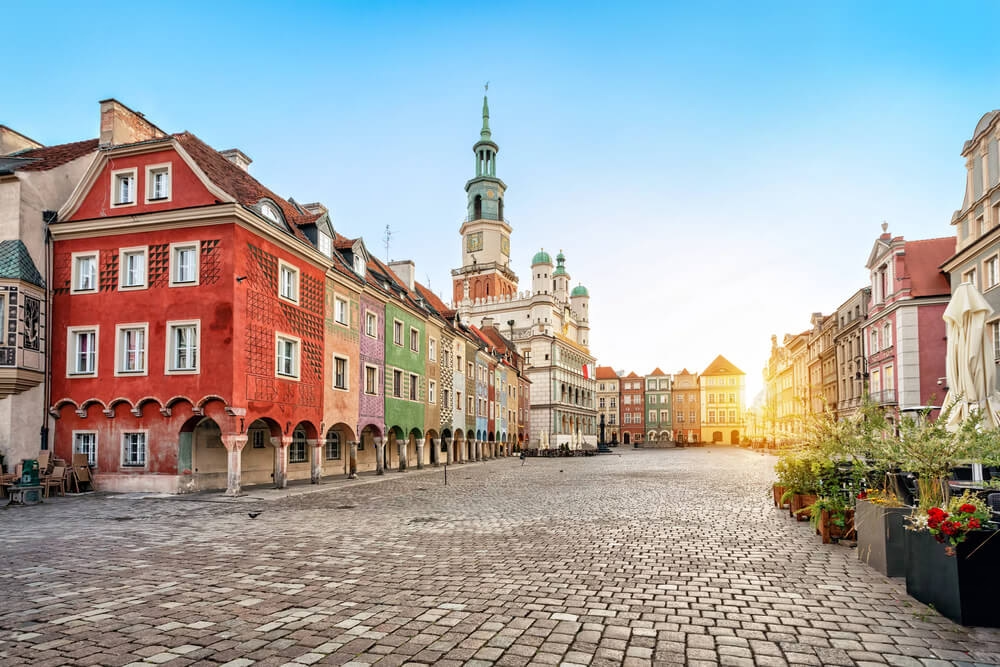
Ratusz (Town Hall)
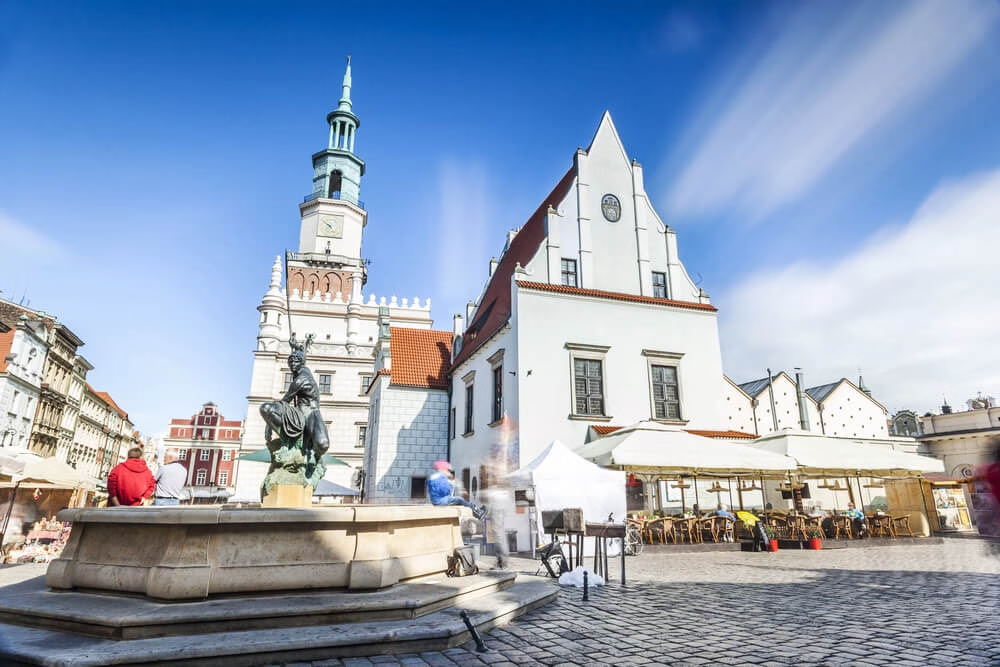
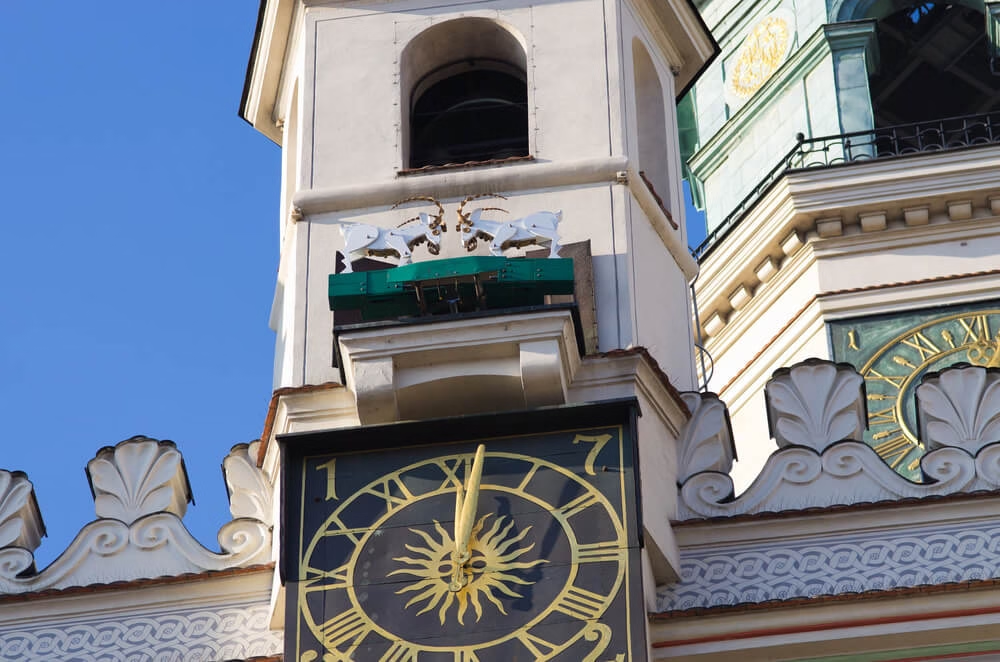
The landmark of the Old Market Square is the Renaissance Town Hall (Ratusz), considered one of the most beautiful buildings of its kind in Poland. It’s most famous for its two mechanical billy goats that appear on the tower every day exactly at noon and symbolically “butt heads” twelve times.
Inside, the Town Hall now houses the Museum of the History of Poznan. The exhibition traces the city’s development from the Middle Ages to modern times, with historic interiors, artworks and models that help place Poznan in the wider context of Polish history. If you enjoy history and want more than just a walk across the square, the museum is worth visiting — allow roughly an hour to an hour and a half depending on your pace.
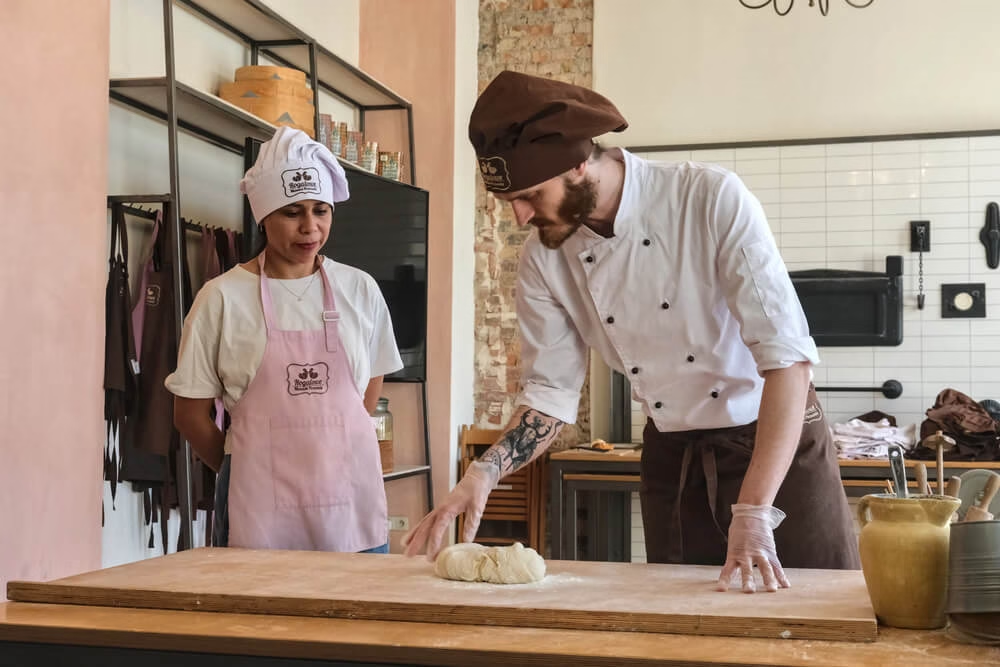
Muzeum Rogalu Świętomarcińskiego (Croissant Museum)
The Croissant Museum is dedicated to the traditional Poznan pastry rogal świętomarciński and runs as a live, interactive show. This isn’t a classic display-case exhibition — during the roughly one-hour programme you watch the baking process step by step, get involved, laugh, and of course taste the result at the end.
The programme runs several times a day (often in English) and capacity is limited, so it’s worth booking in advance via the official website. Admission is around 30–40 PLN (roughly €7–9) depending on the language and time slot.
Poznan Fara
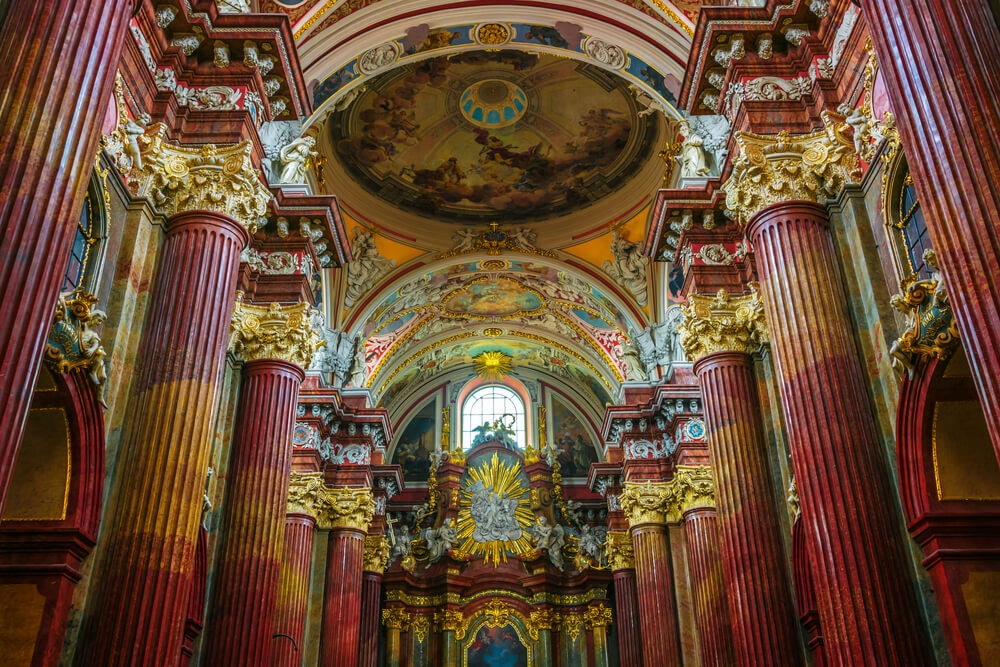
Just a few steps from the Old Market Square stands one of the most striking churches in the city. Poznan Fara looks fairly unassuming from the outside, but the interior is the complete opposite — rich decoration, frescoes, gilded details and a monumental main altar create a powerful visual impression. If you only visit one church in Poznan, start here.
Entry is free (expect some restrictions during Mass).
Zamek Cesarski (Imperial Castle)
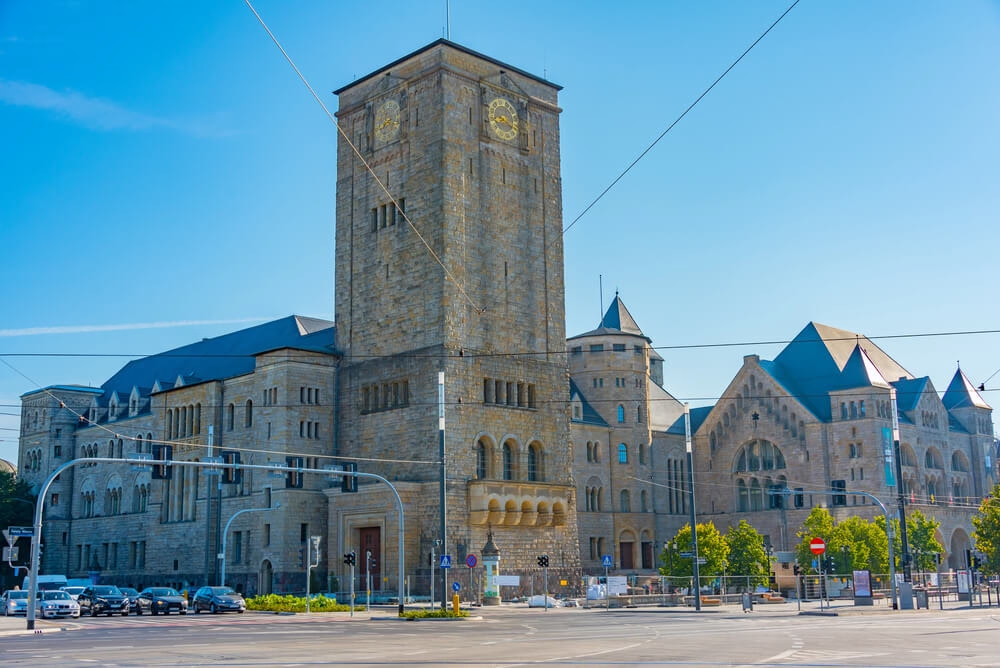
The Imperial Castle is one of the most prominent buildings in Poznan. This monumental early 20th-century structure was built for the German emperor Wilhelm II and looks imposing from the outside. The interiors are grand too — high ceilings, massive staircases and state rooms hint at just how ambitious this building was meant to be.
On the other hand, some of the interior spaces feel surprisingly empty and not fully used. That’s partly because the castle today functions mainly as a cultural centre rather than a classic tour attraction.
Upstairs, though, you’ll find a cinema, café and galleries, which often make more sense than walking through the halls themselves. If there’s an exhibition, festival or film screening on, the place suddenly comes alive — and that’s exactly when it’s worth heading over.
Ostrów Tumski
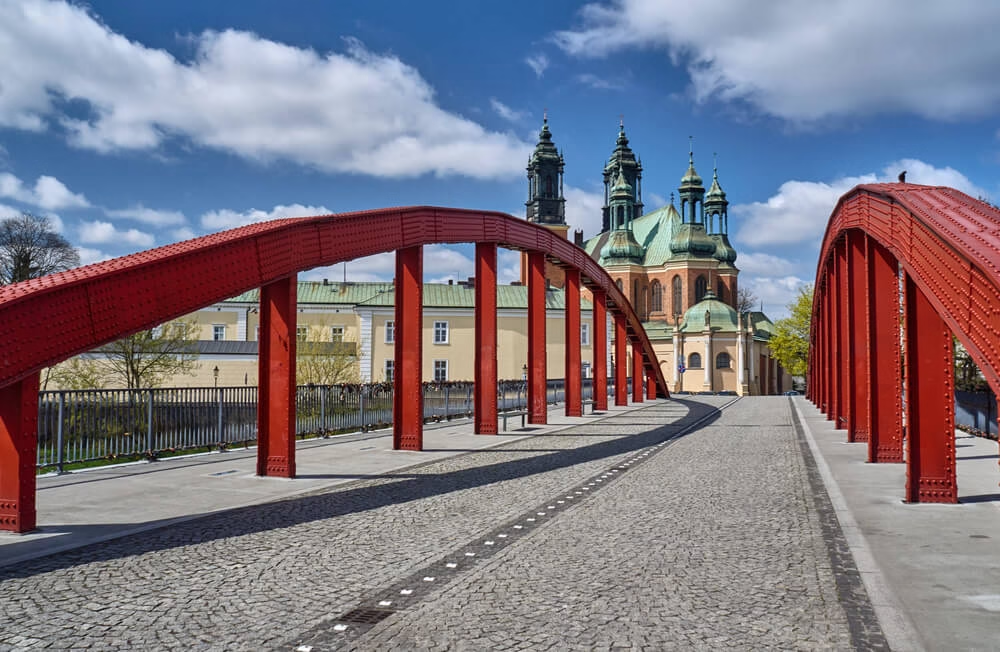
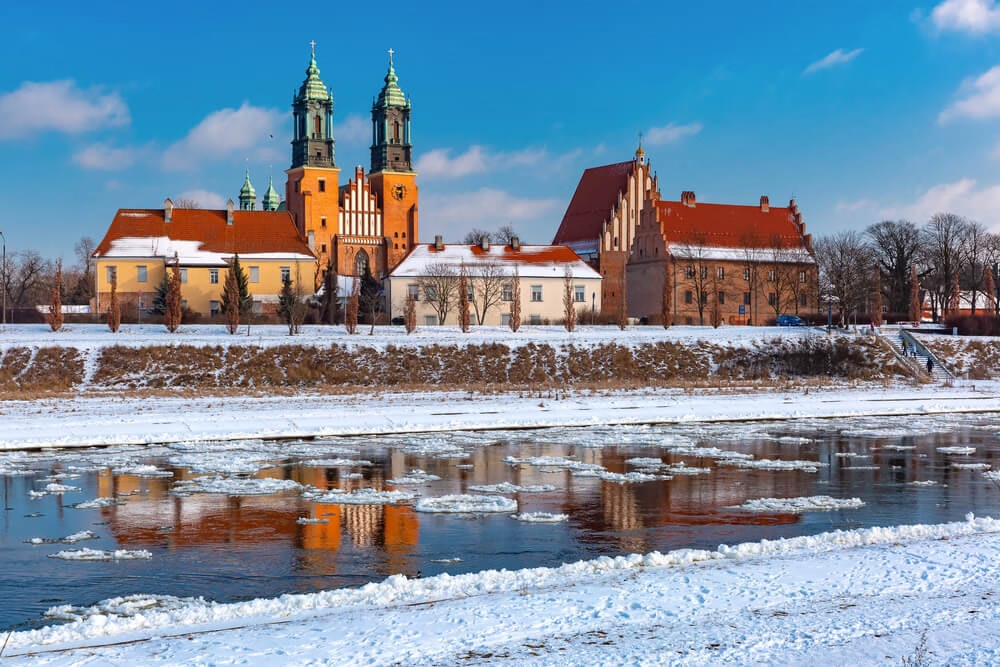
Ostrów Tumski is the oldest part of Poznan and, according to historians, the place where the very beginnings of the Polish state were forged. It lies just a short walk from the centre, but the atmosphere is completely different — quieter and greener. You can reach it on foot across the red Jordan Bridge.
The main landmark is the Cathedral of St. Peter and St. Paul, where Poland’s first rulers are buried. Nearby stands the modern interactive museum Brama Poznania with its distinctive glass footbridge, which does a great job of explaining the significance of the area.
Nearby you’ll also find a statue of John Paul II, the Church of Our Lady, and the Archdiocesan Museum. If you continue towards the Śródka district, you’ll come across the well-known 3D mural “Śródka Tale” and other street art (such as “Green Symphony”).
Bazylika Archikatedralna św. Piotra i św. Pawła (Cathedral of St. Peter and St. Paul)
This monumental Gothic cathedral on Ostrów Tumski is one of the most important and oldest religious buildings in Poland. Poland’s first rulers are buried here — Mieszko I and Bolesław the Brave — and this is where the very origins of the Polish state trace back to. The interior feels more austere than some Italian or Spanish cathedrals, but that only makes its historical weight stand out more.
Entry to the main part of the cathedral is free; there’s a small fee for some parts of the exhibition.
Brama Poznania (ICHOT Museum)
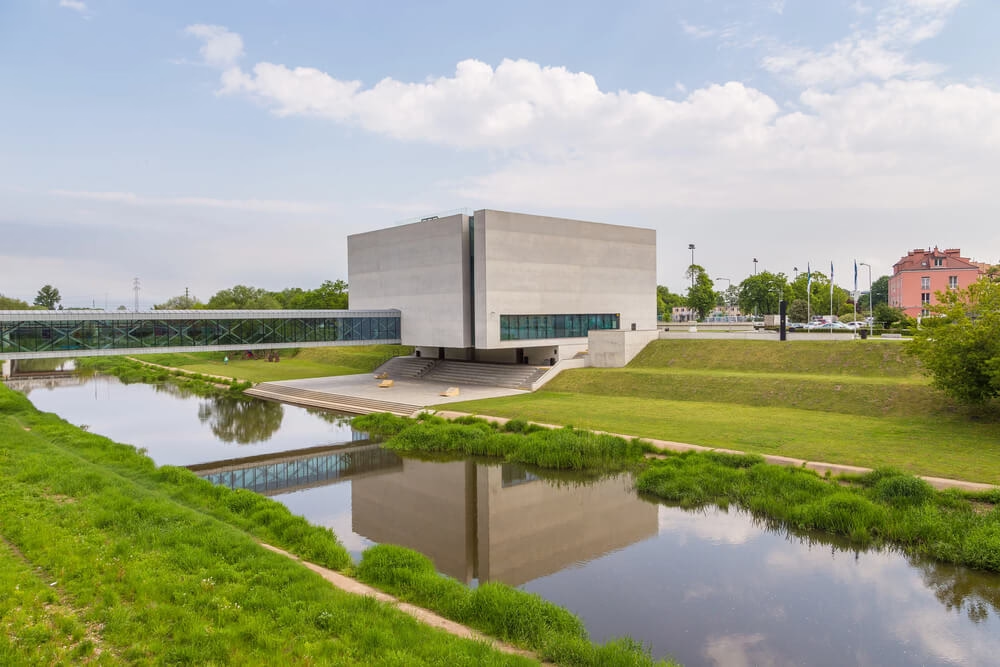
Brama Poznania is a modern, interactive museum that explains the birth of the Polish state within a broader historical context. If you don’t have a detailed grasp of Polish history, this is the place where it all clicks quickly and clearly.
The exhibition is multimedia — using sound, light and projections — and comes with an audio guide (included with admission). You’ll recognise the museum by its glass footbridge over the Cybina river, which connects the modern building with historic Ostrów Tumski.
Park Cytadela
Park Cytadela is the largest city park in Poznan and a great place to head when you want a break from the centre for a while. It sits on the site of a former 19th-century Prussian fortress, and you can still find remains of fortifications, underground spaces and military memorials today. The place has a strong historical footprint — some of the heaviest fighting at the end of World War II took place right here.
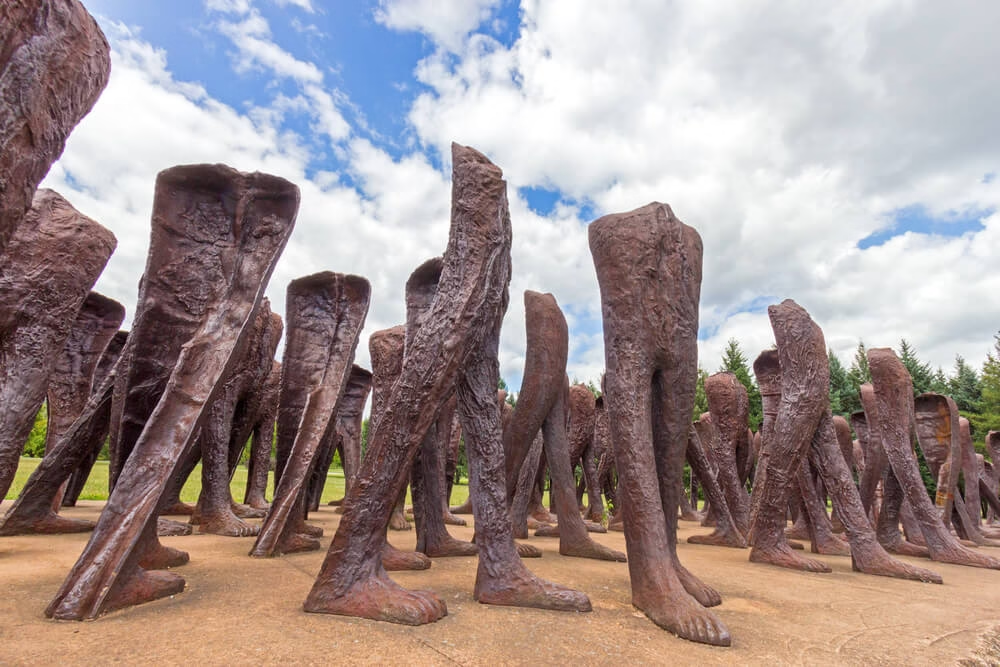
Today, though, Cytadela works mainly as a green oasis. Wide paths, meadows, sculptures scattered among the trees (including the striking installation “Nierozpoznani” by Magdalena Abakanowicz) — and two really pleasant cafés.
Jezioro Maltańskie (Malta Lake)
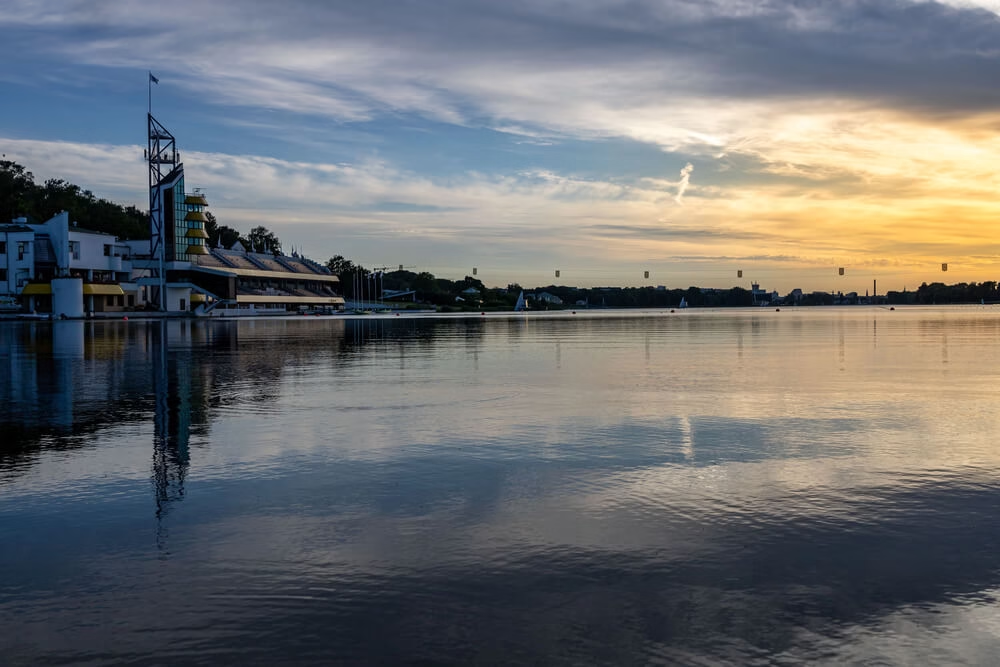
Malta Lake is a recreational zone on the east side of the city. The man-made lake is surrounded by running and cycling trails, an inline skating loop and plenty of greenery, so if you want to stretch your legs during your city break, conditions here are ideal. International rowing regattas are held here too, and the area feels well-maintained and sporty.
Around the lake you’ll find a swimming pool, seasonal attractions, restaurants and a small scenic cable car called “Malta Ski” (in winter it operates as an artificial ski slope).
Stary Browar
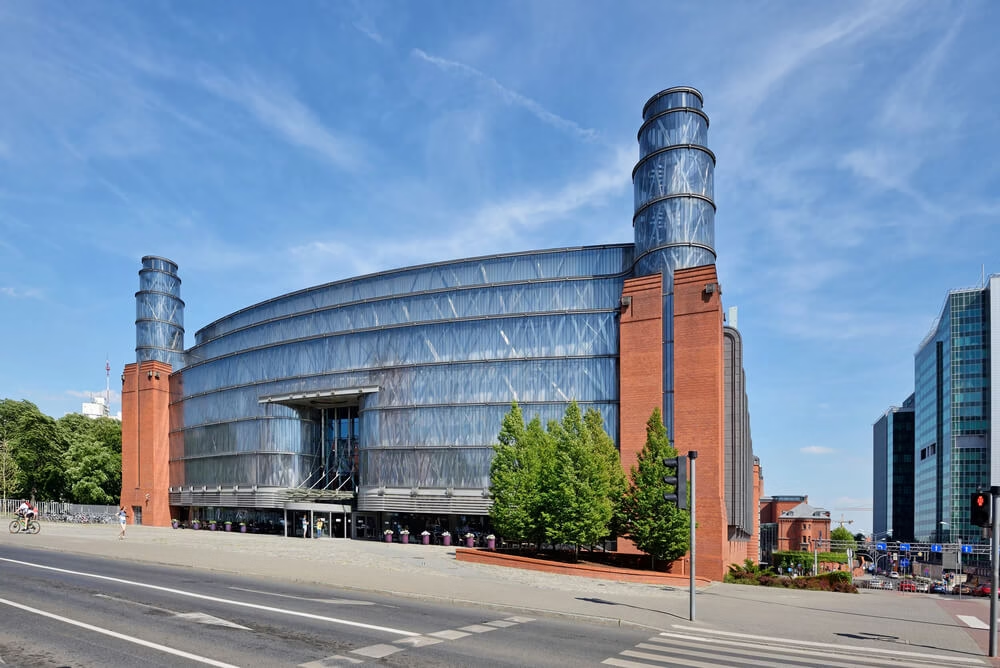
Stary Browar is a shopping centre created from the conversion of a historic brewery, and today it combines shops, cafés and restaurants with galleries and public art. The architecture plays with the original industrial brick aesthetic and modern elements, so even if you’re not there to shop, the space itself is worth a short stop.
Inside you’ll find a mix of international brands and local boutiques, a food court and quieter coffee spots. Expect prices to be on the higher side.
Woodrow Wilson Park
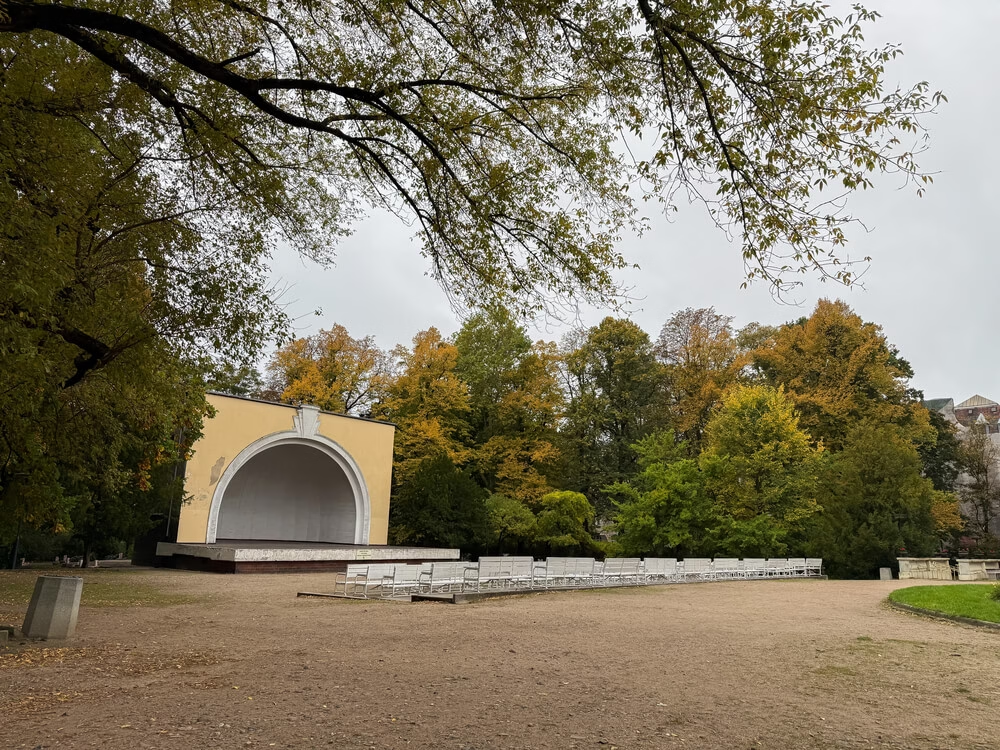
Wilson Park is a 19th-century city park and a pleasant alternative to the busier centre. It sits in the southern part of the city and feels well-kept, calm and slightly refined — wide paths, mature trees, fountains and benches create a space where you can slow down for a while.
The park’s main landmark is the Palmiarnia Poznańska, but even without visiting the greenhouses, the park itself is worth a short stop. Locals come here to run, read or have a coffee on a bench.
Palmiarnia Poznańska
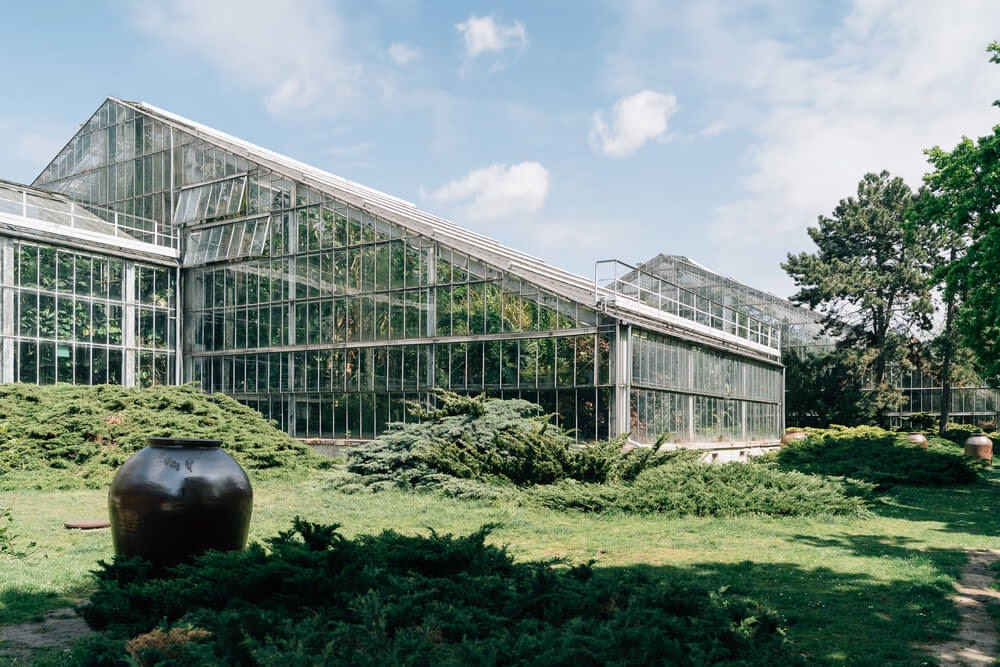
Palmiarnia Poznańska is one of the largest and oldest palm houses in Poland, located in Wilson Park just a short distance from the centre. If you need a change of pace for a moment — or the weather isn’t cooperating — it’s an ideal tropical escape. Across several pavilions you’ll walk through different climate zones — from desert cacti and Mediterranean vegetation to humid tropical greenhouses with palms and vines.
There are also aquariums with exotic fish and small ponds, making it a hit with families too.
Fort VII (Muzeum Martyrologii Wielkopolan)
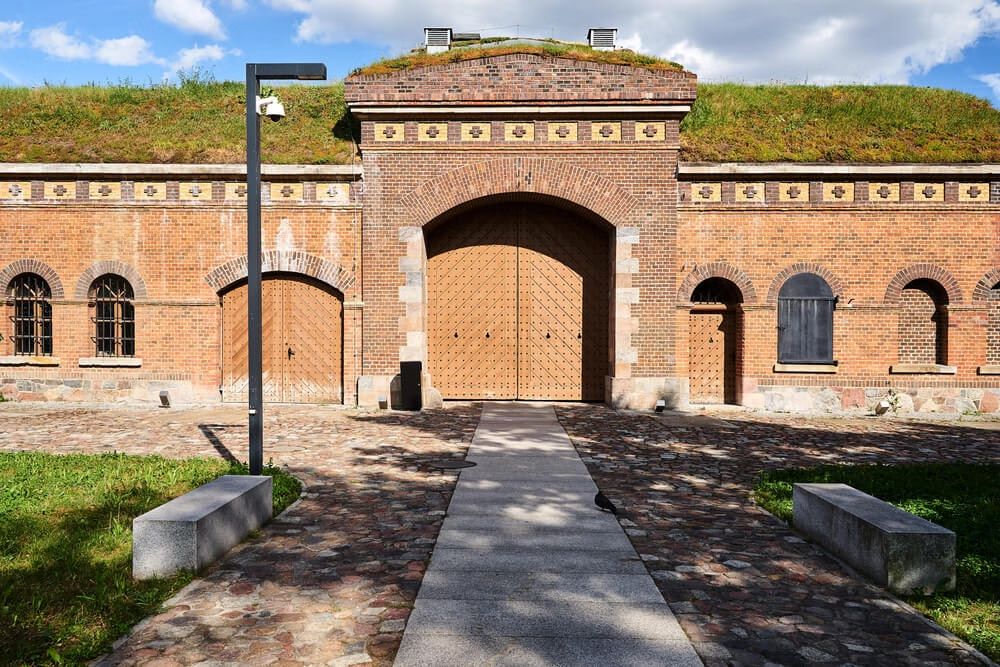
Fort VII is part of the city’s former Prussian fortifications, but its significance today is primarily historical. During World War II, the Nazis established here one of the first concentration camps on occupied Polish territory. It now serves as a museum commemorating the fate of the region’s inhabitants and the victims of Nazi repression.
The visit feels raw and authentic — you move through the fort’s original rooms, cells and corridors. This isn’t a “light” stop; it’s a powerful place with deeper resonance. Allow about 1–1.5 hours and expect a quieter, more contemplative atmosphere. It’s located outside the centre, reachable by public transport or car.
Ogród Botaniczny Uniwersytetu im. Adama Mickiewicza
The Botanical Garden of Adam Mickiewicz University is a low-key but stunning tip off the main tourist trail. You’ll find it in the western part of the city — a quiet green space with themed sections, small ponds and plant collections from around the world. The atmosphere is more local than touristy — think students, families and locals rather than guided groups.
It’s a perfect spot for a slow afternoon, a picnic or a walk among the trees. Entry is free and there’s also a very pleasant café on site.
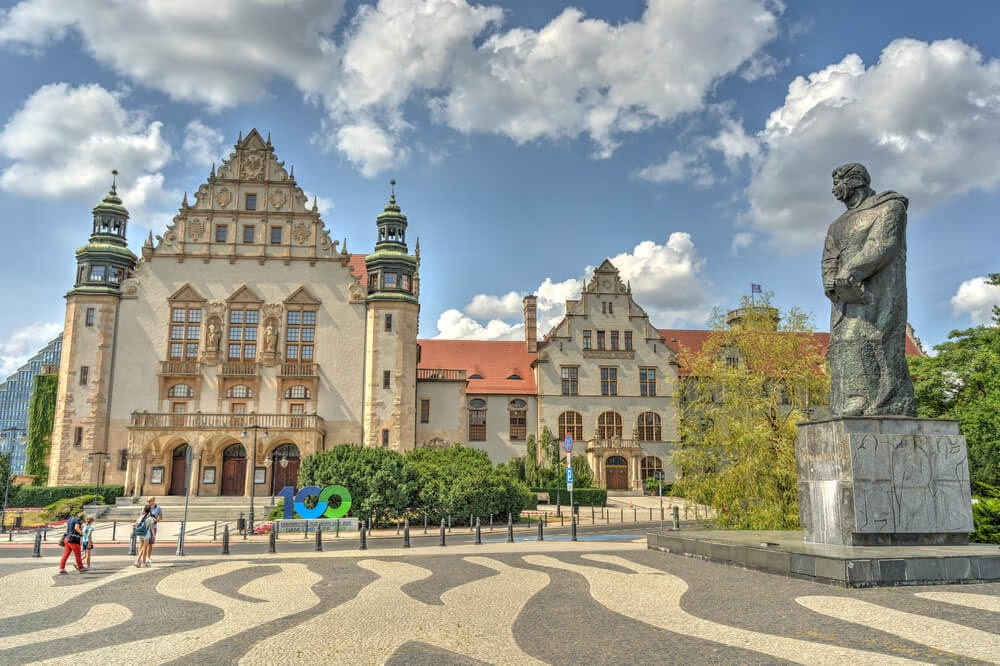
Święty Marcin Street
Święty Marcin is the main city thoroughfare connecting the historic centre with the more modern part of town. It’s undergone major revitalisation in recent years and now feels more open and airy. You’ll find shops, cafés, cultural institutions, and it also leads you to the Imperial Castle.
If you want to see “contemporary Poznan”, walk this street.
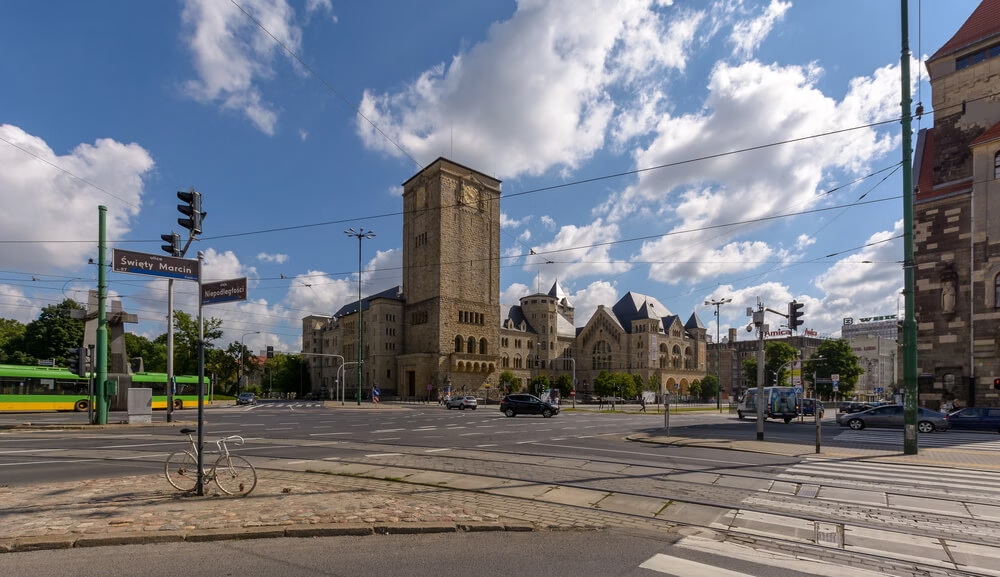
Muzeum Narodowe w Poznaniu (National Museum)
The National Museum is one of the most important cultural institutions in the city, and it surprises mainly with the scope of its collections. You’ll find Polish and European paintings from the Middle Ages to the 20th century, including works by artists like Matejko, Malczewski and Wyspiański, plus an interesting collection of Spanish art (for example paintings by Zurbarán).
The exhibition spans three floors, is well laid out, and you can do it in about 1.5–2 hours. The museum is just a few minutes’ walk from the Old Market Square, so it slots easily into a city-centre plan. If you want to balance cafés and strolls with a bit of “classic” culture, this is a good and fairly low-key choice.
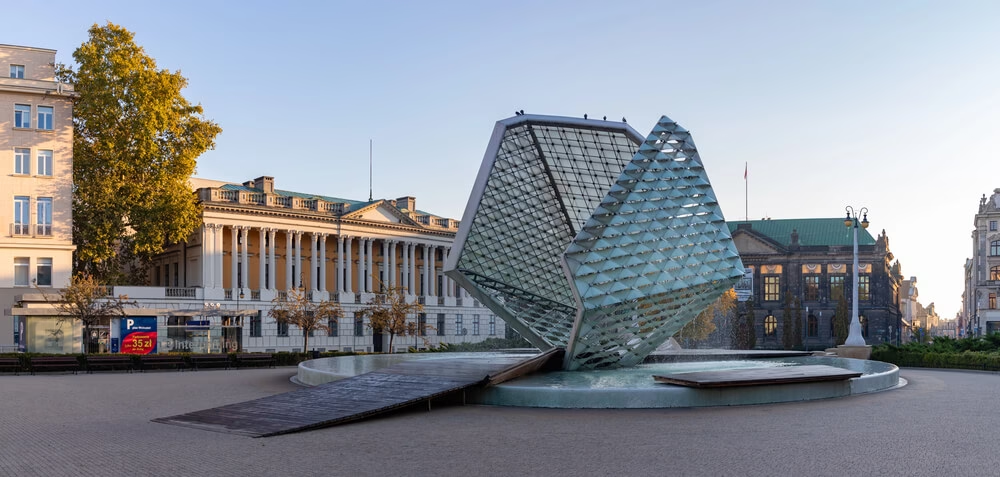
Zamek Królewski (Royal Castle)
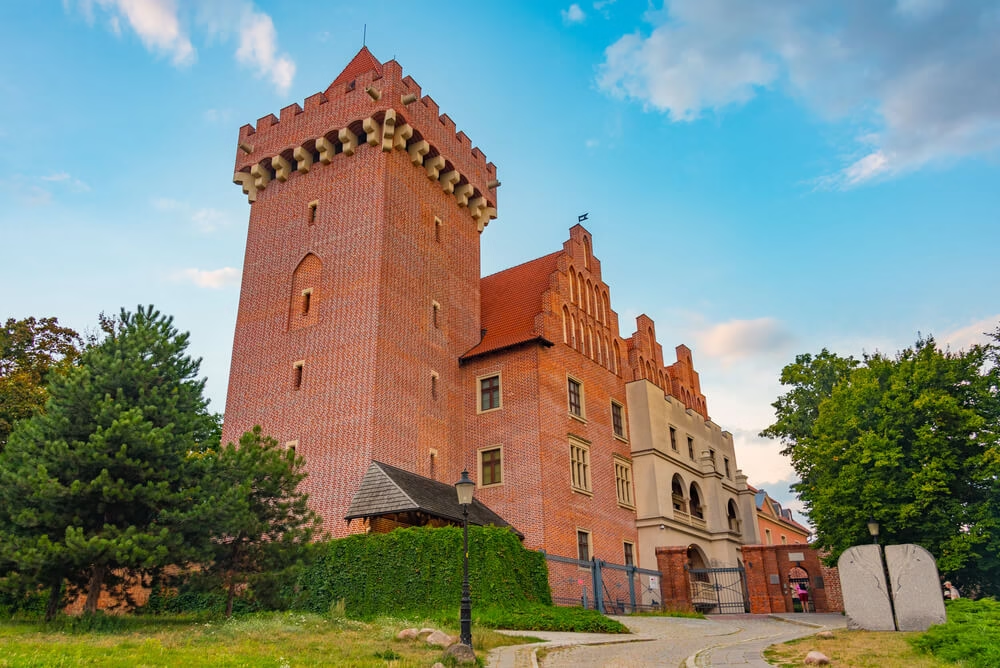
The Royal Castle stands on a hill near the Old Market Square and is one of the less obvious but strategically positioned places in the city. The original medieval castle was destroyed several times over the centuries, and the current form is the result of a fairly recent reconstruction. Don’t expect a romantic historic fortress — the architecture feels rather modern and understated.
Inside you’ll find the Museum of Applied Arts (part of the National Museum), but the main draw is the viewing tower. From the top there’s a lovely view of the historic centre and its surroundings. So if you’re looking for a short stop with a view and without the crowds, the castle is a nice bonus during a walk through the Old Town.
Dzielnica Jeżyce
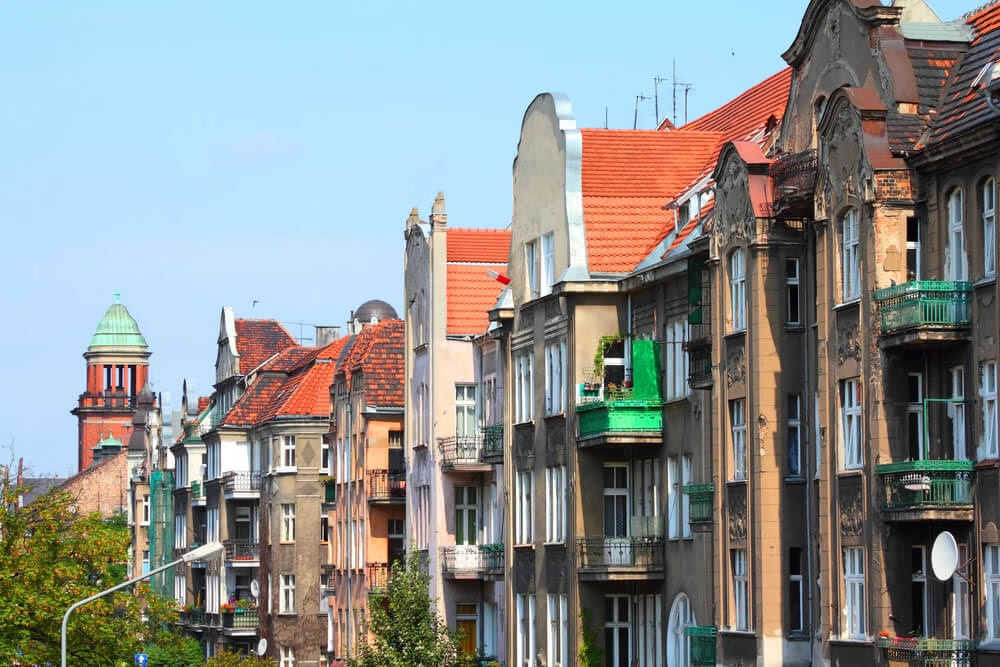
Jeżyce is a district you come to eat, rather than “see something”. This former working-class neighbourhood has transformed in recent years into one of the city’s liveliest areas — full of cafés, brunch spots, small bistros and local businesses.
You’ll find specialty coffee, modern Polish cuisine and venues with international menus. It’s about 10 minutes from the centre by tram. If you want to discover the contemporary, younger side of Poznan, Jeżyce is a great choice.
Experiences Not to Miss in Poznan
Taste rogal świętomarciński straight from the source
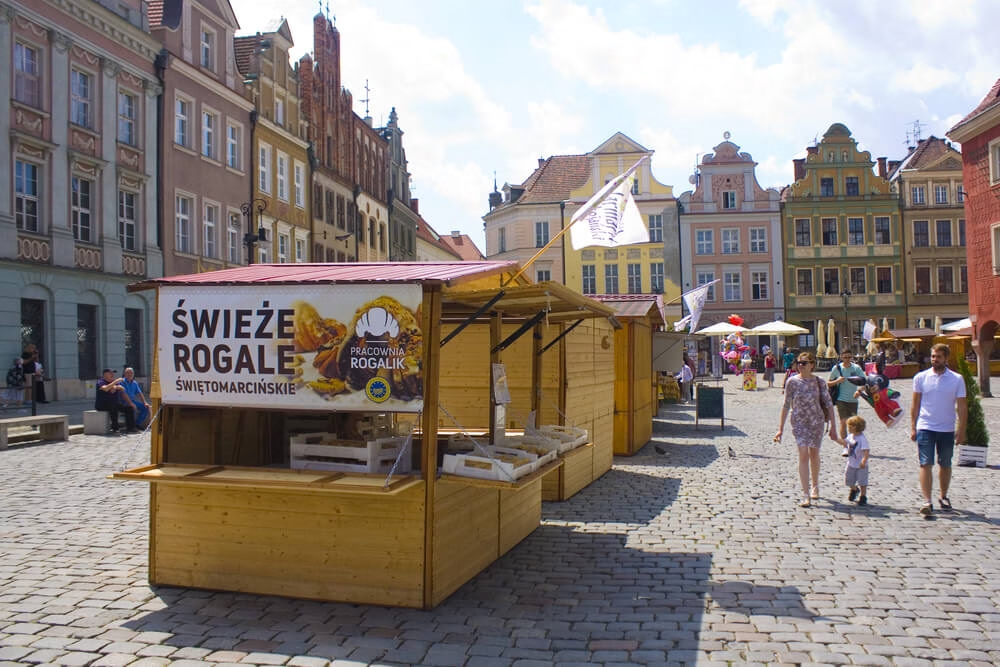
Poznan is inseparably linked with this traditional croissant. You can simply grab one at a bakery, or combine tasting with a short workshop or show at the Croissant Museum. You’ll learn why it’s baked for St. Martin’s Day, what’s inside (poppy seed filling is the base), and why it has EU protected designation of origin status.
Evening walk along the Warta river
The Warta embankment is a more modern, relaxed part of the city where locals come to run, hang out or simply stroll. The nicest route is between Most św. Rocha and Ostrów Tumski, where you’ll see the illuminated cathedral. In summer, bars and cultural zones come to life; off-season, it’s a quiet route with a great view of the sunset.
Culture at the Imperial Castle (Zamek)
If you’re travelling for culture, check whether your dates line up with a cultural event at the Imperial Castle. The programme is quite varied — there’s a cinema, exhibitions, concerts and theatre.
If you’re planning to visit multiple sights over a weekend, the Poznań City Card can be worth it. The card combines unlimited public transport with free entry or discounts to dozens of museums and attractions. It’s available in 24, 48 or 72-hour versions and you can buy it online or at tourist information centres.
Join a food tour or beer tasting
If you like getting to know a place through your taste buds, tasting tours are the way to go. Over a few hours you’ll visit several spots in the centre and sample what’s typical for Poznan. Some tours focus more on traditional cuisine, others on Polish beer tasting.
What to Do in Poznan When It Rains
When it rains in Poznan, you don’t have to stick to the classic museums already mentioned. Beyond Brama Poznania, Muzeum Narodowe or the Croissant Museum, you can easily add more indoor experiences. A great option is Termy Maltańskie — a large water park and wellness complex by Malta Lake where you can easily spend half a day among pools and saunas.
For something more intellectual, head to Centrum Szyfrów Enigma, a modern interactive museum dedicated to the Polish cryptologists who helped break the Enigma code. For a shorter but enjoyable stop, try the Museum of Musical Instruments right on the Old Market Square — an intimate collection of historic instruments from around the world.
What to Do in Poznan With Kids
Poznan is also a great choice if you’re looking for a family-friendly destination.
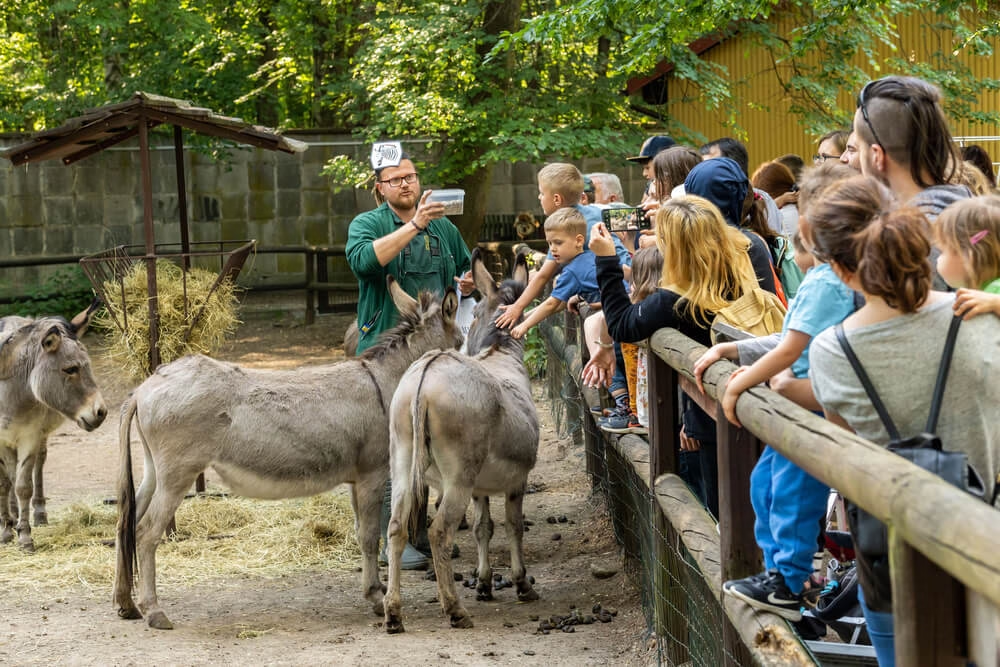
You can spend the morning at Malta Lake, which has plenty of space to run around, playgrounds and seasonal attractions, or head to Nowe Zoo — the large zoo near Malta, where you could easily spend half a day (the grounds are extensive and there’s even a little train). If you don’t want to plan a bigger outing, Stare Zoo near the centre also works — a smaller site with free entry, ideal for a shorter visit.
In worse weather, try Termy Maltańskie with pools and slides, the tropical Palmiarnia Poznańska, or the interactive Centrum Szyfrów Enigma, which is a hit with older kids thanks to its ciphers and puzzles. And for lighter, fun entertainment, head to the Croissant Museum with its sweet tasting at the end.
Getting Around Poznan
Public transport
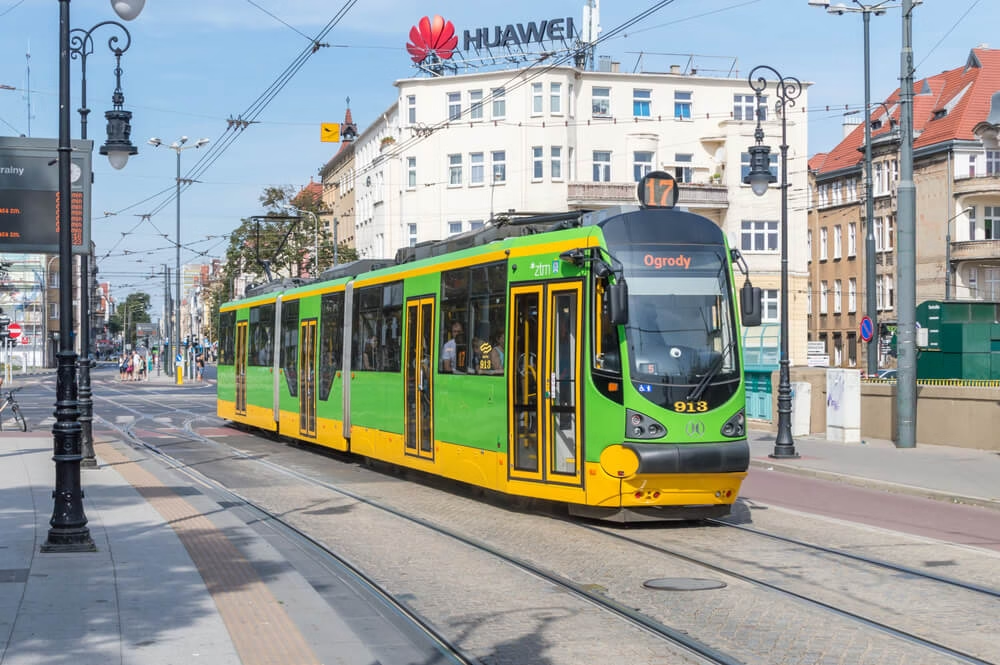
Poznan is a compact city and you can cover most of the centre on foot. But if you want to get to Malta Lake, the zoo, Jeżyce or further-flung areas, public transport is the easiest option. The local trams and buses are easy to navigate, reliable and cover the main routes across the city.
Tickets are priced by time. A basic short ticket (about 15 minutes) costs around 4 PLN (roughly €1), a standard 45-minute ticket around 6 PLN (about €1.40). There are also daily (24h) and multi-day tickets, which are worth it if you’re planning several trips in a day. You can check the timetable on Google Maps or on the official website.
On weekends and special occasions, historic trams also run — but they require special tickets.
How public transport tickets work
Most trams and buses have onboard machines where you just tap your contactless card. Alternatively, you can buy tickets in advance online (e.g. on jakdojade or the local transport app).
You can still buy paper tickets the old-fashioned way from the machines at stops. In that case, don’t forget to validate it after boarding.
If you validate a standard 24-hour ticket between Friday 8:00 PM and Saturday 12:59 PM, it automatically becomes a weekend ticket valid through Sunday midnight.
Taxis and apps like Bolt or Uber work here too and aren’t overpriced, but for everyday trips they usually don’t make much sense — public transport is cheap and efficient.
Where to Stay in Poznan
Best neighbourhoods
- Stare Miasto (Old Town) — ideal if it’s your first time in Poznan and you want everything within walking distance. Cafés, landmarks and nightlife just minutes from your door.
- Jeżyce — a trendy district with cafés and bistros. Quieter than the centre but still well connected by tram.
- Around Malta Lake — a good choice for families and active travellers. Close to the zoo, park and water park.
- Centre around the Imperial Castle and Święty Marcin Street — a compromise between history and the modern part of town, with good transport links.
Specific accommodation tips
For backpackers and solo travellers
- Opera Hostel — a small, affordable hostel in the centre, just minutes from the Old Market Square and Imperial Castle.
- Moon Hostel Poznań — simple, affordable accommodation in the city centre.
- Hostel La Guitarra — a small hostel with a friendly atmosphere and good accessibility.
Mid-range
- PURO Poznań Stare Miasto — modern design hotel in the centre. Comfort, excellent breakfasts and a stylish interior. A great pick for a weekend for two.
- Hotel DeSilva Premium Poznań — a comfortable hotel close to both the centre and the train station.
- Don Prestige Residence — an aparthotel with larger rooms, suitable for longer stays too.
Luxury
- Sheraton Poznań Hotel — international standard, large rooms, fitness centre and high comfort. Close to the centre and the main station.
- City Park Hotel & Residence — a stylish hotel in former barracks with spacious suites, a wellness centre and top-class restaurants.
- Hotel Blow Up Hall — a design boutique hotel with an art-driven concept. A more intimate and distinctive experience than a classic hotel.
For families with kids
- Novotel Poznań Centrum — spacious rooms, a good location and family-friendly facilities.
- Hotel HP Park Poznań Malta — a quiet location by Malta Lake, near the zoo and park.
Best Time to Visit Poznan
Poznan is definitely a year-round destination. You’ll have the most relaxed experience in spring or early autumn. Temperatures are pleasant, terraces are full, but the city doesn’t feel overcrowded.
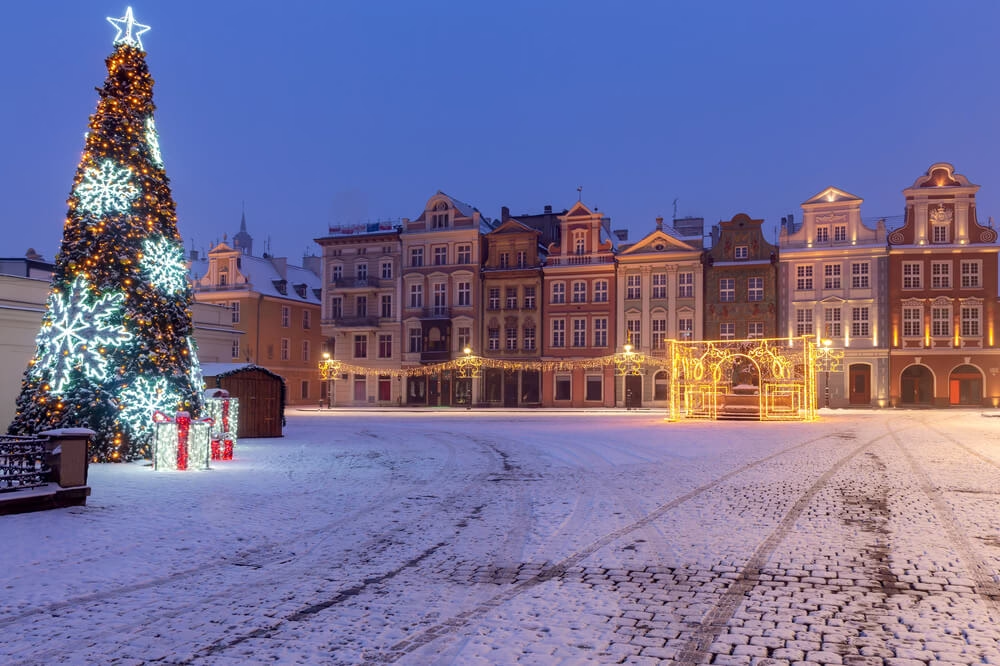
Summer is lively and festival-filled, with events along the Warta river and outdoor happenings — just expect higher prices and bigger crowds. Winter is quieter and cold, but if you come during Advent, the historic centre has a pleasant atmosphere without the extreme crowds you’ll find in the biggest European capitals.
If you’re planning a weekend trip, it’s worth checking the events calendar — Poznan is very much a “programme-driven” city and picking the right date can seriously upgrade your experience.
Holidays and events not to miss
- 11 November — St. Martin’s Day (Imieniny ulicy Święty Marcin)
- The biggest city celebration, with a parade, concerts and traditional rogal świętomarciński croissants. A Poznan symbol.
- Malta Festival (June)
- An international festival of theatre, music and art. The programme runs across the whole city.
- Jarmark Świętojański (June)
- A summer market on the Old Market Square featuring crafts, food and cultural programme.
- Christmas Market (December)
- Christmas markets with an ice rink and festive lights, usually on Plac Wolności and in the centre.
- Noc Muzeów (May)
- One night a year when museums stay open late, often with free or symbolic admission.
Food and Drink in Poznan
Poznan is a city where you eat well. It combines strong Polish tradition with a modern bistro scene, specialty coffee and venues that pride themselves on local ingredients.
Typical dishes to try
- Rogal świętomarciński — the iconic buttery croissant with a poppy seed and nut filling, typical for 11 November but available year-round.
- Pyry z gzikiem — boiled potatoes with quark, cream and chives. Simple, but a local Greater Poland classic.
- Kaczka po poznańsku — roasted duck with dumplings and red cabbage.
- Żurek — sour soup made from rye sourdough, often served with an egg and sausage.
- Pierogi — filled dumplings (meat, quark, cabbage, mushrooms, and sweet variants too).
- Bigos — a hearty mix of cabbage, meat and spices, a typical winter dish.
Best cafés (for breakfast or working)
- Weranda Caffe — a stylish café with excellent breakfasts and an impressive interior.
- Stragan Kawiarnia — a minimalist café with specialty coffee.
- Projekt Wilson — a café in a former hall near Wilson Park, a good stop outside the centre.
- Brisman Kawowy Bar — a smaller venue focused on quality coffee.
Traditional restaurants
- Wiejska Chata — classic Polish cuisine in a rustic style, with generous portions.
- Pyra Bar — a more modern take on potato-based dishes, a casual and local concept.
- Brovaria — a restaurant and brewery right on the Old Market Square.
High-end and experience dining
- A nóż widelec — an elegant restaurant with modern Polish cuisine, perfect for a “nicer dinner”.
- Muga — a fine dining concept with a focus on seasonality and detail.
- SPOT. — a combination of restaurant, wine and design, with a modern atmosphere outside the historic centre.
Practical Tips Before Your Trip to Poznan
- Currency — Poland uses the Polish złoty (PLN). You can pay by card almost everywhere — in restaurants, cafés and even at public transport ticket machines. For a better exchange rate, it’s worth paying with a card like Revolut or Wise and avoiding random ATMs in the centre.
- Internet and data — Poland is in the EU, so roaming works without a surcharge for travellers from other EU countries (data and calls as at home). Wi-Fi is widely available in cafés, hotels and shopping centres.
- Opening hours — most museums and galleries are closed on Mondays. Some have one day a week with free admission, but check each institution individually.
- Sunday shopping — Poland has restrictions on Sunday trading, so most shops and supermarkets are closed (with the exception of a few designated “trading Sundays” throughout the year). Restaurants, cafés and landmarks, however, operate as usual.
- Public toilets — you’ll find them mainly in parks, near tourist sites and in shopping centres. They’re often paid (around 2–5 PLN), sometimes by card, sometimes cash only.
- Poznań City Card — a tourist card that combines free public transport with free entry or discounts to museums and attractions. Best value for short stays if you’re planning to visit several sights.
- Where to find up-to-date information
- official tourism website: visitpoznan.pl
- events and festival programme: poznan.pl
- public transport timetables: jakdojade.pl
Day Trips From Poznan
If you have more than just a weekend in Poznan, it’s worth taking a short trip into the surrounding Greater Poland region. Most places are reachable by train or car within 1–1.5 hours.
Gniezno
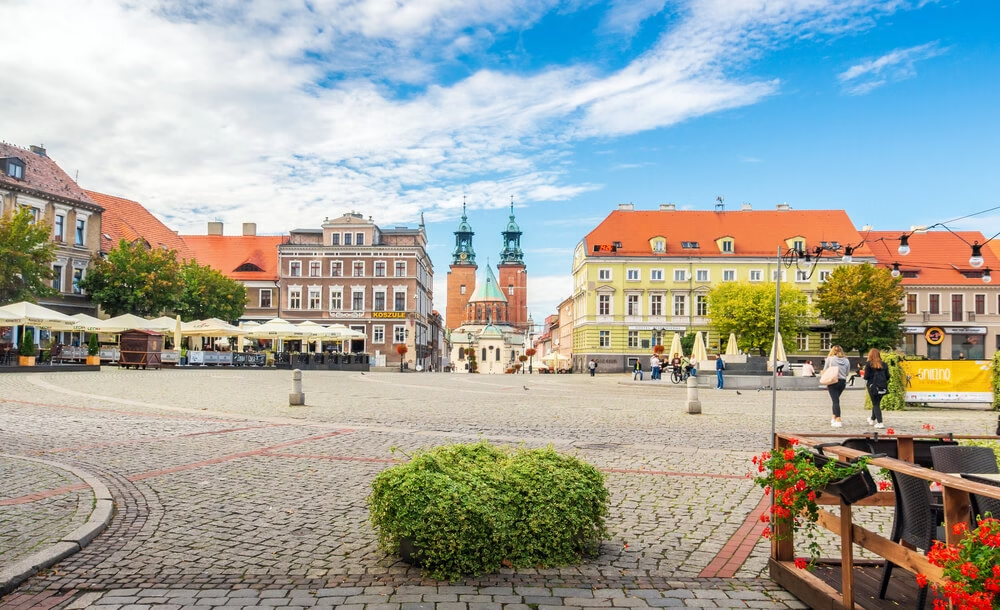
Historically one of the most important cities in Poland and the country’s first capital. The main draw is the Basilica of the Assumption of the Blessed Virgin Mary and St. Adalbert, with its 12th-century bronze doors and the tomb of St. Adalbert. The city centre is pleasant and there are several smaller museums to explore.
Kórnik
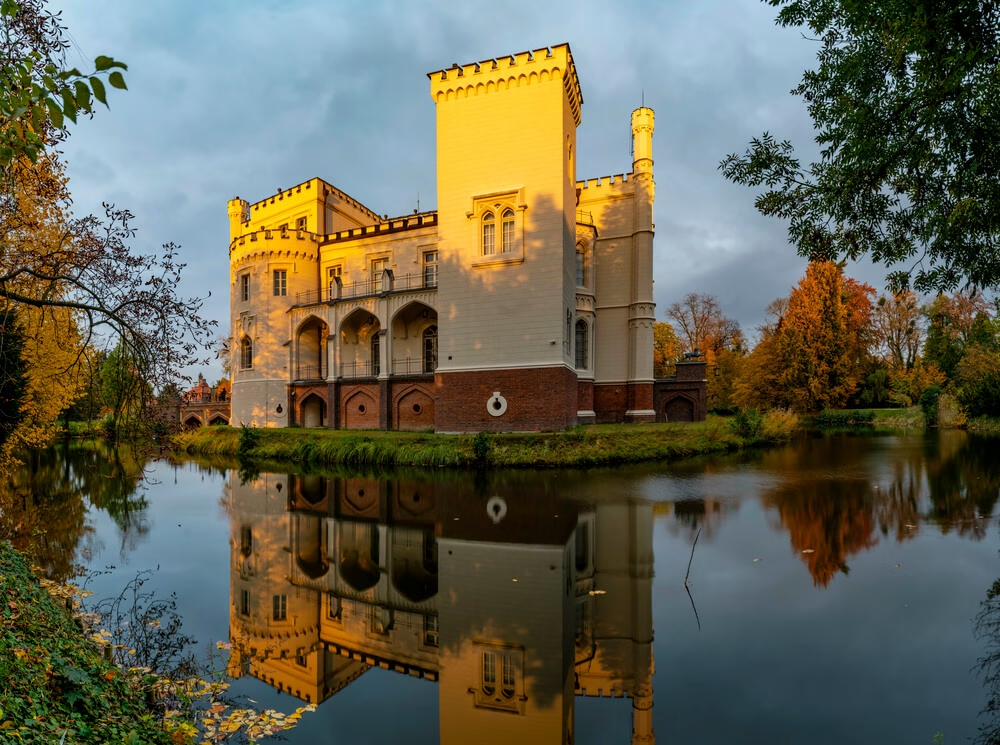
A small town known mainly for the romantic Kórnik Castle, surrounded by a beautiful park and arboretum. The castle resembles an English neo-Gothic palace and inside you’ll find historic interiors and collections of books and weapons.
Rogalin
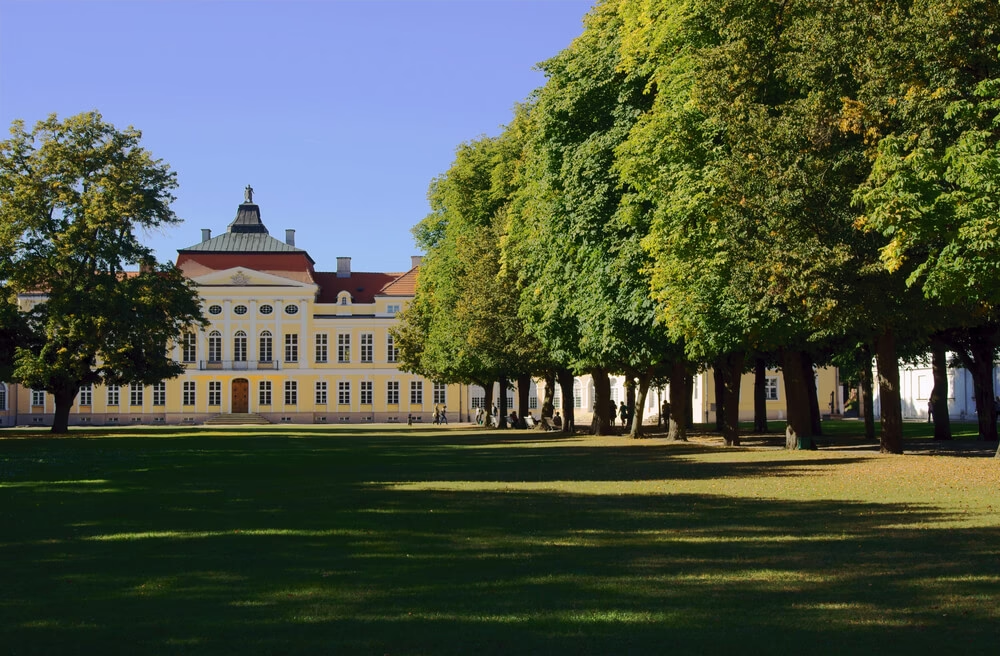
The elegant Baroque Rogalin Palace is one of the finest historic residences in the region. Beyond the interiors, it’s also famous for its vast park with hundreds of ancient oaks, some of which are over 700 years old.
Wielkopolski Park Narodowy
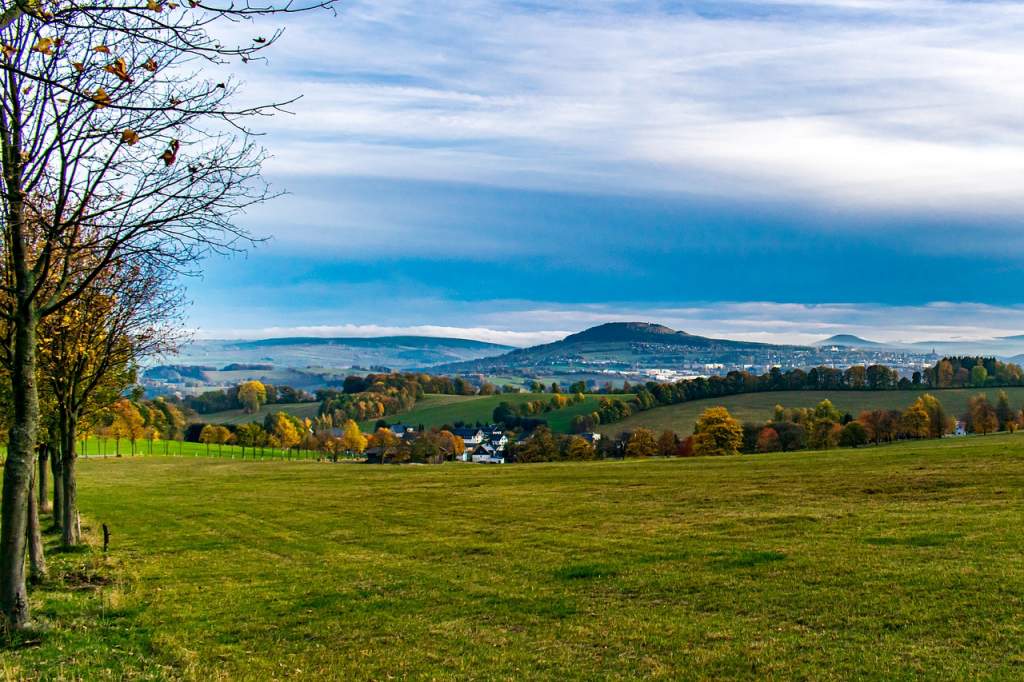
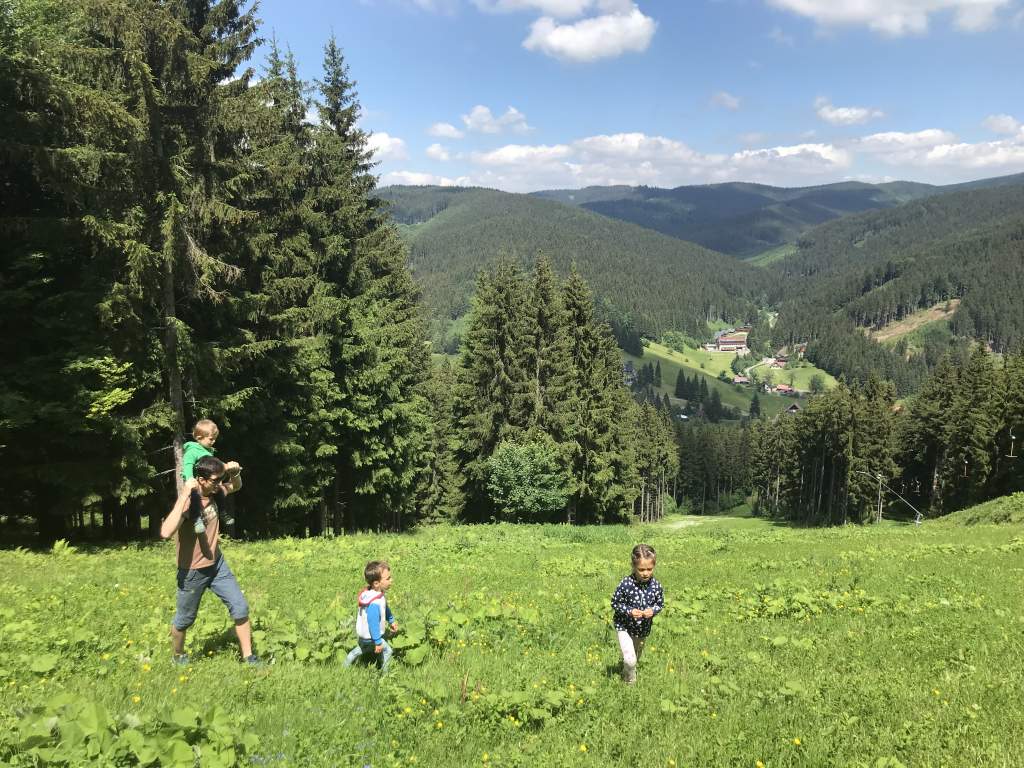
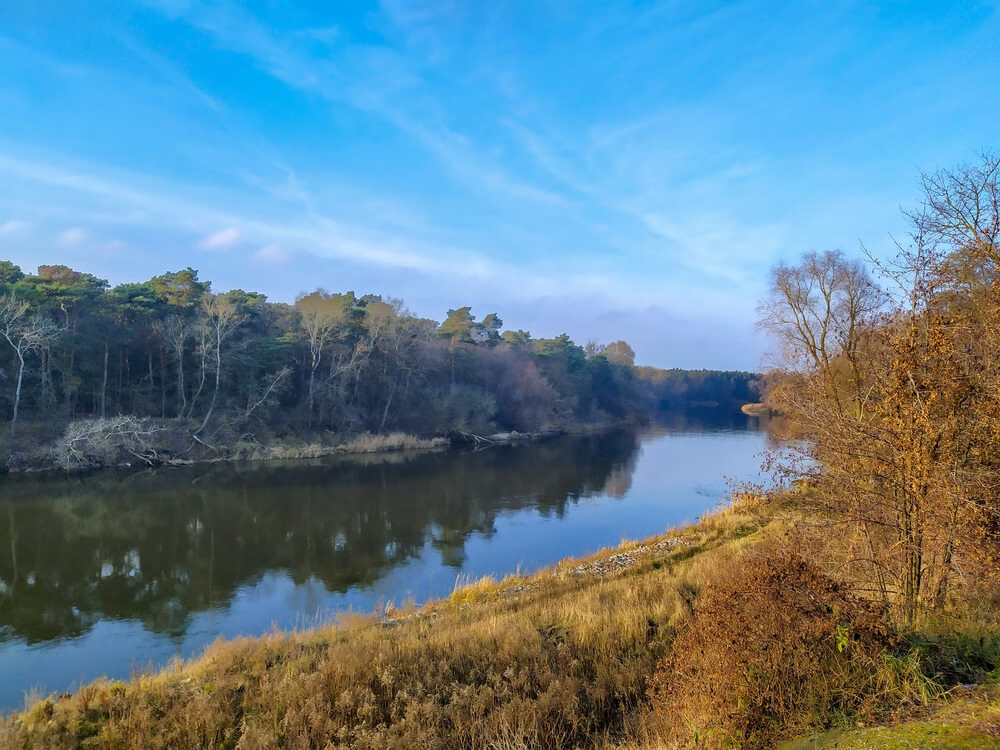
This national park south of Poznan offers forests, lakes and easy hiking and cycling trails. An ideal spot if you want to escape the city for a while and spend a day in nature.
Biskupin
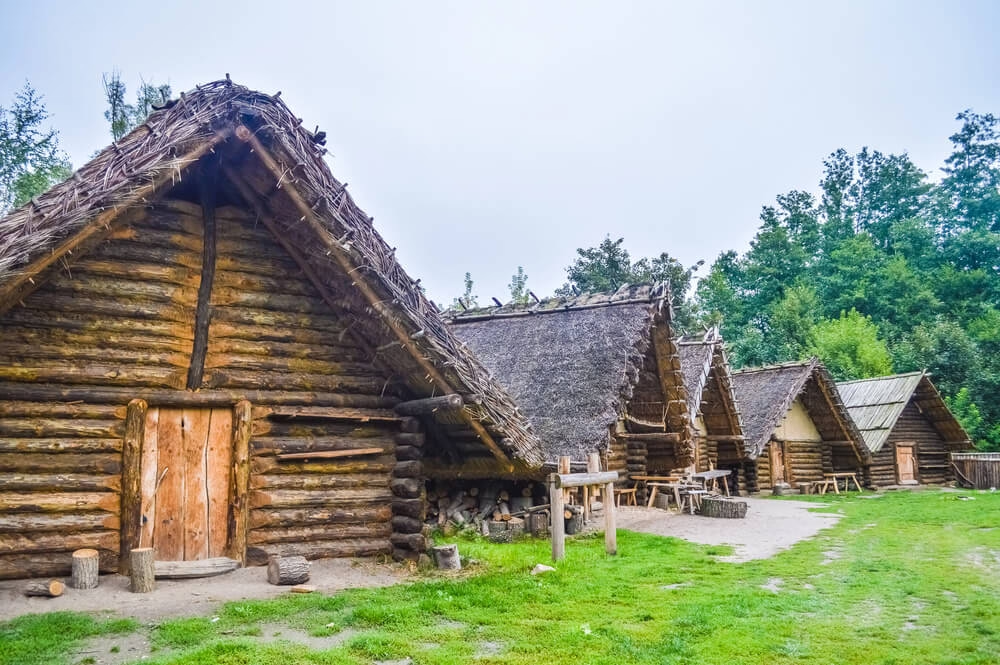
One of the most important archaeological sites in Poland — a reconstructed prehistoric Iron Age settlement. The site is interactive and does a great job of explaining prehistoric life, making it a fun stop for families with kids as well.