This post is also available in:


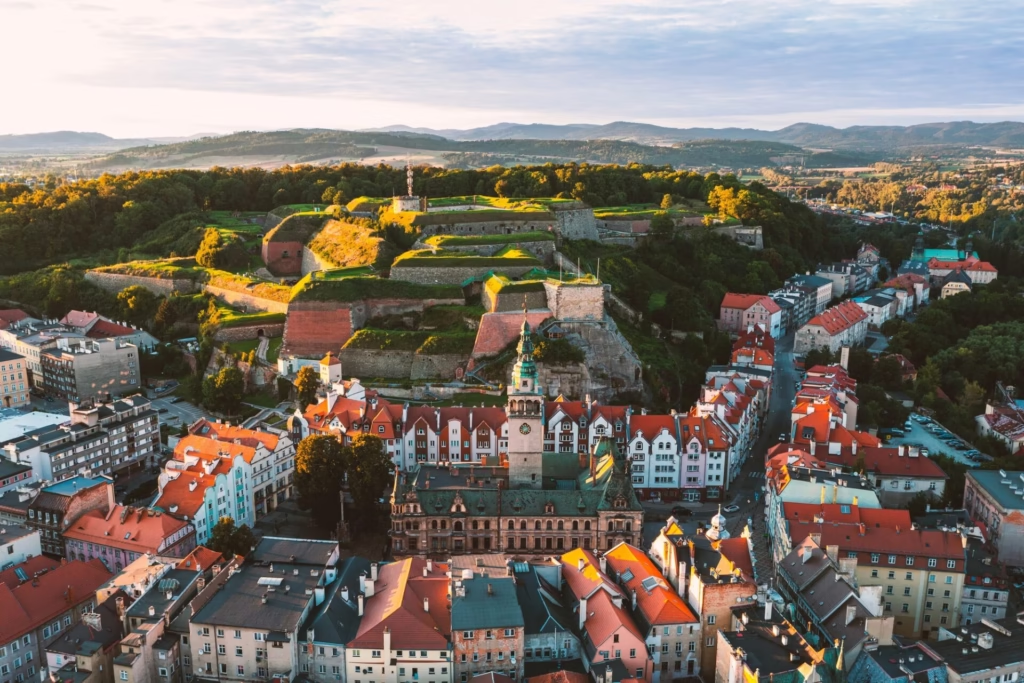
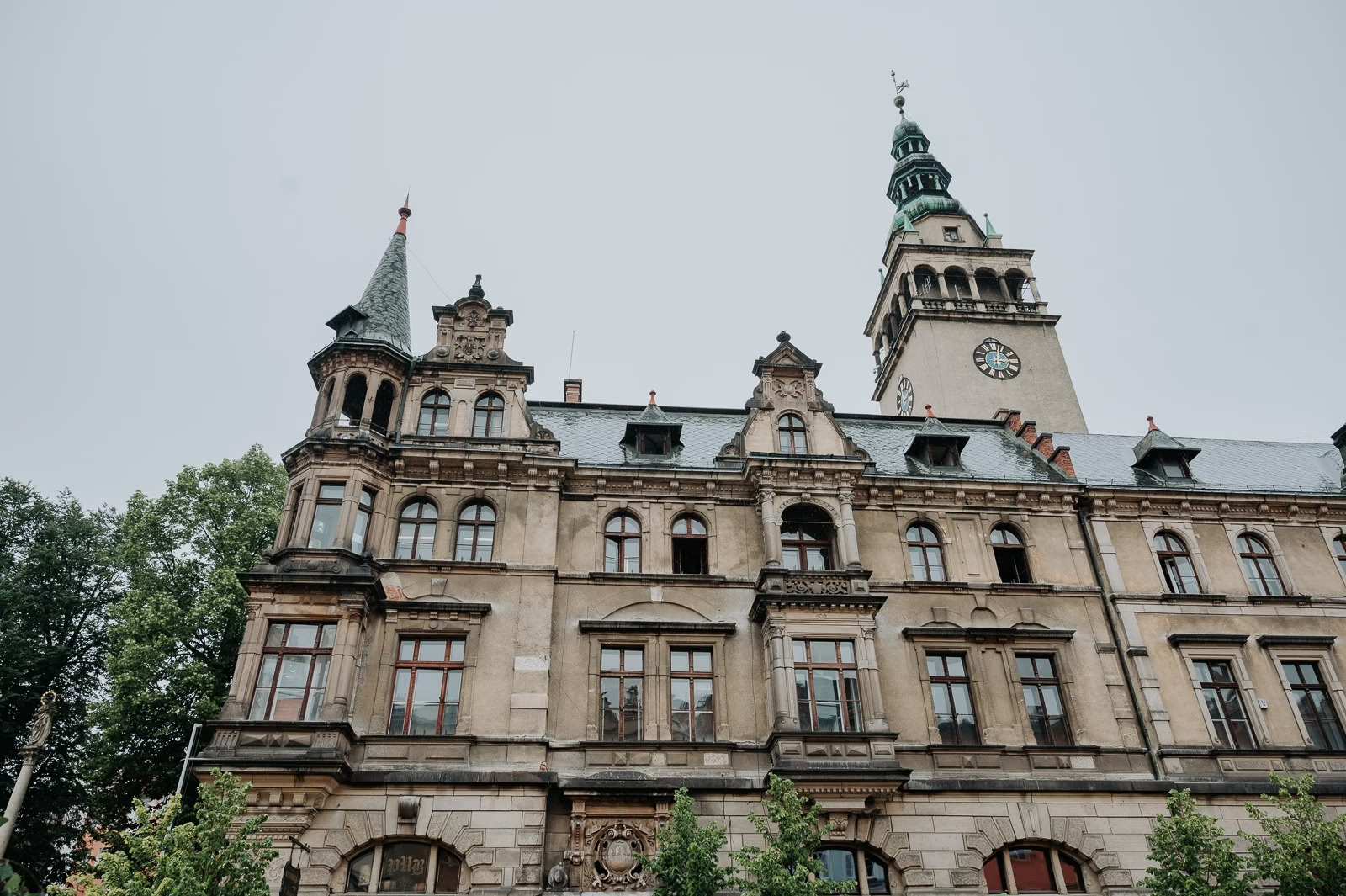
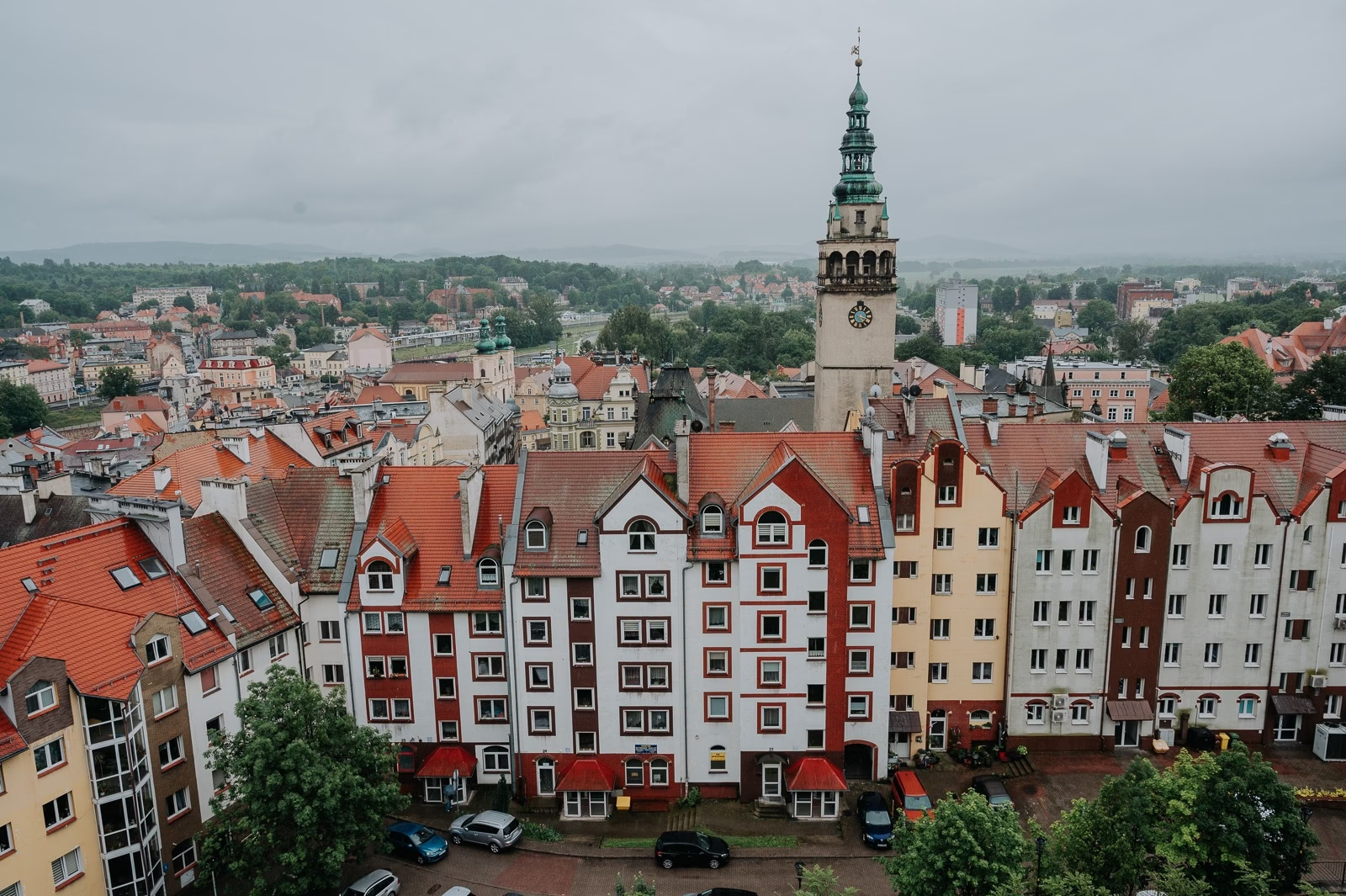
Less than 2 hours from Wrocław and an hour’s drive from the Czech border lies a city Poles themselves nickname Little Prague. Above Kłodzko rises one of the largest fortresses in Central Europe, beneath the old town stretch kilometres of underground tunnels, and spanning the Młynówka canal is a Gothic bridge that genuinely holds its own against Prague’s famous Charles Bridge.
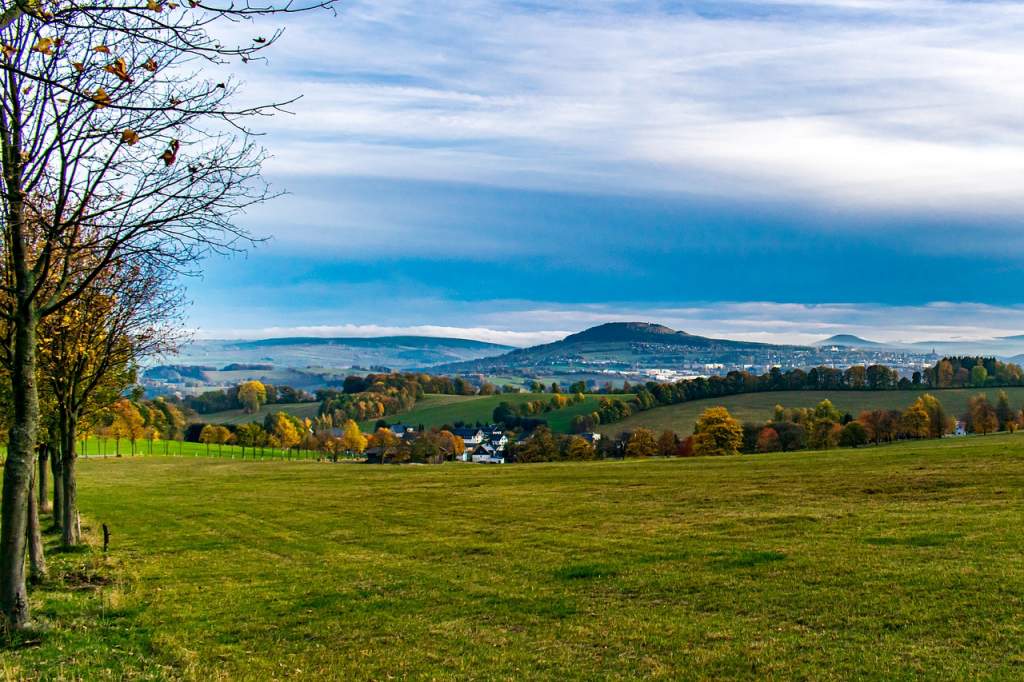
Kłodzko also sits right at the heart of the Kłodzko Valley, making it a perfect base for day trips into the Table Mountains, up to Śnieżnik, and out to the charming spa towns scattered across the region.
This guide is written for travellers who want to visit Kłodzko either as a day trip or use it as a base for a long weekend exploring the wider region.
Why Visit Kłodzko
Kłodzko’s history stretches back to 981 AD, when the chronicler Cosmas mentioned it as a Bohemian stronghold.
Over the centuries the town belonged to Bohemia, Austria and Prussia, and that layered past is visible at every turn – from a Gothic church founded by the Archbishop of Prague to a Prussian fortress that turned Kłodzko into one of the most heavily fortified sites in Silesia.
Compared with crowded Kraków or Wrocław, Kłodzko is still relatively quiet – though in summer, weekend queues do form at the fortress. Direct trains between Prague and Wrocław stop here too, making it an easy add-on to a broader Polish itinerary.
How Long to Spend in Kłodzko
The town itself is very manageable in one day.
Morning at the fortress and Gothic bridge plus a stroll through the old-town lanes, afternoon on the underground route beneath the market square – that’s a comfortable six to seven hours including lunch.
If you’re planning day trips into the surrounding area, allow at least two full days. The rock city at Szczeliniec or the Chapel of Skulls work as afternoon add-ons to the town tour, but Śnieżnik and Bear’s Cave deserve a dedicated trip of their own.
For travellers who want more than a quick dash through, three days makes sense: one for the town, one for the mountains towards Wambierzyce and Szczeliniec, and one for Śnieżnik.
Top Highlights at a Glance
- Twierdza Kłodzko (Kłodzko Fortress) – one of the best-preserved fortresses in Poland.
- Gothic Bridge of St John – the oldest Gothic bridge in Poland, the reason for the “Little Prague” nickname.
- Underground Tourist Route – medieval cellars beneath the market square and old town; a great option on a rainy day.
- Szczeliniec Wielki Rock City – the highest peak in the Table Mountains, with sweeping views across the Kłodzko Valley.
- Chapel of Skulls in Kudowa-Zdrój – a unique sacred monument built from human remains.
- Wambierzyce – the so-called Silesian Jerusalem, home to a Baroque basilica and Poland’s oldest mechanical nativity scene.
Kłodzko Fortress (Twierdza Kłodzko)
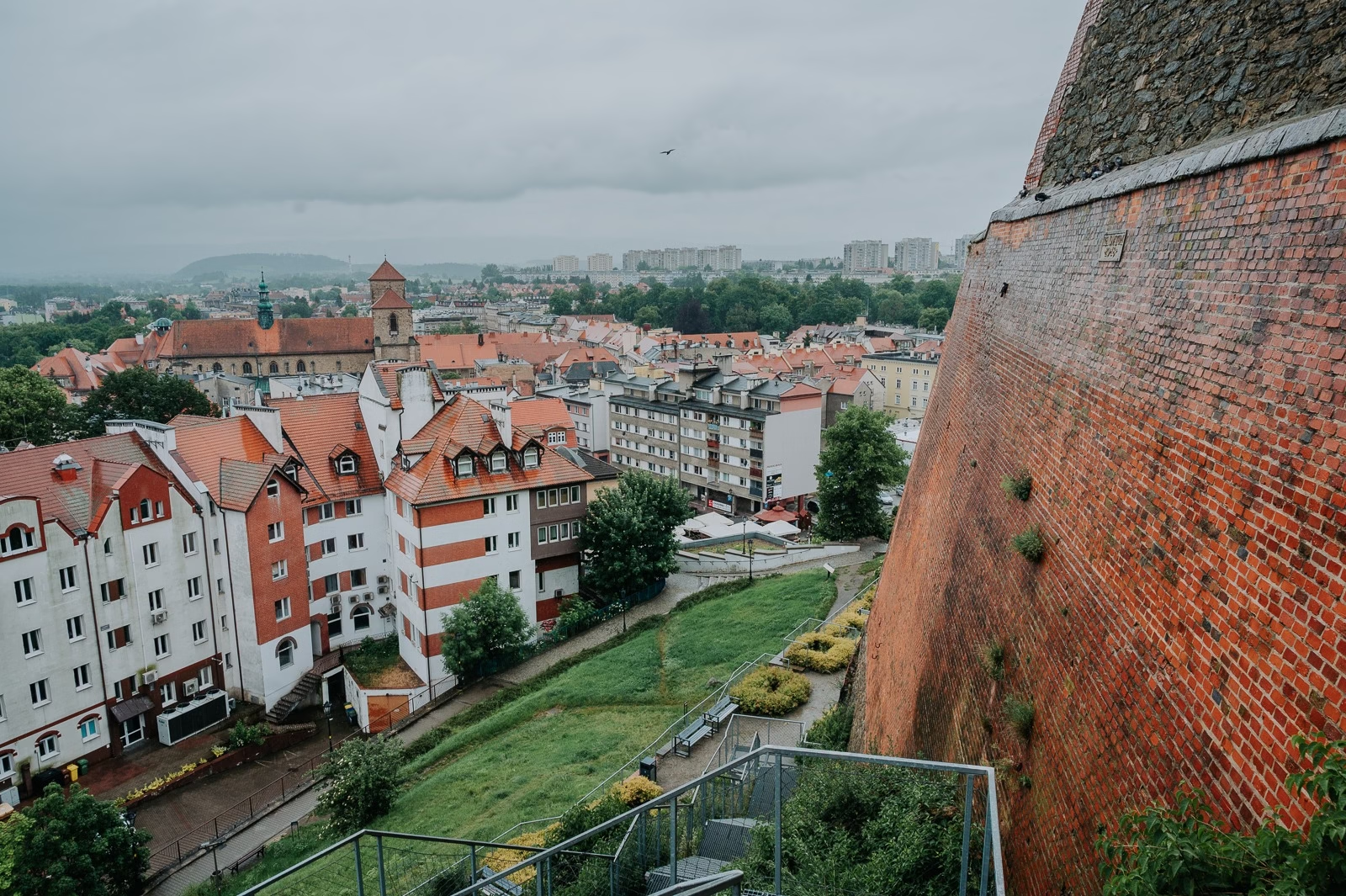
Dominating the skyline above the city is a fortress that ranks among the largest and best-preserved fortifications in Central Europe.
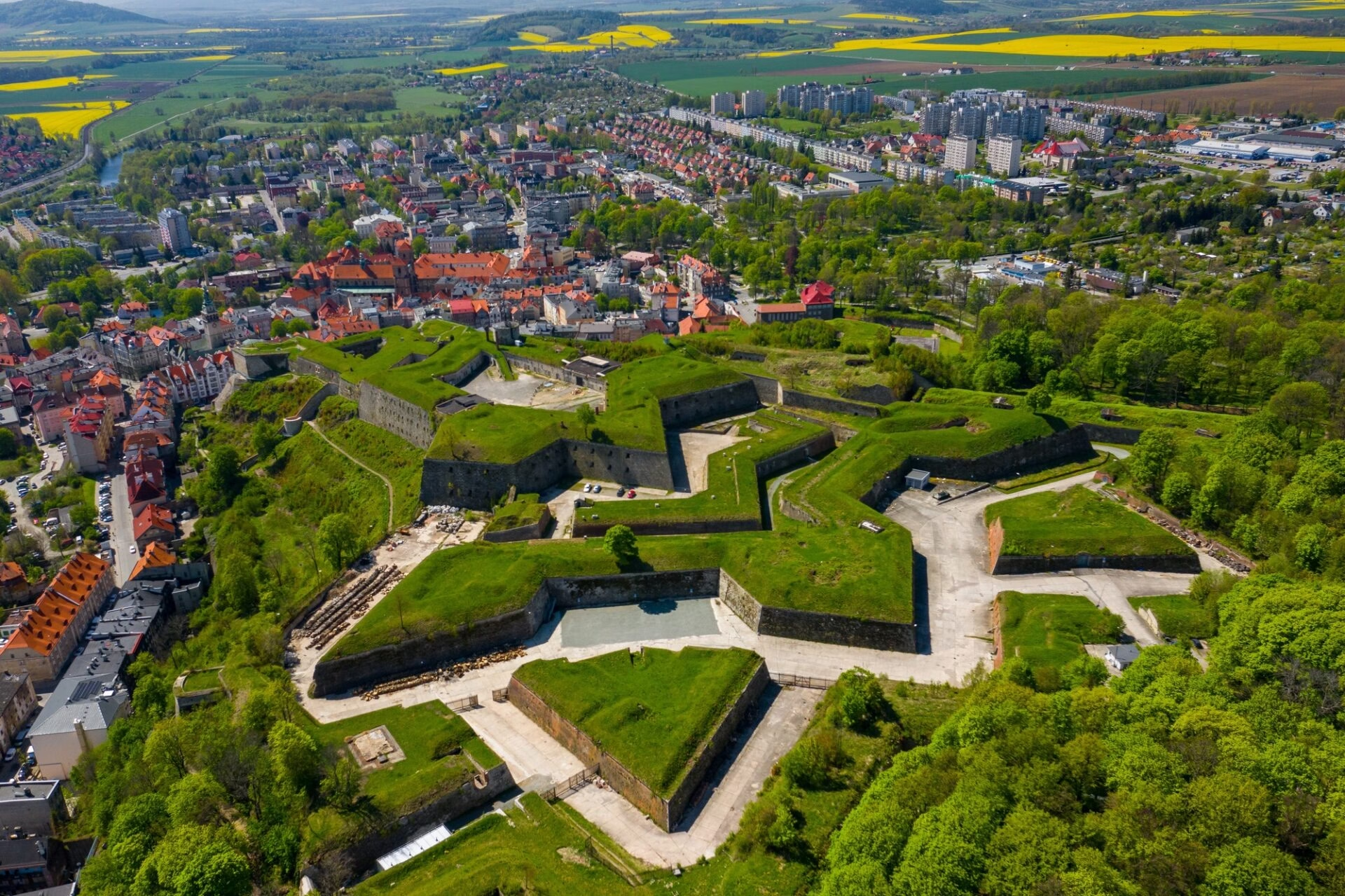
The foundations go back to the tenth century, when a Bohemian stronghold stood on Castle Hill. Over time it evolved into a castle, then a defensive complex, and in the late seventeenth and early eighteenth century under Prussian rule the bastions that define today’s fortress were added.
The visit is split into two separate routes with individual admission – the upper route and the underground labyrinths. We recommend buying a combined ticket straight away, as the two complement each other perfectly and doing only one would be a shame.
Upper Route
The upper route takes you through the courtyards, casemates and former prison quarters, covering centuries of military history – from the Silesian Wars and the Napoleonic campaigns to the infamous fortress prison from which Prussian officer Friedrich von der Trenck famously escaped in the eighteenth century.
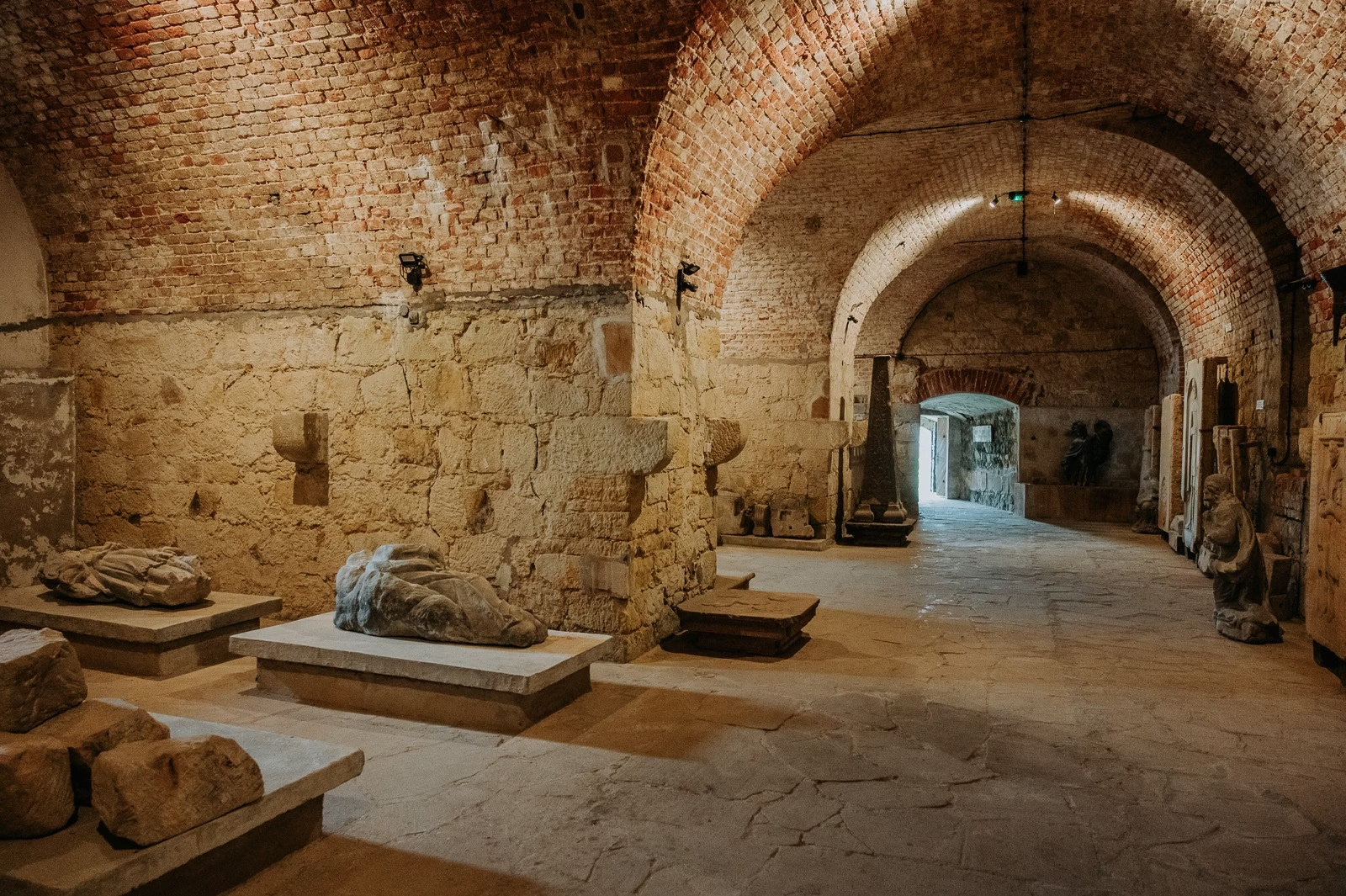
The highlight is the climb to the donjon, the fortress’s highest point. From the viewing platform, on a clear day you can see the whole of Kłodzko and the distant mountain ridges, including the Table Mountains and Śnieżnik.
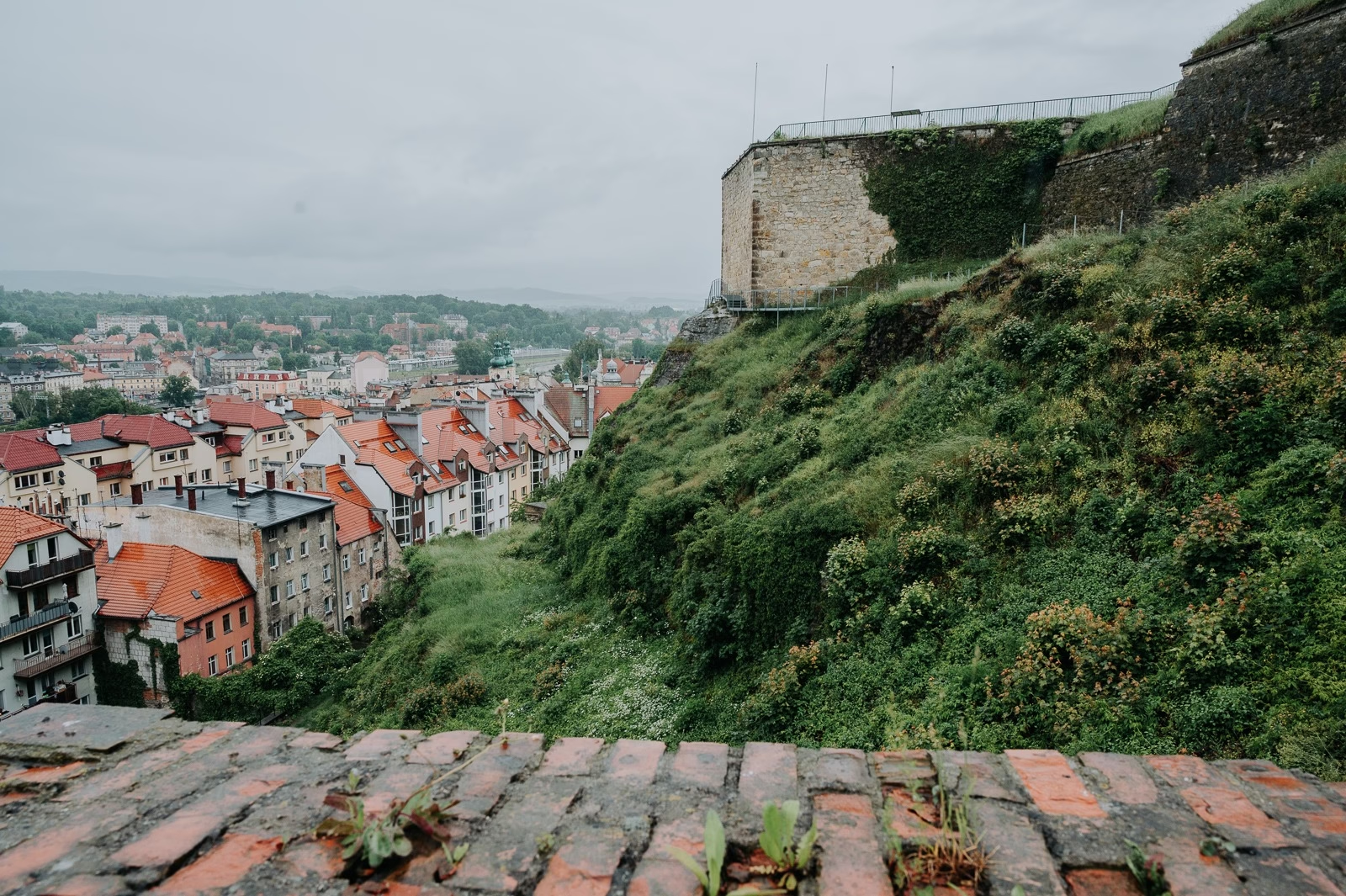
A guided tour of the upper route takes roughly an hour and a half.
Underground Labyrinths
Beneath the fortress lie over forty kilometres of tunnels, seven of which were built as a defensive labyrinth to counter enemy mining operations. Visitors can explore an approximately one-kilometre section of the labyrinth.
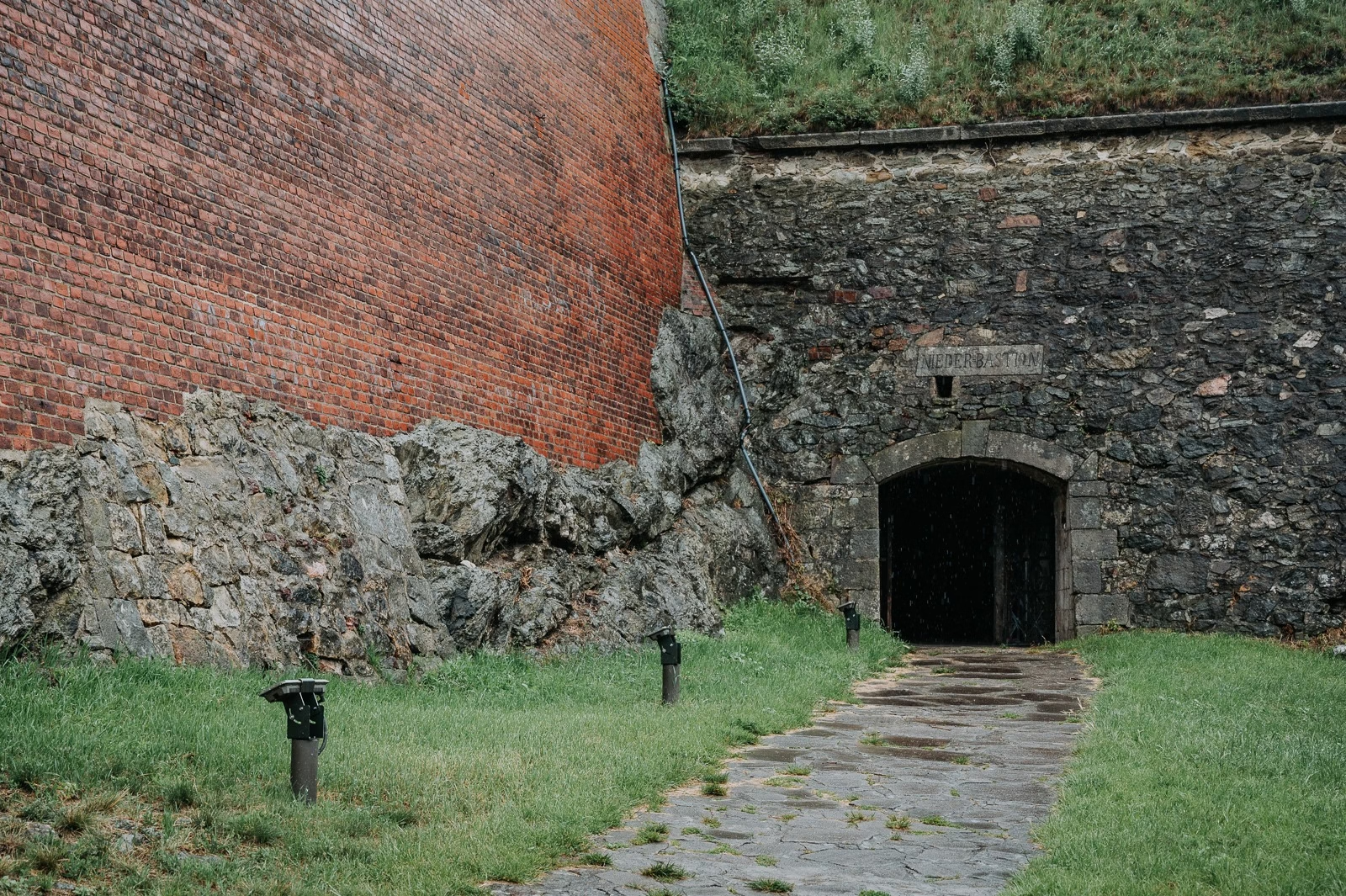
The passages were designed to defend against enemy sappers undermining the walls, and in some sections they are so low that you have to crouch or bend double to get through.
The underground maintains a constant temperature of around six to ten degrees Celsius year-round, so even in midsummer bring a jacket or jumper. The tour is not recommended for people with claustrophobia, and children must be at least five years old to enter the labyrinths.
The combined upper route and underground tour takes roughly three hours in total.
Practicalities – Tickets, Opening Hours, Booking
Enter the fortress from the old town side – not from the large car park above the fortress.
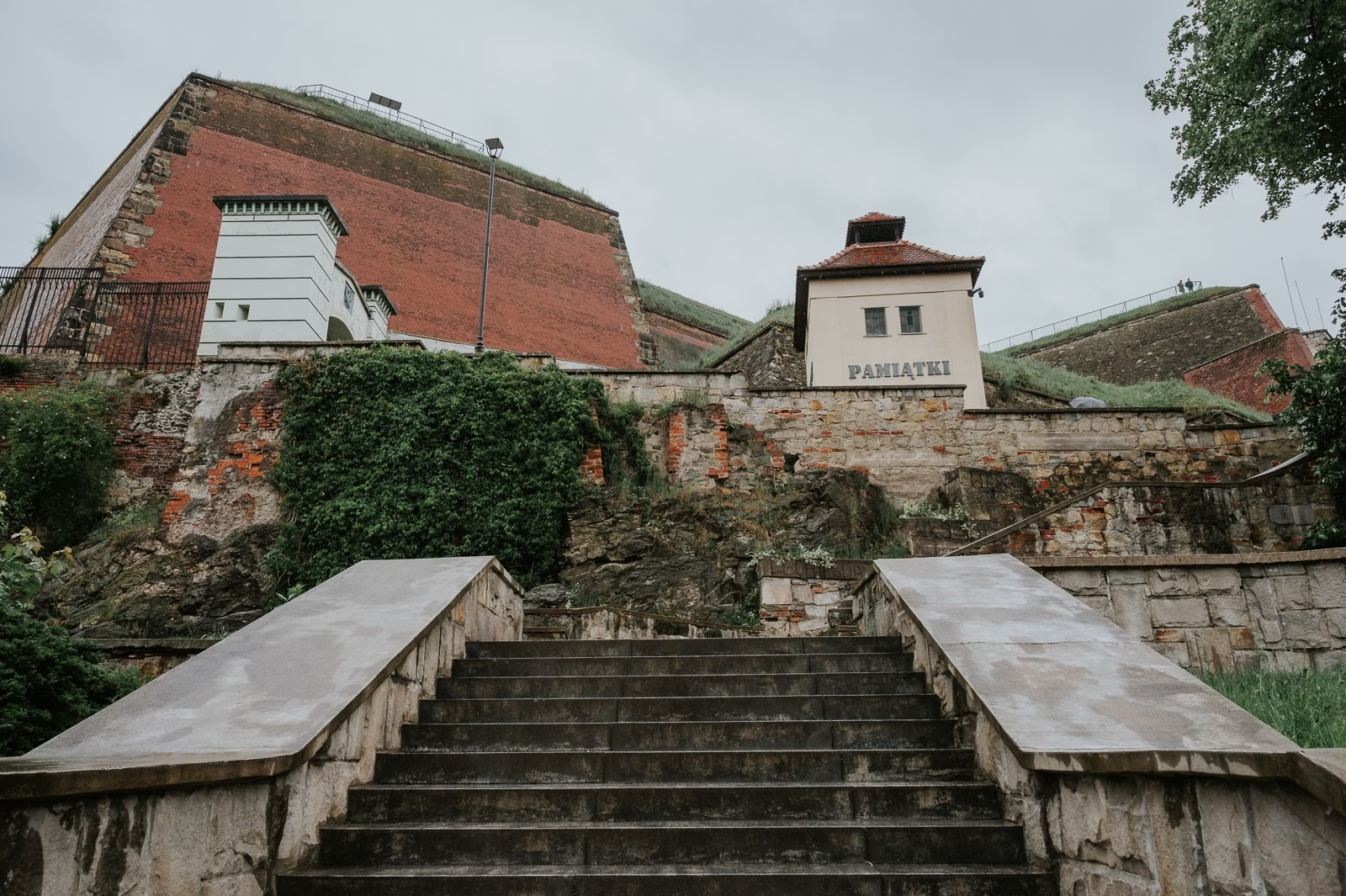
Opening hours: In high season (April to September) the fortress is open 9:00–19:00; in October 9:00–17:00; and out of season (November to March) until 16:00. Last entry is one hour before closing.
Prices: A combined ticket (upper route + labyrinth) costs 60 PLN (standard) or 50 PLN (concession). Individual routes cost 38 / 30 PLN respectively.
Always check the latest information on the fortress website.
Wear sturdy shoes and bring a warm layer for the underground section. Dogs are permitted on the upper route only, and must be kept on a lead.
What to See and Do in Kłodzko
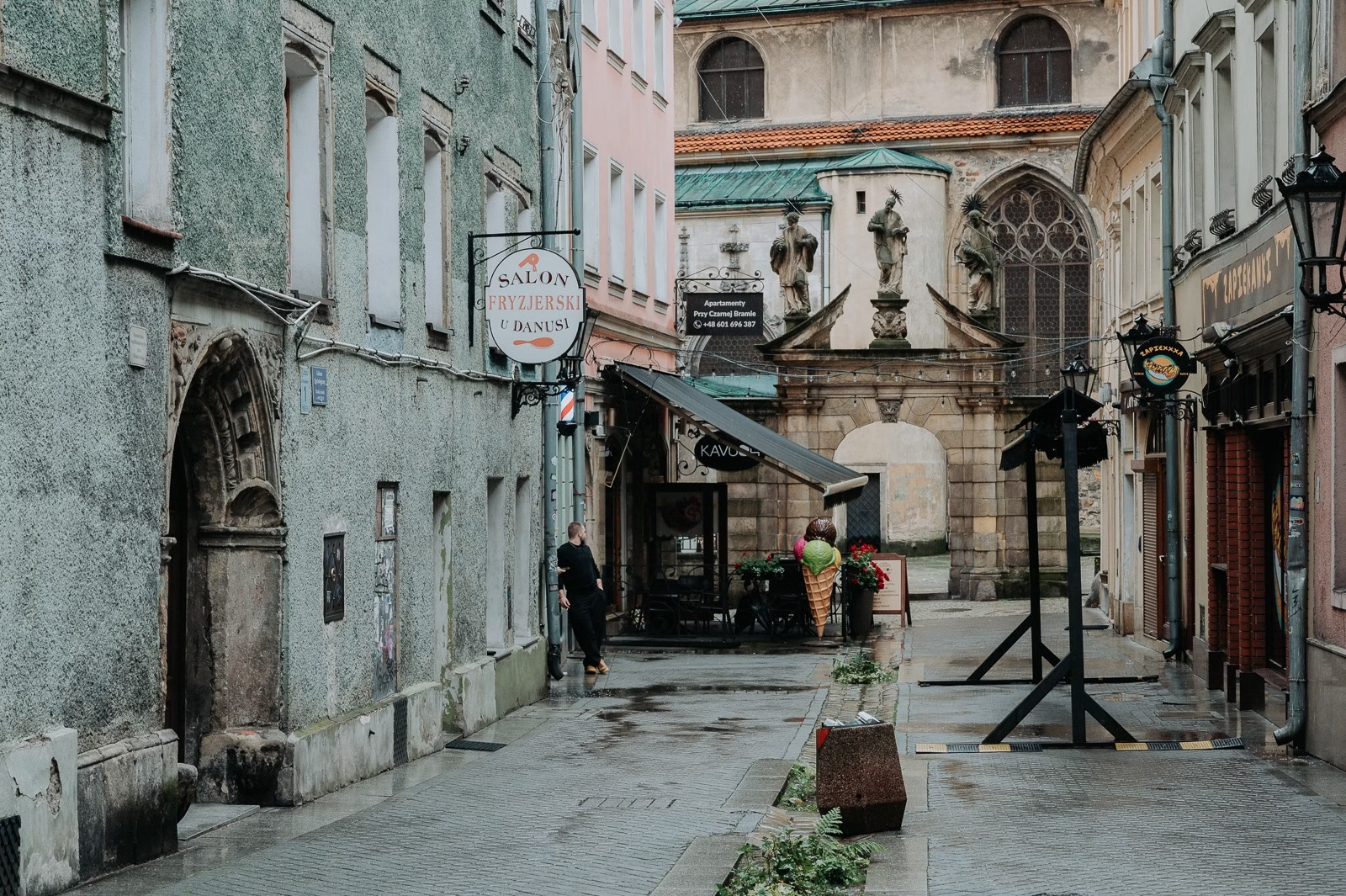
Beyond the fortress, Kłodzko rewards a slow wander through the old town itself.
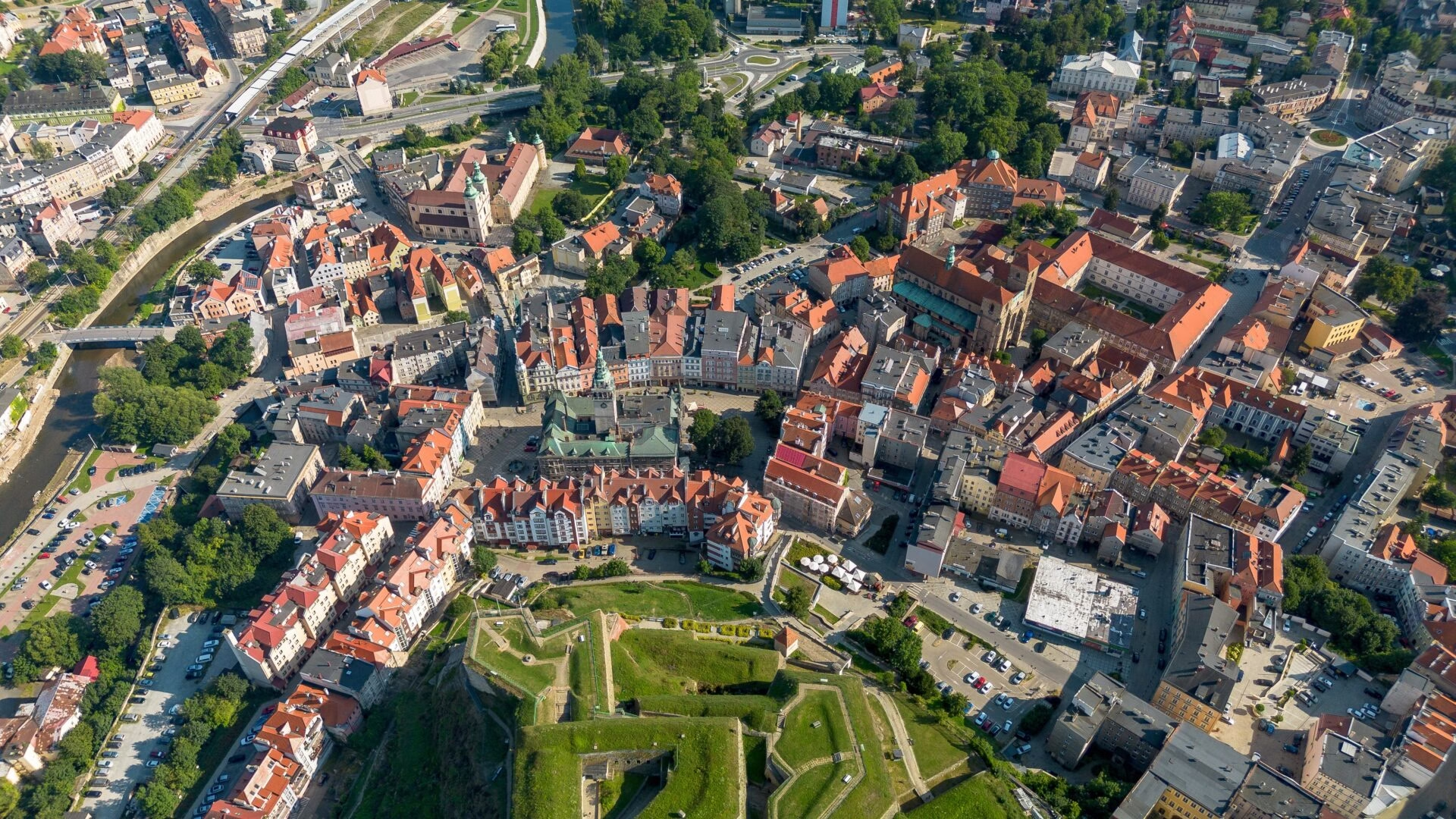
The terrain is wonderfully dramatic thanks to the town’s position on a terrace above the river – streets turn into staircases in places, which makes the centre one of the most photogenic spots in the region.
Underground Tourist Route beneath the Old Town
The tunnels and cellars beneath Kłodzko’s centre were dug gradually from the thirteenth to the seventeenth century, serving mainly as storage. The consistently low temperature allowed long-term preservation of food – and of the famous Kłodzko beer.
The tour covers roughly six hundred metres accompanied by a soundscape of a period market and battlefield noise; along the way you’ll encounter mannequins in period costume and animated rat models that react to movement.
The tour lasts around thirty to forty-five minutes.
Enter from ulica Czeska at the foot of the fortress. Admission is 21 PLN (17 PLN concession).
Check opening hours on the official website before you go, as they change throughout the season.
Gothic Bridge of St John
Spanning the Młynówka canal is the oldest Gothic bridge in Poland, built probably between 1376 and 1390 on the site of an earlier wooden footbridge.
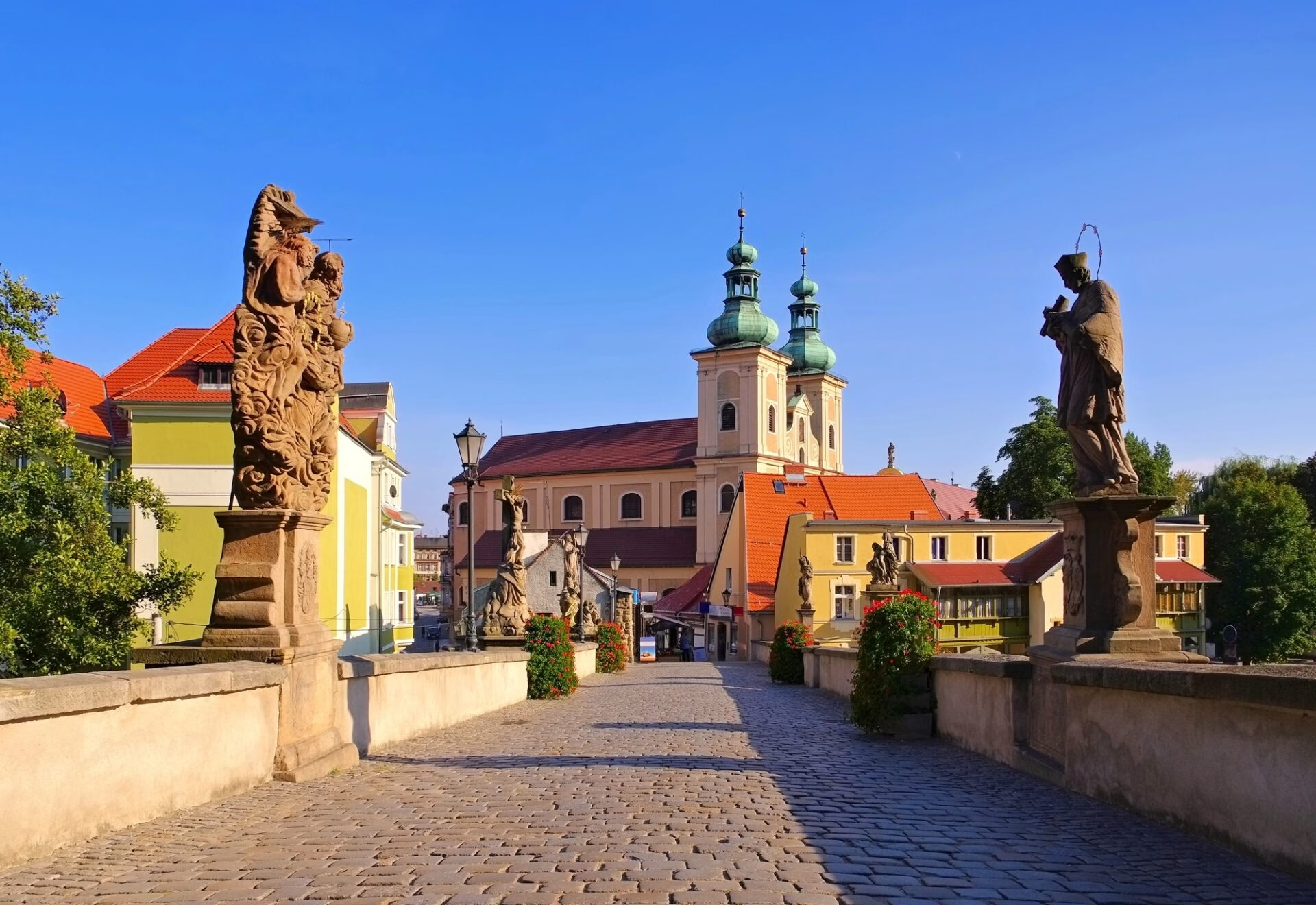
It is precisely this resemblance to Charles Bridge in Prague that earned Kłodzko the nickname “Little Prague”.
The stone balustrade is lined with Baroque statues of saints, including St John of Nepomuk and an imposing eighteenth-century Pietà.
The bridge links the market square with the Piasek quarter and is pedestrian-only, making it an ideal spot for early-morning photos before the crowds arrive.
Market Square, Town Hall and Old Town Lanes
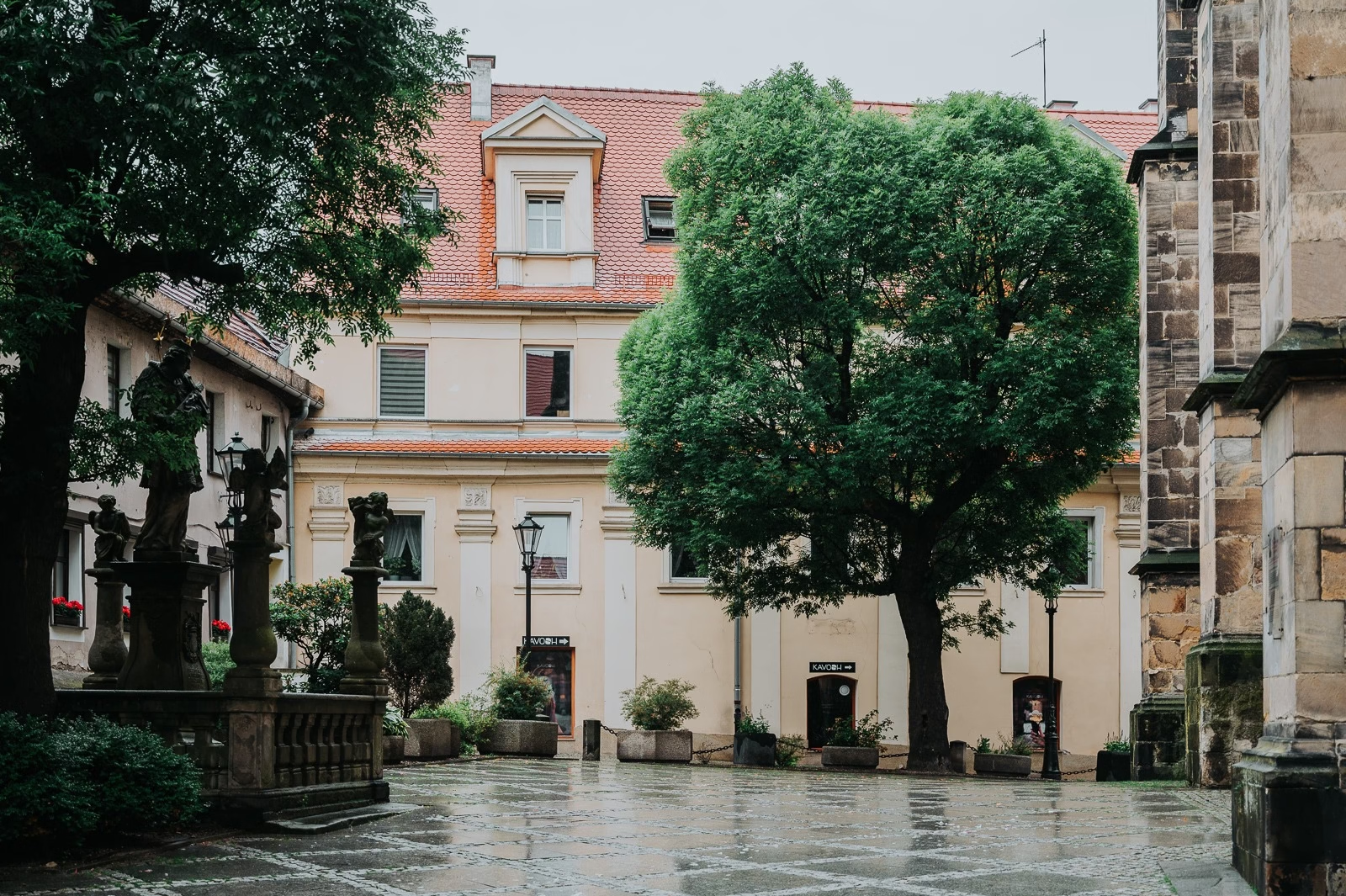
Hemmed in by the fortress slope and the river, Kłodzko has retained an almost unchanged medieval street plan.
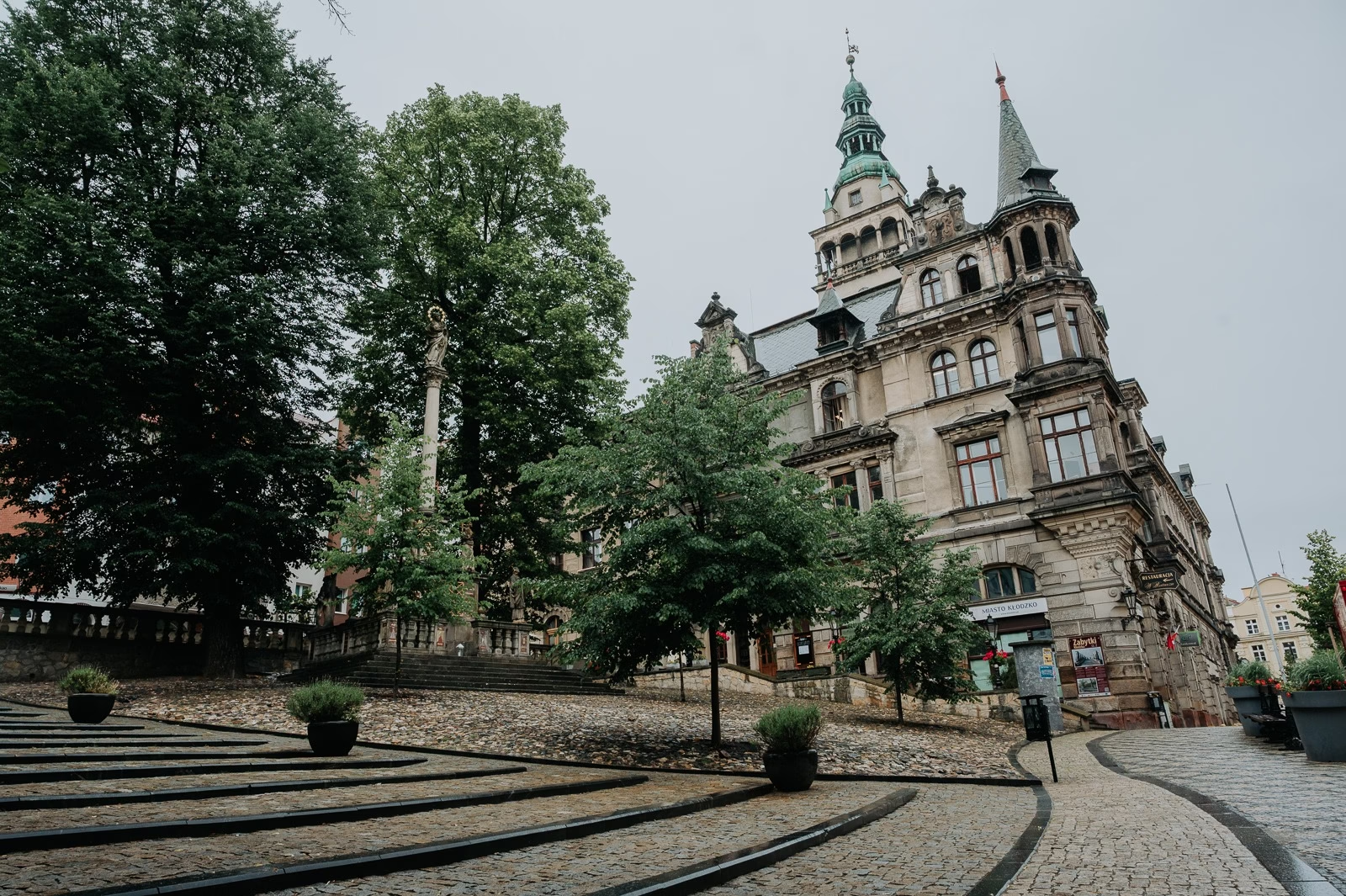
The elevation change from the square to the river is about twenty metres; up to the fortress it reaches sixty, which explains why some streets – like ulica Spadzista – are essentially staircases.
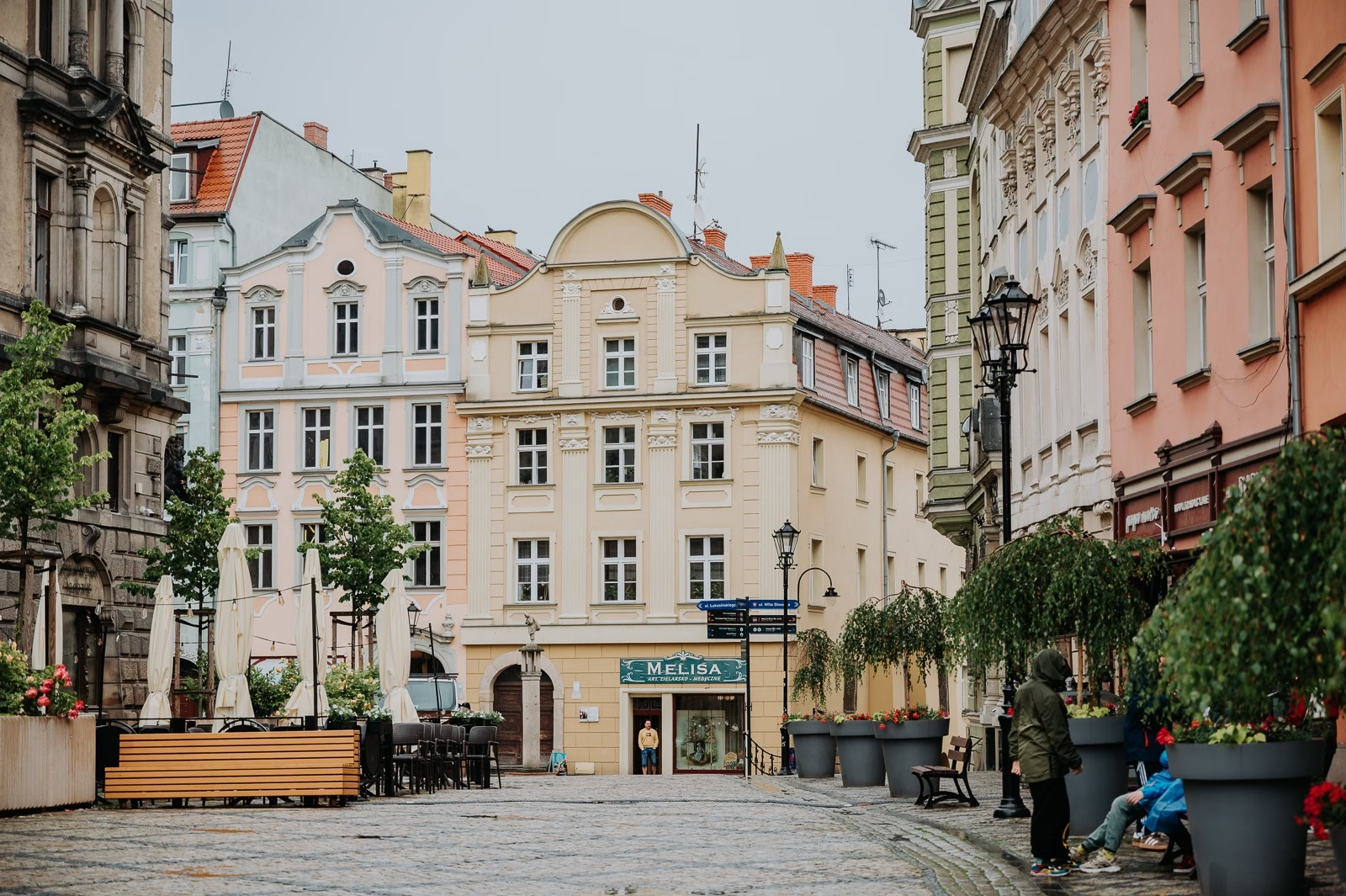
Around the square and in the surrounding lanes you’ll find colourful townhouses, including one tied to the local legend of Filipek’s prophecy. The area around the town hall is also a natural spot for a coffee or a break between sightseeing.
Basilica of the Assumption of the Virgin Mary
In the late fifteenth and early sixteenth century, the Archbishop of Prague commissioned a late-Gothic basilica here that today ranks among the most impressive Gothic churches in the entire region.
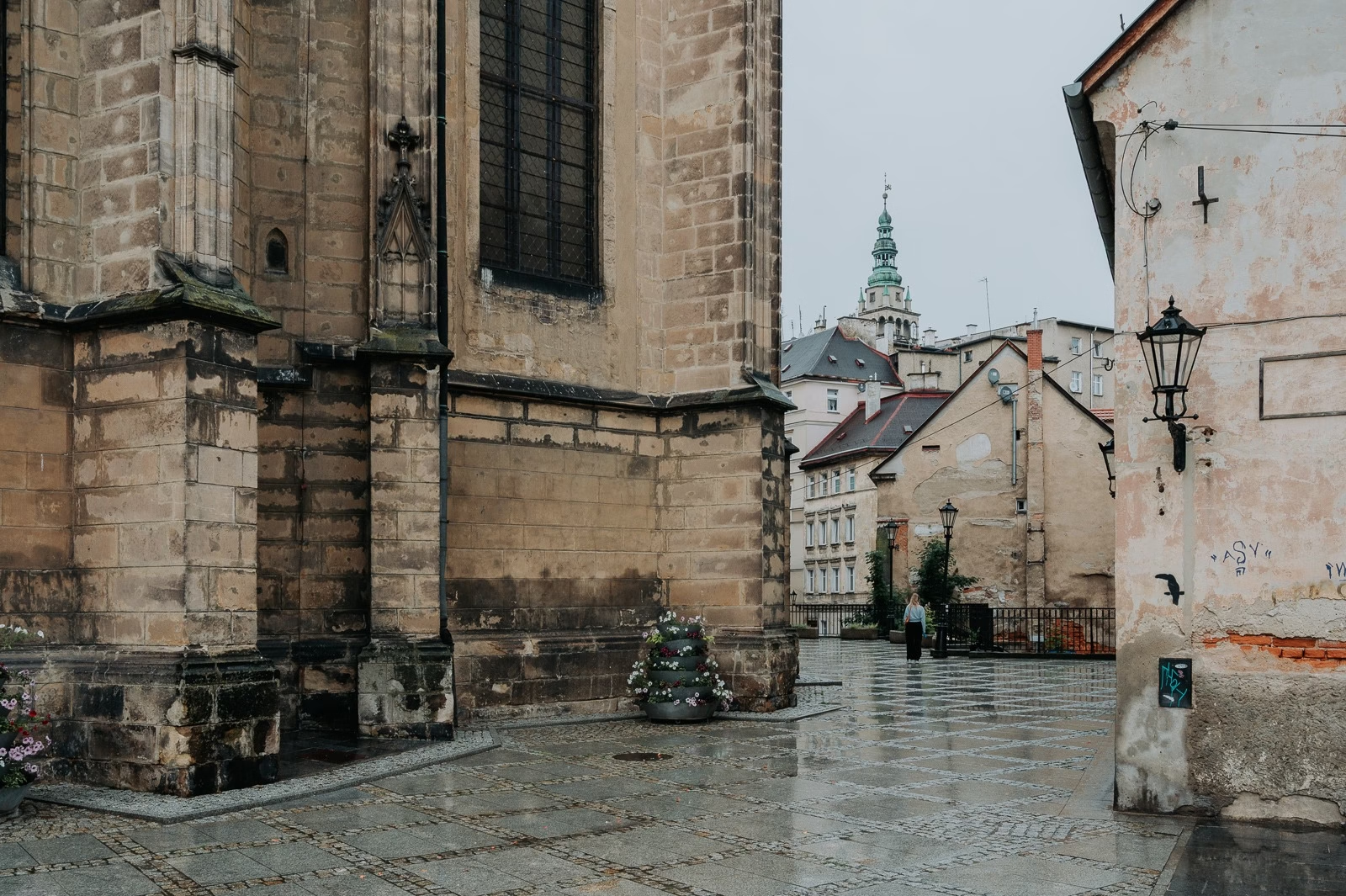
The three-aisled structure measures 62 metres long and 22 metres wide, with two towers flanking the west facade.
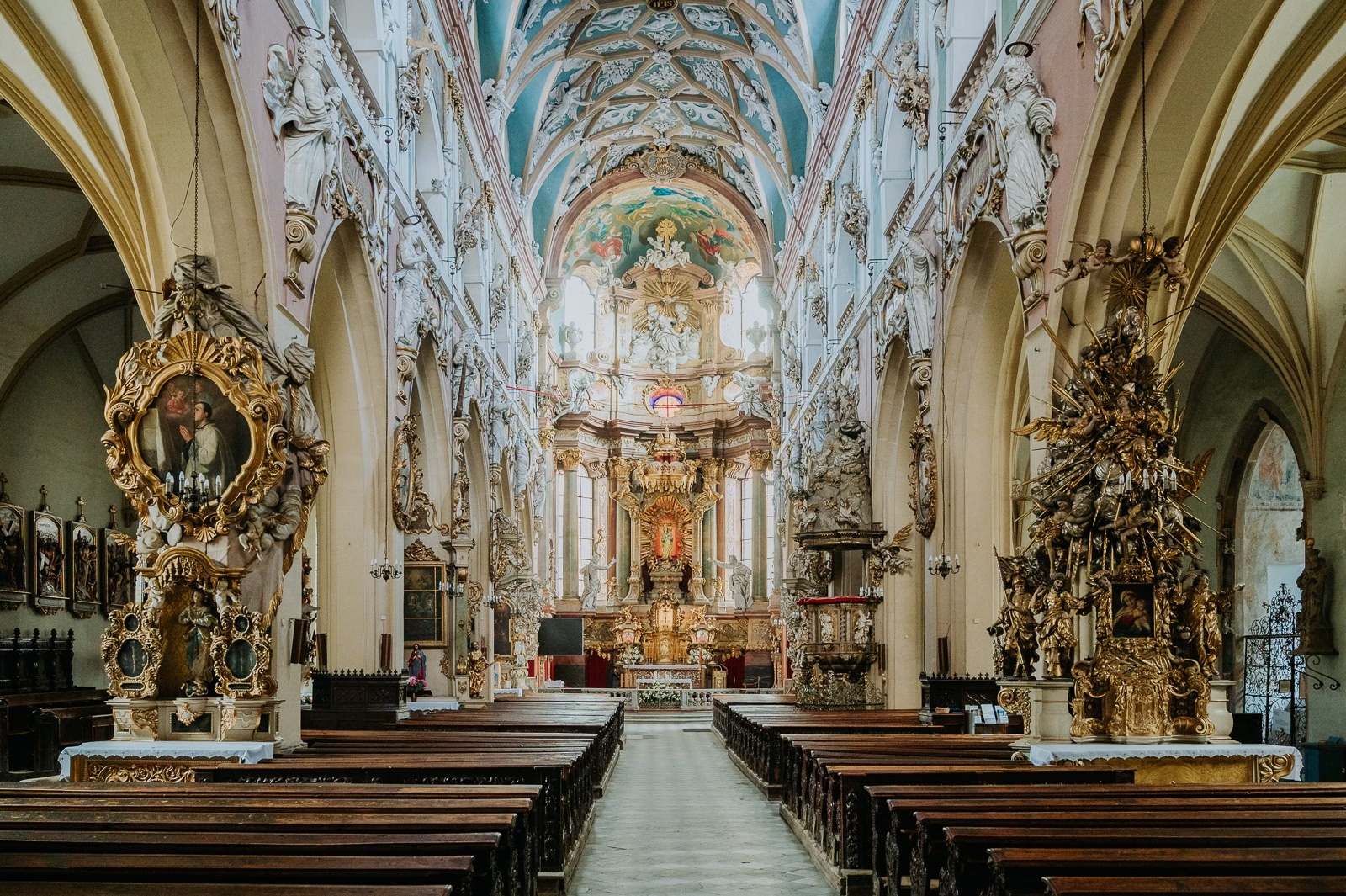
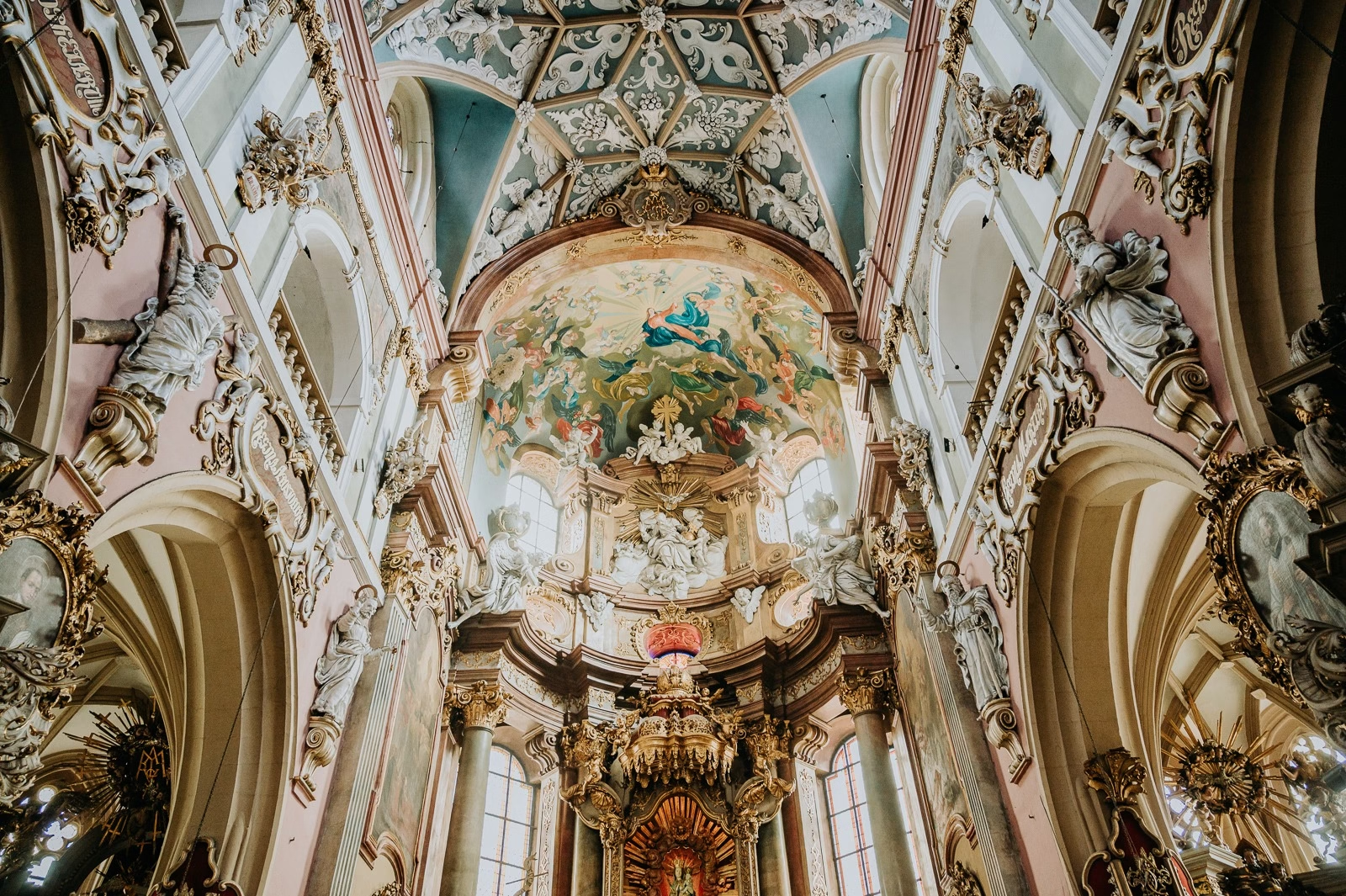
Inside you’ll find a stellar and cross-ribbed vault decorated with Baroque stucco, a high altar from 1729, and a pulpit and confessionals carved by Michael Klahr, the leading sculptor of the Kłodzko Valley.
The nave is freely accessible.
Church of Our Lady of the Rosary and Franciscan Monastery
This Baroque church was built during the Thirty Years’ War and rebuilt in 1711; a Franciscan monastery is attached to the building. The twin-towered silhouette is one of the most recognisable landmarks on the Kłodzko skyline.
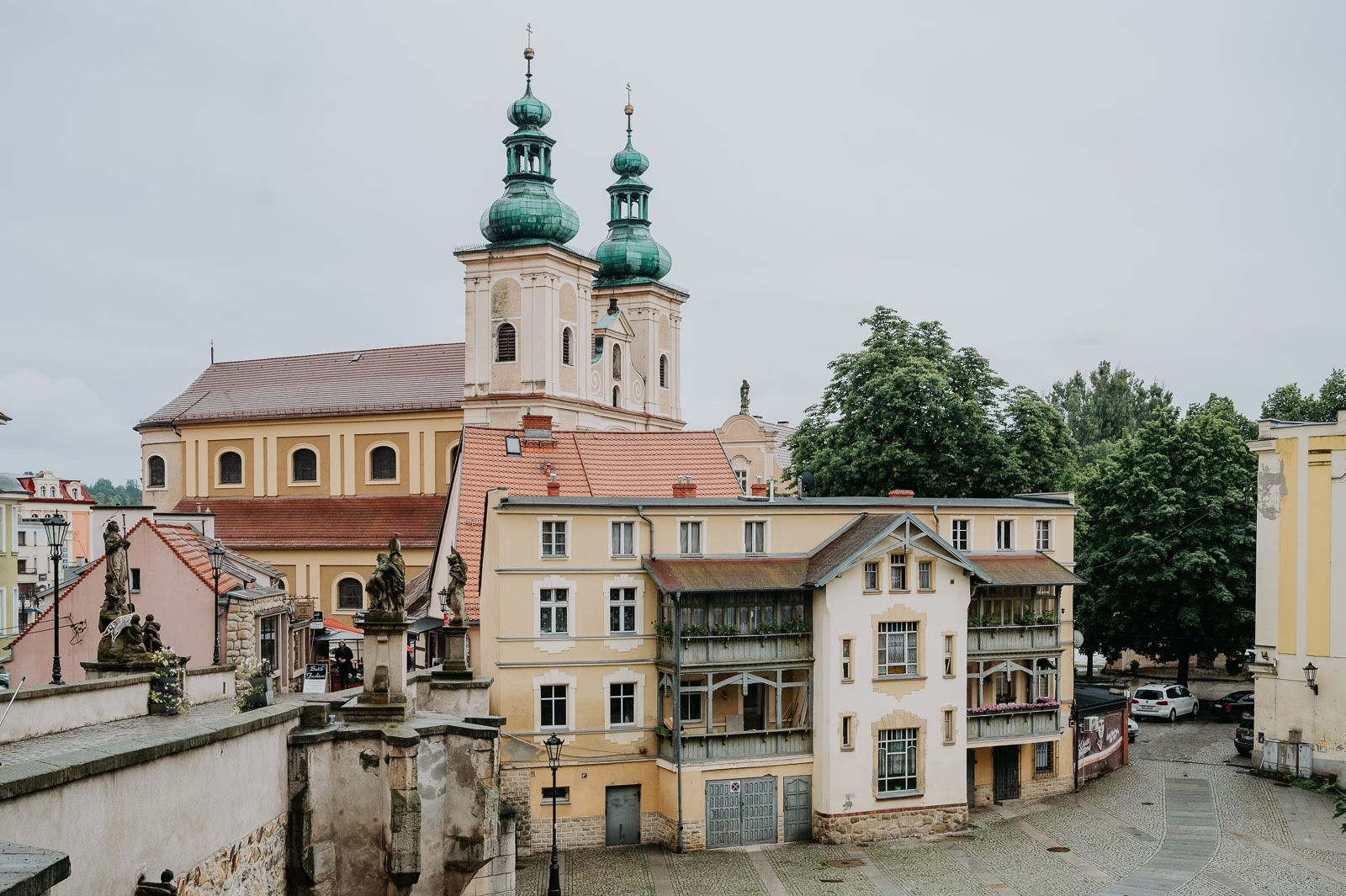
Inside, the distinctive vaulting and frescoes in the large refectory are worth a look – they are attributed to Felix Anton Scheffler, a leading painter of Silesian Baroque.
Entry is free; the church is located near the iron bridge over the river.
Museum of the Kłodzko Land
This regional museum covers the history, geology and folk culture of the Kłodzko Land. The collections include local minerals, exhibits on life in medieval and early-modern Kłodzko, and period artefacts.
It’s a great option for a rainy afternoon when outdoor sightseeing loses its appeal, and it regularly hosts short-term themed exhibitions.
Located in the town centre; admission is nominal – check opening hours before visiting.
Minieuroland – Kłodzko Miniature Park
On the outskirts of Kłodzko lies the Minieuroland miniature park, a popular destination especially for families with children.
In one place you’ll find scale models of famous Polish and European landmarks, a working miniature railway and interactive exhibits.
Everything is spread across 20 square kilometres of ornamental gardens – the topiary and floral installations push the kitsch boundaries somewhat, but as a whole Minieuroland works well.
There are also aviaries with parrots, toucans and other exotic birds, a meerkat zone and a squirrel house.
Admission is 59 PLN per person, or 216 PLN for a family ticket – check the website as the park is constantly expanding (and prices change accordingly).
Sheep Hill Fort (Owcza Góra)
Across the Nysa Kłodzka river from the main fortress stands an eighteenth-century auxiliary fort, built on the orders of Prussian King Frederick II.
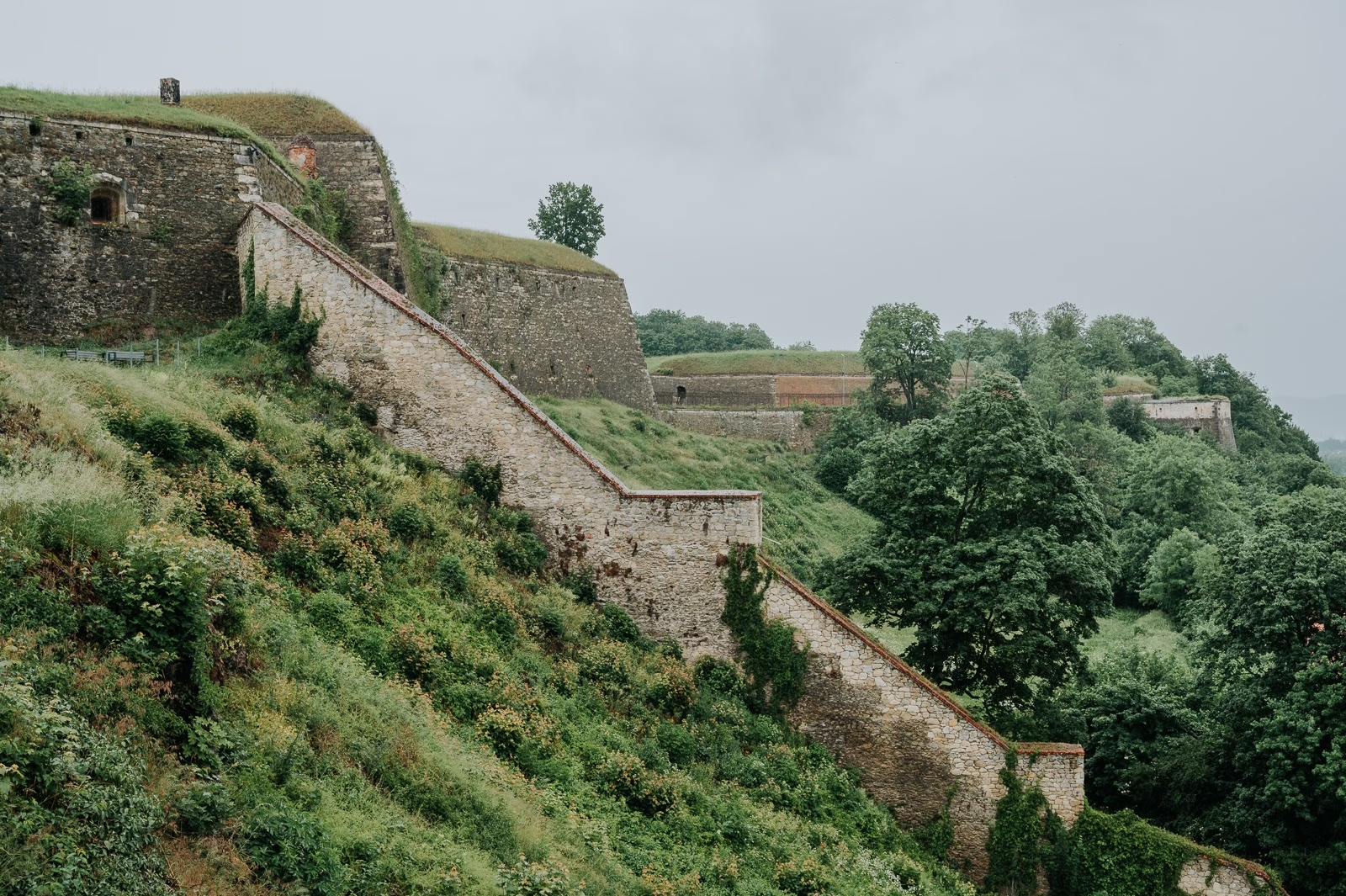
You can’t enter the fort itself, but the short walk up to Owcza Góra (Sheep Hill) rewards you with one of the best views of the main Kłodzko fortress.
The walk from the old town takes roughly 30 minutes each way.
Kłodzko Mountain with Observation Tower
Another rewarding excursion nearby is Kłodzko Mountain (757 m), the second-highest peak in the Bardzkie Mountains and part of the so-called Crown of Polish Mountains.
At the summit stands a modern 35-metre observation tower with views of the Śnieżnik massif, the Owl Mountains, and on clear days the Czech Broumov Walls.
A yellow-marked trail runs from the town centre – the 9 km route takes roughly 3 hours each way.
By car you can drive to the saddle car parks at Przełęcz Łaszczowa or Przełęcz Kłodzka and cut the hiking distance down to around 3 kilometres.
Day Trips from Kłodzko
Kłodzko sits almost dead-centre in the Kłodzko Valley, so most of the region’s highlights are within a thirty- to sixty-minute drive.
On a first visit, pick one or two destinations per day – trying to fit everything in at once is simply unrealistic.
Szczeliniec Wielki Rock City and Błędne Skały
The highest peak in the Table Mountains, Szczeliniec Wielki (919 m), is part of the Crown of Polish Mountains and one of the most visited natural attractions in the Sudetes.
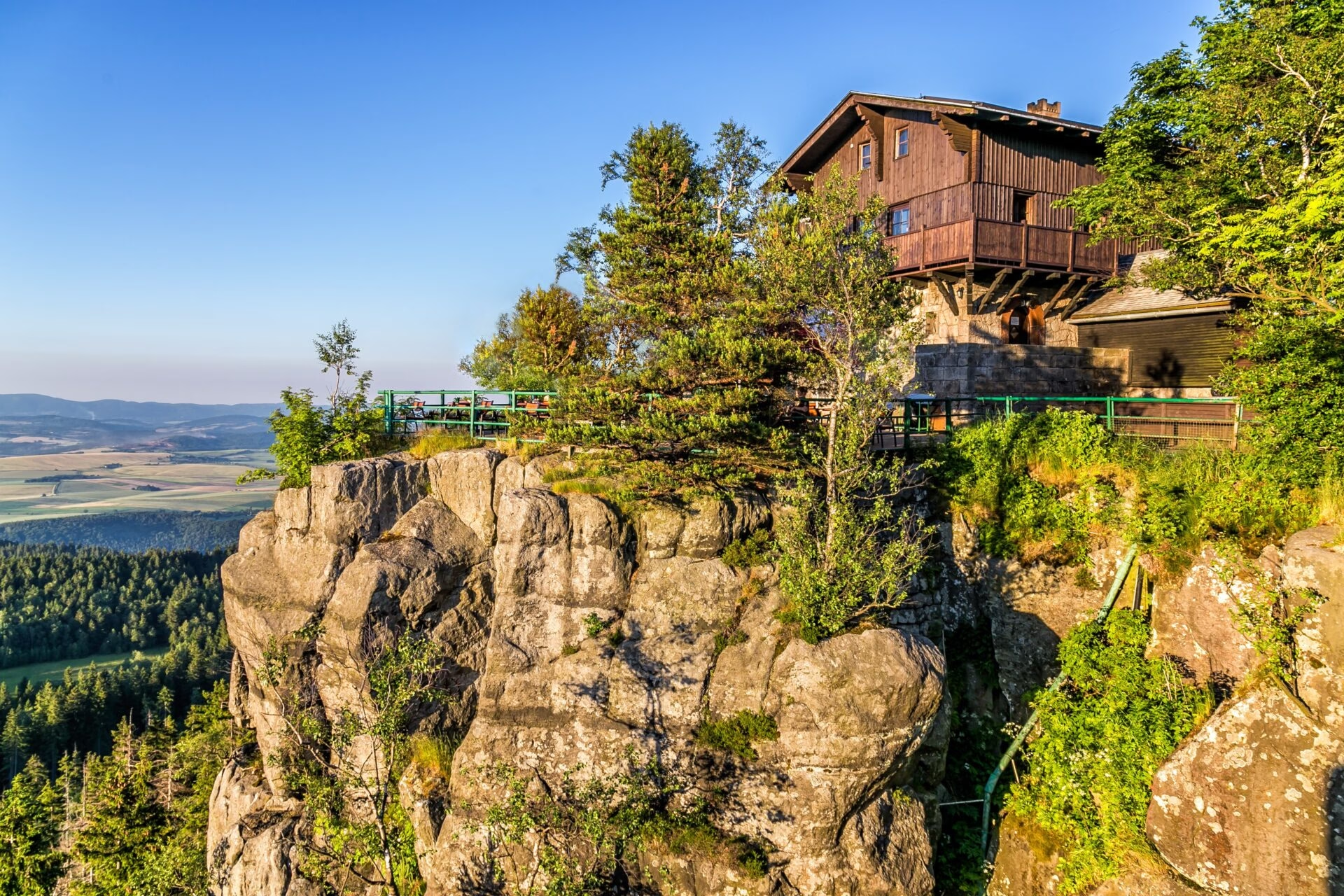
The summit is reached via a winding path with 665 stone steps, built in 1814 by local guide Franz Pablo. At the top stands a mountain hut from 1846, built in Tyrolean style.
A little further north lies Błędne Skały (Wandering Rocks), a separate sandstone labyrinth formed by weathering, which offers a completely different experience – weaving between rock formations rather than climbing upwards.
Both attractions charge admission due to hourly visitor limits (approximately 400 people per hour at Szczeliniec, 350 at Błędne Skały).
Tickets cost 16 PLN (standard) and 8 PLN (concession) per attraction; children under seven enter free, and dogs are not permitted.
In season and at weekends, buy tickets online in advance, as capacity often sells out. Parking at the upper car park near Błędne Skały is charged separately.
Allow two to three hours for each site.
Chapel of Skulls in Kudowa-Zdrój
In the Czermna district, just outside the centre of the spa town of Kudowa-Zdrój, stands a small Baroque chapel whose walls and ceiling are lined with human skulls and bones. Outside Rome and Kutná Hora, it is one of the very few structures of its kind in Europe.
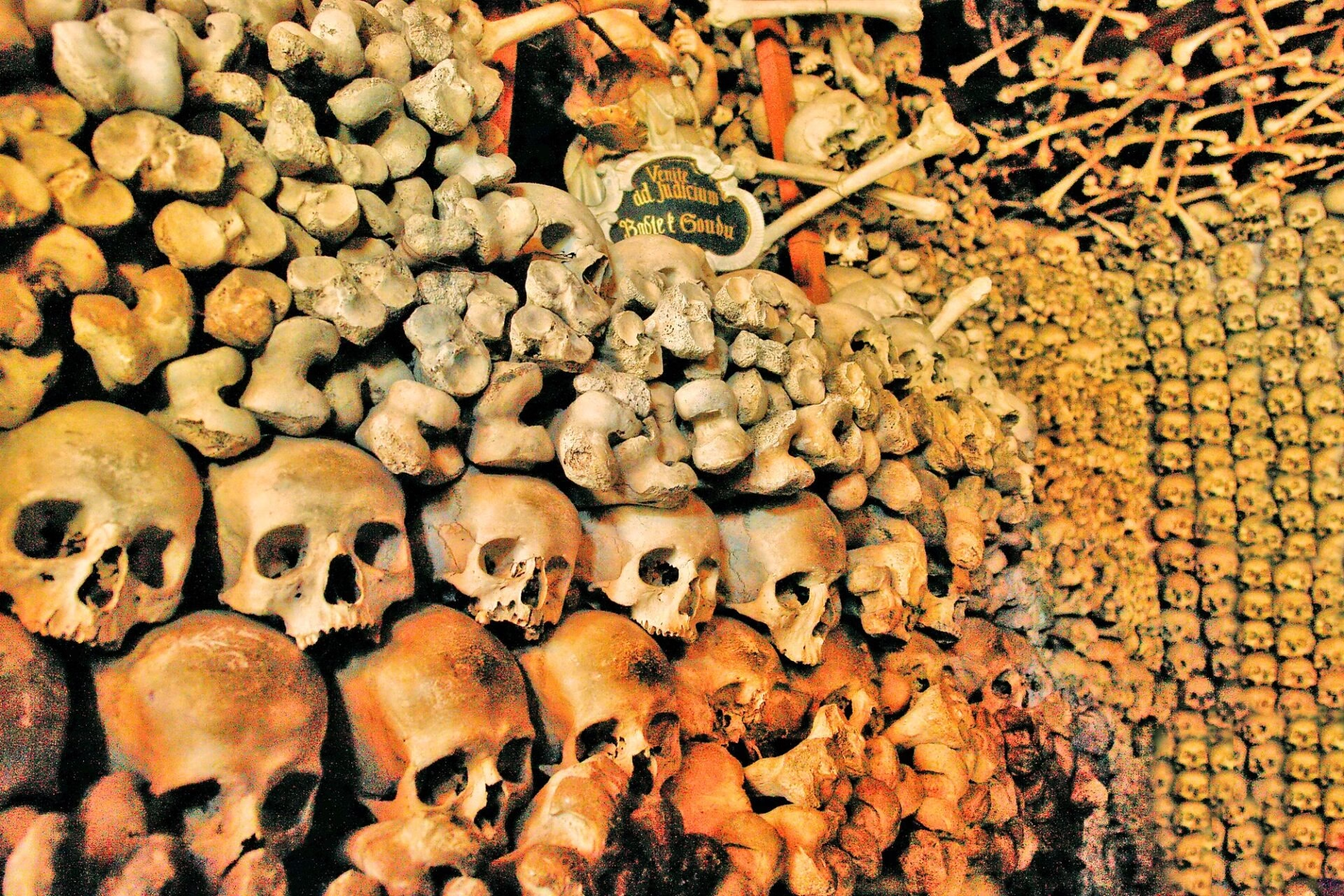
It was built between 1776 and 1804 at the initiative of local priest Václav Tomášek, who discovered the remains of victims of the Thirty Years’ War, the Silesian Wars and epidemics in the surrounding area.
The interior holds approximately three thousand skulls, with tens of thousands more remains in the crypt beneath the floor. Visits are guided, in small groups, and last fifteen to twenty minutes; photography inside is not permitted.
The chapel is open Tuesday to Sunday, in season from 10:00 to 17:00.
Admission is 20 PLN for adults, 15 PLN for seniors and 12 PLN for children. Always verify the latest details on the official website.
Advance reservations are not possible.
Kudowa-Zdrój is just over half an hour by car from Kłodzko.
Pilgrimage Basilica in Wambierzyce
This small village tucked between three hills earned the nickname “Silesian Jerusalem” thanks to its Baroque Basilica of the Visitation of the Virgin Mary, approached via a monumental staircase of 57 steps – each section carrying its own symbolic meaning.
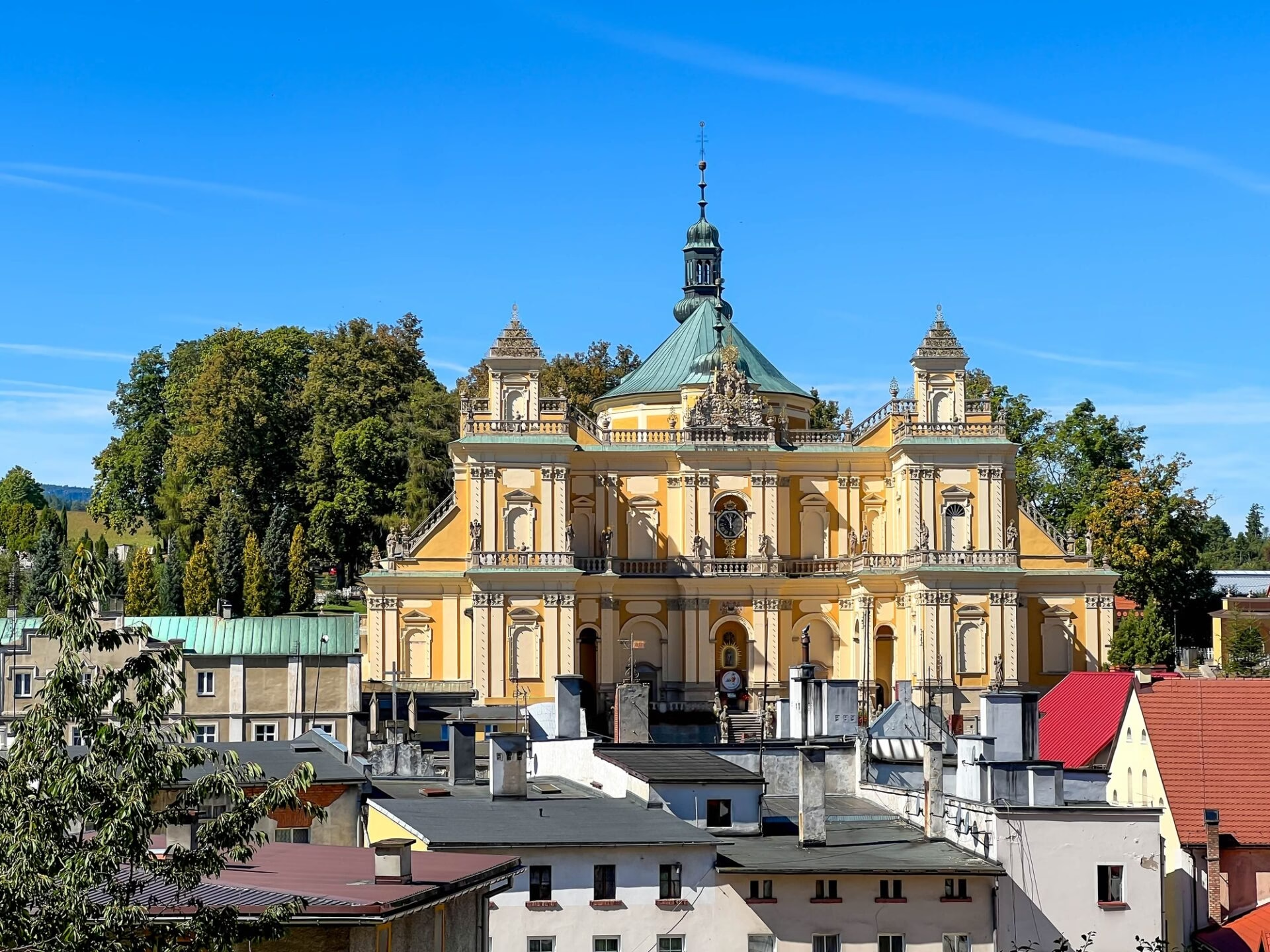
The complex also includes a Calvary with dozens of chapels spread across the adjacent hill.
Beyond the basilica, the mechanical nativity scene is a must-see – the largest and oldest of its kind in Poland. It was created in the second half of the nineteenth century by clockmaker Longin Wittig and later expanded by his son Hermann; today it features around 800 figures, roughly 300 of which move.
Entry to the basilica is free; the mechanical nativity scene is a separately ticketed attraction.
The drive from Kłodzko takes roughly 30 minutes.
Śnieżnik, Międzygórze Waterfalls and Bear’s Cave
At the foot of the Śnieżnik massif lies the village of Międzygórze, known for its unusual architecture inspired by Swiss chalets. A short walk from the village centre brings you to Wilczki Waterfall, the highest waterfall in the entire Sudetes.
Nearby, in the village of Kletno, is the entrance to Bear’s Cave – the longest cave system in the Sudetes, where Ice Age cave bear remains were found, giving the cave its name.
The tour covers an accessible section of roughly 360 metres with a guide and takes about 45 minutes.
Due to daily visitor limits, advance ticket reservations are required.
From Kłodzko, the drive takes under an hour.
Food and Drink in Kłodzko
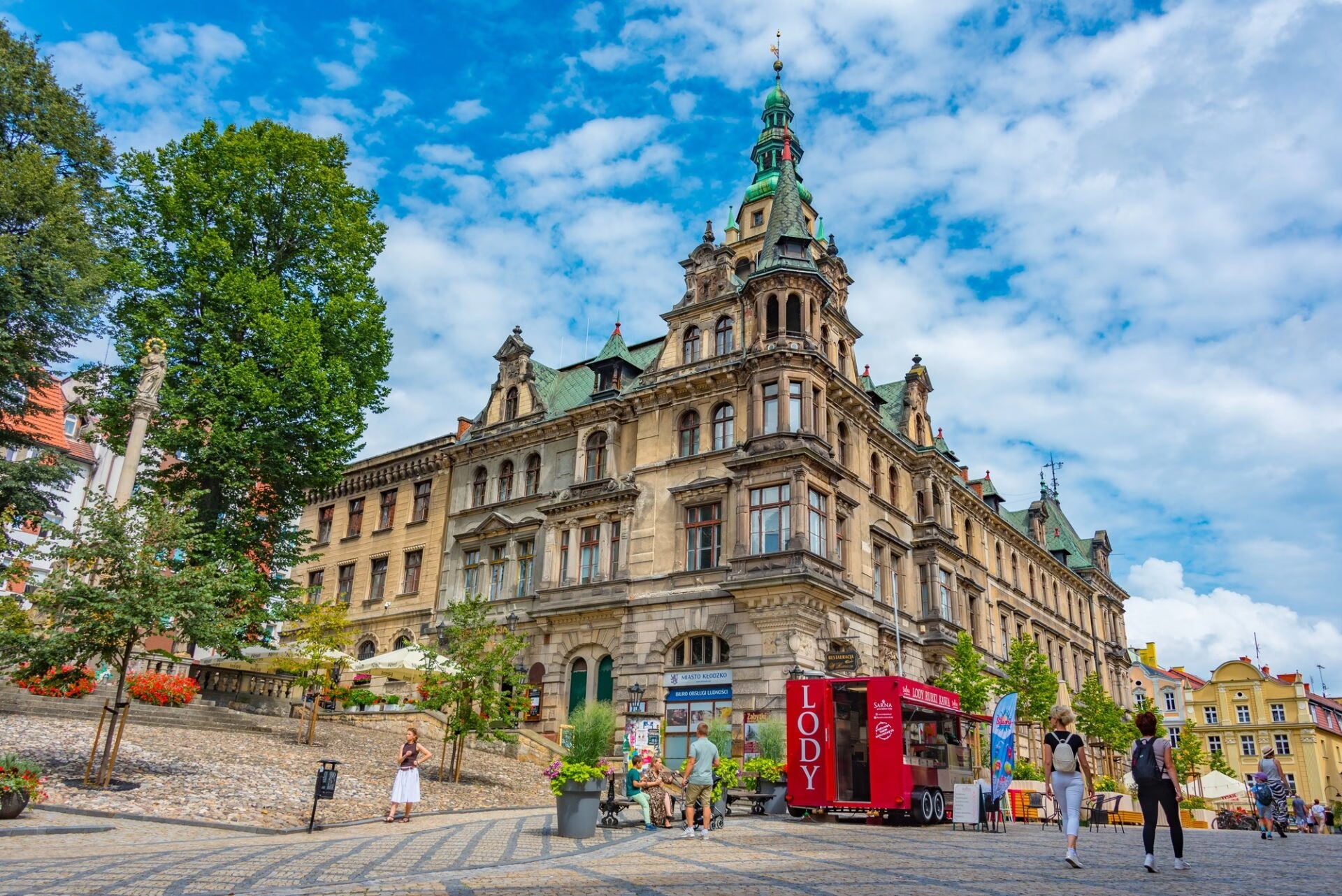
Kłodzko isn’t a gastronomic powerhouse, but there are some solid places to eat right in and around the centre – and prices are pleasantly affordable.
Where to eat:
- Pierogarnia zaPierogiem – pierogi in many variations, a Polish classic at affordable prices.
- Ristorante Felicità – Italian cooking: pasta and wood-fired pizza right in the centre.
- LOBSTER restauracja – varied menu ranging from fish dishes to hearty meat mains.
- Prima Sort Pizza – takeaway pizza, one of the best in town – a great quick option on the go.
- Restauracja Korona – Hotel Korona’s restaurant serving classic Polish and international dishes.
For coffee:
- Kavosh – in our view, the only place in town serving genuinely good coffee.
- Stempel Coffee Point – a small café a little further from the historic centre.
Where to Stay in Kłodzko
The best choice is accommodation in or right next to the old town – the fortress and the Gothic bridge are then just a few minutes’ walk from your door.
Kłodzko itself offers mainly smaller guesthouses and apartments rather than large hotel chains.
If you’re planning a longer stay with mountain day trips, consider basing yourself in one of the nearby spa towns such as Polanica-Zdrój or Duszniki-Zdrój, which have a wider range of wellness and resort-style accommodation.
Recommended stays in town:
- Apartament Ptasia Góra – bright apartment (42 m²) with a balcony and mountain views, air conditioning and free parking. Welcoming host.
- Apartament Oliwier – modern, freshly furnished studio (36 m²) with a new bathroom, balcony with mountain views and parking on site.
- Spadzista 2 – cosy studio right in the centre by the market square, with its own terrace and parking just below – ideal for a short stay.
- Apartament z duszą – spacious apartment (50 m²) in the centre; historic facade, fully renovated inside. Ten minutes’ walk to the market square.
- Apartament TRINI – renovated apartment (40 m²) a short walk from both the fortress and the old town – great value for money and an attentive host.
- Cichy Zakątek Kłodzko – ground-floor apartment (60 m²) with a large garden, BBQ and fire pit, 1.5 km from the centre. Step-free access, dogs welcome free of charge – great for families.
Interesting stays nearby:
- Dom Krawca / Schneiderbaude – stylish guesthouse on a hillside above Kłodzko (~5 km) with a restaurant, terrace and a celebrated breakfast using local produce. Peaceful countryside with views over the town.
- Kotlina Kłodzka Pod Brzozami – standalone holiday home with a fenced garden, hot tub and sauna in a quiet village near Kłodzko. Privacy and wellness under one roof.
- Kukułka Resort – modern three-bedroom chalets with mountain-view terraces and a children’s playground – a great base for exploring the Kłodzko Valley.
- Agroturystyka Tam Gdzie Sosny – peaceful rural house with a garden and terrace with mountain and river views, within easy reach of both the Table Mountains and the Owl Mountains. The host is happy to recommend local hikes.
- Polanickie Wzgórze – apartment with a balcony and mountain views in the spa town of Polanica-Zdrój, 400 m from the station and a short walk from the park. Massages available on site.
Getting to Kłodzko
Getting There by Car
The fastest route is from Wrocław: take main road no. 8 (the S8 expressway is under construction) for a roughly 90 km drive that currently takes around an hour and 40 minutes.
From the Czech Republic, the most common crossing is the Náchod – Kudowa Słone border crossing, from where Kłodzko is less than an hour’s drive away. An alternative is the Otovice – Tłumaczów crossing near Broumov, with the road continuing via Nowa Ruda.
Coming from Germany, allow around 4 hours from Dresden — either via Görlitz and the Polish border, or via Prague on the Czech route above — and around 4.5 hours from Berlin, via Cottbus and the Polish A18.
Getting There by Train
Kłodzko is well served by rail. Direct Baltic Express trains from Prague stop here, and the journey from Prague or Brno takes under three hours. Direct trains from Wrocław take approximately an hour and fifteen minutes, and long-distance trains on the Gdynia–Prague route also call here.
Getting There by Bus
FlixBus on the Prague–Warsaw route stops in Kłodzko. Local PKS buses connect the town with Kudowa-Zdrój, Polanica-Zdrój and other Kłodzko Valley towns.
More Poland Guides
- Poland Travel Guide – tips for travelling across the whole country
- Wrocław Travel Guide
- Jelenia Góra Travel Guide
- Poznań Travel Guide
- Gdańsk Travel Guide