This post is also available in:


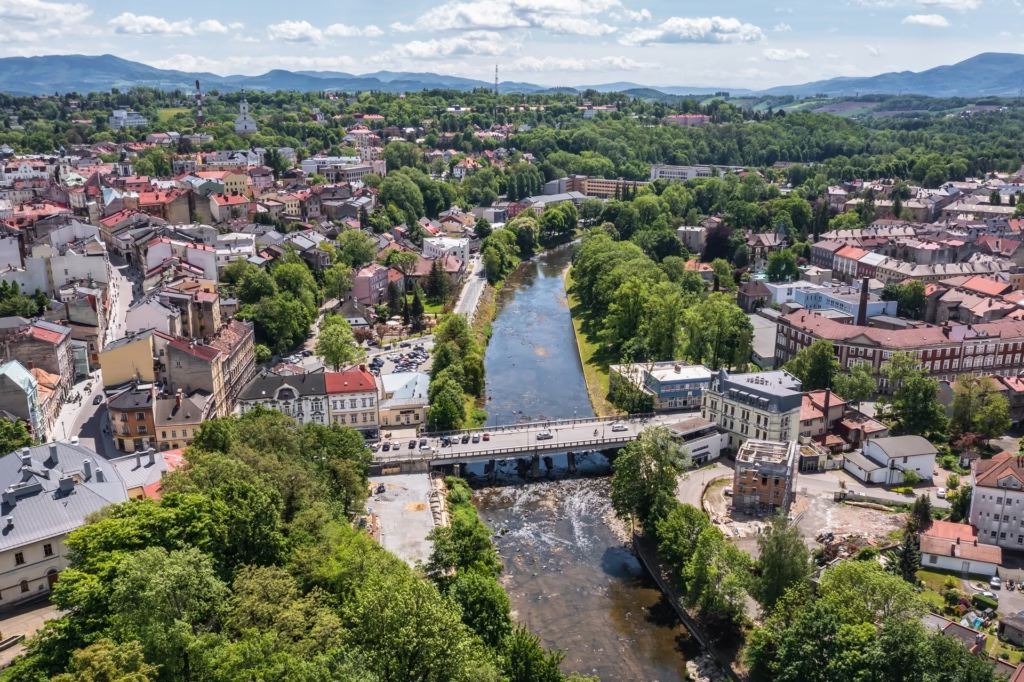
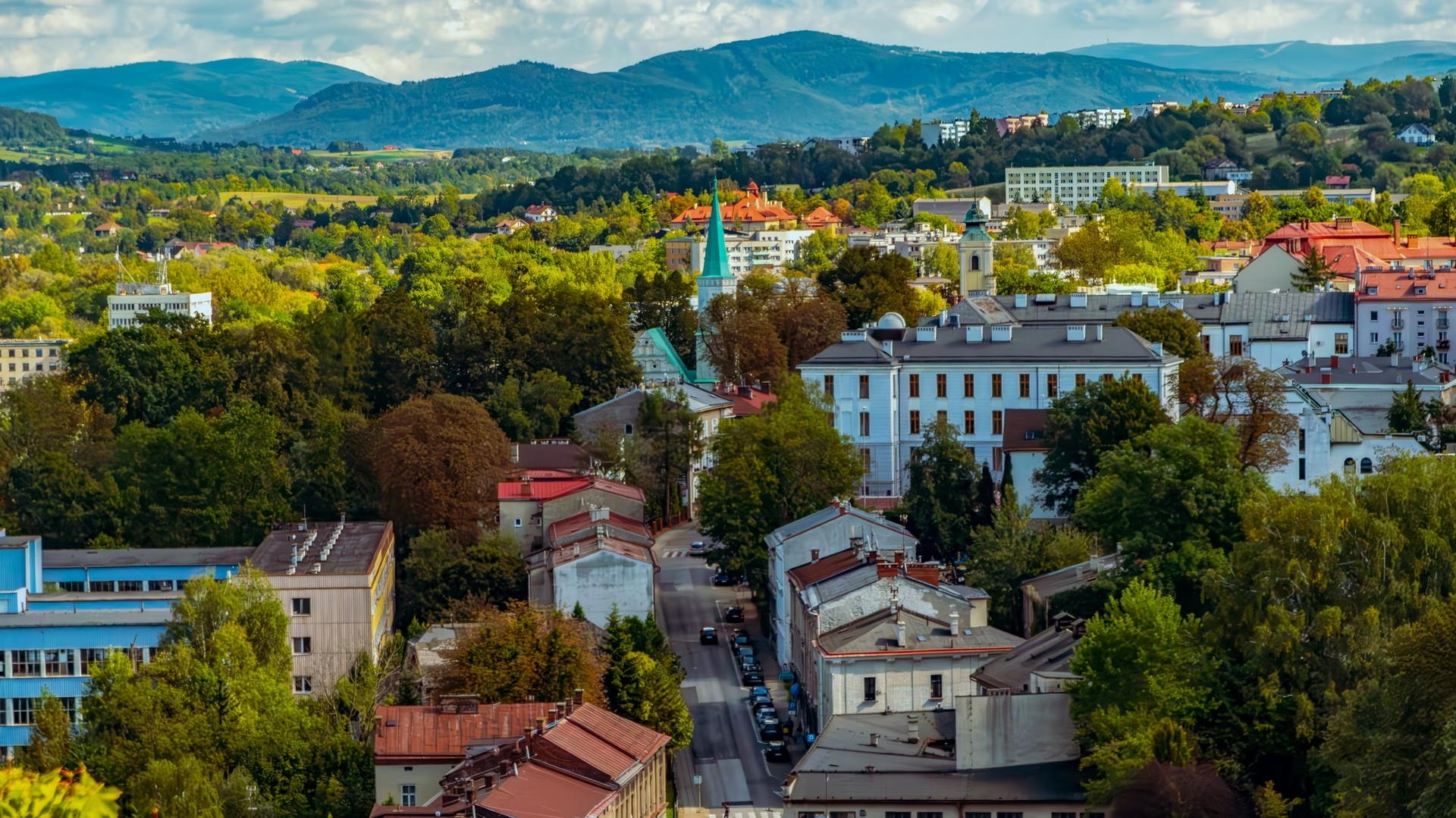
Cieszyn is a historic town in southern Poland with a twist: from its Rynek (main square) it is a 15-minute walk to the main square of Český Těšín, across the bridge in Czechia. On the way you cross a river and a national border and switch currencies – and the only thing that tells you so is a sign with the blue starred flag in the middle of the bridge. Until 1920 this was one town. Then a conference of the great powers after the First World War decided otherwise, and the Olza river (Olše in Czech) became the border.
Cieszyn kept everything historic – Castle Hill, the Romanesque rotunda from the 11th century, the arcaded square, the brewery. The Czech side got the railway station, coal and an empty field on which an entire new town had to be built within a few years. You can still see that difference on both banks today.
Why Visit Cieszyn and Český Těšín
A divided town is a rarity in Europe. Most border twin towns came about when two neighbouring villages grew together – here it is the other way round. One historic town was cut in half, and for eighty-seven years the two halves lived separately, with a barrier and customs officers between them. Since 2007 the border has once again been just a line on the map.
In a single afternoon you swap two countries, two currencies, two cuisines and two architectural eras. A Gothic tower and a Baroque church in the morning, interwar functionalism in the afternoon. Coffee in zlotys at breakfast, a beer in crowns in the evening.
- Perfect for one day – both centres can be explored on foot, and you can leave the car in one spot all day.
- Cheap – entry to the biggest attraction, Castle Hill, costs 14 zł. Most of the best things are outdoors and free.
- No planning needed – nothing has to be booked in advance except the brewery tour, and the border is crossed without checks.
- Good in winter too – two museums, a theatre, a cinema and a brewery keep things going even in November, when there is little to do elsewhere in the foothills.
What you will not find here: big-city buzz. Cieszyn has around 33,500 inhabitants, Český Těšín just under 23,000. On a Sunday evening both centres are quiet, and the restaurant scene is that of a small town, not of Kraków.
One Town, Two Countries: How the Border Ended Up in the Middle
The layout of Cieszyn and Těšín is a direct result of the decision made in the summer of 1920 – and later of both Czechia and Poland joining the EU and the Schengen Area.
But let’s go a little further back in history.
Three brothers who met at a spring
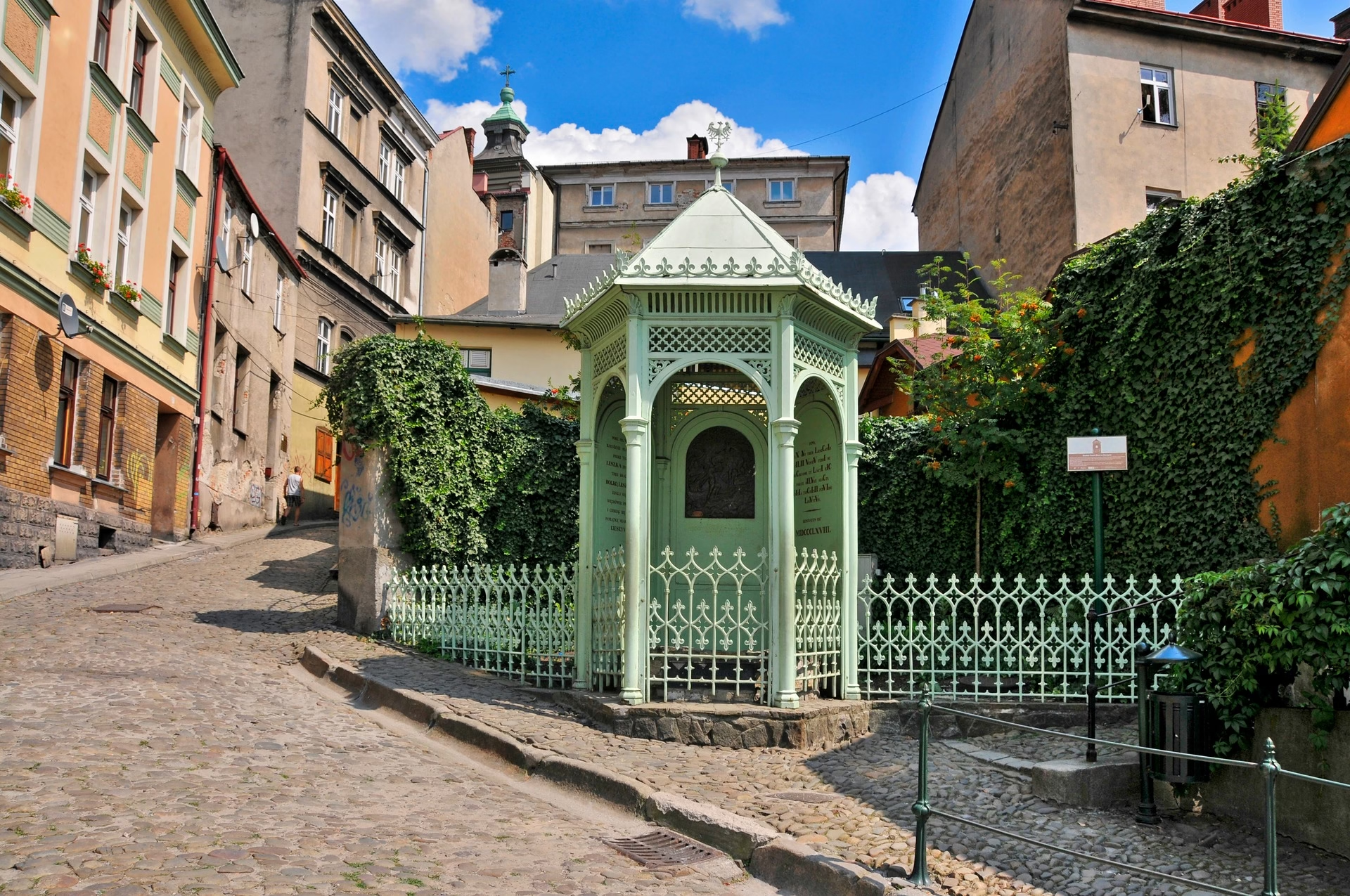
According to legend, in 810 three brothers – Bolko, Leszko and Cieszko – met at a local spring after a long separation. Out of joy at the reunion (“cieszyć się” means to rejoice in Polish) they supposedly founded a castle here and gave it its name. Historians are less romantic and derive the name from the Slavic personal name Ciecha. The legend probably only arose in the early 19th century, but the inscription on the Three Brothers Well still tells it in three languages.
Documented history begins on 23 April 1155, when Pope Adrian IV issued a protective bull for the Bishop of Wrocław and mentioned “Tessin” among the castle centres. The independent Duchy of Teschen was created in 1290 by splitting up the Opole-Racibórz inheritance, and its first duke was Mieszko.
In 1327 Duke Casimir I paid homage to John of Luxembourg, and the Teschen region became a fief of the Bohemian Crown – precisely the step that explains why, six hundred years later, a dispute broke out between the two countries.
The Seven-Day War and the Decision at Spa
In October 1918 both newly created republics claimed the Teschen region at once. A lot was at stake: the Ostrava-Karviná coal basin lay nearby, and the Košice-Bohumín Railway, brought to Těšín as early as 1869, ran through it. Poland had called parliamentary elections for January 1919 and wanted to hold them here too.
The Czechoslovak army under Lieutenant Colonel Josef Šnejdárek attacked on 23 January 1919. Within a week it had taken Bohumín, Karviná, Třinec and Těšín itself, which surrendered without a fight on 27 January. Fighting ended on 30 January under pressure from the Entente powers. It went down in history as the Seven-Day War, and it is the only armed conflict ever fought between Czechoslovakia and Poland.
The promised plebiscite never took place. The border was finally decided by the Conference of Ambassadors in Spa, Belgium, on 28 July 1920. Czechoslovakia received 1,270 km² with 295,191 inhabitants, Poland 1,012 km² with 139,630 inhabitants. The border became the Olza river – and because in Těšín it flows right below Castle Hill, it cut the town in two.
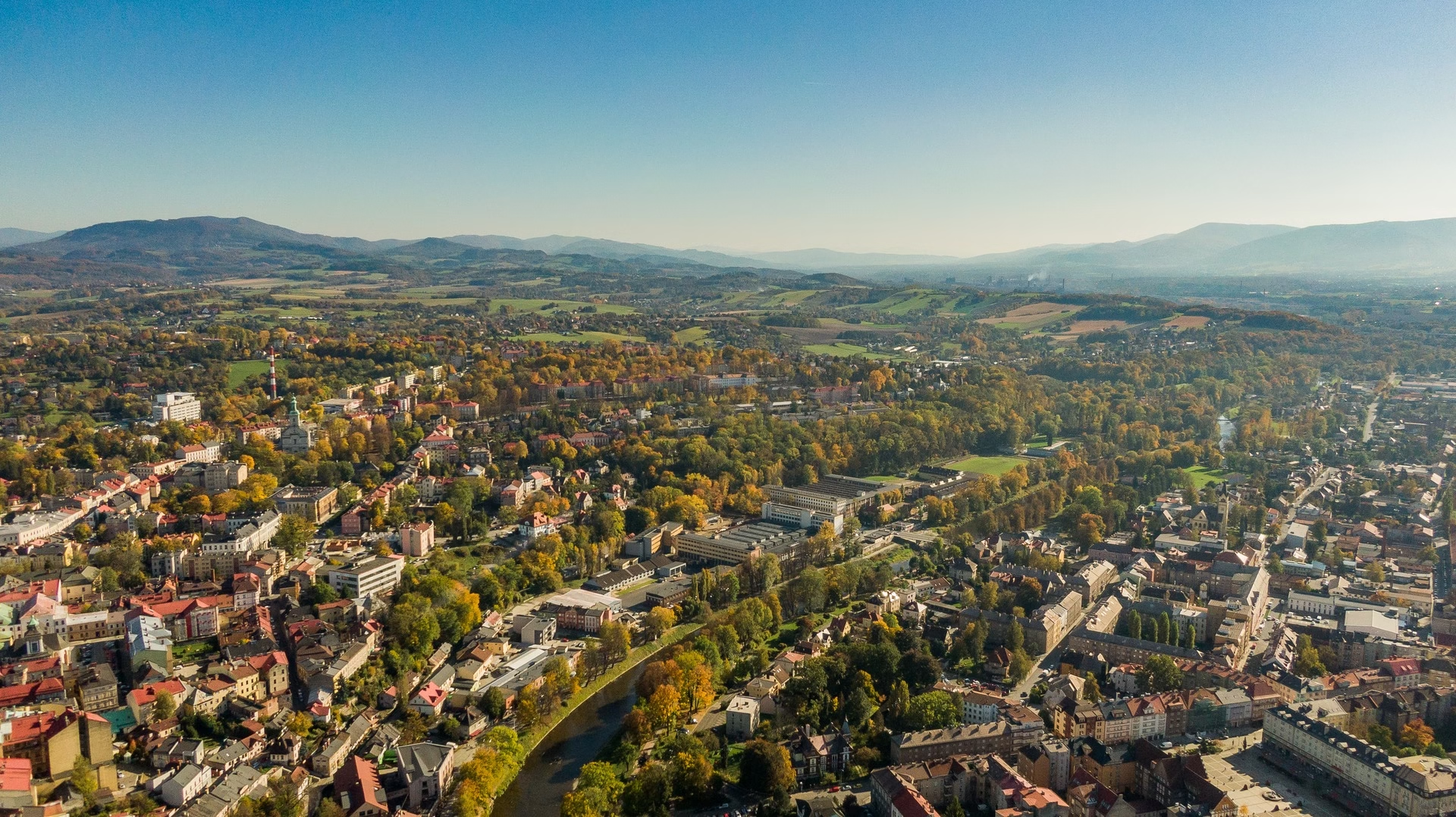
The split was lopsided, and you can still see it on both banks. Poland kept the historic core: the castle, the Rynek, the churches, the brewery. But it lost the railway station, which stayed on the left bank. Czechoslovakia got the station, the coal and the railway – but hardly any town.
On the left bank there was then a suburb with eight thousand inhabitants on barely three square kilometres. Within a few years the Czechs had to build the centre of “their” town from scratch.
Zaolzie, 1938 and Reconciliation in the 1950s
A sizeable Polish minority remained on the Czechoslovak side, and the territory beyond the river became known by the Polish name Zaolzie (Zaolzí in Czech). According to the 1930 census, 56% of residents declared themselves Czech and 35% Polish, although Polish sources historically gave different figures. It was precisely this dispute over who Zaolzie really belonged to that poisoned Czech-Polish relations throughout the interwar republic.
After Munich, Poland demanded its share. On 1 October 1938 it handed Czechoslovakia an ultimatum and in the following days occupied a strip from Bohumín to Hrčava – roughly eight hundred square kilometres. Polish became the only official language, and around thirty thousand Czechs left for the interior. It lasted barely a year: on 1 September 1939 Germany attacked Poland and the whole Teschen region fell to the German Reich. The territory returned to Czechoslovakia only in 1945.
The formal full stop came only with the treaty on the final demarcation of the state border in June 1958, in which Poland renounced its claims to Zaolzie. Today roughly nineteen thousand Poles live in the region, the Polish Congress in the Czech Republic and the Polish Cultural and Educational Union are based in Český Těšín, and street signs are bilingual.
Barrier, Schengen and Banners Across the River
Under communism the border in the middle of town was a real barrier. Only those with a permit or a residence permit stamped in their ID card were allowed into the border zone, and there were queues on the bridge.
The Český Těšín – Cieszyn border crossing operated until 21 December 2007, when both Poland and Czechia joined the Schengen Area and the barriers disappeared. After eighty-seven years it was possible to walk through the whole town again.
How much this matters to people became clear in spring 2020. On 20 March the border closed because of covid and stayed shut for three months. On the Polish side an eight-metre banner appeared reading “Tęsknię za Tobą, Czechu” – “I miss you, Czech”. The Czech side answered “I miss you too, Pole” (“Stýská se mi taky, Poláku”). On 15 June 2020, around two hundred people gathered on Friendship Bridge for a silent protest.
What to See in Cieszyn on the Polish Side
This is where most of what draws visitors to Cieszyn stands. The historic core is compact: from Castle Hill to the Rynek it is a few minutes downhill along Głęboka Street, and you pass most of the main stops on the way.
For the Polish side, count on a relaxed half day, or a full day if you add the museum and a brewery tour.
Castle Hill and the Rotunda from the 20-Zloty Note
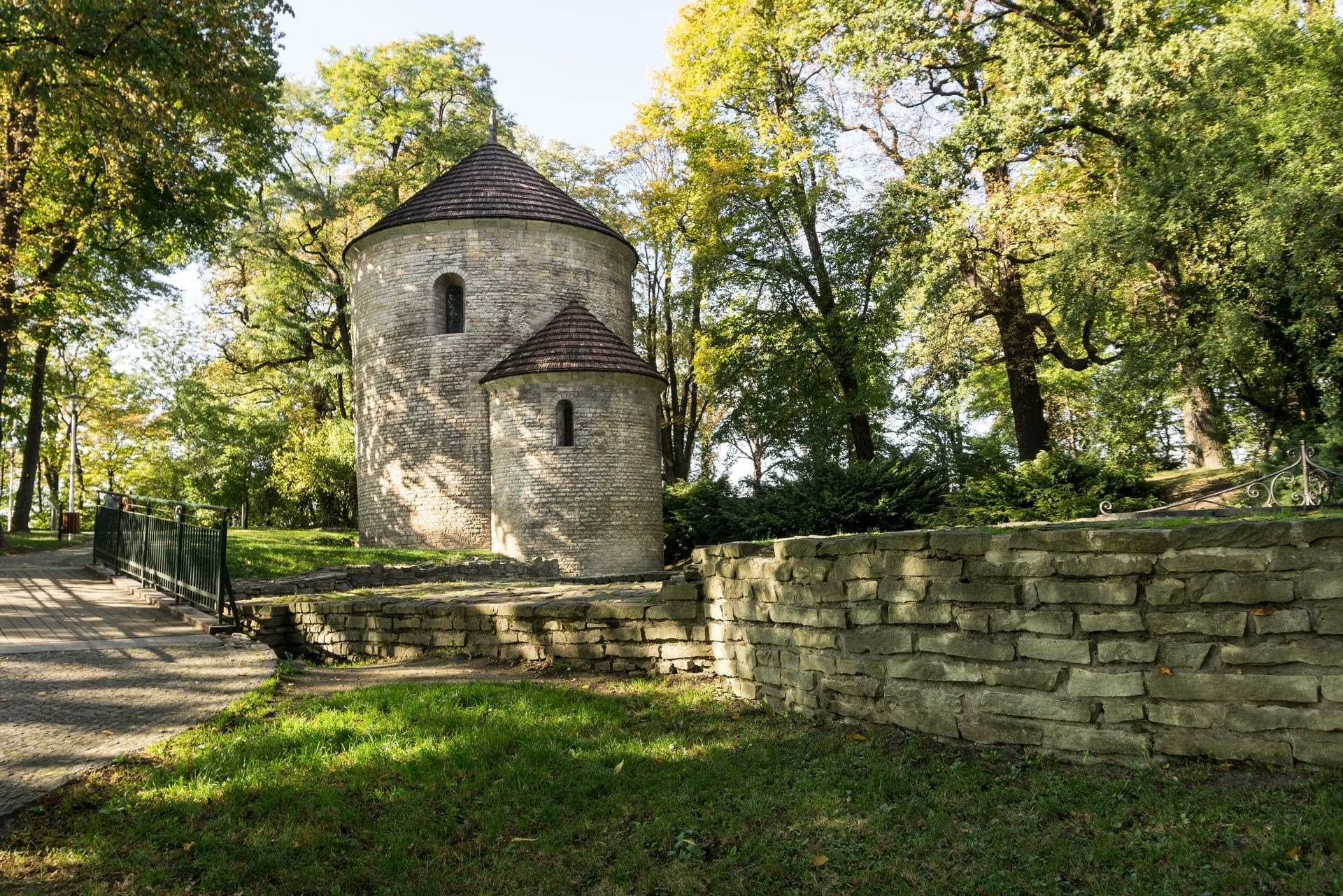
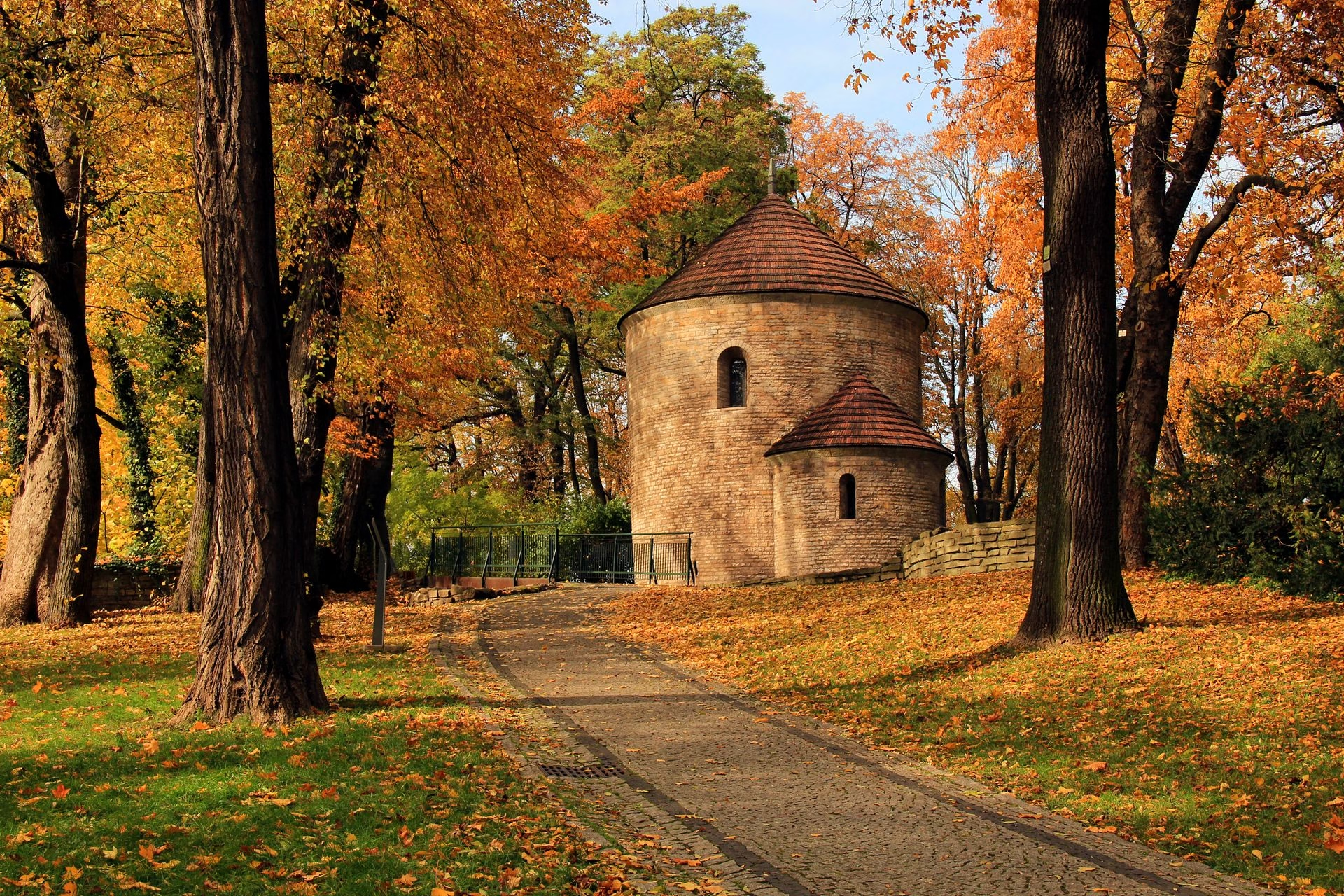
The Rotunda of St Nicholas and St Wenceslas is the oldest building in town and one of the oldest in Poland. It was built in the first half of the 11th century as a castle chapel, and it is the only Romanesque rotunda in Poland preserved with its nave vault. There is almost nothing inside – and that is exactly what makes the impression: bare stone and light from narrow windows.
Most Poles know it without realising. Its silhouette appears on the back of the 20-zloty banknote, the one with Bolesław the Brave. Bring one along and compare – it is the cheapest souvenir of the whole trip.
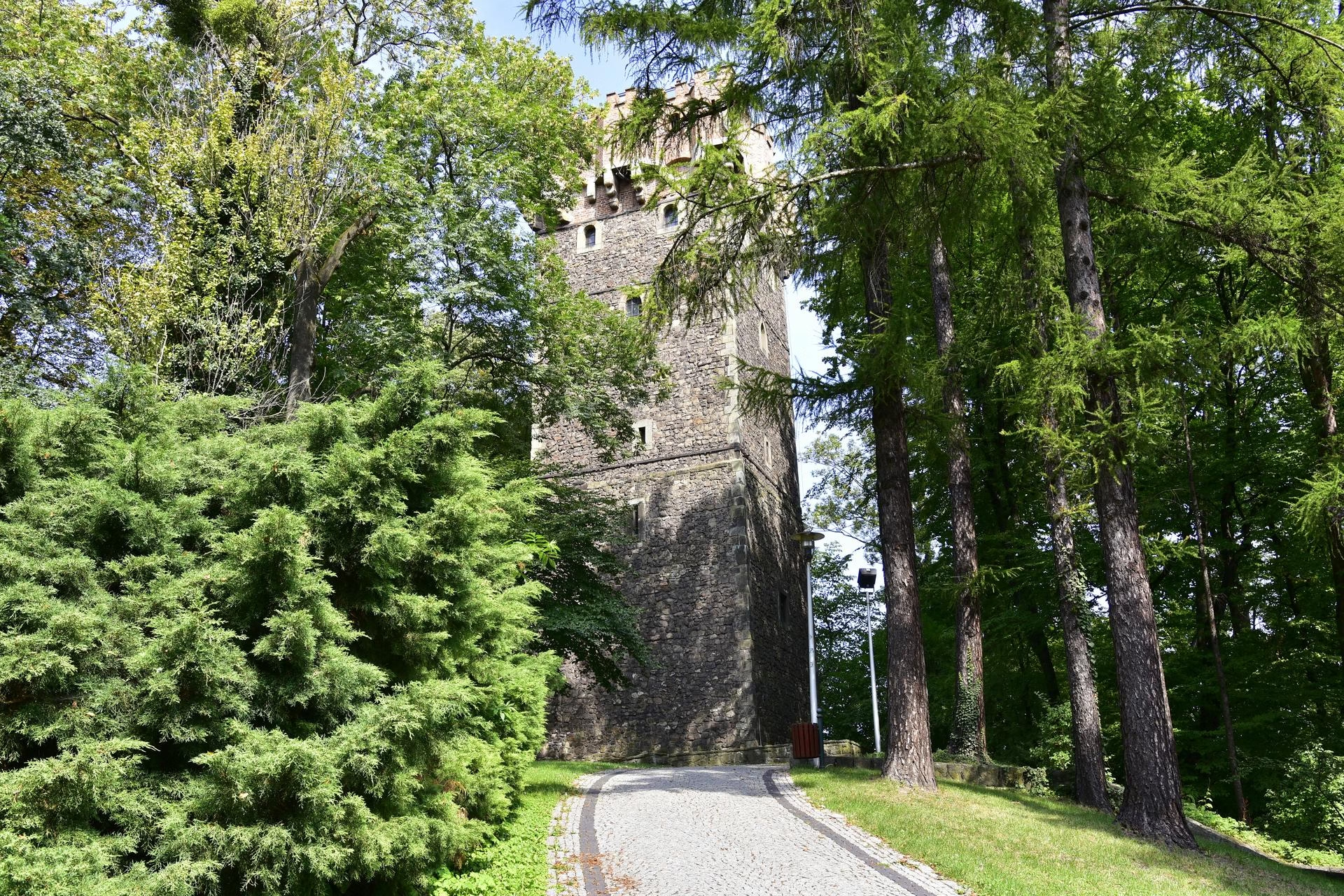
A little above the rotunda stands the almost 29-metre-high Piast Tower, the remains of a 14th-century castle. 120 steps lead to the top, and the reward is a view of both squares, the river between them and the Silesian Beskids on the horizon. From one spot you can see two countries.
- Admission (rotunda and tower together): 14 zł full price, 10 zł reduced, 40 zł family. The rotunda alone, without the tower, costs 10 zł.
- Open daily, hours depend on the month: June to August 10:00–19:00, May and September 10:00–18:00, March, April and October 10:00–17:00, the rest of the year 10:00–16:00.
- The ticket office is in the Piast Tower, not at the rotunda.
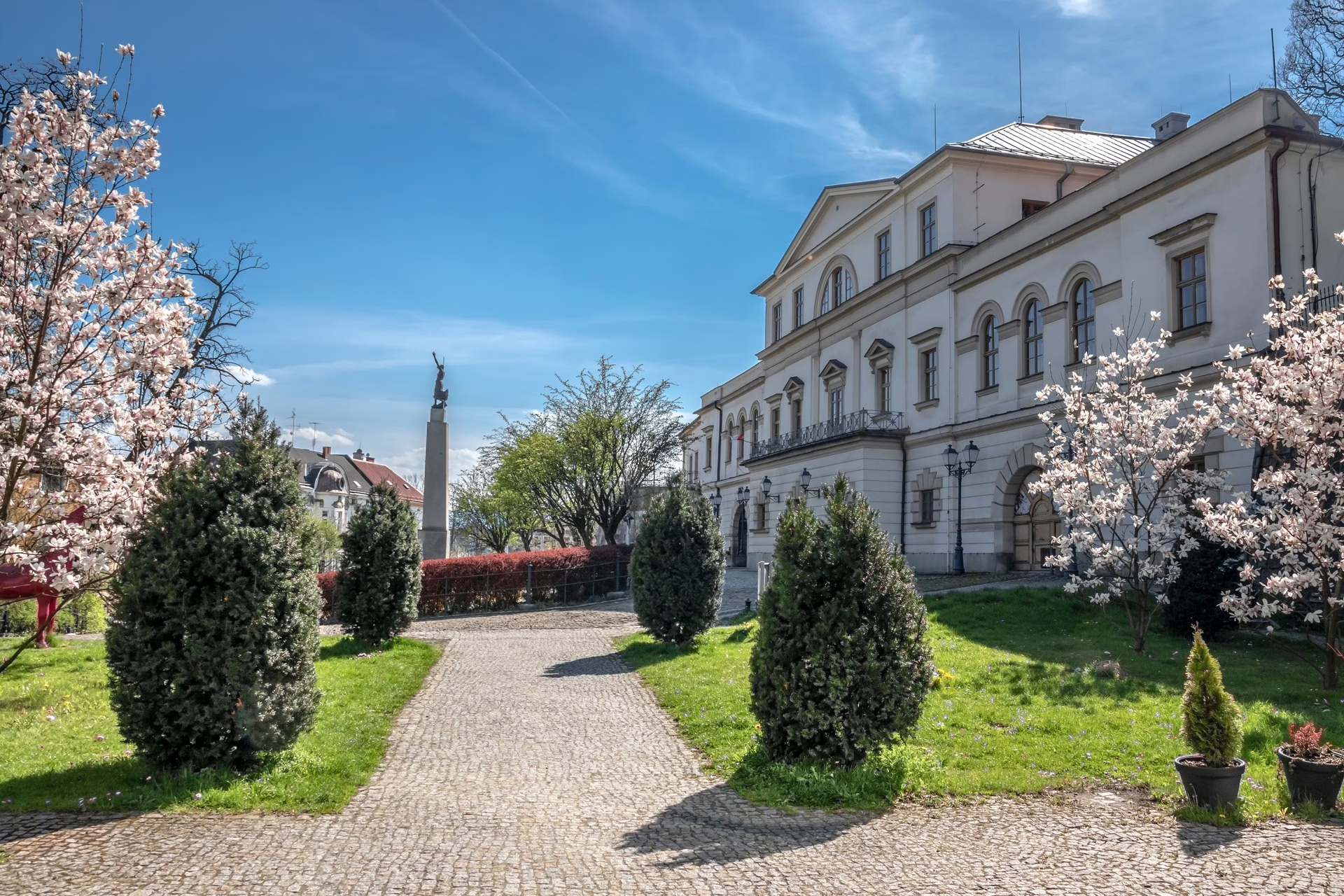
Zamek Cieszyn – a neoclassical Habsburg hunting lodge from 1838–1840 at the foot of the hill – hosts free exhibitions. Today it houses a design centre and a music school.
The park around the tower is freely accessible and is the nicest place in town to sit down.
The Rynek, Town Hall and the Three Brothers Well
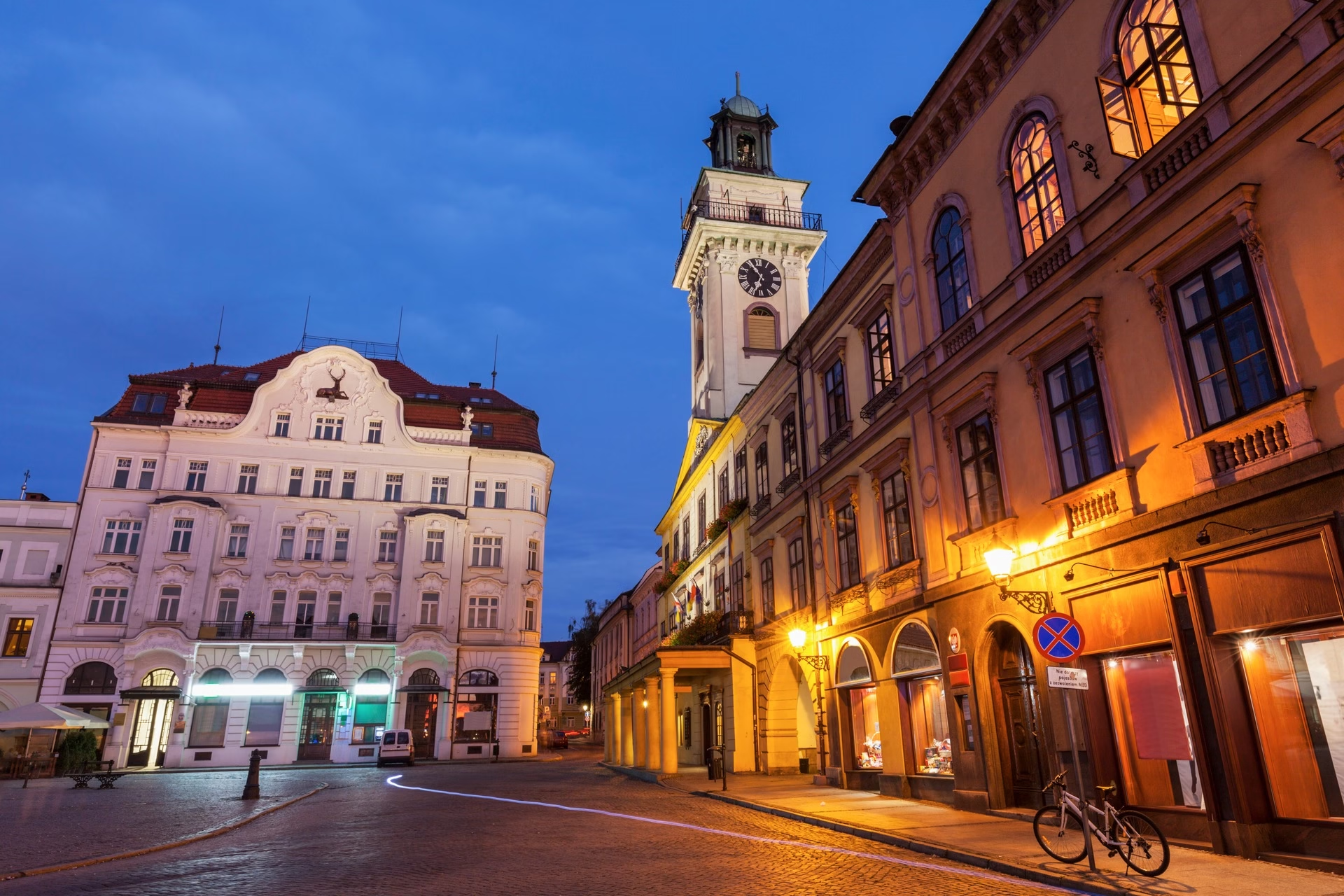
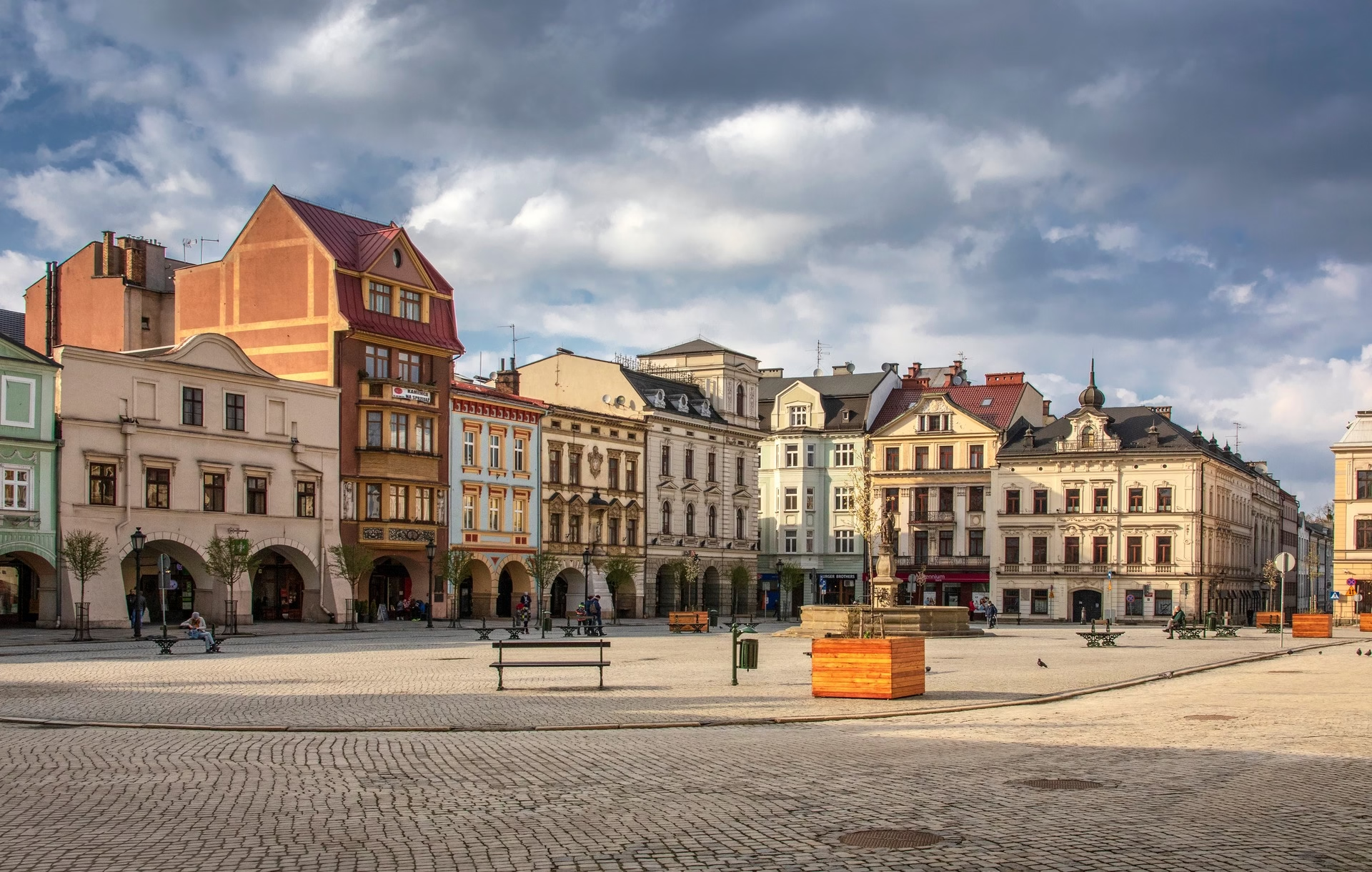
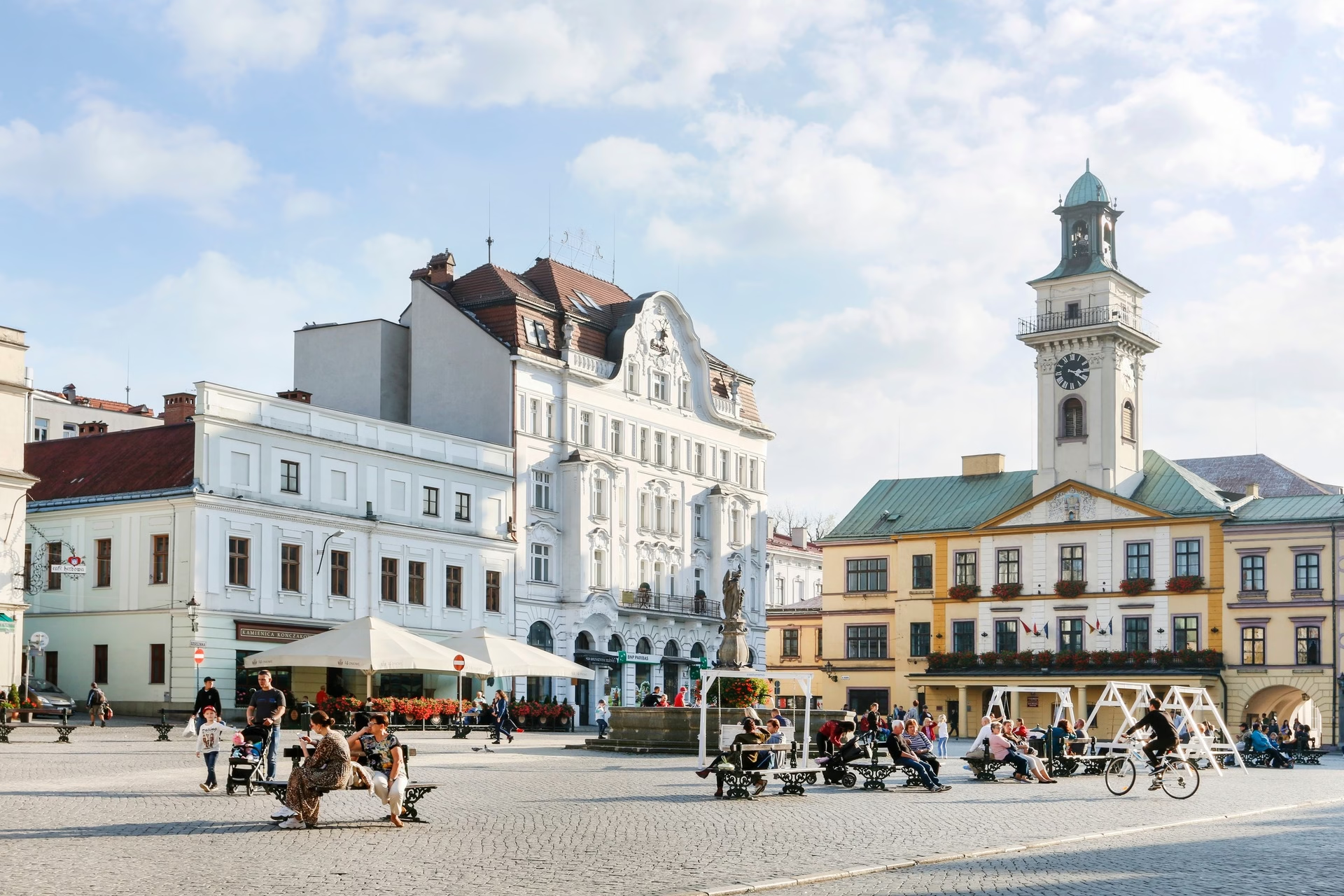
The Rynek is a rectangular square lined with Baroque and neoclassical townhouses with arcades. The dominant feature is the neoclassical town hall from 1818–1823, built after the great fire of 1798.
The clock tower you recognise the town by in photos is younger – it was added only in 1836.
Two streets further on, on Trzech Braci Street, stands the Three Brothers Well – a covered well with a cast-iron gazebo that was cast in the 19th century in the Třinec ironworks. According to legend, this is where the town’s history began. It is open to all, free of charge.
Głęboka Street: the Town’s Main Artery
Głęboka links Castle Hill with the square and is the liveliest street in town. It is cobbled and steep, lined with historic houses with arcades that are called “lauby” here.
Today it holds shops, bookshops, galleries and cafés; historically it was the most important trading street in the Teschen region, where Jewish merchants owned roughly a third of the buildings.
Jesus Church: Room for 3,500 People
Kościół Jezusowy (Church of Jesus) is a building whose size you would not expect in a town of 33,000 people. It holds around 3,500 seated and is the largest Protestant church in Central and Eastern Europe.
It was built in 1709–1722 to a design by the Opava architect Johann Georg Hausrücker; the 75-metre tower was added only in 1750.
Its existence is owed to outside intervention. After the Counter-Reformation, Silesian Protestants had their churches confiscated and were not allowed to build new ones – until in 1707 the Swedish king Charles XII forced Emperor Joseph I to return almost 120 churches to them and permit new construction. Cieszyn was one of the few places that made full use of it.
The tower is usually open in summer for a fee and gives views of both sides of the border. Check opening hours and prices on the spot, though – they change with the season and with services.
St Mary Magdalene Church
The oldest Catholic church in town was founded around 1263 as a Dominican monastery church; the founder was Duchess Euphemia. It went through a Gothic rebuild, belonged to Protestants between 1544 and 1611, and became the parish church in 1784.
The interior is Baroque: the altars and pulpit were carved by the Opava sculptor Jan Józef Schubert, and the high altar from 1795 is the work of Andreas Kaspar Schweigl of Brno.
Cieszyn Silesia Museum (Muzeum Śląska Cieszyńskiego)
The museum was founded in 1802 by the priest Leopold Jan Szersznik and is the second-oldest public museum in Poland and one of the oldest in Central Europe. The collection has over 70,000 objects, and the permanent exhibition “At the Crossroads of History and Cultures” tells exactly what is so interesting about the Teschen region – how Polish, Czech, German and Jewish fates met here.
- Admission: permanent exhibition 30 zł full price, 20 zł reduced, 60 zł family. Temporary exhibitions are paid separately.
- The permanent exhibition can only be seen with a guide and entries are at fixed times – mostly on the hour from 10:00 to 14:00, on Wednesday also in the afternoon, on Sunday only at 10:00, 12:00 and 14:00. Arrive with time to spare.
- Closed on Mondays.
- A guide in a foreign language costs an extra 80 zł.
Cieszyn Venice (Cieszyńska Wenecja)
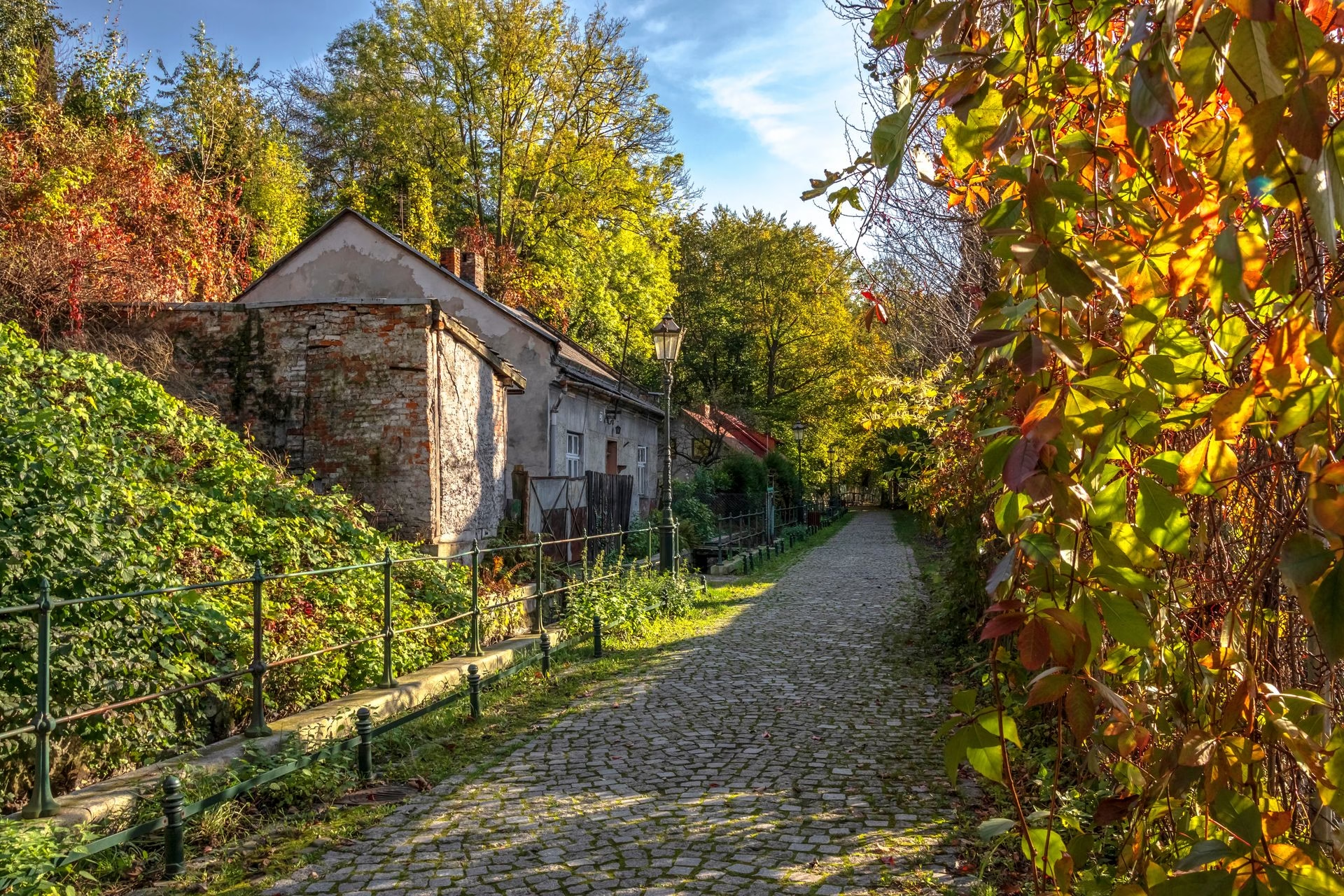
Along Przykopa Street runs the artificial Młynówka canal, dug as early as the 16th century to power mills and feed the castle moat. The 18th- and 19th-century cottages above it have their own little bridges – hence the nickname Cieszyn Venice.
Craftsmen who needed constant access to water lived here: tanners, weavers, fullers. It is a small quarter, you can walk through it in ten minutes, and it is open to all, free of charge.
Archducal Castle Brewery: 180 Years of Continuous Brewing
The brewery below Castle Hill was built in 1846 by Archduke Karl Ludwig of Habsburg and beer has been brewed there without interruption ever since – so in 2026 it celebrates 180 years. The operation is sunk into the hillside: the four-wing building stands on the foundations of the northern castle fortifications, and beneath it are lager cellars hewn out of the rock.
The tour takes 75 to 90 minutes and runs in cascade fashion from top to bottom – from the malthouse through the brewhouse with its hundred-year-old kettle to the rock cellars and the ice tunnel. It is a physically demanding route with lots of steps.
- Times: Saturdays, Sundays and public holidays at 12:00 and 14:00, mainly in the season from April to the end of August. Groups outside these times by arrangement.
- Price: 50 zł with a tasting of one beer (0.3 l), 70 zł with a tasting of five samples.
- Booking by email or phone. Individuals can also buy a ticket on the spot, groups must book in advance.
- Beware of outdated information: Brackie beer is no longer brewed here. After the brewery was sold in 2020, the brand stayed with Grupa Żywiec, and the local brewery brews under its own name, Cieszyn.
Where Else to Go if You Have Time
- Teatr im. Adama Mickiewicza from 1910, the work of the Viennese duo Fellner and Helmer, who built theatres all over the monarchy. It has a rare permanent revolving stage.
- Muzeum Drukarstwa – a small printing museum founded in 1996, guided tours only, on weekdays and in summer also at weekends. It often includes typography workshops where you can print something yourself.
What to See in Český Těšín on the Czech Side
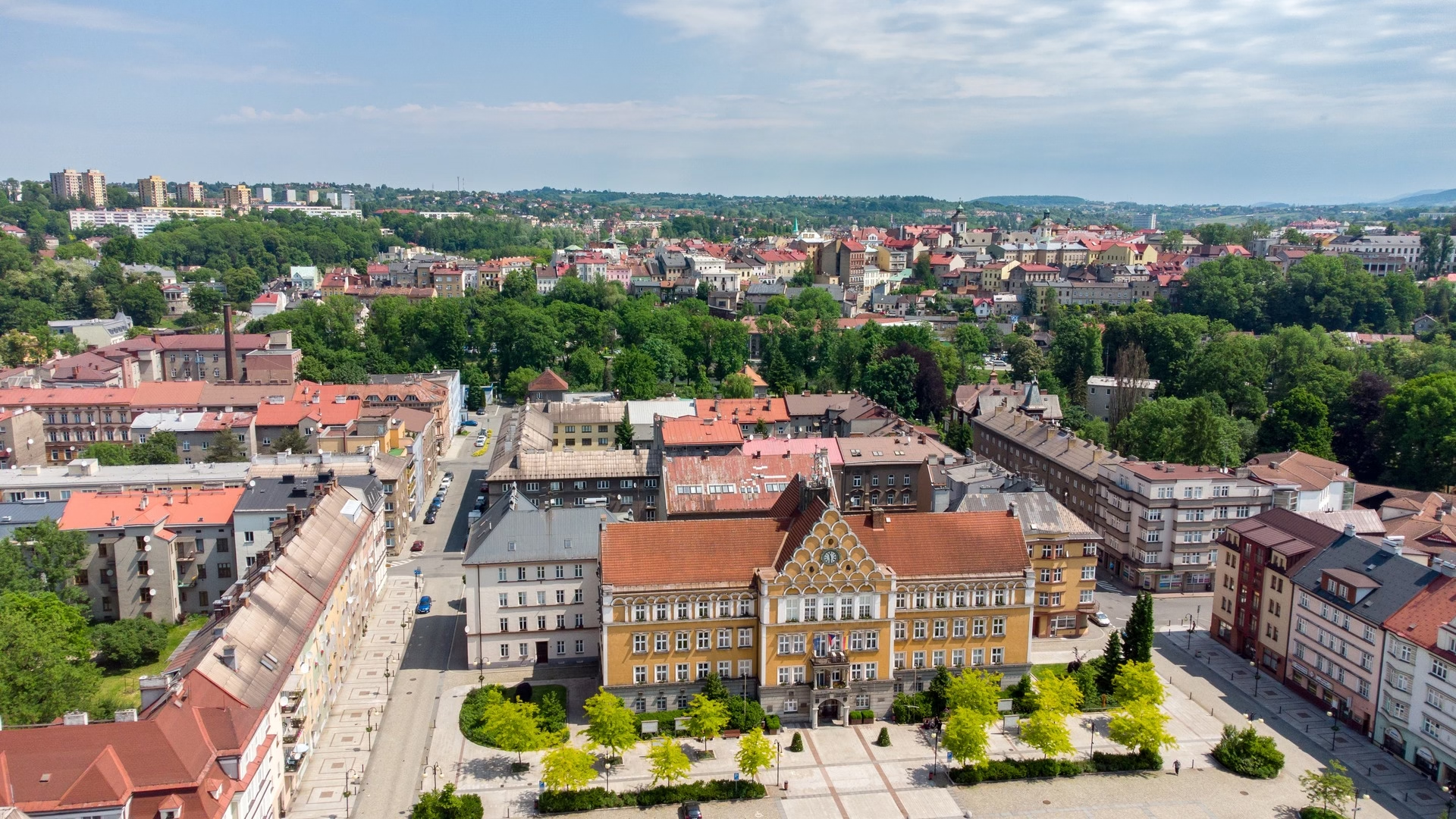
The Czech side has no castle and no arcaded Rynek. But it has something you will not find elsewhere: a complete interwar town built on a greenfield site. When the suburb was left without a centre in 1920, it had to build a square, a town hall, offices, banks and a café within fifteen years. The result is functionalism and neo-Renaissance side by side in an area you can walk through in two hours.
ČSA Square and the Town Hall
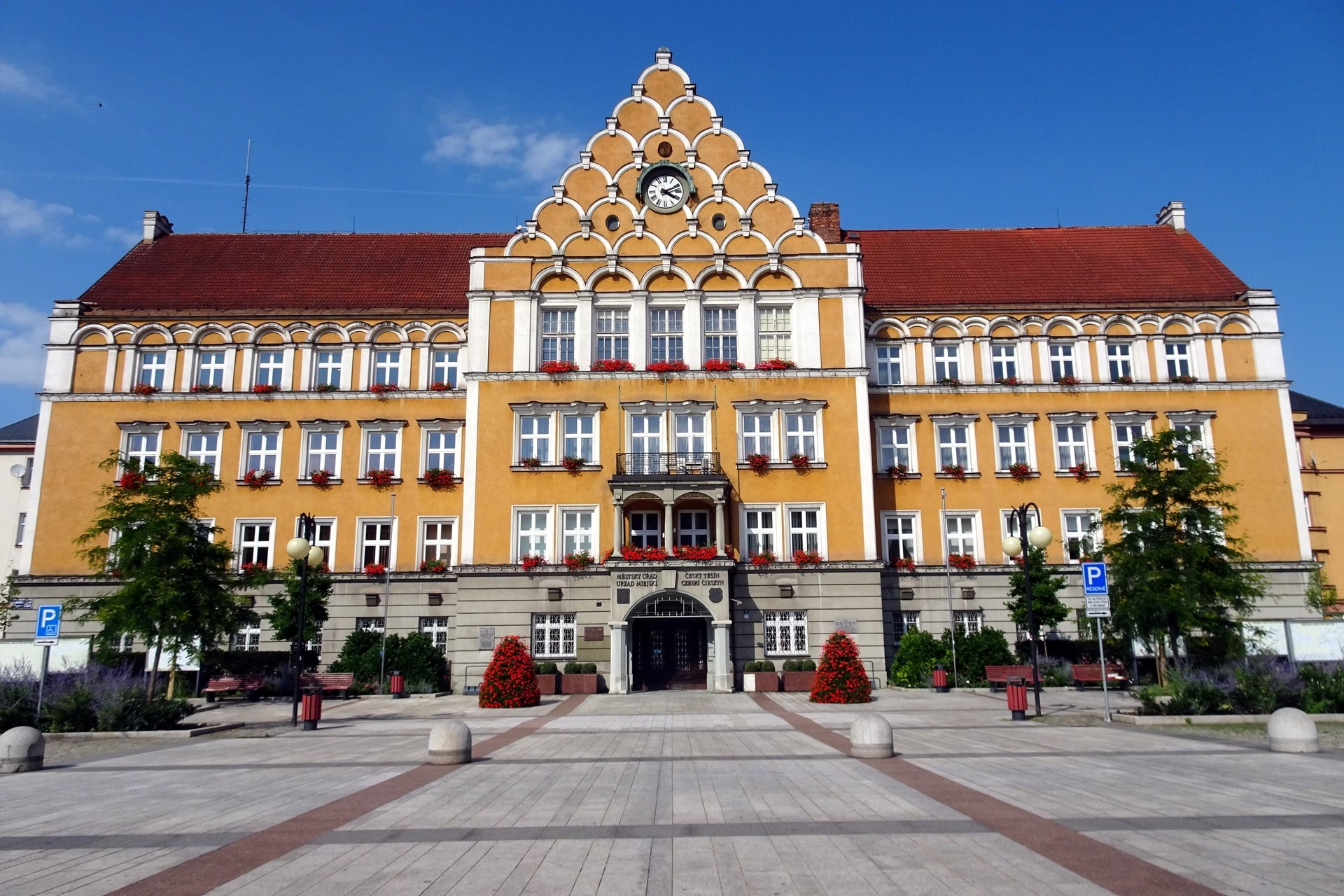
ČSA Square began to take shape in 1923 as a replacement for the Rynek that had stayed across the river. It is dominated by the neo-Renaissance town hall: the town announced an architectural competition in 1924, the design by Vilém Richter of Moravská Ostrava won, and construction took place in the single year of 1928. The building is 54 metres long and its arched gable with a clock became the model for the town logo.
Avion Café and Reading Room: The House That Blew Up
On the corner of Hlavní třída and Masaryk Gardens, right by the bridge, stands a white functionalist café with a rounded façade. The original Avion was commissioned in 1932 by the Jewish hotelier Rosalie Wiesner to a design by the architect Michal Maxmilián Scheer. It opened a year later and became the best address in town – its own orchestra, a dance floor, and, thanks to its position right on the border, a favourite haunt of smugglers.
The end came on 1 September 1939. The retreating Polish army blew up the bridge over the Olza, and the explosion took the café with it. For seventy years the site stood empty. A new building in the same spirit went up in 2010 and is called the Avion Reading Room and Café. Because someone else held the trademark for the name Kavárna Avion, it received a second name at its opening: Noiva – Avion read from right to left, the way Yiddish is read. Both are still used today.
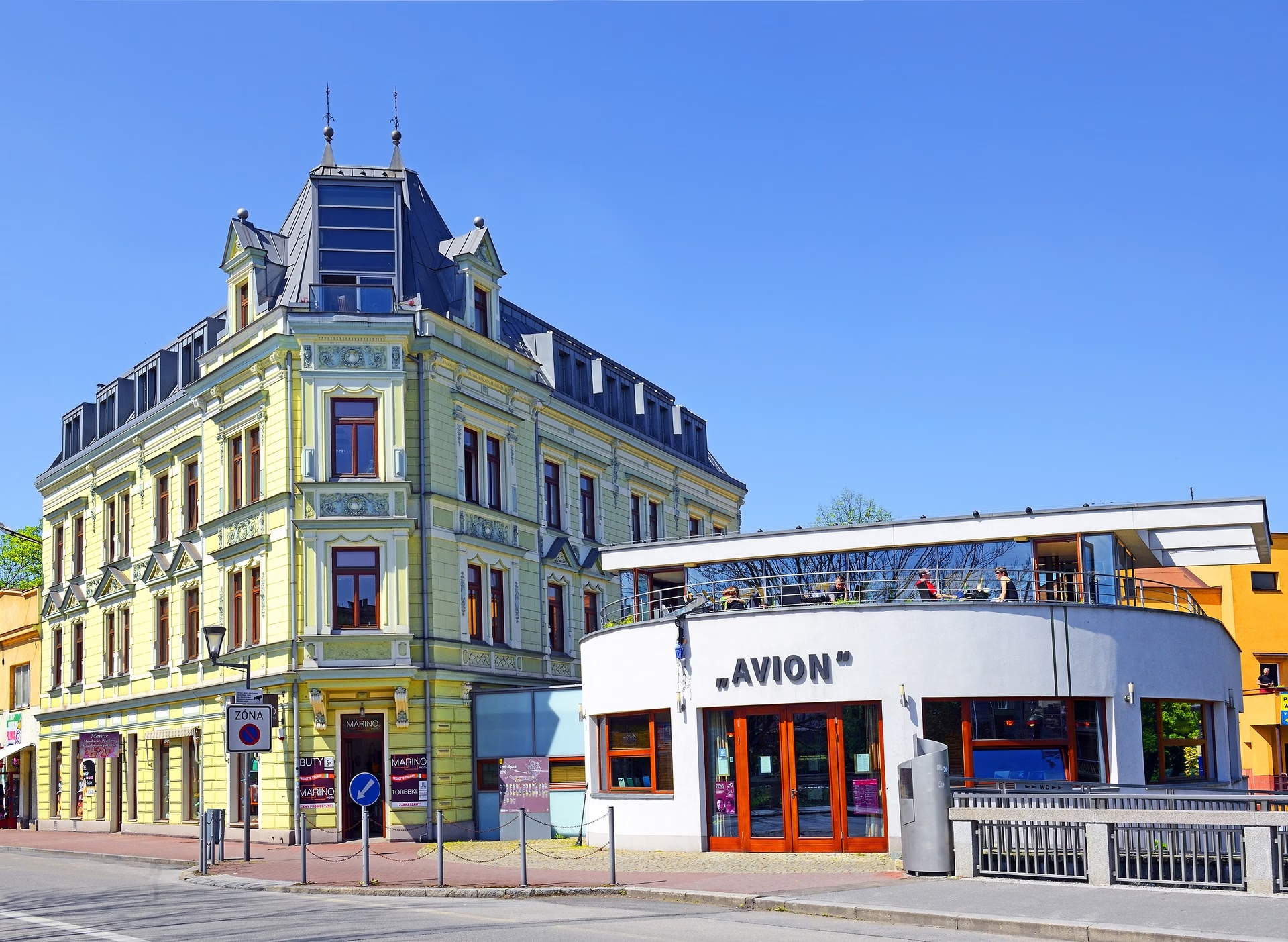
Today it is run by the Český Těšín City Library as a reading room, café and exhibition space, and students work as the staff. It is open on weekdays 9:00–18:00 and on Saturdays 9:00–14:00. It is closed during cultural events, so check the programme before you go.
Těšín Region Museum (Muzeum Těšínska)
The main exhibition of the regional museum is housed in a historic building on Hlavní třída and is the best way to understand this whole tangled story in one go. The exhibition spans five floors, has over 1,200 exhibits and runs from prehistory to the recent past. Allow two hours.
- Admission: adults 120 Kč (about €5), children 6–15, students up to 26 and seniors 60 Kč (about €2.50), family 240 Kč (about €10). The changing exhibition alone costs 40 Kč (about €1.60).
- Open: September to June Tue–Fri 8:00–16:00 and Sat–Sun 9:00–17:00, in July and August Tue–Sun 9:00–17:00. Closed on Mondays.
- The building is step-free and a wheelchair can be borrowed there.
Church of the Most Sacred Heart of Jesus
The red neo-Gothic three-nave church in Masaryk Gardens is older than the border – it was built in 1892–1894 to a design by Ludwig Satzke. The Jesuits, who had been active in Těšín since 1670, built it because the town had not returned their original seat in the centre. The irony is that this is exactly how they ended up on the side of the river that became Czech less than thirty years later.
The church was originally meant to have two symmetrical towers. But the money ran out during construction and the eastern tower was never completed.
The Railway Station: the Prettiest Building in Town
The neo-Renaissance station building from 1889 by the architect Anton Dachler is among the prettiest railway stations in Czechia and has been a cultural monument since 2006.
Emperor Franz Joseph I (in 1890 and 1906) and Tsar Ferdinand I of Bulgaria both stepped off trains here.
Těšín Theatre
The building from 1961 on Ostravská Street houses an institution with no equivalent in Czechia. Alongside the Czech stage, Scena Polska has performed here since 1951 – the only professional Polish theatre company outside Poland. Under the same roof is also the Bajka puppet stage.
You can buy a ticket here for a performance in a language you only half understand, and it is the most authentic experience of how a bilingual town works. The theatre plays year-round.
Adam Sikora Park and the Sportmost Footbridge
Adam Sikora, a board member of the Těšín savings bank, bought a plot on the left bank in May 1909 with his lifetime savings of 15,000 Austrian crowns and donated it for a park and sports ground. It is still in use today, and people from both sides come here.
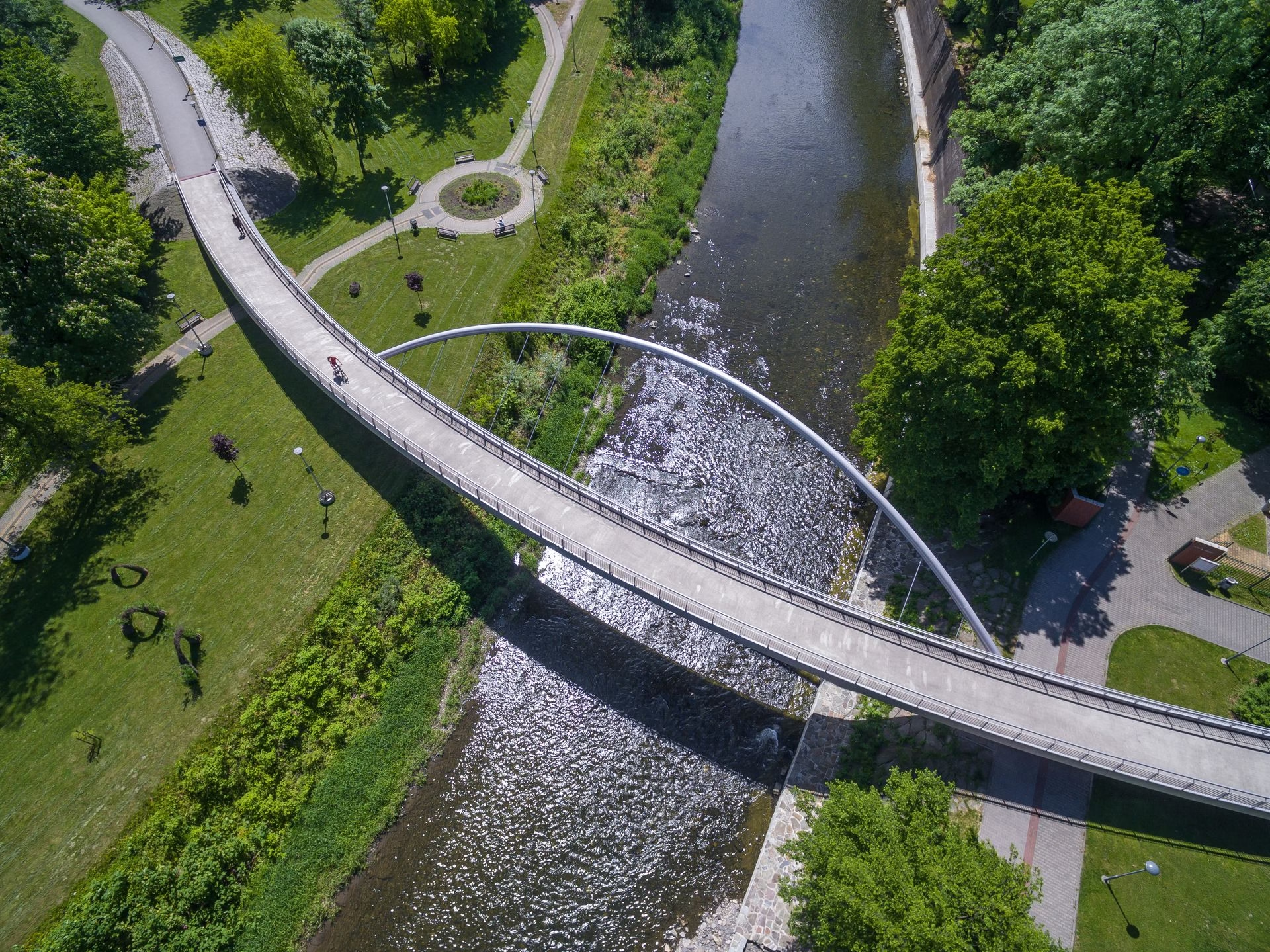
From here Sportmost leads across the Olza – a steel arched footbridge for pedestrians and cyclists from 2012, over ninety metres long. It is not the shortest route between the centres, but it is the nicest border crossing in town and connects to cycle paths in the parks on both banks.
Traces of the Jewish Community
In 1932–1933 the Jewish community converted a house into a synagogue. It functioned barely six years – in autumn 1939 the Nazis burned it down, and the town cleared the ruins around 1960.
What remains is the Jewish cemetery, founded in 1926 as a separate part of the town cemetery (until then burials took place across the river, which stopped being practical after the split). The complex of cemetery buildings was designed in 1928 by the local architect Eugen Fulda.
Browse accommodation in Český Těšín
Bridges over the Olza: How to Cross from One Country to the Other
The river is the only obstacle between the centres, and you can cross it in four ways. There is no check anywhere – Czechia and Poland have both been in Schengen since December 2007, and the temporary checks Poland introduced on its borders with Germany and Lithuania do not affect the Czech border. Still, carry your ID card or passport with you; it is an international border all the same.
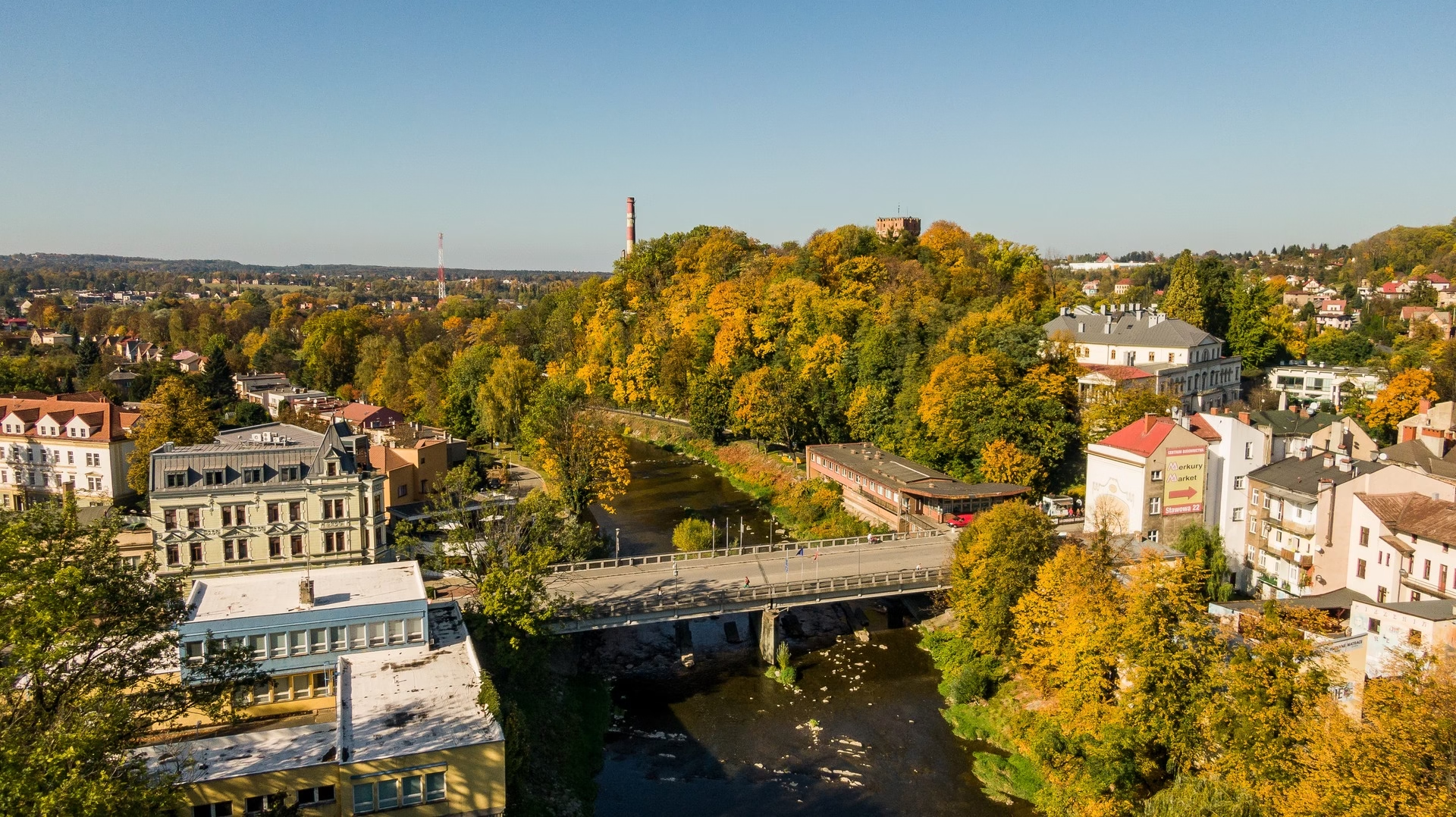
- Friendship Bridge (Most Przyjaźni) – the main link between the two centres. The present concrete structure dates from 1950–1953, but a bridge stood here as early as the turn of the 14th and 15th centuries. Cars and pedestrians. This is the shortest route ČSA Square – Rynek.
- Freedom Bridge (Most Wolności) from 1974, by the Střelnice building. The nearest bridge to Český Těšín station, so this is the one you take if you arrive by train.
- Sportmost – an arched footbridge for pedestrians and cyclists only, from 2012, further from the centre by Adam Sikora Park. The most pleasant, but a detour.
- By train – cross-border trains of České dráhy run between Český Těšín and Cieszyn stations. It is more of a curiosity than a practical option – you get across the bridge faster on foot – but as an international journey on a single ticket it has its charm.
From ČSA Square to the Cieszyn Rynek it is roughly a kilometre, or a quarter of an hour’s walk, over Friendship Bridge; the last stretch up Głęboka Street is uphill.
From Český Těšín station count on more like twenty minutes. So leave the car on one side and explore the other on foot – there is no point parking twice.
How to Plan Your Day in Cieszyn and Český Těšín
Both centres are small, so distances are not the issue. Opening hours are: the museum on the Polish side admits visitors only at fixed times, both museums are closed on Mondays, and the brewery can only be toured at the weekend. Plan your trip accordingly.
Half a Day: the Best of Both Sides
- Park in Cieszyn by Katowicka or Sportowa Street – free and close to the centre.
- Castle Hill: the rotunda, the Piast Tower, the view. An hour to an hour and a half.
- Down Głęboka Street to the Rynek, passing the Three Brothers Well on the way.
- Over Friendship Bridge into Český Těšín, past the Avion café to ČSA Square. Have a coffee on the way.
- Back over the bridge to the car. Roughly four hours in total including stops.
A Full Day: Add the Museum and the Brewery
Take the route above and add the Cieszyn Silesia Museum (because of the fixed tour times, fit it in straight after Castle Hill) and, on the Czech side, the Těšín Region Museum. If it is a Saturday or Sunday, a brewery tour at 12:00 or 14:00 fits in place of one of the museums – but then leave Castle Hill for the morning, or you will not make it.
Head back via Cieszyn Venice and finish the evening on one side or the other, depending on whether you want to pay in crowns or in zlotys. If you came by car, decide this in advance.
Where to Eat and Drink Coffee
Do not expect haute cuisine, although coffee lovers will find plenty to like, mainly on the Czech side. Prices are similar on both sides of the river.
Where to Eat and Drink Coffee in Cieszyn
- Kornel i Przyjaciele – A café combined with a bookshop and antiquarian bookshop, dedicated to the writer Kornel Filipowicz. Author readings and poetry evenings are held here.
- Tramwaj Cafe – A café on Głęboka Street named after the tram that once linked the two parts of the town.
- Klubokawiarnia Presso – A club café on Zamkowa Street below Castle Hill, close to the bridge.
- Winowajcy – A wine bar in Srebrna alley, a few steps from the Rynek.
- Kamienica Konczakowskich – Polish classics in a lovely interior of a historic townhouse right on the Rynek.
Where to Eat and Drink Coffee in Český Těšín
- River Café & Bar – Great coffee and brunch on the Olza embankment.
- Avion Reading Room and Café – Coffee in the rebuilt functionalist café right by the bridge to Poland.
- Torg – A café on Smetanova Street close to ČSA Square.
- HokusPokus Pekárna – A bakery on Hlavní třída – a stop for breakfast or pastries for the road.
- Radegastovna Těšínská – A Czech pub with tank Radegast beer on Hlavní třída.
Shopping, Markets and Poland’s Sunday Trading Ban
If you want to shop in Cieszyn, keep an eye mainly on the day of the week.
WARNING: Poland has a ban on Sunday retail trading that applies to all large shops, including Kaufland, Lidl and Biedronka.
There are only seven or eight exempt trading Sundays a year: the last Sunday in January, April, June and August, the Sunday before Easter and two or three Sundays before Christmas.
- Still open: petrol stations, pharmacies, bakeries selling their own bread and pastries, florists, owner-run corner shops and the Żabka chain.
- Restaurants, cafés and bars are not restricted at all – hospitality is a service, not the sale of goods.
- The exact list of trading Sundays changes every year, so check it before you travel. Plan a big shop for Saturday instead.
Markets
The targ (market) in Cieszyn is held on Wednesdays and Saturdays, trading from 5:00 until roughly 12:30 and split between two locations. On Katowicka Street there is a market with clothing, shoes, tools and household goods, while groceries, vegetables and regional produce are by Stawowa Street, where the Miejskie Hale Targowe market hall with three dozen stalls also stands.
Where to Stay in Cieszyn and Český Těšín
Staying overnight makes sense if you are coming from afar and want to continue – into the Beskids, to Kraków or across the border into Czechia. The choice is of course much smaller than in big cities. There are practically no classic hotels. Cieszyn has two in the whole town. What it does have is a strong selection of private apartments in historic houses, often right on the square.
Which side of the river to choose is up to you – on the Polish side you are in the historic centre and in the morning you walk straight out beneath Castle Hill, on the Czech side you are by the station and pay in crowns. Wherever you stay, you are within twenty minutes’ walk of everything.
In Cieszyn on the Rynek and in the Old Town
The best choice if you are coming for the sights. In the morning you step out of the house and are under the Piast Tower within five minutes; in the evening you have cafés under your window.
- Deer Apart – An apartment on the third floor of a historic townhouse right on the Rynek. The windows give a panoramic view of the square and the old town – an address from which you can only walk out into the centre.
- Apartament ST1 – Two bedrooms, air conditioning and a fully equipped kitchen in the heart of the Old Town, 400 metres from the border. Free parking and bike rental are included.
- Apartament Sejmowa – A spacious renovated flat eight minutes’ walk from the Piast Tower, with a living room and a kitchen with a dishwasher. One of the best-rated places to stay in town.
- Apartamenty na Starówce – A 50-square-metre apartment on Mennicza Street, five minutes from the castle. Buffet breakfast is included and dogs are welcome.
- 4ry pokoje – A large 122 m² apartment with two bedrooms and a private sauna close to the square. More expensive, but good value for a family or two couples.
- Apartamenty Rynek 7 – An attic unit with a balcony directly above the square and air conditioning. Only a few flats in Cieszyn have a direct view of the Rynek.
In Cieszyn by the River and the Border
An option for those who want to be in both countries within a quarter of an hour and do not mind a few hundred extra metres to the centre.
- Apartament na Granicy – A 62-square-metre flat right by the bridge over the Olza – from the windows you see the border bridge, Castle Hill and the Pink Deer statue all at once. An address that captures the whole point of a trip to the twin town. Parking on site.
- Apartamenty Magiczna Wenecja – A historic house on Przykopa Street in Cieszyn Venice, with a terrace over the water and a garden. A good choice for families with children.
- Pokoje Venezia – A guesthouse with seven rooms and its own restaurant near the river, half a kilometre from the centre. It has the most reviews of any accommodation in town, so the rating is genuinely reliable.
- Gościniec nad Olzą – A guesthouse with a garden and terrace on Jana Łyska avenue, the cheapest of the selection. Free parking and a shared living area.
In Cieszyn Outside the Centre, if You Are Driving
- Restauracja-Zajazd Trzech Braci – A roadside inn with its own restaurant and parking right by the building, about a kilometre and a half from the centre. Air-conditioned rooms with new bathrooms and coffee included.
In Český Těšín
- Sauna Cafee & Beds – An apartment in Masaryk Gardens right by Friendship Bridge, with a café and breakfast downstairs and a children’s corner. Reviewers describe it as “two minutes from Poland”, and that is accurate.
- Wellness Apartmán Relax – A 60-square-metre flat 250 metres from the station with a private sauna and hot tub. Adults only and pricier – but it is the only wellness accommodation in town.
If nothing from the selection suits you, or you are travelling during a festival when places fill up, browse the full offer on the Polish side – there is incomparably more of it.
Browse all accommodation in Cieszyn
Getting to Cieszyn and Český Těšín
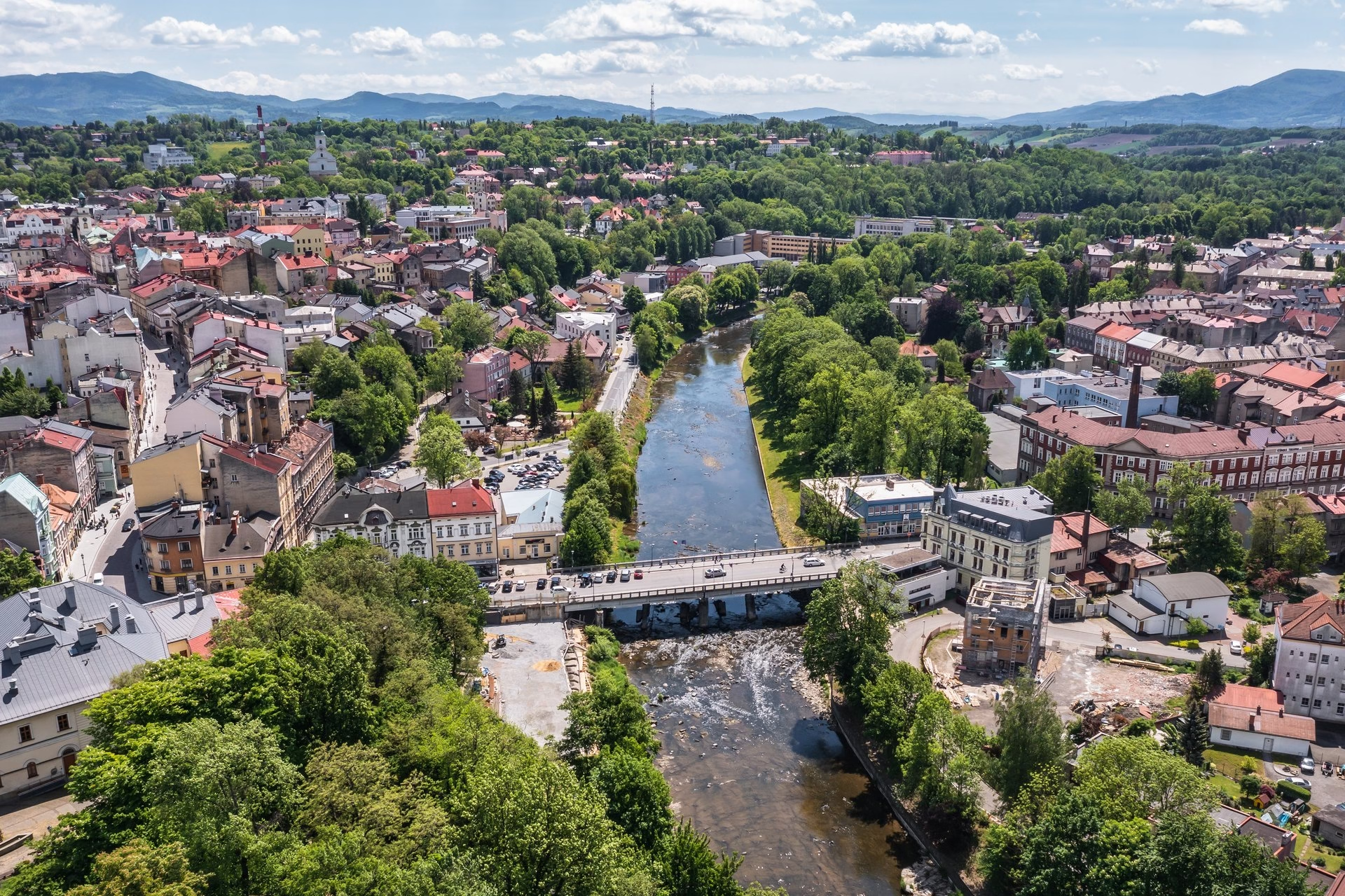
Cieszyn lies in the south of the Silesian Voivodeship in the foothills of the Beskids, Český Těšín is on the opposite bank of the Olza in Czechia, and the Slovak border is not far away. The nearest large cities are Bielsko-Biała and Katowice on the Polish side and Ostrava on the Czech side. The nearest international airports are Katowice-Pyrzowice and Kraków-Balice.
From Elsewhere in Poland by Bus and Train
- From Katowice the fastest option is a direct bus (Bus Brothers, FlixBus), and the journey takes around an hour and a half. A direct Koleje Śląskie train runs only on limited dates, mainly on Sunday afternoons, and takes around two hours.
- From Kraków direct buses run (Lajkonik, FlixBus), taking roughly two and a half hours. By train you change in Katowice and the journey takes around three hours.
From Czechia by Train
Český Těšín station is on the main line from Prague to Slovakia, so long-distance trains stop here too – you get off a few minutes’ walk from the border and do not have to bother with a car at all.
- From Prague you can get a direct Ex1 or RegioJet train. The fastest option takes around four and a quarter hours.
- From Ostrava run the local trains S2 via Bohumín and S9 via Havířov, taking 37 to 48 minutes; you can also use the R61 line.
A special chapter is the cross-border train Český Těšín – Cieszyn, operated jointly by České dráhy and Koleje Śląskie. The ride takes five minutes and runs several times a day, in the morning, late morning and evening; with the new timetable on 13 December 2026 the number of services is set to rise significantly.
By Car and Where to Park
From Katowice via Bielsko-Biała an expressway (S1 and S52) runs all the way to Cieszyn, and the journey takes a little over an hour. From Ostrava it is 30–45 minutes, from Prague roughly 370 kilometres, usually around four hours.
The paid parking zone in Cieszyn operates only on weekdays from 8:00 to 17:00, so at weekends parking is free throughout the town. On weekdays zone A starts at 2.50 zł per half hour. Electric cars never pay.
- Free car parks in Cieszyn – around 630 spaces in total, of which 155 on Katowicka Street and 127 on Sportowa Street, both a few minutes from the Rynek. More are right in the centre on Solna and dr. Jana Michejdy streets.
- Český Těšín has paid parking only in three sections of the centre – on Smetanova, Štefánikova and part of Hlavní třída. The first 30 minutes cost 10 Kč (about €0.40), a full hour 30 Kč (about €1.20) and each additional hour 20 Kč (about €0.80).
- Free parking in Český Těšín is at the transport terminal, which has 130 spaces, and at the hypermarket on Jablunkovská.
- Park just once. The two centres are a quarter of an hour’s walk apart, so driving across the bridge is pointless.
Getting Around Town for Free
Cieszyn runs a free city bus line number 1 – small electric buses run roughly every half hour on a loop between the station, the Rynek and the hospital, and also stop at both border bridges.
It is the most comfortable way to get from the bridge up to the centre if you do not feel like climbing Głęboka.
When to Go and What’s On
The towns lie in the foothills of the Beskids roughly 300 metres above sea level, so the weather is milder than on the ridges but damper and cooler than in the lowlands. The best period is May to September, when terraces are open, Castle Hill has its longest opening hours and festivals are on.
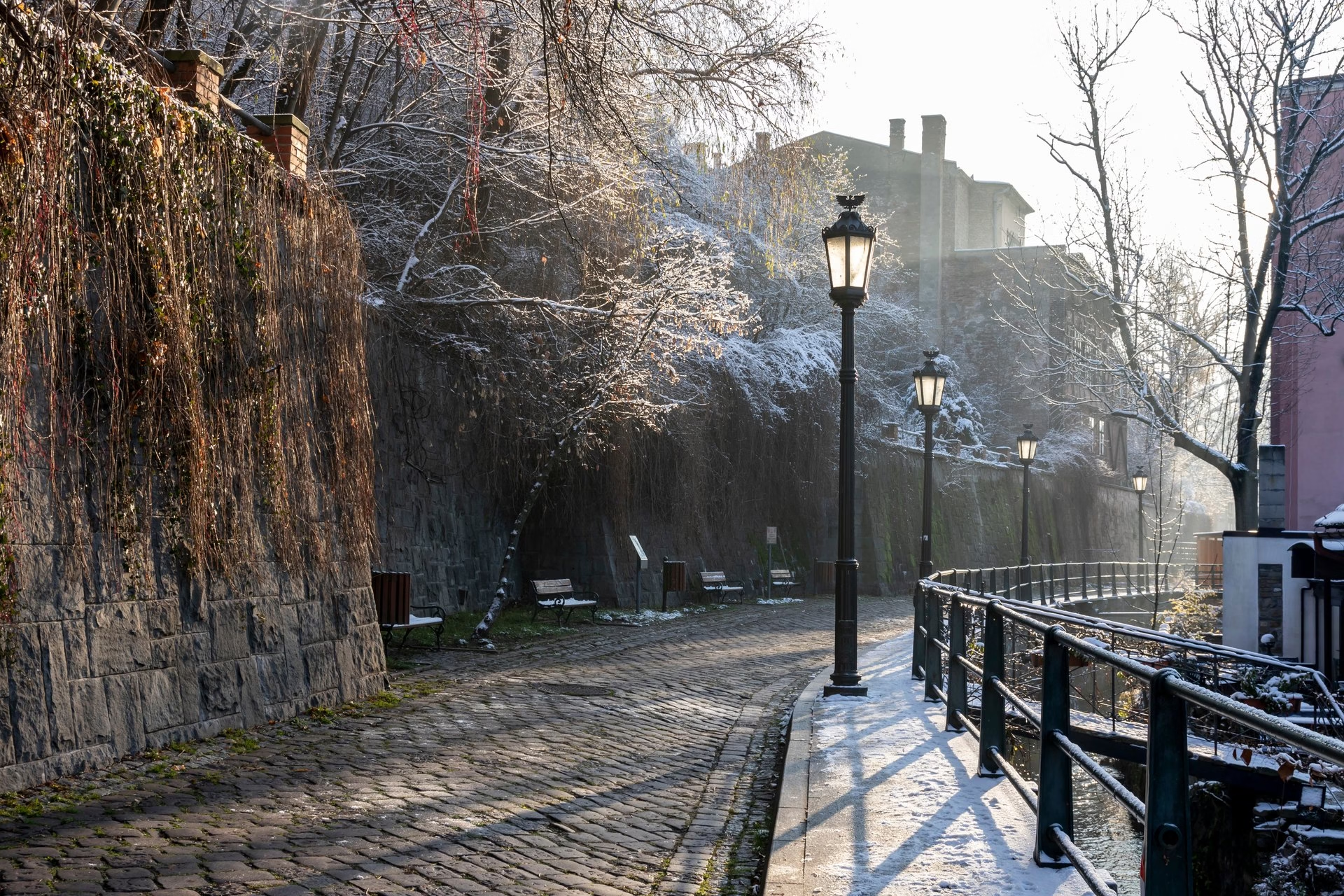
Winter has its own charm, because the Christmas markets run on both squares at the same time, and in a single afternoon you can visit two markets in two countries. On the Cieszyn Rynek the Jarmark Świętego Mikołaja (St Nicholas Fair) is held, usually from 1 to 23 December; on ČSA Square in Český Těšín stalls stand roughly from the end of November to Christmas Eve.
On top of that, on the last weekend of November there is the craft Těšín Christmas Fair, held alternately on the Polish and the Czech side.
Events Worth Planning Your Dates Around
- Święto Trzech Braci (Three Brothers Festival) – the biggest event of the year, usually in mid-June. Concerts on the Cieszyn Rynek, a night programme on Castle Hill, a family zone in the park. Celebrated on both sides.
- Kino na Granicy / Cinema on the Border – a cross-border film festival at the turn of April and May. Over a hundred films from Poland, Czechia, Slovakia and Hungary, screened on both banks, with audiences walking across the bridge from one country to the other between screenings.
- Skarby z Cieszyńskiej Trówły – a craft fair, concerts and workshops on Castle Hill, usually in mid-August. Free entry.
- Christmas markets – from the end of November on the squares on both sides.
Practical Information
Money and Payments
In Cieszyn you pay in Polish zlotys (PLN), in Český Těšín in Czech crowns (CZK). The euro is not the official currency on either side of the river.
- You can pay by card almost everywhere – in chains, shops, restaurants and at petrol stations. At the market and small stalls, expect to pay in cash.
- Some places accept the other currency – crowns in Cieszyn, zlotys in Český Těšín, mainly in businesses near the border – but the rate tends to be poor and they are not obliged to.
- Decline conversion into your home currency. When an ATM or card terminal asks whether you want to pay in your own currency or the local one, always choose the local currency – PLN in Cieszyn, CZK in Český Těšín. Conversion done by the merchant (so-called DCC) carries a markup of over ten percent, whereas your bank converts the amount considerably better.
Language
In Cieszyn people speak Polish, in Český Těšín Czech – and because there is a strong Polish minority there, plenty of people in Český Těšín speak Polish too. The two languages are close, and in the borderland conversations where “each speaks their own language” are commonplace.
The local speech is called “po naszymu” – a Těšín dialect used on both banks of the Olza and mixed with Czech, German and Slovak elements. In the towns standard language prevails; in the villages around you will hear it regularly.
If you want more than one day in Poland, read what to watch out for when travelling to Poland – from payments and transport to local customs.
Frequently Asked Questions
Is the border between Cieszyn and Český Těšín checked?
There are no checks on the border between Cieszyn and Český Těšín – Poland and Czechia have both been in the Schengen Area since December 2007, so you cross the bridge as you would a street. The temporary checks Poland has introduced only concern its borders with Germany and Lithuania. Still, carry valid ID with you. It is an international border all the same, and police in both countries can ask for ID at any time.
How far is it from Cieszyn to Český Těšín?
From the Cieszyn Rynek to ČSA Square in Český Těšín it is roughly a kilometre over Friendship Bridge, or a quarter of an hour’s walk – from the Rynek you go downhill along Głęboka Street. To Český Těšín railway station it is a bit further, around twenty minutes, over Freedom Bridge.
How much does it cost to enter Castle Hill in Cieszyn?
The combined ticket for the Rotunda of St Nicholas and the Piast Tower costs 14 zł full price, 10 zł reduced and 40 zł family. The rotunda alone, without the tower, costs 10 zł. The ticket office is in the Piast Tower. Exhibitions in the Zamek Cieszyn building below the hill are free.
What currency is used in Cieszyn and Český Těšín?
In Cieszyn, Polish zlotys (PLN); in Český Těšín, Czech crowns (CZK). The euro is not the official currency on either side. You can pay by card almost everywhere, while cash is handy at the market and at stalls. If the terminal offers conversion into your home currency, decline and pay in the local currency – the merchant’s conversion carries a markup of over ten percent.
How does parking work in Cieszyn and Český Těšín?
It is most advantageous on the Polish side. The paid zone in Cieszyn operates only on weekdays from 8:00 to 17:00, so at weekends parking is free throughout the town. On weekdays zone A costs from 2.50 zł per half hour. On top of that, Cieszyn has around 630 free spaces, of which the largest car parks on Katowicka and Sportowa streets are a few minutes from the Rynek. In Český Těšín the first 30 minutes cost 10 Kč (about €0.40) and a full hour 30 Kč (about €1.20), and parking is free at the transport terminal.
How much time do I need in Cieszyn and Český Těšín?
Half a day is enough for both centres without the museums, which means roughly four hours including coffee stops. With the Cieszyn Silesia Museum and the Těšín Region Museum, count on a full day. If you want to add a brewery tour, you need a weekend, because it only takes place on Saturdays, Sundays and public holidays at 12:00 and 14:00.
What is open on Monday?
Both main museums are closed on Mondays – the Cieszyn Silesia Museum and the Těšín Region Museum. Castle Hill with the rotunda and the Piast Tower is open daily, as are all the outdoor sights: the Rynek, the Three Brothers Well, Głęboka Street, Cieszyn Venice and the parks on both banks. So Monday is a good day for a walk and a bad one for museums.
Is there a train between Český Těšín and Cieszyn?
Yes, the cross-border section is operated jointly by České dráhy and Koleje Śląskie. The ride takes five minutes, it runs several times a day, and a ticket costs 4 zł for an adult and 2 zł reduced. In practice it is more of a curiosity – you get across the bridge faster on foot. From Bielsko-Biała you cannot reach Cieszyn by train at all, as the Skoczów – Bielsko-Biała section has been out of service since 2013.
Why is the Cieszyn rotunda on a Polish banknote?
The Rotunda of St Nicholas and St Wenceslas is depicted on the back of the circulating 20-zloty banknote, whose front shows Bolesław the Brave. The note is dated 25 March 1994. The reason is symbolic: the rotunda from the first half of the 11th century is among the best-preserved early medieval buildings in Poland and recalls the era of the first crowned Polish king.
When are the biggest events held in town?
Święto Trzech Braci, the Three Brothers Festival, is usually in mid-June and is the biggest event of the year – concerts on the Rynek, a programme on Castle Hill, celebrations on both sides of the border. At the turn of April and May the Kino na Granicy film festival takes place, screening on both banks with audiences walking across the bridge between cinemas. In mid-August there is the Skarby z Cieszyńskiej Trówły craft fair on Castle Hill, with free entry.
Sources and Where to Check Current Details
- Zamek Cieszyn – opening hours and admission for Castle Hill: zamekcieszyn.pl
- Muzeum Śląska Cieszyńskiego – tour times and prices: muzeumcieszyn.pl
- Těšín Region Museum – admission and opening hours: muzeumct.cz
- Browar Zamkowy Cieszyn – tour bookings: browarcieszyn.pl
- Tourist information – Český Těšín: ic-tesin.cz and, on the Polish side, visitcieszyn.com
- Těšín Theatre – programme of the Czech and Polish stages: tdivadlo.cz