This post is also available in:


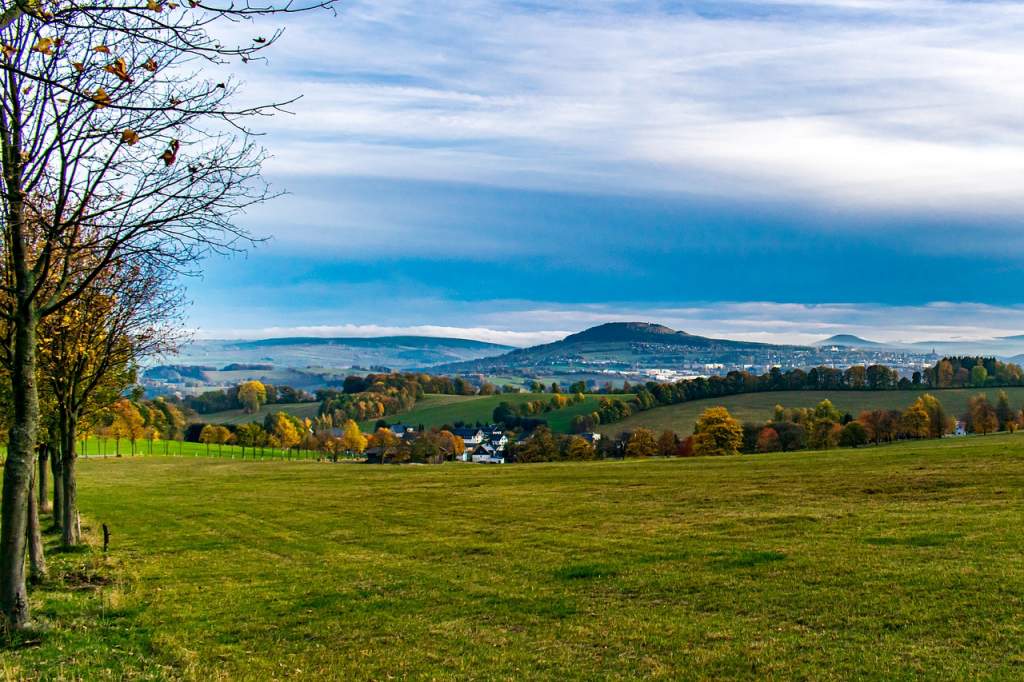
A town of seven thousand people right on the edge of Bohemia, surrounded on three sides by Poland, home to the largest Baroque monastery in eastern Bohemia, the oldest surviving wooden church in the country, and right behind the last houses a twelve-kilometre sandstone ridge with dozens of viewpoints. Broumov feels like the edge of the world — and that’s exactly why it’s worth the trip.
Most people drive straight through the Broumov region on their way to Adršpach and skip the town entirely. That’s a shame: while summer visitors queue for timed entry slots in Adršpach, you’ll pass just a handful of people all morning in the Broumov Walls (Broumovské stěny), with the views all to yourself.
This guide is written for readers who either want to fit Broumov in as a day-trip stop on the way to the rocks, or want to make it their base for a long weekend exploring the whole Broumov region and across the border into Poland.
Why Visit Broumov
In the middle of an otherwise unassuming landscape, the Broumov region rises into sandstone ridges, table mountains and mazes of ravines. Since 1991, the whole area has been a protected landscape zone, offering beautiful hiking trails, viewpoints and romantic little villages.
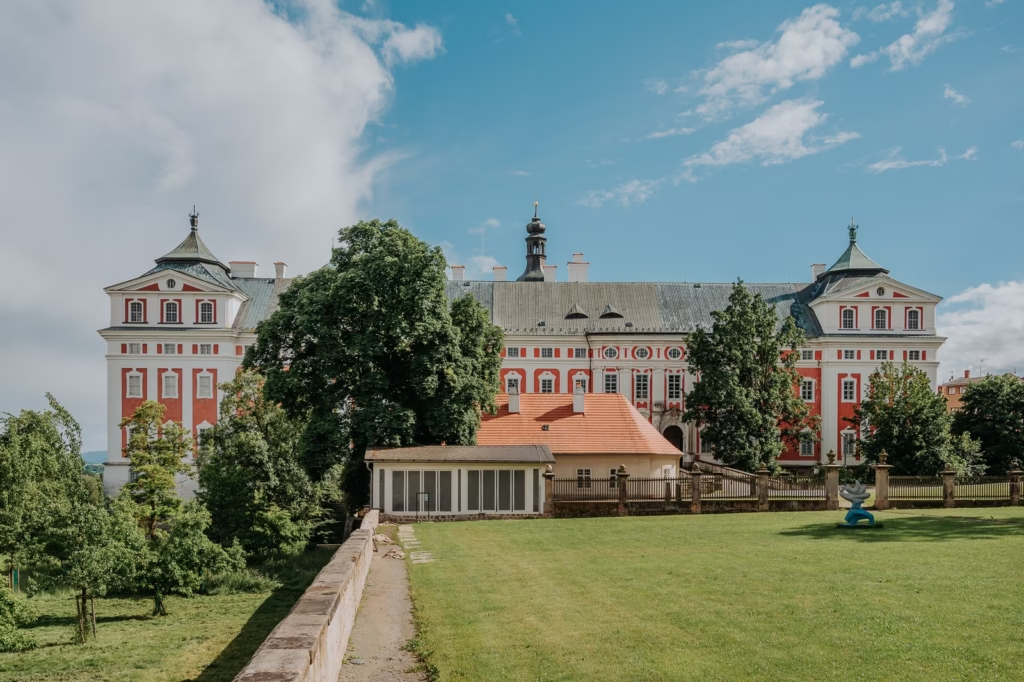
The biggest draw, though, is the local monastery. Broumov Abbey belonged to the Benedictines of Břevnov, and in the 18th century abbot Otmar Zinke turned it into a construction laboratory: he brought in Christoph and Kilian Ignaz Dientzenhofer, had the monastery rebuilt, and commissioned nine village churches, a town church, and a pilgrimage chapel on the ridge nearby.
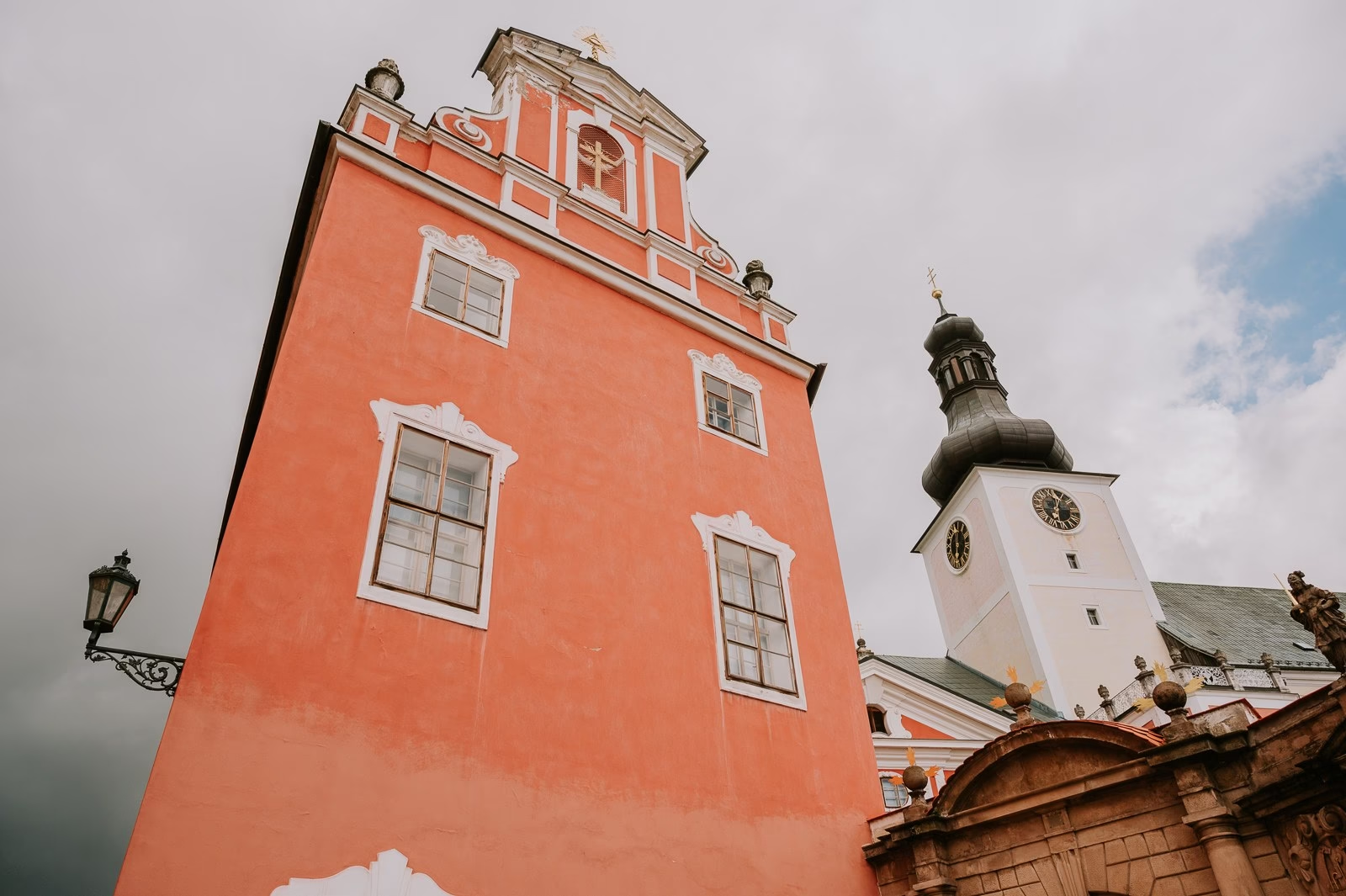
The Broumov region also isn’t a mass tourist destination. You can visit the monastery, the churches and the Broumov Walls on a summer Saturday without bookings or queues — which is definitely not something you can say about Adršpach, just twenty kilometres away.
The town has more going on than its location might suggest. The monastery underwent extensive restoration and now houses a café, restaurant, museum and accommodation, and a classical music festival takes place in the surrounding churches every summer.
A Brief History of the Broumov Region
In the 13th century, the territory was handed over to the Benedictines of Břevnov, who colonised it with German-speaking settlers. This gave rise to twelve large villages arranged along streams, with long strip fields and farmsteads wealthy enough to build in stone. The Broumov basin was, by the standards of the time, fertile and prosperous.
The peak came in the 18th century with abbot Otmar Zinke, who had the money, the ambition, and access to the best architects of his era — and decided to spend it all on churches.
The region’s textile tradition is somewhat younger and still alive today — Broumov’s Veba mill was one of the largest textile companies in the country, and you’ll spot its name on buildings all over town.
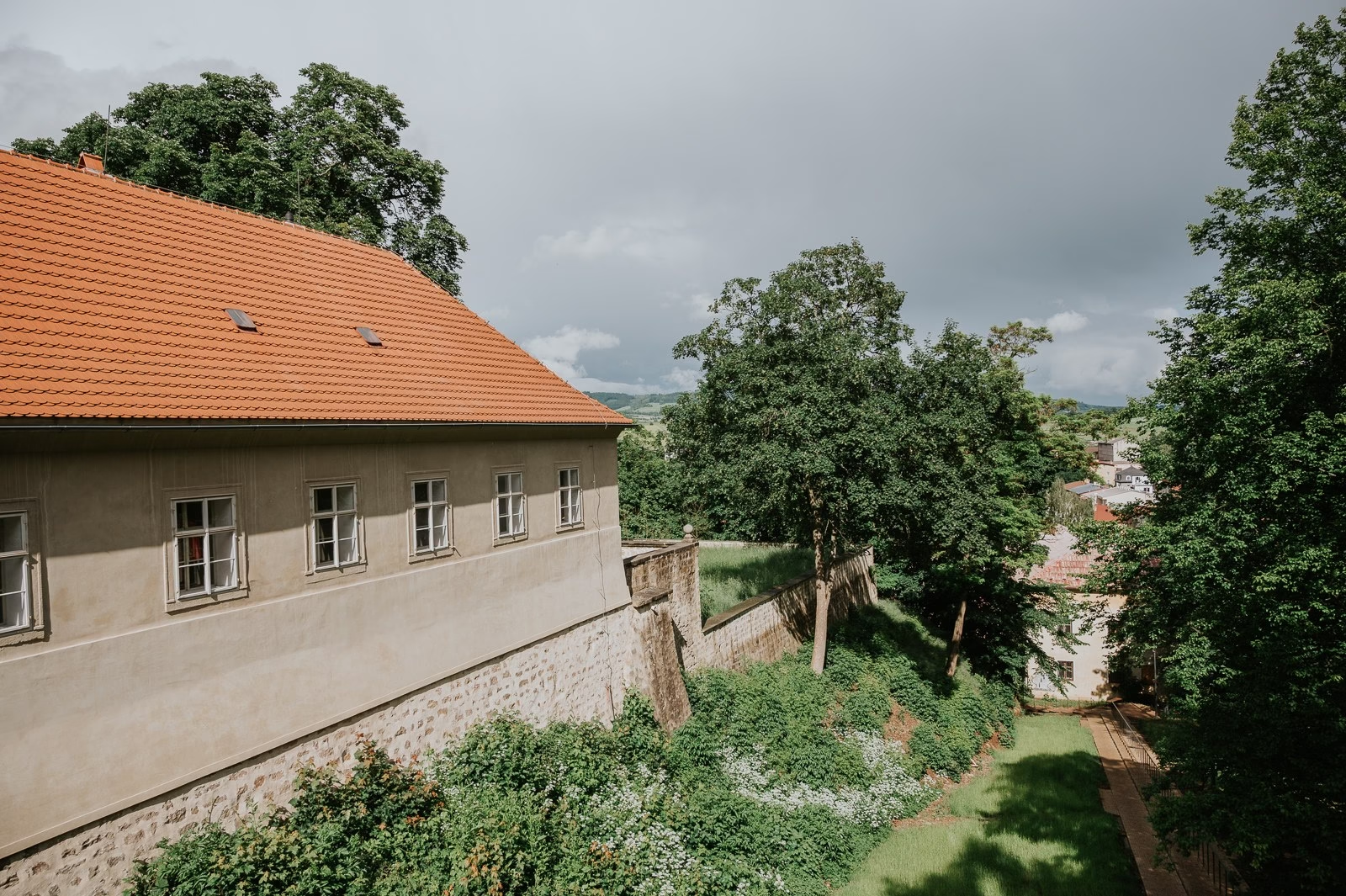
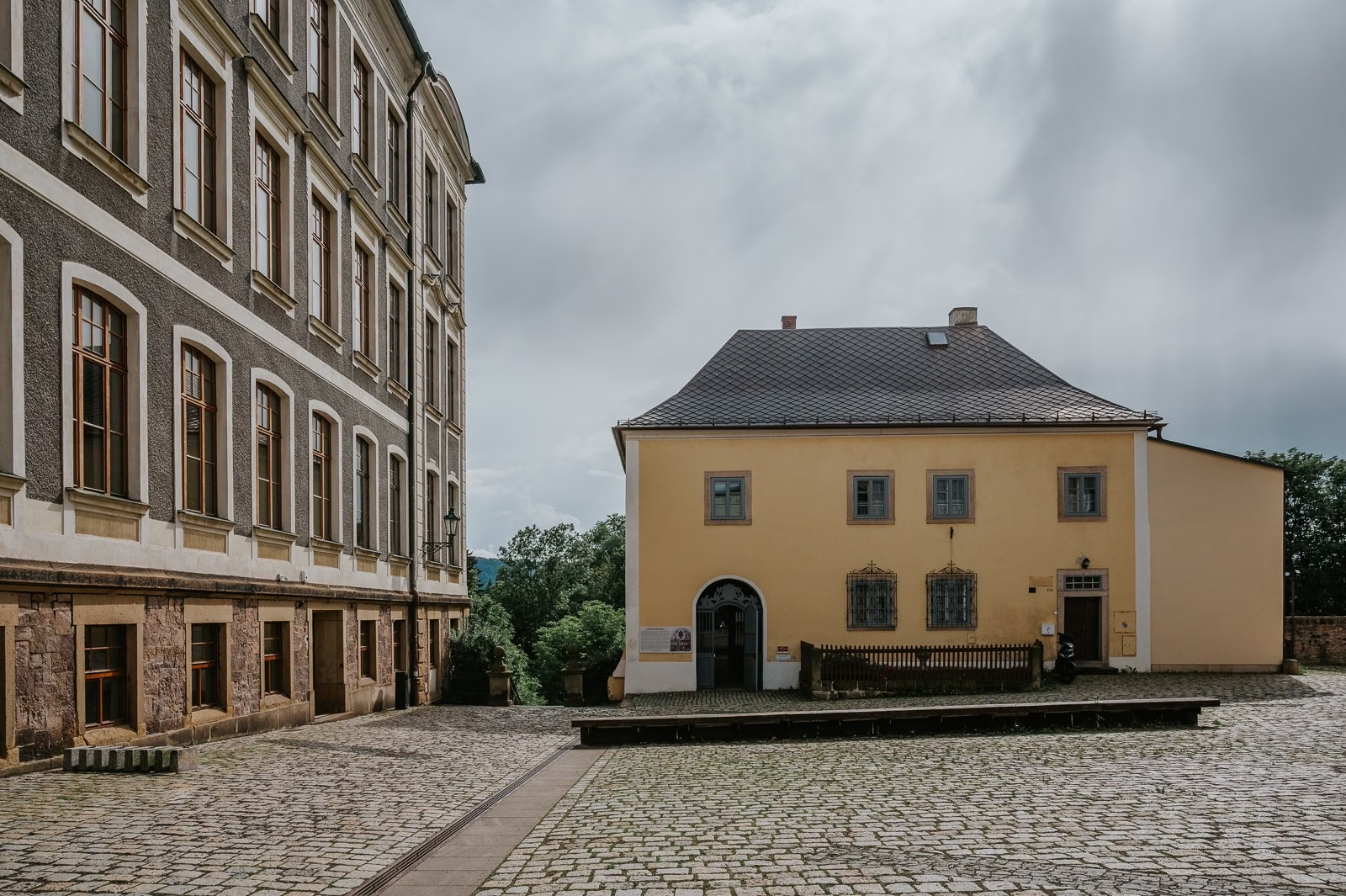
Everything changed after the Second World War. The German population that had built up the Broumov region over seven centuries was expelled in 1945 and 1946, and the region was resettled by people with no ties to the place.
Four years later, in 1950, the Communist regime turned the monastery into a centralised convent, gathering nuns from women’s religious orders that had been abolished. They were then forced to work in the surrounding textile mills.
What you see in the Broumov region today is therefore largely the work of the last two decades: a restored monastery, churches under repair, and a region relearning how to be proud of itself.
Broumov’s bid for European Capital of Culture 2028 sums it up well — a town of seven thousand people fought its way to the finals, where České Budějovice ultimately won.
How Long to Spend in Broumov
You can cover the town itself in half a day. The monastery tour takes 70 to 80 minutes, the wooden church at the cemetery about fifteen, and the main square with the town hall and Marian column another half hour — leaving time for lunch and coffee.
Anyone who wants to add the Broumov Walls needs a full second day. The basic loop via Hvězda, Supí koš and Kovářova rokle takes around five hours, viewpoints included.
A long weekend is ideal: one day for the town and monastery, one day for the rocks, one day for a trip further afield — Adršpach, Ostaš, or across the border into the Kladsko Valley. Three days means you’re not rushing and can still fit in a tour of the Dientzenhofer churches.
A full week works best for families with children and travellers who want to work through all the nearby rock formations one by one, or explore the wider area by car or bike.

Top Things to See First
- Broumov Monastery – the Benedictine Abbey of St. Wenceslas, rebuilt by Kilian Ignaz Dientzenhofer, now a national cultural monument.
- Wooden Church of Our Lady at the cemetery – the oldest surviving all-wood sacred building in the Czech Republic, built without a single nail.
- Broumov Walls – a twelve-kilometre sandstone ridge with viewpoints, ravines and a chapel at Hvězda.
- The Broumov Group of Churches – eleven Baroque buildings in Broumov and surrounding villages, a national cultural monument since 2022.
- Kovářova Ravine – a two-kilometre-long canyon with walls up to a hundred metres high, the most dramatic spot in the whole Walls area.
- Křinice – a village heritage reserve with traditional Broumov-style farmsteads.
- Adršpach-Teplice Rocks – the best-known rock city in the Czech Republic, twenty minutes away by car.
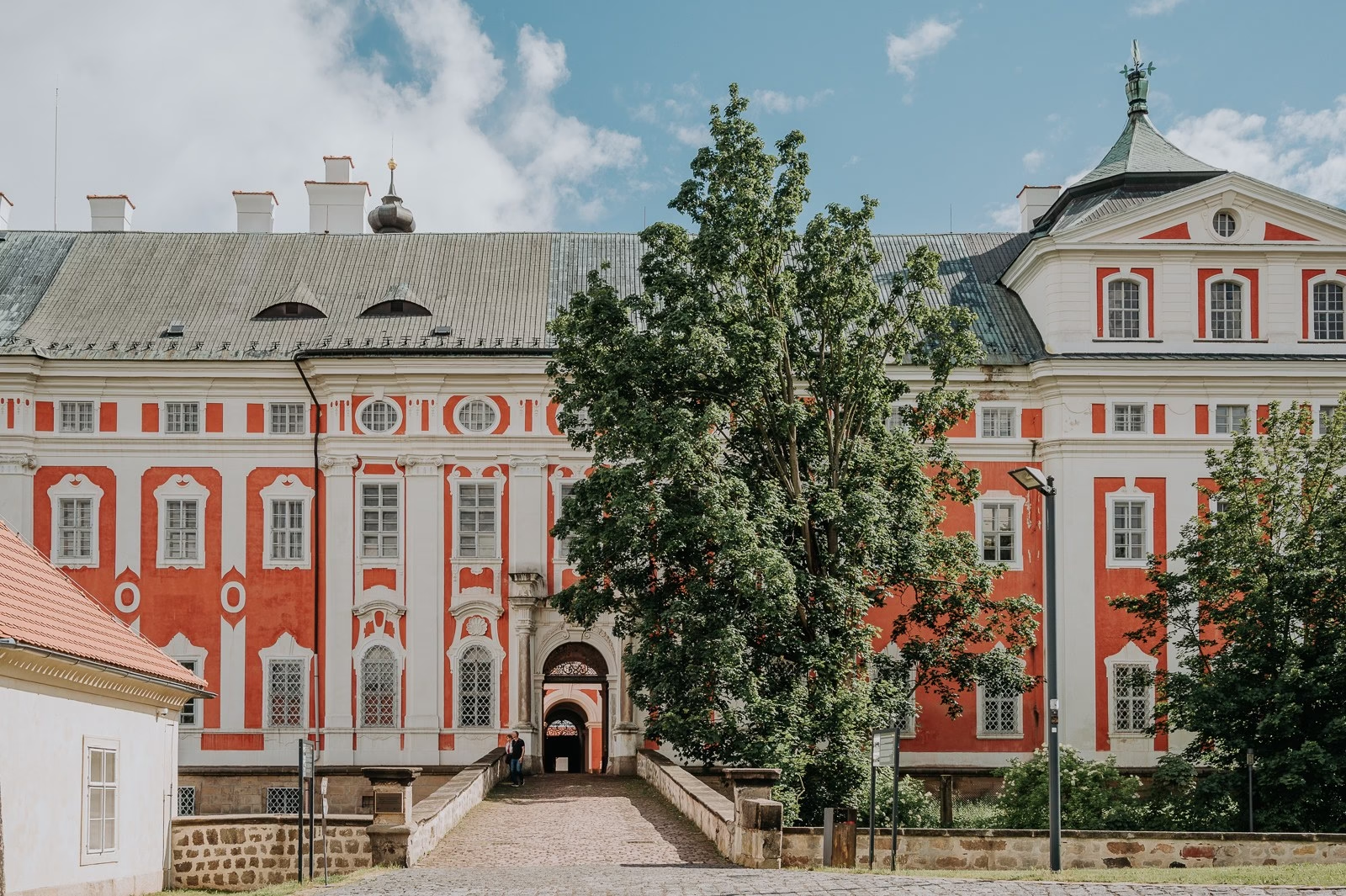
Broumov Monastery
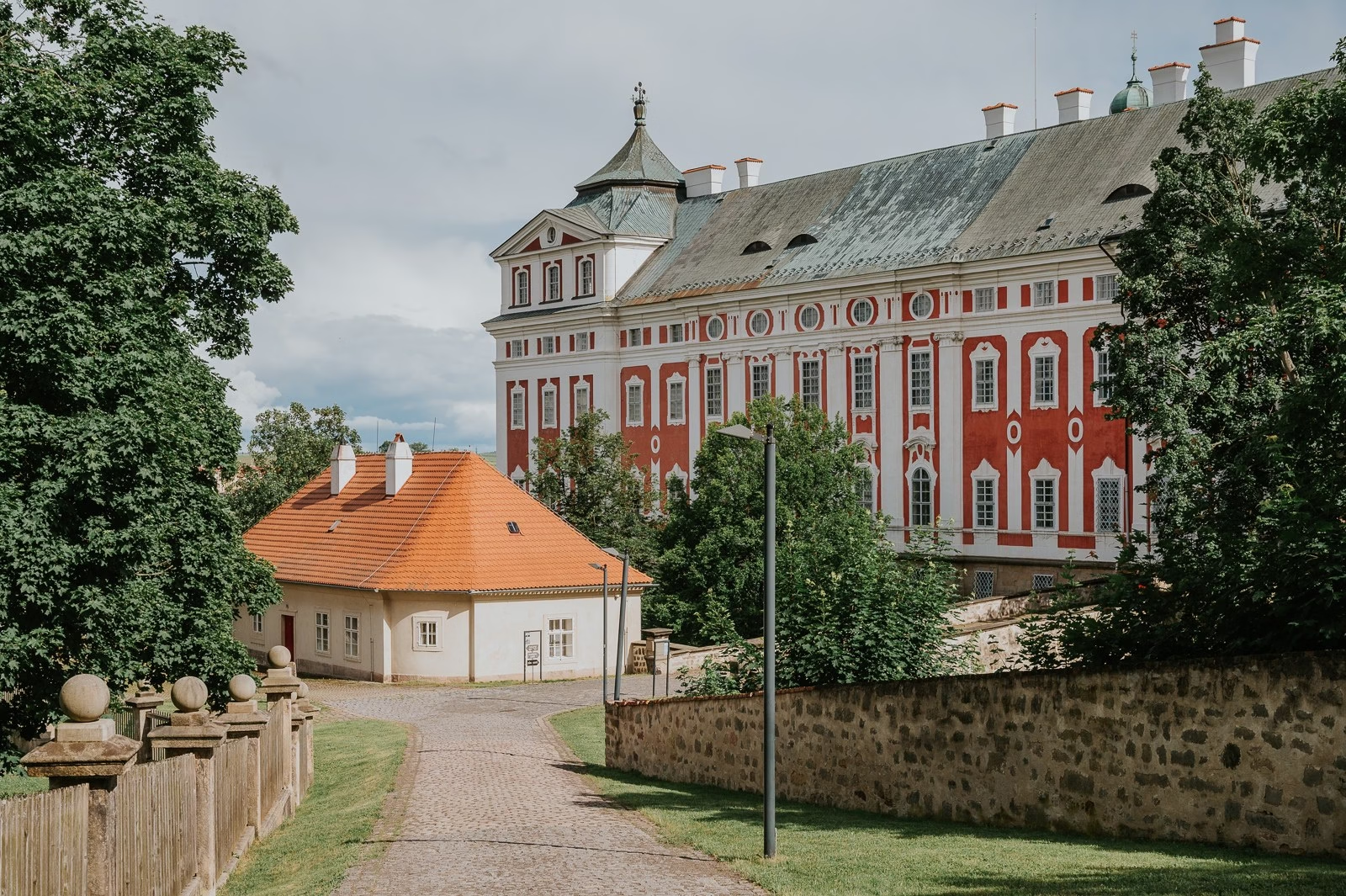
The monastery stands on a rocky promontory above the town and is visible from almost everywhere. It got its current appearance in the 1720s and 1730s, designed by Kilian Ignaz Dientzenhofer.
In the second half of the 20th century, the monastery fell into long decline. The restoration, which began after 2010, ranks among the largest heritage projects in the country — and it shows at first glance.

Besides the guided tour route, the complex houses an education and cultural centre, a museum, a café, a restaurant and accommodation, and hosts concerts, conferences and exhibitions.
It’s one of the few monasteries in the Czech Republic where you could spend an entire day without leaving the grounds.
What You’ll See on the Tour
The basic tour route goes through the monastery church of St. Adalbert, the refectory, the sacristy and the cloister. The oldest thing you’ll spot along the way is a 14th-century Gothic fresco — a remnant of the original monastery, swallowed up by Dientzenhofer’s rebuild.
In the refectory hangs a replica of the Shroud of Turin. The valuable period copy the monastery owns is kept in storage by the museum for conservation reasons — only a few dozen such copies were ever made in Europe.


The monastery library, with around seventeen thousand volumes, is closed for technical reasons and isn’t part of the standard tour. Check the abbey’s website before you go to see if that’s changed — it’s the most common source of disappointment for visitors who come specifically for it.
In summer, the monastery also offers two special tours. The night tour (90 to 120 minutes) adds the cellars and takes place after dark, on Wednesdays and Fridays at 20:30 in July and August. The extended From the Cellar to the Museum tour lasts around 150 minutes, includes the museum’s Stone Hall, and runs on weekends at 13:00. Both require advance booking.
The Monastery Garden
The garden stretches north of the monastery and has been open to the public since 2007. Admission is free, and it’s open daily from 8:00 to 20:00 from May to October, and until 16:00 from November to April.

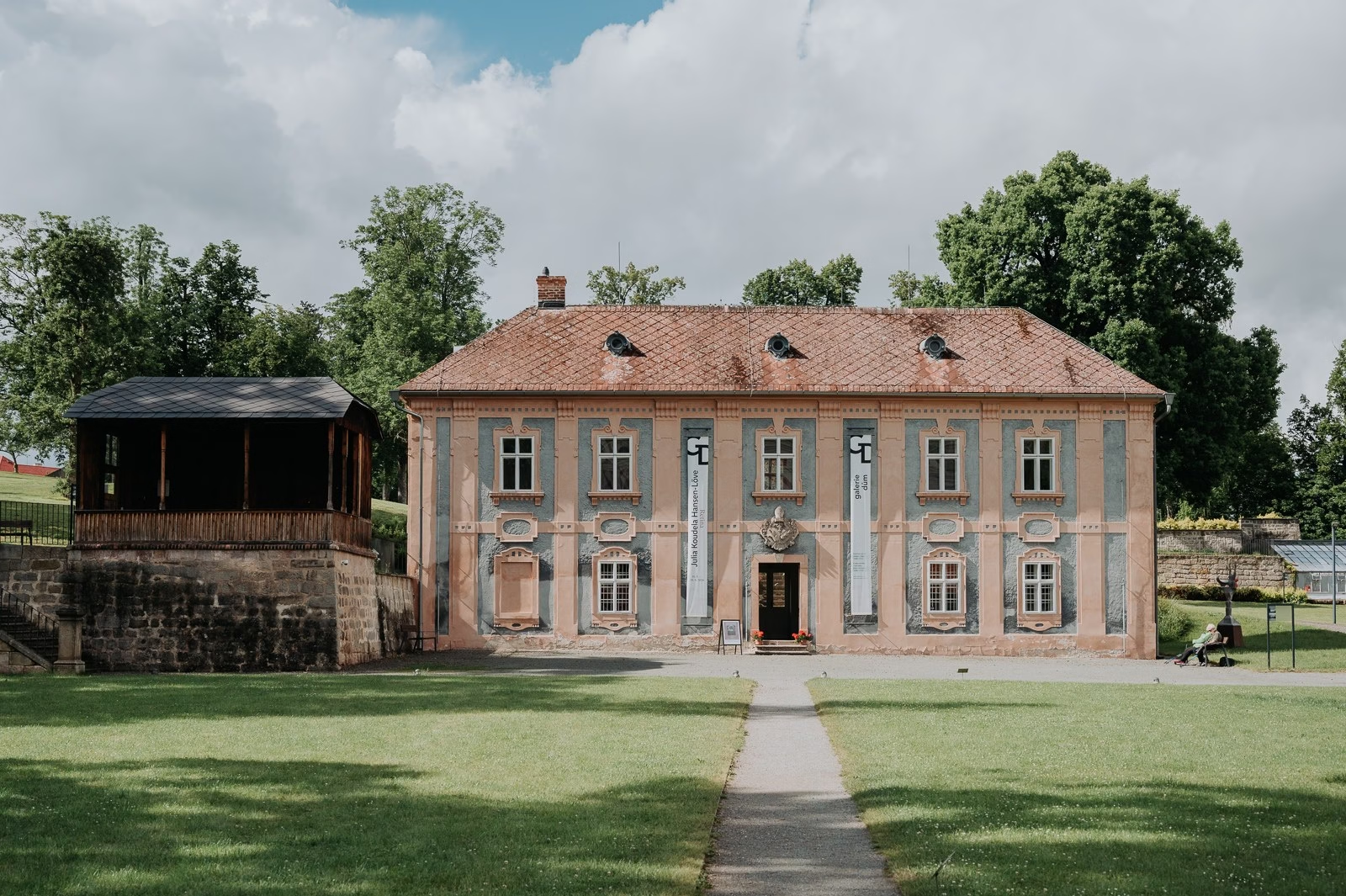
It’s the best spot in Broumov for a break between tours — mature trees, views of the monastery walls, and concerts and outdoor exhibitions in season. For families, the Alejka playground, a large wooden play area in the town park, is nearby.
Practical Info — Prices, Opening Hours, Booking
Guided tours run year-round, every day. From April to October it’s open 9:00–16:00, and from November to March 10:00–15:00. Standard tours start every half hour; the last one leaves at 15:30 in the summer schedule and 15:00 in winter.
Admission for the standard tour:
- Adults €10, seniors over 65 €8
- Reduced €6 – children 6–15, students up to 26, and holders of disability cards
- Family ticket €24 – one or two adults plus up to three children under 15
- Children under 6 free
The night tour costs €12, and the From the Cellar to the Museum tour €14. The family ticket for either is €32.
The tour routes are not wheelchair accessible, and it’s cool inside the monastery even in summer, so bring an extra layer. You can park right by the monastery or on the main square, just a three-minute walk away.

What to See and Do in Broumov
Wooden Church of Our Lady at the Cemetery
This unassuming building at the cemetery near the centre is the oldest surviving all-wood sacred building in the Czech Republic, and experts even rank it among the oldest in Central Europe.
The church was likely founded as early as the 13th century, though its current log-built form dates from after a fire in 1449.
It’s a log structure of massive oak beams, built without a single nail. Inside, original wall paintings survive, and wooden chronicle boards hang in the gallery, recording floods, plague and fires — the history of the Broumov region, brief and unembellished.
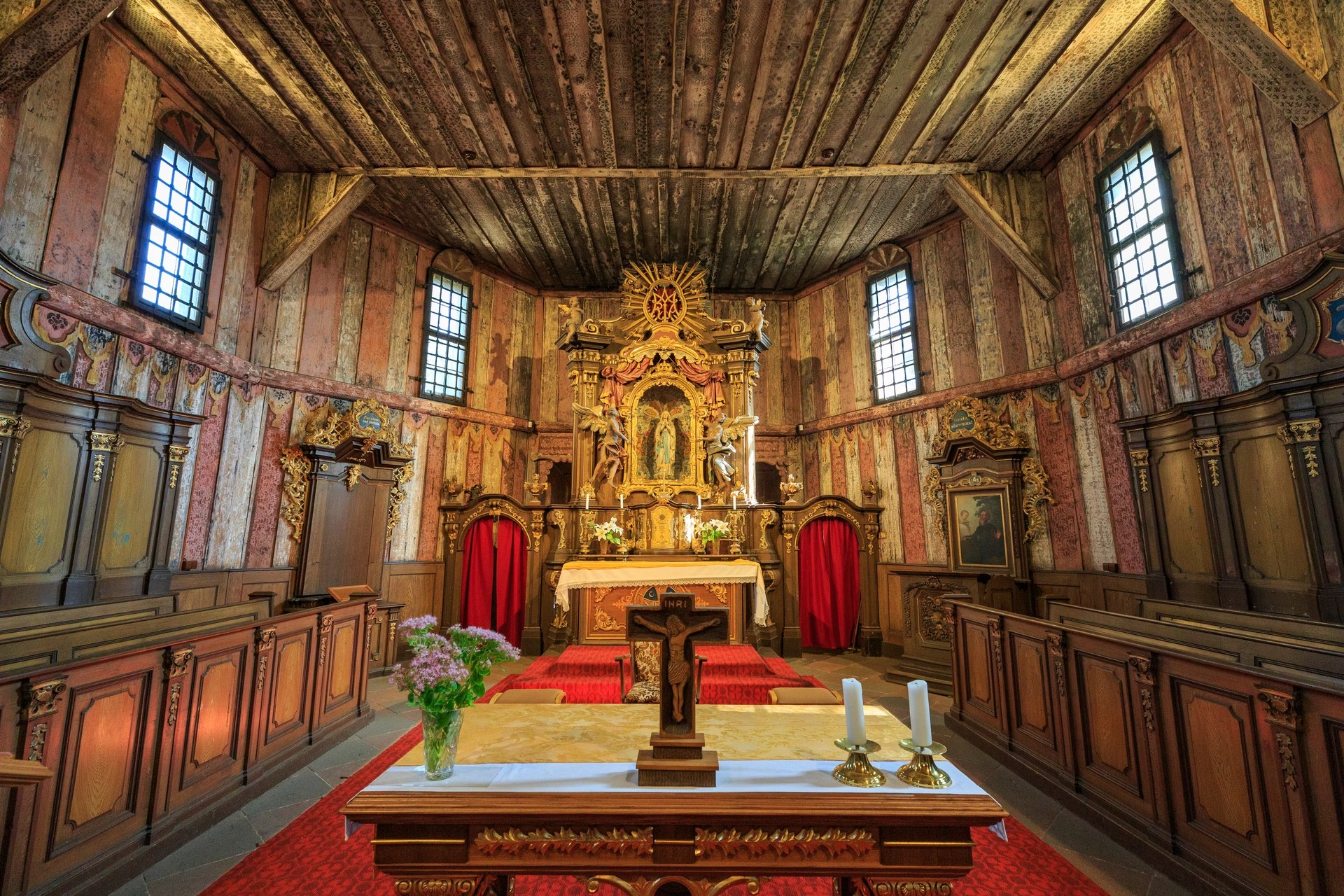
It’s usually only open from June to September, Tuesday to Sunday, 9:00–12:00 and 13:00–17:00. You can’t get inside out of season, but it’s still worth seeing from the outside.
Mírové náměstí (Peace Square) and the Old Town
Broumov’s historic core is small and you can walk it in half an hour. The townhouses around the square date back to the 16th century, originally built in stone and later reshaped by Baroque and Empire-style renovations into their current look.
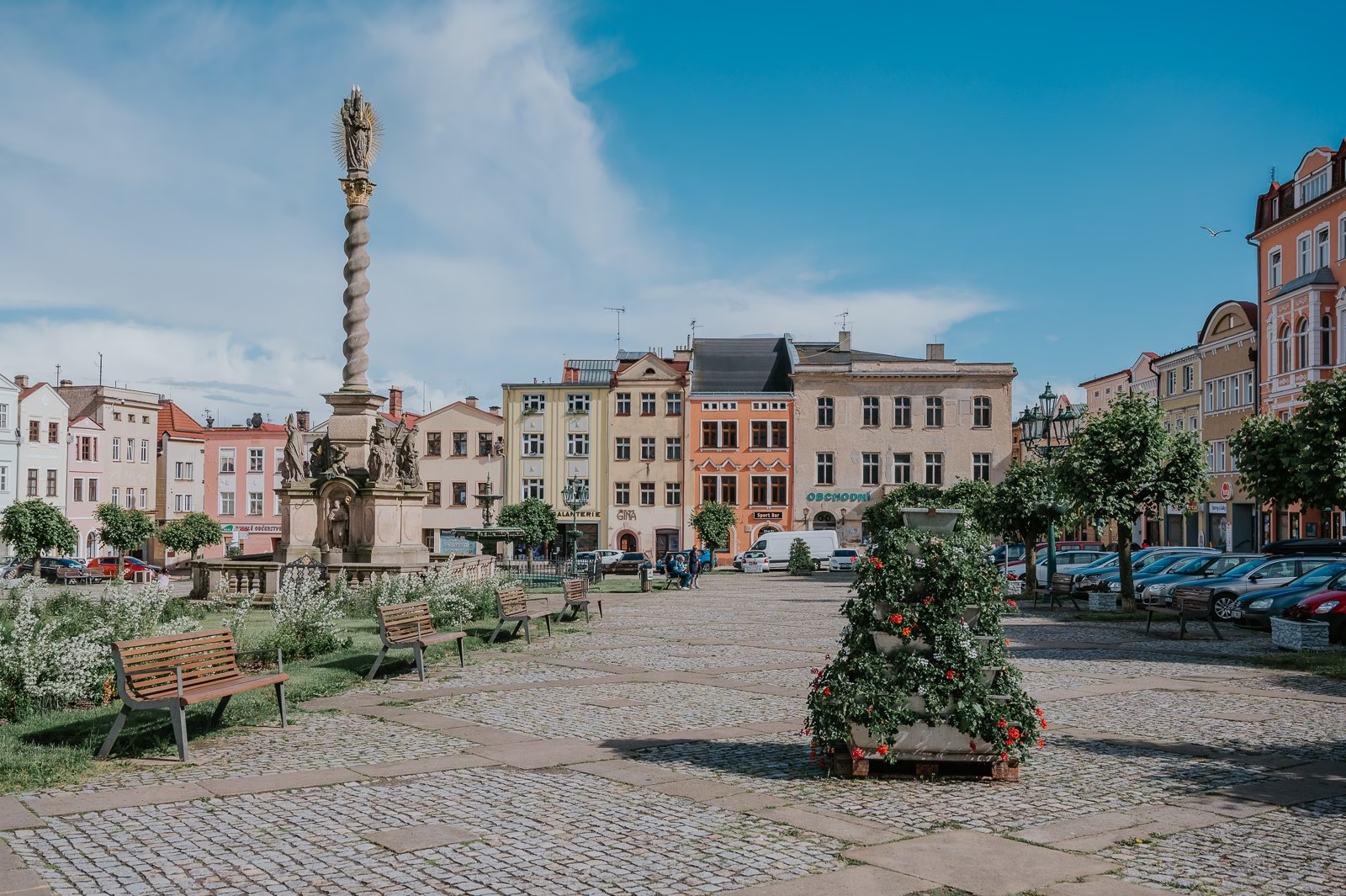
The old town hall from 1419 stands in the square’s western corner, while a Baroque Marian column is the square’s centrepiece. Broumov was never a wealthy town, and it shows — the square feels modest and honest rather than grand, which suits it well.
Church of St. Wenceslas
The town church of St. Wenceslas was built by Kilian Ignaz Dientzenhofer between 1728 and 1729 and belongs to the Broumov Group of Churches. It’s the easiest Dientzenhofer building to reach in the whole region — it stands right in town, so if you don’t have a car for touring the villages, you’ll still see at least one of his works here.
Museum of the Broumov Region
The exhibition is housed directly within part of the monastery complex and spans six halls covering the history of the monastery, the town and the wider region.
The collections include art from the Gothic through Renaissance to Baroque periods, but the most interesting pieces are, ironically, the everyday ones: weapons and painted shooting targets, folk nativity scenes, and traditional Broumov costumes. An hour is more than enough, and it’s a great choice for a rainy day.

The Broumov Walls
The Broumov Walls are a twelve-kilometre sandstone ridge between Police nad Metují and Broumov. On one side, they drop steeply into the Broumov basin; on the other, they break up into ravines and rocky mazes.
Unlike Adršpach, there’s no entrance fee, no bookings, no queues here. The marked trails are freely accessible.

Hvězda — the Easiest Starting Point
Hvězda is a hiking crossroads on the ridge and by far the most convenient entry point into the Walls — reachable by car, bus, or bike. It’s home to the pilgrimage chapel of Our Lady of the Snows, built by Kilian Ignaz Dientzenhofer between 1732 and 1733, alongside the Hvězda mountain hut with its restaurant.
From here, the view stretches across the entire Broumov basin all the way to Poland’s Table Mountains. For families with young kids, this is often the only stop they’ll manage — and it’s enough.
Kovářova Ravine and Supí koš
Kovářova Ravine is the most visited corner of the Broumov Walls. A wooded canyon roughly two kilometres long, lined with sandstone walls up to a hundred metres high. Along the way you’ll pass the Marian Cave and Kovárna — a cave with a stream running through it.
Supí koš is a round viewpoint at 702 metres, sitting on the same trail. The combination of ravine and viewpoint forms the backbone of every loop hike in the Walls.
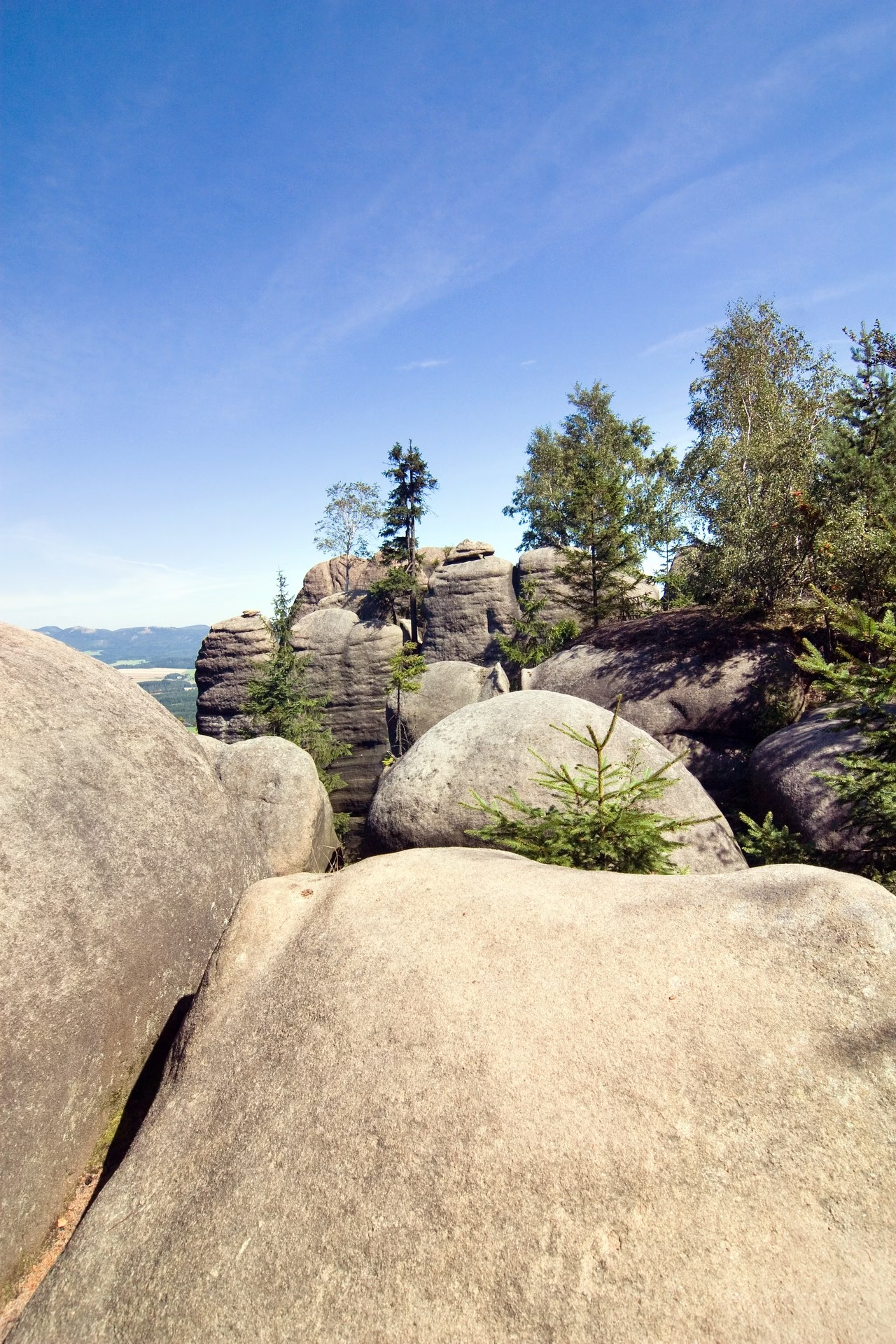
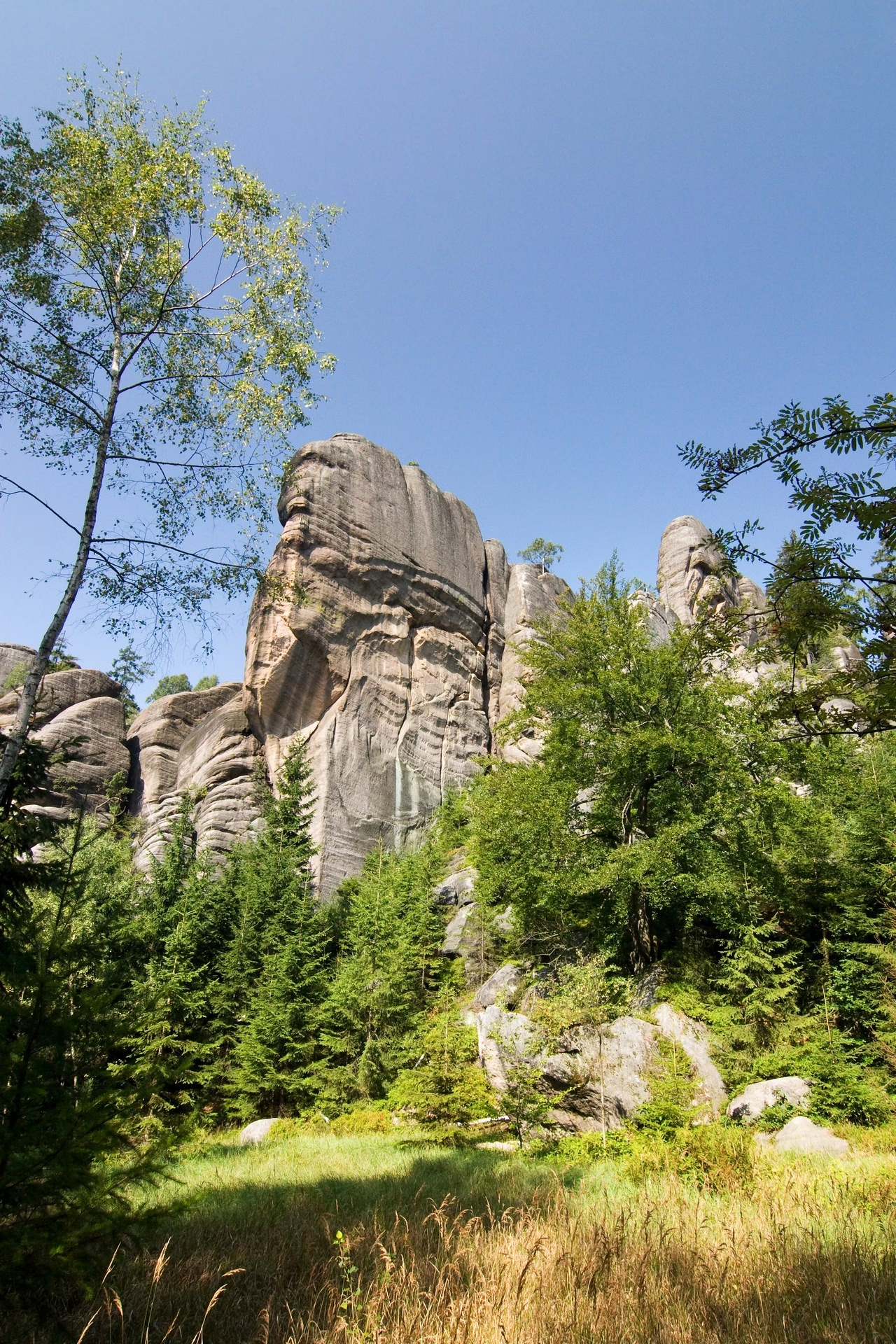
The classic loop from Police nad Metují:
- Police nad Metují – Hlavňov – Kovářova Ravine – Supí koš – Hvězda, roughly 6 kilometres one way
- You can return along the ridge, or take a bus down from Hvězda
- Moderate difficulty — the climb up from Hlavňov is a proper one, but the ridge walk afterwards is easy going
A longer route starts in the hamlet of Slavný and passes the junctions Nad Slavným, U Ovčína and Pánova věž to reach Supí koš (5 km), Hvězda (6 km) and Kovářova Ravine (7 km) before finishing in Hlavňov. The full crossing is an all-day undertaking.
Koruna and Božanovský Špičák
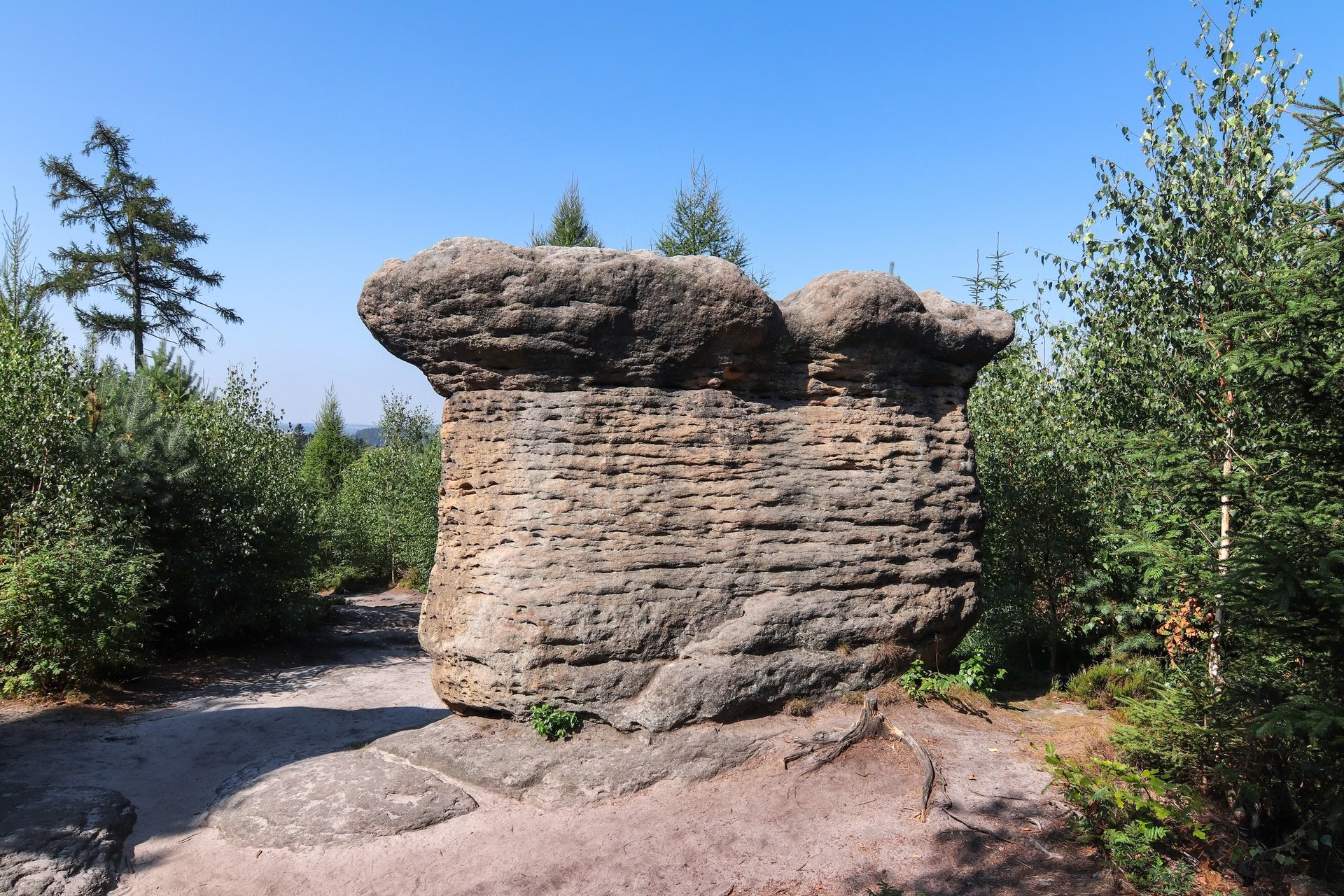
The highest point of the Broumov Walls is Božanovský Špičák (773 m), closely followed by Koruna (769 m). Both rocky viewpoints sit on the ridge’s northeastern section and see noticeably fewer visitors than the area around Hvězda.
On the way to Koruna, you’ll pass through the Kamenná brána (Stone Gate), a sandstone formation that turns an ordinary climb into a small adventure. The ridge between Honské sedlo and Koruna is the most rewarding stretch of the entire Walls.
Practical Info — Parking, Difficulty, Season
You can park at Hvězda, in Hlavňov by the pond, or in Police nad Metují. The car park at Hvězda gets busiest in season, but it’s still in a different league than Adršpach.
The trails are marked and safe, but sandstone and tree roots get seriously slippery after rain — proper footwear isn’t overkill here. You can’t take a stroller into the ravines, but the ridge up to Hvězda is fine.
It’s loveliest here in autumn, when the beech trees above the ravines turn gold and mist settles in the canyons. In winter, on the other hand, the ravines often ice over, and it’s not worth entering them without crampons.
Browse accommodation in Police nad Metují
The Broumov Group of Churches
The main construction wave took place between 1719 and 1743, when abbot Otmar Zinke had a series of Baroque churches built around Broumov, designed by Christoph and Kilian Ignaz Dientzenhofer.
The oldest church in the group, in Martínkovice, is a generation older and has no Dientzenhofer involvement. Since 2022, the whole collection has been a national cultural monument.
The group consists of eleven buildings — nine village churches, the town church of St. Wenceslas in Broumov, and the pilgrimage chapel at Hvězda. Nowhere else in the Czech Republic will you find so many Dientzenhofer works packed into such a small area.

The village churches of the group:
- Martínkovice – Church of St. George and St. Martin, the oldest building in the group (1692–1698, Martin Allio)
- Vernéřovice – Church of St. Michael (1719–1723, Christoph Dientzenhofer)
- Ruprechtice – Church of St. James the Greater (1720–1723, both Dientzenhofers)
- Heřmánkovice – Church of All Saints (1722–1726)
- Bezděkov nad Metují – Church of St. Procopius (1724–1727)
- Otovice – Church of St. Barbara (1725–1727)
- Vižňov – Church of St. Anne (1724–1728)
- Šonov – Church of St. Margaret (1726–1729)
- Božanov – Church of St. Mary Magdalene, the last and most refined of the group (1735–1743)
A driving tour of all the villages takes half a day and makes for a pleasant ride along the quiet roads of the Broumov basin. The churches are usually closed outside of services — with some you can at least peek inside through the gate behind the main entrance.
The “Treasures of the Broumov Region” Festival
The best way to get inside the churches is to visit in summer. The classical music festival Za poklady Broumovska (Treasures of the Broumov Region) opens a different church every Saturday evening during the summer holidays and hosts a concert there.
Concerts start at 18:00, most with voluntary admission, suggested at around €6, with proceeds going toward church repairs. The programme mixes Czech and international classical music, jazz and chamber ensembles — and, most importantly, gets you inside a building that’s otherwise locked the rest of the year.
Check the festival’s website for the current schedule. If you’re planning a summer visit to the Broumov region, it’s worth checking before you pick your weekend.
Day Trips Around Broumov
Adršpach-Teplice Rocks
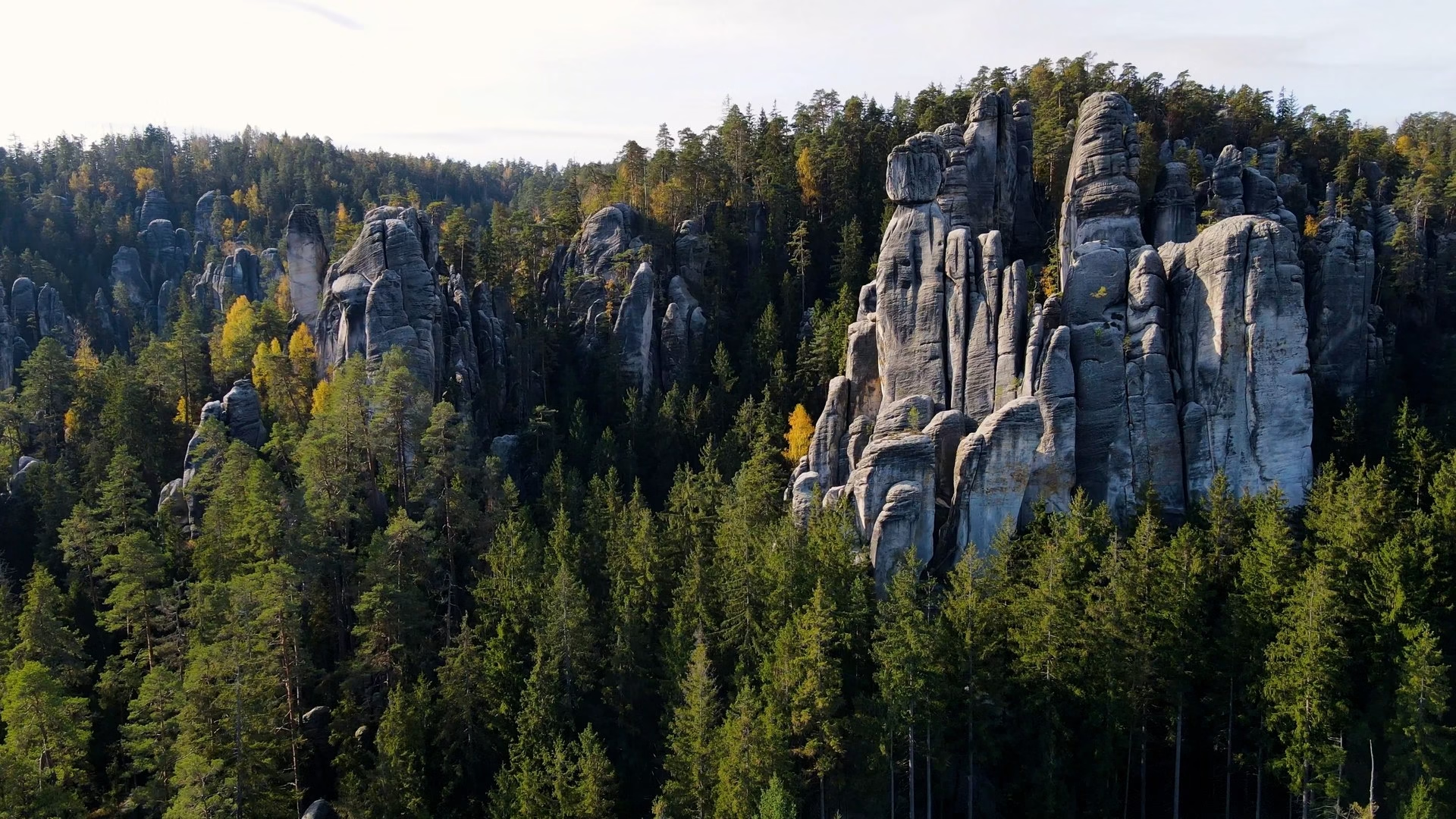
The best-known rock city in the Czech Republic lies roughly twenty minutes by car from Broumov. The Adršpach and Teplice sections together form the largest rock complex in Central Europe, and both are national nature reserves.
Tickets and parking are booked online for a specific day and time slot. You can then enter the rocks any time during your chosen hour, and no one rushes you along the trail. Once a slot sells out, there’s nothing left at the ticket office — and that does happen in summer.
Prices vary by season, and buying online is always cheaper than at the gate:
- Peak summer (1 July–31 August): adults €8 online, children 3–15 €5.50, seniors €6.50, family ticket €22
- Spring and autumn (March–June, September–November): adults €7, children €5, seniors €5.50, family ticket €20
- Winter (December–February): adults €5, children €3.50, seniors €4, family ticket €14
- Parking for a car costs around €8 online in peak season
You’ll find the fewest crowds in the first morning slot or outside the peak summer holidays. Winter Adršpach, with frost-covered rocks and empty paths, is arguably the prettiest version of the whole place.
Teplice Rocks
The other half of the same rock complex is often overlooked, and that’s a mistake. The Teplice rocks are wilder and less developed than the Adršpach side; you wander through narrow gorges between towers and get more of a sense of finding your own way.
The starting point is Teplice nad Metují, and the two sections can be linked via the so-called Wolf Ravines (Vlčí rokle). With a full day and decent fitness, this is the best option — two rock cities on a single ticket, and you can ride the train back between Teplice and Adršpach.
Ostaš Table Mountain
Ostaš, near Police nad Metují, is a table mountain with two rock mazes — the Upper and Lower Labyrinths. The trail to the Upper Labyrinth is 3.5 kilometres long and follows the blue-marked trail.
The rock formations here have wonderful names that kids remember better than adults do: Zbrojnoš s kuklou, Mohyla smrti, Výří brána, Čertovo auto and Kočičí hrad. Entry is free, and you’ll see a fraction of the crowds you’d find in Adršpach.
Ostaš is a perfect half-day trip and pairs well with Police nad Metují — a former Benedictine monastery with the Church of the Assumption of Our Lady is just minutes away.
Křinice and Broumov-Style Farmsteads
Křinice, right next to Broumov, is a village heritage reserve for a simple reason: it preserves a series of Broumov-style farmsteads, imposing farm buildings combining stone and log construction under one roof.
It’s architecture you won’t see anywhere else in the Czech Republic — it grew out of the German settlement of the Broumov region and adapted to the basin’s harsh climate. Walking through the village takes half an hour and is one of the cheapest and most beautiful things you can do in the Broumov region.
Across the Border into the Kladsko Valley
The Broumov region is surrounded by Poland on three sides, so crossing the border is a matter of minutes. The nearest crossing is Otovice–Tłumaczów, just outside Broumov.
The most popular destination on the Polish side is Kladsko (Kłodzko), where Kłodzko Fortress stands above the town — one of the largest in Central Europe — with kilometres of underground tunnels running beneath the old town. It’s roughly an hour’s drive from Broumov.
Closer by are Wambierzyce, a pilgrimage site nicknamed the “Silesian Jerusalem,” and Radków at the foot of the Table Mountains. Rock lovers will appreciate Szczeliniec Wielki — the highest peak of Poland’s Table Mountains, which is actually a continuation of the same sandstone plateau as the Broumov Walls. If you want to stay overnight on the Polish side, the closest option is Polanica-Zdrój beneath the Table Mountains.
On the Polish side, prices are in zloty, but cards are accepted almost everywhere. Bring an ID or passport — random checks at border crossings aren’t out of the question.
Náchod and the Way Back Inland
On the way back from Broumov, it’s almost impossible to avoid Náchod, roughly thirty-five kilometres beyond the ridge. Above the town stands a sprawling castle with a viewing terrace and a bear moat in the fortifications — a hit with kids.
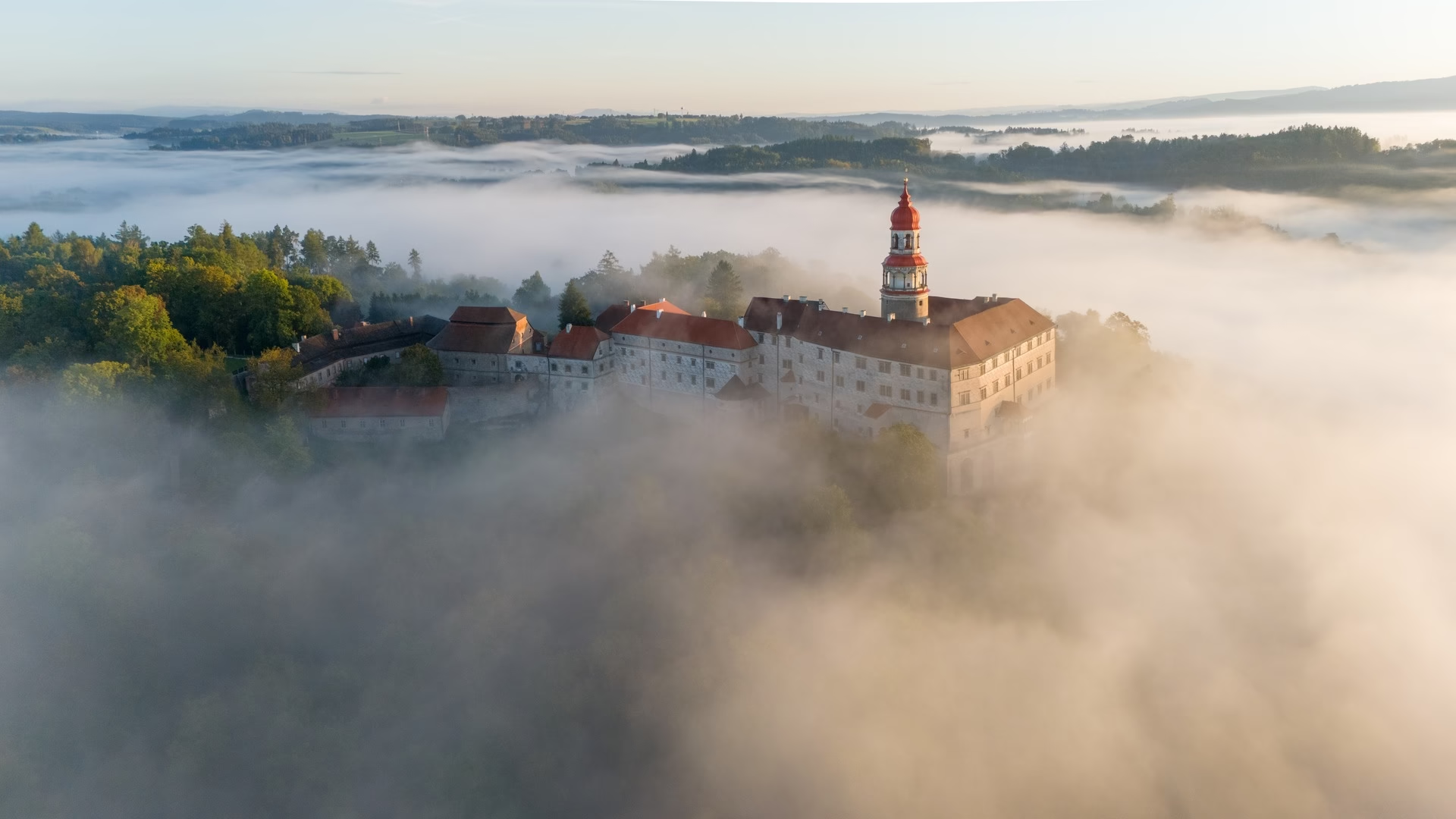
A stop of about ninety minutes fits easily into any return trip and breaks up what would otherwise be a monotonous drive along the E67. Náchod is also the last place before the Polish border with a normal range of shops and petrol stations, worth knowing if you’re continuing on to Kudowa.
Cycling the Broumov Region
The Broumov basin is ideal for cycling: flat minor roads between villages, minimal traffic, and a Baroque church every few kilometres. The tour of the Broumov Group of Churches is essentially a natural cycling route, and you can cover it more comfortably by bike in a day than by car, since you don’t have to worry about parking in every village.
The ridge is another matter. The climb up to Hvězda is a serious one, and the Broumov Walls themselves are for hikers only — you’ll leave your bike at the bottom. An e-bike pays off here.
Food and Places to Eat
Eateries in Broumov cluster around the monastery and Mírové náměstí — the monastery café and restaurant are right inside the complex, and the interwar-era Café Herzog is just a few minutes’ walk away.
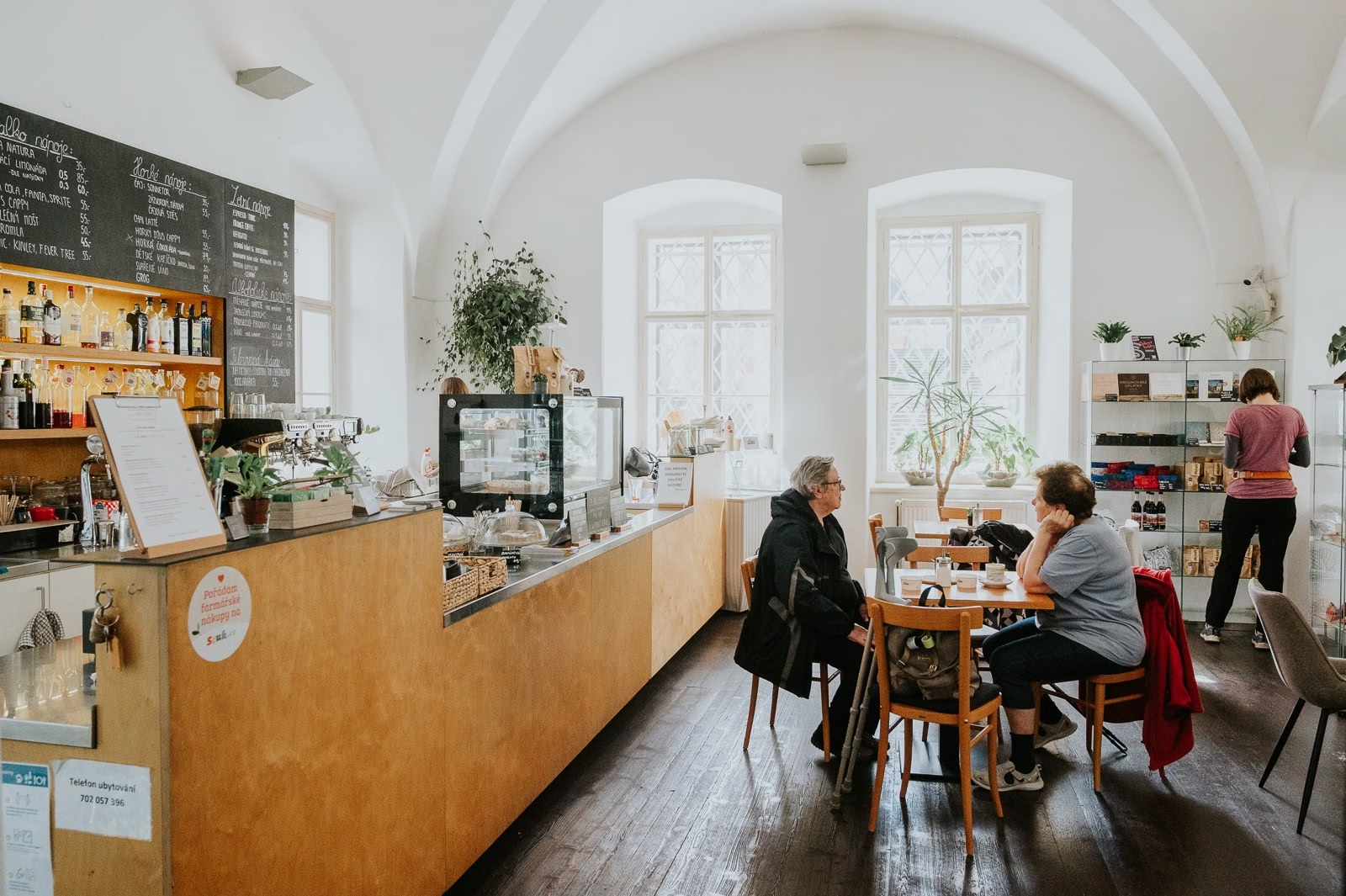
Where to grab coffee in Broumov:
- Café Herzog – an interwar-era café on the first floor of a building on Mírové náměstí, in a restored hall with stucco decoration and Venetian mirrors. Homemade cakes and pastries, soup available at lunchtime. Open weekdays 9:00–17:00, Saturdays until 15:00, closed Sundays.
- Café Dientzenhofer – the monastery café in the former grammar school building, serving coffee from a Trutnov roastery, blended specifically for the café.
Where to eat in Broumov:
- U Tří růží – a restaurant right inside the monastery complex, modern cuisine made from local ingredients in a historic setting. Open daily 11:00 to 21:00, until 22:30 on Fridays and Saturdays.
Places to eat and drink around the Broumov region:
- Hospůdka Ryba na hrázi (Hlavňov) – outdoor seating by the pond at the start of the trail into the Walls. The specialty is fried carp fillets.
- Andělská kavárna (Police nad Metují) – specialty coffee and homemade cakes just steps from the square, breakfast available. A good stop on the way to Ostaš or Hlavňov.
- Café&Bistro Na kus řeči (Teplice nad Metují) – a modern café and bistro in the town centre, a good stop on the way to the Teplice rocks.
Places in the villages are often closed outside the season, and finding a hot meal on a Sunday evening can be tricky even in Broumov itself — two things worth checking before you head out hungry from the rocks.
Where to Stay in Broumov and the Surrounding Area
Staying in the Broumov region is noticeably cheaper than in Adršpach, and the options are solid. In Broumov itself, expect mostly apartments in historic houses around the square; up on the Janovičky ridge you’ll find bed-and-breakfast guesthouses; and near the rocks, most places are longer-stay apartments.

In Broumov Town Centre, Walking Distance to the Monastery
If you’re mainly here for the monastery, churches and town, you can walk everywhere from here and skip parking altogether.
- Dům hostů – Klášter Broumov – Renovated monks’ cells right inside a national cultural monument. Twin and quad rooms with solid spruce furniture, bathrooms with views over the monastery garden, and a café and restaurant a floor below. Nowhere else in the Czech Republic can you sleep quite like this.
- Vila Kateřina – A guesthouse minutes from the square with a garden, seasonal outdoor pool, and free bikes. Rooms have balconies overlooking the town, breakfast included.
- Rodinný apartmán u Broumovského náměstí – Two hundred metres from the old town hall, with a fully equipped kitchen and a bathroom with a tub. The monastery and local pubs are all within walking distance.
- Apartmány Malé náměstí, Broumov – Apartments in a historic house with balconies overlooking the garden or the mountains, a kitchenette, and ski storage. Good value, mid-range option.
- Ubytování u Šimků – A small family-run place with twin rooms, quiet and no frills. Good value for a night or two.
Staying in the monastery cells is the one place in Broumov worth the trip on its own, even if you skipped everything else. The rooms are simple and the bathrooms shared — these are monks’ cells, not a hotel — but in the morning you step straight out into the monastery garden before it opens to the public.
On the Ridge and in the Surrounding Villages
A good option for a longer stay with a car. You’re out in the countryside, closer to the starting points for the Broumov Walls, and evenings are quieter than anything you’ll find in town.
- Penzion Jízdárna Hejtmánkovice – A former riding hall converted into a guesthouse just outside Broumov — hot tub, indoor and outdoor playgrounds, yoga, and horses nearby. Buffet breakfast, free parking. The best choice for families with children.
- Penzion PANORAMA Janovičky – A bed-and-breakfast on the Janovičky ridge above town, right by forest trails and ski tracks. It’s a ten-minute drive down into Broumov.
- Penzion Vyhlídka Janovičky – The other Janovičky classic, also with breakfast included and no prepayment required. A more budget-friendly stay up on the ridge.
- Ubytování Pod Hvězdou – Apartments right inside the Křinice village heritage reserve, beneath the Broumov Walls ridge. Pool, hot tub and mountain views. You can set off for Hvězda right from the door.
- Penzion Zemanův Dvůr – A rural guesthouse with its own restaurant and playground in Božanov, right next to the last and most refined of the Dientzenhofer churches in the group.
The most interesting address in the region is the Jízdárna in Hejtmánkovice – a farm building converted into a guesthouse that still carries the scale and feel of the original riding hall. With a hot tub, playground and horses just over the fence, it’s also the best option in the Broumov region for families with young children.
Near the Rocks — Police nad Metují and Teplice nad Metují
A good base for anyone who’s mainly come to climb and hike among the rocks, treating Broumov as an afternoon side trip.
- Ubytování pod Ostašem – An apartment with a terrace and kitchen right at the foot of Ostaš table mountain. Close to both Ostaš and the Broumov Walls ridge via Hlavňov.
- Apartment Ve Mlýně – An apartment in a historic mill building with a garden and outdoor fireplace, plus a ski equipment rental. The Teplice rocks are a stone’s throw away.
- W apartmány 2 Rocks – Modern apartments in Teplice nad Metují, roughly halfway between the Teplice and Adršpach rock formations.
If you’re mainly here for the rocks, stay in Police nad Metují or Teplice nad Metují. If you want peace and quiet, the monastery, and the Dientzenhofer churches, stay in Broumov itself — you’ll save yourself the daily drive back and forth over the ridge, which takes twenty minutes by car and isn’t much fun in fog.
Find accommodation around Teplice nad Metují
Practical Information
How to Get to Broumov
Driving from Prague, take the D11 motorway to Hradec Králové, then continue on the E67 to Náchod, and from there take Road 303 over the ridge into Broumov. The drive takes roughly two and a half hours.
From Moravia, drive via Olomouc and Králíky, or more comfortably via Poland — from the Ostrava area, the route through Poland is often noticeably faster.
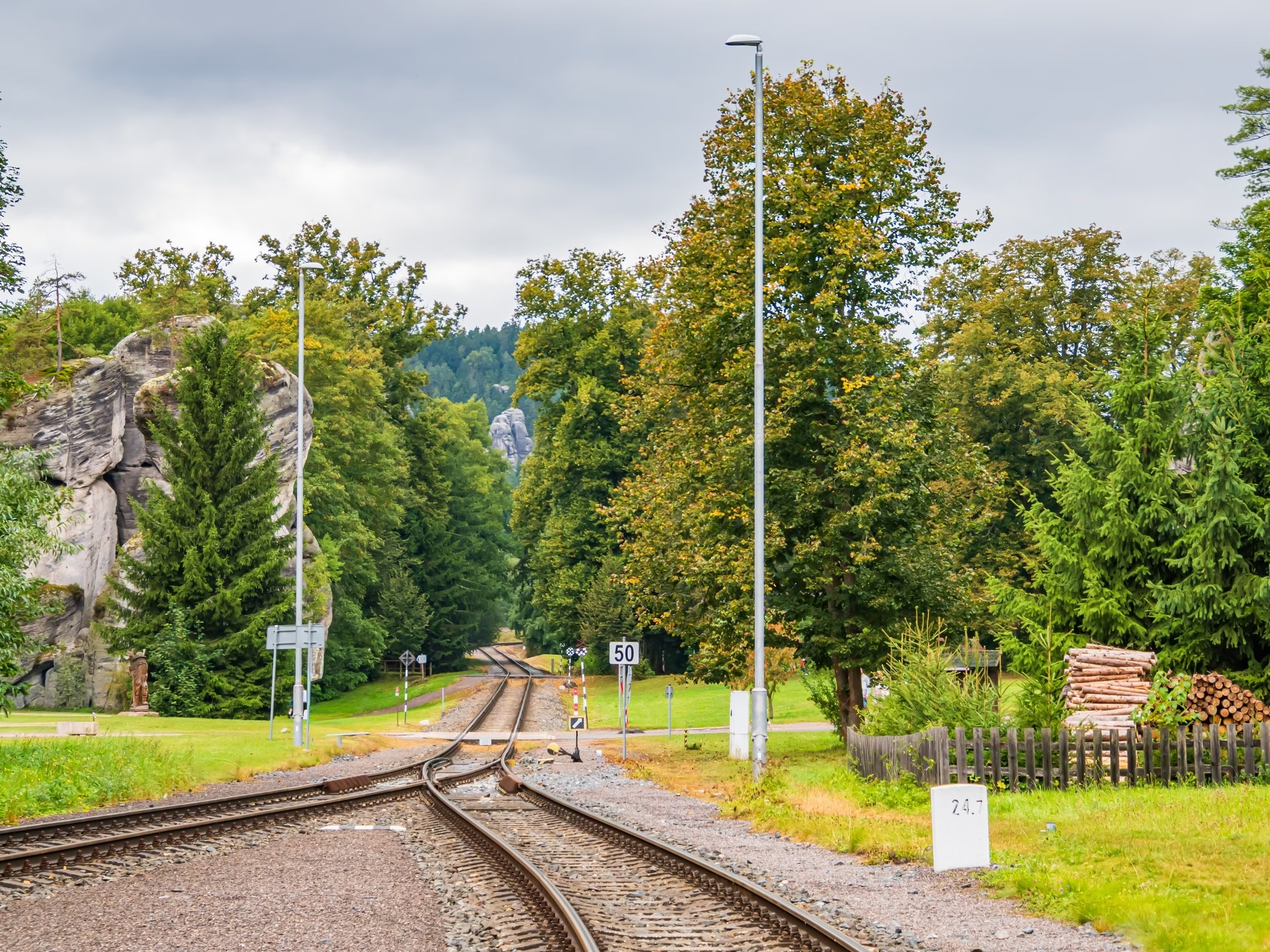
By train, you can reach Broumov via express service from Prague, changing in Hradec Králové or Starkoč, or slightly faster with an extra transfer in Pardubice. The journey takes 3:45 to 4 hours. The station is right in town, a ten-minute walk from the monastery across the square.
By bus, it’s not much better from Prague — only a few direct services run per day, taking just under 4 hours.
You can explore the Broumov region without a car, but it takes more planning.
Buses to the villages run infrequently, sometimes not at all on weekends. There’s a bus up to Hvězda, and a train to Adršpach — but touring the Dientzenhofer churches without a car or bike is essentially not doable.
When to Go
May and June offer the best combination of good weather and few crowds. The rocks are accessible, everything is freshly green, and the main tourist rush hasn’t started yet.
July and August have the advantage of the wooden church being open and the Treasures of the Broumov Region festival running. The trade-off is queues in Adršpach — but the Broumov Walls stay relatively empty even at peak season.

September and October are the photographic high point. The ravines of the Broumov Walls with autumn beech leaves and morning mist in the basin rank among the most beautiful sights the Czech Republic has to offer.
Winter works fine for the monastery and museum, but the rocks require experience and proper gear. Adršpach’s winter prices drop almost by half, and the frost-covered rock walls are worth the trip.
The Broumov Region with Kids
The rock cities are a treat for younger kids all on their own — the formations at Ostaš, with names like Čertovo auto (Devil’s Car) or Kočičí hrad (Cat Castle), sell themselves, and the Upper Labyrinth route is short.
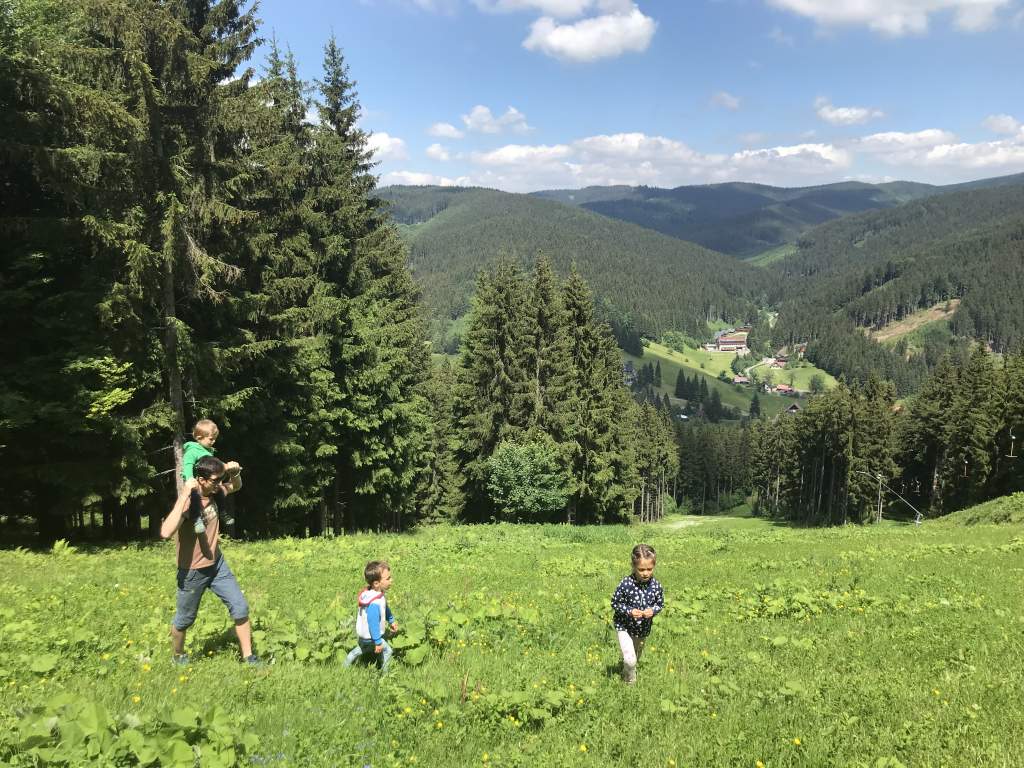
Hvězda is the safest bet for a first trip into the Broumov Walls: you can drive right up, the view is instant, and the hut with food is steps from the car park. Kovářova Ravine works well for children roughly six and up — for younger kids, the walking over roots and steps is a bit much.

In town, a rainy afternoon is saved by Alejka, a large wooden playground in the park, and by the monastery garden, where kids can run around or you can just relax. The monastery tour, on the other hand, suits older children better — seventy minutes of commentary is a lot for a preschooler.
What to Pack
It’s worth carrying some small cash — smaller pubs in the villages sometimes don’t take cards, and at Hvězda and Hlavňov that’s more the rule than the exception.
Download an offline map before heading into the rocks; signal drops out in the ravines, and the marking at ridge-trail junctions isn’t always obvious. And if you’re planning a trip into Poland, bring some form of ID and a bit of zloty just in case.
Frequently Asked Questions
How much time should I set aside for Broumov?
You can cover the town and the monastery tour in half a day. If you want to add the Broumov Walls, plan for a full second day. A long weekend is ideal: one day for the town and monastery, one day for the rocks, one day for a trip further afield or across the border into Poland.
How much does the Broumov Monastery tour cost?
The standard tour costs €10 for adults, €8 for seniors over 65, and €6 reduced (children 6–15, students up to 26, disability card holders). The family ticket is €24, and children under 6 go free. The night tour costs €12, and the extended From the Cellar to the Museum tour costs €14.
Can Broumov be combined with Adršpach in one day?
Yes, Adršpach is roughly twenty minutes by car from Broumov. Keep in mind you’ll need to book a timed entry ticket online for the Adršpach rocks in advance. A sensible plan is a morning slot at the rocks and an afternoon monastery tour, or vice versa.
Is there an entrance fee for the Broumov Walls?
No. The Broumov Walls are freely accessible along marked trails, with no admission fee or booking required. That’s the main difference from the Adršpach-Teplice rocks, where you can’t get in without an online ticket for a specific time slot.
Can you explore the Broumov region without a car?
A train runs to Broumov from Prague via Hradec Králové with a transfer in Starkoč, roughly once an hour during the day. In town, the station is a ten-minute walk from the monastery. But touring the Dientzenhofer churches in the surrounding villages without a car or bike is essentially not doable — buses run infrequently, and sometimes not at all on weekends.
When is the Broumov region least crowded?
In May, June, and then again in September and October. Autumn is also the loveliest season for the Broumov Walls — the beeches above the ravines turn gold and morning mist settles over the basin. During the peak summer holidays, crowds mostly gather in Adršpach; the Broumov Walls stay relatively quiet even then.