This post is also available in:


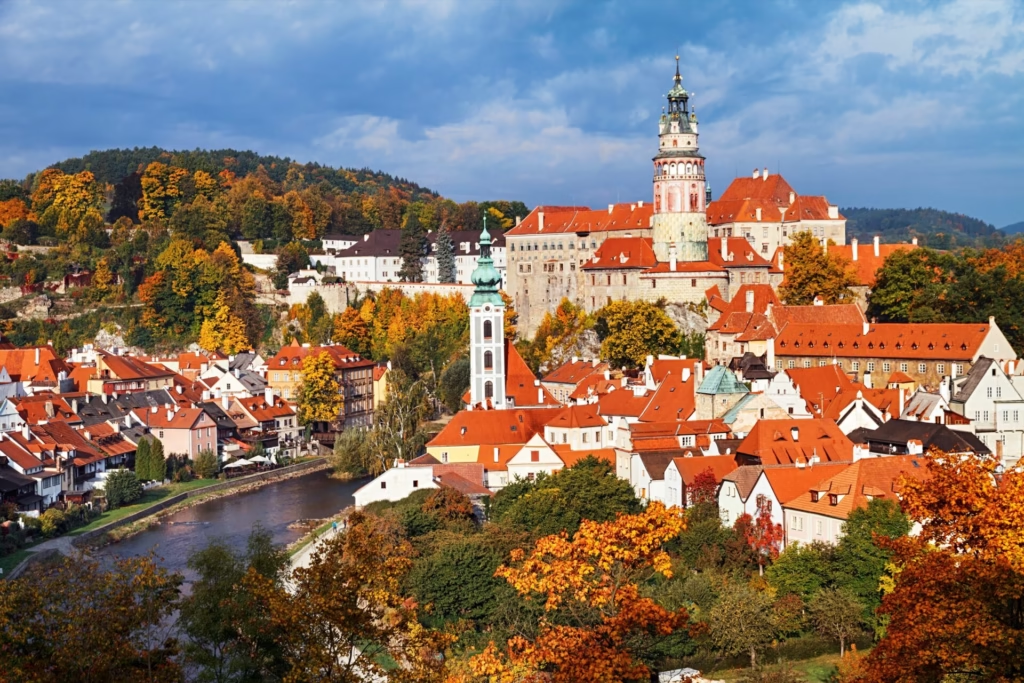
Cesky Krumlov is one of the most photogenic towns in Czechia, yet most visitors just rush through and miss the best of it. They arrive at ten, walk up Latran to the castle, snap a photo of the tower from the Barber’s Bridge, and leave by four.
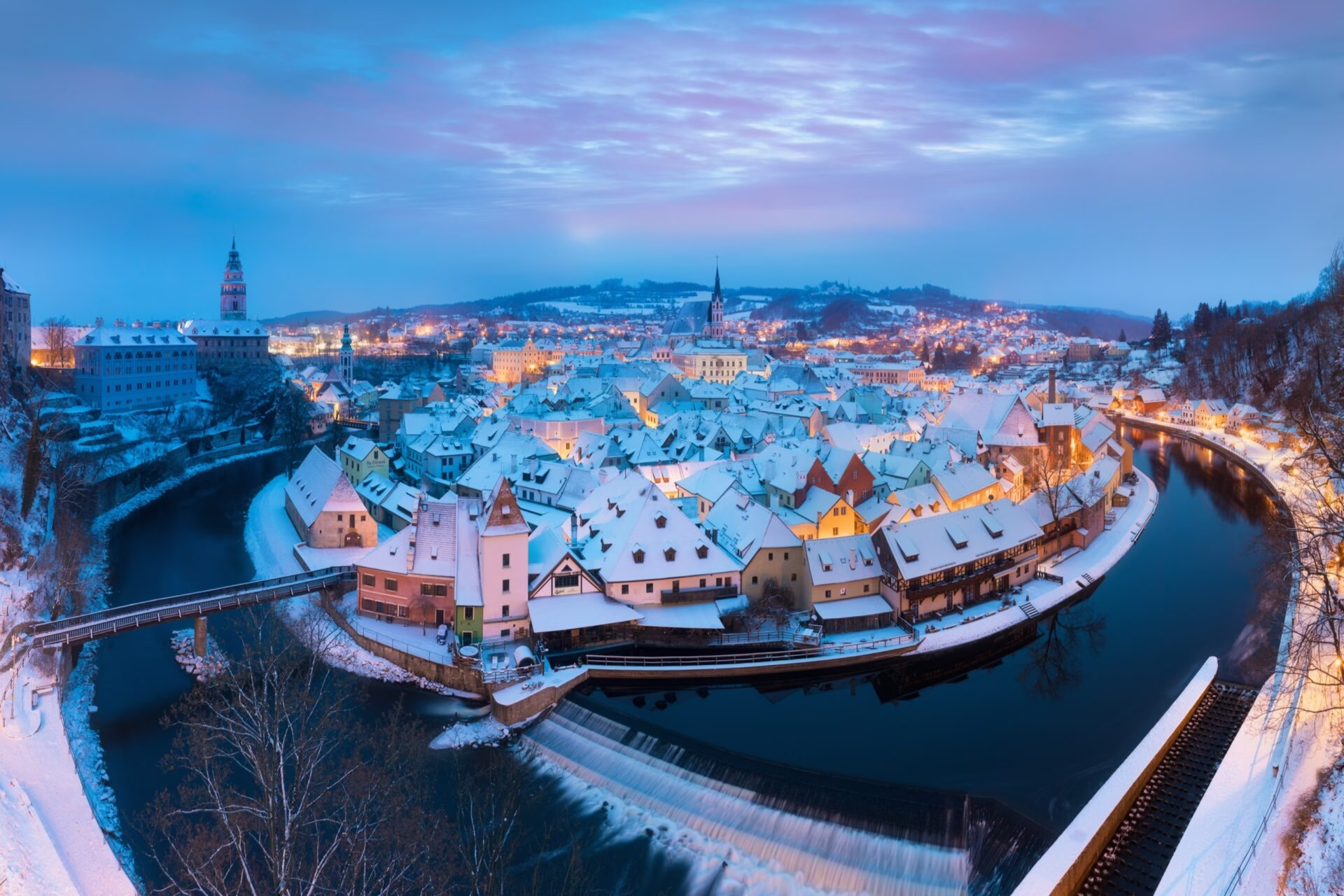
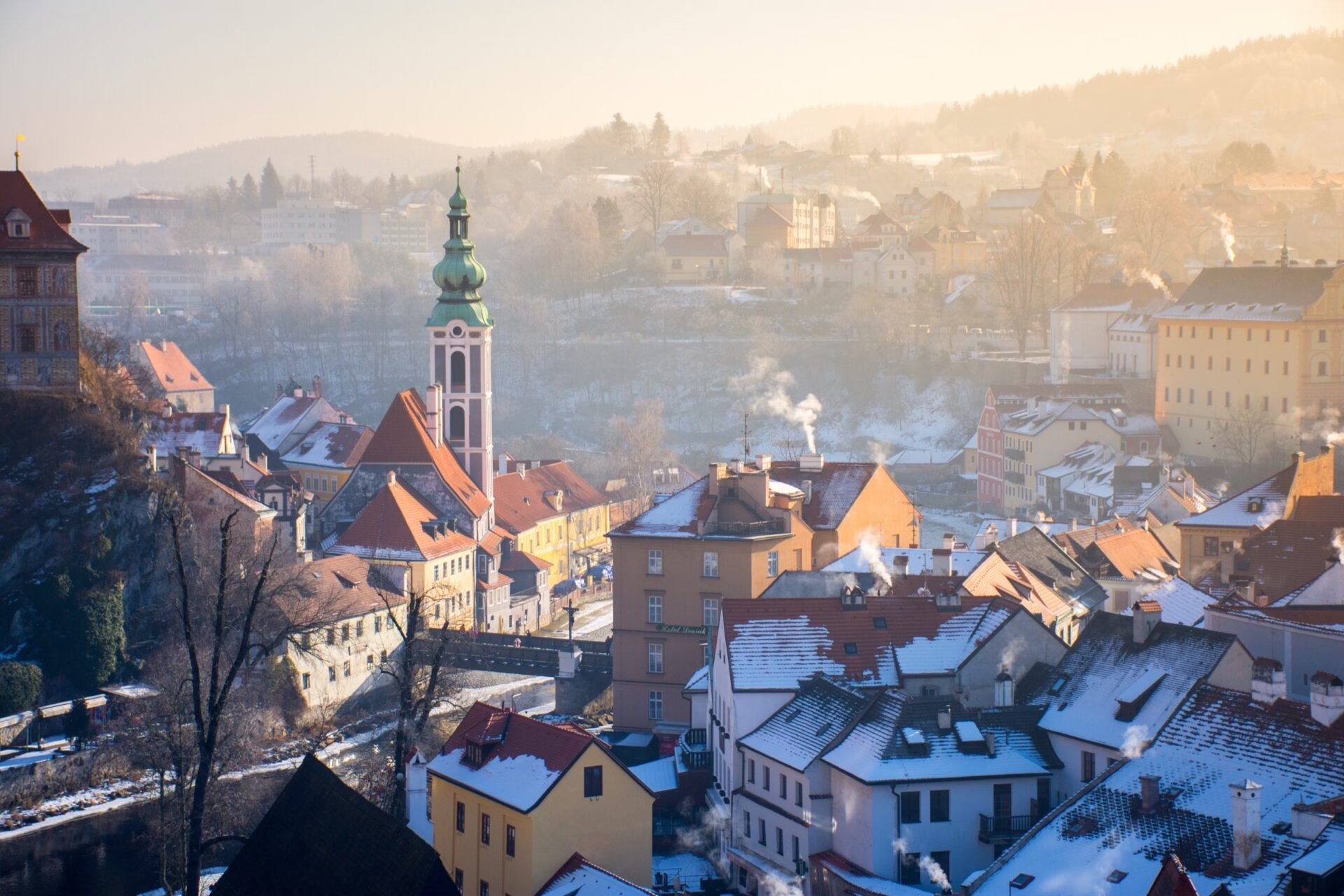
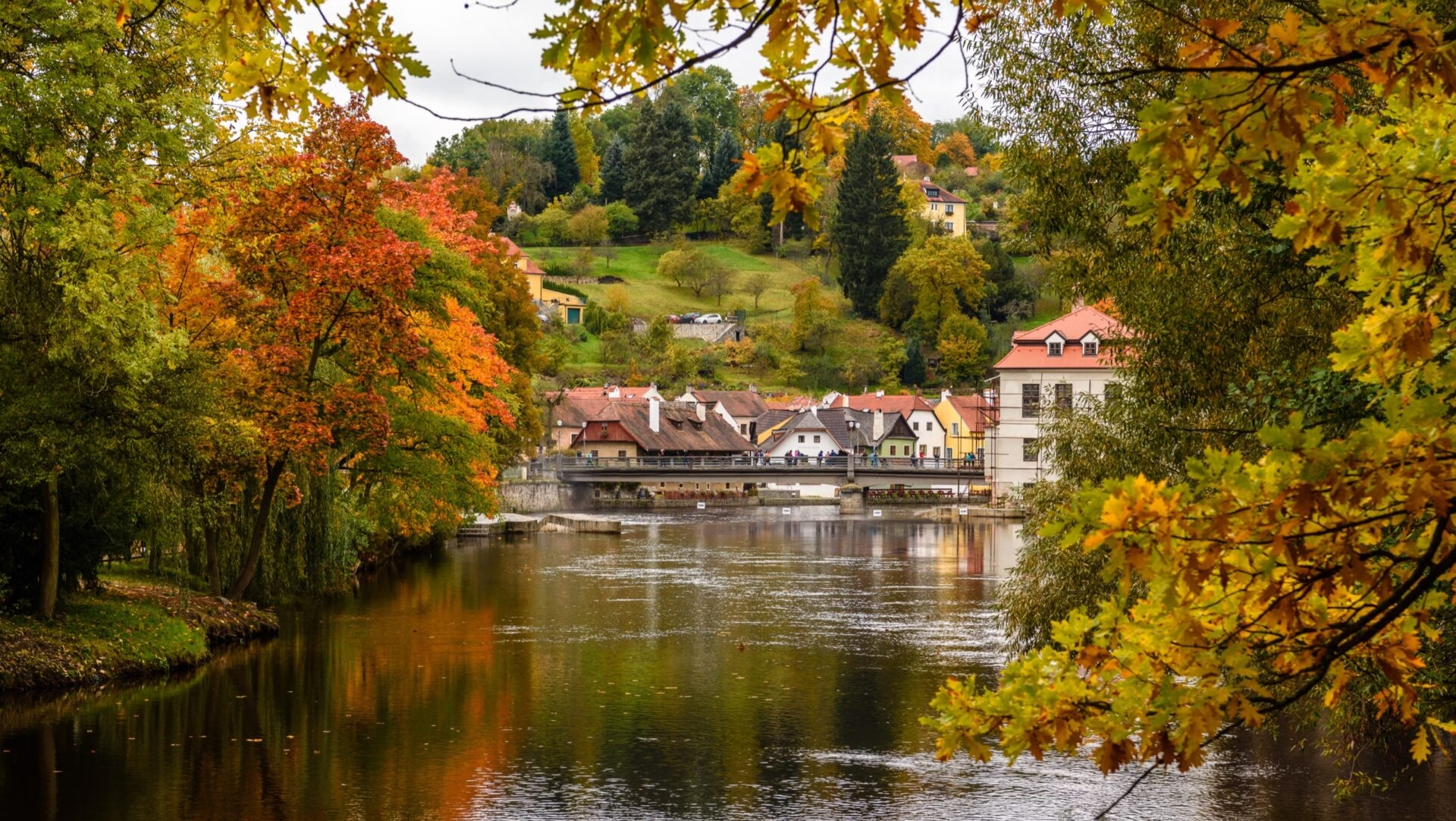
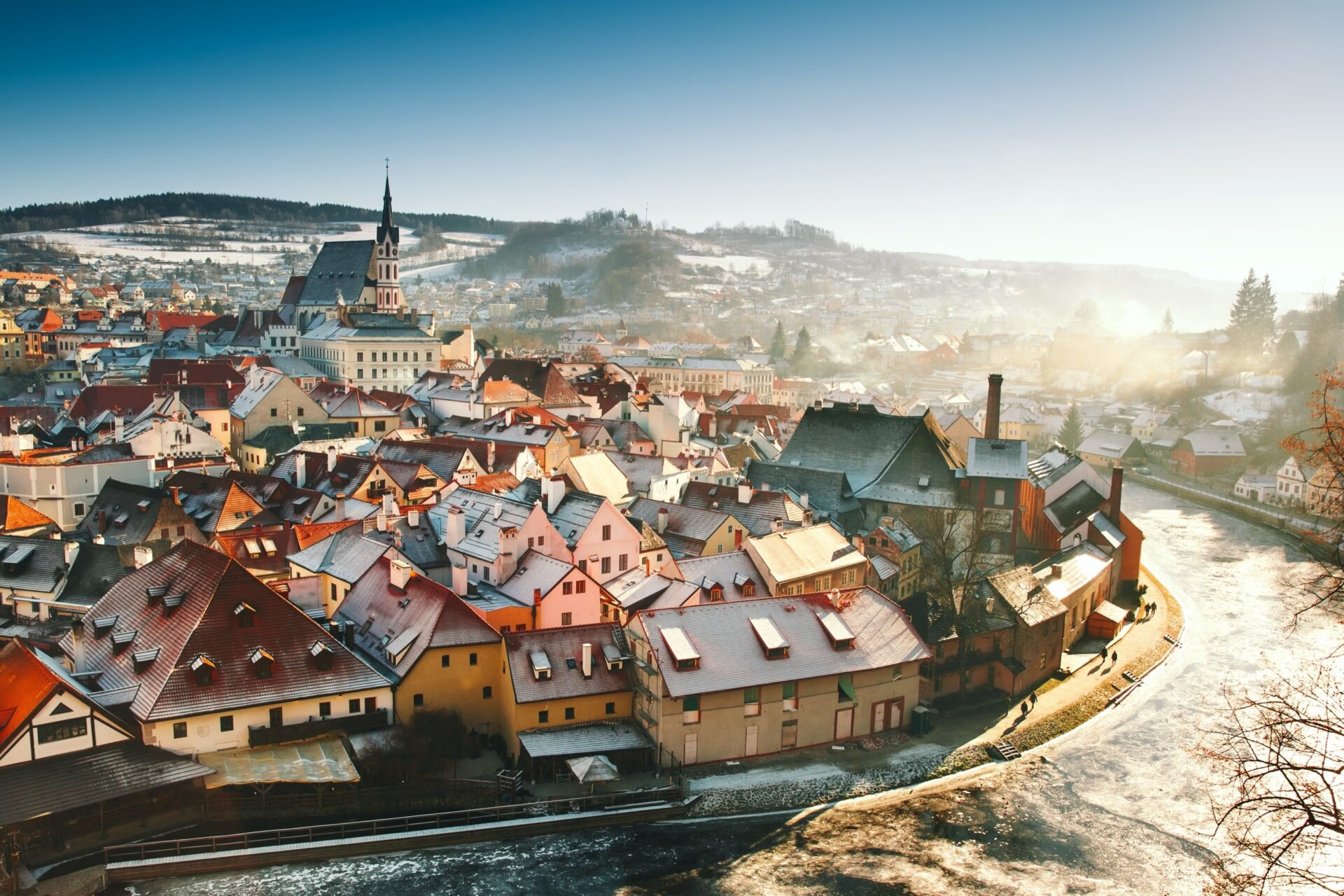
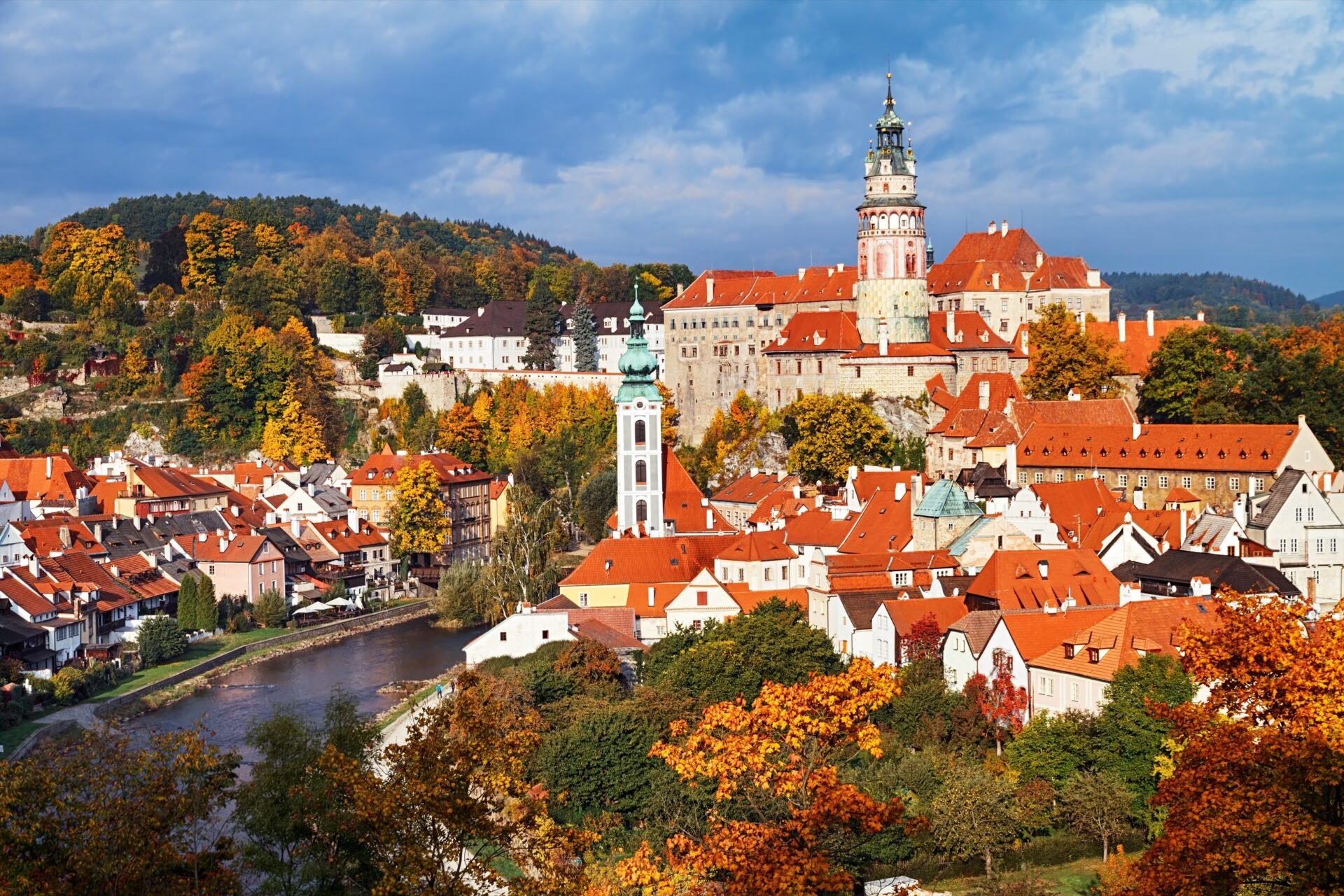
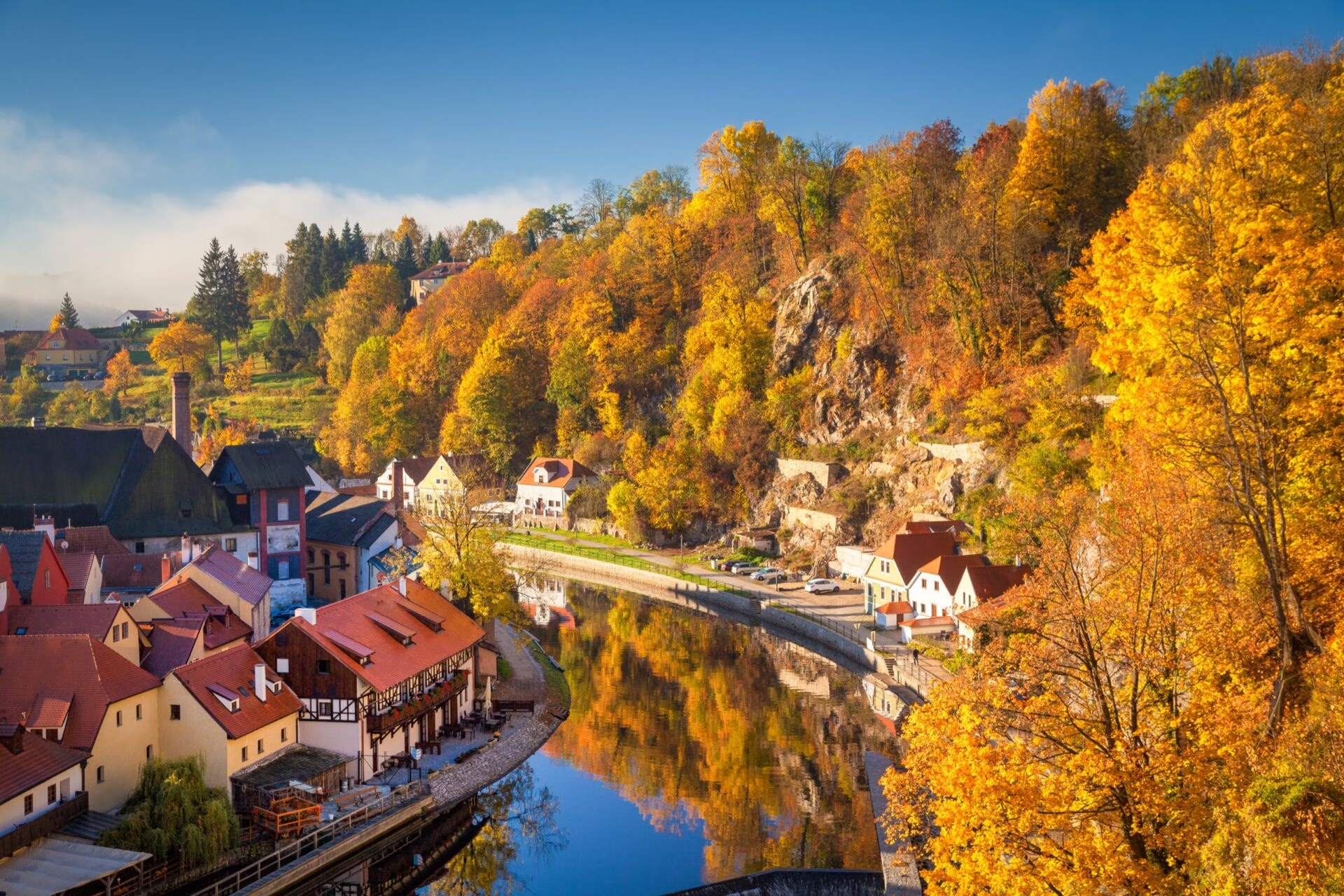
It doesn’t take much to do it right. Before nine in the morning and after six in the evening, Krumlov belongs to locals and those staying overnight. The lanes below the castle are half-empty and you get a real chance to experience the town as something other than a crowded Disneyland. Visiting outside peak season helps just as much — for me, Krumlov is at its most beautiful in autumn and in winter, when it snows.
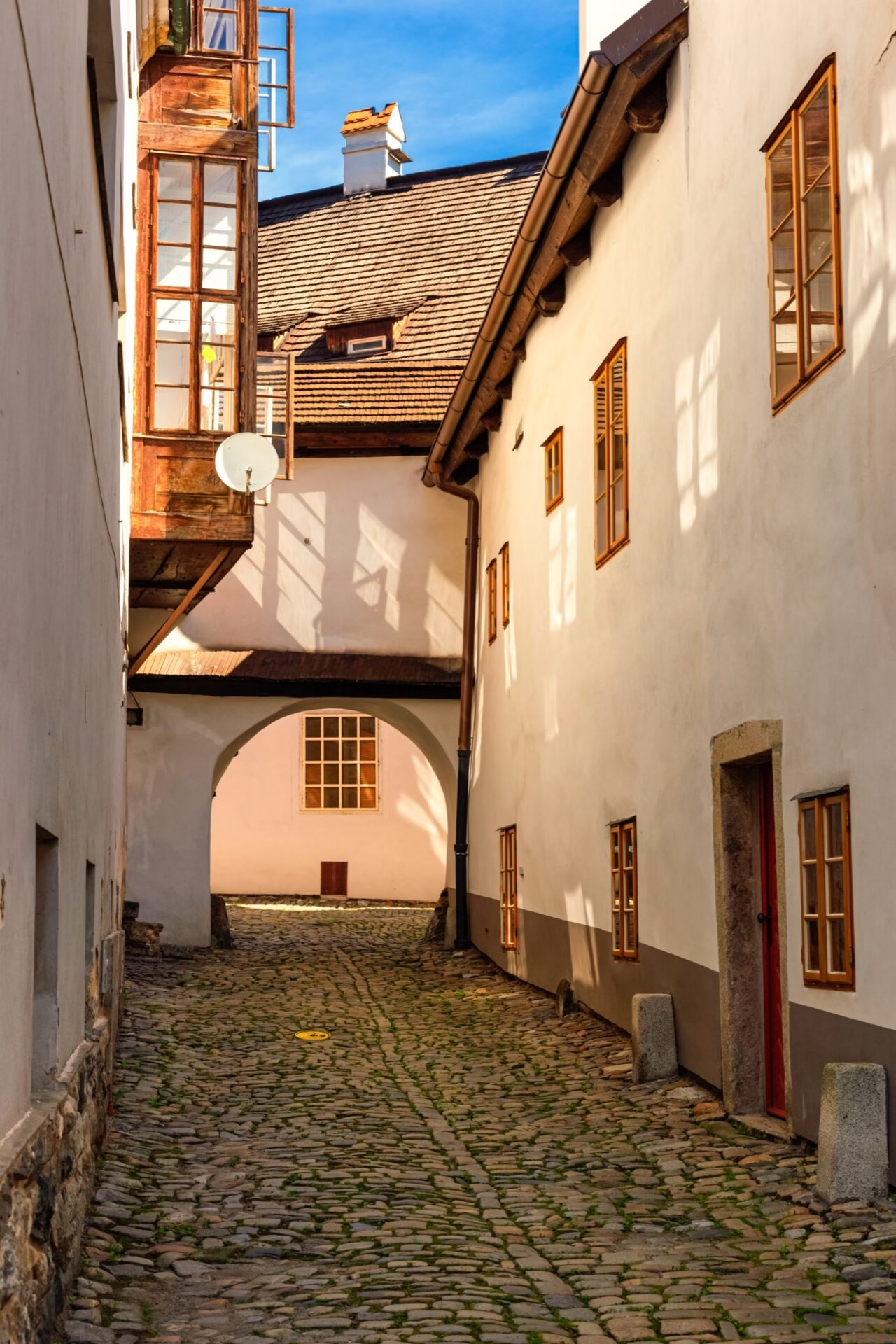
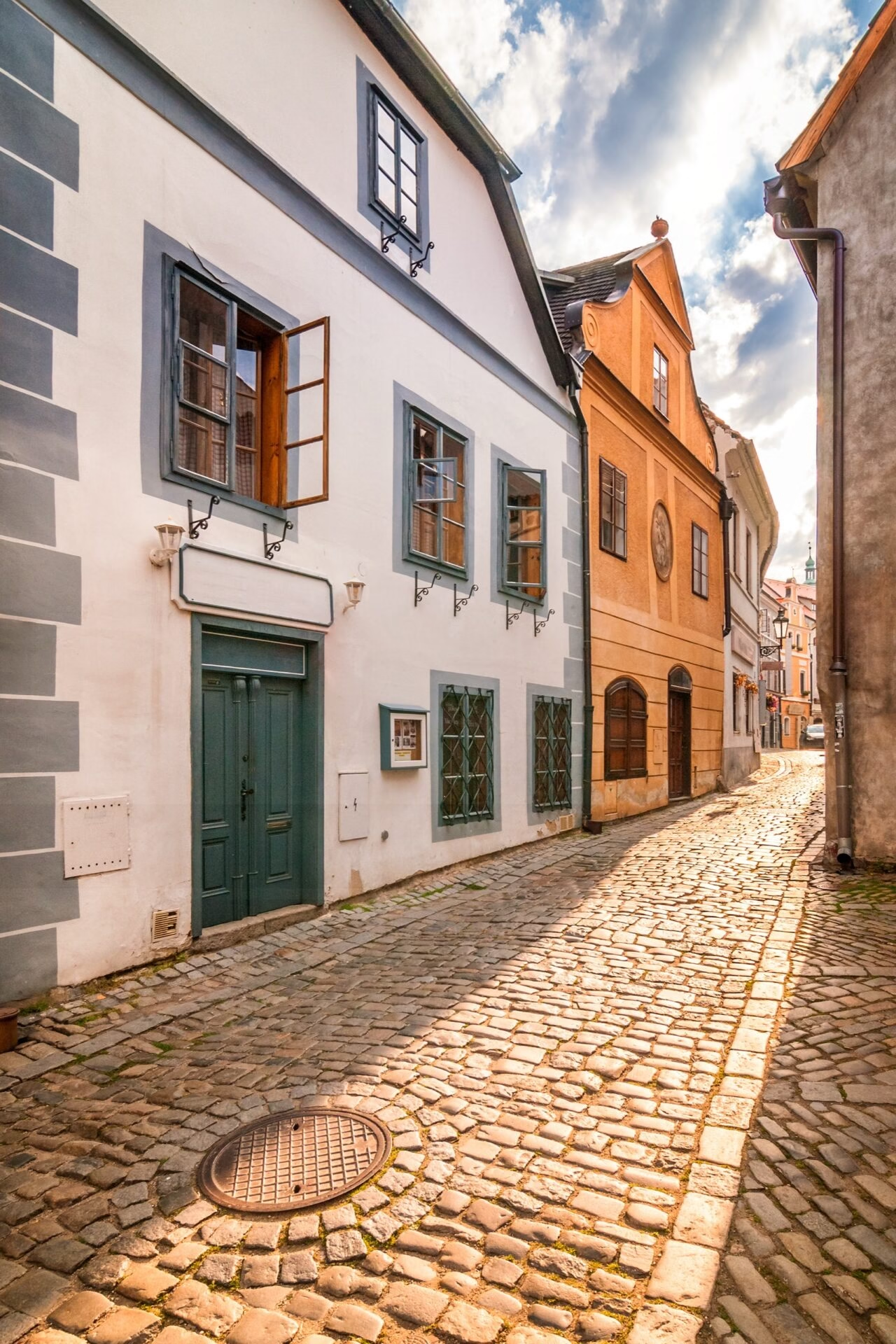
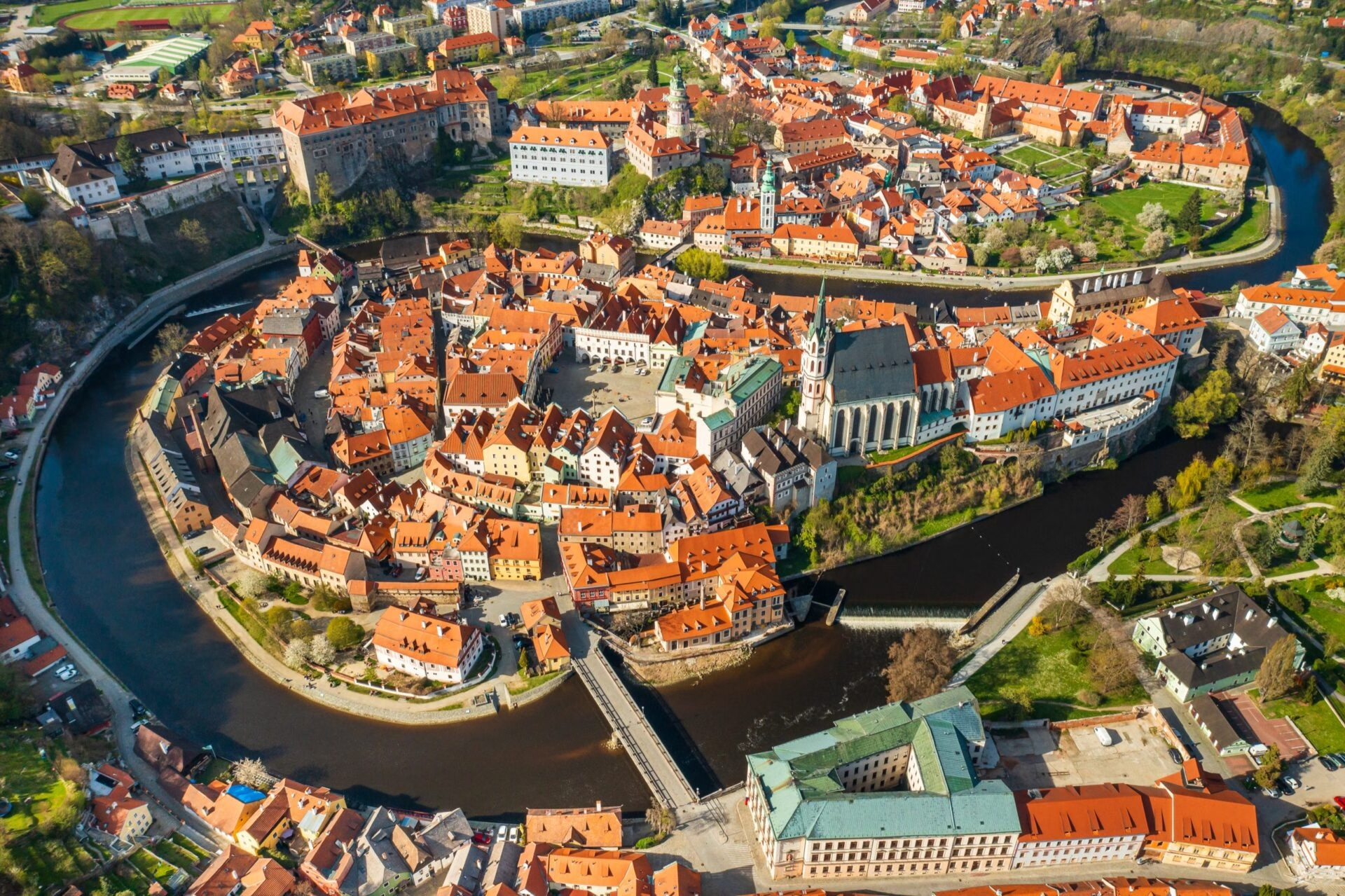
The historic core has been on the UNESCO list since December 1992, and the castle — with five courtyards and more than forty buildings — is the second-largest castle complex in Czechia after Prague Castle.
Add to that a baroque theatre that’s among the best preserved in the world, plus a revolving auditorium you won’t find anywhere else.
Why Cesky Krumlov Deserves More Than a Day Trip
Roughly two million people visit Krumlov each year. Only just over 200,000 of them actually go inside the castle. The vast majority just cross the courtyards, walk over the Cloak Bridge, photograph the skyline and leave. The crush is outside, in the streets and on the bridges — not in the castle chambers or museums.
One reason is obvious: a proper visit takes time, and time is exactly what a quick day trip won’t give you.
When the town is quiet
You’ll mostly run into organised tour groups between ten and five. Castle visitor numbers get close to capacity in mid-season, and you’ll notice it instantly on the bridges. On the other hand, the town is empty from sunrise to nine, and it starts to calm down again after five in the afternoon.
Across the year, unsurprisingly, most people come in July and August, fewest in February and November. But watch out in winter: from November to March the castle’s interior tour circuits are closed, leaving only the castle tower with its museum and the town museums running on reduced hours.
The best balance of good weather and low crowds is September. The castle runs at full capacity, the revolving auditorium plays until early in the month, days are still long, and there are noticeably fewer buses.
Top 10 Things Not to Miss in Cesky Krumlov
- The Baroque Castle Theatre – one of the most comprehensively preserved in the world, including its original stage machinery.
- The Castle Tower – 162 steps up to the best view of the town wrapped in the Vltava’s meander.
- The Cloak Bridge – a 40-metre-high arcaded structure with two levels of covered walkways.
- The Castle Garden – four terraces, a cascade fountain and the rococo Bellarie summer pavilion, free to enter.
- The Revolving Auditorium – a theatre where the whole audience, seats and all, rotates, with a real garden as the backdrop.
- The Masquerade Hall on Tour Circuit I – rococo illusionistic paintings from 1748.
- Museum Photo Studio Seidel – a preserved studio with an archive of glass negatives from old Sumava.
- A morning walk through the centre before nine – the only way to see Krumlov without the crowds.
- Rafting down the Vltava below the castle – a view of the castle and town from the water.
- Kriz Hill – a 45-minute walk from the main square, with the town and the Blansky Forest landscape laid out below.
A Short History: Why Krumlov Looks the Way It Does
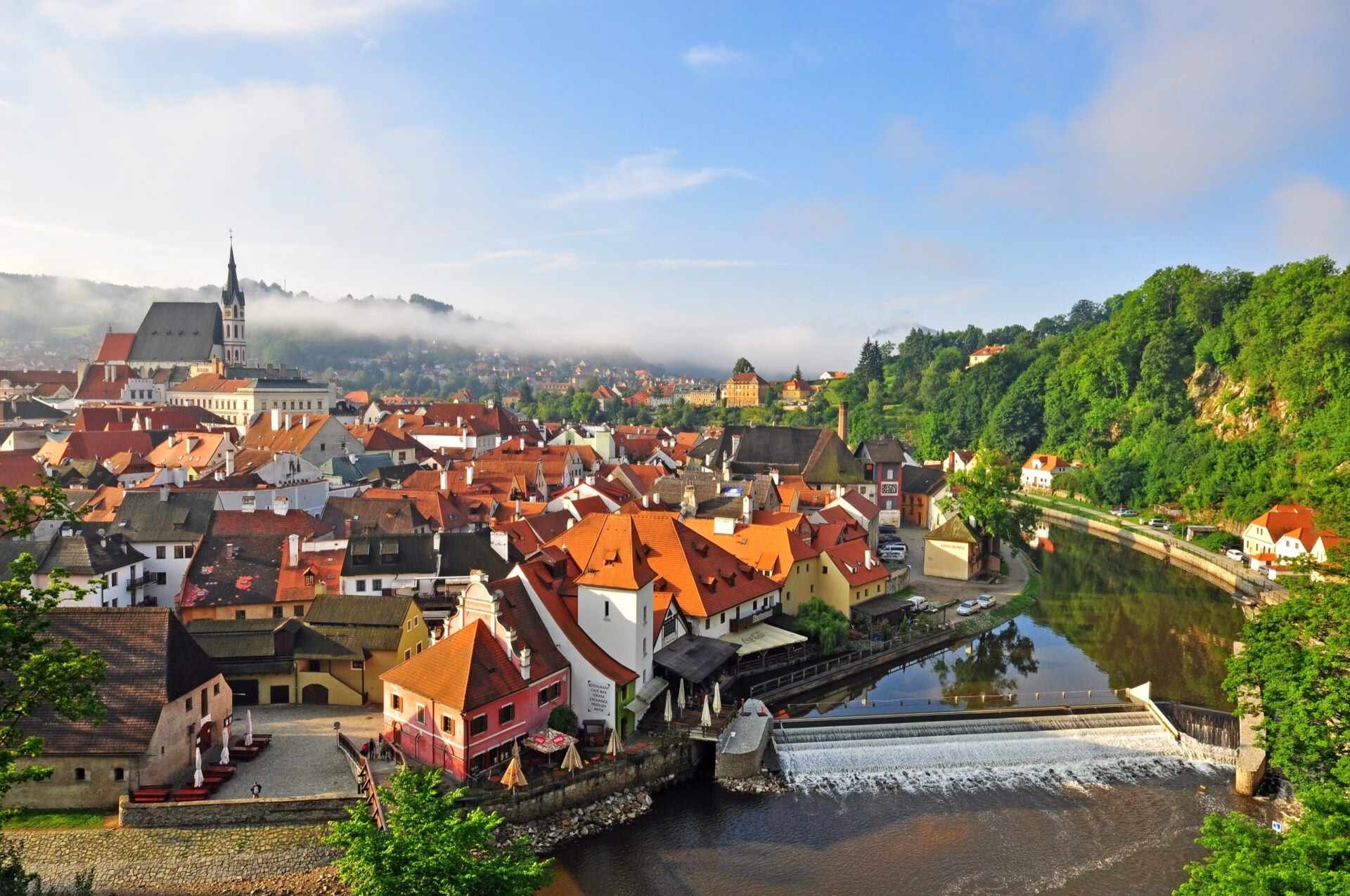
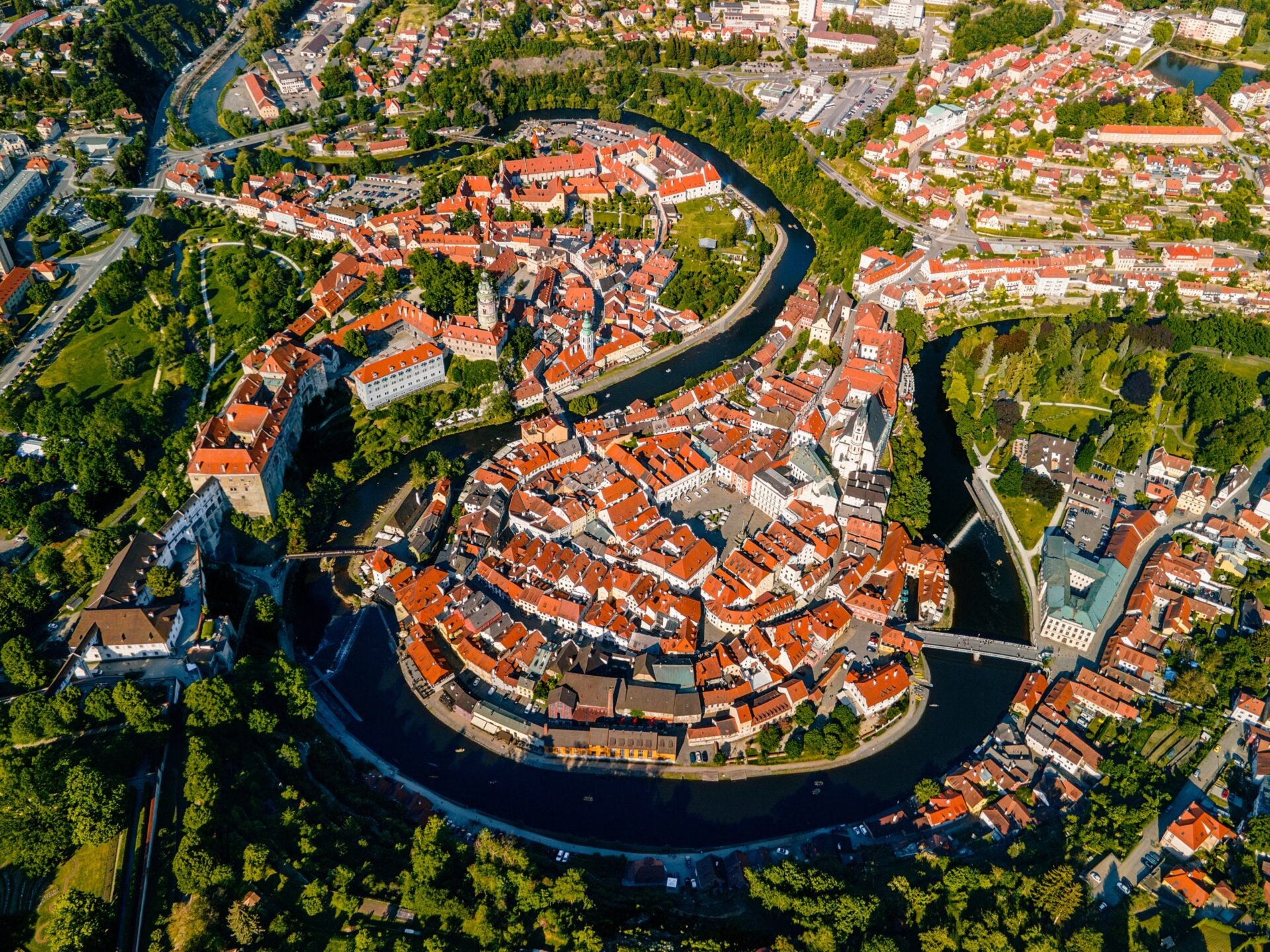
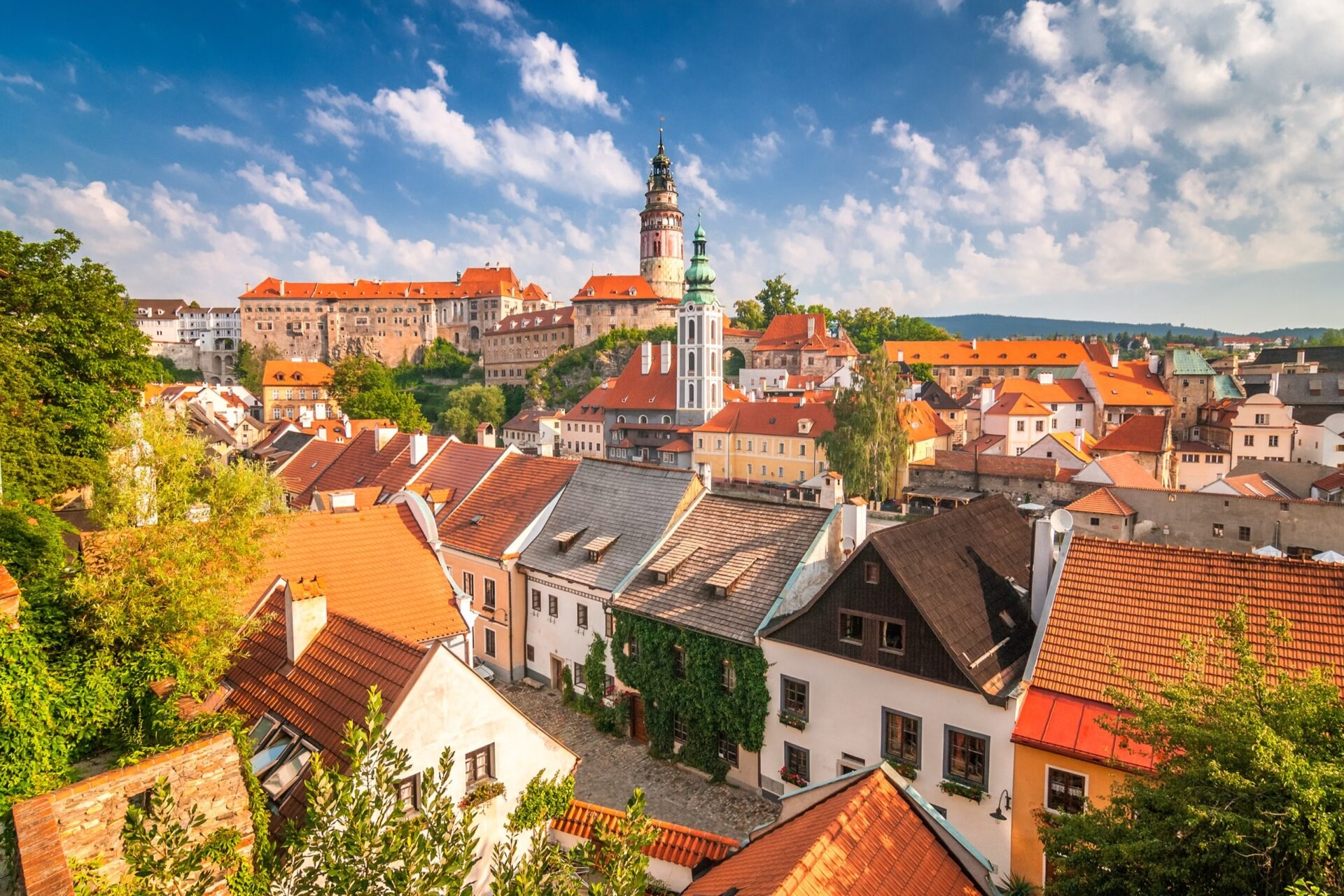
The town sits inside a sharp bend of the Vltava. The rocky spur above the river was naturally defensible, so a castle rose here in the 13th century. The river then locked the town into a loop and stopped it from expanding — which is exactly why the old core has survived intact.
When the Krumlov branch of the Vitkovci family died out in 1302, the estate passed to the Rosenbergs, and Krumlov became their main seat. The last Rosenberg, Petr Vok, was forced to hand it over to Emperor Rudolf II in 1601 to cover his debts.
From 1622, three generations of the Eggenberg family held the estate — we owe the baroque theatre and the first version of the Cloak Bridge to them. In 1719 their heirs, the Schwarzenbergs, took over, and under them Krumlov acquired its definitive baroque and rococo look.
Then, for two hundred years, almost nothing happened. The town escaped the industrial revolution, no great fire hit it, no urban clearance rebuilt it. What you see today is largely the town as it stood in the 18th century — which is exactly why the historic core made the UNESCO list on 4 December 1992, as one of the first three Czech sites.
Czechia has other UNESCO sites where a whole historic ensemble has survived, not just a single building — like the Renaissance chateau and square in Litomysl or the Jewish quarter and basilica in Trebic.
Around the same time the Rosenbergs were building in Krumlov, the Czech kingdom’s finances ran on silver from Kutna Hora. We have a full guide to it — read about what to see in Kutna Hora, including the Sedlec Ossuary and St Barbara’s Cathedral.
How Long to Spend Here
One day
You can manage one castle tour circuit, the tower, the garden and a walk through the centre. If it’s a first visit tacked onto a Sumava holiday, that’s worth doing — but I wouldn’t drive a long way just for a day trip.
If you have no other option, head out as early as possible in the morning and save the interior tour for midday — that’s when it’s worst outside and calmest inside.
Two days
The ideal minimum. Day one: the castle — Tour Circuit I, the tower and the garden. Day two, the town: Museum Photo Studio Seidel, the Monasteries or the Egon Schiele Art Centrum, St Vitus’s Church and the viewpoints. Most importantly, you get one evening and one morning in the town without the crowds.
Three days or more
Add Tour Circuit II or the Baroque Theatre, a river trip on the Vltava, the hike up Kriz Hill, and an evening at the revolving auditorium. This is also the point where the graphite mine and the lesser-known museums become worth the time.
Buy tickets for the Baroque Theatre and the revolving auditorium first, before you even start sorting out accommodation. The theatre takes a maximum of 20 people per tour and sells out well in advance.
Browse accommodation options in Cesky Krumlov
The State Castle and Chateau of Cesky Krumlov
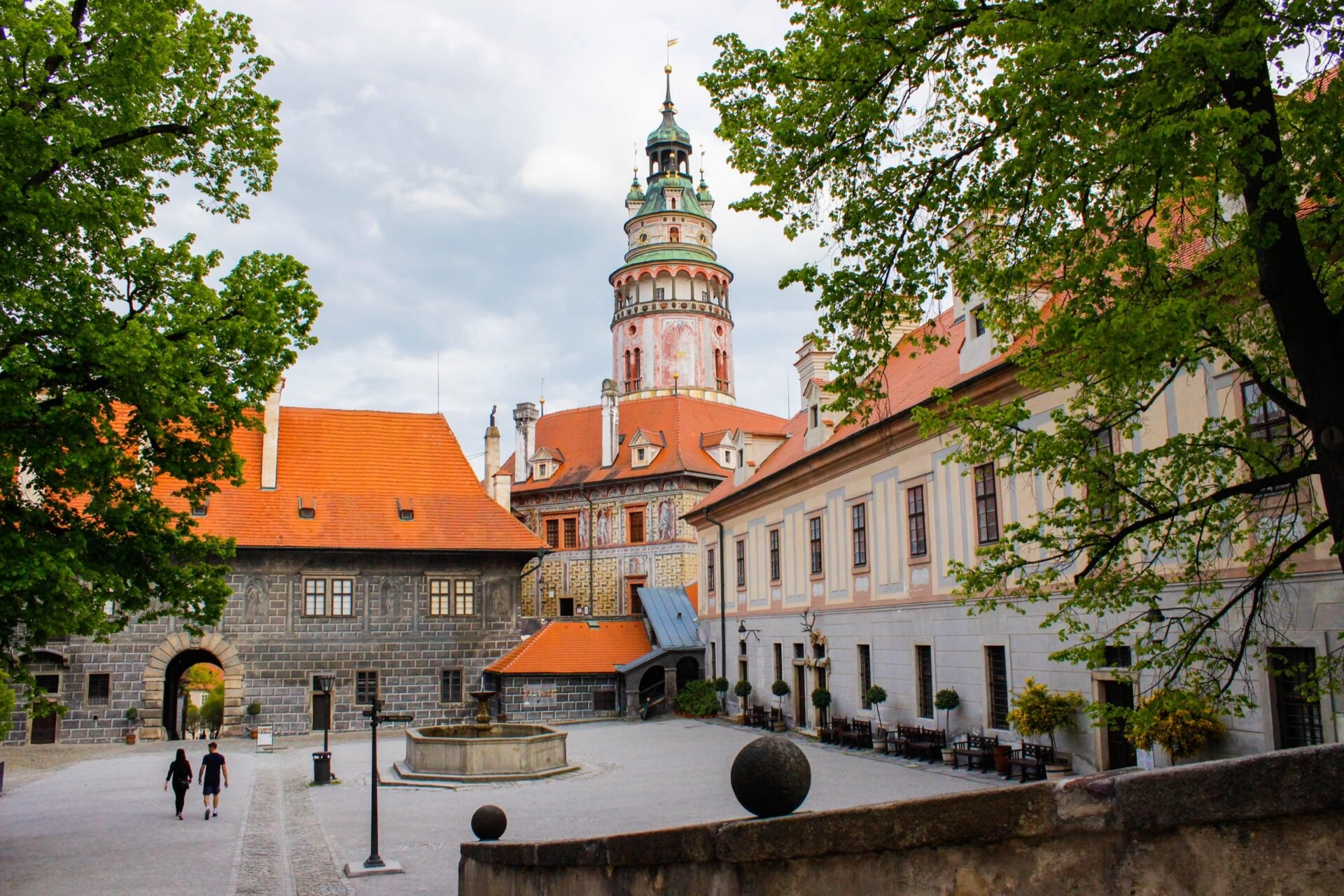
The castle complex spreads across a rocky spur above the Vltava — five courtyards and more than forty buildings. Walking through the whole thing is free; you only pay for the individual tour circuits. That’s exactly why so many people “see” the castle without ever stepping inside it.
The ticket office is in the Second Courtyard. In peak season, I’d recommend booking every circuit in advance; for the Baroque Theatre and Bellarie, booking is mandatory.
Tour Circuit I – Renaissance and Baroque Apartments
The default choice if you’re only visiting the castle once. 55 minutes through original interiors, including the Chapel of St George and, above all, the famous Masquerade Hall.
The Masquerade Hall is reason enough to pick this circuit. In 1748, Josef Lederer covered it in illusionistic paintings of masked figures — jesters, comedians, ladies — who seem to stare straight at you. After a few seconds you’ll stop being able to tell where the wall ends and the crowd begins.
Capacity is 45 people, so expect a full group in season. Admission is 300 CZK (roughly €12), reduced 240 CZK, children 6–17 90 CZK, under 5s free.
Tour Circuit II – The Schwarzenberg Apartments
Also 55 minutes, but in groups of no more than 20 — noticeably calmer. This circuit is dedicated to the Schwarzenberg family, their portrait gallery and 19th-century living quarters.
The main reason to choose it comes at the end: the tour finishes inside the connecting corridors of the Cloak Bridge, the only way to get in there.
Admission is 260 CZK (roughly €10.50), reduced 210 CZK, children 80 CZK. Note — in September it’s usually only open on weekends, while Circuit I runs all week.
The Baroque Castle Theatre
Krumlov’s biggest one-of-a-kind treasure, and the thing most visitors skip. The National Heritage Institute calls it one of the most comprehensively preserved baroque theatres in the world.
It’s not just the building that survived, but the entire working setup: the original stage, orchestra pit and stage machinery — wooden mechanisms for changing scenery and creating sound effects — plus hundreds of historic costumes, lighting fixtures and original librettos.
The Eggenbergs built it in 1680–1682; the Schwarzenbergs rebuilt it into its current form in 1765–1766, and it’s remained essentially unchanged ever since.
The tour lasts about 50 minutes, takes a maximum of 20 people, and booking is mandatory. Admission is 400 CZK (roughly €16), reduced 320 CZK, children 120 CZK — the most expensive circuit in town, and worth every cent. Book well ahead or you won’t get in.
The only chance to see the theatre actually in use, not just as an exhibit, is the Baroque Night at the Castle — a candlelit baroque opera performance held as part of the Chamber Music Festival around late June and early July.
The Castle Museum and Castle Tower
The only self-guided circuit — you go at your own pace with an audio guide, a big plus with kids. The museum holds items from the castle’s collections relating to all three noble families.
But the tower is the real draw: 162 steps up to an arcaded gallery 86 metres above the Vltava. Only from up here do you truly understand the town’s layout — the river’s meander, the rooftops locked in the loop, the castle on the spur above it all.
Admission is 280 CZK (roughly €11), reduced 220 CZK, children 80 CZK; allow 55 minutes. A practical bonus: the tower and museum have a longer season than the interior circuits, staying open until 20 December. If you’re visiting in November, this is your only castle option.
The Cloak Bridge
A 30-metre-long and 40-metre-high arcaded structure carrying a roadway and two levels of covered corridors. The name comes from the “cloak” — a deep moat that made the castle harder to conquer in medieval times.
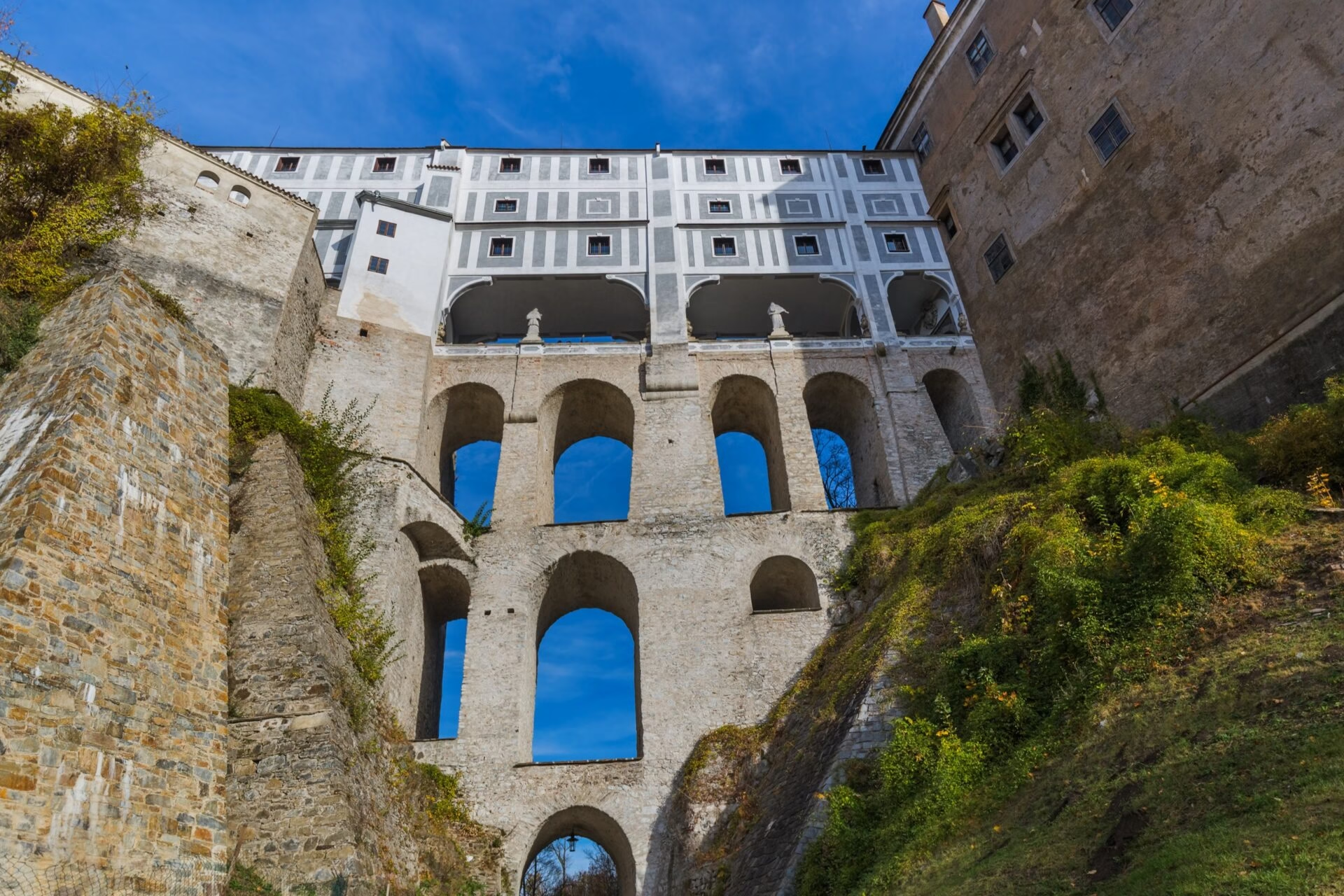
The corridors served a practical purpose: the lower one connects the Masquerade Hall to the castle theatre, and the upper one runs from the picture gallery to the castle garden and continues all the way to the Minorite monastery on Latran. The nobility could get from their apartments to their theatre box without ever stepping outside.
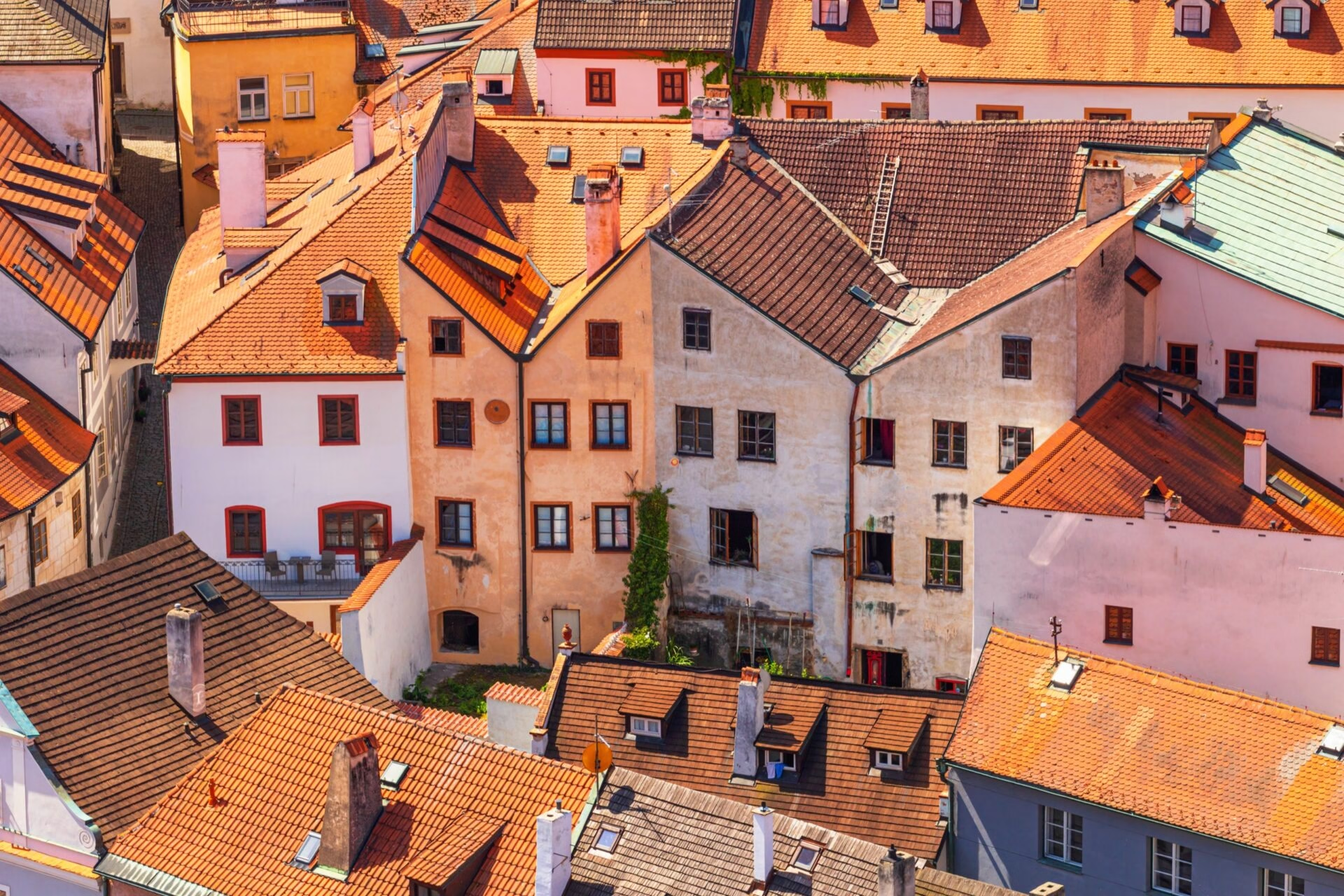
Walking across the bridge’s roadway is free, and it offers one of the best views of the red rooftops of the centre. Access to the corridors themselves, though, only comes with Tour Circuit II.
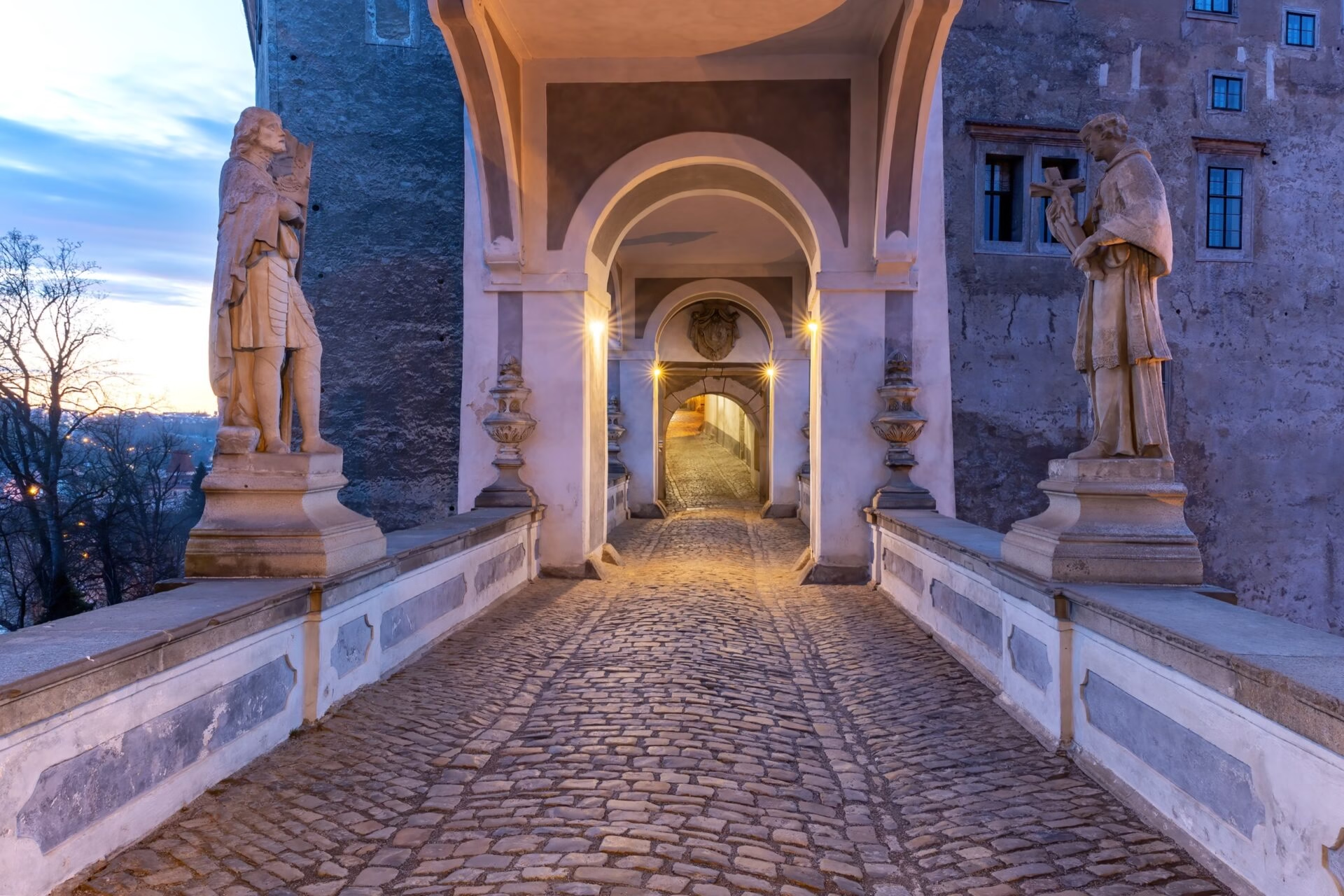
The Castle Garden and Bellarie Summer Pavilion
The largest part of the complex, and the best value in town — entry is free. The baroque garden, from the second half of the 17th century, is split into four terraces: the Orchard, the Summer Riding Hall, the Lower Parterre with its cascade fountain, and the Upper Garden with the summer pavilion, the castle pond and the revolving auditorium.
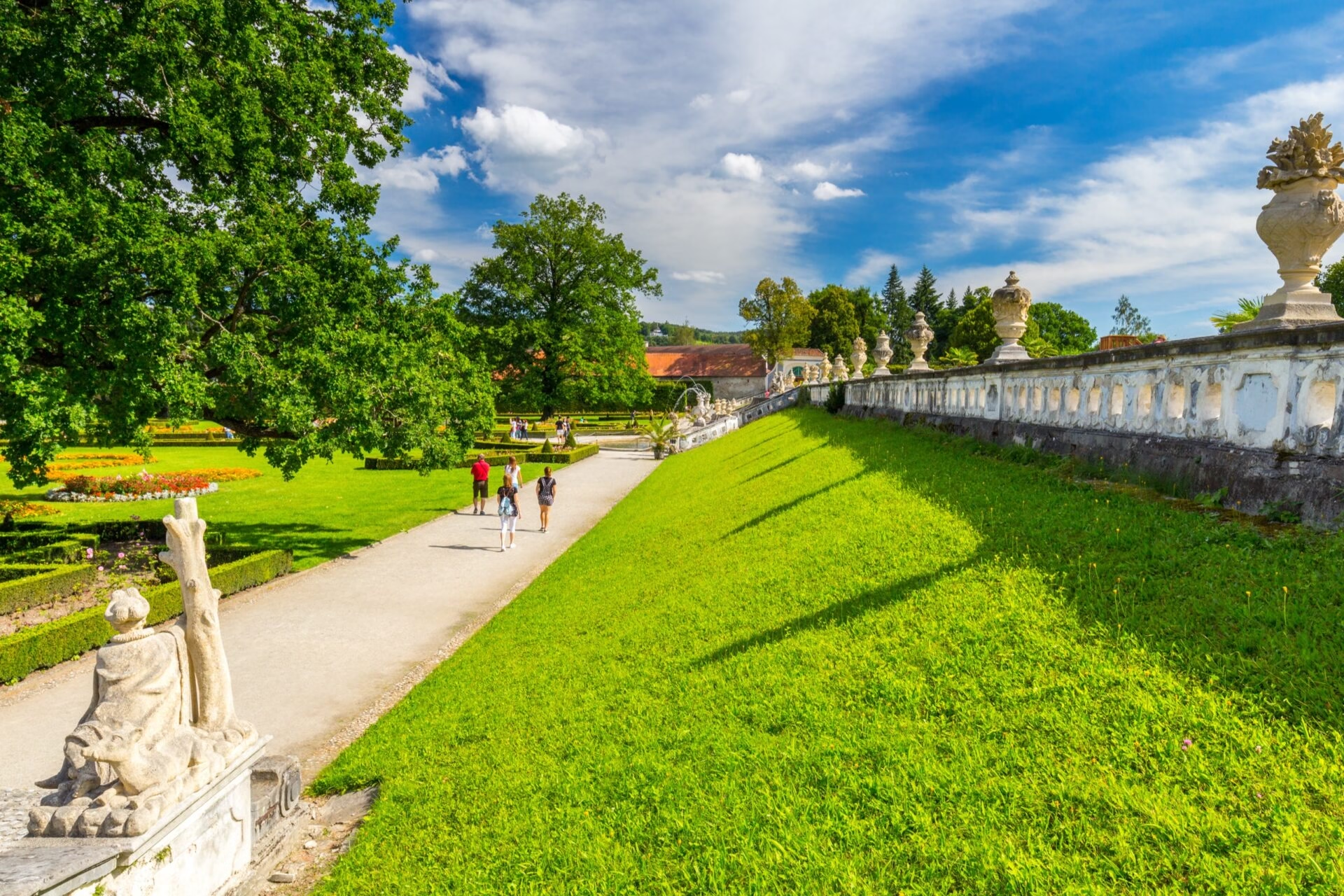
It’s open daily 7:00–19:00 from May to September, until five in October. The castle pond in the Upper Garden is one of the few spots where you can actually sit on a bench and get some peace, even in peak season — most people just walk to the cascade fountain, snap a photo, and turn back.
The Bellarie pavilion is a rare rococo garden building, recently restored in 2023–2024. Its highlight is a baroque kitchen in the basement with preserved dumbwaiters from the mid-18th century.
The tour lasts 60 minutes, capacity 20 people, admission 200 CZK (roughly €8) — but it’s only open on select days.
Bears in the Castle Moat
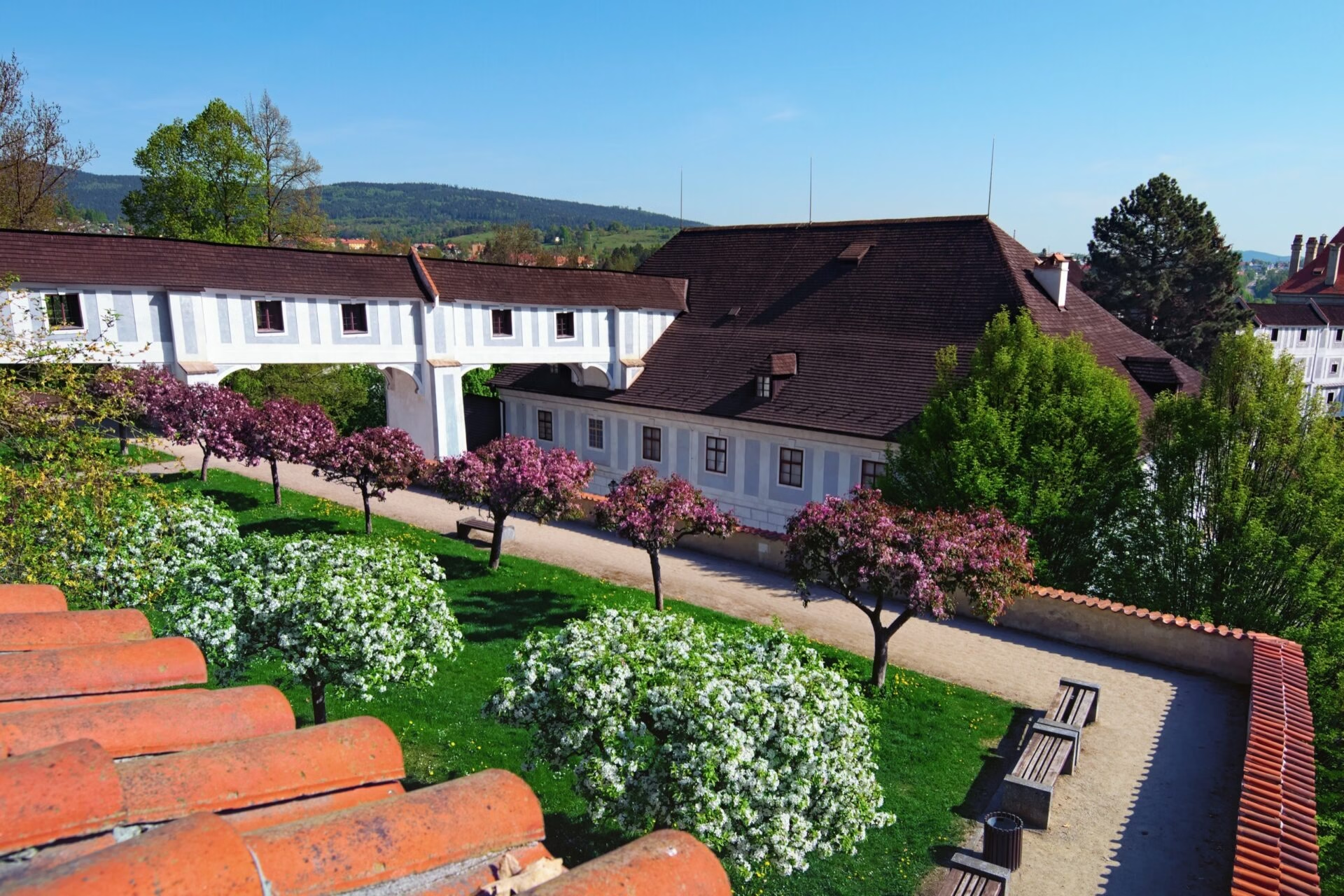
Bears have lived in the moat between the first and second courtyards since 1707. The tradition traces back to the Rosenbergs, who claimed kinship with the Italian Orsini family — “orso” being Italian for bear.
Today the bear enclosure works as a shelter and rescue station for animals previously kept in unsuitable conditions.
Entry is free; you cross the moat along the main path up to the castle. With kids, you could easily spend half an hour here. The bears hibernate over winter, so the moat is usually empty from November to spring, except for the Advent feeding during Bear Christmas.
What to See in the Centre of Cesky Krumlov
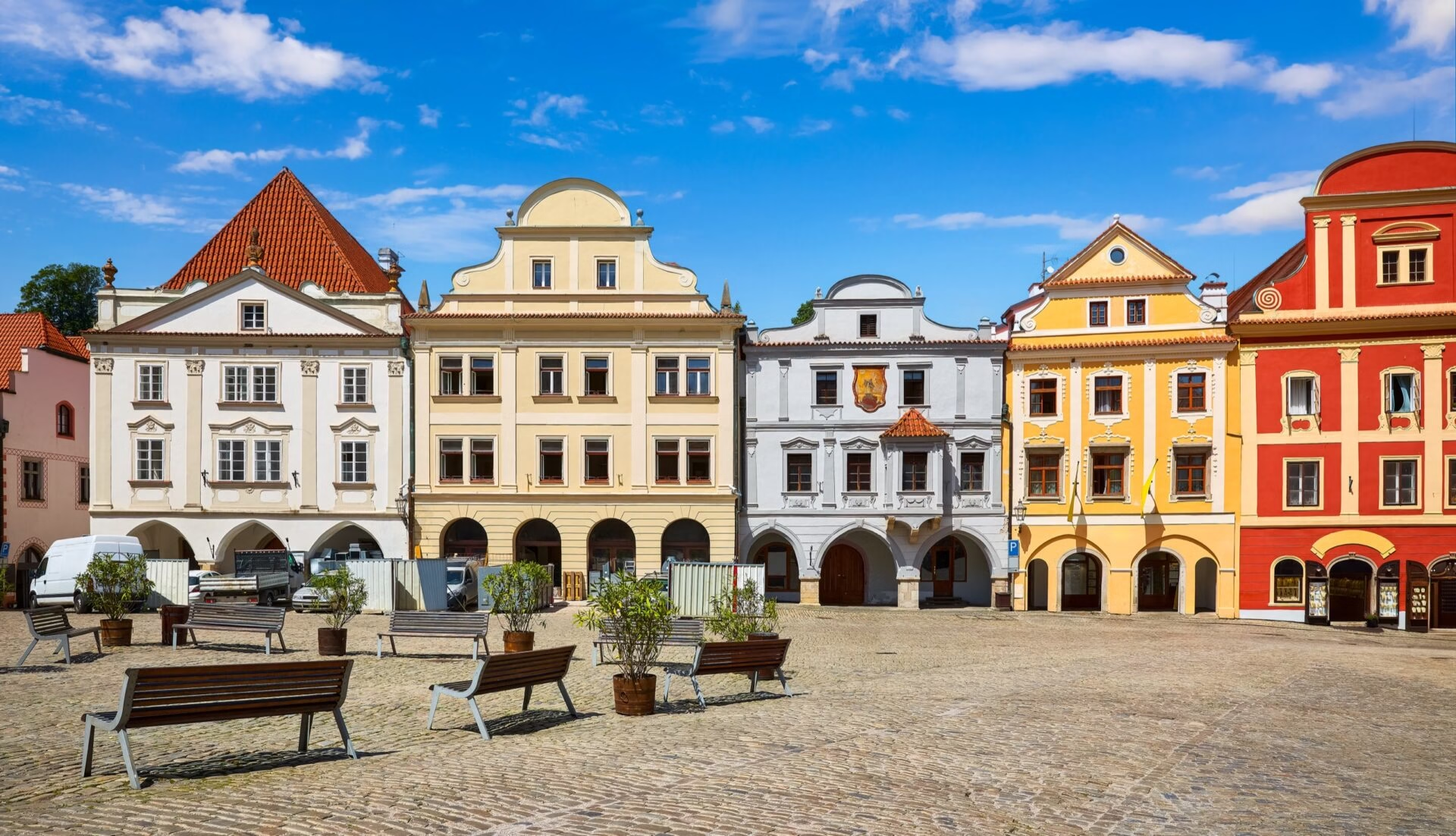
Svornosti Square and St Vitus’s Church
The heart of the Inner Town. Its square layout, the arrangement of the houses and the way the streets meet it still largely match the medieval founding plan — a rarity among Czech towns.
The centrepiece is a Marian plague column, raised to commemorate the 1680 epidemic, with sculptural decoration created between 1714 and 1716 by Matej Vaclav Jackel. The town hall dates from the 16th century, and its basement now houses the Museum of Torture.
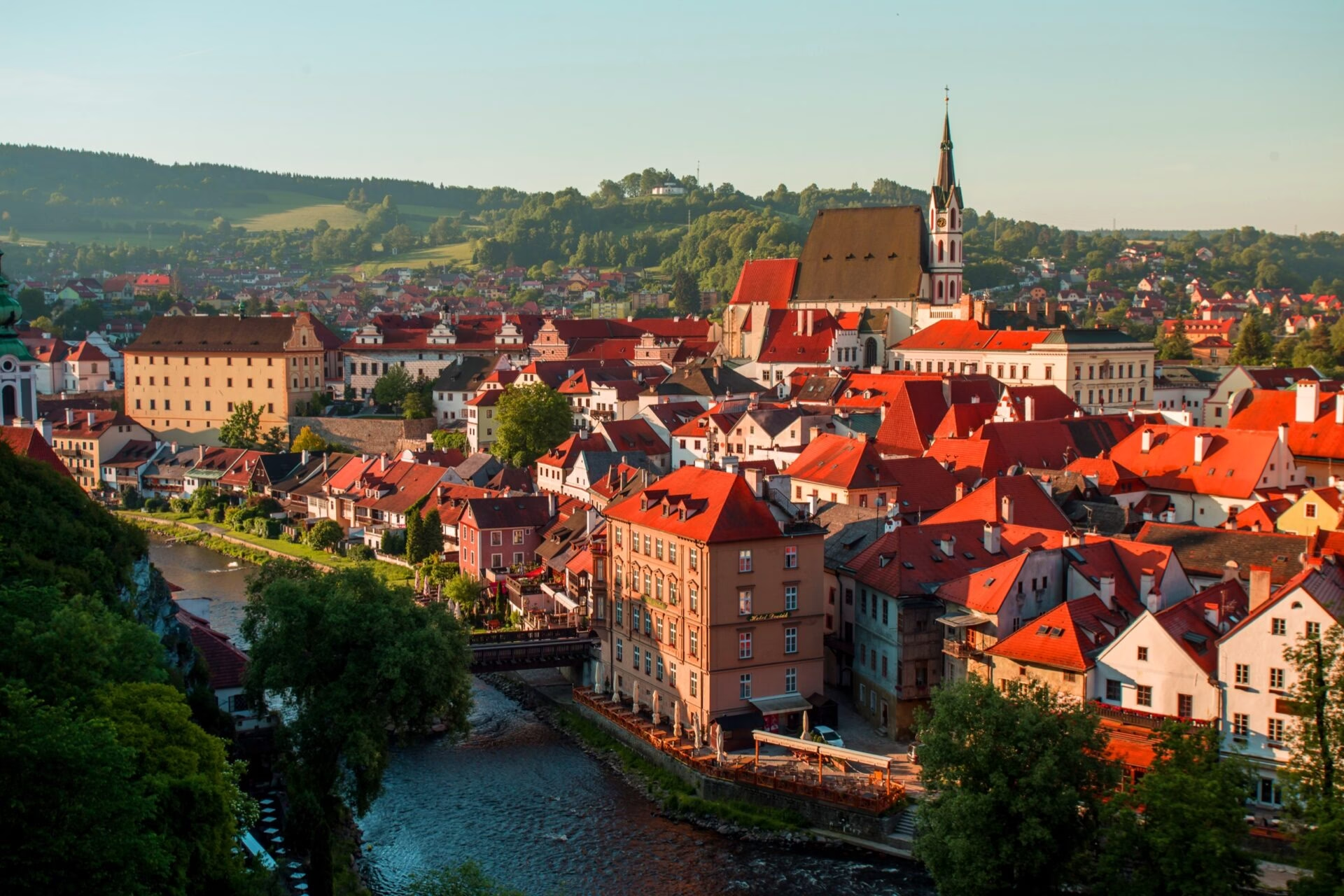
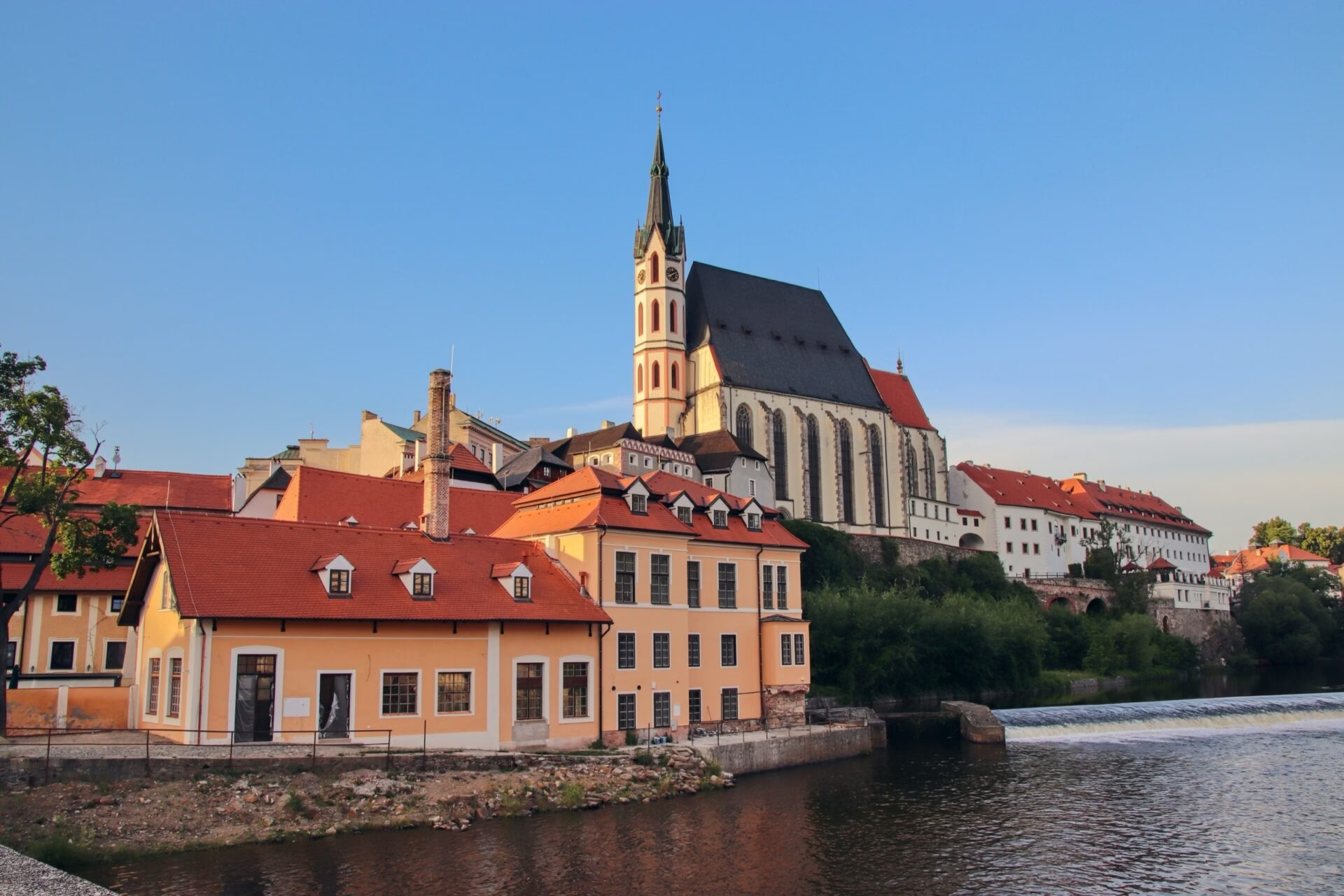
St Vitus’s Church is the second landmark on the skyline alongside the castle tower. This late Gothic building, constructed 1407–1439, stands on the foundations of an older church from 1309 and has been a national cultural monument since 1995.
Inside is a hall-church nave — a space you can take in from one single spot. The current neo-Gothic tower only dates from 1893–1894, replacing the original baroque onion dome.
Latran and the Budejovice Gate
A historic quarter below the castle on the left bank of the Vltava, separated from the Inner Town by the river. It was originally a settlement outside the castle walls — home to the craftspeople and servants tied to the castle, a different social layer from the burgher centre across the bridge.
From Spicak to the Barber’s Bridge, Latran runs for roughly 600 metres and is the town’s main tourist artery.
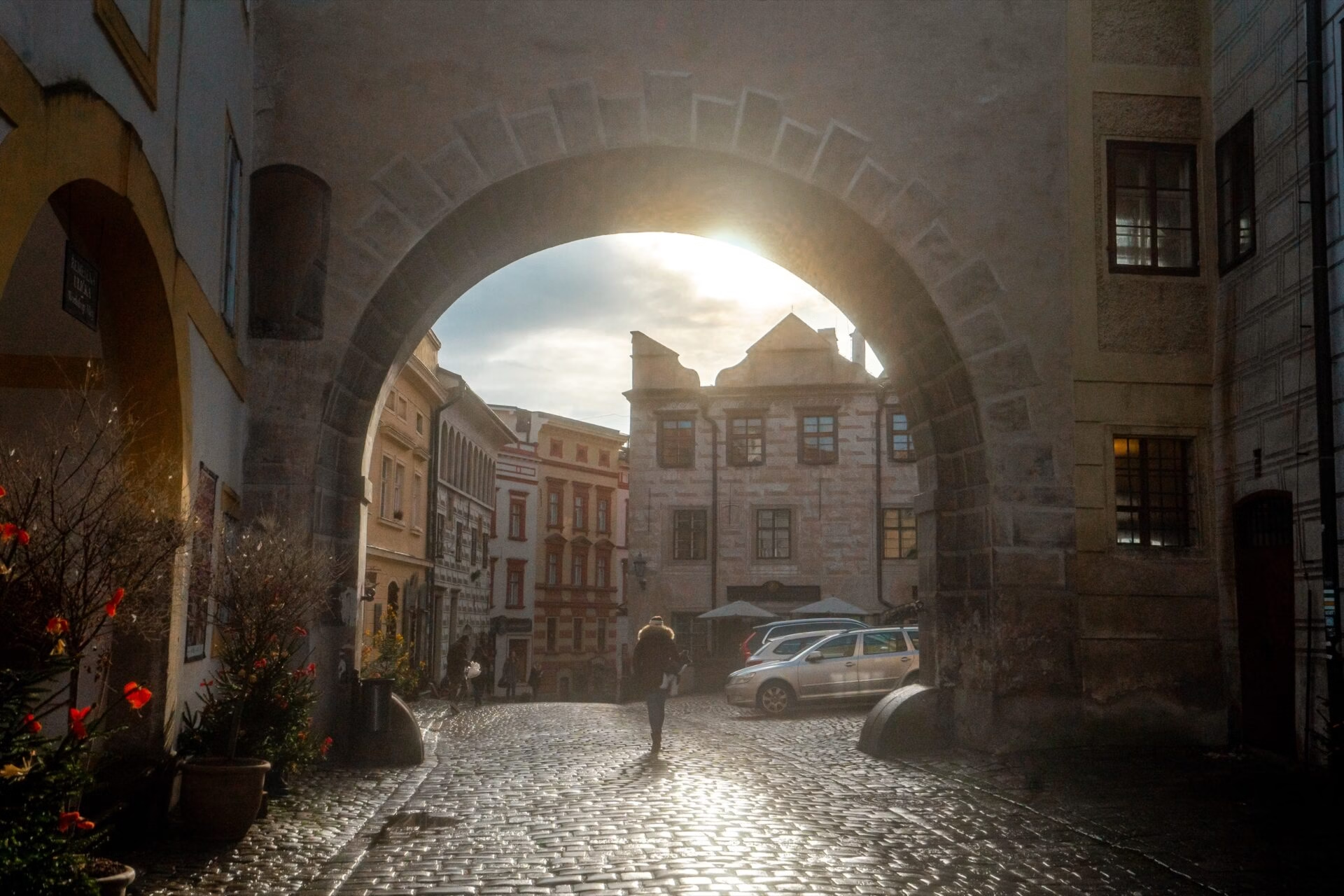
The Budejovice Gate was built between 1598 and 1602, commissioned by Petr Vok of Rosenberg to a design by Italian architect Domenico Benedetto Cometta. It’s the only surviving gate out of the original nine — the rest of the town walls came down in the 19th century to make way for transport and industry.
Museum Photo Studio Seidel
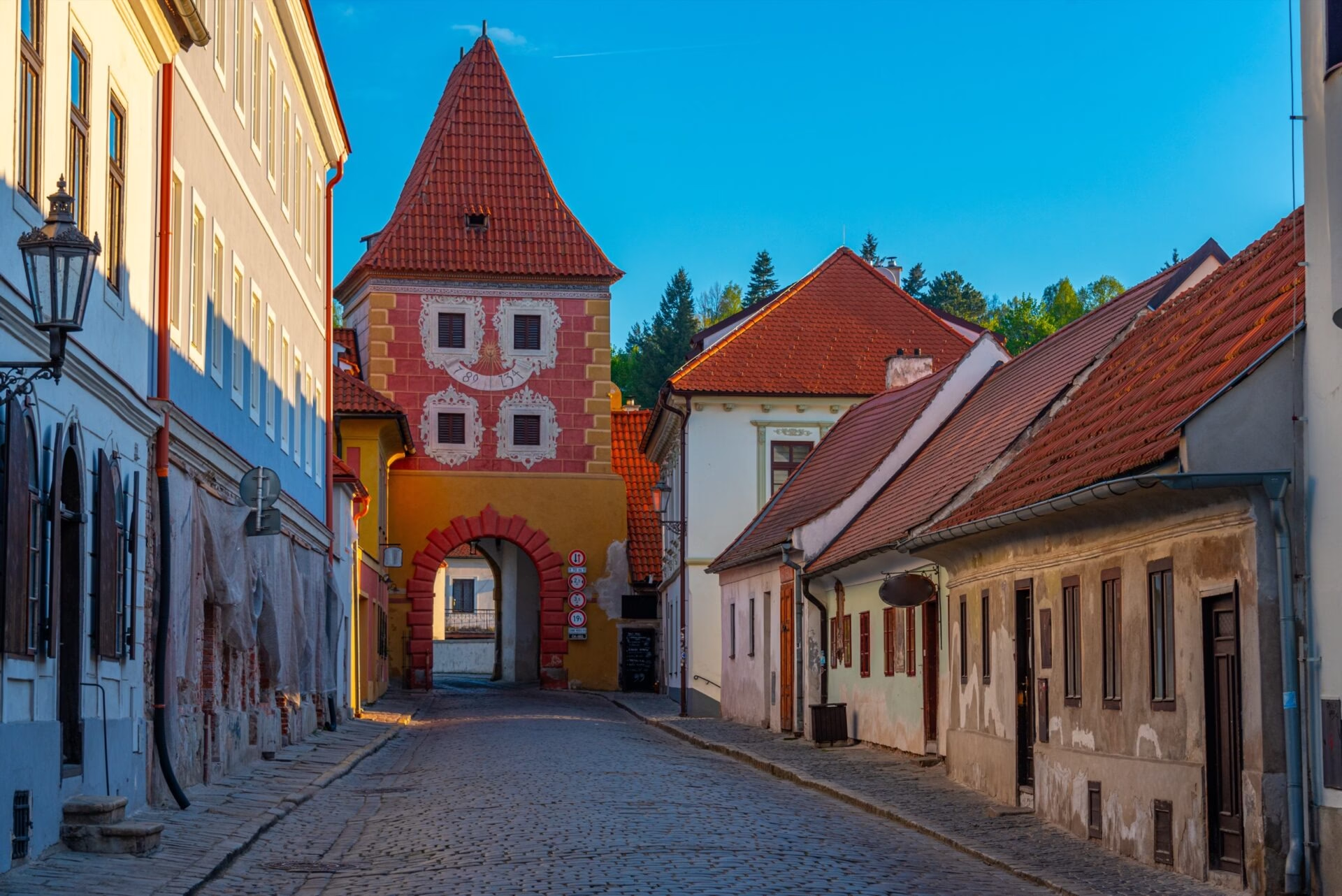
For me, the best museum in town. On Linecka Street stands the authentically preserved photography studio of the Seidel family, complete with equipment, a darkroom and an extensive archive of glass negatives.
Josef and Frantisek Seidel photographed Sumava and Krumlov around the turn of the 20th century. Their archive is today one of the most valuable visual records of a vanished world in the Sumava foothills — villages that no longer exist, people who left the region after the war.
Admission is 170 CZK (roughly €7) with an audio guide, 190 CZK with a live guide, family tickets 360–410 CZK. Open Tuesday to Sunday with a lunch break, and only part of the week outside the season.
You can also have your portrait taken in the period studio using old-fashioned techniques, starting from 1,300 CZK (roughly €52).
The Monasteries of Cesky Krumlov
The former Minorite monastery complex on Latran, today split into two very different experiences. The Monastery Museum includes the church, a Gothic cloister with a cycle of lunette paintings depicting the life of St Francis, a chapel with medieval wall paintings, and a Black Madonna.
The interactive exhibition with a historical play area, on the other hand, is the best rainy-day fallback in town for families with kids: dress-up costumes, printing presses, a scriptorium, an alchemy lab, a puppet theatre, Leonardo’s inventions, and a Dance Macabre trail.
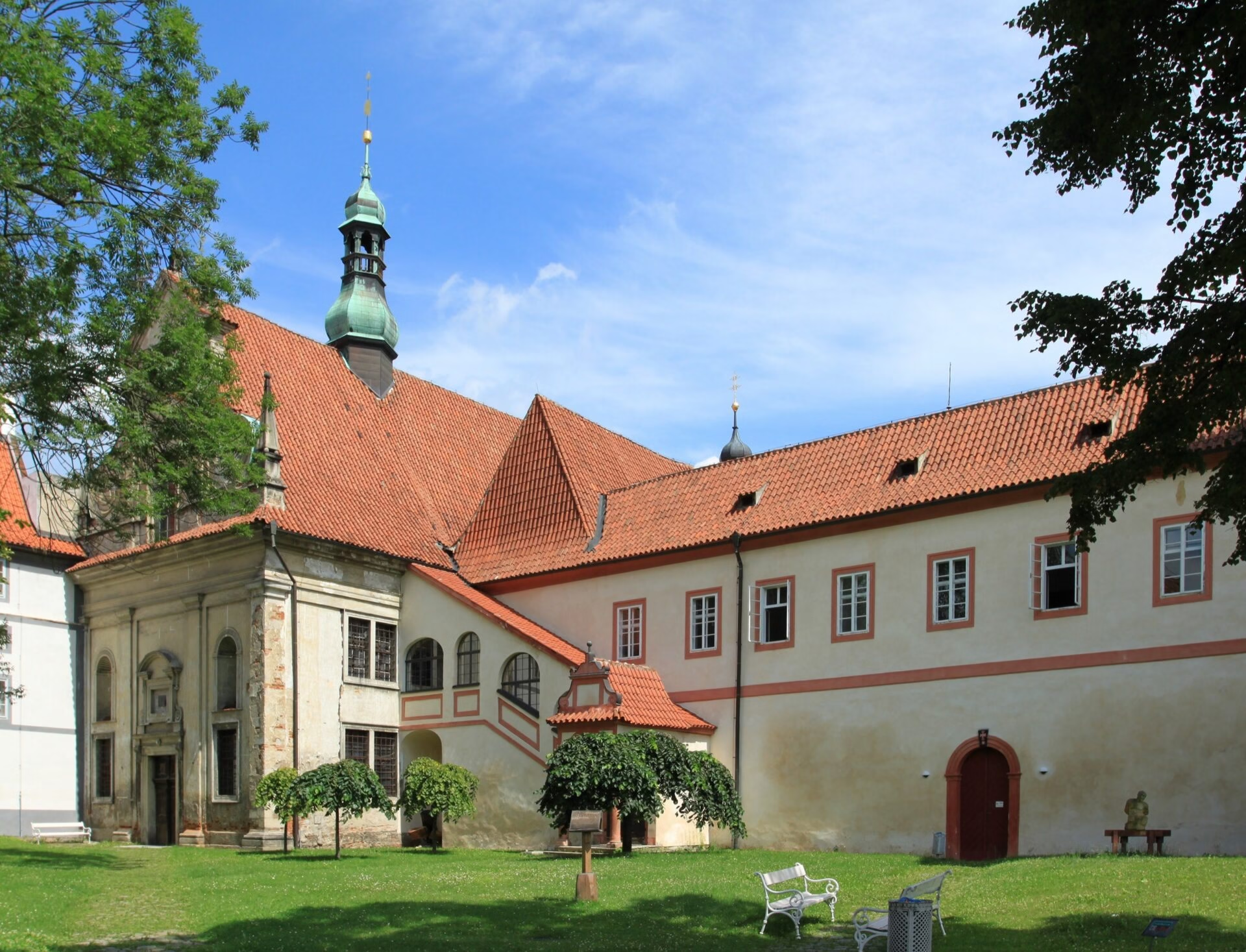
Admission is 220–250 CZK (roughly €9–10) depending on the circuit, family ticket for five people 580 CZK. The complex is wheelchair accessible, dogs aren’t allowed inside the exhibitions, and large school groups tend to arrive on weekday mornings — with small kids, an afternoon visit is a better bet.
Galleries and Museums
Egon Schiele also lived briefly in Krumlov — his mother was from here, and the town became the subject of many of his paintings. The Egon Schiele Art Centrum on Siroka Street carries his name and, alongside its permanent exhibition of his work, has a large space for seasonal shows.
Open Tuesday to Sunday 10:00–18:00, admission around 280 CZK (roughly €11).
The Regional Museum on Horni Street holds two world-class rarities: a ceramic model of the historic core depicting the town as it looked around 1800, and a preserved interior of a baroque Jesuit pharmacy from the mid-17th century.
Admission is a token 60 CZK (about €2.50).
A few smaller exhibitions worth mentioning:
- The Puppet Museum – Fairytale House – over 400 puppets in a 14th-century house, plus a little theatre where kids can put on their own show
- The Graphite Mine – 2 km of route, 1,200 m of which is by mine train, plus a miner’s helmet and cloak, 70 minutes total. Suitable for kids from age 6, and by appointment only outside the season
- The Museum of Torture in the town hall basement – over 400 m² and nearly a hundred instruments of torture. Definitely not for young children
- PORT 1560 at the brewery complex – exhibits on brewing, 19th- and 20th-century life, and the Rosenbergs
If you’re planning on visiting several museums, look into the Cesky Krumlov Card — a combined ticket for five venues that saves roughly half of the standard admission price.
Guided Tours
Krumlov is a town where a guide pays off more than most places. The buildings are packed close together, there are six hundred years of history layered on top of each other, and without any commentary one beautiful house blurs into the next.
The easiest way to book is through the information centre on Svornosti Square, which also offers themed tours — Rosenberg history, Jewish heritage, or evening walks.
An evening tour makes particularly good sense in Krumlov. After dark, the town is lit up, quiet, and your guide doesn’t have to shout over the crowd.
The Revolving Auditorium and Festivals
The Revolving Auditorium in the castle garden is an open-air theatre where it’s not the stage that rotates, but the entire audience seating, spectators included. The view of the story keeps shifting, and the backdrop is a real garden.
It’s run by the South Bohemian Theatre, the season runs roughly from early June to early September, and it stages six or seven productions.
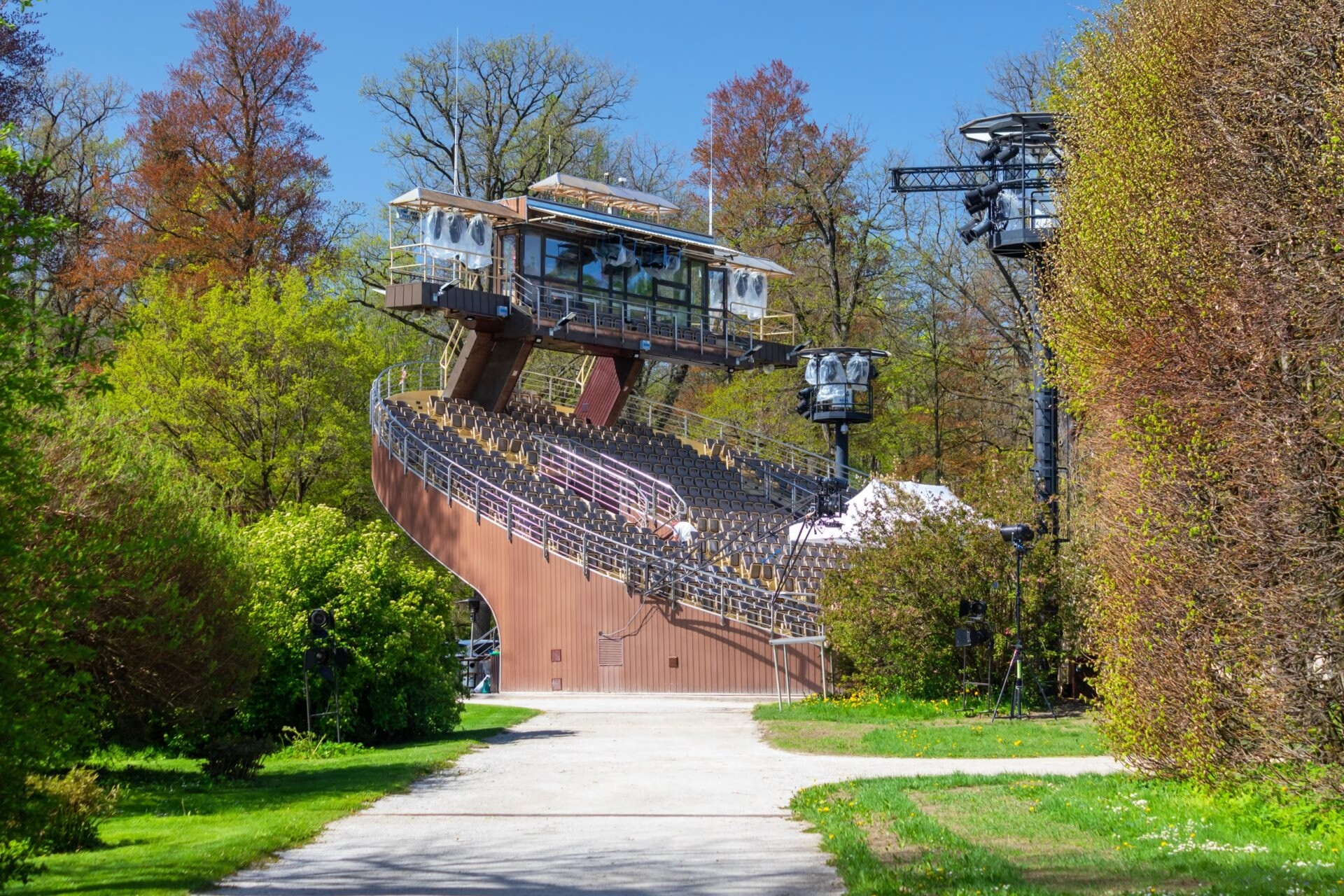
The auditorium will stay in the castle garden at least until 2029 — Ceske Budejovice, as the theatre’s operator, agreed with the National Heritage Institute to extend the lease by three years. After that it’s meant to move outside the garden; heritage authorities and UNESCO have long criticised its current location, and Krumlov risks being struck off the World Heritage list because of it.
The cost of relocating it, including new facilities, is estimated at 1 to 1.5 billion CZK (roughly €40–60 million), and the town won’t be able to fund it alone. In practical terms, that means one thing: go while the theatre is still where it is.
Buy tickets as early as you can — advance sales for the next season typically open at the start of October.
When something’s happening in town
- Five-Petalled Rose Festival (third weekend of June) – a historical celebration of the Rosenberg era, with processions, jousting tournaments, and trumpet calls from the castle tower. Beautiful and packed: the town is absolutely full that weekend and accommodation sells out months in advance
- The Chamber Music Festival (late June to early July) – the highlight is the Baroque Night at the Castle, a candlelit baroque opera performance staged directly in the Baroque Theatre. If there’s one thing to remember from this whole article, it’s this one
- The International Music Festival (mid-July to early August) – over forty concerts across dozens of venues in the region, with tickets going on sale as early as late November
- St Wenceslas Celebrations (last weekend of September) – festivities tied to a folklore festival. In my view, this is a better choice than the Five-Petalled Rose Festival: similar atmosphere, far fewer people, and late September is when Krumlov looks its best
- Advent – a Christmas market on Svornosti Square runs from the second half of November to early January, along with Bear Christmas, featuring a public bear feeding in the moat
Things to Do: Viewpoints, the River and Walks
The best views of the town
Krumlov is worth seeing from above. Most tourists end up on the Barber’s Bridge, where the crowd is thickest.
Here are the viewpoints I’d recommend instead:
- The Seminary Garden (Horni Street) – the terrace of a Jesuit seminary, with the classic panorama of the castle and winding streets. The best view in town, yet less known than the others.
- The viewpoint by the Fifth Courtyard – turn left from the Cloak Bridge onto the platform. This is that “castle with the tower” shot you’ve seen on postcards.
- The corridor between the Second and Third Courtyards – an unassuming entrance on the left as you climb, level with the Chapel of St George. Free, and most people walk right past it.
- Above the Plesivec Steps – walk from Kajovska Street across the Dr. E. Benes Bridge and up the steps for a view of St Vitus’s Church.
- The Castle Tower – the only truly aerial view, 86 metres above the Vltava. For 280 CZK and 162 steps, the best photo investment you can make in Krumlov.
Kriz Hill
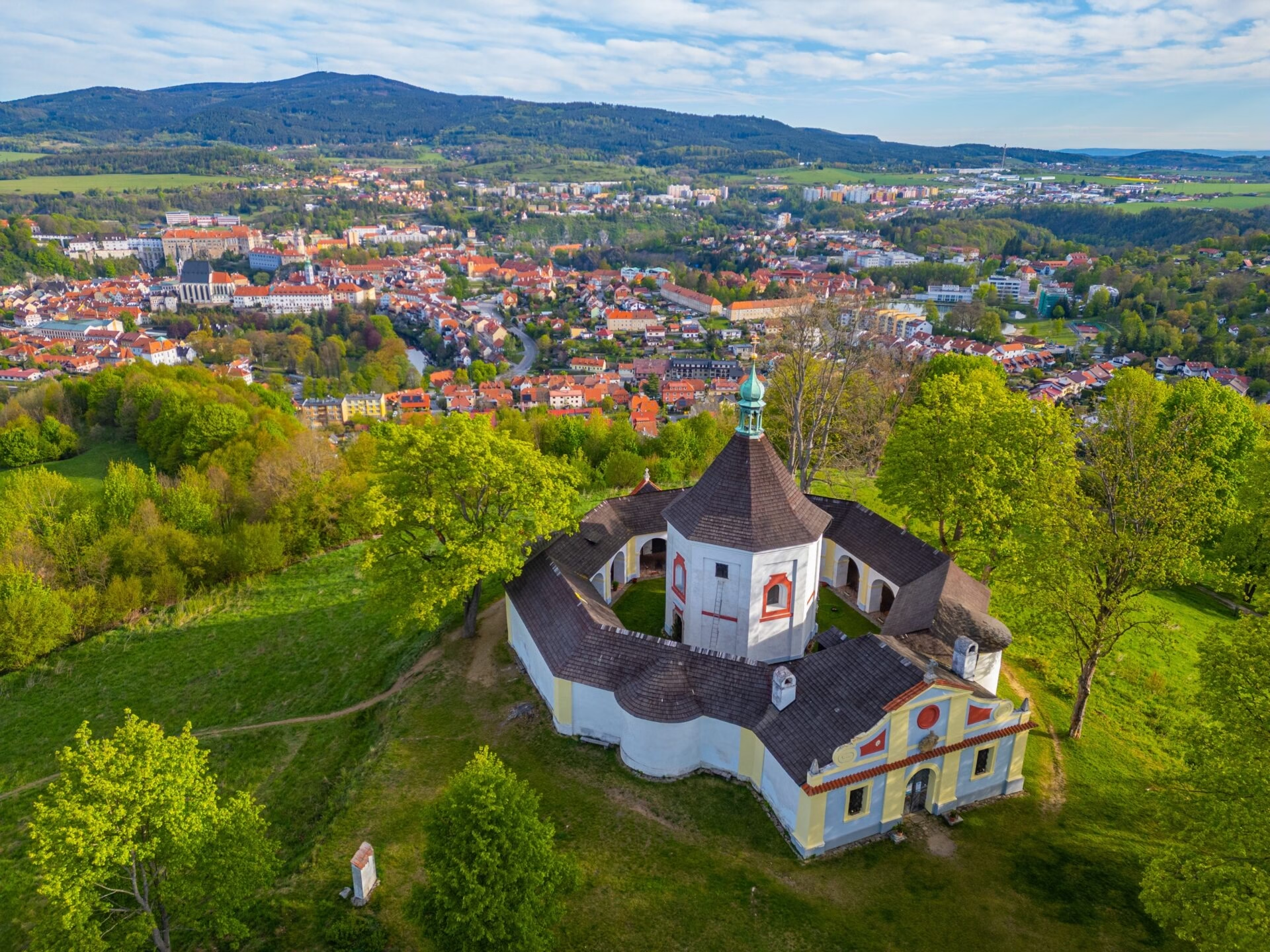
Just under 2 kilometres south of the centre — about a 45-minute walk from the main square with 146 metres of elevation gain. The reward is a view you can’t get anywhere in town itself: Krumlov’s rooftops and towers, the Vltava valley, and the Blansky Forest ridge on the horizon.
At the top stands a pilgrimage site with a chapel.
Czechia has another castle perched above a river bend with a small town below it — this one in West Bohemia. Check out our guide to Loket if you’re after a similar atmosphere without Krumlov’s crowds.
The Vltava: rafting right below the castle
The best view of Krumlov is from the water. You can paddle a raft or canoe straight through the historic centre, passing two weirs famous among paddlers right below the castle.
The shortest route covers roughly 2 kilometres and, with prep, you can do it in an hour; the longer option is around 10 kilometres and manageable even for complete beginners.
There are plenty of boat rental outfits along the Vltava, and most will sort you out with a boat, gear, and transport to the start and back from the finish. In season, I’d definitely recommend booking ahead.
Be ready for big crowds on the water, though — this stretch is probably the most popular paddling route in all of Czechia.
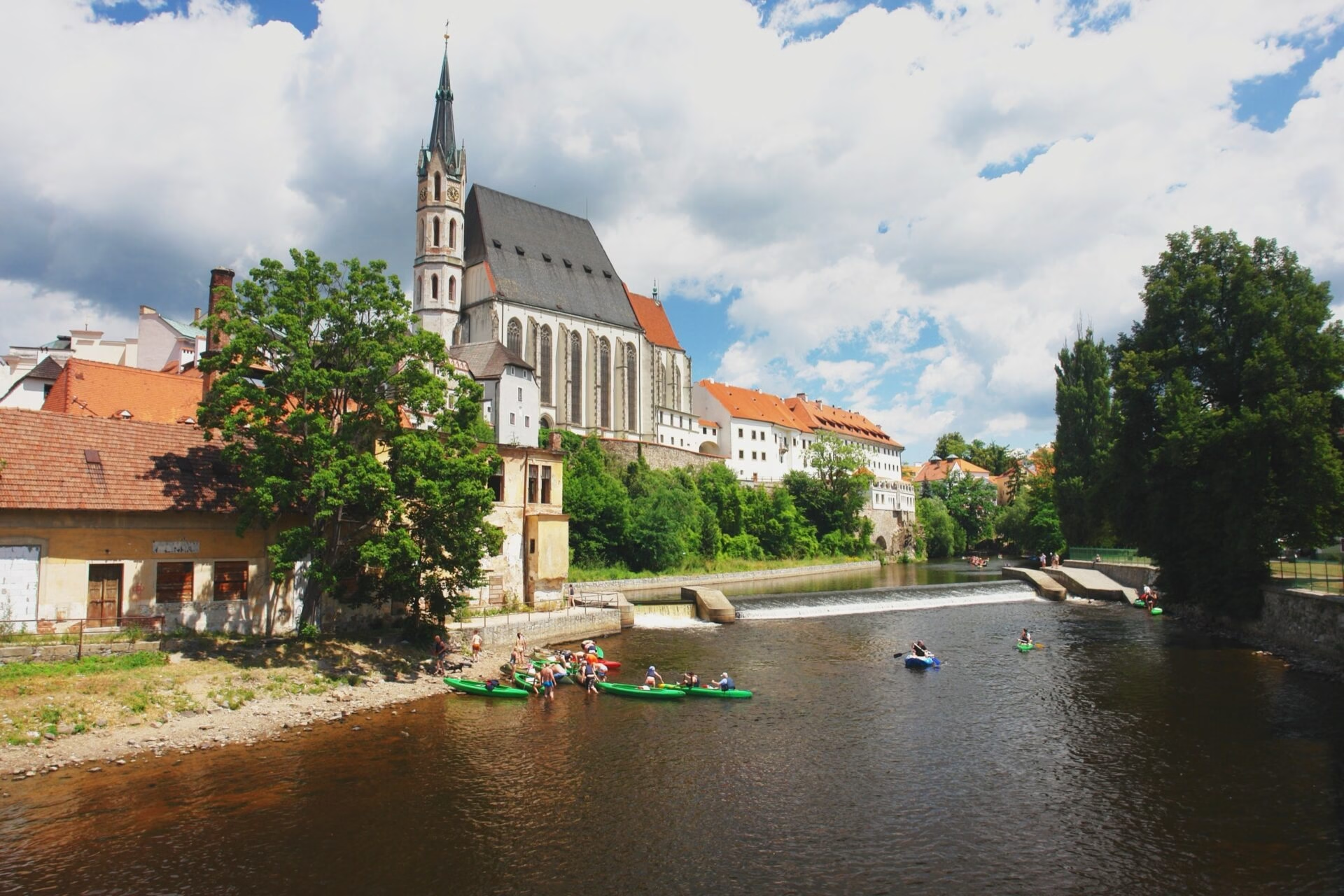
The weir below the castle is run through a wide log-raft chute on the left and it’s low difficulty — the trickier one is the weir U Liry a little further upstream. Difficulty at both weirs rises with water flow, so with small kids it’s safer to carry them around.
A raft is safer for beginners than a canoe.
Plesivec and the town park
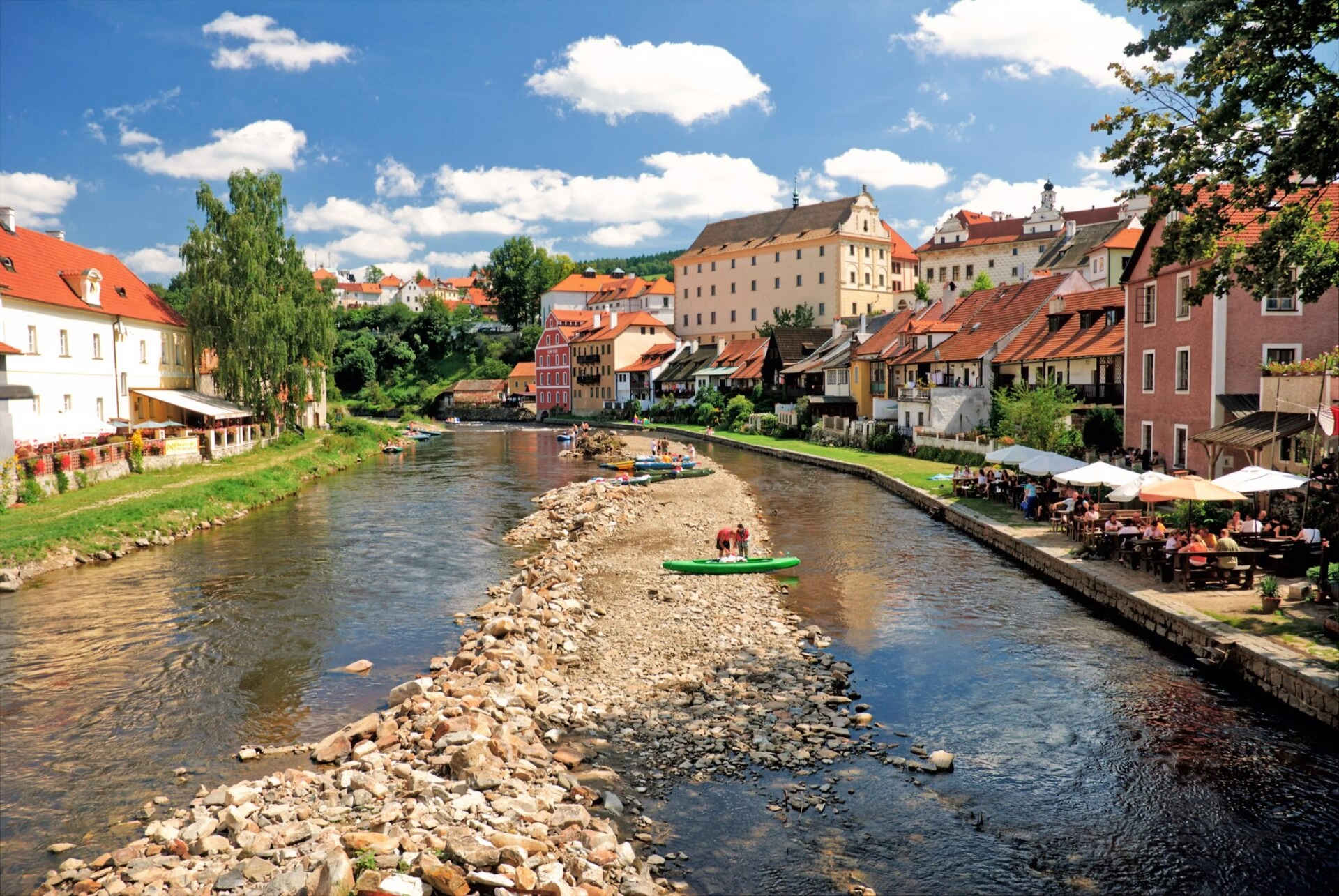
Climb the Plesivec Steps and you’ll find yourself in the old lanes of the Plesivec quarter, a part of town most tourists never reach. It’s a residential district with its own little square — a good place to see what everyday life in Krumlov actually looks like.
Past the bridge lies the town park, with views back toward the centre — the most pleasant spot in town after a long day on your feet.
Cesky Krumlov with Kids
Krumlov works surprisingly well with children, but you need to pick carefully. Skip the long guided interior tours — 55 minutes of dynastic history probably won’t hold kids’ attention. There’s plenty of hands-on stuff to make up for it, though:
- Rafting through the centre on the Vltava – the weir below the castle is the single biggest thrill a kid can have in Krumlov; even small children can manage the ride.
- The bears in the castle moat – free, right on the way up to the castle, easily good for half an hour.
- The interactive exhibition at the Monasteries – costumes, printing, the alchemy lab. The best choice on a rainy day.
- The Castle Tower – 162 steps make a great reward from around age five, and everyone can go at their own pace.
- The Graphite Mine – a miner’s helmet and a train ride into the shaft, from age 6. Nobody expects this in Krumlov.
- The Castle Garden – free, with plenty of room to run around. The one place in town where you can just be with your kids without a plan.
On the other hand, the Museum of Torture, Tour Circuit II, and the Baroque Theatre are poor choices for young kids. Also keep in mind that the old core is cobbled and hilly — a baby carrier works better in Krumlov than a stroller.
Where to Eat in Cesky Krumlov
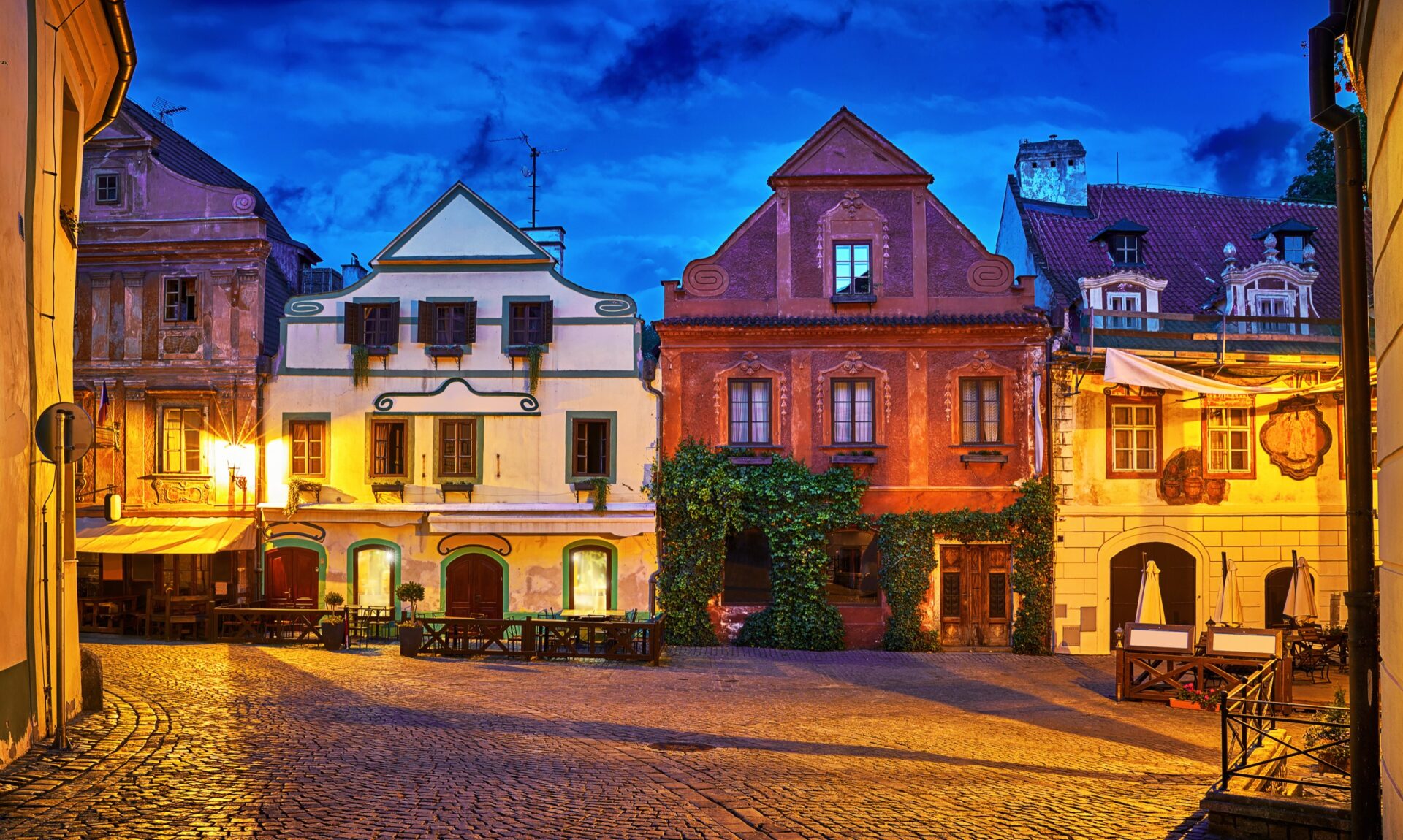
Krumlov has two culinary faces. One sits on Svornosti Square and the riverside terraces, living off the fact that two million people pass through here once in a lifetime. The other is two streets over and is noticeably better and cheaper.
There’s a reliable test: a multilingual menu with photos posted outside and a tout at the door means the place doesn’t rely on repeat customers.
Head to Soukenicka, Radnicni, Kajovska or Klasterni streets and you’ll get the same food without the queue.
In the centre, things occasionally tip into the absurd — one riverside spot charges over 300 CZK for a bottle of water (roughly €12). Check the price list before you sit down.
Restaurants
- Restaurace DEPO – the only place in town pouring Pilsner straight from the tank. Industrial space below the castle with a summer terrace and a playground
- Mustek Beer&Burger – burgers made from aged beef from South Bohemian farms, plus Pilsner on tap
- FAJR 99 – grilled meats and honest cooking on Latran, recognised by Gault & Millau. Higher price bracket
- Bistro Garaz – a tiny punk-spirited bistro by the river serving pelmeni and beer
- Krumlovska Picka – don’t expect Italian-grandma-level pizza, but for the price, it’s a perfectly solid meal by Krumlov standards
Cafés, wine bars and bars
- Kolektiv cafe & wine bar – large windows right onto Latran, à la carte breakfast, wine in the evening. The best people-watching spot in town
- Ideal coffee – its own micro-roastery, roasting from green beans on site
- Masna 130 House & Café – speciality coffee in a house over five hundred years old. One big communal table, plus a breakfast menu in summer
- Cafein – breakfast by the Budejovice Gate – Turkish eggs, French toast, filled sandwiches
- Klobouk dolu coffee – an espresso and matcha bar on Latran, beans from the KMEN roastery, homemade lemonades and popsicles
- Drunken Coffee – speciality coffee by day, a bar by night
- Bistro Na Krajicku – eggs served several ways, waffles and granola
Krumlov’s brewery on Latran was founded in 1560, with quality water brought in by Jakub Krcin, regent of the Rosenberg estate. Signs and maps still often list it as Eggenberg, but today it’s run by the Historic Brewery Cesky Krumlov under the Krumlov brand. It offers tours with or without tastings, and the complex includes a brewery restaurant and garden with live music throughout the year.
Where to Stay in Cesky Krumlov
Staying overnight in Krumlov is the single biggest piece of advice in this whole guide. The difference between a day-tripper and someone who sleeps here is the difference between wading through a crowd and having an empty morning on Latran to yourself.
In peak season and on major event weekends, places sell out months ahead.
Crucial if you’re driving: the historic centre is a pedestrian zone, and you can only drive to accommodation inside it between 17:00 and 11:00.
You can’t just roll up at two in the afternoon with your bags to a hotel on the main square — confirm the exact entry rules with your accommodation in advance.
Price ranges in Krumlov span quite a bit. The cheapest option is an apartment with its own kitchen, a mid-range choice is a guesthouse in the old core, and the priciest is a boutique hotel with parking.
Right in the historic centre:
- Pension Adalbert – A historic building a hundred metres from Svornosti Square, with its own restaurant, breakfast, and free cancellation. The best-rated place to stay right in the core.
- Penzion KOVARNA – Family rooms with air conditioning and town views, three hundred metres from the square. Breakfast included, bike storage.
- Hotel Krcinuv Dum – One of the most significant 14th-century buildings right in the centre — wooden floors and ceiling beams, buffet breakfast. The lift runs to the second floor; the third is stairs only.
- Pension Kristian by KH – Four-star rooms in a historic house a hundred metres from the square, with air conditioning and a sun terrace.
- Penzion Kapr – Two historic buildings in the old core, four hundred metres from the castle. Rooms with Vltava views and a family apartment with its own kitchen.
Just outside the centre, with your own parking:
- Boutique Hotel Villa Beatika – A 1932 first-republic villa a quarter of an hour’s walk above the centre, ten rooms each dedicated to a different musician. Free private parking — a rarity in Krumlov.
- Hotel Garni Pod Skalkou – Three hundred metres from the historic centre, free guarded parking, a heated outdoor pool in summer, and a garden barbecue.
- 1st Republic Villa – Adults only – A quiet residential neighbourhood four hundred metres from the castle, free private parking and rooms with castle views. Adults only, dogs welcome.
- Penzion Golden Crown – A short walk from the centre, free parking, breakfast included and free cancellation. Solves Krumlov’s biggest headache at a reasonable price.
If you’re driving and want to avoid dealing with the pedestrian zone or paid parking, Villa Beatika or Pod Skalkou are simpler choices than any address inside the old core. It’s a fifteen-minute walk downhill into the centre.
Apartments for longer stays:
- Gall 44 apartments – Apartments with a kitchenette a few steps from the castle and four minutes’ walk from the main square. The cheapest option in this selection.
- Apartmany U zamku – A recently renovated apartment with a fully equipped kitchen, balcony and sun terrace. Breakfast delivered to your door.
- Orangerie Garden by KH – A 16th-century building two minutes from the castle, with a terrace and garden right on the bank of the Vltava.
Find accommodation in Cesky Krumlov
How to Get to Cesky Krumlov
By bus – the fastest option
Going by bus is simpler than the train. RegioJet runs direct from Prague’s Na Knizeci station to the Spicak stop right by the centre, with the fastest connection taking 2 hours 25 minutes, departing roughly every hour.
FlixBus most commonly departs from Prague’s Florenc bus terminal, stopping at both the bus station and Spicak, with journey times from 2 hours 35 minutes.
Prices are dynamic — the earlier you buy, the better. Typical fares run around €8–10.
Get off at Spicak, not at the bus station. Distance-wise it’s almost the same (800 metres from Spicak versus 650 from the bus station), but Spicak sits right below the bridge leading straight onto Latran, the main street up to the castle. The bus station drops you at the edge of town.
By train
The train ride is prettier, but there are fewer connections and you’ll usually need to change in Ceske Budejovice: just under two hours from Prague, then 45 minutes on a scenic regional line toward Volary. 2 hours 35 minutes total.
Czech Railways also runs one direct pair of trains a day on the Jizni Express line, leaving Prague after nine and arriving in Krumlov around noon, with the return departing after two. Check exact times in advance.
Fares start at around €8 on the direct train, slightly more with a change.
The train’s main downside is the station location. It sits on the northern edge of town, roughly 1.7 kilometres from the main square, and noticeably higher up — the walk into the centre is downhill, and back uphill. With a bigger bag, allow 20 to 35 minutes.
A local bus also runs from the station to both the bus station and Spicak.
From Ceske Budejovice, it’s 22 kilometres away: the bus takes 30 minutes and stops closer to the centre, the train 45 minutes. From 1 July 2026, a new integrated transport system called IDESKA takes effect in the region, unifying tickets for buses and trains, including Krumlov’s local transit. Fares are zone-based, with a 50% discount for students and seniors over 65.
By car and parking
It’s 170 kilometres from Prague, realistically around 2 hours; 30 minutes from Ceske Budejovice, just under three hours from Brno.
Keep in mind that on Fridays and Sundays you’ll very likely hit traffic queues between Benesov and the D1 motorway.
NOTE: you cannot drive into the historic centre. Since June 2025, tighter rules mean neither day visitors nor guests staying inside the pedestrian zone can drive in — except with a permit, or within the 17:00–11:00 window.
So you’ll leave your car at one of the park-and-walk car parks, which together offer 842 spaces. All of them are within a fifteen-minute walk of the main square.
- P1 Jelenka – 60 CZK/hour, 243 spaces, 480 m to the square and just 440 m to the castle ticket office. The biggest and closest, but the priciest.
- P2 Pod postou – 40 CZK/hour, 180 spaces, 580 m.
- P3 Mestsky park – 40 CZK/hour, 174 spaces, 630 m.
- P5 Bus station – 30 CZK/hour, 118 spaces, 670 m. The cheapest.
- P7 Chvalsinska – 50 CZK/hour, 66 spaces, reserved for caravans and motorhomes.
- P4 Castle Garden – seasonal only, June to August, 10:00–24:00. Handy for evening events.
At P1, P2, P3 and P5, there’s a cap of 290 CZK for 24 hours (roughly €12). At the pricier P1, you’ll hit that cap after just five hours; at the cheaper P5, only after ten.
For a two-to-four-hour stop, P5, P2 or P3 are worth it, but for a full day it doesn’t matter where you park — in that case, just take the nearest one, P1.
The operator publishes real-time car park occupancy. In peak season, P1 and P2 routinely fill up around midday — check before you drive down into town.
Getting around town
You can walk the entire historic core, and you won’t need anything else. Local buses really only serve one purpose for visitors: getting from the train station to the centre with your luggage.
If you arrive by bike, lock it up at one of the public bike racks on the edge of the centre — cycling through the crowded town itself is a hassle.
Bring comfortable shoes, not heels. Krumlov’s cobblestones are uneven, the streets are steep, and they get slippery after rain.
Frequently Asked Questions
How much time should I set aside for Cesky Krumlov?
A sensible minimum is two days with one overnight stay. A day trip can cover one castle tour circuit, the tower, the garden and a walk through the centre, but it lands squarely in that ten-to-five window when the town is busiest.
Stay overnight and you get an evening and a morning in an empty town. Over three days you can add the second tour circuit or the Baroque Theatre, a Vltava rafting trip, and the hike up Kriz Hill.
When is Cesky Krumlov least crowded?
During the day, from sunrise to nine in the morning and then after five in the afternoon. Organised bus tours run between ten and five, and visitor numbers get close to capacity during peak season.
Over the year, the fewest tourists come in February and November. Just be aware that the castle’s interior circuits are closed from November to March. September offers the best balance of good weather and low crowds.
How much does it cost to visit Cesky Krumlov Castle?
The complex and courtyards are free to walk through; you only pay for the individual tour circuits. Circuit I with the Masquerade Hall costs 300 CZK, Circuit II (Schwarzenberg apartments) 260 CZK, the Castle Museum with the tower 280 CZK, and the Baroque Castle Theatre 400 CZK.
Reduced admission is roughly a fifth cheaper, children aged 6–17 pay 80–120 CZK, and children under 5 go free. The Castle Garden is free for everyone.
Can you drive into the centre of Cesky Krumlov?
No. The historic core is a pedestrian zone, and since June 2025 neither day visitors nor guests staying at accommodation inside the zone can drive in without a permit.
Guests of accommodation inside the zone get a designated window from 17:00 to 11:00. Leave your car at one of the park-and-walk lots, P1 through P7, all within a fifteen-minute walk of Svornosti Square. A daily cap of 290 CZK for 24 hours applies.
Is it better to travel from Prague by train or by bus?
By bus. It’s faster, runs more often, and stops closer to the centre. RegioJet runs from Prague’s Na Knizeci station directly to Spicak in 2 hours 25 minutes; FlixBus from Florenc takes from 2 hours 35 minutes.
The train involves a change in Ceske Budejovice and takes roughly two and a half hours, with its main drawback being the station’s location — 1.7 kilometres from the square and noticeably uphill. One direct daily service runs on the Jizni Express line, with fares starting around €8.
Where to Go Next
- Czechia’s other big UNESCO town – guide to Kutna Hora
- A Renaissance chateau with a sgraffito façade – guide to Litomysl
- A Jewish quarter and basilica on the UNESCO list – guide to Trebic
- A castle above the Ohre river bend with a small town below – guide to Loket