This post is also available in:


Třebíč in the Czech Republic lies off the main tourist routes; it has no iconic monument or famous Instagram spot, yet it boasts two UNESCO World Heritage Sites — including a remarkably preserved Jewish Quarter that is unique in all of Europe.
One of them is also the only testament to Jewish culture outside of Israel that has ever made it onto this list.
Even in high season, the number of tourists is just right, queues in front of monuments are rare, and yet there is so much to see. Whether as part of a day trip or if you decide to book accommodation and stay for two to three days.
This guide is for those traveling on their own who want to understand what Třebíč offers beyond basic UNESCO phrases. You will also find practical information: where to park, how much entrance fees cost, where to go for lunch, and what to visit nearby.
Why Visit Třebíč, Czech Republic
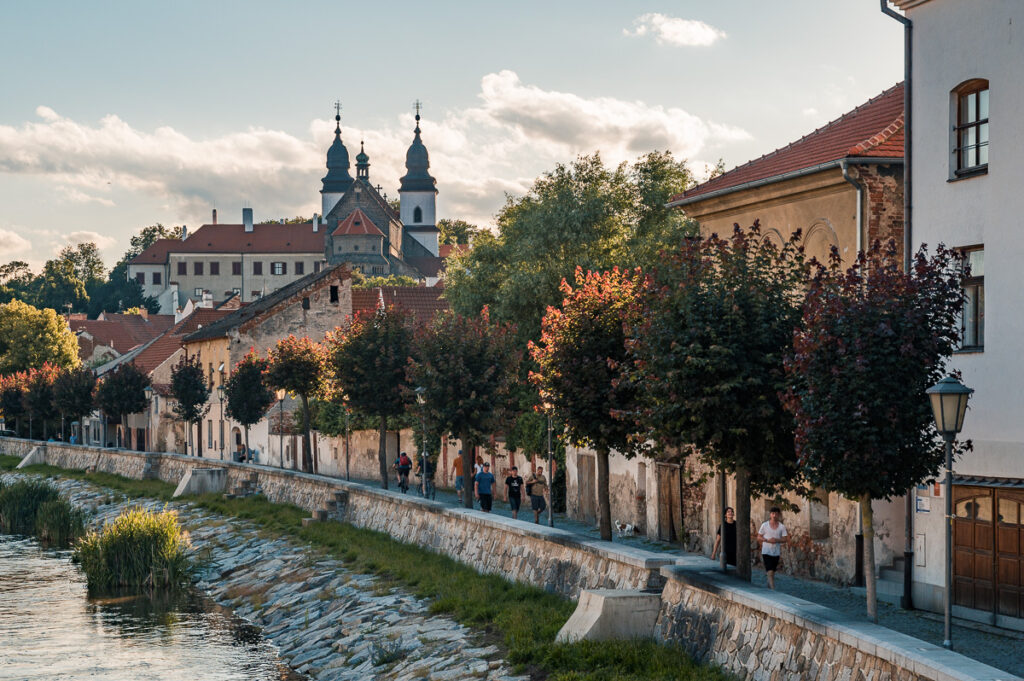
The main argument is simple: two UNESCO sites in one compact town that can be explored on foot in half a day. Třebíč’s UNESCO monuments are located in the center on the left bank of the Jihlava River and are only a few hundred meters apart.
The added value of Třebíč’s monuments lies primarily in the fact that Christians and Jews—two different ethnicities with different religions, cultures, and traditions—lived here in a single territory for centuries without major conflict.
This is a historical fact that is not a given on a European scale, and that is precisely why the local quarter has such historical significance.
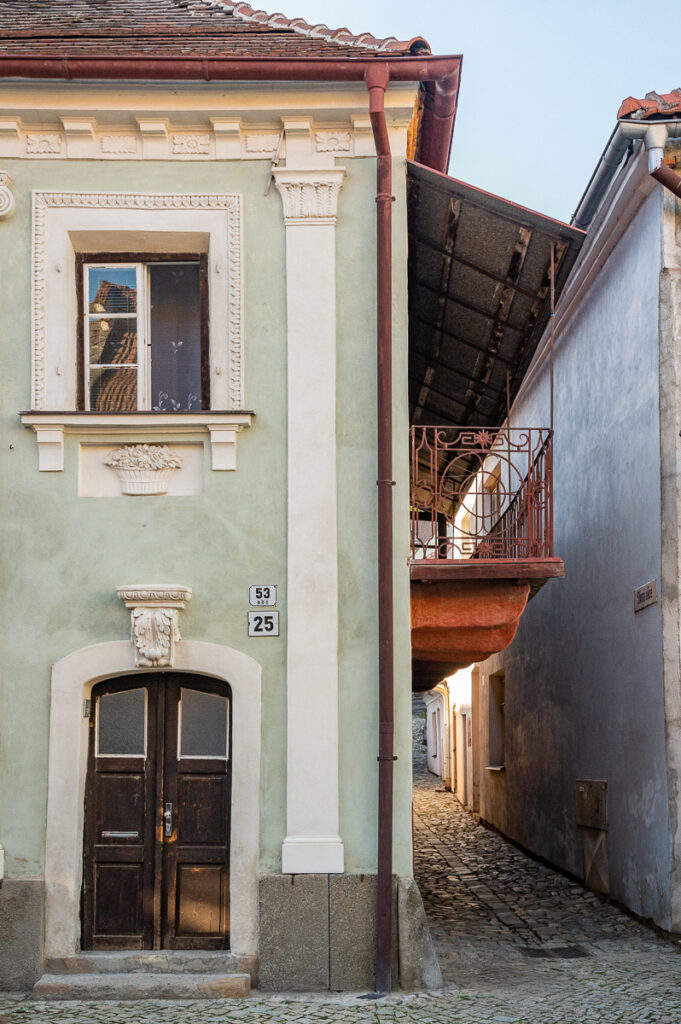
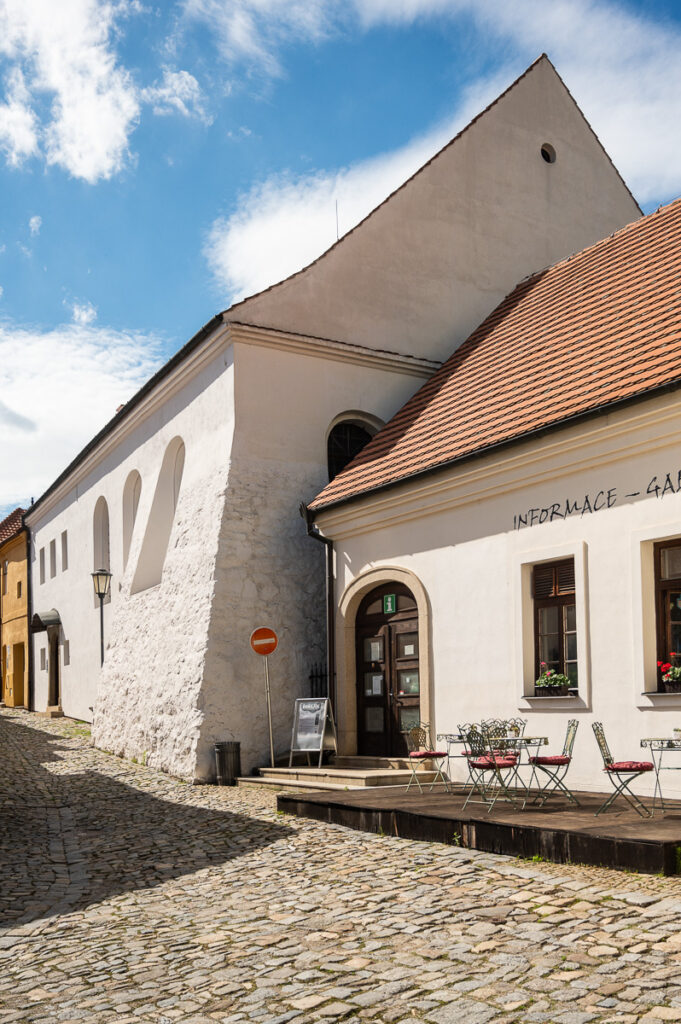
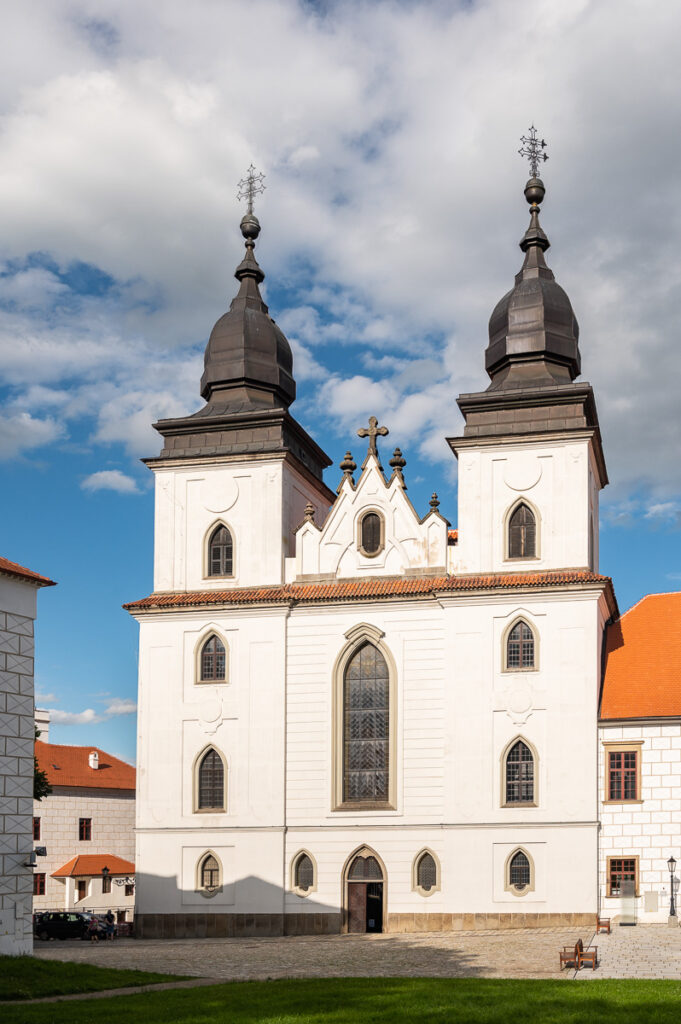
Třebíč’s Jewish Quarter is among the best-preserved urban ensembles in Europe. The local Jewish cemetery is the second largest in the Czech Republic after the one in Prague, and the St. Procopius Basilica features a unique blend of Romanesque and Gothic styles that is unparalleled in Central Europe.
In addition, you can eat great food in Třebíč, head out into beautiful nature, or plan a full-day bike loop.
Add to that a convenient location—Třebíč is about an hour’s drive from Brno and within reasonable distance of other interesting places in Vysočina. If you are planning a trip through southwestern Moravia, it is a natural starting point or stop along the way.
How long to stay
Třebíč makes sense as a day trip if you want to see the main sights without deeper exploration.
You can get here by train from Brno in one hour; the center is compact, and you can easily walk through the essential sights in four to five hours. There will be time left for lunch and a possible stop at Charles Square.
It takes 2 hours by car from Prague; unfortunately, the train journey doesn’t make much sense. Třebíč thus works best as part of a longer visit to Moravia, or you can detour here for half a day from the nearby D1 motorway while traveling elsewhere.
Those who also want to take trips to the surroundings or truly soak up the atmosphere of the Jewish Quarter after most tourists have left will appreciate staying one or two nights directly in town.
You can easily put together a rich program for the whole weekend here, especially if you plan a trip to Telč, Náměšť nad Oslavou, or Jaroměřice nad Rokytnou.
What to see and visit
Jewish Quarter — Třebíč’s UNESCO Heritage
The former Jewish ghetto stands on the left bank of the Jihlava River and forms its own town within a town. It covers more than four hectares and used to be home to nearly sixteen hundred residents.
Today, most visitors to Třebíč come here—and yet the quarter retains the character of a truly inhabited place, not an open-air museum. The same goes for Holašovice in South Bohemia, a UNESCO-listed village whose farmsteads are still private homes.
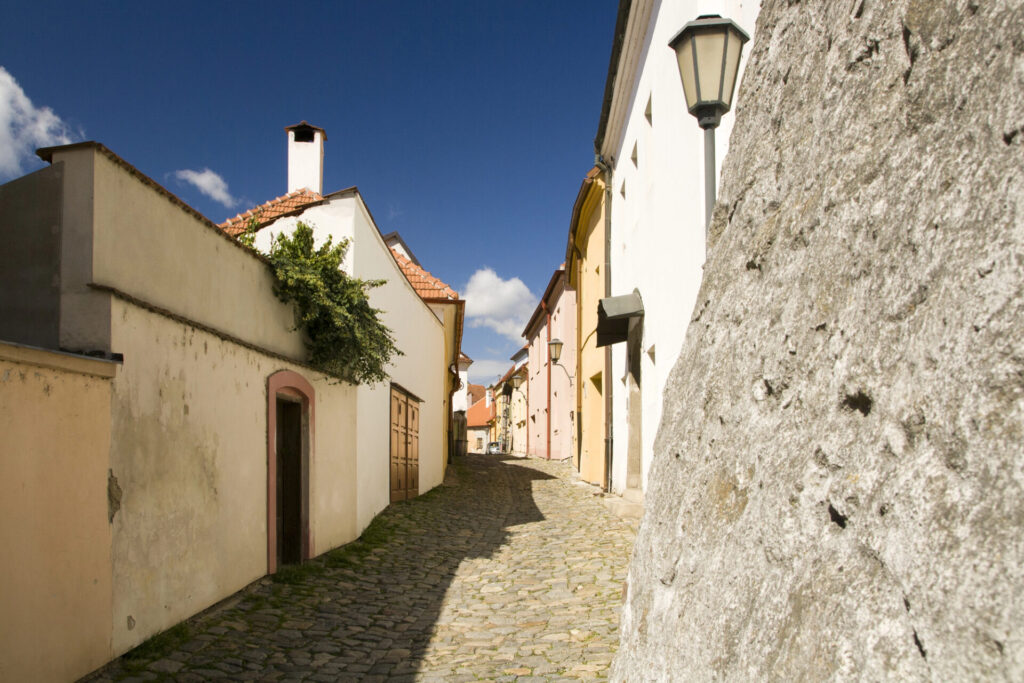
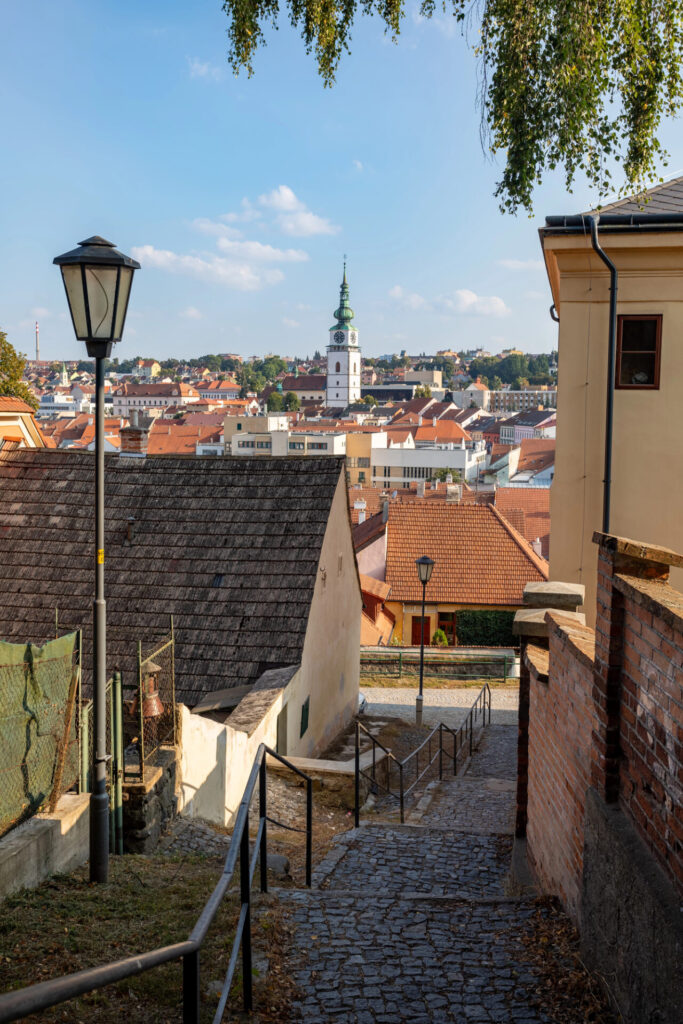
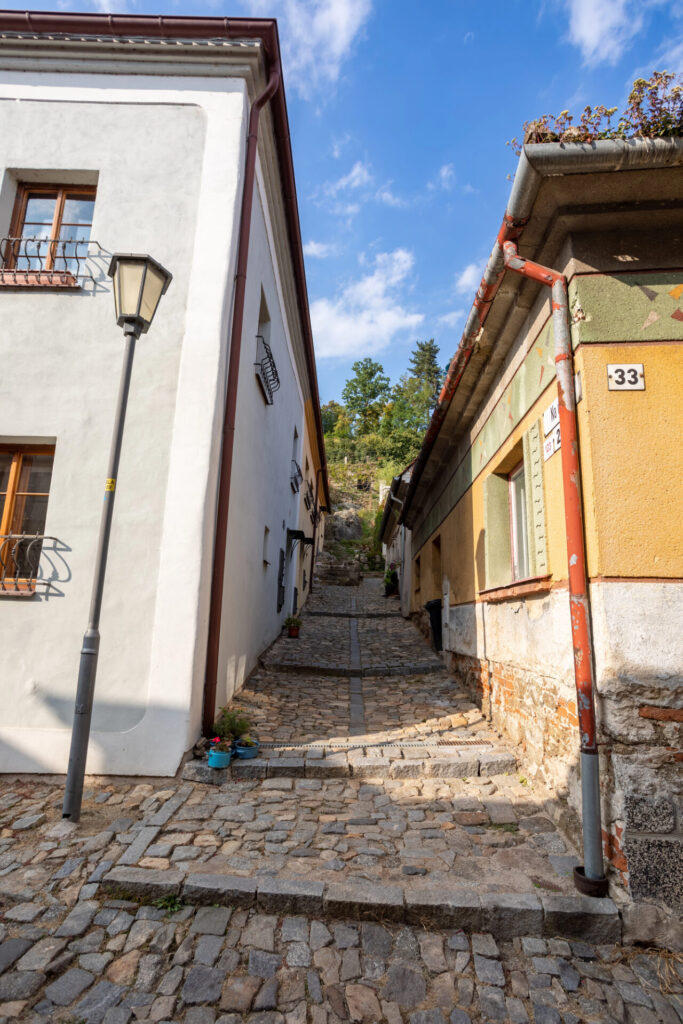
The area consists of a group of about one hundred preserved houses, complemented by buildings of former Jewish institutions—the town hall, rabbinate, poorhouse, hospital, and school. Narrow streets, passages called “prampouchy,” balconies, and verandas create an urban layout that has no comparison in the Czech Republic.
The quarter is freely accessible and can be walked through without a ticket. Just come and wander—information boards at key houses provide basic context.
If you want more, we recommend the guided tour described below. Alternatively, use the audio guide in Czech, which is free to download.
Rear Synagogue and Seligmann Bauer’s House
The two most significant buildings of the entire quarter stand right next to each other, and the tour circuits combine them.
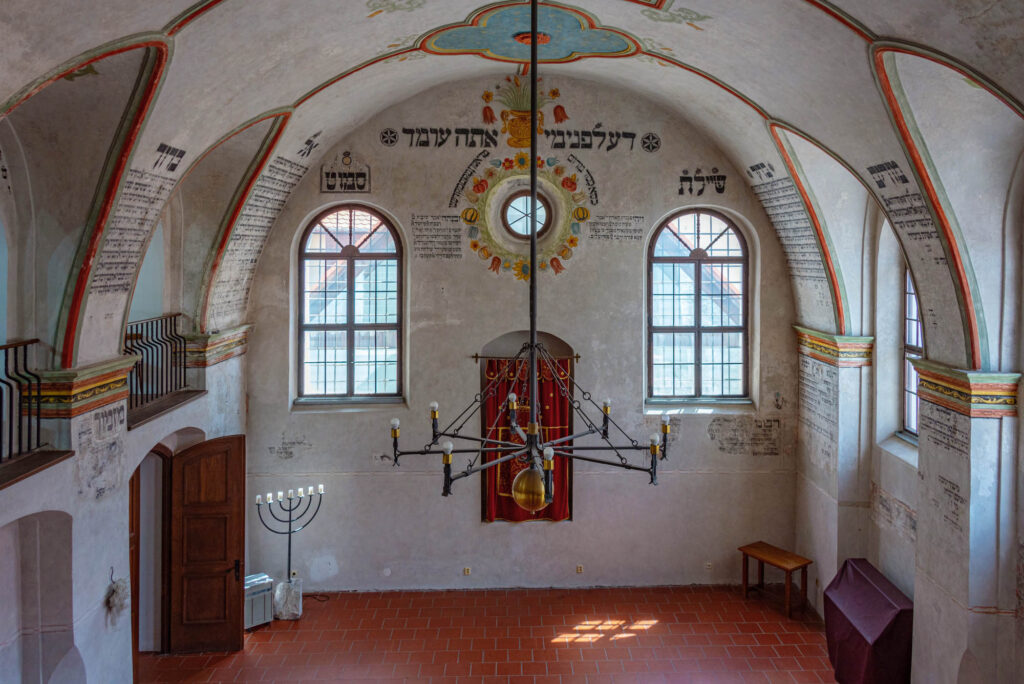
The Rear Synagogue was built in 1669 in the Renaissance style. The interior features unique paintings from the early 18th century.
After WWII, the synagogue served as a fruit and vegetable warehouse; in the 1990s, it underwent extensive reconstruction and was opened to the public as a museum.
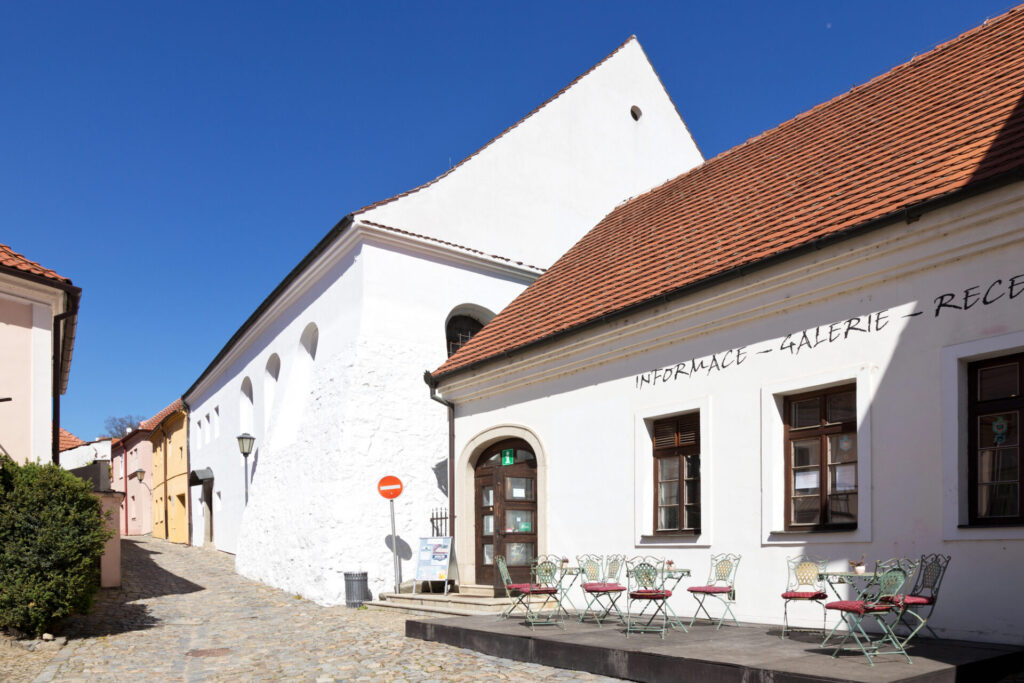
The women’s gallery in the synagogue houses an exhibition on Jewish themes and a unique model of the Jewish Quarter at a 1:100 scale, depicting its state in 1850. The model itself is worth a visit—it provides an overview of the quarter’s extent that you can easily lose track of while walking the streets.
Next to the synagogue stands Seligmann Bauer’s House from 1798, which presents an exhibition of a Jewish family’s home during the interwar period. There is a grocery store on the ground floor, a kitchen and bedroom upstairs, and a butcher’s shop exhibition in the courtyard annex.
The Tourist Information Center is located directly in the Rear Synagogue.
In addition to tours of the Rear Synagogue and the Jewish family home exhibition, it offers two larger guided circuits. Circuit I includes a guided tour of the Rear Synagogue combined with Seligmann Bauer’s House and a walk through the Jewish Quarter (1.5–2 hours). Circuit II is expanded to include a visit to the Jewish cemetery (2–2.5 hours).
Admission:
- Rear Synagogue without a guide: 80 CZK per person, family 220 CZK.
- Guided tour of the Rear Synagogue and Seligmann Bauer’s House: adults 180 CZK, students, seniors, and children from 6 years 140 CZK.
- Circuit I: adults 230 CZK, reduced 180 CZK.
- Circuit II: adults 260 CZK, reduced 200 CZK.
Prices for tours in English are approximately 30% higher.
NOTE – Circuit tours are only possible in season (April – October) and must be booked at least 1 week in advance for a minimum of 4 people.
Information is valid for 2026; please verify on the official website.
Jewish Cemetery
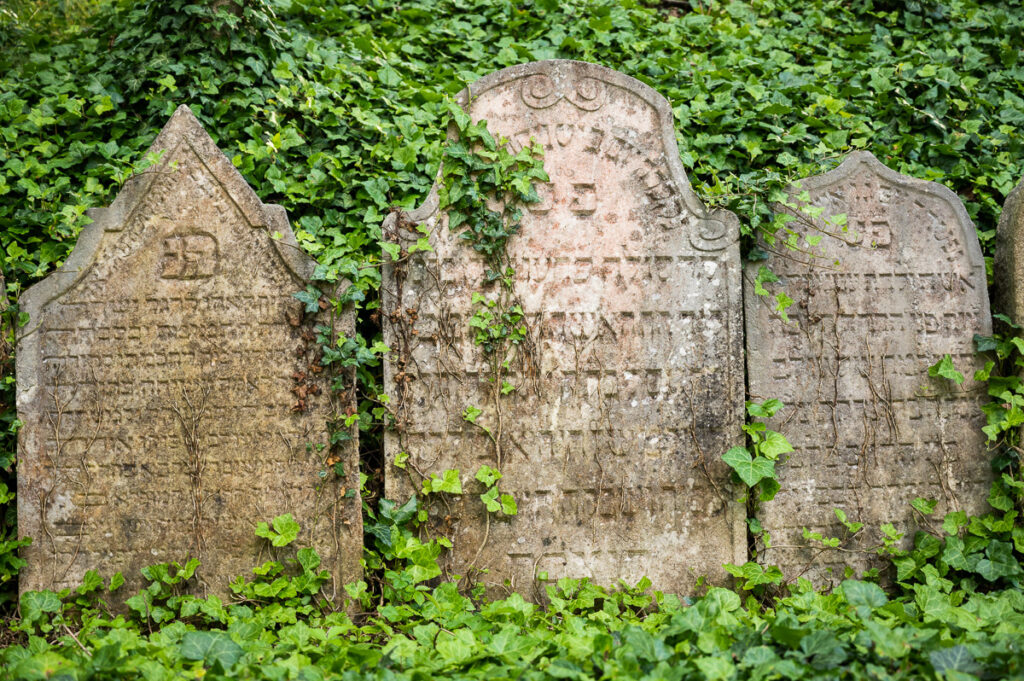
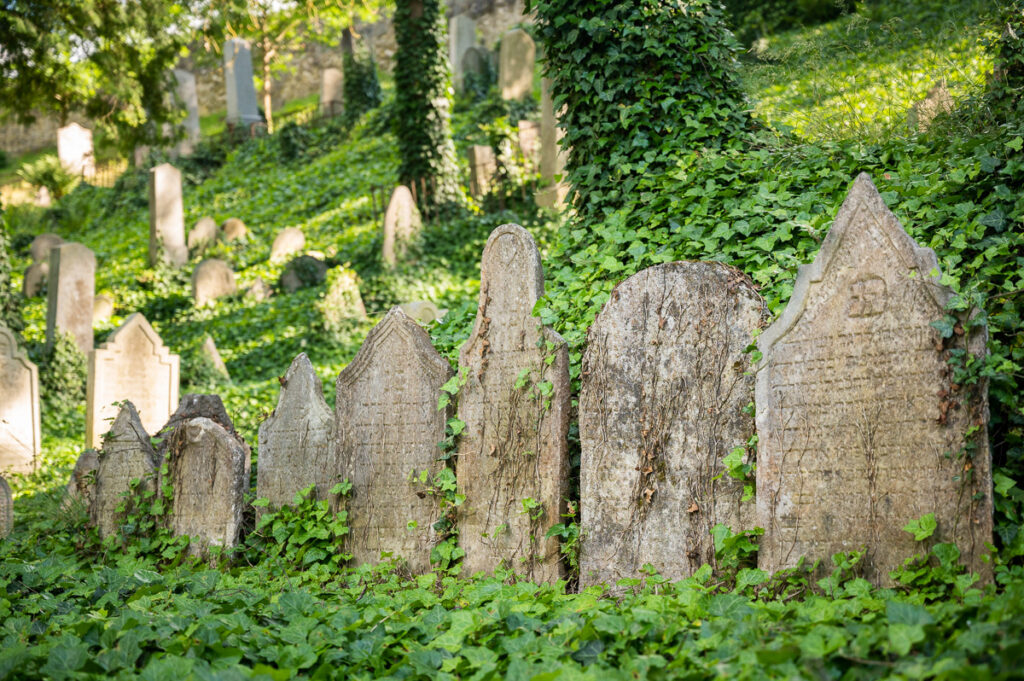
The cemetery was likely founded in the first half of the 17th century on the northern slope of Hrádek. The burial ground is one of the largest in the country—it contains about 3,000 tombstones and nearly four times as many graves (11,000), the oldest of which dates back to 1631.
The cemetery is about a ten-minute walk from the Rear Synagogue, climbing up a winding path.
Admission is free.
St. Procopius Basilica
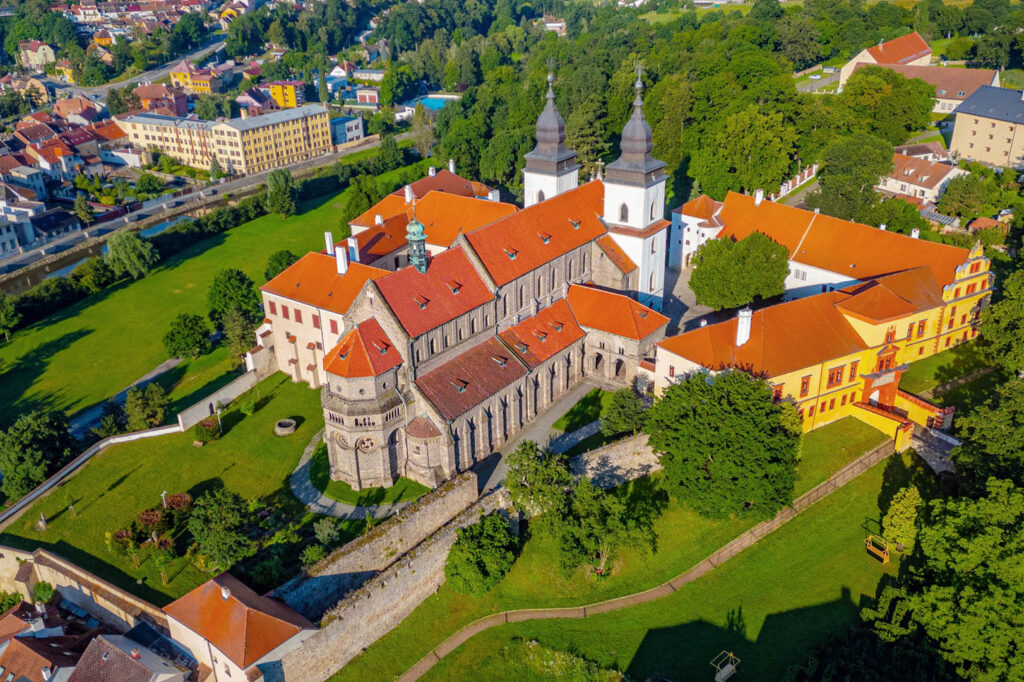
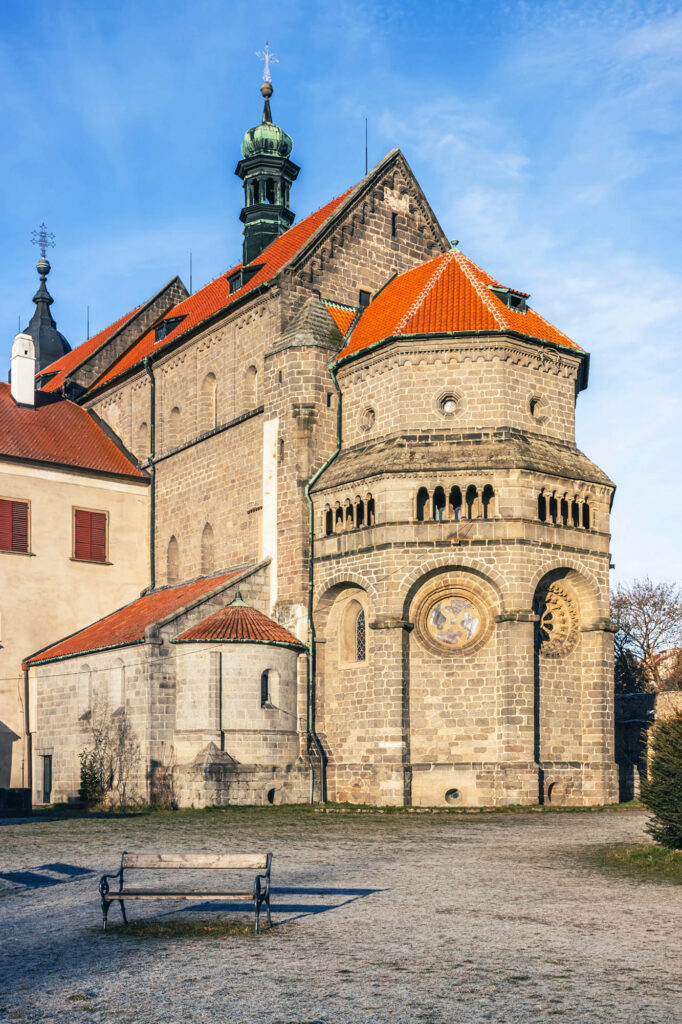
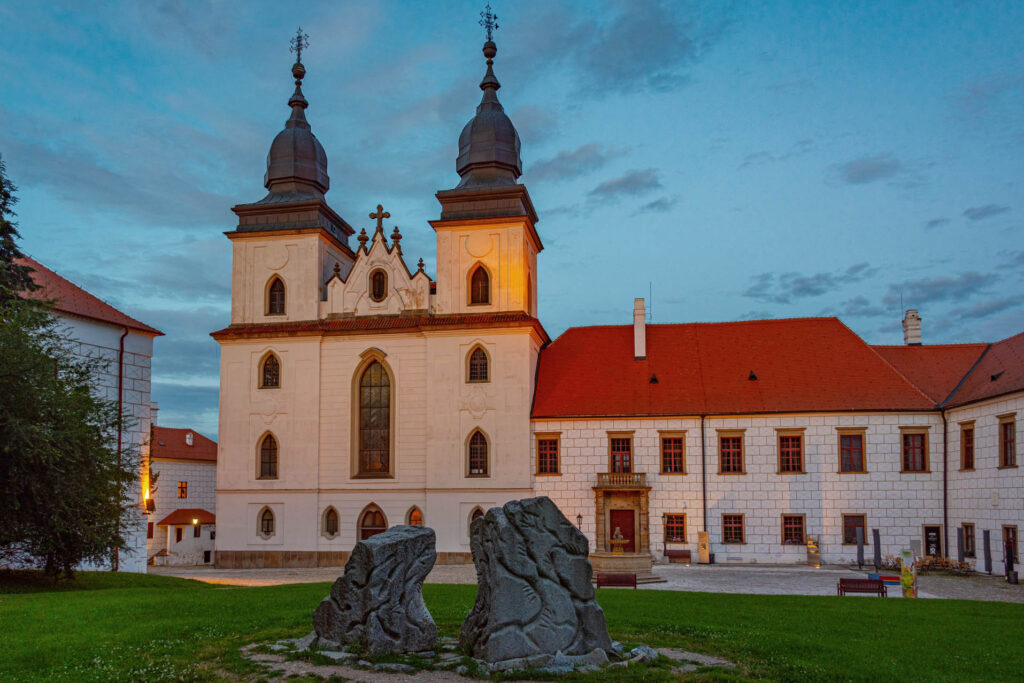
Just above the river, in the complex of a former Benedictine monastery, stands one of the most architecturally remarkable buildings in Moravia.
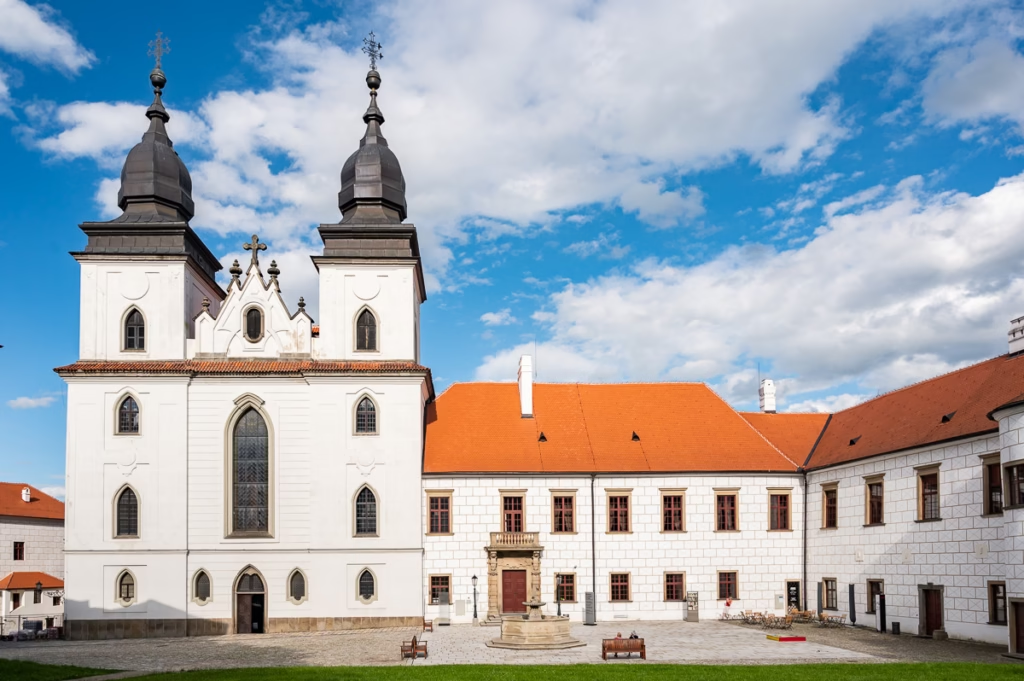
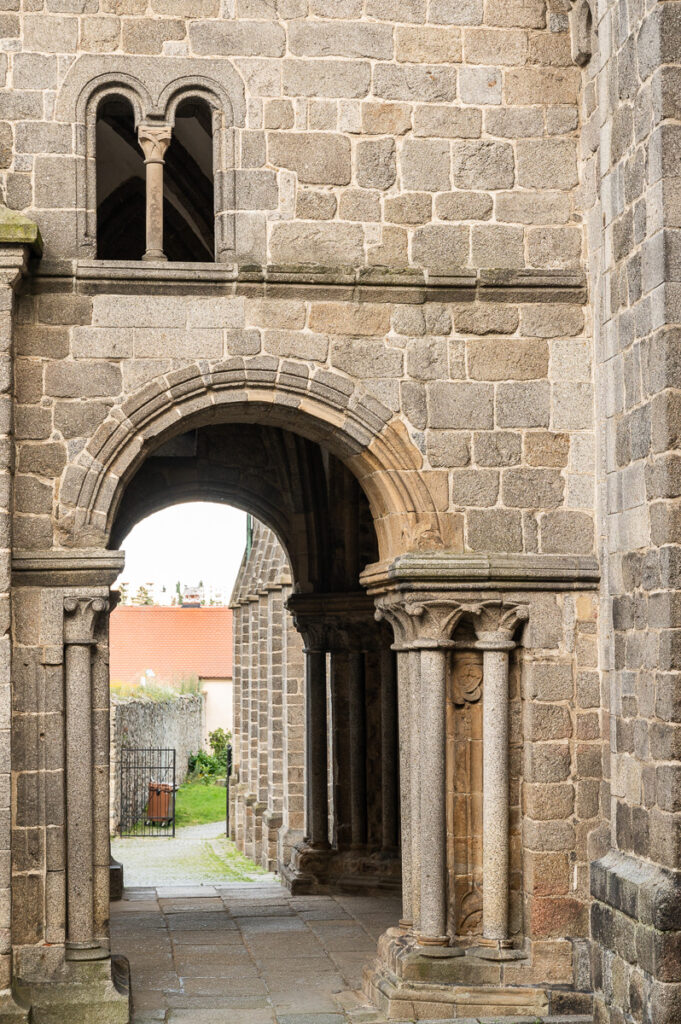
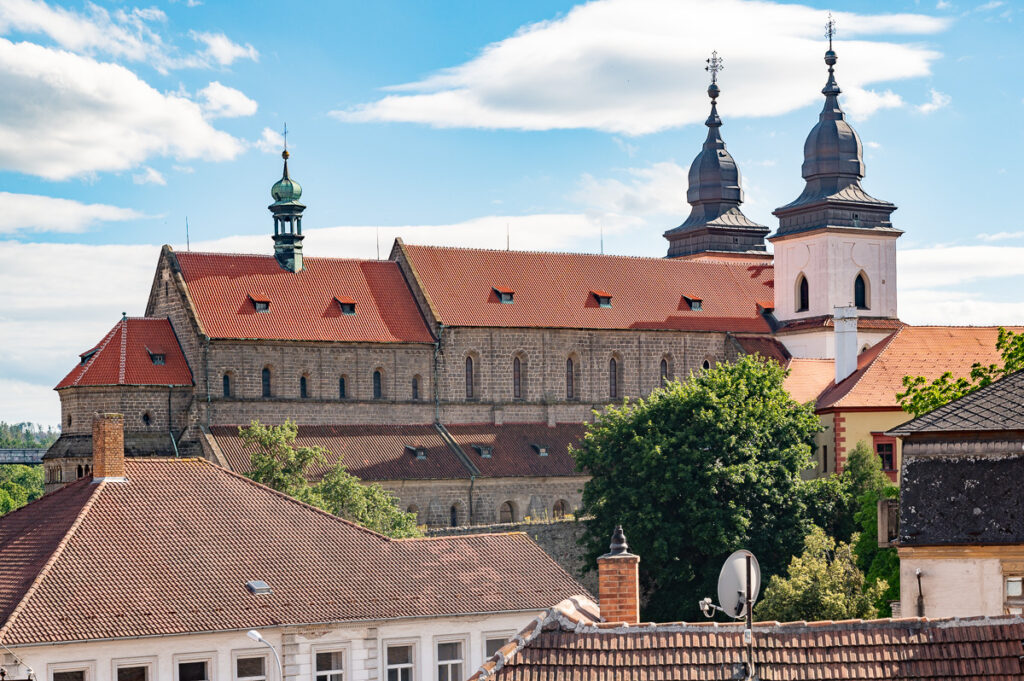
The three-aisled St. Procopius Basilica is characterized by a unique blend of Romanesque and Gothic styles that is unparalleled in Central Europe.
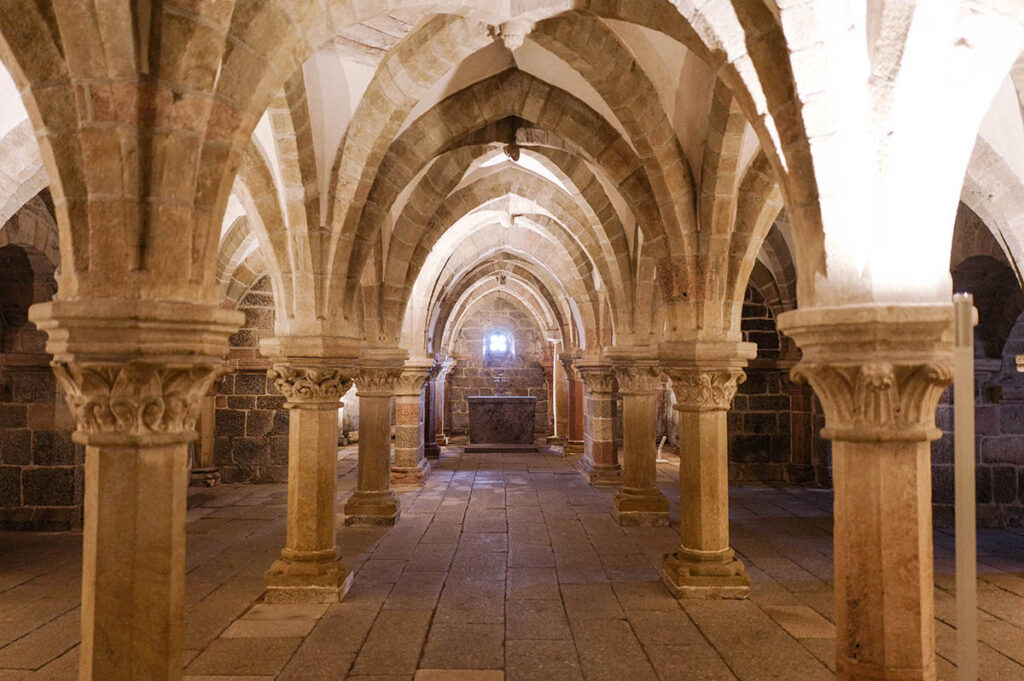
The oldest preserved part of the church is the crypt, which served as a burial place for abbots and monastery benefactors until the 16th century. Each of the fifty Romanesque columns inside is topped with a capital featuring a plant motif, and no two are the same.
The crypt is quiet, dark, and leaves a strong impression—it is one of the most authentic Romanesque spaces you will see in the Czech Republic.
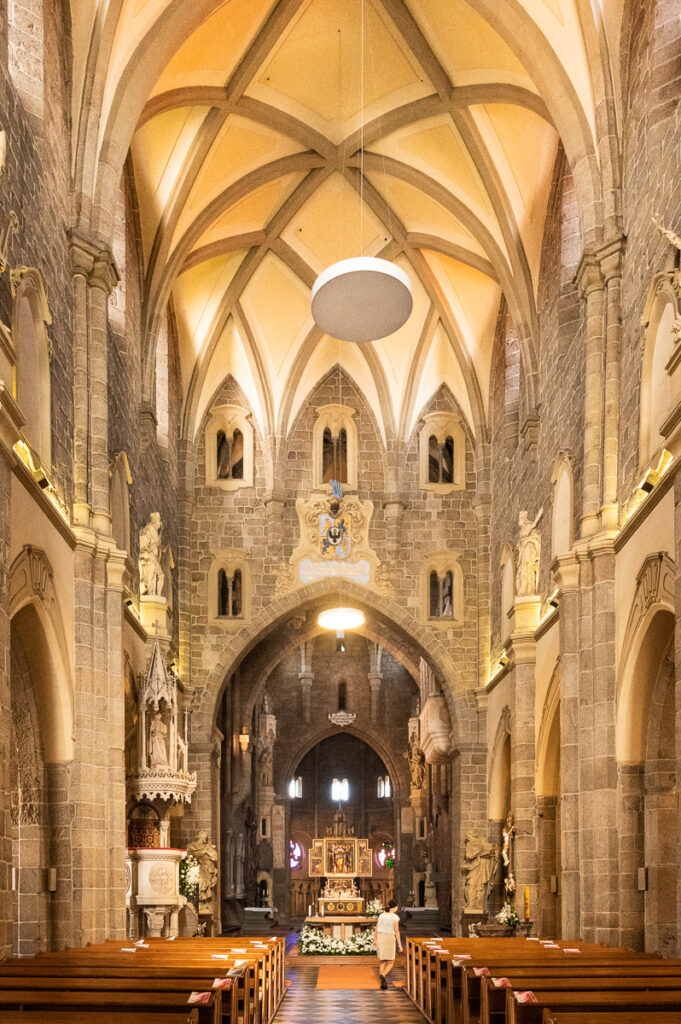
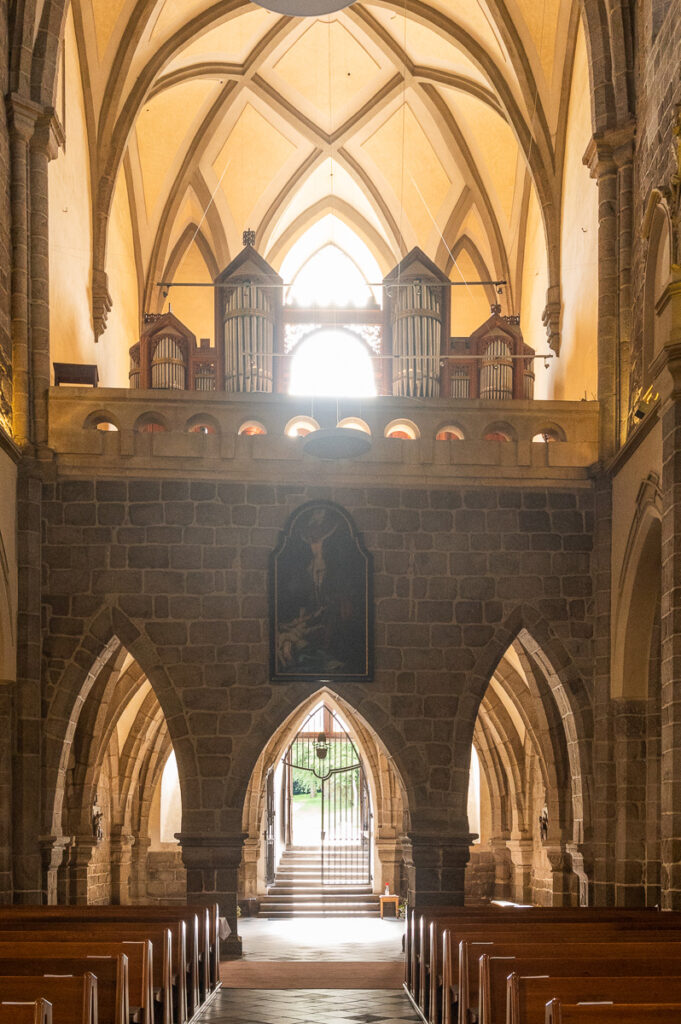
Frescoes have been preserved on the walls of the Abbot’s Chapel, which served not only as decoration but also as “teaching” material—medieval believers could not read or write and could see motifs related to faith on the church walls, the so-called Poor Man’s Bible.
Notice also the Romanesque rosette with its original ten-part stone tracery.
Tours and Admission:
You can enter the basilica as part of guided or self-guided tours. However, guided tours (only in season) usually need to be booked in advance.
- Self-guided tour: 80 CZK per person, family 220 CZK.
- Guided tour: full price 180 CZK, reduced 140 CZK, family 400 CZK.
Třebíč Chateau
Directly above the basilica and the river stands a Renaissance chateau, which was created by rebuilding the original Benedictine monastery in the 16th century. Today, the complex houses part of the museum collections and can be visited with a guide.
For the average visitor, the basilica will be more interesting—we recommend the chateau to those who want to learn more about the region’s history. Furthermore, the exhibitions are unfortunately aimed mainly at Czech-speaking visitors.
Charles Square and the center
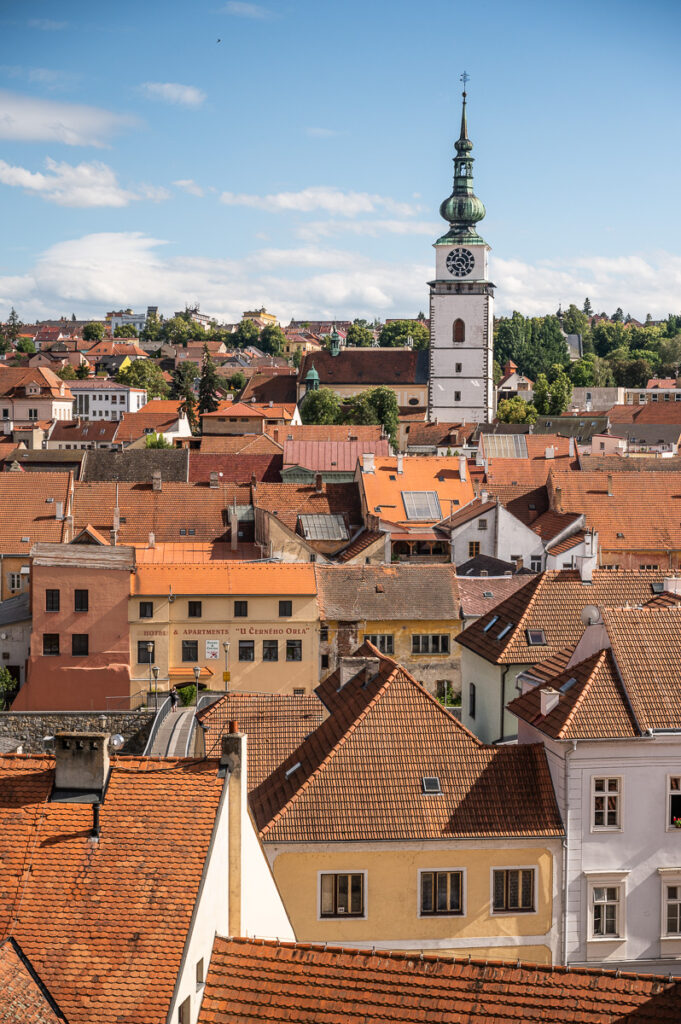
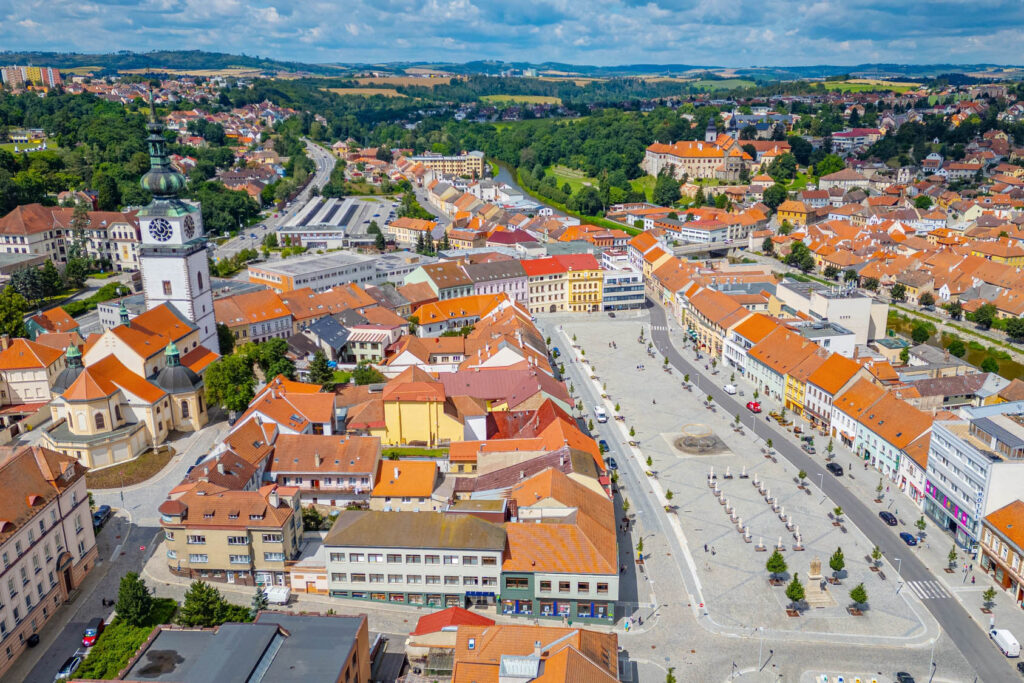
The main square forms the natural center of Třebíč. Here stands the Painted House with its Renaissance facade decoration and the St. Martin’s Church tower, which can be climbed for a view of the town.
The square and its surroundings also serve as a gastronomic hub—most cafes, restaurants, and wine bars are concentrated right here.
Educational Trail: In the Footsteps of Abbots and Rabbis
The route starts at Charles Square and takes you to the most interesting spots in the Jewish Quarter, the cemetery, and St. Procopius Basilica. It is three kilometers long and suitable for pedestrians, cyclists, and strollers.
It is the best way to connect all the key locations into one walk.
Lesser-known tips
Pekelný kopec Lookout Tower
A lookout tower that stands a few kilometers south of the town and offers a nice view of the Vysočina landscape—with good visibility, you can see as far as the Austrian Alps.
You can get here on foot via the themed Trail to Pekelný kopec, or along the green trail directly from the center of Třebíč. With the second option, stop at the smaller Vodárna Kostelíček lookout, which offers a great view of the town.
Třebíč Windmill
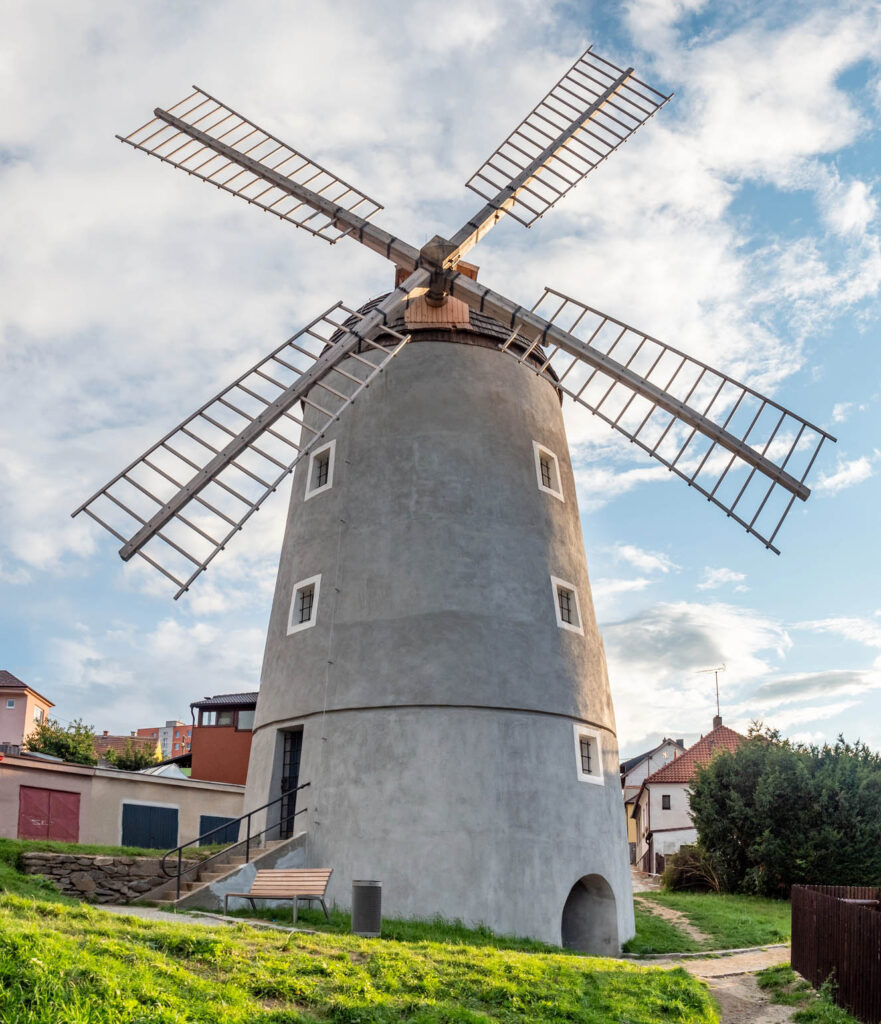
A renovated Dutch-type windmill from 1836 standing on the edge of town. A less-visited spot, but a nice testament to local industrial history.
You can reach it on foot via an unmarked path around the railway bridge, or drive there.
It is only open in season; current times can be found at www.vetrnymlyntrebic.cz.
Alternátor Eco-technical Center
A science center located in the former Baťa factory complex—a suitable stop for families with children or those interested in industrial architecture.
More information can be found at www.alternator.cz.
What to do in Třebíč when it rains
Bad weather in Třebíč is not a major problem—on the contrary, the Jewish Quarter has a special charm in rain or snow, and other key attractions are under a roof.
The Vysočina Museum Třebíč in the chateau complex offers four permanent exhibitions that can easily fill two to three hours. The mineralogical collection includes an exceptional collection of Moravian moldavites, the monastery section explains the history of the Benedictine order directly in the original spaces, and the Waldstein exhibition allows you to walk through noble interiors.
The fourth exhibition in the museum maps the fates of the people and places of Vysočina across centuries—including the story of Antonín Kalina, a Třebíč native who saved nearly 900 Jewish children in Buchenwald.
If you are heading out with kids, Aquapark Laguna can save you from the rain. A year-round indoor complex with a water slide, entertainment pool with a wild river, whirlpools, and a wellness zone with a sauna world.
Another option could be the aforementioned Alternátor science center.
Day Trips from Třebíč
Třebíč lies in the heart of an area where an unusual concentration of Baroque and Renaissance monuments is found within a relatively small territory.
We offer four trips that make sense as a one-day detour—all are accessible by car within 30 minutes, and two of them are easily reached by train.
Telč
About 35 kilometers west of Třebíč, you will find a second UNESCO town—Telč.
The historic square lined with Gothic and Renaissance burgher houses with arcades and richly decorated gables has been on the World Heritage List since 1992.
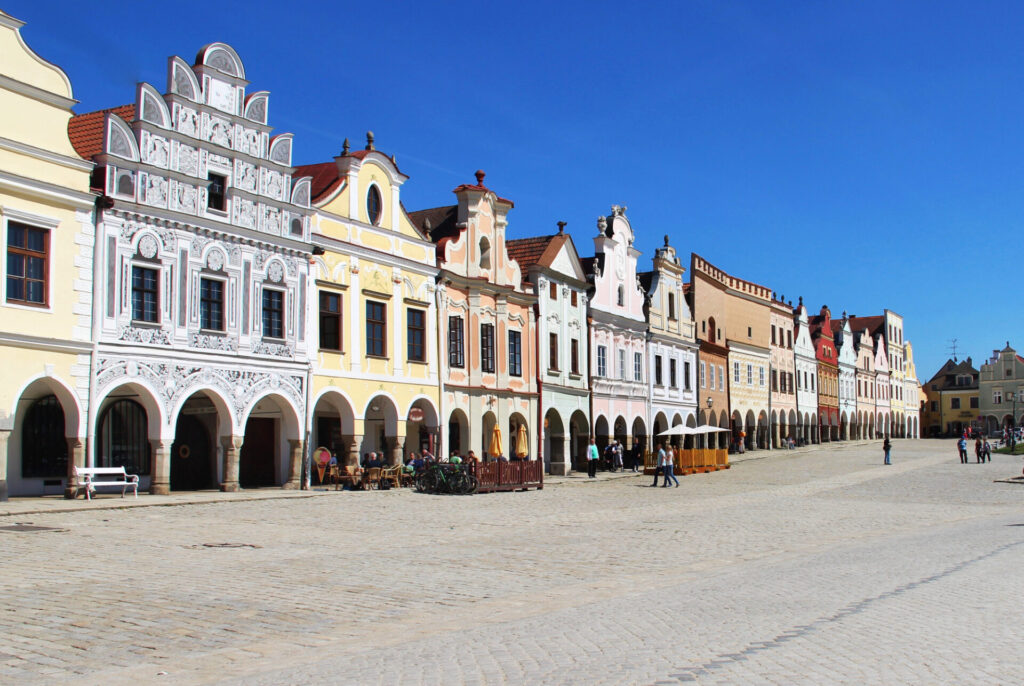
Directly from the square, you enter Telč Chateau—a Renaissance residence decorated with stucco and sgraffito, which is reflected on the surface of the pond.
You can walk through Telč in two to three hours, so it can easily be combined with Třebíč into one day.
Náměšť nad Oslavou
If you head the other way from Třebíč, towards Brno, you will reach Náměšť nad Oslavou in 20 minutes.
Its dominant feature is a Renaissance chateau built on a rock high above the Oslava River, which offers great tours—including a visit to the former winter garden with a view of the town and a magnificent library with about 1,600 books.
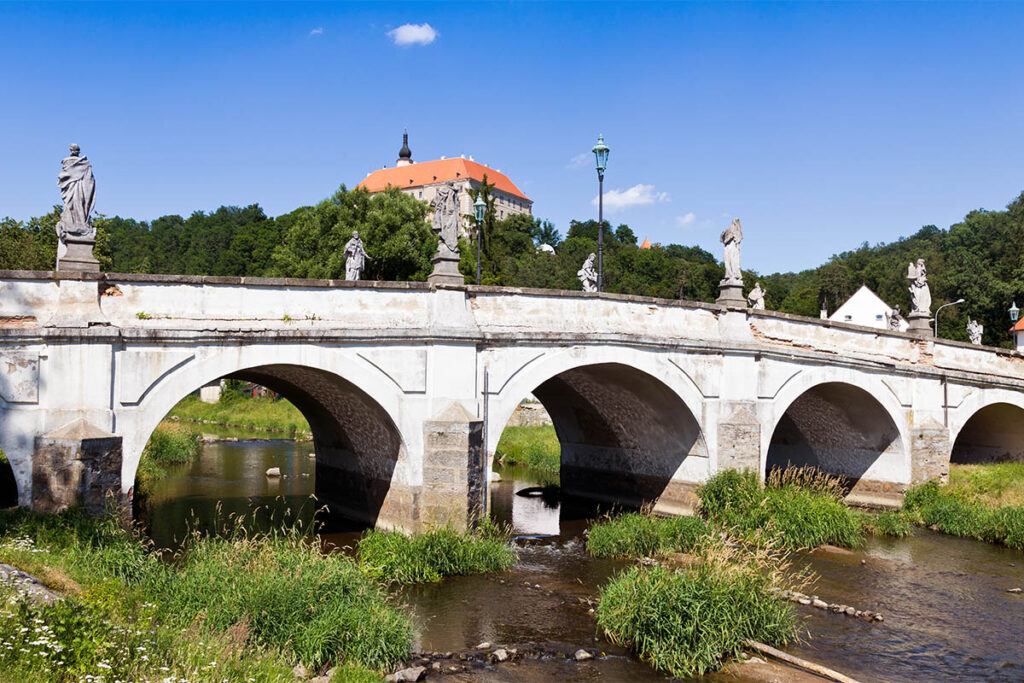
A characteristic feature of the town itself is the stone Baroque bridge over the Oslava River.
You can easily reach Náměšť by train—just like in Třebíč, local trains and express trains to Brno stop here.
Jaroměřice nad Rokytnou
Located approximately 15 kilometers south of Třebíč. The town’s dominant feature is the Baroque chateau, which is one of the largest Baroque complexes in all of Europe. The interiors include decorated halls, painting collections, and historical furnishings.
The carefully maintained extensive chateau park, through which the Rokytná River flows, is worth a visit on its own, and entry is free.
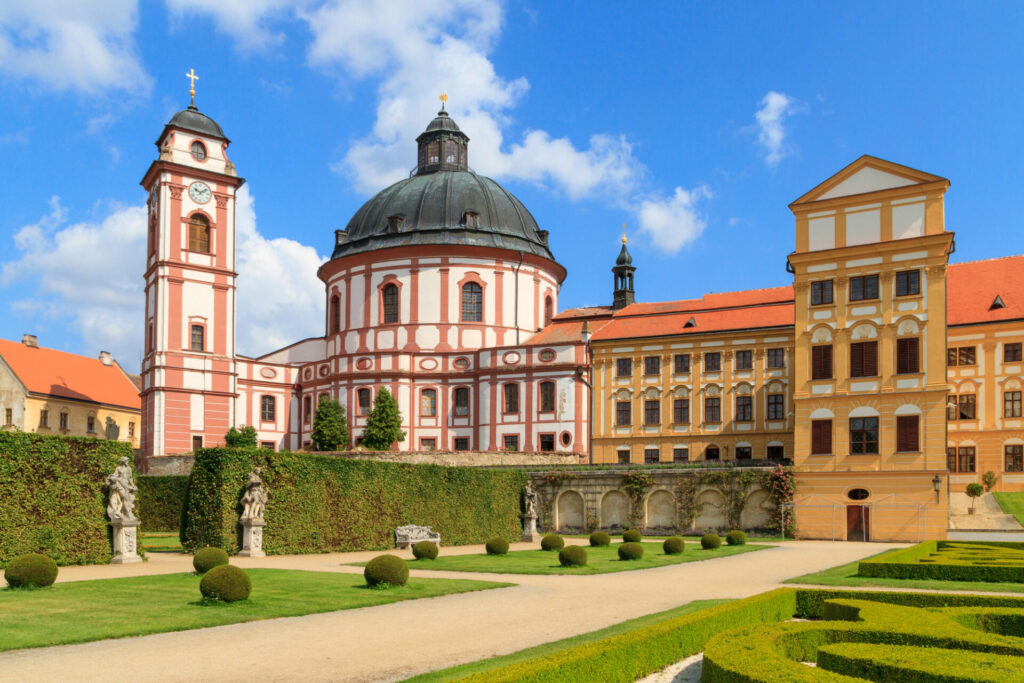
Right next to the chateau stands St. Margaret’s Church, which is structurally connected to it. It looks monumental not only from the outside but also inside—the decoration and the organ, on which concerts are regularly held, are impressive.
You can also get to Jaroměřice from Třebíč by train with a transfer in Okříšky.
Velké Meziříčí
A natural stop for those traveling to Třebíč by car via the D1. Velké Meziříčí lies about 15 kilometers north of Třebíč, and its dominant features are our highest highway bridge and especially the Renaissance chateau.
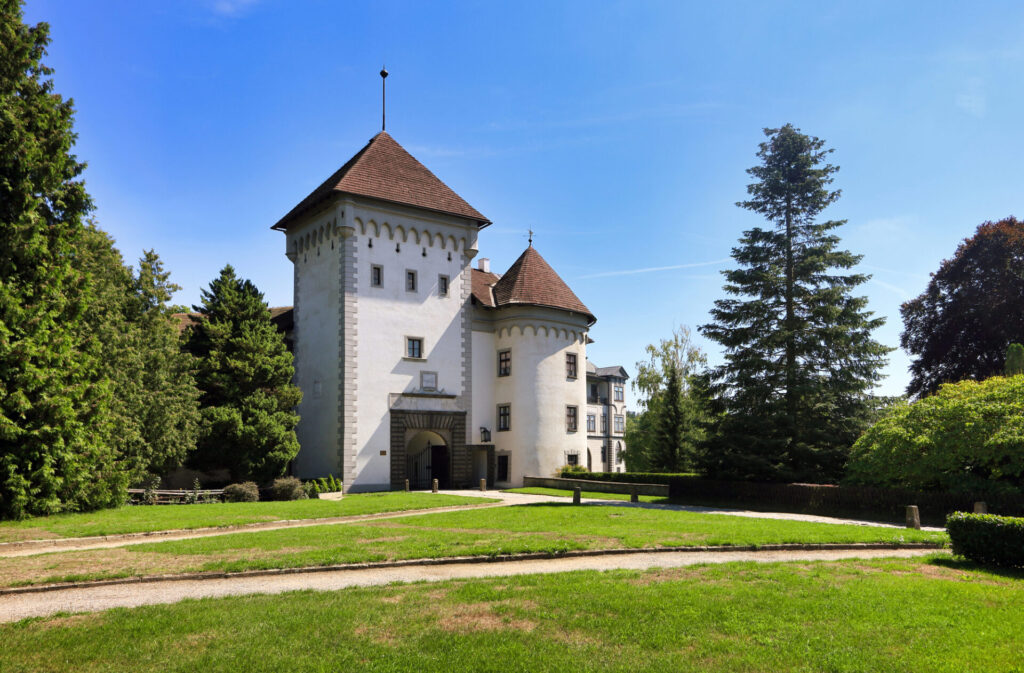
Also worth noting is the St. Nicholas Church tower with a viewpoint and the largest illuminated clock in the Czech Republic. An hour or two is enough for a quick stop; for a more relaxed tour of the town, count on a half-day trip.
Where to next? Go on a journey through South Moravia
Food and venues in Třebíč
By Czech standards, Třebíč offers surprisingly many good places to eat and to get great coffee. Good beer is a given, and they even produce their own whisky here.
Where to go for food and beer
- Adam’s Bar & Bistro – a bistro that never ceases to surprise me. Great food (try the burger!), professional service, good alcoholic and non-alcoholic drinks, and all at reasonable prices.
- Hotel Kocour & Restaurant – a restaurant on the edge of the Jewish Quarter with seating in a beautiful courtyard and very decent food.
- Lucky’s Vege Bistro – simple, honest, and good. A bistro with vegetarian, vegan, and gluten-free meals right in the Jewish Quarter.
- Thomas•Dyntar original Trebic whisky bar – a stylish bar in the Jewish town with its own whisky, as well as a wide range of gins and great beer.
- Centrum Lihovar – a microbrewery with a restaurant near the basilica. Probably the best place for classic Czech cuisine.
- Skoro Katering – a seasonal extra-luxury stall. You’ll find it a bit further from the center, on the way to the Stařečský Stream valley.
- Chléb z Třebíče – honest bread, buns, and cakes. What more could you want?
Where to go for coffee and sweets
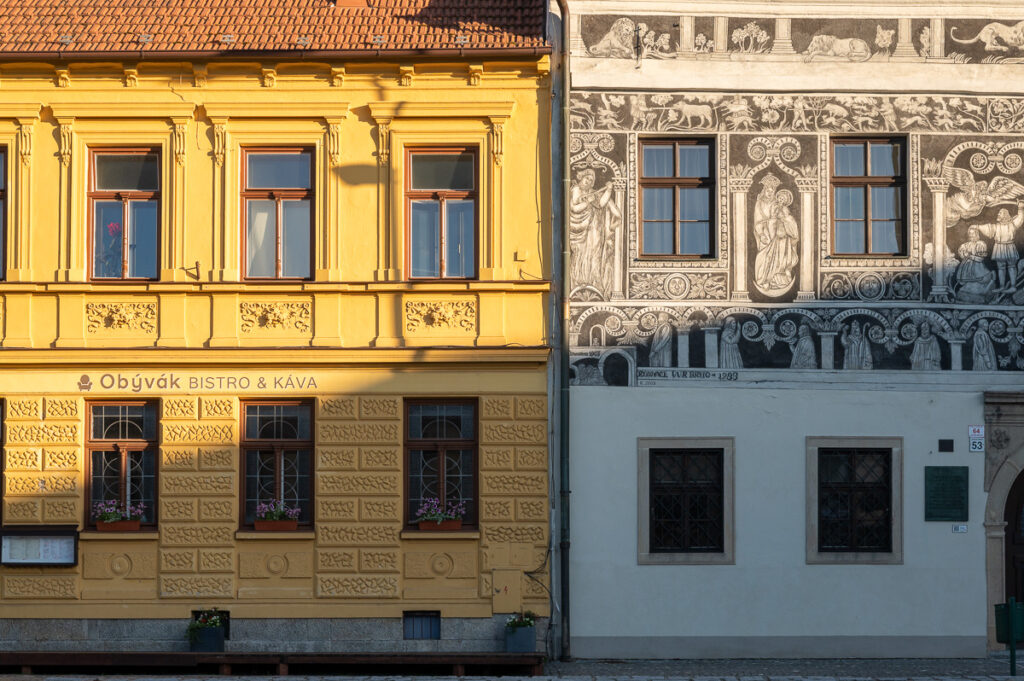
- Obývák bistro a káva – very good breakfasts and smaller meals during the day, pleasant seating, friendly service, and good coffee.
- Kiwi Café – a small cozy cafe with great coffee and homemade sweet pastries.
- Mosa Cafe – an espresso bar on the edge of the Jewish Quarter, luxury coffee, something small to eat, and nice courtyard seating.
- Kavárna za pecí – a beautiful space on the way to the basilica and chateau, excellent coffee and desserts, very pleasant service.
- Papi Café – I would go here mainly for the honest desserts.
- Vzpomínka víno & káva – primarily a wine bar, but they also have great desserts, small savory dishes, and good coffee.
Kosher and Jewish specialties
You won’t find a place directly with traditional Jewish cuisine in Třebíč, which is a bit of a shame. Fortunately, several places in the Jewish Quarter offer at least a taste.
- Kavárna Vrátka – offers desserts prepared according to traditional recipes from fresh ingredients, including typical Jewish sweets like matzos or Haman’s ears. The cafe is run by workers with disabilities and is open year-round.
- Lucky’s Vege Bistro – often has dishes inspired by Jewish cuisine on the menu.
In high season, you can usually find Jewish dishes on the daily menu of some other restaurants, but you need to ask and look around.
Where to stay
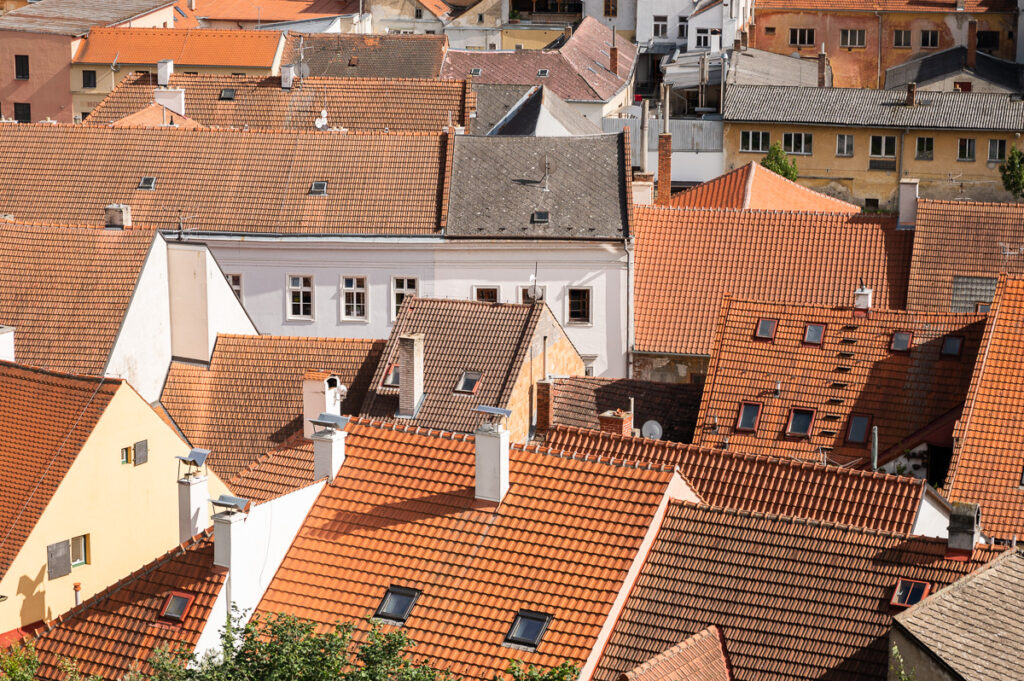
Třebíč is not a large town and most tourists only stop for a day, so don’t expect a huge selection of accommodation. Still, you can easily choose from almost all price categories.
Recommended accommodation:
- Apartments Aron Stinná – a very stylish two-bedroom apartment right in the Jewish Quarter.
- Apartmány Nathan – wonderful accommodation in one of the old Jewish houses, with lots of fine-tuned details.
- Hotel Joseph 1699 – a pleasant family hotel in the Jewish Quarter with an excellent breakfast. Suitable for staying one or two nights.
- Hotel Kocour – a nice little hotel on the edge of the Jewish Quarter with a good restaurant.
- Studio 611 – an apartment suitable for a longer stay with children.
Practical information
How to get to Třebíč
By train from Brno
The most convenient option. A direct express train from Brno main station takes about one hour and runs every two hours.
The same train will take you the other way to Jihlava and České Budějovice, though in the latter case, expect a long journey.
The station in Třebíč lies about 500 meters from the center, and you can comfortably reach all monuments on foot.
We can also recommend the train for the journey from Vienna; the trip takes about 3 hours with one transfer in Brno.
By bus
Direct buses run here from Prague and Brno, but long-distance connections are not very frequent.
For the journey from Prague, you can also use a combination of bus to Jihlava + train to Třebíč
Check current connections on idos.cz.
By car
The most logical solution for traveling from Prague and other places in Bohemia. Třebíč is easily accessible by car from the D1 highway—exit at Velké Meziříčí and continue about 15 kilometers south.
The journey from Prague to Třebíč takes slightly over two hours by car.
Getting around the city
Třebíč’s center is compact, and all key UNESCO locations are connected by a three-kilometer educational trail. You can manage everything on foot without the need for any local transport.
Alternatively, several city bus lines run in Třebíč; you will likely be most interested in line 10, which takes you from the train station to the Jewish Quarter and the chateau.
For longer trips to the surroundings, it is useful to have a car available, or at least a bike.
Parking
Be aware that in season, it can be very full near the monuments.
There is a paid parking lot on Žerotínovo Square near the Jewish Quarter; entry directly into the Jewish Quarter is permitted only for residents.
Most streets in the center are paid, or you will also encounter residential parking with limited options for non-residents.
Above the chateau and basilica, you can park for free at the distillery, but this is almost always full on weekends and in summer.
The paid parking lots at Komenského Square and V. Nezvala are a sure bet.
You can easily pay for parking anywhere in town via the EasyPark app—it is also available in English.
When to go to Třebíč
The main tourist season lasts from April to October. In summer, opening hours are longer and guided tours take place more regularly. Off-season—especially in December, January, and February—some exhibitions are limited or closed.
Třebíč is not overcrowded even in summer, but those who prefer peace will appreciate a visit in spring (April–June) or autumn (September–October), when accommodation prices are lower and the weather is still favorable.