This post is also available in:


Kutná Hora UNESCO heritage town is one of the most beautiful medieval cities in the Czech Republic, and it takes excellent care of its legacy. In the Middle Ages, it was the second most important city in Bohemia – a centre of silver mining and home to the royal mint, where the Prague groschen, recognised across Europe, was struck.
Today it’s inscribed on the UNESCO World Heritage list and welcomes hundreds of thousands of visitors each year. The shame is that most of them arrive in the morning and leave before dinner. Or maybe that’s a good thing? Kutná Hora is at its most beautiful in the evening, when the streets quieten down and the lamps and lanterns flicker on.

For me personally, the most memorable experiences are tied to watching the sunset from the city walls with a glass of local wine in hand, exploring the excellent Gallery of the Central Bohemian Region (GASK), and lingering in its café.
This guide is for travellers who want to experience Kutná Hora differently – without rushing, without crowds, and with enough time to get to know the town in real depth.
Why Kutná Hora deserves more than a day trip
A day trip obviously works just fine – especially outside the peak summer season and weekends. But Kutná Hora has more to offer than the average visitor can take in arriving at ten and leaving at six.
The main sights are spread across a fairly large area – Sedlec, home to the Bone Church (Ossuary), the Church of the Assumption of Our Lady and St. John the Baptist, and the former monastery, lies almost three kilometres from the historic centre. Anyone who wants to see both areas properly and walk through the centre will need more than half a day.

The town also offers very good museums, the gallery mentioned above, and a really pleasant food scene.
Add in walks in the surrounding countryside – the Vrchlice river valley, Kaňk hill with its lookout tower and panoramic views – and you can easily fill a whole weekend.
Another strong reason to stay overnight is the simplest one: day-trippers leave around five. Anyone who sleeps over has the evening town almost to themselves.

Kutná Hora and Kingdom Come: Deliverance II
Since February 2025, there’s been one more reason to visit. The second instalment of the Czech medieval RPG Kingdom Come: Deliverance, made by Prague-based Warhorse Studios, is set right here in Kutná Hora. Thanks to the game, you may well bump into plenty of “unexpected” tourists.
The game is set in the era of Wenceslas IV – the same period when the city was at the height of its glory. The Italian Court, St. Barbara’s Cathedral, the medieval lanes – everything is recreated in the game in remarkable detail.
The map of Kutná Hora in the second instalment is twice as big as the entire map of the first game, which was set in the Posázaví region around Rataje nad Sázavou.
The town has responded to the influx of gamer tourists with themed tours that connect real-world locations to events in the game. Whether you’ve played it or not, it’s a great way to discover the town’s history from a fresh angle.

How long to visit and how to plan your days
One day
You can manage the Bone Church and the church in Sedlec, St. Barbara’s Cathedral and a walk through the centre. It’s a packed schedule and you’ll likely skip some of the smaller sights or museums in the centre, and there’ll be almost no time for a stroll in the surrounding countryside.
It works, but with no extra excursions and no time to slow down.
Two to three days
The ideal length of stay. Spend one day at the Bone Church and the church in Sedlec, and save St. Barbara’s Cathedral for the next day. In between, you can leisurely explore the centre, walk along the river valley and hike up to the lookout tower.
You’ll also have time for one of the museums, the gallery and a relaxed coffee.
In summer, organised coach tours roll in between 10am and 2pm. If you’re in the centre before ten or after four in the afternoon, you’ll experience the town at a completely different pace.

Sedlec Ossuary (Bone Church): Kutná Hora’s famous first stop
The two-storey Cemetery Church of All Saints with the Ossuary stands in the Sedlec district, about 2.5 km from the historic centre. Its interior is decorated entirely with human remains — the bones of an estimated 40,000–70,000 people, arranged into a chandelier, garlands of skulls and the Schwarzenberg coat of arms, most of it assembled by woodcarver František Rint in 1870.

👉 Full guide: How to visit the Sedlec Ossuary (Bone Church) from Prague — trains, timed tickets, what you’ll see inside and photography rules.
Church of the Assumption of Our Lady and St. John the Baptist
One of Kutná Hora’s two stunning Gothic basilicas stands just five minutes’ walk from the Bone Church.
It was founded as part of a Cistercian monastery in 1142 and significantly rebuilt between 1280 and 1320. Its current form took shape at the turn of the 17th and 18th centuries, also under the direction of Jan Blažej Santini-Aichel, in the Baroque Gothic style.

The plain interior is a deliberate Cistercian choice – instead of ornamentation, the architecture works with light.
The adjacent former monastery building today, somewhat ironically, houses the tobacco company Philip Morris – luckily you can still visit at least part of it.
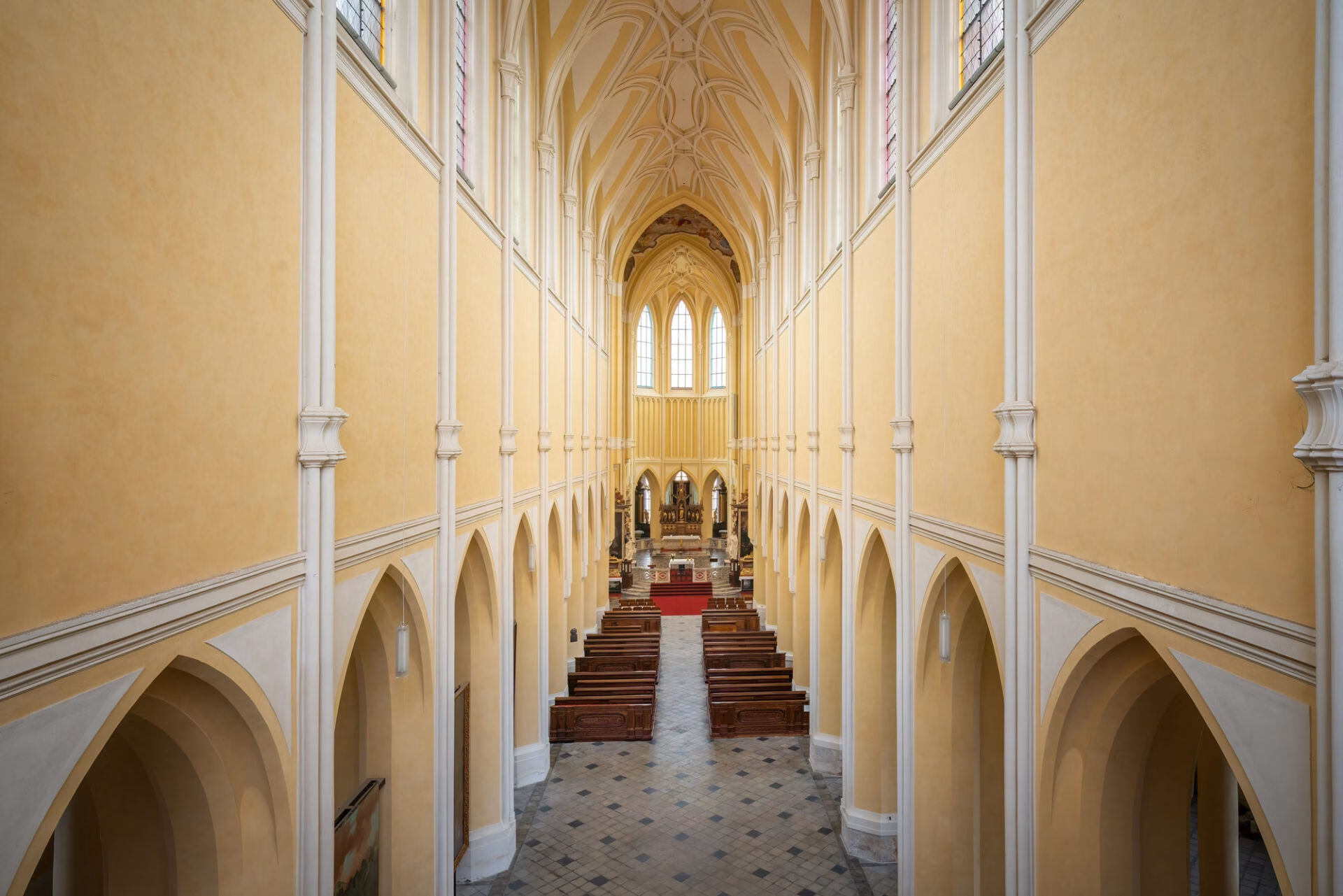
Top 10 things not to miss in Kutná Hora
- Sedlec Ossuary (Bone Church) – unique, unsettling, unforgettable
- St. Barbara’s Cathedral – one of the most beautiful Gothic churches in Central Europe
- Medieval silver mine at Hrádek – descend into a real mine beneath the town and visit the Czech Museum of Silver
- Italian Court – stunning historic building where the Prague groschen was minted
- The church in Sedlec – Baroque architecture and light as the main exhibits
- Barborská Street – the most beautiful view of the cathedral and the town’s panorama
- A walk through the centre – discover plenty of well-preserved historic churches, chapels, mansions and fountains
- GASK in the Jezuitská kolej – excellent exhibitions in one of the largest Baroque buildings in Bohemia
- Kaňk hill and the Havířská Bouda lookout tower – views of the town from the mining hill
- Walk through the Vrchlice valley – waterfalls and quiet just beyond the centre
What to see in the centre of Kutná Hora
St. Barbara’s Cathedral
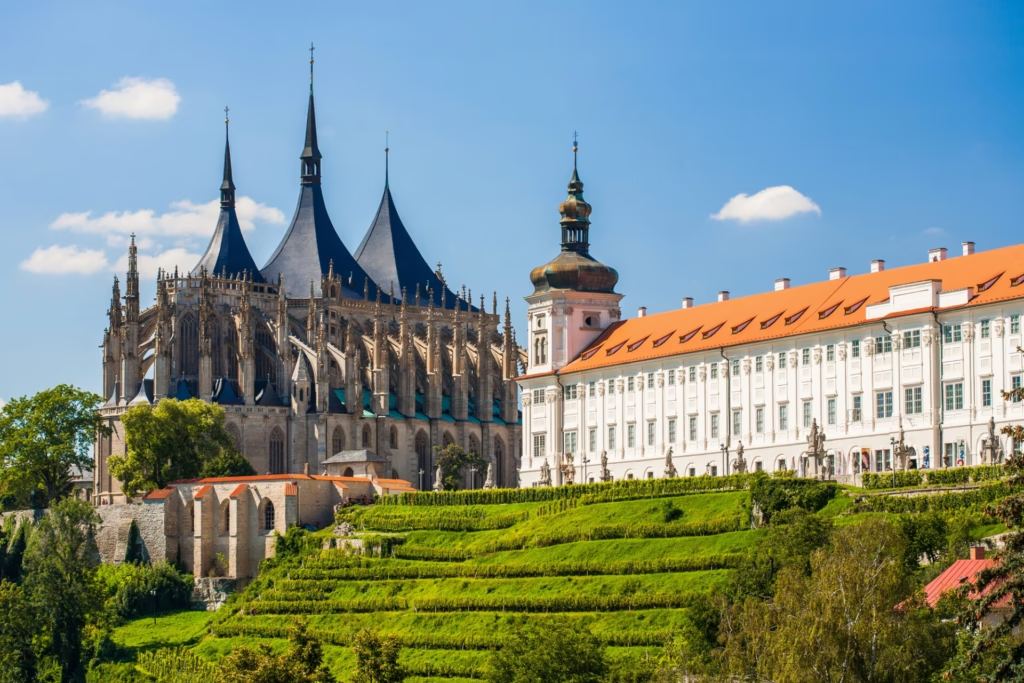
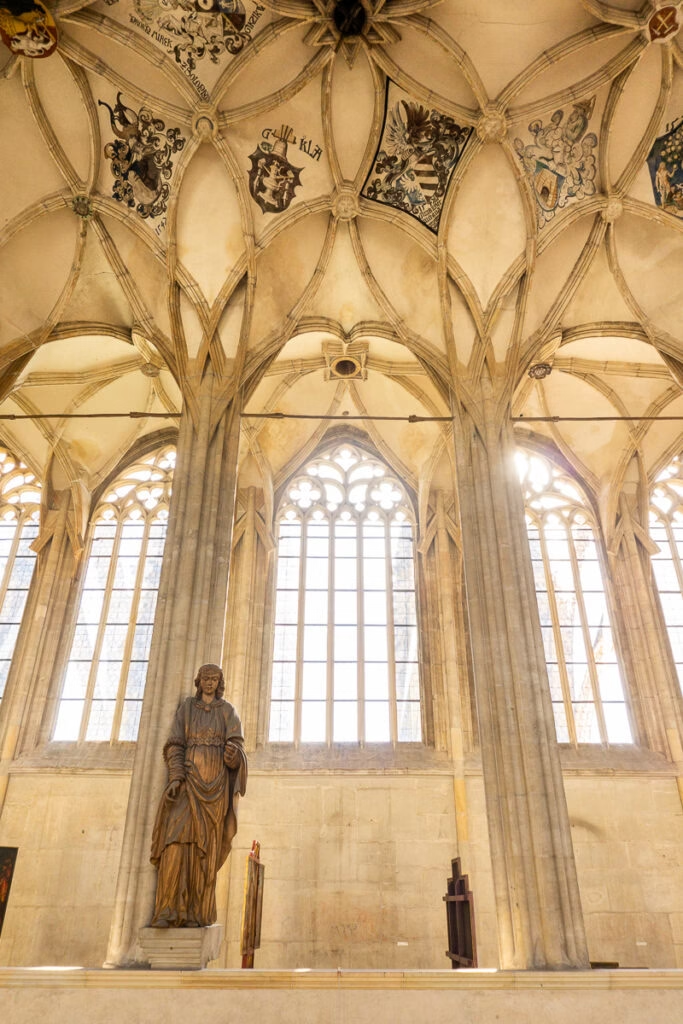
Construction of this magnificent cathedral began in 1388 and lasted nearly two centuries. The result is one of the few truly large Gothic churches preserved in the Czech Republic. It even boldly rivals St. Vitus Cathedral at Prague Castle.
Its dedication to Saint Barbara, the patron saint of miners, is no accident: silver fed the town, and the cathedral was largely funded by mining revenues.
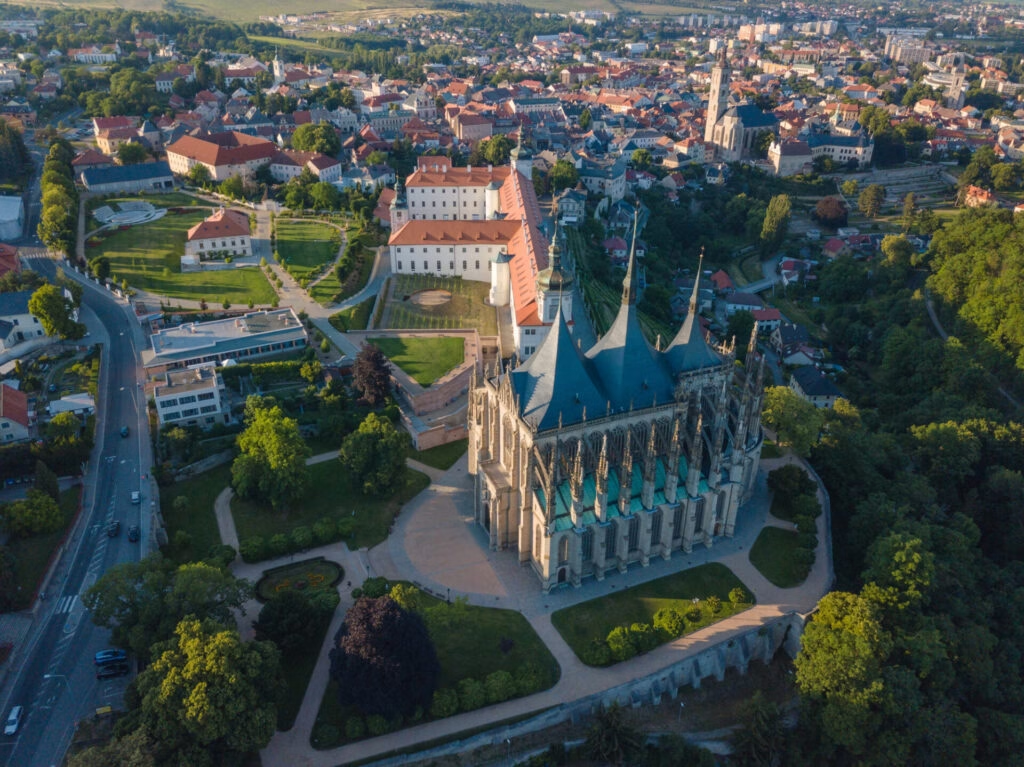
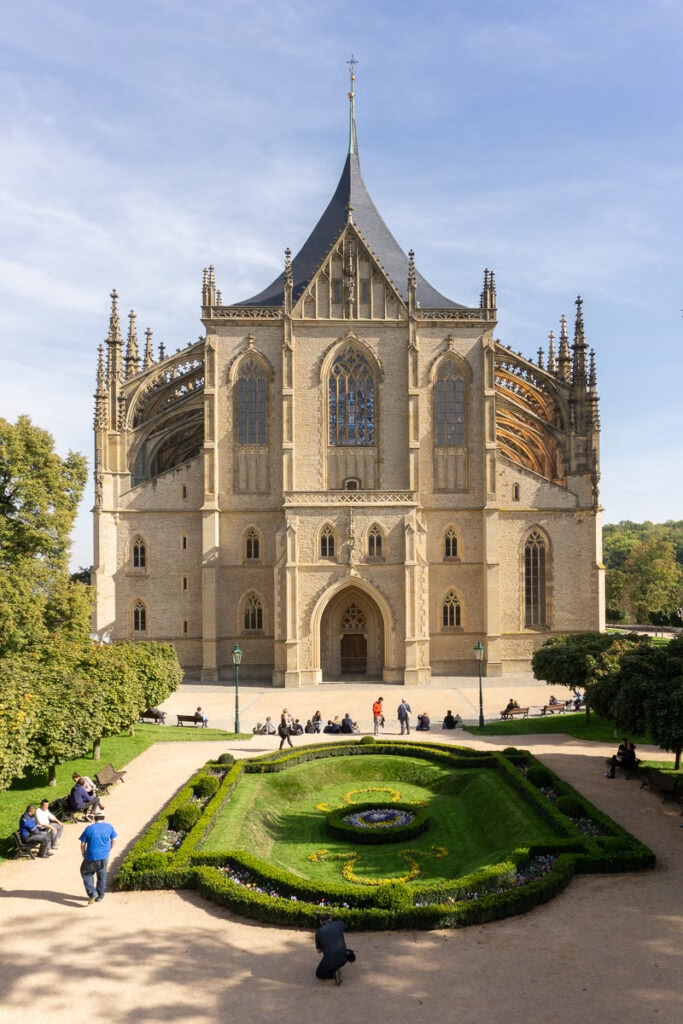
The exterior is worth a full walk around – look carefully: five naves, an intricate flying buttress system, three tent-shaped roofs – all perched on the edge of a promontory above the Vrchlice valley.
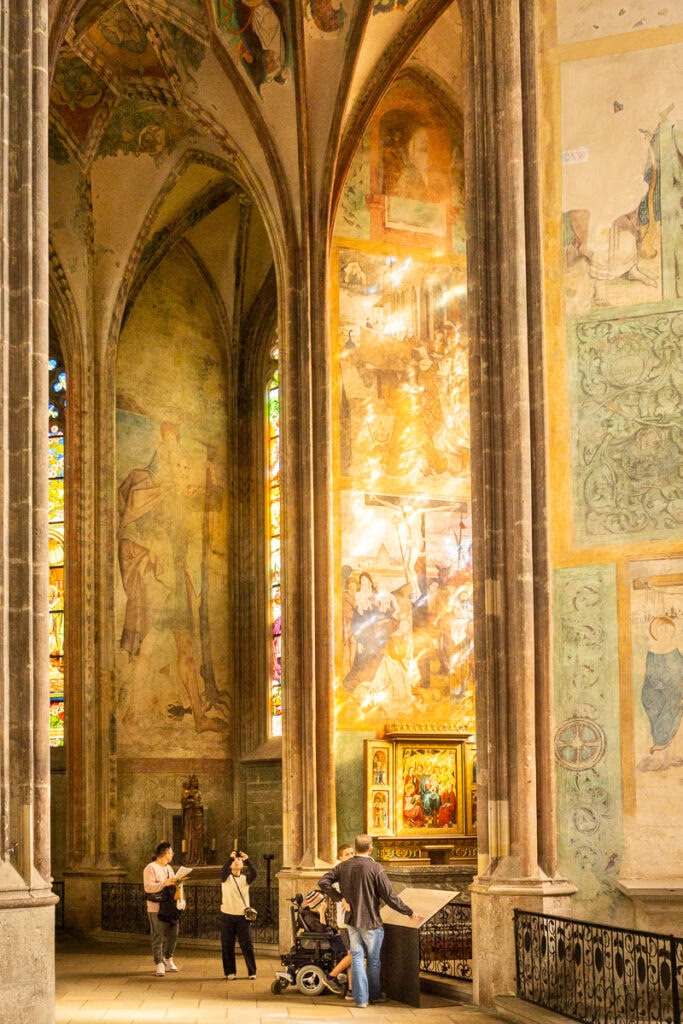
Inside, the fresco decorations of the chapels are a real surprise – they include secular motifs too: heraldic figures, scenes from miners’ lives, even coin minting.

It’s also worth knowing that the cathedral was taken over by the Jesuits after 1626 and underwent Baroque modifications following a fire. Thanks to the local archaeological society Vocel, however, an extensive restoration was carried out at the turn of the 19th and 20th centuries to return the cathedral to its original Gothic appearance.

An additional vaulting bay and a Neo-Gothic façade were also added during the restoration – originally, the church was closed off to the west by just a temporary wall, with the assumption it would be expanded further in the future.
Barborská Street
The approach to the cathedral runs alongside the Jesuit College. It’s lined with a series of Baroque statues of saints – a similar arrangement to Charles Bridge in Prague.

In the early morning or late afternoon, it’s one of the most photogenic spots in the Czech Republic.
The Italian Court (Vlašský dvůr)
The original royal mint, where the Prague groschen was struck from the late 13th century onwards – the first standardised medieval coin to circulate across Europe. Later, thalers were minted here too.

Czech kings also resided in the Italian Court during their visits to the town. Today it houses exhibitions on the history of coinage and live demonstrations of coin striking.
I’d definitely recommend at least seeing the Audience Hall with its beautiful paintings by Karel Klusáček and the Špillar brothers.

Hrádek – Czech Museum of Silver and medieval mine
Probably the most interesting of all the museums in Kutná Hora – mainly thanks to the second tour route, which includes a descent into a real medieval mine right beneath the building.

You’ll be given miner’s clothing and a guide will lead you through tunnels that medieval miners hand-cut into the rock.
The “Silver Trail” tour, which includes the mine descent, lasts about an hour and a half and is physically more demanding – children under 6 aren’t allowed in the mine, and it’s not recommended for anyone claustrophobic.
I’d recommend booking in advance, even outside high season.
Jesuit College / GASK
One of the largest Baroque buildings in Bohemia, standing right next to St. Barbara’s Cathedral.
It now houses the Gallery of the Central Bohemian Region, which mainly hosts contemporary art exhibitions. For me, it’s probably the best regional gallery in the Czech Republic – it has pleasantly surprised me on several spontaneous visits to the town.

Admission to the permanent exhibition is symbolic, and the temporary shows rotate.
The building itself is worth a visit even if the current exhibitions don’t grab you. Stop in at the wonderful café Turistka.
Church of St. James
The oldest parish church in Kutná Hora, built in parallel with the development of the town from the late 13th century.

Inside, you’ll find a majestic Gothic ribbed vault, but most of the interior decoration is Baroque.
The main tower leans slightly, and you can climb it for a fine view of Kutná Hora.
The Stone Fountain
On the unassuming Rejsek Square stands a beautifully decorated late-Gothic fountain dating from 1493. It served as the town’s water reservoir, supplied by underground pipes.
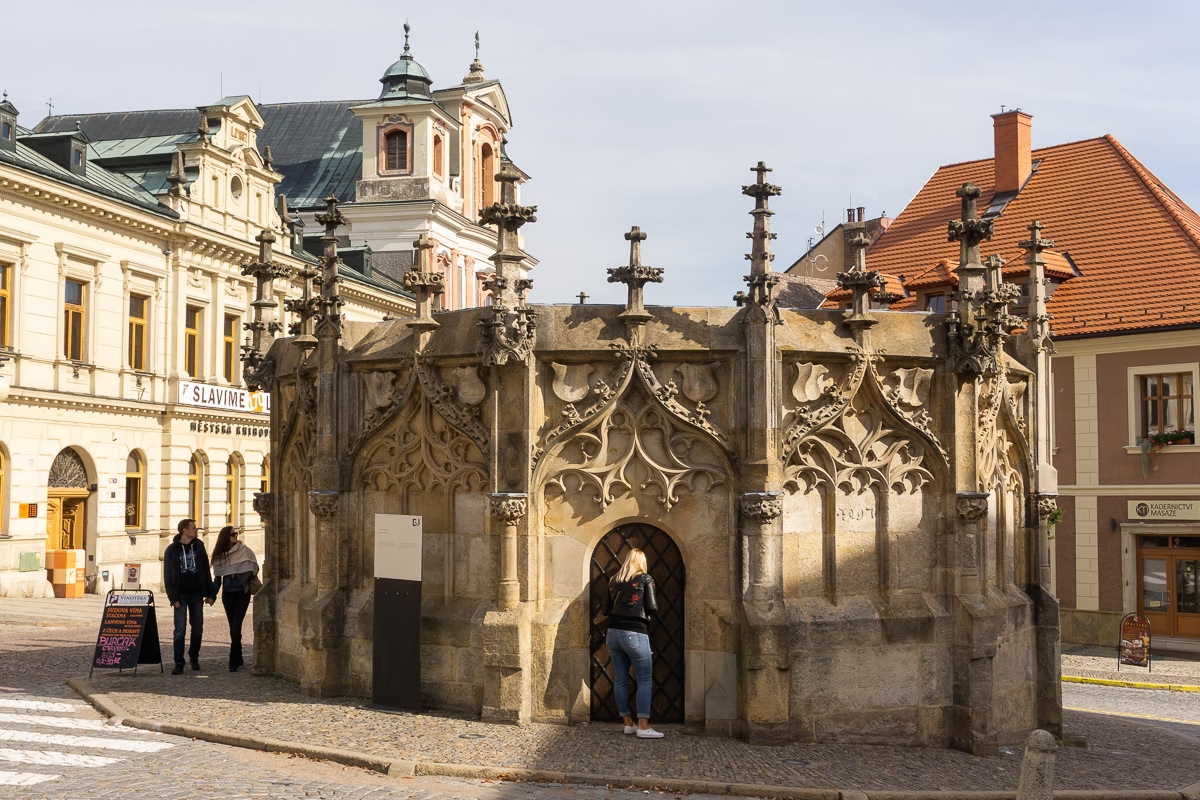
The twelve-sided structure with its relief decoration is architecturally exceptional – there’s no other fountain quite like it in the Czech Republic.
Dačický House
An interactive exhibition dedicated to the history of Kutná Hora and its inscription on the UNESCO list. Modern presentation, accessible for families with children. It’s more of a complement to the other sights than a destination in its own right.
Guided tours and local guides
Kutná Hora has a network of certified guides offering tours in Czech, English and other languages. Bookings can be made through the town’s information centre.
I particularly recommend a guided tour if you’re seriously interested in the history and architecture of the town. You’ll get the wider context and understand the real significance Kutná Hora once held for the whole of Europe at the height of its glory.
Since the release of Kingdom Come: Deliverance II, themed tours focused on medieval history through the lens of the game have been added – these are half-day activities that can be combined with the classic sights.

Day trip from Prague to Kutná Hora
Kutná Hora is one of the most popular day trips from Prague. The town sits about 80 km east of the capital, and direct trains take roughly 55 minutes — making it perfectly doable as a self-guided day out, even with only one full day to spare.
Suggested 1-day itinerary from Prague
- 08:30 – Train from Praha hl. n. (line R9, direction Brno via Havlíčkův Brod).
- 09:30 – Arrive Kutná Hora hl. n. Walk 10–15 minutes to the Sedlec Ossuary (Bone Church) with your pre-booked timed-entry ticket.
- 11:00 – Visit the neighbouring Cathedral of the Assumption of Our Lady and St. John the Baptist.
- 12:00 – Bus 801 (or local shuttle train) to the historic centre. Lunch on Palacký Square.
- 14:00 – Walk Barborská Street, visit St. Barbara’s Cathedral and the Italian Court.
- 16:30 – Coffee and a quick wander through the Stone Fountain area.
- 17:30 / 18:30 – Return train to Prague (about 55 min direct).
Tickets and costs (rough guide)
- Train Prague ⇄ Kutná Hora: roughly €5–8 one-way (cheaper via the PID Lítačka app).
- Sedlec Ossuary + Cathedral combined ticket: book ahead at sedlec.info — entry is timed.
- St. Barbara’s Cathedral: single-entry ticket on the door, or a combined sightseeing ticket from the tourist information centre.
- Local bus 801 in Kutná Hora: a single fare, payable in cash or card on the bus.
Organised day tour or DIY?
DIY by train is the cheapest option and gives you full control of pace — recommended if you’re comfortable navigating Czech public transport. Trains from Prague to Kutná Hora are frequent and easy.
An organised Kutná Hora day tour from Prague typically includes hotel pickup, transport by minibus, skip-the-line entry to the Bone Church and a guide for the centre. Worth it if your time is tight, you want context, or you’d rather not deal with the train change in Sedlec.
What to do: walks and trips beyond the centre
Kaňk and the Havířská Bouda lookout tower
Kaňk is a hill northeast of the centre, rising to 353 metres above sea level. It was the centre of medieval mining – extensive medieval shafts spread out in all directions deep below the surface.
The Silver Trail educational path takes you past the remains of old mining works and sets the mining story in its landscape context.
At the top stands the Havířská Bouda lookout tower, with a restaurant. From here you’ll get sweeping views of Kutná Hora’s panorama with St. Barbara’s Cathedral and the church in Sedlec.
The Silver Trail educational path
The educational trail mentioned above, which links the history of mining with the surrounding landscape, has two separate loops.
The southern loop (9.5 km, 14 stops) starts directly from Palacký Square, leads along the Royal Promenade and the Vrchlice valley to Velký rybník (Great Pond) and back via Bylany – it’s an easy route suitable even for families with children.
The northern loop starts from Kaňk, passes through the Na Vrších nature reserve and skirts the remains of old mining works around Turkaňk – the route is significantly hillier and more demanding underfoot.
Both loops are freely accessible and marked with the green-and-white waymarks used for educational trails.
Walk through the Vrchlice valley and Velký rybník dam
From the V Hutích district of Kutná Hora, the Silver Trail leads through a picturesque canyon upstream along the Vrchlice river. The roughly two-kilometre stretch follows the river floodplain, passes the ruins of old water mills and ends at the dam of Velký rybník.
Below the dam are two artificial waterfalls – the left one is 3.5 metres tall, the right one 7 metres. Despite being man-made, they look natural and create a nice contrast to the stone-built town atmosphere.
The whole route is rideable by bike, and the first half is doable with a stroller. The return route via Bylany adds a stop at a 15th-century stone aqueduct.
You can even continue all the way to the village of Malešov with its château, fortress and town conservation zone. A train will then take you back to Kutná Hora, or onward to Prague.

Day trips from Kutná Hora
Kačina Château
One of the most significant Empire-style complexes in Bohemia, just 7 km from Kutná Hora. I recommend it mainly for its grand exterior and sprawling English-style park.

Today the château houses the National Agricultural Museum.
Čáslav
A historic town 15 km from Kutná Hora with a Gothic church and a Hussite history (Jan Žižka is buried here).
It works well as an hour-long stop on the way.

Žleby
A romantic château set in the woods 20 km from Kutná Hora – a popular cycling stop in summer.
Kutná Hora with kids
Kutná Hora has plenty for kids, especially from age 6 upwards. Touring a medieval town with a stroller is a bit tricky but doable.
Where the kids will have fun
I’ll start with places I’ve already mentioned:
- Czech Museum of Silver and the Hrádek medieval mine – descending into a real mine in a miner’s outfit will captivate even younger schoolchildren
- Sedlec Ossuary – has a strong “adventurous” appeal for older kids. For smaller children it can be unsettling, so prep them in advance about what they’ll see.
- Havířská Bouda lookout tower on Kaňk.
Museum of Bricks
Right opposite the Sedlec Ossuary stands a museum where you can see over 1,200 unique LEGO models – including a detailed replica of the Sedlec Ossuary itself, made from more than 50,000 bricks.
The collection comes from Miloš Křeček, holder of the Guinness World Record for the largest private LEGO collection in the world.
The exhibition flows seamlessly from indoor spaces to an outdoor display area where kids will find a trampoline and a slide while parents can rest at the bistro.
The complex also includes a hotel – every room is stocked with LEGO sets, and the bricks are literally everywhere, from reception to dining room.
More info at museumofbricks.cz.
Bobsled track
Right in Kutná Hora you can ride the longest channel-style bobsled track in the country. You can choose between a relaxed slower run and a full-on adrenaline experience.
The site also includes a go-kart track.
Check prices and opening hours at bobovadrahakutnahora.cz.
Amálka indoor playground
For anyone who needs to take a break from historic monuments with the kids, Amálka is a handy backup right in the town centre.
Across nearly 400 square metres, kids from toddler age up to 12 will find a climbing structure with a slide, rockers, ride-ons, balls, a play kitchen and a workshop.
The space is wheelchair-accessible and offers baby-changing facilities.
Check current opening hours on Facebook.
Museum of Agricultural Machinery in Čáslav (15 km away)
Inside a former military vehicle depot in nearby Čáslav, more than 2,200 square metres host one of the most comprehensive collections of historic tractors and agricultural machinery in Europe.
For me, it’s a really well-done exhibition, and it’ll absolutely thrill any boys – and dads. Most likely girls too :-)
You’ll see machines from Zetor, Škoda, Wikov, foreign models, steam threshers and prototypes that never made it to production.
There’s also a play area for children and the option to borrow a pedal tractor.
The museum is seasonal – it opens in April and is closed in winter. Check current admission and opening hours at nzm.cz.
Where to eat in Kutná Hora
For me, Kutná Hora is one of those destinations where it’s worth a visit just for the food. Every year something new opens that’s worth trying.
Here’s my personal pick of the best. If I had to choose three places not to miss, it would be Turistka, Fikafe and Coffeehood.
Restaurants
- Chleby jako v nebi – primarily a bakery, but they also do really excellent breakfasts
- Okno U Hrádku – nice bistro on Barborská Street
- Restaurace V Ruthardce – honest classic Czech cuisine – take your foreign friends here
- Čtyři sestry – lovely restaurant with modern cuisine
- Phở Hà Nội – excellent Vietnamese food, recommended by an Asia-spoiled palate
- Indian restaurant – decent Indian
- Joe’s Street Bistro – new street food spot on the square, still on my list to try
Cafés and wine bars
- Fikafe – absolutely brilliant pastries, great coffee, lovely staff
- Turistka – beautiful café inside the Jesuit College
- Kafírnictví – very friendly staff and nice small dishes
- Skleník – beautiful space with a view of the Jesuit College gardens and St. Barbara’s Cathedral
- Cafe Hrnčíř – recommended for brunch
- Coffeehood – excellent little café in Sedlec, brilliant pastries again and very good brunches
Where to stay
In Kutná Hora you can choose between classic hotels, family-run guesthouses and apartments. It depends on what you prefer – and what’s available. Although most tourists come on day trips, accommodation can still sell out quickly in peak season.
Prices range roughly from €50 to €165 per night.
Recommended places to stay in the centre:
- donebe boutique hotel & private wellness – A sensitively restored townhouse on Palacký Square with designer interiors, private wellness, and breakfast served as a voucher at several nearby cafés. Higher price bracket, but absolutely worth the experience.
- Starý farhof – Spacious family apartment in a Gothic house from 1470 right in the historic centre. Fully equipped kitchen, view of St. Barbara’s Cathedral, parking right outside.
- Apartmány Dačický 2 – Apartments in a historic house by the Stone Fountain – Restaurant Dačický and Café Dačický with à la carte breakfasts on the ground floor. 5 minutes’ walk to all the sights.
- No 28 Rooms & Apartments – Newly renovated house 2 minutes from the centre. Choice between rooms and apartments with their own kitchen, self-service check-in, shared kitchenette with a mini-bar. Good value for money.
Recommended places to stay in the surrounding area:
- Chateau Třebešice – Beautifully restored Renaissance château 5 km from Kutná Hora with extensive gardens, a contemporary art collection and its own French-Italian restaurant. Highly recommended.
- Ve Dvoře apartmán s vlastní saunou – Apartment in Nové Dvory, about 5 km from the centre, with its own sauna right in the living room.
How to get to Kutná Hora
Prague to Kutná Hora by train: schedule, price & how long it takes
From Prague, the train is by far the most comfortable option. Express trains running from Prague to Brno via Havlíčkův Brod (line R9) stop at Kutná Hora’s main station. They are currently operated by Czech Railways (České dráhy); from December 2026 the route will be taken over by RegioJet.
The other option is to travel via Kolín with a change there – check timings at IDOS.
The direct train from Prague takes just under an hour, while changing in Kolín takes around an hour and fifteen minutes.
Seat reservations aren’t required on this route, but on Fridays and at weekends the trains can be packed – a reservation is very useful then. In the carrier’s app and website it’s included free with your ticket.
Os, Sp and R category trains are also covered by the integrated PID tariff all the way to Kutná Hora, so you can buy tickets via the Lítačka app. This works out cheaper than buying directly from the carrier, especially if you combine it with public transport in Prague – just note you can’t book a seat reservation this way.
WATCH OUT – two stations in Kutná Hora
Direct trains from Prague, Brno and Kolín only stop at Kutná Hora hlavní nádraží (the main station). However, this lies about 3 kilometres from the centre of Kutná Hora.
To get into the centre, you’ll need to change to a connecting local train to Kutná Hora město station, or take a bus.
The Bone Church in Sedlec is just under a kilometre on flat ground from Kutná Hora hlavní nádraží.
By car
Two main roads run through Kutná Hora – heading towards Prague, Pardubice, Poděbrady and Havlíčkův Brod. The drive from Prague takes about an hour, from Brno just under two.
Parking in Kutná Hora
In the historic centre, parking is limited and paid.
You can park for free at the Kouřimská car park not far from St. Barbara’s, but it fills up quickly at weekends.
I therefore recommend the very cheap Parkoviště u kapličky car park, or try your luck at the Billa supermarket.
Getting from Sedlec to the centre of Kutná Hora
From the Sedlec Ossuary to the historic centre is about 3 km on foot. The walk takes 35–40 minutes and the route isn’t particularly interesting, so it’s better to take the bus.
Bus line 801 (Kutná Hora local transport) connects the main railway station with the Sedlec, kostnice stop (a few minutes’ walk from the Bone Church) and continues to the centre. It runs every 10–20 minutes, and every half hour at weekends. The journey to the centre takes just under 15 minutes.
Buy your ticket directly from the driver, paying either in cash or by card.
If you’re heading back to Prague, you can buy a ticket all the way through – buses and trains operate within the same integrated PID system.
Kutná Hora FAQ
How far is Kutná Hora from Prague?
Kutná Hora is about 80 km (50 mi) east of Prague. Direct trains from Prague’s main station (Hlavní nádraží) take roughly 55 minutes to Kutná Hora hl. n., with a short shuttle train onward to the centre.
Is the Sedlec Ossuary (Bone Church) worth visiting?
Yes — the Sedlec Ossuary is the single most famous sight in Kutná Hora and one of the most unusual churches in Europe. Its interior is decorated with the bones of an estimated 40,000 to 70,000 people, arranged into chandeliers, garlands and a coat of arms. Even a quick 30-minute visit is worth the trip from Prague. See our full Sedlec Ossuary (Bone Church) guide.
Can you visit Kutná Hora as a day trip from Prague?
Absolutely. Kutná Hora is one of the most popular day trips from Prague. A self-guided day covers the Sedlec Ossuary, Cathedral of the Assumption, St. Barbara’s Cathedral and the historic centre. Allow 6–8 hours door-to-door if you travel by train.
How long do you need in Kutná Hora?
One full day is enough to see the main UNESCO sights. Two days lets you slow down, add the Czech Museum of Silver and a medieval mine tour, explore the Vrchlice valley and try a few good local restaurants.
How do I get from Prague to Kutná Hora by train?
Take a direct České dráhy (Czech Railways) train from Praha hl. n. to Kutná Hora hl. n. (about 55 minutes). From there a small shuttle train (osobní vlak) connects to Kutná Hora město, the station closest to the historic centre. Tickets cost roughly €5–8 one-way and can be bought on the spot or via the ČD app.
Is Kutná Hora better than Český Krumlov?
They’re different. Český Krumlov is a fairy-tale castle town in South Bohemia, ideal for an overnight. Kutná Hora is closer to Prague, has the unique Sedlec Ossuary and the spectacular St. Barbara’s Cathedral, and works perfectly as a day trip. If your time is short, Kutná Hora wins on logistics.
When is the best time to visit Kutná Hora?
Late spring (May–June) and early autumn (September) are ideal — pleasant weather and fewer crowds than midsummer. December brings a small Christmas market and a quieter, atmospheric historic centre.
Where to next
- Discover more mining heritage in the Ore Mountains (Krušné hory)
- Step into Renaissance Bohemia at Litomyšl travel guide