This post is also available in:


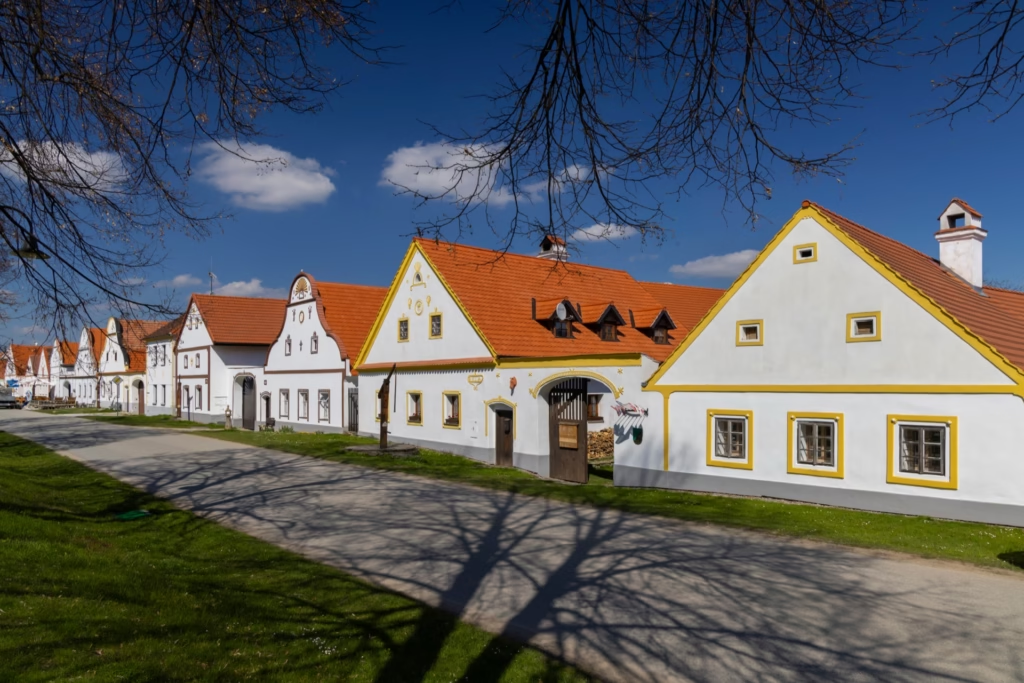
The prettiest example of Czech folk baroque. Seventeen farmsteads with decorated gables around an elongated village green with a small pond and wooden pumps. Holašovice has been on the UNESCO World Heritage List since 1998, and you can walk the whole village in an hour.
This isn’t an open-air museum. People actually live in these farmsteads, neighbours’ cars sit behind the gates, and the green isn’t fenced off or ticketed. Entry is free — you only pay for parking and a couple of small attractions.
In this guide, you’ll find what to look for on the gables, what you can see inside, how much parking costs, how to get here by bus from České Budějovice, and whether it’s worth a dedicated trip or better as a stop on the way elsewhere.
Why Holašovice Is on the UNESCO List
The village made the World Heritage List for two reasons. The first is its medieval layout, the second is the 19th-century decoration of the farmsteads. Most visitors come for the latter, but the former is actually the rarer feat.
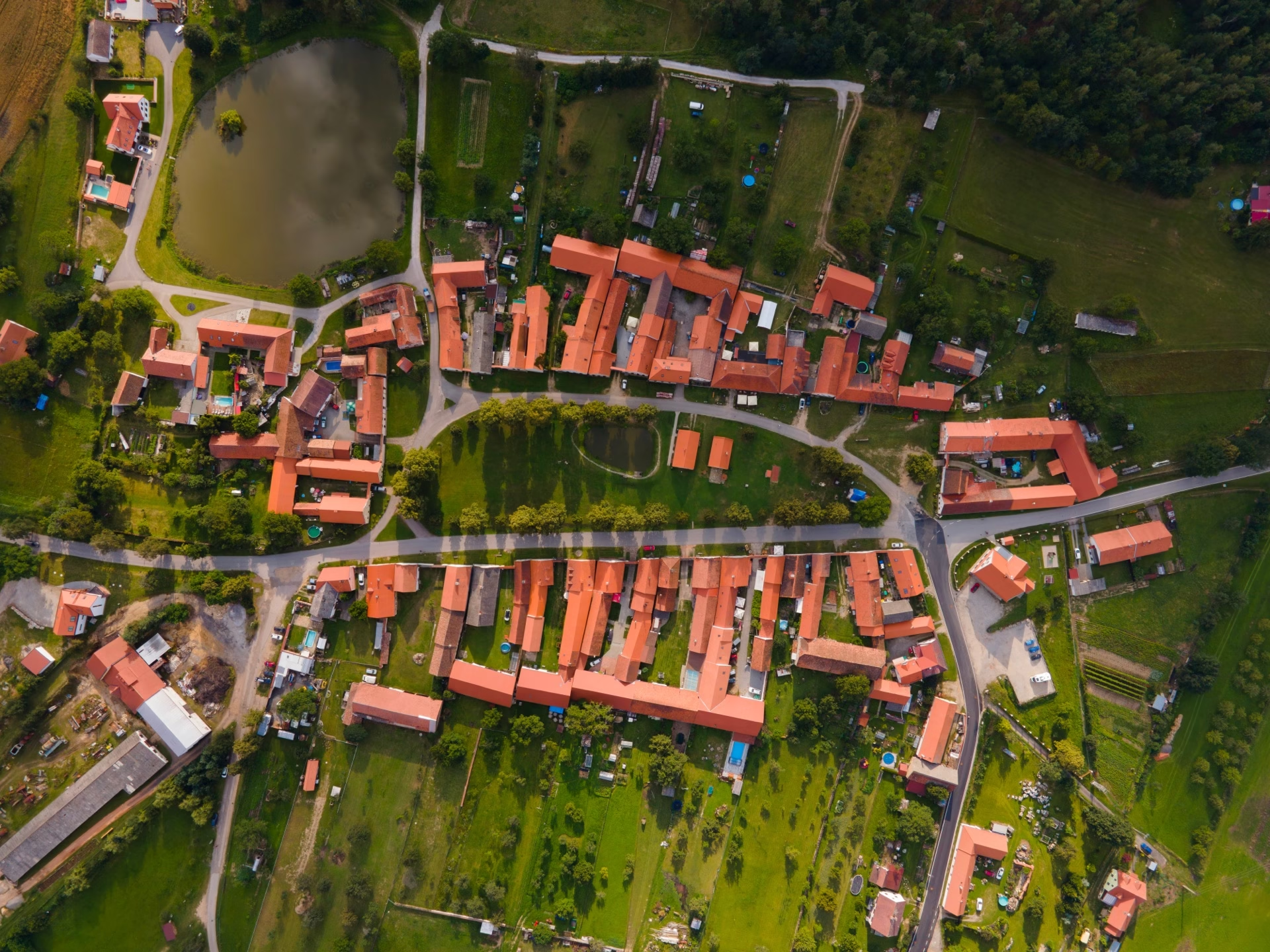
Holašovice was founded around the mid-13th century on open ground — not built up gradually house by house, but planned from the start as a colonisation village with a pre-drawn green and plots. The Vyšší Brod monastery’s land register shows that by 1530, seventeen farmsteads already stood around the green. Seventeen still stand there today.
The protected reservation as a whole covers roughly 120 buildings — alongside the houses, that includes barns, granaries, cowsheds, stables and brick gates.
Newer construction never reached the core. Houses built in the 20th century sit on the north-eastern and southern edges of the village, away from the green, so the centre still looks in plan almost exactly as it did seven hundred years ago.
Plague, Expulsion and Two Rounds of Depopulation
The village emptied out twice in its history — which, paradoxically, is exactly what helped preserve it in its original state. The first blow came from a plague epidemic in 1520–1521. Legend has it only two people survived, and they left the village.
The empty farmsteads were then resettled by the Vyšší Brod monastery, this time mostly with German-speaking farmers. They stayed for four centuries. Because of them, the church in nearby Čakov held a German-language mass every third Sunday from 1788 — a practice that annoyed neighbouring Czechs enough that it was officially abolished in December 1918.
The second blow came in 1946, when residents of twelve farmsteads were forcibly expelled. Resettlement from surrounding villages was slow — as late as 1950, the population was still a quarter lower than before the war — and the farmsteads fell into decay for decades. But nobody rebuilt them beyond recognition, which is exactly why there’s so much to see today. Systematic restoration didn’t begin until after 1990.
Around 140 to 150 people live here permanently today. The village falls under the administrative municipality of Jankov and has almost never been independent — from the mid-19th century it was a hamlet of Záboří, and it only tried standalone status for a few months in 1951.
Folk Baroque: What to Look For
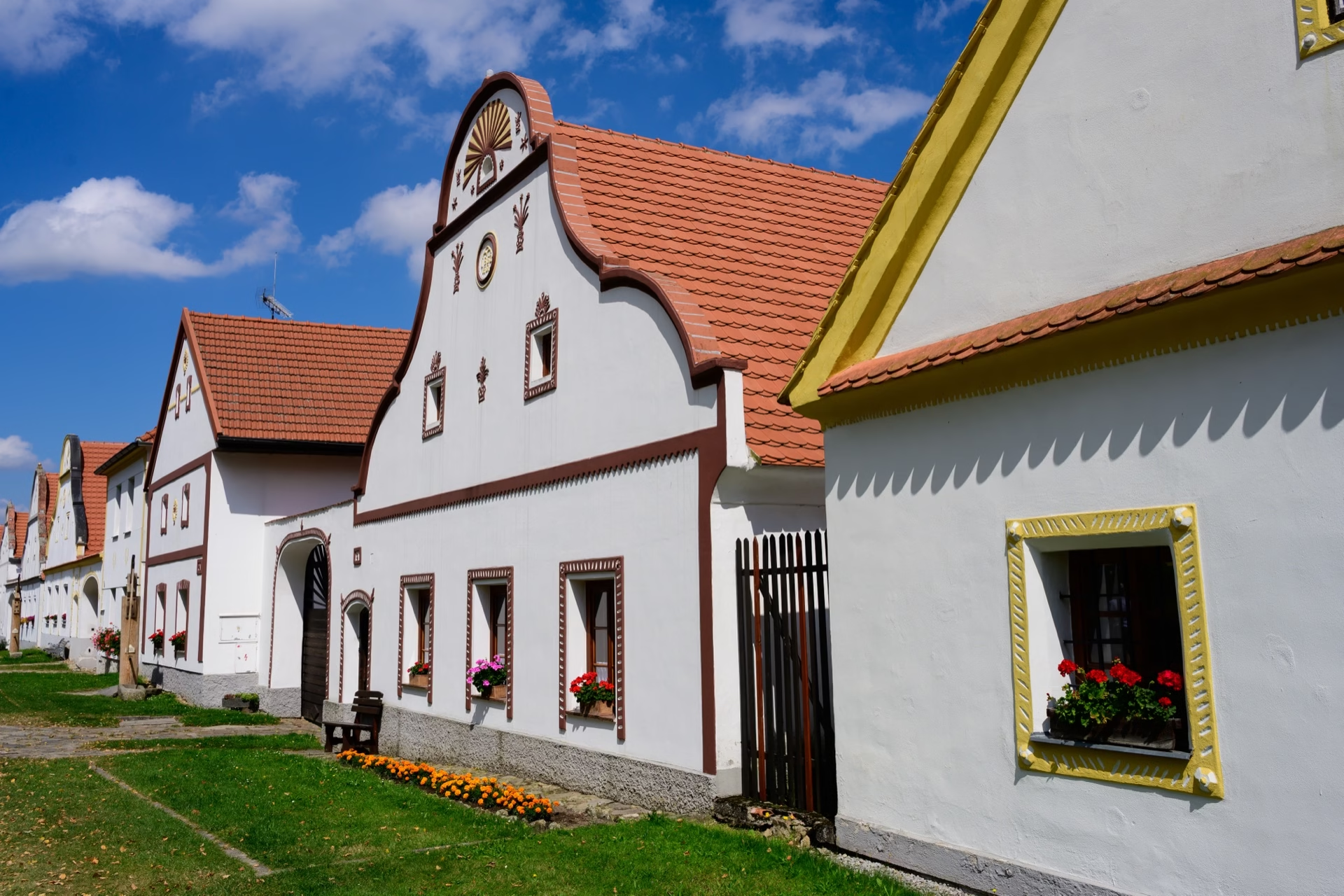
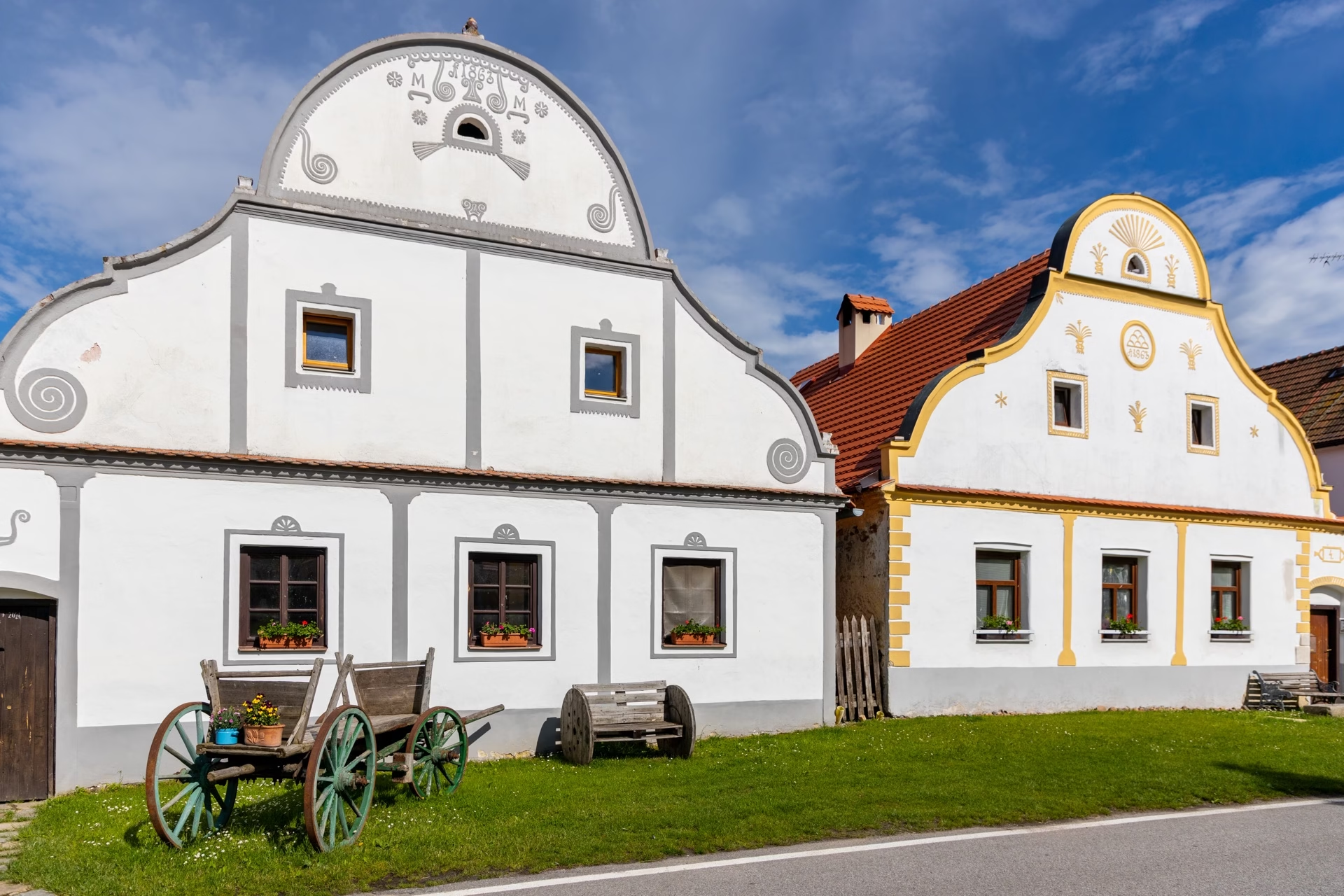
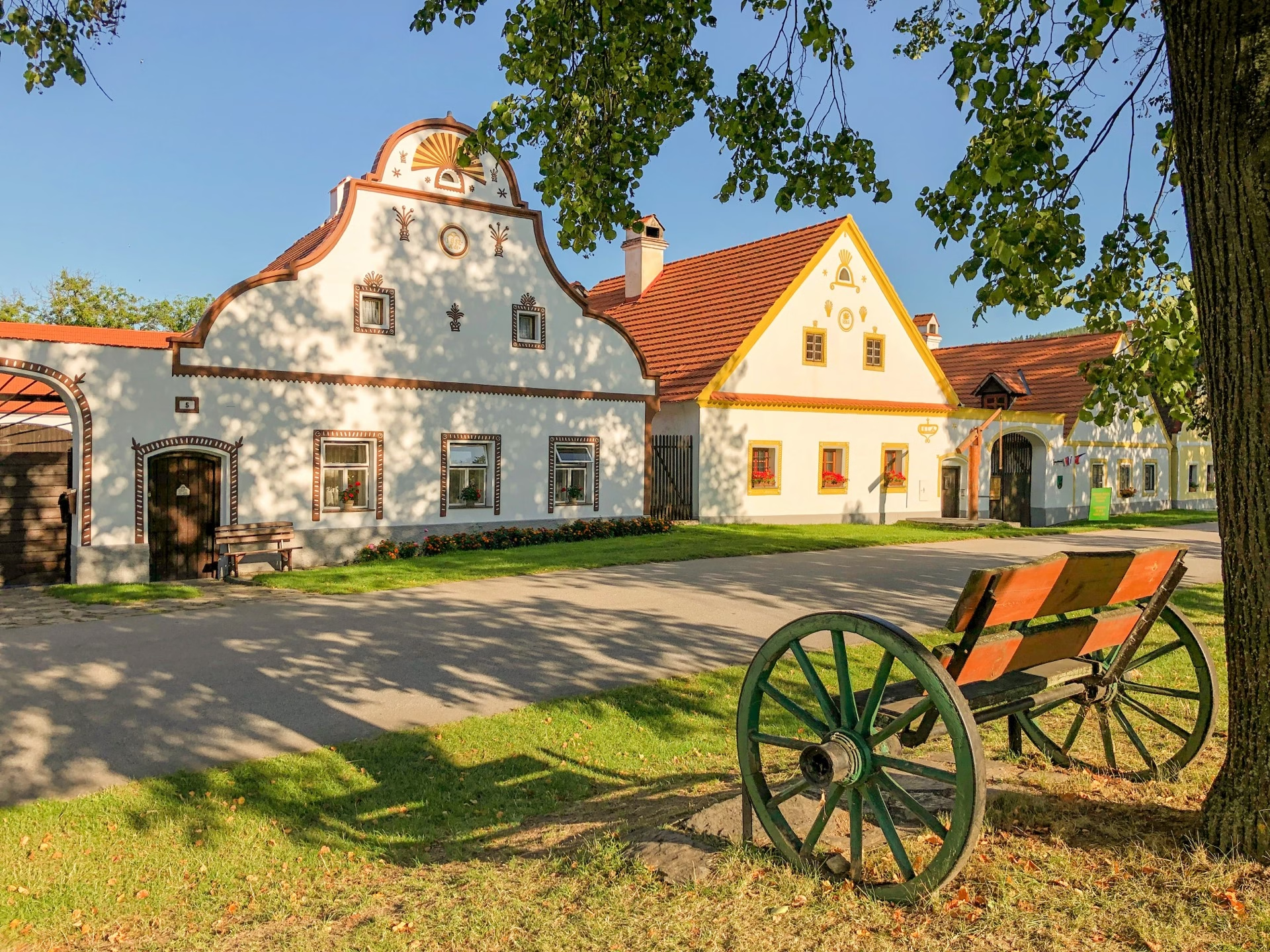
Folk baroque is a rural style in which village builders borrowed baroque and neoclassical decoration they’d seen on town buildings and transplanted it onto farmstead gables. It’s not architecture in the academic sense — it’s panels of stucco ornament stuck onto otherwise completely ordinary farm buildings.
In Holašovice, the farmsteads were rebuilt and enlarged roughly between 1730 and 1870, with the main wave of decorated gables falling in the second third of the 19th century. We don’t know the builders’ names — these were local master masons who never signed their work. Nor is Holašovice connected to Jakub Bursa, a name often linked to folk baroque in general: he built around Prachatice and Volyně, not here.
What to notice on the façades:
- The year in the gable — the year of rebuilding is worked into the stucco, often between a pair of windows.
- The farmer’s initials — usually set inside a laurel wreath, for example the letters WP on the building that’s now the village shop.
- Craft symbols — above the date 1841 on the smithy, you’ll find a hammer, tongs and anvil in stucco.
- Arched borders and ribbon frames around windows, visually holding the gable together.
- Orientation — both houses and granaries face the green with their gable end, so the decorated side always points toward the middle.
The courtyards themselves stay hidden. The farmsteads have a U-shaped layout with a farm courtyard inside, accessed through a brick entrance gate. Don’t go through the gates — these are private courtyards where people live.
What to See in Holašovice
Everything worth seeing sits on the green, measuring 210 by 70 metres, or close by.
The Green, Ponds and Eight Wooden Pumps
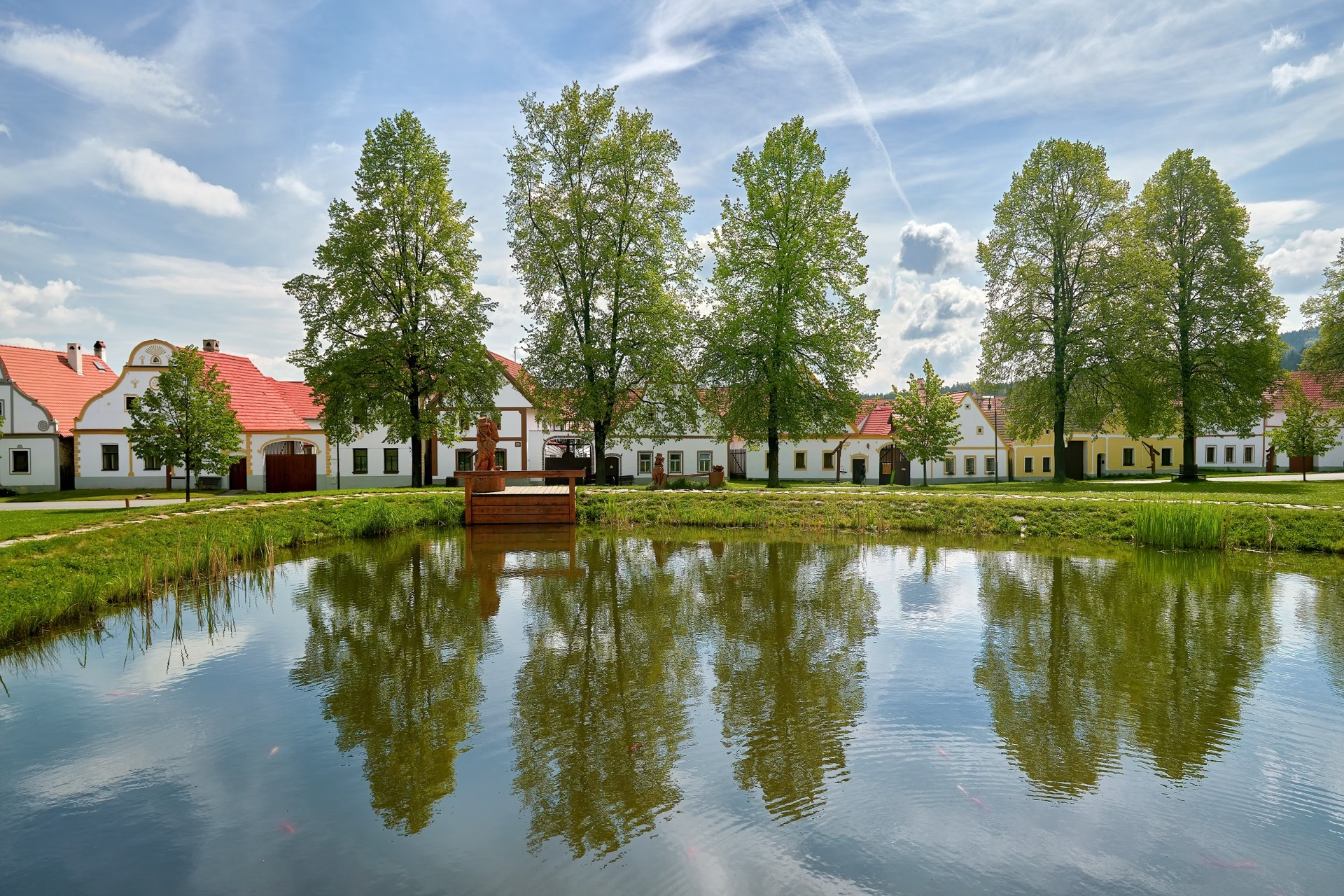
The green is the main reason to come: an unbroken row of decorated gables on both sides, with grass between them, the small village pond called Čofna, and a chapel.
The ponds originally served as water reserves for the farms; today they just add to the village’s atmosphere.
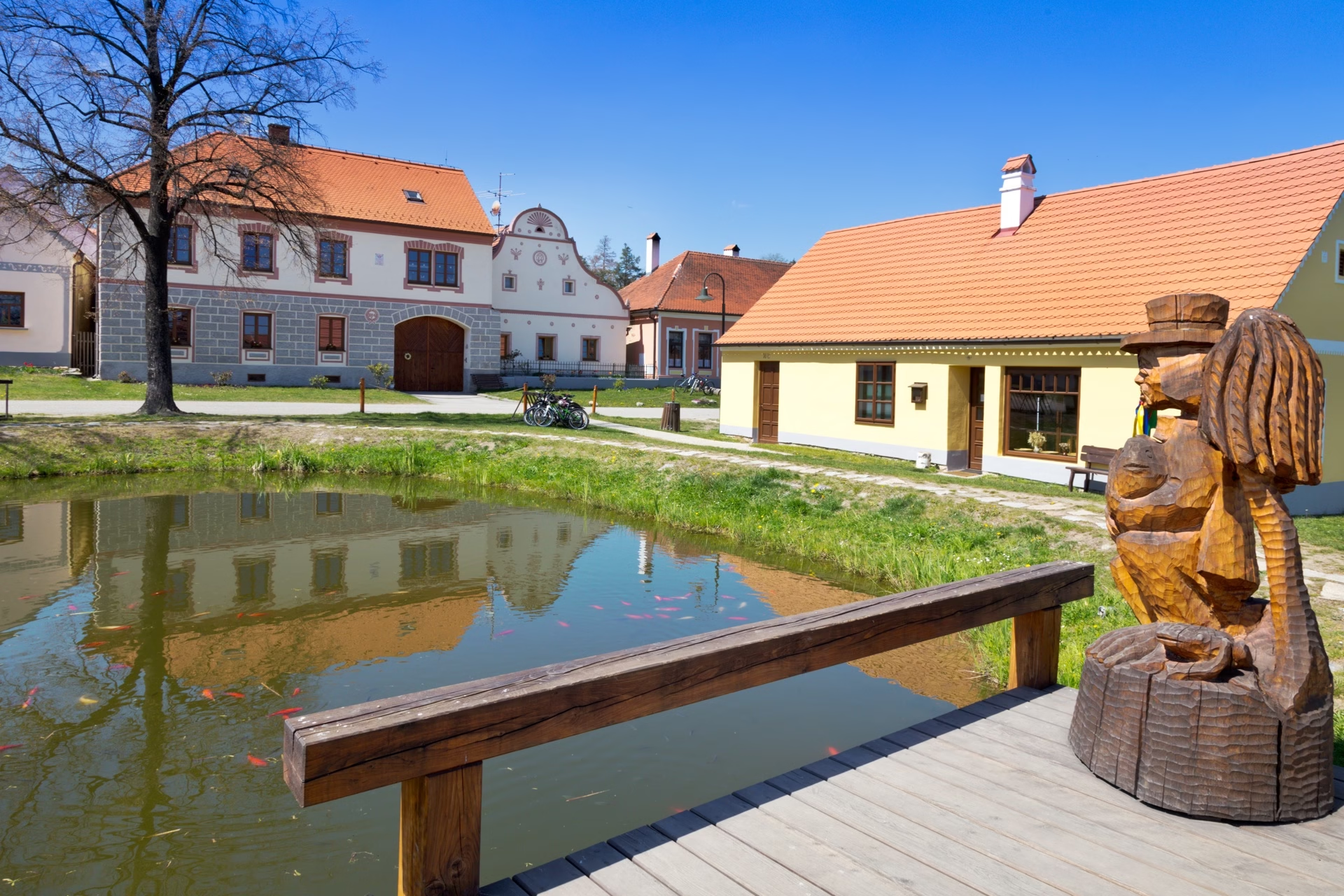
The wooden piston pumps deserve special attention. The originals still stood on the green as late as the 1960s, and every farmstead had its own well, fed by a spring above the village.
Today, eight working replicas stand on the green — made by a Mr Stašek from České Budějovice, one of the last craftsmen who still knew the trade: the pump body was hand-drilled with augers from a felled trunk, the piston is wooden, and the valve and seals are leather.
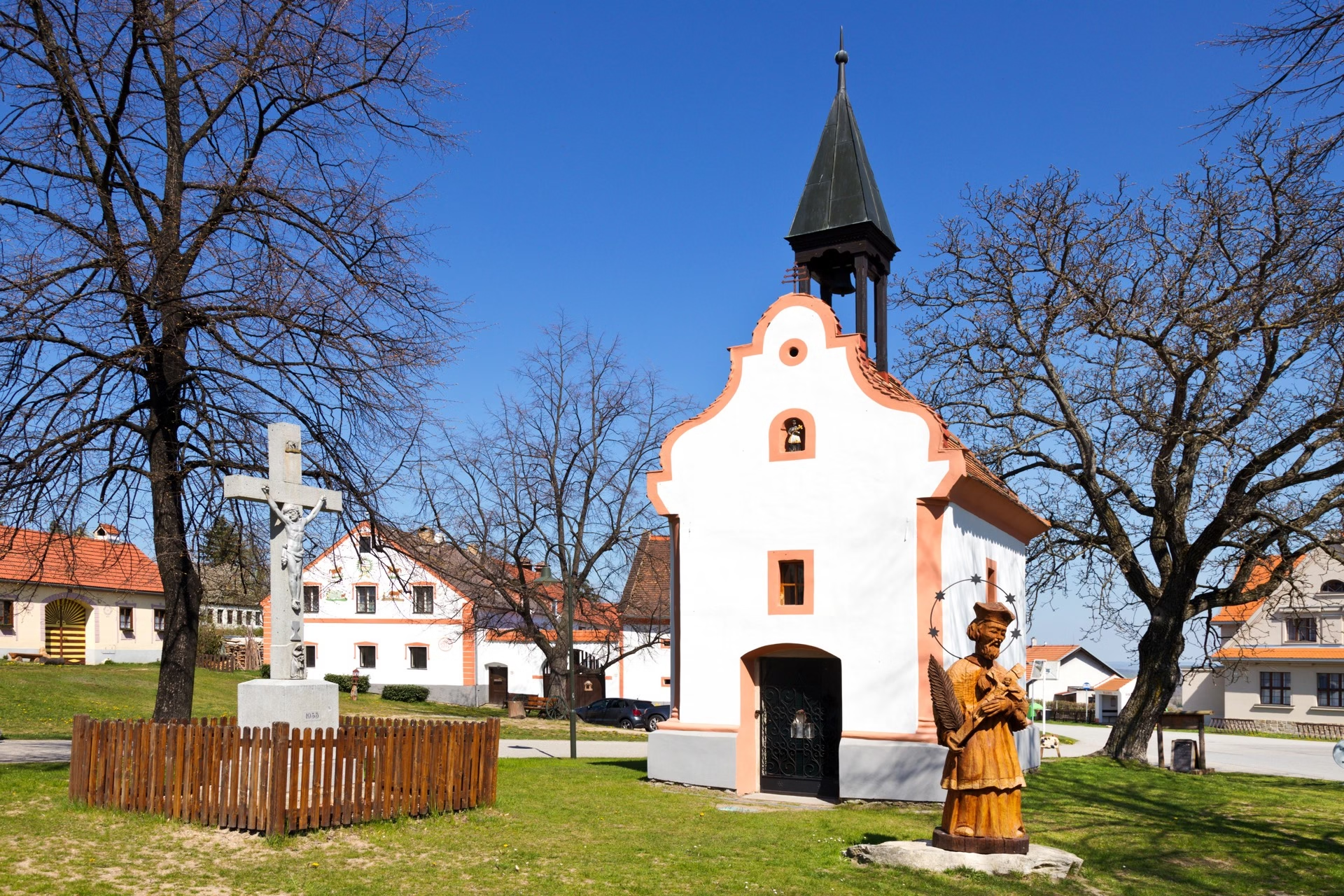
Chapel of St. John of Nepomuk
The chapel on the north side of the green was built in 1755 by the brothers Bartoloměj and Josef Pimiskorn, both born in Holašovice. Josef traded beer in Prague’s New Town district, while Bartoloměj entered the Vyšší Brod monastery in 1709.
They hung a small bell in the little tower and donated an altar painting of the Holy Family. The rounded corners and unframed gable are later 19th-century additions — part of the same wave that shaped the surrounding farmsteads.
Historic Smithy
The village smithy is documented in Holašovice as far back as 1713. A stable cadastre map from 1827 still shows it as a wooden building — the brick structure you see today dates from 1841.
In the mid-1960s it was converted into a fire station, and the interior was gutted in the process — the vaulted ceiling replaced with reinforced concrete. It wasn’t restored to its original state until a renovation completed in 2018, opened during celebrations marking twenty years since the UNESCO listing.
The firefighters have since moved to a new fire station, built by the village specifically so the smithy could return to its original trade. You can spot the new station by its ironwork — the bell tower fittings, gutters and gates all came from the restored smithy on the green.
Farmstead No. 6
A farmstead on the green documented in monastery land registers as far back as the first half of the 16th century. The family bought it back and restored it in 2003 — their family tree traces farmers on this plot back to the 17th century, the last of whom was expelled in 1946, after which the farmstead fell into decay.
Today the former cowsheds house an exhibition on farming and rural life in South Bohemia in the second half of the 19th century, with larger exhibits standing in the courtyard. It’s open year-round from 9am to 4pm, admission is 40 CZK (roughly €1.60) with a reduced rate of 20 CZK, and a visit takes about an hour. Hours depend on visitor demand, so outside the summer season it’s worth calling ahead.
The farmstead also keeps Haflinger horses, and you can arrange a ride.
Information Centre and Its Exhibits
An unassuming but genuinely useful stop. Entry is free, and besides maps and advice, you’ll find a display of old tools (a weaving loom, flax-processing equipment, smithing tools), period photographs, and, most importantly, a ceramic model of the entire green on the second floor, showing the layout of each farmstead. It was unveiled for the 20th anniversary of the UNESCO listing.
The centre also has restrooms, wi-fi and a garden with a small playground — practical to know in a village where there’s otherwise nowhere to sit down.
Information centre opening hours:
- April–October: Wednesday–Sunday 9am–5pm, including public holidays
- November–December: Friday–Sunday 9am–5pm
- January–March: closed
The information centre can also arrange guided tours. Book in advance on the village website; the price depends on group size and starts at 80 CZK per person (about €3.20).
Pottery Workshop and Village Shop
The pottery workshop run by the Mügl family has operated in the village since 2000. Soňa and Tomáš Mügl trained in Hrdějovice and studied ceramics at the technical school in Bechyně; they throw pottery by hand and paint it with underglaze colours. Open daily from 9am to 5pm, and outside those hours you can just ring the bell.
The village shop sits in a cottage next to the smithy that originally belonged to the blacksmith; the front residential part dates from a 1885 design. You can buy bread, small toiletries and souvenirs here, and there are public restrooms for a small fee. It’s the only shop in the village.
The Stone Circle, “Holašovice’s Stonehenge”
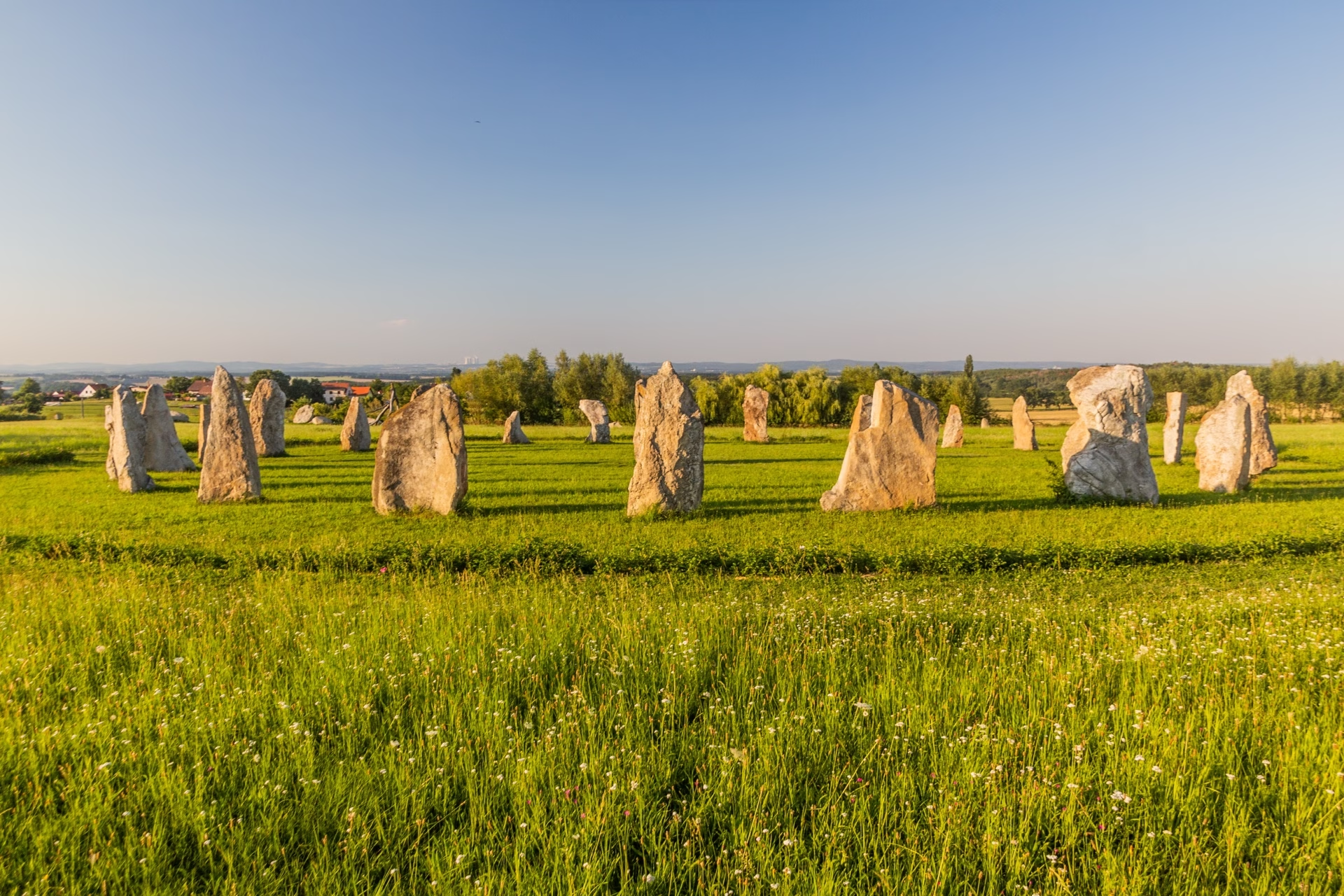
Just under a kilometre outside the village stands a circle of 25 granite stones including one central stone, with a lone giant menhir standing behind it. Just to be clear: this is not a prehistoric monument. The circle was built in late August 2008 by local entrepreneur Václav Jílek on his own meadow; the dimensions and choice of stones are based on psychotronics, and the operator claims healing and meditative effects.
It has no connection to the World Heritage listing, but as the target of a short walk, why not. Admission is 40 CZK (about €1.60) per person.
How Much Time to Set Aside — And Who It’s For
The green alone takes 45 minutes to an hour. With the stone circle, a stop at the information centre, and a walk around the ponds, budget two to three hours.
Think of Holašovice as an important piece of Czech history and an easy, relaxed stop while exploring South Bohemia.
Don’t expect an open-air museum with interiors you can walk through. You can look inside the information centre, the smithy, Farmstead No. 6 and the pottery workshop — everything else is a home where someone actually lives. Some visitors leave disappointed because of this.
That comes with expectations for behaviour on site. The village mayor has repeatedly complained in interviews about people parking on the grass and walking into private courtyards. Please be considerate of the people who actually live here.
The village receives no funding from UNESCO or the Ministry of Culture: parking fees bring in around 300,000 CZK a year (roughly €12,000), while maintaining the reservation costs about a million crowns (roughly €40,000). The parking fee you pay is essentially the only direct contribution you leave behind as a visitor.
When to Visit Holašovice
The green is open year-round and free. What closes are the services: the information centre is closed entirely from January to March and only runs Friday to Sunday in November and December.
The busiest times are summer weekends between 10am and 4pm, when tour buses fill the car park. Before 9am or after 5pm, you’ll practically have the green to yourself.
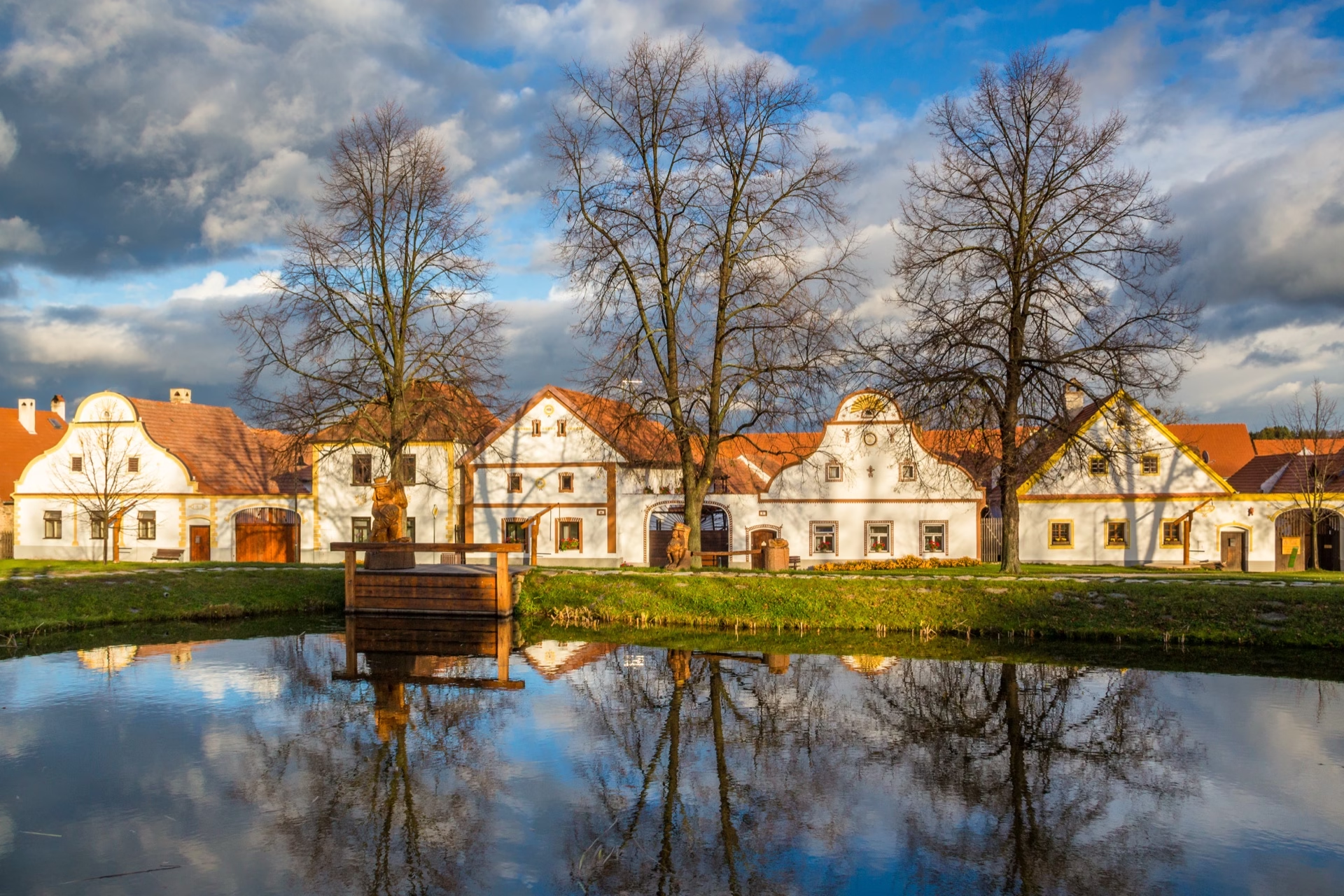
Out of season, the village is quiet and photogenic — it has its own charm in every season.
The Farmers’ Festival
Once a year, this quiet village turns into a festival. The Selské slavnosti (Farmers’ Festival) takes place on the second-to-last weekend of July; in 2026 it fell on 24–26 July. Over 250 craftspeople attend, brass bands and bagpipe music play, and the programme runs from Friday morning through Sunday. The village announces the exact dates for the next edition on its website.
Two things to watch for. During the festival, the green is closed off and admission is charged — standard 250 CZK (~€10), reduced 100 CZK, seniors over 65 200 CZK, and family tickets 500 CZK.
Vehicle access to the village is restricted to residents and delivery vehicles during the festival, so don’t plan on driving in that weekend expecting a quick stroll around the green.
How to Get to Holašovice
By Car and Where to Park
From České Budějovice it’s just under 18 kilometres, about twenty minutes. From Prague, budget around two hours; from Český Krumlov it’s about half an hour; from Písek, 45 minutes.
Parking is at the paid car park right next to the information centre, a few steps from the green. The rate is 50 CZK (about €2) per hour for cars and motorbikes, with a 50 CZK minimum; buses and campervans pay 100 CZK per hour with a 200 CZK minimum.
- Car park hours: daily 8am–9pm.
- Payment: coins in Czech crowns or euros (the machine doesn’t give change), or SMS from a Czech phone number.
- The car park is unmonitored, and camping there is not permitted.
Do not park among the farmsteads on the green. Cars left on the grass are locals’ biggest and most persistent complaint.
By Bus from České Budějovice
Without a car, the easiest option is the bus from České Budějovice. From the main bus station, line 120 heading toward Lhenice takes just under 40 minutes. Look for the stop “Jankov, Holašovice” — the village is administratively part of Jankov, so you won’t find it under its own name in the timetable.
There are plenty of departures: roughly every hour on weekdays, every two hours on Saturdays and Sundays. On summer weekends, an extra line 184 continues on to Český Krumlov — but it only runs from July to the end of August.
A single ticket costs 33 CZK (about €1.30), payable in cash to the driver or via the IDESKA app. A regional day pass can also be worth it.
There’s no train to Holašovice.
By Bike and On Foot
The surrounding countryside is flat, full of ponds, and ideal for cycling.
Two common routes lead here from České Budějovice: via Čakov past the Vitín and Nuzov ponds, measuring 18 km, and a variant via the Vrbenské ponds at an even 20 km, taking about an hour and a half.
From Hluboká nad Vltavou, it’s a pleasant 25 km ride past Bezdrev pond, with the last few kilometres slightly uphill.
On foot from České Budějovice, you’re in for a proper hike — the route runs over 20 km. Shorter walks around Holašovice itself are easy to plan, though, either as a loop or combined with the bus.
Where to Eat in Holašovice
The village has two restaurants and one shop, so you won’t be spoiled for choice. What’s worth knowing is that you can get a meal even on a weekday — not something you can take for granted in a village this small.
Right on the green:
- Holašovická hospoda — a village pub dating from before the First World War, housed in farmstead No. 18 on the western side of the green. Classic South Bohemian food, a taproom, hall and beer garden. Opens daily at 11am, closes at 6pm on Mondays and Tuesdays, and stays open until midnight on Fridays and Saturdays — though hours shift through the year.
- Restaurace Špejchar u Vojty — a restaurant with rooms in a building from 1857. Mainly operates in season; outside summer, check ahead.
If the green is packed or Špejchar is closed, it’s just a few kilometres to other options.
Around Holašovice:
- Chmelenská hospoda — a village pub in Chmelná near Křemže, about four kilometres south of Holašovice.
- Restaurace Na verpánku — a restaurant in Lhenice, which the line 120 bus also continues to from Holašovice — easy to combine even if you’re travelling without a car.
For a snack or coffee to go, the village shop next to the smithy will do. There’s no café in the village, and the nearest proper grocery store is in Dubné.
Where to Stay in Holašovice
There’s only one place to stay right in the village — if you want to sleep in a UNESCO village, you don’t have a choice. Other options lie in nearby villages within ten kilometres — mostly whole cottages and apartments that assume you have a car.
Right on the Green
Špejchar u Vojty is a guesthouse and restaurant in a building from 1857 on the green, with capacity for up to 25 people, double rooms and apartments with a kitchenette. They can also lend you e-bikes.
- Pension Špejchar u Vojty — The only place to stay right in the UNESCO village. A historic 1857 building, apartments with a kitchenette, a garden pool, and e-bikes for guests.
Browse accommodation options near Holašovice
In Nearby Villages Within Ten Kilometres
Here you’ll actually have a choice. Everything below has a Booking.com rating of 9.0 or higher and is no more than ten kilometres from the green.
- Jihočeská Salaš — Closest to Holašovice, less than four kilometres away. A family-run guesthouse with its own restaurant, sauna, swimming pond and tennis court, breakfast included. Fallow deer wander the garden.
- Apartmán pod Sříbrnou horou — An 80-square-metre apartment for six people, the highest-rated stay in the whole area. A good choice for a family or two couples.
- Chalupa Dubné-Křenovice4 — An entire cottage to yourselves — two bedrooms, two fireplaces, a garden with a fire pit and grill, free parking.
- Ubytování u Hořejších na statku — Accommodation on a working farm in Chlum below the Blanský Forest. Units with a kitchenette and terrace, ideal for a longer stay in nature.
- Penzion u Sevcu — A guesthouse in Krasetín below Kleť hill, with more reviews than any other option nearby. Garden, bar and its own parking.
- Rozboudovec — A cottage for six people with two fireplaces, just under eight kilometres from Holašovice.
- Treestudio Apartment — A design-led apartment with two bedrooms and its own entrance, where someone clearly obsessed over every detail.
Holašovice also works well as a half-day stop from České Budějovice, which has the widest choice of accommodation and a direct bus connection. But if you want to see the green empty, sleep as close as possible and walk over first thing in the morning.
Practical Information
- Village entry: free, no opening hours.
- Parking: 50 CZK/hour (~€2), 50 CZK minimum, daily 8am–9pm.
- Stone circle: 40 CZK per person (~€1.60).
- Information centre: April–October Wednesday–Sunday 9am–5pm, November–December Friday–Sunday, January–March closed. Free entry.
- Farmstead No. 6: year-round 9am–4pm, admission 40 CZK, reduced 20 CZK.
- Restrooms: at the information centre and the village shop (for a small fee).
- How long to stay: an hour for the green, two to three hours for everything.
- Nearest proper grocery store: Dubné; the nearest ATM is in České Budějovice. The village itself has only the small shop.
Frequently Asked Questions
How much does it cost to visit Holašovice?
Entering the village and the green is free, with no opening hours, since it’s a real village rather than an open-air museum. You only pay for parking (50 CZK per hour, 50 CZK minimum) and admission of 40 CZK to the stone circle outside the village. The exhibition at Farmstead No. 6 also costs 40 CZK. The information centre, including its exhibits, is free.
How long does it take to visit Holašovice?
The green alone takes 45 minutes to an hour. Add the information centre, the stone circle and a walk around the ponds, and budget two to three hours. It’s not a full-day destination.
Can you reach Holašovice by bus from České Budějovice?
Yes. From the main bus station, line 120 heading toward Lhenice takes just under 40 minutes, and the stop is called Jankov, Holašovice. There are 14 departures each way on weekdays and nine on Saturdays and Sundays. A single ticket costs 33 CZK, payable to the driver or via the IDESKA app.
Can you go inside the farmsteads in Holašovice?
Mostly no. The farmsteads around the green are private homes, so you can only admire them from outside. Places you can see inside include the information centre with its exhibits, the historic smithy, Farmstead No. 6, and the pottery workshop.
Why is Holašovice on the UNESCO list?
It made the World Heritage List on 5 December 1998 for two reasons: its preserved medieval layout, including the arrangement of the green and plots, and its collection of farmsteads decorated in 19th-century folk baroque stucco work.
When is the Farmers’ Festival in Holašovice?
It’s held every year on the second-to-last weekend of July; in 2026 it fell on 24–26 July. Over 250 craftspeople attend and music plays on several stages. The village is closed off during the festival and admission is charged: standard 250 CZK, reduced 100 CZK, seniors over 65 200 CZK, and family tickets 500 CZK.
Is Holašovice’s Stonehenge a prehistoric monument?
No. The circle of 25 granite stones was built in late August 2008 by local entrepreneur Václav Jílek on his own meadow, with dimensions based on psychotronics rather than archaeology. It has no connection to the village’s UNESCO listing. Admission is 40 CZK.
Can you get a meal in Holašovice on a weekday?
Yes. Holašovická hospoda, in farmstead No. 18, serves food even on Mondays, albeit with shorter hours than on weekends. Restaurace Špejchar u Vojty mainly operates in season, so outside summer it’s best to call ahead. The village shop next to the smithy covers small snacks.
Is it worth visiting Holašovice in winter?
The green is open year-round and free, so winter means quiet and empty streets. Just keep in mind the information centre is closed from January to March and only opens Friday to Sunday in November and December.
How many people live in Holašovice?
Around 140 to 150 people live there permanently. The village falls under the municipality of Jankov, has its own pub, shop and fire station, and is a living community rather than an open-air museum.
Is Holašovice worth visiting?
Yes, as long as you know what to expect. The village made the UNESCO list for its medieval layout, planned around a single green in the 13th century, and for the 19th-century folk baroque decoration of its farmsteads. It’s an easy, relaxed two-to-three-hour stop while exploring South Bohemia, half an hour from Český Krumlov. Just don’t expect an open-air museum: most farmsteads are private homes you can only admire from outside.
How does Holašovice compare to other Czech UNESCO sites?
Holašovice is one of seventeen Czech sites on the World Heritage List. The closest match is the Jewish quarter in Třebíč, another preserved whole with nothing missing. Kutná Hora sits at the other end of the scale, with St. Barbara’s Cathedral and the Sedlec Ossuary three kilometres apart, and Litomyšl offers the same unifying architectural style in the renaissance sgraffito of its chateau.
Where to Go Next
Holašovice is one of seventeen Czech sites on the World Heritage List, and far from the only one you can explore in a single day. Half an hour away lies Český Krumlov — we cover what to see in Český Krumlov in a separate guide. The closest match to what you’ll see here — a preserved whole with nothing missing — is the Jewish quarter in Třebíč, with its cemetery and the Basilica of St. Procopius.
We covered it in a separate guide: read about what to see in Třebíč and why its UNESCO sites are so exceptional, including admission prices and a suggested order.
At the other end of the scale is Kutná Hora, where instead of one village green you’re dealing with St. Barbara’s Cathedral, the Sedlec Ossuary, and three kilometres between them. And if what you enjoy most about Holašovice is how one architectural wave can unify an entire place, you’ll love the renaissance sgraffito on the chateau in Litomyšl.
Check out our guide to fitting the sights of Kutná Hora into one day, and our guide to Litomyšl.