This post is also available in:


This in-depth Thailand travel guide offers travel advice for anyone who wants to explore the country independently — without a package tour and without overpaying.
More and more travellers are discovering Thailand every year, and while tour operators would have you believe it’s a luxury destination, that couldn’t be further from the truth. Thailand can be incredibly affordable.
It’s also a brilliant base for exploring Southeast Asia as a whole — and an astonishingly diverse country you could spend years discovering.
Because Thailand is our most-asked-about destination and Matouš (one of our founders) spent nearly two years there, he put together this detailed, multi-part guide covering everything you’ll need.
From understanding costs and transport options, accommodation and food to the most beautiful beaches and trips into the stunning northern mountains where you’ll barely see another foreigner.

In this article you’ll find practical first-hand experience and insider tricks for an independent holiday in Thailand. If you think of anything we should add, let us know in the comments. Thanks!
Because this guide is genuinely very long, we recommend jumping straight to the section you need right now. In the individual destination guides you’ll find plenty of tips on where to go — including lesser-known (and all the more beautiful) spots, especially in the north.
Still figuring out where to go in Thailand?
Best Places to Go in Thailand: 20+ Tips on Choosing the Right Region, Best Beaches, Temples and Nature
For practical tips on Northern Thailand, head to:
For tips on individual cities, destinations and points of interest, check the dedicated guides:
- Phuket
- Ko Samui
- Krabi and Ao Nang
- Bangkok
- Chiang Mai and Surroundings
- Chiang Rai and Surroundings
- Pai
- Mae Hong Son
- Doi Mae Salong
- Ayutthaya
I also wrote a comprehensive guide to motorcycling in Northern Thailand.
But first, let’s cover all the practical matters you need to know before you travel — the stuff that will save you a lot of money and hassle.
Why Visit Thailand?
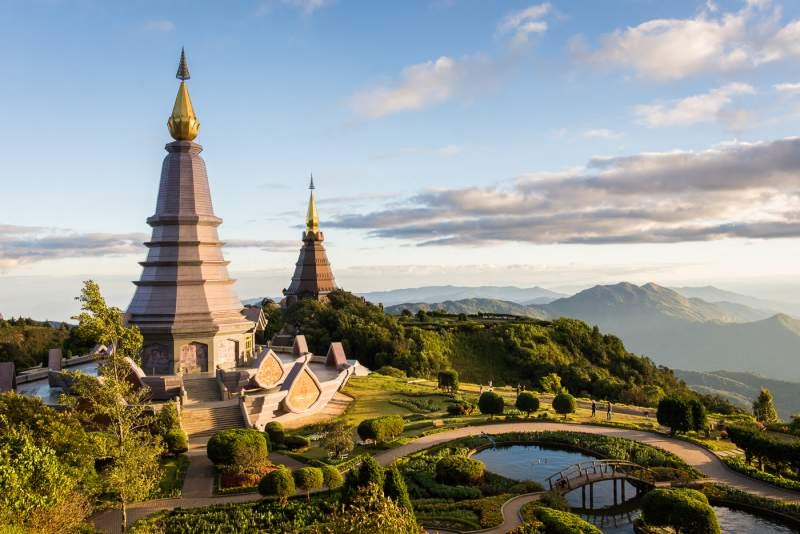
Thailand is most often talked about in the context of its stunning coral beaches in the south, world-class diving and Bangkok’s legendary nightlife.
For me, Thailand is above all an incredibly diverse country where — apart from skiing and surfing — I can find pretty much everything I love.

First and foremost: exceptional food, breathtaking nature, rich culture and remarkably warm people. I had one of the best meals of my life in Chiang Rai — and I take food very seriously.
I also love the beautiful mountains with their tea and coffee plantations, jaw-dropping national parks and some of the world’s best snorkelling spots. And the motorcycle roads are something else entirely.

Thailand is also arguably the best country in the world to start travelling independently outside of Europe. The whole country is set up for it — whether you’re going solo or in a group, on a shoestring or in comfort.
You’ll find someone who speaks English everywhere, which sadly can’t be said for many other countries in Southeast Asia.
The vast majority of accommodation can be booked online, transport is often better than what you’d find at home, and the infrastructure for independent travel is excellent.

How to Get to Thailand
Overland travel to Thailand is currently not really a viable option from most of the world. Given the distances involved, you’ll want to fly anyway.
Flights to Bangkok from Europe, Australia and Canada are increasingly served by direct routes — look for flights with Thai Airways or EVA Air, both are excellent airlines. Bangkok is also a Star Alliance hub, serving direct flights by the Lufthansa Group, Turkish Airlines, Air Canada, ANA or Singapore Airlines.
Unfortunately, no direct flights from the U.S. are currently available (2026).
Bear in mind that direct flights are almost always more expensive than those with one stop, though attractive deals do appear occasionally. Direct flight time from Europe is around 10–12 hours, 9-10 hours from Australia and almost 14 hours from Vancouver, Canada.
Main airports in Asia are usually served by more than 1 flight per day, including India and the Middle East.

The best value one-stop options from Europe are typically Turkish Airlines, Qatar, Finnair and Emirates. Return fares generally range between €500 and €850. A good deal tends to fall around that lower end. Travel time with a short stopover ranges from just under 13 to 16 hours.
The combinations are endless, as are the bargain opportunities. The key is to monitor flight deals and buy the first fare that looks reasonable — otherwise you’ll wait forever and never pull the trigger. For travel during peak season (November–February), make sure you book well in advance.
Search for regular fares on Kayak.com, Expedia.com or Skyscanner, where you can filter by number of stops and journey time.
Low-cost options are adding up too. Singapore-based Scoot flies more and more long-haul routes to Singapore with onward connections to Thailand, and Air China is another budget-friendly choice. I’d generally advise avoiding Air India, even when the prices look tempting.
Flying Direct to Other Destinations in Thailand (Without Stopping in Bangkok)
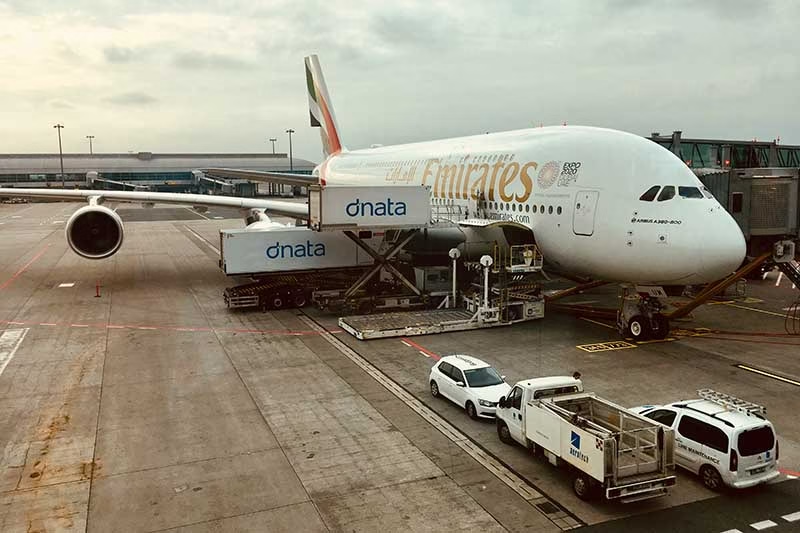
Travel to Phuket is one of the easiest ways into southern Thailand. Phuket International Airport (HKT) handles direct flights from the Gulf hubs (Doha, Dubai, Abu Dhabi) and seasonal long-haul connections from Europe, plus dense domestic links from Bangkok.
From the airport, central Patong is about 45 minutes by taxi (€18–25) or roughly €5 by airport bus. Phuket is a practical base for island-hopping to Phi Phi, Krabi and the Similan Islands, so most travellers spend a night or two here even if the island itself isn’t their final stop.
Seasonal long-haul flights also operate to Krabi or Chiang Mai.
Seamless Connections Through Bangkok
While it’s usually cheapest to book your international and domestic Thai legs separately, I completely understand that connecting through Bangkok can feel complicated — especially with its two airports, and even more so if you’re travelling with young children.
Fortunately, there’s a solution: codeshare flights between Thai airlines and international carriers. Specifically Bangkok Airways and Thai Airways.
Here’s how it works: all of these airlines operate out of Bangkok’s main airport, Suvarnabhumi, which is also where the vast majority of long-haul flights arrive.
Because Thai Airways belongs to Star Alliance (along with, for example, Lufthansa and ANA), and Bangkok Airways partners with carriers like Emirates or Quantas, you can buy a single ticket all the way from Europe, the Middle East or Australia to Chiang Rai or Koh Samui.
At Bangkok airport, you won’t need to worry about luggage or immigration — the connection works exactly like a standard hub connection in Dubai, for example. Your bags go through and you get your entry stamp at your final destination.
Just make sure to mention at check-in that your final destination is, say, Chiang Rai, so your bags are tagged accordingly.
NOTE: This approach will not work on Kiwi.com and similar sites. Although they may sell you a similar combination in one booking, there’s a good chance you’ll need to collect your luggage in Bangkok, queue at immigration and re-check in for your domestic flight. It’s always marked as self-transfer in the search results.
Tip: Flights to Neighbouring Countries
If you don’t find a cheap fare to Bangkok or other Thai airports but spot a good deal to Singapore, Ho Chi Minh City or Kuala Lumpur, check the cost of adding a short flight to Thailand.
One-way fares can often be found for well under €40, and even the budget carriers here outperform most European flights in terms of quality. You’ll also get the bonus of spending a few days in your stopover city.
You can also enter Thailand overland from all neighbouring countries by bus or minivan, and by train from Malaysia and Laos. If you prefer not to fly, overnight buses offer decent comfort at reasonable prices.
Bangkok’s Airports — Suvarnabhumi and Don Mueang
Bangkok is one of the world’s busiest aviation hubs, and the main airport, Suvarnabhumi, has long struggled to handle all the traffic.
As a result, many airlines operate from the former military airport, Don Mueang.
In simple terms: almost all long-haul and Thai Airways/Bangkok Airways/Vietjet Air domestic flights use Suvarnabhumi, while remaining domestic flights and some budget long-haul carriers (such as AirAsia) use Don Mueang.
If you’re flying from Europe, you’ll arrive at Suvarnabhumi virtually 100% of the time.

Getting from the Airport to Central Bangkok (and Back)
Suvarnabhumi
You have four straightforward options:
1) Train — the Airport Rail Link (ARL)
It takes you to Phaya Thai station where you can change to the BTS Skytrain, a bus, or grab a taxi to your hotel.
The fare is 45 THB.
If you need to connect to the MRT (underground), get off at Makkasan instead. Google Maps will show you all options clearly — the fare to/from Makkasan is 35 THB.
Trains run every 10–15 minutes from 6am to midnight from the basement level of the airport. The journey to Phaya Thai takes 45 minutes and this is the fastest option.
From Phaya Thai, bus 503 runs to Khao San Road.
You can pay contactlessly by card directly at the turnstile.
2) Taxi
The most comfortable option, and nothing to be afraid of.
All taxis from the airport are strictly regulated and will always run the meter. Fares range from 250 to 450 THB depending on distance and time of day. Add a 50 THB airport surcharge plus any expressway tolls, which are paid separately.
On Level 1 of the airport, find one of the taxi service counters where a machine will issue a queue ticket and instructions. Always have your destination address ready — ideally in Thai script (Google Maps helps here).
Journey time to the city centre ranges from 45 to 90 minutes, heavily dependent on traffic.
For the return trip to the airport, ask your hotel reception to call a taxi. Always insist on the meter (and check the driver actually turns it on).
The airport name is pronounced roughly “Suvanaphoom”.
A minivan transfer is also a good option — your accommodation can arrange one for around 100–150 THB per person.
3) Grab
The local equivalent of Uber — enter your destination in the app, get a fixed price upfront, and pay by card in-app or in cash. Note that Grab in Asia also offers motorbike taxis, so if you don’t want to ride pillion, select GrabCar or GrabTaxi.
Grab fares to and from the airport typically run between 350 and 600 THB — a regular metered taxi usually works out slightly cheaper.
4) Bus
You can also take a bus — several lines run to the city centre, but in most cases the options above are simpler and faster.
Late at night, however, the bus can come in handy. You’ll find a full list on the airport’s official website.
My preferred approach is to combine the Airport Rail Link into the city and then a taxi or Grab for the last stretch to my accommodation. It’s usually the cheapest and fastest combination.
Don Mueang
Things here are a little more complex, though much less so since the modern train link from Bang Sue station was completed.
You currently have four main options:
1) Train from Bang Sue station
You can reach the station by metro (MRT) or taxi/Grab..
The train runs directly to the airport and goes every 10-15 minutes.
2) Bus
The cheapest option and also surprisingly easy.
Several lines serve the airport, but you’ll only need the express routes A1, A2, A3 or A4.
The fastest route into the city is bus A1, which stops at Mo Chit (BTS Skytrain) and Chatuchak Park (MRT) — the bus stop serves both stations. The journey to Mo Chit takes around 20 minutes via the expressway, where queues rarely form.
Route A2 continues all the way to Victory Monument (BTS), a convenient interchange for the rest of Bangkok and a departure point for some long-distance buses. Note: A2 no longer stops at Mo Chit.
Route A3 takes you to Lumphini Park, close to Si Lom station (BTS and MRT). It also stops at CentralWorld shopping centre, right in the modern city centre.
Route A4 goes to Khao San Road.
Buy your ticket in cash on the bus; fares are 30–50 THB.
The bus stop is at the far end of Terminal 1.
3) Taxi
Works similarly to Suvarnabhumi. Be aware that during rush hour the journey into the city can drag on considerably; it’s almost always worth paying extra for the expressway.
Combining a taxi with the Bang Sue train or bus is often the smartest move.
4) Grab
Everything I said about Suvarnabhumi applies here too, including fares of 350–600 THB.
The more adventurous can take the local train on the original line, which costs just a few THB and runs to Hua Lamphong, closer to the city centre.
Note: local trains now depart from the new modern station, as does the Bang Sue express link. Not all trains go to Hu Lamphong, the express long-distance trains also terminate at Bang Sue.

Transferring Between the Two Airports
For travel between Suvarnabhumi and Don Mueang (in either direction), use the free shuttle bus that runs every 15–30 minutes from 5am to midnight. Just show your onward boarding pass or ticket at the counter.
The journey takes 1–2 hours depending on traffic. The bus uses the fastest expressway route, so it’s roughly as fast as a taxi — but free. Even without a boarding pass, the shuttle is reportedly available for 60 THB.
At Suvarnabhumi, look for Exit 3 on Level 2 — the same floor where you collect your baggage after arrival. On the right-hand side you’ll see the AOT desk, where staff will check your onward ticket and give you further instructions.
From Don Mueang, the shuttle departs from Terminal 1, Exit 6 on Level 1. Just follow the “shuttle bus” signs.
When to Visit Thailand — and Why It Matters
Weather in Thailand varies not just by season but by region. In general terms, and for good reasons, the best time to visit is the “cool season” from mid-November to early March — expect the most sunshine and the least rain.
It’s also a great escape from winter back home. The flip side: this is peak tourist season.
In practice, you can visit at any time of year — it’s just a matter of choosing the right location. Even the dreaded “rainy season” from May to October usually means just a few hours of rain per day.
That said, it can put a real damper on a beach holiday. Check the individual destination guides for details.

Money
Thailand’s currency is the baht (THB). In tourist areas and Bangkok you can often pay by card, but always carry enough cash — some places add a small surcharge for card payments.
You can also use the Moreta app for QR code payments, which are far more common in Asia than card terminals. Thailand is slightly tricky, though — many businesses use personal accounts, which Moreta only recently gained the ability to pay into, and with a relatively high fee.
For any trip, I strongly recommend getting a Revolut card. It offers much better exchange rates than a typical bank, and you can withdraw cash from ATMs worldwide with minimal fees.
Sign up at Revolut.com
Withdrawing Cash
ATMs are literally on every corner — but watch out: all of them charge a 220 THB fee for withdrawals made with a foreign card. The only way around this is a Thai bank account.

Or try a small hack — withdrawing over the counter at a bank branch. It won’t work everywhere, and almost certainly not for small amounts (under 5,000 THB). With a bit of persistence it usually works though; ask for a “cash advance at the counter” and don’t let them wave you off to the ATM.
You’ll need your passport, with the name matching your card. This is also the only way to withdraw larger sums than ATMs allow (usually 20,000–30,000 THB per transaction).
Note that it doesn’t work with prepaid cards (Revolut is sometimes treated as one) and not with all banks — check in advance whether your card supports “cash advance”.
In all cases (including card payments), always watch out for DCC — Dynamic Currency Conversion. This is when the amount is converted to your home currency on the spot, so you can see the charge immediately. However, the exchange rate applied by the local bank or payment processor is terrible. Always decline DCC.
Exchanging Currency
Thai baht is one of the few currencies where it can make sense to exchange money before you leave at a currency exchange bureau. For larger sums, you may need to order baht in advance — smaller exchange offices almost always require this.
If you bring euros or dollars to exchange in Thailand, you’ll find plenty of exchange booths with very similar rates. You’ll always need your passport. Avoid exchanging at the airport — rates there are predictably poor. And never change money with random people on the street.
Some hotels will accept euros or dollars directly, but the rate will be significantly worse than at an exchange booth or ATM, so it’s generally not worth it.
Approximate Costs
If you want, Thailand can be very cheap — it’s possible to get by on as little as around €12 per day including accommodation. Your biggest expenses will be the irresistible food, alcohol and any entrance fees for attractions and sights.
As a general rule, prices are lower in the north and in non-touristy areas, and noticeably higher on some beaches.
- Accommodation: from 100 THB for a hostel dorm, from 200 THB for a bungalow or guesthouse, from 600 THB for a *** hotel room.
- Food: street food 30–60 THB; local restaurant 50–120 THB (varies by portion size); Western-style restaurant 150–500 THB.
- Drinks: 1.5L bottle of water in a shop — 12 THB; Thai beer — 30 THB in a shop, 60+ THB in a bar or restaurant; imported beer 120+ THB; wine — from 600 THB per bottle in a shop, from 180 THB per glass in a restaurant (anything cheaper is undrinkable — yes, it’s that bad).
- Attraction entry fees: from 20 THB to several hundred THB (the most expensive are in Bangkok).
- National park entry: 200–500 THB.
Alcohol is expensive due to high taxes and import duties — there’s no getting around that. Cigarettes are heavily taxed too. Imported cheeses and other foreign groceries are also pricey.
On the other hand, local produce (including fruit) is — especially at markets — ridiculously cheap. Try swapping cheese for a luxurious fresh pineapple, mango or papaya, and swap beer for fresh coconut water.
We’ll get to transport costs later. In general, city transport is roughly comparable to Europe; longer journeys work out cheaper per kilometre but can be very long indeed (the country stretches around 1,800 km from north to south). Purely tourist transfers — such as ferries to certain islands — can sting your wallet.
The longer you stay and the less you move around, the lower your daily budget will be.

Visa and Entry Requirements
IMPORTANT: Rules changed in May 2025.
Passport holders from most of Europe, Canada, the US, Australia or New Zealand can still enter Thailand visa-free. However, you must now register online within 3 days before arrival via the TDAC portal. This replaces the old paper arrival card.
On arrival, you’ll receive an entry stamp valid for 60 days. Note: this is 60 days, not two months.
If you enter overland, you receive a 30-day entry, and you must still complete the online form in advance.

For repeated entries, the total of all stays within any six calendar months must not exceed 90 days. You also cannot enter by land more than twice per year without a visa (air arrivals are unrestricted).
Your permission to stay can be extended by a further 30 days at any immigration office for a fee of 1,900 THB (approximately €50). Bring one passport-sized photo and a completed application form, available on-site.
The 30 days are always added to your current permission expiry date, so regardless of when you apply, you’ll end up with 90 days total (or 60 if you entered overland). Don’t leave it to the last minute.
Thanks to the generous visa-free allowance, a standard tourist visa rarely makes sense any more. A multiple-entry visa can occasionally be useful. Details and applications at thaievisa.go.th.
The overstay fine is 500 THB per day. If you accidentally overstay by one or two days (which happens, especially in months with 31 days), there’s usually no serious trouble and officers sometimes waive the fine. Intentionally staying for weeks beyond your permitted time is a very different matter — don’t risk it.
A word on so-called visa runs — leaving the country briefly just to reset your permitted stay. If an immigration officer sees a very recent exit stamp, they’ll likely ask you to prove sufficient funds (at least 10,000 THB per person), an onward flight out of Thailand and confirmed accommodation.
For up-to-date information, check the Thai Ministry of Foreign Affairs website or your national Thai embassy.

Getting Around Thailand
Be prepared: Thailand is larger than it looks on the map. As I mentioned, the distance from the far north to the Malaysian border in the south is about 1,800 kilometres — roughly the same as from London to Athens.
Fortunately, there’s an excellent network of public transport, from local minivans and pickup trucks to long-distance trains, buses and frequent, safe, affordable domestic flights.

By Plane
Domestic flying is popular in Thailand, and strong competition keeps prices pleasantly low — while quality is surprisingly high.
Thai airlines outperform the vast majority of European carriers for comfort and service, including the so-called “full-service” ones. Domestic flying in Thailand is also completely safe.
Prices and when to book
It depends heavily on the route, but you can almost always find a one-way fare under €45. On the busiest routes — Krabi, Phuket or Chiang Mai to Bangkok — one-way tickets for €20–€28 are common. These prices are typically without checked luggage.
Outside of Fridays, Sundays and public holiday periods, booking a few days in advance is usually fine — prices barely fluctuate. On peak routes, Chiang Mai and Phuket rank among the world’s busiest air corridors, with departures every few minutes at peak times.
Direct flights between southern and northern airports (bypassing Bangkok) are increasing. Book these further in advance — at least a week ahead, more in high season — and expect somewhat higher prices.
A flight from Krabi to Chiang Mai, for example, can cost anywhere between €30 and €130 depending on timing. Sometimes it still makes sense to route through Bangkok, but be careful about the potential airport transfer.
Fares to Koh Samui are generally higher because Bangkok Airways is the only carrier serving the airport — which they also own, allowing them to charge accordingly. More on how to get a better price below.
I search on Skyscanner.com and usually buy directly from the airline’s website.
Don’t book on Kiwi.com! They add more than 10% to the fare and often miss the cheapest fares entirely.
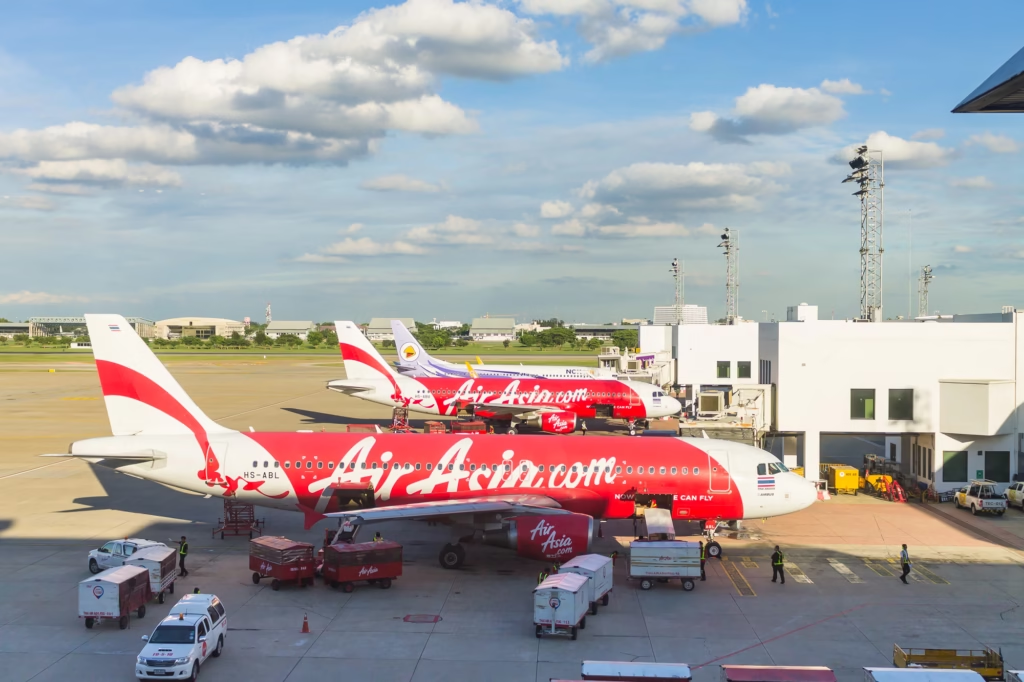
Which airline to choose?
Cheapest isn’t always best — mainly because some airlines include checked luggage in the base fare while others charge extra. The Bangkok airport you land at is another consideration.
Baggage rules change regularly (like everything in Thai aviation). Here’s a quick guide for domestic flights on the cheapest Economy tariffs:
BKK = Bangkok Suvarnabhumi, DMK = Bangkok Don Mueang
- AirAsia – DMK and BKK, carry-on only
- Thai Lion Air – DMK, carry-on only
- Nok Air – DMK, carry-on only
- Thai Vietjet Air – BKK, carry-on only
- Bangkok Airways – BKK, 20 kg included
- Thai Airways – BKK, 23 kg included
My personal favourite is Thai Lion Air — I almost always get a free exit-row seat, and they’re generally relaxed about a few extra kilos on hand luggage.
That said, Bangkok Airways and Thai Airways are worth the occasional extra spend: they fly into BKK and offer excellent service. Bangkok Airways even gives Economy passengers access to their lounge with light refreshments.

A few more things to know
- Many Thai pilots have military training. Don’t be surprised by steep descents on approach or sharp turns shortly after take-off. They know exactly what they’re doing.
- Some shorter routes and quieter services use turboprop aircraft — modern, safe ATR planes, the same type you’ll find across Europe.
- Check-in desks are generally not assigned to specific flights, only to individual airlines. About 30 minutes before check-in closes, a dedicated desk opens for that particular flight. So if you’re running late, you don’t need to queue through the whole line — just ask the helpful staff to direct you.
International flights from Thailand
All larger Thai airports also serve international routes. For example, you can fly directly to Hong Kong, Malaysia, Singapore or Vietnam without returning to Bangkok first. Just bear in mind that limited competition on these routes almost always means higher prices — splitting your journey through Bangkok often saves more than 50%.
By Train
An excellent and comfortable way to travel is the overnight train — for example between Bangkok and Chiang Mai. You save on a night’s accommodation and sleep reasonably well. A second-class sleeper berth costs roughly €15–€25.
For more comfort or when travelling with children, consider a first-class upgrade. On trains 9 and 10 between Bangkok and Chiang Mai, you even get a private compartment with a warm shower. Prices start from around €35 per person.
Book well in advance — especially in high season and around public holidays, trains sell out faster than flights. Use the official Thai Railways website or buy at the station. Watch out for third-party agencies that will handle the purchase for you — and charge a hefty markup.
Trains are great for shorter legs too. The Bangkok–Ayutthaya route, for example, is excellent — I’d happily recommend third class, which is a genuine local experience and costs almost nothing.
In all cases, watch out for the air conditioning — bring at least a light jacket or you’ll freeze.

By Bus
Comfortable long-distance coaches cover the whole country. The best of them have only 32 seats, generous legroom and very comfortable reclining chairs — look for “VIP Bus”.
Pricewise, buses are almost always the cheapest option, and they’re far less likely to sell out than overnight trains.

Most Thai roads are in better condition than you might expect, so journeys pass smoothly outside of city congestion. Just remember the distances can be enormous — even the most comfortable bus will leave you stiff after 10+ hours. For anything over 500 km, I’d recommend flying instead.
Tickets can be bought without much of a markup at any travel agency, and most hotels and guesthouses can arrange them. You can also buy at the bus station. Always check — and double-check — exactly which bus station the service departs from. Most big cities have several, and the one you want may not be the one in the centre.
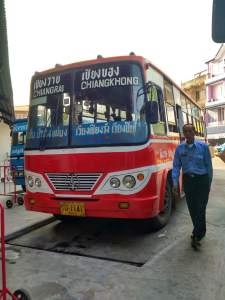
Most long-distance buses from Bangkok to tourist destinations depart from and arrive at Khao San Road, where tickets are also easiest to buy. However, the same type of bus from one of Bangkok’s main stations (such as near Bang Sue/Chatuchak) can be up to a third cheaper.
Local buses vary widely by route — from modern air-conditioned coaches (such as between Chiang Mai and Chiang Rai) to ageing vehicles with no windows.
Almost everywhere, private minivans are also available. More expensive than buses, but faster and of guaranteed quality. Just be prepared for spirited driving, especially in the mountains. Book through any travel agency or your accommodation.
By Motorbike or Scooter
For local exploration, a rented motorbike is hard to beat. A reasonable price for an automatic scooter starts at around 900 THB per week or 250 THB per day — you may need to haggle a little.
Some rental shops will ask to hold your passport (they’ll take a copy); otherwise a deposit of 2,000–5,000 THB is standard. Cash is usually expected, though payment terminals are becoming more common. Fuel costs roughly a third less than in Western Europe.
Note: you need an international driving licence with a motorcycle (A) endorsement.
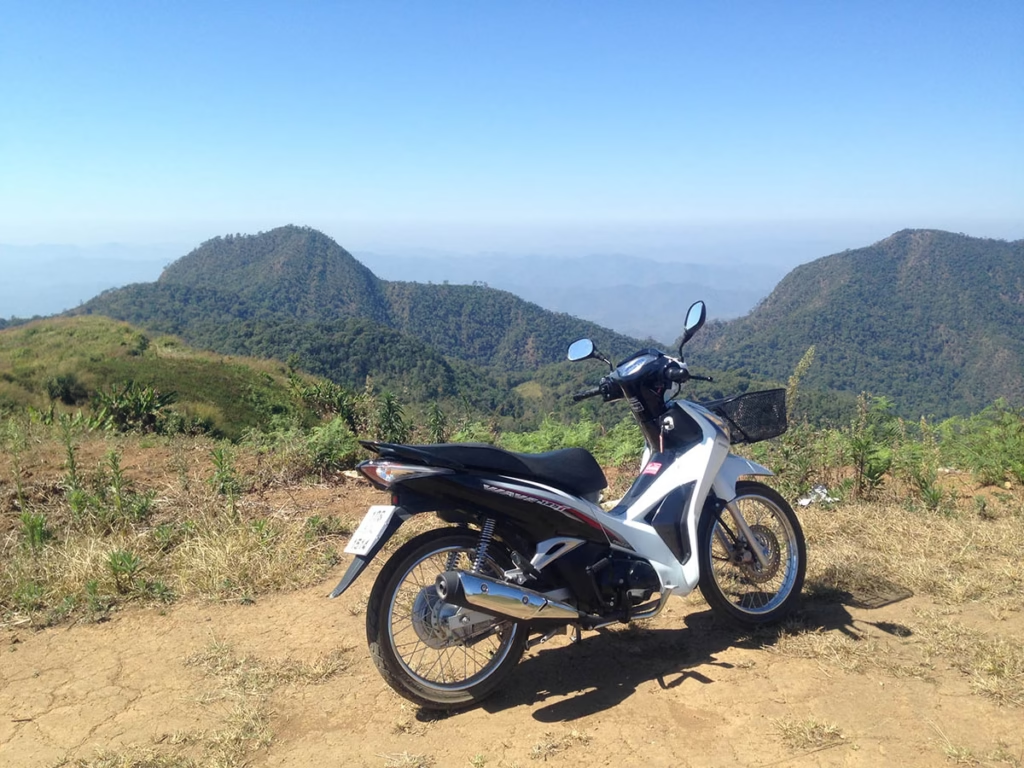
Choose a proper helmet that covers your ears and has a visor protecting your face. If the rental shop doesn’t have one, go elsewhere. Always test the brakes before you leave — ask them to adjust if needed. It takes minutes, costs nothing and could save your life.
For riding, wear solid footwear, long trousers and long sleeves. Flying gravel from lorries alone can do serious damage, let alone a fall on tarmac.
Please, take safety seriously. Even if you ride carefully, vehicles around you may be travelling at over 100 km/h. Thai drivers are fast, often reckless, and not always skilled — and Thailand consistently ranks among the most dangerous countries in the world for road fatalities. One of the reasons is drink driving so I always try to avoid riding after it gets dark.
Think about your destination when choosing a bike. Smaller scooters with small wheels are nimble in city traffic; for longer routes, go for the tallest bike with the largest wheels you can find.
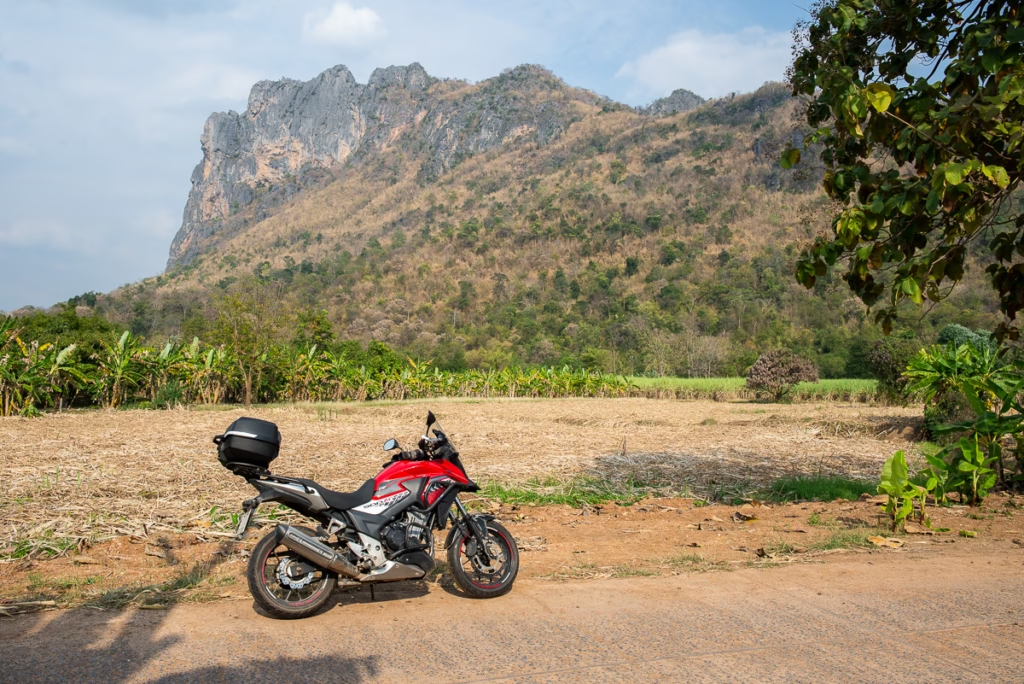
If you have a full motorbike licence, I highly recommend renting something larger. A Honda CRF250, for example, is made and sold relatively cheaply in Thailand. Rental rates typically start at 600–800 THB per day. I ride a Honda CB500X, which I hire from the excellent C&P Bike in Chiang Mai.
I’ve written a detailed guide to motorcycling in Northern Thailand covering the best roads and day trips from Chiang Mai.
By Car
Since I started travelling Thailand with my family, a car has become essential. For many travellers it’s the ideal option — especially in the north or on Koh Samui. Both large international chains and smaller local rental firms operate here.
A car with a driver is available almost everywhere, which I’d recommend for less experienced drivers.
Traffic drives on the left, and it takes a while to get used to the informal Thai road rules.
The golden principle: always be aware of everything happening around and behind you, and expect someone to cut across at any moment, drive the wrong way or have a chicken wander into the road.
By Boat
For most islands, a boat journey is unavoidable. Fortunately, standards have improved considerably in recent years, and you’ll only find old, rickety vessels at the most remote spots.
Generally you can choose between a “slow boat” and a “speed boat”. The latter is much faster but more expensive — and considerably harder on anyone prone to seasickness.
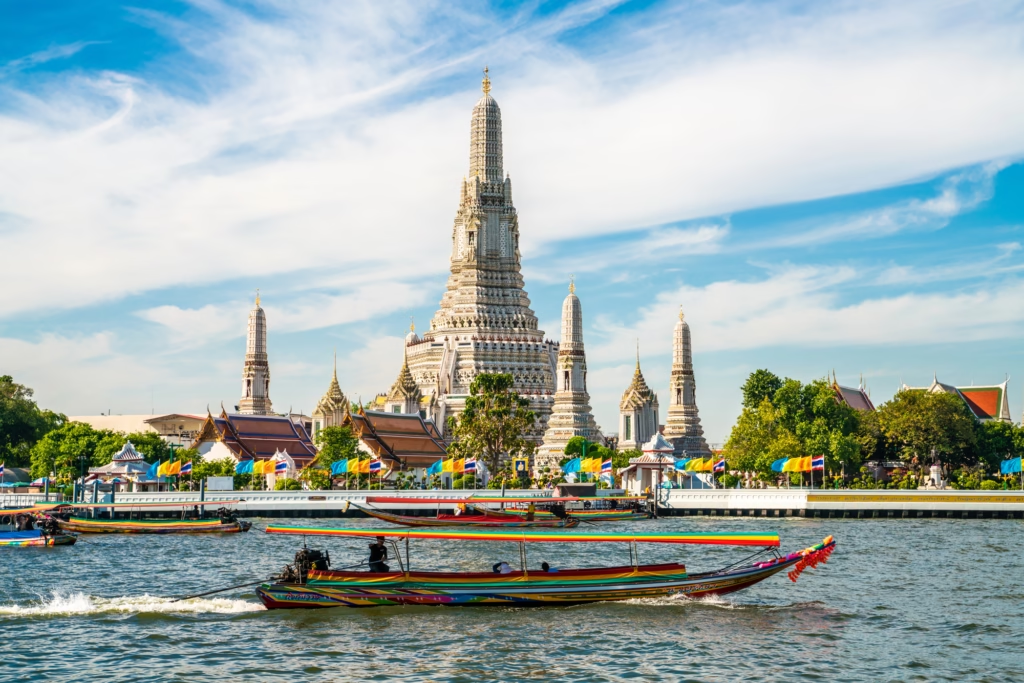
For more on boats, see the specific guides for the places where it matters most:
Most ferry services are privately operated, and both prices and booking methods vary widely. Travel agencies and most hotels across Thailand can advise and make reservations, though you may pay more than booking at the pier. It’s worth checking prices online in advance.
For a hassle-free island journey, check out Nok Air, which sells combined packages covering your flight, airport-to-pier transfer and ferry ticket in a single booking. Just enter the island name in the search. This can also result in a significantly cheaper trip to Koh Samui compared to flying direct with Bangkok Airways.
Other Ways to Get Around
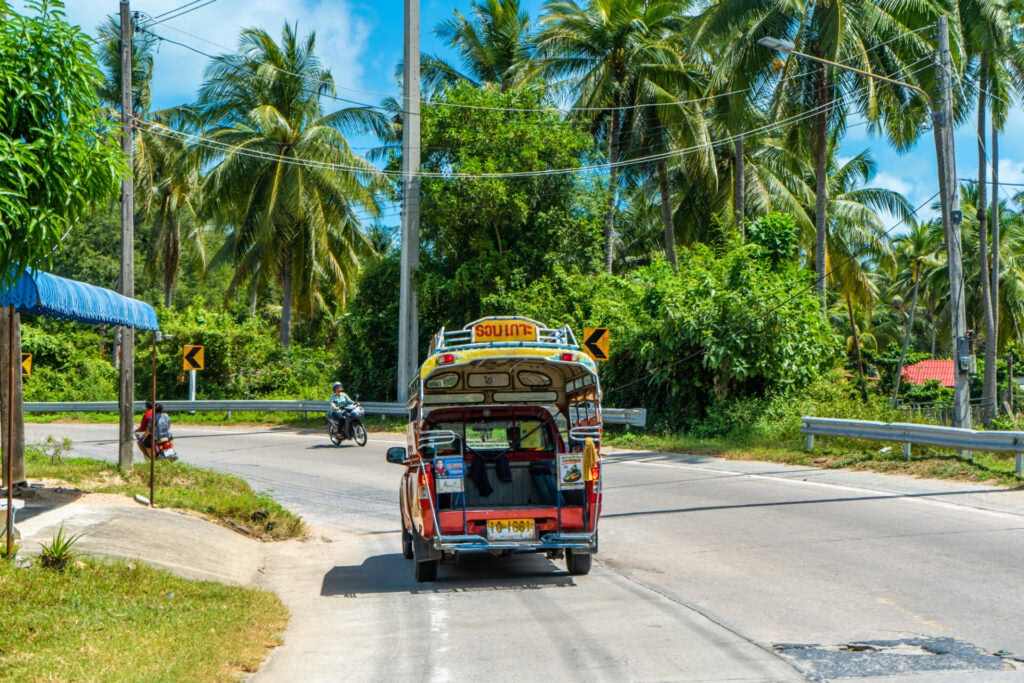
Outside central Bangkok, virtually every town has some form of shared pickup truck taxi — known as songthaew. Always tell the driver where you’re going and agree a price beforehand; routes can be unpredictable even for locals.
Songthaews also serve surrounding villages and, once you figure out the system, can get you almost anywhere.
Hitchhiking is also quite feasible in Thailand, though drivers will often be baffled — it’s not a local custom. That’s precisely what makes it an interesting experience.
Getting Around Bangkok
Transport in the capital deserves its own chapter. In a city of over 14 million people, it’s no surprise. I touched on the airport connections above; for the rest, here’s the essential summary:
- Avoid tuk-tuks. They’re overpriced and deeply impractical.
- Travel outside rush hour whenever possible.
- When you must travel at peak times, leave plenty of buffer and use the MRT, BTS Skytrain or river boat for as much of the journey as you can.
- By law, taxis must use their meter. Confirm the driver will turn it on before you set off — if they refuse, get out and find another cab. Colour doesn’t matter; all taxis charge the same rates.
- Grab works reasonably well, but expect a long wait during busy periods. It’s usually marginally more expensive than a metered taxi. (Uber merged with Grab here.)
- Avoid walking in the middle of the day — the heat will overwhelm you.

In tourist areas or outside closing bars, waiting taxi drivers will refuse to use the meter — they know someone will eventually agree to a fixed (inflated) price. Just walk a short distance away and flag down a passing cab.
For much more detail, see the comprehensive Bangkok guide.
Once you get your bearings, local transport in Bangkok is excellent — not just the BTS Skytrain and MRT, but also buses and boats. Buses go everywhere, starting at just 8 THB per ride.
Google Maps handles bus routes well — it’s never let me down. Remember to signal when boarding (wave) and when alighting (press the button). Don’t rely too heavily on timetables; everything depends on traffic.

Be prepared for bag checks when entering the metro or BTS — just briefly open your bag to show the contents; you don’t need to unpack every pocket. During rush hour, brace yourself for crowds, though they’re relatively orderly.
Quick tip: alongside the river, one of Bangkok’s most useful hidden gems is the canal boat running through the city. For example, if you’re heading from the Khao San Road area to the Airport Rail Link — take the boat from Phanfa Bridge via Hua Chang near Siam Square to Asok, near Makkasan station. Find it on Google Maps.
Buying tickets
BTS Skytrain — at machines in every station, priced by journey and distance. Check the station map beside the machines for the fare. Have coins ready; if you don’t have any, go to the ticket window. You can also buy a day pass for 140 THB (valid until midnight, not 24 hours). Fares range from 15 to 55 THB.
MRT — at machines in every station, priced by distance; select your destination on the screen (English available). Accepts banknotes of 20, 50 and 100 THB. Starting fare is 16 THB; longer journeys to the outer suburbs reach around 70 THB.
From 2025, MRT turnstiles accept contactless bank cards and Apple Pay directly — no ticket purchase needed.
Buses — pay the conductor a fixed fare on board. The price depends on whether the bus is air-conditioned (you also pay slightly more at night). Non-AC buses have fixed fares (8–10 THB depending on the line); AC buses charge by distance, though you’ll rarely pay more than 35 THB even for a two-hour ride.
Canal boat and most river boats — pay the conductor by distance; state your destination stop. More detail in the Bangkok guide.

Food
I’ll say it again — Thai food is among the best in the world. Especially in Bangkok and the north. It can be fiercely spicy, but that’s by no means always the case.
Not a fan of spice? The phrase is “no spicy” — or even better in Thai: “mai phet“. Leave the formal language at home. 😊
My advice: try as much as possible and find your favourites. For me, street barbecue comes out on top.

What to try
- Pad Thai — stir-fried noodles, a true classic.
- Khao Soi Kai — outstanding chicken noodle soup, available only in the north.
- Tom Kha Kai — chicken curry soup with coconut milk.
- Tom Yum — a similar soup, but considerably spicier.
- “Kuitiao” — rich broth with noodles and pieces of meat. Found mainly on the street, available at almost any hour. Best for breakfast or late at night. Not spicy until you add chilli yourself. 😊
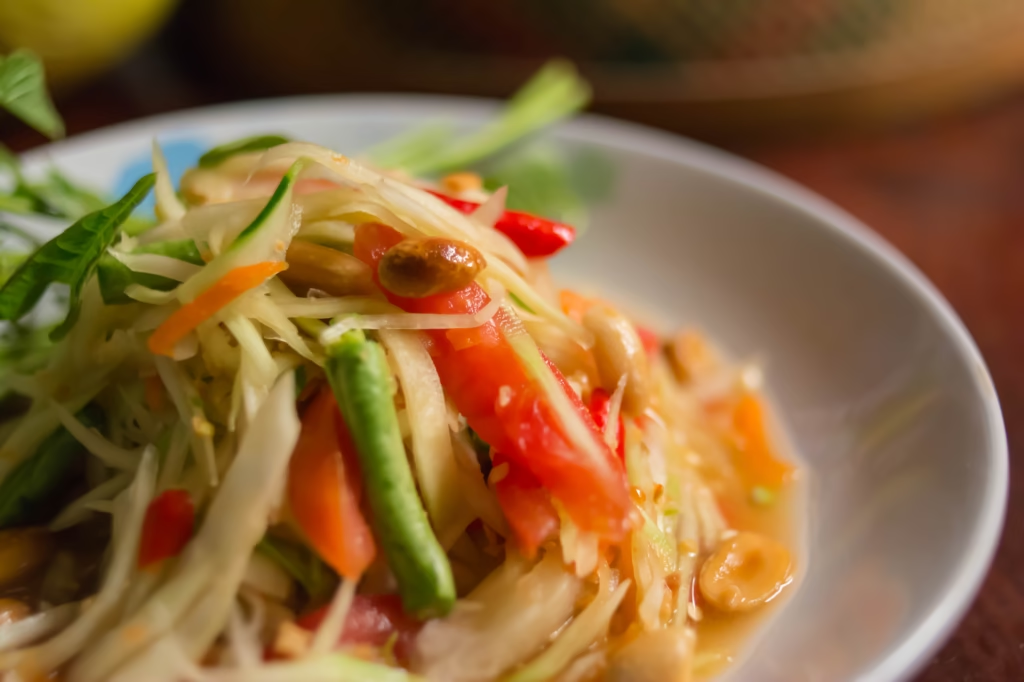
- Som Tam (Papaya Salad) — intensely spicy salad made from green papaya, carrot, tomatoes, green beans, dried shrimp and peanuts.
- Fried Morning Glory — leafy greens similar to spinach but far better. Usually served with pieces of meat and rice.
- Green Curry — rich, aromatic (and quite spicy) curry with plenty of coconut milk, served with rice.
- Mango Sticky Rice — one of the best desserts you’ll ever eat, often sold on the street. Made with special glutinous rice, fresh mango and sweet condensed milk.

In larger cities — especially Chiang Mai and Bangkok — you’ll also find quality Western food at reasonable prices. But honestly, eating Western food in Thailand is almost always a waste of money. Thai cuisine (and other Asian food) is brilliant both at street stalls and in restaurants, with minimal price difference between them.
Don’t be afraid of street stalls — just look for ones where locals are eating too. Otherwise you might have an unpleasant experience. Personally, I’ve never had a problem with Thai street food. Most of the stories I’ve heard about food poisoning came either from purely tourist beach restaurants where food wasn’t fresh, or from seafood eaten far from the sea.

As a vegetarian, you’ll eat perfectly well — you’ll just miss out on some of the best that Thai cuisine has to offer, and dishes outside the cities can become rather repetitive over time.
That said, most dishes can be made meat-free on request; just watch out for oyster sauce and fish sauce.
The word to know is “jay” — pronounced like the letter “J” — which indicates vegetarian or vegan food in a Buddhist context. You can point to yourself or to a dish; it usually works.
Buddhist monks are vegetarian, so Thais understand immediately what you mean.
Vegans will have a harder time in Thailand — fruit and plain vegetables may be your main fallback.
The challenge is that many Thais don’t fully grasp the concept; even vegetable dishes often contain oyster sauce or shrimp paste.
In some cases, the best approach is to go straight to an open kitchen and point to exactly what you want and don’t want. In cities, search for vegan restaurants on Google Maps.
Accommodation
Thailand offers an almost unlimited range of accommodation — from a bare-bones room for a few dollars in a mountain village to world-class luxury resorts. Prices near the beach can be significantly higher than inland, but even on most islands and popular beaches, rates remain very attractive.
Your main options:
- Hotels and Resorts: Thailand is renowned for its luxury resorts — expect genuinely world-class service and comfort. You’ll find an enormous selection on Booking.com.

- Apartments and Villas: Away from the beach, arguably the best value option. In Bangkok, apartments with gym and pool access can be found for around €45/night. Above €80/night you’re looking at genuinely impressive places — often with stunning city views. I can recommend Somerset Maison Asoke in one of Bangkok’s best residential areas.
 If there are a few of you, villas are worth a look — whether by the sea or in Chiang Mai. How about a beautiful private villa for 8 people for under €20 per person per night in Chiang Mai? Or a stunning villa with a pool and sea views on Koh Samui for under €100 per person per night? Have a look — there are plenty of options, often even cheaper.
  One of many villas on Koh Samui
 - Guesthouses and Pensions: Cheaper than hotels and often more simply furnished — but you’ll have friendly owners on hand to steer you towards great local spots, food and hidden gems. My personal favourite way to stay in Thailand. I search on Booking.com.
- Bungalows: Found mainly at beaches and in some national parks. The range is vast — from simple bamboo huts to luxury concrete bungalows with private jacuzzis, and everything in between.
 Classic beach bungalows
 - Hostels: Great for an overnight before a flight, a few nights in Bangkok, or wherever the social scene appeals. Thailand has some genuinely excellent hostels. I’ve stayed at Restiny Hostel in Bangkok many times — it’s right next to the Airport Rail Link, quiet, clean and has a great atmosphere.
- Camping: Many Thai national parks have campsites used mainly by domestic tourists. Tents and equipment are usually available to rent, and prices are very low. You’ll find most of them on Google Maps — and as a foreigner among Thai campers, you’ll likely be the star of the party.
Health and Hygiene
Thailand is one of the lowest-risk countries in Southeast Asia when it comes to illness — Singapore aside.
The main concern in recent years, particularly in the south, is dengue fever, spread by mosquitoes. I highly recommend getting dengue vaccine, especially if you are above 60 or have risk-increasing conditions. It’s been approved only a few years ago but the results are great.
Other tropical fevers do occasionally occur, but none should be life-threatening provided you seek medical help promptly.
Fortunately, Thai healthcare is excellent. Bangkok Hospital’s private hospital network is among the best in the world and is generally covered without problems by travel insurance.
Emergency services in Thailand: call 1669.
Above all, protect yourself against mosquitoes. They’re most active around dusk, but can appear in shaded areas during the day too.
Local repellent costs next to nothing and works reliably. Closed shoes and long trousers help a lot too.
Be careful in the sun too — tropical UV rays can burn you badly even on an overcast day. I wear light long trousers and long sleeves during the day; breathable fabric actually keeps you cooler than shorts and a vest.
Sunscreen is available in convenience stores on virtually every corner. And remember to drink plenty of water.
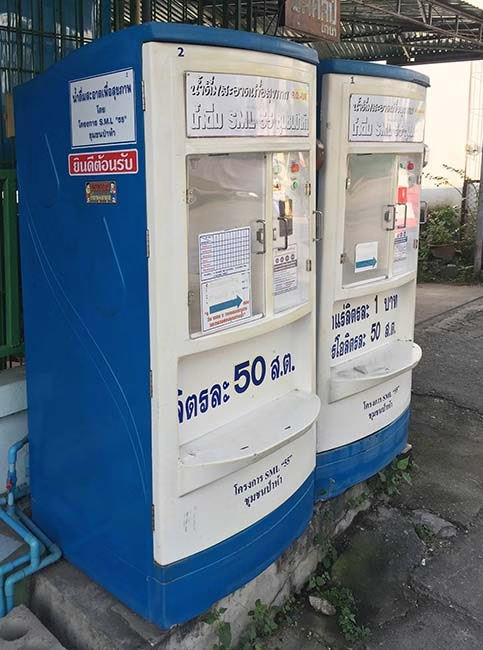
Tap water is not safe to drink. However, public water filters are everywhere on the streets — for 1 THB you can fill a bottle with around 2 litres of clean water. Insert a coin into the machine, press the green button to start, and press again to stop.
Thailand is also well known for sex tourism and unfortunately for sexually transmitted infections — so be genuinely careful. It’s also worth being aware that a very attractive Thai woman may turn out to be a ladyboy. Voice and Adam’s apple can be clues, though both are addressable with surgery.
Travel Insurance for Thailand
Don’t travel without good insurance.
You never know what might happen — especially when diving, riding motorbikes or doing any kind of sport.
I’ve used the British company True Traveller for years, they offer great value for money, very high coverage limits and no-bullshit rules and exclusions. Their live support is also great.
In general, look for:
- High coverage limits (at least 1 million EUR or GBP for medical emergency)
- Make sure your policy includes both medical cover and emergency evacuation
- Clear exclusions – some insurances don’t cover scooter accidents for example
- Live support
For long-term travellers, SafetyWing can be an interesting option.
Recommended Vaccinations for Thailand
No vaccinations are legally required to enter Thailand except for people travelling from/through countries with high yellow fever risk. A few vaccinations are worth having though.
Commonly recommended for Thailand:
- Hepatitis A and Tetanus — the standard pair most travellers are advised to have.
- Dengue — new vaccine against this dangerous tropical fever.
- Typhoid — sensible given the food and water; spread through contaminated food.
- Hepatitis B, Rabies, and Japanese Encephalitis — usually advised for longer stays, rural travel, or if you’ll be around animals or off the main tourist trail.
Book an appointment at your GP or a travel clinic at least 8-12 weeks before you go — some courses need time to take effect, and clinics get busy.
There’s no malaria risk in the main cities and islands, but it exists in some border and rural areas — ask your clinic whether antimalarials apply to your route.
This is general guidance, not medical advice — always confirm with your GP or a travel health clinic based on your itinerary and medical history.
Safety
Theft from tourists in Thailand is rare. When it does happen, it’s usually down to a moment of carelessness — and the culprit is often not Thai. On the beach, your most likely thief is a monkey.
By far the greatest danger is on the roads, particularly when riding. Thai traffic is among the most dangerous in the world — you need to be constantly alert for vehicles pulling out from side roads without warning. Drive as defensively as possible. Overtaking happens from both sides; don’t attempt it yourself, but always expect someone to overtake you on the right (remember — traffic drives on the left).
Never ride a scooter after dark. Ideally not in a car either. Drunk drivers are a real hazard, and on rural roads large animals can wander onto the tarmac without warning. At dusk once, while doing around 60 km/h, I was hit by a pigeon-sized bird. Without a full-face helmet, I would have had a very unpleasant facial injury.
Religion, Traditions and Customs
Most Thais follow Theravada Buddhism. In the south, Muslim communities are present; in the north, Christian minorities too.
Sizeable Chinese communities practise traditional Chinese religions or Christianity, and Hinduism has a small following. The government officially recognises all religions, and orthodox or extremist groups are very rare.

There are several important things to know, both religious and social:
- Never speak negatively about the king or the royal family — better yet, avoid the topic entirely. The monarchy is deeply revered, and insulting the king is the most serious offence you can commit. The same applies to the Buddha.
- Feet are considered unclean. Always remove your shoes when entering homes and temples.
- Respect local people. Criticism, insults or raised voices will get you nowhere — worse, they can cause serious problems. Whatever the situation, stay calm and keep smiling. A solution will always be found.
- Wear a shirt. Men included. Going topless is considered very disrespectful anywhere except the beach. Short skirts and bare shoulders on women are generally fine, except at temples.
- Don’t touch Thai people uninvited. Touching someone’s head — including patting a child — is a significant breach of etiquette.
- Don’t pose for photos with Buddha statues. Just because every second tourist does it doesn’t make it acceptable. It’s deeply disrespectful.
- Don’t buy souvenirs featuring the Buddha. It’s technically illegal to export them, and regardless of enforcement, it’s considered very disrespectful.
- At 8am and 6pm, the Thai national anthem plays in public spaces while the flag is raised or lowered. Thais stop whatever they’re doing and stand still. Follow their example — it takes less than three minutes.
- Smile. The more, the better. Thailand officially calls itself the Land of Smiles, and a genuine smile is always appreciated here. Actually, that’s true everywhere.
Learning even a few words of Thai is well worth the effort. A greeting and a thank-you are the basics, but further phrases are surprisingly easy to pick up, and Thais genuinely appreciate the gesture — it signals that you came to learn about their country and respect their culture. Numbers alone will serve you well when haggling.

Frequently Asked Questions About Thailand
When is the best time to visit Thailand?
The best time is the dry season from November to March, when it’s warm (28–32°C), humidity is low and rainfall is minimal. The south (Phuket, Krabi, Ko Samui) has slightly different microclimates — the Andaman Coast peaks December to February, while the Gulf of Thailand side is best from November to April.
How do you travel around Thailand independently?
Between major cities, cheap domestic flights (AirAsia, Nok Air) are the easiest option. For longer routes, overnight trains and air-conditioned VIP buses are comfortable alternatives.
Within islands and regions, use taxis, tuk-tuks, scooters or shared songthaew pickups. Independent travel in Thailand is easy, affordable and safe.
How much does a holiday in Thailand cost?
A two-week independent trip typically starts from around €900–€1,000 per person (flights €550–€650, accommodation €15–€30/night, food and activities €8–€15/day). Backpacker travel is possible from around €700; mid-to-upper range trips run €1,500–€2,200. The flight is the biggest cost — food and accommodation are significantly cheaper than in Western Europe.
What currency is used in Thailand?
The local currency is the Thai baht (THB). In Bangkok, Phuket and major tourist areas you can pay by card (Visa/Mastercard) at hotels, restaurants and larger shops. At markets, in tuk-tuks, at street food stalls and on smaller islands, you’ll need cash. ATMs are everywhere but charge a 220 THB withdrawal fee — Revolut or cards with no foreign transaction fees help here. For QR code payments, try the Moreta app.
Do I need a visa for Thailand?
Most Western passport holders, including EU citizens, do not need a visa for tourist stays of up to 60 days. You must register online via the TDAC portal within 3 days before arrival. Your passport must be valid for at least 6 months from your arrival date, and you should have an onward or return ticket.
Is Thailand good for solo travel?
Thailand is one of the best destinations in the world for solo travel — and especially popular with solo female travellers. Infrastructure is excellent, English is widely spoken in tourist areas, and the country has a deep backpacker scene (Khao San Road in Bangkok, Pai in the north, Ko Phangan and Ko Tao in the south) that makes meeting other travellers easy. Crime against tourists is low, transport is straightforward to book on your own, and budget accommodation in hostels or guesthouses starts from €8–12 per night. The main practical advice: keep a copy of your passport separate from the original, take out comprehensive travel insurance that covers scooter accidents, and trust your instincts around taxi/tuk-tuk drivers — always agree a price up front.
Is Thailand safe?
Thailand is consistently one of the safest destinations in Southeast Asia. Crime against tourists is low; the main risks are petty theft in crowds, dishonest taxi or tuk-tuk drivers (always agree a price or insist on the meter), and motorbike accidents. Avoid the border area with Malaysia (Yala, Pattani, Narathiwat). Travel insurance with motorbike coverage is essential.
Good to Know
- Most places now use standard Western-style toilets, but toilet paper is often absent. If you need it, carry your own — and never flush it. Thai plumbing isn’t designed for it and will block immediately. There will be a bin beside the toilet.
- Standard European two-pin plugs fit Thai sockets without an adapter. Earthed plugs are another matter — forget about it. You’re in Asia.
- When crossing the road, don’t expect traffic to stop automatically. In cities, if you step into the road and signal clearly with your hand for vehicles to stop, they will — but it takes practice. Never run or weave between stationary cars; a motorbike can appear from anywhere at any moment.
- Some sea creatures bite. Some land creatures do too. Watch out for monkeys.
- Chang beer is the cheapest local option and reasonably enjoyable, but beware the “changover”. It can be deceptively brutal — two bottles in and you might spend the entire following day horizontal, never wanting to touch Chang again. I speak from experience, and the term didn’t invent itself. Singha and Leo are perfectly fine alternatives.
- Just because a Thai woman sleeps with you doesn’t mean she’s head over heels in love with you. If she insists so from the very first moment, believe it even less. Would you trust a stranger at home who behaved the same way? Unfortunately, money is usually the motivation. That said, Thai women met through normal circumstances make wonderful partners.

Ready to plan your trip? Explore the individual guides: