This post is also available in:


Chiang Rai province, northeast of Chiang Mai in northern Thailand, has far more to offer than meets the eye. And I’m not just talking about the handful of well-known attractions in and around the city itself.
The city and its immediate surroundings can easily fill two days — but the wider province can keep you busy for weeks.
This article is part of a multi-part series. For general practical tips, check the guides on:
- THAILAND: detailed practical guide for independent travel
- Practical tips for travelling northern Thailand
For tips on individual cities, destinations and points of interest, head to the dedicated guides.
Why Visit Chiang Rai
Chiang Rai greets you with a very different atmosphere from Chiang Mai, Pai and Mae Hong Son. Not better or worse — just different.
The influence of various ethnic minorities is far more tangible here, including some groups with roots in southern China. That mix is part of why I can’t get enough of the local food — again, noticeably different from what you’ll find in Chiang Mai. The night market is one of the best I’ve come across anywhere in Thailand, purely on the strength of its food selection.
History lovers and architecture enthusiasts are equally well served — the famous White Temple alone is worth the trip.
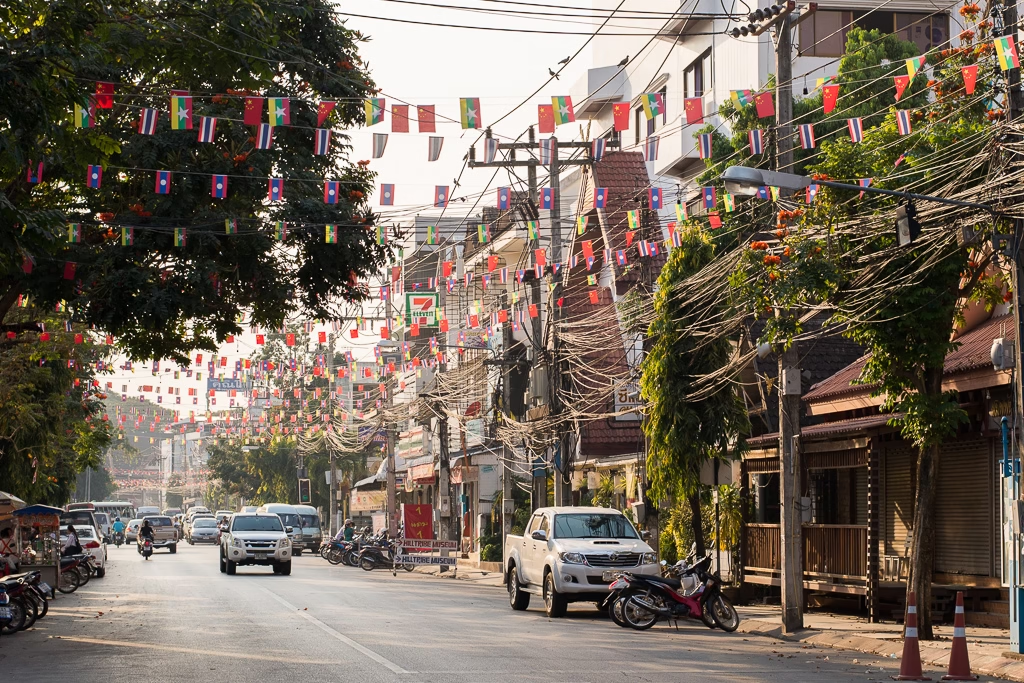
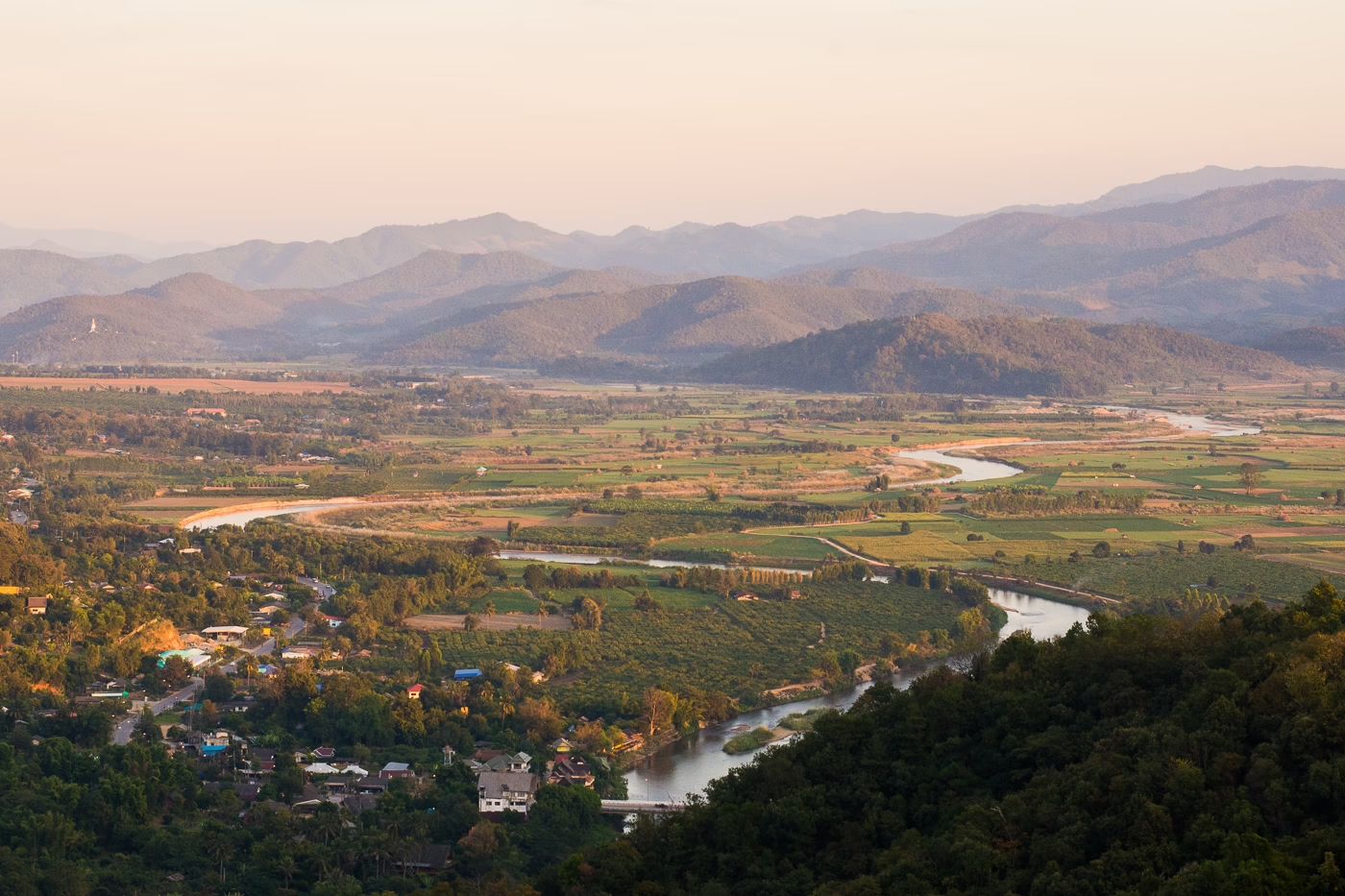
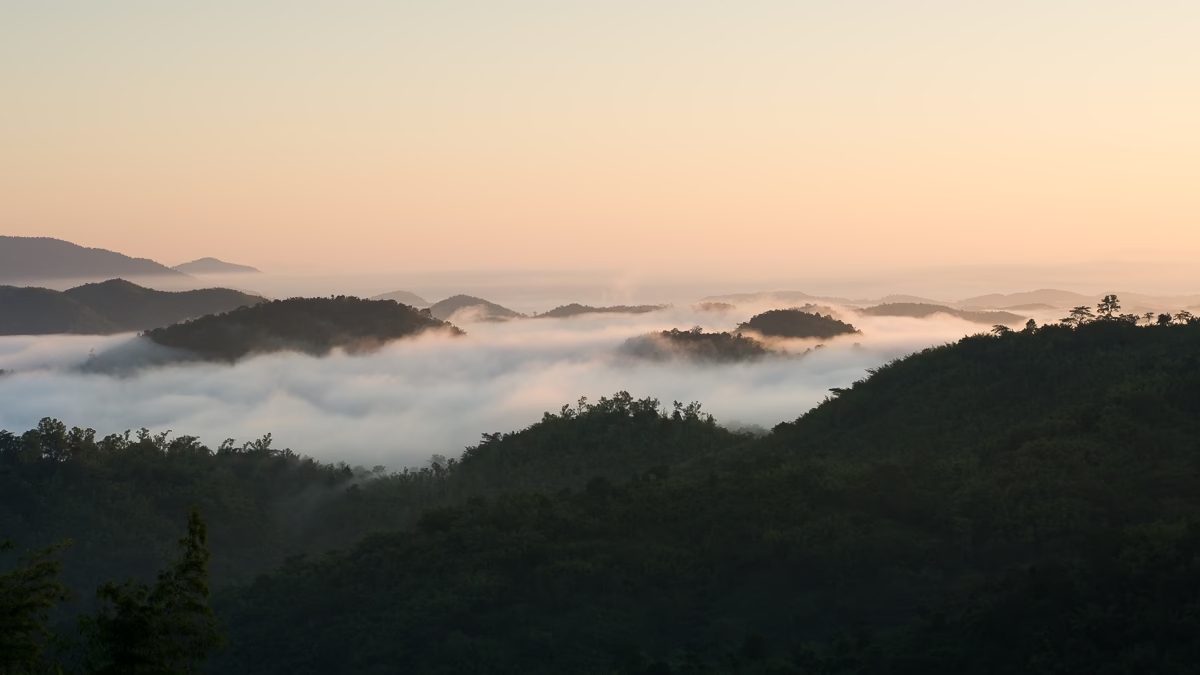
The surrounding landscape hides beautiful mountains, jungle, waterfalls, pristine nature, remote ethnic villages, tea plantations, remnants of the opium trade and a complex, fascinating history.
You can take a boat trip along the Kok River, or head to the majestic Mekong — with Laos on the opposite bank. Or venture even further, to the border mountains of Doi Phu Chi Fa and Phu Chi Dao.
Best of all, both the city and the region attract far fewer tourists than Chiang Mai or Pai.
How to Get to Chiang Rai
You can fly to Chiang Rai direct from Bangkok, or travel overland from Chiang Mai. Given the long distance and low domestic airfare prices, the bus from Bangkok isn’t really worth it.
The journey from Chiang Mai by bus or minivan takes around three hours. The regular buses are a perfectly comfortable option — they depart from Chiang Mai Bus Station 3, are fully air-conditioned and modern. Several times a day a VIP bus runs with just three seats per row.
Another option is renting a car, or making the trip by scooter or motorbike. Having your own wheels in Chiang Rai province is a real advantage — you can stop for coffee or pull over at a viewpoint whenever you feel like it.
Fancy a proper motorcycle adventure? Check out the guide to the best scenic roads for motorcycling in northern Thailand.
Best Time to Visit Chiang Rai
The best time to visit Chiang Rai is during the cool, dry season from November to February, when daytime temperatures are pleasant and the skies are clear — ideal for temple-hopping and mountain viewpoints like Phu Chi Fa, where the cherry blossoms also bloom from December to late January.
March and April bring the hot season, and with it the region’s notorious “burning season”, when agricultural fires blanket northern Thailand in haze that can obscure the mountain views and affect air quality. From May to October the southwest monsoon brings warm, green landscapes and afternoon downpours — waterfalls are at their most spectacular, but some mountain roads and the Kok River boat trips can be disrupted by heavy rain.
Where to Stay in Chiang Rai
Given the compact size of the city, location doesn’t matter all that much — I’ve always found it convenient to stay at one of the guesthouses right in the centre. You’ll find cheap hostels as well as a handful of nicer hotels.
Things to Do in Chiang Rai City
Start with a gentle stroll through the centre — stop by the local market and grab a good coffee at one of the city’s cafés, such as Akha Hill Coffee Roastery or Harmony Home Cafe. Or fuel up with a hearty noodle soup from one of the local eateries.
Aside from the first temple, all the major sights are a few kilometres from the centre, so you’ll need a scooter, bicycle or a tuk-tuk with a driver.
An organised day tour is also a great option if you want to hit all the highlights in one go.
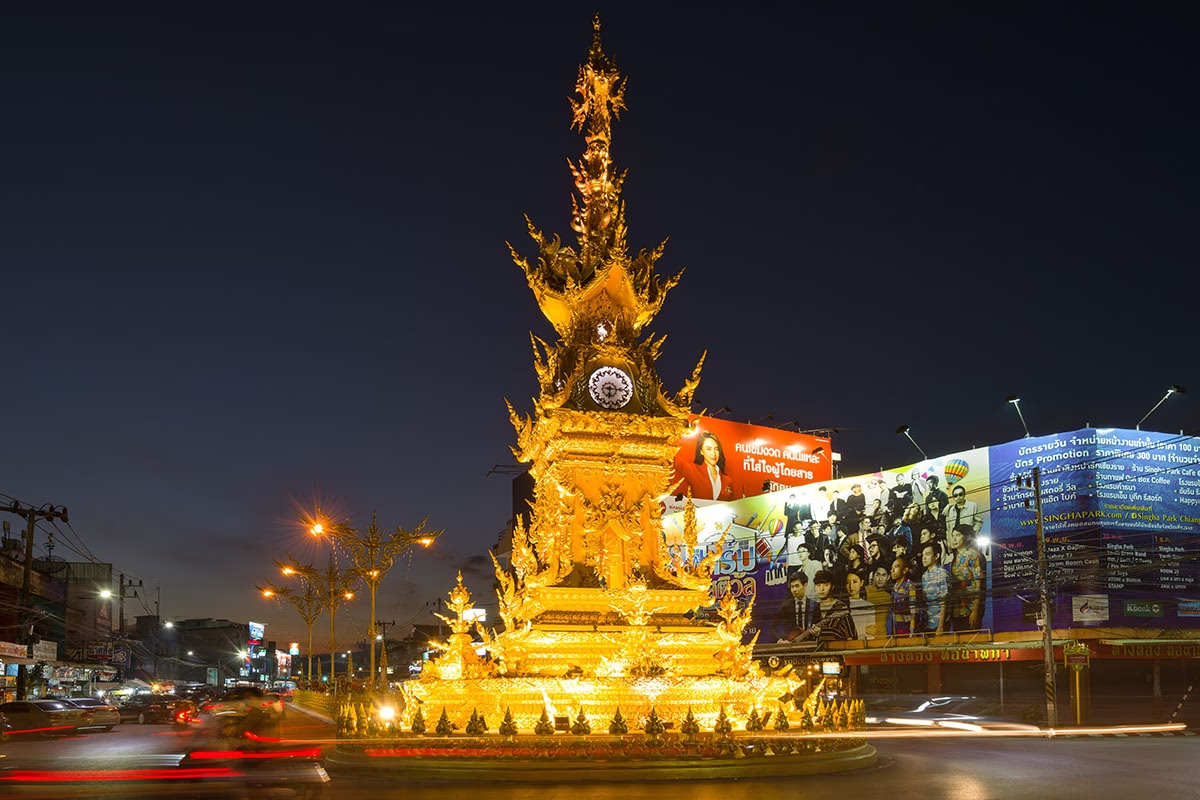
Wat Phra Kaew
A historically significant temple right in the city centre — well worth a short visit.
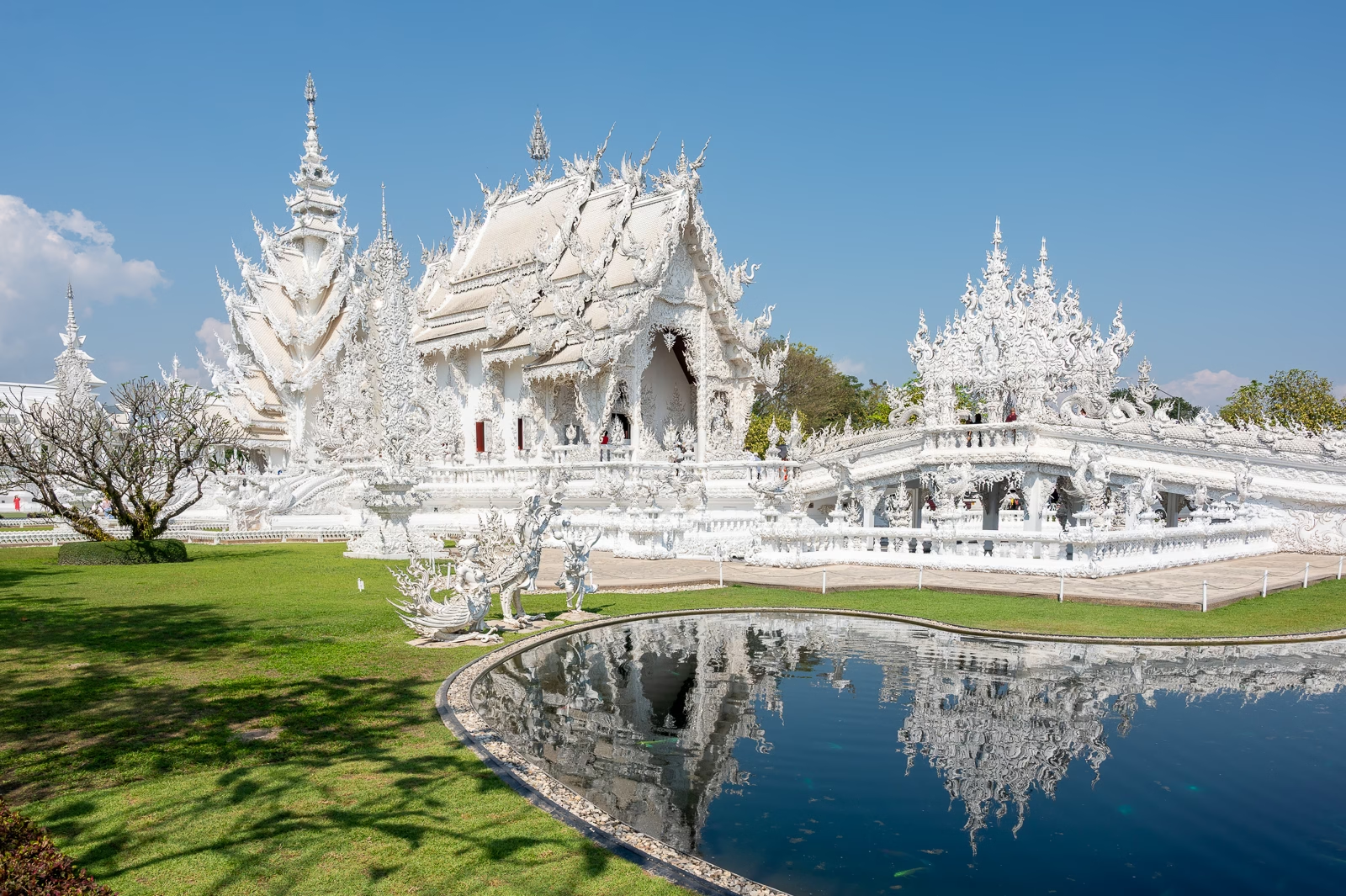
White Temple (Wat Rong Khun)
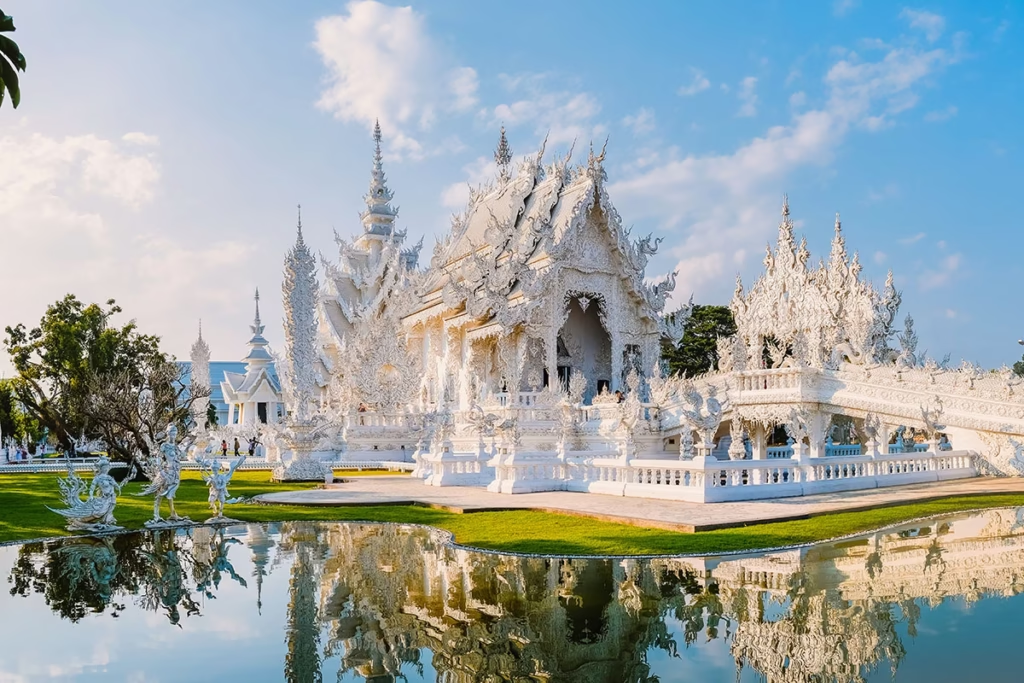
The iconic White Temple — symbolising the purity of Buddha — is actually a modern structure, still not fully completed. It was designed by local artist Chalermchai Kositpipat and construction began in 1997. The meticulously crafted details alone make it unmissable.
Black House (Baan Dam Museum)
A complex of more than 40 distinctive structures that explores Thai history in a boldly unconventional way. A fascinating contrast to the White Temple.
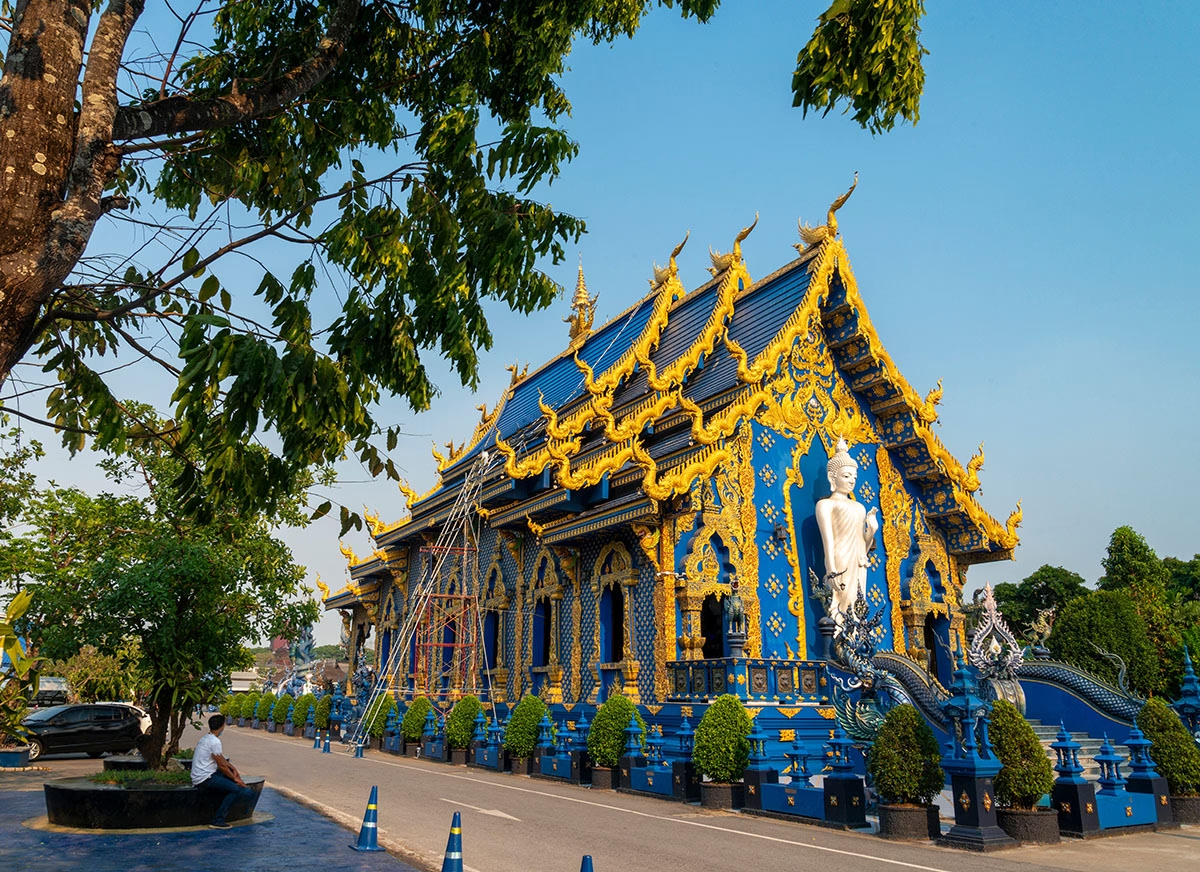
Blue Temple (Wat Rong Suea Ten)
Opened in 2016, this temple is extraordinary for its deep, vivid blue tones and brilliant gold decorations. The main hall is dominated by a large white Buddha statue surrounded by striking original murals.
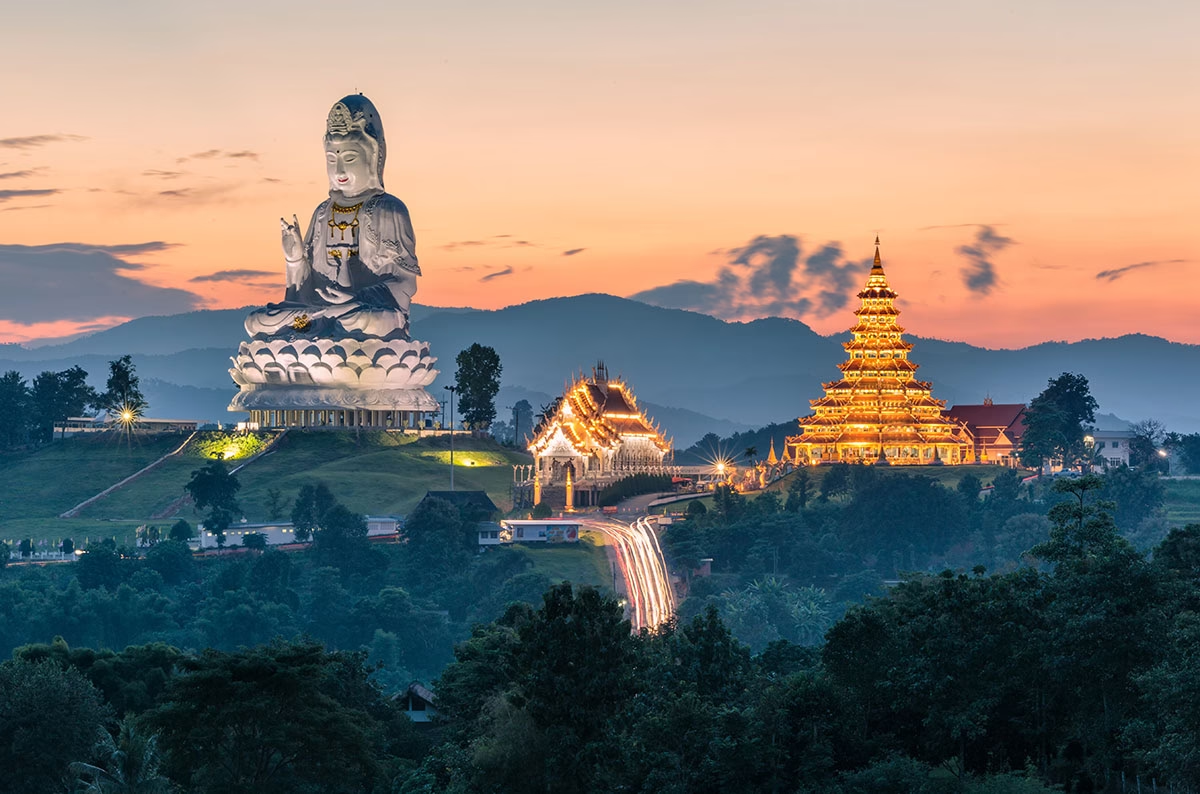
Wat Huay Pla Kang
As if there weren’t enough modern temples already — make sure you also stop at this one, with its majestic nine-storey pagoda and sweeping views over the city, dominated by an enormous statue of the bodhisattva Guan Yin.
Day Trips & Excursions Around Chiang Rai
Many of these places can be reached on an organised tour, but in general I’d recommend heading out in your own vehicle.
Alternatively, go the adventurous route and use public transport — just note that local buses, vans and pick-up trucks in Chiang Rai all depart from Bus Terminal 2, which is outside the centre, and tickets can only be bought there.
Book a guided tour
Boat Trip Along the Kok River
Let me start with a completely different mode of transport. A boat journey upstream along the Kok River is one of my highlights from the entire Chiang Rai region. I set off with friends on a whim and we stumbled into an ethnic village almost by accident — more on that shortly.
The boat sometimes operates as a public service to the town of Tha Ton, though the timetables are unpredictable and in low-water season it may not run at all. If you can put together a group of at least three people, it’s worth hiring a private boat with a guide. Expect to pay around 1,000 THB in total.
You can travel as far as Ruam Mit village, from where you can walk to the Phaesot hot springs, the nearby Akha ethnic village and the Huai Kaeo waterfall.
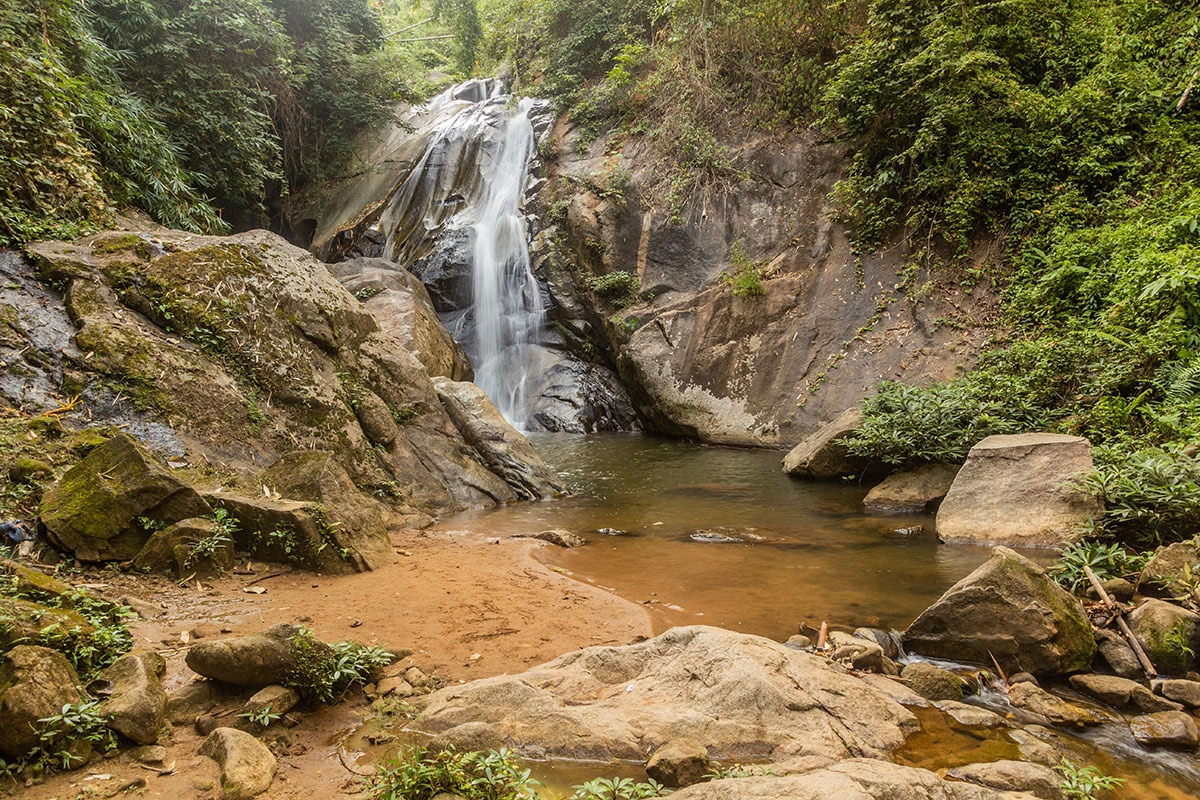
Khun Kon, Huai Kaeo and Mae Sai Waterfalls
Where better to head into the jungle than to a set of spectacular waterfalls? The tallest of the three, Khun Kon, drops over 70 metres. The other two — Huai Kaeo and Mae Sai — offer gorgeous scenery and excellent swimming.
Unless you set out very early, you probably won’t manage all three waterfalls in a single day — and it would be a shame to limit yourself to waterfalls alone. All the more reason to come back to Chiang Rai.
Doi Mae Salong
A mountain village surrounded by tea plantations, founded by Chinese refugees who fled after the communist takeover of China. Many eventually moved on to Taiwan, but some stayed and have maintained close ties with it ever since. That heritage is reflected in the exceptional quality of the local tea.
The Chinese food here is equally impressive. I’d highly recommend eating at this restaurant. Stay for dinner and overnight — you’re in for a feast of authentic Chinese food, after which you’ll barely be able to roll yourself to your guesthouse.
For everything to see, the best tea houses, where to stay and how to get there, read our full Mae Salong guide.


Choui Fong Tea Plantation
A sprawling tea estate with a visitor café and restaurant. More accessible than Doi Mae Salong, though the mountain views aren’t quite as epic.
Mae Sai and Tham Luang Cave
Thailand’s northernmost town is known for its lively border market, where you can browse local goods and pick up souvenirs.
Not far away you’ll find the infamous Tham Luang cave — where in 2018 a group of young boys from a Thai football team became trapped for 18 days during flooding, in a rescue operation that gripped the world. The cave is open to visitors again today and includes a memorial to those events. It’s one of the largest cave systems in Thailand and has long served as a shrine.
Before the pandemic, foreign visitors could cross into the town of Tachileik on the Myanmar side on a special day pass and return the same day. At the time of writing, however, the border crossing is closed to foreign nationals.
Pha Mi Village
A village sitting right on the border with Myanmar, set among dramatic rocky peaks with breathtaking views. Come less for the village itself and more for the stunning scenery along the way.
Exploring Ethnic Villages
Chiang Rai makes an ideal base for visiting villages of ethnic groups such as the Akha, Lisu and Karen. Several organisations offer both day visits and multi-day stays.
Most of them use tourism revenue to fund local schools or community development — and you’ll reach places you’d otherwise struggle to find on your own. Just as in Chiang Mai, avoid the more exploitative “human zoo” tours, especially those centred on Long Neck women.
If you want to minimise harm and ideally make a positive contribution, stay overnight in the villages. The best approach is a multi-day trek, sleeping in a different village each night. You’ll get a genuine glimpse of local life — and crucially, your money goes directly to the community rather than into the pockets of the tourist industry.
I can recommend Akha Hill House, which has its base right in Chiang Rai.
Golden Triangle Tour: History of Opium
At the meeting point of Thailand, Laos and Myanmar, visit the monument and exhibition dedicated to the Golden Triangle — the region once notorious for opium production.
Just a few hundred metres away, stop in at the Hall of Opium museum, which digs deeper into the history, cultivation, trafficking and use of opium. Well worth adding to your Golden Triangle tour itinerary.
Phu Chi Fa and Phu Chi Dao with Views Over the Mekong
Another spot I strongly recommend staying overnight. You can sleep in one of the well-equipped camps, where they’ll kit you out with a tent, mattress and blankets — or treat yourself to some excellent glamping.
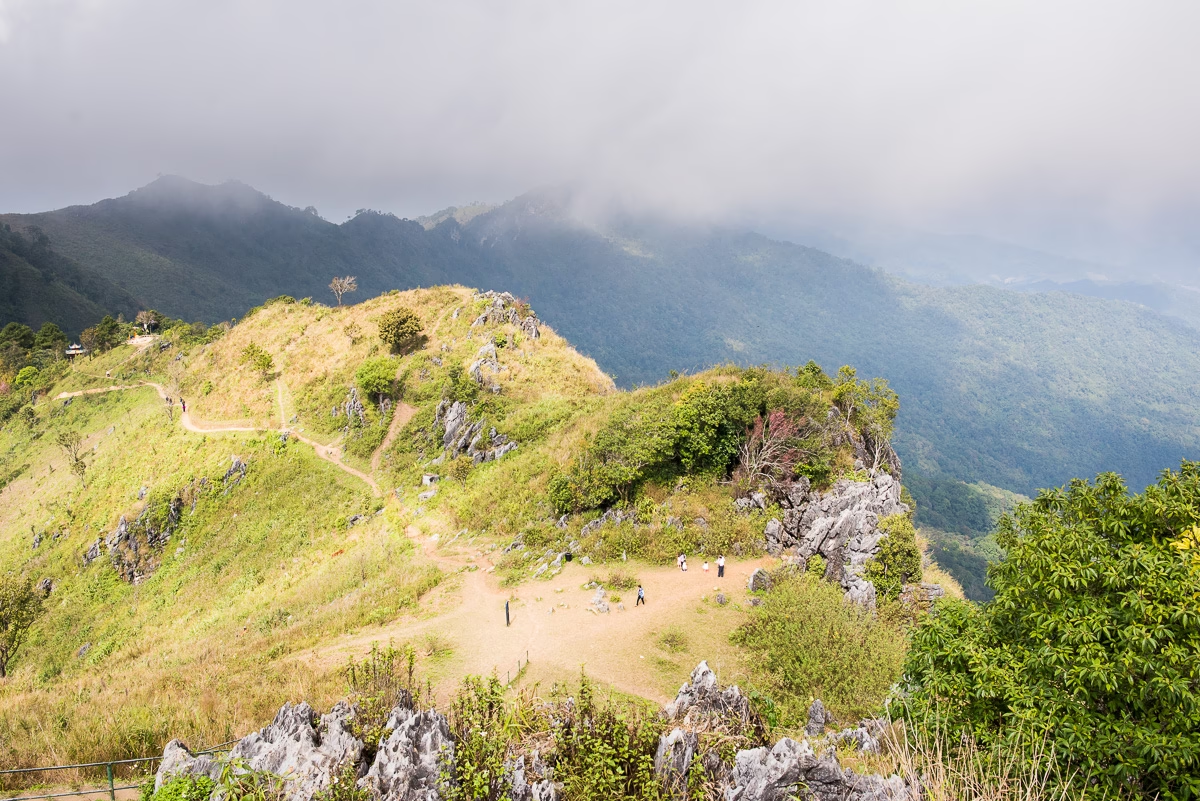
Phu Chi Fa, Phu Chi Dao, Doi Pha Tang and a handful of smaller peaks sit right on the Thai-Lao border, east of Chiang Rai. They rise to over 1,500 metres directly above the Mekong River, which flows some 1,100 metres below.
The views in both directions are worth catching at both sunrise and sunset. For several hours after sunrise, you’ll almost certainly find yourself floating above a “river of clouds”, with individual peaks poking through the mist.
This is also one of the places in Thailand where you can see cherry blossoms — the season typically runs from December through to the end of January.
Discover More of Thailand
Planning more of your Thailand trip? Browse our other in-depth guides:
Overview & Planning
Northern Thailand
- Northern Thailand Travel Guide
- Chiang Mai: Things to Do
- Pai, Thailand Guide
- Mae Hong Son Travel Guide
- Mae Salong Guide
- Scenic Motorcycle Routes in Northern Thailand
Central & Beach Destinations
- Things to Do in Bangkok
- Ayutthaya Temples & Attractions
- Things to Do in Phuket
- Ko Samui Travel Guide
- Krabi and Ao Nang Travel Guide
Frequently Asked Questions About Chiang Rai
Is the White Temple in Chiang Rai or Chiang Mai?
The White Temple (Wat Rong Khun) is in Chiang Rai, about 13 km south of the city centre. It’s often confused with Chiang Mai, but the two cities are around three hours apart by road.
How do I get from Chiang Mai to Chiang Rai?
The easiest way is by bus or minivan from Chiang Mai Bus Station 3, a journey of around three hours. The buses are modern and air-conditioned, with VIP services available several times a day. There is no train connection between the two cities.
How many days do you need in Chiang Rai?
Two to three days is ideal: one day for the temples in and around the city (White Temple, Blue Temple, Wat Huay Pla Kang), and one or two more for day trips such as the Golden Triangle, Doi Mae Salong and the waterfalls.
When is the best time to visit Chiang Rai?
November to February offers the most pleasant weather — cool, dry and clear. Try to avoid March and April, when the “burning season” brings haze to northern Thailand.
Where to Go Next in Northern Thailand?
Planning to spend more time in the region? Great idea. We have guides and tips for other popular destinations too:
- Chiang Mai
- Pai
- Mae Hong Son
- More day trips in northern Thailand
Looking for more practical travel tips for travelling Thailand independently? Everything you need is in these two articles:
- THAILAND: detailed practical guide for independent travel
- Practical guide to NORTHERN THAILAND – transport, accommodation, food and more
More Thai destinations: