This post is also available in:


I fell in love with Bangkok at first sight — and until then I had always hated big cities. Its mix of smells, flavours, sounds, colours and energy can be overwhelming and addictive all at once. Sometimes, though, you need to dig a little deeper beneath the surface.
For some people Bangkok is just a stopover on the way to the beach. But give it at least a few days — you won’t regret it.
The city is the beating heart of Thailand — a place where old meets new, tradition meets modernity, and Buddhism sits alongside corporate life.

On top of that you’ll find brilliant food — not just Thai, but Japanese, Korean, Chinese and more. That diversity is a big part of the city’s magic.
Whether you arrive for two days or a month, Bangkok will pull you in — and sooner or later you’ll want to come back.
This guide covers the best of what Bangkok has to offer, along with practical tips and essential information for travellers.
This article is part of a multi-part series. The tips below come from nearly two years of living and travelling in Thailand.
For general practical tips on Thailand as a whole, see the first part of the series. For tips on individual cities, destinations and highlights, check out the dedicated guides:
- Phuket
- Ko Samui
- Krabi and Ao Nang
- Chiang Mai and surroundings
- Chiang Rai and surroundings
- Pai
- Mae Hong Son
- Mae Salong
- Ayutthaya

This article is very comprehensive, so if you’re looking for specific information, jump straight to the relevant section.
Why Visit Bangkok
Bangkok is one of the most vibrant and authentic cities in Asia. Its power lies in contrasts: grand historic temples and palaces sit just a few minutes’ walk from eight-lane roads and malls with a level of luxury that rivals Dubai.
On the streets, old Thai traditions blend with Japanese minimalism, Korean pop culture, Chinese cuisine, the chaos of India and Western influences.
Yet unlike many other Asian megacities, you’ll barely encounter extreme poverty, piles of rubbish or dangerous neighbourhoods here.

The city never sleeps — yet it also offers plenty of places to slow down. You can hop on a boat and drift along the Chao Phraya River past temples, markets and colonial houses. Disappear for a few hours into Thonburi, where time flows like it used to. Or join the locals for a morning run in Lumphini Park while the tropical sun climbs red above the skyscrapers.
Bangkok is also a fantastic base for exploring the rest of the country and wider Southeast Asia. Destinations like Phuket, Krabi and Chiang Mai are served by multiple daily flights, and with a budget airline you can easily reach Vietnam, Malaysia, Singapore, Laos, Cambodia or southern China.

I also know very few foodie destinations this interesting where you still don’t spend a fortune. Personally, only a handful of cities in Vietnam and Malaysia — and Osaka in Japan — can match Bangkok for variety, quality and value.
Bangkok is an experience. Sometimes intense and exhausting, sometimes liberating — but never average.

How Long to Spend in Bangkok
You can cover Bangkok’s highlights in two days — and you could also spend months here and still discover new places.
If it’s your first visit, set aside at least three days. Spend the first getting your bearings, exploring the old city and taking a river trip; the second visiting the modern districts; and leave the third without a fixed plan.
Stay longer and the chaos of Bangkok will slowly start to make sense. You’ll find “your” spots — parks, side streets with the best coffee, brilliant food courts in shopping malls, local markets and quieter neighbourhoods.
Personally, I always leave a few days in Bangkok at the start and end of every trip to Thailand. In total I’ve easily spent well over two months here.

Things to Do in Bangkok: What to See and Experience
Bangkok is enormous and everyone is interested in something different, so this section is deliberately extensive. Feel free to skip ahead to the areas that interest you most.
I’ll also start with a quick hit list for first-time visitors.

Top 10 Bangkok Attractions for First-Time Visitors
- Grand Palace and Wat Phra Kaew — Thailand’s most sacred site, home of the Emerald Buddha and a showcase of the finest Thai architecture.
- Wat Pho — Temple of the Reclining Buddha and the birthplace of traditional Thai massage.
- Wat Arun — the “Temple of Dawn”, best appreciated at sunset from the opposite bank of the river.
- Chinatown (Yaowarat) — a glorious mix of chaos, neon lights and the best street food in the city. Or possibly the world.
- Local boat ride on the Chao Phraya River — the most beautiful way to see the city from a different angle, while avoiding traffic and crowds.
- IconSiam or Siam Paragon — Bangkok’s modern face: luxury malls, brilliant restaurants and even better food courts.
- Rooftop bar with a view — Vertigo & Moon Bar, Cielo Sky Bar or Le Duu Kan all offer unforgettable views over the city.
- Nana, Asok or Phrom Phong — the modern Sukhumvit neighbourhoods, with side streets packed with cafés, bistros and nightlife.
- Lumphini Park — a green oasis in the modern part of the city, with plenty of large monitor lizards wandering about.
- Chatuchak Weekend Market — one of the largest markets in the world, with thousands of stalls selling clothes, food and souvenirs.

Bangkok Temples and History
Bangkok is a city of temples. The metropolis has over four hundred, ranging from monumental shrines dating back to the Siamese kings to small wooden temples tucked into side streets.
Don’t go overboard trying to see them all — after a few, each one can start to blur into the last, even though they’re far from identical. Pick 2–3 that appeal to you, wander into a smaller one at random, and save the rest for another visit.

Grand Palace and Wat Phra Kaew (Temple of the Emerald Buddha)
The heart not just of Bangkok, but of the entire country. This magnificent complex was the residence of the Siamese kings and remains one of Thailand’s most sacred sites.
Inside stands Wat Phra Kaew, a temple housing a small but extraordinarily revered statue of the Emerald Buddha.
The complex is a dazzling mosaic of gold, gems, ceramic details and colours that literally glitter in the sun. Even with the tourist crowds, it’s well worth visiting — ideally right after opening at 8:30 am, when things are relatively calm.
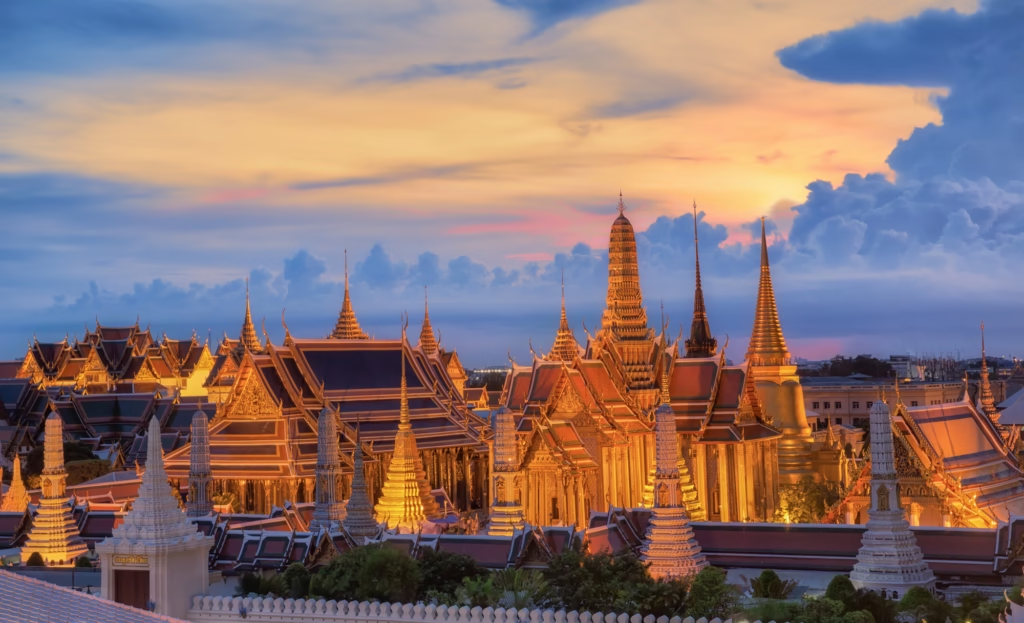
The easiest way to get here is by boat along the river to Tha Chang pier (N9). I recommend using the orange local line.
I strongly advise against using tuk-tuks in this area — they’re heavily overpriced. Also avoid hailing taxis off the street here: there’s a very good chance they’ll refuse to use the meter and charge you an inflated flat rate (even though they’re not legally allowed to).
Admission: 500 THB (approx. €13).
Wat Pho (Temple of the Reclining Buddha)
Just a few minutes’ walk from the Grand Palace is another magnificent temple. Inside you’ll find a 46-metre golden reclining Buddha, its feet decorated with intricate mother-of-pearl patterns. The atmosphere is more relaxed and less formal than at the Palace, and slightly fewer tourists make it here.

Wat Pho is also the birthplace of traditional Thai massage — there’s a school right within the complex where you can book a half-hour or hour-long massage from students.
The easiest way to get here is by boat to Tha Tien pier (N8) — the orange line again. Alternatively, walk from the nearby MRT Sanam Chai station. From Tha Tien pier, small ferries also run across to Wat Arun on the opposite bank.
Admission: 200 THB.
Wat Arun (Temple of Dawn)
One of Thailand’s most photogenic temples, best appreciated at sunset when the light catches the thousands of porcelain fragments decorating the central pagoda.
From a distance Wat Arun looks majestic, but it’s only when you climb the steep steps to the terrace that you understand its magic — the tranquillity, the river views, and the palace complex on the opposite bank.
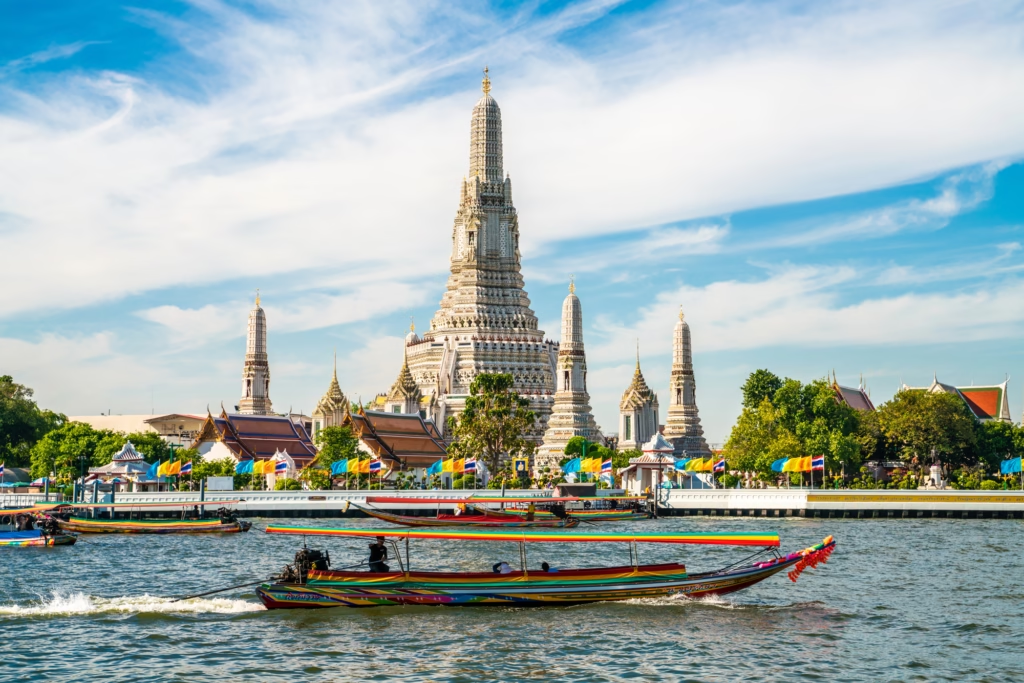
The easiest way to get here is by ferry from the Tha Tien pier (N8) opposite. Alternatively, take bus 57 from the nearby MRT Itsaraphap station.
Admission: 200 THB.
Wat Saket (Golden Mount)
Less well-known, but offering beautiful views over old Bangkok and the more distant skyscrapers. For me, it’s one of the best spots to watch the sunset. A spiral staircase with over 300 steps, lined with trees and small monk statues, leads to the top of Golden Mount.
The easiest way to get here is via my favourite canal boat route along Saen Saep canal — the first stop, Panfa Leelard Pier, is right next to Golden Mount. You’ll most likely board at Saphan Hua Chang Pier between BTS National Stadium and Ratchathewi stations, or at Asok Pier near MRT Phetchaburi.
If it’s not too hot, walk from the Grand Palace, or take a taxi from Sam Yot MRT station.
Admission: 100 THB.
Wat Traimit (Temple of the Golden Buddha)
On the edge of Chinatown, near the old Hua Lamphong railway station, stands a temple that looks unassuming at first glance — until you learn that inside is the world’s largest solid-gold statue, weighing over 5.5 tonnes.
For a long time it was believed to be an ordinary plastered statue, until it cracked during a move and revealed its true core. Today it’s a symbol of prosperity and patience — and a beautiful example of Thai faith in karma.
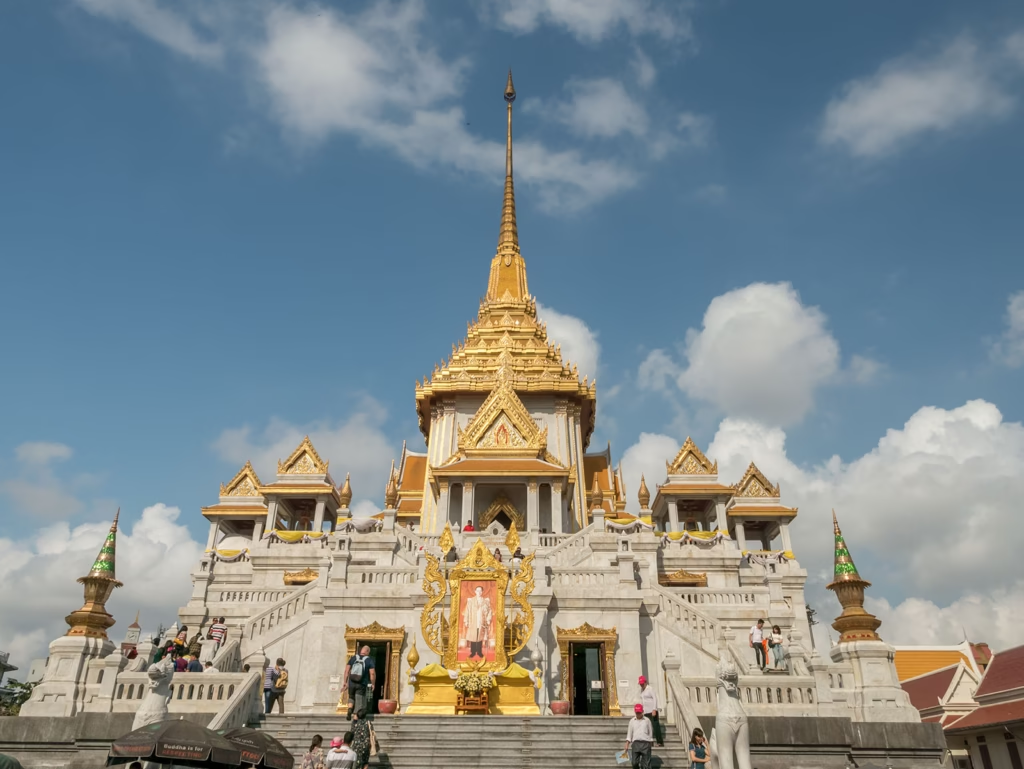
Get here by metro to Hua Lamphong station.
Admission: 40 THB + 100 THB for the museum.
Wat Benchamabophit (Marble Temple)
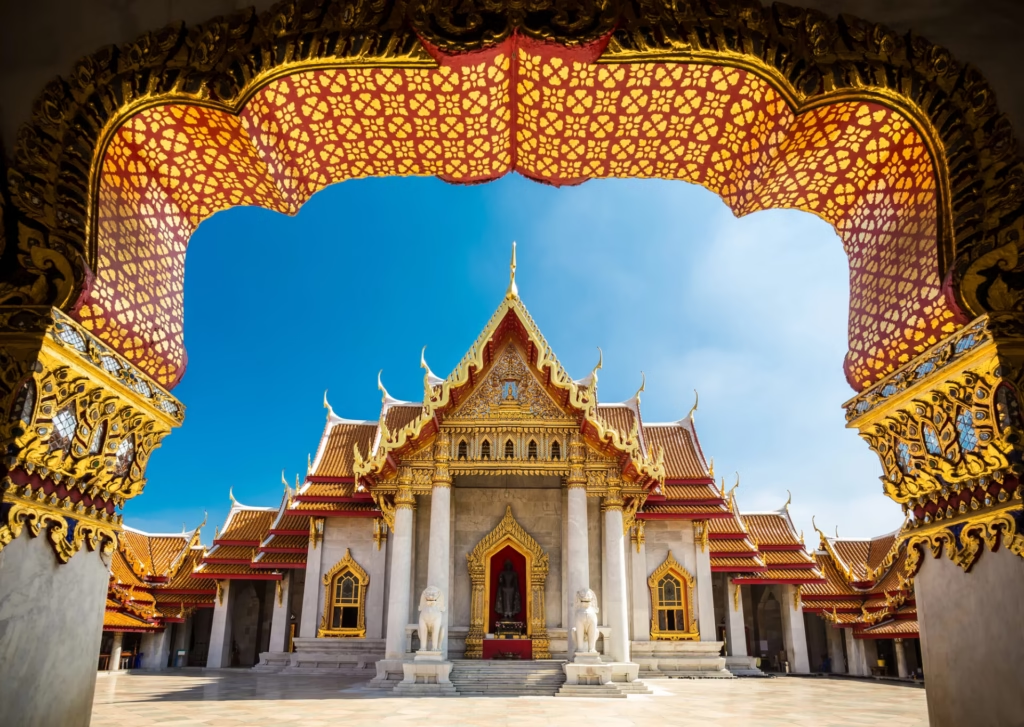
An elegant, less-visited temple built from white marble with a distinctive red roof — one of the most beautiful in Thailand.
It’s located not far from the old city, and if you want to see Thai architecture in its purest, most serene form — without the crowds — this is an ideal choice.

Every morning there’s an alms-giving ceremony, when monks in orange robes receive food from locals. Witnessing this quiet meeting of Buddhism and everyday life is a powerful experience.
Easily reached by bus or taxi from Phaya Thai station (BTS + Airport Rail Link), or from Golden Mount.
Admission: 100 THB.
Wat Mangkon Kamalawat (Dragon Temple)
The spiritual heart of Chinatown and Bangkok’s largest Chinese Buddhist temple. Built in the late 19th century, it blends Chinese Buddhism, Taoism and Confucianism — a mix that beautifully reflects the city’s diversity.
Inside, hundreds of incense sticks burn, red lanterns hang from the ceiling, and people slowly move between golden statues of gods carrying offerings. The atmosphere is unlike any Thai temple — darker, more mysterious, full of smoke and the sound of temple gongs.

Wat Mangkon Kamalawat really comes alive during Chinese New Year. If you’re lucky enough to be there at that time, you’ll see rituals, processions, plenty of fireworks and dozens of stalls selling Chinese food.
The temple is just a few metres from MRT Wat Mangkon station.
Admission is free.
Sri Maha Mariamman Temple (Wat Khaek)
In the middle of the modern Silom district stands a colourful Hindu temple that looks as though it wandered in from Tamil Nadu in India. Locals know it simply as Wat Khaek — “the Indian temple”.
The façade is covered in hundreds of small statues of gods and goddesses, including the principal goddess Mariamman, who protects against illness and brings prosperity.

The temple is a living centre of the Hindu community. Every morning worshippers arrive with offerings — flower garlands, coconuts and bananas — while priests chant prayers in Tamil.
The atmosphere is unlike Thai temples: intense, fragrant, full of sounds, colours and life.
If you’re in Bangkok in October, don’t miss the Navaratri festival — a nine-day celebration of the goddess Durga, during which Silom transforms into a sea of flowers, lamps and music. It’s one of the most authentic spiritual experiences you can have in the city.
The temple is on Silom Road between Chong Nonsi (BTS) and Sam Yan (MRT) stations.
Admission is free.
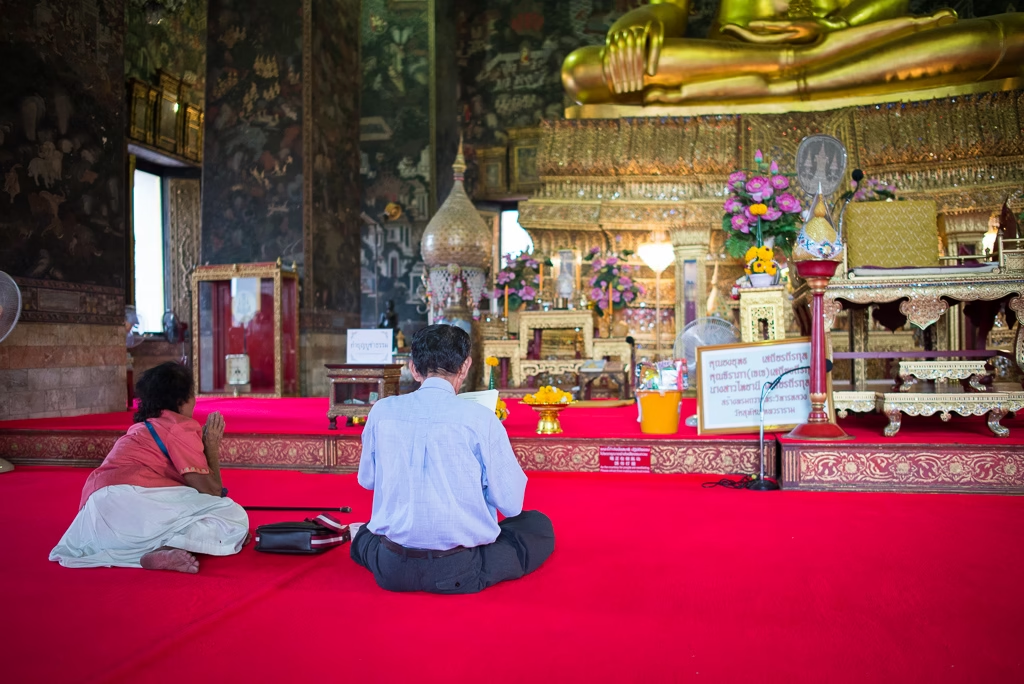
How to Behave in Thai Temples
Visiting temples in Thailand is about more than architecture and history. Remember that for locals these are still sacred spiritual spaces. Tourists are welcome, but a few basic rules apply.
1. Dress code
- Always cover your shoulders, knees and midriff.
- Shorts, mini dresses or tank tops are not appropriate (the larger temples won’t let you in wearing them).
- If you don’t have long trousers, you can usually borrow a sarong wrap right at the entrance.
2. Remove your shoes
- Always remove shoes before entering inner shrines and altar areas.
- There are always shoe racks at the entrance — use them.
- Sandals or slip-ons will make your life much easier, as you’ll be taking them off frequently.
3. Silence and respect
- Speak quietly and mute your phone.
- Never point your feet towards a Buddha statue — in Thai culture, feet are considered the lowest and most impure part of the body.
- Sit on your heels or with your legs tucked to the side.

4. Photography
- Photography is allowed at most temples, but always ask near altars or when monks are present.
- Don’t use flash.
- Selfies with Buddha statues are considered disrespectful.
5. Monks
- If you’d like to chat, feel free — many monks speak English and are happy to answer questions.
- Women should not touch monks or hand anything directly to them.
6. Donations and offerings
- Most temples have a donation box (20–50 THB is a meaningful amount). Use your right hand to drop the money in.
- If you buy a lotus flower, incense sticks or candles, watch what others do — the ritual is simple and intuitive.
7. Respect the space
- A temple is not just a tourist attraction; it’s a living place of faith. If you need to rest or eat, wait until you’re outside.
Bangkok Neighbourhoods Worth Exploring
Bangkok is a mosaic of worlds, each with its own pace and rhythm. Hop a few stops on the metro, skytrain or boat and you find yourself somewhere completely different — among temples, colonial houses, markets, luxury residences or skyscrapers.
Each neighbourhood has its own story, atmosphere and residents. The one thing they all share is great food on every corner and friendly people.
Rattanakosin – Heart of Old Bangkok
The historic core of the city and home to its most famous landmarks — the Grand Palace, Wat Pho and Wat Saket.
If you love history and want to see what the old “Venice of the East” once looked like, walk along the river towards the smaller shrines and wooden canal houses. Try it in the morning when the city is just waking up — Bangkok feels almost sacred at that hour.

Chinatown Bangkok (Yaowarat) – Chaos, Food and More Food
Whenever Bangkok starts feeling too modern, I head to Chinatown. It’s a world unto itself — a mix of neon lights, Chinese signs and aromas that pull you in before you’ve had a chance to plan anything.
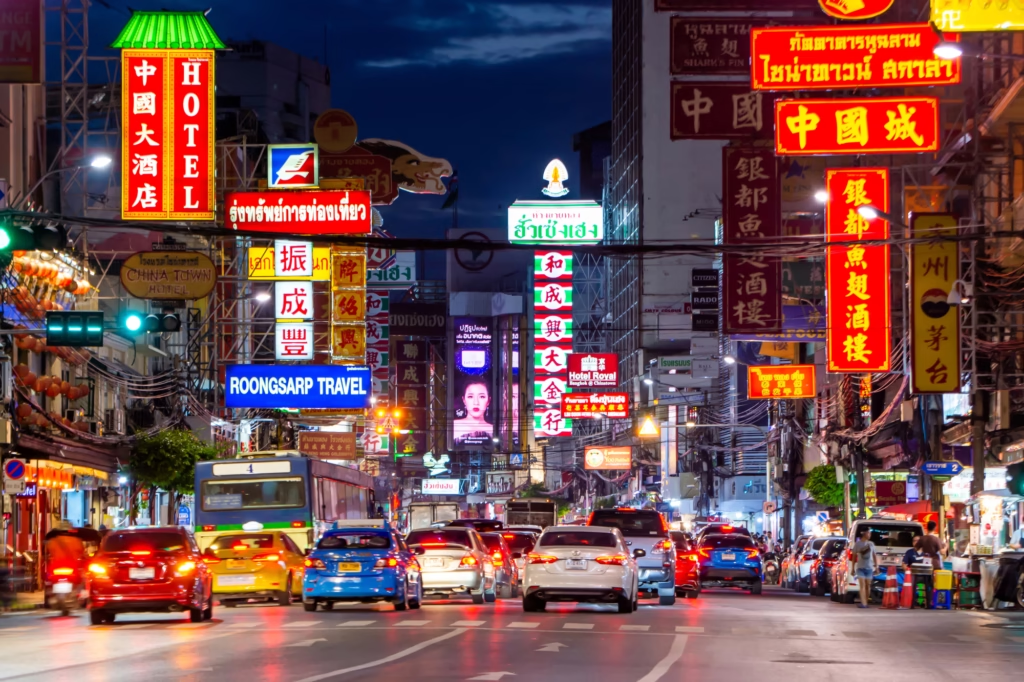
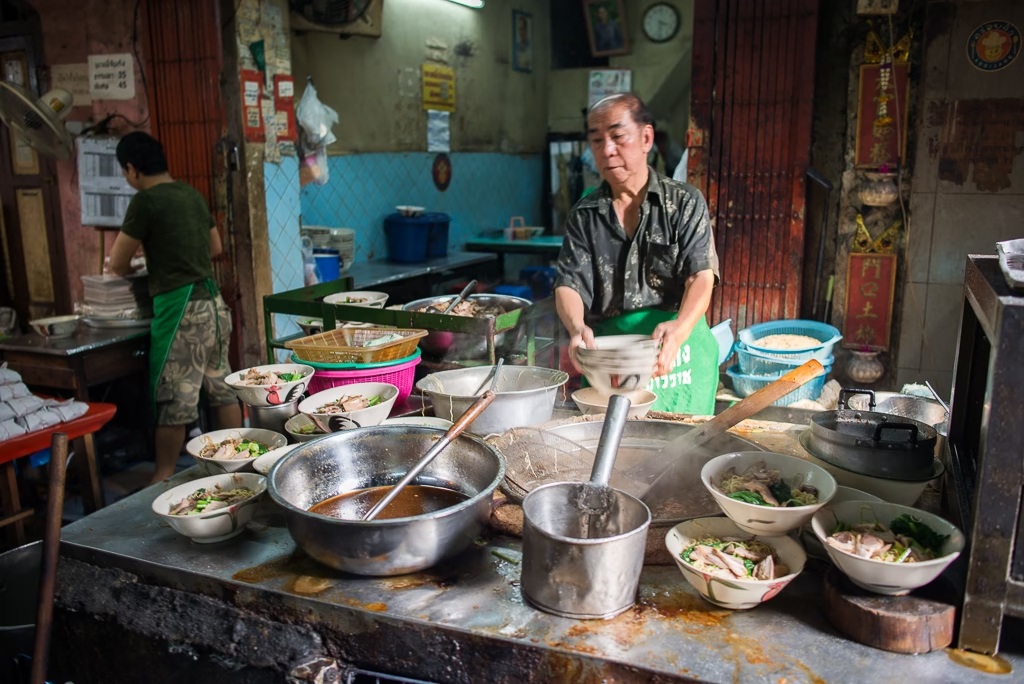
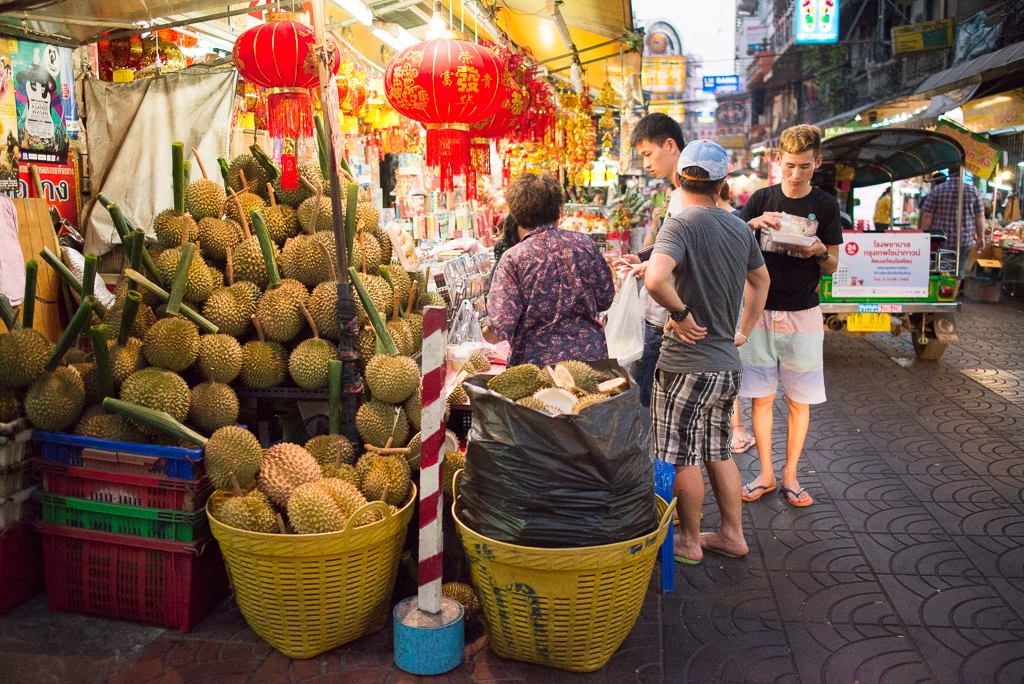
In the evening, the streets turn into one giant open-air bistro. Stalls selling noodles, dim sum, seafood and desserts fill every inch of pavement. This is where you’ll find the best street food in the city.
Interestingly, most people here don’t speak Chinese — ethnic Chinese make up over 11% of Thailand’s population but have been arriving for centuries and are very well integrated into Thai culture.
Bang Rak and Silom – Old Bangkok in the Shadow of Skyscrapers
Here old Bangkok meets the modern city. Tiny shrines are wedged between office towers, the smell of grilled meat drifts through the streets, and the Sri Maha Mariamman Temple stands side by side with luxury bars and massage salons.
Bang Rak literally means “district of love” — and there’s something to that. After sunset, Silom transforms into a mosaic of restaurants, rooftops and small night markets. The side streets hide Thai, Japanese and Indian restaurants that stay open long past midnight.

Sukhumvit – Modern Bangkok in Full Swing
If you want to see how Bangkok’s upper middle class and expats live, this is the place. Sukhumvit isn’t one neighbourhood but rather an endless strip of side streets and lanes (soi) that branch off from the main road.
Each section has its own atmosphere — from the buzzing Nana to the cosmopolitan Asok to the elegant Phrom Phong.
In one street you’ll find excellent Japanese izakayas and Korean barbecue; in the next, specialty coffee cafés, modern Thai bistros or rooftop bars with views.
For me, this is the best area to stay in Bangkok — unless your sole focus is the historic sights, which are a bit harder to reach from here.
Ari – Calm, Creative and a Little Hipster
Ari used to be a residential neighbourhood for civil servants. Today it’s one of the most pleasant places to base yourself for a few days — quiet streets, plenty of cafés, co-working spaces and small bistros. Bangkok feels different here: more manageable, more approachable.
Runners come in the morning, students in the afternoon, and expats with laptops and drinks in the evening. An ideal base for digital nomads or anyone who wants a break from the bustle of the centre.
Thonburi – Old Bangkok on the Other Bank
Cross the Chao Phraya River and you enter a completely different world. Thonburi still retains an authentic character — calm canals (khlongs), wooden stilt houses, small markets and temples where you’ll encounter far more locals than tourists.

The ideal way to explore is by boat — local longtail boats take you into narrow canals, past schools, old houses and small shrines. It’s a completely different Bangkok: quieter, slower and with a soul that is slowly fading from the centre.

Why I Don’t Love Khao San Road — and Why You Might Want to Skip It
Khao San Road was once a symbol of traveller freedom. The backpacker street, where people fresh off the mountain trail swapped tips, planned their next adventures and sipped cheap beer on plastic chairs. It had soul, a whiff of adventure, a sense that anything was possible.
Today, not much of that remains. Khao San has turned into a tourist funfair, a breeding ground for scams and overpriced attractions.

Of course it can still have its charm — if it’s your first time, grab a drink, watch the people, soak up the atmosphere. But don’t be fooled: this is not what Bangkok looks like.
The real Bangkok is just a few stops away.
Modern Architecture
Bangkok is more than a city of temples and markets. In recent years it has experienced an architectural boom and can now boast some of the boldest buildings in Asia.
Glass, concrete and design don’t feel cold here — they’re always woven into the chaos of the streets, the food and daily life.
King Power Mahanakhon – an Icon of New Bangkok
The skyscraper you’ll recognise immediately — it looks as if someone has taken bites of digital pixels out of it.
At 314 metres it’s one of the tallest buildings in Thailand, and from the Mahanakhon SkyWalk observation deck you can see the entire city and the river winding between rooftops in the distance.

If you want to experience Bangkok from above, this is the best place to do it.
Admission is over 1,000 THB and I strongly recommend buying your ticket online in advance.
Central Embassy and One City Centre
Stopping for a cold drip coffee on the terrace of Siwilai Cafe in Central Embassy is almost always my first stop after a flight to Thailand. And I often follow it up with a great meal at one of the restaurants here.
The luxury mall itself is worth seeing, and inside you can also take a breather from the crowds and the city buzz.

Right across the street I recommend stopping at the One City Centre skyscraper, which shows where modern Asian city construction is heading — it’s no longer just about squeezing as many offices and apartments as possible onto the smallest footprint, but about the quality of the surrounding public space.
Pop into Ksana Matcha or the local branch of % Arabica.
IconSiam – a Luxury World on the Riverbank
One of Bangkok’s most modern shopping complexes. A gigantic development combining cutting-edge architecture, a gallery, design, luxury brands and superb dining. It’s worth walking through just for the architecture.

Underground it hides a huge indoor market with plenty of cheap food; in the evening, the open riverside plaza hosts a spectacular light show and fountain display.
Get here by boat (blue line and City Line) or the fully automated elevated railway from BTS Krung Thon Buri station.

Benjakitti Forest Park – a Green Marvel in the Heart of the City
In just a few years, a former exhibition ground was transformed into one of the most beautiful urban parks in Asia. Ponds, wooden promenades, cycling paths and views of the skyscrapers — Benjakitti shows that Bangkok can change.
Runners come in the morning, families in the afternoon, and people with coffee or picnics in the evening. Combined with nearby Lumphini Park it forms the green heart of the modern city.
For interesting architecture, also stop at Alliance Française Bangkok, located between the two parks.

Bangkok Art and Culture Centre (BACC)
A cultural centre in the heart of the modern city, connecting architecture, art and urban life. Inside you’ll find exhibitions by contemporary Thai and international artists, design shops, a bookshop and cafés.
If you’re into modern art, definitely stop in — even if just for an hour between visits to Siam Paragon or MBK.

One Bangkok – a City Within a City (Under Construction)
A mega-project that will transform part of the city centre into a sustainable district full of greenery, offices and public spaces over the coming years. Even though it’s not yet complete, the area around Lumphini Park and the first completed buildings already show where Bangkok is headed — towards an integration of modern architecture and nature.

More Places Worth Visiting
Lumphini Park – the Green Lungs of the City
Hundreds of people run here in the morning, tai chi is practised in the evenings and huge monitor lizards move lazily between the ponds. Lumphini is an inseparable part of Bangkok life for me.
Most easily reached from MRT Si Lom or Lumphini stations, or BTS Sala Daeng. For an iced coffee or matcha to go, stop at Blue Coffee or Kobbee.

Sea Life Bangkok Ocean World – Siam Paragon
A massive aquarium that’s absolutely worth a visit if you want a break from the heat in the city centre — and not just with kids. It’s one of the largest in Asia, with a shark and ray tunnel, sea turtles and interactive exhibits. You can also buy tickets online.

ChangChui Creative Park
A hipster art space, market and flea market rolled into one. Expect street art, loads of unique souvenirs from young artists, designers and craft makers, and an old commercial aircraft with a slide right in the middle of it all.
Bang Kachao
An island in the Chao Phraya River, a green oasis in the south of Bangkok. You’ll feel as though you’re in the countryside. It includes a local floating market, Bang Nam Phueng, open on Saturdays and Sundays — and of course plenty of great places to eat. I recommend hiring a bike to explore the island (there’s a rental right at the ferry landing).

Bangkok Experiences You Shouldn’t Miss
Bangkok isn’t a city you simply “visit”. It’s a city you have to experience — with all your senses. And I don’t just mean the night street food and parties, though those are very much part of it too.
Night Markets – the City That Never Sleeps
Bangkok comes alive after dark. The smells of food, ice-cold beer and live music at the night markets — it’s an experience you can’t replicate anywhere else.
You’ll find night markets all over the city. Ideally go with a local and don’t be afraid to try everything.

- Jodd Fairs — a modern market near Rama 9 station. Mostly locals come here; besides food there are stalls selling clothes, handmade jewellery and accessories.
- Asiatique The Riverfront — a riverside market with a promenade, Ferris wheel and other attractions. A bit more touristy, but still popular with locals and worth the atmosphere.
- Indy Market Dao Khanong — one of the local night markets in Thon Buri. A bit of an effort to reach, but worth it.
- Chatuchak Night Market — on Friday evenings an open-air market with loads of food and plenty of locals opens up in the famous Chatuchak Weekend Market area.
- SW1 Market — an easily accessible food market near BTS Asok.

Tip: There’s no such thing as “too late” in Bangkok. Many markets run until midnight, some until 2 am. Just note that some markets only operate on certain days.

Floating Markets – Bangkok on the Water
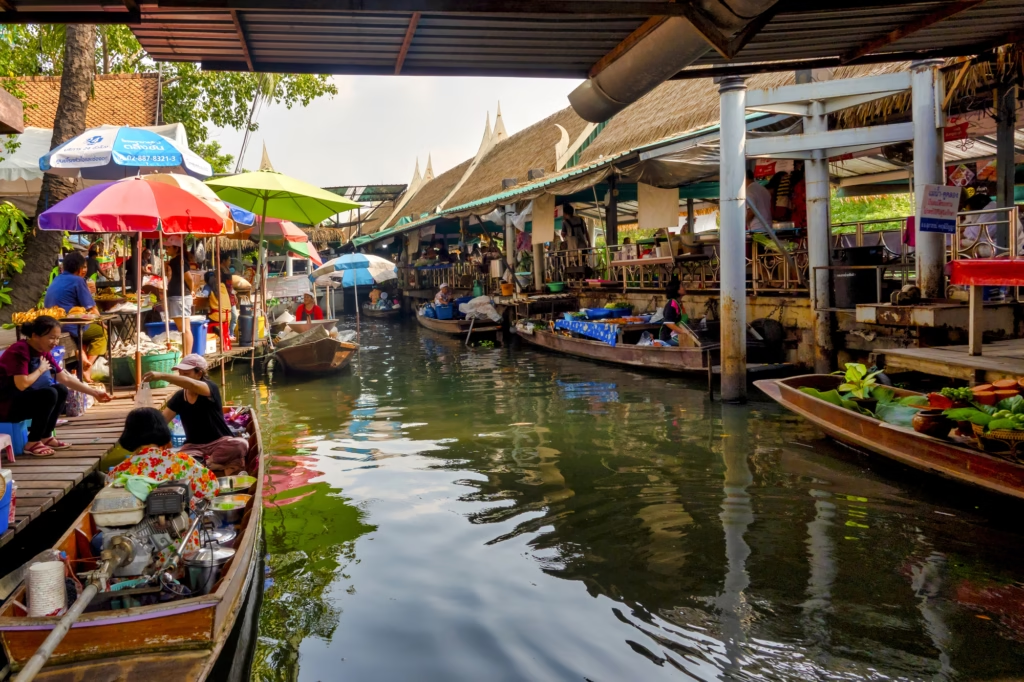
Only a handful of traditional floating markets survive, and most now function mainly as tourist attractions — though often still very popular with locals. A visit is still well worth it.
- Taling Chan Floating Market — the closest to the centre, popular with locals. Sit at a table on a boat, order seafood and it’ll be grilled for you in minutes. Great atmosphere on Saturday and Sunday mornings.
- Amphawa Floating Market — around 90 km from Bangkok, beautiful at sunset. Traditional wooden houses, lanterns and excellent food — ideal to combine with an evening firefly-watching trip on the river.
- Damnoen Saduak — the most famous and by far the most touristy market; I’d suggest skipping this one.
Thai Cooking Classes
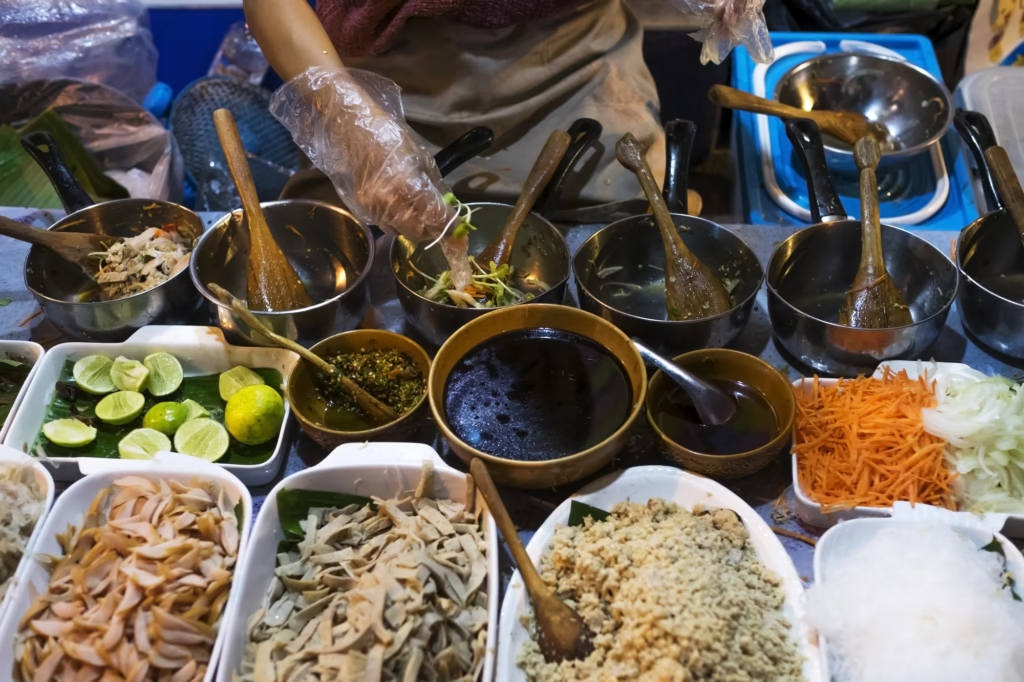
If you fall in love with Thai food the way I did, it’s handy to be able to cook at least some of it at home. Thai cooking classes are fun, well-organised and usually begin with a market visit to choose ingredients together.
Personally I’d recommend classes in Chiang Mai over Bangkok, but you’ll find great options here too — check GetYourGuide.
Prices range from around 1,000 to 2,000 THB for a half-day class including a market visit and lunch.
Thai Massage
Treat yourself to a deeply relaxing massage — or let a Thai therapist crack every joint in your body. Your choice; just tell them what you want.
Definitely avoid massage parlours right next to tourist attractions or in the Khao San area. There are hundreds of salons across the city, and Google Maps reviews (or GetYourGuide) are generally reliable.

Prices start at around 300 THB for 45 minutes, though in malls and upscale salons expect to pay well over 1,000 THB.
Muay Thai – Thai Boxing Live
Muay Thai is an integral part of Thai culture. Matches have an incredible energy, and if you have even a passing interest in combat sports I strongly recommend experiencing one.
If watching isn’t enough, several gyms offer short beginner courses. Many people travel to Thailand specifically for multi-month training programmes, which can also qualify you for a longer-term student visa.

Street Art, Contemporary Art and Galleries
Bangkok has a fantastic cultural scene — you just need to know where to look. Contemporary art here is particularly worth your attention.
You can discover great street art across the city — start at Chaloemla Park. Continue along the canal promenade at Khlong Ong Ang or on Soi Charoen Krung 30 and 32.
Right here you’ll also find several small independent galleries and art spaces, including Warehouse 30.

Galleries worth visiting:
- MOCA (Museum of Contemporary Art) — modern Thai and Asian art in a beautiful building.
- Bangkok CityCity Gallery — a small gallery near Lumphini Park focused on contemporary local art.
- Bangkok Art and Culture Centre (BACC) — the cultural centre mentioned earlier, right in the heart of modern Bangkok.
- SAC Gallery — another exhibition space, primarily for contemporary art.
- River City Bangkok — a shopping complex with several exhibition spaces.
- Jim Thompson Art Centre — a unique historic house with an art centre, café and exhibition space.

Festivals and Events
Bangkok’s calendar is packed with festivals — something is happening almost every month. Many are colourful, full of food and contrasts — just like the city itself.
Songkran – Thai New Year (April)
The biggest celebration in the country. Three days during which the entire city turns into one enormous water fight. Forget about staying dry — water flies from buckets and water pistols alike.
The biggest events take place on Silom Road, Khao San Road and at Siam Square.

Loi Krathong – Festival of Lights (November)
An evening when people across the country float small lotus-shaped boats carrying incense sticks and candles on the water.
In Bangkok, the most beautiful atmosphere can be found along the Chao Phraya River, in Benjakitti Park or in the grounds of Wat Saket.

Chinese New Year (January/February)
The most vibrant celebrations are in Chinatown. Streets fill with lanterns, dragon processions and crowds dressed in red. Expect exceptional food, fireworks and seemingly boundless energy.
Vegetarian Festival (September–October)
Nine days during which people — mainly the Chinese community — abstain from meat and the city becomes one vast vegetarian market. The biggest celebrations are again in Chinatown, where white-clad crowds gather at stalls selling tofu, vegetables and noodles.
Bangkok Art Biennale (every two years, autumn)
A contemporary art festival that turns the entire city into a gallery. Installations appear not just in museums, but in temples, shopping centres and along the riverfront.

Food, Street Food and Bangkok’s Food Scene
Bangkok is one of the best cities in the world for food lovers. Possibly the best.
Not just for Thai cuisine, but because so many other culinary cultures converge here — Chinese, Japanese, Korean, Indian and Western. Each has left its mark and created a culinary mosaic you won’t find anywhere else.

Why Food in Bangkok Is So Exceptional
For centuries, Bangkok was a port city where traders from across Asia arrived, bringing spices, recipes and flavours that blended with Thai culinary tradition.
As a result, noodle stalls, high-end sushi bars, Korean barbecue restaurants, halal eateries and French bakeries all stand side by side today — and everything tastes great.

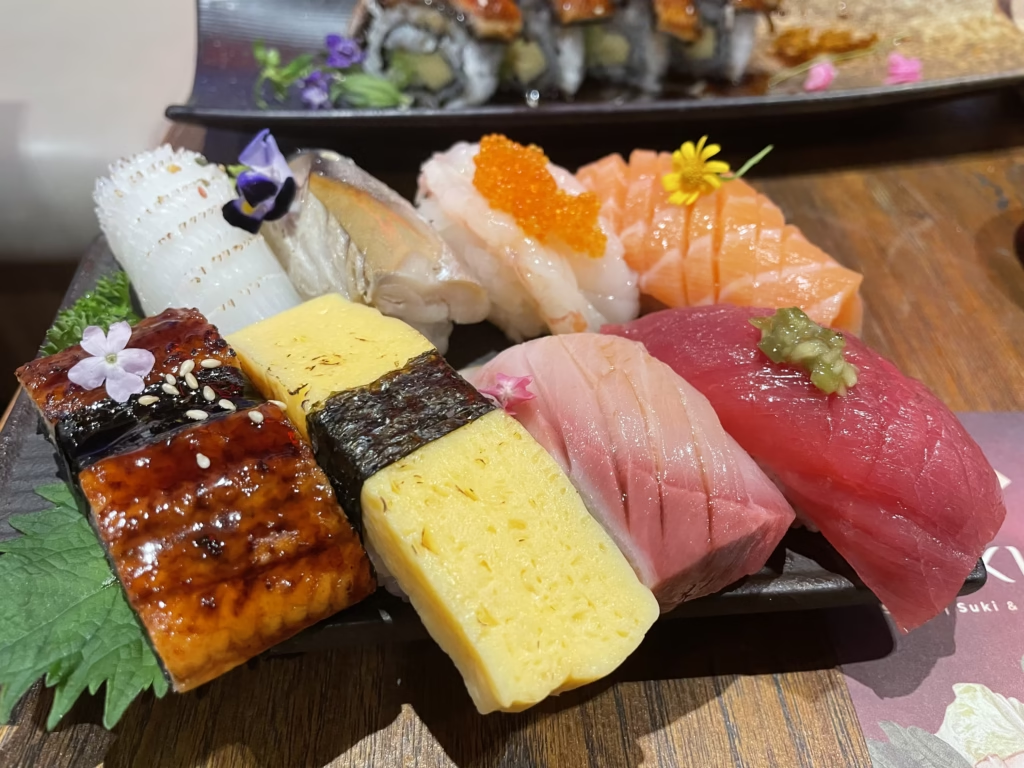
Another huge advantage is the affordable pricing. For Japanese and Korean food in particular, I’d actually send you to Bangkok rather than to Japan or Korea. Rents, ingredients and labour costs here are a fraction of what they are in Tokyo or Seoul, yet the large Japanese and Korean expat communities ensure the standards remain high.
You can also choose from restaurants in every price category — from street stalls to the pinnacle of global fine dining, and countless options in between.
What to Eat in Bangkok
- Pad Thai — the classic street noodle dish.
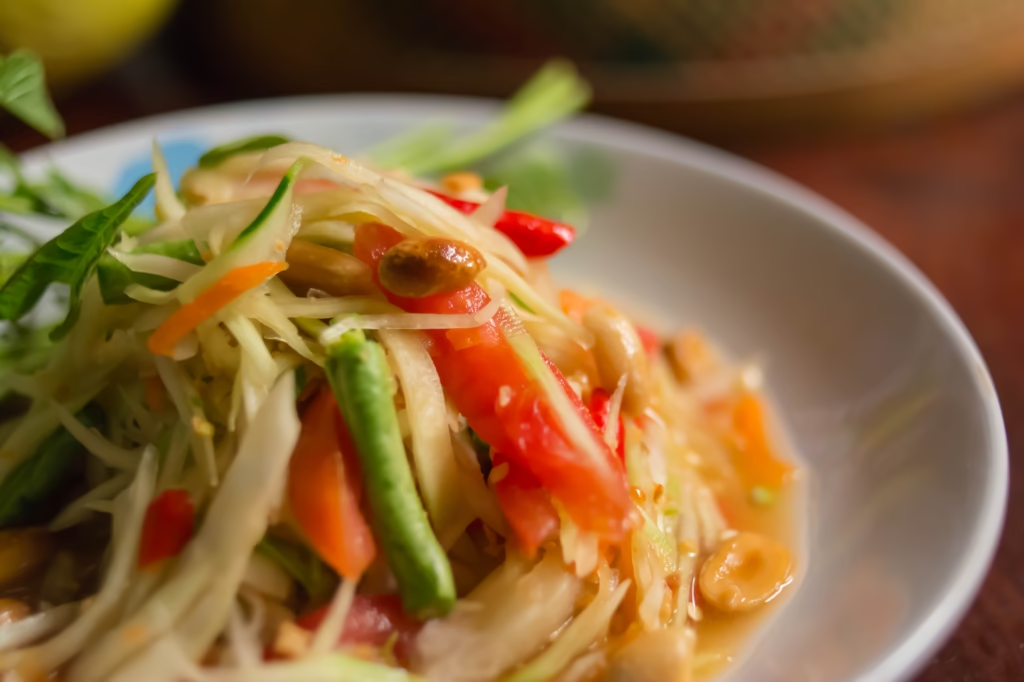
- Som Tam — spicy green papaya salad.
- Tom Yum — sour and spicy prawn soup.
- Satay, Moo Ping, Kai Yang — grilled meat on skewers, perfect street food.
- Khao Na Pet — roast duck with rice.
- Khao Kha Moo — braised pork trotter.
- Pad Ga Prao (Thai Basil Stir-Fry) — classic stir-fried minced meat with Thai basil and chilli.
- Pad See Ew — stir-fried flat noodles with meat and Chinese broccoli.
- Massaman Curry — a mild curry with meat, potatoes and peanuts.
- Pak Bung Fai Daeng (Fried Morning Glory) — stir-fried water spinach with chilli, peanuts and oyster sauce. Works as a side or as a main with rice.
- Mango Sticky Rice — sweet sticky rice with coconut milk and fresh mango.

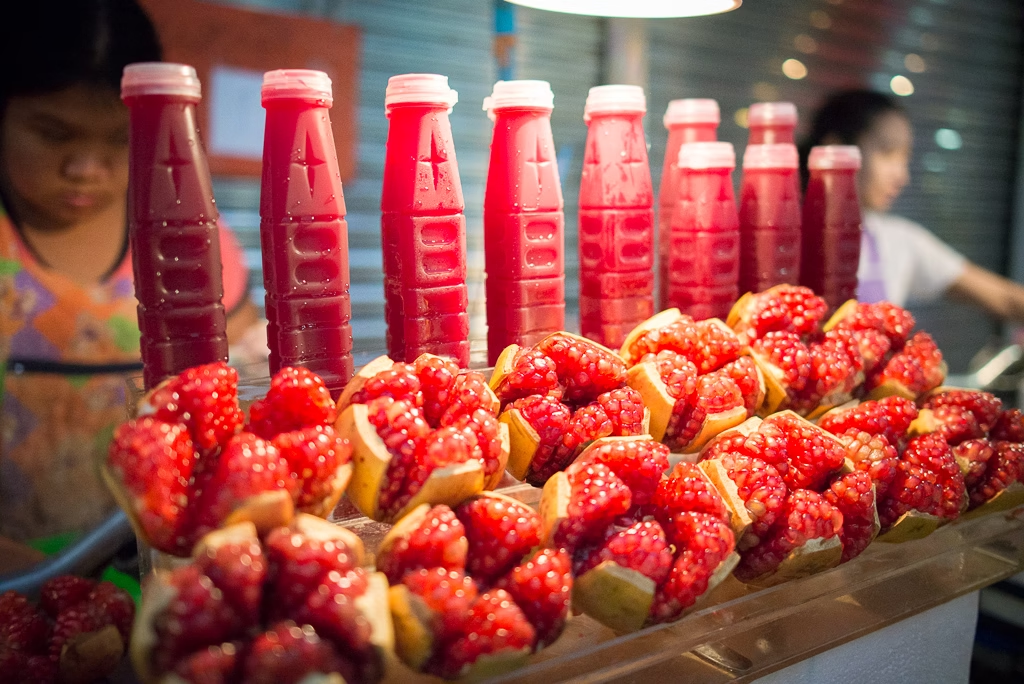
Also try as many varieties of fresh fruit, freshly squeezed juices and young coconuts as you can — all available ready to eat straight from street vendors.
Street Food
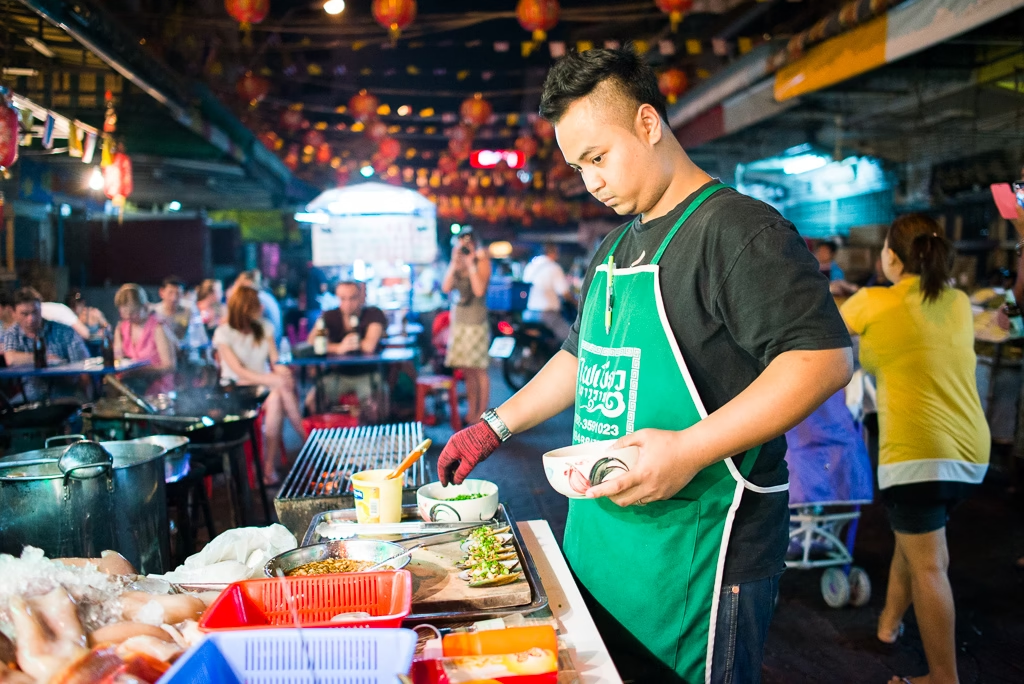
Bangkok is a street food paradise. You’ll never be far from a stall that smells of garlic, chilli and fish or oyster sauce. Food is everywhere.
Don’t be afraid of street food — quite the opposite. You get the freshest food at street stalls: most vendors only open for part of the day and head home once they’ve sold out.
Bear in mind that roughly between 9 am and 11:30 am, and again from around 2 pm to 5 pm, you’ll find fewer street food options.
Some stalls, like the legendary Jay Fai, even have their own Michelin star, and others appear in the Michelin Guide. That said, I’d rather follow my nose and look for the longest queues of locals.

Best Areas for Street Food in Bangkok
- Victory Monument — an area packed with authentic stalls selling noodles, grilled meat and soups.
- Chinatown (Yaowarat) — the best street food in the city, open until late.
- Petchaburi Soi 5 — a small lane near Phaya Thai station; often my go-to when I’m in Bangkok for just a night or two as a transit stop.
- Soi Ari — the network of lanes west of BTS Ari station. One of the best areas in the entire city for dinner.
- Ratchawat Market — a traditional market in the non-touristy Dusit district, yet close to the centre.
- Bang Khun Non — a very local street on the other side of the river, northwest of MRT Bang Khun Non station.
- Talat Phlu — a popular (and very photogenic) market running alongside a railway line.

Food Courts
Almost every shopping mall in Thailand has a food court on the ground or basement level — an indoor, air-conditioned version of Asian street food. The experience may be slightly less raw, but the quality of the food doesn’t suffer, and prices are still very reasonable (though naturally more upscale in luxury malls).
If you’re at all nervous about street food hygiene, food courts are a clean and easy place to start exploring.
You can’t go wrong at any of these malls:

International Cuisine
I highly recommend using your time in Bangkok to try at least Japanese and Korean cuisine at outstanding quality and still very reasonable prices.
You’ll also have plenty of choice among Indian and Chinese restaurants — but don’t limit yourself to Asia.
In Bangkok I’ve eaten superb Texas-style barbecue, great burgers, crispy Neapolitan pizza, beautiful homemade Italian pasta, fresh hummus with grilled aubergine, creative tacos and perfectly executed Peruvian chicken.
The one thing that always surprised me was the lack of good Vietnamese restaurants — but thankfully even that has changed now.
I find specific restaurants by searching Google Maps — I simply type the type of restaurant I’m in the mood for (e.g. “peruvian restaurant”), browse results nearby and quickly narrow it down by star ratings. Anything above 4.7 is generally worth a visit. A quick scan of written reviews, photos and the menu with prices, and I’m off.
Best Areas for Korean Food in Bangkok
Korean culture is hugely popular across Southeast Asia, and the cuisine is a central part of that wave — especially Korean barbecue and desserts.
Bangkok has hundreds of Korean restaurants to choose from. I’d start at the Korean Town mall near BTS Asok and MRT Sukhumvit, and explore the surrounding streets.
Here you can choose from several excellent Korean-run BBQ restaurants — though you’ll almost certainly need to book ahead. Korean barbecue is also best enjoyed as a group, with at least two people.

Prices range from roughly 1,000 to 3,000 THB for a set that includes several types of meat and virtually unlimited side dishes — enough to feed 3–4 people, with the option to order more. The meat is grilled at your table and melts in your mouth.
I also strongly recommend trying a Korean BBQ buffet, such as DOYAJI Korean BBQ Buffet Asok. The meat quality won’t match the premium sets, but it’s a completely different (and much cheaper) experience.
Don’t miss Korean fried chicken either — a seriously upgraded take on the classic. My favourite is in Chiang Mai, but Bangkok has plenty of great options. Try the Bonchon fast-food chain.

More tips beyond Korean Town:
Best Areas for Japanese Food in Bangkok
Across Bangkok you’ll find excellent sushi, ramen and Japanese desserts. But you can go deeper into Japanese cuisine at every price level — traditional lunch bento boxes, gyoza dumplings, grilled fish or meat, and ideally Japanese barbecue (yakiniku) or hotpot (shabu-shabu and sukiyaki).

The highest concentration of authentic Japanese restaurants clusters around BTS Ekkamai and Thong Lor stations. Look for more near BTS Ari.
For most Japanese restaurants, booking ahead for dinner is advisable.
Recommended spots:
- Niku Sho (BBQ)
- Sushi Totoya
- Sushi Sek
- 44 Izakaya & Ramen BKK
- Nanase Ramen Thonglor
- Tigerburnsfire Teppanyaki (affordable bistro with donburi rice bowls and Japanese curry)
- Renga Sukiyaki (hotpot)

My Favourite Restaurants
Here’s a selection of places I keep going back to — from street food to mid-range. The breakfast/brunch cafés and the Japanese and Korean spots are covered in the sections above.
I can’t guarantee that street food stalls are still in the same spot — they may have moved or, unfortunately, closed.
For Thai food specifically, I usually just go wherever hunger strikes — I follow my nose or the longest queue at a stall.
- Song Fa Bak Kut Teh — a Singaporean restaurant inside Central Embassy
- Mit Ko Youan — outstanding Tom Yum soup in the old city
- Chicken stall in Suk Chai Alley near BTS Asok — a street food stall with brilliant chicken at lunchtime and very friendly owners
- Doy Kuay Teow Reua — traditional noodle soups near Victory Monument
- Yasothon Duck Larb — an evening stall with grilled meat, minced meat salads and som tam (papaya salad)
For more tips, check out the best restaurants in Bangkok article by food blogger Mark Wiens. His YouTube channel is also worth browsing — it’ll make you want to book a flight to Thailand purely for the food.

Fine Dining and Upscale Restaurants
Bangkok also has a world-class fine dining scene. I won’t give personal recommendations here — in Bangkok I’ve always been more drawn to street food or mid-range Japanese and Korean spots. That said, the Michelin Guide combined with Google Maps ratings is a solid starting point.

Coffee and Desserts
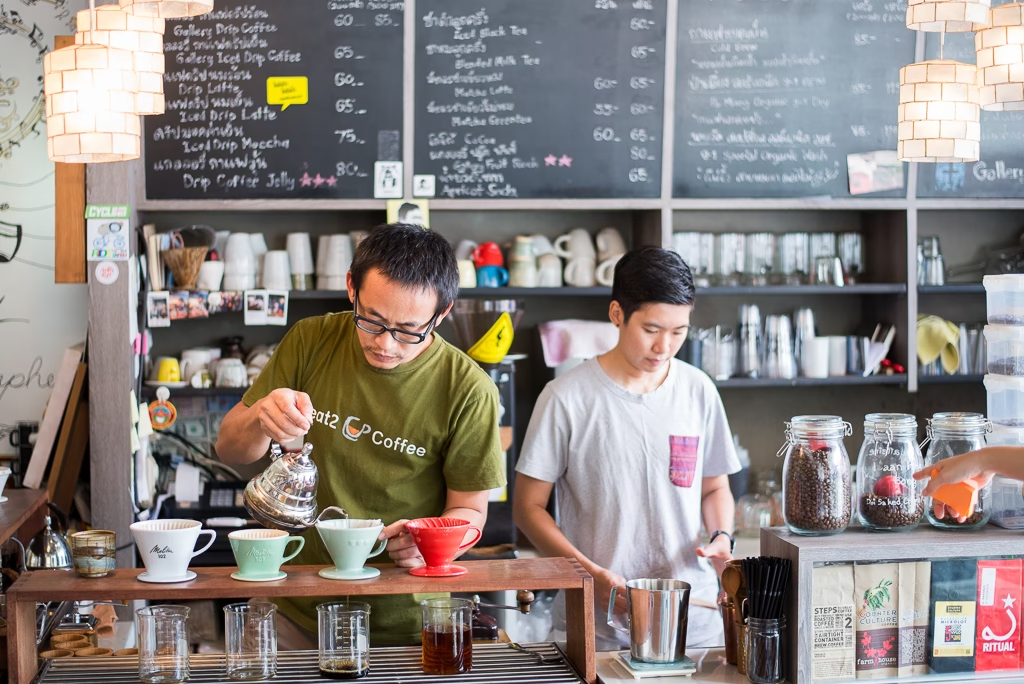
Bangkok’s coffee scene never ceases to amaze me. When I first visited in 2014, there were just a handful of specialty coffee shops and the overall coffee culture was pretty lacklustre.
Today there are hundreds of excellent cafés in Bangkok alone, dozens of specialty roasters, and quality has improved dramatically across the board. Young Thais take their coffee seriously and spend a lot of time in cafés.
In recent years there’s also been a massive matcha trend. You can find premium quality here that would impress even in Japan — generally well ahead of what you’d find in most Western cities.
Desserts have also come a long way — you’ll now find perfect croissants, Japanese mochi, Korean pastries, Thai cakes and pancakes in many places.
It would be pointless to list every good café. Here are just a few of my favourites — for everything else, simply search “specialty coffee” in a given area on Google Maps and pick by photos and ratings.
My Café Picks
- % Arabica — the iconic Japanese coffee chain with outstanding coffee and striking interiors.
- Phil Coffee Co — a retreat from the city bustle.
- Ceresia Coffee Roasters — one of the city’s first specialty coffee roasters.
- Roots at the COMMONS — great coffee in a fantastic space.
- SCR – Song Wat Coffee Roasters — one of the few genuinely excellent cafés in Chinatown.
- Siwilai Cafe — a great spot for brunch, coffee or a drink.
- Single Lane Specialty Coffee — Australian-style café with a great brunch and flat white.
- Kaizen Coffee Ekkamai — a beautiful space with coffee and brunch.

Rooftop Bars and Bangkok Nightlife
Bangkok has one of the best rooftop bar scenes in the world. The combination of tropical heat, hundreds of skyscrapers and a night that never ends creates a backdrop you’ll hardly find anywhere else.
For nightlife lovers, Bangkok is paradise — the only potential gripe is the price of alcohol. You can choose between a beer on a plastic chair on the street, world-class cocktails and everything in between.
Many bars have live music or a DJ in the evening, sometimes of surprisingly high quality.
Don’t forget your passport — many bars check ID even if you look middle-aged. Better bars also have a dress code and will turn you away in sandals and shorts.

Best Rooftop Bars in Bangkok
- Vertigo & Moon Bar (Banyan Tree Hotel) — a classic that never disappoints. An open terrace on the 61st floor with an unobstructed 360° view. Elegant setting, great drinks and food, and prices to match the altitude — cocktails from 450 THB. Arrive around sunset.
- Eagle Nest Rooftop Bar — a bar with a brilliant view of Wat Arun across the river.
- Mojjo Rooftop Lounge Bar — a great Mexican-inspired bar on the 32nd floor.
- Brewski Rooftop Beer Bar — draught beers and city views.
- Octave Rooftop Bar (Marriott Sukhumvit) — popular with locals and expats alike. Three floors connected by staircases, live music, good prices and service.
- Spectrum Lounge — a good spot for dinner or a drink with a city panorama.
- SIN Rooftop Bar Bangkok — a unique bar away from the centre, with an even more unique view of the city and river.
- Cul de Sac — a very special place. What it lacks in views it more than makes up for in atmosphere, selection and staff. Highly recommended.

Bangkok Nightlife: Where to Go
- Sukhumvit — where Thais, expats and tourists all mingle. Hundreds of bars in side streets and malls, with the biggest concentration around BTS Asok, Nana, Thong Lor and Ekkamai.
- Royal City Avenue (RCA) — where young Thais come to party hard. Bars here can get very lively…
- Silom — the area west of Lumphini Park buzzes day and night alike.
- Victory Monument — street food and plenty of small local bars.
- Ari — a similar vibe to Sukhumvit, with more street food and outdoor bars.
- Chinatown — drinks and street food until the early hours.
- Charoen Krung — an arts district by the river, opposite IconSiam. Head to Mojo for great drinks and live music.
Shopping in Bangkok
Thais love shopping. Whether it’s trinkets and food at weekend markets, or designer handbags in luxury malls.
Locals spend huge amounts of time in shopping malls, which is why you’ll find virtually everything you need inside them. The range is incredible and prices are generally very reasonable.
Bangkok shopping has even converted me — and I normally can’t stand malls.

Shopping Malls Worth Visiting
Bangkok has dozens — maybe hundreds — of large shopping centres. Start with the trio around BTS Siam station, or the ultra-modern IconSiam on the river.
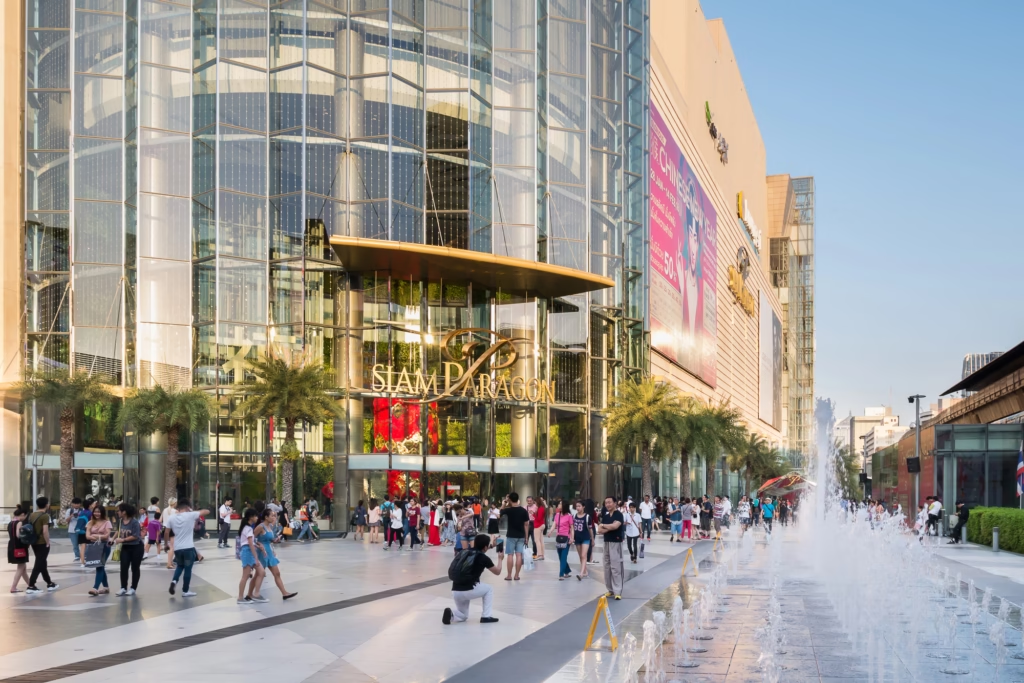
Siam Paragon
A world of luxury, gastronomy and social life — the heart of modern Bangkok, where something is always happening. Underground you’ll find the Sea Life aquarium mentioned earlier.
CentralwOrld
Siam Paragon’s slightly less ostentatious neighbour, with a vast choice of restaurants, bistros and bars. You can walk here from Siam station via covered sky bridges directly on the elevated rail columns.
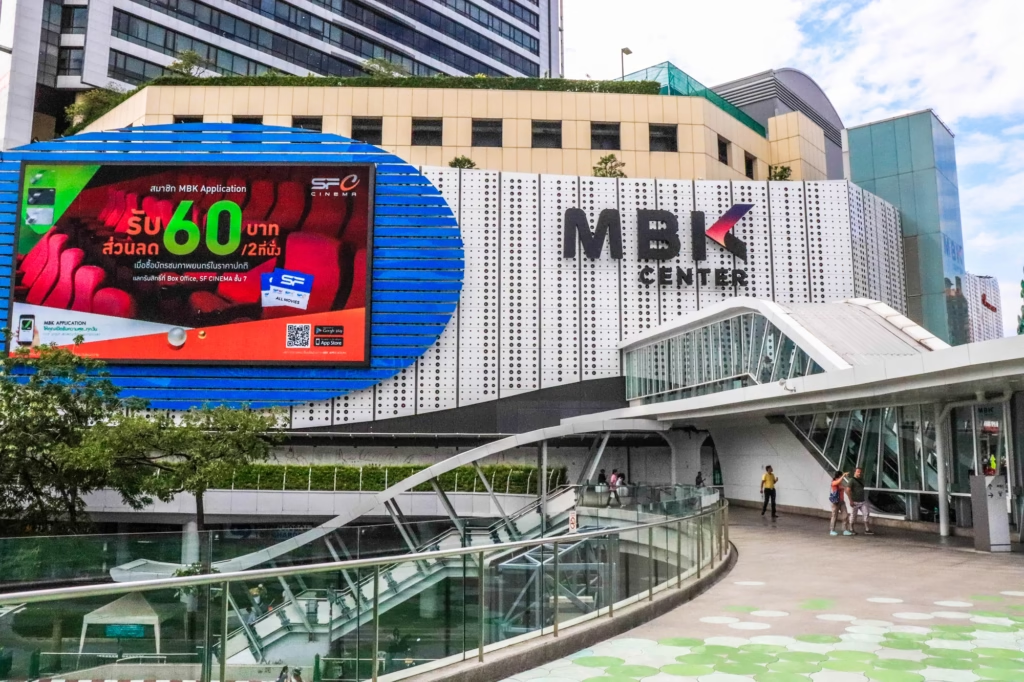
MBK Center
A legend of budget shopping, where small shops and stalls sell virtually everything — from electronics to incense sticks, suitcases, watches and Buddha T-shirts. MBK also has one of the few left-luggage facilities in the city.
Central Embassy
Probably the most luxurious mall in the modern centre. For me, the best place to cool down mid-afternoon, catch my breath and possibly have an exceptional meal.
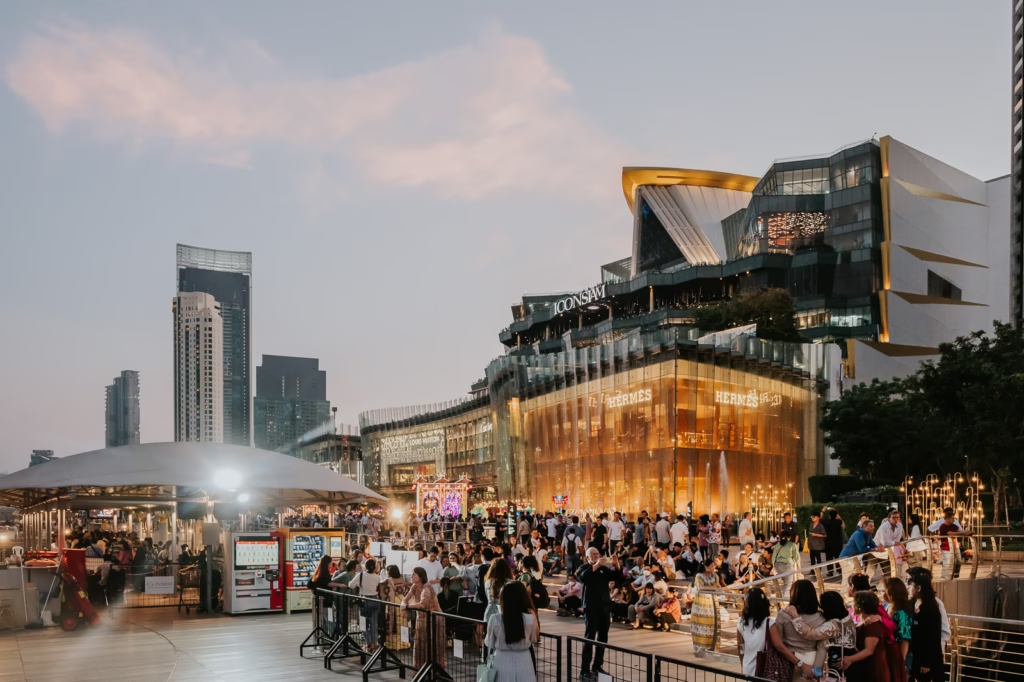
IconSiam
A shopping mall you’d expect to find in Dubai. Spectacular architecture, luxury brands, a huge Apple Store, eclectic interiors and endless great food — both in the restaurants and the food court.
EmQuartier
One of the larger malls on Sukhumvit Road, at BTS Phrom Phong station. Mostly locals shop here. I come when I actually need to buy something (mainly clothes) and sometimes for food.
Markets
Traditional markets are gradually disappearing from across Thailand, fastest of all in Bangkok. But they’re a quintessential part of Asia, and I’d definitely visit at least one larger market.
Chatuchak Weekend Market
One of the largest markets in the world — a labyrinth of 15,000 stalls where it’s easy to get lost. But that’s precisely the point.
Clothes, ceramics, food, plants, old maps and things you didn’t know you needed. And of course loads of food.

Get here on the BTS to Chatuchak Park or on the MRT to Kamphaeng Phet station. Be prepared for large crowds — arrive before the official 9 am opening time and grab breakfast at one of the stalls.
Part of the market — mainly the plant section — is open on Wednesdays and Thursdays too, but for the full experience come on a Saturday or Sunday.
Sampheng Market
An integral part of Chinatown where you can buy almost anything — just don’t be afraid to bargain, as vendors here are well practised at charging tourists top prices.
Pratunam Market
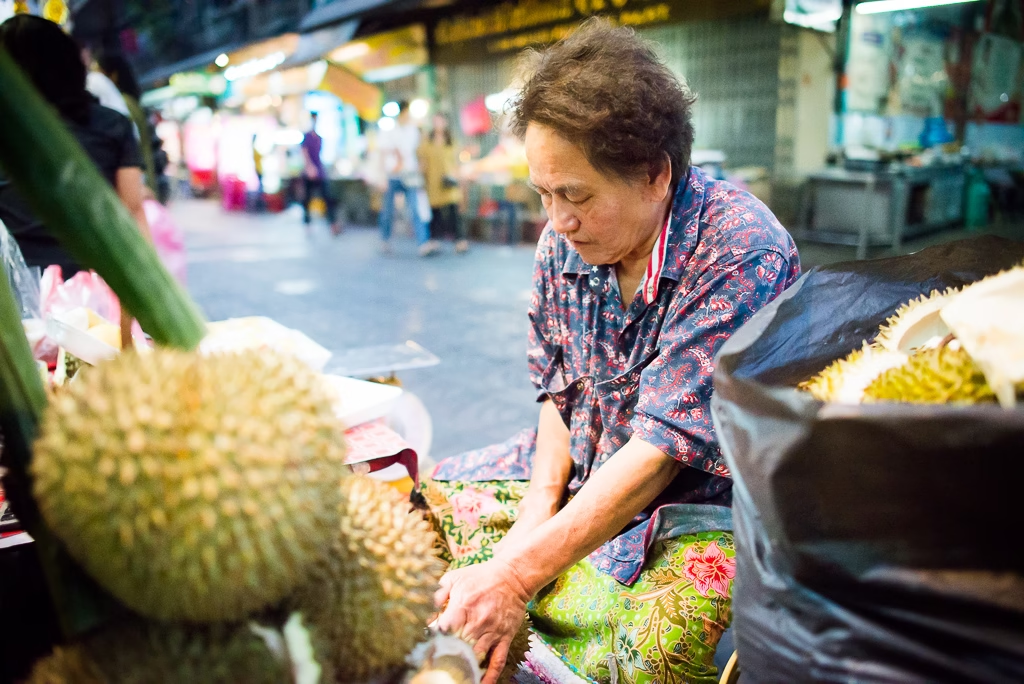
A market primarily focused on clothing and aimed mainly at wholesale buyers. Even so, it can be a great experience to walk through — you can definitely buy individual items at very favourable prices. Just be warned: you might end up bringing home a whole suitcase of clothes.
Made-to-Measure Clothing
Almost any time you take a tuk-tuk ride in Bangkok you’ll end up outside a tailor offering great-value shirts or a bespoke suit.
Skip the tuk-tuk, but do consider getting something made to measure. Tailors here are highly skilled and fast — a shirt can be ready within half a day, a full suit in one to two days.
Prices are significantly lower than having something of comparable quality made back home.
Tailoring shops can be found along Sukhumvit Road around BTS Asok and Nana stations.

Where to Stay in Bangkok
Choosing the right location for your accommodation in Bangkok is almost as important as choosing where to eat. The city is huge, and if you pick the wrong neighbourhood you can waste precious hours stuck in traffic.
Which Neighbourhood to Choose
For a short stay, I’d recommend one of these three options:
- Around Phaya Thai, the last stop on the Airport Rail Link
- Around BTS stations Nana, Asok and Phrom Phong
- Around MRT station Silom and BTS Sala Daeng
This way you’re strategically placed on at least one rapid transit line, and you can reach the historic centre by metro or boat. All three areas have options for virtually any budget.
I’d only recommend staying near the main temples or Khao San Road if you have no intention of exploring modern Bangkok.

Not sure where to base yourself? This Bangkok neighbourhood comparison summarises the four most popular areas at a glance — including atmosphere, budget and which transport line they sit on. Tap Check availability on any row to see live hotel options in that neighbourhood.
| Neighbourhood | Best for | Vibe | Budget | Transport | Check availability |
|---|---|---|---|---|---|
| Sukhumvit | First-time visitors, nightlife, shopping | Modern, international, lively | Mid → Luxury | BTS Asok, Nana, Phrom Phong · MRT Sukhumvit | Check availability ↗ |
| Silom / Sathorn | Foodies, rooftop bars, river views | Sleek financial district by day, lively after dark | Mid → Luxury | BTS Sala Daeng, Chong Nonsi · MRT Silom · river ferry | Check availability ↗ |
| Ari | Cafés, slow travel, longer stays | Local, creative, low-key | Budget → Mid | BTS Ari (one stop from Chatuchak) | Check availability ↗ |
| Old Town (Rattanakosin) | Temple-hopping, walkable sightseeing | Historic, atmospheric, low-rise | Budget → Mid | No BTS/MRT · khlong boats, taxis, river ferry | Check availability ↗ |
Best Neighbourhoods for Longer Stays
- Sukhumvit / Watthana — the whole area roughly between Sukhumvit Road (Nana to On Nut stations) and the Airport Rail Link line
- Silom / Bang Rak — a lively neighbourhood near Lumphini Park with excellent public transport connections
- Ari — the hipster neighbourhood popular with expats
- Thonburi — authentic Bangkok on the other side of the river; try it on your third or fourth visit 🙂

Recommended Accommodation by Budget
Hostels
Ideal if you’re travelling solo or want to meet other travellers. There are plenty of hostels in Bangkok, ranging from lively party spots to quiet, modern places just for sleeping.
- Restiny Hostel — I used to stay here for 1–2 nights right after arriving or before leaving Thailand. The hostel is directly by the Airport Rail Link at Phaya Thai station.
- Kloem Hostel — a stylish boutique hostel in a traditional Thai house surrounded by greenery, near BTS Phaya Thai.
- T Hostel @ Victory Monument — a very conveniently located and calm hostel a few minutes from BTS Victory Monument.
- Wayha Hostel Don Mueang Airport — a modern, laid-back hostel just minutes from Don Mueang Airport; great for a first or last night in Bangkok.
- Victory Park Hostel — right by BTS Victory Monument; handy for airport buses and minivans to other parts of Thailand.
Hotels and Apartments Under 800 THB / Night
- TAVEE Guesthouse — simple but very pleasant guesthouse in a quiet neighbourhood near the river. Family atmosphere and great value.
- Thanabhumi — affordable and comfortable apartment-style accommodation. A few minutes’ walk from Khao San with complete privacy.
- HOUSEMODE – BAANYAI @ Wongwian Yai — a modern mini-hostel on the Thonburi side of the river; clean, stylish and within walking distance of BTS Wongwian Yai.
Mid-Range 1,000–3,000 THB / Night
- Vince Hotel Pratunam — a short walk from Phaya Thai. We stayed here for a week in March 2026 when a cancelled connecting flight extended our stay unexpectedly. Excellent breakfast and late-evening buffet, professional staff and a lovely pool.
- Hide and Seek Boutique Hometel — a pleasant hometel in a quiet residential area near BTS Phra Khanong. Stylish rooms, a homely atmosphere and a great café on the ground floor.
- The Unforgotten B&B — a small bed and breakfast in an older building near Hua Lamphong station. Retro interior, distinctive character and very friendly staff.
- Let’s Zzz Bangkok — a simple but comfortable hotel right in the heart of Bangkok near Khao San. Perfect for those who want to be central but on a quieter street.
If you’re looking for something truly unique, check out Sabai Sabai Liveaboard Bangkok — accommodation on a boat moored directly on the Chao Phraya River.
Upper Mid-Range 3,000+ THB / Night
- Somerset Sukhumvit 71 Bangkok — a modern aparthotel in a quieter neighbourhood with a pool, gym and spacious rooms with a kitchenette.
- Anajak Bangkok Hotel — a stylish boutique hotel steps from BTS Phaya Thai. Peaceful, with a pool and easy access to both the airport and the city centre.
- dusitD2 Samyan Bangkok — a design hotel from the Thai Dusit chain, near Silom. Rooftop pool and high service standards.
- Chatrium Sathon Bangkok — a beautiful hotel with spacious rooms and city views. Large pool, excellent breakfast and a calm location away from tourist crowds.
- Baan Tuk Din Hotel — a small hotel in a historic building in the heart of old Bangkok. Ideal for couples and those who love a distinctive atmosphere.
Luxury 6,000+ THB / Night
- Sindhorn Kempinski Hotel Bangkok — one of the finest hotels in the city, surrounded by greenery in the diplomatic quarter near Lumphini Park.
- Eastin Grand Hotel Phayathai — a newer flagship hotel with a direct connection to BTS Phaya Thai and the Airport Rail Link. Modern style and an infinity pool with city views.
- 137 Pillars Suites Bangkok — discreet luxury in the Sukhumvit area with exceptional service and a rooftop infinity pool with breathtaking views.
- Chakrabongse Villas — a unique experience on the banks of the Chao Phraya River in a historic royal residence. Just minutes from the Grand Palace, yet surrounded by a tropical garden.
Accommodation for Digital Nomads
Bangkok is one of the best cities in the world for remote work. Excellent infrastructure, a strong community, fast internet and cafés on every corner. Just expect higher prices than in, say, Chiang Mai.
For longer stays, look for privately run apartments — both Booking.com and Airbnb offer significant discounts for monthly bookings.
- Baan Sabai Rama IV Apartment — a quiet location near Lumphini Park, with a gym, cafés and MRT just a few minutes’ walk.
- Tiara Place — a peaceful spot near the river and the centre, spacious rooms, good connectivity and several cafés nearby.
- Siamplaengna Residence — straightforward apartments with a kitchenette and work desk on a quiet street.
- Star Sukhumvit — On Nut: an affordable neighbourhood with good transport links, a gym, co-working spaces and street food on every corner.
Family-Friendly Accommodation
Travelling with kids in Bangkok is easier than it sounds. Hotels are welcoming, most have pools, spacious rooms and breakfasts that children love. If you specifically want family-friendly options, here are a few suggestions:
- Siam Kempinski Hotel Bangkok — a luxury hotel with pools in a tropical garden, a kids’ club and direct access to Siam Paragon, where the aquarium and children’s play area are located.
- Chatrium Residence Sathon Bangkok — an aparthotel with a large pool, playground and kitchenettes in the rooms.
- Centre Point Sukhumvit 10 — excellent value for families. Family suites, a pool, kids’ play area and a location on a quiet cul-de-sac just steps from BTS Nana.
Tip: choose accommodation near BTS or MRT — you’ll avoid traffic jams and air-conditioned trains are perfectly manageable for children.

Practical Information
Bangkok can look chaotic at first glance in many respects. The trick is to understand that it works differently — and once you do, you’ll be pleasantly surprised by how well certain things function.
The section below will save you a lot of time and frustration, whether it’s your first visit or a return trip.
Getting from the Airport to the City
Bangkok has two international airports — both work well and both are connected to the centre by modern rail links.
Suvarnabhumi (BKK)
The main airport, around 30 km from the centre. Most long-haul flights land here.
- Airport Rail Link — the fastest option (45 min to Phaya Thai station), tickets from 45 THB. If you need to switch to the metro (MRT), alight at Makkasan. You can pay contactlessly directly at the turnstile.
- Taxi / Grab — expect to pay 300–500 THB depending on the time of day and traffic, plus a 50 THB airport surcharge and around 70 THB in toll fees. Journey time: 45 to 90 minutes.
- Buses — useful for some destinations and at night. There are many routes; find an overview on the airport website. Choose routes with “Expressway” in the name to avoid very long journey times.

Don Mueang (DMK)
The smaller airport, used mainly by low-cost carriers such as AirAsia, Nok Air, Lion Air and Scoot for domestic flights and regional routes.
- Train (red line) to Bang Sue station, where you change to the metro (MRT) — 17 minutes, 33 THB. The red line should eventually extend to the old Hua Lamphong station area in the centre.
- Bus A1 — easy way to reach BTS at Mo Chit (Chatuchak), 30 THB, 20 min.
- Bus A2 — takes you to Victory Monument, closer to the centre.
- Bus A3 — for Lumphini Park and BTS/MRT Si Lom station.
- Bus A4 — for Khao San Road.
- Taxi / Grab — 250–400 THB to the centre.

Getting Around Bangkok
Bangkok has one of the best urban transport networks in Asia. It takes a moment to get your head around, but once you do, you can get everywhere.
The backbone is made up of:
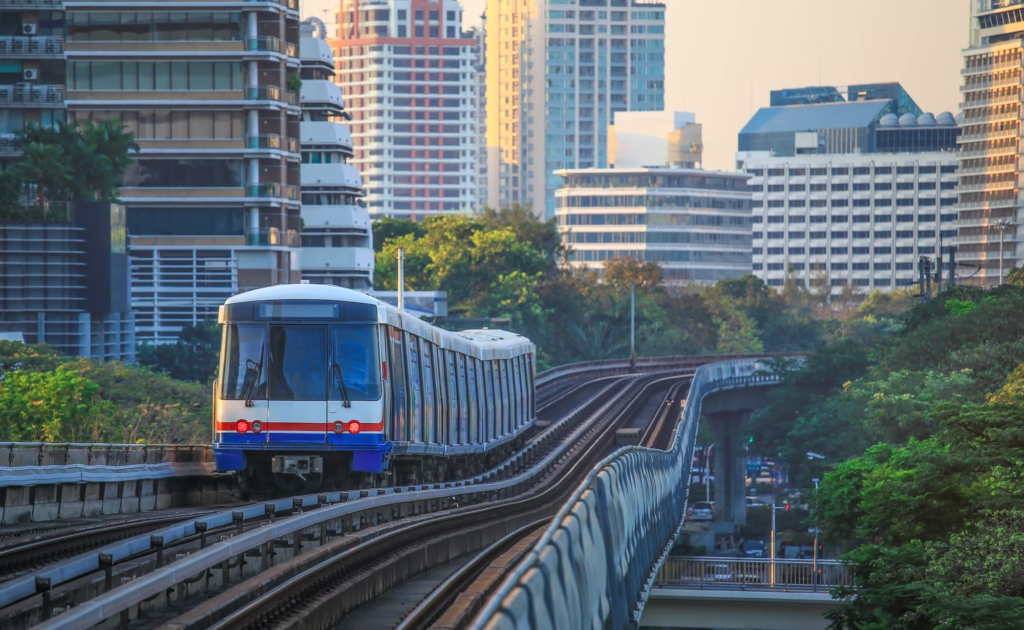
- BTS — elevated rail (skytrain).
- MRT — metro, sometimes underground, sometimes elevated.
- Boats — on the Chao Phraya River and some canals.
- Airport Link — train to Suvarnabhumi Airport.
- Monorail (pink, yellow and gold lines) — mainly circular/feeder routes, unlikely to be useful for most visitors.
- Red line elevated rail — for getting to Don Mueang Airport.
These are supplemented by:
- Buses
- Taxis
- Motorcycle taxis
Learn to combine these modes smartly. It’s not worth climbing up to the BTS for a journey of a few hundred metres — take a taxi instead. On the other hand, never take a taxi during rush hour if you can avoid it.
A few basic tips to start with:
- Avoid tuk-tuks. They’re overpriced and impractical.
- Travel outside peak hours where possible.
- If you must travel during rush hour, leave plenty of time and use the MRT, BTS or boats for as much of the journey as possible. Expect crowds and queues.
- By law, taxis must use the meter. Confirm this before you set off — and if a driver refuses, get out and find another. Taxi colour doesn’t matter; prices are the same.
- Grab works reasonably well, though expect long wait times and surge pricing at busy periods. Uber merged with Grab here.
- If you don’t have to, don’t walk outdoors in the middle of the day — you’ll overheat.
BTS – Skytrain
Two green lines of elevated rail connecting most of the modern city — Siam, Sukhumvit, Silom, Mo Chit.
Trains are air-conditioned, fast and reliable. They could run more frequently at peak times — queues can be long and you don’t always make it onto the first train.

Single-journey tickets cost 16–70 THB, purchased for a specific destination.
During busy periods the ticket machine queues can be long, and it may be worth getting a prepaid Rabbit Card. Buy one for 100 THB at a BTS ticket office and load any amount up to 4,000 THB. The fare is then deducted automatically based on the distance travelled when you tap in and out.
Unfortunately the Rabbit Card doesn’t work on other transport modes, and despite years of effort Bangkok’s operators have yet to agree on a universal transit card.
MRT – Metro
The blue and purple lines, underground in the centre and elevated elsewhere. Together with the boat, this is the only rapid transit serving the historic centre and Chinatown.
Like the BTS, you buy a ticket to a specific station; fares are slightly lower for similar distances.

Note — the entire MRT network now operates a tap and go system.
Simply tap any credit or debit card when you enter and again when you exit, and the correct fare is charged automatically. No more queueing at ticket machines.
Boats and Ferries
Once you understand how to use the river and canal boats, you’ve unlocked Bangkok. For getting to the sights, boats are the most practical and cheapest option.
I’d also recommend everyone take at least one ride along the river and ideally a canal — the experience is worth it in itself.

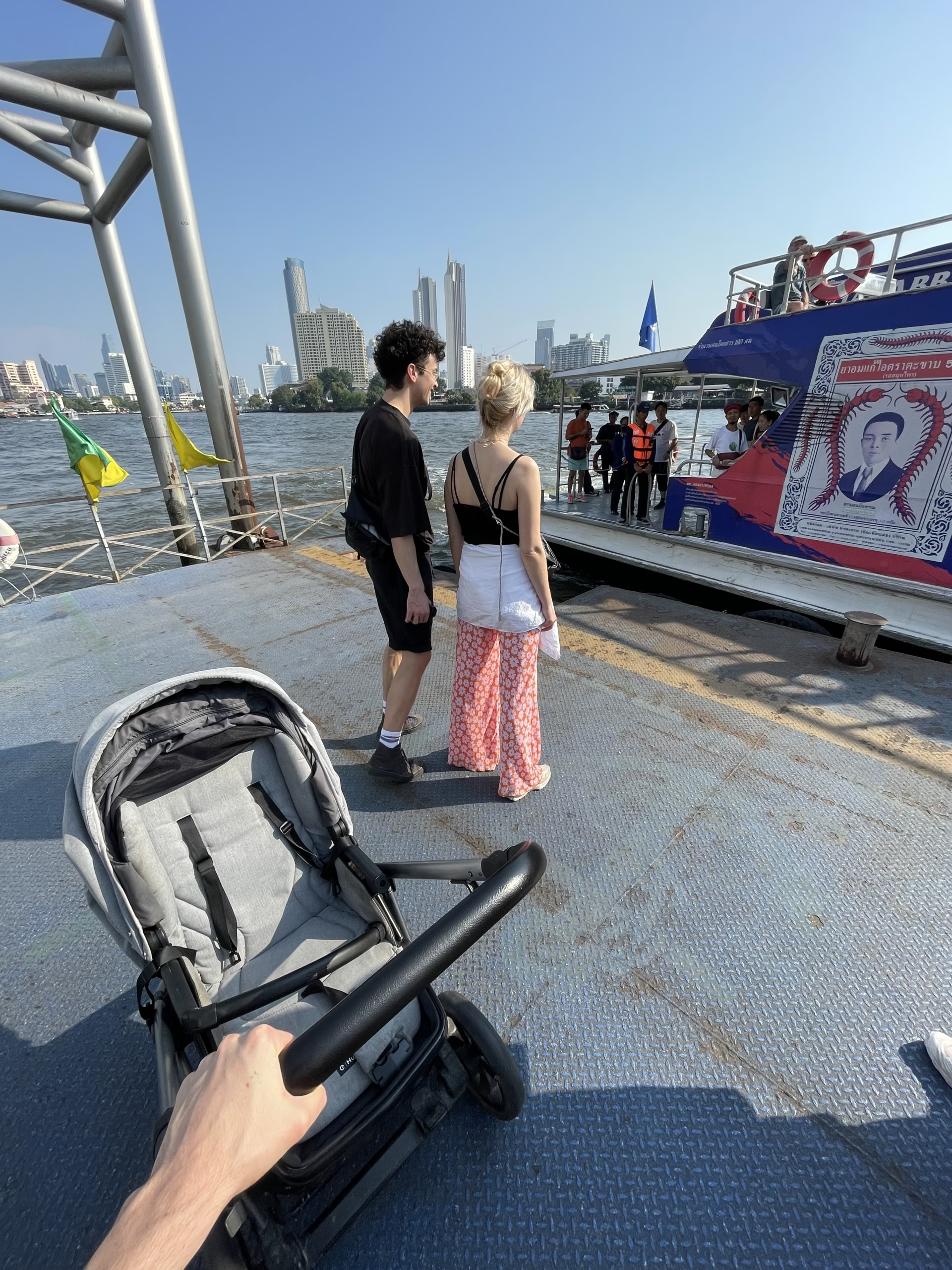
Several regular lines run on the Chao Phraya River:
- Orange (Orange Flag Line) — the most useful line, stopping at all major piers, used mainly by locals. 16 THB per trip, running all day roughly every 20 minutes.
- Blue (Blue Flag Line) — a tourist hop-on, hop-off express line. 45 THB per trip or 150 THB for the day. Runs all day twice per hour.
- Yellow-Green (Yellow Green Flag Line) — a larger express mainly for locals, running all day. 21 THB per trip.
- Green (Green Flag Line) — an express mainly for locals, running only during morning and afternoon peak hours.
- Red (Red Flag Line) — the fastest express, usually air-conditioned, running only in the morning peak.
- Grey (Local Line) — the slowest line, stopping at all piers; I’ve never quite figured out how to use it.
In short — the lines you’ll care about most are the orange, yellow-green and blue. Don’t worry about the others.
On Google Maps, the details for each pier show which lines stop there. Each pier also has a clear map on display, and you can always ask.
Tickets for the orange line are bought in cash on board; I expect contactless payment to follow soon.
Canal boats
The river lines are just the start. The canal boat on Khlong Saen Saeb is extremely useful. It runs from Panfa Leelard Pier, right next to Wat Saket (Golden Mount), heading east.
You can use it to travel from the historic centre to the BTS (National Stadium, Ratchathewi) and to MRT and the Airport Rail Link (Phetchaburi, Makkasan).
The fare is 10–20 THB depending on distance, and boats run several times per hour throughout the day. The ride itself is an experience I’d strongly recommend.

Another useful boat runs along Khlong Phadung Krung Kasem canal, from Hua Lamphong railway station on the edge of Chinatown towards the Thewet market near Khao San Road.
It runs 2–3 times per hour and is free.
A similar free boat also runs on part of a parallel canal closer to the centre, taking you from Wat Saket to Phra Sumen Fortress — useful for connecting to the Chao Phraya river lines.
Taxis and Grab
I used to avoid taxis, but I gradually worked out how to use them — and recognised that a little extra money very often buys you a lot of saved sweat and crowded commuting.
Download the Grab app (the local equivalent of Uber), enter your destination and see the price it shows. If it’s reasonable, go with Grab. If it’s too high, check the distance to the nearest BTS or MRT station and combine the two.
Grab has one major downside — long wait times and inflated prices during peak hours. It sometimes happens that no driver shows up at all due to traffic.
This is when street taxis come into their own. By law they must use the meter, and these days it’s rare for a driver to refuse. During peak traffic they often work out cheaper than Grab.

Always confirm at the start that the meter will be used, and check that they actually switch it on. If they refuse, get out and find another taxi.
Show the driver the specific address on a map rather than trying to explain the route or assuming they know your hotel. It also signals that you won’t tolerate unnecessary detours.
Near major landmarks or popular bars in the evening, drivers sometimes stick together and none will use the meter. Simply walk around the corner and flag down a passing cab.
One warning — even metered rides can get expensive. The meter charges for time as well as distance, so if you sit in traffic for an hour the price keeps ticking up. That’s why combining different transport modes during peak hours is so important.

Motorcycle Taxis
The final important piece of the transport puzzle and your best friend during rush hour. Motorcycle taxis are ideal for short-distance trips or cutting through traffic jams.
I use them most often to reach a nearby BTS or MRT station. They wait at stands at major junctions and stations, or you can order one through Grab.
The driver will lend you a helmet; fares range from 20 to 100 THB — beyond that distance a taxi makes more sense.
Buses
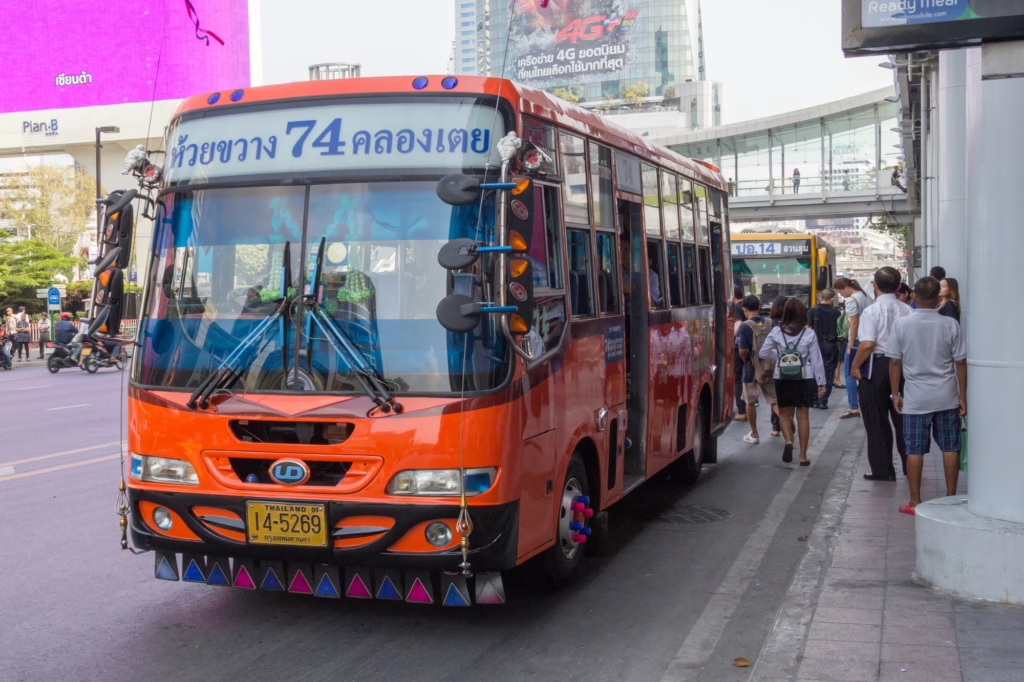
Buses run everywhere and are the cheapest option for longer distances, starting at 8 THB for non-air-conditioned services and 16 THB for air-conditioned ones. Bangkok has invested heavily in modernisation in recent years and operates a growing fleet of electric buses.
Google Maps handles bus routes well — I’ve always managed to get where I needed to go. Just remember to signal when boarding (wave) and when alighting (press the button), and don’t rely too much on timetables; everything depends on traffic.
Money and Costs
Your daily budget in Bangkok can range from very affordable to almost unlimited. You can eat on a plastic chair for 60 THB, or dine in a luxury restaurant for many thousands.
Basic price guide:
- Food:
- street food 50–100 THB (approx. €1.30–2.60),
- local restaurant from 150 THB, better from 300 THB per dish,
- coffee 80–120 THB,
- beer 100–150 THB,
- cocktail 200–300 THB,
- fresh fruit on the street 20–60 THB,
- bottled water from 10 THB.
- Accommodation:
- hostel 300–800 THB (approx. €8–21),
- decent hotel or apartment from 1,000 THB,
- premium accommodation from 3,000 THB.
Cafés, hotels and larger restaurants accept cards, but street vendors are still mostly cash-only.
For cash, use an ATM. Get a Revolut card for the best exchange rate and no bank fee on your end — you can’t avoid the ATM’s own fee, so withdraw larger amounts at a time.

SIM Card and Internet
You’ll want a local SIM in Bangkok, even though Wi-Fi is available in every café and on the metro.
I use either an eSIM via Revolut, or a physical SIM from a local carrier, which works out slightly cheaper.
Stalls from AIS, DTAC and TrueMove can be found at the airport and in shopping centres.
An 8–15-day tourist package with 30–50 GB of data costs around 200–450 THB (approx. €5–12).
Internet speeds at accommodation are generally excellent.

Weather and Best Time to Visit Bangkok
Bangkok is warm year-round — and for most of the year, quite intensely so, mainly due to high humidity.
The best period is November to February — low rainfall and temperatures around 28°C.
March to May brings unbearable heat. Fine for daily city life, but forget all-day sightseeing in the sun. Go to one attraction first thing in the morning and another in the late afternoon, and spend the rest of the day somewhere air-conditioned.
June to October is the rainy season across most of Thailand, meaning fewer tourists. August in particular can bring very heavy rain, and Bangkok is prone to flooded streets every year. The city keeps functioning, but for typical tourist exploration this season is less than ideal too.

Health, Hygiene and Safety
Bangkok is a safe city, where air conditioning is more likely to do you harm than any pickpocket. And about the air conditioning I’m absolutely serious — always carry long trousers and something warm. If you’re sensitive, a scarf or neck warmer is useful too, especially in the BTS.
The most common nuisance is “helpers” who tell you a temple is closed and steer you into an overpriced suit shop. Just smile, say thank you and walk on.
Tap water is not drinkable, though it’s fine for brushing your teeth. For drinking, buy bottled water or refill your bottle at the filtered water dispensers you’ll find on the street.
Food is generally very fresh and safe. Stick to places with a good throughput of local customers.
In the evening mosquitoes come out — wear long clothing and bring a decent insect repellent. I use the brand Incognito, or pick one up locally.
Medical care, if needed, is of world-class standard. People travel to Thailand from around the globe for procedures ranging from cosmetic surgery to dental work and joint replacements.
Don’t forget quality travel insurance — I use True Traveller.
Tips and Practicalities
- Traffic drives (and people walk) on the left.
- Power sockets — standard European plugs work fine; voltage is 220 V.
- Tipping — appreciated but modest, much like back home.
- Watch the sun — tropical sun is intense all day, even under cloud cover.
- Carry a light scarf or shawl — useful for the air conditioning and as a shoulder covering in temples.
- A left-luggage facility can be found in MBK shopping centre and at BTS Phaya Thai station. Most hostels and hotels will also store luggage for you, even if you’re not currently staying there.

Bangkok with Kids
At first glance Bangkok might not seem like an obvious family destination — heat, traffic, crowds, unfamiliar food. But once you stop feeling overwhelmed, you’ll discover a city that entertains children, surprises adults and brings families together. Bangkok has one enormous advantage: it’s playful and full of variety.
We tested it with our one-year-old son Štěpán and got through it just fine. We simply had to adopt the right pace and plan transfers a little more carefully. A pushchair isn’t very practical in Bangkok and a baby carrier will overheat both child and parent.
That said, I was pleasantly surprised at how many places were pushchair-accessible — including the river boats.

We later got unexpectedly stranded in Bangkok for a week when Štěpán was three and a half, which meant we kept discovering more and more great spots for kids.
Asians adore children, which gives travelling a completely different dimension, and people will go out of their way to help you.
Our highlights were the river trips, the food, markets selling fruit and flowers, the pool, and Sea Life Ocean World under Siam Paragon — a huge aquarium with a tunnel, sharks and rays.
Children’s Discovery Museum
A large interactive play centre near Chatuchak Park, ideal for children up to 12.
Most easily reached from BTS Chatuchak Park or MRT Kamphaeng Phet station.
Entry is free. Note it closes at 4 pm.
Lumphini Park
Walk among the monitor lizards, hire a swan pedalo or rowing boat, and have a picnic on the grass. The park also has a good children’s playground and several outdoor workout areas.
Siam Amazing Park
A large theme park with rollercoasters, rides and an extensive water world. A great place to cool down.
From age three, every child (and most adults) will have a fantastic time here.
Most easily reached from most parts of the city by taxi. Admission for children between 101 and 131 cm is 850 THB per day; for those over 131 cm and adults it’s 1,000 THB per day.
Safari World
An unusual mix of safari park, amusement park, theme park and marine world. You’ll see giraffes, zebras, elephants, tigers and dolphins.
Personally I’d avoid it — not least because they “perform” with elephants. And a real safari experience in Africa or Nepal simply can’t be replicated.
Kids’ Cafés and Play Centres
You’ll find a large play centre for children up to about 10 years old in almost every shopping mall — climbing frames, balloons, trampolines, all kinds of toys. MELAND in Siam Paragon is genuinely enormous. Just be prepared for high prices.
Across the city you’ll also find children’s play centres attached to cafés — a far better option in my view, and a great place to relax. Usually you pay 200–400 THB for 2 hours per child, with each adult required to order at least one drink or food item.
Some are included in my kids’ map; search “kids cafe” or “playground” on Google Maps for more.
Practical Tips for Families
Always carry plenty of water — at least one litre per person. Actively remind children to drink regularly.
Sun hats are absolutely essential, even on overcast days. The tropical sun is far more powerful than what most of us are used to.
Don’t forget hand sanitiser.
Most importantly, slow down and adjust your sightseeing to your children’s pace. The upside is that temples and palaces will seem exotic and fascinating to them.

Discover More of Thailand
Planning more of your Thailand trip? Browse our other in-depth guides:
Overview & Planning
Northern Thailand
- Northern Thailand Travel Guide
- Chiang Mai: Things to Do
- Chiang Rai Travel Guide
- Pai, Thailand Guide
- Mae Hong Son Travel Guide
- Mae Salong Guide
- Scenic Motorcycle Routes in Northern Thailand
Central & Beach Destinations
Bangkok FAQ
How long should I spend in Bangkok?
Three to four days is ideal. Dedicate one day to temples and the river, one to the modern districts, and one to markets and parks or a day trip. Less is a shame; more lets you scratch beneath the surface.
How much money do I need per day?
It depends on your travel style. A backpacker can manage on 500–1,000 THB a day (approx. €13–26); comfortable travel with good food and mid-range hotels runs around 2,000–4,000 THB a day. Bars and nicer restaurants can push this higher.
How do I avoid tourist traps?
Ignore “helpers” who claim a temple is closed or that they know a better market. Don’t take tuk-tuks offering a “city tour” for 100 THB. Instead, use the BTS skytrain, MRT metro and river boats — fast, cheap and hassle-free. Combine these with Grab taxis when needed.
Which apps should I download?
- Grab — transport and food delivery.
- Google Maps — works well in side streets and for navigating public transport.
- LINE — Thailand’s most popular messaging platform, somewhere between WhatsApp and WeChat.
- Revolut — paying and withdrawing with a standard bank card in Thailand is poor value; Revolut is a much better option.
How should I dress for temples?
Covered shoulders and knees, shoes removed at the entrance. A scarf or light shirt in your bag solves everything.
Is Bangkok good for solo travellers?
Absolutely. The city is safe, people are open and friendly, and moments of solitude are hard to come by — Bangkok pulls you in.
When is the best time to visit Bangkok?
November to mid-March. Mornings are pleasant, evenings are perfect for exploring markets. Rainfall is relatively low. From mid-March the heat becomes intense. During the rainy season from June to October you’ll enjoy lower prices and fewer tourists, but be prepared for the occasional flooded street.
Related Guides: Where to Next in Thailand
Bangkok is the easiest jumping-off point for the rest of Thailand. If you have a longer trip, combine it with one of these next: