This post is also available in:


Ko Samui is one of Thailand’s most accessible and most comfortable islands. It has its own airport, good roads, and a wide range of accommodation and services — making it an ideal destination for couples, solo travellers, and families looking for a combination of beaches, day trips, and creature comforts.
We came here with our one-year-old boy, and for a first beach destination in Thailand, Ko Samui was the obvious choice — especially with a stay in an amazing jungle-view villa with a pool at a great price.

That said, Ko Samui isn’t for everyone. If you’re after “real Asia” — minimal infrastructure, a sense of discovery, and the feeling that time stopped a hundred years ago — choose a different destination.
Don’t expect wild parties or adrenaline-fuelled action either. Samui is civilised, somewhat resort-oriented, and generally pricier than many other Thai islands. That’s precisely why it works so well for longer stays, relaxed travel, and a stress-free holiday.

This article is part of a multi-part series. Check out the other guides born from nearly two years of experience living in Thailand.
For general practical tips covering all of Thailand, start with the first instalment:
For general practical tips on northern Thailand, head to:
For tips on individual cities, destinations, and places of interest, see the dedicated guides:
- Phuket
- Krabi & Ao Nang
- Bangkok
- Chiang Mai & surroundings
- Chiang Rai & surroundings
- Pai
- Mae Hong Son
- Ayutthaya
Why Visit Ko Samui
You can drive the full loop around Ko Samui in under two hours. You’ll find varied beaches and plenty of options for short day trips, while everything still stays conveniently close.
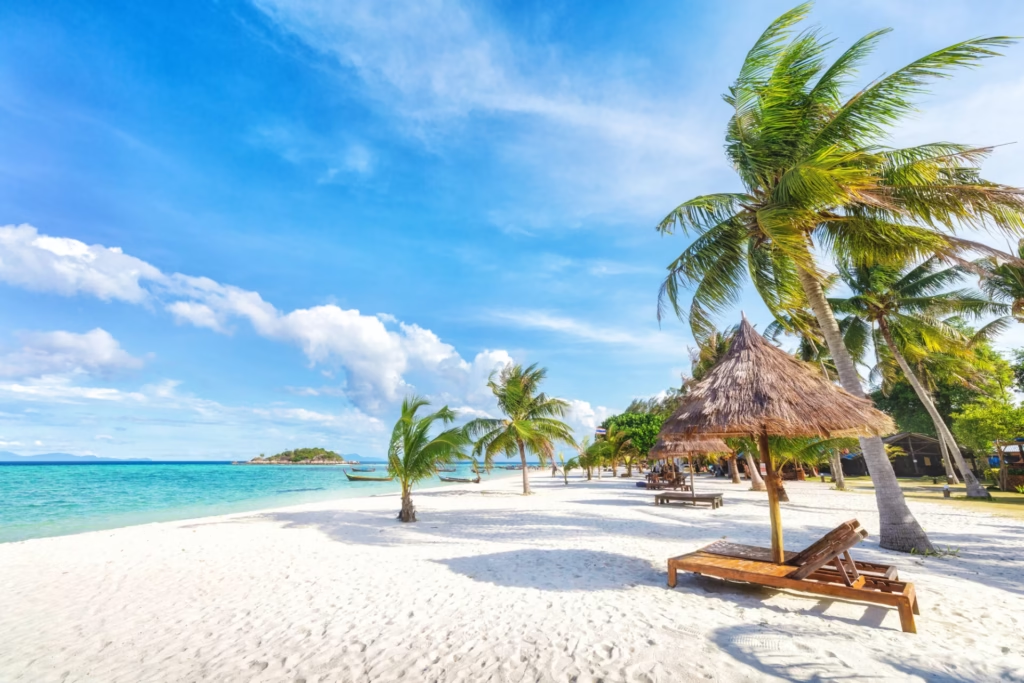
Expect white coral sand, warm shallow water, palm trees, temples, and jungle waterfalls. Tropical paradise — exactly as you might picture it from a travel brochure.

An independent holiday here can still represent excellent value — with flights from Europe and a bit of luck, you can manage two weeks per person with solid comfort, good food, and a Bangkok stopover.
The island is less hectic than Phuket, yet significantly more developed than the smaller islands of both the Gulf of Thailand and the Andaman Sea.
A major practical bonus is its own airport, which gets you to the island quickly without lengthy transfers.

Ko Samui also has a different monsoon season from the Andaman coast, making it an appealing alternative when Phuket or Krabi are experiencing worse weather.
If you’re looking for a place to combine swimming, easy day trips, good food, and a slower pace — without having to overthink logistics — you’ll love Ko Samui.

How Long to Stay
Ko Samui can work as a brief stopover, but I generally don’t recommend it. Given the higher cost of transport and the limited number of sights, a two- or three-day visit doesn’t make much sense.
That said, if you’re passing through Samui on the way to Ko Pha Ngan or Ko Tao, feel free to pause here.
I’d most recommend a stay of 7 to 10 days — long enough to explore different parts of the island, enjoy the beaches and a few day trips, while still leaving time to slow down.

Two weeks allows a much more relaxed pace, switching beaches according to the weather, and fitting in wellness, yoga, or day trips off the island.
Stays longer than 14 days make the most sense for digital nomads or families with children who want to blend holiday mode with a normal daily routine.
Ko Samui vs Phuket, Krabi & the Andaman Islands
Ko Samui sits in the Gulf of Thailand, while Thailand’s other headline islands — Phuket, Phi Phi and Ko Lanta — are over on the Andaman coast. They’re a full day’s travel apart and have opposite rainy seasons, so they’re alternatives to each other rather than an easy combined trip. Here’s how Ko Samui compares.
| Destination | Best for | Vibe & crowds | Scenery | Getting there |
|---|---|---|---|---|
| Ko Samui (this guide) | Easy beach holidays, families, wellness | Relaxed, mid-range to upscale | Palm-fringed Gulf beaches, calm bays | Own international airport (direct flights) |
| Phuket | First-timers, nightlife, day-trip hub | Busy, fully developed | Andaman beaches plus a historic Old Town | Major international airport |
| Krabi & Ao Nang | Dramatic scenery, climbing, island-hopping base | Laid-back mainland resort | Limestone karsts, Railay Beach | Krabi airport plus a short road transfer |
| Ko Phi Phi | Iconic views, snorkelling, lively nights | Small island, crowded by day-trippers | Sheer cliffs, Maya Bay | Ferry from Phuket or Krabi (no airport) |
| Ko Lanta | Quiet long stays, families | Sleepy and low-key | Long flat-sand beaches | Ferry or road transfer from Krabi |
In short: choose Ko Samui for easy, family-friendly beach time with a calmer Gulf-coast feel. Cross to the Andaman side — Phuket, Krabi, Ko Phi Phi or Ko Lanta — if you’re chasing limestone scenery and island-hopping. Because the two coasts have opposite rainy seasons, the “wrong” time on one is often the right time on the other.
Top 10 to Get You Started
If you want to quickly get your bearings on Ko Samui and pick out the highlights without lengthy planning, start here. I cover all of these in more detail in the chapters below.

- Bang Po & Ban Tai beaches – peaceful white-sand beaches on the north coast, great for families and stunning sunsets.
- Wat Plai Laem & Big Buddha – the island’s most accessible temple complex.
- Wat Namtok Hin Lad – a beautiful forest temple that very few visitors make it to.
- Pra Buddha Dīpankara – a hilltop shrine with breathtaking views.
- Inland waterfalls – I’d recommend choosing one that requires a short hike rather than driving straight to it; the jungle walk is part of the experience.
- Bophut & Fisherman’s Village – a lovely evening atmosphere, restaurants and a night market. The island’s most tourist-friendly area.
- Boat trip to Ang Thong Marine Park – limestone islands, lagoons, viewpoints and snorkelling.
- Natien Beach – a quiet, laid-back hippy cove on the south coast.
- Sunset at Lipa Noi beach or Nine Point Samui – some of the best spots on the island for a relaxed evening and great food.
- Day trip to Ko Tao or Ko Phangan – ideally as a full-day excursion or with an overnight stay.
Ko Samui Beaches (Including Seasonality)
Beaches are the main reason most people come to Ko Samui. The island is relatively large and the individual coastlines differ significantly — in atmosphere, swimming conditions, and how the sea behaves at different times of year. Seasonality matters more here than at many other Thai destinations.
As a general rule, the northern and western coastlines are calmer, better for families, and swimmable for most of the year. The eastern coastline is livelier, with a higher concentration of resorts, restaurants and nightlife, but the sea can get rougher during certain periods. The south of the island is the least developed and best suited to those seeking peace and quiet.

East Coast: The Liveliest Part
The beaches closest to the airport and the main town of Bo Put. Alongside swimming, these are among the few areas offering water sports and an active nightlife scene.
Chaweng Beach
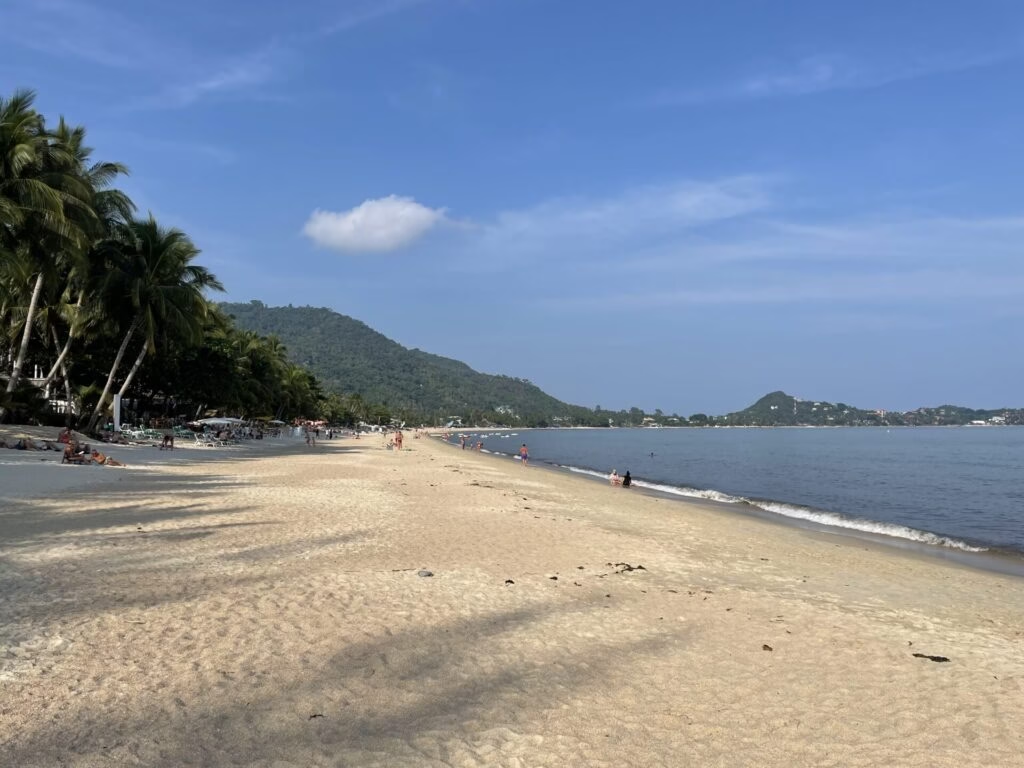
The island’s most famous and busiest beach. You’ll find the highest concentration of restaurants, cafés, bars, shops and massage parlours here — which also means the highest prices and the most persistent beach vendors.
Swimming: very good in calm conditions; worse in autumn and windy weather due to waves.

Lamai Beach
A quieter alternative to Chaweng. The restaurant and bar scene is still excellent, with slightly lower prices. In my opinion, one of the better larger beaches for families.
Swimming: good, with a gradual entry but not too shallow. Can get rough in poor weather.
Crystal Beach
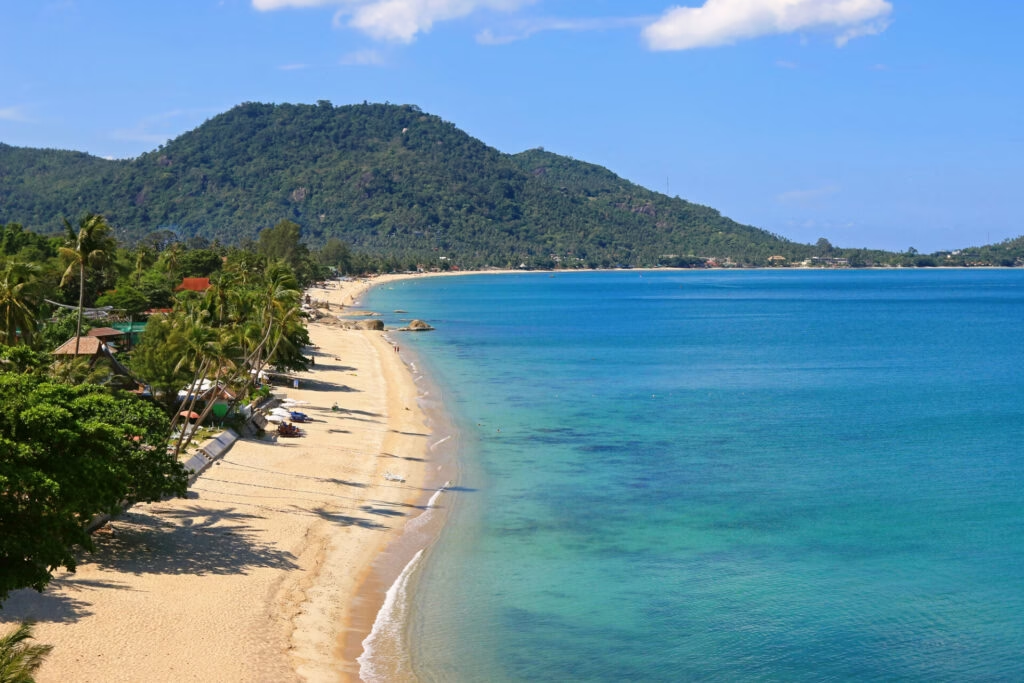
A small and beautiful — if sometimes busy — beach on the far side of the headland above Lamai Beach. Some people consider it the prettiest beach on Ko Samui.
Unfortunately it’s not ideal for swimming — it stays shallow for a long stretch and you can step on sharp rocks. It’s also prone to washing up seaweed and debris.
It’s also sometimes called Silver Beach.

North Coast: Calm, Great Swimming & a Family-Friendly Vibe
Still easily accessible from the airport, this stretch of coastline features long beaches lined with coconut palms and a solid range of services — yet it’s far calmer than the eastern beaches, which means lower prices too. The sea here is also almost always calmer than on the east side.
Maenam Beach
A long, peaceful beach with a gradual sea entry — one of the most versatile on the island. Perfect for relaxing and swimming, and suitable for children too.
Swimming: calm sea for most of the year, shallow water, good even in mixed weather.

Bophut Beach & Fisherman’s Village
A shorter beach leading into Fisherman’s Village, combining swimming with a great evening atmosphere. Undoubtedly the liveliest beach on the north coast — and still perfectly fine to bring kids.
Swimming: decent, though sometimes a little too shallow in places.
West Coast: Tranquillity, Resorts & Sunsets
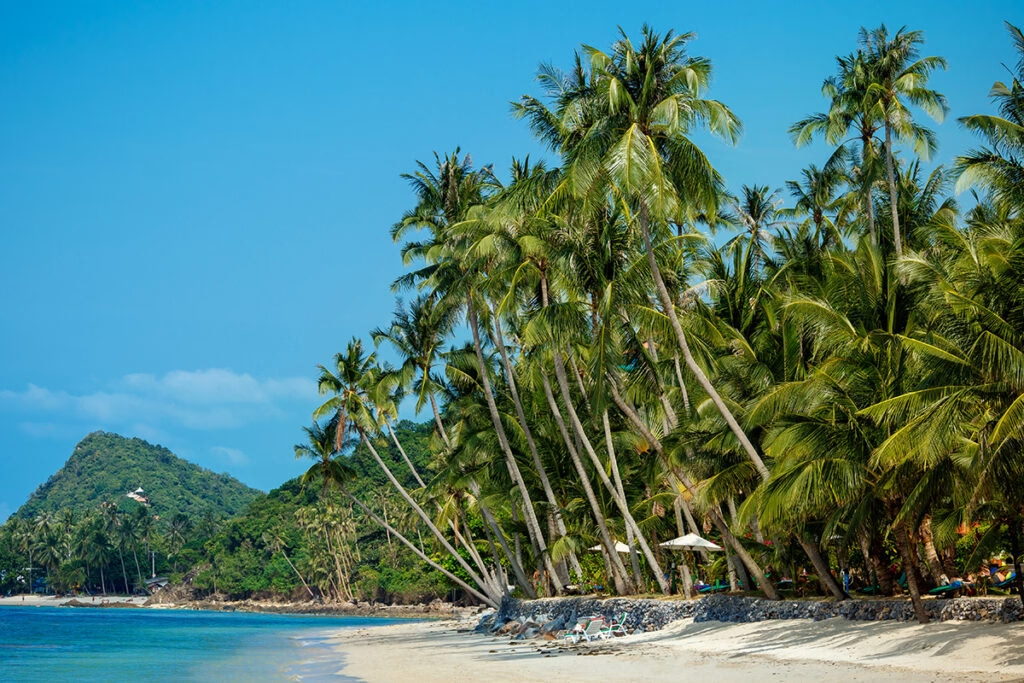
Lipa Noi
One of the best beaches on the west coast, known for epic sunsets. Ideal for families with young children or a full day of relaxation. Just don’t expect postcard-perfect scenery — there are definitely prettier beaches on the island.
Swimming: gradual sea entry, suitable even for very young children.

Taling Ngam
A very peaceful area in the southern part of the west coast — better suited to sitting by the sea and watching the sunset than actual swimming. That said, you’ll find a few small coves and some very pleasant restaurants here.
Swimming: limited, depending on the specific spot and sea conditions.

South Coast: Minimal Tourism & Limited Facilities
The southern part of Ko Samui is the least developed and the quietest for tourists. Beaches here tend to be wilder, facilities are limited, and swimming depends heavily on the specific spot and weather conditions. If you’re after absolute peace and don’t mind the reduced services, it can be a great choice.
One thing to watch out for: avoid this area at low tide — the beaches lose most of their appeal.
Nahai Beach
A very narrow beach, but with some attractive resorts and restaurants. It’s also one of the most popular spots for kitesurfing.
Natien Beach
A quiet little cove shaded by coconut palms, with a shallow sea entry and huge boulders. Well worth stopping in at the excellent laid-back Cool Bar.

How Seasonality Affects Your Beach Choice
Ko Samui has a different monsoon pattern from Thailand’s west coast. The trickiest period is usually October to December, when it can rain for several days in a row and the sea gets rough. During these months it pays to choose accommodation on the north or west coast, where swimming is often still manageable.
In winter and spring the differences between coastlines are less pronounced. Even so, if swimming is your priority, the north coast is the safest long-term bet.
Where to Stay
The island is fairly spread out and different areas vary considerably in atmosphere and access to services.
Before you start browsing individual hotels or resorts, decide where you actually want to base yourself.
North Coast: Best Choice for Most Travellers
The northern coastline is consistently one of the most versatile areas of Ko Samui. It offers good swimming, a relaxed atmosphere, and a solid range of restaurants, shops and services.
You can choose from classic resorts, bungalows, guesthouses, and — slightly further from the shore — some lovely villas.
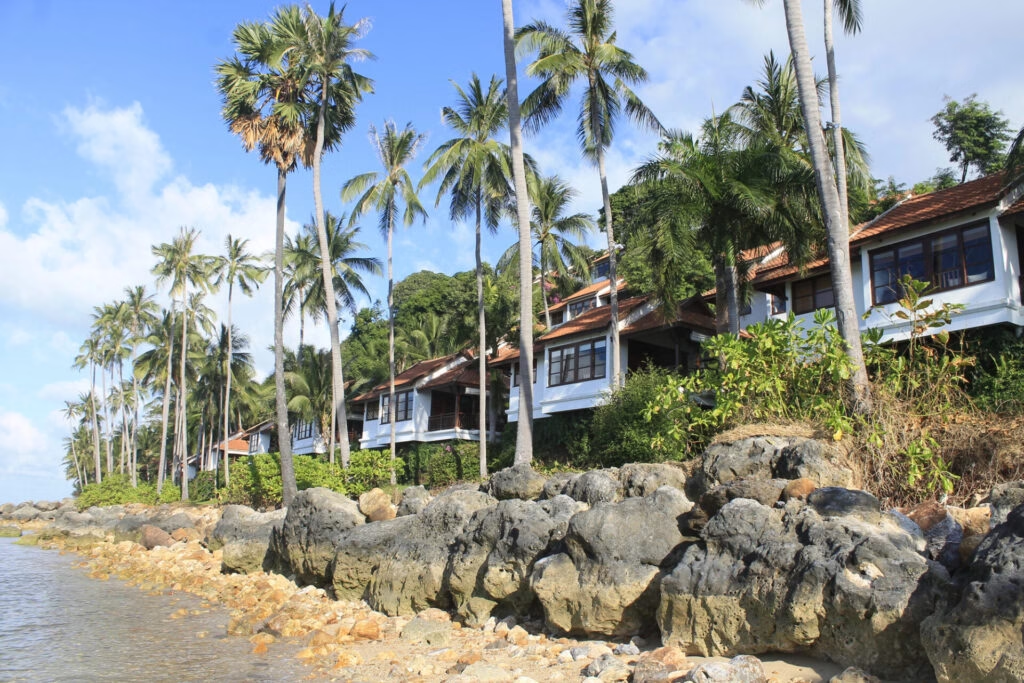
Where to stay on the north coast of Ko Samui:
- The Cosy Maenam Beach Resort – a very pleasant resort on Maenam Beach with excellent value for money
- Escape Beach Resort – a good-value, attractive resort at the end of Maenam Beach
- Forest Hill Residences – a beautiful private villa just a short distance from Fisherman’s Village
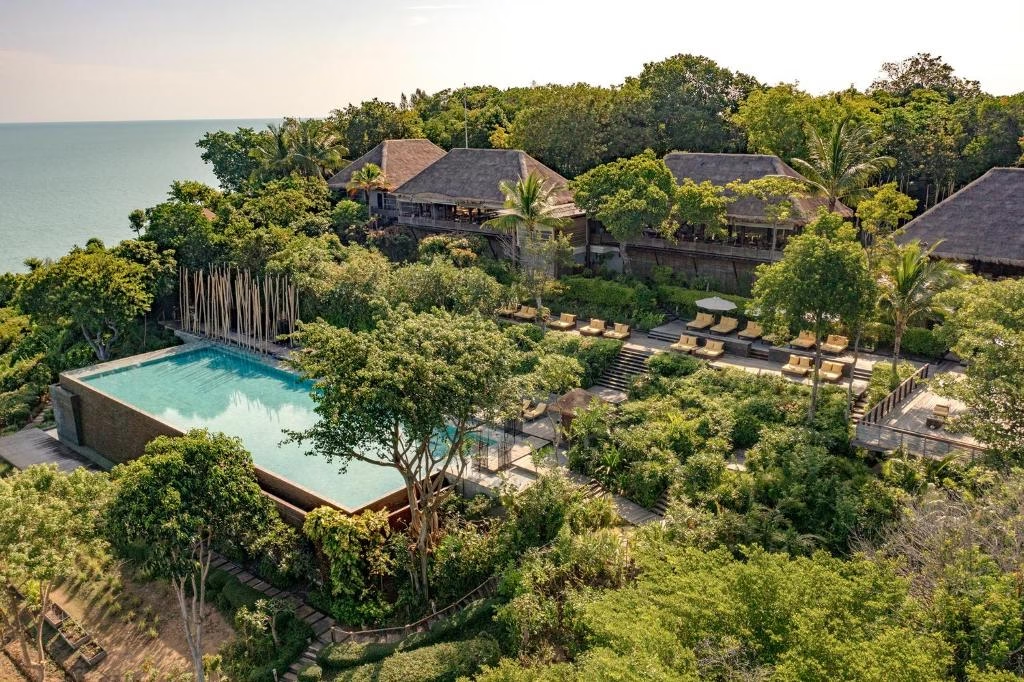
Special pick: Six Senses Samui — an ultra-luxurious villa resort on the northeastern tip of the island, complete with world-class wellness and spa treatments.
East Coast: Busier, But Convenient
The eastern coastline — particularly Chaweng and Lamai beaches — is the most developed part of the island. If you want everything within easy reach — restaurants, shops, massages and nightlife — this is the logical choice.
Just be prepared for higher prices.

Where to stay on the east coast of Ko Samui:
- Chaba Cabana Beach Resort – a lovely family-friendly resort on Chaweng Beach at very reasonable rates
- Buri Rasa Village – an excellent adults-only resort right on Chaweng Beach
- SALA Samui Choengmon Beach Resort – a top-tier spa resort on Choeng Mon Beach
- Thongtakian Resort – simple bungalows right on Crystal Beach
- Ammatara Pura Pool Villa – a large traditional villa resort right on Lamai Beach
- Villa Camille – a villa sleeping up to 10 on the hillside above Lamai, with a stunning pool and views
West Coast: Peace, Resorts & Sunsets
The western part of Ko Samui (Lipa Noi, Taling Ngam) is ideal for anyone seeking peace, privacy, and beautiful sunsets. You’ll mostly find resorts and quiet hotels here, with fewer restaurants and virtually no nightlife.
This area makes the most sense for couples and families who plan to spend more time at their resort and are happy renting a car.

Where to stay on the west coast of Ko Samui:
- Nikki Beach Resort & Spa Koh Samui – a classic spa resort on Lipa Noi
- Lipa Bay Resort – a very affordable, relaxed resort on Lipa Noi
- Villa Sereno Beachfront – a lovely beachfront villa near Nathon Pier at very reasonable rates
- The Humble Villas – charming villas on the northern tip of the island
- Ida B Domain Resort – a stunning villa resort in nature with an incredible pool and sea views
South Coast: Best Value for Money
The southern coastline is the least developed and quietest part of the island. If you don’t plan to stay exclusively within your resort, you’ll need a scooter or a car.
On the flip side, you’ll find some truly beautiful accommodation here at very reasonable prices. On our last visit we rented a fantastic jungle-view villa near the Na Muang waterfalls and didn’t regret it for a second.

Where to stay on the south coast of Ko Samui:
- PawPaw Resort – pleasant bungalows near Natien Beach
- Vimaan Vilai – the incredible villa we stayed in ourselves
- Centara Villas Samui – a very lovely villa resort next to Natien Beach at surprisingly good rates
- Cape Laem Sor Estate – absolutely stunning luxury villas on the southern tip of the island
What to See & Do on Ko Samui
Ko Samui isn’t exactly an island of monuments or big-ticket attractions. People come here mainly for beaches and relaxation. That said, there are plenty of worthwhile short trips to keep you busy.
Wat Phra Yai & Big Buddha
The island’s most famous and most accessible temple complex. You’ll find it in the northeast of Ko Samui, close to the airport. The focal point is a 12-metre-tall golden Buddha statue that’s visible from a distance.

Wat Plai Laem
Just a short distance from Big Buddha, you’ll find the Wat Plai Laem complex. It feels more lively and colourful than many other Thai temples, blending traditional Thai and Chinese elements with striking statues and a fish-filled lake. It also features a large Buddha statue and a statue of the goddess Guanyin.

Na Muang Waterfalls
The Na Muang waterfalls are among the best-known natural attractions in the island’s interior. There are actually two separate falls (Na Muang 1 and Na Muang 2), which differ in accessibility and water volume.
Expect considerable seasonal variation — in the dry season you might find little more than a trickle, while after heavy rains the waterfalls are genuinely impressive.

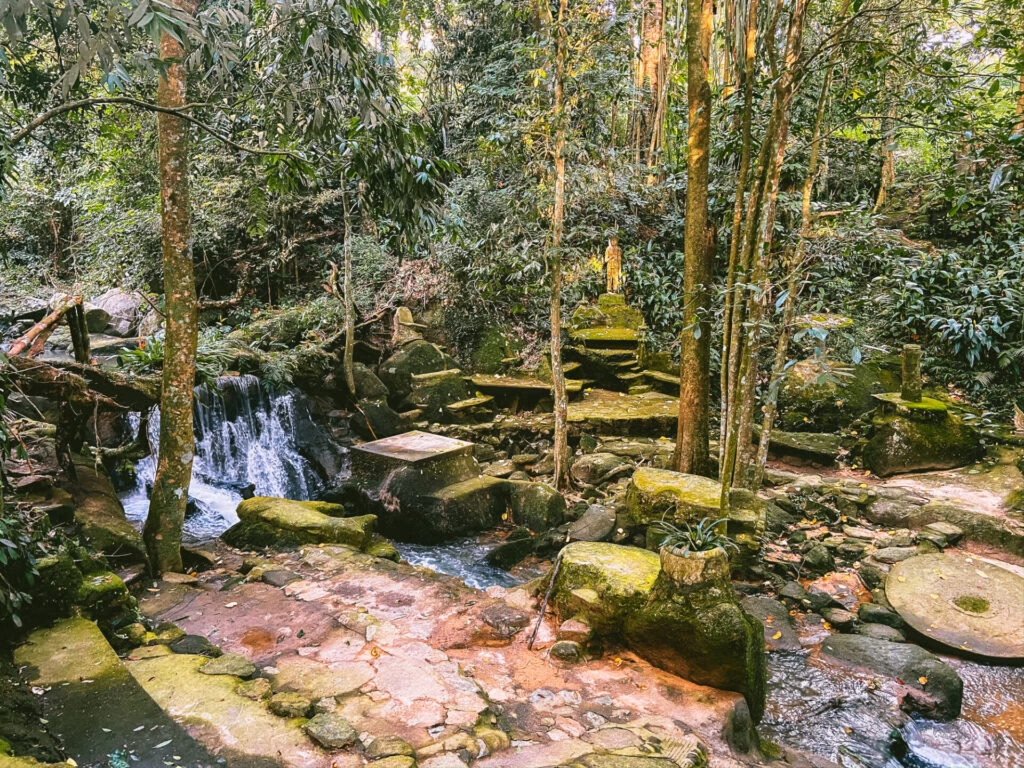
Secret Buddha Garden (Tarnim Magic Garden)
A slightly quirky spot hidden in the hills of Ko Samui’s interior. The garden, filled with statues, was built by a local farmer and feels more like a personal art project than a conventional tourist attraction.
The road up is steep and in poor condition — a car or a more powerful scooter is ideal. A visit takes around 30–45 minutes and works well combined with other inland excursions.
Viewpoints & the Island’s Interior
Ko Samui is hilly and the interior is full of great viewpoints. Most aren’t officially signposted, but enterprising Thais have set up a small café or smoothie stall at quite a few of them.
It’s well worth exploring beyond the main coastal ring road — you’ll see plantations, jungle, and a completely different side of Samui from what you find in the tourist centres.

You don’t need to plan a specific route — the best spots often appear by chance. Just watch out for unpaved tracks: maps tend to assume you’re a local in a 4×4 pickup rather than a tourist in a small hire car. After rain, some of these paths can be tough going even on a scooter, so ride carefully.

Pra Buddha Dīpankara
A hilltop shrine with a viewing tower almost in the centre of the island. You get a beautiful view over the eastern coastline, and with a bit of luck you might have a chat with one of the monks.
Nearby, stop in at a lovely restaurant that also has wonderful views.
Pig Island Day Trip
A short boat ride from Thong Krut Pier on the south coast brings you to the small island of Ko Mat Sum. It’s famous mainly for its free-roaming pygmy pigs, which you can pet — but it also has a beautiful, peaceful beach and a great laid-back bar.
The trip usually also includes a stop at the neighbouring islet Ko Taen, where you’ll find another lovely beach, a mangrove walk, and a large Buddha statue.

You can also combine the trip with snorkelling.
Prices start at 1,450 THB per person and I’d recommend booking in advance.
Elephant Sanctuaries: How to Choose Ethically
Elephant “attractions” are one of the most sensitive topics in Thai travel. Ko Samui has a surprisingly large number of them, and some market themselves directly as rescue centres or sanctuaries for retired elephants.
Ethical sanctuaries will never allow elephant riding and, as a rule, also offer no direct physical contact with the animals (feeding from a safe distance through a fence may be the exception).
The seemingly magical and tempting experience of swimming with elephants is only possible if those elephants have been through a harsh — and deeply unethical — training process. It is not something offered by genuinely ethical operations.

Places that present themselves as “rescue centres” or “eco-centres” — but still run purely as tourist businesses for profit, even without rides or hands-on contact — sit in a greyer area.
I’d recommend reading more on the topic before you visit, for instance on Ivana Grešlíková’s blog, and doing your own research.
Things to Do on Ko Samui
I’d recommend slowing down and choosing activities based on your mood, the weather, and your energy levels. As I said in the introduction — if you’re drawn to active exploration, adrenaline sports and wild parties, look elsewhere. Activities on Ko Samui are mostly tied to relaxation and unwinding, including the sports on offer.
Snorkelling & Diving
One of the best experiences on Ko Samui is taking a boat trip for snorkelling or diving. The options are wide-ranging — from half-day excursions to full-day programmes with multiple stops.
Whether it’s Ang Thong Marine Park (more on that below) or the waters around Ko Tao, you can expect coral reefs and rich marine life. Unfortunately, most of the coral directly around Ko Samui is dead, and there isn’t much to see in the immediate waters.

If diving is your main focus, head straight to Ko Tao or the islands of the Andaman Sea instead.
That said, you can still do a PADI diving course on Ko Samui itself. The local dive centre is near Chaweng Beach.
Kitesurfing
Ko Samui is one of the best kitesurfing spots in Thailand, including for beginners. Good conditions are usually found along the southeastern coastline — the area around Hua Thanon had the highest concentration of kiters we saw.
If you fancy lessons, you can choose from several local schools such as Kiteboarding Asia, which also rents equipment.

Other Water Sports
When conditions allow, you can also sign up for beginner surf lessons. For experienced surfers, Ko Samui doesn’t offer any suitable breaks.
For something with a bit more of an adrenaline kick, try jet skiing or water skiing — look for these on the busier beaches on the east and north coasts.
Jungle Zipline
Fancy a bit of adventure in nature? Head into the island’s interior and fly above the jungle on a zipline.
I’d strongly recommend booking in advance — in season, you won’t get a spot without a reservation.
Most bookings include a transfer from your accommodation and back. Prices start at 1,800 THB per person.

Massage, Wellness & Spa
Ko Samui has a strong wellness tradition and ranks among Thailand’s best destinations in this area. You’ll find everything from basic beach massages to world-class spa facilities in luxury resorts.
A traditional Thai massage at a local salon is very affordable and quality is generally solid. Expect to pay between 350 and 600 THB for an hour-long massage.

Higher-end spa resorts and centres offer comprehensive treatments — from facial and foot reflexology to herbal baths and Ayurvedic detox rituals. Prices naturally vary a lot by resort: massages typically start at 2,000 THB, and a full day of treatments at a luxury spa can easily exceed 20,000 THB.
Yoga & Retreats
Thanks to its solid infrastructure and laid-back atmosphere, Ko Samui has become a popular destination for yoga and wellness stays. There are studios and retreat centres focused on yoga, meditation, detox, and longer stays centred on a healthy lifestyle.
You can also sign up for drop-in yoga classes across the island. Prices start at 400 THB for a group class.

Muay Thai – Thai Boxing
Plenty of people come to Thailand specifically for its favourite sport. Head to a match at Samui International Muay Thai Stadium to soak up the atmosphere, or sign up for a training session yourself.
Markets & Evening Atmosphere
Don’t expect big parties and a Bangkok-style nightlife scene on Ko Samui. The island does, however, offer pleasant evenings with markets and laid-back smaller bars.
The best-known is the Fisherman’s Village Night Market in Bophut, held several times a week. Expect plenty of great street food to taste, a bit of shopping, and an enjoyable evening stroll you can round off at one of the local bars.
Smaller local markets pop up in other parts of the island too, and they often have a more authentic feel.
Cooking Classes
If you love Thai food, a one-day cooking class is highly recommended. Most courses include a morning market visit, cooking several dishes, and sitting down together to eat what you’ve made. It’s a low-key but genuinely rewarding experience — great for couples and solo travellers alike.
Food & Restaurants
Ko Samui has a vibrant food scene, largely thanks to its popularity with wealthier Thai tourists who are happy to spend a good chunk of their holiday eating well.
You can choose from local markets and street food, modern bistros, classic Thai restaurants, all manner of Western-fusion spots, and cuisines from across Asia — ranging from a 60 THB local lunch to fine dining.
What to Eat on Ko Samui
The local cuisine follows the same lines as the rest of southern Thailand. Expect excellent curries, fish, seafood, and street barbecue.

Dishes worth trying:
- Pad thai – the classic street noodle dish.
- Som tam – spicy green papaya salad.
- Tom yum – hot and sour prawn soup.
- Tom kha – spiced coconut milk soup.
- Green or red curry – classic Thai curry with meat, fish, prawns or tofu.
- Satay, Moo Ping, Kai Yang – grilled meat on skewers, ideal as street food.
- Grilled fish and seafood – genuinely excellent here.
- Pad Ga Prao (Thai Basil Stir-Fry) – classic stir-fried minced meat with Thai basil and chilli.
- Mango Sticky Rice – glutinous rice with coconut milk and fresh mango.

Markets & Street Food
Street food is less dominant on Ko Samui than in Bangkok or the north, but it still plays an important role. Markets are also a great way to try multiple dishes in smaller portions.
Where to stop:
- Si Khao Night Market (Bo Phut)
- Mae Nam Night Market (Mae Nam)
- Fisherman’s Village Night Market (Bo Phut)
- Lamai Fresh Food Market (Lamai)
- Srifa Market (south)
- Nathon Fresh Market and Night Food Market (Nathon)
Food stalls open at breakfast, lunch and dinner times on most main roads, and often outside 7-Eleven and Lotus convenience stores too.

Restaurants & Cafés
Here are a few places I’ve personally tried. We stayed in the south, so most recommendations are from that area.
For more, search Google Maps or browse the Michelin Guide.
- Gram’s House – outstanding Thai restaurant and café; my top pick for brunch.
- Nine Point – a lovely café/restaurant with incredible sunset views.
- Boys Organic Coffee – excellent coffee near Thong Krut Pier.
- ก๋วยเตี๋ยวสมุยสูตรดั้งเดิม เจ๊บล – superb local noodle soup spot in Hua Thanon.
- Isaan food – excellent grilled fish and traditional Isan dishes.
- Drip Indeed – a great café in the north.
- AQUABICA 101 Coffee and Eatery – a wonderful beachside café on the northwest tip of the island.
- Cool Bar – our favourite laid-back bar and street food spot on Natien Beach.
- No.11 CAFE & BAR – a reliable spot for a meal on Lamai Beach.
Practical Food Tips
- If you see a restaurant packed with locals, it’s usually a good sign for quality and value.
- At beachfront restaurants, check prices beforehand — differences can be significant.
- Tipping isn’t obligatory, but rounding up the bill or leaving small change is common practice.

Day Trips from Ko Samui
Ko Samui also works well as a base for exploring other spots in the Gulf of Thailand. Day trips off the island aren’t essential, but if you have a few spare days and good weather, they can add a lot to your stay. Just don’t underestimate the impact of seasonality.
Ang Thong Marine Park
Ang Thong Marine Park is an archipelago of dozens of limestone islets, crystal-clear lagoons, and viewpoints scattered across the Gulf of Thailand.
You’ll usually book the trip as an organised full-day boat programme. Expect an early departure, several stops, and a return in the late afternoon or early evening.
The park offers a hike to one of the viewpoints, snorkelling, or a short kayak trip. You’ll also have time to relax on the beach and enjoy a light lunch.

Practical notes:
- the park is temporarily closed each year (typically November to mid-December),
- I’d recommend a speedboat option — it saves a lot of time in transit,
- smaller groups or private trips are pricier but considerably more enjoyable,
- the experience is heavily weather-dependent.
If you’re short on time or travelling with young children, consider whether a long day on a boat makes sense for you.
If you want to experience the marine park to the fullest, I’d recommend spending a night there. Some tours offer overnight stays in a tent or bungalow, giving you more time and — most importantly — the chance to see the stunning sea at both sunset and sunrise.

Ko Tao – Snorkelling & a Slower Pace
Ko Tao is a smaller island north of Ko Samui, best known for snorkelling and diving.
Local agencies often offer it as a day trip, but ideally it deserves at least one night, preferably two — partly because it’s a fair distance from Ko Samui, but mainly because you’ll want more time to truly enjoy the incredible underwater world.

Ko Phangan – Full Moon Party, Beaches & Jungle
Ko Phangan became famous for its Full Moon Party — massive beach parties at every full moon, later joined by Half Moon and Quarter Moon events.

But thanks to its beautiful beaches and relaxed vibe, you’ll love the island even if parties aren’t your thing. The interior is also well worth exploring, with waterfalls and breathtaking sea viewpoints.
Again, I’d recommend at least one overnight stay — though Ko Phangan is fortunately much closer to Samui than Ko Tao.

Practical Information
The island is well set up for tourists, but expect some things to work differently than at home — a little background knowledge can save you time, money, and frustration.
How to Get to Ko Samui (Airport & Ferries)
Ko Samui is one of the most accessible Thai islands, but different transport options vary significantly in price, journey time, and comfort.
The right choice depends mainly on your budget, the length of your stay, and whether you’re travelling solo, as a couple, or with children.
Flying directly to Ko Samui (fastest & most comfortable)
Ko Samui has its own airport (USM), located in the northeast of the island. It’s operated exclusively by Bangkok Airways, so there’s no competition.
Direct flights most commonly come from Bangkok Suvarnabhumi (BKK), as well as Phuket and Chiang Mai. In season, direct connections to Singapore are also available.

Approximate fares (one-way):
- Bangkok → Ko Samui: 2,500–8,000 THB depending on season, purchase time, and departure time
- Chiang Mai → Ko Samui: 1,500–5,000 THB
The Bangkok flight is short (around 1 hour) and the whole transfer including check-in is the fastest option available. The downside is cost — Ko Samui is consistently one of the priciest domestic routes in Thailand.
Bangkok Airways flights can be booked via codeshare on a single ticket with your international flight from Europe, giving you a guaranteed Bangkok connection and an overall price that may not be as high as you’d expect.
Flying direct makes the most sense:
- for shorter stays,
- when travelling with children,
- if you don’t want to spend time on transfers.
Book domestic flights directly on the Bangkok Airways website. I’d recommend avoiding flights on turboprop aircraft (ATR 72 or ATR 42).

Flight + Ferry Combination (Best Value)
Want to save money without adding stress? Use Nok Air’s fly-and-ferry offer, which flies you to Surat Thani or Nakhon Si Thammarat airport with an included bus transfer to the ferry terminal and boat to Ko Samui — all on one ticket.
The total journey takes approximately 8 hours depending on the combination and connections.
Alternatively, just buy the flight and make your own way from the airport — ferries run frequently and you can almost always find a spot without booking ahead.
Approximate costs:
- flight Bangkok → Surat Thani: 800–2,500 THB
- bus + ferry: 300–600 THB
All in, you can get to Ko Samui from Bangkok for 1,500–3,000 THB — often less than half the price of a direct flight.
Full details on the Nok Air website.
Overnight Train + Ferry Combination
The most complicated option, but reliably the cheapest.
Take the overnight train to Surat Thani, then transfer by bus or local songthaew pickup to Don Sak pier.

Ferries & Boats — What to Know
Ferries to Ko Samui depart from Don Sak pier on the mainland. Both regular ferries and fast catamarans operate the route.
Key differences:
- regular ferry: slower but cheaper and more stable in rough weather
- fast boat / catamaran: quicker but pricier and more sensitive to waves
Approximate ferry prices:
- foot passenger: 150–300 THB
- car: 500–700 THB
In poor weather (typically autumn), delays and cancellations can happen. It’s always wise to avoid scheduling tight connections.
Quick Summary
- I want to get there fast and stress-free: fly direct to Ko Samui
- I want to save money and have time: fly/train + ferry
- Travelling with children: fly direct to Ko Samui
- Travelling light and flexibly: combined transport via the mainland
Getting Around the Island
Ko Samui is a fairly large island and your choice of transport will significantly affect both your comfort and budget.
Public transport in the European sense doesn’t exist here, so you’ll need to plan around one of the options below.
Renting a Car
Renting a car is practically speaking the most comfortable and often the most sensible option, especially if you’re travelling as a couple or group, with children, or planning to move around the island regularly.
You can hire a car:
- at Ko Samui airport — both international and local rental companies,
- in tourist centres (Chaweng, Bophut),
- or through your hotel or resort.
Recommendation: book online in advance, especially in high season. The selection is better and prices are usually lower than walking in without a reservation.
Approximate prices:
- small car: 900–1,200 THB / day
- SUV or larger: 1,200–1,800 THB / day
Basic insurance is usually included but often with a high excess. Check the condition of the vehicle and take photos when you pick it up.
You can read more in our guide How to Rent a Car Abroad and What to Watch Out For.
Driving on Ko Samui is relatively straightforward. Traffic keeps to the left and the main coastal road is in decent condition. Main things to watch for:
- scooters without lights after dark,
- slippery sections after rain,
- steep and sometimes potholed roads in the interior.
Scooter
Offers maximum flexibility and low running costs, but also carries the highest safety risk on the island — though significantly lower than on, say, Phuket, thanks to lighter traffic.
Note: you’ll need an international driving licence with a category A endorsement. The fact that you can ride a scooter in Europe on a car licence doesn’t apply in Thailand — and it wouldn’t matter to your insurer either if something went wrong.
Approximate prices:
- standard scooter (125cc): 200–300 THB / day
- more powerful models: 300–400 THB / day
Songthaew (Shared Pickup Taxi)
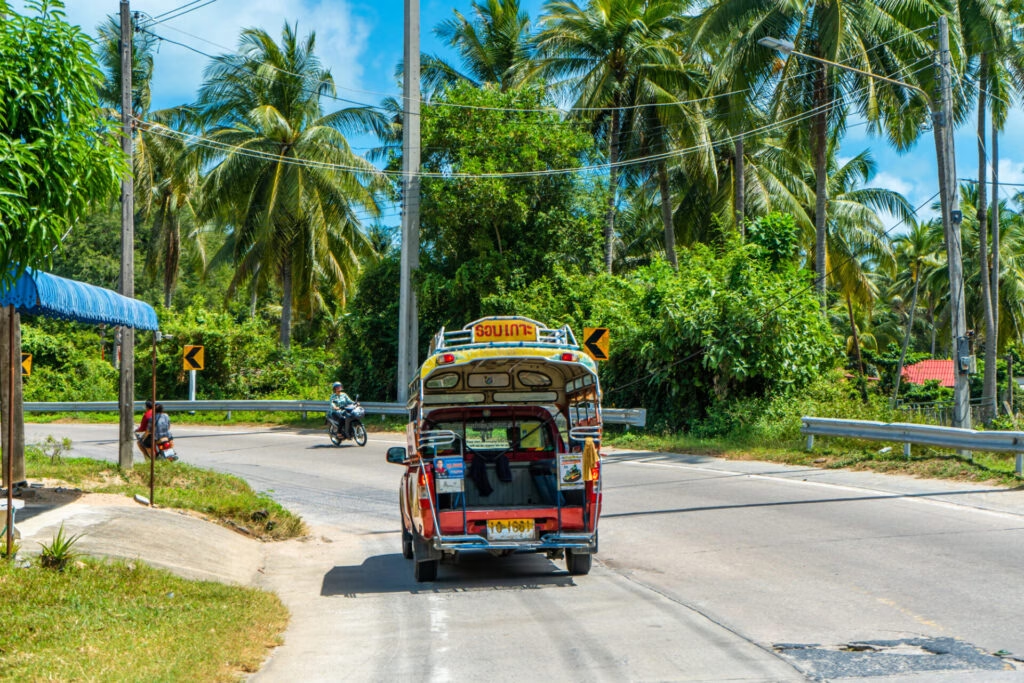
Songthaews are open pickup trucks that run along the main coastal loop. They’re not a fixed bus service — you flag them down by the road.
They operate either as shared rides, or convert to a private taxi if there aren’t enough passengers.
Approximate prices (per person):
- short hop (5–10 min): 50–80 THB
- longer route (15–20 min): 100–200 THB
Prices are often negotiated beforehand — it’s worth asking before you get in, especially off the main route.
Car with driver
For sightseeing trips around the island, most people either join an organised tour or arrange a car with driver through their accommodation.
Prices start at around 2,000 THB per day, which is quite reasonable split between a group. You get safe travel, comfort, flexibility, and usually an English-speaking driver who’s happy to share plenty of interesting facts about the island.
Taxi & Grab
Regular taxis on Ko Samui do exist, but wait times can be long and longer journeys get expensive. Fares are usually fixed.
Approximate prices:
- airport → Chaweng / Bophut: 400–600 THB
- shorter island journeys: 300–500 THB
You can also use the Grab app, which at least lets you see roughly when the car will arrive and what the fare will be.
We often had drivers cancel the ride shortly after accepting — presumably not wanting to travel too far and then drive back empty. Getting another driver could mean another half hour of waiting, with no guarantee.
Taxis are best reserved for airport arrivals and departures — and even then I’d recommend arranging a pickup through your accommodation for a more reliable experience.
Money & Prices
Ko Samui is one of the pricier Thai islands, and it’s worth factoring that into your budget from the start. Accommodation, transport and many services are more expensive here than on the mainland or smaller islands.
That said, smart choices still go a long way and you can travel very comfortably without spending a fortune.
Indicative Daily Budget
To give you a rough idea of what Ko Samui might cost, here are indicative budgets per person / per day (excluding flights to the island):
- Budget style: 1,000–1,800 THB (simple accommodation, local food, scooter)
- Mid-range: 2,000–3,500 THB (good hotel or apartment, mix of local and better restaurants, car or scooter hire)
- Higher comfort: 4,000 THB and up (resort, beachside restaurants, taxi, spa)
Families often benefit from hiring a car and staying in apartment-style accommodation, which can significantly reduce the per-person cost. On the other hand — as any parent knows — snacks, ice creams and little extras for the kids add up quickly.
Accommodation
Prices vary considerably by season and location:
- simple bungalow / guesthouse: 500–1,200 THB / night
- decent hotel or apartment: 1,500–3,000 THB / night
- beachfront resort: 3,000–6,000 THB / night
- luxury resorts: 6,000 THB and up
In high season (winter), prices can rise by 20–40%. For longer stays, it’s worth asking about discounts or looking for monthly rentals.
Food & Drink
Price differences for food on Ko Samui are significant — it mainly depends on where you eat:
- local canteen / street food: 50–100 THB per dish
- regular restaurant: 150–300 THB
- beachfront or tourist-zone restaurant: 200–600 THB
- Western cuisine / better establishments: 300–800 THB
Drinks:
- bottled water (7-Eleven): 10–15 THB
- coconut or fresh juice: 40–100 THB
- beer from a shop: 40–60 THB
- beer at a restaurant: 80–150 THB
- cocktail: 150–300 THB
Cash, Cards & ATMs
- The official currency is the Thai Baht (THB).
- Card payments are standard at hotels, resorts, and better restaurants.
- Smaller shops, markets and rental places often require cash.
ATMs are available across the island, but withdrawals carry a fee of around 220 THB. The only way to avoid this is by opening a Thai bank account, which isn’t straightforward.
It’s worth withdrawing larger amounts at a time and paying by card wherever possible.

Ko Samui Weather & Best Time to Visit
Weather is one of the key planning factors for Ko Samui. The island sits in the Gulf of Thailand and has a different monsoon pattern from Phuket or Krabi — a practical advantage when combining destinations.
In practice:
- January–September: generally the best period; the most stable weather runs from February to June
- October–December: the riskiest part of the year; more frequent rain, rough seas, and restricted boat trips
Rain usually comes as intense showers rather than all-day downpours. Even so, several consecutive days of bad weather can seriously affect swimming and boat excursions.

Safety & Health
Ko Samui is generally a safe destination, including for solo travellers and families. Most problems are related to transport, underestimating the sun, or insufficient mosquito protection.
What to Watch Out For
- Road accidents — scooters are the main risk; only ride one if you’re experienced,
- Rough seas — don’t swim when there are large waves,
- Sun and heat — stay hydrated, wear sunscreen and a hat; the tropical sun is intense,
- Mosquitoes — dengue fever is a real risk on Ko Samui. Use local repellent (Western brands don’t work well in the tropics) and always wear long trousers and sleeves in the evenings.
Health
Tap water is not safe to drink. Buy bottled water or refill from filtered water dispensers — though I didn’t see many of those on Ko Samui.
Pharmacies are available across the island and several operate around the clock.
For injuries or more serious health issues, use one of the private clinics such as Bangkok Hospital. They offer an excellent standard of care and most travel insurers have no issue with them — just confirm this in advance with your provider.
Travel Insurance
Don’t forget comprehensive insurance, especially if you plan to dive, kitesurf or ride a scooter. These activities may not be covered by standard travel policies.
I personally rely on True Traveller.

Ko Samui with Kids
Ko Samui is one of the best beach destinations in Thailand for travelling with children — mainly thanks to its combination of easy access, good infrastructure, relative calm, quality healthcare, and a pace that’s easy to adjust to your family’s needs.
It’s not a destination bursting with children’s attractions, but I’d highly recommend it — even with very young children. Choose the right area, hire a car, and don’t push the pace, and you’ll have a wonderfully relaxed family holiday.

Where to Stay on Ko Samui with Kids
Location is crucial for a family holiday. The ideal combination is a calm setting, easy swimming within walking distance, and short daily transfers.
Best areas:
- Mae Nam — long, quiet beach, minimal nightlife, good accommodation prices.
- Bo Phut — excellent infrastructure, Fisherman’s Village, restaurants and shops within walking distance.
- Lipa Noi — peaceful area with a gradual sea entry.
- Lamai Beach — if you want a slightly livelier beach.
Chaweng, by contrast, is better suited to older children or short stays — for families with young children it tends to be too busy and traffic-heavy.
Getting Around with Kids
Most families agree: a holiday on Ko Samui with children becomes unnecessarily complicated without a car. It lets you travel in air-conditioned comfort, easily transport all your beach gear, and head back to the accommodation mid-day if needed.
Practical notes:
- child car seats are not guaranteed — check availability with the rental company in advance,
- driving is much calmer here than on the mainland or on Phuket,
- distances are short — most trips take under 30 minutes.
Of course, if you’re staying at a resort right on the beach, a private transfer is perfectly fine and you won’t need a car.
Food for Kids
People often ask me whether kids can eat well in Thailand. Absolutely.
For our son we mostly ordered chicken with rice, grilled fish, and grilled prawns. And of course plenty of fresh fruit.

Anywhere can prepare food without chilli — just ask. Either in English (“no chilli”) or in Thai (“mai phet”).
Resorts and beach restaurants usually offer a children’s menu too — pasta, chips, pancakes and the like.
Health & Safety with Children
Medical care on Ko Samui is good, especially at private facilities. Even so, make sure you have:
- travel insurance with sufficient cover limits for children,
- a basic first-aid kit (fever, diarrhoea, minor cuts),
- a healthy respect for local conditions (sun, heat, sea).
Pay close attention to keeping kids hydrated and protected from the sun — even when it’s breezy and doesn’t feel particularly fierce. You’re in the tropics, and heatstroke can happen very easily — even under cloud cover. Children are even more vulnerable than adults.
Final Checklist: What to Sort Before You Go
Before you head to Ko Samui, run through this short list — it’ll help you avoid the most common mistakes and unnecessary complications:
- check the seasonality and weather for your travel dates
- decide how to get to the island (by plane or by boat) and book flights early if needed
- choose your accommodation area to match your travel style
- if travelling with children, book a car in advance
- take out suitable travel insurance

Ko Samui FAQ
When is the best time to visit Ko Samui?
The best time to visit Ko Samui is broadly January to September, when weather tends to be more stable and the sea calmer. The trickiest months are usually October and November, when heavy rain and wind are common and both swimming and boat trips can be affected.
How many days is ideal for Ko Samui?
The ideal length of stay is 7 to 10 days — enough time to explore different parts of the island, enjoy the beaches and day trips, while still leaving room to slow down. At 14 days or more, a more relaxed rhythm makes sense: wellness, yoga, or short trips to neighbouring islands.
Is Ko Samui good for families with children?
Yes — Ko Samui is one of the best Thai islands for families. It offers gentle beaches, quality healthcare, good roads, and a wide range of child-friendly accommodation. The ability to hire a car is a major plus, making daily logistics much easier.
What’s the best way to get around Ko Samui?
Hiring a car is the most practical option, especially for families or longer stays. Couples and solo travellers often choose a scooter, but that requires experience and care. Songthaew pickups and taxis work as supplements rather than a reliable primary option.
Is Ko Samui expensive?
Ko Samui is on the pricier side, but still offers good value. On a mid-range budget, you can travel comfortably for around 2,000–3,500 THB per person per day. The biggest price variations are in accommodation and transport.
Which are the best beaches on Ko Samui?
Consistently popular choices include Maenam Beach, Bophut Beach, and Lipa Noi — all calm and suitable for families. If you want more atmosphere and activity, Chaweng Beach or Lamai are your best bets.
Is it worth visiting Ko Samui during the rainy season?
It depends on the exact timing. Ko Samui’s seasons work slightly differently from the rest of Thailand — you can have a great holiday here even between April and August, when other destinations face extreme heat followed by heavy rains. Even during that period, it generally doesn’t rain all day — more typically short, intense showers. From September to November, Ko Samui is best avoided.
Are elephant parks on Ko Samui ethical?
Only some of them. Genuine ethical sanctuaries do not allow elephant riding or bathing with elephants, and focus on education and animal welfare. Skip any business offering elephant shows or photo opportunities.
Discover More of Thailand
Planning more of your Thailand trip? Browse our other in-depth guides:
Overview & Planning
Northern Thailand
- Northern Thailand Travel Guide
- Chiang Mai: Things to Do
- Chiang Rai Travel Guide
- Pai, Thailand Guide
- Mae Hong Son Travel Guide
- Mae Salong Guide
- Scenic Motorcycle Routes in Northern Thailand