This post is also available in:


Seville, Spain, is one of those cities you’ll want to keep coming back to. The first time, you’ll be drawn in by the famous monuments, culture, and history — the Alcázar, the Cathedral, the Giralda, Plaza de España, and flamenco.
But you’ll return mainly for the rhythm of the streets, the late evenings outdoors, the incredible gastronomy, the people, and the little details.
We’ve put together a detailed guide to the capital of Andalusia with plenty of practical tips – what to see, do, and taste, where to stay, and where to go for great coffee, flamenco, or day trips nearby. I’m also adding specific tips for visiting with kids.
You can also take a 1-2 day trip to Seville from Málaga, for which we have a separate guide: Málaga Guide: what to see, do, and taste + practical tips (including traveling with kids)

Why visit Seville
Seville will get under your skin. It’s a blend of the history of Arab rule in the region, Christian Andalusia, the era of Columbus’s voyages, and the colonization of Latin America.
This is where the voyages of discovery and conquest that laid the foundations of the Spanish Empire set sail from.
You can look forward to spectacular architecture, lots of fine details, or even the backdrop of the Game of Thrones series.

Seville isn’t a UNESCO site by accident. The history and traces of different cultures will leave an impression on everyone, even if you’re not particularly interested in architecture or history.

What’s also great is that you can explore most of the city on foot. Just wander around, stroll through the gardens, and peek into the Andalusian patios – the traditional open inner courtyards of old houses.
At the same time, you’ll eat incredibly well here. It doesn’t really matter if you prefer tapas in local spots or unique fine dining.
The food culture itself is an experience. In Seville, you’ll really enjoy late dinners outdoors. Locals often don’t start eating until around 10 PM, and they socialize, drink, and feast in the streets and large courtyards long into the night.
You’ll also enjoy Seville with kids; just exploring the courtyards and gardens of the Alcázar is sure to keep them entertained. Once they get tired of the monuments, you can take a break at the Isla Mágica theme park or the local large aquarium.

How long to go for and how to plan your days
For a first visit to Seville, I recommend at least two full days, ideally three. Anything less is just a quick dash through the main sights, and you won’t have enough time to soak up the atmosphere and dive into the history.
While Seville feels compact and you can walk around much of the center, it also requires plenty of space for slow discovery and relaxed, long dinners.
In summer, be prepared for exhausting heat, which definitely doesn’t make rushing through the sights any more appealing.
I’m not saying a one-day visit is pointless, of course. You’ll just miss out on many layers of the city’s history and atmosphere.

Seville in 3 days
A three-day option is ideal for a first visit if you want to catch all the essentials without feeling like you’re just running from one queue to the next.
Spend the first day in the historic heart: the Alcázar in the morning, followed by the Cathedral, Giralda, and surrounding streets. This is Seville’s core in its most concentrated form and also the part of your trip where it makes the most sense to book tickets in advance.
Make the second day more of a walking day. Head to Plaza de España and María Luisa Park, then continue to the river and the Triana district. There are still plenty of places to discover in the historic center too. Enjoy the public spaces, promenades, and parks, and watch everyday city life unfold.
Keep the third day flexible. If you’re more into monuments and history, check out the General Archive of the Indies, or other churches and palaces. If you prefer city life, head out to discover other neighborhoods, parks, or the modern Metropol Parasol structure.

Seville in 4 days
The most practical length of stay for anyone who wants to get to know the city a bit more deeply. You can leave the first day for wandering and gradually discovering the historic center, including the Cathedral.
Leave the second day for a more detailed, leisurely exploration of the Alcázar. On the third and fourth days, you’ll have enough time to walk through other neighborhoods and smaller monuments. Plus, you’ll have plenty of time to taste, observe, and rest during the hot afternoons without guilt, just like the locals do.
With four days, Seville starts to work much better with kids too. Parents can get their fill of monuments, while kids get more space for “their” part of the program.

Seville in 5 to 6 days
The ideal option if you really want to have enough time for everything and add one or two day trips nearby. Whether it’s some of the beautiful Andalusian villages, monuments, or one of the beaches near the city of Cádiz.
In the evening, you’ll always return to the buzz of Seville.

Where to stay in Seville
Choose your accommodation based on your travel style rather than distance from the main sights. The city is compact and the main neighborhoods are connected, so a difference of a few hundred meters usually doesn’t matter much. Noise, the evening rhythm of the area, or accessibility from the airport are more important.
Air conditioning is also essential; in summer, definitely look for accommodation that has it.
Conversely, in winter, I highly recommend choosing more modern neighborhoods; it’s significantly colder in the historic center than you might expect.

For a first visit: Santa Cruz, Arenal or Centro
If you’re going for 3–4 days and want the main sights close at hand, the easiest choice is Santa Cruz or Arenal, or the historic alleys in Centro.
Santa Cruz is closest to the main attractions but tends to be more touristy, expensive, and noisy. Arenal is a practical compromise: you’re still very close to the center, but it’s easier to walk to the river, Triana, and for evening plans.
Centro has its own specific atmosphere, and you’ll likely be staying in one of the original houses there.
Specific recommended accommodations:
- The Wall of the Alcázar Palace – a well-equipped apartment literally right by the Alcázar wall
- Casa Tomás Boutique Hotel – a stylish little hotel in Arenal
- Rodo Arenal – a very nice and well-equipped apartment 5 minutes’ walk from the Alcázar
- Hotel Murillo Reinoso – a small family-run hotel with a pool, very good value for money
For a longer stay: Triana or Feria
For 5 days or more, I’d look more at Triana or around the Alameda de Hércules boulevard in the Feria neighborhood.
Triana works great if you want to go out in the evening, have bars and tapas nearby, and not be right in the thick of the tourist center. Feria and the north of the center make sense if you’re drawn to a more local gastro scene and atmosphere.
Specific recommended accommodations:
- Magno Apartments Pureza – nice new apartments with a perfect location
- Aires de Triana – an excellent small apartment with a terrace, fully equipped and with a luxury price/quality ratio
- Monte Triana – a medium-sized hotel with a pool, gym, underground parking, and at a decent price
- B&B Casa Alfareria 59 – a pleasant little guesthouse with extra hospitable owners

What to see and visit
It would be easy to stick only to the most famous spots. But you’d be missing out on a lot. Even UNESCO protects the entire ensemble of buildings and their history, not just individual monuments.
The good news is that most of the main sites are relatively close to each other. You can walk to all of them.
Just keep in mind that the Seville heat, queues, and the amount of detail inside the monuments can quickly overwhelm your day. So definitely don’t plan to see “as much as possible,” but choose one or two major stops for each day and leave the rest to the calmer rhythm of the streets, parks, gardens, and food.

Real Alcázar
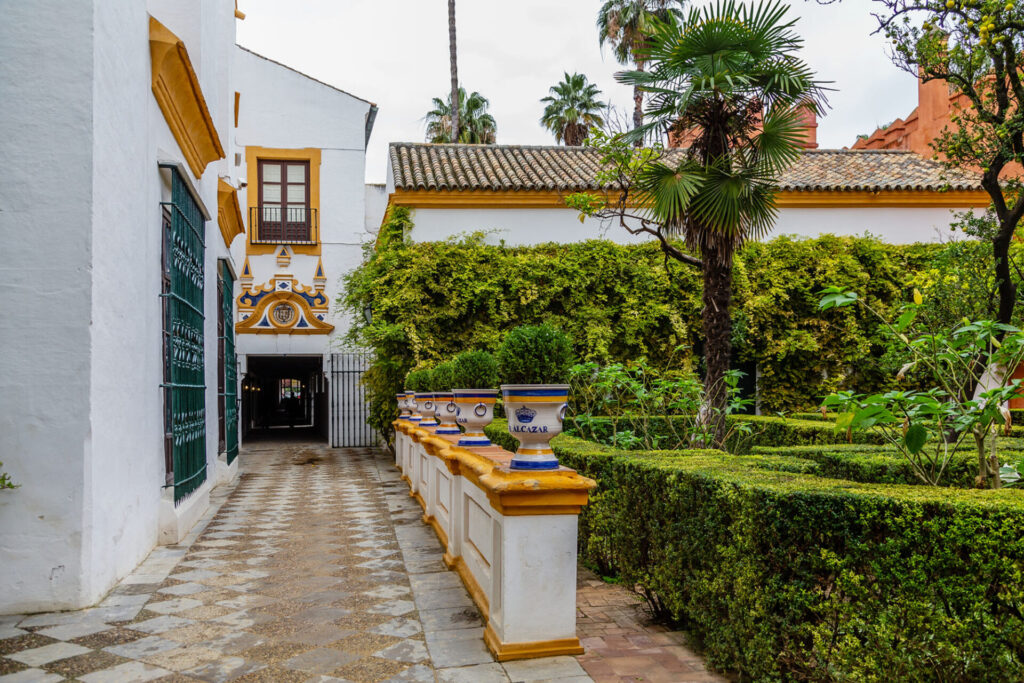
If there’s one place in Seville you shouldn’t miss, it’s the Real Alcázar royal palace complex. This is where the city’s diverse history will truly come alive for you, plus you’ll find beautiful gardens, courtyards, ponds, and fountains.
The palace was built starting in the early Middle Ages, so its architecture reflects both the Islamic and Christian stages of the city. Its history likely dates back to 913, during the reign of Abd ar-Rahman III.

Ideally, come first thing in the morning because of the heat, or in the late afternoon, though it will be busier then. It opens at 9:30 AM and closes at 7:00 PM. In reality, this means you can buy the last ticket at 6:45 PM and they’ll start “ushering” visitors out around 7:45 PM.
In winter, opening hours are two hours shorter, so it officially closes at 5:00 PM.
In summer, you can also get into the gardens at 9 PM as part of an evening entry, and various concerts and performances take place here too.
Be sure to buy tickets for the Real Alcázar in advance, especially during the season from May to October. You can buy them either on the somewhat confusing official website or easily on GetYourGuide.
Basic admission is €15.50, reduced is €8.
Entry to some parts is charged separately, but for a first visit, I think it’s unnecessary to go there.
Thanks to its variety, gardens, and water, you’ll enjoy exploring the Alcázar even with kids. Just expect that you probably won’t manage to see everything.
Cathedral and La Giralda
Seville Cathedral is extraordinary for its size, historical significance, and how naturally it anchors the main axis of the center. It is the largest Gothic cathedral in the world and the 4th largest church overall. It is listed as a UNESCO World Heritage site.
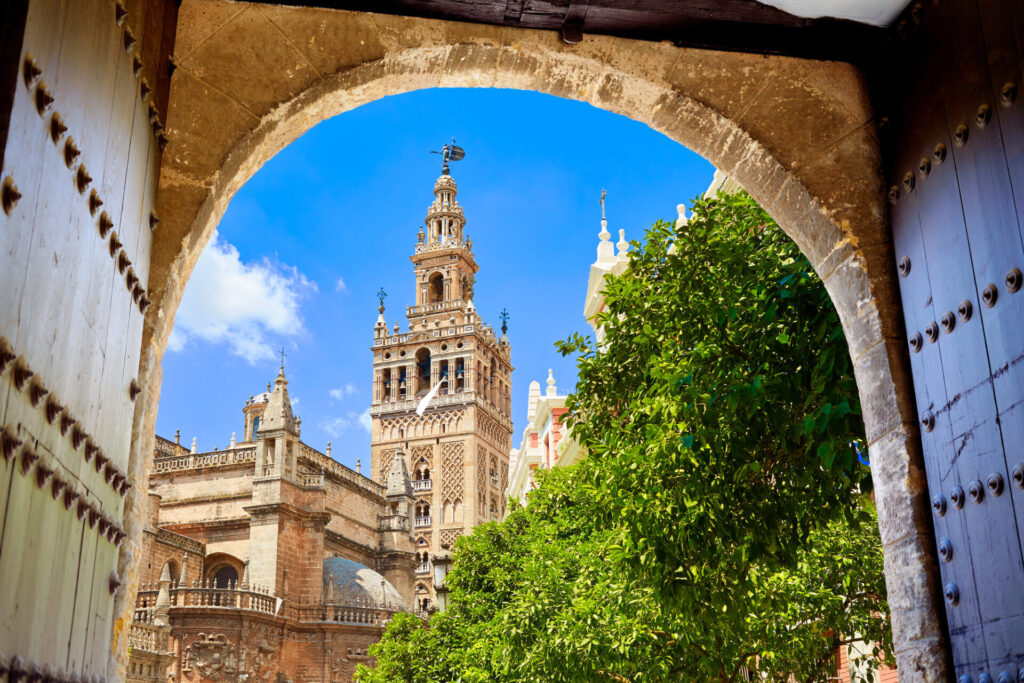
Some will be thrilled by the monumental interior, while others will take away the most from climbing the Giralda tower and looking out over the city’s rooftops.
It also houses the richly decorated tomb of the explorer Christopher Columbus.
The La Giralda tower is also unique because it was originally built as a minaret; the upper part with the Baroque bell tower was added several centuries later.

For me, the tour of the cathedral was a powerful reminder of the dark history of the Spanish Catholic Church and the Inquisition. It gave me a strong, tightening feeling of being quite small and insignificant.
How must it have felt to the villagers who arrived here for holiday services in the Middle Ages?

Combined entry to the cathedral and the Giralda is €14; children under 13 accompanied by an adult have free entry.
Definitely buy your ticket well in advance directly on the official website. Ideally a week or more.
Czech Travellers Tip: Seville’s monuments attract a lot of visitors – if you want to enjoy your visit without waiting, we recommend a combined ticket with priority entry.
General Archive of the Indies
The General Archive of the Indies – Archivo de Indias – often stays in the shadow of the Alcázar and the Cathedral. I recommend not skipping it. This is where Seville’s history really gains depth.
The building serves as a reminder that Seville wasn’t just a regional capital of Andalusia, but also a key hub for overseas trade and the administration of the Spanish Empire.

The archive guards countless historical documents about former Spanish colonies, over 8,000 maps, and Christopher Columbus’s original diary.
Combined with the Cathedral and the Alcázar, the archive doesn’t feel like a “third wheel,” but like an important part of the whole that UNESCO listed together.
Entry is free.
Plaza de España and María Luisa Park
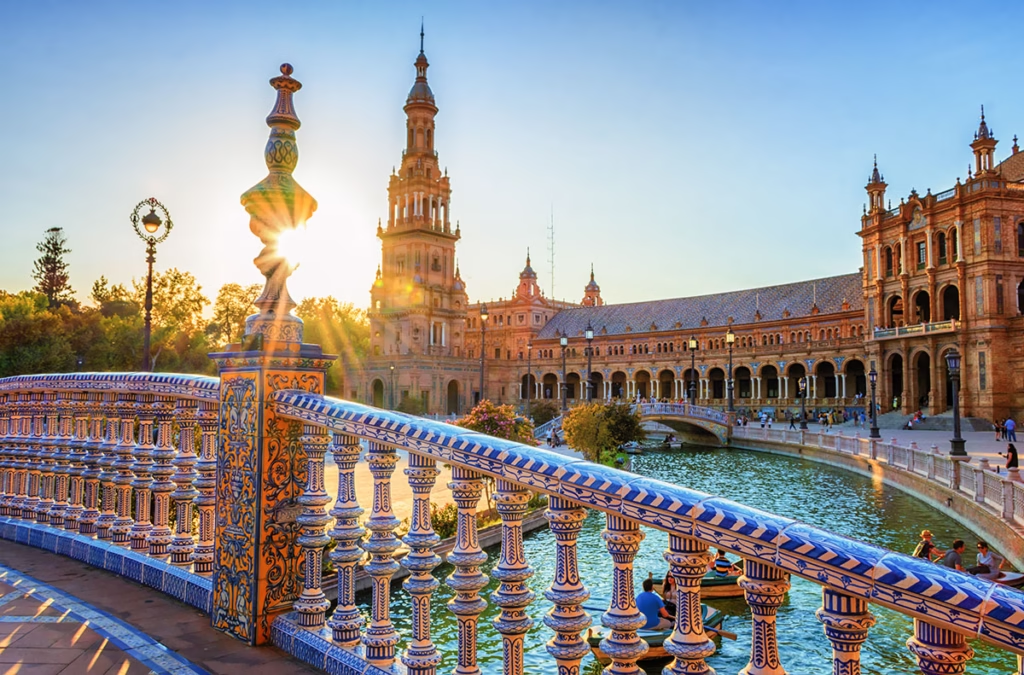
An iconic spot, originally designed and built for the Ibero-American Exposition of 1929. Part of the beautiful, huge María Luisa Park.

Take your time for both, not just a quick photo of Plaza de España. The park shows nicely how public space works in Spain.
Slow down, sit for a while, take a slow walk through the park with its gazebos, fountains, ponds, and statues. With kids, by the way, it’s one of the most rewarding places in the city.

You can also rent a pedal car here to drive through the park. Or enjoy some romance on the rowing boats.
I recommend arriving in the late afternoon when it’s not so hot and you’ll also meet more locals in the park.
Las Setas, Encarnación, and the modern layer of the city
Metropol Parasol, which most people just call Las Setas, is a controversial modern structure on the edge of the historic center. By the way, it offers a beautiful view.

Plaza de la Encarnación, where it stands, and its surroundings show Seville as a contemporary city, not just a collection of historic buildings.
Beneath the square is the Antiquarium, an archaeological space connected to this modern intervention in the center.
Entry to the viewing walkway costs €16 and it’s open until 12:30 AM (last entry 11:45 PM). For me, it makes a lot of sense to use the night entry and get a completely different perspective than from La Giralda.
Casa de Pilatos
A smaller but grand palace with beautiful courtyards, gardens, and an art collection.

Head here if you have more than 3 days in Seville, or if you’re really into Renaissance architecture and discovering the hidden corners of these buildings.
Basic admission is €12.
Palacio de las Dueñas
Another decorated palace with beautiful courtyards and gardens. It includes an extensive art collection, part of which you can see during your visit.

Admission is €15. On Monday afternoons, it’s possible to get into the palace for free.
Hospital de los Venerables
One of the most impressive examples of Andalusian Baroque in the city. Hospital de los Venerables was built in the heart of the Santa Cruz neighborhood as a residence for elderly priests, and part of its space is now open to the public.
The Baroque courtyard with arcades and a well is a peaceful alternative to the crowded streets nearby. It makes sense to combine it with a walk through the neighborhood rather than planning it as a standalone destination.

Convento de Santa Paula
A place where architecture, silence, and a very specific Seville tradition meet. The Hieronymite nuns here make convent sweets that can be bought directly at the monastery, and there’s a small museum of religious art in the upper rooms.
For those looking for a bit of peace and fewer tourists in the center, it’s a pleasant stop.

San Luis de los Franceses
One of the most ambitious Seville Baroque interiors ever. The church was designed by Leonardo de Figueroa in the early 18th century, the altars are the work of Pedro Duque Cornejo, and the dome frescoes were painted by Lucas Valdés.
The exterior with its pair of towers is striking from the street, but the interior far surpasses it.

Museo de Bellas Artes
An important gallery of Spanish Baroque that often gets overlooked simply because it seems modest next to the Alcázar and the Cathedral. The collection is particularly strong in works by Murillo, Zurbarán, and Valdés Leal, who are inextricably linked with Seville.

The museum is housed in the former Convento de la Merced with a beautiful patio, and entry is free for EU citizens. A good choice for a hot day when you don’t want to stand in direct sunlight in a queue for another monument.
Casa Palacio de Salinas
Another palatial house that doesn’t often appear in guidebooks, despite being architecturally noteworthy. The building combines Gothic, Renaissance, and Mudéjar – the same layers that form the visual identity of Seville’s center.
Suitable for those visiting Seville repeatedly or those who choose their program based on architectural quality rather than popularity.
Hospital de la Caridad
One of the most completely preserved Seville Baroque ensembles, located by the river near the Torre del Oro.
The La Caridad church inside the complex contains paintings by Murillo and Valdés Leal, including the chilling allegories of death commissioned by the hospital’s founder, Miguel de Mañara.

Basílica de la Macarena
In Seville, synonymous with Semana Santa – the statue of the Virgin of Macarena is the most revered image in the entire city.
You’ll find the church on the edge of the historic center, and it can serve as a good starting point for exploring the Macarena neighborhood.

Museo de la Cerámica de Triana
A museum in the Triana neighborhood, created directly in the premises of a former ceramic factory. You’ll see the original kilns, among other things. For a visitor who wants to understand Triana as more than just the “pretty part across the river,” a stop here makes sense.

Neighborhoods worth your time
It would be a shame to get to know Seville only through its monuments. You’ll get the best picture by exploring its diverse neighborhoods. The city is compact enough to walk across entirely, but each part works differently, has a different rhythm, and a different type of people living there.
Santa Cruz
The most photogenic and touristy part of the city. Santa Cruz, Santa María la Blanca, and San Bartolomé form the area of the former Jewish quarter: a labyrinth of narrow streets, inner courtyards, and small squares where you can wander for hours without a plan.
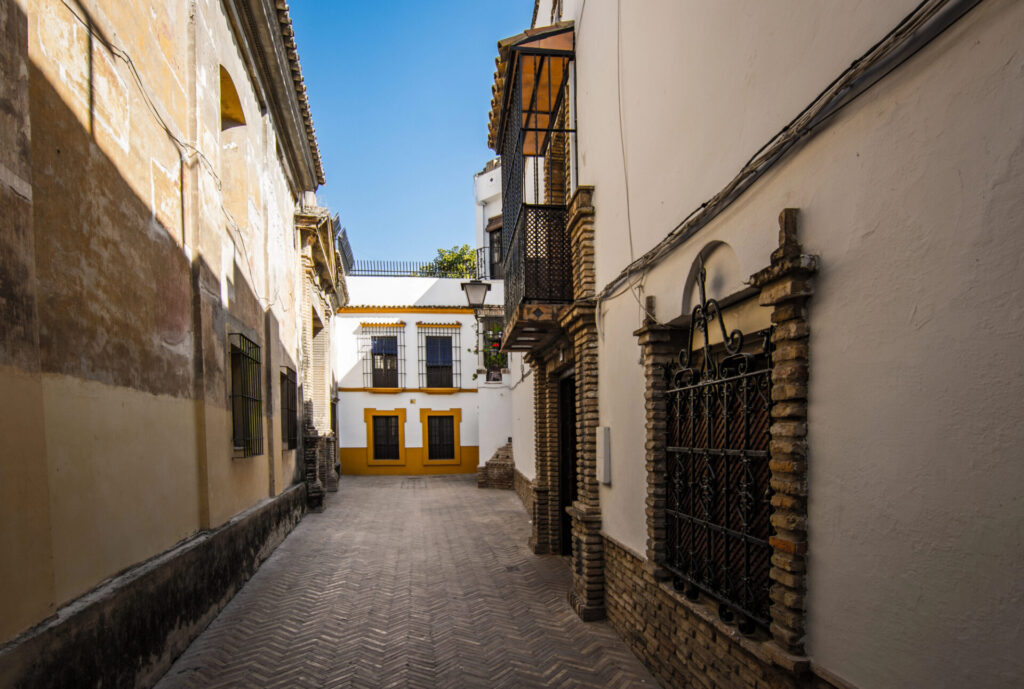
Timing is key. Early morning before the center fills up, or late evening when the crowds thin out – these are the moments when Santa Cruz truly comes to life. During the day, it can easily become a tourist backdrop.
Be more careful with food here than elsewhere. As in all tourist cities, businesses here often succeed just based on location. That doesn’t mean you can’t eat well here – but it pays to know where to go rather than walking into the first restaurant you find.
Alfalfa
A neighborhood right next to Santa Cruz that’s often only mentioned in passing in guidebooks, even though it practically works better. The center is the lively Plaza Alfalfa, surrounded by a dense network of cafes, bars, and independent shops.
In recent years, the part of the neighborhood around the so-called Soho Benita – six streets on its edge – has transformed into one of the most interesting gastro and shopping corners of the center.
The main tourist stop in the neighborhood is Casa de Pilatos – a Mudéjar palace complex that is among the best Seville has to offer. Alfalfa is a good choice for both accommodation and evening plans – accessible, but a bit less overwhelmed than the densest core of Santa Cruz.
[fusion_form form_post_id=”86768″ hide_on_mobile=”small-visibility,medium-visibility,large-visibility” class=”” id=”” margin_top=”” margin_right=”” margin_bottom=”” margin_left=””][/fusion_form]
Triana
The neighborhood across the river that you definitely should visit. Triana has its own identity, a different street rhythm, and a slightly different gastro scene than the center – less oriented towards tourists and more towards local regulars.
Traditionally, it was the neighborhood of gypsies, bullfighters, and flamenco dancers. Today it’s lively, popular with expats and locals alike, and the tapas here have a different character than in Santa Cruz. Mercado de Triana is an excellent morning program; Calle Betis along the river works best in the evening.

It’s best to head here without a fixed plan. Cross the bridge, walk through the market, continue along the river, and then let yourself be drawn into a tapas bar that catches your eye.
For families with kids, Triana is pleasant because it offers more space and fewer cramped alleys than the center. But definitely don’t make it just a one-hour detour – the less rush, the better.
El Arenal
Located between the cathedral and the river, it’s excellent for a first visit primarily as a connecting neighborhood. You’ll find the riverside promenade Paseo Cristóbal Colón with the Torre del Oro tower and Plaza de Toros de la Real Maestranza – the oldest bullring in Spain.
For accommodation, Arenal is one of the most practical choices: central enough, but usually less overwhelmed than Santa Cruz. If you want to set up your day so that the Alcázar and Cathedral make sense in the morning, the river in the afternoon, and Triana or flamenco in the evening, Arenal connects it all naturally.


Alameda, San Luis, and Feria
If you have more time, or if you’re more interested in atmosphere, food, and people than monuments, pay attention to the northern part of the center around Alameda de Hércules, Calle Feria, and San Lorenzo.
Alameda de Hércules is bohemian and alternative – one of the hippest corners of the city. In the evening, much of Seville’s nightlife outside the main tourist area happens here: tapas bars, cocktail spots, wine bars, terraces. During the day, it’s a quiet promenade with cafes.
Mercado de Feria on Calle Feria is one of the oldest markets in the city, and on Thursdays, the El Jueves flea market – the most famous in Seville – takes place around it.
This area complements stops like San Luis de los Franceses or Santa Paula well and works as a natural continuation of a day that started in the center.

Macarena
This is where Seville stops feeling like a historic attraction and starts working like a city. Macarena is mostly associated with the basilica and Semana Santa, but that’s just one layer of the neighborhood.
In Macarena, the last preserved section of the medieval Muralla walls, which originally encircled the entire historic center, has survived.
Today it’s a neighborhood with a lively gastro scene, street art, and smaller markets – and also a quieter base for those who want to be close to the center but not sleep in the middle of the tourist bustle.

What to experience in Seville
Seville offers a distinct musical and dance tradition, evening street life, the river as the city’s natural axis, and seasonal festivals that fundamentally change the atmosphere of entire neighborhoods. But none of these things need to be planned too far in advance – they work best when you ease into them gradually.
Flamenco
It almost always makes sense to include flamenco in Seville – but not in the same way for everyone. Practically, this means it’s not necessary to buy tickets for the first big show in the center just because it has seats available.
It’s better to decide beforehand what you expect from the performance: a first introduction, a more intimate setting, or a deeper cultural experience?

What’s it all about? Flamenco is a unique Andalusian musical and dance genre that combines singing, guitar, and dance – and which UNESCO added to the list of Intangible Cultural Heritage in 2010.
It originated in southern Spain through the influence of the cultures of Spanish Roma, Arabs, and Jews, and over centuries evolved into something hard to describe from the outside. At its core is not technique or visual effect, but emotional intensity – locals call it duende. That’s why the choice of venue matters more than it might seem at first glance.
For a first visit, I recommend smaller and medium-sized venues where flamenco isn’t just a backdrop to dinner. While you’ll get a technically solid performance at big tourist shows, you’ll have less contact with the environment and the audience. For a more comprehensive overview of options, check out GetYourGuide, where you can choose your ideal type of show or even a workshop.
Seville by evening
One of the best things to experience in Seville is simply an evening out. The city changes pace significantly after sunset – the streets come alive, the riverfront fills up, bars are just getting started, and the heat that tires you out during the day turns into a pleasant warmth.

Anyone trying to cram as much as possible into the day in Seville and only coasting on the last bits of energy in the evening is missing out on one of the city’s strongest layers.
Keep your evening plans light – maybe walk from Arenal to the river, cross into Triana, and stop for two or three tapas. Seville rewards a more open evening schedule more than precise reservations.

If you’re traveling with kids, let them adapt to the locals. In Andalusia, it’s perfectly normal for kids to spend time with their parents until late. Let them run around the little squares, discover the city’s night corners, and have a midnight ice cream for once.
The Spanish know how to enjoy life. Even with kids.
A walk along the Guadalquivir river or a boat trip
The riverfront isn’t just an extra between monuments in Seville. This is where the voyages of discovery set sail from, and today the riverfront is one of the city’s main arteries.
The simplest and most rewarding experience is a simple walk: start in Arenal, walk past the Torre del Oro, watch the activity on the water, and cross the bridge into Triana.

If you don’t just want to walk by the river, it makes sense to include a short boat trip or rent a kayak. When traveling with kids, it’s an ideal relaxing activity.
Markets and the flea market
I enjoy markets in every Spanish city and recommend you stop by at least one. Places like Mercado de Triana, Mercado de Feria, or Mercado Puerta De La Carne aren’t just spots for locals to buy vegetables, fruit, meat, and fish. They meet here to chat, grab a light lunch, or have a coffee.

I’m always fascinated by flea markets too – they give you a completely different insight into the mentality and households. The biggest one in Seville can be found every Thursday morning near the Mercado de Feria.
Unique festivals: Semana Santa and Feria de Abril
Two events that fundamentally affect how the whole city functions – and watch out, also prices and accommodation availability or monument opening hours.
I therefore recommend going to Seville during these dates only if you’re going specifically for one of the events.

Semana Santa
For Semana Santa, which falls every year at Easter – from Palm Sunday to Easter Sunday – over seventy religious brotherhoods take to the streets of Seville in processions that have an uninterrupted tradition since the 16th century.
They are dressed in typical Andalusian robes with high pointed hoods, and although the visual might look provocative at first glance, it’s an old form of public penance, not a political symbol.
The centerpiece of each procession are the pasos – monumental altar platforms carried on the shoulders of groups of men called costaleros.
The highlight of the whole week is La Madrugá – the night from Maundy Thursday to Good Friday, when the city’s most revered processional images come out: Jesús del Gran Poder, Virgen de la Macarena, Esperanza de Triana, or Cristo de los Gitanos.

Practical information:
Main monuments have shortened opening hours during Semana Santa. The Alcázar is closed entirely on some days – for example, on Good Friday. The Cathedral and Giralda are inaccessible in the afternoons all week. Book your tickets and tours for the morning and expect them to be sold out.
Transport in the city is significantly restricted during the processions. The Carrera Oficial is completely closed to crossing; moving between neighborhoods can be very slow. Expect to move exclusively on foot and with a larger time buffer.
Pickpocketing is significantly more common in Seville during this time than usual. In the crowds at the processions, pay attention to your backpack and pockets.
Feria de Abril
While Semana Santa is serious and focused, Feria de Abril is the exact opposite – six days of dancing, food, wine, and horse processions, during which Seville practically stops functioning as a normal city. It usually takes place two weeks after Semana Santa.
The heart of the Feria is the huge Real de la Feria fairground in the Los Remedios district, covering 450,000 m², where over a thousand casetas are built every year – striped tents in white-and-red or white-and-green colors belonging to families, friends, companies, political parties, and associations.

Inside each caseta is a bar, kitchen, and dance floor where sevillanas are played and danced – a traditional four-part partner dance that echoes from every corner of the grounds during these days.
The Feria begins ceremoniously on Monday at midnight with a ceremony called the alumbrao – the lighting of the main portada gate, which is designed differently every year. Before that, the cena de pescaíto, a traditional dinner with fish and seafood, is held in private casetas.
The festival itself then continues all week into the early morning hours; Wednesday is a local holiday, so the fairground tends to be busiest during the day.
During the day, riders on Andalusian horses and luxurious horse-drawn carriages pass through the grounds – the paseo de caballos is one of the biggest attractions of the entire Feria.
The evening belongs to dancing, rebujito – a local drink made of dry sherry and lemonade – and socializing in the casetas.

If you go during these dates intentionally, an exceptionally powerful cultural experience awaits you.
Food and places to eat
Seville is built on tapas, short stops, and moving between places in the evening. It’s better to eat by neighborhood rather than following one long list – and it doesn’t make much sense to sit down at the first place by the cathedral.

What to Taste
Rather than just looking for “tapas” in general, it pays to go for a few local staples. This is a basic list you can order from in various places:
- Espinacas con garbanzos – stewed spinach with chickpeas, one of the most typical Seville tapas. A good choice if you want something truly local.
- Montadito de pringá – a small sandwich filled with a mixture of slow-cooked pork, chorizo, and other meats. Filling, flavorful, very Andalusian.
- Salmorejo – a thicker and creamier relative of the cold gazpacho soup, served cold, often with egg and ham. Excellent especially in the warmer months.
- Ajo blanco – a cold white almond soup, great in the heat. You won’t find it on every menu, but if you do, it’s worth a try.
- Pescaíto frito – fried fish or small seafood. An Andalusian classic that makes a lot of sense in Seville, especially as a lighter evening tapas.
- Carrillada – slow-cooked pork or beef cheeks. One of those dishes that looks unassuming but often turns out to be one of the best things on the menu.
- Jamón ibérico de bellota – high-quality Iberian ham is a staple in Andalusia. Not necessarily a cheap item, but if the place knows what they’re doing, it’s a safe bet.
- Solomillo al whisky – pork tenderloin in a garlic and whisky sauce. Often overlooked in tourist guides, but a very common classic in Seville.
- Ensaladilla rusa – the Spanish version of potato salad. It’s not unique to Seville, but it’s very common in local bars and tastes great in the heat.
- Serranito – a sandwich with pork, ham, and peppers. A practical choice for a quick lunch or a less formal stop.
- Zanahorias aliñadas – marinated carrots; simple, cheap, and a very typical part of local tapas bars. Good as a lighter counterpart to heavier dishes.
- Secreto ibérico / presa ibérica – cuts of Iberian pork, found on both modern and traditional menus. If you want something meatier than just tapas for snacking, this is usually a good choice.

Where to eat in Seville
I would happily go back to Seville just for the food. For the tapas, brunches, seafood, and international cuisine.
Of course, as in all highly touristy cities, in the very center and around the most famous monuments, most places will serve you a mediocre meal at tourist prices.
But all you need to do is either go with a specific goal in mind or walk a bit further into other neighborhoods. Or, you can join one of the organized food tours.
I’m adding a few tips for specific places, though logically I didn’t have the time to test all the ones I wanted to.
Where to go for tapas and dinner
The advantage of tapas is that you can easily test 2–3 different places in one day without it costing a fortune. I recommend combining traditional “pub-style” tapas bars and more modern establishments. Both have their own charm.
- Flor de Toranzo – a very traditional, “ordinary” tapas bar. I always enjoy places like this.
- Dúo Tapas – for me, one of the best tapas spots; make sure to book a table.
- Mechela – traditional dishes with a slightly modern twist, everything perfectly seasoned.
- Sobretablas – modern tapas, absolutely brilliant in my opinion.
- Barra Baja – contemporary Mediterranean cuisine, a welcome change from classic tapas after a few days.
- Marroquí La Alcoba – perfect Moroccan cuisine at reasonable prices.
- Fatouch – a great Lebanese restaurant.
Where to go for great coffee, breakfast, or dessert
- Jester – a tiny cafe with amazing pastries, sandwiches, and light breakfasts.
- Syra Coffee – a network of great espresso bars across Spain.
- Billy Brunch Sevilla – hearty breakfasts served until 5 PM. Oh man… – the second branch is right behind the Alcázar, but it was always packed.
- La Mala Brunch Santa Cruz – another fantastic brunch spot.
- FILO – a more traditional Spanish breakfast in the center.
- Nebbi café y provisiones – a properly hipster cafe with smaller food options.
- MUY Coffee – a very pleasant espresso bar.
- Gelateria MITO and Heladería Bolas – two chains of great artisanal ice cream, you can find them all over the center.
Seville with kids
In my opinion, Seville isn’t as universally great a destination for exploring with kids as Málaga or Barcelona. But that doesn’t mean you can’t enjoy it as a whole family. Spain is generally very welcoming to children.
The biggest plus is the compact center, plenty of public space, parks, riverside promenades, playgrounds, and enough activities that aren’t just for adults with kids as an afterthought.
The biggest downside is the heat, the late evening rhythm for some, and the fatigue from walking on cobblestones.
The most practical thing is to split the day into two blocks – a main site in the morning, rest after noon, and a lighter program in the afternoon or evening. In summer, it’s almost a necessity: temperatures in Seville in July and August regularly hover around 38–40°C.

Where to go in Seville with kids:
- Acuario de Sevilla – located right by the river near Parque de María Luisa, it offers over 400 marine species including sharks, rays, and sea turtles. You walk through a glass tunnel under the water, and kids can touch starfish or sea urchins in interactive zones.
- Casa de la Ciencia near Parque de María Luisa – an interactive science museum with three floors of exhibits on nature, oceans, and geology. A whale skeleton hangs from the ceiling, there are hands-on exhibits, and a planetarium with shows suitable for ages three and up.
- Isla Mágica – a theme park on Isla de la Cartuja with a pirate theme, roller coasters, and water attractions. It includes the Agua Mágica water park with a wave pool, slides, and a sandy beach – much more practical in the Seville summer heat than another walk through the center.
- Parque de María Luisa – the largest park in the center, and you can basically go here anytime with kids – the mature trees provide shade, there are playgrounds, bike and pedal car rentals, and near Plaza de España, you can go for a boat ride on the canal.
- The Alcázar usually interests kids more than you’d expect. Gardens with peacocks, a hedge maze, and locations where Game of Thrones was filmed keep even older children engaged.
It’s important not to overfill the schedule and to expect that dinner will often be later than at home.
With kids, it makes sense to leave at least one free block every day and not expect to manage everything you planned. Just like on any trip with children.
Best day trips from Seville
If you have four or more days in Seville, it makes sense to go on at least one trip. The best ones aren’t necessarily the most famous, but those that fit well with the length of your stay, the season, and what interests you.

Córdoba
The logical first choice. It’s ideal if you want to see another significant historical city after Seville with a clear main attraction – the magnificent Mezquita Cathedral, which originally started as a medieval mosque.
You can get to Córdoba by high-speed train directly to the center in less than 45 minutes. Prices start at €10 one way; look for connections on Omio.

Itálica
For me, the best short trip from Seville. These are extensive ruins of an ancient city that are well worth a half-day visit.
You can get here by direct bus M-172A from Plaza de Armas; Itálica is located about 10 kilometers from the center of Seville.

Cádiz
A good counterpoint to inland Seville. Enjoy the ocean, beaches, and promenades, while still experiencing a rich and diverse history.
The journey from Seville to Cádiz takes an hour and a half by both train and bus via the highway. Prices start at €15 one way.

If you have a rental car, I recommend leaving some time to explore the beaches around Cádiz. Just remember you’re at the Atlantic now, not the Mediterranean. The water will very likely be quite a bit colder than in Málaga, for example, and there may be larger waves.
Carmona
A historic town about half an hour by car from Seville. It can serve perfectly for a relaxing day with good food, wine, and still exploring palaces, churches, or the local fortress.

A direct long-distance bus runs several times a day; look for connections on Omio.com. Alternatively, use the M-124 local bus, which departs in Seville from the Prado San Sebastián bus station near Plaza de España.
Jerez
An unassuming city near Cádiz. It makes sense mainly if you’re interested in sherry, Andalusian wine culture, or want to combine a city visit with a tasting and a slower pace.

You can get to Jerez de la Frontera from Seville in an hour by direct train.
Practical information
How to get to Seville
The easiest way is to fly directly to Seville. In season, Ryanair, EasyJet, and other airlines fly here directly from most major cities across Europe. Just be careful, you often won’t find direct flights every day. A flight with a layover usually doesn’t make sense price-wise.
The second option is to combine the visit with Madrid, from where you can reach Seville in 2 hours and 40 minutes by high-speed train. Prices start at €30 one way, you just need to travel off-peak and buy tickets in advance.
Several operators run on this route, so compare prices via Omio, for example, then buy directly on the operator’s website.
You can also easily get to Seville from nearby Málaga. Either in 2 hours by high-speed train with a change in Córdoba, or in two and a half hours by car or bus.
Personally, I took the high-speed train from Málaga and made a short stop for a walk through the center of Córdoba. A few days later, I continued by bus to Faro, Portugal.

From the airport to the center
The most practical option is the EA airport bus, which takes you to the center in about 30 minutes.
It departs from the arrivals hall and the price is €6.85 one way. You pay by card directly on the bus.
The line runs between the airport and the center via important points like Santa Justa, San Bernardo, Prado de San Sebastián, Torre del Oro, and Plaza de Armas.
Getting around the city
You can manage most of your first visit on foot, or take the T1 tram around the center.
There is also a metro in Seville, but you probably won’t use it. Buses will likely be more useful – they’ll take you pretty much anywhere and run frequently. Google Maps will easily guide you to specific lines.
The price for a single ticket is €1.40 and you can buy it with a card directly when boarding (just tap at the driver’s).

Money and Prices
Seville is a bit cheaper compared to Madrid, Barcelona, and Málaga. However, expect higher expenses for entrance fees to monuments.
The currency is the Euro (€) and you almost don’t need cash; cards are accepted nearly everywhere. To be safe, keep €50 to €100 on you, preferably in smaller bills. ATMs are easily accessible if needed.
Approximate prices:
- coffee and breakfast: roughly €3–10
- tapas in a regular place: €3–6 each
- main course in a better place: approximately €15–30
- major monuments: €15–25
- airport bus: €6.85
- public transport: €1.40

When to go to Seville
The best time is usually spring and autumn. The main reason is simple: summer in Seville is really hot. In July and August, expect average daily highs around 36°C.
I was in Seville in December and, except for the cold in accommodation without heating, it was a great choice. No crowds, pleasant sunshine, and around 16 degrees during the day.
Safety
Seville is safe for regular travel; in the most touristy areas, watch out for pickpockets.
A bigger practical problem than safety is usually fatigue, sun, heat, and a poorly timed schedule. Take a siesta with the locals and drink plenty of water.
SIM and internet
For EU citizens, your regular domestic plan works. Only calls and SMS to Spanish numbers are charged, so it’s better to use WhatsApp or similar apps.
If you’re coming from outside the EU, I recommend getting a data eSIM via Revolut.
You can find Wi-Fi in almost every establishment, and the internet speed is usually decent. There might be issues in old houses in the center.

Final checklist before your trip
Before leaving for Seville, it makes sense to check a few practical things.
- Book the Alcázar in advance, and depending on your travel dates, the Cathedral with the Giralda as well. For both main monuments, it pays not to rely on improvisation on the spot.
- Take a realistic look at the weather and temperatures. Seville is a very hot city by European standards, and in summer, you need to adapt your entire daily routine, especially with kids.
- Choose accommodation based on your travel style, not just the map. For a short stay, Arenal and part of the center work well; for a longer stay, Triana or the northern parts of the wider center are often better. With kids, it makes sense to prioritize peace, air conditioning, and easy access.
- Before you arrive, check your route from the airport. The EA line is simple and cheap, but for some accommodations in the historic core, the last stretch with a suitcase can take more energy than the map suggests.

FAQ: Frequently asked questions about Seville
How many days are ideal for Seville?
Ideally 3–4 days for a first visit. If you also want to see neighborhoods outside the main center, enjoy better food, and take one day trip, count on 5–6 days.
When is the best time to go to Seville?
Spring and autumn are usually the most pleasant. In summer, it’s very hot in the city, and the schedule needs to be significantly adapted.
Is Seville suitable for families with kids?
Yes, but you need to account for the heat, the later daily rhythm, and not overfill the schedule. Parks, the river, the aquarium, and a lighter evening routine work well.
Does it make sense to go to Seville in the summer?
Yes, but only if you know what to expect. It’s usually very hot during the day, so it makes sense to plan the main activities for the morning and evening.
What needs to be booked in advance?
Mainly the Real Alcázar and often the Cathedral with the Giralda. In high season, it’s better to buy tickets in advance.
Where is the best place to stay?
For a first visit, Arenal or the center works well. For a longer stay, Triana or Alameda. With kids, rather the quieter wider center, Triana, Los Remedios, or Nervión.
How to get from the airport to the center?
The easiest way is the EA airport bus. It’s cheap, direct, and stops at main points including Santa Justa and the center.
Is Seville or Córdoba better?
For a longer stay and more diverse city life, Seville. For a shorter, intense historical trip, Córdoba might be more impactful.
How expensive is Seville?
By Spanish standards, it’s not extremely expensive, but the main monuments and well-located accommodation will increase the budget. Food can be managed reasonably, especially if you go for tapas.
Which neighborhood is best for food?
For the first evening, the center or Arenal works; for subsequent evenings, Triana or Alameda and the area around Calle Feria are better.
Is it worth taking a day trip from Seville?
Yes, if you have at least 4 days. The most common and best choices are Córdoba, Itálica, Cádiz, or Carmona.