This post is also available in:


Karlovy Vary (Karlsbad) is a destination that spent a long time hiding in the shadow of its own reputation. A spa town for the wealthy, the home of a famous film festival, a place that seemed to belong more to international visitors than to anyone else. Thankfully, that’s no longer the case.
Karlovy Vary is absolutely worth a visit – and it deserves more than a quick stroll through the colonnades. The beautiful nature surrounding the town is just as much a part of the experience.
After 2020, and especially 2022, the mix of visitors here changed dramatically. The Russian clientele that dominated Karlovy Vary for years has all but vanished.
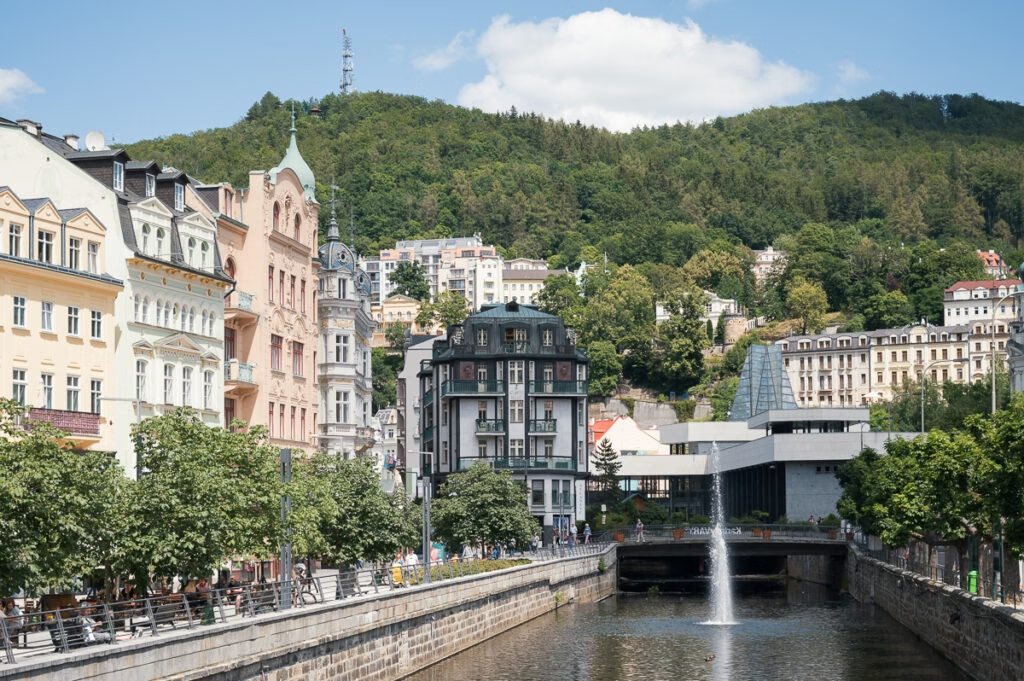
The centre has opened up – literally and figuratively. Accommodation prices have dropped to a level that makes a weekend trip genuinely affordable. Restaurants and cafés in the centre have become more accessible too, and a wave of new places has appeared.
I crisscrossed Karlovy Vary countless times as a child with my grandmother, and in recent years I’ve been gladly returning – often just for an excellent coffee on the way to the Ore Mountains or the Slavkov Forest.
This guide is written for visitors who want to really get to know Karlovy Vary in depth – not just walk the colonnade, buy some spa wafers and leave.
Why visit Karlovy Vary
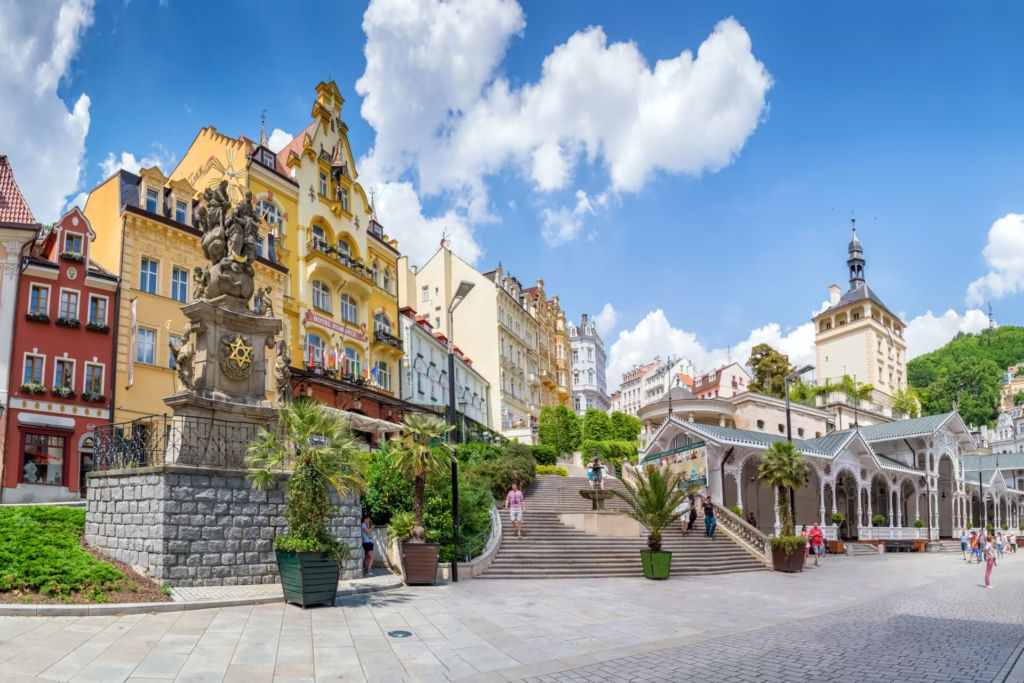
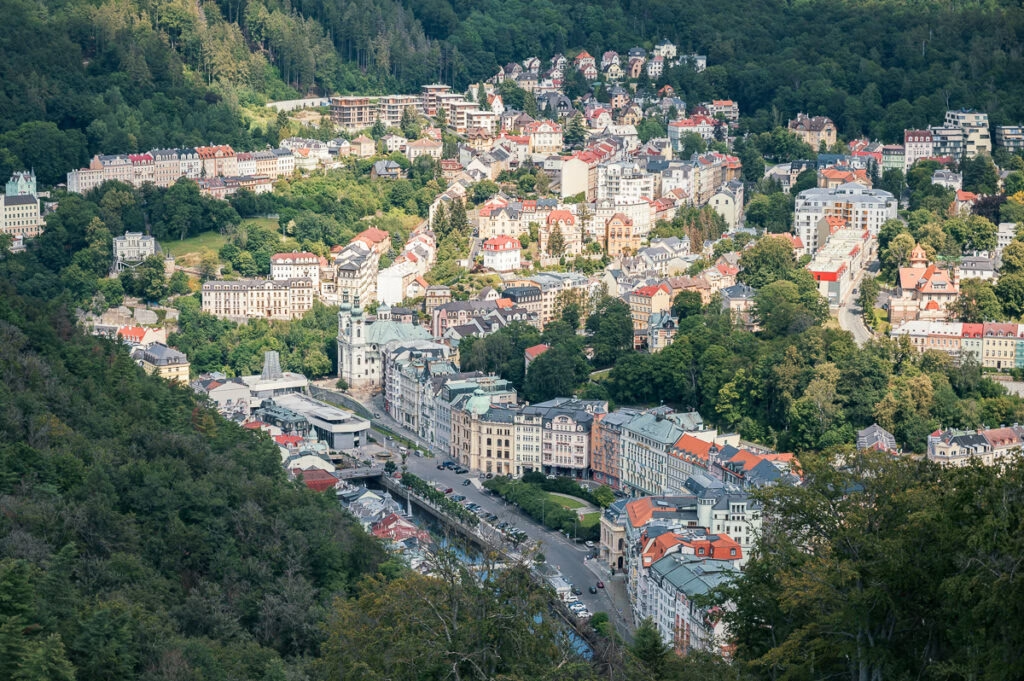
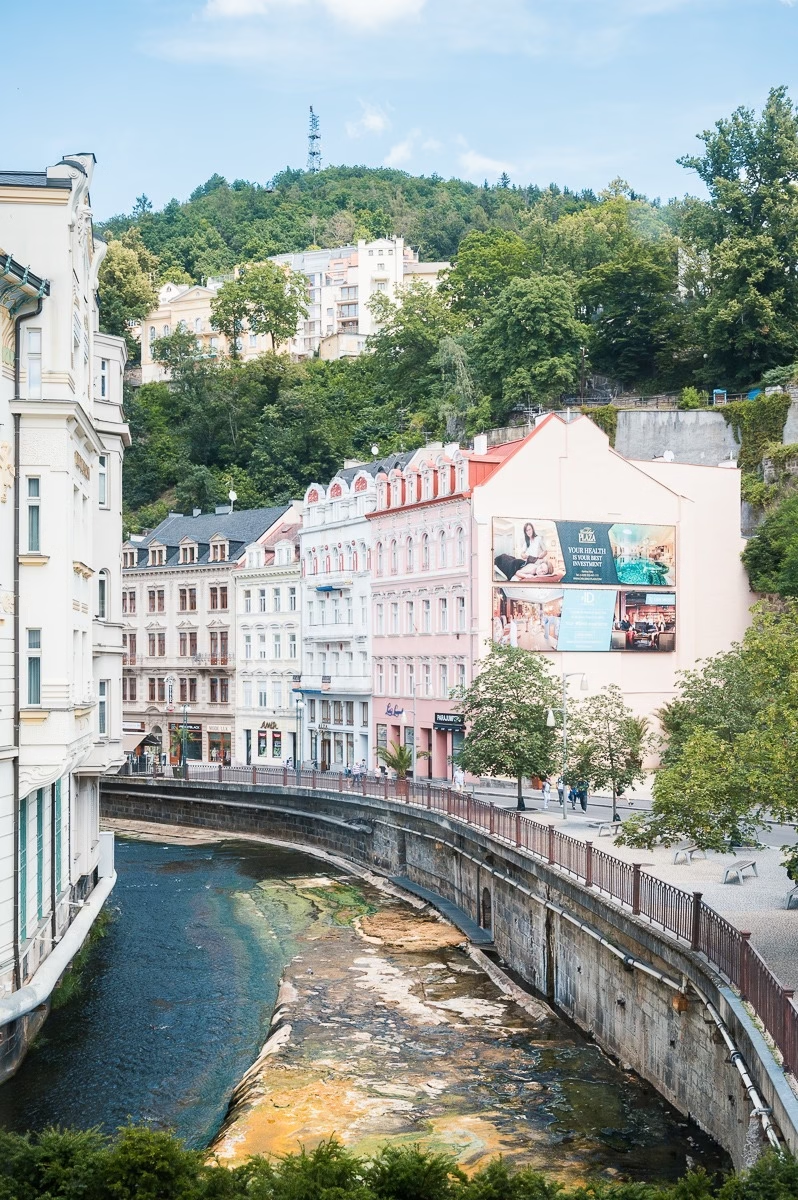
The spa centre of the town is among the best-preserved architectural ensembles in Europe. Empire, Historicism and Art Nouveau form a tight, harmonious whole along the Teplá river – and since 2021, the entire complex has been inscribed on the UNESCO list as part of the Great Spa Towns of Europe.
Within the town itself, fifteen mineral springs are accessible to the public, with 14 of them used for the world-famous healing treatments. The most powerful of all – Vřídlo (the Hot Spring) – shoots up to 12 metres high at a temperature of 72 °C.
The springs differ in temperature and taste, and tasting them is a genuine part of the experience – not just a tourist gimmick.
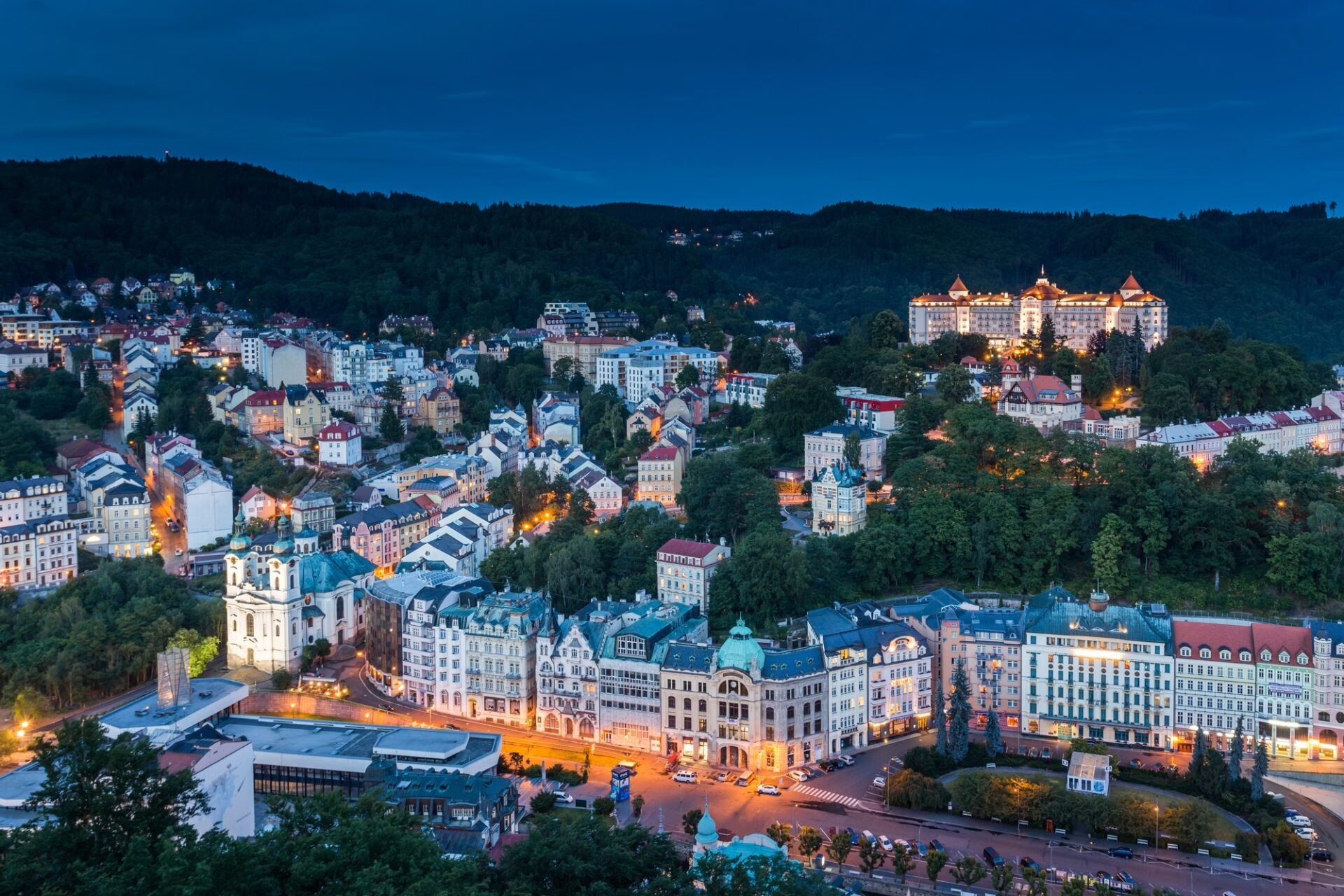
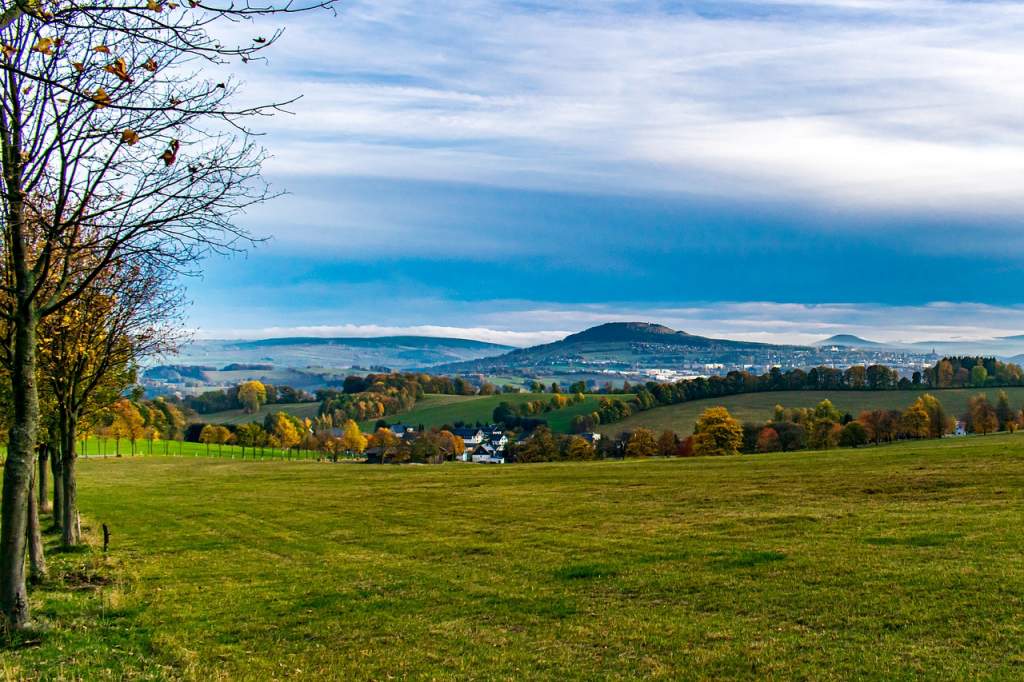
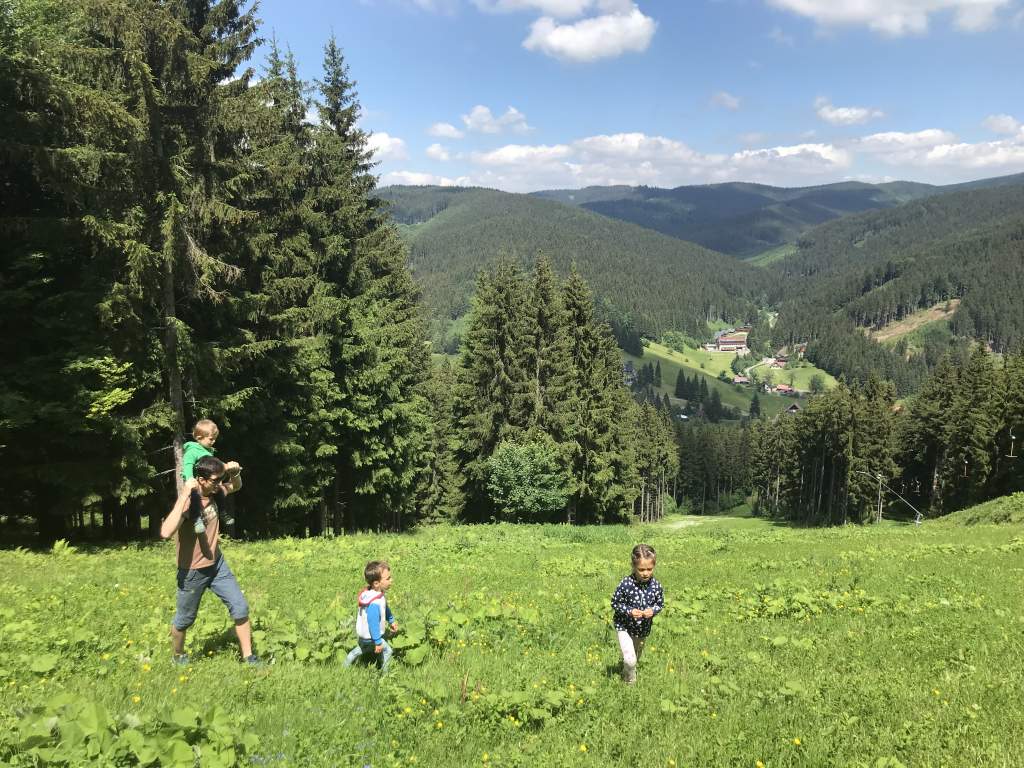
Beautiful nature begins right at the colonnades – the Slavkov Forest Protected Landscape Area connects directly to the town. The forests above the centre are laced with trails that have served spa guests for centuries.
Karlovy Vary also makes a great base for cycling trips. The bike path along the Ohře river, for example, will take you to the medieval castle and town of Loket.
The Ore Mountains (Krušné hory) are also within easy reach, with their rich history and a unique natural environment that has bounced back remarkably well from the acid rain damage of the late 20th century.
The film festival in July transforms the town into one big cultural and party hub. And it’s far from being just for film buffs and international stars.
How long to stay and how to plan your days
Day trip
Karlovy Vary is comfortably doable as a day trip from Prague, although in my opinion that’s a shame. In the morning you’ll walk the colonnades and springs, have lunch near the centre, and in the afternoon head up to the Diana Lookout Tower or visit the Jan Becher Museum and the Moser glassworks visitor centre.
Weekend (2–3 days)
The ideal length for a first visit. Spend the first day on the centre and the colonnades; on the second, take a longer walk through the hills above the town – for instance to the viewpoints over the Teplá river or up to the Goethe Lookout. On a third day, head out into the surroundings – I recommend Loket, Jáchymov or Bečov nad Teplou.
Longer stay (4–7 days)
If you’re not here for an actual spa cure, a longer stay makes sense mainly if you want to use Karlovy Vary as a base for exploring the area. The Slavkov Forest, the Ore Mountains, or a trip over to Mariánské Lázně or Františkovy Lázně – all of it is within reach without needing to change accommodation.
Top tips to start with
Before getting into the details, here are ten things that set Karlovy Vary apart and that are worth keeping in mind right from the start.
- There isn’t just one colonnade.
You’ll find five in the centre, each different in style and age. The Mill Colonnade is the largest and most photographed, but the wooden Market Colonnade and the Park Colonnade have their own distinct character. - The springs really do differ.
Temperature, mineral composition, taste – every spring is different. Taste them gradually, not all at once in a single day. - The spa cup is genuinely useful.
The ceramic mug with the curved spout is sold everywhere – and unlike a plastic or paper cup, it lets you drink the hot water from Vřídlo without burning your lips. - The architecture deserves a proper walk.
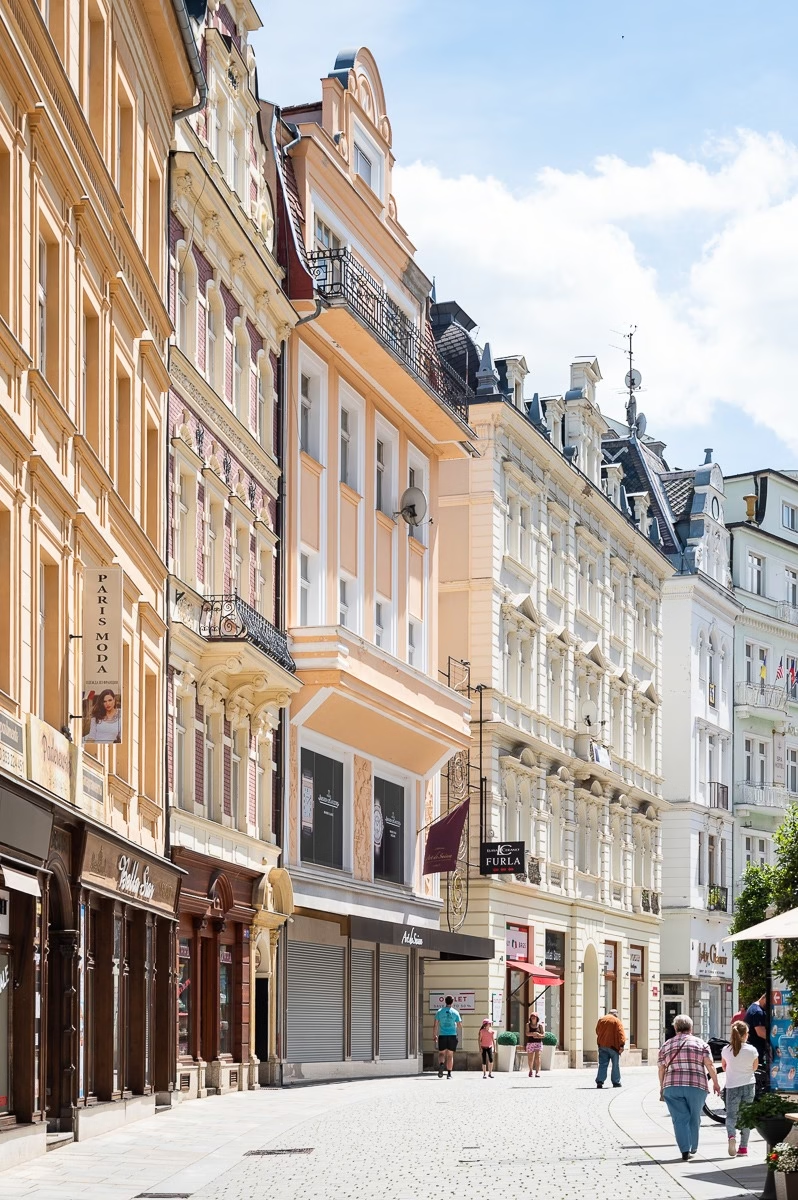
Just walking the colonnade isn’t enough. Wander into the side streets, look at the hotel facades along the Teplá, the Russian church above the town, and the Art Nouveau villas on the slopes. - The Diana Lookout is worth it even without the funicular.
The deciduous forests on the hills above the centre feel like balm for the soul – more so, in my opinion, than drinking the healing springs. Walk through them. - The film festival transforms the town.
Late June and early July bring a different Karlovy Vary – cafés bursting at the seams, outdoor screenings, celebrities on the colonnade, concerts, late-night parties. If you want to experience the festival, plan ahead, especially accommodation. If not, skip this week entirely. - Svatošské Rocks and Loket by bike.
The cycle path along the Ohře from Dvory to Loket is one of the most beautiful routes in the area – flat, easy, gorgeous. It runs through a deep river valley past the majestic Svatošské Rocks. - Becherovka has its own museum.
The Jan Becher Museum in the centre offers a tour with a tasting and ranks among the best museum experiences in the region – even for those who don’t usually go for herbal liqueurs. - The Russian church is an overlooked stop.
The Church of St. Peter and Paul on the slope above Dvorany is one of the most beautiful sacred buildings in Karlovy Vary – yet most visitors walk right past without noticing it. - Prices have changed.
Since 2020, Karlovy Vary has become noticeably more affordable than in the previous decade. A decent lunch can be had for around €8, while café prices are roughly on par with bigger Central European cities. The luxury end is still here, of course – but it’s no longer the only option.
What to see and visit
Karlovy Vary attractions: colonnades and springs
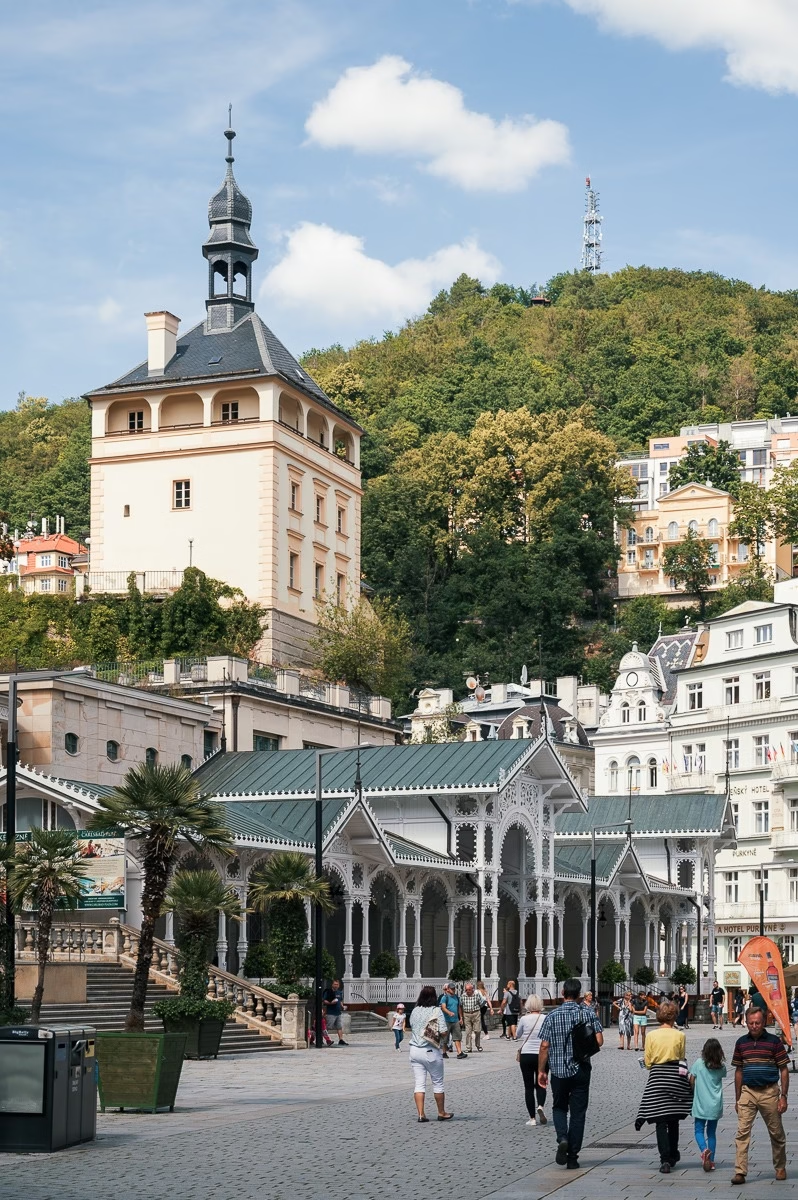
The spa zone along the Teplá stretches for roughly 1.5 km and includes five colonnades. Walking through them all at a relaxed pace takes about half a day – count on stopping along the way. You’ll also pass parks, churches and other landmarks.
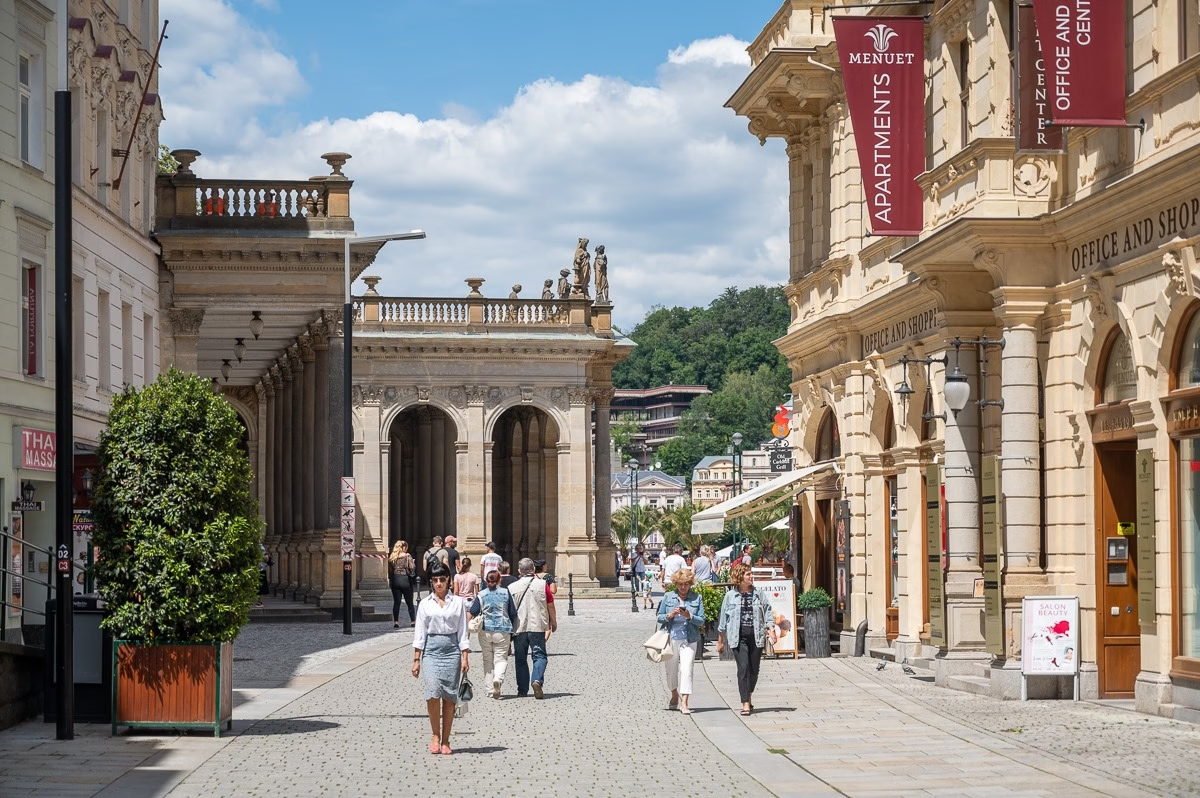
Mill Colonnade
The largest and most photographed structure of the spa centre was built in 1881 to a design by Josef Zítek – the architect of Prague’s National Theatre.
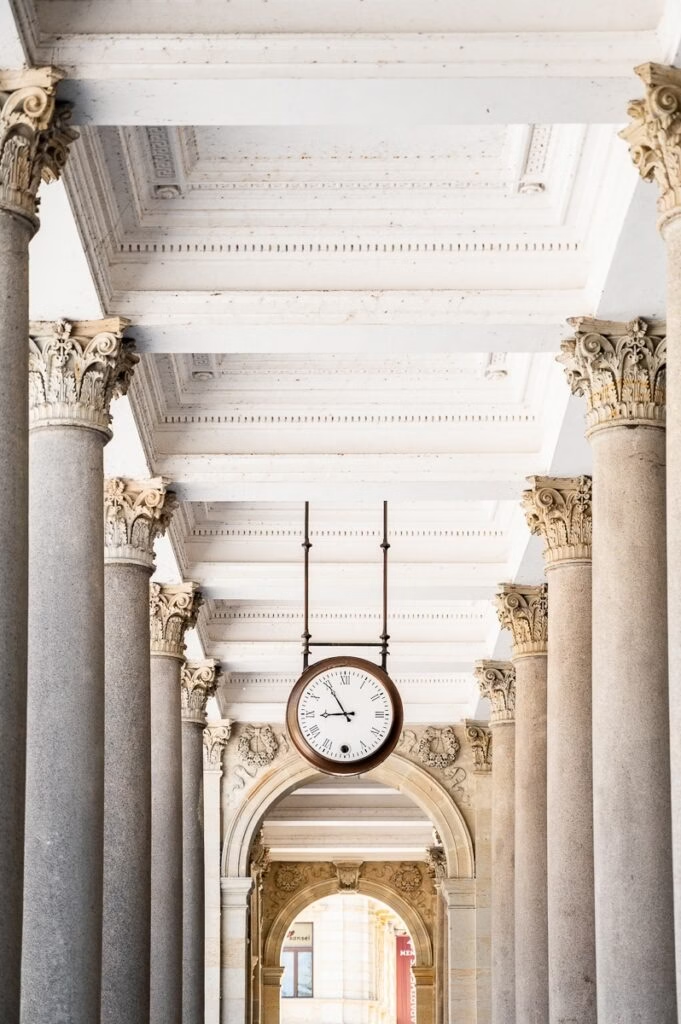
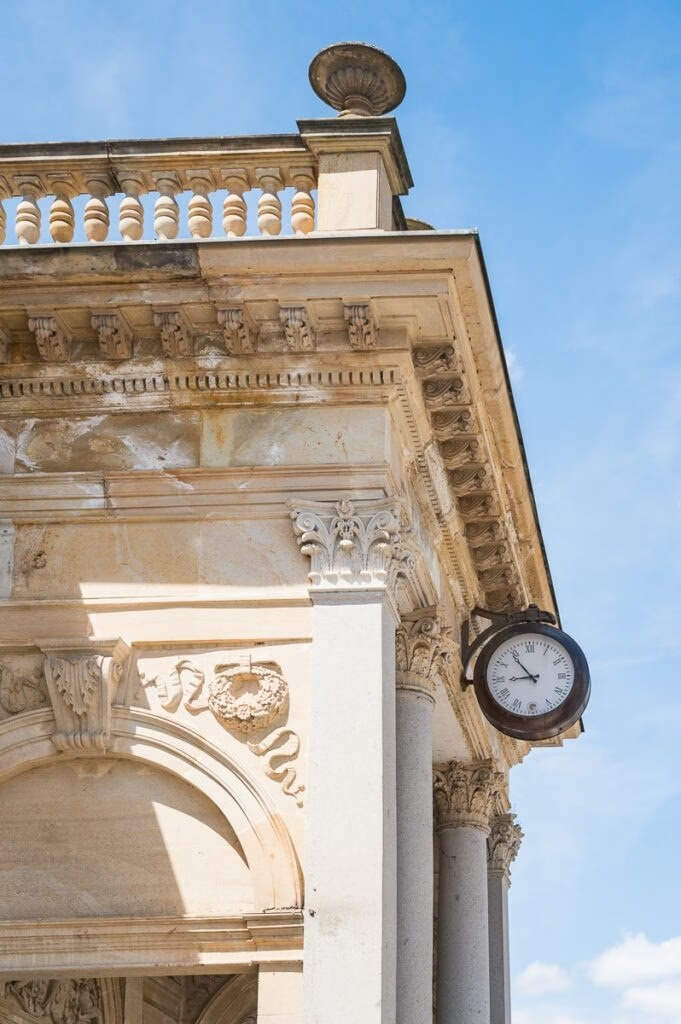
The neo-Renaissance colonnade shelters five springs at temperatures of 53–60 °C: Rusalka, Prince Wenceslas I and II, Libuše and Mill Spring.
It gets busiest in high season. If you want the colonnade to yourself, come before 9 a.m.
Hot Spring Colonnade
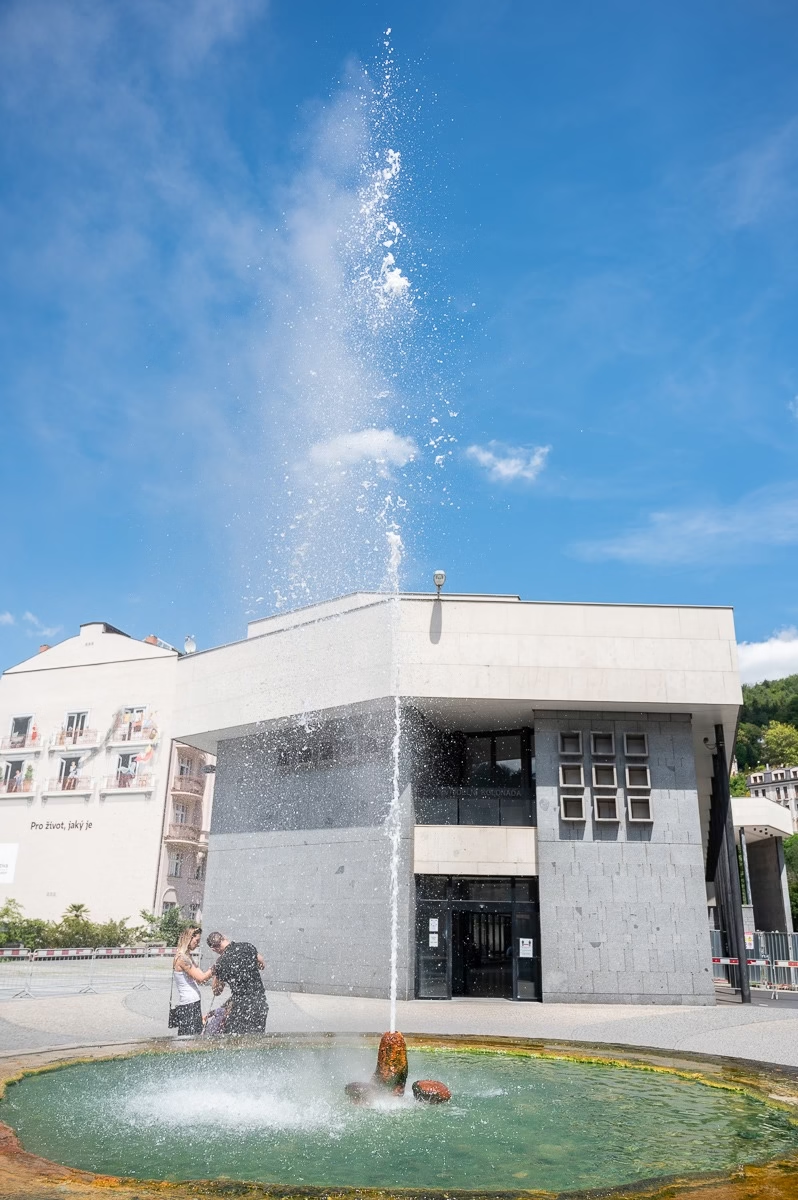
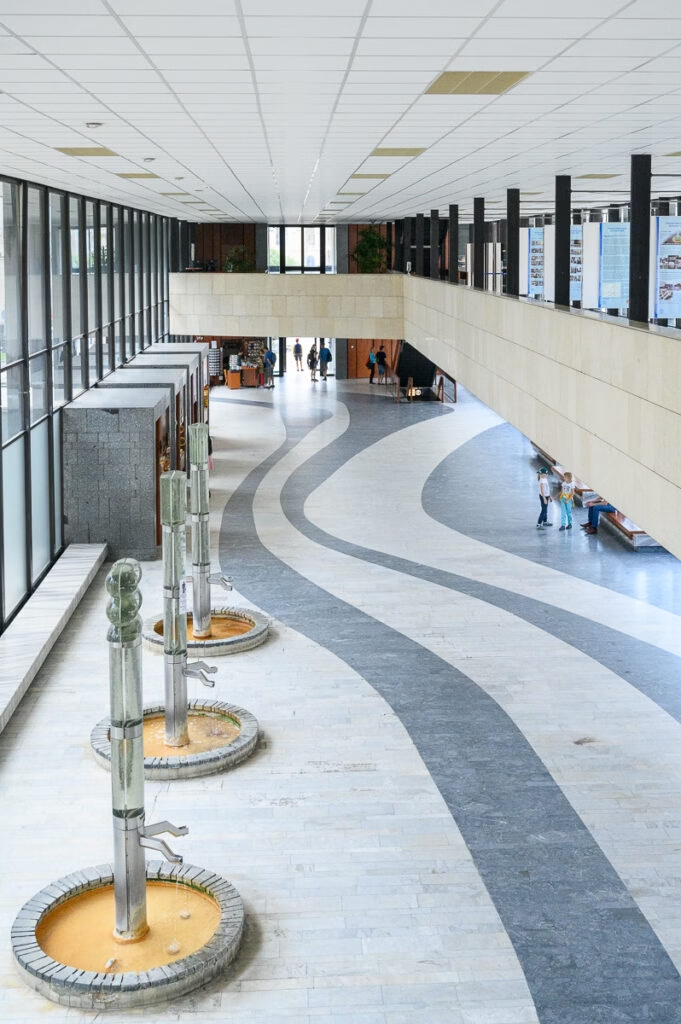
The modern 1970s building stands above the spot where Vřídlo – the hottest and most powerful spring – shoots up to 12 metres into the air.
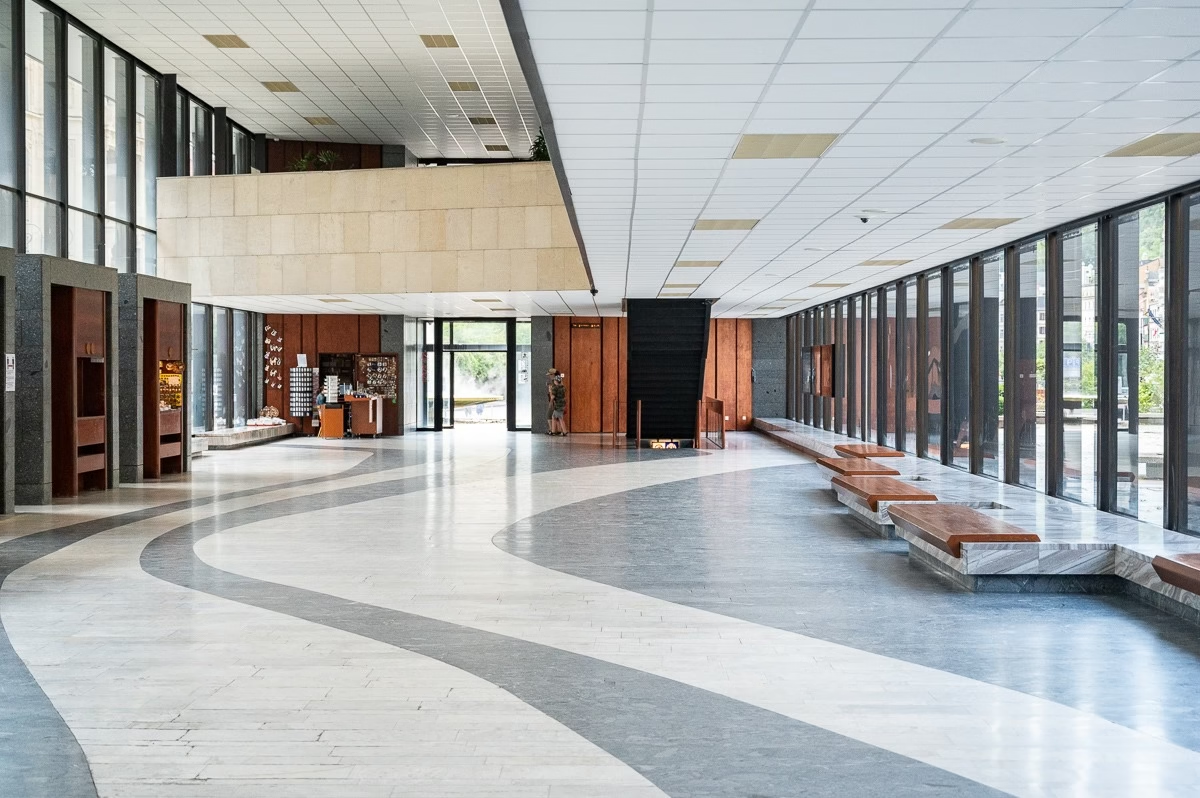
Inside, you can taste the spring, and there’s also a new archaeological window into the underground showing fossilised mineral deposits.
Market Colonnade
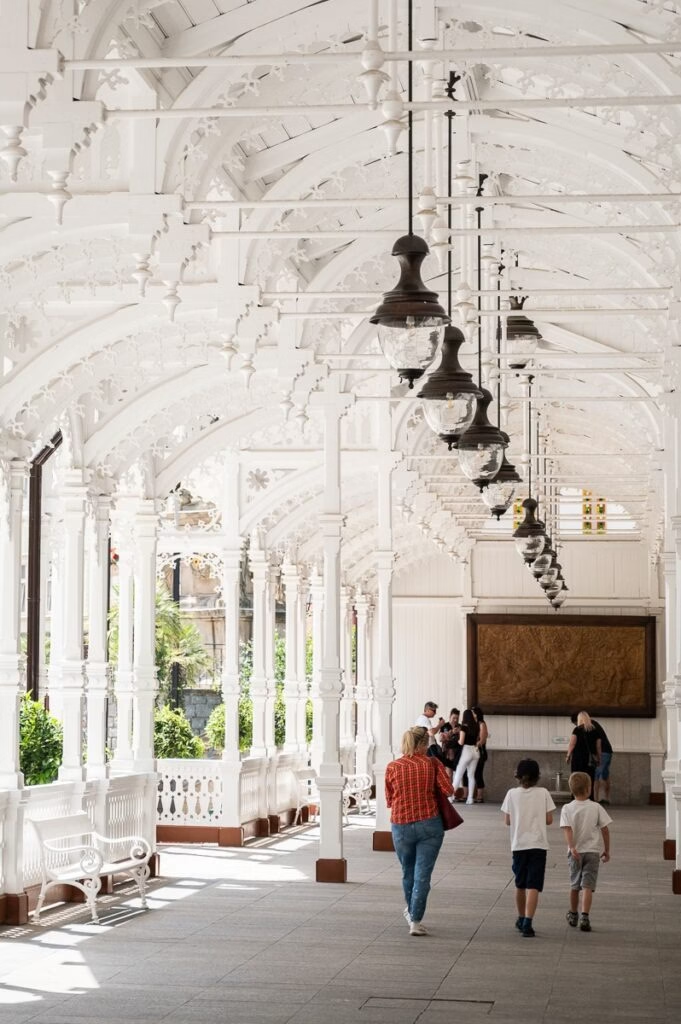
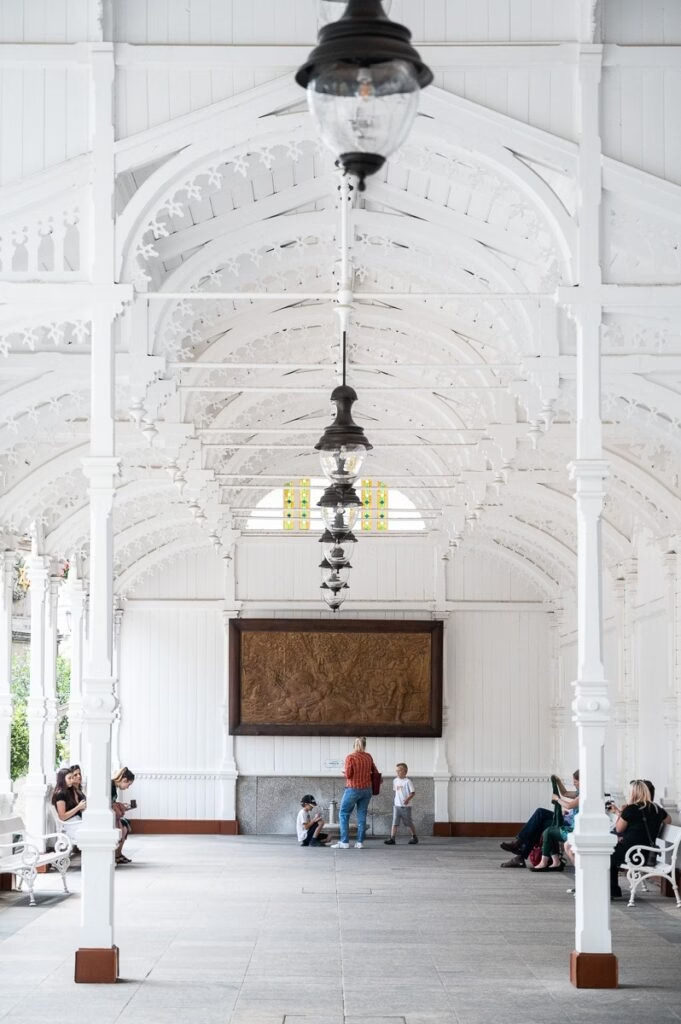
The oldest – and personally my favourite – colonnade. A wooden structure in Swiss style from 1883.
It was originally built as a temporary structure, but it proved so popular with guests that it still stands today.
Park Colonnade
It sits in the park on the left bank of the Teplá within sight of the Hotel Thermal, slightly off the busiest stretch of the spa promenade. It’s quieter than the others, less touristy, and a good place to rest in the greenery for a while.
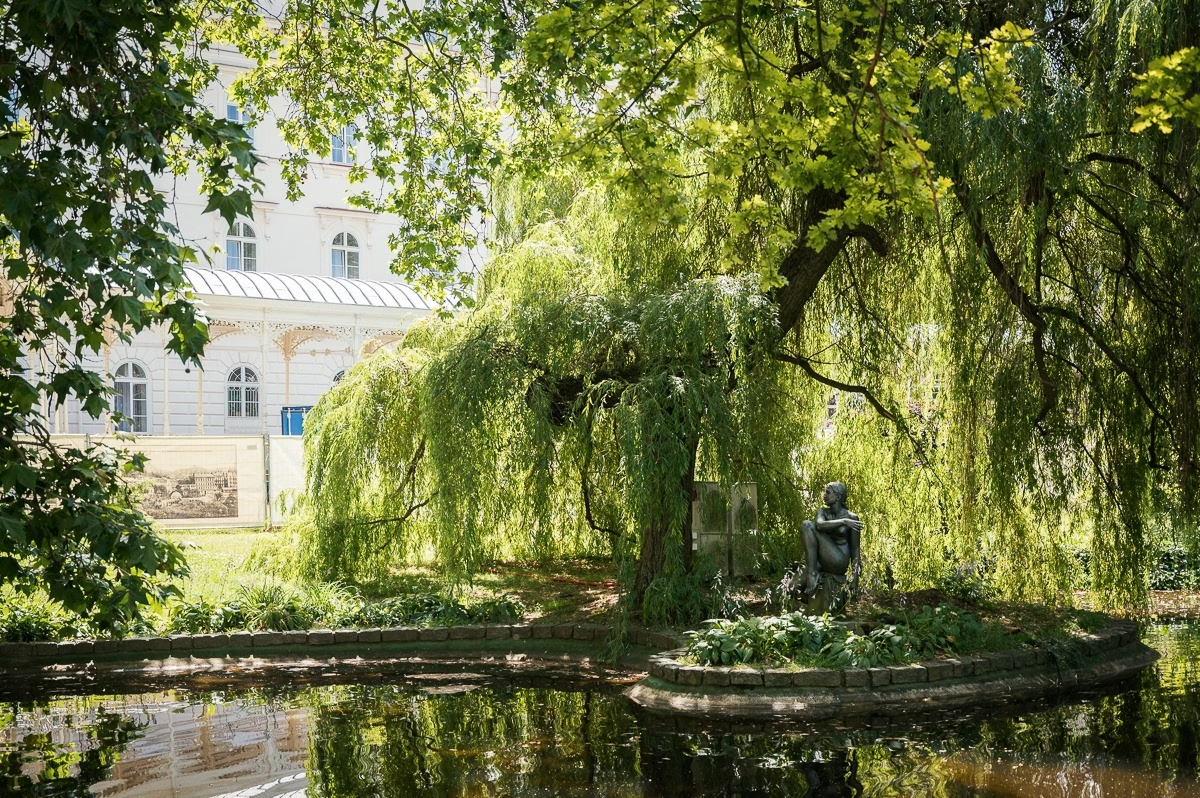
Inside you’ll find the Park Spring and Snake Spring – in my opinion the least pleasant of the lot, so don’t start your tasting with them.
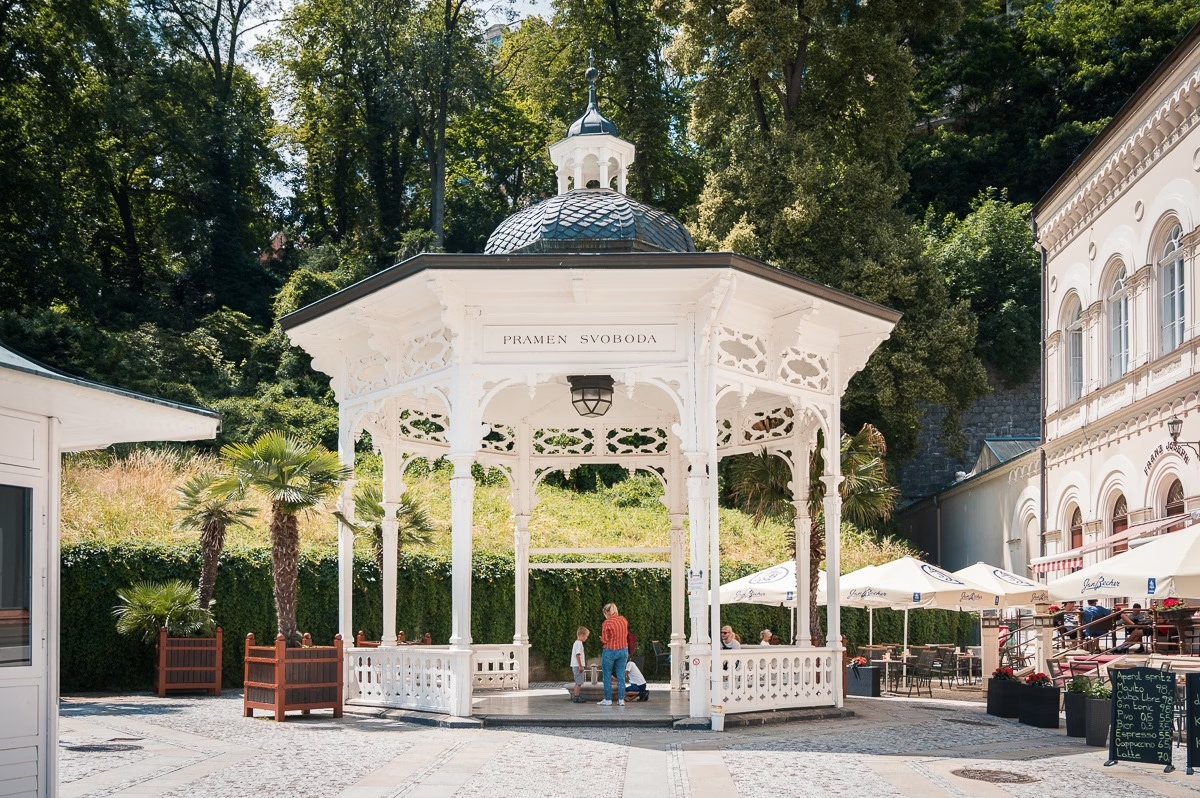
Castle Colonnade
An originally Art Nouveau colonnade above the Market Colonnade, but you can only admire it from outside. Today it’s part of the Castle Spa, accessible only to its guests.
Only the pavilion of the Upper Castle Spring remains open to the public.
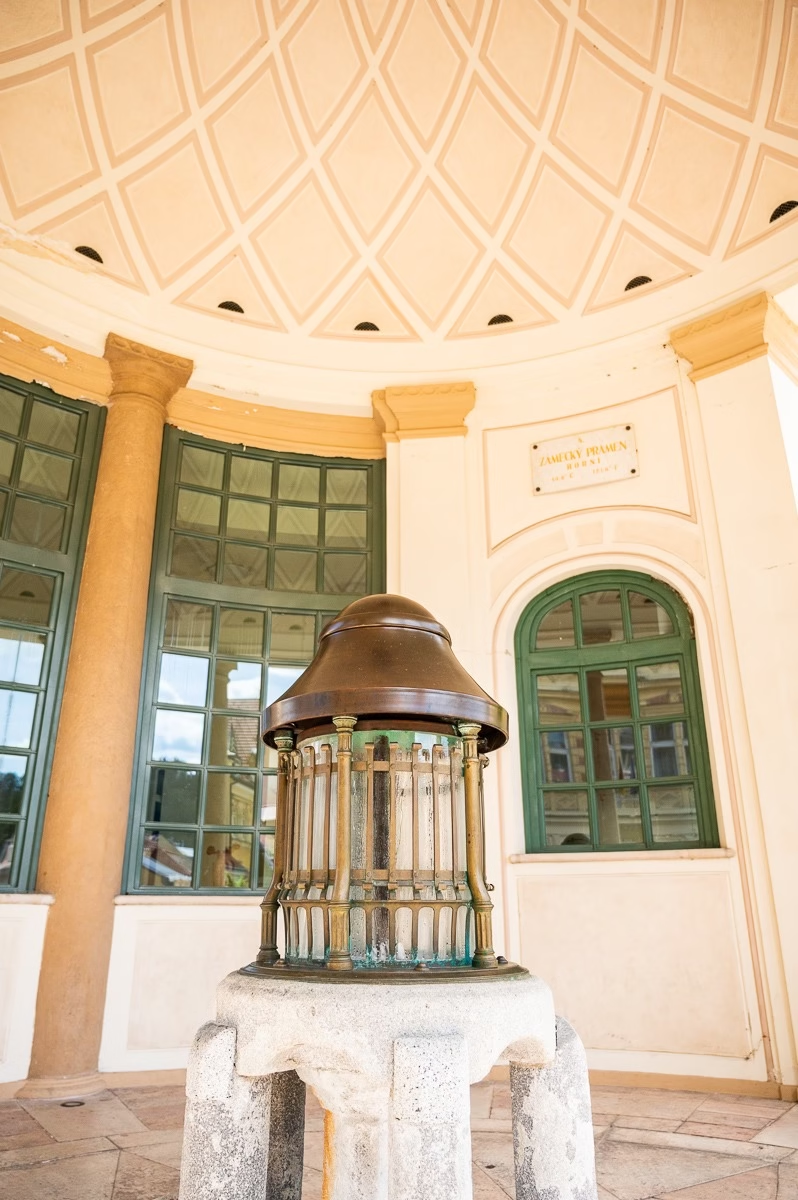
If you want to walk the colonnades in peace, head out before 9 a.m. In the afternoon, especially in summer, they’re packed with organised groups.
How to taste the springs
The mineral waters of Karlovy Vary have long been used to treat digestive issues, metabolic disorders and musculoskeletal problems. For visitors with no medical agenda, however, it’s mostly about the experience.
The springs differ in temperature, taste and mineral composition. Start with the cooler, milder ones, take your time between them, and definitely don’t sample them all in quick succession. Mixing different mineral waters in a short time can cause stomach upset.
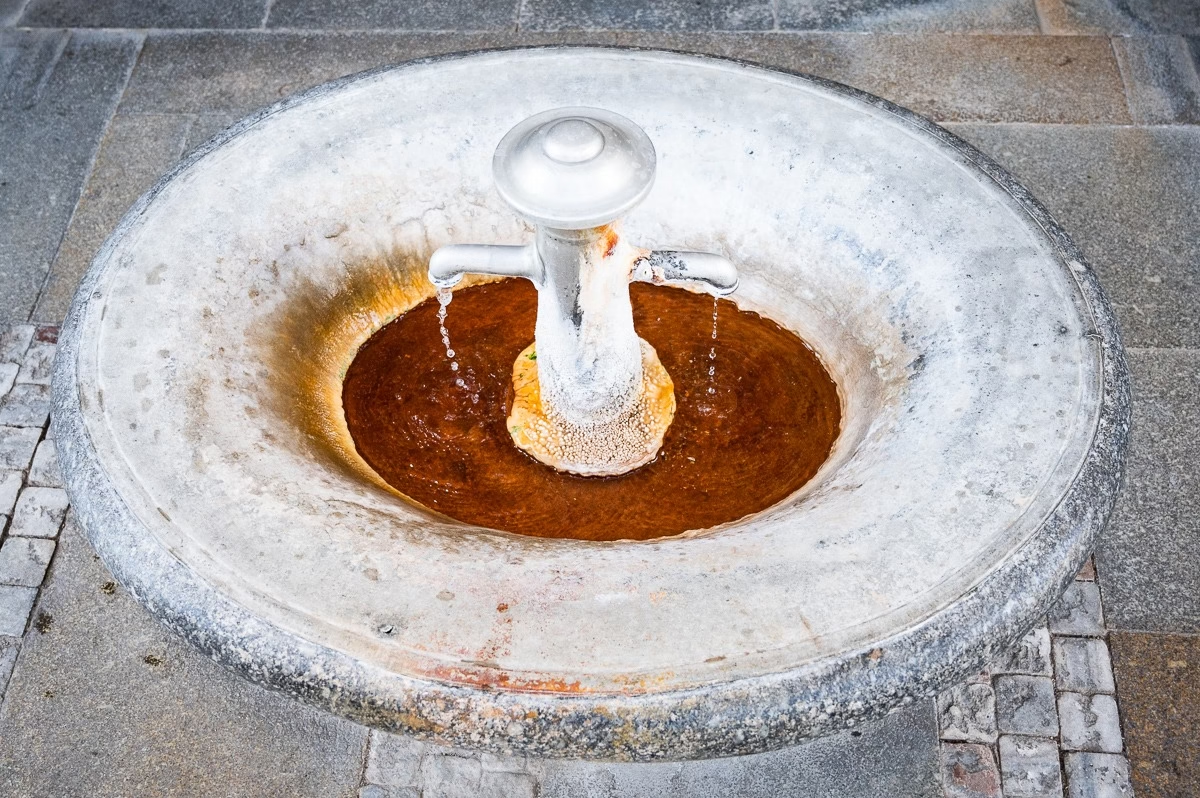
The traditional spa cup (called a “špičák”) can be bought in porcelain shops and souvenir stalls along the promenade for around €4–10. For the hot springs, it’s far more practical than a plastic cup.
Architecture beyond the colonnades
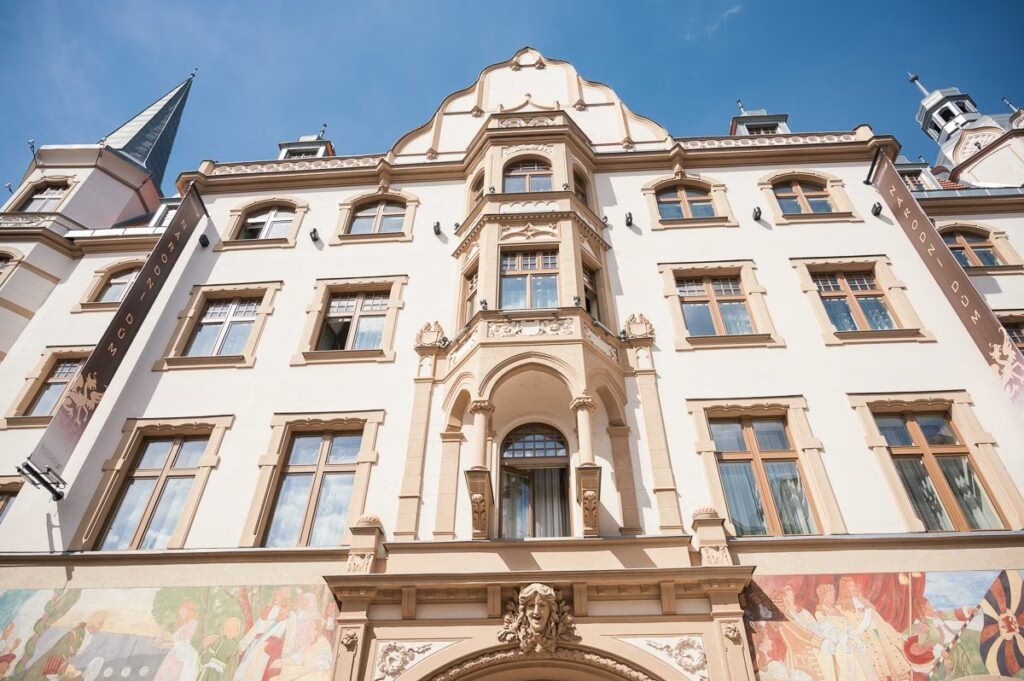
It would be a shame to stop at the springs and colonnades. Thanks to its long spa history, Karlovy Vary offers plenty of fascinating architecture and landmarks.
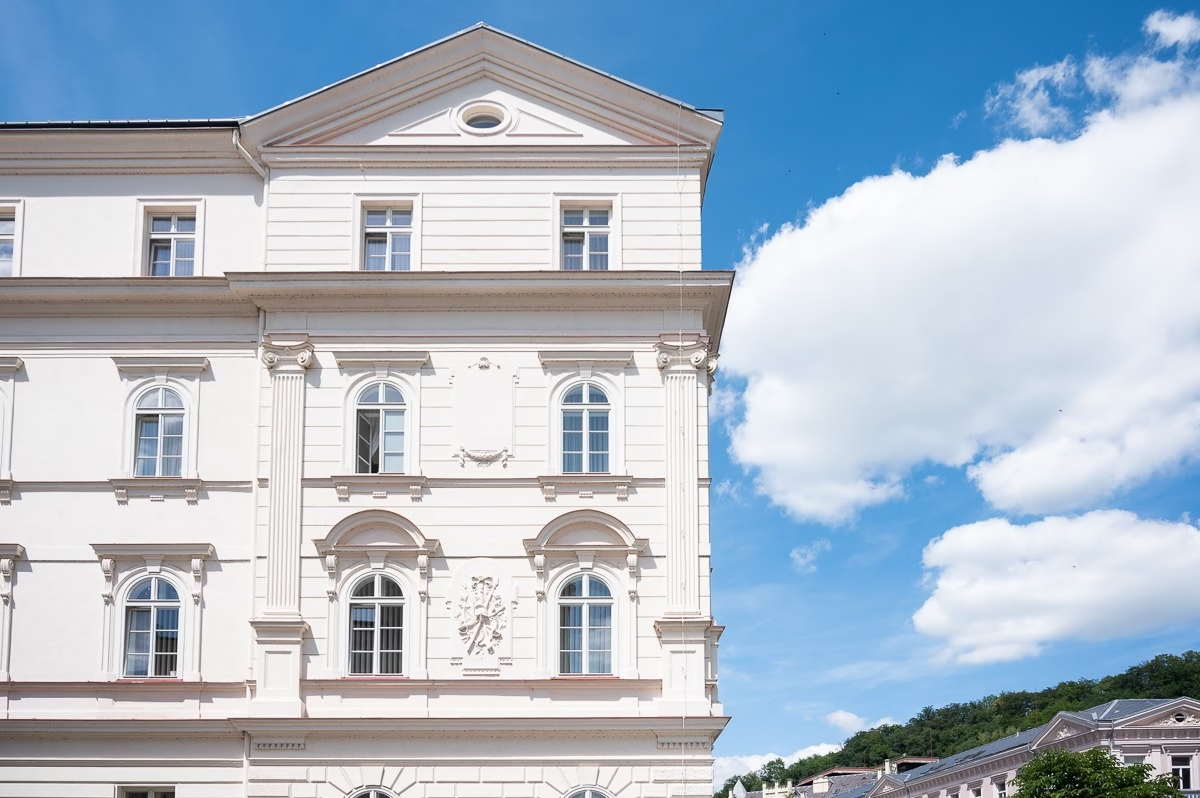
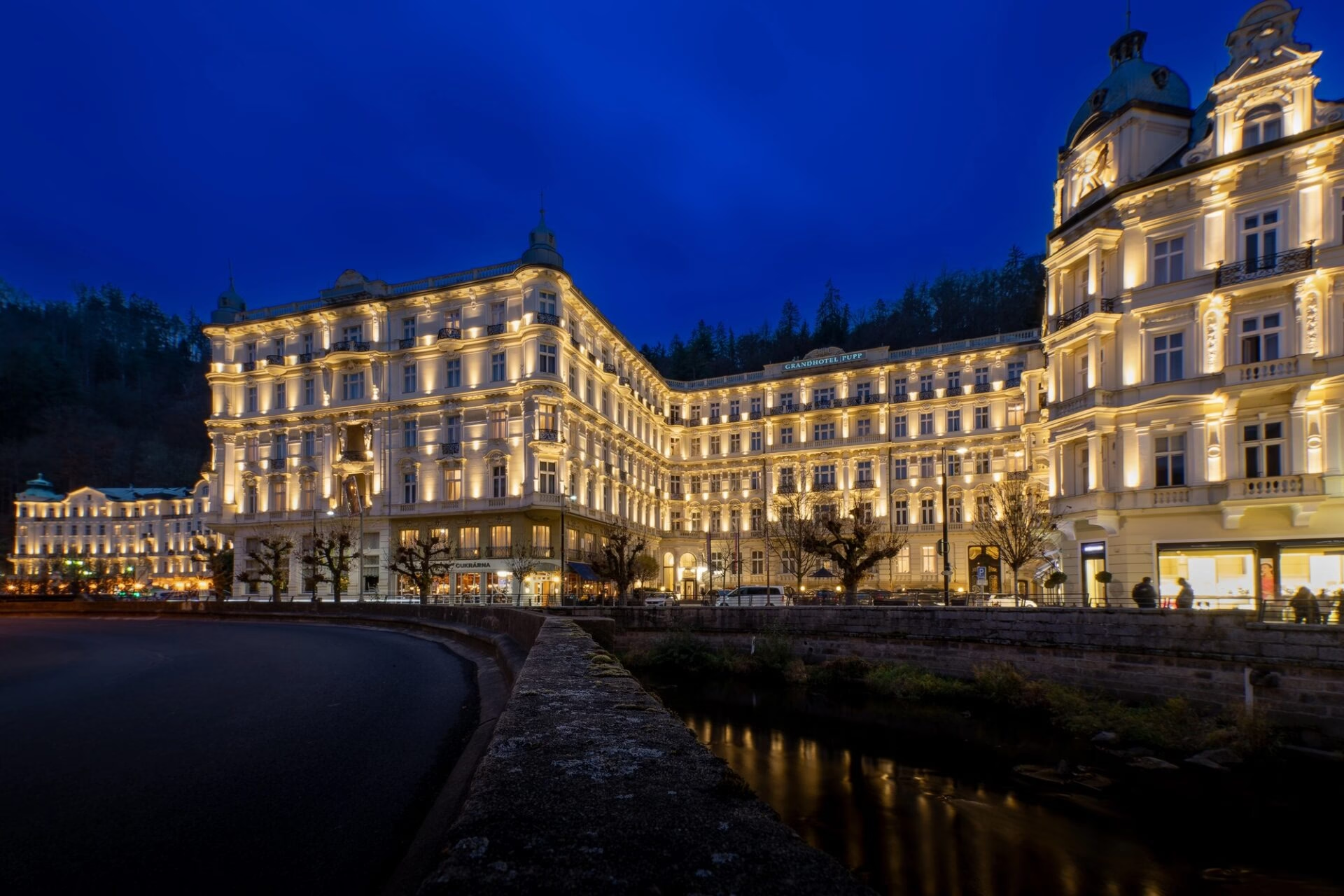
Grandhotel Pupp
At the southern end of the colonnade stands the neo-Baroque complex of the 5* Grandhotel Pupp, whose history reaches back to the early 18th century. The current appearance dates from the turn of the 19th and 20th centuries.
Anyone can step inside – the lobby, café and adjoining terraces are open to the public – and I definitely recommend taking a look around.
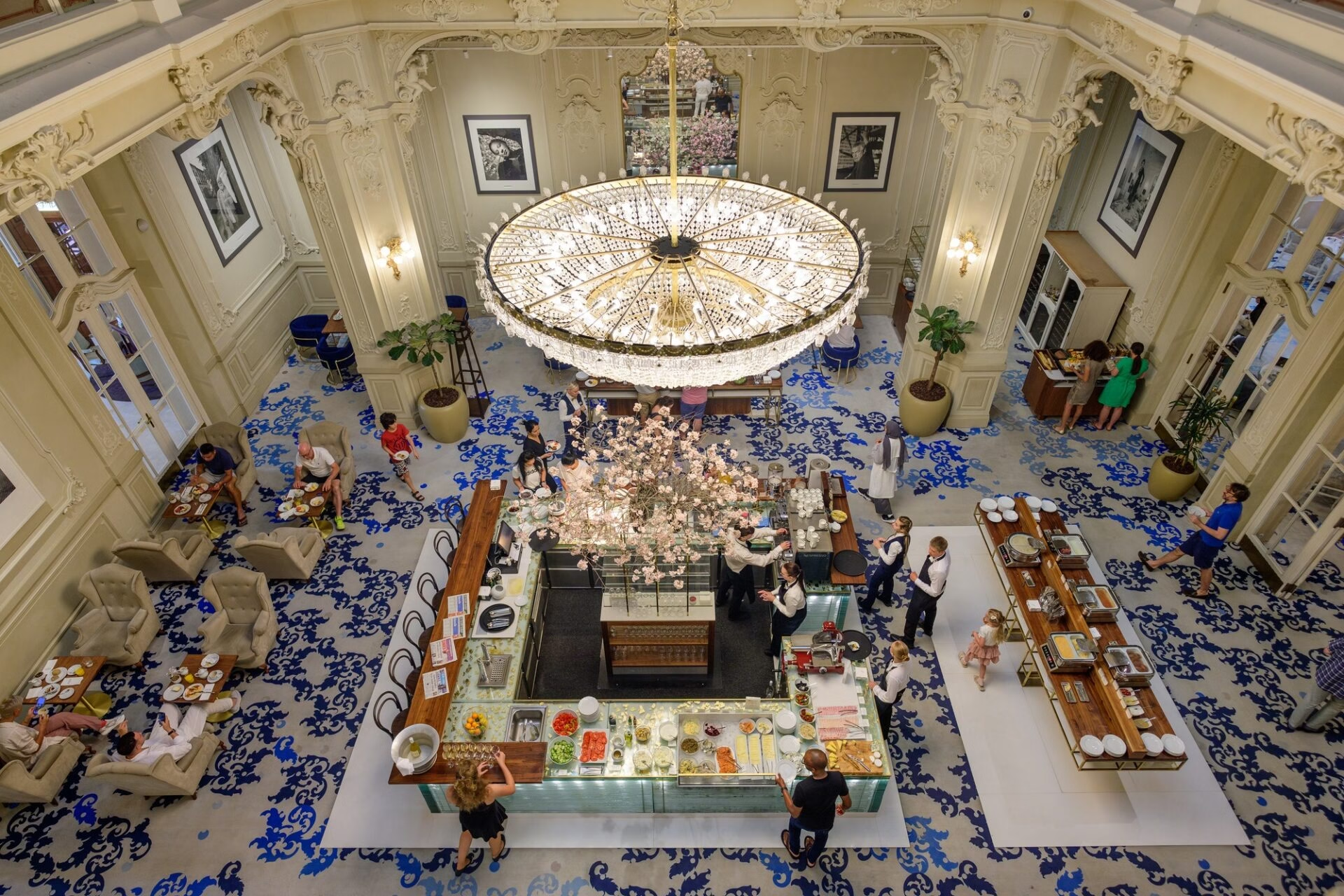
For movie fans: the Pupp played the role of Hotel Splendid in the 2006 Bond film Casino Royale.
Hotel Imperial
This Art Nouveau building from 1912 stands on a hill above the centre and is connected to the spa promenade by its own underground funicular – which, incidentally, is part of the regular Karlovy Vary public transport network.
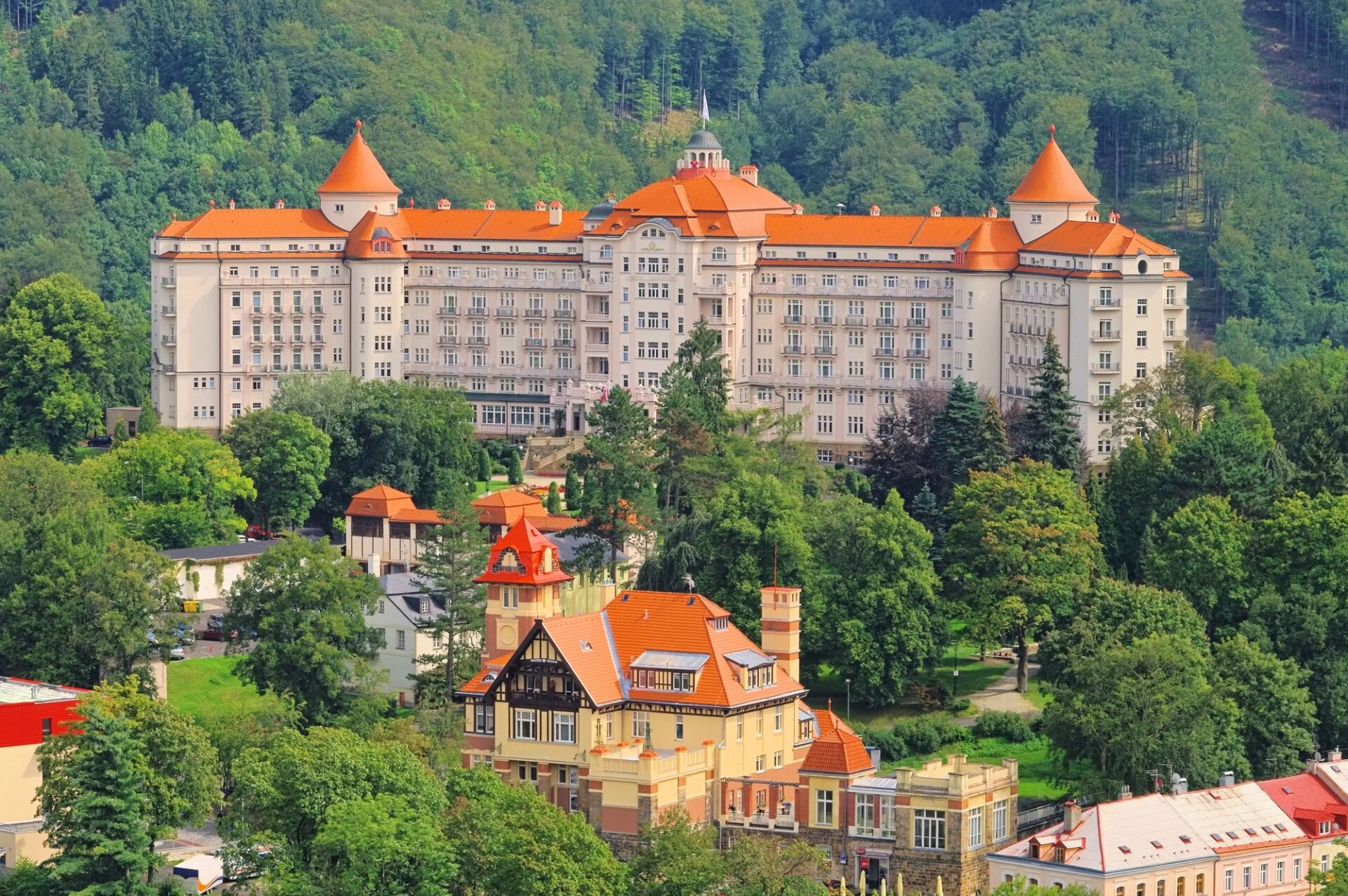
The view from the hotel terrace over the rooftops of the colonnade and the Teplá valley is one of the best in town. You can drop in just for a coffee or breakfast.
Hotel Thermal
Controversial, impossible to miss, and beautiful in its own particular way.
Built between 1967 and 1977 to a design by the architect couple Věra and Vladimír Machonin, Hotel Thermal is one of the most significant Brutalist buildings in Czechia.
The complex was created primarily for the film festival, which at the time needed a venue capable of competing with Cannes or Venice. The main hall, seating over 1,100, still serves as the festival’s principal screening venue today.
A few years ago the entire hotel underwent a complete renovation, which unfortunately turned out to be even more controversial than the original building – poorly executed in many places, and not respecting the original unique architectural design.
The hotel includes a publicly accessible outdoor thermal pool with views over the town.
Church of St. Mary Magdalene
The Baroque landmark of the small central square next to the Hot Spring Colonnade was designed by Kilián Ignác Dientzenhofer – also the architect of the Church of St. Nicholas in Prague’s Lesser Town.
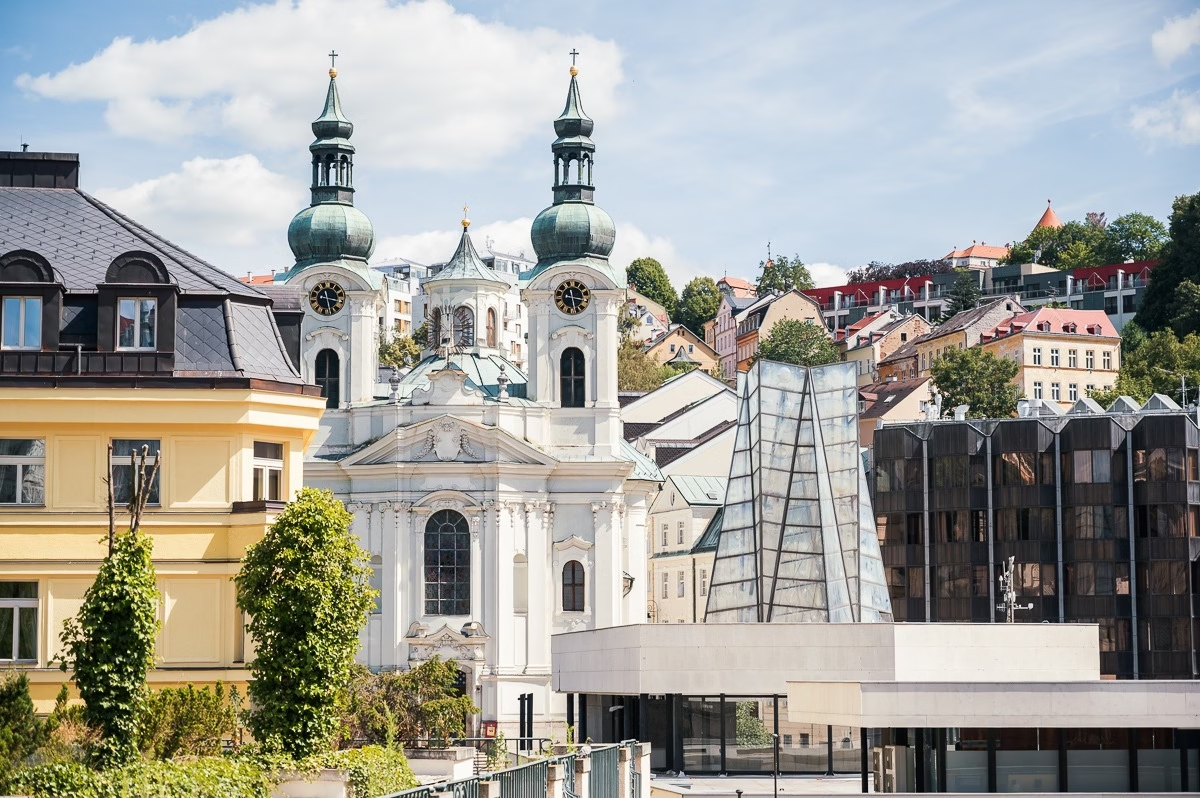
The twin-towered facade is one of the iconic views of central Karlovy Vary.
The church is freely accessible.
Orthodox Church of St. Peter and Paul
The Orthodox church in Byzantine-Russian style on the slope above Dvorany was built by Russian aristocracy who came here for treatment at the turn of the 19th and 20th centuries.
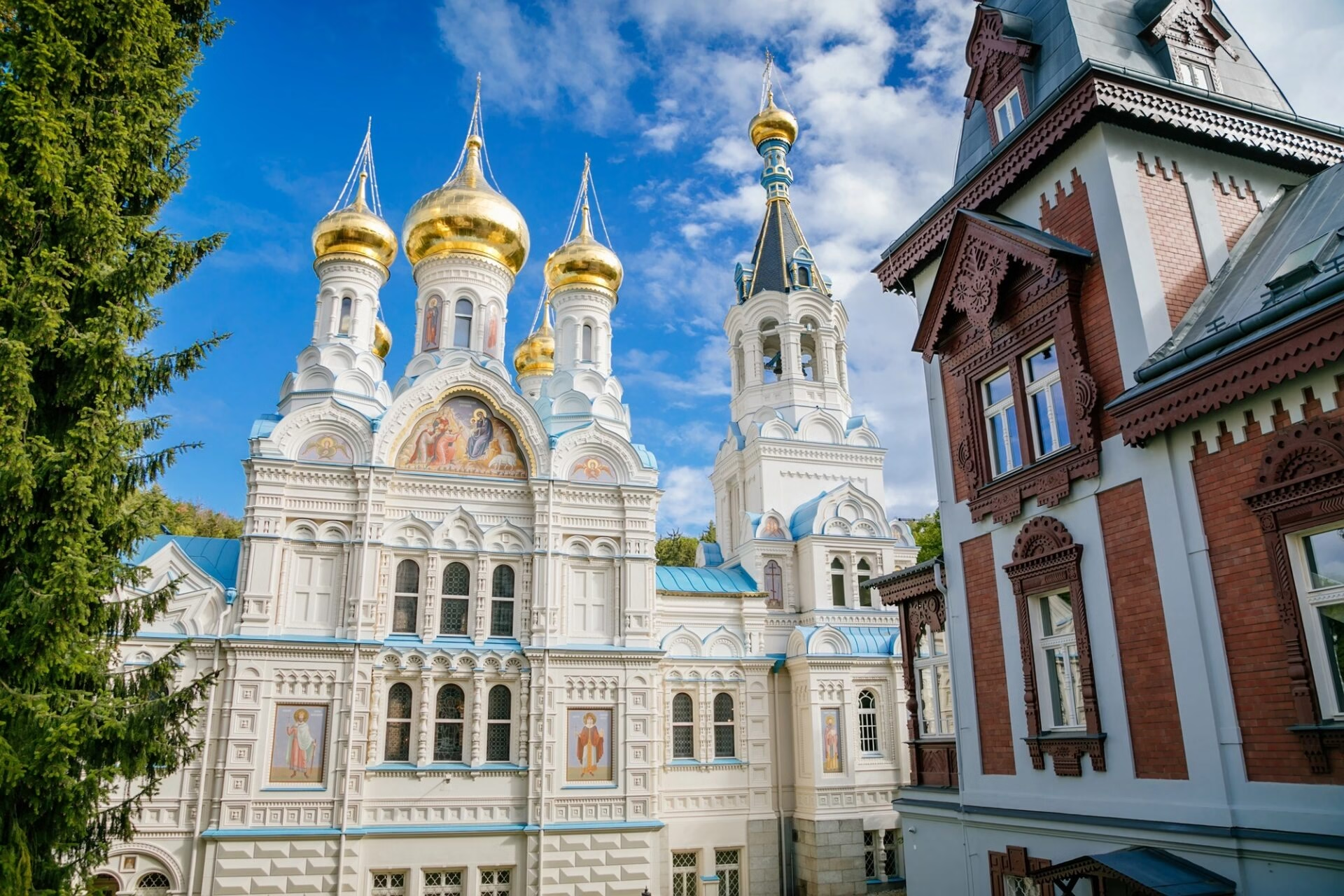
Colourful onion domes, gilded cupolas and a mosaic portal set it apart from anything else in town. It lies off the main tourist route – about a 15-minute walk from the colonnade.
I also strongly recommend wandering through the surrounding villa quarter, with its beautiful spa villas like Chopin, Rusalka, Charlotte and Kleopatra.
Imperial Spa (Císařské lázně)
The largest and architecturally most lavish spa house in Karlovy Vary stands on Mariánskolázeňská Street, just a short walk from Grandhotel Pupp.
The neo-Renaissance palace, inspired by French châteaux, was designed by the famous architects Fellner and Helmer and opened in 1895. After decades of neglect, it has recently undergone an extensive restoration – and the result is well worth seeing.
Today the building no longer functions as a spa, but as a cultural centre: it’s home to the Karlovy Vary Symphony Orchestra and hosts exhibitions and concerts.
The ground floor houses the official tourist information centre for the town and the Karlovy Vary Region.
Municipal Theatre
The pseudo-Rococo building on Theatre Square dates from 1884–1886. The interior goes well beyond what you’d expect from a provincial stage: the ceiling paintings and the hand-painted curtain were created by a then 22-year-old Gustav Klimt, his brother Ernst, and Franz Matsch.
The theatre is still in operation, hosting both drama and opera – and even a quick stop in the foyer is worth your time.
Church of St. Luke
On Castle Hill, a five-minute walk from the colonnade, stands a brick building that feels unexpected in the Karlovy Vary context. This pseudo-Gothic Anglican church, built in 1876–1877 with money from wealthy British spa guests, draws on English Neo-Gothic: bare brickwork, pointed arches, a wooden tower above the crossing.
Today it houses a wax figure museum with screenings of silent films from Karlovy Vary made between 1919 and 1934 – an unusual combination, but one that works surprisingly well in this historic space.
Diana Lookout Tower and walks above the town
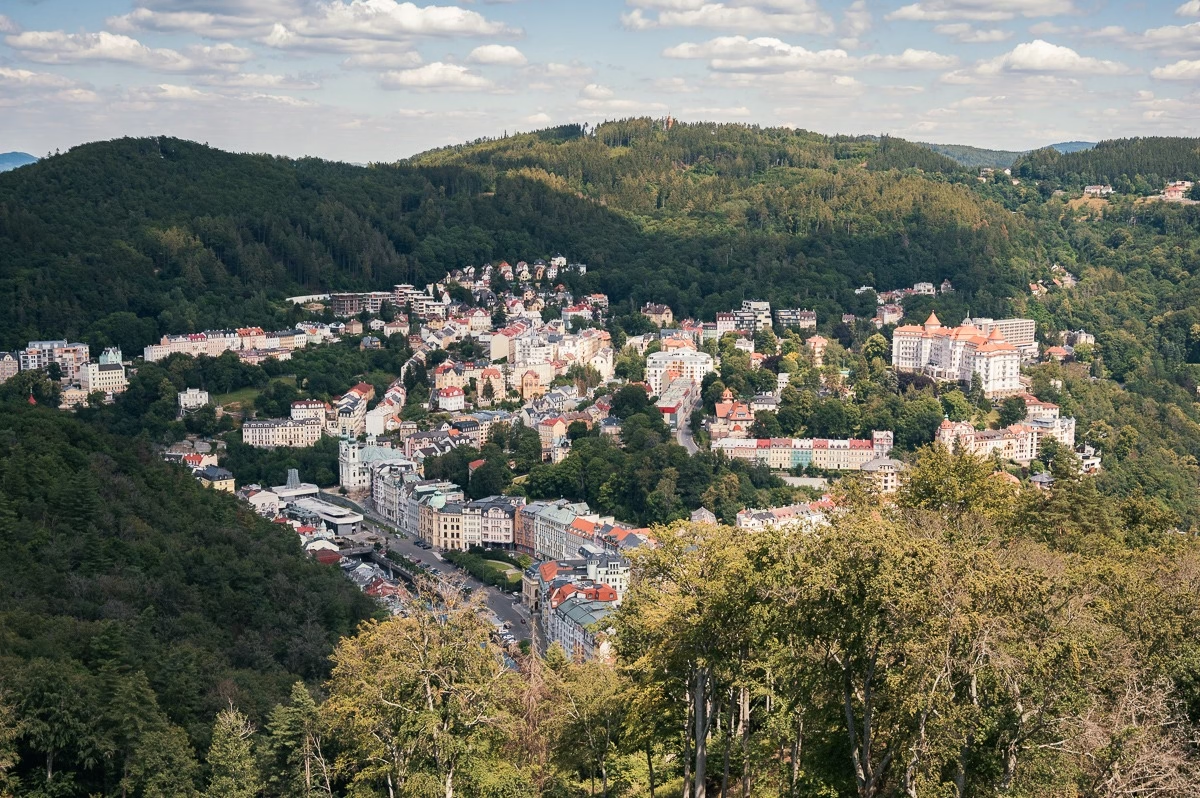
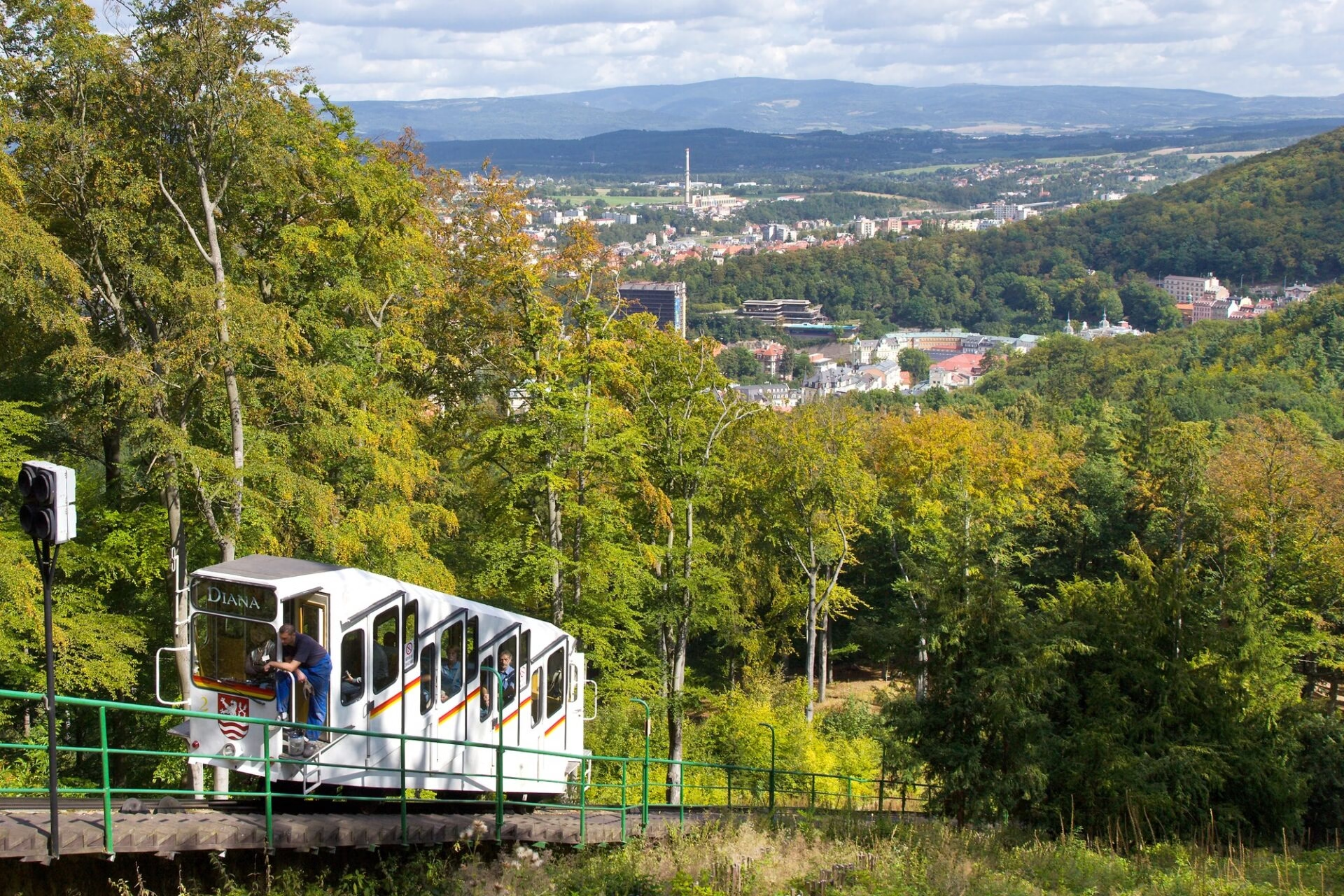
The lookout tower stands on top of a hill directly above the spa centre. You can get there either by funicular from Grandhotel Pupp, or on foot via a forest trail in 30 to 50 minutes.
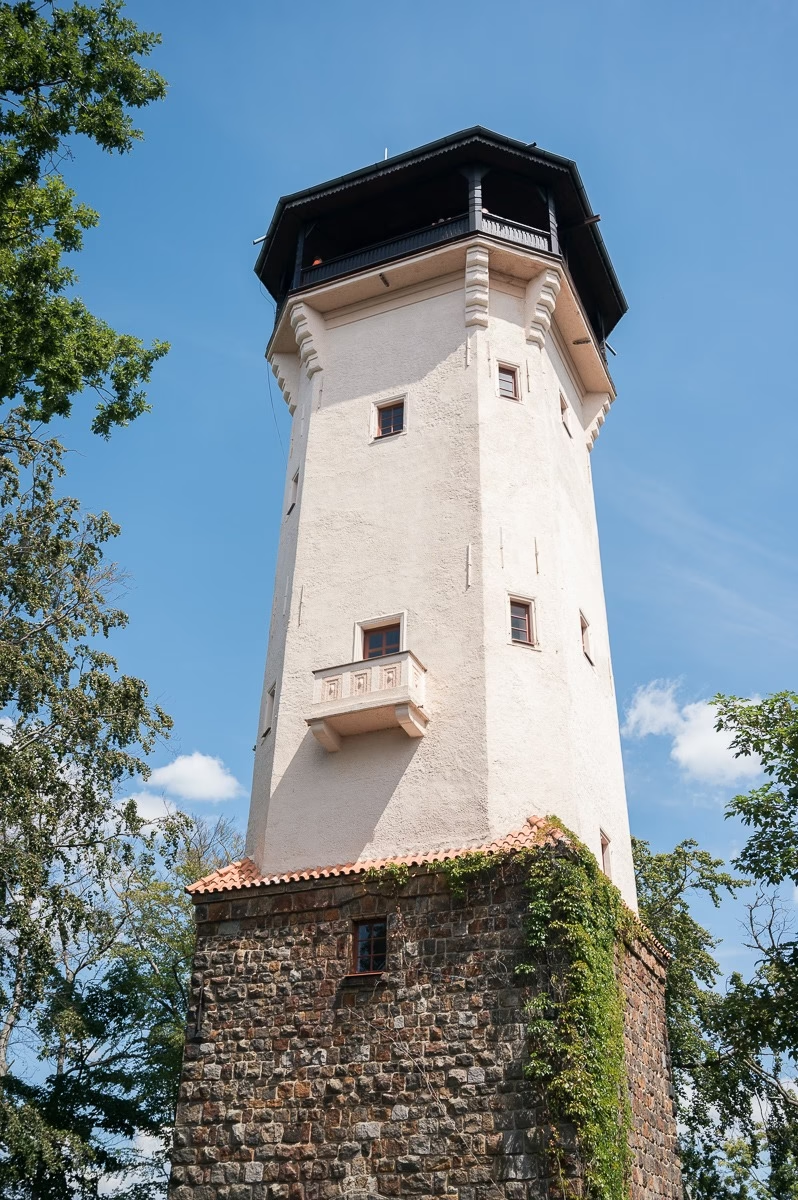
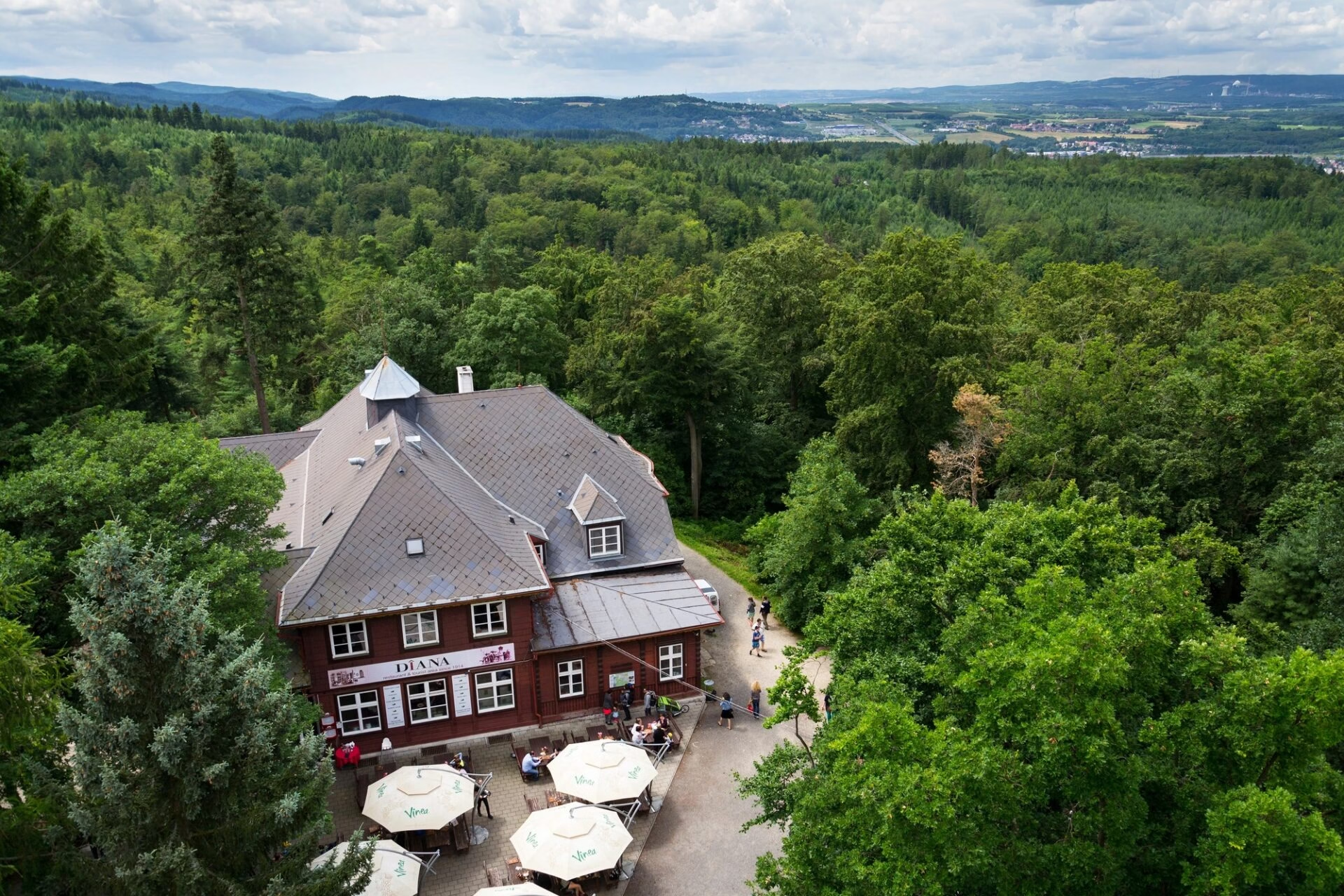
From the tower you’ll see the whole centre, the Teplá valley and the hills of the Slavkov Forest. There’s also a restaurant on site (nothing special, but perfectly fine for a soft drink and fries).
The entire slope above the centre is laced with forest trails that served spa guests long before Diana became a tourist stop.
In spring the trails are lined with blossoming trees; in autumn the deciduous forest turns beautiful shades of gold and red. For me personally, these forest walks – with their countless gazebos and lookouts – are the best thing about the whole of Karlovy Vary.
Goethe Lookout
On the other side of the valley, about 2 km east of the centre, the oldest lookout tower in Karlovy Vary stands on the Hill of Eternal Life. The pseudo-Gothic tower from 1889 also came from the workshop of the Viennese architects Fellner and Helmer. It includes a café, open Friday to Sunday in summer.
The view from the 34-metre observation deck isn’t completely open – trees to the northeast block part of the panorama – but the view of the Ore Mountains, the Slavkov Forest and the Doupov Hills is well worth it.
The tower is a great destination for a longer forest walk: from the Hůrky bus stop (route 8), Gogol’s Trail leads directly to it, about 1.2 km uphill.
From the centre, starting at Vřídlo, follow the yellow trail markers for 3.5 km with 260 metres of elevation gain – a more demanding option, but one that passes through a beautiful section of the spa forests.
Entry to the tower is free during café opening hours, with the key picked up there. Open Friday–Sunday 10 a.m.–6 p.m. (until 5 p.m. in winter), weather permitting.
The 7 best lookouts in Karlovy Vary
- Goethe Lookout
- Peter’s Heights (Petrova výšina) – a rocky terrace above Stag’s Leap, with a direct view of the entire spa zone; legend has it that Tsar Peter I rode here on horseback in 1712. The best view of any lookout above the colonnade.
- Mayer’s Gloriette – a wooden gazebo from 1804 perched on a rocky outcrop near Stag’s Leap, with a bird’s-eye view directly onto the rooftops of the colonnade.
- Three Crosses Lookout – a forest gazebo on Three Crosses Hill offering one of the broadest panoramic views over Karlovy Vary; a popular spot at dusk.
- Charles IV Lookout Tower – renovated in 2023, with two observation galleries on the opposite side of the valley from Diana; barely any tourists.
- Otto’s Heights (Ottova výšina) – an unmarked forest viewpoint in the spa forests, ideal to combine with the route to the Goethe Lookout.
- Forest Lookout near Svatošské Rocks – outside the town but reachable on foot or by bike; views over the Ohře valley and the Slavkov Forest.
Museums
The Home of Becherovka – Jan Becher Museum
Becherovka is one of the few things known throughout Czechia, yet most people know almost nothing about its origins. The Home of Becherovka in central Karlovy Vary fixes that – and does it in a fun way.
The tour lasts about an hour and walks you through the history of the family business from its beginnings in 1807, through the industrial 20th century, to the present day. It includes replicas of period production rooms and explanations of the manufacturing process, herbal composition and distribution.
The tasting at the end – classic Becherovka plus some lesser-known varieties – is enjoyable even for those who don’t usually go for herbal liqueurs.
The museum is housed in the former production building on the riverfront. It’s open daily except Monday, with admission including the tasting starting at around €12.
If you’re really keen on the production process, you can book a tour of the modern distillery as well, but that one costs around €80 and capacity is very limited.
In high season it pays to book online in advance.
Moser
The most prestigious Czech glassworks has been in operation since 1857. The museum and shop are right in central Karlovy Vary, while the glassworks themselves – in the nearby Dvory district – can be visited on a guided tour.
Karlovy Vary Museum
An exhibition on the history of the town, the spa industry and Karlovy Vary culture. The visit takes about an hour.
The museum is across the street from Grandhotel Pupp.
Things to do in Karlovy Vary
Karlovy Vary International Film Festival
KVIFF is one of Europe’s biggest film festivals – and certainly one with the best atmosphere relative to the size of the host town. It takes place every year at the turn of June and July, usually in the first full week of July.
Screenings happen in cinemas across the centre, with part of the programme staged outdoors on Theatre Square. Some of the films – usually those out of competition – are open to the public without accreditation. Tickets for individual screenings are sold both online and on site.
For a visitor without accreditation, the festival is most worthwhile for the atmosphere and the chance to bump into all sorts of interesting people: cafés are bursting at the seams, the colonnade is packed, and evenings are lively.
If you’d rather have peace and quiet and reasonably priced accommodation, this is the one week to skip – hotels are significantly more expensive and usually sold out long in advance.
A spa experience for day visitors
You don’t have to be staying at a spa hotel to try a treatment. Several hotels offer short-term entry or individual procedures for day visitors – mineral baths, massages, pearl baths or inhalations. Prices start at around €20 for a basic treatment.
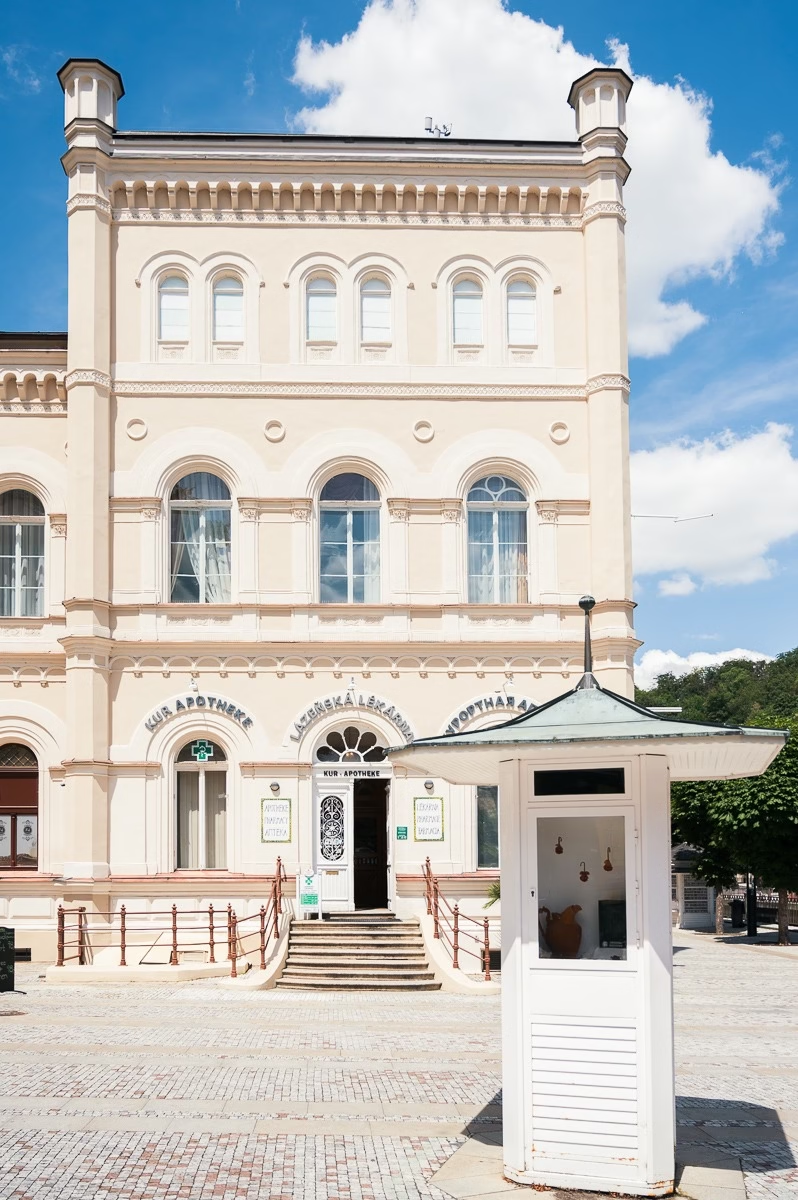
Recommended places for independent guests: Hotel Thermal (the largest and most accessible), Hotel Imperial, or smaller private spa centres in the town centre. Book ahead, especially on weekends.
Swimming in the hot pool at Hotel Thermal
For me personally, winter swimming in the large outdoor pool – back when it was still the “old” Thermal – was one of the best experiences in Karlovy Vary.
Today the pool is part of the Saunia complex and, after a long break, is open year-round again. The large pool is kept at 32 °C, the smaller thermal pool 6 degrees warmer. The only downside is that the pool used to be a 50-metre swim – now it’s been split into several sections.
I recommend visiting any time of year. Beyond swimming and saunas, you can also relax on the sun terraces with a fantastic view over the town.
A walk or bike ride along the Ohře valley
The Ohře river flows past the centre of Karlovy Vary, but the most beautiful section starts beyond the town.
To the southwest, towards Loket, the Ohře has cut a deep canyon through the granite massif – and along this stretch runs a cycle path that’s among the most beautiful in the entire region. You’ll be cycling on the flat almost the whole way – the path follows the river the whole time.
By bike you can start right in the centre. For a walking trip, take bus 6 (towards Doubí) to the second-to-last stop, Svatošská. You can return via the Doubí–Svatošské Rocks educational trail.
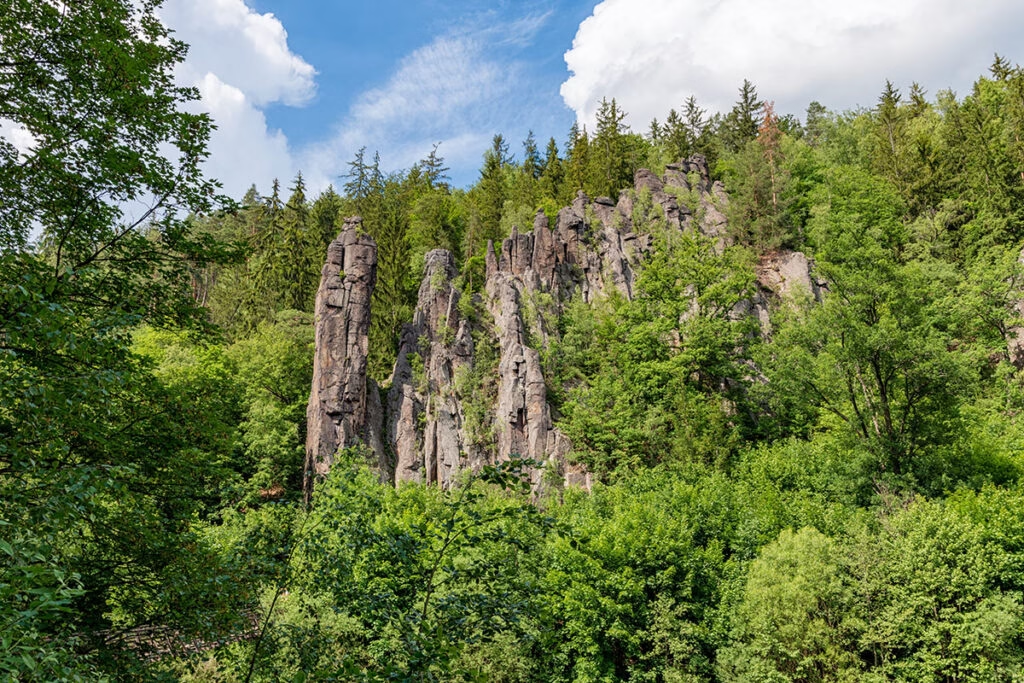
Along the way you’ll pass Svatošské Rocks: a rock city of granite pillars and pinnacles on the left bank, formed by erosion and frost weathering. It’s one of the most striking geological formations in the Karlovy Vary region and a freely accessible natural attraction.
Bike rentals are available right in Karlovy Vary – at the train station and in the centre.
By bike, definitely ride all the way to the medieval town of Loket Castle, for which we have a separate guide.
Food and drink
Thankfully, there are now plenty of options in Karlovy Vary for lunch, dinner or great coffee. Below you’ll find just a selection of my personal, tested picks.
But first, a few specialties you simply have to try here.
Karlovy Vary specialties
Three things are associated with Karlovy Vary more than anything else: spa wafers, Becherovka and mineral water. All three deserve your attention.
Karlovy Vary spa wafers
Crisp, delicate wafers most often filled with hazelnut, cinnamon or cocoa cream.
Stalls along the colonnade and in the centre sell them fresh and warm – I loved them as a child and I still love them now. They’re nothing like the supermarket version.
Becherovka
Created in 1807 as a medicinal drink by the pharmacist Jan Becher. The recipe has barely changed, and the herbal blend remains a closely guarded secret. You can drink it neat, but the local tradition is to add it to hot tea or mix it with tonic water for a cocktail called Beton.
In our view, it’s one of the best typically Czech gifts – for foreigners and locals alike.
Karlovy Vary salt
A by-product of evaporating the mineral water from Vřídlo. Sold both as a cooking salt and a bath additive. In my opinion, one of the more interesting souvenirs.
Karlovy Vary dumpling
A fluffy bread dumpling with herbs and the visible texture of bread rolls baked into it.
Where to eat in Karlovy Vary
- Špunt & Knoflík Company – A pleasant spot near the colonnade serving honest Czech classics with a modern twist and well-pulled beer on tap.
- Restaurace La Hospoda Karlovy Vary – A traditional Czech pub with tank Pilsner, svíčková and goulash – a safe bet when you want classic Czech cuisine without compromise.
- Meat & Bone Steakhouse – A steakhouse with aged beef steaks, ribs and burgers. Careful grill preparation and a decent wine list.
- Restaurace Le Marché Karlovy Vary – A Michelin Guide recommended restaurant. Modern cuisine focused on local ingredients with an open kitchen – ideal for a special dinner.
- 480° – Pizzeria Napoletana – Authentic Neapolitan pizza baked at 480 °C in a wood-fired oven. Thin, fluffy crust and proper Italian ingredients.
- Restaurace Tusculum – A quiet restaurant above the town in spa-house style. International and Czech cuisine, a view, and a pleasant terrace.
- BAGEL Lounge – Bagels in countless variations, breakfasts and brunches. A great stop when you want something quick and high-quality during the day.
- Ukrajina restaurace Karlovy Vary – Home-style Ukrainian cuisine – borscht, varenyky, stuffed pancakes. Big portions and fair prices.
Where to go for coffee and dessert
- Republica coffee – A specialty café with its own roastery and meticulous brewing. One of the best addresses for filter and espresso in town.
- Parisienne – sweet desserts & café – A French-style patisserie and café. Macarons, tartlets and proper desserts to go with good coffee.
- Kavárna Lékárna by City Roasters – A stylish café in a former pharmacy. Coffee from the City Roasters roastery and a quiet spot in the centre.
- Pasqualini il Caffé – An Italian café with an espresso bar. If you like the Italian approach to coffee and small sweets, you’ll feel right at home.
- Pinkiez espresso bar – A small espresso bar focused on quick, quality coffee. An ideal stop while strolling the colonnade.
- Raposa Coffee Roastery – Their own roastery offering different beans and brewing methods. A must-visit for coffee enthusiasts.
- Café Pohovka – A cosy café with a homely atmosphere. Good coffee, cakes, and a quiet spot for working or reading.
- Limetka v Meandru – A café and bistro inside the modern Meandr shopping centre. Specialty coffee, breakfast, and proper lunches.
Where to go for a drink
- Železářství bar – A stylish cocktail bar in the premises of a former hardware shop. Original drinks and a well-curated bar menu.
- Oysterium Wine & Oyster Bar – A wine bar specialising in oysters and champagne. For a more festive evening or a pre-theatre aperitif.
- Becher’s Bar – The legendary bar at Grandhotel Pupp, with historic atmosphere and cocktails inspired by Becherovka. A classic in its own right.
- Craft Beer Point – A beer bar with a wide selection of Czech and international craft beers, both on tap and in bottles. A must for beer lovers.
Day trips from Karlovy Vary
Andělská Hora
About 12 km southeast of Karlovy Vary, on the way to Prague, the ruins of a Gothic castle from the turn of the 14th and 15th centuries rise above the village of the same name. The silhouette of the castle on its lonely basalt outcrop is visible from a great distance and is one of the iconic views of the Karlovy Vary region.
Two entrance gates, two courtyards and the remains of the residential palace have survived – the scale of the ruin is more impressive in person than photos suggest. The view from the top over the Doupov Hills, Slavkov Forest and Ore Mountains is among the best in the area.
The ruin is freely accessible year-round, admission free. A green-marked trail leads from the village directly to the castle, with the climb taking about 10–15 minutes. By car, take road number 6 (in future the D6) towards Prague and park on the village square.
Stop in at the lovely Andělská Café Galerie while you’re there.
Slavkov Forest Protected Landscape Area
The Slavkov Forest is a protected landscape area that lies right on the doorstep of Karlovy Vary – yet most visitors miss it. Covering more than 600 km², it includes the Slavkov Forest itself along with parts of the Teplá Highlands, Doupov Hills and Cheb Basin.
The landscape is characterised by extensive spruce and beech forests, wetland meadows and peat bogs. Its highest points – Lesný (983 m) and Lysina (982 m) – aren’t far away and offer wide views across the region.
The symbol of the protected area is mountain arnica, which grows on the unfertilised meadows here and is one of the species rapidly disappearing from other parts of the country.
For visitors, two areas stand out. The deep valley of the Teplá river between Karlovy Vary and Bečov – a forested valley with small rocky outcrops and quiet trails. And then my personal favourite, the Kladská peat bog near Mariánské Lázně: one of the best-preserved raised bogs in Czechia, with an educational trail and a unique landscape all around.
Since 2021, the Slavkov Forest has been part of the UNESCO inscription as part of the cultural landscape of the Great Spa Towns of Europe. UNESCO recognised not only the architectural heritage of the spa towns, but precisely this harmony of cultural landscape with nature.
Loket
Twelve kilometres southwest of Karlovy Vary, but in atmosphere a different world entirely. A medieval town on a rocky outcrop encircled by the Ohře river – with a castle that has stood here since the 13th century.
Detailed tips can be found in our dedicated guide.
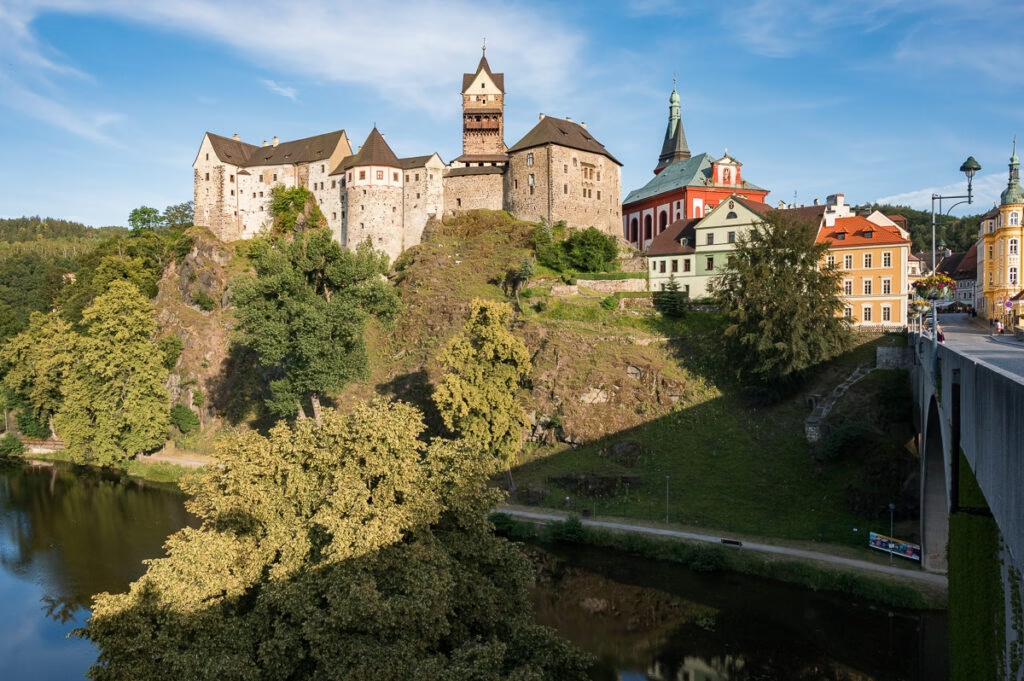
In short: the castle is worth the visit, the main square is one of the best-preserved in the Karlovy Vary Region, and the town’s setting above the river is so photogenic you’ll see why a Bond film was shot here.
The most beautiful way to get to Loket from Karlovy Vary is on foot or by bike along the Ohře, passing the Svatošské Rocks.
Bečov nad Teplou and the Reliquary of St. Maurus
Bečov lies about 30 km from Karlovy Vary, in the heart of the Slavkov Forest, and combines a beautiful setting, an impressive castle-and-château complex, and one of the most important medieval artefacts in Czechia.
The Reliquary of St. Maurus is a Romanesque-Gothic goldsmith work from the turn of the 12th and 13th centuries and ranks among the most precious objects Czechia owns – its artistic value is comparable to the Crown of St. Wenceslas.
After WWII it was hidden away, lost for over 40 years, and rediscovered only in 1985. Today it’s displayed in the castle chapel as part of a special tour (reservation required).
The castle and château themselves form a pair – a Gothic castle and a Renaissance château on the same rocky spur – and the tour covers both.
Jáchymov
About 20 km north of Karlovy Vary lies a town with one of the most turbulent stories in all of Czech history.
In the 1520s, a silver coin called the thaler was minted here – its name eventually becoming the root of the English word “dollar”.
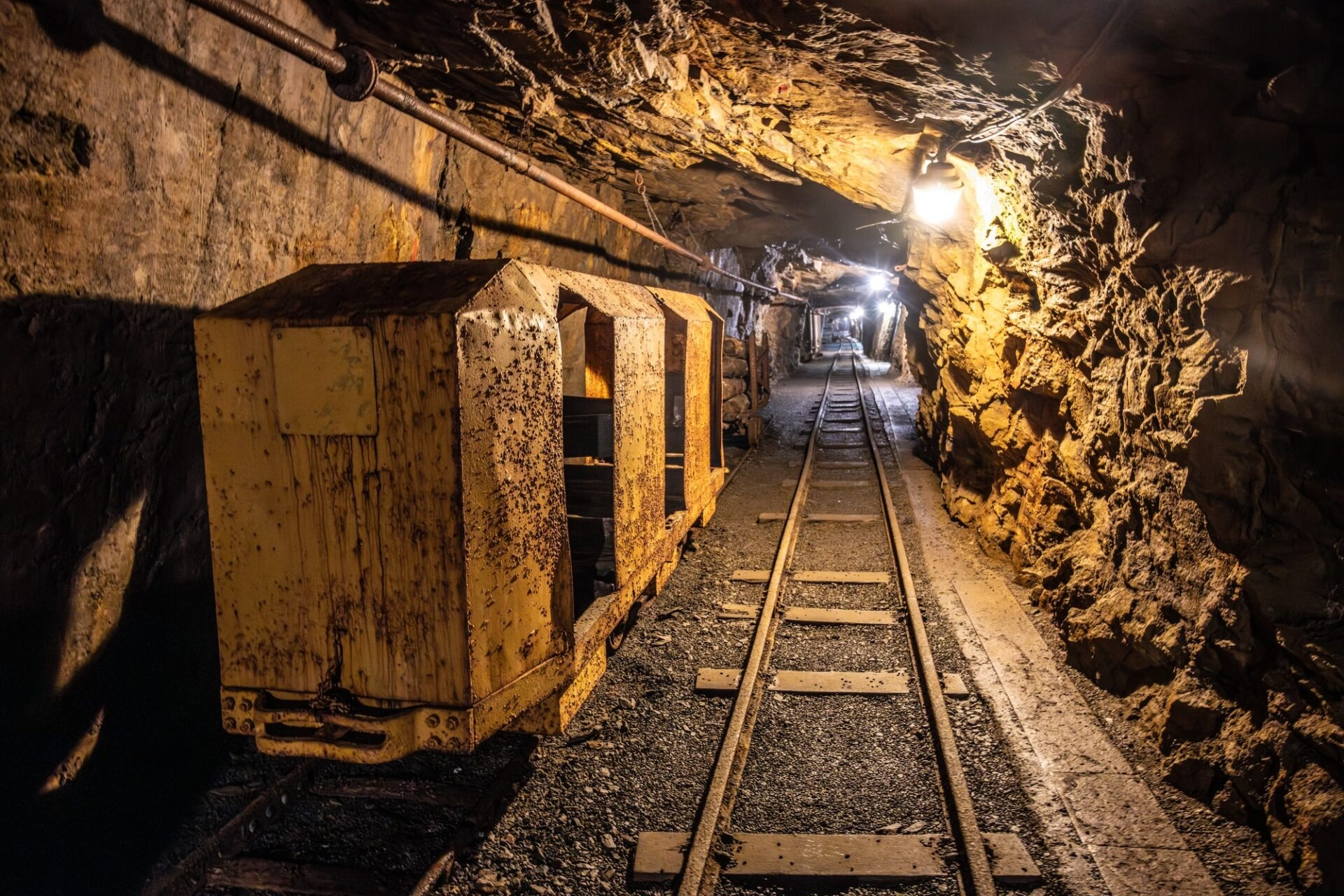
In the 20th century, uranium for the Soviet nuclear programme was mined here, with political prisoners doing the work. The labour camps in Jáchymov were among the harshest in post-war Czechoslovakia.
Today Jáchymov is a spa town focused on radon treatments – the medicinal effects of low-dose radon are scientifically documented and used to treat musculoskeletal conditions.
This combination of historical weight and modern spa life gives the town an unusual character.
The mining heritage of the Ore Mountains – including Jáchymov – was inscribed on the UNESCO list in 2019 as a mining cultural landscape. It’s one of the largest industrial landscape ensembles ever inscribed.
Cheb
Cheb is one of the most overlooked towns in Czechia, which I think is a shame. About 50 km west of Karlovy Vary, it shows you a rich medieval history with a strong German influence – until 1945 it was a predominantly German-speaking town.
King George of Poděbrady Square is one of the best-preserved medieval squares in Czechia. It’s surrounded by burgher houses with arcades, some of which date back to the 13th and 14th centuries. In the middle stands Špalíček – a cluster of small wooden houses right on the square.
Cheb Castle is also worth a visit – a Romanesque-Gothic complex from the 12th–13th centuries, one of the oldest castles in Bohemia. The black tower of basalt stone has survived, along with the Chapel of St. Erhard and Ursula – a two-storey Romanesque structure.
Where to stay in Karlovy Vary
There’s plenty of accommodation in Karlovy Vary, ranging from historic five-star hotels to guesthouses and apartments in the centre, all the way to budget options on the outskirts.
Recommended premium accommodation:
- Grandhotel Pupp – A legendary five-star hotel from 1701 right above the colonnade – neo-Baroque facades, its own wellness centre and three restaurants. Outside summer, prices are surprisingly affordable.
- Villa Bricola Boutique Apartments – Boutique apartments with an Italian breakfast, terrace and a view over the town. Quiet location a short walk from the centre, with free parking.
- Retro Riverside Wellness Resort – A luxurious 5* resort by Březová Lake, around 7 km from the centre. Extensive wellness facilities, water views from every room, and quiet away from the spa bustle.
- Revelton Suites Karlovy Vary – Designer apartments in the centre near Elizabeth’s Spa. Fully equipped kitchen, breakfast at Bagel Lounge in the same building, and steps from the pedestrian zone.
Recommended mid-range accommodation:
- IMPERIAL Apartments – Modern apartments at the start of the pedestrian zone next to Hotel Thermal and the Saunia wellness centre. Own kitchen, jacuzzi, and a games console for kids.
- RomanceArt Apartments (Petřín No. 1) – An apartment with a balcony in the Vyšehrad quarter above the colonnade – with views of Hotel Imperial and Diana. A quieter part of the centre, with a fully equipped kitchen.
- Apartmány Leopard – Cosy apartments on Stará louka right next to Grandhotel Pupp and the Diana funicular. River views and a fully equipped kitchen.
Budget accommodation:
- Pension Dvořák – A family-run guesthouse in the pedestrian zone close to the Mill Colonnade. Homemade breakfast, bike rental, and excellent value for money.
- Apartment Antonie – A newly furnished apartment with its own kitchen and washing machine close to Elizabeth’s Spa and the Becher museum. Good bus connections to the centre.
- Pension Family – A guesthouse on the edge of the centre next to the forest below the Goethe Lookout. 15 minutes’ walk to Vřídlo, with its own garden, grill and on-site parking.
Practical information
How to get to Karlovy Vary
By train
From Prague there’s a direct, modern train via Ústí nad Labem and Chomutov. Unfortunately, the detour means the journey takes 3.5 hours.
From Plzeň (Pilsen), direct fast trains take 1 hour 20 minutes.
From Dresden, you can take the EC train to Ústí nad Labem and change for the direct train from Prague to Cheb via Karlovy Vary. The city is also easily accessible from Nuremberg with one change in Cheb.
Heads up – there are two train stations in Karlovy Vary. For most trains you need the Upper (main) station; the local diesel trains to Mariánské Lázně – and possibly Nejdek and Merklín – leave from the Lower station, which is closer to the centre.
By bus
From Prague, the bus is significantly faster and more comfortable. RegioJet and FlixBus both run from Prague in around 2 hours, with prices starting from about €4 with early booking. The bus arrives at the central station, just a few minutes’ walk from the colonnade.
By car
From Prague it’s about 130 km on the D6 motorway, with the drive taking roughly an hour and three quarters. Once the motorway is fully completed it’ll be a bit faster, though the biggest bottleneck is already getting out of Prague.
From Plzeň, you’ll do a little over 80 km in around 1 hour 15 minutes.
From Western Germany, head towards Marktredwitz and Cheb. That will take you to the D6 motorway on the Czech side, taking you directly to Karlovy Vary.
From Dresden or Berlin, you can cross the border on the motorway heading to Prague, and turn toward Teplice and Chomutov (E442), going mainly on a fast, main road. Or take the more scenic route through the Ore Mountains in Oberwiesenthal.
Parking in the centre is paid (you pay online) and limited in high season. Hotel Thermal has large underground garages, but those are also likely to be full in summer.
Better to leave the car outside the centre and use public transport. A pretty good chance of finding a spot is at the Tuhnice car park behind the bus station (around €3/day).
Getting around the town and surroundings
Public transport in Karlovy Vary consists of a clear network of buses and two funiculars.
A ticket costs around €1–1.20 (20/60 minutes), a day pass about €5. You can buy them at newsstands, the information centre, or in the Vary Virtual app. From the driver, you can buy a one-hour ticket for €2 (card payment accepted).
Note – tickets are not valid on the Diana funicular. It uses a separate fare and tickets are sold at the funicular stations.
For trips to Loket or Jáchymov, use the regional buses – services run regularly, with timetables available on IDOS.
For taxis, use Liftago or Bolt; prices are slightly lower than in Prague.
Prices in Karlovy Vary
The price level has noticeably improved since 2020. Lunch in a regular restaurant comes to about €7–10, coffee €2.50–3.50, and dinner at a good restaurant around €16–28 per person including drinks.
Luxury hotel restaurants are, of course, significantly more expensive.
You can pay by card or QR code in most places, though some stalls along the colonnade still require cash.
Tips for families with children
Karlovy Vary isn’t primarily a kids’ destination, but it’s perfectly manageable with a stroller – including the colonnades and the funiculars.
The biggest hit for kids will probably be tasting the springs – just be careful not to get scalded by the hot Vřídlo.
Karlovy Vary also has the Rolava summer swimming pool and several nice playgrounds.
Things not to miss with kids:
- The Diana funicular and lookout tower + a walk in the surrounding forest
- Tasting the springs
- The pool at Hotel Thermal
- Warm spa wafers on the colonnade
- Watching the Vřídlo geyser
- The Ohře riverside with its great playground
- The Teddy Bear Museum and Christmas House (year-round, in Doubí)