This post is also available in:


Looking for a perfect stop on the way to Gdańsk or the Baltic coast? Toruń is one of those Polish cities that lives in the shadow of Kraków, Wrocław or Gdańsk — and that’s a real shame. The things to do in Toruń are genuinely impressive, and the city rewards those who make the detour.
The historic centre is a UNESCO World Heritage Site, ranks among the best-preserved Gothic cities in Central Europe, and — unlike most major Polish cities — came through World War II almost entirely unscathed.
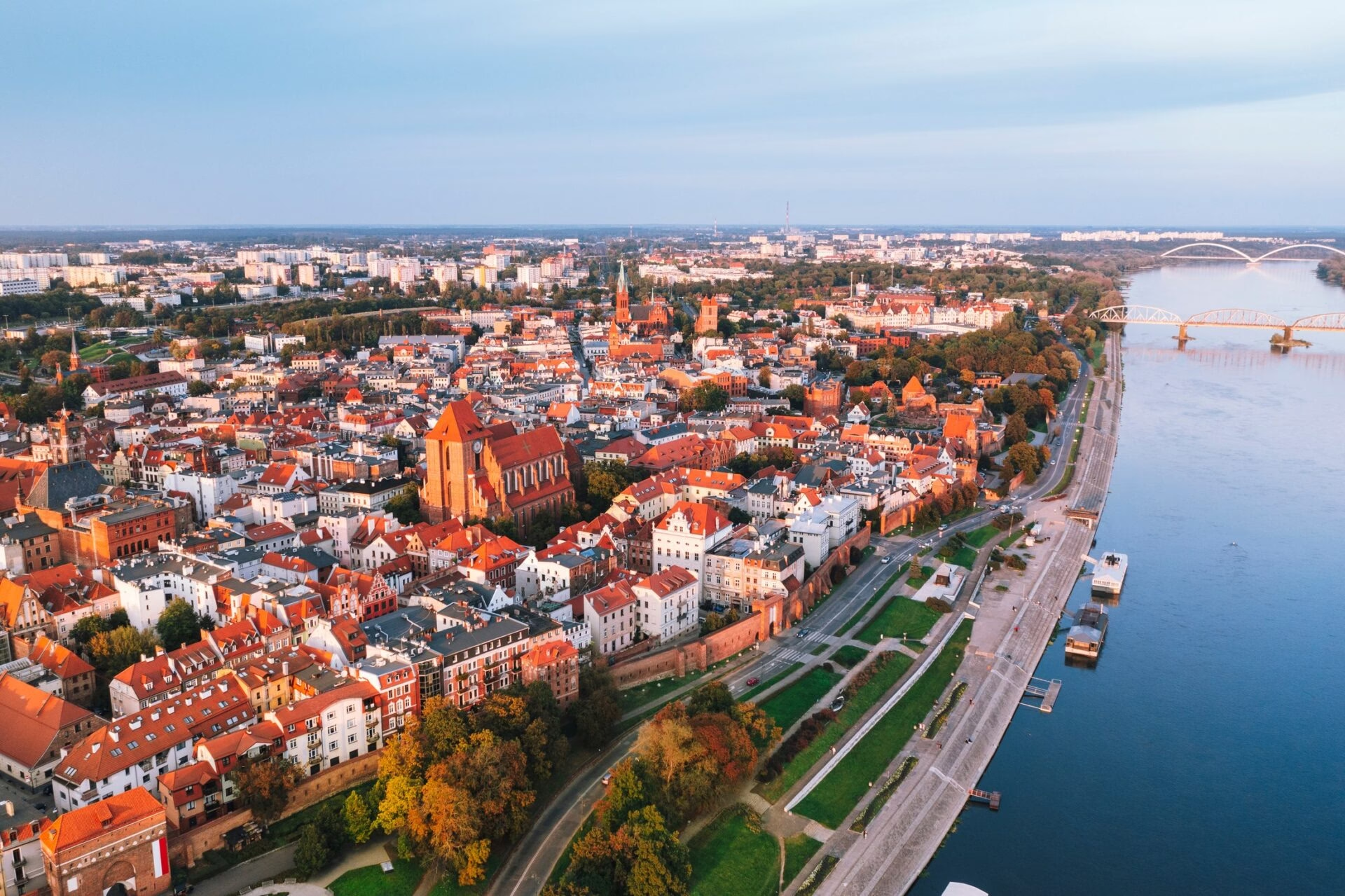
Add to that the birthplace of Nicolaus Copernicus, a six-hundred-year-old gingerbread tradition, and a beautiful riverside promenade along the Vistula — and you have a destination that deserves its own weekend, not just a quick pit stop.
Toruń is also a handy transit hub: it sits right on the A1 motorway, the main north–south artery of Poland running from the southern border all the way to Gdańsk. If you’re heading north to the Baltic, slotting Toruń into your itinerary is a no-brainer — whether for a single afternoon, an overnight, or a couple of full days.
Why Visit Toruń
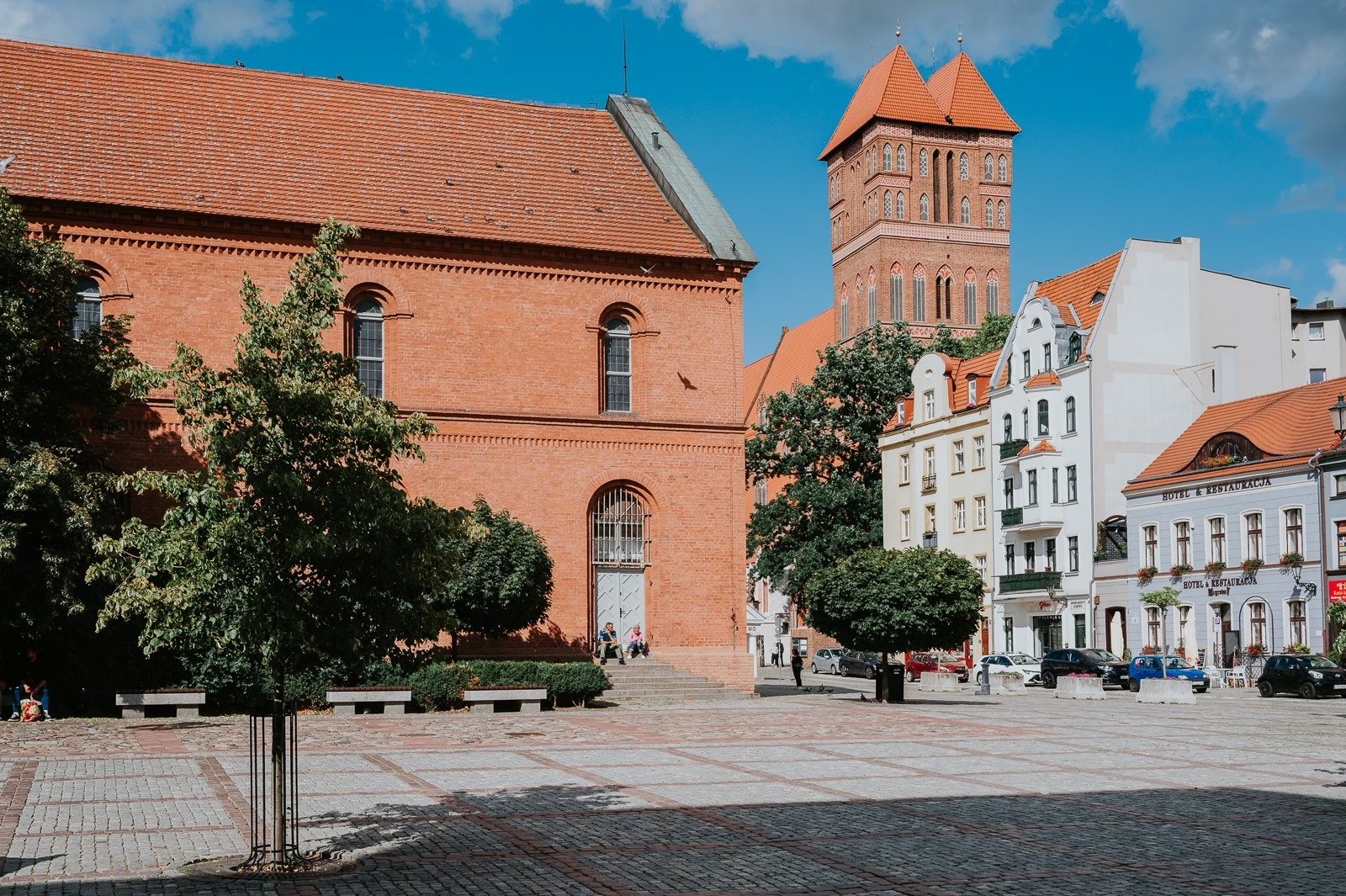
Toruń’s old town was inscribed on the UNESCO list in 1997, recognised for the authenticity of its Gothic brick architecture — churches, city gates, ramparts and merchants’ houses dating back to the 14th and 15th centuries.
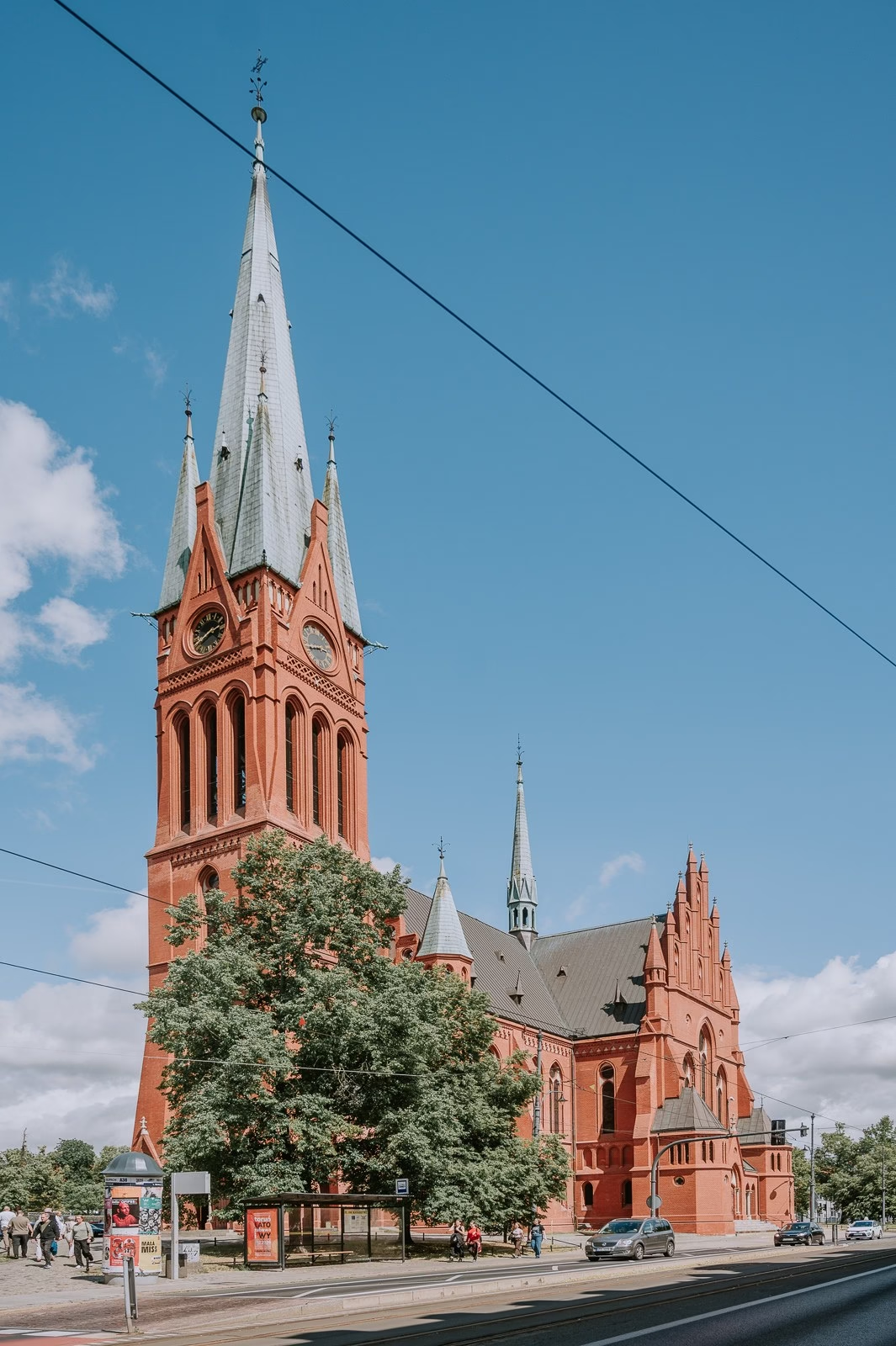
After Kraków, Toruń has the second-highest concentration of Gothic buildings in Poland — but it draws far fewer tourists than Kraków, so you can explore the old town at your own pace without fighting the crowds.
Toruń is also the birthplace of Nicolaus Copernicus, a fact woven into the city’s museums, monuments and even its university name. That university gives Toruń a youthful energy — cafés, bookshops and independent venues are busy year-round, not just during tourist season.
And then there’s the gingerbread: a six-hundred-year-old Toruń tradition you can taste — and, more importantly, experience — without it ever feeling like a cheap tourist gimmick.
How Long to Stay & How to Plan Your Days
You can comfortably cover the main old-town highlights in a single day — the centre is compact and almost entirely pedestrianised. If you want to add day trips (Golub-Dobrzyń, Chełmno, Ciechocinek or Bydgoszcz), plan for two to three days.
That said, Toruń rewards a slower pace — sitting by the river, finding a great coffee, wandering off the main drag or visiting a museum that isn’t on every itinerary. A second or third day won’t be wasted. Just tune into the city’s student rhythm.
If you’re building Toruń into a longer trip north towards Gdańsk — or back south from the Baltic — it sits right on the A1 motorway, so even a few-hour stop makes sense.
For what comes next heading north, see the Gdańsk travel guide.
Top 10 Things to Do in Toruń
A quick overview of the highlights that belong in every itinerary:
- Rynek Staromiejski and the Gothic town hall with its viewing tower
- The Leaning Tower (Krzywa Wieża) — a 14th-century crooked tower
- Ruins of the Teutonic Knights’ Castle
- The House of Nicolaus Copernicus
- Cathedral of St John the Baptist and St John the Evangelist
- Toruń Gingerbread Museum and the Living Gingerbread Museum
- Vistula riverside promenade
- Bydgoskie Przedmieście — an Art Nouveau quarter off the main tourist trail
- Planetarium
- The view of the old town from the far bank of the Vistula (Majdany)
Toruń Attractions: What to See & Visit
Rynek Staromiejski & the Town Hall
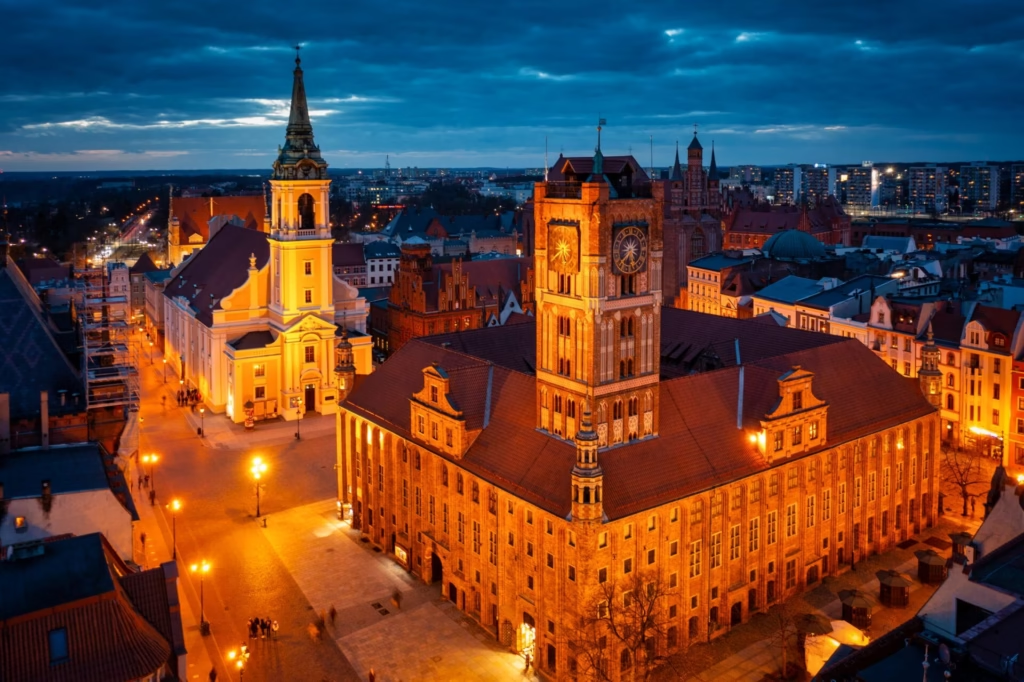
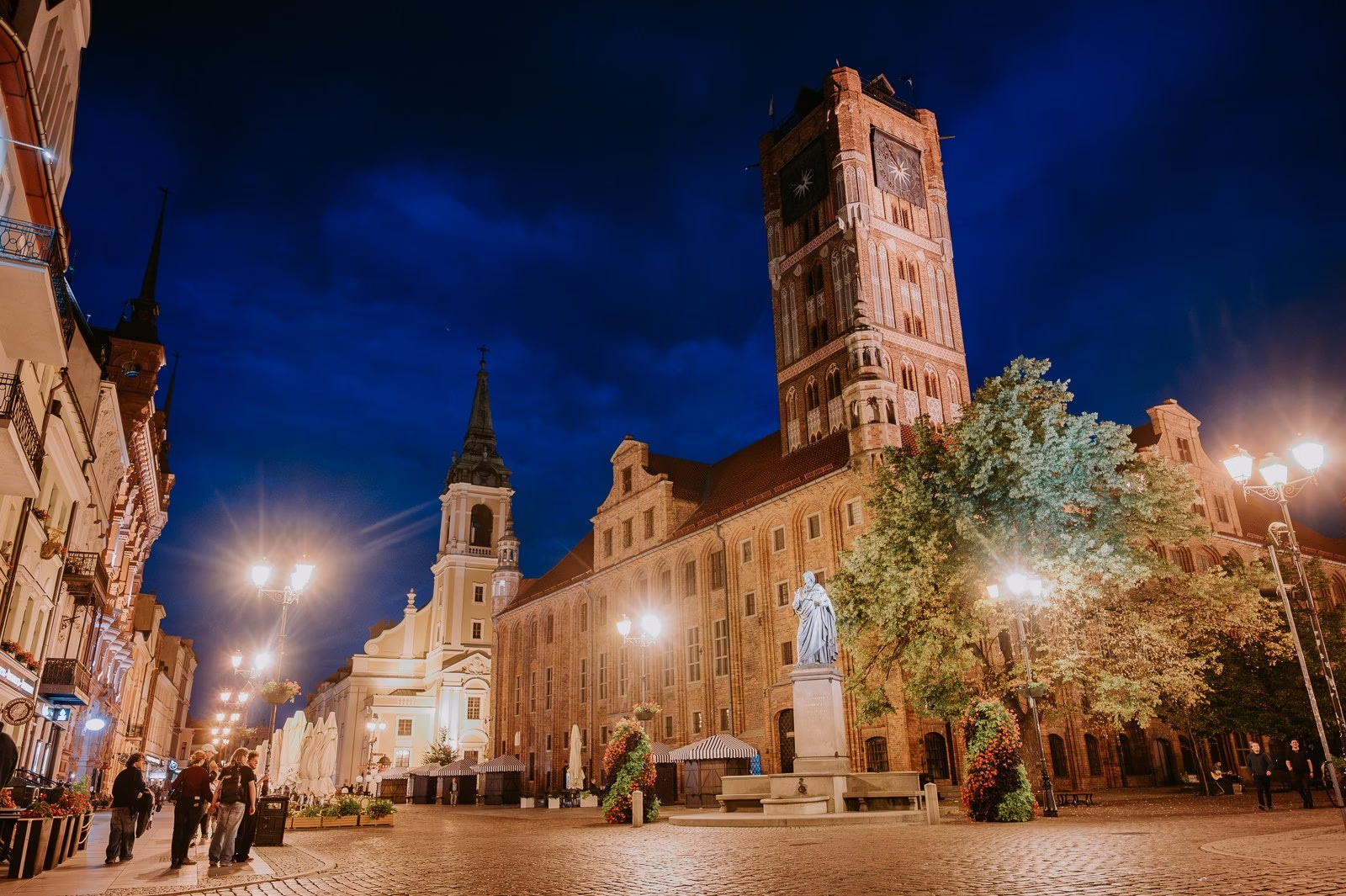
The heart of the city has always been the vast Old Town Square, still dominated by its Gothic town hall — one of the largest of its kind in Central Europe.
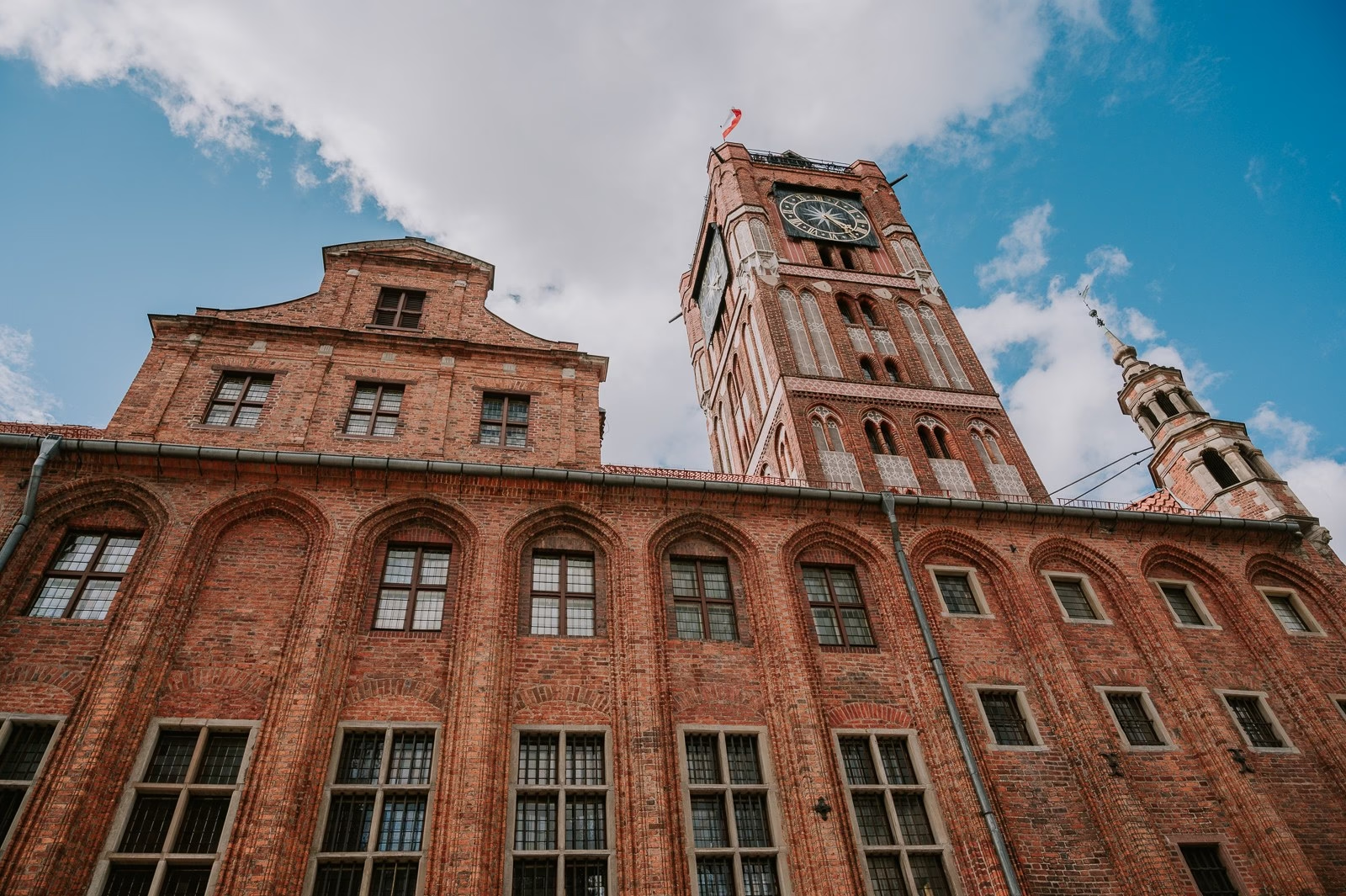
Construction of its tower began as early as 1274, and the building today houses the Regional Museum; alongside exhibitions on the city’s history and Gothic art, it offers a viewing terrace at the top of the forty-metre tower.
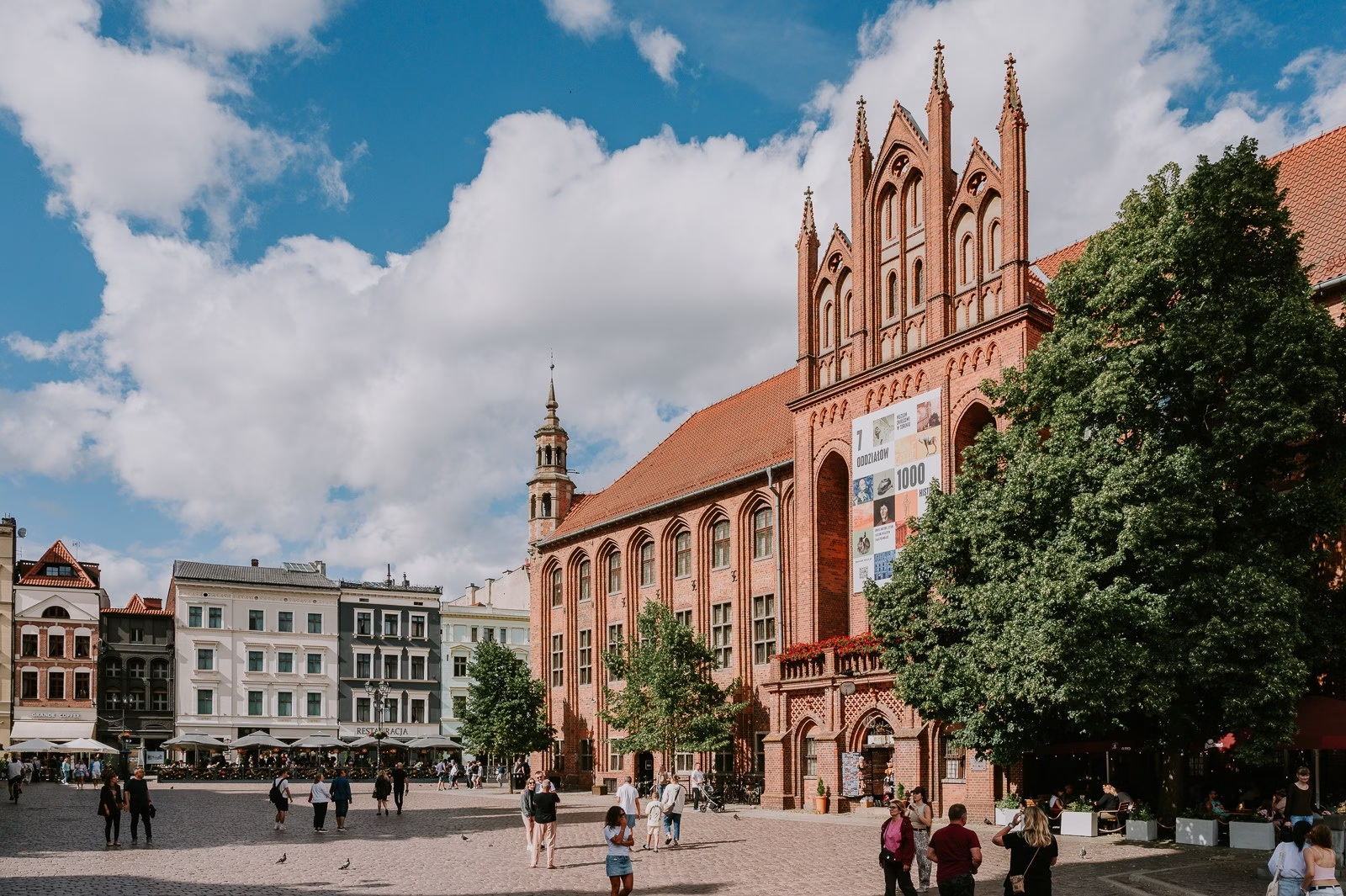
Reaching the viewing platform means climbing 175 narrow stone and wooden steps — no lift, so expect a short physical effort. The reward is the best panorama of the old town and the Vistula.
Museum admission costs 32 zł (concession 27 zł), the tower alone is 29 zł (concession 26 zł), and a combined ticket is 52 zł (concession 42 zł). On Wednesdays, the permanent exhibitions are free — but the tower is never free.
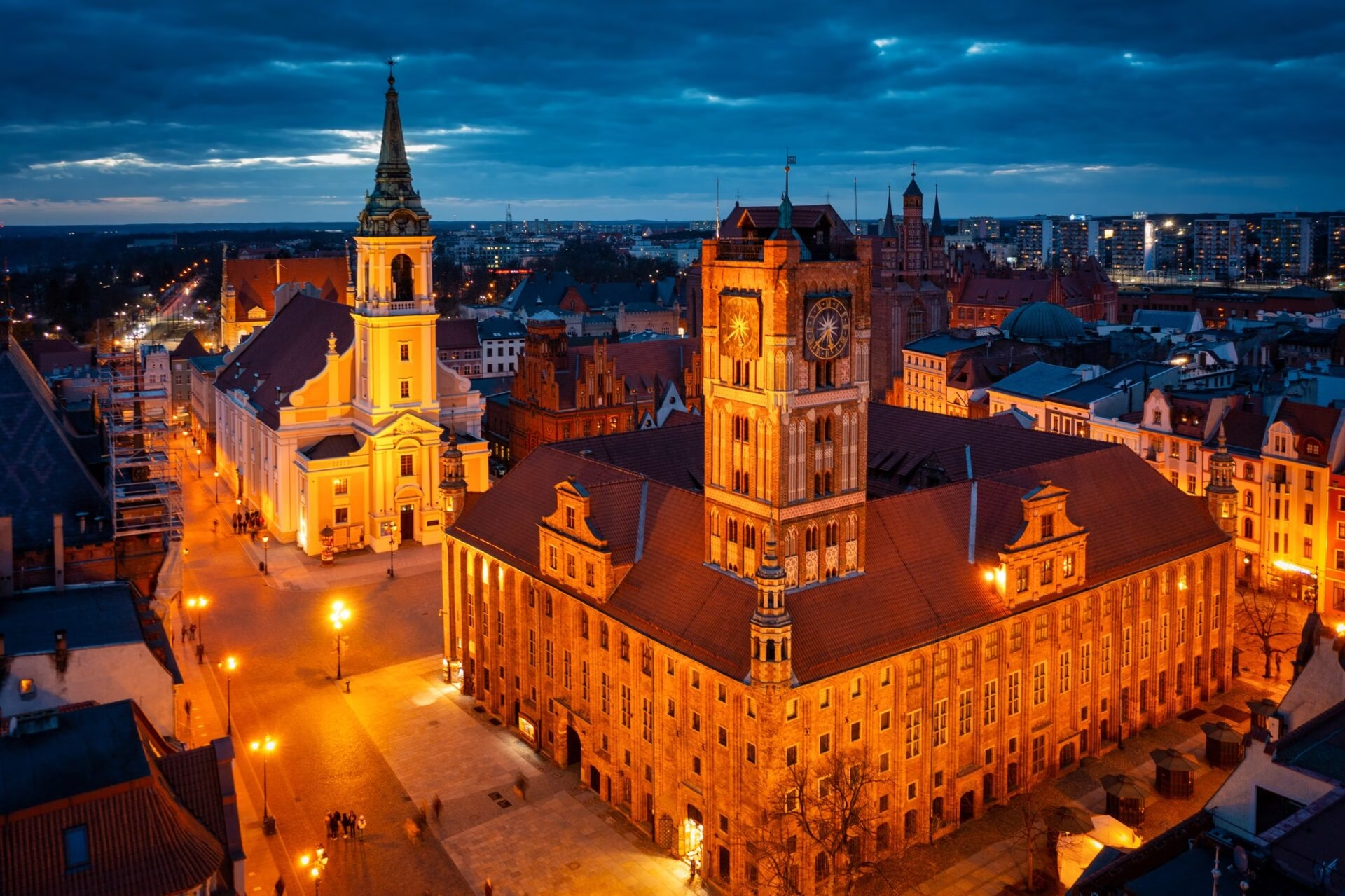
The town hall is closed on Mondays. The tower is open every day and stays open latest in summer: May to September until 20:00, April and October until 18:00, and in winter until 16:00.
The Leaning Tower (Krzywa Wieża)
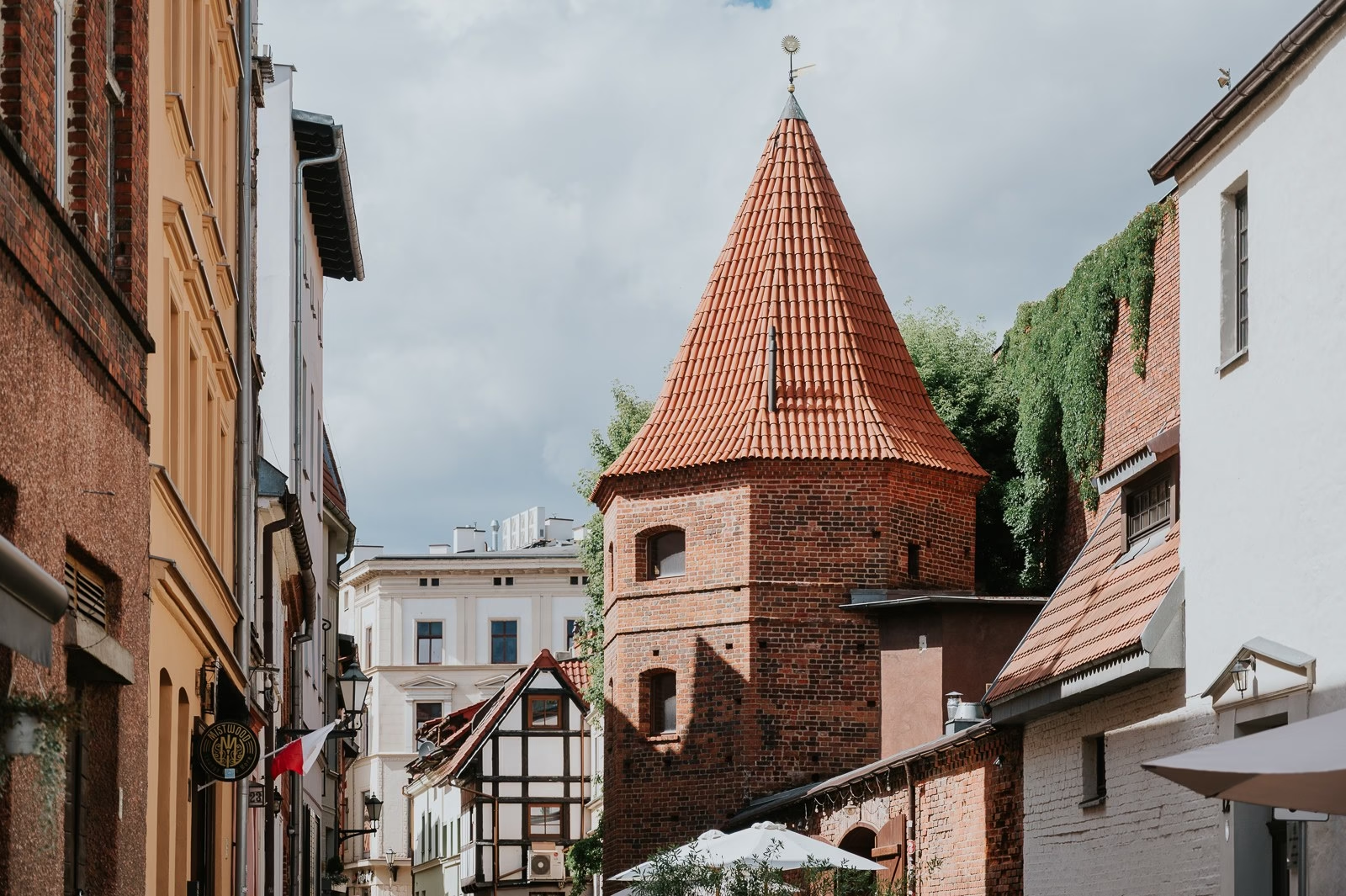
A surviving remnant of the medieval fortifications, this tower began to tilt as early as the 14th century due to unstable foundations — today the top of the Leaning Tower (Krzywa Wieża) is offset by roughly 1.5 metres from vertical.
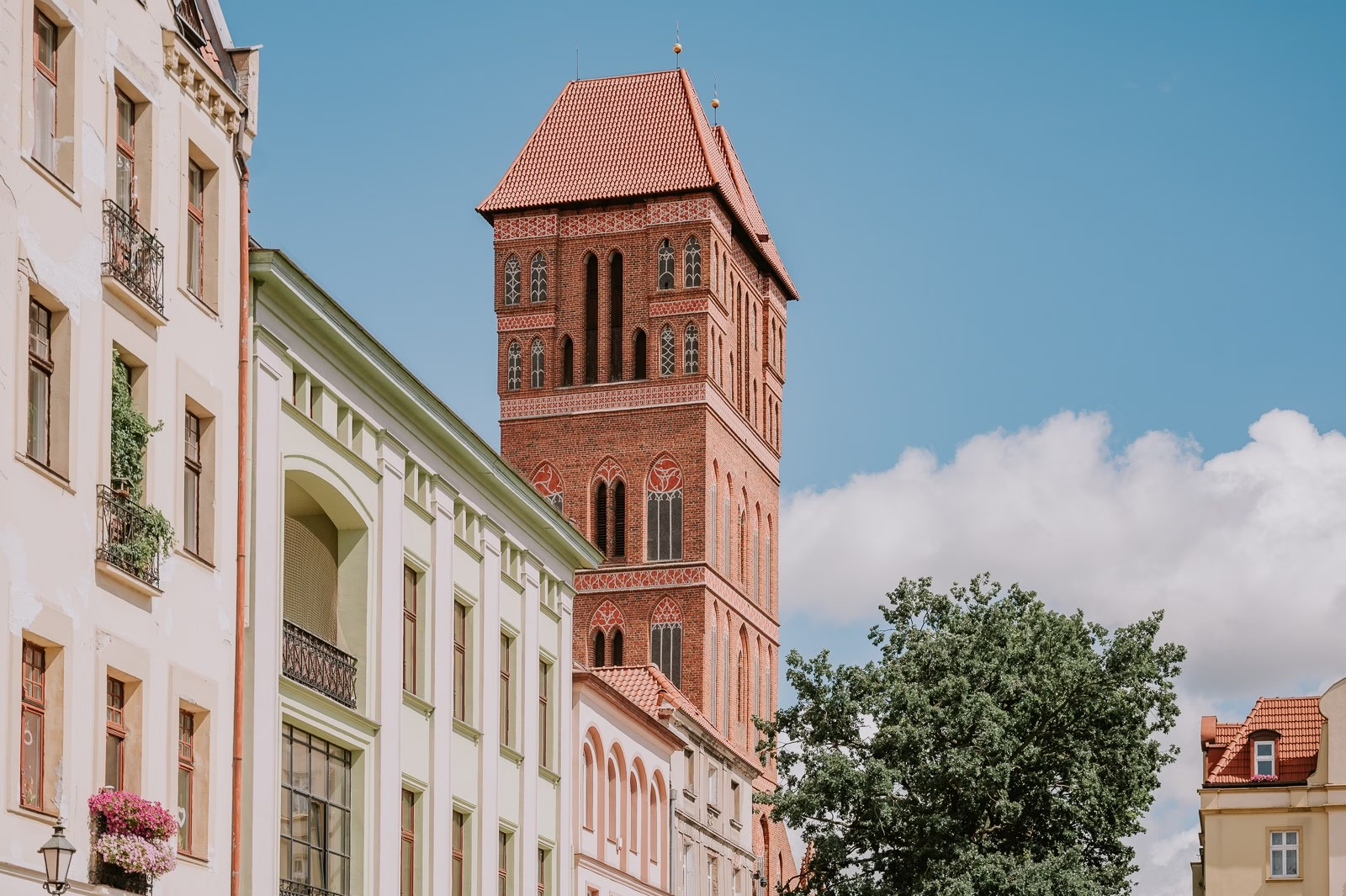
Located on Pod Krzywą Wieżą street, it functions for most visitors as a curiosity and a popular photo spot. It’s now run by Toruńska Agenda Kulturalna and you can go inside — admission is 20 zł (students 12 zł, children 10 zł).
The combination of the tilting tower and the surrounding cobbled lanes gives a vivid sense of what medieval Toruń looked like — and photographing it from outside is free. You can go inside from April to September daily 10:00–18:00, and in winter (1 October – 31 March) on weekdays 11:00–17:00 and weekends 10:00–18:00.
Ruins of the Teutonic Knights’ Castle
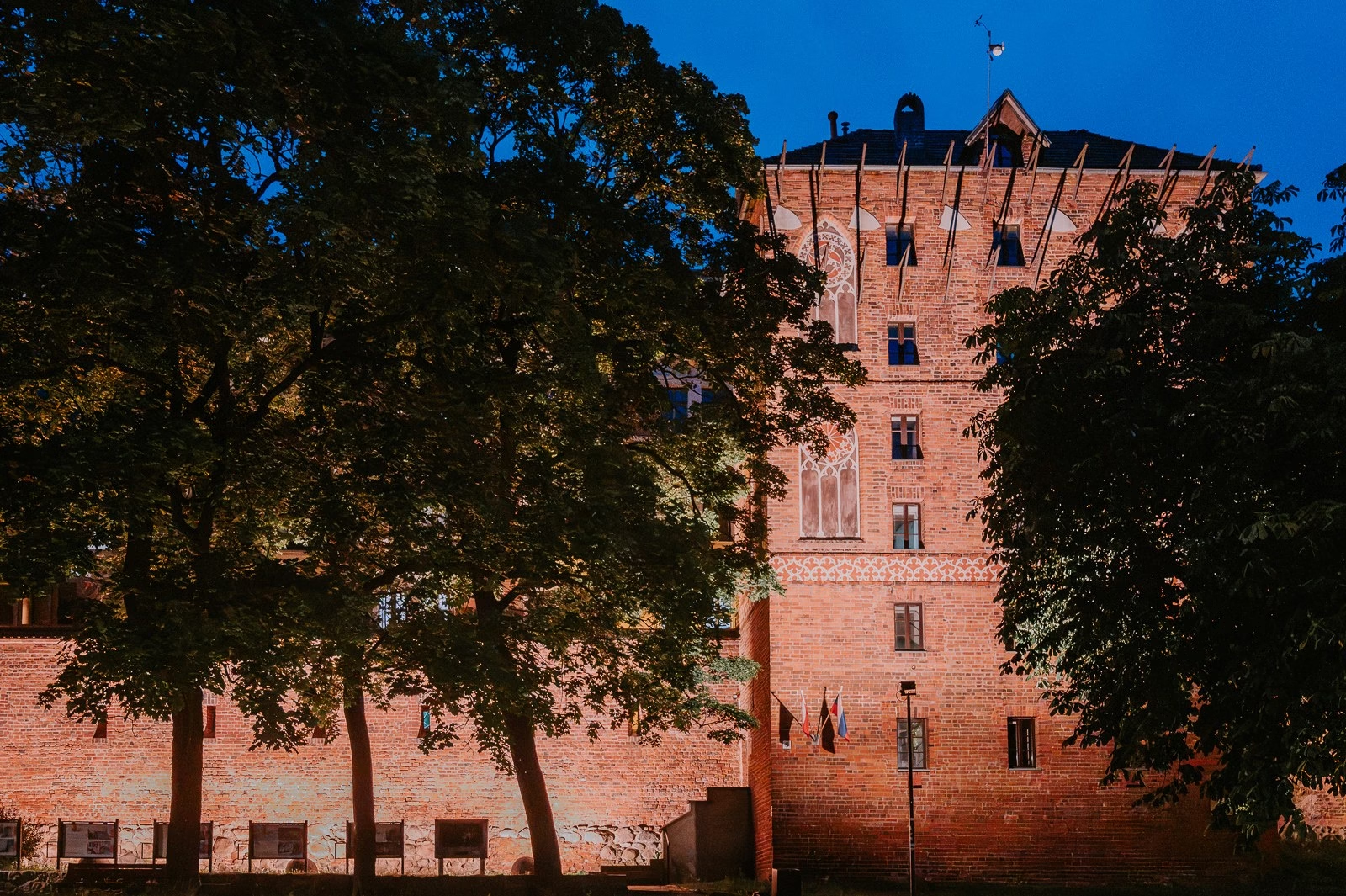
The Teutonic Knights established their base here in the 13th century as a launching pad for conquest and Christianisation. After a citizens’ revolt in 1454, the castle was demolished — today only ruins remain. Compared with the well-preserved castle at Malbork, this is a more modest site, but still worth a visit.
The ruins sit on the boundary between the Old and New Towns (ul. Przedzamcze 3). You can explore underground chambers and cellars, the surviving Gdanisko tower, and an exhibition of medieval siege engines. There’s also a replica torture chamber — feel free to skip that one.
The site is managed by Toruńska Agenda Kulturalna and is open year-round. From 1 April to 30 September, daily 10:00–18:00; in winter (1 October – 31 March), weekdays only 10:00–16:00, weekends until 18:00. Admission is 22 zł (concession 12 zł) — among the lowest of all Toruń’s attractions.
The House of Nicolaus Copernicus
The house where Nicolaus Copernicus spent his childhood stands close to the Old Town Square and today operates as an interactive museum dedicated to his life and work. Following a complete renovation in 2017–2018, the exhibition uses cutting-edge technology — a mobile app, holograms, a 3D cinema and augmented reality.
It’s worth visiting even if astronomy isn’t really your thing — the exhibition is designed as an experience rather than a traditional display-case museum. Allow an hour to an hour and a half, including the film screening.
The museum is closed on Mondays; otherwise open 10:00–18:00 from 1 May to 29 September and 10:00–16:00 for the rest of the year. Admission to the exhibitions costs 33 zł (concession 28 zł), the 3D film is ticketed separately (31 zł, concession 26 zł) and an audio guide costs 15 zł.
One easy-to-miss detail: free admission to the permanent exhibitions here falls on Thursday, not Wednesday as at most other branches of the museum.
Cathedral of St John the Baptist and St John the Evangelist
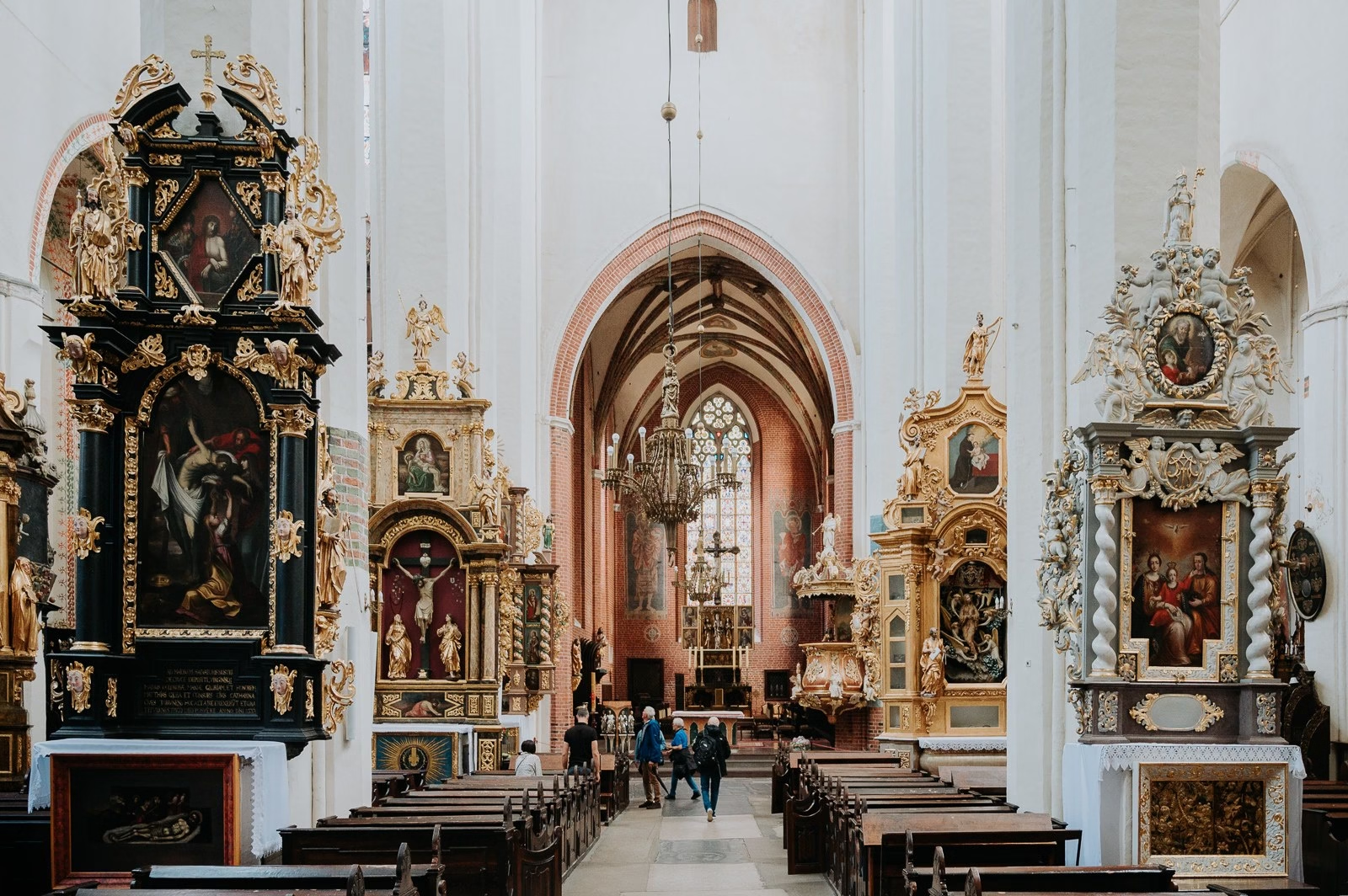
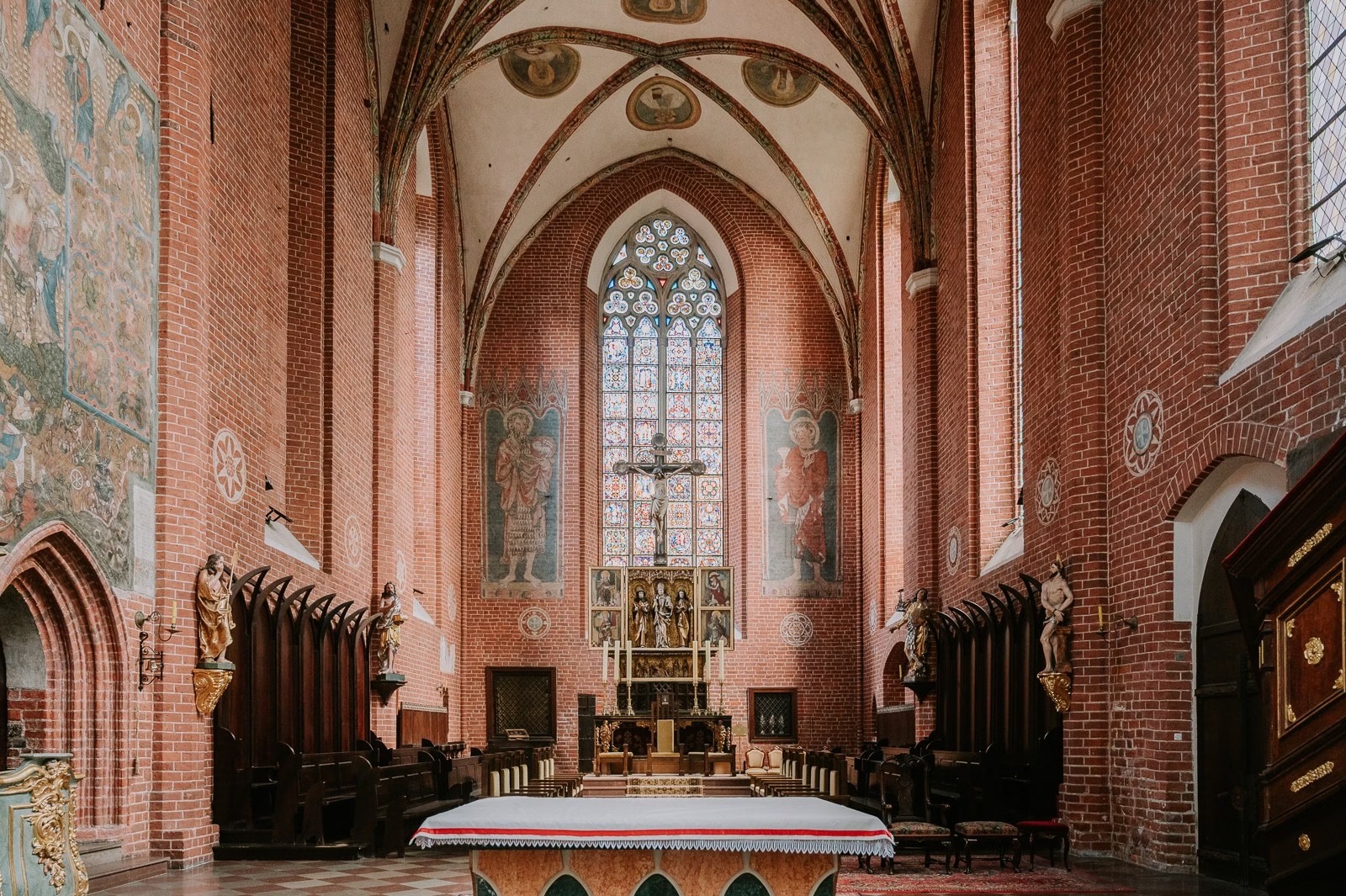
One of the three Gothic churches in the city, the Cathedral of St John the Baptist and St John the Evangelist also serves as Toruń’s main parish church. Inside you’ll find the baptismal font where Nicolaus Copernicus was baptised, along with one of the earliest monuments to the astronomer, dating from 1766.
Beyond its historical significance, the artistic decoration is impressive too — including a painting of the Crucifixion and Last Judgement. During services it gets busier; outside them it’s pleasantly quiet, ideal for a more contemplative visit.
The cathedral tower is well worth the climb. It stands 52 metres tall, requires over 200 steps, and on the way up you pass Tuba Dei — the largest medieval bell in Poland, hung here in 1500 and weighing over seven tonnes.
The tower is accessible April to October, Monday to Saturday 10:00–16:00 and Sunday 14:00–16:00; admission is 20 zł (concession 15 zł).
Bydgoskie Przedmieście
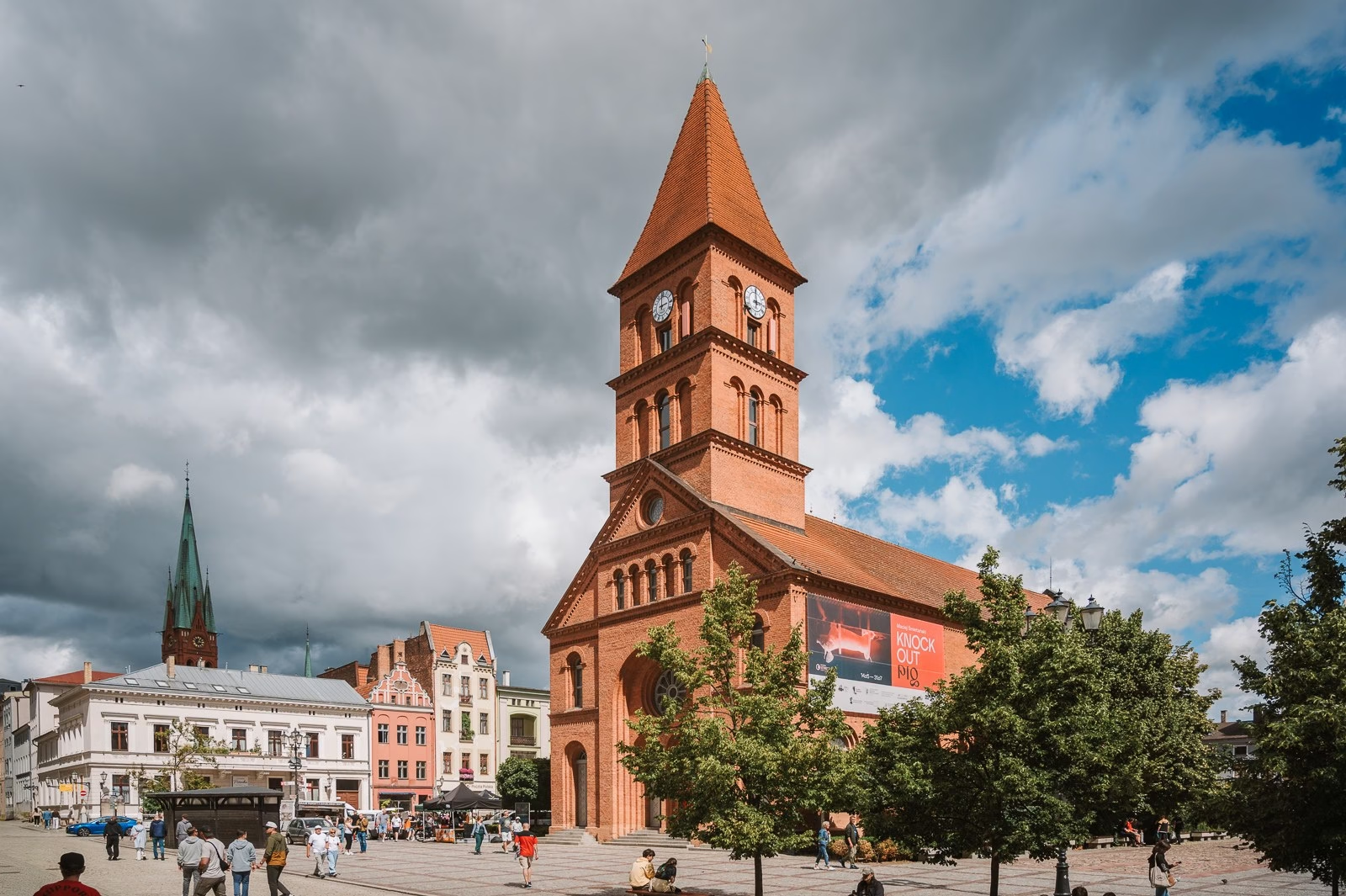
Most visitors stick to the Old Town, so the Bydgoskie Przedmieście quarter stays off the main tourist trail — even though it’s just a short walk from the centre. In the 19th century it was a prestigious residential neighbourhood, and it still has plenty of Art Nouveau and eclectic townhouses that feel strikingly different from the Gothic old town.
A walk through the neighbourhood suits anyone who wants to see a different side of Toruń beyond the postcard views — there’s no specific museum to head for, just an architectural stroll without the crowds.
Smaller Attractions & Museums
Tony Halik Travellers’ Museum
Among the lesser-visited but genuinely interesting spots is Poland’s first museum dedicated to Polish explorers and their expeditions around the world — the Tony Halik Travellers’ Museum (Muzeum Podróżników).
The exhibits on display come from the expeditions of Tony Halik, Elżbieta Dzikowska and other Polish adventurers.
Visitors can see collections from Guatemala, Mexico, India, Papua New Guinea, Ethiopia and China — colourful textiles, jewellery and body ornaments including pieces from headhunting cultures. The exhibition is complemented by documentary films capturing disappearing cultures.
The museum is off the main tourist trail at Franciszkańska 9/11, and a visit takes roughly 30–45 minutes. Admission is 30 zł (concession 25 zł) — this is a joint ticket that also covers the Museum of Asian Art at Kamienica pod Gwiazdą, so it’s worth combining both into a single outing. Closed on Mondays; free entry on Wednesdays.
Kamienica pod Gwiazdą (Museum of Asian Art)
A Baroque townhouse with a 17th-century stucco façade, known as the Kamienica pod Gwiazdą (House Under the Star), is home to the Museum of Asian Art. The collection covers Chinese and Japanese art, ceramics and other exhibits related to Asian culture.
The building itself is part of the attraction — its richly decorated façade is one of the finest on the Rynek. Best treated as a complement to a stroll around the square rather than a stand-alone destination.
The museum changed its name in 2026 — the former Museum of Far Eastern Art is now called the Museum of Asian Art (Muzeum Sztuki Azji). Opening hours follow the other Regional Museum branches: closed on Mondays, in-season 10:00–18:00, out of season until 16:00, free entry on Wednesdays. The 30 zł ticket (concession 25 zł) also covers the Travellers’ Museum.
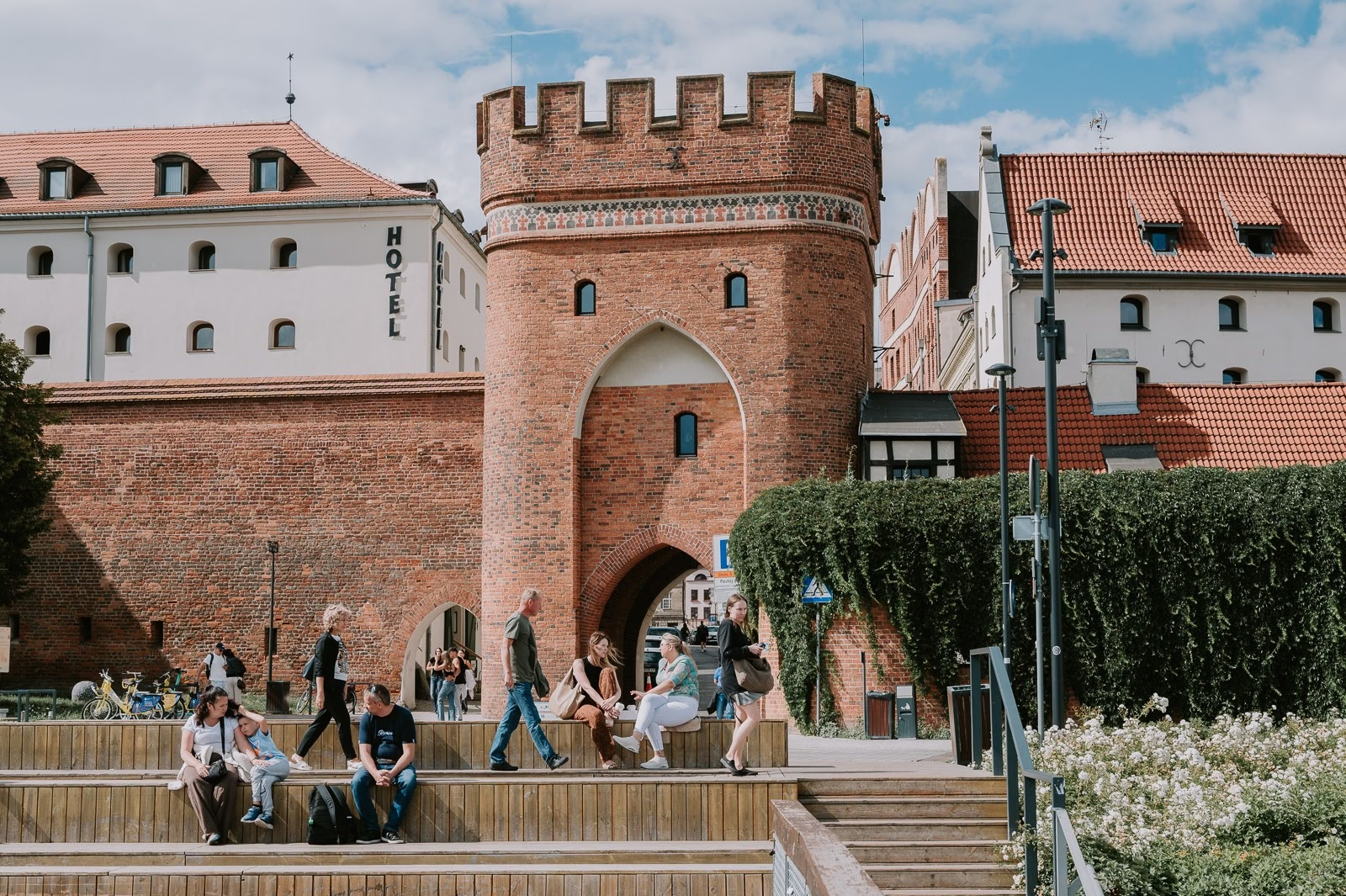
Muzeum Twierdzy Toruń (Toruń Fortress Museum)
Housed in the former barracks of the Chełmno Gate — part of the 19th-century fortress system built to strengthen Prussia’s eastern frontier — the Muzeum Twierdzy Toruń uses scale models, dioramas and multimedia displays to trace the fortress’s history from its construction through to World War II.
Toruń’s fortifications are among the best-preserved military complexes of their kind in Europe, making this a must for anyone interested in military history.
The museum is at Wały gen. Sikorskiego 23, open Tuesday to Sunday (in-season 10:00–18:00, out of season until 16:00); admission is 31 zł (concession 27 zł), free on Wednesdays.
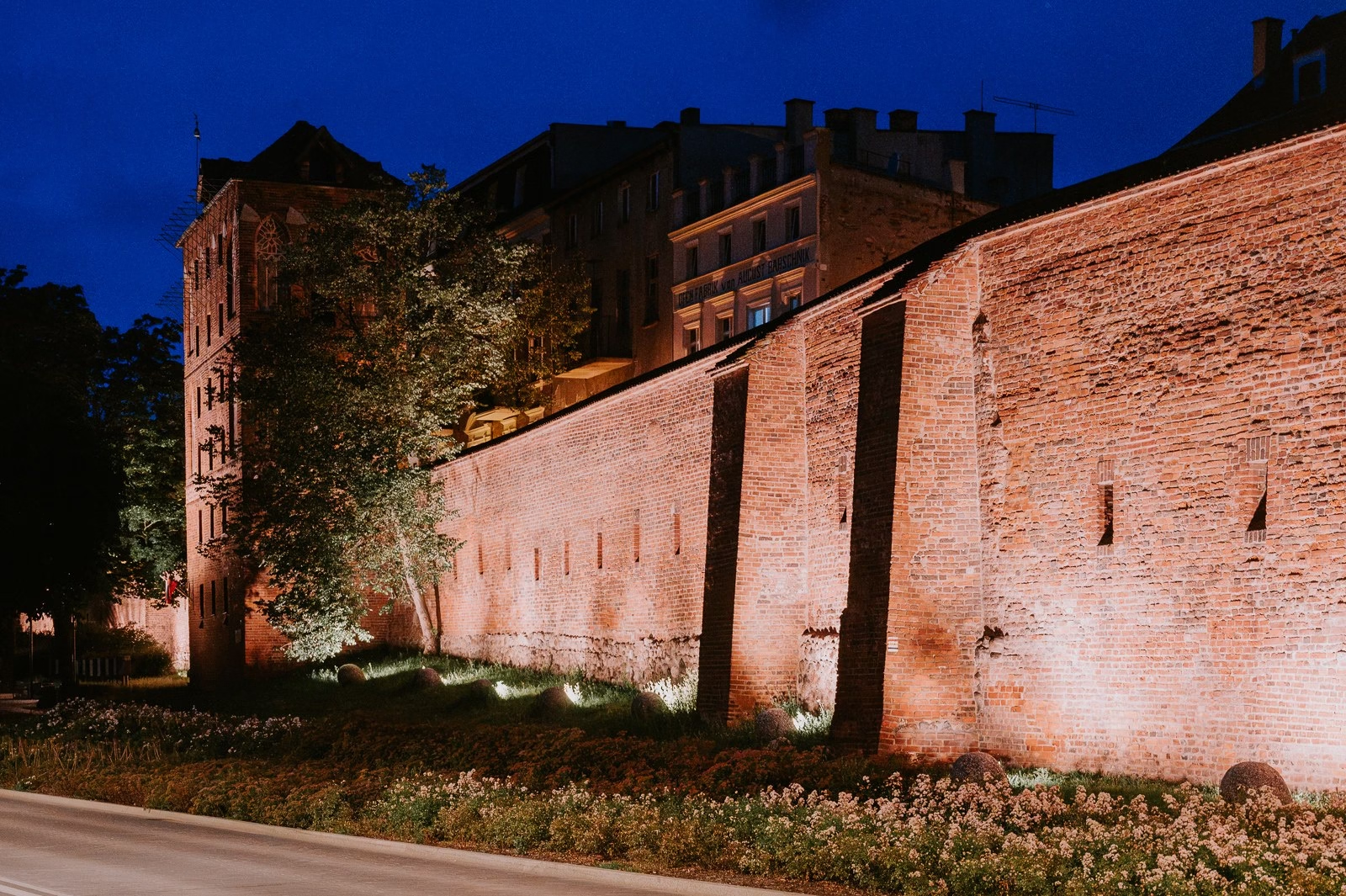
Planetarium
Among Toruń’s biggest draws for families with children, the Planetarium combines space projections with exhibitions on Copernicus and astronomy in general.
The programme changes regularly and includes both educational shows for school groups and evening screenings for adult audiences. Alongside the planetarium dome, you’ll also find the interactive Geodium and Baza Mars#17 exhibitions.
Each section is ticketed separately: a show in the planetarium dome costs 25 zł (concession 20 zł), the version with a foreign-language commentary is 30 zł (concession 25 zł), and entry to Geodium or Baza Mars is 12 zł (concession 10 zł). The box office opens Monday 10:00–15:00, Tuesday to Friday until 17:00, and Saturday until 18:00.
Given how popular it is with families, we recommend booking tickets online in advance during peak season.
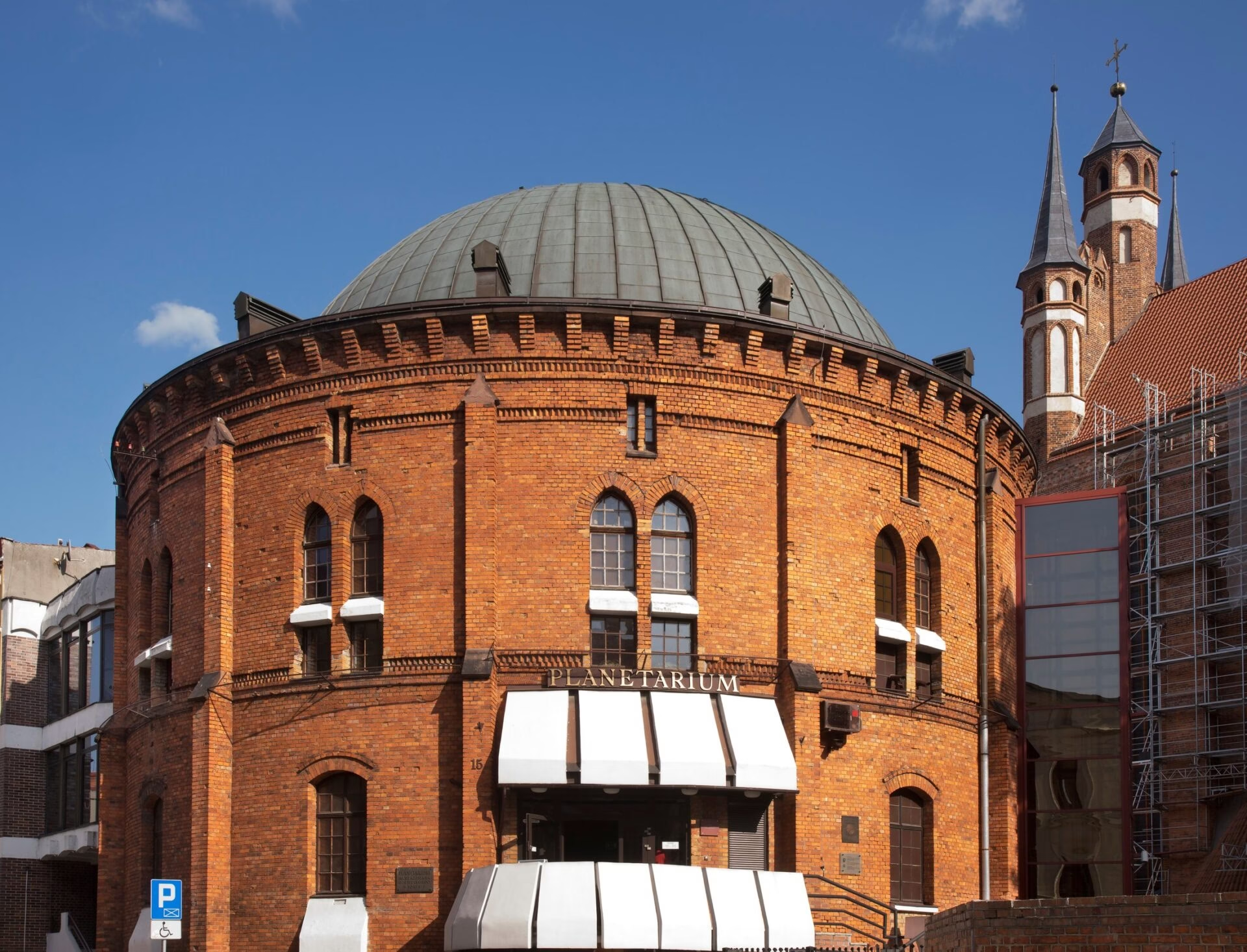
Experiences Not to Miss in Toruń
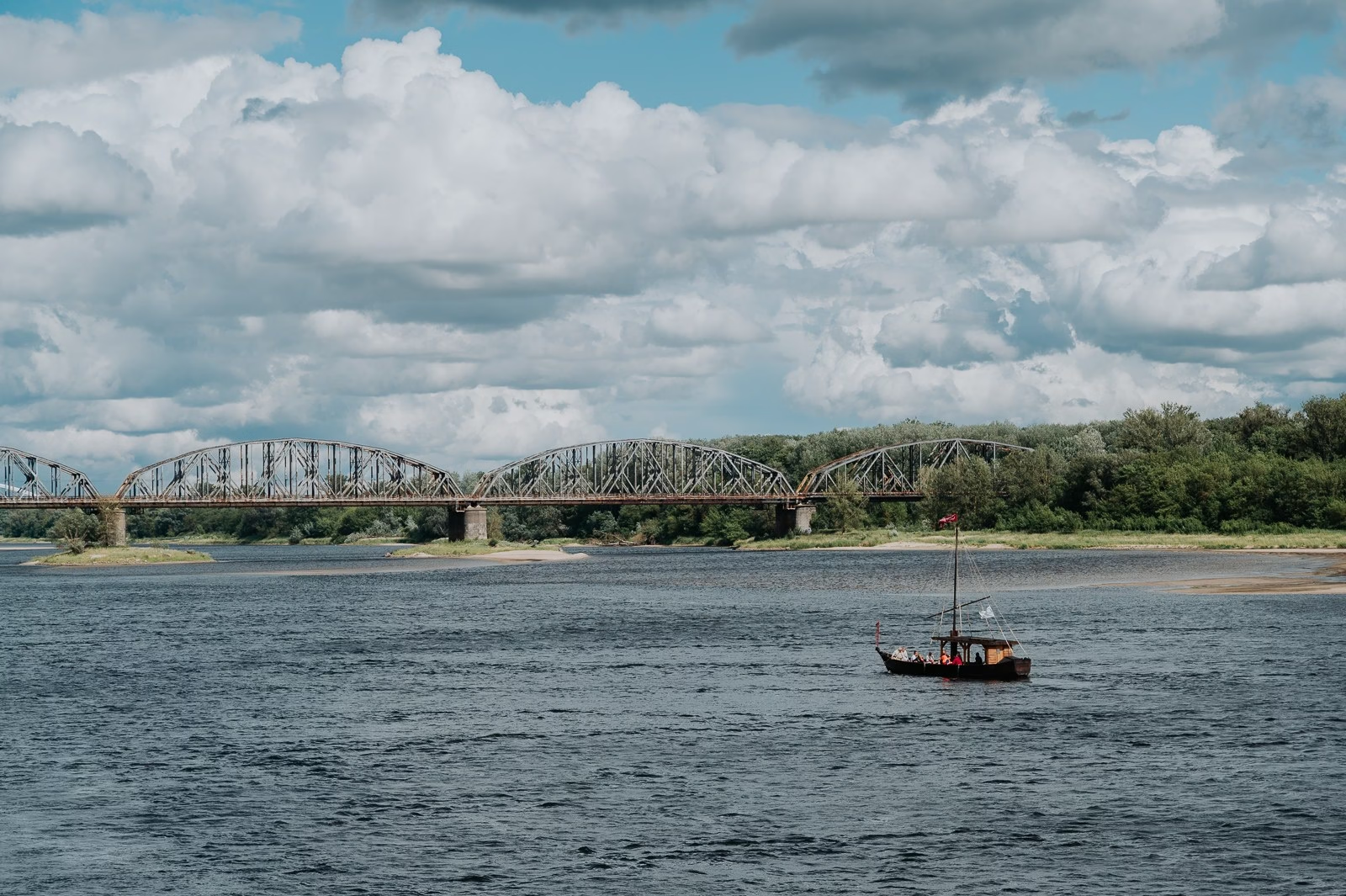
On a fine day, one of the most memorable things to do in Toruń is a walk along the Vistula — or even a sightseeing cruise on the river. The riverside promenade offers views of the illuminated Gothic façades of the old town from across the water.
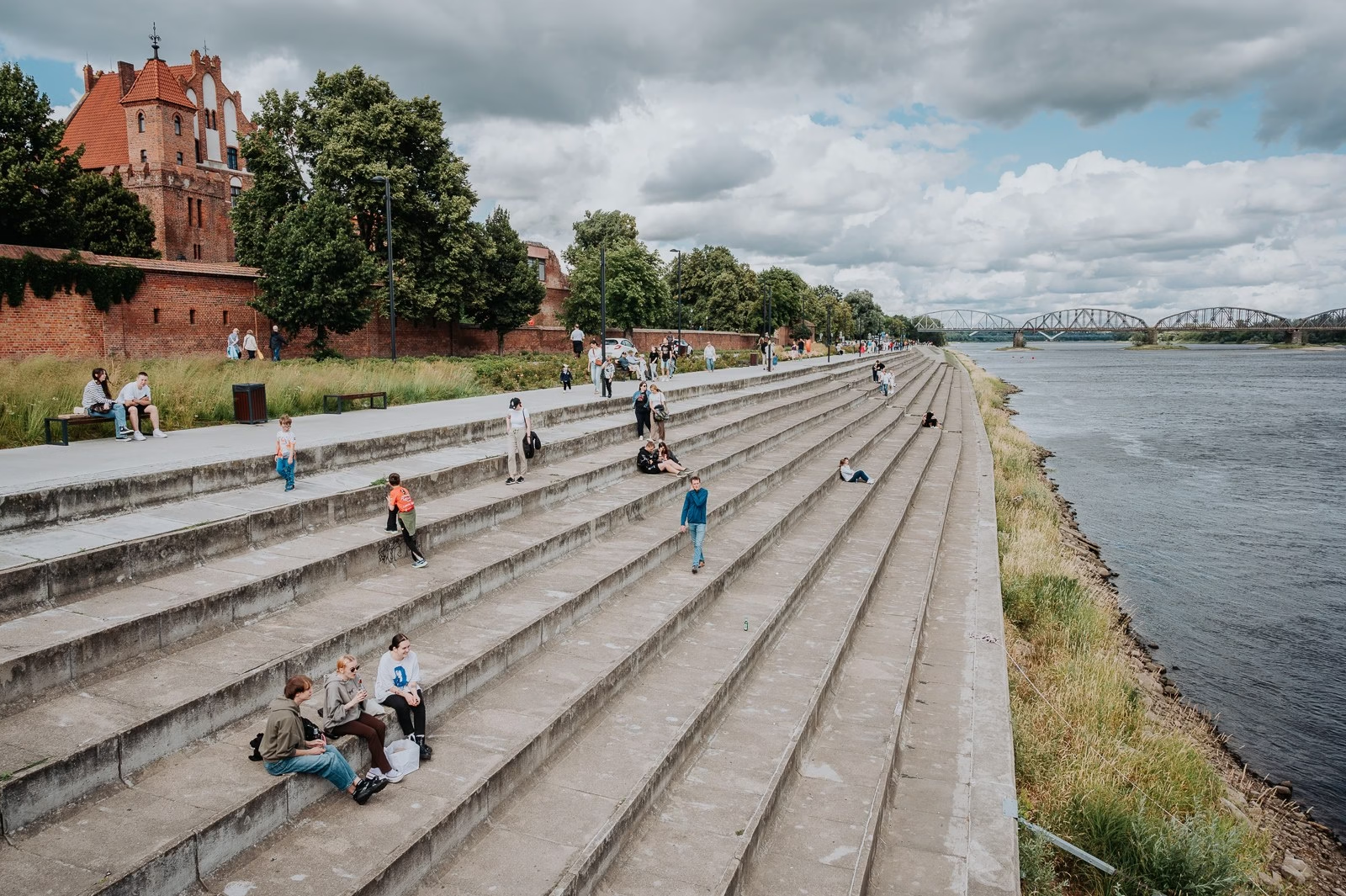
In the evening, when golden light falls on the city’s silhouette, this is one of those rare places where it makes sense to stop and simply take it in. In summer the promenade comes alive — locals come to sit, stroll or watch the river, and the atmosphere is pleasantly unhurried, not touristy at all.
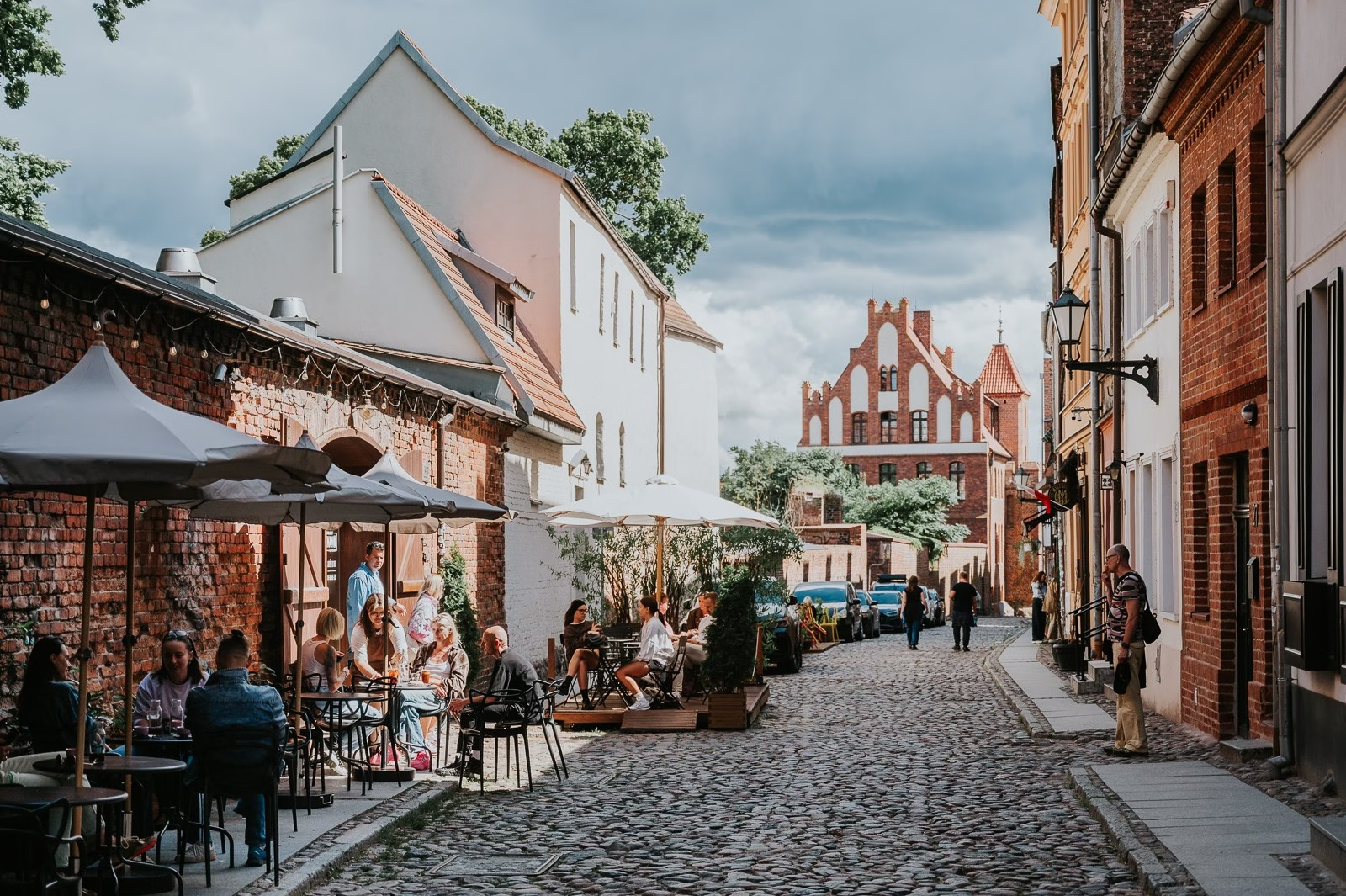
It’s equally worthwhile to spend time wandering aimlessly through the pedestrian historic centre.
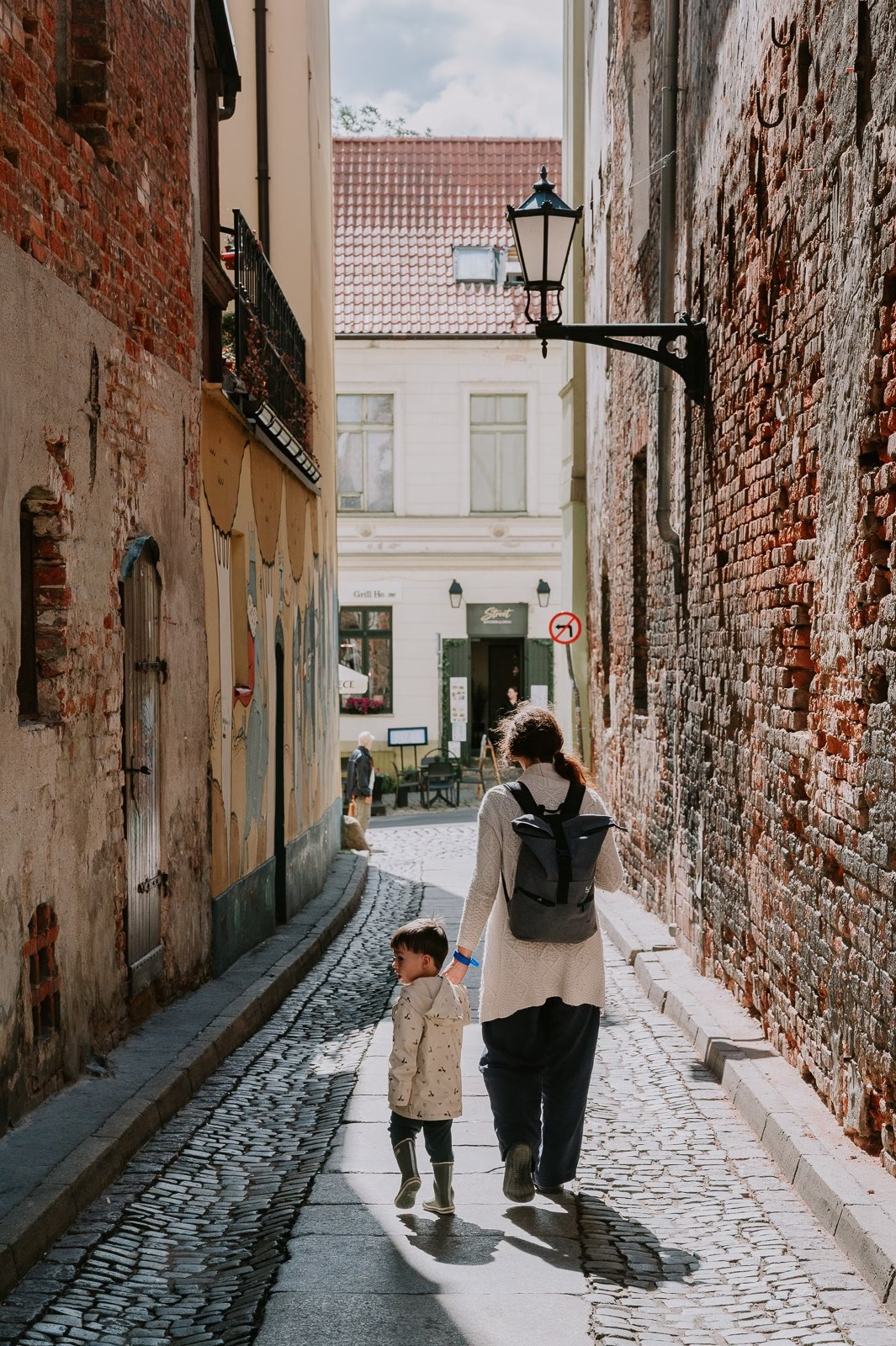
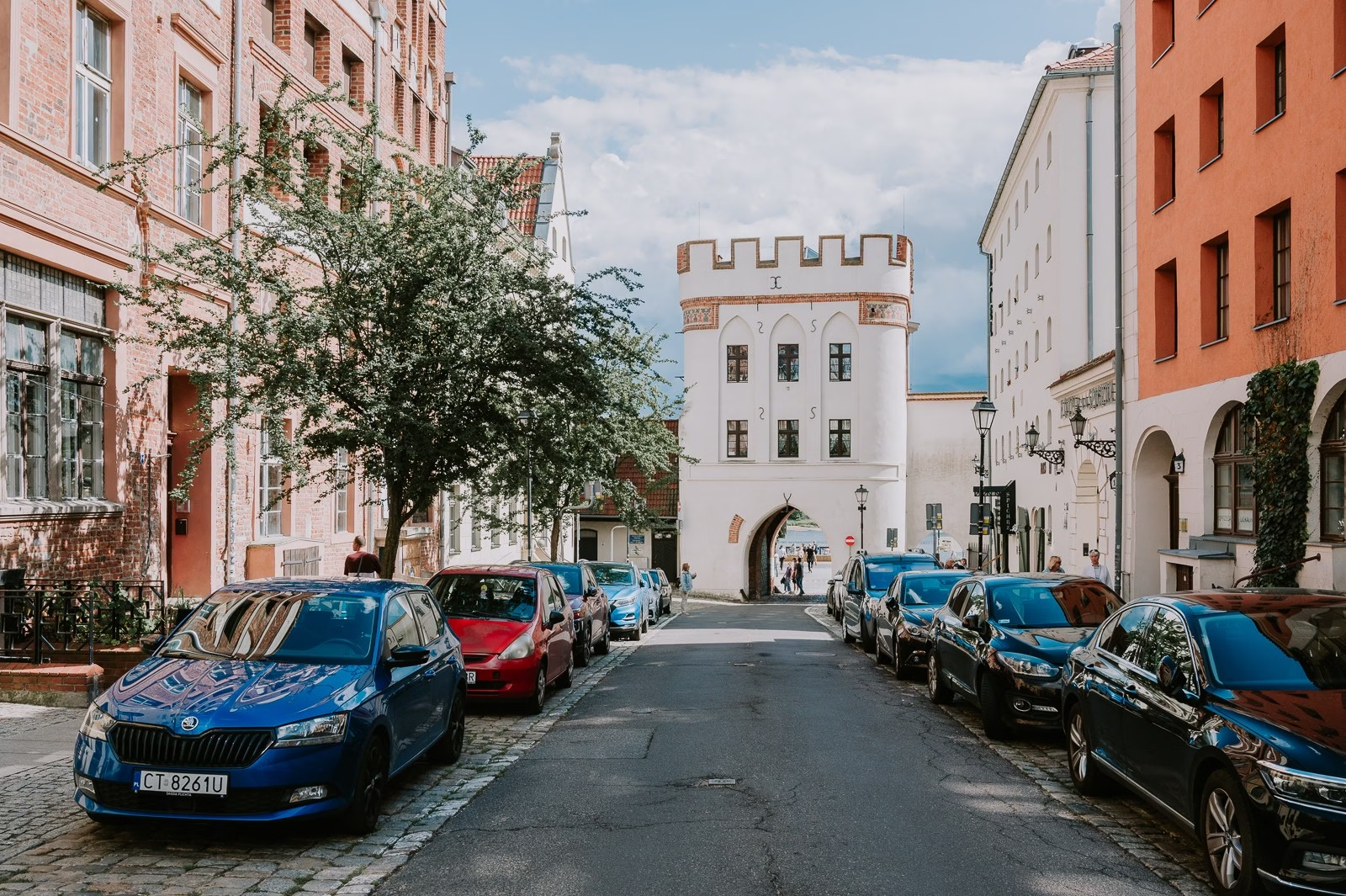
Toruń’s old town is largely closed to traffic, so you can roam the lanes without worrying about cars. Step off the main route between the square, town hall and Leaning Tower and wander happily into the side streets — that’s where you’ll find the small Gothic architectural details that most visitors on the main trail never notice.
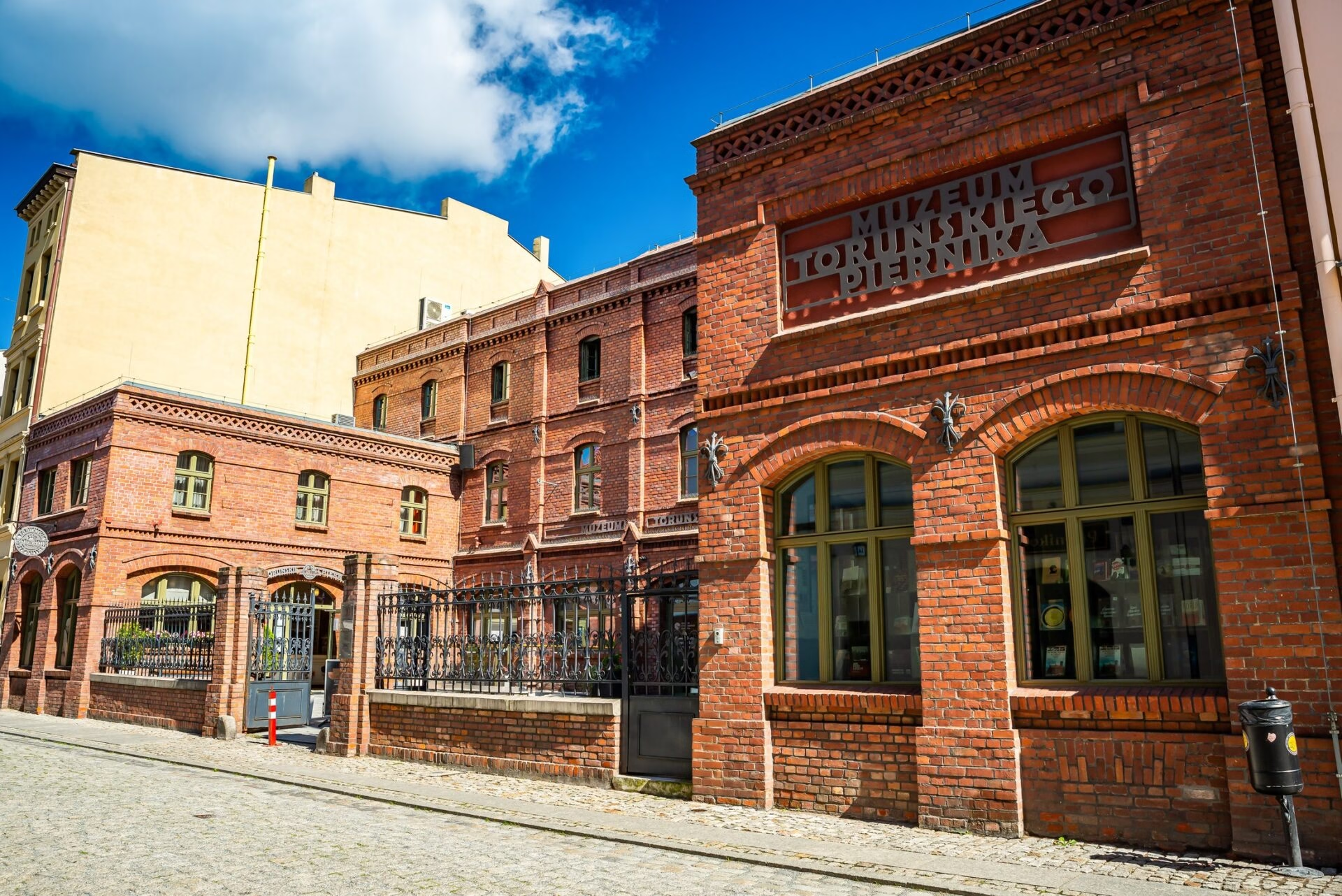
Gingerbread is everywhere in Toruń — yet it never feels cheap or cynically touristy; at times it’s even playfully done. The city actually has two distinct museums that are easy to mix up: the Toruń Gingerbread Museum (ul. Strumykowa 4) is a traditional exhibition housed in the 19th-century Weese family gingerbread factory, where you’ll see historic moulds, ovens and period packaging.
The Living Gingerbread Museum (Żywe Muzeum Piernika, ul. Rabiańska 9), about five hundred metres away, is an interactive workshop — visitors mix and bake their own gingerbread to an old recipe, guided by a “Gingerbread Master” and a “Spice Witch”.
Watch out for the opening-hours difference — getting this wrong can derail a well-planned day. The Living Gingerbread Museum is open daily 10:00–18:00 (last entry 17:00); admission is 42 zł for adults and 37 zł for students and seniors — capacity is limited, so book ahead.
The Toruń Gingerbread Museum, by contrast, is a branch of the Regional Museum, so it’s closed on Mondays and closes at 16:00 out of season. Admission is 33 zł (concession 28 zł), or 52 zł with the baking workshop — and free entry here falls on Tuesdays.
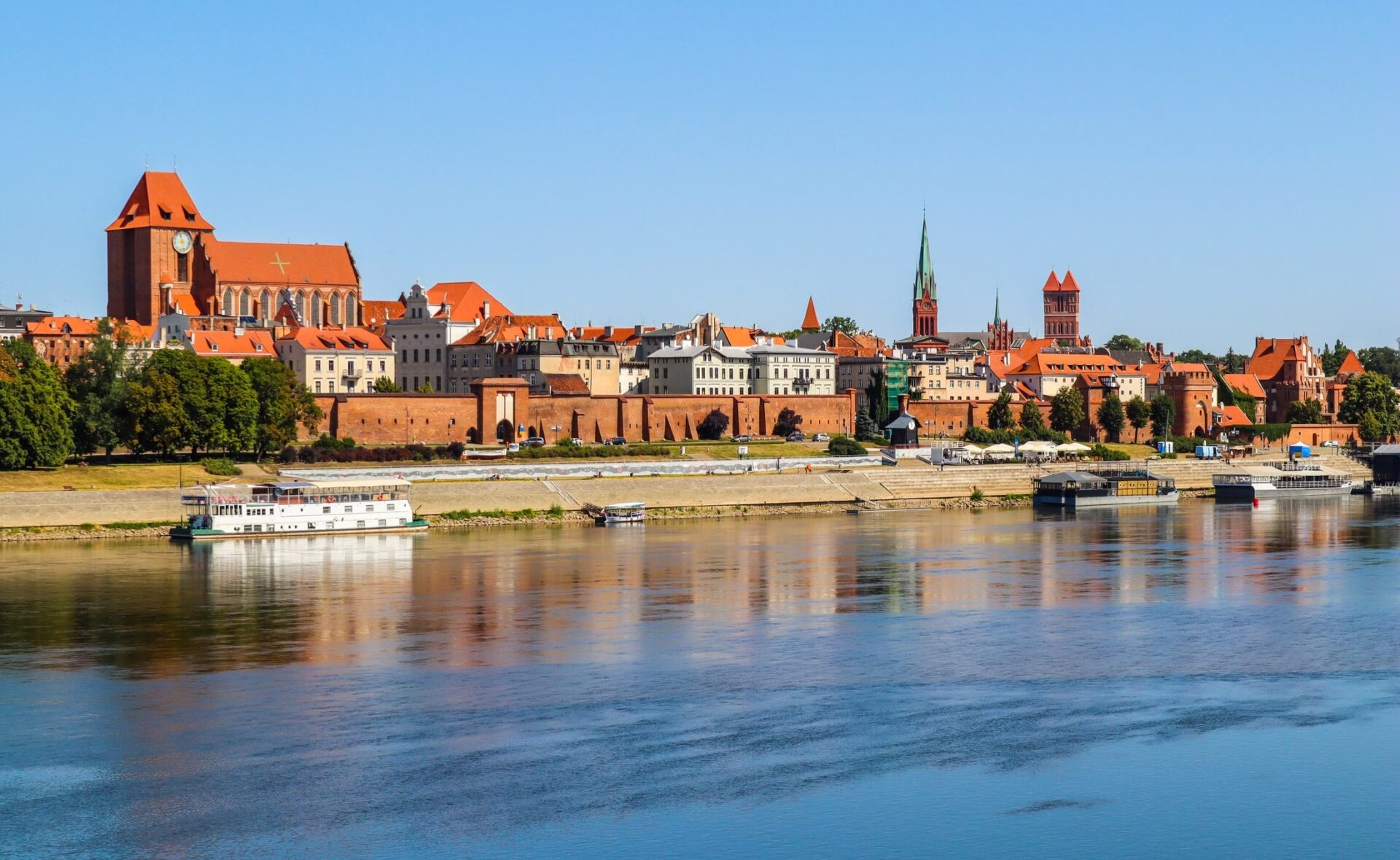
For a completely different perspective on the old town, head to the far bank of the Vistula, to Majdany street.
From there you get the most iconic view of Toruń’s old town — a panorama of Gothic towers and brick facades reflected in the river, perfect for photography at dusk.
Food & Drink in Toruń
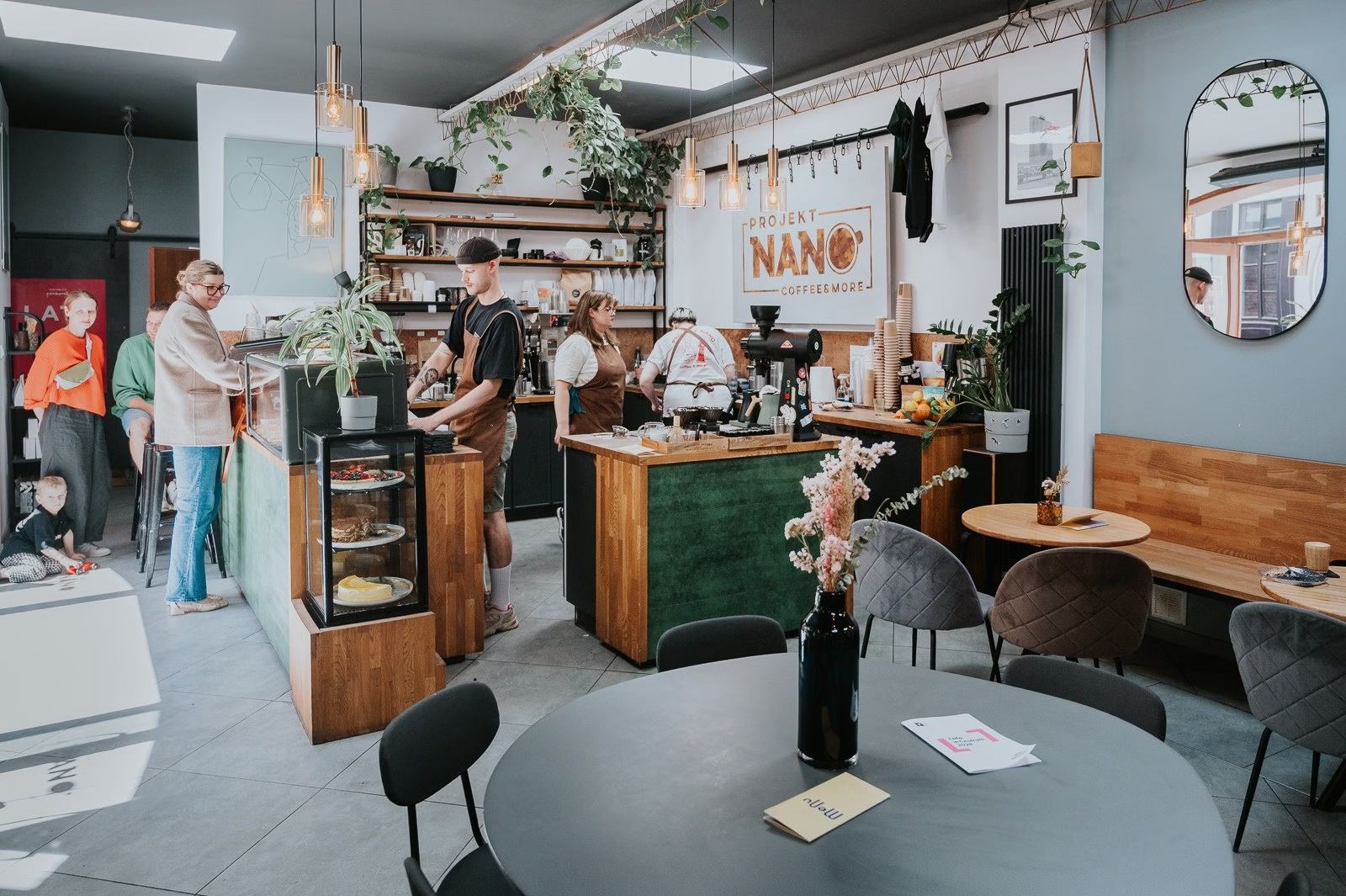
Toruń has quietly become one of Poland’s specialty coffee capitals — its university-town character has attracted a new generation of baristas and roasters, so you’ll find single-origin coffee at a level you wouldn’t expect from a city this size.
The food scene is equally diverse: from traditional pierogi to modern bistros and leisurely weekend brunches.
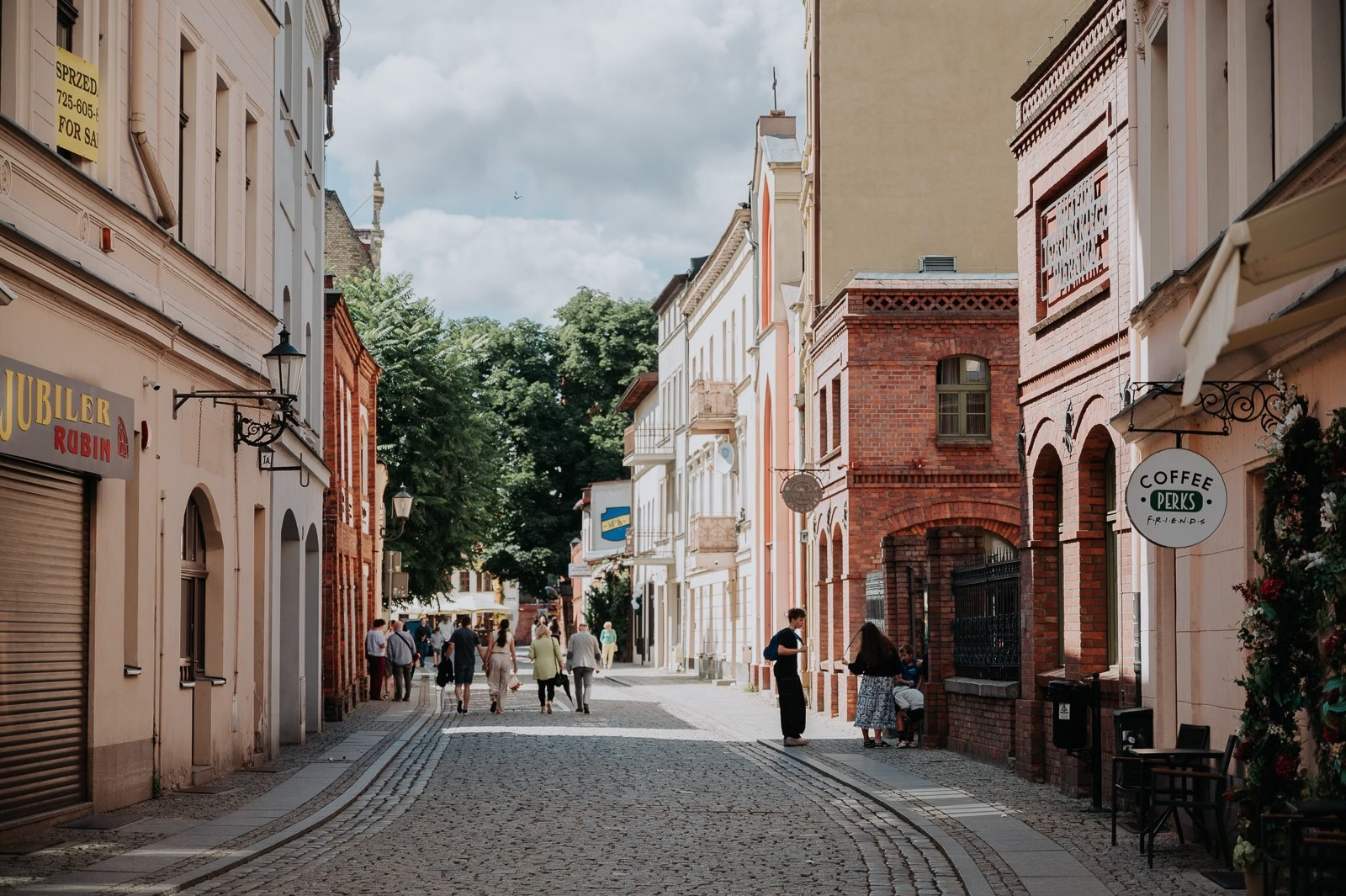
Coffee Shops
- Projekt Nano — a top specialty coffee shop sourcing from the best Polish and European roasters. One of the finest for miles around.
- NAPAR — another excellent specialty coffee spot.
- Artisant Croissant — premium croissants and other French pastries.
- Podmurna Cafe — a specialty coffee café on a quieter lane just off the centre.
- HAUST Coffee, Wine & More — a lovely café-wine bar, better suited to an afternoon or evening.
- Trafo Cafe — an espresso bar (more of a kiosk) next to a large park.
Restaurants
- Take Eat Easy — a well-honed bistro, strong on savoury tarts and burgers.
- Pierogarnia Stary Młyn — upmarket pierogi — try the baked ones in particular.
- Pierogarnia Smacznego — a popular pierogi place with a wide range of traditional and modern fillings.
- Restauracja Piernicova — a pleasant, modern restaurant.
- Szeroka № 9 — a central modern restaurant serving Polish and international cuisine.
- KOKO restauracja — a playful Asian-fusion bistro with chicken prepared every which way.
- Restauracja ESENCJA — a restaurant focused on quality ingredients and a considered seasonal menu.
- Breakfast Stary Młyn — indulgent breakfasts and brunch dishes.
Shopping in Toruń
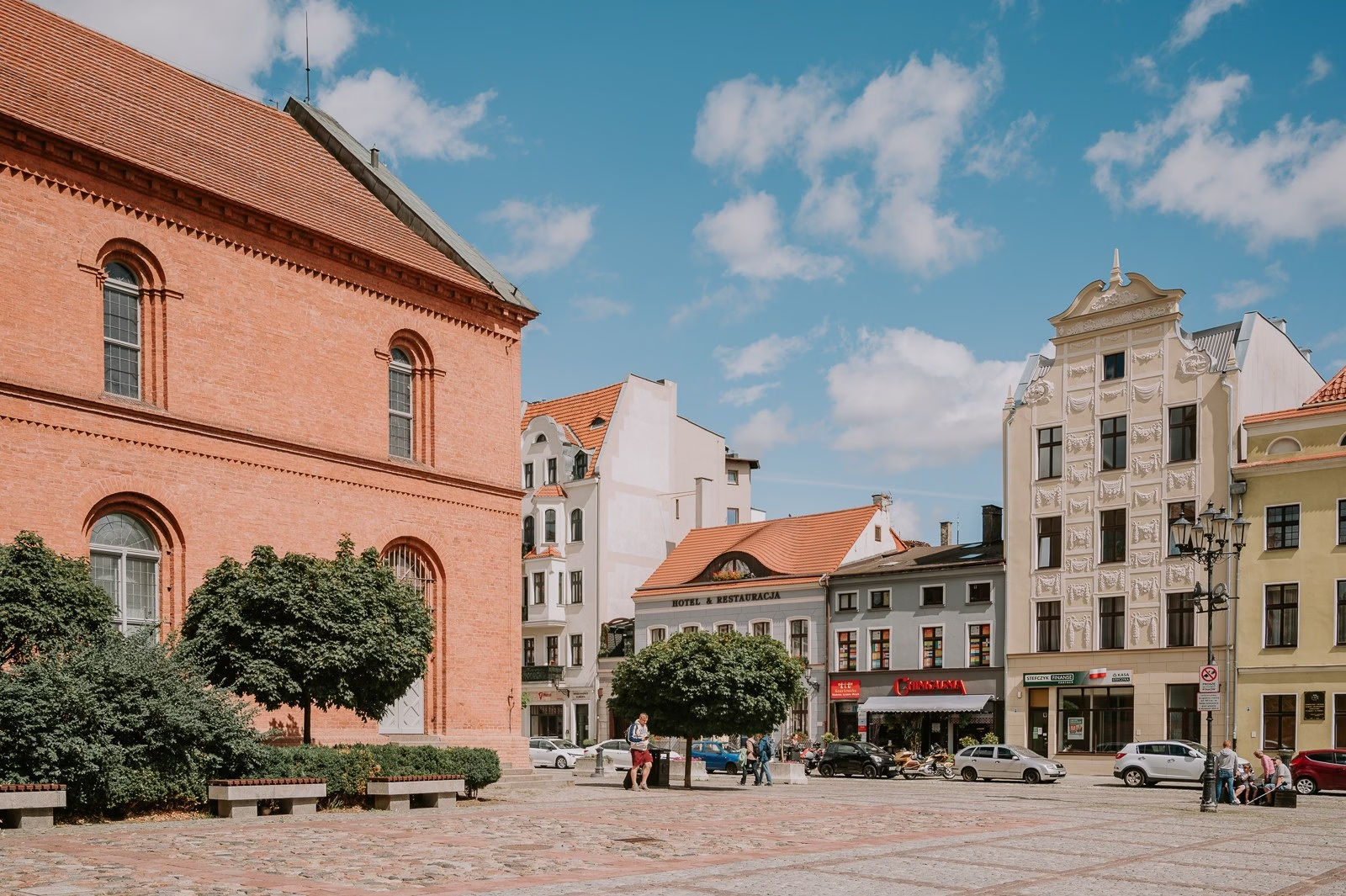
Gingerbread is the obvious souvenir from Toruń, but not every piece you buy on the square is worth the money. The most tourist-facing stalls around the Rynek often sell sweet, heavily decorated pieces with very little actual gingerbread dough.
For the real thing, head to the shops inside both museums or to smaller family bakeries off the main drag, where gingerbread is made to an old recipe — with honey, spices, and no unnecessary confectionery filler.

If you want a gift with a bit of history, look for the classic katarzynki — small round gingerbread biscuits named after St Catherine, one of Toruń’s oldest specialities. They keep well and survive a long journey home without any trouble.
Where to Stay in Toruń
Best Neighbourhoods
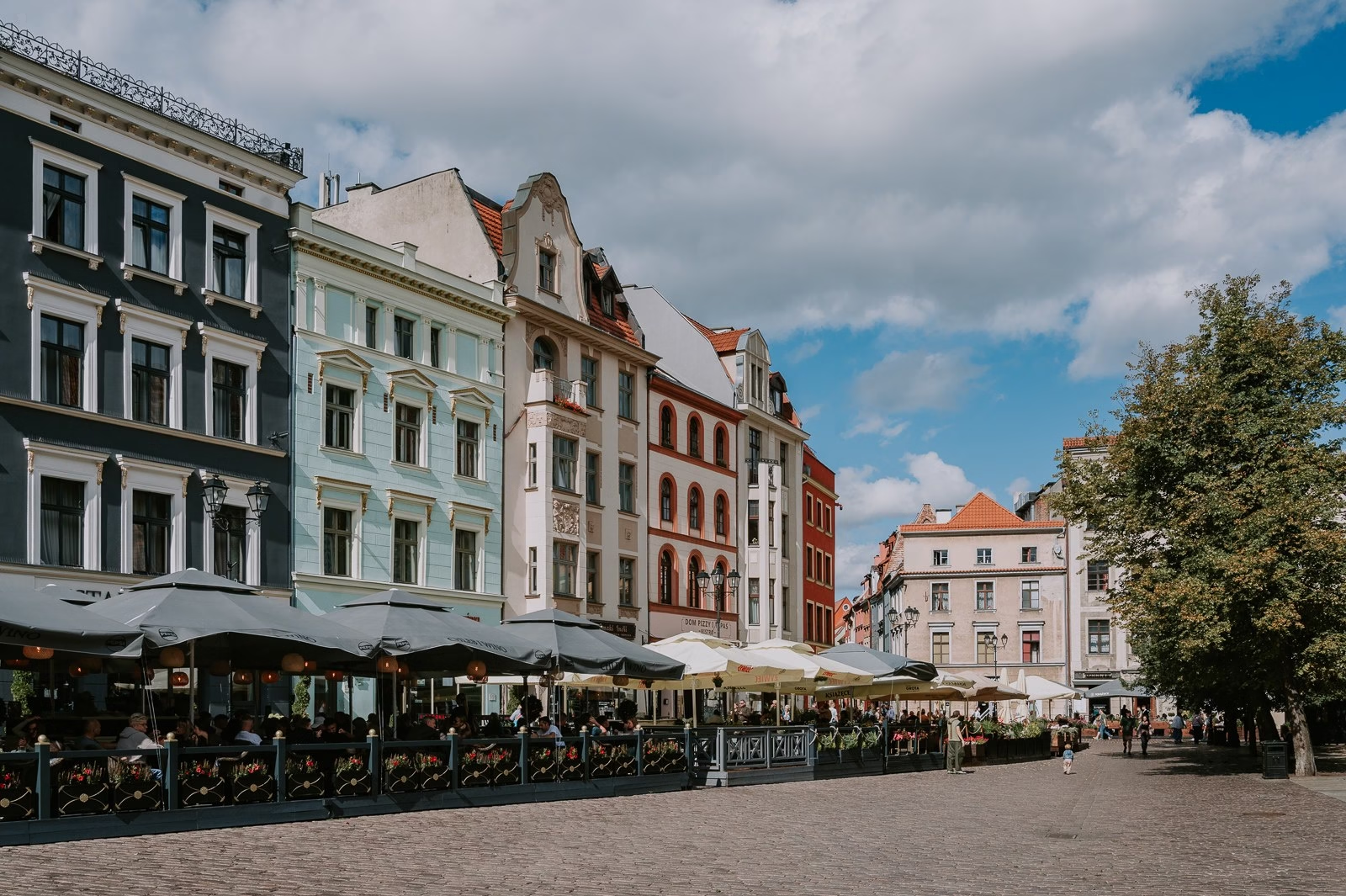
The Old Town is the obvious choice for a first visit — every major attraction is right on your doorstep, and you can easily walk to the riverside in the evening. The downside can be noisier nightlife around the square on weekends.
The area around the main railway station (Toruń Główny) is on the far bank of the Vistula, about two kilometres from the centre. Accommodation here tends to be cheaper, frequent bus connections cover the distance to the old town, and it’s a practical base for anyone arriving by train or moving on quickly.
Recommended Places to Stay
Our picks span a range of budgets — from cosy self-catering apartments to hotels with breakfast and on-site parking. We’ve noted what each option offers on those fronts so you know what to expect.
- Apartamenty Kopernika 14 — a self-catering apartment with its own kitchen, steps from the Rynek — ideal if you want to cook for yourself. No breakfast; parking in the surrounding streets (arrange it yourself).
- Hotel ETER — a four-star hotel on a quiet side street close to the centre, with a sauna, bar and one of the best-rated breakfasts in the city. On-site parking available.
- Hotel Nicolaus — a boutique hotel right in the Old Town, 100 metres from the town hall, with an excellent breakfast. Due to limited traffic access in the centre, the hotel arranges paid parking nearby for guests.
- Apartamenty Siedem Komnat Siedmiu Mistrzów — apartments a few steps from the Rynek with a jacuzzi bath and a fantastic breakfast at the ground-floor restaurant.
- Apartamenty PREMIUM Rynek 21 — a spacious apartment with a fully equipped kitchen right on Rynek Nowomiejski, with on-site parking and a bike rental.
- ibis budget Torun — a budget option a little further from the centre, but with a decent breakfast and a private car park right next to the hotel (at an extra charge).
- Apartamenty Łazienne Kreacje — apartments just 50 metres from the river with a fully equipped kitchen. Private parking available at an extra charge.
- Flatiron Jacuzzi Apartment Old Town Toruń — a spacious 42 m² apartment with a jacuzzi in the heart of the Old Town. No breakfast; arrange parking yourself.
Day Trips from Toruń
Golub-Dobrzyń
Golub-Dobrzyń lies about forty kilometres north-east of Toruń and its main draw is the Castle of Anna Vasa, a Gothic fortress rebuilt in Renaissance style that regularly hosts jousting tournaments and historical festivals. The small historic centre can be explored in two to three hours.
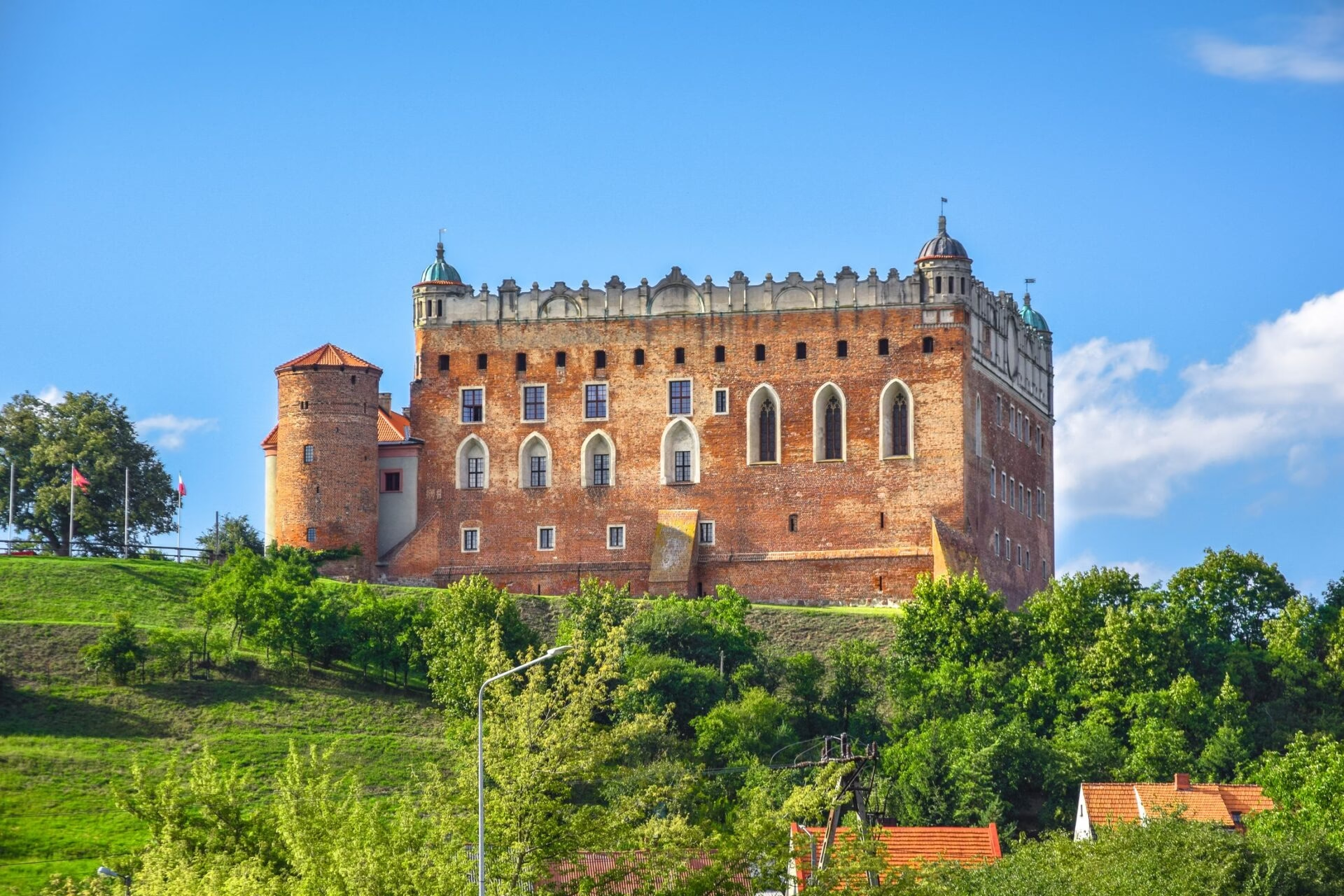
The trip pairs well with a visit to the nearby village of Szafarnia, home to a Chopin Centre commemorating the young composer’s time in this region.
Chełmno
Chełmno, nicknamed the “city of lovers”, is another Gothic town in the region — its historic centre is ringed by well-preserved medieval walls. Far smaller and quieter than Toruń, it makes an ideal half-day stop.
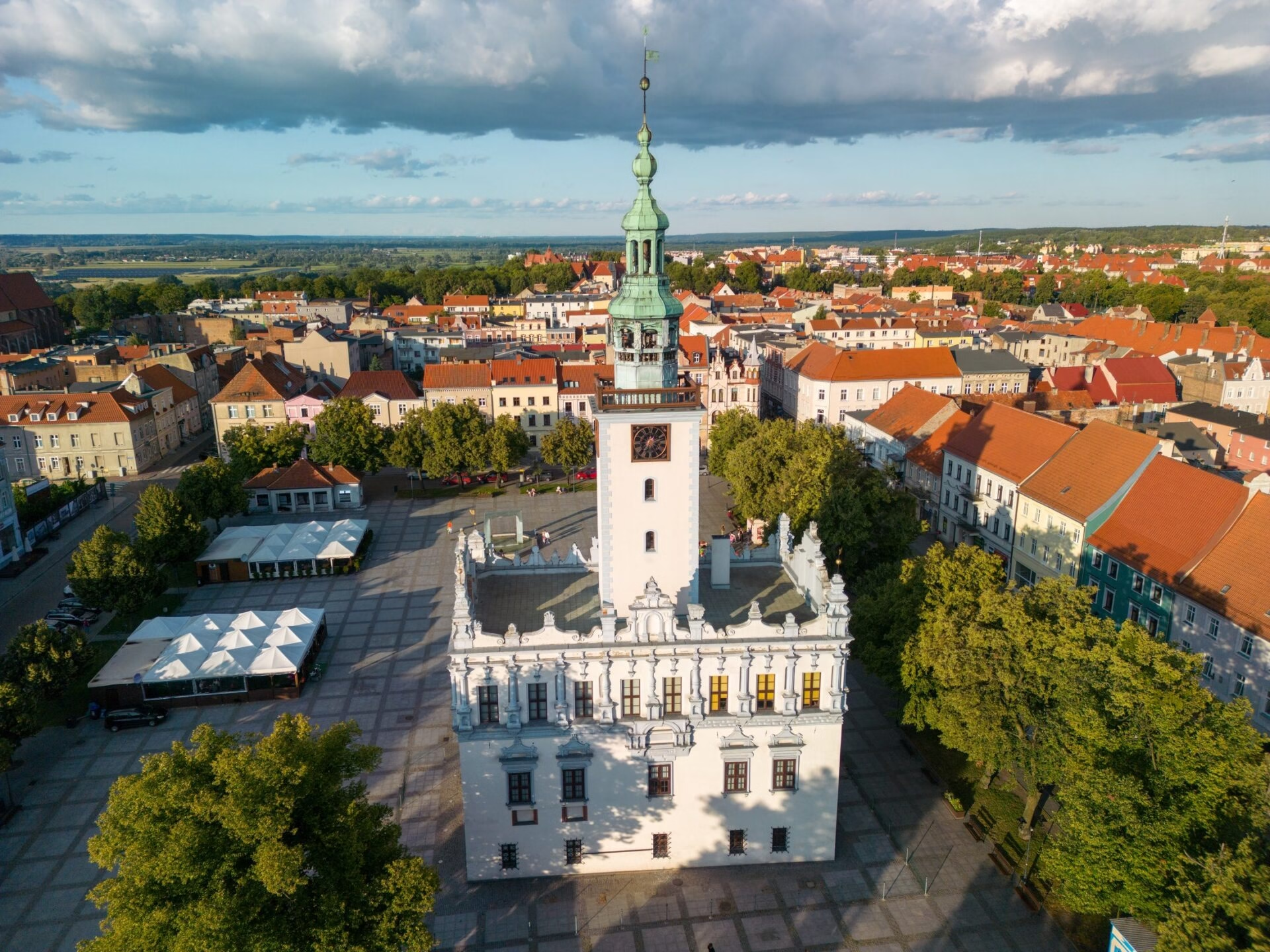
The drive from Toruń is about fifty kilometres, taking around an hour by car.
Ciechocinek
Ciechocinek is Poland’s most famous spa town, renowned for its enormous wooden graduation towers (tężnie) — the largest wooden structure of their kind in Europe, built to evaporate salt water. A walk through the spa park and around the towers is one of the most pleasant ways to spend an afternoon outside the city.
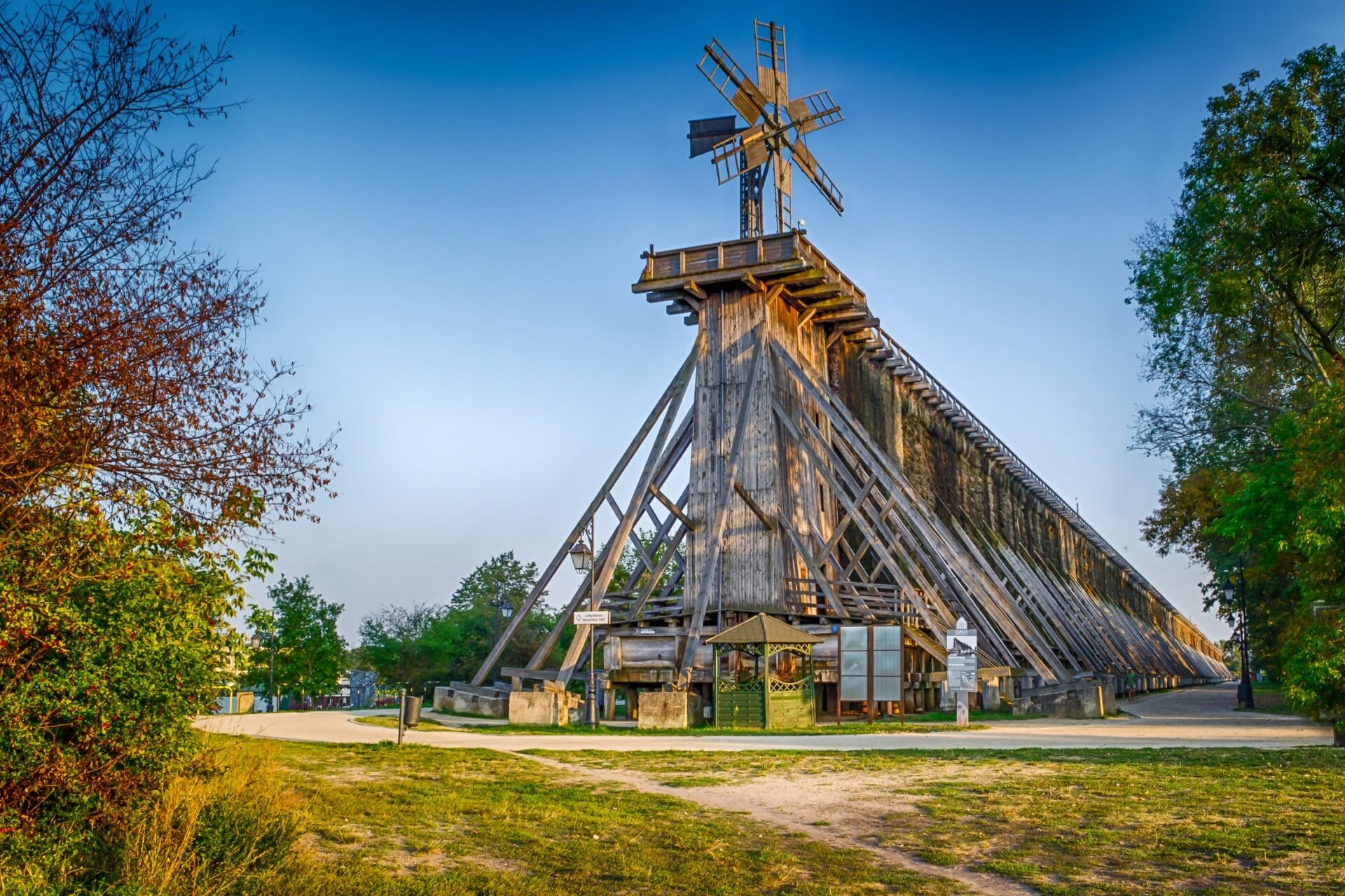
Ciechocinek is about thirty-five kilometres from Toruń, roughly half an hour by car.
Bydgoszcz
Bydgoszcz, the second major city of the Kuyavian-Pomeranian Voivodeship, offers a different atmosphere to Gothic Toruń — a picturesque Mill Island (Wyspa Młyńska), a historic centre and the Brda river laced with bridges. Worth a look too is the Museum of Soap and the History of Dirt.
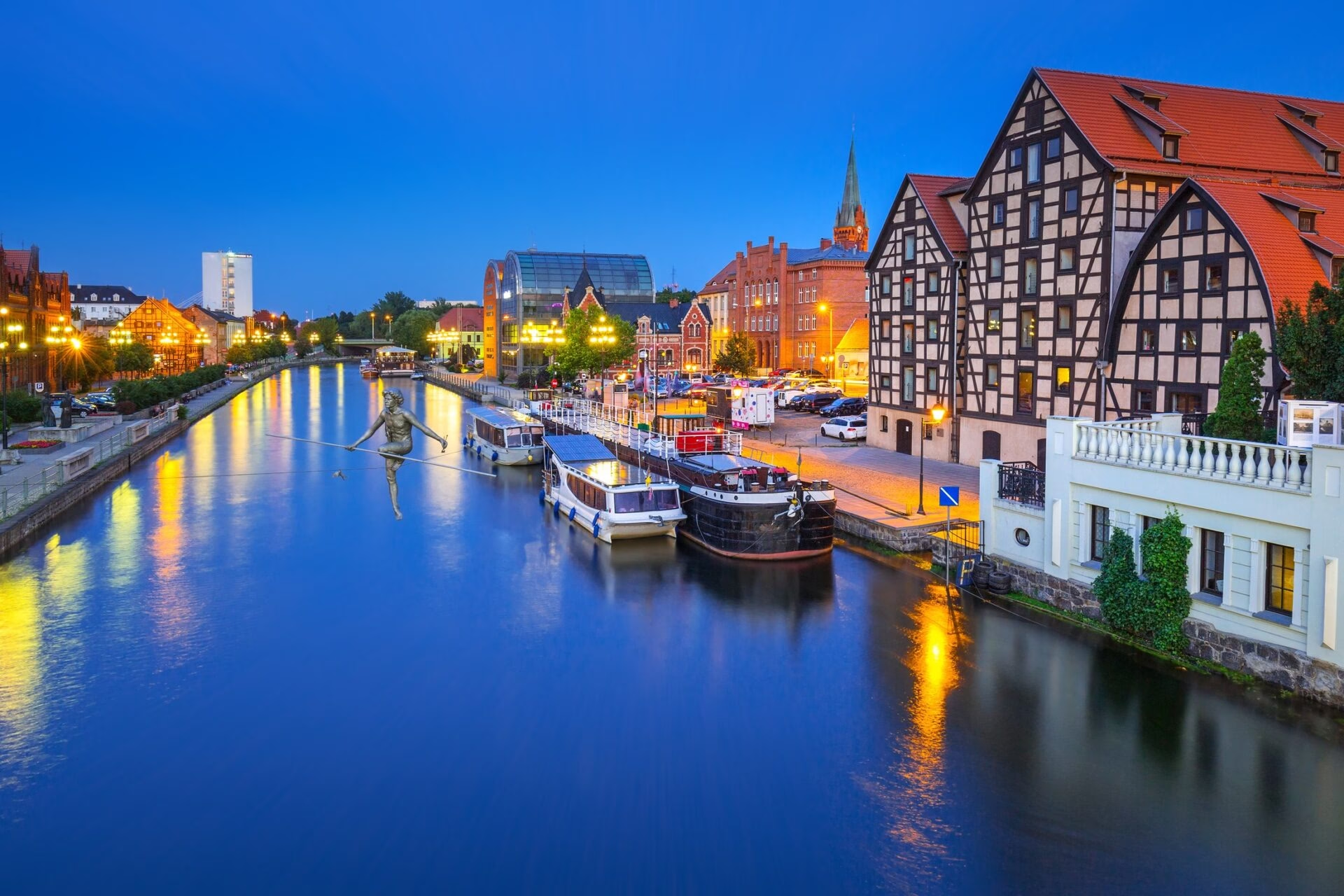
The two cities are only about fifty kilometres apart, around forty minutes by car or just over half an hour by train.
For more stops in Poland, see the guide to things to do in Poznań and the Wrocław travel guide.
Practical Information
Getting to Toruń
From Warsaw
From Warsaw, PKP Intercity runs direct trains — both the faster IC and the more affordable TLK services. The journey takes roughly two and a half to three hours, with around seven direct trains daily, giving you a choice of early-morning and late-evening departures. Second-class tickets start at around 40 zł if booked in advance; tickets go on sale 30 days ahead — buy early for the best prices.
Trains leave Warsaw from three stations — Warszawa Wschodnia, Warszawa Centralna and Warszawa Zachodnia — so board at whichever is closest to where you’re staying. Book directly with PKP Intercity (intercity.pl or their app) to avoid booking fees; seat reservations are compulsory on IC trains.
In Toruń, alight at Toruń Główny. The station is across the river, about two kilometres from the old town — a city bus gets you to the centre in a few minutes. Some services continue on to Toruń Miasto, which is closer to the centre — catch one of those and you’ll save yourself the transfer.
By coach the journey takes a similar time and is usually cheaper (FlixBus and others), though there are fewer departures. By car it’s around 260 kilometres and 2.5–3 hours via the A1 motorway and the DK10 road.
From Germany
By train from Berlin, you can reach Toruń with one change in Poznań in roughly five and a half hours. The EC Berlin–Warszawa-Express departs Berlin Hbf several times a day and reaches Poznań Główny in under three hours — Poznań is well worth a stop on its own — and from there direct PKP Intercity trains run to Toruń, the fastest in just under an hour and a half (allow an hour and a half to two hours typically). Buy the German leg with DB and the Polish leg with PKP Intercity.
By car from Berlin it’s roughly 450–470 kilometres and 4.5 hours. Take the A12 to the Frankfurt an der Oder / Świecko border crossing, then continue on the Polish A2 motorway to Poznań and head north on the S5 expressway towards Bydgoszcz, then the S10 into Toruń.
From most German cities you’ll route through Berlin, so add your travel time to Berlin — from Hamburg, Leipzig or Dresden, roughly another 2–3 hours.
The Polish section of the A2 motorway carries a toll for private cars: Świecko to Nowy Tomyśl costs 18 zł, and the concession section around Poznań a further 37 zł. Pay at toll booths by card or cash, or via the e-TOLL system. Rates change — check them before you travel.
From Gdańsk and the Baltic Coast
There are also direct trains from Gdańsk — the fastest IC services cover the route in 2 hours 11 minutes; typically allow two hours and 15–25 minutes. Second-class tickets start at around 68 zł. A coach is a cheaper alternative at similar journey times.
By car via the A1 motorway it’s roughly 170 kilometres and just under two hours. The A1 section south of Toruń is toll-free for private cars; tolls apply only on the northern section Toruń–Gdańsk (152 km, 29.90 zł for a private car), operated by private company AmberOne.
Tolls are paid at the toll booth (collect a ticket on entry, pay on exit) or automatically via the AmberGO system.
By Air
Toruń has no airport. The closest is Bydgoszcz Airport (BZG), about 50 kilometres west — direct buses (just under an hour) and trains via Bydgoszcz main station connect to Toruń. Bydgoszcz serves only a handful of routes, so you’ll more likely arrive at one of the major airports: Warsaw Chopin (WAW), Gdańsk (GDN) or Poznań (POZ). All three are connected to Toruń by train or coach in roughly two to three hours.
Getting Around Toruń
The Old Town is compact and almost entirely pedestrianised, so you won’t need public transport for standard sightseeing.
Buses are useful mainly for the transfer from the main railway station, which is across the river, about two kilometres from the centre, or for trips to Bydgoskie Przedmieście or the Fortress Museum. As a tourist, you’ll rarely have cause to use the tram.
Money & Prices
Poland uses the Polish złoty (PLN / zł). Admission to Toruń’s museums generally ranges from 22 to 33 zł for a standard adult ticket — the most expensive is the Living Gingerbread Museum (42 zł), the cheapest the castle ruins (22 zł). Combined tickets (town hall and tower for 52 zł) offer slightly better value. The Regional Museum also sells multi-day passes covering several branches at once, worth considering for a longer stay.
Weather in Toruń & Best Time to Visit
Toruń has a Central European climate and can be quite windy. The most pleasant time to explore the city on foot is spring and autumn.
Safety
Toruń is a safe city. Standard precautions — keeping an eye on your belongings in busy tourist areas — are all you need.
Checking Current Prices & Opening Hours
All admission prices and opening hours in this article were verified against official websites on 31 July 2026. Both can change — especially between high season and off-season — so double-check directly at the source before you go:
- Old Town Hall and viewing tower
- House of Nicolaus Copernicus
- Toruń Gingerbread Museum
- Tony Halik Travellers’ Museum
- Museum of Asian Art – Kamienica pod Gwiazdą
- Muzeum Twierdzy Toruń (Toruń Fortress Museum)
- Living Gingerbread Museum (Żywe Muzeum Piernika)
- Teutonic Knights’ Castle and Leaning Tower (Toruńska Agenda Kulturalna)
- Toruń Planetarium — ticket prices
- Cathedral tower (official Visit Toruń tourism portal)
- A1 motorway tolls Toruń–Gdańsk (AmberOne)
- Train connections and tickets (PKP Intercity)
Most of Toruń’s museums fall under the Muzeum Okręgowe, which has a shared booking system and price list at bilety.muzeum.torun.pl — you can buy tickets online there and check current availability.
Frequently Asked Questions
How many days do you need in Toruń?
You can cover the main old-town highlights in a single day — the centre is compact and almost entirely pedestrianised. If you want to add a day trip (Golub-Dobrzyń, Chełmno, Ciechocinek or Bydgoszcz), plan for two to three days.
When is free entry at Toruń’s museums?
Free-entry days differ between Regional Museum branches. Most — including the town hall, Travellers’ Museum, Museum of Asian Art and Fortress Museum — offer free admission to permanent exhibitions on Wednesdays. The House of Nicolaus Copernicus is free on Thursdays, and the Toruń Gingerbread Museum on Tuesdays. The town hall viewing tower is never free.
How much does it cost to go up Toruń’s town hall tower?
The tower alone costs 29 zł (concession 26 zł), museum exhibitions cost 32 zł (concession 27 zł), and a combined ticket for both is 52 zł (concession 42 zł). Unlike the exhibitions, the tower is open every day and stays open until 20:00 from May to September.
What’s the difference between the Toruń Gingerbread Museum and the Living Gingerbread Museum?
The Toruń Gingerbread Museum (ul. Strumykowa 4) is a traditional exhibition in the 19th-century Weese family gingerbread factory, with historic moulds and ovens. It’s closed on Mondays and admission is 33 zł.
The Living Gingerbread Museum (ul. Rabiańska 9) is an interactive workshop where you mix and bake your own gingerbread to an old recipe. It’s open daily 10:00–18:00, admission is 42 zł, and capacity is limited — book ahead.
Is the motorway to Toruń tolled?
The A1 motorway section south of Toruń is toll-free for private cars. Tolls apply only on the northern Toruń–Gdańsk section, operated by AmberOne: 152 kilometres costs 29.90 zł. Pay at the toll booth or automatically via the AmberGO system.
When is the best time to visit Toruń?
Spring and autumn are the most pleasant seasons for exploring the city on foot — fewer tourists and comfortable temperatures for long walks along the riverside. In the main season (1 May to 29 September) museums are open until 18:00; outside that period they close at 16:00.
How do you get to Toruń from Germany?
By train from Berlin, you travel with one change in Poznań in roughly five and a half hours: the EC Berlin–Warszawa-Express runs from Berlin Hbf to Poznań Główny in under three hours, and from there direct PKP Intercity trains continue to Toruń.
By car from Berlin it’s roughly 450–470 kilometres and 4.5 hours via the A12 to the Frankfurt an der Oder / Świecko border crossing, then the Polish A2 motorway to Poznań and north on the S5 and S10. From most German cities you’ll route through Berlin, so add your travel time to Berlin.
How do you get from Warsaw to Toruń?
The easiest option is by train: around seven direct PKP Intercity services run daily (IC and TLK categories), the journey takes two and a half to three hours and second-class tickets start at around 40 zł when booked in advance. Trains stop at Warszawa Wschodnia, Centralna and Zachodnia, and arrive at Toruń Główny, two kilometres from the old town.
By car it’s roughly 260 kilometres and 2.5–3 hours via the A1 motorway and the DK10 road.
More Poland Guides
- Gdańsk Travel Guide — continue north on the A1
- Poznań Travel Guide — things to do in Poznań
- Wrocław Travel Guide
- Kraków Travel Guide
- Poland Travel Guide — tips for travelling around the whole country
Pre-Trip Checklist
- Regional Museum branches (town hall, Copernicus House, Gingerbread Museum, Travellers’ Museum) are closed on Mondays. The town hall viewing tower is the exception — it’s open every day.
- Free-entry days differ by branch: most offer Wednesdays, but the House of Nicolaus Copernicus is Thursday and the Gingerbread Museum is Tuesday. Check based on what you plan to visit.
- Out of season (1 October – 30 April), museums close at 16:00 — build your sightseeing around the morning if you want to fit everything in.
- Book Living Gingerbread Museum tickets in advance — capacity is limited.
- For day trips (Golub-Dobrzyń, Chełmno, Ciechocinek, Bydgoszcz) you’ll need a car or plenty of time for public transport.
- If you’re driving north to Gdańsk, budget for the 29.90 zł toll on the Toruń–Gdańsk section of the A1.
- Buy gingerbread away from the main tourist stalls on the square — quality and price are both better elsewhere.