This post is also available in:


Prague deserves a few days on its own, but if you have extra time, it would be a shame not to venture further. The best day trips from Prague by train require no car and no organised tour — just hop on board and head out for history, great food, coffee, beer and culture. All destinations below are within 90 minutes, served by comfortable air-conditioned express trains, and you can return whenever suits you.
We’ve picked seven Czech towns reachable from Prague in under 90 minutes, each offering a full day’s worth of sightseeing — a historic centre, museums or galleries and excellent food. We start with the two that make the most sense if this is your first time in Czechia, then list the rest in order of travel time.
Ticket prices for all seven destinations range between roughly €4 and €8 one-way in second class. Always buy online, ideally at least a few days ahead — tickets can be cancelled free of charge up to 15 minutes before departure.
Every town on this list is completely walkable; you don’t need a car or a guided tour for any of them. How Czech trains work — operators, tickets, seat reservations and delays — is covered in a dedicated section below.
1. Kutná Hora – Silver, UNESCO and the Sedlec Ossuary
Kutná Hora is one of the most popular day trips from Prague — and rightly so. Not only for its UNESCO monuments and beautiful historic centre, but also for its outstanding coffee and food.
The Vysočina express reaches Kutná Hora main station in 51 minutes, but be aware — the main station sits about 3 kilometres from the historic centre. A connecting local train runs to Kutná Hora město station, bringing your total journey to around an hour and 10 minutes.
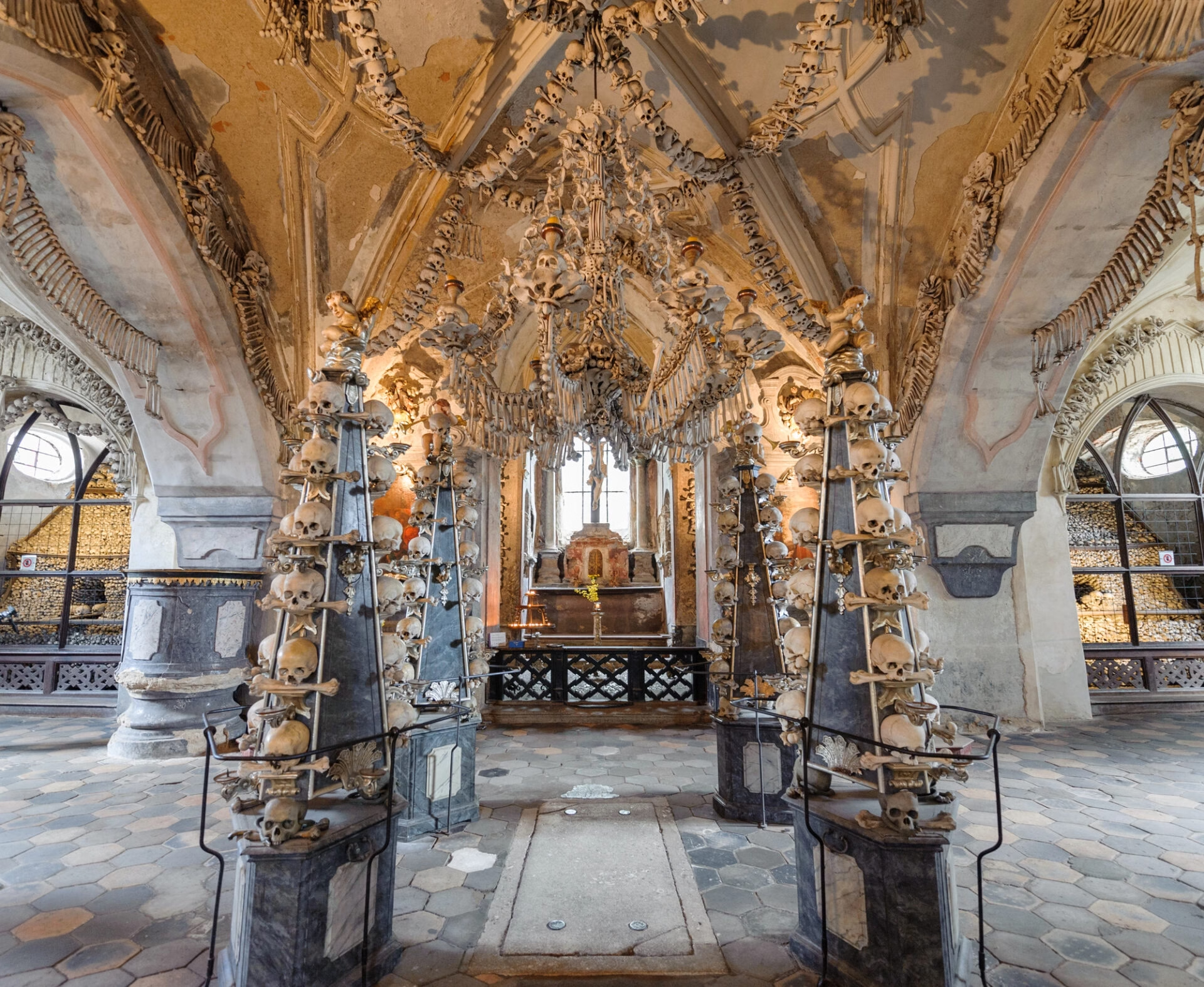
The world-famous Sedlec Ossuary sits right next to the main station, so it makes sense to start there — visit it as soon as you arrive, then make your way into the centre.
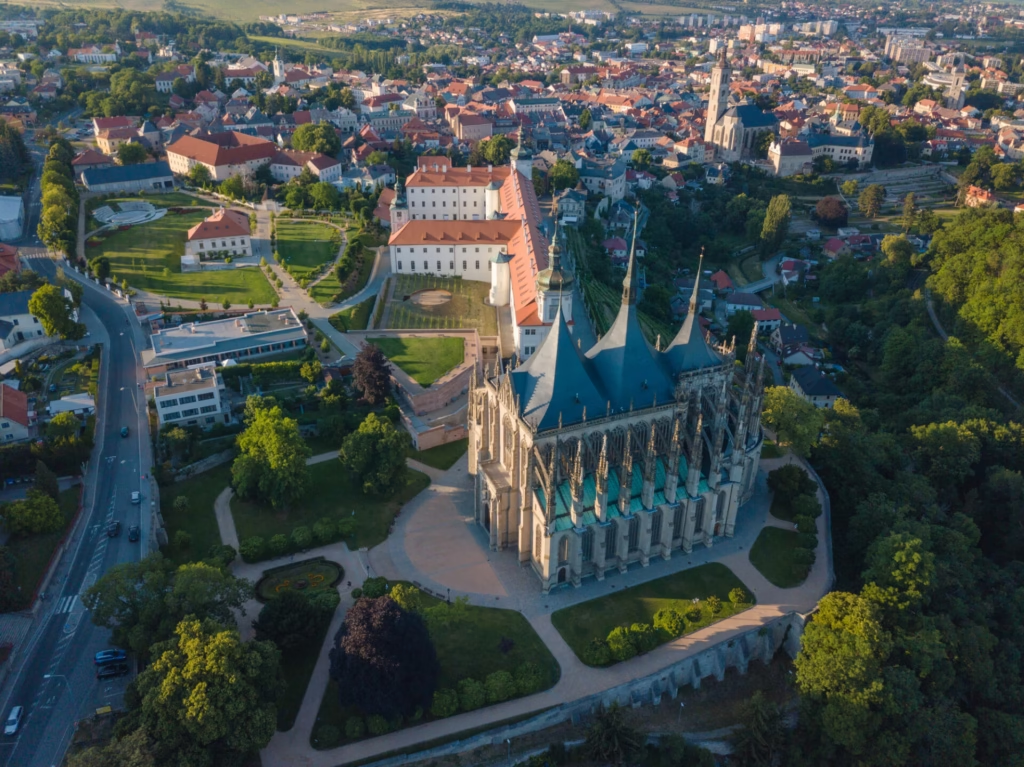
In the centre, don’t miss St Barbara’s Cathedral, one of the most beautiful Gothic buildings in the country and a core part of the UNESCO World Heritage Site. Add the Italian Court, where Prague groschen were minted, and the Czech Museum of Silver with its tour of a medieval mine.
The GASK gallery in the Jesuit College right next to St Barbara’s is well worth a look too, as is the Kafírnictví café inside.
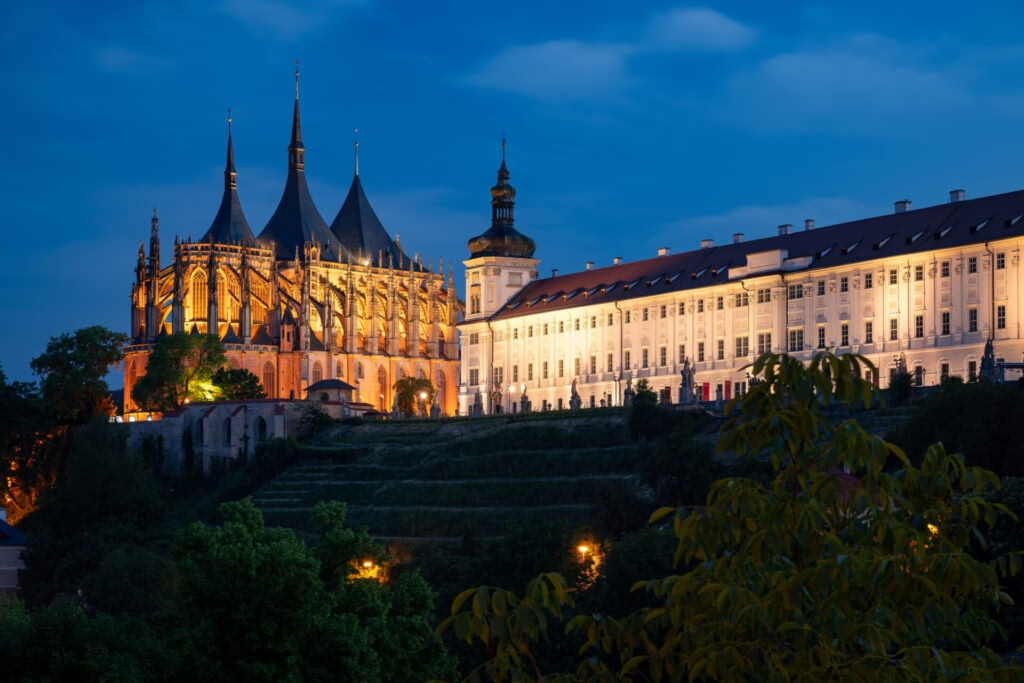
We’ve covered the town in detail in a dedicated guide — read our full rundown of what to see in Kutná Hora, including opening hours and the recommended order for visiting the sights.
Where to get coffee in Kutná Hora:
- Turistka – a gorgeous café inside the Jesuit College
- Fikafe – absolutely brilliant pastries, great coffee, wonderfully friendly staff
- Skleník – a beautiful space with views over the Jesuit College garden and St Barbara’s Cathedral
- Coffeehood – a charming little café in Sedlec, again with brilliant pastries and excellent brunch
Where to eat in Kutná Hora:
- Okno U Hrádku – a solid bistro on Barborská street
- Restaurace V Ruthardce – honest Czech classics; the best place in town for svíčková or goulash
- Čtyři sestry – a welcoming restaurant with modern cooking
- Chleby jako v nebi – primarily a bakery, but their breakfasts are absolutely outstanding
Kutná Hora is the busiest destination on this list. If you can, go on a weekday and take an early train — before ten in the morning you’ll have the ossuary and the cathedral almost to yourself. After eleven, the tour buses from Prague start rolling in. By train you’ll get there just as fast and for a fraction of the price of an organised trip.
2. Plzeň – Beer, Underground Tunnels, a Synagogue and the Tallest Church Tower in Czechia
The Západní expres covers the Prague–Plzeň route in roughly 1 hour 20 minutes and runs every hour. From Plzeň main station it’s about a 10-minute walk to the central náměstí Republiky (Republic Square).
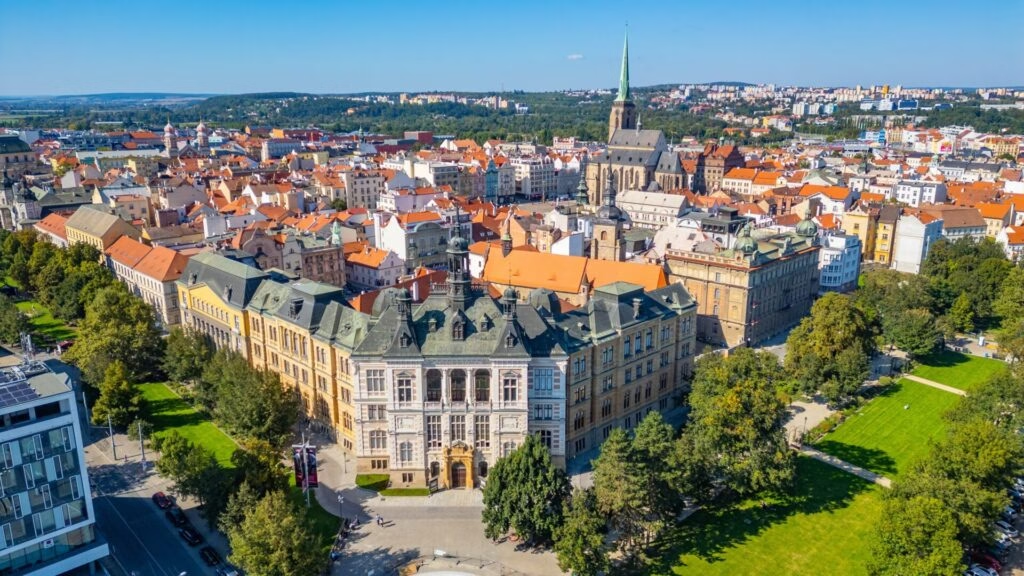
Plzeň offers perhaps the most options of any destination on this list — even if beer is the last thing on your mind. Towering over Republic Square is St Bartholomew’s Cathedral, its spire reaching 102 metres — the tallest church tower in Czechia. The viewing gallery sits at 62 metres and takes 299 steps to reach; on a clear day you can see the Šumava and Brdy hills, and occasionally even the Alps.
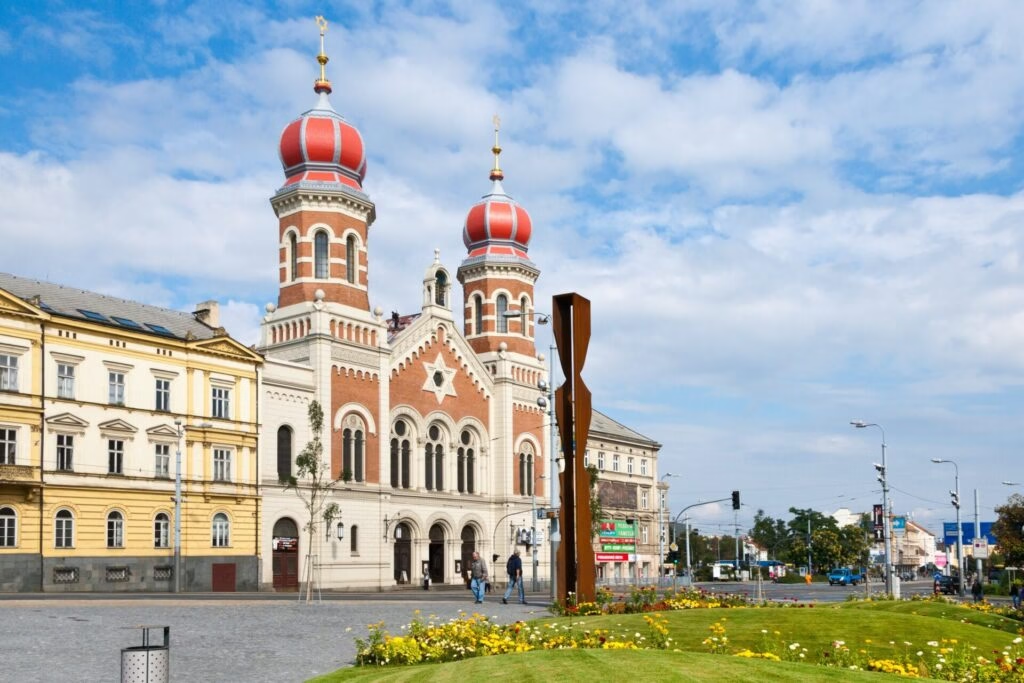
Plzeň’s other showpiece is the beautifully restored Great Synagogue, built between 1888 and 1892 — the second-largest synagogue in Europe. Its Neo-Romanesque architecture with Moorish details makes it look as though it was lifted from an entirely different world.
What to set time aside for:
- Plzeň Historical Underground – the tunnels beneath the entire historic core stretch nearly 14 kilometres in total; the guided tour covers 800 metres. Tours take about an hour and admission is around €8 for adults and €6 for children. Open year-round except January, daily 10:00–17:00.
- Pilsner Urquell Brewery – a brilliantly put-together interactive tour of the world-famous brewery, including the historic lagering cellars and a tasting of unpasteurised beer straight from the barrel. Allow yourself a good three hours.
- Techmania Science Center – if you’re visiting with children aged 4 and up, this is probably the best family programme on our entire list.
It’s easy to over-plan Plzeň: the brewery, the underground and the tower won’t all fit into one day — especially if you also want lunch and time on the square. Pick two and save the rest for next time.
Or simply stay overnight — it makes real sense here, not least because of the wealth of cultural offerings the city has: theatre, live music and various interactive exhibitions, including those at DEPO 2015, which opened in the year Plzeň held the title of European Capital of Culture.
Where to get coffee in Plzeň:
- Le Frenchie Náměstí – café right on Republic Square
- Le Frenchie café – second branch, a few minutes from the square
- The Fresh Bar – just off Republic Square
- Chromá liška – café in the historic centre
- Walter Mitty – bakery and café, a great brunch stop
- Dream Up Coffee – café on the edge of the centre
Most of Plzeň’s restaurants lean heavily into the beer-hall tradition. For lighter food, bistros and cafés are the better bet.
Where to eat in Plzeň:
- Birkstro – bistro under a birch tree, right in the centre
- Restaurace U Salzmannů – a traditional Plzeň pub just off the square
- Rango restaurace – restaurant in the historic core
- fred bistro – bistro a few minutes from the square
- Parkan – restaurant by the historic city walls
- Pivstro – beer bistro close to the centre
- Da Pietro Grill – Italian cuisine and grill near the centre
- Hospoda Na Spilce – restaurant inside the brewery itself; excellent Czech cooking at surprisingly reasonable prices
3. Poděbrady – Spa Park 46 Minutes from Prague
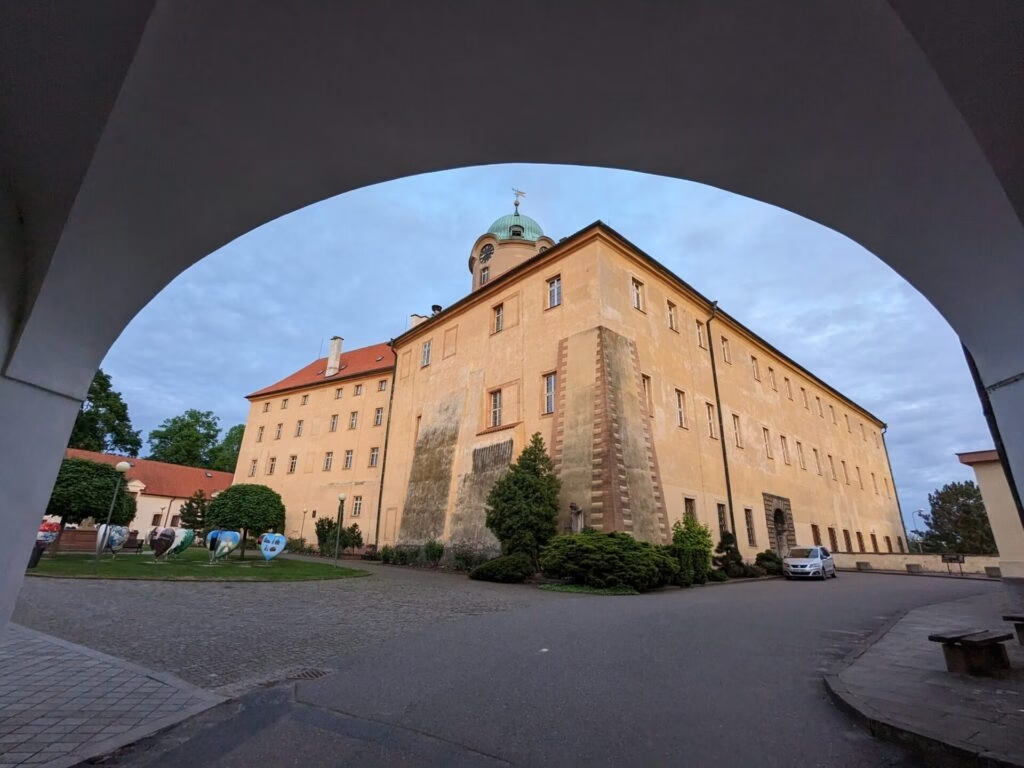
Poděbrady is the closest destination on our list and also the most relaxed. The Krakonoš express towards Hradec Králové gets you from Prague main station to Poděbrady in just 46 minutes, and the station sits right on the edge of the spa park. Walk through the park to reach the castle and historic centre.
The town’s spa heritage began by accident. In 1905, workers drilling for drinking water sank a borehole 96 metres deep — and instead of plain water, they struck mineral water. Analysis confirmed its therapeutic properties, and by 1908 Poděbrady’s first treatment season had already begun. The spa has specialised in heart and circulatory conditions from the very start, and still does today.
What to explore:
- The Spa Colonnade (1938) – you can fill a glass and taste the mineral water straight from the source.
- Poděbrady Castle – tradition holds that George of Poděbrady — the only Czech king of non-royal birth and author of one of Europe’s earliest proposals for a peaceful union of states — was born here in 1420. The first mineral spring rises in the castle courtyard.
- Historic centre – George Square (Jiřího náměstí) in front of the castle takes just a few minutes to walk around.
- Elbe riverside promenade – flat, shaded and long; perfect for a leisurely stroll.
- The lake on the edge of town — ideal for a swim if you’re visiting in summer.
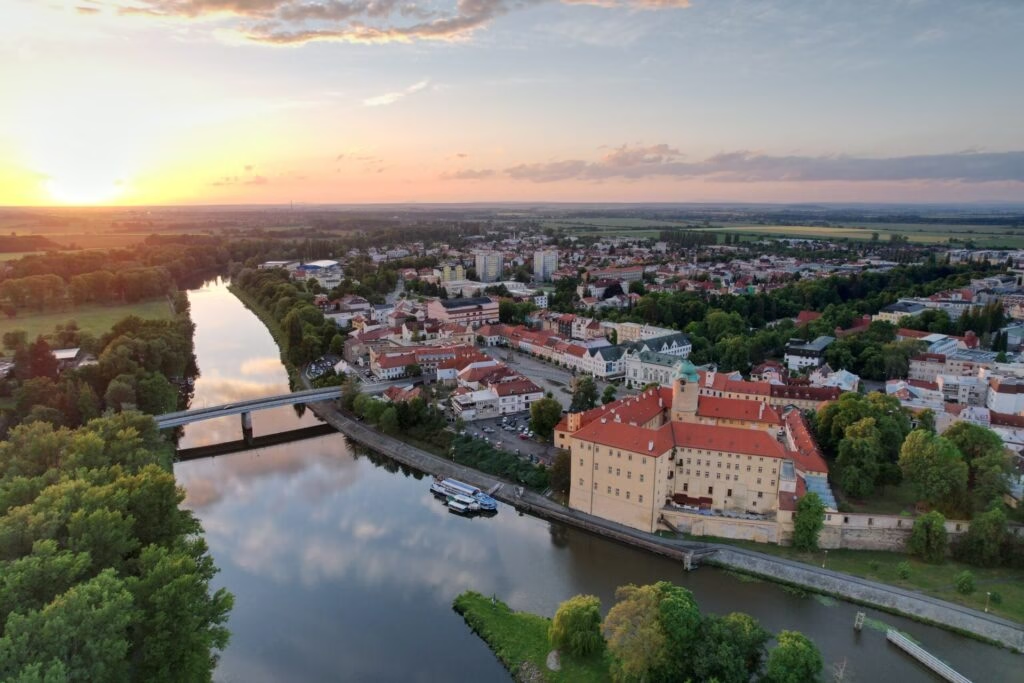
Poděbrady also works well as a half-day trip. It’s an excellent choice with young children or a pushchair — everything is flat and close together.
Where to get coffee in Poděbrady:
- Kafíčko – small café a few steps from George Square
- Café Ritual – café right in the centre, a good stop on the way from the castle
- Amáres coffee – own roastery; the place to go for specialty coffee
Where to eat in Poděbrady:
- Mlejn bistro & bar – bistro and bar right in the centre
- Pár Soust – bistro just off George Square
- Cucina – Italian cooking, about five minutes’ walk from the centre
- Café Oliver – café with a full food menu, just beyond the centre
4. Pardubice – Gingerbread, a Renaissance Castle and the Automatické mlýny
The train journey from Prague to Pardubice is the simplest of all — trains run constantly. Express services take about an hour, and from the station it’s under 20 minutes on foot, 10 minutes by bike, or two stops by trolleybus to the centre.
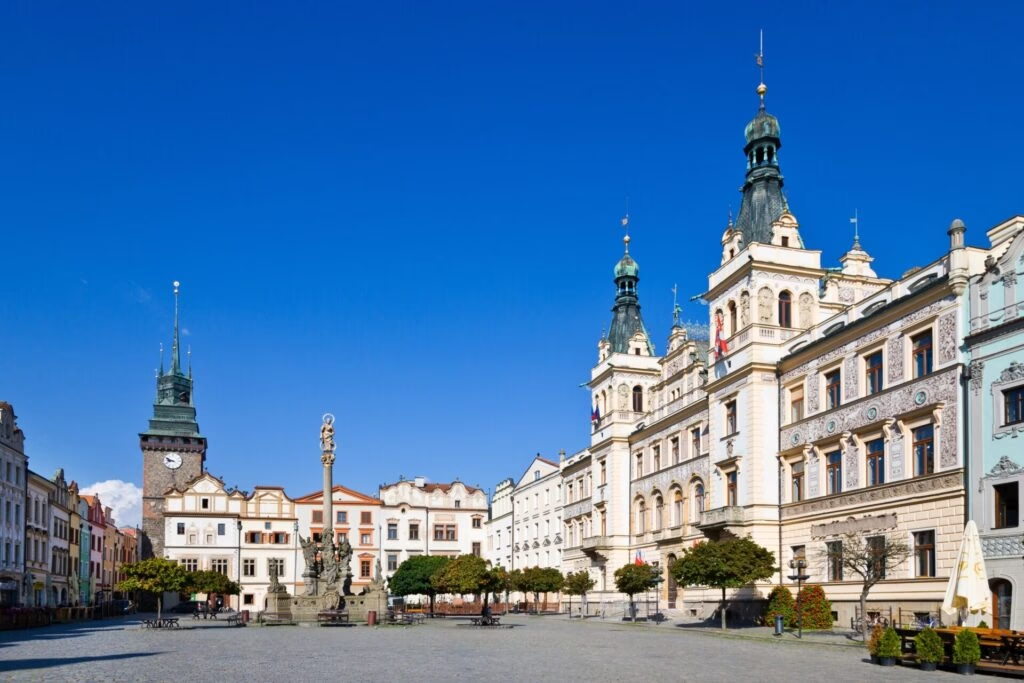
Pardubice has a beautifully preserved Renaissance centre and a castle that rival far more famous destinations — yet almost nobody makes it here as a day trip, which is a real shame. Beyond the history you’ll find excellent food, a lively cultural scene, parks and the unique industrial monument of the Automatické mlýny (Automatic Mills).
The heart of the city is Pernštýn Square, surrounded by Renaissance and Baroque arcaded townhouses. The most fascinating of these is the House of Jonah, which bears the marks of several architectural styles layered over centuries. A short walk away stands the Green Gate — a remnant of the Pernštejn fortifications — whose tower stands 59 metres tall with 154 steps to the viewing platform.
Don’t miss:
- Pardubice Castle – the Pernštejn family’s Renaissance seat, now home to the East Bohemian Museum and East Bohemian Gallery. Walking the impressive earthwork ramparts around the castle is free and worth doing even without going inside.
- Historic centre – not just the square, but the surrounding lanes and passageways too.
- Automatické mlýny – a lovingly restored industrial heritage site, now housing a gallery and café.
- Pardubice gingerbread – a local speciality that also makes a great souvenir.
- Kunětická hora – a majestic ruined castle perched on what may be Czechia’s lowest hill.
- Racecourse – horse racing in Pardubice dates back to 1856, with the Velká pardubická steeplechase first run in 1874. It ranks among the most demanding steeplechases in Europe, often compared to the British Grand National. The race runs in autumn, but the grounds can be visited year-round.
Where to eat in Pardubice:
- Bistro100 Pardubice – bistro right in the centre
- La Tāble Pardubice – restaurant a few minutes from Pernštýn Square
- El Patio Pardubice – restaurant just off the historic core
- Restaurace nejen DVOREK – restaurant a few minutes from the centre
- Galerie Café park restaurant – restaurant and café in one, just off the castle
- Tommy’s Dine&Wine – restaurant with a strong wine list, about ten minutes’ walk from the centre
Where to get coffee in Pardubice:
- Bakla café – café right next to Pernštýn Square
- Pekárna Trouba – bakery right beside the square; ideal for breakfast straight off the train
- Cafe Bajer „In the yard” – café tucked into a courtyard, a few minutes from the square
- KAVÁRNA NOTA – café a few minutes from the centre
- Café Gočár – café just off the square
- Epeé cafe – café on the edge of the historic core
- Putovní pražírna Pardubice – roastery about a kilometre from the centre; worth the detour for coffee lovers
Pardubice is best explored by bike. From autumn 2026 the city is expected to relaunch its bike-share scheme, which will also integrate with local public transport.
5. Tábor – Hussite City with Walks Along the Lužnice River
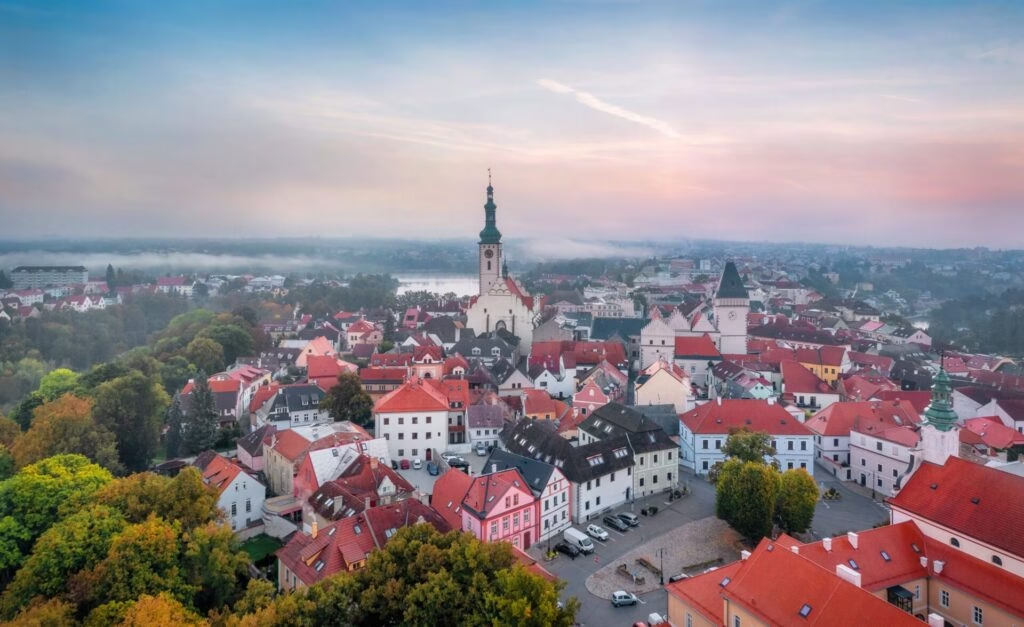
The Jižní expres reaches Tábor in exactly one hour. The historic centre is about 15 minutes’ walk from the station, and it absolutely rewards taking your time — wandering without a plan is half the point. Tábor is the only Czech city whose winding centre was deliberately designed during the Hussite Wars as a defensive trap. The Hussites were Czech religious reformers who pre-dated the European Reformation by a century — and in the 1420s they founded Tábor as their own fortified city.
The streets intentionally twist and dead-end to disorient any attacker — and they work just as effectively on tourists with phones in hand. Beneath this labyrinth runs a network of medieval underground passages that townspeople dug as storage cellars over the centuries.
Key stops:
- Žižka Square with the Old Town Hall – inside you’ll find the Hussites exhibition, a Gothic hall and the entrance to the medieval underground.
- Kotnov Tower and Bechyně Gate – the viewpoint stands 25 metres high, reached by 155 steps.
- City walls and defensive bastions – Tábor has retained a larger section of its original fortifications than most Czech towns.
- The former Augustinian monastery.
- Jordán reservoir – the oldest valley reservoir in Central Europe, created in 1492 by damming a stream. It covers around 50 hectares and reaches 14 metres deep. Swimming is popular here in summer.
Tip: Always check opening hours by month — Tábor changes its schedule three times a year.
We also recommend the walk out to the Klokoty pilgrimage site and onward along the green trail to the U Harrachovky bridge, then back into town along the river. The whole loop takes a comfortable three hours at an easy pace.
Where to get coffee in Tábor:
- Obývák coffee & cocktail bar – café and cocktail bar just off Žižka Square
- Kávová Zastávka – café a few minutes from the centre
- Café Svět – café just outside the historic core
Where to eat in Tábor:
- Výkvět bistro – bistro right on Žižka Square
- Bistro Pražská – bistro a few steps from the centre
- Mercado de Mexico – Mexican food just off the square
- RAFARIZ noodle house – Asian noodles near the centre
- MACE restaurant – restaurant about ten minutes’ walk from the centre
- MY Bistro – bistro further out, about fifteen minutes on foot
6. Litoměřice – Vineyards, Cathedral Hill and the Bohemian Central Highlands
Litoměřice is the only destination on our list with no direct train. You always change — either at Lovosice from the Labe express onto a local train to Litoměřice horní nádraží, or at Všetaty with arrival at Litoměřice město. Total journey time is around 85 minutes.
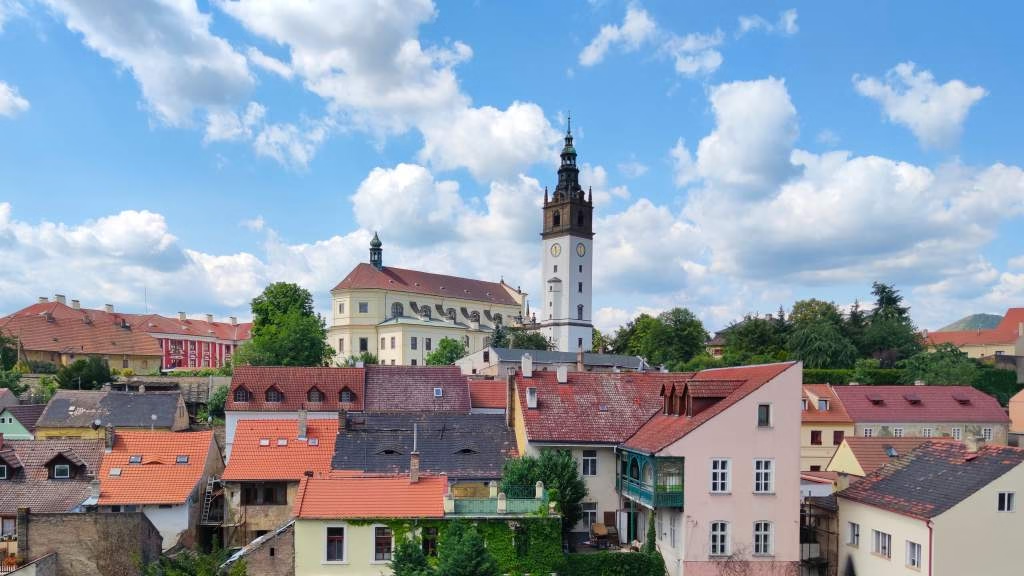
The reward is a town that looks nothing like the rest of Bohemia. It sits in the Bohemian Central Highlands at the confluence of the Elbe and Ohře rivers, surrounded by vineyards, with Cathedral Hill rising above the centre — a roughly six-hectare promontory where a Přemyslid stronghold has been recorded in writing since 1096.
What not to miss:
- The Chalice House (Dům Kalich) on the main square – impossible to overlook, with its chalice on the roof. It was commissioned by the Mráz of Milešovka family, the wealthiest people in the city during the 16th century.
- St Stephen’s Cathedral viewing tower – the tower stands 65 metres tall, has been open to the public since 2010, and takes around 200 steps to climb. Views stretch to the hills of Radobýl, Lovoš, Hazmburk Castle and Mount Říp.
- Karel Hynek Mácha’s memorial room – Czechia’s greatest Romantic poet, roughly the equivalent of Byron or Pushkin, died here in 1836 at just twenty-five. The house stands directly opposite the cathedral.
- Litoměřice Underground – a network of cellars and passages dug by townspeople from the 13th and 14th centuries onwards; among the most extensive in Bohemia.
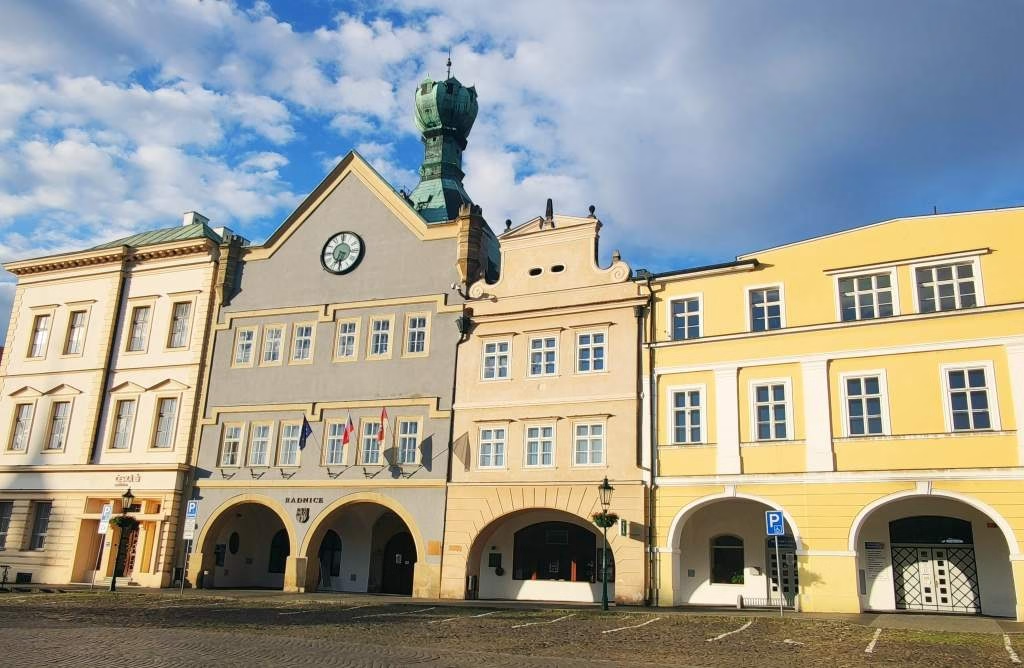
Litoměřice can be combined with a visit to Terezín, just a few kilometres across the Elbe — but bear in mind that the Terezín Memorial alone demands half a day, and its dark history gives it a very different atmosphere. For many visitors, combining the two in a single day may be too much.
We have a full set of tips — including wineries — in our dedicated guide. Take a look at what to see in Litoměřice.
Where to get coffee in Litoměřice:
- kafe doma – café right on Mírové náměstí (Peace Square)
- Kávovna Litoměřice – café a few steps from the square
- fair coffee – café close to the centre
- Coffee with steam – café close to the centre
- Kavárna Hlína – café about five minutes from the square
Where to eat in Litoměřice:
- Mercato 33 – Italian cooking just off the square
- Bistro Rezavá – bistro a few minutes from the centre
- NO.1 – authentic Vietnamese restaurant near the square
Find accommodation in Litoměřice
7. Hradec Králové – the Salon of the Republic and a Confluence of Two Rivers
Hradec Králové is the furthest destination on our list — the Krakonoš express takes 1 hour 36 minutes, but it runs without any change and at a very reasonable price. The same train also stops at Poděbrady, so you could combine both destinations on a single trip.
Hradec Králové is architecturally the most interesting city in this selection — and most visitors don’t know it. It earned the nickname “Salon of the Republic” because of what happened here in the first half of the 20th century: architect Josef Gočár drew up a master urban plan in 1926–1928 at the request of Mayor František Ulrich, shaping the city’s face for decades to come. Before him, his mentor Jan Kotěra had already been building here. Walking through Hradec Králové means walking through what is essentially one coherent urban project — not a random accumulation of buildings.
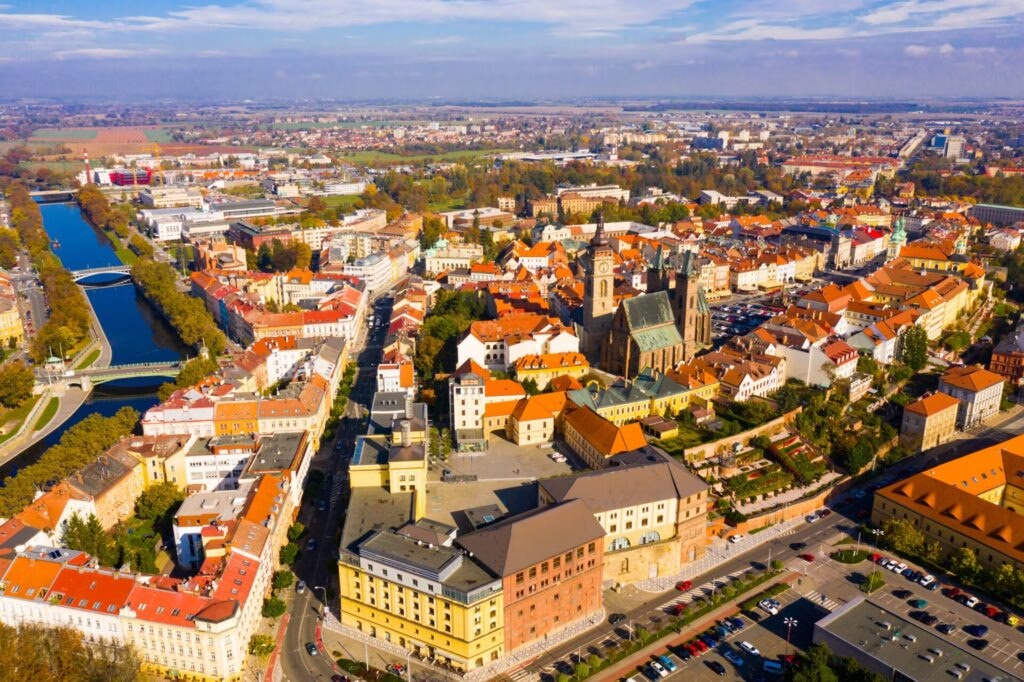
A solid day’s itinerary:
- Velké náměstí (Great Square) with Holy Spirit Cathedral – the Gothic heart of the city on a hilltop, which survived every later rebuilding.
- White Tower – 72 metres, 226 steps and the best panoramic view of the city and surrounding plains.
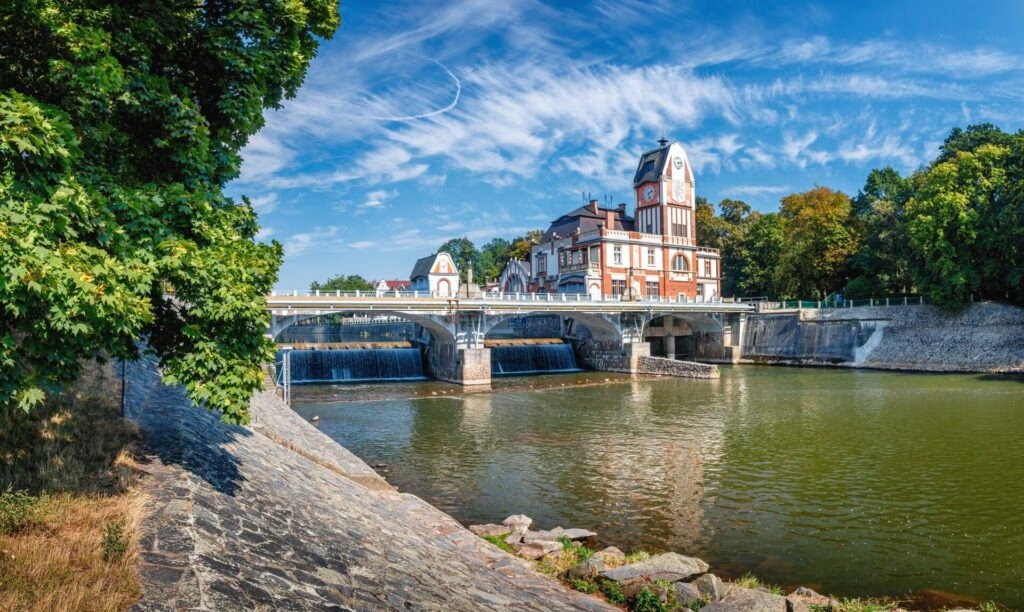
- Museum of East Bohemia – Kotěra’s riverside building, which is worth admiring from the outside alone.
- Confluence of the Elbe and Orlice rivers – a riverside walk along two rivers is the best way to enjoy Hradec Králové at a relaxed pace.
The main station is further from the centre here than in the other cities — allow 20 minutes on foot, or take a trolleybus.
Where to get coffee in Hradec Králové:
- Cona coffee – café right on Great Square
- Fika Espresso Bar – espresso bar a few steps from the square
- CHROAST Espresso Bar „Kopeček” – espresso bar close to the centre
- Café Na kole – café just off Great Square
- Simple Café – café a few minutes from the centre
- Rodinná kavárna Baví mě to – family café about a kilometre from the centre; a good option with children
Where to eat in Hradec Králové:
- CUPBAB Korean Bistro – Korean bistro right on Great Square
- Pasta Cook&Look – fresh pasta close to the square
- Šatlava – restaurant in the historic centre
- Restaurace U Koně – restaurant a few steps from Great Square
- Kasumi Asian Fusion Restaurant – Asian fusion close to the centre
- Ca Phe District HK – Vietnamese food a few minutes from the centre
Browse accommodation in Hradec Králové
Quick Reference: Journey Times and Ticket Prices (2026)
Times apply to morning departures from Prague main station on a standard weekday; prices are for non-flexible tickets in second class with Czech Railways. The exact price shifts depending on how far in advance you book.
| City | Journey time | Change required | Price from |
|---|---|---|---|
| Kutná Hora | 51 min to main station, 1:09 to centre | Yes (to centre) | ~€7 |
| Plzeň | 1:23 | No | ~€6 |
| Poděbrady | 46 min | No | ~€5 |
| Pardubice | 57 min – 1:01 | No | ~€8 |
| Tábor | 1:00 | No | ~€6 |
| Litoměřice | 1:25 | Yes | ~€4 |
| Hradec Králové | 1:36 | No | ~€5.50 |
Czech Trains: What You Need to Know Before You Go
Travelling by train in Czechia is simpler than most visitors expect. All major routes are served by clean, modern, air-conditioned trains, usually running on a regular hourly schedule — so you don’t need to plan your whole day around a single connection. A few things are worth knowing in advance, though.
More than one operator runs on some routes. This mainly applies to the Prague–Pardubice corridor, and soon to Prague–Plzeň and Prague–Kutná Hora; on the rest of the network a single operator is likely to remain for some time. Each operator sells its own tickets, valid only on its own trains. There is a universal One Ticket valid across operators, but it tends to be significantly more expensive than buying direct — if you don’t need to cross between operators, there’s no reason to use it.
Buy tickets online through the operator’s website or app. On board you simply show a QR code and ID — no printed tickets, no station ticket machines needed. The app is also your fastest source of delay updates; station announcements tend to be less accurate and less timely.
Don’t expect English from all staff. International trains are fine, but on domestic services it’s not guaranteed. In any disruption, rely on the app and the operator’s website — and don’t hesitate to ask fellow passengers. Younger Czechs typically speak English well and are happy to help.
Book a seat reservation. On the Prague–Pardubice route some trains require one; on other routes it’s strongly recommended regardless. When buying online or via app, all operators include the reservation free of charge, so there’s no excuse not to.
Delays. Under normal conditions trains run reasonably on time — expect delays of up to 10 minutes. In exceptional circumstances, most often weather or trackside incidents (roughly once a month), delays on the Prague–Pardubice corridor can stretch to an hour or more, sometimes with diversions. If that happens, ask fellow passengers — they’ll usually give you the most useful advice on what to do next.
Discounted tickets are tied to a specific service, but during disruptions it’s generally accepted to board the next available train from the same operator — no need to wait for your delayed service. Just check with the conductor when boarding; for delays over an hour, this is handled without question.
For more comfort and a quieter ride, upgrade to first class. Prices are roughly 30–50% higher, and on these distances it can be worth it. You’ll still need a seat reservation though.
How to Get the Most Out of Your Day Trip
Day trips by train have one common weak spot: the return journey. Most people don’t think about it until they’re already there, and end up either waiting needlessly at the station or rushing out of town before they’re ready. A few things that fix this:
- Check return trains as soon as you arrive. Just note two — the one you want to catch, and the backup an hour later.
- Take the first reasonable morning train. The difference between leaving at 8:00 and at 10:00 is effectively half a day — most sights close at 17:00.
- Check opening hours for your specific month, not just the general website. Most towers and underground sites run reduced hours or close completely between October and March.
- Pick a maximum of two major attractions per day. More than that usually means rushing, and the trip stops being enjoyable.
- Go on a weekday if you can. This matters most for Kutná Hora and Plzeň in peak season; in Pardubice or Hradec Králové the difference is minimal.
- Reserve a seat. Always for the Plzeň and Pardubice expresses; definitely for any train on Friday afternoon or Sunday evening. Buying online through the operator’s website or app includes the reservation in the ticket price.
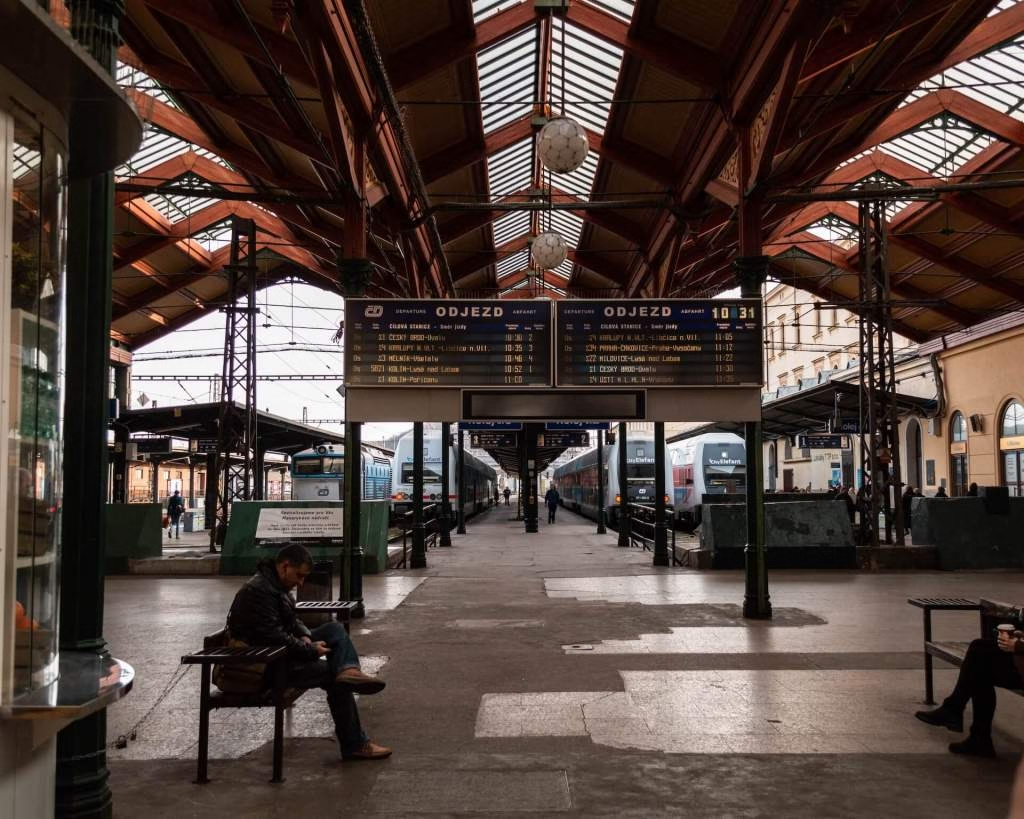
And one more thing that’s easy to overlook: the station is not the centre. In Kutná Hora it’s three kilometres away; in Hradec Králové it’s a 20-minute walk. Factor that in from the start and it won’t catch you off guard.
For anyone looking to go beyond a single day, you’ll find more inspiration in our guide on how to explore Czechia to the fullest — from weekend breaks to longer trips across the country.
Frequently Asked Questions
What is the quickest day trip from Prague by train?
Poděbrady is the closest — the Krakonoš express from Prague main station takes 46 minutes and the station sits right on the edge of the spa park. Close behind are Pardubice (57 minutes to 1 hour by express) and Tábor (exactly one hour).
How much does a train ticket cost for a day trip from Prague?
For the seven destinations in this article, non-flexible second-class tickets range from roughly €4 to €8 one-way. The cheapest is Litoměřice (from around €4); the most expensive is Pardubice (around €8).
Always buy online and ideally at least a few days in advance. Tickets can be cancelled free of charge up to 15 minutes before departure.
Which destinations require a train change?
Of our seven destinations, only Litoměřice requires a change — either at Lovosice onto a local train to Litoměřice horní nádraží, or at Všetaty with arrival at Litoměřice město. Total journey time is around 85 minutes.
For Kutná Hora, the express runs direct — but only to the main station, about three kilometres from the centre. To reach the city-centre station (Kutná Hora město) you change onto a connecting local train.
Is it better to do a day trip from Prague by train or by car?
By train, for a city day trip. Historic centres are either pedestrian zones or paid parking areas, so you’d park on the outskirts and walk anyway — and from the train station it’s usually just 10 to 20 minutes on foot. Travelling by train also means you can enjoy a beer at the Pilsner Urquell Brewery or a glass of wine in Litoměřice without any worries.
What is the best day trip from Prague by train with young children?
Poděbrady is the top pick. The journey takes 46 minutes, the station is right next to the spa park and everything in town is flat and close together — perfectly manageable with a pushchair.
Plzeň is a strong second choice thanks to the Techmania Science Center, though the journey is 1 hour 20 minutes.
Which sights are closed in winter on these day trips?
Viewing towers and underground attractions typically run reduced hours from October to March. Tábor’s Old Town Hall is only open Wednesday to Saturday during that period, and Kotnov Tower closes entirely in winter. Plzeň’s Historical Underground closes for the whole of January. Always check opening hours for your specific month before you go.