This post is also available in:


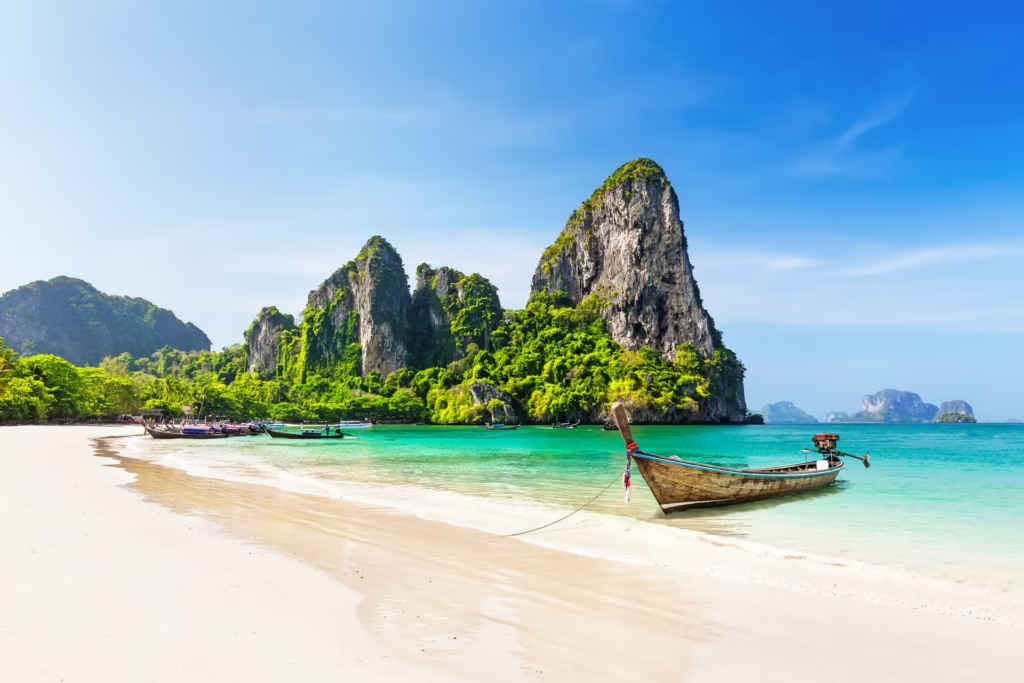
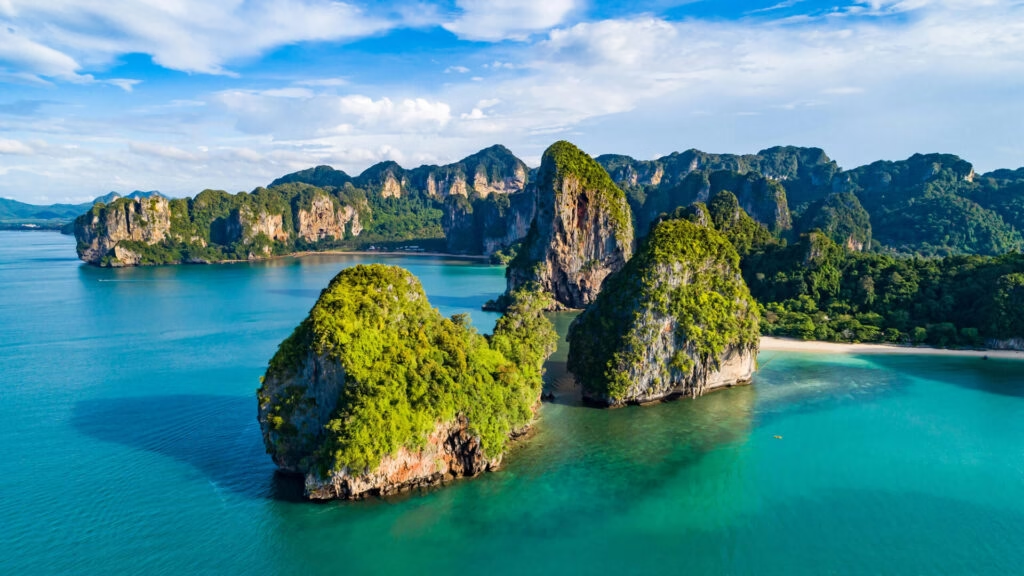
Thailand’s Krabi province is exactly the kind of destination where you can pack in white coral beaches, jaw-dropping islands, limestone cliffs, jungle, incredible food and lively evening markets — all in a single week, without ever having to change your base.
My personal favourite base has always been the mid-sized island of Ko Lanta, which is part of the province. In this guide, though, we’ll focus in detail on the “mainland” part of Krabi and the day trips you can take from there.
This article is part of a multi-part series. The guides below draw on nearly two years of experience travelling and living in Thailand.
For general practical tips covering all of Thailand, start with the first part:
For an overview of destinations in Thailand, see:
For tips on individual cities, destinations and points of interest, see the dedicated guides:
- Phuket
- Ko Samui
- Bangkok
- Chiang Mai & surroundings
- Chiang Rai & surroundings
- Pai
- Mae Hong Son
- Ayutthaya

Why Visit Krabi
Krabi sits in southern Thailand on the Andaman Sea and serves as a gateway to the islands, beaches and bays you’ve seen in iconic photos or films: Railay Beach, Koh Phi Phi, the Hong Islands and Koh Lanta.
But Krabi is definitely more than just a “jumping-off point”. It’s an entire province with national parks, caves, mangroves and surprisingly rewarding hikes — plus world-class rock climbing.
For families with children or a shorter stop on a longer Thailand trip, the town of Ao Nang makes an excellent base. It has its own decent beach and several more are just a short boat ride away. From the airport and the provincial capital of Krabi Town, you’ll reach Ao Nang in about half an hour.

Krabi, Phuket or Koh Samui — Which Should You Choose?
Choosing between Thailand’s most popular beach destinations can be tricky. Here’s a quick comparison.
| Destination | Vibe | Best for | Sea & islands | Crowds & price |
|---|---|---|---|---|
| Krabi | Nature, beaches & island day trips | Kayaking, climbing, snorkelling, island hopping | Andaman — Phi Phi, Koh Lanta, Hong Islands, Railay | Busy but escapable; mid-range prices |
| Phuket | Big, busy, mass-market | Nightlife, shopping, resorts, beach variety | Andaman — same islands, more departures | Heaviest crowds; higher prices |
| Koh Samui | Relaxed & comfortable | Families & couples after easy relaxation | Gulf of Thailand — Ko Pha Ngan, Ko Tao nearby | Moderate crowds; higher comfort & price |
Krabi
Offers the ideal mix of tropical beach relaxation, nature and island day trips. You’ll also find the widest range of outdoor activities and sports close at hand: hikes to viewpoints, kayaking through mangroves, jungle trekking, snorkelling, diving and rock climbing.

You’ll encounter plenty of tourists — especially in Ao Nang and the north of Koh Lanta — but it’s still relatively easy to escape the main crowds.
Together with Phuket, Krabi is the best base for exploring the smaller islands of the Andaman Sea.
Phuket
Bigger, busier and in many areas more mass-market. It offers more nightlife, more resorts and easier transport, but also higher prices, tourist traps and the full effects of mass tourism.
If bars, restaurants, shopping and a variety of beaches on one island are your main priorities, you’ll enjoy Phuket.

Koh Samui
An island in the Gulf of Thailand, on the opposite side from Phuket and Krabi. For me, it’s the ideal destination for families and couples who are primarily after relaxation, well-developed services and higher comfort — and are willing to pay for it.

It has a very different atmosphere from the Andaman Sea islands. Nearby options include the smaller Ko Pha Ngan and the diving favourite Ko Tao.
For a more detailed breakdown of destinations, see Where to Go in Thailand: 20+ Tips on Which Region to Choose, Best Beaches, Temples & Nature
Quick Orientation: Krabi Town, Ao Nang, Railay and the Islands
Before diving into beaches and day trips, you need to get your bearings. Krabi is a large province and transfers between islands can eat up a lot of time.
- Krabi Town
The main town near the airport and the mouth of the Krabi River. It gives you easy access to piers and transport to everything around it. There are no swimming beaches within walking distance. - Krabi Airport
Located 10 minutes from Krabi Town. By minivan, bus or taxi you can easily reach Ao Nang and Koh Lanta from here. For other destinations you’ll need to transfer to a boat. - Ao Nang
The main tourist hub by the sea. This is where you’ll most likely be based if you want to explore as many islands and attractions in the province as possible. It has the most restaurants, services and tour options, and excellent logistics. - Railay and Tonsai
Famous beaches on a peninsula not far from Krabi Town, cut off by limestone cliffs. Accessible by boat only. - Islands
The most popular day trips head to:- Hong Islands (Koh Hong, Lao Lading),
- Four Islands (Poda, Chicken, Tup/Thale Waek, sometimes Phra Nang),
- Phi Phi,
- and Koh Lanta.

Where to Stay in Krabi
Choose your accommodation carefully. It’s not just about the hotel’s quality — it’s about how easily you can reach the beaches and piers, how tired you’ll get from transfers, and where you’ll spend your evenings.
- After a mainly beach holiday? → I recommend Ko Lanta.
- Want a base for day trips? → Stay in Ao Nang or Krabi Town.
You can of course also stay on the smaller islands or on Railay Beach itself, though prices are noticeably higher there and dining and activity options are limited.
Sometimes the smartest approach is to split your stay across a few different bases and make the most of each one’s strengths.

Koh Lanta: Best for Beach Stays
Staying for more than a week? Make Koh Lanta your base. The beaches and nature here will fill most of your days, and you can still easily reach all the other islands by boat.
The north of the island, closest to the ferry port, is fairly lively and seeing more resort development.
The centre and south still have a wonderfully laid-back atmosphere, with bungalows and hippie-style beachside restaurants and bars predominating.
I’d personally also choose Koh Lanta as my base when travelling with children, especially younger ones.
Recommended accommodation:
For backpackers and solo travellers
- Hub of Joys Hostel — one of the top-rated hostels on the island. Family atmosphere, clean rooms and organised trips.
- Non La Mer Hostel — a smaller hostel near Long Beach with a modern interior and a welcoming community vibe.
Mid-range
- Lanta Casa Blanca — a stylish resort with white villas right on the beach. Excellent value for money, beautiful pool and a calm atmosphere.
- Long Beach Chalet — a popular resort on Long Beach with a tropical garden and comfortable bungalows.
- Avani Plus Koh Lanta Krabi Resort — a modern hotel with sea views, good facilities and quality service.
Luxury resorts
- Pimalai Resort & Spa — one of the most luxurious resorts on Koh Lanta. Hillside villas with ocean views, a private beach and exceptional service.
- Layana Resort & Spa — an elegant adults-only resort on Long Beach.
- Rawi Warin Resort & Spa — a large resort with multiple pools and sea views, combining comfort, nature and excellent dining.
For families with children
- Lanta Sand Resort & Spa — a family resort near Long Beach with a large pool and good facilities for children. The beach is right at the hotel.
- Coco Lanta Resort — a smaller resort on Klong Khong Beach with bungalows and a friendly atmosphere.

Ao Nang: Most Practical Base
The best place to stay if your priority is island hopping, beach trips and excursions. Each morning you jump on a boat, return in the afternoon, and spend your evenings with restaurants, massages and bars all within easy reach.
Ao Nang has the widest range of services — but it also draws the most tourists.
Downsides:
- busy, especially in high season
- higher prices
- Ao Nang Beach is more of a “town beach” than a dreamy tropical paradise
Ao Nang also works well for families — though I’d lean towards recommending it for older children, with whom you can comfortably tackle longer day trips.
Recommended accommodation:
For backpackers and solo travellers
- Slumber Party Krabi — one of the most well-known hostels in the area. Lively, with organised trips and easy socialising.
- Pop-In Hostel — a modern hostel with clean dorms and private rooms. Great value and a good location near the centre.
Mid-range
- Panan Krabi Resort — a very popular hotel in the heart of Ao Nang. Large rooms, a rooftop pool and great access to restaurants and the beach.
- Sea Seeker Krabi Resort — a modern hotel with beautiful views of the limestone cliffs. Good breakfasts and excellent value for money.
- BlueSotel Krabi Ao Nang — a stylish hotel near the beach with a pool and good facilities.
Luxury resorts
- Rayavadee — one of the most luxurious resorts in the entire Krabi area, set right at Railay Beach between limestone cliffs.
For families with children
- Holiday Inn Resort Krabi Ao Nang Beach — excellent family facilities, a kids’ club and pools. Good location near the beach.
- Centara Ao Nang Beach Resort — a modern beachfront resort with a large pool and family rooms.
- Krabi Resort — one of the few resorts right on Ao Nang Beach. Large garden, pools and plenty of space for families.

Railay and Tonsai: Iconic Atmosphere and Sunsets
Railay with its iconic cliffs, caves and sunsets is genuinely stunning — there’s no question about that.
Because there’s no road access, it also has a uniquely special atmosphere. Early morning and evening feel like a completely different world from the daytime rush, when the vast majority of visitors arrive on day trips.
Neighbouring Tonsai, in my opinion, is even better. A laid-back climbing community gathers here and will happily welcome you, even if you’re not there to climb.
Bear in mind:
- luggage has to come by boat and on foot — leave the suitcase at home,
- limited services and higher prices,
- tides can affect access to certain sections of the beach,
- getting to other parts of Krabi is less convenient from here.
Recommended accommodation:
For backpackers and solo travellers
- Chill Out Bar & Bungalows (Tonsai) — simple bungalows with a hostel-style vibe.
- Garden View Resort Tonsai — simple bungalows set in a tropical garden just a few minutes from Tonsai Beach.
- Blanco Hideout Railay — a popular hostel on the hill above Railay East with beautiful views of the limestone cliffs and jungle.
Mid-range
- Railay Phutawan Resort — a hillside resort with beautiful views of the limestone cliffs.
- Avatar Railay Resort — a stylish, modern hotel with a pool.
Luxury resorts
- Rayavadee — the iconic luxury resort nestled between Railay Beach, Phra Nang and the jungle. Villas in a tropical garden and one of the finest resorts in all of Thailand.
- Villa Macaque & Villa Languor — two stylish villas set in a tropical garden with beautiful views of the Railay limestone cliffs.
For families with children
- Railay Village Resort & Spa — spacious rooms and a calmer environment suitable for families.
- Bhu Nga Thani Resort & Spa — a comfortable resort with a large pool and good facilities.

Krabi Town: More Local, More Affordable
Stay in Krabi Town if you’re only passing through the province and want to pack in as much as possible. Or equally, if you’re more interested in active day trips and outdoor sports than lying on a beach.
The town has a pleasant atmosphere, lovely evening markets, cheaper food and good cafés. You’ll be commuting to beaches and islands from here.
I’ve used it several times as a first-night stop after flying into the province, whenever I wasn’t heading straight to Koh Lanta.
Recommended accommodation:
For backpackers and solo travellers
- Pak-Up Hostel — a modern, clean hostel with a rooftop bar and a very social atmosphere.
- Chanchalay Hip Hostel — a stylish smaller hostel in the town centre with designer rooms and a calmer feel than party hostels.
Mid-range
- The Brown Hotel — one of the most attractive boutique hotels in town. Modern design, excellent breakfasts and a great central location.
- Krabi SeaBass Hotel — a modern hotel with a pool and good facilities.
- The River Scene Hotel — a smaller hotel by the Krabi River with a calm atmosphere and pleasant views.
Upscale hotels
- River Front Krabi Hotel — a modern hotel with spacious rooms, a pool and views over the river and mangroves.
- Krabi Front Bay Resort — an elegant hotel with views of the mangroves and sea. Quiet location and excellent service.
For families with children
- Krabi SeaBass Hotel — spacious rooms, a pool and good family facilities. Great value for money.
- River Front Krabi Hotel — a quieter location and larger rooms, well suited to families with children.

Koh Phi Phi
You can stay overnight on the famous island from the film The Beach. Personally, I’d advise against it — there aren’t many options and prices are rarely in line with quality.
On the flip side — much like on Railay — staying overnight lets you experience the beaches without the crowds, just as they look in the promotional photos.
Recommended accommodation:
For backpackers and solo travellers
- Voyagers Hostel — a modern hostel with a relaxed atmosphere.
- Hangover Hostel — a smaller hostel with a friendly community feel.
Mid-range
- Phi Phi Villa Resort — a popular resort on a quieter stretch of beach with a pool and beautiful garden.
- Phi Phi The Beach Resort — a hillside resort near Long Beach with stunning sea views and a calm atmosphere.
- PP Princess Resort — a hotel right on Loh Dalum Beach with a pool and views over the bay.
Luxury resorts
- SAii Phi Phi Island Village — one of the most luxurious resorts on the island, located in the north of Phi Phi Don. Private beach, beautiful bungalows and a very peaceful atmosphere.
- OUTRIGGER Phi Phi Island Resort — a luxury eco-resort inspired by traditional Thai architecture. Tranquillity, jungle and privacy.
For families with children
- SAii Phi Phi Island Village — excellent family facilities, a large resort with a pool, activities and a quiet beach.
- Phi Phi Villa Resort — a good choice for families wanting to be closer to the centre while still in a quieter part of the island.
Koh Pu and Koh Jum
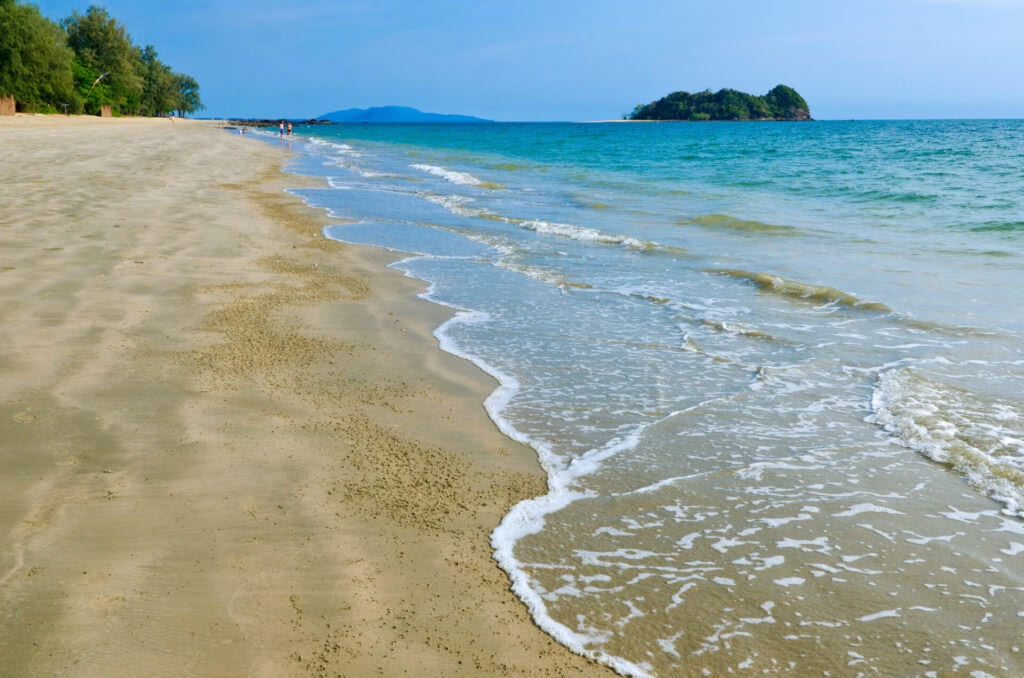
A mid-sized island roughly halfway between Koh Lanta and Krabi Town. (Yes, it’s actually a single island — the two halves just have different names.)
This is what I imagine Koh Lanta looked like 20 years ago. You’ll find a handful of sleepy beach bars, bungalows and a few wonderfully quiet (slightly upgraded) resorts.
Getting around takes more effort, but day trips to all the highlights are always easy to arrange.
Recommended accommodation:
For backpackers and solo travellers
- Friendly Koh Jum — simple beachside bungalows with a very welcoming atmosphere. Popular with backpackers looking for peace and a community feel.
- Good Morning Bungalows — a small family-run place, very informal and quiet — perfect for a few days of rest.
Mid-range
- Season Bungalow — popular beachside bungalows offering good value for money.
- Cocoa Home — a small, stylish beachside property with a few wooden bungalows and a very calm atmosphere.
Upscale accommodation
- Koh Jum Beach Villas — probably the most luxurious resort on the island. Large private villas, a beautiful garden and an extremely peaceful atmosphere.
For families with children
- Koh Jum Family Homestay — a simple family homestay on Koh Jum offering an authentic glimpse of life away from tourist resorts.
- Koh Jum Beach Villas — large villas with kitchens and plenty of space, ideal for families.

Best Time to Visit Krabi
The best season on the Andaman Sea runs through the dry months from November to March.
The chance of prolonged rain during these months is minimal, and until the end of February the heat isn’t too intense either.
April still sees relatively little rain, but the heat can be quite oppressive.
From May to October rainfall increases significantly and there can be rough seas, which seriously disrupts day trips. That doesn’t mean there’s no point visiting during these months, but you’re much more likely to have the dream tropical holiday in winter.
Of course, bear in mind that rain is possible even during the dry months.
IMPORTANT — also check the dates for Ramadan. Southern Thailand has a large Muslim population and local restaurants and some other services can be limited during Ramadan. It always lasts four weeks, but the exact dates shift each year.

Getting to Krabi and Getting Around the Province
Krabi is logistically straightforward once you know the key hubs and when it’s worth paying for convenience.
How to Get to Krabi
There are several main options for getting to Krabi, each with its own pros and cons depending on your budget, schedule and itinerary.
- Fly to Krabi (KBV) via Bangkok — the most common and fastest route. At least one flight per hour operates from both Bangkok airports (BKK and DMK).
- Direct flight to Krabi — direct flights from Europe (mostly charters) and one-stop options have been growing. Airlines including Etihad, FlyDubai and Air Arabia serve this route.
- Via Phuket — a good option if you find a cheaper flight to Phuket or want to combine both destinations. It’s about 3 hours by bus from Phuket to Krabi. Renting a car is also an option. I wouldn’t recommend taking the boat.
- Via Surat Thani — you can arrive here by boat from islands like Koh Samui, Koh Phangan or Koh Tao, or by overnight train from Bangkok. From Surat Thani, it’s roughly 3–4 hours by bus or minivan to Krabi.

Getting Around on the Mainland
Most of the time you’ll be using a minivan or a shared Songthaew pickup truck. For shorter journeys, the best option is booking a taxi via the app Grab or Bolt. I’d steer clear of street taxis — if you do use them, always agree on the price upfront (use the Grab app to gauge the going rate).
I’d similarly advise against tuk-tuks for anything other than a novelty ride. The price-to-comfort-to-speed ratio is usually the worst of any option. If you do hop in one, always agree the price before setting off and don’t be afraid to negotiate hard.
You can also rent a scooter or a car.

Shared Minivans
Book through your hotel or any of the many travel agencies. The van will pick you up at your accommodation and, in most cases, drop you back there too. You usually pay upfront at the point of booking.
Minivans are air-conditioned, generally fairly new and comfortable. Just be prepared for some spirited driving.
Shared minivan transfers from the airport — for example to Ko Lanta — can also be booked via GetYourGuide, or by contacting your accommodation directly. They can usually sort out transport without any hassle.
Songthaew Pickups
The cheapest option, especially the genuinely local services that primarily cater to residents. They run fixed routes at fixed prices — typically between 50 and 150 THB depending on distance.
Flag them down with a wave; to get off, press the button or ring the bell inside. They mainly run between Krabi Town and Ao Nang, and from the airport to various spots. The white ones run between Ao Nang and Krabi Town.

Watch out: the same type of pickup is also used for tours, and drivers may pull up beside you on the street. Always confirm the price upfront to avoid any nasty surprises. Cash only.
Scooter
The best balance of freedom and cost comes from renting a scooter. Rental starts from around 200 THB per day and there are plenty of rental shops in Ao Nang and Krabi Town.
Here are the most important points:
- Always wear a helmet, even for a short ride around the corner — accidents are unfortunately very common in Thailand.
- You need an international driving licence with a category A (motorcycle) endorsement.
- The fact that you can ride a scooter on a car licence in some countries doesn’t apply in Thailand.
- In practice you’ll likely just receive a fine from the police and be allowed to continue, but a much bigger problem can arise in the event of an accident, even if you’re not at fault.
- Most critically, your insurance provider may refuse to cover any medical costs.
- Riding a scooter is also a common exclusion in travel insurance policies, even when you have the correct licence. That’s why we always buy insurance through True Traveller or SafetyWing.
- Traffic drives on the left.
- Road rules are broadly followed, but on a scooter assume that size always wins right of way — anyone can pull out in front of you without looking, and mirrors are purely decorative.
- For several reasons, I’d recommend riding in long sleeves, trousers and closed shoes.

Boats to Beaches and Islands
Boats are a fact of life in Krabi. That goes for short hops to Railay or Phra Nang, as well as day trips and longer transfers — say, to Ko Phi Phi.
In practice, it’s worth understanding the two main types: longtail boats and speedboats. The difference isn’t just speed — it also affects price, comfort and which pier you depart from.
Speedboat vs. Longtail Boat
A longtail boat is the classic Thai wooden vessel, mainly used on short routes — typically between Ao Nang and Railay, from Krabi Town to Ko Poda, or on shorter private trips around the local beaches and islets.

Longtails are cheaper, slower and less comfortable — especially in choppy conditions. You can either charter one privately or join a shared trip.
A one-way fare from Ao Nang to Railay runs between 100–150 THB and takes about 20 minutes.
Speedboats are faster, larger and more practical for longer inter-island crossings. You’d typically use one to travel from Krabi to Phi Phi if you want to save time and prefer comfort over the traditional Thai experience. By speedboat the journey takes under an hour; by longtail, two hours or more. Speedboat tickets start at around 800 THB per person; longtail boats work out roughly half that on a shared fare.

On some busy routes larger, slower ferries also operate. Diving trips and various excursions use a range of smaller, modern vessels too.
Where to Book Boats
There’s no single rule for booking boats in Krabi. Some things you buy on the spot minutes before departure; others are better reserved a day in advance.
For short public longtail services to Railay, you generally don’t need to book ahead. Tickets are bought on the spot at an improvised counter or booth, and the boat departs once it’s full.
For trips to Phi Phi, other more distant islands, and full-day excursions, it makes sense to book at least a day in advance, especially in high season. You can do this through your accommodation, a local agency, directly at the pier, or via GetYourGuide and comparison sites like 12Go Asia.
When you book ahead through an agency or GetYourGuide, they’ll usually pick you up from your accommodation before departure and drop you back afterwards.

Where the Boats Depart From
One of the most common misconceptions in Krabi is that “boats just leave from Krabi”. In reality, it depends a lot on exactly where you’re starting from, where you’re headed and which type of boat you’re taking.
For Railay and Phra Nang, most boats leave from Ao Nang Beach or from Ao Nam Mao. Ao Nang is the most common choice, but Ao Nam Mao can be more practical if you have bulky luggage or the weather is poor.
Longtail boats generally depart straight from the beach — no pier needed.
Speedboats and all larger vessels, however, do need a pier or jetty. For example, ferries to Phi Phi depart from Sai Thai Klong Jilad Pier in Krabi Town or from Saladan Pier on the northern tip of Koh Lanta.
Getting to Koh Lanta
Lanta is a bit of a special case. It is technically an island, but from the airport, Krabi Town or Ao Nang you’ll most likely make the whole journey by minivan.
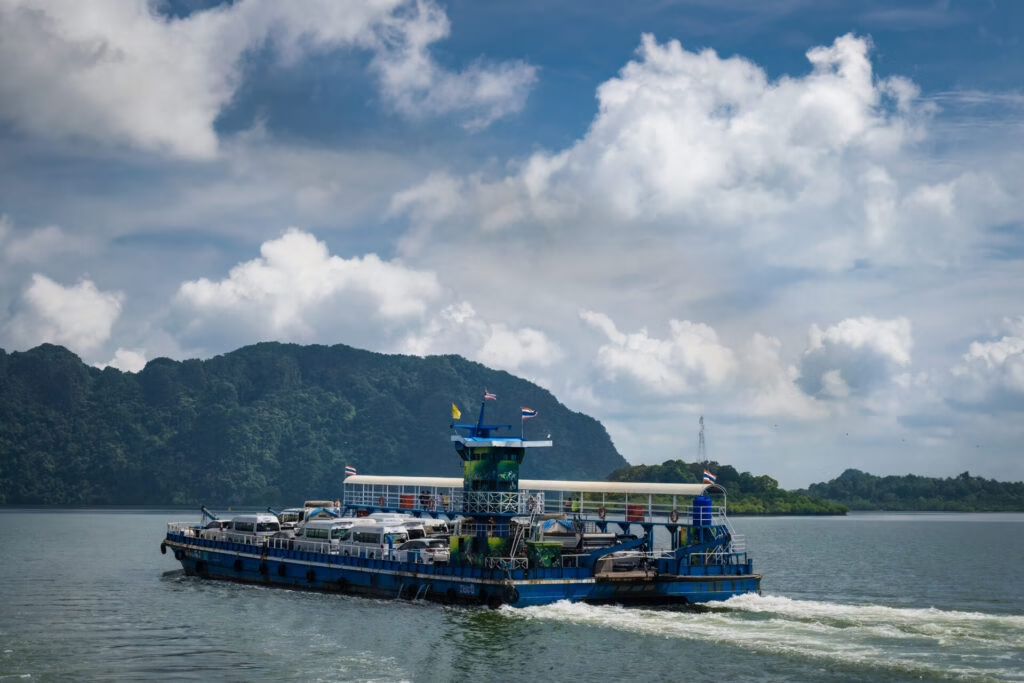
Only a narrow strait separates it from the mainland, so the crossing takes just a few minutes on a ferry — with the minivan on board. The crossing between the island’s northern and southern halves, which once also required a ferry, is now served by a bridge.
As mentioned above — shared minivan transfers to or from Ko Lanta can be booked online via GetYourGuide, via 12Go Asia, through your accommodation, at a travel agency, or on arrival at the airport in the arrivals hall. Look for the Shuttle Bus sign — but note that in high season it can sell out for that day, which will push the price up considerably.
The standard price should be 400 THB per person one way, including door-to-door drop-off at your accommodation.
Things to Do in Krabi: Beaches, Islands & More
We’ll start with the beaches and islands, then move on to temples, snorkelling, diving and excursions.
For simplicity, I’ll assume you’re based in Ao Nang or Krabi Town.

Railay Beach
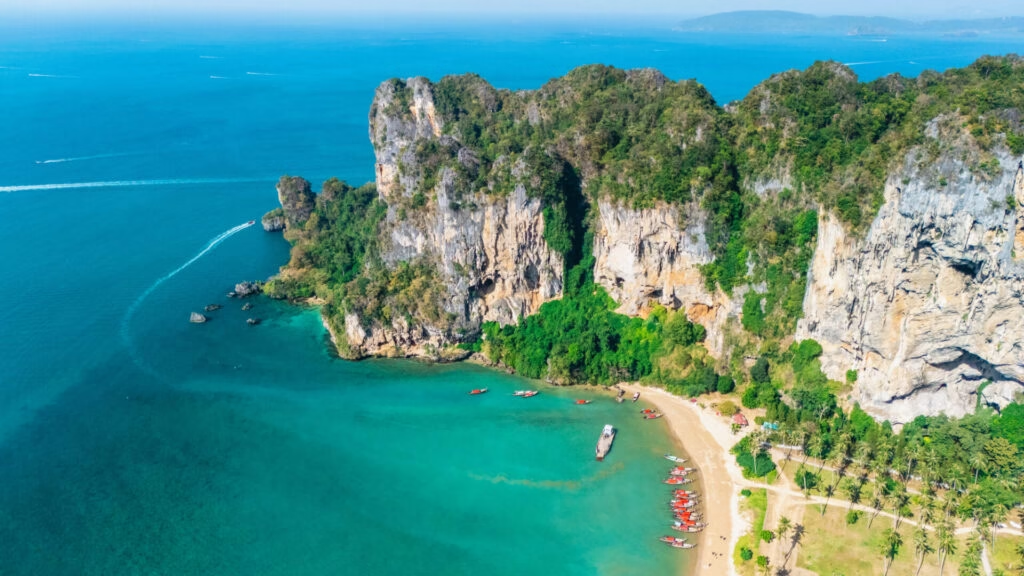
Railay and its surrounding iconic cliffs put Krabi on the map, and it would be a shame not to make the trip to this cut-off peninsula for at least a day. Expect limestone cliffs, turquoise water, white sand, a cave and the atmosphere of a tropical paradise at the edge of the world.
The most beautiful light comes in the late afternoon — though that’s also when you’ll find the most people. If you want more space to yourself, try arriving early in the morning or consider staying overnight on Railay.
For orientation: the main beach is sometimes referred to as Railay West. On the other side of the peninsula you’ll find the inlet of Railay East, which serves as the boat dock — the sandy beach there is small. The two sides are a few minutes’ walk apart, with restaurants, small shops and bars along the way.

A short scramble over the rocks leads to Phra Nang Beach at the very tip of the peninsula. Along the way one path takes you up to a viewpoint; another leads to a cave and a sinkhole with a blue lagoon.
At the northern end of Railay East you can also explore the karst Phra Nang Nai Cave.
The hikes to viewpoints and into the caves are well worth it — just be aware they can be quite demanding at times. Definitely bring sturdy shoes and plenty of water.
Tonsai Beach
Tonsai is famous mainly for its climbing. You’ll find it right next to Railay West — it’s more relaxed, quieter, and in my opinion at least as beautiful. A visit can easily be combined with Railay Beach.
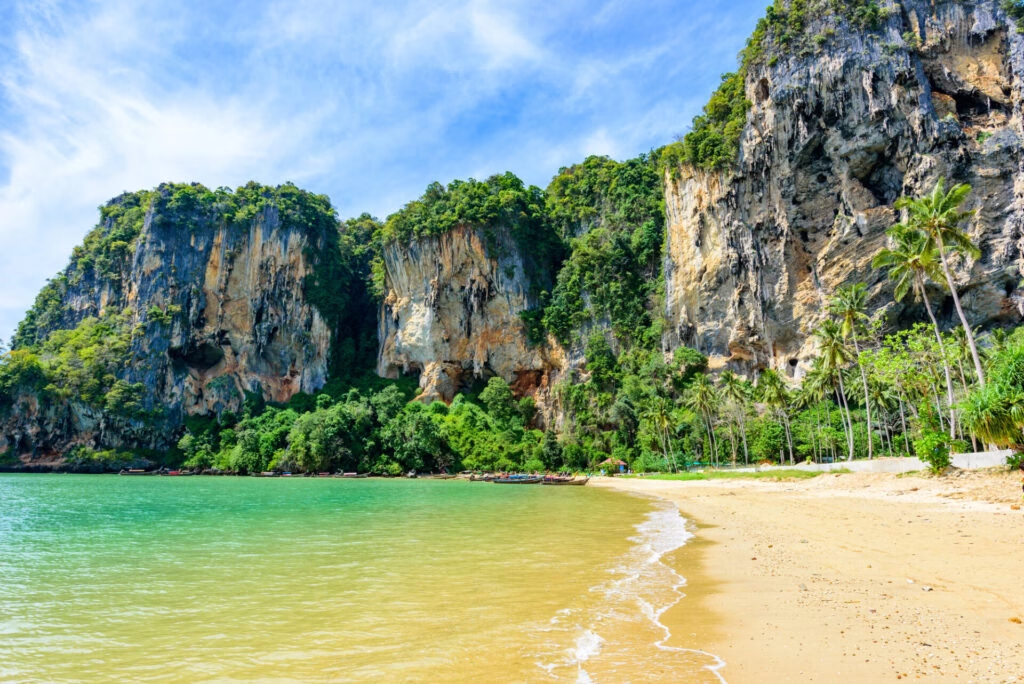
Just watch the tides — at low tide you can easily walk along the water’s edge to get here, but at high tide the route, particularly with children, becomes trickier as the path narrows to a ledge along the rock face.
You can also sign up for a climbing school on Tonsai. If you already have some experience and enjoy climbing, this spot might turn out to be the highlight of your entire Krabi trip — the kind of place you won’t want to leave.
Mainland Beaches
Ao Nang Beach
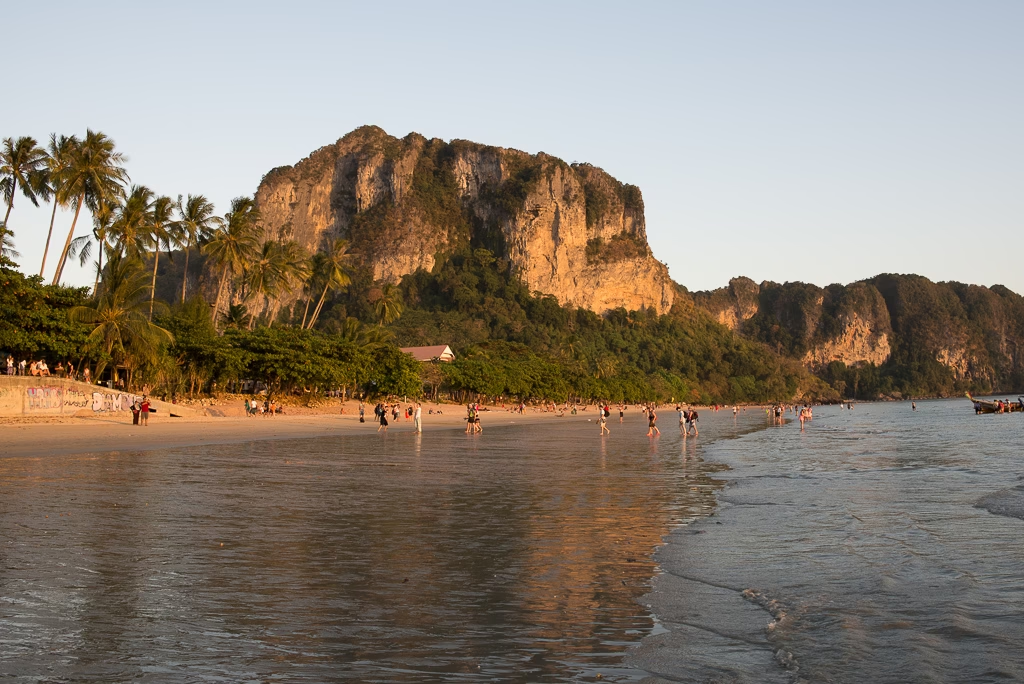
Ao Nang Beach may not be among the most beautiful in the area, but it’s right on your doorstep with no boat ride required. It opens up lovely views of the cliffs and islands, the swimming is perfectly fine at high tide and there’s a great choice of restaurants and some decent bars right along the shore.
Nopparat Thara Beach
The second beach in Ao Nang, with less sand. Perfect for a stroll or watching the sunset — you probably won’t want to spend a full day here, though.
Pai Plong Beach
A small beach you can reach on foot through the jungle from the eastern end of Ao Nang Beach. Follow the signs for the Monkey Trail.
Klong Muang Beach
A pleasant and usually quiet beach, about 15 minutes from Ao Nang by Songthaew or taxi. You’ll find scattered beach bars and a few restaurants here.

Island Hopping: Best Islands and How to Plan Your Trip
| Island | Vibe | Best for | Day trip or stay? | From Ao Nang |
|---|---|---|---|---|
| Railay | Iconic cliffs, climbing | Scenery, an easy half-day | Either | ~20 min longtail |
| Hong Islands | Lagoon & limestone karsts | Snorkelling, photos | Day trip | ~40 min |
| Four Islands | Sandbar hopping | First-timers & families | Day trip | ~30–45 min |
| Ko Phi Phi | Famous & busy | Maya Bay, nightlife | Day trip or overnight | ~45 min speedboat |
| Koh Lanta | Laid-back, long beaches | Relaxing, a diving base | Stay | ~2 hr minivan + ferry |
Island hopping is one of the activities you absolutely shouldn’t miss in Krabi. Every islet has its own unique atmosphere and scenery.
You can combine a boat trip with swimming, snorkelling or sea kayaking between the cliffs.
One important reminder: tropical sun is far stronger than you’d expect. On island trips, where a sea breeze keeps you feeling cool, it’s easy to forget. Drink plenty of water, apply a high-SPF sunscreen and get into the shade whenever you can.
Be even more careful about sun protection with children.
Four Islands
Probably the most popular day trip, largely because of the short distances involved:
- Chicken Island
- Poda Island
- Koh Mor
- sometimes Tup/Thale Waek (a sandbar that appears depending on the tide)

Trips run as half-day or full-day, most often by traditional longtail boat. It’s also one of the best excursions to combine with snorkelling.
You can easily book the trip on GetYourGuide.

Koh Hong and Lao Lading
The Hong Islands — a bit further to the northwest of Krabi — are considered by many to be the most beautiful spot in the entire province. You’ll find crystal-clear water, photogenic limestone cliffs rising from the sea, a lagoon and excellent snorkelling.
I’d recommend setting off as early in the morning as possible — later in the day Koh Hong gets fairly crowded, including speedboats coming in from Phuket.

Koh Phi Phi
The iconic archipelago roughly halfway between Koh Lanta and Phuket. I haven’t personally been to Phi Phi and, frankly, I don’t feel a strong pull to go. The place has become a tourist circus and doesn’t really offer anything that other spots in the Andaman Sea don’t already do better.

If you do go, I’d suggest paying the extra for a speedboat and either leaving very early in the morning or staying as late into the evening as possible. The longtail boat crossing takes over two hours each way and can be pretty gruelling.
Koh Lanta
Koh Lanta, as the largest island, is well worth not skipping. As I mentioned in the introduction, ideally plan to spend a few days here and enjoy the island’s relaxed beach vibe.
Around Koh Lanta you’ll also see iconic limestone cliffs, though most aren’t quite as photogenic as those at Railay or Koh Hong. What draws people most is the long, beautiful beach with unforgettable sunsets, excellent food and laid-back bars.

The further south you go on the island, the quieter (and cheaper) it gets. The small beaches in the southern part are still essentially empty.

There’s also a national park with jungle, rock formations, a small waterfall and a lighthouse with sweeping views.

Snorkelling and Diving in Krabi
You can spot a few fish and starfish right from the beach in Ao Nang. But for the best of it, you’ll definitely want to take a boat out — the islets and reefs of the Andaman Sea are still among the world’s top snorkelling destinations, even if the gradual bleaching of coral and decline in fish numbers is hard to ignore.

The best snorkelling is usually around Koh Hong, though with a bit of luck you’ll find great spots on a Four Islands trip too.
Good snorkelling can also be found around Koh Phi Phi.
From Koh Lanta in particular, trips go further afield to the well-regarded Koh Rok, and also to Koh Haa or the more distant Koh Lipe.

Diving
If you’re already certified, or want to get certified, it’s absolutely possible in Krabi. The best options are in Koh Lanta and Ao Nang. On Koh Lanta you can even find instruction in English.
Choose a dive centre carefully — read reviews from experienced divers, not just first-timers.
Nature Inland
When you’ve had your fill of sea and sand, head inland into the jungle — for a hike, a cave, or a kayak through the mangroves and limestone formations.
Emerald Pool (Sa Morakot)
The Emerald Pool is a natural forest pond with strikingly blue water deep in the jungle. In the surrounding area you can also visit other ponds and springs, such as the Crystal Pool. Expect a fair number of fellow visitors, but the trip is worth it regardless.

Allow at least half a day — ideally a full day — for the pools. The drive from Ao Nang takes at least an hour.
On the way you might also stop at the small waterfall Khong Thom Nuea, fed by hot thermal water, or at the Roi Chan Phan Wang waterfalls where you can swim.
A short detour also leads to the Khlong Thom hot springs.
Khao Ngon Nak Viewpoint (Dragon’s Crest)
A 3.7 km jungle trail leading to one of the best viewpoints near Ao Nang. You’ll almost certainly work up a sweat in the heat and humidity, but the view makes every step worthwhile.
I’d strongly recommend setting off early in the morning — it gets very hot during the day and you definitely don’t want to be in the jungle after dark. Bring plenty of water, sunscreen and insect repellent.
Khao Phanom Bencha National Park
Waterfalls, proper jungle and usually very few other people. From Ao Nang it’s roughly 40 minutes away, and half a day is more than enough for a visit.
Mangroves, Caves and Hidden Gems
Kayaking through dense mangrove forests and limestone rock formations is, for me, one of the best experiences Krabi has to offer.
The karst landscape also means plenty of small and large caves — it would be a shame to miss at least one. Forget the polished safety standards and lighting you’d find in European show caves; in Thailand you explore with a headtorch or a gas lantern.

Ao Luek
Ao Luek is an entire district north of Ao Nang. It’s quieter and greener, and alongside jungle walks it’s home to the most caves and arguably the best kayaking in the province.
I’d recommend combining it all into a relaxed day trip — you’ll find great options at travel agencies or on GetYourGuide.

Temples
Thailand has far more spectacular and ancient temples than those in Krabi, but there are two here you shouldn’t skip.
Tiger Cave Temple (Wat Tham Suea)
Tiger Cave Temple, near Krabi Town, is a must for anyone who can manage a few hundred steps. At the top, alongside a large golden Buddha statue, you’re rewarded with stunning panoramic views.

Wat Kaew Korawaram in Krabi Town
A smaller, easily accessible white temple right in the town centre. Ideal as a quick stop before visiting the night market.

Krabi Town After Dark: Night Market, Food and Massages
An evening in Krabi Town is, for me, one of the best “resets” after a few days in Ao Nang.
Night Market: What to Try and How to Pick a Stall
Thai markets are brilliant, but a simple filter helps:
- look for stalls with a fast turnover where locals are eating
- prefer stalls where food is cooked to order and ingredients aren’t sitting out in the heat
- when in doubt, go for something freshly grilled or fried
Taste things in small portions. It’s the best way to have a varied evening and avoid undoing yourself with the very first dish.
Local Food in the South: Heat and Seafood
Southern Thai food tends to be spicier. If you want less chilli, two simple phrases will help:
- “Mai phet” = not spicy
- or “Phet nit noi” = just a little spicy
Seafood can be outstanding, but the same rule applies: freshness shows in the turnover of a stall and how carefully vendors handle ice and hygiene.

Where to Go Next
For general practical tips covering all of Thailand, start with:
For practical tips on northern Thailand, see:
For tips on individual cities, destinations and points of interest, see the dedicated guides:
- Phuket
- Ko Samui
- Bangkok
- Chiang Mai & surroundings
- Chiang Rai & surroundings
- Pai
- Mae Hong Son
- Ayutthaya
- Doi Mae Salong
- Scenic Motorcycle Routes in Northern Thailand
FAQ: Krabi & Ao Nang — Frequently Asked Questions
How many days do you need in Krabi?
Three days is the minimum, but 5–7 days gives you the best balance of experiences and relaxation. If you want to add Koh Lanta or Phi Phi without rushing, 7–12 days is ideal.
Is it better to stay in Ao Nang or on Railay?
For a first visit, Ao Nang usually wins on logistics for day trips. Railay is great if you want iconic beaches in the morning and evening and don’t mind taking a boat everywhere else. Also consider Koh Lanta as your base.
Can you get around Krabi without a scooter?
Yes. Ao Nang and Krabi Town both have plenty of transfer options, organised tours and taxis. A scooter adds freedom but isn’t essential.
How early should I head out to the islands to avoid the crowds?
The earlier the better. In practice, aim to be ready to set off before sunrise.
Longtail or speedboat?
For shorter trips around Ao Nang, a longtail boat is often perfectly fine and more authentic. For longer distances (Phi Phi), a speedboat makes more sense.
Where is the best snorkelling in Krabi?
On the islands, not at Ao Nang Beach. You’ll snorkel well at the Hong Islands and around Poda/Chicken Island, but the truly best spots are a bit further afield — at Koh Rok and Koh Haa.
Is a day trip to Phi Phi from Krabi worth it?
It’s worth it if you accept it’ll be a very touristy experience and you’re willing to leave early. If you’re after peace and quiet beaches, Phi Phi will disappoint.
When is the best time to do Dragon’s Crest (Khao Ngon Nak)?
Early morning. Both for the heat and humidity, and for the views. After rain, expect slippery terrain.
Is Krabi good for families with children?
Yes, especially if you keep the pace relaxed, use Nopparat Thara Beach for evenings, and choose boat trips based on duration and sea conditions. Koh Lanta is also excellent for families.
How do you avoid overpriced tours?
Compare what’s included (fees, equipment, transfers), ask for a clear itinerary and don’t be afraid to ask questions. You can check standard prices in advance on GetYourGuide.
Who is Krabi ideal for?
Krabi is ideal for solo travellers and couples looking for something less mass-market than Phuket and more outdoor-focused than Koh Samui.
What’s the difference between Krabi, Phuket and Koh Samui?
Phuket is more developed and more touristy. Koh Samui leans towards quieter beaches and resort comfort. Krabi combines beautiful beaches, limestone cliffs and islands with a strong offering of outdoor activities — making it the better choice for more independent travellers seeking authentic experiences off the beaten track.
When is the best time to visit Krabi in terms of weather and crowds?
The best time to visit Krabi is during the dry season, when the sea is calm, snorkelling visibility is high and rain is rare. High season runs from November to March; personally I’d recommend December to February.
What’s the best way to get to Krabi and get around?
Flights are easiest, whether via Bangkok or direct. On the mainland, Songthaews, shared minivans, taxis and scooters all get the job done. Islands are easily reached by boat.
Where should you stay in Krabi based on your travel style?
Ao Nang is the most practical base with the widest range of restaurants and services — good for active travellers and families, though it can be busy. Railay/Tonsai suits climbers and lovers of iconic beaches, though logistics with luggage can be tricky as access is by boat only. Krabi Town offers a more local atmosphere, night markets and cheaper accommodation. For a longer stay, I’d most recommend Koh Lanta.
How should you plan your daily routine in Krabi for the best experience?
Start early to hit iconic spots — beaches and viewpoints — before the crowds. Spend afternoons exploring caves or mangrove forests, and finish evenings at local markets and with a traditional massage. This rhythm helps you avoid the busiest times and get the most out of every day.
Krabi or Phuket — which is better?
It depends on your trip. Choose Krabi for nature, dramatic limestone scenery and island day trips with smaller crowds; choose Phuket for nightlife, shopping, resorts and the easiest transport. Both sit on the Andaman Sea and reach the same islands, so many travellers base in Krabi and still visit Phi Phi.
Is Maya Bay open, and can you swim there?
Yes — Maya Bay on Ko Phi Phi reopened after its conservation closure, but with rules to protect the recovering reef: there is a national-park entry fee, boats dock at the back of the island rather than on the beach itself, and swimming in the bay is restricted. Go as early as possible, as it fills up by mid-morning.
Which is the best island in Krabi?
For scenery and an easy visit, Railay is hard to beat; for snorkelling and photogenic lagoons, head to the Hong Islands; and if you want to actually stay on an island rather than day-trip one, Koh Lanta is the most relaxed choice in the province.
How do you get from Krabi to Phi Phi?
Ferries and speedboats run from Krabi Town (Klong Jirad pier) and Ao Nang. A speedboat takes well under an hour from around 800 THB; the cheaper ferry takes roughly two hours. If you go, pay for the speedboat and travel at the very start or end of the day to beat the crowds.