This post is also available in:


The mountains of northern Thailand are an absolute paradise for motorcycle road trips. Whether you’re chasing the pure joy of riding, soaking up a new culture, hunting down ancient temples, eating incredible food, meeting fascinating people, or pushing yourself to your limits — this region delivers it all.
This guide includes full info about the famous Mae Hong Son Loop, maps for all routes and many practical tips.

I’ve spent almost 2 years in Thailand in total, the majority of it in the north. On a motorcycle, I’ve covered more than 20,000 kilometres here — from motorways to deserted twisty roads with pristine tarmac, all the way to muddy jungle tracks.
This article is aimed primarily at experienced riders, but you’ll find the tips just as useful if you’ve only recently discovered the freedom of two wheels on a scooter for the first time.

This article is part of a multi-part series.
For general practical tips, see the first part: Northern Thailand Travel Guide – transport, accommodation, food and more
For tips on specific cities, destinations and highlights, see the individual destination guides.
When to Go Riding in Northern Thailand
The ideal time to explore northern Thailand by motorcycle is between November and mid-March.
From late March through June, temperatures can soar above 40°C and the rains begin to set in. July to October brings slightly cooler temperatures, but it still rains heavily.
You’ll be rewarded with lush green scenery, but expect wet roads — and on smaller routes, a real risk of landslides or flooded sections.
Where to Rent a Motorcycle
Chiang Mai, the hub of the region, has dozens of rental shops offering everything from scooters to serious big bikes. Many of them don’t take great care of their fleet, though, so choose a rental run by enthusiastic riders who maintain their bikes as if they ride them themselves.
Every rental will ask you to leave your passport as a deposit, plus potentially a few thousand baht. You’ll receive a copy of your passport and visa pages — you’ll almost certainly need these on the road, and even the police will generally accept a copy. Ideally, arrange a second passport before you leave home.
Always save the rental shop’s phone number in case of trouble.
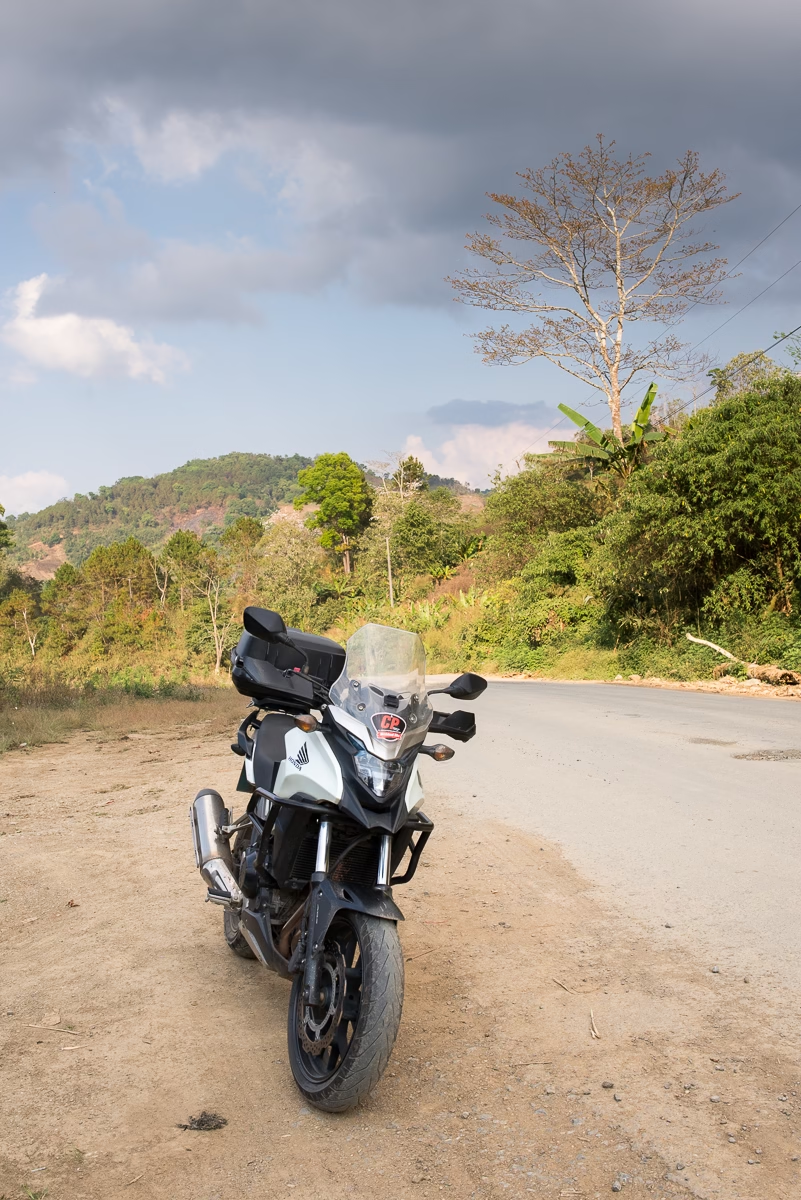
C & P Big Bike
When I did thorough research years ago and asked fellow riders in Thailand for their recommendations, everyone pointed to C & P Big Bike. Lan, the owner, is a mechanic and passionate rider, which is exactly why their bikes are always in perfect condition — and never more than a few years old.
My experiences with them have been nothing but excellent. I’ve had two tip-overs (entirely my own fault) and paid a surprisingly small amount each time — no arguing, no nitpicking over tiny scratches, nothing.
Book at least two weeks in advance; if you’re going for a longer trip or over a weekend, a month or more ahead is ideal. Peak season gets very busy — the biggest demand comes from Thai riders travelling from Bangkok and other parts of the country.
They also offer panniers, riding gear, decent helmets, sat-nav and phone mounts.
You can book via their website, by phone or through Facebook.
- Website: www.cpbigbikechiangmai.com
- Facebook: www.facebook.com/cpbigbikeRental
- Located in Chiang Mai near the Ping River, map: maps.app.goo.gl/d8t5ZnEPppa2x5Fh9
Pop Big Bike
Easily the largest big-bike rental in northern Thailand. They don’t care for their machines with quite the same passion as Lan at C & P, but you still have a solid chance of getting a fairly new, serviced motorcycle.
Advance booking is still recommended here, though last-minute availability is somewhat more likely.
- Website: www.popbigbike.com/
- Facebook: facebook.com/popbigbikerentalchiangmai
- Located on the edge of Chiang Mai’s old city, near Tha Phae Gate, map: maps.app.goo.gl/zTFV5Df9jMAK5EY99
Other Rental Shops
Some primarily scooter-focused shops do have a handful of bigger bikes. Treat these as a last resort if both shops above are fully booked. Never head out without a thorough inspection — on steep hills and technical roads, you really don’t want dodgy brakes or a dropped chain.
I’d also steer well clear of Mr. Mechanic rentals — while they do have quite a few larger bikes, many are in poor condition, and their attitude when things go wrong tends to be… problematic.
Recently, several operators have emerged that run guided motorcycle tours only and won’t rent bikes without a guide. This can be a great option if you don’t feel ready to explore independently — one of the highly recommended ones is TBB Tours.

Which Motorcycle to Choose
Most of my riding trips here have been on a Honda CB500X or CRF250/CRF300. The CB500X for longer road journeys, the CRF for slower mountain exploration — where I always find myself tempted down unpaved tracks.
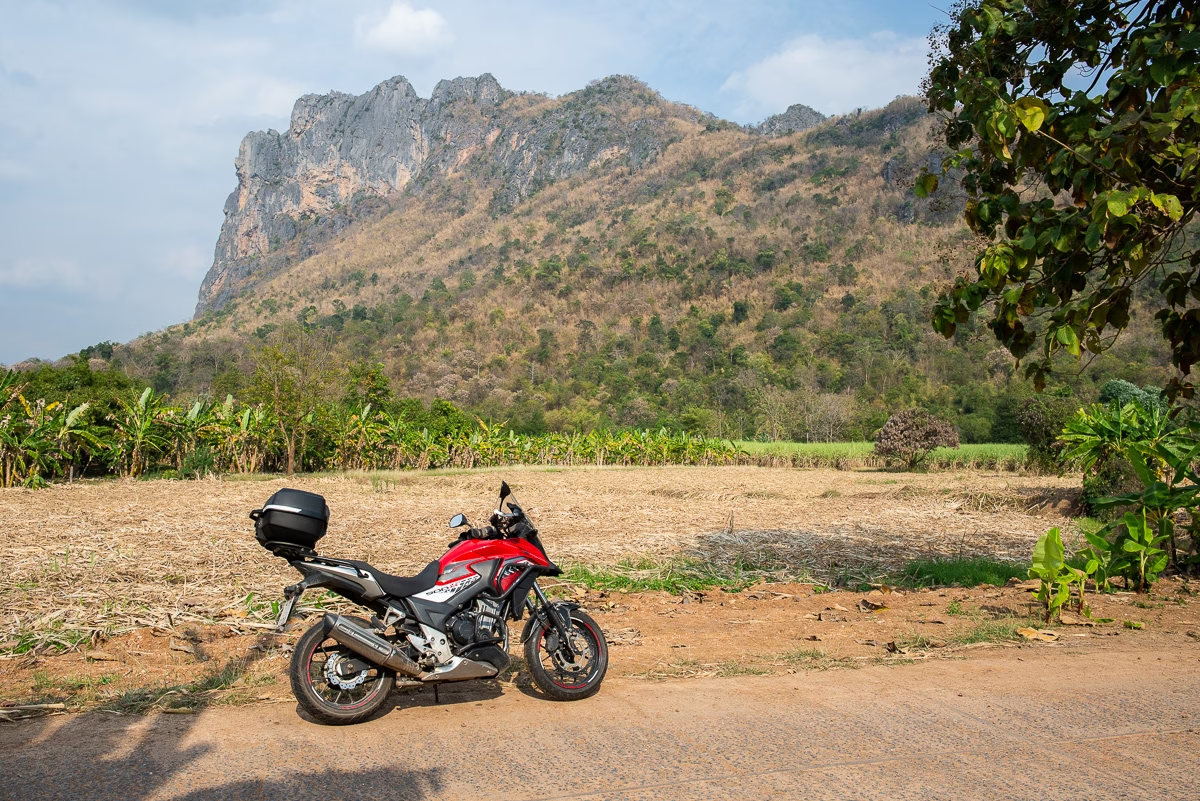
Both are manufactured in Thailand, which keeps import duties low and makes the rental price-to-performance ratio excellent.
The same applies to other bikes in a similar category — mid-size adventure motorcycles — from which you have plenty to choose:
- Honda NX 500 (essentially the CB500X’s successor)
- Kawasaki KLE500
- Kawasaki Versys 650
- Honda Transalp 750
- Triumph Tiger 900
- Suzuki V-Strom 650
For some routes you can also go for a more road-focused motorcycle — again, opting for Thailand-manufactured models to keep costs reasonable:
- Honda CB650R and CB750 Hornet
- Kawasaki Z650 and Z400
- Kawasaki Ninja 400 and 650
If you don’t mind paying roughly double, go for a full-size adventure motorcycle such as the Honda Africa Twin or BMW R 1250/1300 GS.

I strongly advise against bikes like the Honda Rebel — and especially anything chopper-style or with a long wheelbase. You’ll be dealing with endless bends, often proper switchbacks, almost everywhere. Easy cornering is essential.
You’ll need an international driving permit with a category A endorsement — even if you’re riding a small scooter. Local police and, more importantly, insurers won’t care that your licence back home automatically covers small scooters under a car licence. Your international permit is also only valid alongside the original licence it was issued with.

Motorcycle Gear
Wear a proper helmet with good ventilation, sturdy boots, breathable riding trousers, a quality textile jacket and gloves. Ideally bring your own — you won’t need much else in your luggage anyway. Rentals can lend you some gear, but the selection is limited. Clothing can sometimes be bought locally; boots and helmets are trickier to source.
For offroad riding, quality breathable gear and an offroad helmet become even more important. I learned this the hard way — riding without the right kit in the heat was genuinely miserable.
Please, never ride even a small scooter in shorts and flip-flops, as so many tourists do. You really don’t want a stone flicked up by a truck or a large insect hitting bare skin at 100 km/h — and you never know which driver is about to pull out in front of you.
A navigation app on your phone is handy, but for most routes you won’t need it constantly in front of you. You’ll often spend hours on a single road, and at junctions the signage is actually quite clear — unlike in many parts of Europe where a sign for a major city appears seemingly at random with no indication of how to actually get there.

Things to Watch Out For
They Drive on the Left
On a motorcycle this isn’t a big deal — you’ll adapt quickly. Just watch out after stops at viewpoints on quiet roads, when it’s easy to forget for a moment.
Traffic Rules and the Law of the Road
The rules are similar to most countries and locals follow them reasonably well — certainly far more so than in Vietnam or India. That said, always give way to trucks and buses. Never rely on a car yielding to you either — good practice anywhere in the world.
Speed limits
- Built-up areas: 60 km/h
- Outside built-up areas: 90 km/h
- Expressways: 120 km/h
Don’t Ride After Dark
Drink-driving is unfortunately common in Thailand.
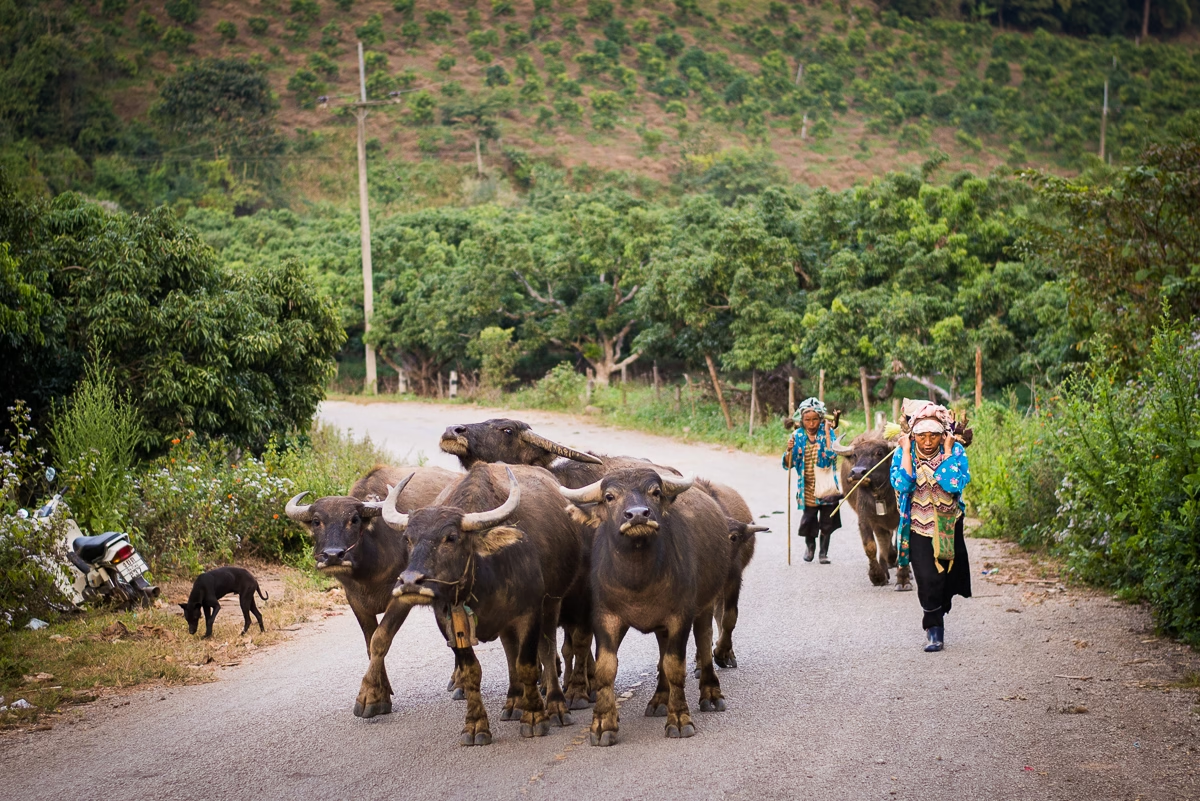
Outside towns you may also encounter wildlife crossing the road with very little warning — encountering a water buffalo at night is not a pleasant prospect.
Motorcycles Are Not Insured
Unlike in many Western countries, Thai rental shops don’t carry comprehensive insurance. Only basic third-party liability is in place, which covers very little — if you scratch someone’s car, you’ll be footing the bill.
I haven’t yet found a reasonable external insurance option for rental motorcycles, so ride accordingly. A solid personal liability policy is well worth having.
More Practical Tips
Accommodation
I usually just ride until I feel like stopping and find somewhere on the spot. Outside Thai public holidays and Chinese New Year, you’ll have no trouble finding a pleasant guesthouse or small hotel at a very reasonable price.
Tourist infrastructure is well developed across the whole region, largely thanks to domestic visitors from Bangkok and other wealthier parts of Thailand.
Unless I’m heading somewhere very touristy or booking in advance, I try to arrive at my accommodation between 4 and 5 pm. If it’s full and I need to push on to the next village or town, that could easily mean an extra hour of riding.
Food
I love Thai food — and northern Thai cuisine especially. In any town of reasonable size you’ll find evening markets packed with food stalls, cheap (and excellent) local eateries, street barbecue and often decent restaurants too.
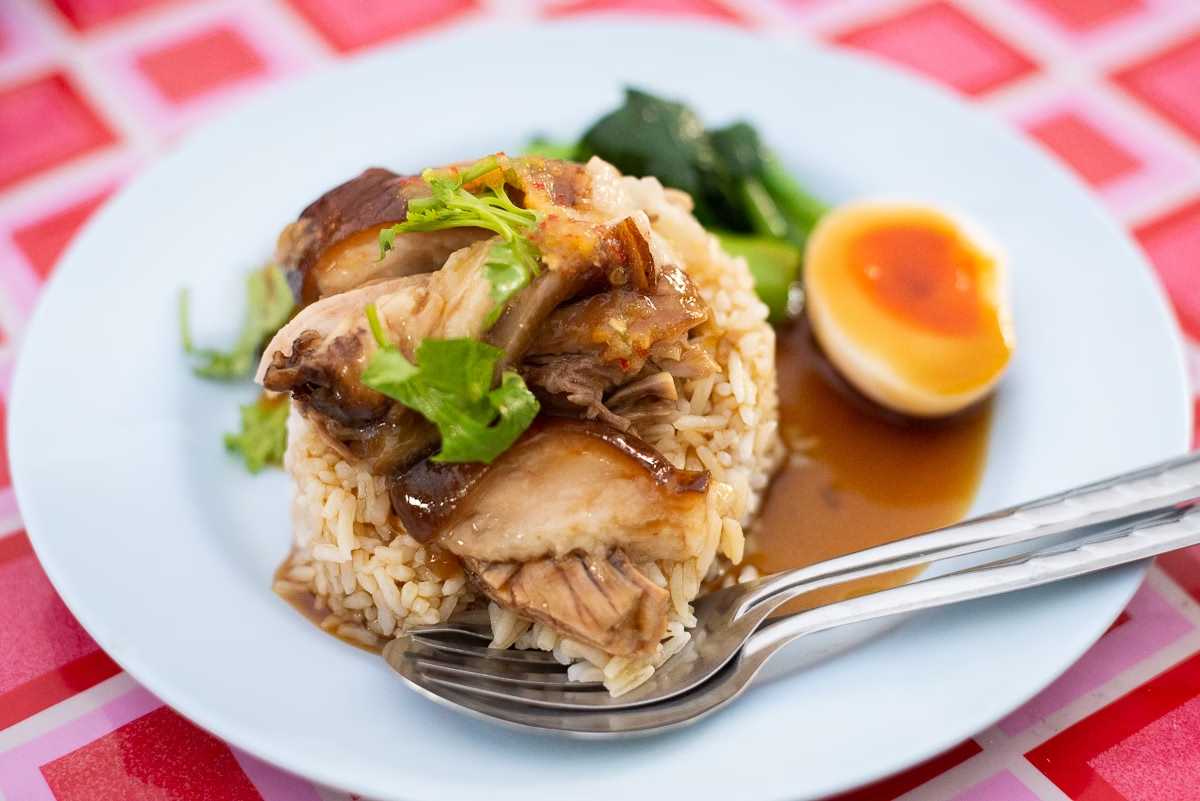
In mountain villages things get a little trickier — you can always find food, but you need to hit the right times. Breakfast ideally before 9 am, lunch between 11 am and 2 pm, and dinner from around 5 or 6 pm until 8 pm.

Fuel
Because locals ride scooters and small bikes even into the most remote mountain villages, you can always find fuel somewhere — often sold in PET bottles at a local shop. That said, use a proper petrol station when one is available. Along the main roads there are plenty.
Fuel prices are roughly half to two-thirds of what you’d pay in Western Europe — around €0.70–0.90 per litre at the time of writing. Large stations accept credit cards, but always carry enough cash as a backup.
At most stations you’ll be served — just pull up to the pump, open your tank and say “full.” Or hold up the number of baht you want. I’ve almost never had to get off the bike to refuel.
You’ll normally get 95 octane automatically. In very remote areas you might only find 91 octane. It won’t hurt your engine short-term and you’ll barely notice a performance difference, but it’s not great for the motor over the long haul.
Find more practical tips in the Northern Thailand Travel Guide — transport, accommodation, food and more.
Northern Thailand Motorcycle Routes at a Glance
Here’s a quick-scan overview of the main northern Thailand motorcycle routes covered below. Distances and times are approximate and depend on how many stops and detours you make.
| Route | Approx. distance | Suggested time | Difficulty | Recommended bike |
|---|---|---|---|---|
| Samoeng Loop | ~100 km | Half day | Easy | Scooter / any |
| Doi Suthep & Chiang Dao day trips | Varies | Half–1 day | Easy | Scooter / any |
| Doi Inthanon Loop | ~150 km | 1 day | Easy–Moderate | Any |
| Mae Hong Son Loop | ~600 km | 3–4 days | Moderate | 250cc+ |
| Pai | ~135 km | 1–2 days | Easy–Moderate | Any |
| Doi Ang Khang | ~160 km | 1 day | Moderate (steep climbs) | 150cc+ |
| Chiang Rai & the Golden Triangle | ~200 km | 2 days | Moderate | Any |
| Phu Chi Fa & Phu Chi Dao | ~100 km | 1–2 days | Moderate | Any |
| Nan, Doi Phu Kha & Road 1148 | ~300 km | 2–3 days | Moderate–Hard | 250cc+ |
| Mae Sot | ~300 km | 2 days | Moderate | Any |
| Sukhothai, Loei & Phetchabun | Varies | 2–3 days | Easy–Moderate | Any |
Day Trips and Loops from Chiang Mai
Let’s start with what most riders will want first: short trips from Chiang Mai, with stops at key highlights like temples, waterfalls and caves. These routes can be combined or tweaked in any number of ways — they’re all designed to include beautiful twisty roads with views. Nearly all of them can be shortened or extended depending on your time and energy.
For detailed tips on specific places to visit around Chiang Mai, check out the Chiang Mai and surroundings guide.
Doi Suthep
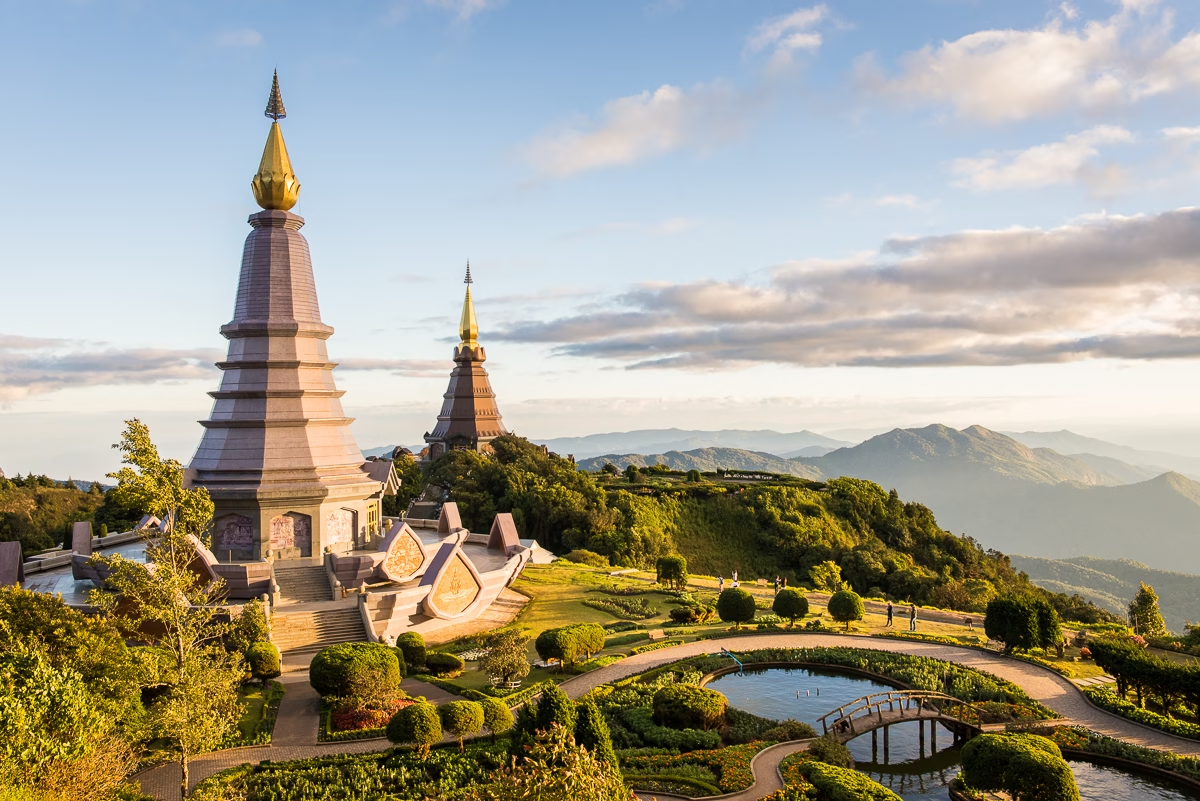
A national park and mountain that rises steeply right above Chiang Mai. Most visitors make the trip up, but unfortunately usually only to the famous Wat Phra That temple — and to their even greater loss, rarely by motorcycle. Yet the road up is superb.
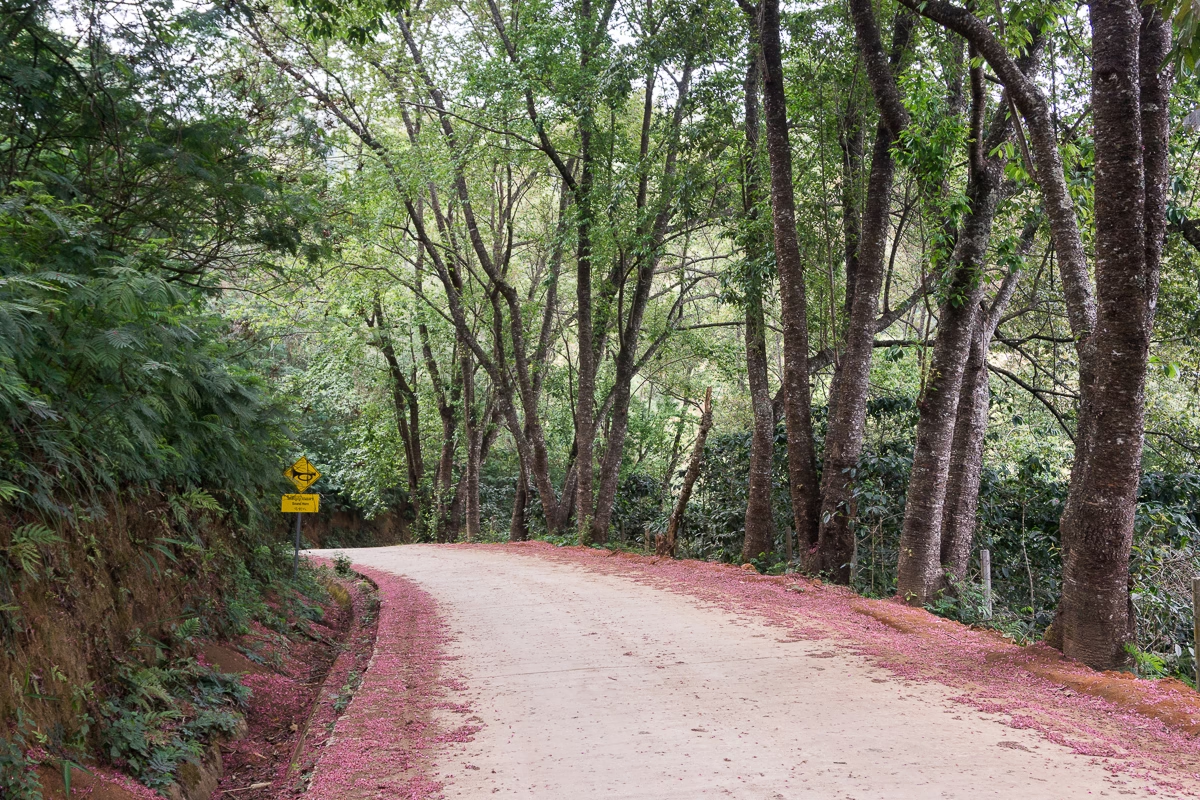
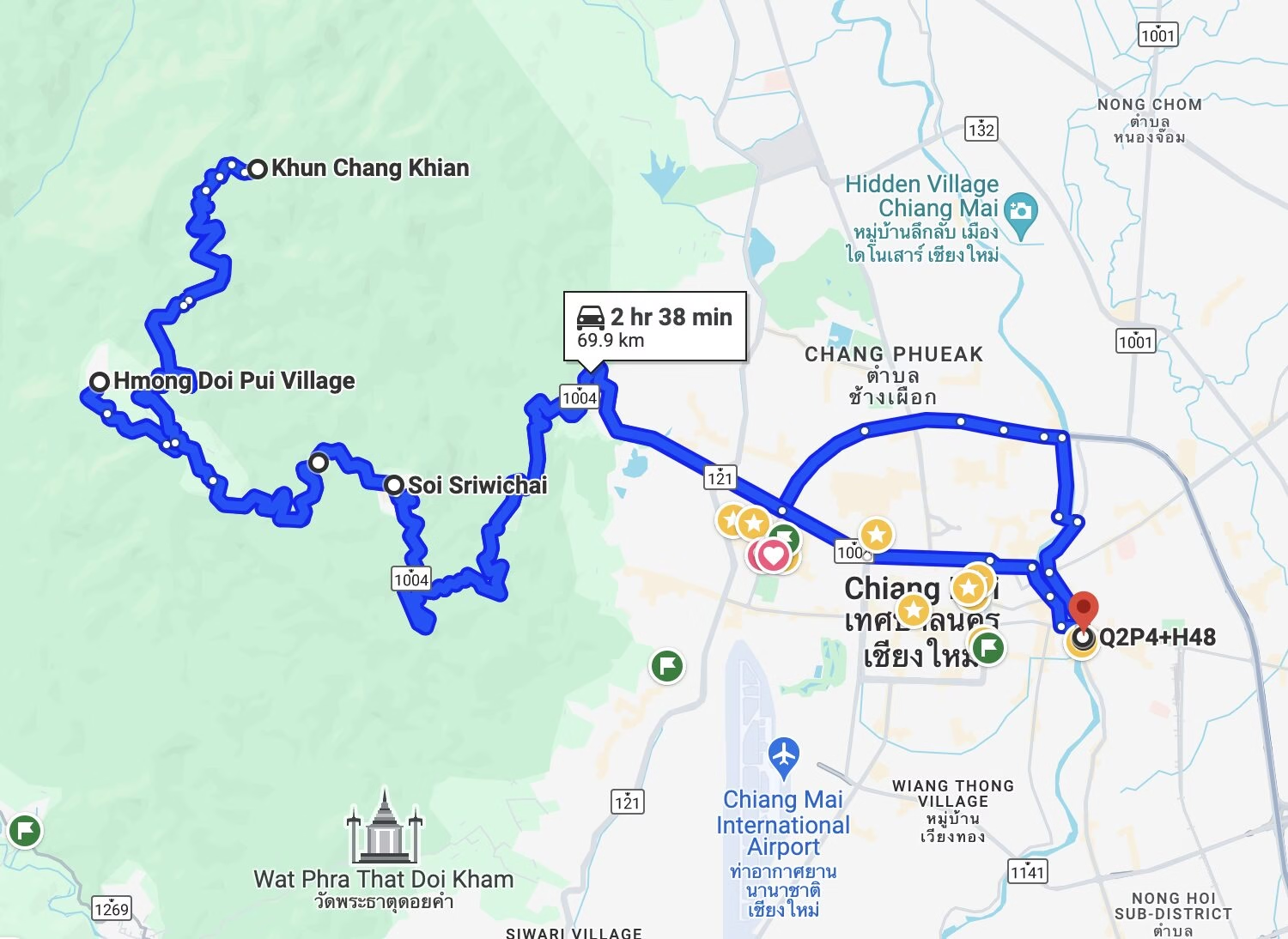
Stop for a coffee in Doi Pui village, take a wander around the area and then ride on to the small village of Khun Chang Khian. Aim to reach Wat Phra That in the late afternoon to catch the sunset. Just watch out on the way back down — once at dusk, I was hit by quite a large jungle bird.
- Suitable for beginners on a scooter.
- Route length: 70 km
- Recommended time: 4–6 hours
- https://maps.app.goo.gl/U66ju8pxNhagT27A8
Samoeng Loop Around Doi Suthep
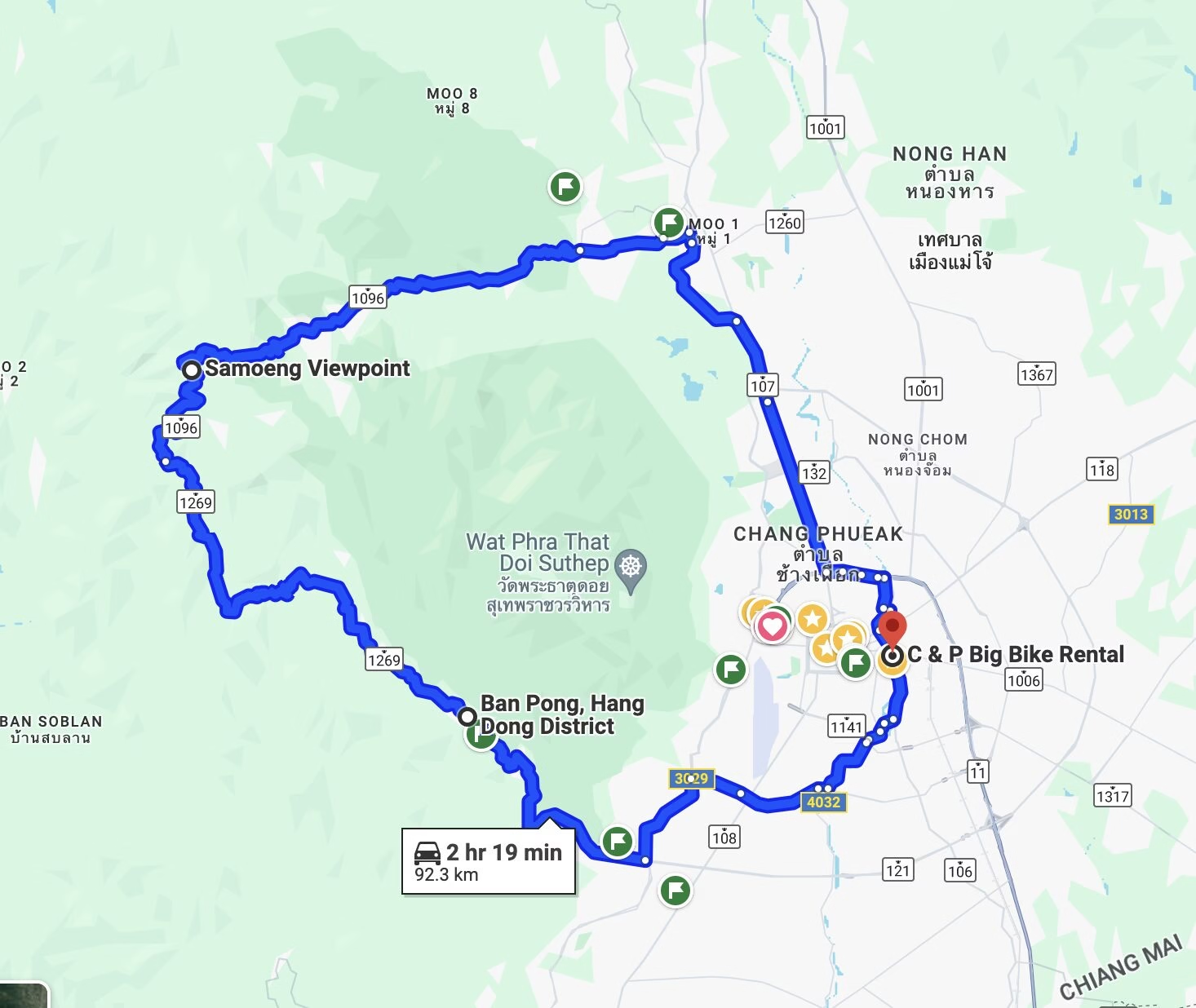
A gentle taster of northern Thailand. A lovely, relaxed loop around Doi Suthep that whisks you from the city into beautiful nature and rewarding viewpoints in no time at all.
Stop at Mae Sa waterfall, the small limestone cave at Ma Sap, have lunch at one of the local eateries in Samoeng town, and grab a coffee at Cypress Lanes. It doesn’t matter which direction you ride it.
- Suitable for beginners on a scooter.
- Route length: 92 km
- Recommended time: 4–6 hours
- https://maps.app.goo.gl/5iHe7UUiSnVHmsAd8
Doi Inthanon Loop
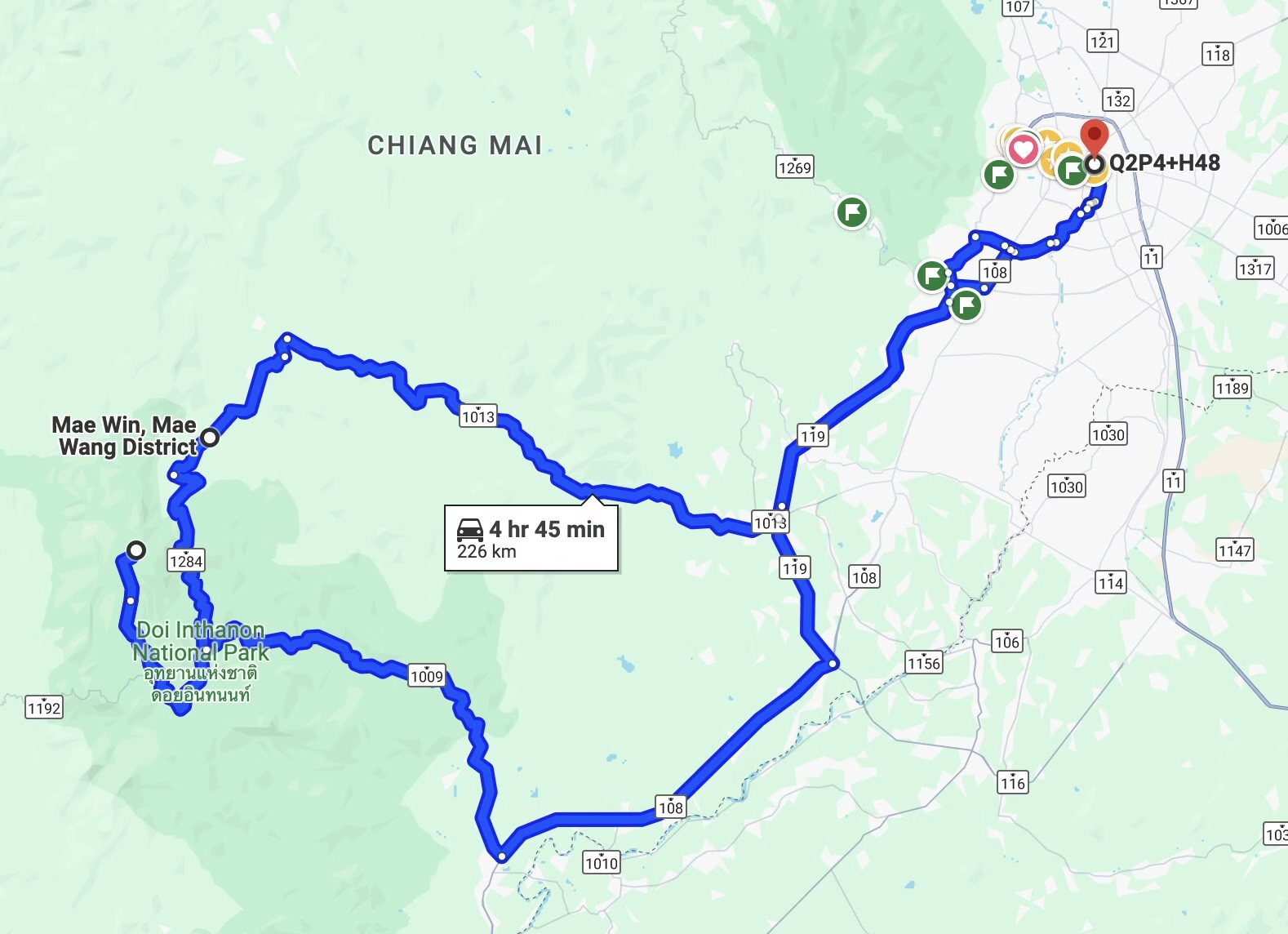
Thailand’s highest peak is absolutely not to be missed — if only for the extraordinary high-altitude rainforest just below the summit and the views from the two famous stupas. And the riding itself: the road goes all the way to the top.
Set off early to get the dull motorway stretch at the beginning out of the way as soon as possible, leaving maximum time to explore the park and enjoy the bends. Once you turn off into the national park, you start climbing towards the summit — over 2,000 metres of elevation gain.

The middle section in particular is packed with glorious fast bends. Higher up you’ll slow down a bit, mainly because overtaking becomes harder — unfortunately traffic here isn’t light. If there’s one route where I’d strongly recommend splashing out on a more powerful bike, it’s this one.
For the return, take the winding road 1284 and then 1013. But first, take the detour to Mae Pan waterfall.
- Route length: 226 km
- Recommended time: Full day
- https://maps.app.goo.gl/NRf6553ystnrGjo76
Chiang Dao
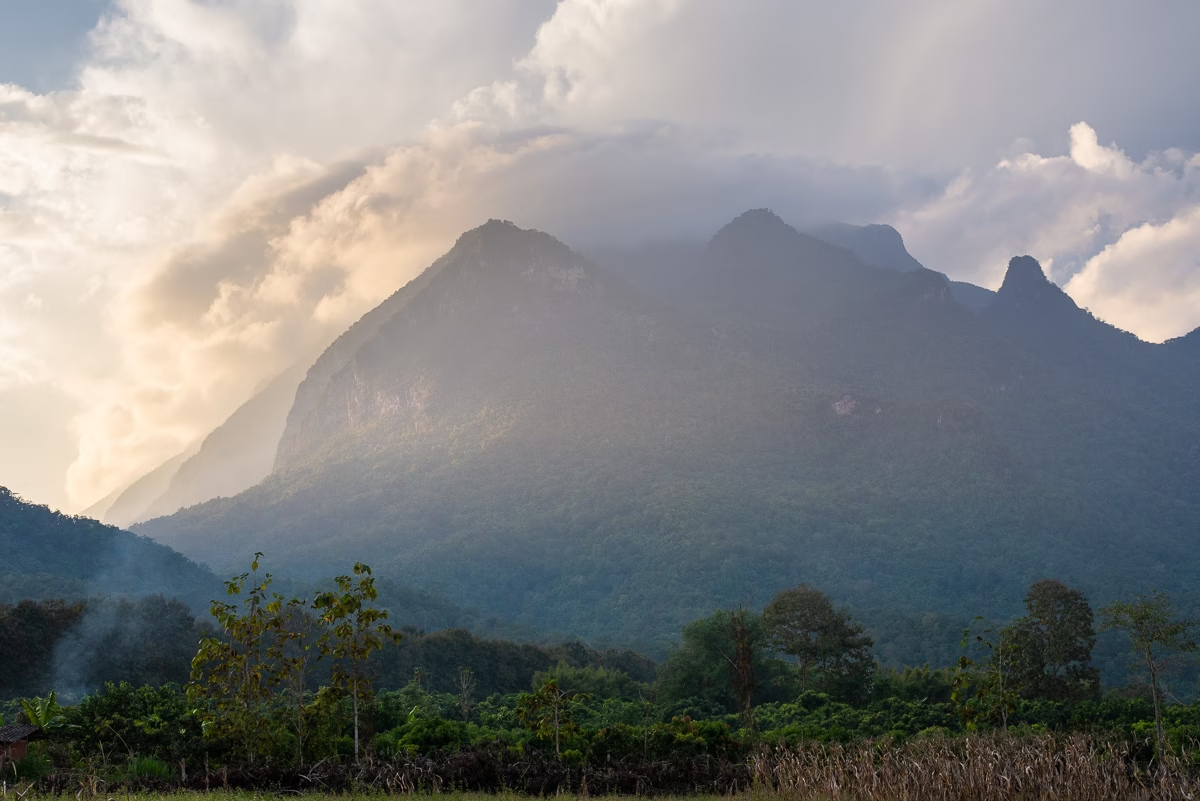
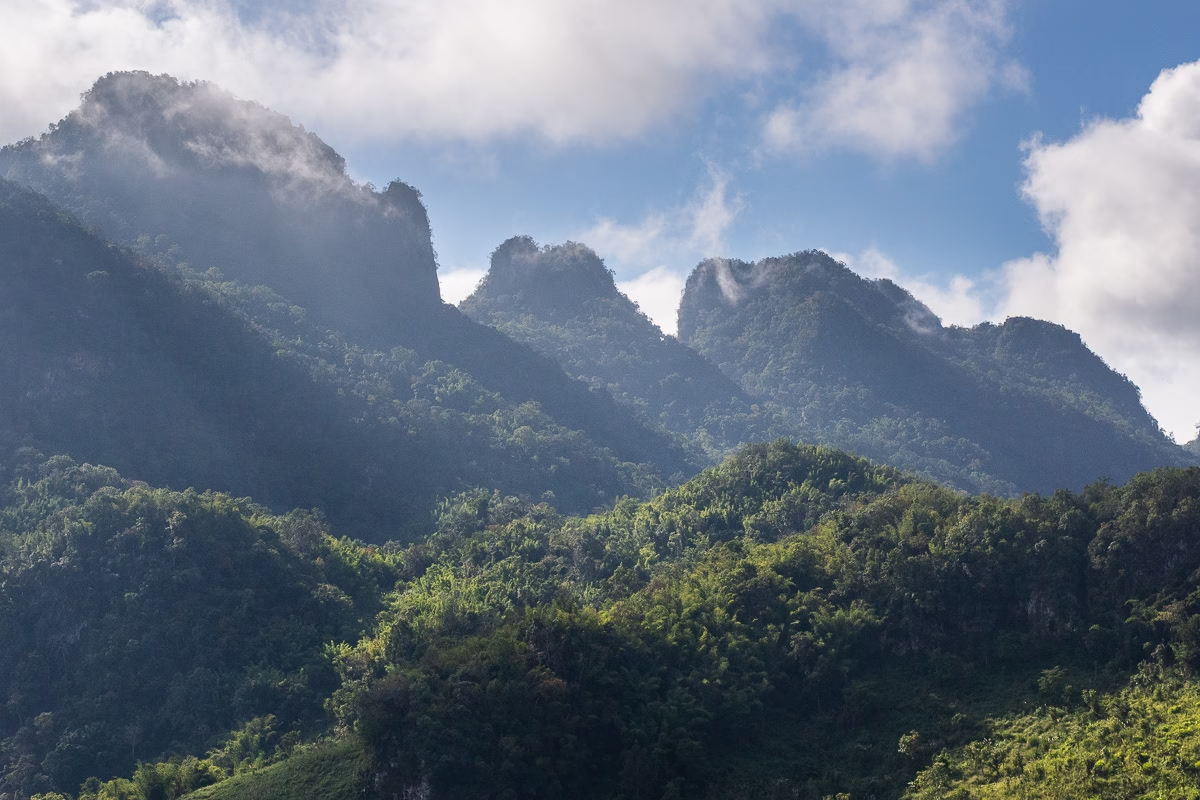
One of my favourite places in the whole region. A stunning rocky mountain that rises sharply from around 400 metres above sea level to 2,175 metres. You can’t ride to the very top, but even the base is worth a visit for its caves, temples and distinctive atmosphere — and the ride to get there is a real pleasure.
I usually take the loop through Phrao, where you’ll enjoy a long stretch of very quiet road. It’s not as twisty or dramatic as Doi Inthanon, but the scenery is beautiful.
The most bends (on a small road) come on the climb to the Doi Lhung Chiang Dao viewpoint. Alternatively, push all the way to the town of Mueang Khong — just be aware you’ll need to return the same way, unless you’re happy to tackle an unpaved track with several river crossings.
- Route length: 248 km (can be shortened)
- Recommended time: Full day, or two days
- https://maps.app.goo.gl/rVHbckEmQCHKof2N9

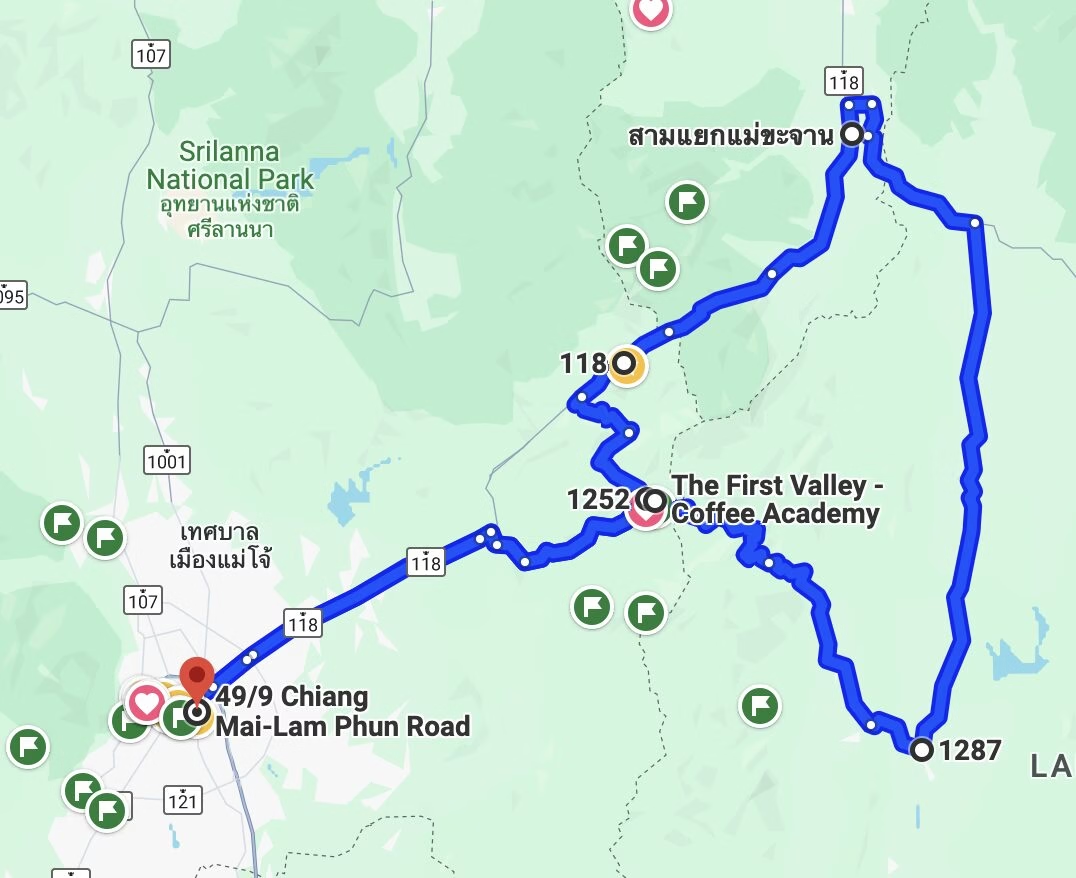
Thep Sadet and Mae Chedi – Road 1252
A great area to the west of Chiang Mai, ideal for a slower, more exploratory pace. The riding highlight is definitely road 1252. You can easily turn back at the Lychee Viewpoint and spend your time making more detours and stops along the way — like the village of Mae Kampong, which I write about more in the Chiang Mai guide.
- Route length: 269 km (can be significantly shortened)
- Recommended time: Full day
- https://maps.app.goo.gl/bPPX6V8cn75L9Uth8
The Mae Hong Son Loop – Thailand’s Greatest Motorcycle Tour (1,864 Bends)
The legendary Mae Hong Son Loop is, in my view, a route every motorcyclist should ride at least once.
Across roughly 600 kilometres you’ll experience almost everything northern Thailand has to offer: endless bends, panoramic views, mountains, limestone karsts, a vast cave full of stalactites, waterfalls, jungle, temples, diverse ethnic communities, incredible street barbecue and late evenings swapping stories with other travellers over a beer.
You can blitz it with stops only at the very best highlights, or take your time, explore and make detours. Both approaches are worthwhile — which is why I’ve ridden it several times.

The direction doesn’t matter much. One tip: if you save Doi Inthanon for the end of the loop, you can often avoid paying the national park entrance fee, since road 1192 from Mae Chaem enters past the main gate. Or at least that was the case when I last rode that way in 2019.
- Route length: 565 km
- Recommended number of days: 3–6
- https://maps.app.goo.gl/8v1cArc1bTH2WL4i7

Suggested Itinerary
Day One
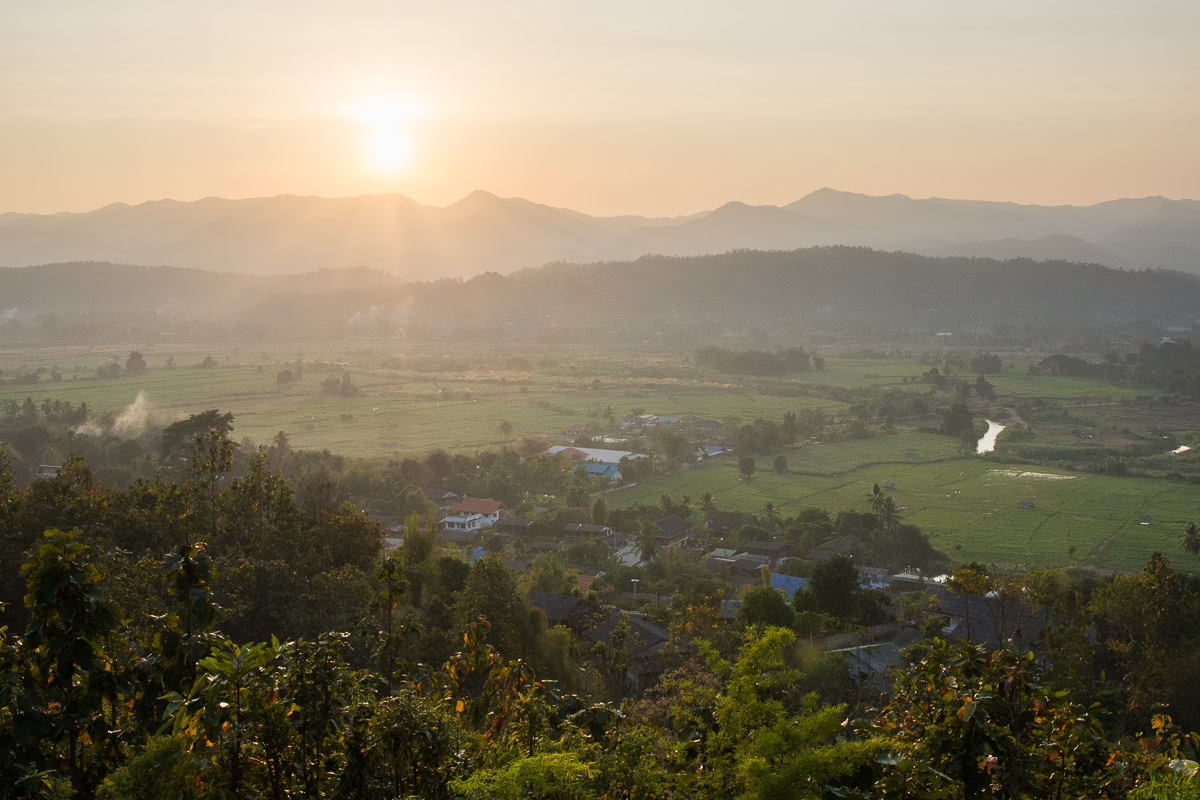
Ride from Chiang Mai to Pai. Either the classic way on road 1095, or the longer way round on the quiet 1349 and 1265. The map for the second option is further down in the article under the standalone Pai trip.
Leave plenty of time to explore the area around Pai. At a minimum, visit the Grand Canyon and the Chinese village. The local hot springs, where you can take a dip, are also highly recommended.
Day Two
Set off early. You stand a great chance of catching what the Thais call a “sea of clouds” — a proper temperature inversion with tropical sunshine blazing above — from the highest point on the road at Doi Kiew Lom viewpoint. The café there also serves surprisingly good iced coffee.
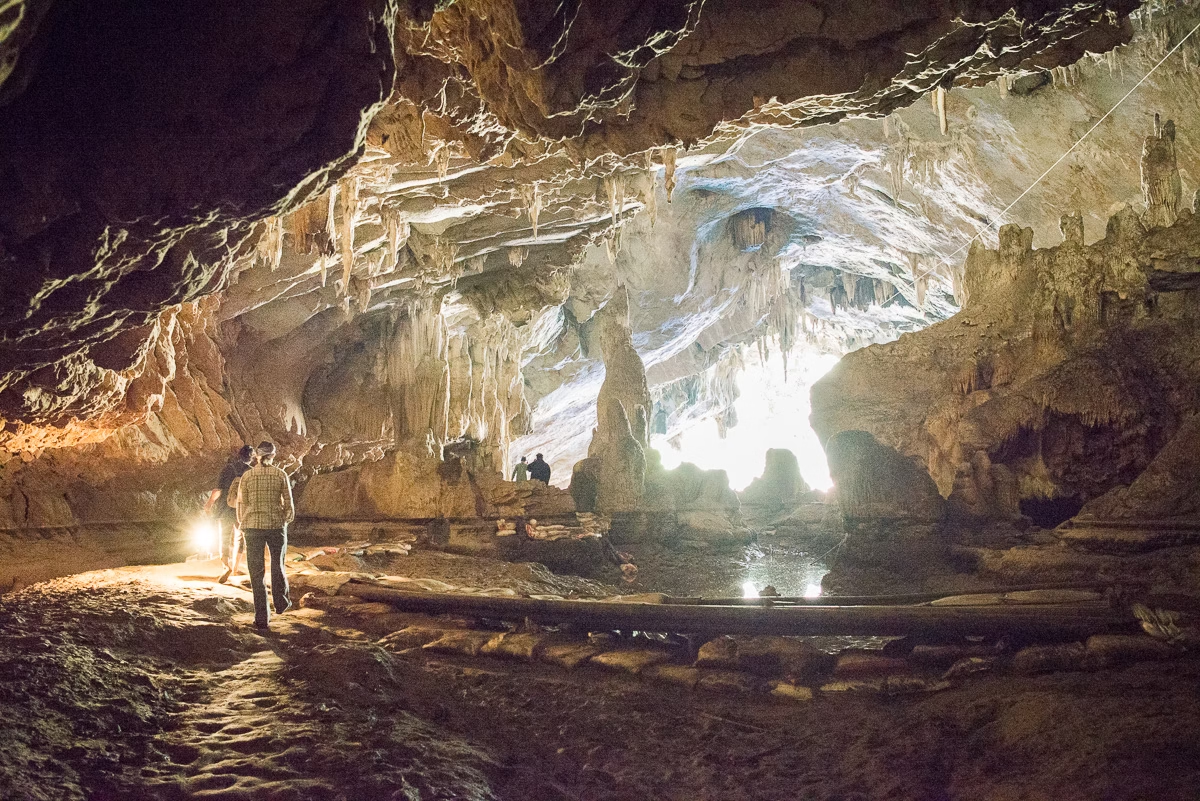
Down the hill you have a choice of two caves: the larger but slightly more distant Nam Lod, or the slightly smaller Pha Mon right by the main road. “Smaller” still means jaw-dropping.
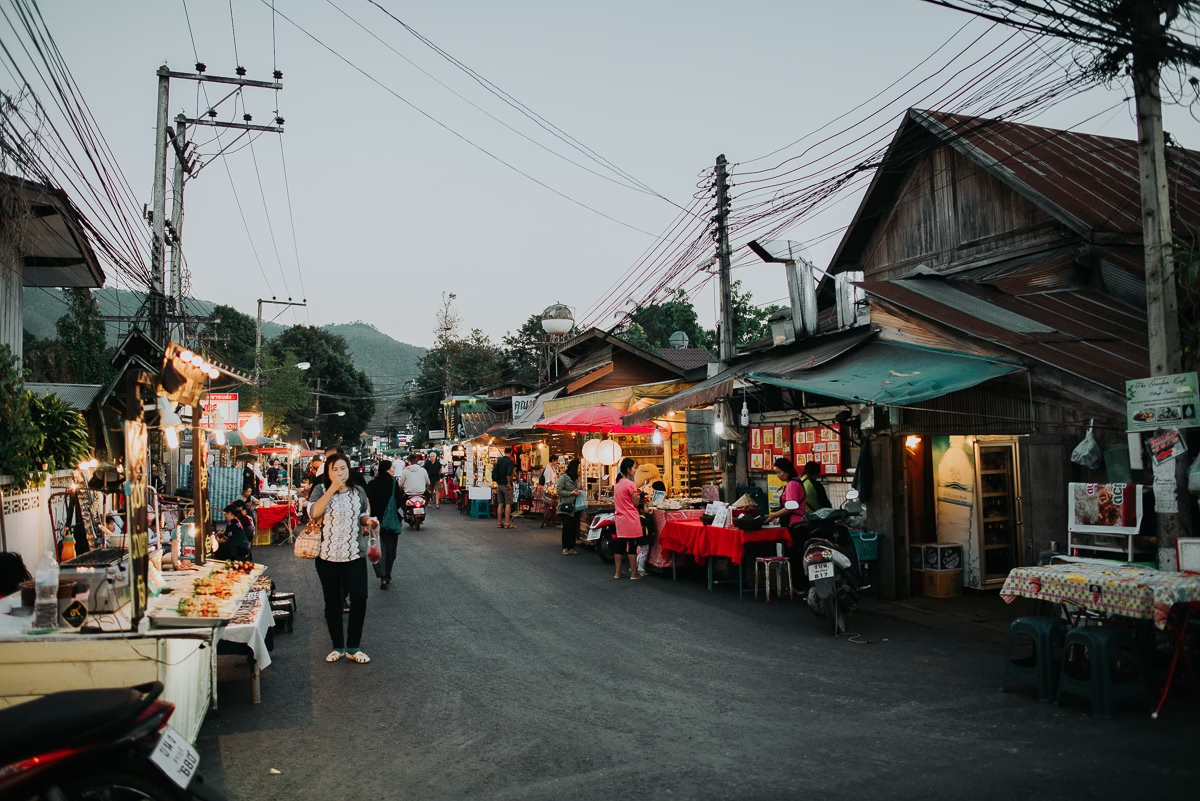
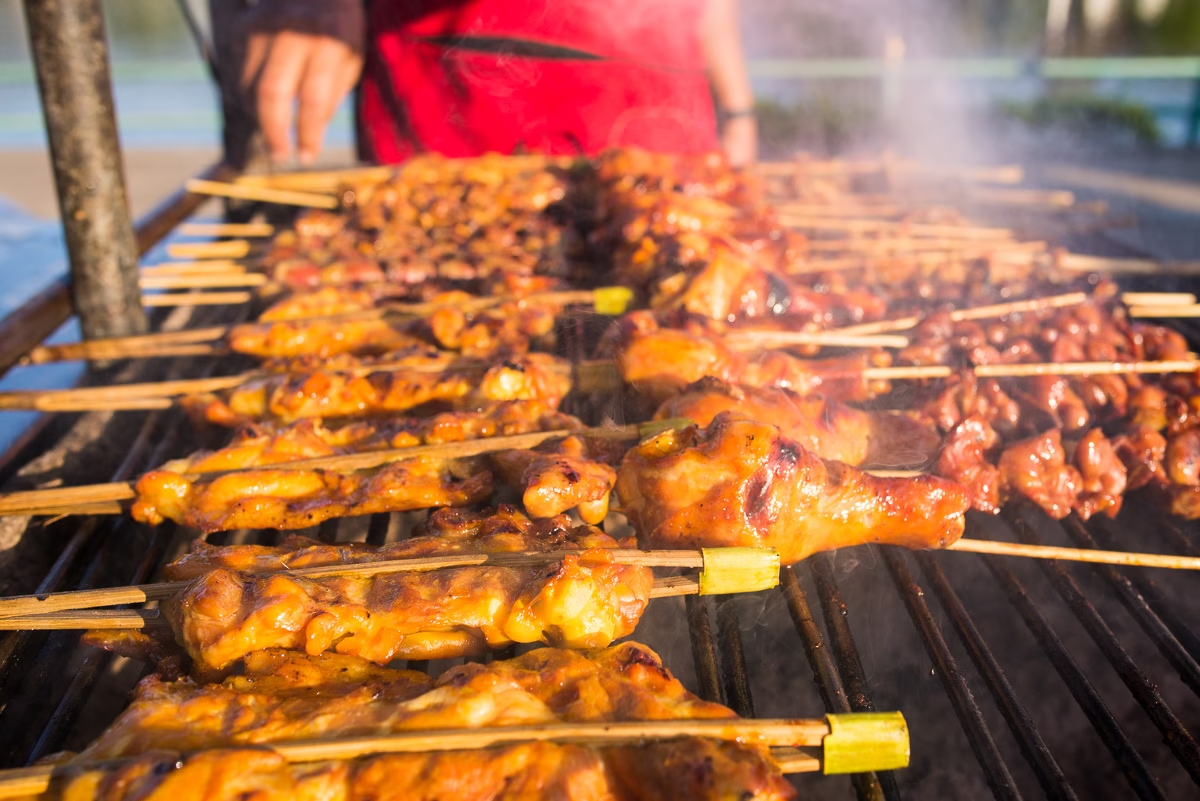
Continue into Mae Hong Son town. Check in somewhere, then ride up to Wat Phra That Doi Kongmu temple. The evening food market by the lake in the town centre is excellent.
Day Three
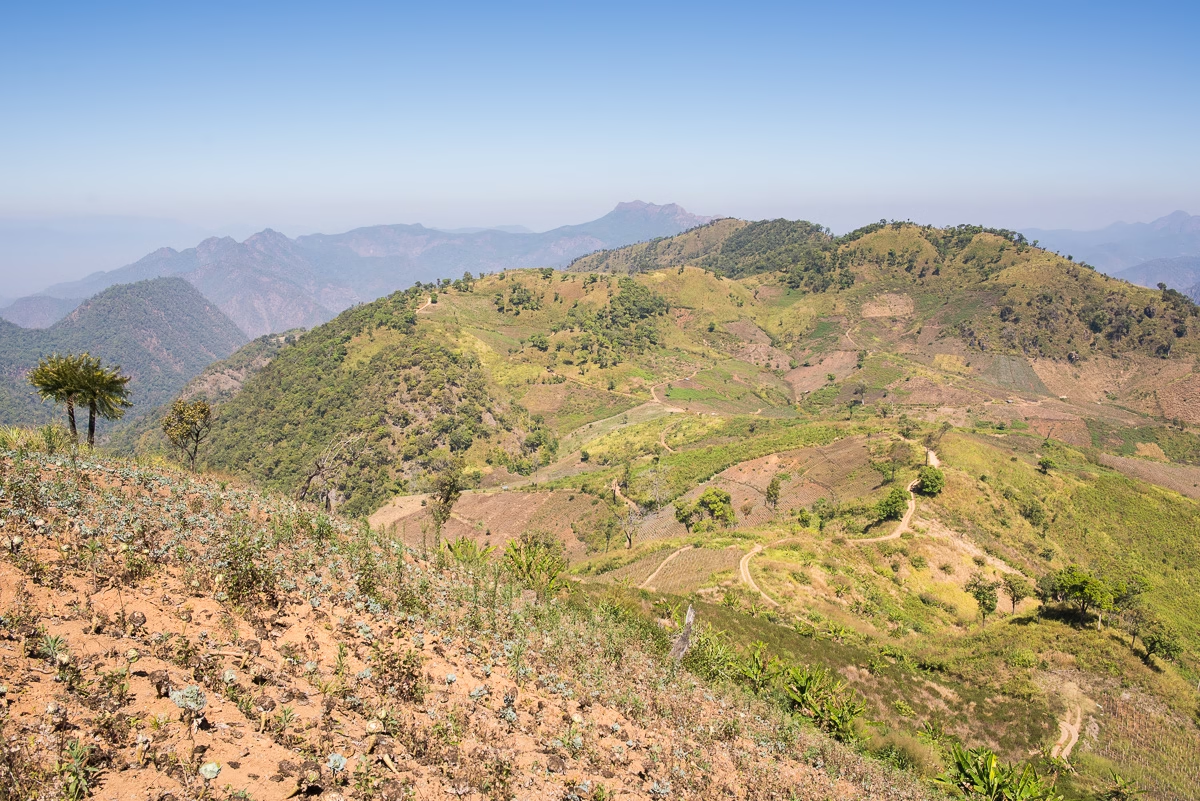
Have breakfast, grab a coffee and head south. No rush today. Make a short stop at the Pha Bong viewpoint and, a little further on, follow the tourist sign pointing left towards “Ban Mong Microwave.” I’m not joking, and don’t worry — you’re not heading into a microwave. Just up to a transmitter above a Hmong village, which opens up spectacular views in every direction.
Push on ideally as far as Mae Chaem.
Day Four
Head towards Doi Inthanon. Take the detour to the Pa Pong Piang terraced rice fields, but note that in winter the paddies may well be dry — still worth seeing, especially if you catch the morning mist.
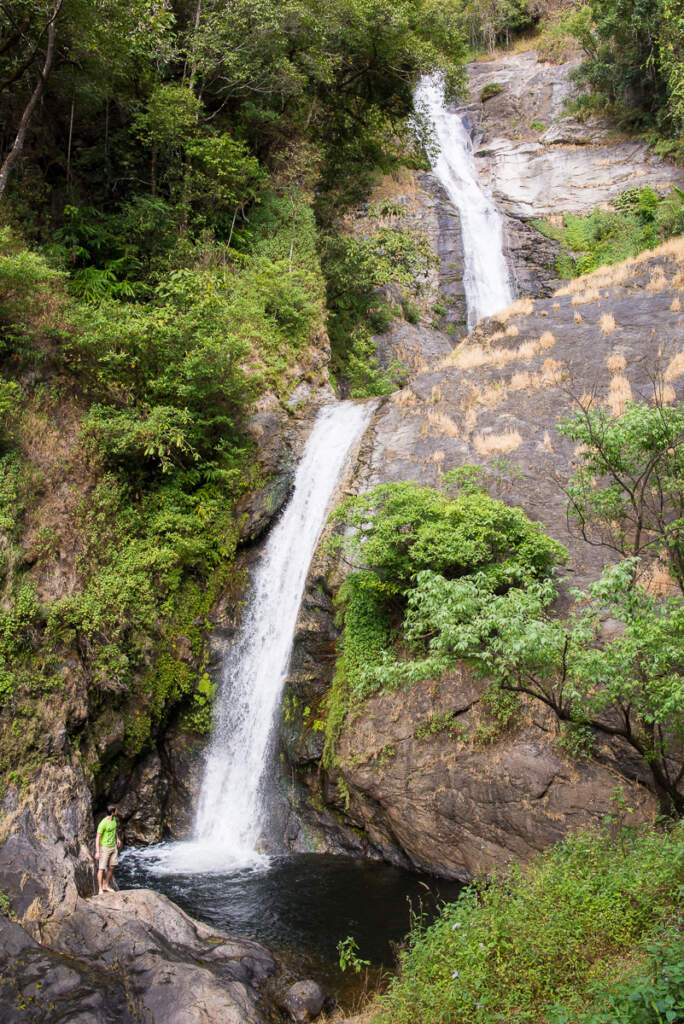
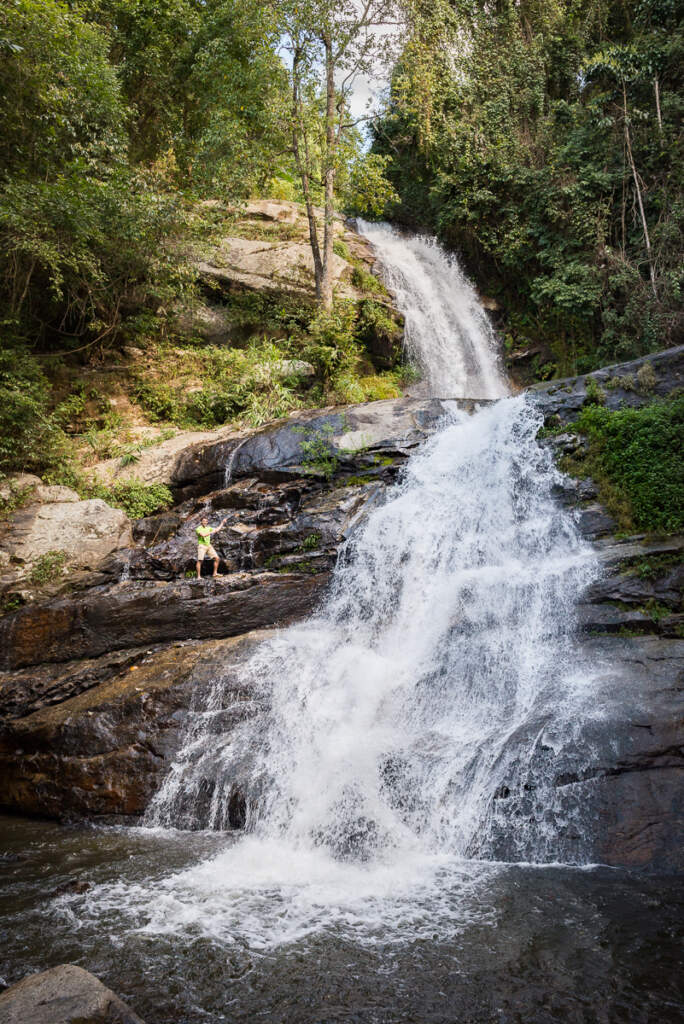
Stop at Mae Pan waterfall for a swim, then it’s time for the brilliant climb to the Doi Inthanon summit. More on the mountain is in the day trips section and the Chiang Mai guide.
If you’ve already visited Doi Inthanon on a day trip, head south from Mae Chaem on road 1088 and through Op Luang national park instead.
Alternatively, if you don’t turn off towards Mae Chaem at Khun Yuam, just keep going on road 108 — which will serve up another fantastic sequence of bends.

More Scenic Motorcycle Routes
Think of this section as inspiration for when you’ve already ridden everything above, or if you’re planning to spend more extended time riding in Thailand. I’ll start with two- to four-day trips and work up to week-long routes and beyond.
These routes can be mixed, matched and adapted in any number of ways. The best stretches are usually obvious from the density of bends on the map — and I’ll point them out in the text too.
Day counts are a rough guide only. It depends how much you want to ride versus stop and explore. On most longer trips I focus mainly on riding — comfortably covering 400+ km a day, more when motorway sections or mountain transfers are involved. If you’re planning to visit temples or go on short hikes, allow more time.
Pai
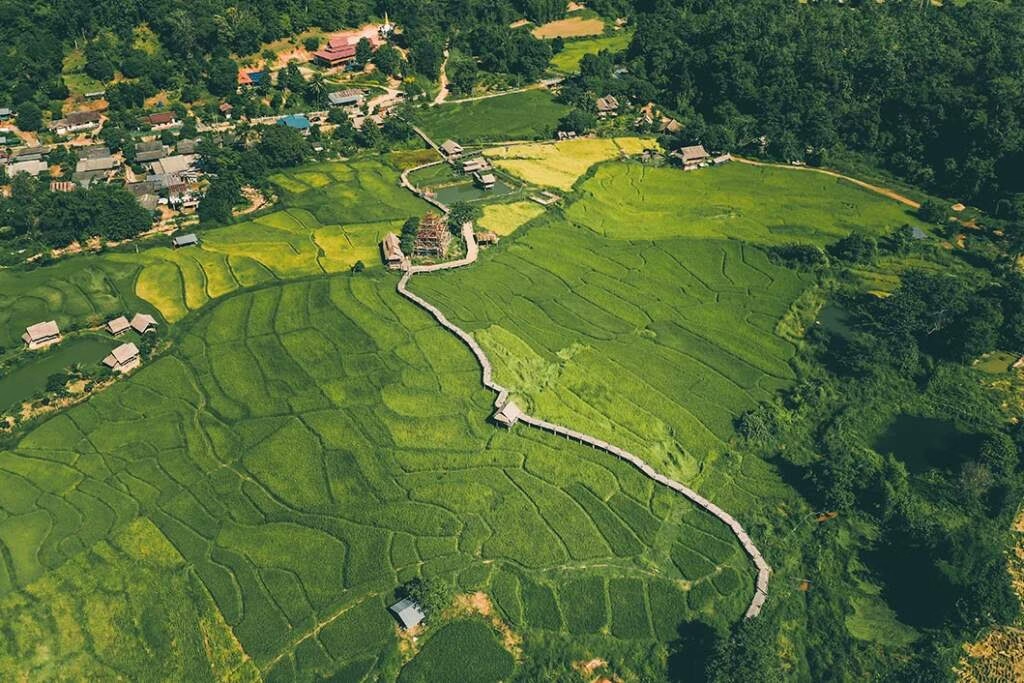
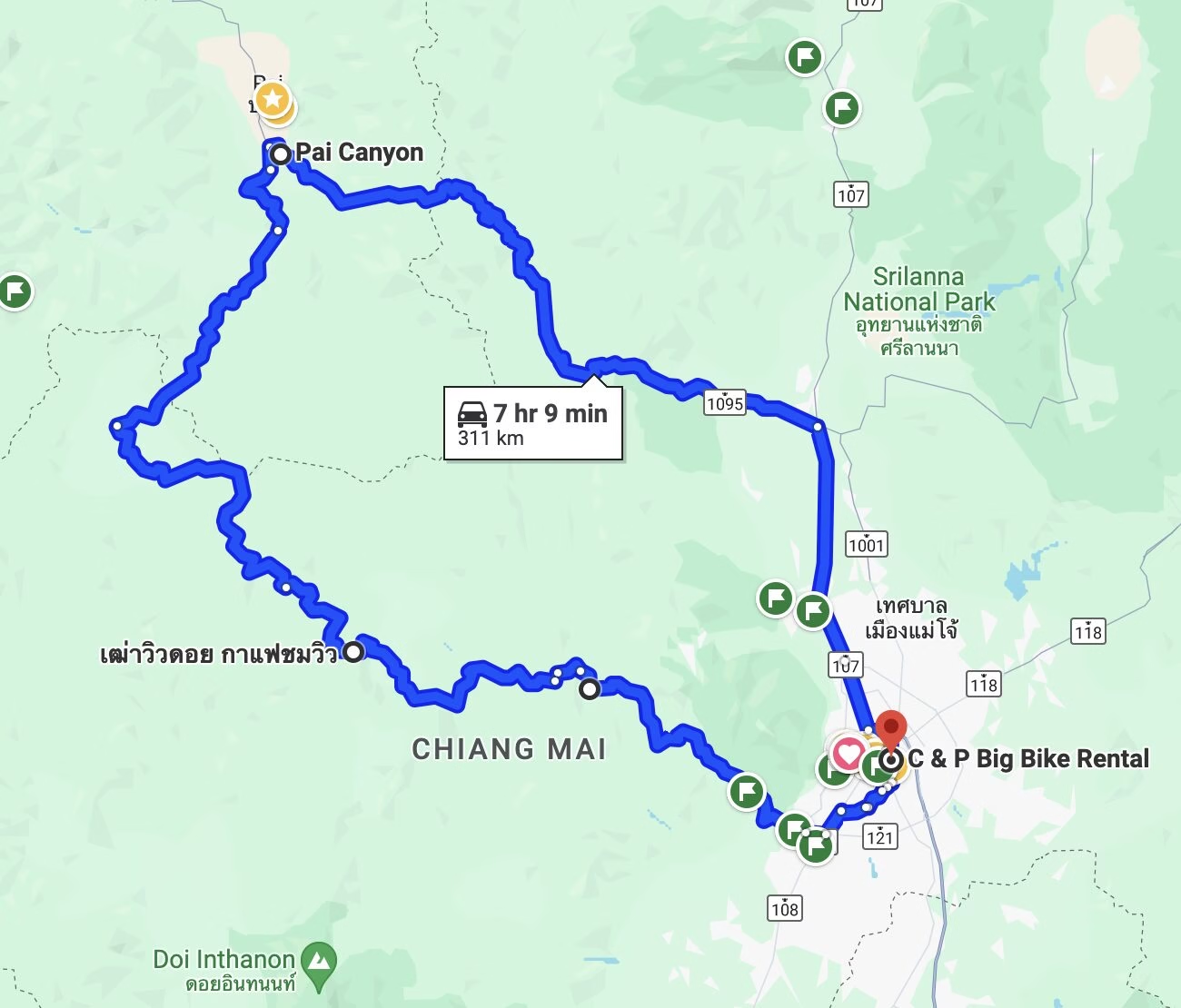
If you don’t have time for the full Mae Hong Son Loop, or you’ve already ridden it, at least do a two-day trip to Pai. It works beautifully as a loop, and the “back way” via Samoeng and Ban Chan is one of my personal favourites.
- Route length: 311 km
- Recommended number of days: 2–3
- https://maps.app.goo.gl/c5UypqLownouHuGKA
Doi Ang Khang
Another trip that works well as a two-day ride, and pairs nicely with Chiang Dao. You’ll ride through magnificent mountains and bends all the way to the Thai-Myanmar border, where an abandoned Thai bunker looks out over the Burmese equivalent of an iron curtain. A sobering sight, but one worth seeing.
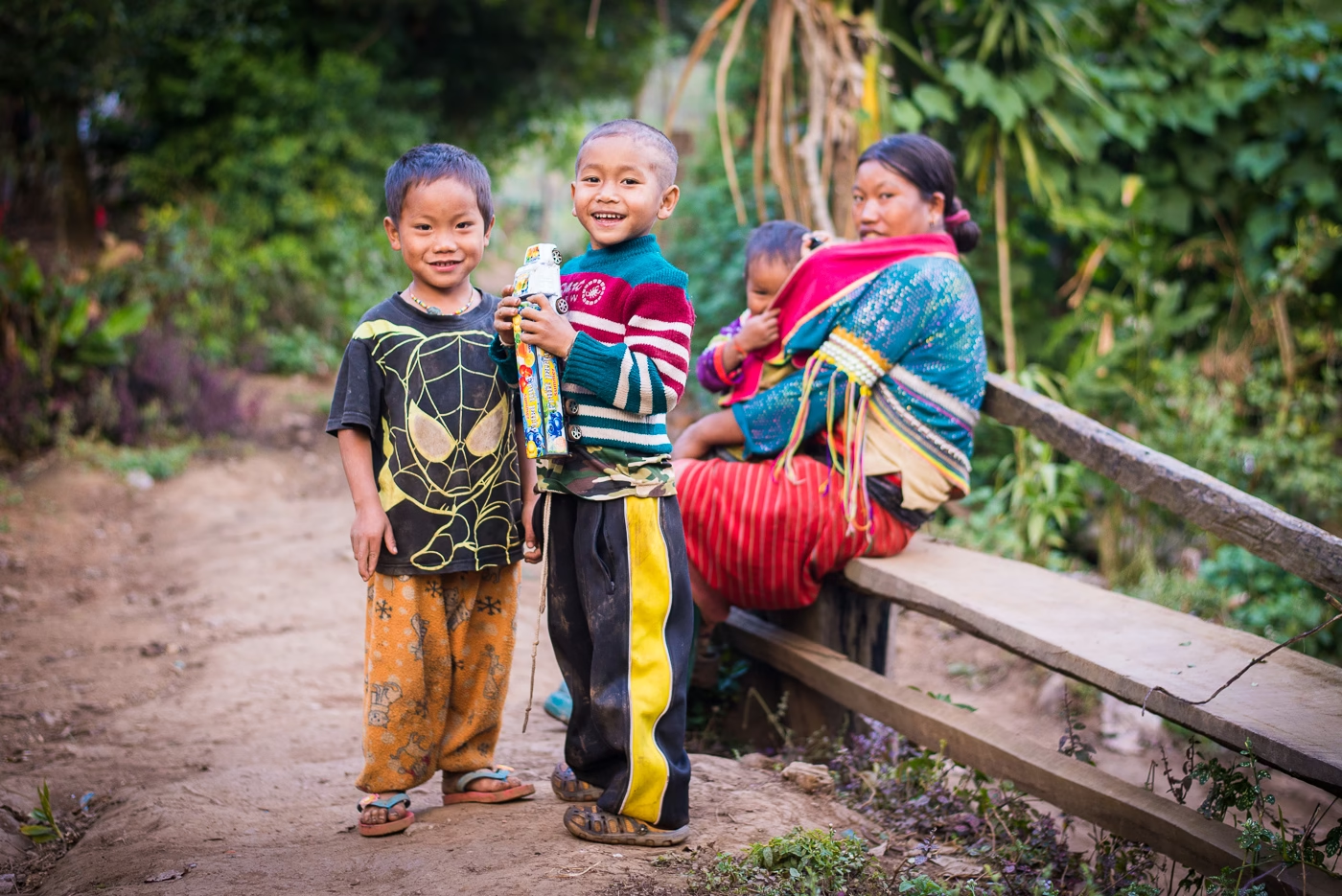
You can sleep at one of the campsites on Doi Ang Khang — they’re fully equipped with tents, mattresses and blankets provided. Just be prepared: mornings here can be seriously cold.
For the return, I highly recommend the detour via roads 1178 and 1322. There’s not much to see along the way, but the bends and views are absolutely top-notch.

- Route length: 509 km
- Recommended number of days: 2–4
- https://maps.app.goo.gl/L6nT7qrixCnJEDgEA

Chiang Rai and the Golden Triangle via Doi Pha Hom Pok
Thailand’s northernmost province alone could keep you busy for many days. This particular loop, though, is close to essential for any serious rider. Start with Chiang Dao, then — if you haven’t done them already — take the detour via roads 1322 and 1178 and Doi Ang Khang.

A little further on, take the detour into Doi Pha Hom Pok national park. You can’t ride all the way to the summit of Thailand’s second-highest peak, but from the campsite where you park, the top isn’t far on foot.

You can continue on the scenic road 1314 via Mon Doi Lang, though it’s easy to skip if you’re short on time.
In Thaton, stop at the distinctive temple there, then head through the tea plantations of Doi Mae Salong towards the border town of Mae Sai.
Then it’s time for the triple border of Thailand, Myanmar and Laos, the Mekong River, the opium museum and the Golden Triangle monument.
Stop at the famous White Temple, or better still, dedicate an entire day to exploring the Chiang Rai area.
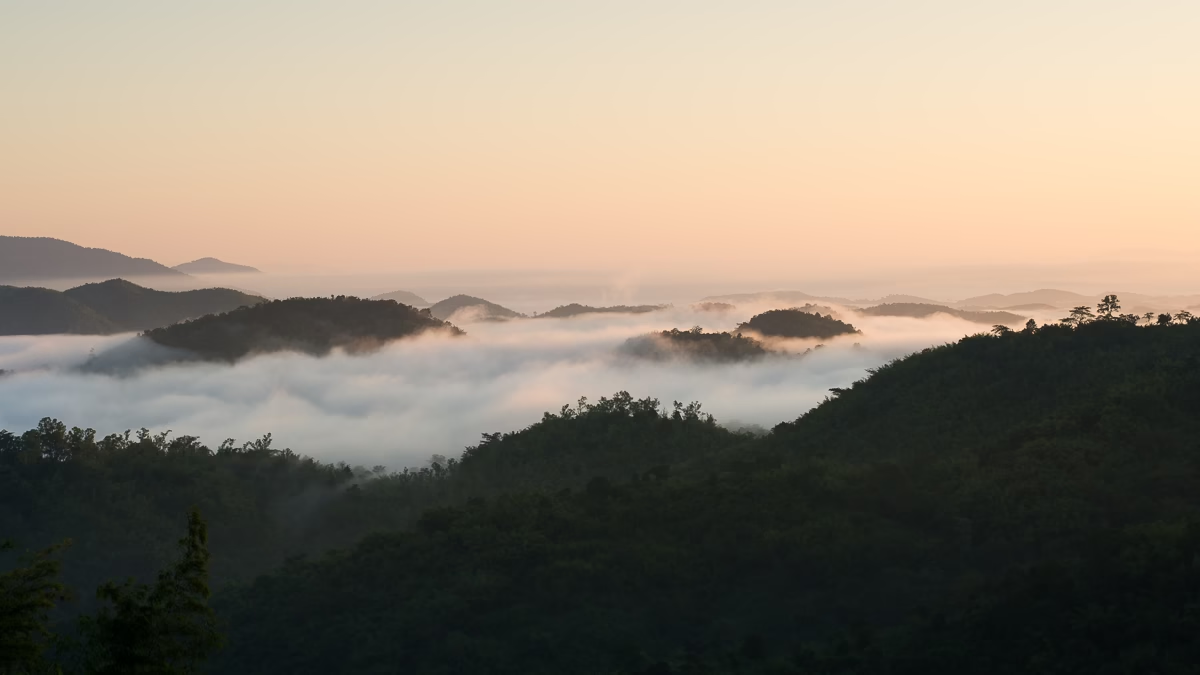
For the return, I’d recommend the small detour via the excellent road 1150.
- Route length: 654 km
- Recommended number of days: 3–6
- https://maps.app.goo.gl/fD6gaG7asUEhkG5y8

Phu Chi Fa and Phu Chi Dao
I’ve placed this trip on the map starting from Chiang Rai, because it makes most sense combined with the route above. Of course, you can also ride here directly from Chiang Mai.
The main draw is the breathtaking views right on the Thailand-Laos border, where you look down at the majestic Mekong River roughly 1,000 metres below.
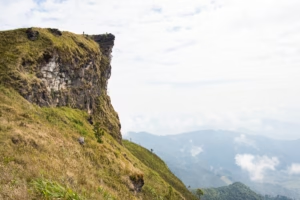
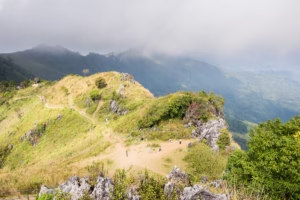
- Route length: 276 km (from Chiang Rai)
- Recommended number of days: 1–2 (or 3–4 from Chiang Mai)
- https://maps.app.goo.gl/idq8rhhv98iQ2XDP7

Nan, Doi Phu Kha and Road 1148 – Among the World’s Best Riding Roads?
If there’s one stretch of road I could ride on repeat, it’s probably the mountain section between Phayao and Nan. Although even the descent from the mountains towards Phayao coming from Chiang Mai is worth it and never gets old.
If you have enough time, make a small detour south from Phayao on road 1251, then back north via 1091 and 1092 to join road 1148. The loop on the map takes the quickest route from Phayao to road 1148, because the best section of 1251 features on the return leg.

Now, road 1148. Top up your fuel, have a coffee, something to drink and a comfort break before you turn onto it — because while you’ll pass endless viewpoints over limestone mountains and jungle, I guarantee you won’t want to stop. Perfect tarmac, technical and high-speed sections mixed together, completely deserted, and a grin so wide it hurts. A clear candidate for one of the best roads in the world.
Still not enough? Continue from Nan towards the Laos border through Doi Phu Kha national park and gradually south for as long as you like and have time for. Road 1333 is another absolute gem — slightly narrower, and with a noticeably rougher surface than 1148 when I last rode it. Otherwise I’d put it among the world’s best roads too.
The route can be shortened compared to my map by turning back west at any of the larger junctions — you’ll pass several.
- Route length: 1,055 km
- Recommended number of days: 3–6
- https://maps.app.goo.gl/KPydXMD7ZYg8k8CRA

Mae Sot
A route better suited to a more road-focused bike. Rather than tiny mountain lanes, you’ll be riding bigger mountain roads. You’ll visit another border town by Myanmar, the Mae Usu cave and Taksin Maharat national park.
If you have enough time, continue south from Mae Sot on roads 1090 and 1288 — and then let me know how it was. This is one of the few routes I’ve been itching to ride for years but haven’t managed yet. Even the photos on Google Maps look spectacular enough to make the detour worthwhile.
- Route length: 839 km
- Recommended number of days: 3–5
- https://maps.app.goo.gl/45Taj4zaSDvHKfTz9

Sukhothai and the Table Mountains Near Loei and Phetchabun
The furthest destinations I’ve reached from Chiang Mai. The historic Siamese capital with monuments dating from the 13th to 15th centuries. Then the beautiful flat-topped mountains and countless limestone rock formations further east, where the northern Thai highlands gradually give way to a vast plain.
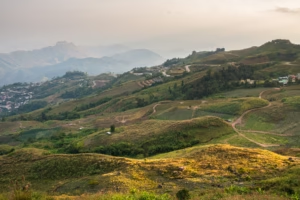
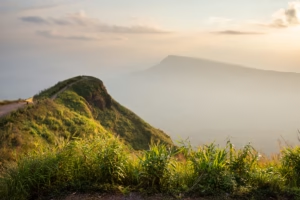
I’m intentionally not giving a specific route or map here. The screenshot of my route map is included as rough inspiration only. This trip only makes sense once you’ve ridden the Chiang Mai area thoroughly and feel at home navigating the region — there’s no point rushing into it before then.
Add this area to your bucket list, though — you’ll find a completely different landscape from the far north.
This is also the only trip here that genuinely makes sense to start from Bangkok, if you don’t mind the less-than-scenic motorway transfer at the beginning.

Offroad Riding – Thailand Motorcycle Tours Off the Tarmac
If you’re after serious adventure, head off the tarmac. Northern Thailand has hundreds of unpaved tracks, often stretching for dozens of kilometres through mountains or jungle. They range from relatively manageable to seriously challenging — and once the rains set in, virtually all of them fall into the “very hard” category.

Most rental shops officially prohibit taking their bikes off-road, and even adventure bikes are typically fitted with more road-biased tyres. It can therefore be worth looking at an older bike from a smaller rental that’s more relaxed about this sort of thing.
Alternatively, join a guided offroad tour — which I’d strongly recommend if you don’t have experience of offroad riding in Asia. Guided tours operate from Chiang Mai, Chiang Rai and Pai.

Personally, I loved exploring the mountains between Thaton and Chiang Rai most. I navigated using the hiking maps on Mapy.cz and only had to turn back once.

The route across Khun Chae national park was brilliant too — visible on Google Maps. And the track behind Chiang Dao national park heading towards the main Chiang Rai road — which I once accidentally rode on a Honda Wave scooter-bike — is also on Google Maps.

Frequently Asked Questions
Do I need an international licence to ride a motorcycle in Thailand?
Yes. You’ll need an International Driving Permit (IDP) with a category A (motorcycle) endorsement — even for a small scooter. The IDP is only valid alongside the original home licence it was issued with, and both the police and, more importantly, your insurer will require it.
When is the best time to ride in northern Thailand?
November to mid-March is ideal — cool, dry weather and clear roads. From late March to June it gets extremely hot (often above 40°C), and July to October brings heavy rain, wet roads and a real risk of landslides on smaller mountain routes.
Can beginners ride in northern Thailand?
Yes, with sensible route choices. Gentle day loops near Chiang Mai — such as the Samoeng Loop or the ride up to Doi Suthep — are well suited to newer riders. The full Mae Hong Son Loop, the steep climbs to Doi Ang Khang and any offroad tracks are best left until you have more experience.
How many days do you need for the Mae Hong Son Loop?
Plan around 3–4 days for the roughly 600 km loop. That gives you time to enjoy the 1,864 bends, the viewpoints and the towns of Pai and Mae Hong Son without rushing.
What size motorcycle should I rent?
A scooter or small bike is fine for day loops around Chiang Mai. For the Mae Hong Son Loop, the mountain passes and longer multi-day routes, a 250cc or larger motorcycle is more comfortable and safer on the steep climbs.
Tempted enough? See you in Thailand next winter.
Read the other practical and detailed articles in the Thailand series:
- Northern Thailand Travel Guide – transport, accommodation, food and more
- 27 places and tips — what to see and do in Chiang Mai and surroundings
More Thailand destinations:
Discover More of Thailand
Planning more of your Thailand trip? Browse our other in-depth guides:
Overview & Planning
Northern Thailand
- Northern Thailand Travel Guide
- Chiang Mai: Things to Do
- Chiang Rai Travel Guide
- Pai, Thailand Guide
- Mae Hong Son Travel Guide
- Mae Salong Guide