This post is also available in:


A city full of sunshine, incredibly distinctive architecture, art, great coffee, wine, and even better food. One of those places that hooks you, making you want to keep coming back to discover more and more. I fell in love with Barcelona at first sight, and it was also the first place outside the Czech Republic where we took our then four-month-old son.
In this detailed article, you’ll find plenty of tips on what to see and do, as well as practical tips regarding transport, accommodation, or safety. This will help you head out to Barcelona on your own without any issues.
In the first part of the article, you’ll mainly find tips for places, experiences, or food, as well as information about entry fees and prices.
For practical information on traveling to and around Barcelona, jump to the second part of the article.

Why visit Barcelona?
As Spain’s second-largest city with a rich history, Barcelona offers something for everyone.
Still, don’t expect “classic” Spain—you are, after all, in the autonomous region of Catalonia, which the locals are rightfully proud of. At the same time, many foreigners live here—mainly from Latin America—further enriching the city’s diversity.
Perhaps the biggest draw for visitors to Barcelona are the famous buildings by the genius architect Antoni Gaudí. Whether it’s the Sagrada Família basilica, the city palaces, or Park Güell. Organic shapes, colors, mosaics, stained glass, and a sophisticated play of light—I can’t describe his style any better. You have to experience it.


The city is also closely linked to the life of one of the most famous artists of the 20th century—Pablo Picasso. He spent his youth here and frequently visited Barcelona even after moving to Paris. Visiting the local Picasso Museum is one of my best modern art experiences, and I highly recommend setting aside at least half a day for it.
But Gaudí and Picasso are just the beginning. Barcelona has always been a very cultural city, and today you’ll find countless galleries, art installations, great street art, and quality architecture. Furthermore, there’s always something happening in the cultural scene—whether it’s street musicians, concerts, theaters, or modern circus.

Of course, many people also head to Barcelona for its beaches—either directly in the city or along the entire Costa Brava. You can surf and windsurf right in the city, and there are excellent kitesurfing spots nearby.
You can also come here for the food, drinks, and plenty of shopping options.
We mustn’t forget football. Experiencing an FC Barcelona home match live at the Camp Nou stadium is an experience that sports fans will cherish for a long time.

How long should you stay in Barcelona?
That depends entirely on you. I prefer discovering cities at a slower pace, as much as possible on foot, with plenty of stops for good food, coffee, or wine. That’s why I rarely go to destinations like this for less than a week.
But feel free to go for a long weekend, or even for a month or more. You definitely won’t be bored.
What to see and do in Barcelona
TOP 10 tips to start with
If you only have a few days in Barcelona, these are the ten places you definitely shouldn’t miss:
- Sagrada Família – Barcelona’s greatest icon, a breathtaking basilica that is unparalleled in the world.
- Park Güell – Gaudí’s colorful park with city views and the most famous photo spots.
- Casa Batlló – Gaudí’s masterpiece house that will impress even those with zero interest in architecture.
- Casa Milà – another beautiful house, especially inside and on the roof.
- Gothic Quarter – the cathedral and medieval streets.
- Montjuïc – the hill above the port with a castle, parks, museums, and views.
- Barceloneta Beach – the most famous city beach with a view of the sail-shaped W Barcelona hotel building.
- Picasso Museum – a collection of the famous painter’s early works.
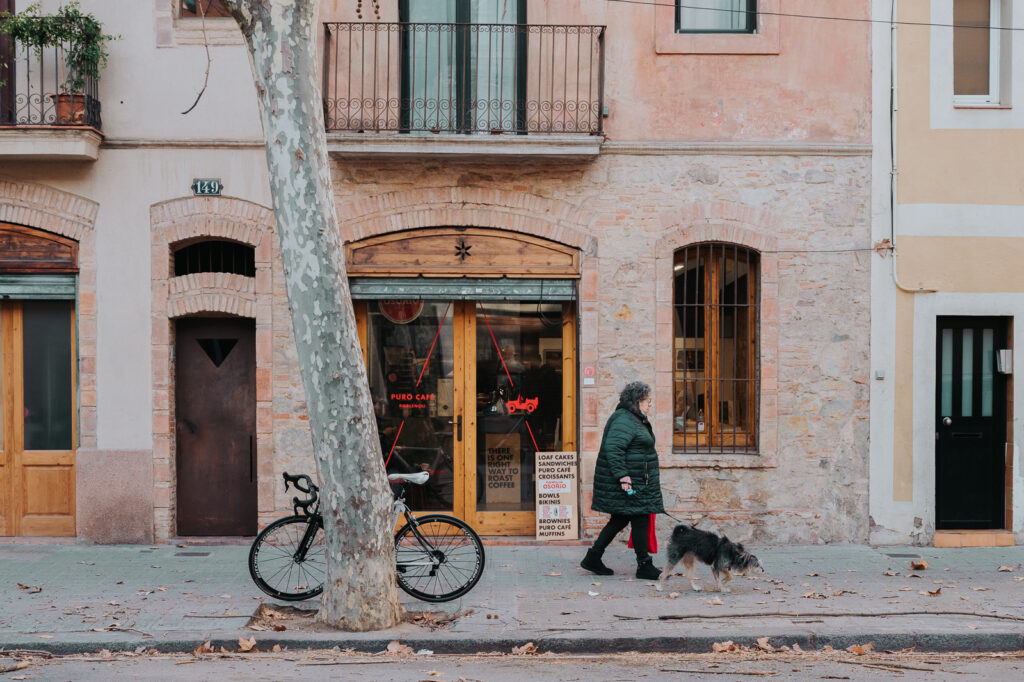
- El Poblenou – a former industrial district, now full of street art, great modern architecture, coffee, food, and bars.
- Tibidabo – a high hill above the city with a perfect view, the Sagrat Cor church, and an amusement park.

Gaudí’s Barcelona
No one is as closely associated with Barcelona as architect Antoni Gaudí. His organic buildings, inspired by nature, are scattered throughout the city. Some are small and inconspicuous, others monumental like the Sagrada Família basilica.
You can recognize Gaudí’s style by the colorful mosaics—often made from various shards and broken ceramics—unusual shapes, and the play of light.
The architect is considered the founder of the specific style of Catalan Modernism, and a total of 7 of his buildings have been listed as UNESCO World Heritage Sites.

Sagrada Família
Barcelona’s most famous building and Spain’s most visited monument. Even if you aren’t usually interested in history and architecture, don’t skip this breathtaking basilica—the Temple of Light.
It has been under construction since 1882, and the intention was to build the largest sanctuary in Christianity. Thanks to Antoni Gaudí’s magnificent, incredibly well-thought-out design and countless public donations, it has succeeded. According to current plans, the temple is set to be completed during 2026.

Personally, I often avoid the most famous monuments, if only because of the queues and crowds of tourists. But the Sagrada Família completely blew me away, and I definitely want to go back—ideally at a different time of day.
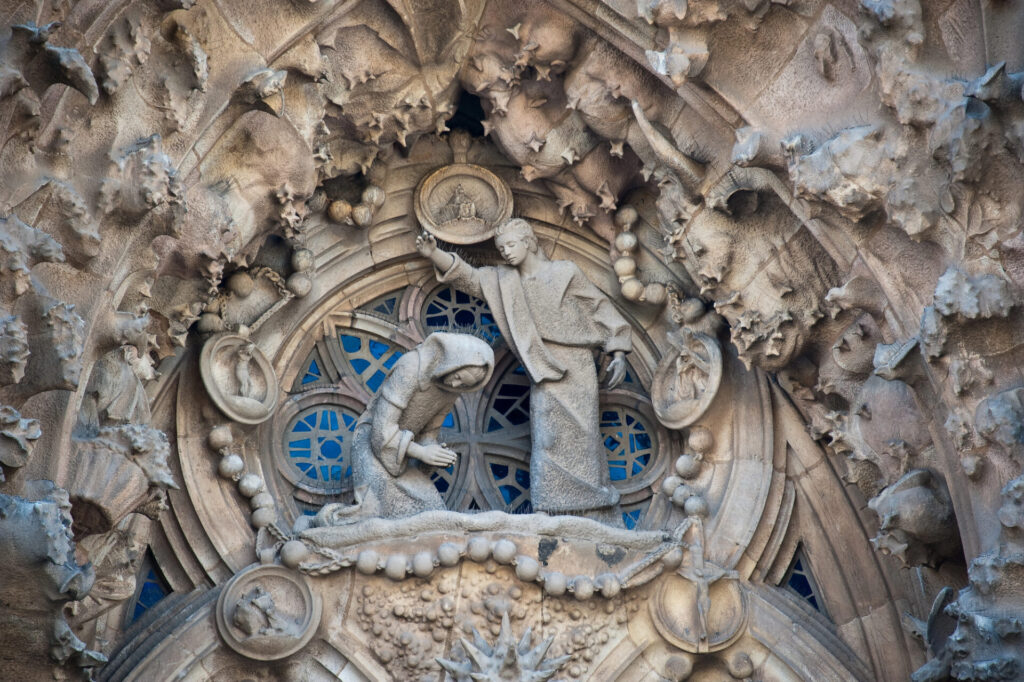
This is where the architect’s brilliant play of light is most evident, whether through the colorful stained glass or just the alternation of light and shadow in the building’s organic shapes.
If possible, choose a time for your visit about two hours to an hour before sunset. Or even better, within two hours after sunrise (in autumn and winter), when there will be fewer people inside.


Set aside at least 2 hours for the visit itself, and even more for a more detailed tour of the exterior.
A standard ticket gives you entry to the temple itself and the adjacent museum. You can also visit one of the two towers separately, but I don’t personally recommend it. You’ll get a better view, and more importantly, much more time to enjoy it, from the top of Montjuïc or the Torre Glòries skyscraper.
Tickets for the Sagrada Família
You must pay the entrance fee online; on-site, tickets can only be purchased by scanning a QR code.
The price for a ticket without a guide is €26. It includes an audio guide that you can download in the basilica’s official app.
You always buy a ticket for a specific time. You need to stick to it, otherwise they won’t let you into the temple. Due to the security check, it’s best to arrive 15 minutes early. Once inside, you can stay as long as you like.
You don’t need to print the tickets; just scan the QR code from your phone on-site.
In high season, book tickets at least a week in advance; even then, some time slots may be completely sold out.
Don’t forget to dress appropriately for the visit, as it is still a religious building.
Park Güell
Another of Gaudí’s works listed as a UNESCO site. A fairytale park with beautiful views, all sorts of nooks, and the famous bench with a colorful mosaic, which is likely the source of more than half of all family photos and selfies from Barcelona. You’ll also find “Gaudí’s lizard” here—one of the city’s symbols.
The design of the park was commissioned from Antoni Gaudí by one of his greatest patrons, Count Güell. It was originally intended to be a much larger garden city, but even on the smaller scale that was realized, it is definitely a place worth visiting.
The park also includes a small Gaudí Museum in the house where the architect lived for some time. A separate ticket is required for entry.

Tickets for Park Güell
A ticket costs €18 and the number of people allowed into the park is limited.
Therefore, I highly recommend buying a ticket online. It is valid for entry at a specific time; if you don’t stick to it, they won’t let you into the park.
In high season, buy tickets at least a few days in advance, and for sunset, ideally several weeks ahead.


Casa Batlló
The most famous and probably most interesting Gaudí house with a facade of shimmering mosaic. It’s sometimes called the house of bones or the house of the dragon due to the shapes of the balconies and certain interior elements.
Just like in the Sagrada Família, the interior will amaze you with its incredibly well-thought-out play of light and shadow, as well as slightly psychedelic ceilings and various surprising details.
Generally, you’ll likely find yourself wondering what substances the architect was using. Perhaps that’s why the tour includes the interactive Gaudí Cube exhibition, which lets you peek into Gaudí’s mind.


Tickets start at €35 and you should definitely buy them in advance online.
On the Passeig de Gràcia shopping street where Casa Batlló stands, leave some time to explore the surrounding palaces—they might not be as famous as Gaudí’s buildings, but they are still stunning architectural pieces.


Casa Milà (La Pedrera)
Just a bit further along the Passeig de Gràcia boulevard stands another of Gaudí’s monumental buildings. While the palace might not seem as colorful and decorated as Casa Batlló at first glance, it is still one of the most significant buildings of the 20th century.
The whole house is organically twisted in various ways, full of bulges, arches, bumps, decorative details, and of course, mosaics. Perhaps most famous are its chimneys and the entire roof of the house with a view of the Sagrada Família. It also includes a museum with models of other Gaudí buildings.
Locals nicknamed the palace La Pedrera, which translates to the stone quarry.
Again, I recommend buying tickets in advance online; prices start at €25.

Casa Vicens
One of Gaudí’s first major buildings. Its colorful and intricate facade references the Moorish style brought to Spain by the Arabs. It naturally features rich mosaics and unique ceramic elements.
Inside, you can now visit a museum that commemorates not only the history of the building but also Antoni Gaudí’s other work.
A ticket costs €18 and fortunately, the demand here isn’t as high as for the most famous Gaudí buildings.

Güell Palace
Just a short walk from the famous La Rambla boulevard stands the monumental residence that Count Güell had Gaudí design for him.
Here, too, the architect was still finding his style; it’s one of his early works. However, you can notice many typical elements that he later used extensively—for example, the organically twisted chimneys.
The building is definitely worth seeing from the outside; I haven’t been inside myself, as after several days of touring Gaudí’s buildings, the interior didn’t appeal to me as much.
Admission costs €12.

Historical monuments and quarters
Barcelona was founded as a colony by the Romans, so its history dates back more than 2,000 years. In the sprawling Old Town, you’ll find remains of ancient monuments, though most date from the Middle Ages and the early modern period.
Gothic Quarter (Barri Gòtic)
The original ancient settlement stood in these parts, and it has preserved the most medieval monuments.
At its heart stands the impressive Gothic Barcelona Cathedral, which is definitely worth a visit. Entry includes the option to take an elevator to the rooftop viewpoint.

Be sure to stop by the beautiful historic square Plaça Reial, the entrance of which opens onto the tourist boulevard La Rambla.
In the historic streets, you’ll find several other basilicas and Gothic churches, or perhaps Casa Padellàs—the city history museum with remains of ancient buildings. Stop by the Barcelona City Hall at Pl. Sant Jaume or the beautifully decorated Art Nouveau building Palau de la Música Catalana.
I recommend heading to Barri Gòtic early in the morning and just wandering the streets for a while as they prepare for the daily influx of visitors.
Keep in mind that the whole quarter is very touristy, and although many restaurants and bars will try to lure you in, you’re better off walking to neighboring El Born and El Raval, or even better, to the coast in La Barceloneta. You’ll get higher quality for a lower price.
Barri Gòtic is also one of the best places for souvenir shopping.

El Born
Another place where you can feel the city’s long history. Plenty of narrow streets, photogenic little squares, and great spots like Honest Greens or the Picasso Museum await you—we’ll get to that.
Stop by the Gothic Basílica de Santa Maria del Mar and the Mercat de Santa Caterina market.

El Raval
Originally an immigrant neighborhood with a poor reputation due to crime, drugs, and prostitution. Today, it’s more of a lively cosmopolitan hipster district where you definitely don’t need to be afraid to go.
Along with the El Poblenou district, you’ll see perhaps the most street art here, and plenty of great restaurants, cafes, and bars await you.
You’ll also find the Museum of Contemporary Art, the Center of Contemporary Culture, and several other galleries here.

Montjuïc Hill and Fortress
Directly above Barcelona’s port rises a hill where you’ll find several significant monuments, the Olympic park, a botanical garden, and beautiful viewpoints.
Feel free to set aside half a day for the visit—I recommend the afternoon and early evening. It’s one of the perfect places to stay for the sunset.
You can take one of two cable cars up the hill. The first takes you from the Paral·lel metro station with one transfer all the way to the Montjuïc fortress. The second—Teleférico del Puerto—runs from the port and ends at the Miramar hotel. While not as practical, as you still have quite a hike to the top, it offers a beautiful view of the entire city.

What is worth seeing on Montjuïc?
- Magic Fountain and water cascades
If you walk from Plaça Espanya, you’ll be greeted by the view of the majestic palace of the National Art Museum of Catalonia and the water cascades below it. At the bottom end of the cascades stands the great Magic Fountain. I recommend coming down here after sunset before heading out into the nightlife, perhaps in El Raval. - National Art Museum of Catalonia (MNAC)
The building itself is worth seeing. Unfortunately, I haven’t been inside, but the collection is very extensive and includes works by master painters and sculptors from the Romanesque period through the Renaissance and Baroque to modern movements. - Montjuïc Castle
An 18th-century fortress with a great view of the port and part of the city. The site long served as a political prison and execution ground; today, a small exhibition commemorates its dark history. - Olympic Park and the Torre de Calatrava tower
This is where the main events of the 1992 Olympics took place. It includes not only the Olympic Stadium but also the Olympic and Sports Museum and the controversial Torre de Calatrava TV tower. - Joan Miró Museum
A unique museum of the famous artist, which we’ll get to later. The museum’s roof terrace is freely accessible, and I recommend stopping by for at least a moment, even if you don’t plan on touring the museum itself.

Columbus Monument with a view of the city
At the end of the famous La Rambla boulevard stands a monumental memorial to the famous navigator. According to legend, this is where he stopped on his return journey after discovering America.
The main part of the monument consists of a 60-meter column with a statue of Christopher Columbus at the top. What many people don’t notice, however, is the viewing platform directly below the statue. It provides a very nice view of the city center and the port; a ticket costs €7.50.
Just keep in mind the very small capacity and head here ideally in the morning so you don’t have to wait in line and squeeze in with too many people at the viewpoint.

Modern architecture
Don’t expect bold modern districts like La Défense in Paris or unique buildings like the Guggenheim Museum in Bilbao.
Nevertheless, modern architecture enthusiasts will find plenty to enjoy, thanks to several well-known larger structures as well as many smaller interesting buildings you might stumble upon randomly throughout the city.

Torre Glòries (Torre Agbar)
An unmissable 144-meter skyscraper, known to Barcelonans simply as the “gherkin.” The building by Jean Nouvel lights up with thousands of colors in the evening and acts as a beacon on the northern edge of the city.

Since 2022, a viewpoint has been open inside, offering a view of Barcelona from a slightly different angle. I highly recommend visiting it, even though admission starts at €18.

El Poblenou district
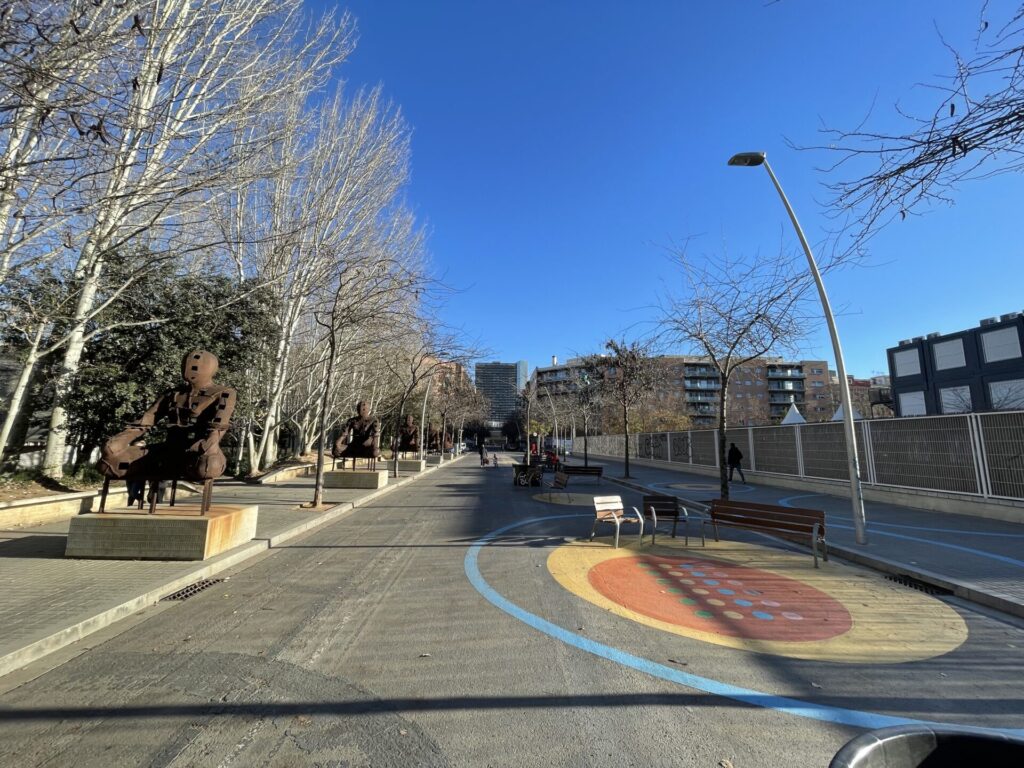
For me personally, the favorite district of Barcelona. It used to be mainly industrial halls and factories, but today it serves as one of the models for modern urbanism and the meaningful use of abandoned industrial buildings.
Whether it’s offices and coworkings, studios, a library, university buildings, cafes and bars, or perhaps the Can Framis Museum of Contemporary Catalan Art.

A walk through El Poblenou will show you a completely different Barcelona that has nothing in common with Gothic streets or Gaudí’s fairytale world.
Further north, it’s directly followed by another interesting modern complex, Diagonal Mar, and by the sea, the Fòrum.

Mies van der Rohe Pavilion
A minimalist building of marble, glass, and steel, created for the 1929 World Expo, which remains a symbol of modernism to this day.
You’ll find it on Montjuïc hill, just don’t set your expectations too high. It’s a small building that will likely only be fully appreciated by architects and true connoisseurs of modern architecture.
Port Vell and Maremagnum
A modern part of the port with a promenade, the Maremagnum shopping center, and an aquarium. The undulating Rambla De Mar walkway or The Sea Garden restaurant building are certainly worth noting.

Museums and galleries
Picasso Museum
One of the most visited museums in Barcelona. It focuses mainly on the early works of the famous artist, whom most people associate more with Paris. But Pablo Picasso grew up in Barcelona and returned to it for the rest of his life.
That’s why you’ll find a truly rich collection of some of the world’s most valued paintings in this museum. I’ve been twice and would happily go back again; it’s worth it.
A ticket costs €14 online and €15 on-site. Every first Sunday of the month, the museum is open for free, but you need to make a reservation in advance.
MNAC – National Art Museum of Catalonia
You’ll find it in the monumental Palau Nacional on Montjuïc. The building itself is worth a visit, and its terrace offers a magnificent view of the entire city.
Inside, a truly extensive collection awaits you—from Romanesque frescoes to Gothic altars and modern art. I recommend choosing a specific part that interests you most for one visit rather than trying to see everything.
Admission to the permanent exhibition costs €12; children under 16 have free entry.

MACBA – Barcelona Museum of Contemporary Art
A modern art museum in the El Raval district with its own collection and plenty of exhibitions and activities. For me, it’s one of the best modern art museums I’ve visited. It’s also currently expanding its space to be even better in a few years.
Current exhibitions and ticket prices can be found on the official website www.macba.cat/en/

Joan Miró Foundation
A gallery dedicated to the work of the famous Catalan surrealist, located on Montjuïc hill. The works are arranged chronologically as the artist’s style gradually evolved, set within the spaces of a brilliant building by architect Josep Lluís Sert.
In addition to the truly extensive permanent exhibition, seasonal exhibitions of modern artists are also held here. The part called Espai 13 is a gallery dedicated to emerging artists, which you can even visit for free.
Entry to the main exhibition costs €15.
Nature, viewpoints, and parks
One reason I love Barcelona so much is the atmosphere of its parks and the nature surrounding the city. You’ve already read about Park Güell and Montjuïc hill above; let’s look at other places too.
Parc de la Ciutadella
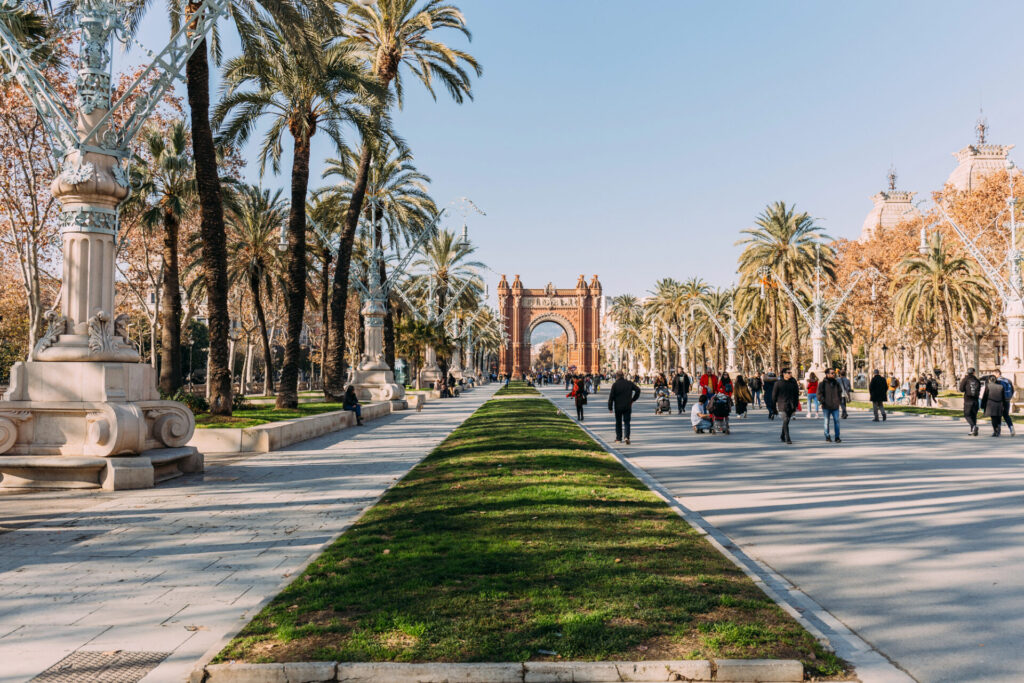
If you were to walk through only one park, it should definitely be Parc de la Ciutadella—the largest park in the center, where you’ll almost always run into great street performers, and its sprawling fountain with Neptune is one of Barcelona’s symbols.
The local Arc de Triomf, the Barcelona Zoo, and the Catalan Parliament building are also located here.
Tibidabo
Barcelona’s highest mountain, which I also highly recommend visiting. At the top stands the Sagrat Cor basilica and right next to it a retro amusement park that has been operating for over a hundred years.
From the basilica’s viewing terrace, you can see the entire city and, in good visibility, far into the interior. The view of the snow-capped Pyrenees never gets old.

Bunkers del Carmel
Another hill in the middle of the city. At the old anti-aircraft bunkers, one of the best viewpoints of the entire city opens up, especially if you want to catch photos with the Sagrada Família. Compared to Park Güell, it’s basically empty for the sunset.
Parc del Laberint d’Horta
A very nice park with buildings and a living maze in the Neoclassical style. It can be one of the ideal places to take a break from the city and the people on a hot day when you don’t feel like going to the beach.
The mountains above Barcelona directly follow the park, where you can easily go for a day trip.

City beaches
Few European cities offer great swimming, a clean sandy beach, surfing, and other water sports just a few steps from the center.
Accessibility from the city naturally means that in high season, the beaches are quite crowded; for quieter all-day sunbathing, you can easily take a train a bit further down the coast.

Barceloneta
The most famous and also the busiest beach in the city. It lies right by the neighborhood of the same name and is within walking distance of the center. Prepare for crowds of tourists, beer sellers, and noisy groups, but also for that true Barcelona atmosphere when the whole city moves to the sea.

San Sebastian
The longest of the city beaches, ending with the iconic W Barcelona building. Popular for running and some water sports.
Nova Icaria
It feels more family-oriented and a bit quieter than Barceloneta; it’s also a bit wider, so people spread out more. The water tends to be cleaner and the beach is well-equipped—there are showers, volleyball courts, and several bars right on the sand. It’s ideal if you want to combine relaxation with lunch by the sea.
Bogatell
Follows Nova Icaria and tends to be even quieter. This is where I used to go for morning walks with the stroller, along with the adjacent Platja de la Mar Bella, to watch the winter sunrise over the sea with the little one.

Other experiences
Walking and shopping on La Rambla
The most famous shopping street in Barcelona. Street performers, flower stalls, cafes, and unfortunately, crowds of tourists and pickpockets—all of that belongs to the Rambla. The secret is to disappear into the side streets as quickly as possible.

Camp Nou Football Stadium
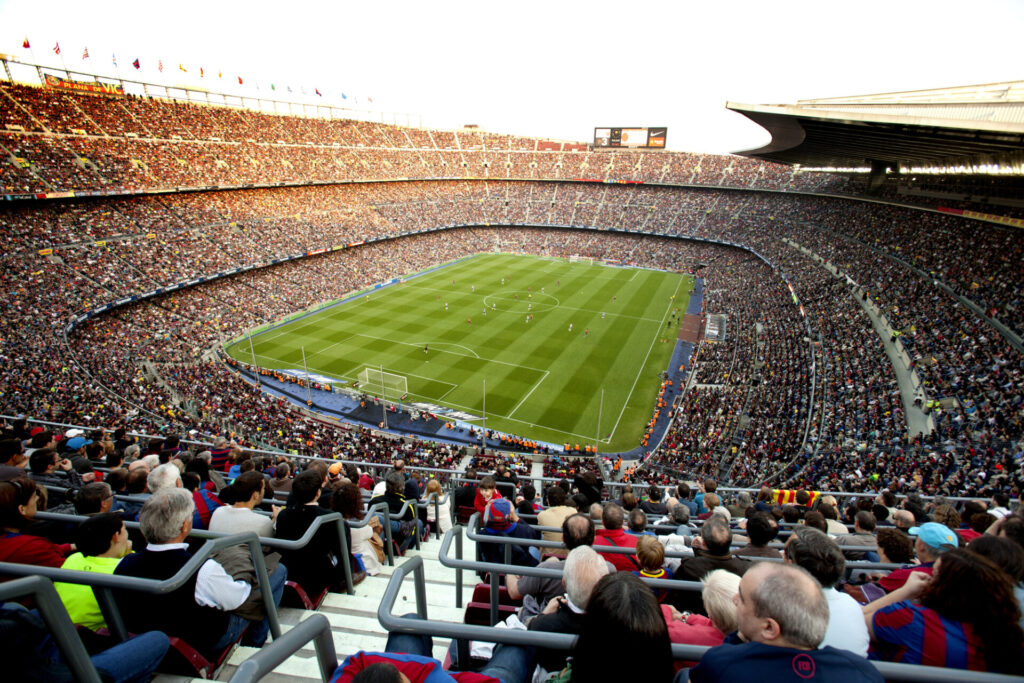
If you’re a football fan, you can’t miss Camp Nou. FC Barcelona’s stadium is the largest in Europe, and just touring the museum and behind-the-scenes is one of the greatest experiences for football enthusiasts. Standing at the edge of the pitch where the biggest football battles took place is something you won’t easily forget. If you manage to get tickets for a match, prepare for an evening full of emotion, singing, and a deafening atmosphere you won’t experience anywhere else.
Flamenco
Although it’s not a Catalan tradition, Barcelona has several tablaos—traditional halls where people dance and sing in the evening. The most famous is Tablao Cordobés right on La Rambla, but you can find smaller and more personal shows in El Born or Gràcia. Sit a few meters from the dancers, listen to the rhythm of the heels and the guitar, and watch the passion in their faces.
What to do in Barcelona with kids?
As I mentioned, Barcelona is one of the ideal city destinations to visit even with the smallest children. Among other things, it’s one of the most stroller-friendly cities in the world.
You can spend a lot of time on the beaches, in parks, and at great playgrounds. But the city also naturally offers plenty of activities specifically for families with children. Whether they are toddlers or teenagers.
Just keep in mind that with smaller children, you’ll get much less done than you would on your own. On the other hand, you’ll likely taste more local (or perhaps Argentine) treats and drink more great coffee.
Let’s get to the individual recommendations.

Barcelona Aquarium
One of the biggest attractions not just for kids, located in the Port Vell harbor. Hundreds of species of fish, crustaceans, and plants await you, all complemented by a long glass tunnel where sharks swim around you.
Smaller children will appreciate the interactive part, where they can experience how the marine world works through touch and sound.
In high season, long queues form here, so it pays to buy tickets in advance online. They cost €29 for adults and children over 11, €22 for children aged 5 to 10, and €14 for children between 3 and 4 years old.
As with most Barcelona monuments, they are tied to a specific time, or you can pay a few euros extra for a flexible ticket.
CosmoCaixa Science Museum
A huge playful exhibition where you and the kids definitely won’t be bored for a moment. In Spain’s largest museum, children and adults can try all sorts of experiments, discover natural laws, walk through an Amazon rainforest, or visit a planetarium.
If you’re heading to Barcelona with school-aged children, feel free to set aside a whole day for the museum visit—or come twice. It includes a restaurant, a cafe, and a spacious courtyard for running around and resting; they clearly expect all-day visits here.
A ticket costs €8 and children under 16 have free entry.

Zoo
Right in the center, next to Ciutadella Park, you’ll find a small but very nice zoo. There are hippos, giraffes, and flamingos, and children can also have fun at the children’s farm where they can pet the animals. It’s best to come first thing in the morning when the zoo is least crowded and the animals are more active.
Admission costs €21.40 for adults and €12.95 for children up to 11 years old.

Poble Espanyol – Spanish Village
A village built for the 1929 World Expo on Montjuïc hill. In this interactive open-air museum, you can walk through the architecture of all of Spain in one place, and there are workshops, festivals, and special programs prepared for children.
Museum of Natural Sciences (NAT)
An interactive museum near Parc del Fòrum, where fossils, dinosaurs, and exhibitions on the evolution of life on Earth await children and adults.
Entry to the museum costs €6 for an adult, but if you go as a parent with children, you get a better price of €2.70 and children under 16 have free entry.
You can also buy a combined ticket with the botanical garden on Montjuïc hill. It costs €8 for an adult or €4 for parents with children.
Delta del Llobregat Nature Reserve
A seaside reserve near the airport where you can take a break from the city, walk along paths through the reeds, and observe plenty of water birds.
Planes will fly literally over your head here, which will be especially appreciated by little (and big) boys. It also includes an enclosure for horses and sheep.

PortAventura and Ferrari Land
If you have more time and want to head out of the city, PortAventura World in the town of Salou awaits you. It’s one of the largest amusement parks in Europe, where you’ll find both children’s attractions and adrenaline-pumping roller coasters.
Right next door stands the futuristic Ferrari Land with the fastest roller coaster in Europe. Direct trains run from Barcelona to Salou and the journey takes about 1.5 hours.
Where to go for food and drink in Barcelona
For me, Barcelona is one of the TOP European destinations for great food, bars, wine, and coffee. Among other things, thanks to immigrants, you can taste the national cuisines of many countries around the world all in one place.
Plus, you can choose from a wide price range and type of experience, from local eateries and modern bistros to pleasant tapas bars and restaurants, all the way to Michelin-starred fine-dining establishments.
Keep in mind that many restaurants close after lunch (or stop cooking) and don’t reopen until dinner. Locals often go out for dinner after 9:00 PM, but you can usually get a meal starting from around 6:00 PM without any issues. They typically stay open until at least midnight.
Generally speaking, the further you eat from the most touristy locations, the better chance you have of getting the best price-to-quality ratio. I definitely wouldn’t go to La Rambla for dinner…

Traditional Catalan dishes you must try
Catalan cuisine is a bit different from what you might know from southern Spain. That’s why I recommend trying at least a few local dishes.
Watch out – paella is actually one of those dishes that originally originated a bit further south, in the Valencia region. But that doesn’t mean you won’t taste great paella in Barcelona; on the contrary. They just might not worry as much about making it as “traditional” as possible here.
So, what should you taste?
- Pa amb tomàquet – toasted bread rubbed with garlic and tomato, a typical appetizer.
- Fideuà – similar to paella, but with pasta noodles instead of rice.
- Suquet de peix – fish soup with potatoes.
- Escalivada – grilled vegetables (peppers, eggplant, onions) with olive oil, often served as an appetizer or part of a tapas spread.
- Crema catalana – a dessert similar to crème brûlée, but with a hint of cinnamon and lemon.
- Xuixos – sweet pastry filled with crema catalana.
- Cava – a typical sparkling wine, and personally my European favorite.
I also love the local fish and seafood, just be prepared for relatively high prices in Barcelona.
The best tapas bars
If there’s one thing I truly adore about Spanish cuisine, it’s tapas. Small plates of all sorts of delicacies, finger foods, salamis and cured ham, shrimp, small fish, or olives – all meant for sharing and slow grazing during lively conversation, preferably with a glass of good wine.

Again, thanks to significant international influences, many Barcelona establishments offer imaginative, modern tapas, so you can really taste a lot in just a few days.
- El Xampanyet – famous traditional tapas in the El Born district.
- Bar Restaurant Pinotxo – one of the great tapas spots in the Sant Antoni market.
- Bisavis – original tapas and excellent wine.
- La Cova Fumada – one of the very traditional tapas bars in the Barceloneta district.
- Suru – modern tapas with Asian influences and perfect wine pairings.
- Floreria Atlantico Barcelona – a bar that combines Argentine influences with modern Catalan cuisine.
Markets – the heart of Barcelona’s gastronomy
The best place to start tasting local food and tapas? Definitely one of Barcelona’s markets.
You’ll encounter plenty of tourists there, but fortunately, they haven’t managed to drive out the locals yet, so every market still offers at least a somewhat authentic experience.

- Mercat de la Boqueria – the most famous market right next to La Rambla, full of colorful stalls with fruit, jamón, cheeses, and seafood.
- Mercat de Sant Antoni – a less touristy market in the El Raval district. You’ll find not only food but also clothing and a flea market.
- Mercat de la Concepció – a beautiful historic market in Eixample, ideal for buying fresh groceries.
- Mercat de Santa Caterina – my favorite market with a unique colorful roof, just a few streets away from Barcelona Cathedral.

Where to go for Catalan cuisine
- Casa maians – an excellent restaurant in the Barceloneta district; they do great seafood, among other things.
- RAO Restaurant – great food in the center at relatively reasonable prices.
- Haddock – La Taverne Canaille – one of the places to taste truly traditional Catalan dishes, in a friendly and very laid-back environment.
- Suculent – a modern take on Catalan cuisine in the Poblenou district.
- Alkimia – a fine dining experience with roots in traditional Catalan cuisine.
Where to go for fine dining
Barcelona is one of the European stars of fine dining, whether it’s Michelin-starred restaurants or significantly more accessible modern establishments.
In destinations like this, I’ve found the World of Mouth app to be an excellent guide for selection. Michelin stars aren’t everything, and even the Michelin Guide doesn’t cover it all, especially if you want to keep a reasonable budget.
- Disfrutar – 2 Michelin stars and experimental cuisine led by former chefs of the famous El Bulli.
- Moments – an experiential Michelin restaurant focused on modern Catalan cuisine.
- Mont Bar – a Michelin tapas restaurant with absolutely genius wine pairings.
A few places that stuck in my memory
Mainly in Poblenou, where I tried the most. Otherwise, look at Google Maps and read reviews. Or even better, ask for tips from the staff at other places where you really enjoyed the food.
- Little Fern – a great spot, especially for brunch.
- I Love Empanada – takeaway with Argentine filled empanadas. Ideal breakfast for winter morning walks with a stroller or a late-night snack.
- 101 Dim Sum – excellent Chinese dumplings.
- Honest Greens – several locations across Barcelona, great for fancy brunches and lunches, also suitable for vegetarians and vegans.
- Nonna’s Brunch – another breakfast spot, this time in the Eixample district.
Where to go for great coffee
I’m very particular about high-quality coffee, and I always have a bit of a struggle in Spain. Fortunately, that’s not the case for Barcelona, where you’ll find plenty of great roasteries and specialty coffee shops.
Choose mainly based on European Coffee Trip; for my part, I’ll add just a few tips:
- Syra Coffee – a network of espresso bars with perfect coffee, croissants, and other small bites. My favorite is the Poblenou branch.
- Ombú Cafè – a beautiful cafe in Poblenou that also offers excellent brunches.
- Cafe Fargo – smaller cafes in two locations, with the option to grab a small (even savory) bite.
- Parcelona Coffee Bar – a Colombian cafe in Poblenou.
- The Madness Speciality Coffee Shop – another espresso bar with very well-tuned coffee.
- Bari Coffee – one of the cafes where you can sit for a longer time, perhaps for an afternoon snack.
Where to go for desserts, ice cream, and other sweets
- Chök – The Chocolate Kitchen – creative donuts and chocolate treats.
- Gelateria Da Gallo – premium ice cream near Casa Milà.
- Churrería Laietana – some of the best churros in the center.
- Masia de Sabor Churreria – more great churros, just a few steps from Palau Güell.
- Emilio’s Barcelona – more great ice cream, crepes, and sweet pastries.
- Lucciano’s – an ice cream parlor with a great interior.
Bars and nightlife
Spanish cities in the late evening hours come alive mainly in the small squares and on the terraces of restaurants, tapas bars, or wine bars. But that doesn’t mean Barcelona doesn’t have great cocktail bars and clubs. On the contrary.
- Sips – one of the famous cocktail bars with original drinks and intimate seating.
- Paradiso – officially one of the best bars in the world. Is it worth it? I have no idea. But don’t even try without a reservation.
- APOTHUCKER – an excellent and not-so-famous cocktail bar with creative drinks and an original interior.
- La Whiskeria – you might not be in Scotland or Ireland, but a genius whiskey bar awaits you here anyway. Similar to the one in Brno.
- Hemingway Gin & Cocktail Bar – moving from whiskey mainly to gin, but also interesting cocktails.
- Enmezcalarte Mezcal Shop & Tasting Room – third time’s a charm. The name clearly suggests they specialize in mezcal here. A must-go for me.
- Nevermind – a famous punk bar.
Tips for vegetarians and vegans in Barcelona
Most tapas bars have several vegetarian options (patatas bravas, pimientos de padrón, tortilla de patatas), but vegan options are fewer. Therefore, it’s better to head directly to vegan establishments, or perhaps Moroccan or Lebanese bistros.
- Vrutal – a great restaurant in Poblenou.
- Teresa Carles – one of the most famous vegetarian restaurants in Barcelona, operating since 1979. Great daily menus and creative dishes.
- Mad Mad Vegan – the best place for vegan comfort food. Burgers, fried strips, tacos, …
- The Vegan Corner – an excellent spot, especially for sweets.
- The Green Spot – a stylish restaurant, I recommend it especially for dinner. They make great vegan pizza, among other things.
More verified tips from a local
I asked my friend Boris Vanka, a marketer who has been living in Barcelona for some time, for links to his favorite spots. We agreed on some, like Syra Coffee or Honest Greens, and I’m adding others here for you too.
- Cafe Local – an excellent espresso bar.
- DELICATESSEN ARGENTINA Letamendi – a piece of Argentina in Barcelona.
- Vinitus Madrid–Barcelona – a great place for tapas.
- Vinus & Brindis – a bit out of the way, but a super spot for wine and tapas.
- Harlem Jazz Club
- Pivobar Cerveza Checoslovaca – in case anyone is feeling very homesick :-)
- Orxateria El Tio Che – the best ice cream and horchata we found in 2 years in the city.
- Salamat Clot – a completely gluten-free restaurant, excellent service and food.
Trips outside the city
Have more time? Great news. Around Barcelona, you have plenty of other places to choose from for exploring. Among other things, you can take a high-speed train for a trip to Madrid, but for now, let’s stay a bit closer.
Montserrat – a monastery in the mountains
Just an hour from Barcelona rises Mount Montserrat, famous for its Benedictine monastery and the statue of the Black Madonna (La Moreneta). It’s one of the symbols of Catalonia and definitely a great opportunity for a day trip.
Besides visiting the basilica and monastery, I definitely recommend going for a short – or even longer – hike on the surrounding trails. Among other things, they offer beautiful views of the monastery, rock formations, and the surrounding landscape.

How to get there
Take the R5 train from Plaça Espanya station to Monistrol de Montserrat; the journey takes about an hour. From there, take either the Cremallera rack railway or the Aeri de Montserrat cable car up to the monastery.
Sitges – a beach town with atmosphere
Sitges is a picturesque coastal town about 40 minutes south of Barcelona by train. It’s known for its festivals and other cultural events, beaches, and cosmopolitan atmosphere.
Walk through the historic center with its narrow streets, stop at the beautiful Palau de Maricel and the Church of St. Bartholomew and St. Tecla.

How to get there
Use the R2 Sud commuter train from Passeig de Gràcia or Estació de França station; the journey takes about 40 minutes.
Costa Brava – wild coast and fishing villages
If you have more time, head north of Barcelona to the Costa Brava. Cliffs alternate with small coves and beautiful beaches, and white fishing villages make it feel as if time has stopped here.
Which are among the most famous and beautiful?
- Tossa de Mar,
- Calella de Palafrugell,
- Cadaqués,
- Begur with its castle of the same name,
- El Port de la Selva.
Unfortunately, you can’t get to the villages by train, so the easiest way is to rent a car for the trip – if only because you can stop anywhere you happen to like.
Alternatively, you can go by bus; the easiest route is to Tossa de Mar, which takes about an hour and a half from Barcelona.
A bit closer is the town of Calella (not to be confused with Calella de Palafrugell), which you can reach in half an hour by train and is one of the classic resorts.

Girona – medieval city and Game of Thrones
A city that has preserved its medieval character and narrow stone streets, it’s a paradise for history buffs. Fans of the Game of Thrones series will be pleased to know that scenes from the Seven Kingdoms were filmed here.
Don’t miss the Santa Maria Cathedral, the Jewish quarter El Call, or a walk along the walls, from where you can see the whole city. Girona also has a lively cafe culture and plenty of great tapas bars, ideal for an afternoon break.
You can easily get to Girona by train; the AVE high-speed train takes only 40 minutes.
Plus, Ryanair renamed the local airport to Barcelona-Girona, so be careful not to end up here by accident when buying extra cheap tickets instead of Barcelona. Or would that actually be an advantage? :-)

Figueres – Dalí’s surreal world
If you’re interested in modern art, you must go to Figueres – the birthplace of surrealist Salvador Dalí. It’s home to the famous Teatre-Museu Dalí, which the artist designed himself. The entire building is a surrealist work in itself, where you never know what awaits you around the next corner. Just don’t forget to book tickets in advance; it’s often sold out during the season.
Be sure to leave time to explore the town itself and the vast Sant Ferran fortress here.
You can get here from Barcelona by AVE high-speed train in 1 hour and 20 minutes.

Practical tips for traveling to Barcelona
When to go to Barcelona
By far the most people head to Barcelona in late spring and summer, but we’ve always flown there in winter and it’s been great every time.
The entrance to Sagrada Família was completely queue-free in January, and it was half-empty inside. You can only dream of that in summer. While temperatures can drop to 5 degrees in the morning and evening, the sun shines during the day and still has quite some power even in winter, so a thin sweater or sometimes even short sleeves are enough.
All restaurant terraces here have gas heaters and blankets, and unlike southern Spain, they heat the houses here. You just won’t do much swimming in the sea.
So, which season to choose?
- March–May and September–October: best weather, fewer tourists, swimming is possible from April.
- Winter: mild (10–15 °C), few tourists, cheaper flights and hotels.
- June–August: crowds of people, highest prices, and often unbearable heat – better go elsewhere.
How to get to Barcelona
By air
The fastest and probably cheapest way to get to Barcelona is by plane. Spain’s second-largest airport, El Prat (BCN), is about 14 km from the city center and is very easily accessible by public transport.
Direct flights across Europe are provided by low-cost airlines like Ryanair, Vueling, Easyjet, or Eurowings, with prices starting at €50 for a round-trip ticket. In the peak tourist season, however, be prepared to pay at least double.
If you’re traveling with luggage or “reasonable” departure times are important to you, compare offers with traditional airlines like Iberia, Lufthansa, British Airways, Air France, or KLM.
WATCH OUT – Ryanair also sells (usually extra cheap) tickets to Barcelona-Girona airport. In reality, this is Girona–Costa Brava (GRO) airport, which is about 100 km and an hour and a half by train from Barcelona.
Direct long-haul flights to Barcelona are offered by Delta, American Airlines, Iberia, Air Canada, Emirates, Qatar, or Singapore Airlines, for example.

How to get from the airport to the center:
- Aerobus
A direct bus to Plaça de Catalunya with stops at Pl Espanya, Gran Via-Urgell, and Pl Universitat. It runs every 5 minutes (every 10 minutes early morning and late evening), the journey takes 35 minutes, and the price is €12.25 one-way or €18.50 round-trip. You can buy a ticket directly on the bus, but we recommend buying online instead. WATCH OUT – when traveling from the center, make sure you’re boarding the bus for the correct terminal. - By train
Usually the best choice. From Terminal 2, take the R2 commuter line; it takes 30 minutes to reach Estació Sants or Passeig de Gràcia (near Plaça de Catalunya). The price is €5.50 one-way, or you can use the Hola BCN! card. - By metro
At both terminals, you’ll find an L9 metro station. You’ll use it mainly if your accommodation is directly on that line or if you’re transferring to another metro. Line L9 doesn’t go directly through the center. The fare is the same as for the commuter train. - By city bus
The cheapest way to get to the center – a ticket costs €4.60. From both terminals, take line 46 to Plaça Espanya; the journey takes 30 to 40 minutes. Night lines N16 (to T2) and N17 (to T1) also run to the airport from Plaça de Catalunya and Plaça Espanya. - By taxi or private transfer
If you don’t want to deal with transfers or lugging heavy bags on public transport, you can of course easily use a taxi. Uber and Bolt work well in Barcelona, with prices around €40 one-way. Especially for larger groups, it can make sense to book a private transfer in advance. The driver will wait for you at the terminal exit or pick you up from your accommodation in time and take you to the airport. You can book it in advance on GetYourGuide.
By train
Probably only the biggest enthusiasts will take the train from London or Frankfurt to Barcelona. But if you’re already in Spain or southern France, the train will very likely be the best choice.
The Spanish high-speed train network is among the best in Europe, and thanks to the entry of competition in the last few years, travel prices have dropped significantly.
The journey from Madrid to Barcelona takes just slightly over 2 hours, and prices start at €35. Several trains run per hour, but tickets are sold like airline tickets – so each train costs differently depending on departure time, how far in advance you buy, and current occupancy.
You can also take a direct high-speed train from Málaga (over 6 hours) or Bilbao (over 6 hours), for example.
Along the coast, you can also reach Barcelona by train from Valencia or Alicante.
You can even arrive from Paris via high-speed rail; the journey takes just under 7 hours.
Look for and buy tickets from Madrid or France via Omio or Trainline to choose from multiple carriers. Others can be bought on the official website of the Spanish railways, RENFE.
By bus
Flixbus offers direct connections across Europe, but the journey often takes over 20 hours and prices start at €50 one-way.
In our opinion, such a long time on a bus is more of a suffering, and if for some reason you don’t want to fly, we recommend at least splitting it in half, seeing one of the cities on the route during the day, and continuing again overnight.
By car
The car journey from London takes around 16 hours of pure driving time and covers 1,500 km. When calculating costs, count not only on expensive fuel on highways but also tolls in France and Spain.
Transportation in Barcelona
Barcelona has one of the best public transport networks in Europe, plus it’s very friendly for walking or cycling. So it definitely doesn’t make sense to rent a car or regularly use taxis.
If you do arrive by car, I recommend leaving it on the outskirts and continuing by public transport – parking in the center gets very expensive (if you can even find a spot).

Public transport: metro, trams, and buses
Public transport in Barcelona is clear, reliable, and relatively cheap.
Its backbone consists of 12 metro lines and, for longer trips, commuter trains. The metro is supplemented by trams, plenty of bus lines, and also several cable cars.
For route planning, Google Maps has worked best for me; it can not only combine potential transfers well but also recommends walking where it makes sense.
WATCH OUT – not all metro stations have barrier-free access. This needs to be considered when traveling with a stroller so you’re not surprised by long narrow stairs on the spot. Unfortunately, the metro network map doesn’t distinguish between accessible and non-accessible stations. You can find this information on Google Maps – accessible stations show a wheelchair icon when clicked or during route planning.
Public transport fares in Barcelona and where to buy tickets
A single fare in Zone 1, which covers most of the “tourist” part of Barcelona, costs €2.65. However, it’s very likely that you’ll find it more worthwhile to use one of the multi-day or tourist tickets.
While a single-trip ticket allows transfers, it’s not always the case. You must only use lines from one carrier (and even the metro has 2 different ones). At the same time, it’s not valid for trips to and from the airport.
You can also buy a single ticket by tapping your payment card or phone when boarding a bus or tram, or at metro turnstiles. The system is purely digital – you won’t get a paper ticket.
Recommended tickets:
- T-Casual: A ticket for 10 rides for €12.55. It can be used by multiple people and is valid for all carriers and modes of transport.
- Hola Barcelona Travel Card: Unlimited travel for one person for 2–5 days (from €18.10). You can buy it in advance online.
For these tickets, you’ll either need a physical smart card (issued by any ticket machine for €1) or to activate the T-mobilitat mobile app.
On foot and by bike
Ideally, explore the historic center (Barri Gòtic, El Born) on foot. When you’re not in a hurry, you can walk to many other sights too – whether it’s Gaudí’s buildings or the Sagrada Família cathedral.
This way, you’ll have a chance to notice many details and interesting things that the average tourist almost certainly misses. The local houses alone hide so many small surprises that I could easily walk here for weeks and still enjoy discovering them.
Since most of the center is completely flat and, with a few exceptions, you’ll only find wide, straight streets, Barcelona is among the ideal cities for exploring by bike. Many rental shops or even hostels and hotels offer bike rentals, or you can use short-term bike sharing via apps like Donkey Republic or Tier.

Where to stay
Last time we were in Barcelona with a 4-month-old baby, we stayed to our complete satisfaction at Durlet Beach Apartments in the Poblenou district. Just a short walk from our favorite avenue, Rambla del Poblenou, with lots of great food and coffee, a few minutes from the beach, and with plenty of options for where to go with a stroller.
The apartments at TSA La Rosa in the Gràcia district were also very pleasant.
Best neighborhoods to stay in
Eixample
A neighborhood with wide boulevards, iconic Gaudí buildings like Sagrada Família or Casa Batlló, and plenty of stylish restaurants. A great choice if you’re looking for comfort, good transport accessibility, and quieter accommodation in the center.
Specific accommodation tips:
- Luxury hotels: Majestic Hotel & Spa, Hotel Casa Fuster
- Mid-range: Hotel Praktik Bakery, Room Mate Carla
- Hostels: Yeah Barcelona Hostel, Sant Jordi Hostels Rock Palace
Barri Gòtic and El Born
The historic heart of Barcelona with winding streets, Gothic churches, small bars, and a lively atmosphere from morning till night. If you like nightlife and want to be in the center of the action, look here.
Specific accommodation tips:
- Luxury hotels: Grand Hotel Central, Hotel Neri
- Mid-range: Hotel Suizo, Hotel Oasis
- Hostels: Kabul Party Hostel, Safestay Barcelona Gothic
Gràcia
A bohemian neighborhood with a variety of cafes, shops, and smaller markets. A quieter area just outside the center, ideal if you’re staying for a longer time.
Specific accommodation tips:
- Luxury hotels: Casa Bella Gracia, Hotel Casa Fuster
- Mid-range: Aparthotel Silver, Hotel Ronda Lesseps
- Hostels: Rocket Hostels Gràcia, Factory Hostels Barcelona
Poblenou and Barceloneta
Coastal neighborhoods ideal for a summer vacation – close to the beach, with modern architecture and traditional fishing streets.
Specific accommodation tips:
- Luxury hotels: Hotel Arts Barcelona, W Barcelona
- Mid-range: Hotel 54 Barceloneta, Occidental Atenea Mar
- Hostels: Sea Hostel Barcelona, Unite Hostel Barcelona

Prices and budget
Barcelona is a wealthy and very touristy city. Prices reflect that.
However, you can still live quite low-cost in Barcelona, especially if you cook for yourself at least part of the time and go to a Mexican bistro for lunch instead of restaurants. Otherwise, food and drink will be by far the most expensive item after accommodation.
- Coffee: €1.50–4
- Beer: €2.50–4
- Tapas: €2–6 per piece
- Main course in a restaurant: €12–22
- Menu del día (daily menu including drink): €10–15
- Entrance to sights: Sagrada Família from €26, Park Güell €13, Casa Batlló from €29
Tip: Buy tickets online – they’re usually cheaper and you’ll avoid the queues.
Safety
Barcelona is generally a safe city, but it has a reputation as a pickpocket’s paradise.
- Be most careful on La Rambla, in the metro, and on the beach.
- Don’t carry your wallet or phone in your back pocket.
- Don’t leave your things unattended on the beach even for a few minutes.
- Avoid certain parts of the Raval neighborhood at night.

Internet and SIM cards
Spain is part of the EU, so if you’re from the EU, you can use the same mobile plan in Barcelona as at home without worry.
Otherwise, get a data package via eSIM; for me, the best offers are in the Revolut app.
Wi-Fi is also almost everywhere, and internet speed is generally very good. For digital nomads, Barcelona is among the best global destinations outside the peak season – except for the prices.
Language
The official languages are Catalan and Spanish. However, Barcelona is such a touristy and international city that you won’t have any trouble communicating in English anywhere.
However, basic phrases in Catalan will be very appreciated and will set you apart from the endless line of tourists who only came here for nice Instagram photos. You can use the Duolingo app, for example.

FAQ and useful resources
How long should I go to Barcelona for?
- 3–4 days are enough for the main sights, Gaudí’s buildings, and some relaxation on the beach.
- A week will allow for a more relaxed pace or adding trips to the surroundings (Montserrat, Sitges, Girona).
When is the best time to go to Barcelona?
- April–June and September–October: ideal weather, fewer people.
- July–August: biggest crowds, endless queues, heat, and expensive hotels.
- Winter: cheap flights and fewer tourists, but cooler weather.
Where to buy tickets?
It’s best to book online in advance – you’ll save time and often money:
How to get around the city?
It’s best to use the metro and buses as much as possible – it’s worth getting the Hola Barcelona card. Walk for short distances; Barcelona is a city built for pedestrians. You can also rent a bike – either for the whole day or for individual rides via bike sharing.
What about safety?
Barcelona is generally safe, but pickpockets are a big problem. Be careful especially on La Rambla, in the metro, and on the beach.
Can you swim in Barcelona?
Yes, there are several beaches right in the city – the most famous is Barceloneta, while Nova Icaria and Bogatell are cleaner and quieter. North of Barcelona lies the famous coastal region of Costa Brava.
Useful links and resources
- Public transport in Barcelona: TMB Barcelona
- Tourist card: Hola Barcelona Travel Card
- Official Barcelona tourism website: Barcelona Turisme
- Tickets for main attractions:
- Sagrada Família
- Park Güell
- Casa Batlló
- Camp Nou
- Others can be easily bought on GetYourGuide
- Accommodation: Booking.com
- Trains to nearby cities: RENFE