This post is also available in:


The capital of Poland’s Lower Silesian Voivodeship is packed with historic landmarks and buzzes with vibrant cultural life all year round. Whether you’re travelling with family, as a couple, or solo, Wroclaw has something for everyone — and then some.
This picture-perfect city is celebrated for its bridges, churches, stunning architecture both historic and modern, and romantic riverside parks. Linger over a meal in a stylish restaurant or settle into a cosy café, take the kids on a dwarf hunt through the city streets, sample local specialities, or rent a bike and let the city unfold at your own pace. Wroclaw is a city made to be savoured.
We cover other Polish cities in dedicated guides:
Why Visit Wroclaw?
Few cities in Poland have a history as rich as Wroclaw (also known as Breslau or Vratislav). The historic capital of Silesia has been part of several nations over the centuries — for hundreds of years it belonged to the Kingdom of Bohemia, then Austria-Hungary, Prussia, and Germany, before being resettled by Poles and formally incorporated into Poland in 1945.
Every one of those historical chapters left its mark on the city’s appearance. Come and wander the picturesque lanes of the old centre, letting Silesia’s complex and layered history wash over you.
Today, Wroclaw is Poland’s fourth-largest city, with a population of around 600,000.
Top Sights and Attractions in Wroclaw
Old Town
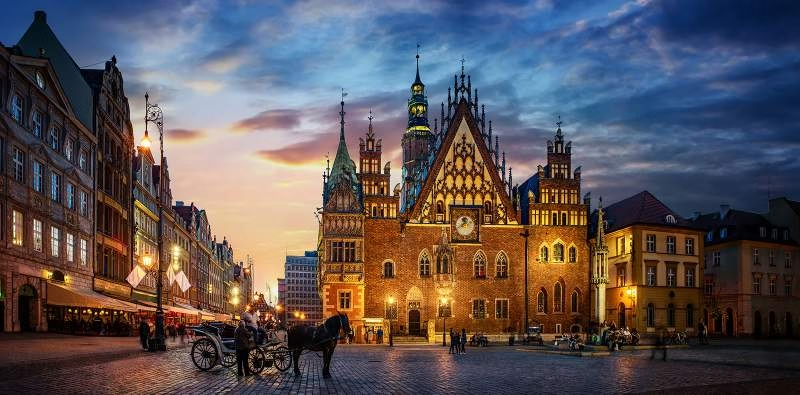
No visit to Wroclaw is complete without exploring the Old Town. Among the churches, don’t miss the Basilica of St. Elizabeth of Hungary, which also serves as a military church — it stands right next to the Rynek. The best panoramic view of the city is from the tower of St. Mary Magdalene’s Church, just one block from the main square.
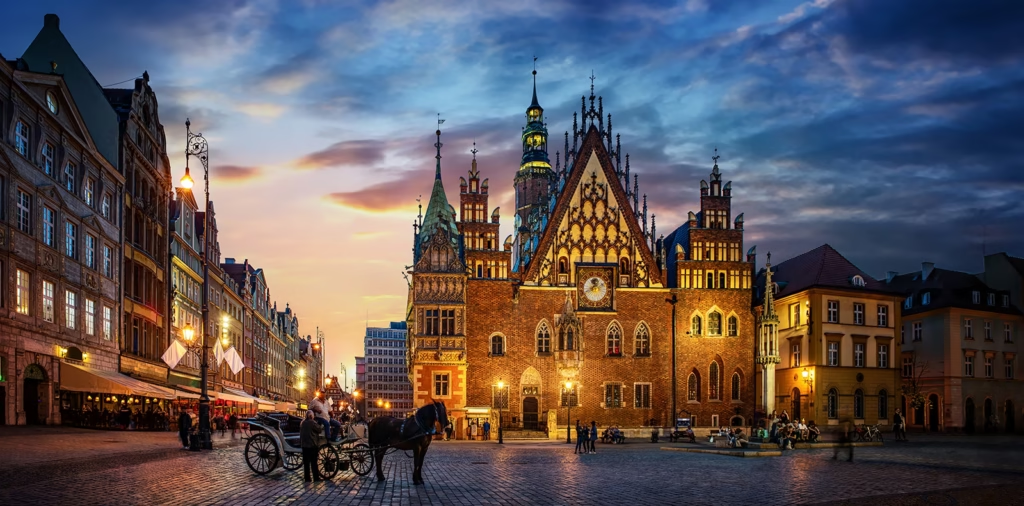
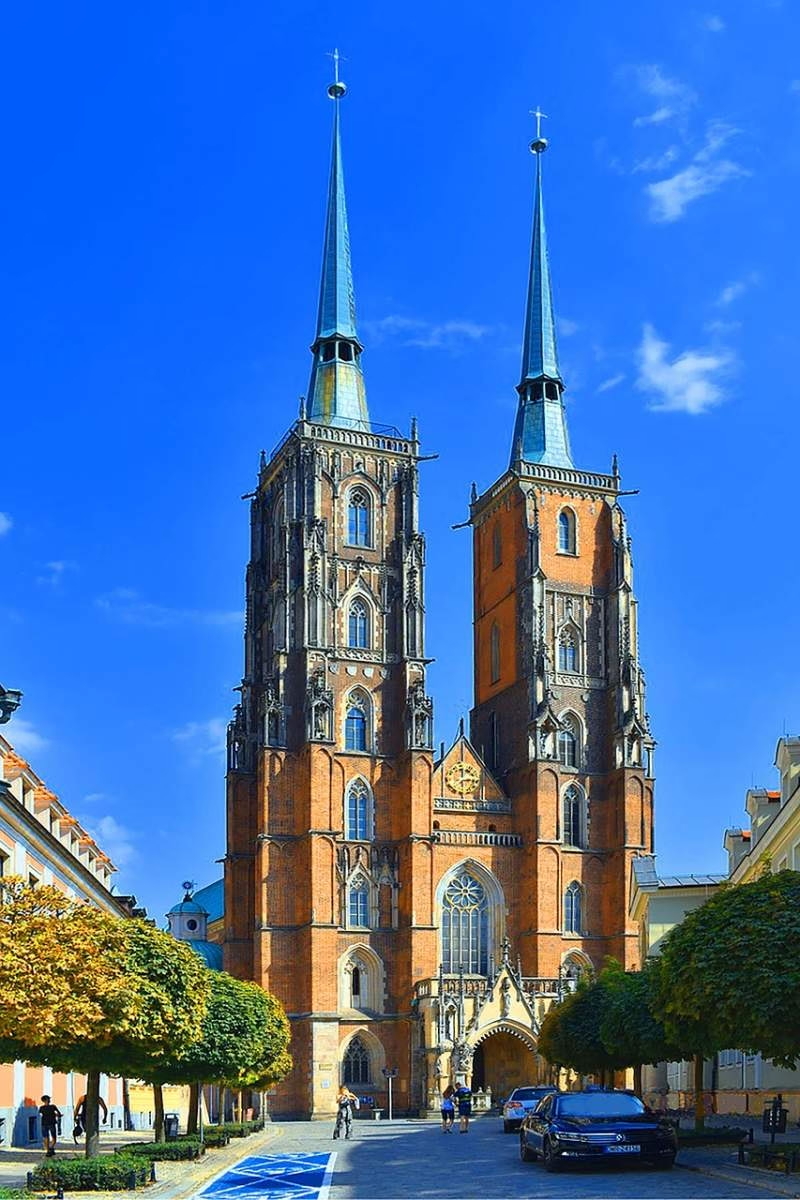
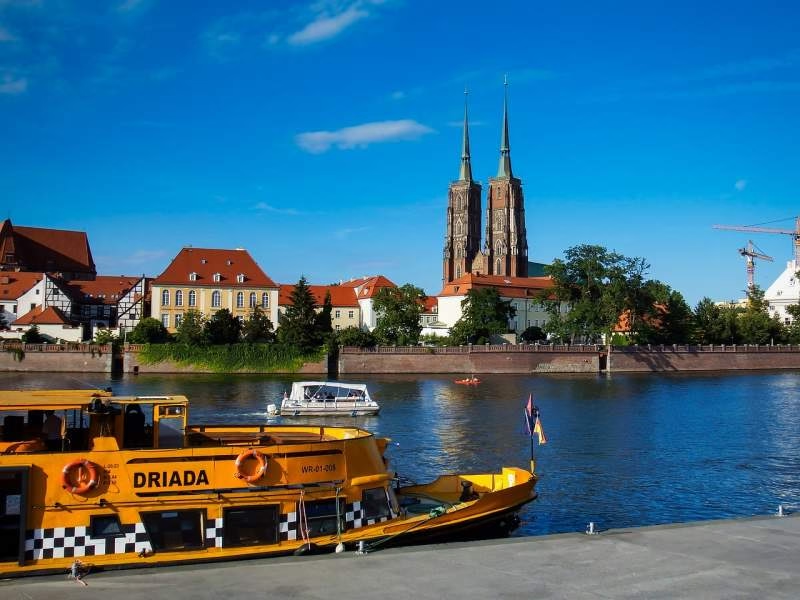
The city’s most iconic landmark is the Town Hall on the Rynek — if you want to see inside, head to the museum it now houses. And don’t skip a visit to the cathedral on Tumski Island, sitting in the middle of the Oder River.
Town Hall
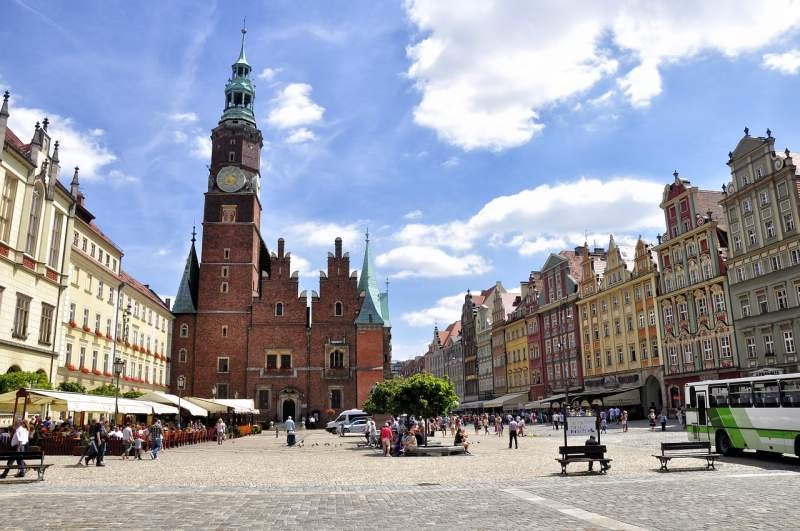
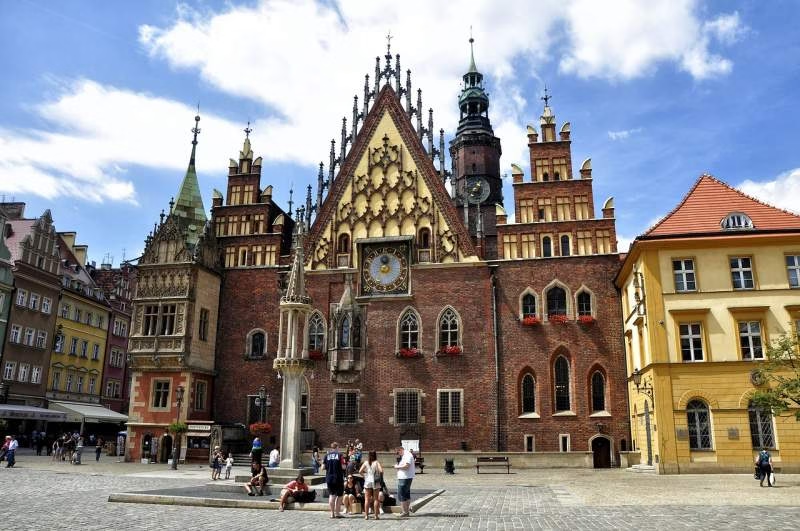
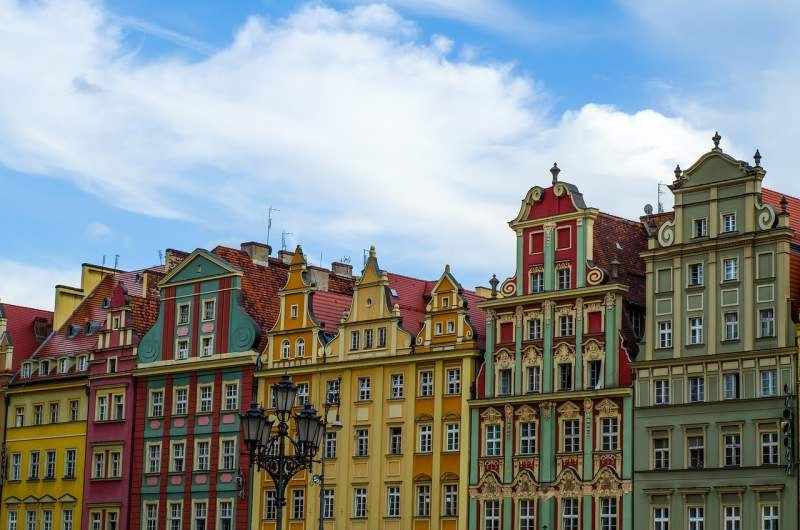
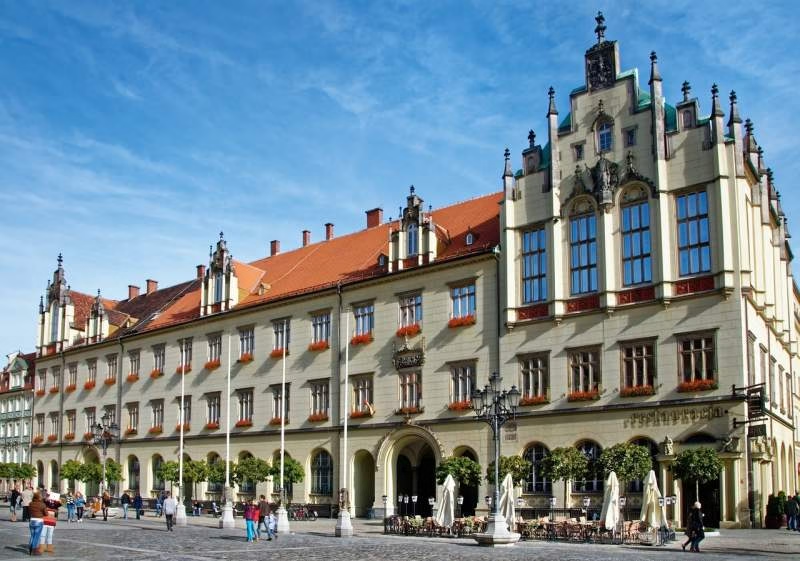
Ratusz — the Town Hall — is a magnificent Gothic building and one of the most architecturally significant landmarks in Lower Silesia. Set right on the market square, its ornately decorated facade will stop you in your tracks. Originally the seat of city government, it now houses a museum of bourgeois art.
The Town Hall is an iconic symbol of Wroclaw, and its construction spanned from the late 13th century to the mid-16th century. During the Second World War it suffered several blows — including the loss of sculptural elements and a bomb that pierced the roof but never detonated.
Zoo + Afrykarium
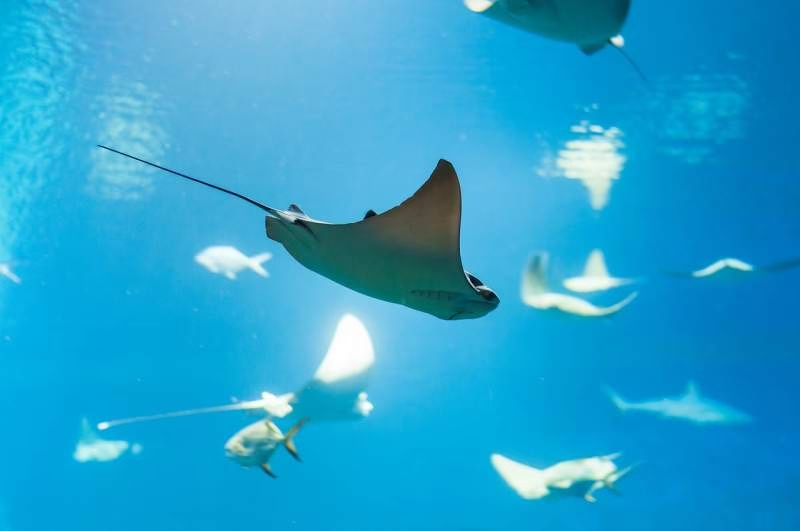
Wroclaw Zoo is not only Poland’s largest, but also its oldest. Located right in the city centre and sprawling across an impressive 33 hectares, it is home to over 10,500 animals from 1,132 different species — placing it among the world’s largest zoos.
Within the zoo, a recently opened pavilion dedicated to Africa’s fauna and flora is considered one of the finest and most modern of its kind in Europe.
Hydropolis
Hydropolis is a science centre dedicated entirely to water. Using a wide range of technologies, its interactive exhibits educate visitors on the role of water in the environment, its importance to human life, and the history of humanity’s relationship with water.
The centre occupies a historic neo-Gothic underground reservoir covering 4,600 square metres, originally built in the 1890s as a drinking water storage facility.
Tickets are available at several price levels — find the full price list here.
Military Cemetery
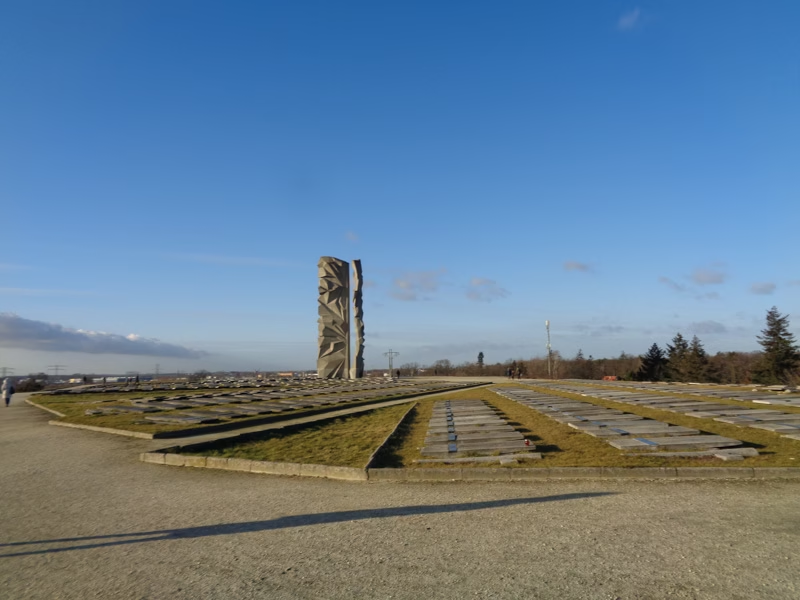
Visit this poignant memorial cemetery for fallen Polish soldiers, located at the terminus of several tram lines in the Oporów district. The views of the surrounding area from the cemetery are well worth the trip.
National Museum
The National Museum in Wroclaw is a must for art lovers. Its collections focus primarily on Polish and Silesian art, and it also holds one of the largest collections of contemporary art in Poland.
Centennial Hall
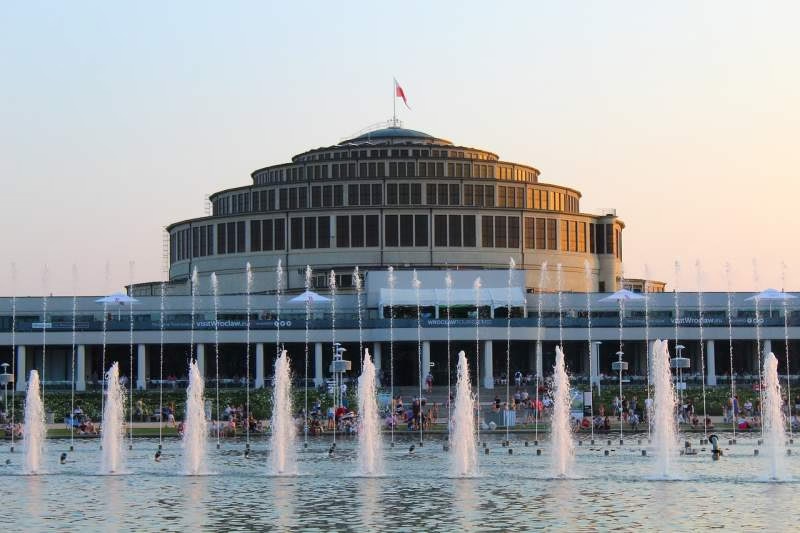
Centennial Hall in Wroclaw is a monumental reinforced concrete structure built between 1912 and 1913 to a design by architect Max Berg, created as a memorial to the centenary of the victory over Napoleon at the Battle of Leipzig.
Standing 42 metres tall with a floor area of 14,000 square metres, the building was inscribed on the UNESCO World Heritage List in 2006.
The architectural complex also includes the Four Domes Pavilion, the Pergola, and the Needle spire. Centennial Hall hosts exhibitions, concerts, and sporting events, and has become one of Wroclaw’s most important architectural and historical landmarks.
More Unmissable Experiences
Hunting for Dwarfs
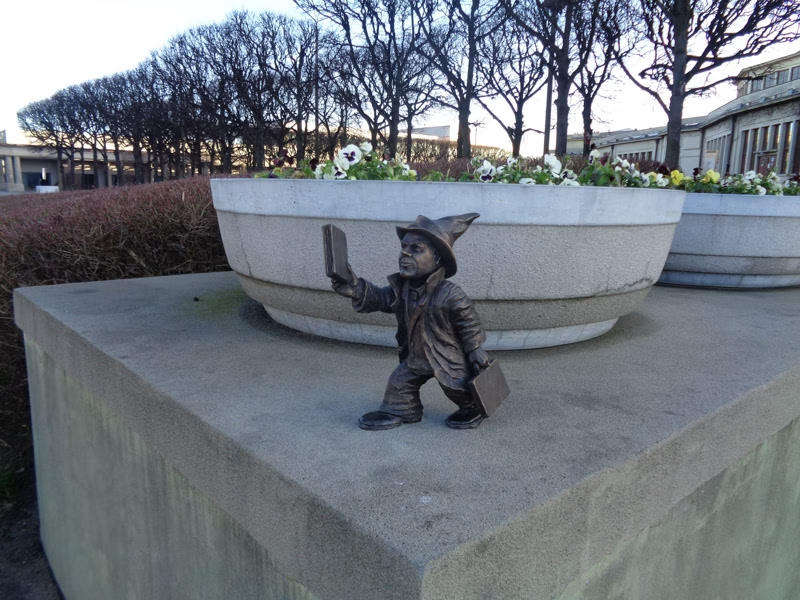
Scattered across the entire city are several hundred dwarf figurines (Polish: krasnale) that serve as a reminder of local residents’ resistance to the communist regime.
When unrest broke out in Gdańsk in the 1980s, led by the Solidarity movement, people in Wroclaw decided to show their support. Public gatherings were banned under the laws of the time, so locals began dressing up as dwarfs — because a gathering of dwarfs was perfectly legal.
After 2000, bronze dwarf figurines began appearing around the city. Today there are over 300 of them in public — and non-public — spots. Several maps exist, but none shows them all; the only way to find every last one is via smartphone apps. The visitor information centre, named “Wrocławskie Krasnale,” is located on the Rynek.
Hunting for photos and selfies with the dwarfs is one of Wroclaw’s most popular tourist activities.
Not getting a photo with a dwarf is practically like not having been to Wroclaw at all. Anyone can commission their own dwarf today — it just has to be unique, and comes with a fee of 5,000 PLN.
Many businesses have placed a dwarf outside their premises as a form of advertising — a bank has a dwarf using an ATM, an ice cream shop has one licking a cone, and so on.
Relaxing in Wroclaw’s Largest Park — Park Szczytnicki
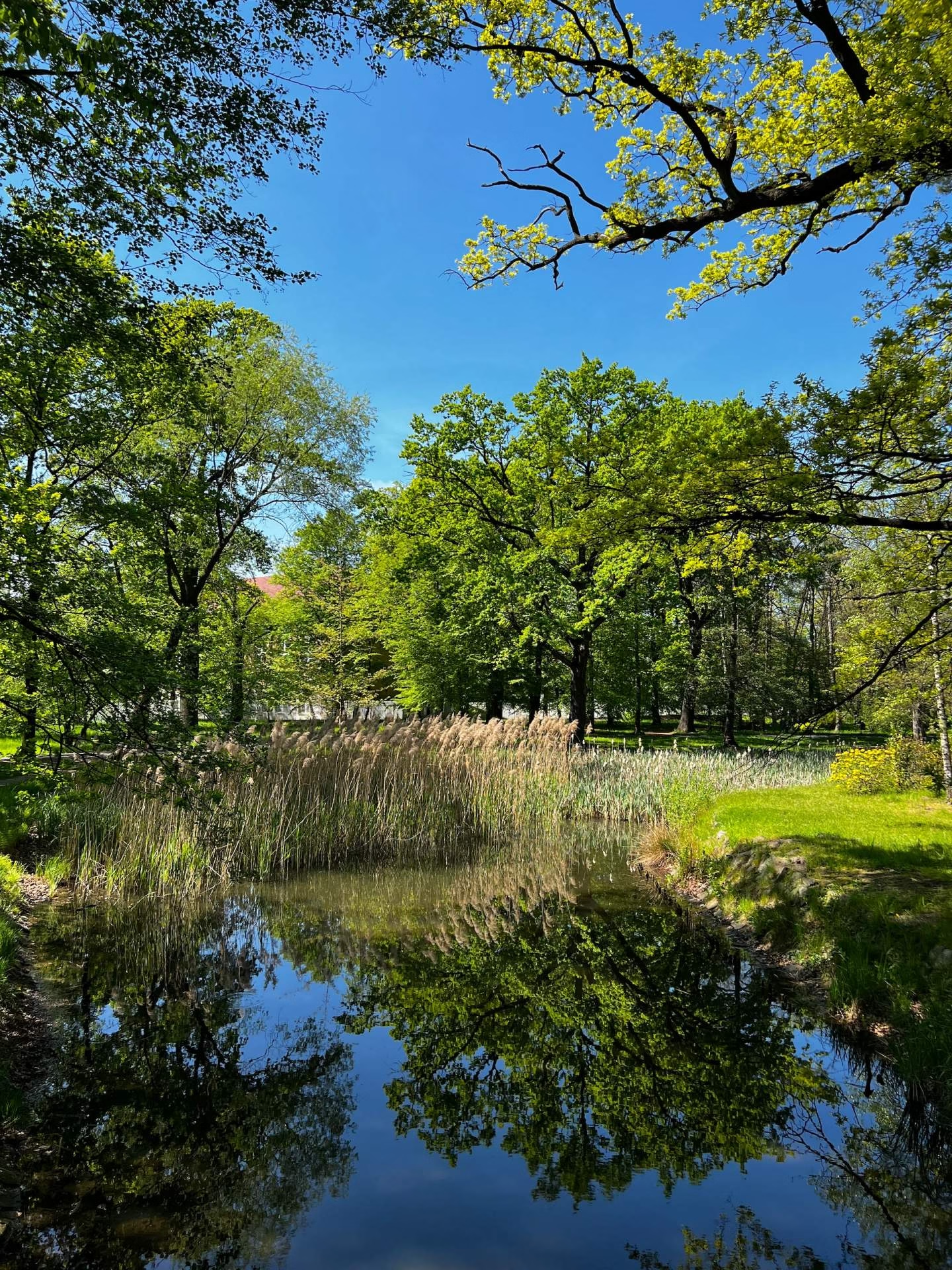
Park Szczytnicki, home to the UNESCO-listed Centennial Hall, is Wroclaw’s largest park and caters for active and passive relaxation alike — whether you’re after culture, sport, family activities, a solo stroll, or a day out with friends.
There’s something for everyone: a museum, a light fountain, several playgrounds, a planetarium, a wooden chapel, and several themed gardens. The Centennial Hall hosts concerts, and Wroclaw Zoo is right across from the park.
A Concert in the University’s Historic Hall
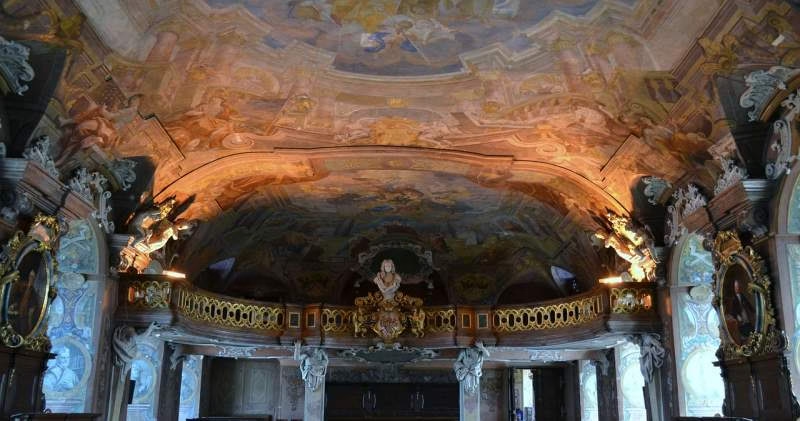
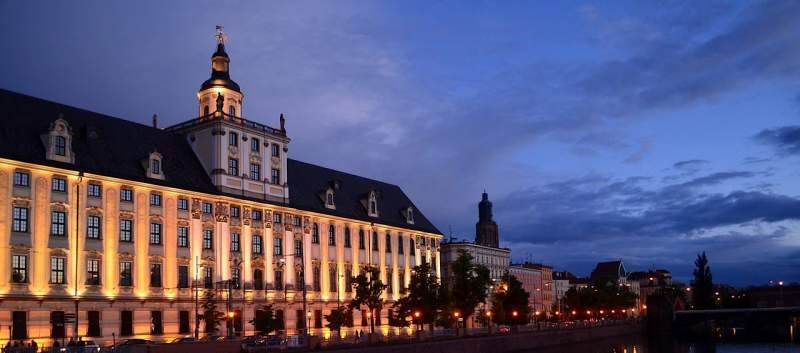
Oratorium Marianum is a concert hall open to the public as the ceremonial hall of Wroclaw University, housed within the university’s main historic building. Rather than a standard sightseeing tour, come for a concert — the acoustics here are truly extraordinary.
Walking and Cycling Along the Oder River
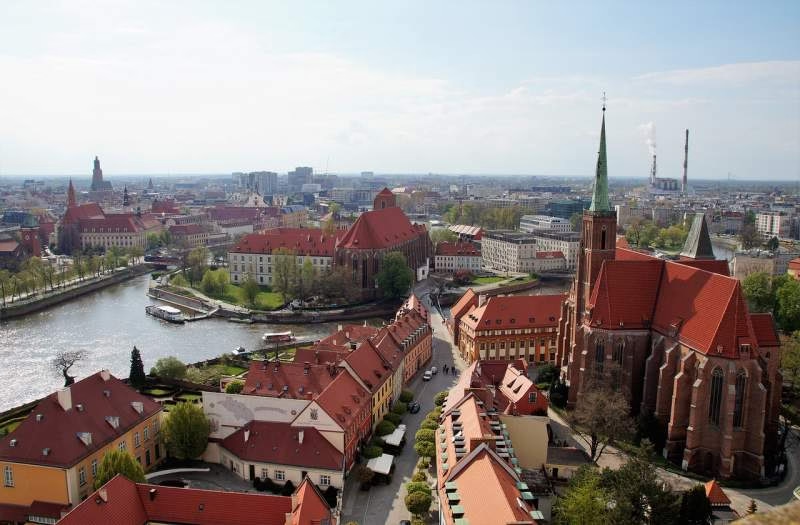
In the city centre, the Oder River splits into several branches, forming islands with well-kept parks. Bridges — many with cycle paths — link the islands together. From the islands you get beautiful views of the historic city skyline, which looks completely different by day than it does lit up at night.
Walk, cycle, or scooter between the islands — it’s a genuinely memorable experience. The city has a Lime shared e-scooter network, and you can rent a bike here.
For even better views, get out on the river itself. Take a boat trip with one of the companies that run river cruises. You can also combine a boat ride with a guided city tour — options are available on Get Your Guide.
Explore Wroclaw with locals
Sunset Drinks on the Hotel Monopol Rooftop
Watch the sun go down over the city skyline. Hotel Monopol sits right next to the Opera House, so from the rooftop terrace you can even catch live broadcasts of performances. Prices are on the higher side, but the view more than justifies it.
Money and Prices
Poland has its own currency — the złoty (PLN). Prices in Wroclaw are pleasantly low compared to Western Europe, making it great value for visitors.
- Accommodation: hostel from around €7 per person per night; hotel from around €14 per night (double room).
- Food: restaurant meal from around €5, canteen lunch from around €3, street food from around €2.
- Drinks: 1.5L water in a shop from around €0.50; draught beer (0.5L) from around €1; bottle of wine in a shop — Polish from around €9, imported from around €3.50.
- Groceries: broadly in line with Central European supermarket prices.
- Attractions: single National Museum exhibition from around €3.50; church tower viewpoints from around €1.20.
- Public transport: 24-hour ticket around €2.10 (15 PLN).
Don’t forget to sort a backup payment card before you travel. We rely on Revolut — a multi-currency card that keeps foreign exchange fees low and works seamlessly across Europe and beyond.
Where to Eat in Wroclaw
Head to the Old Town, which is packed with taverns, restaurants, and bars. You’ll find spots serving Sudeten (Silesian) and Greater Polish cuisine, dishes from other Polish regions, Ukrainian food, and even Czech and German restaurants.
A full list of recommended dining spots is available on Visit Wroclaw.
One place to try is “Pijalnia Czekolady” by Polish confectionery brand E. Wedel, located right on the Rynek. It serves hot chocolate in dozens of varieties, along with other chocolate creations and coffee.
For a quick, satisfying Silesian or Polish lunch (or dinner), head to the self-service restaurant Lepione on ul. Kuźnicza 42, right opposite the historic university building. It probably has the widest selection of food in the city, and you pay by weight.
Our restaurant picks:
- Jolie – Brasserie Cafe – French-inspired brasserie serving breakfasts and main courses.
- Veeno Wrocław – Italian wine café with wine, antipasti and a laid-back atmosphere.
- Konspira – themed restaurant evoking the Solidarity era, serving traditional Polish food.
- Pod przykrywką – creative vegetarian cuisine in the city centre.
- Bistro Stu Mostów – bistro belonging to the Stu Mostów craft brewery, with beer and modern food.
- Samarqand – Uzbek and Georgian cuisine with grilled specialities.
- Gramatura – modern restaurant with a focus on quality local ingredients.
- PAMPA – Argentine steakhouse with grilled meats.
- Loftowa 61 – restaurant in an industrial loft setting.
There’s also a great selection of cafés throughout the city. Alongside excellent coffee, many serve wonderful traditional recipes — a perfect plan B if the weather turns. Highlights include Coffilm and Kawalerka.
Our café picks:
- SLIVIANCHIK’s KAWIARNIA – cosy café with specialty coffee and homemade cakes.
- OTO Coffee Bar – minimalist coffee bar focused on espresso and filter coffee.
- KOMAR cafe – specialty café with a welcoming atmosphere, just off the centre.
- Atelier Cafe – specialty coffee and hearty breakfasts — a great start to any day.
- Kraj Coffee – small specialty café with carefully prepared coffee.
- Noon | Specialty coffee & food – specialty coffee and light food under one roof.
- BRÚ | speciality coffee & vegan bakehouse – specialty coffee and vegan baked goods from their own bakery.
- KIOSSO – stylish café with specialty coffee.
- GRAIN coffee room – a quiet coffee room for specialty coffee lovers.
Where to Stay in Wroclaw
Wroclaw has a wide range of accommodation options, from budget hostels to five-star hotels. Couchsurfing and Airbnb are also available. What matters most isn’t which specific hotel you book, but where it is located.
Stay in the historic centre, or within easy walking distance of it.
The city draws plenty of visitors, but you’ll nearly always find a bed. Just keep in mind that prices rise significantly around public holidays and at New Year.
Specific Accommodation Picks in Wroclaw
Hostels for solo travellers
The best dorm accommodation is offered by Quantum Hostel, Chilli Hostel, and Hostel Wratislavia. All three are centrally located, within walking distance of the main sights.
For a private single room, try VICE CITY Hostel.
Accommodation for couples
Most of the hostels above also offer private double rooms.
There are also plenty of apartments in the city for a more private stay. Standouts include Q17 Apartments and In The Sky – Apartamenty w Sky Tower, which offers spectacular panoramic views.
A solid mid-range choice would be Kamienica Pod Aniołami or B&B HOTEL Wrocław Centrum.
Wroclaw Nightlife
Head into the streets of the historic centre and you won’t have to look far for entertainment — the city has plenty of venues and posters advertising upcoming events. Check the notice boards around town or ask at the tourist information office.
Try the Wroclaw Opera. A useful tip: remaining tickets are sold at the box office just before each performance at a discounted price.
The puppet theatre Wrocławski Teatr Lalek is highly regarded. It performs for all age groups — children and adults alike — and includes a small puppet museum.
For classical music, head to the National Forum of Music. The building itself is worth seeing for its striking contemporary architecture.
Enjoying this guide? You might also like our coverage of other destinations in the region.
Getting Around Wroclaw
Wroclaw has an excellent public transport network of buses and trams. You can find network information and fare details on the official website. The entire historic centre is within easy walking distance of both the main train and bus stations, and exploring the centre on foot is by far the best approach.
Tickets are available from newsagent kiosks and ticket machines at almost every stop, or directly on board most vehicles. Note that onboard payment is by contactless card only — no ticket or receipt is issued. The range of tickets available on board is also more limited than at kiosks or machines.
The ticketing system in Wroclaw is somewhat complex. Options include 15, 30, 60, and 90-minute tickets, a single-journey (no transfer) ticket, and a 24-hour pass.
A practical approach: walk the centre on your first day, then buy a 24-hour pass the following day to visit attractions further out.
Lime shared e-scooters are very popular in the city. You can also rent a bike here.
How Long to Spend in Wroclaw
With one day, you can cover the entire city centre, though you won’t have time for the museums. To include attractions beyond the centre and at least one museum, set aside 2–3 days. Exploring the wider region around Wroclaw can easily fill another 2–4 days.
Day Trips from Wroclaw
Lower Silesia has plenty to offer within easy day-trip distance of Wroclaw. If you want to explore the region at your own pace, consider renting a car.
Towns and Highlights Nearby
Around 90 km north lies Leszno, historically connected with the renowned educator Jan Amos Comenius, who spent time here.
To deepen your knowledge of Silesian history, visit Opole, roughly 90 km to the southeast of Wroclaw.
For traditional blue-and-white pottery, head to Bolesławiec, which also hosts an annual Ceramics Festival every August.
For great beer and a brewery tour, make for the historic town of Lwówek Śląski.
Nature and Spa Towns
Historic towns: Kłodzko and Bardo — the latter also an important pilgrimage site. The fortified town of Nysa is well worth a visit, as is Jelenia Góra, whose Cieplice district is home to the oldest spa in Poland.
Around Kłodzko, you’ll find a cluster of spa towns: Kudowa-Zdrój, Duszniki-Zdrój, Polanica-Zdrój, and Lądek-Zdrój.
Gold mining history comes alive at the mines in Złoty Stok village.
For hiking, head to Góry Stołowe National Park — don’t miss the rock formations at Błędne Skały and Szczeliniec Wielki. The pilgrimage site of Wambierzyce is another nearby highlight.
The Karkonosze (Giant Mountains) with resorts at Szklarska Poręba and Karpacz offer plenty of hiking in summer and skiing in winter, as do the Jizera Mountains with the spa town of Świeradów-Zdrój.
Frequently Asked Questions About Wroclaw
Where is Wroclaw located?
Wroclaw is located in south-western Poland, in the Lower Silesian Voivodeship, on the Oder River. Its excellent position and transport links make it an ideal destination for a long weekend.
How many people live in Wroclaw?
Wroclaw is Poland’s fourth-largest city, with a population of approximately 600,000. Thanks to its large university, the city has a young, lively atmosphere all year round.
What can you see in Wroclaw in one day?
In a single day you can cover the historic Old Town with the vast Rynek market square, the Gothic Town Hall, the cathedral on Ostrów Tumski island, and hunt for the bronze dwarfs scattered throughout the centre. Save the Zoo and Afrykarium, Centennial Hall, or Park Szczytnicki for a second day.
How does public transport work in Wroclaw?
The best way to get around Wroclaw is by its dense network of trams and buses. Tickets can be bought at machines at stops, directly on board, or via a mobile app, and are generally time-based. The historic centre is compact, however, and most sights are comfortably reachable on foot.
What is there to do in Wroclaw with kids?
Children will love the Zoo and Afrykarium — the largest of its kind in Europe — the interactive Hydropolis science centre dedicated to water, and above all hunting for the hundreds of small bronze dwarfs hidden around the city. The dwarf hunt can easily be turned into a fun, full-day game.
When is the best time to visit Wroclaw?
Wroclaw is worth visiting year-round. Spring and summer are perfect for walks along the Oder and sitting out on the square; autumn draws visitors to the golden Park Szczytnicki; and in December the Rynek hosts one of Poland’s most beautiful Christmas markets.
More Useful Resources
Official city website.
Official tourism website for the city.
Dolnośląska Organizacja Turystyczna
Tourism website for the Lower Silesian Voivodeship.