This post is also available in:


I fell in love with Litomyšl, Czech Republic, on my very first visit many years ago, and I keep coming back. Few small Czech towns manage to offer so much: a Renaissance UNESCO château, great food, one of the country’s biggest classical music festivals, a unique world-class museum, a historic arcaded square — and all of it without the tourist crowds. Litomyšl is alive.

It sits on the very eastern edge of Bohemia, on the border with Moravia, 160 km from Prague and 90 km from Brno. Thanks to the new D35 motorway, it’s now very easy to reach. Even in rush hour you can drive from central Prague in under two hours.
Litomyšl also keeps evolving — in architecture, culture and gastronomy alike. For anyone interested in urbanism and architecture, it should be a must-stop.
This guide is for those planning a weekend trip and wanting to know what’s worth your time, what not to miss, where to eat well and where to grab a great coffee.

Why visit Litomyšl
The most common answer: for the château. That’s true — but there are many more reasons to come.
The Renaissance château really is exceptional. Its sgraffito façade is among the largest and best-preserved in Europe, and the château theatre from the late 18th century is one of the few functioning historic theatres of its kind. Add a beautiful park and the birthplace of composer Bedřich Smetana, and the whole site is inscribed on the UNESCO World Heritage List. For a very different Czech UNESCO site, where a single architectural style shapes a whole place, see our guide to the folk baroque Holašovice village.

Portmoneum — the museum of painter, graphic artist and writer Josef Váchal — is unique on a European scale. Two rooms whose walls, ceilings and furniture Váchal decorated by his own hand in the 1920s turn the house into far more than an ordinary museum.
The monastery gardens next to the Piarist College, with sculptures by Olbram Zoubek, are also well worth a visit. The town’s modern architecture deserves attention too.
Add the Smetana’s Litomyšl festival — the second-oldest music festival in the country. Every year it brings world-class performers and tens of thousands of visitors from around the world to the château courtyard and other venues.
The October ArchiMyšl architecture festival makes Litomyšl one of the few small towns with its own architectural conference and exhibition programme.


Litomyšl works as a cultural capital of the region and in many ways punches above its size.
Personally, I find it most rewarding to simply wander through the historic lanes and arcades and gradually explore the interiors and courtyards of the houses, where several lovely new places open every year.
The town is also home to a lot of energetic, interesting people, which is why you’ll find plenty of smaller events, understated art and creative details across town.

How long to spend in Litomyšl
You can easily do Litomyšl as a day trip, but to really soak up the atmosphere it makes sense to stay overnight — ideally combining your visit with one of the town’s many cultural events.
A day trip is realistic mostly for those arriving by car with clear priorities. In four to five hours you can tour the château, the monastery gardens, Portmoneum and the historic centre.
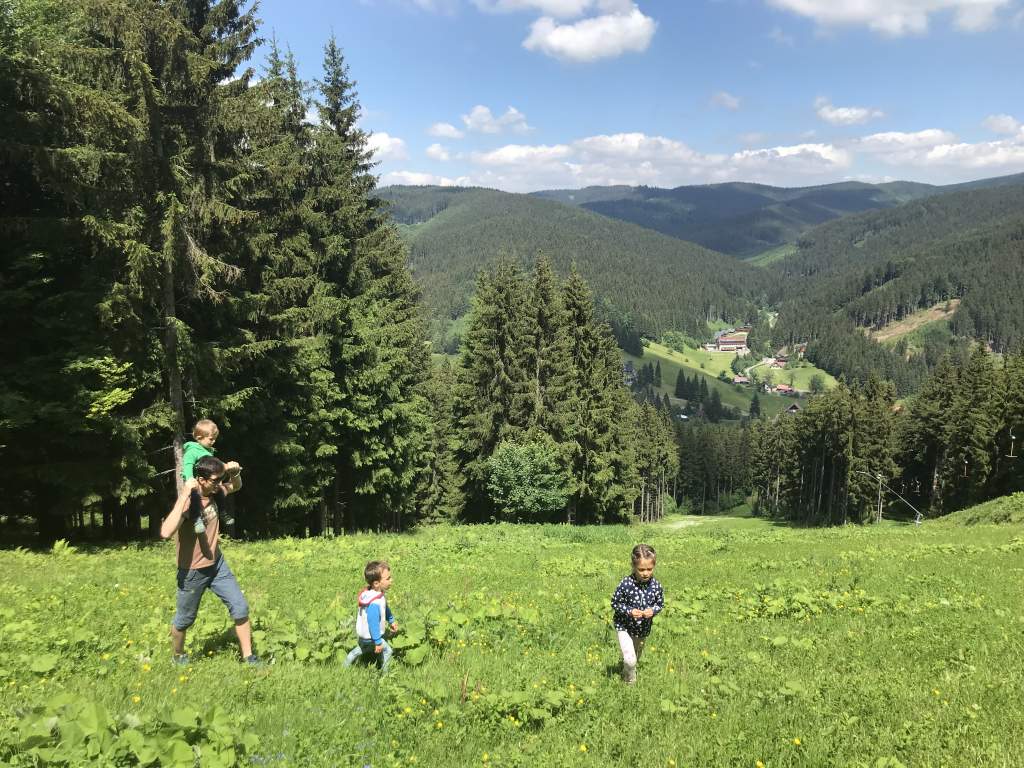
A weekend is the best choice for me. It gives you enough time for the sights, food, culture and small architectural details. You can also spend part of a day in nature — either in the hills and forests toward Česká Třebová, or a bit further to the Toulovcovy maštale rock formations.
If you’re planning a visit during the Smetana’s Litomyšl festival, expect the town to be packed and book accommodation well in advance — easily a year ahead. On the other hand, an evening concert in the arcaded courtyard under the open sky is the kind of experience that brings many people back to Litomyšl again and again.
Top 10 things to do in Litomyšl
If you don’t know where to start, here are the essentials for quick orientation:
- Litomyšl State Château — sgraffito, arcades, château theatre (UNESCO)
- Portmoneum — Josef Váchal Museum
- Smetana Square, arcades and the surrounding lanes
- Piarist Church of the Finding of the Holy Cross with its viewing terrace
- The château cellars — exhibition of Olbram Zoubek’s sculptures
- Monastery gardens
- Bedřich Smetana’s birthplace in the former château brewery
- Gothic Church of the Elevation of the Holy Cross
- Váchalova Street and sgraffito inspired by his Bloody Novel
- Smetana’s Litomyšl festival (June–July)

What to see in Litomyšl
Litomyšl State Château and the château hill
The famous Renaissance château stands on a hill above the town. Vratislav II of Pernštejn had it built on the site of the original castle between 1568 and 1581 as a representative residence for his wife Maria Manrique de Lara — a Spanish aristocrat who brought Italian taste with her.

The château was designed by the Italian builders Giovanni Battista Aostali and his brother Ulric. The result is a four-winged block enclosing two courtyards lined on three sides with arcades.
On the façades and gables you’ll see sgraffito — envelope patterns, figural scenes depicting the life of Emperor Constantine, and large battle compositions. The sgraffito at Litomyšl is considered the largest and most beautiful of its kind in the former Habsburg lands.

The interiors are the result of later alterations — baroque under the Trauttmansdorffs and neoclassical under the Waldsteins.
The château theatre
Another gem is the theatre from the late 18th century, built by Count Jiří Josef Waldstein-Wartenberg.
It has survived complete with functional stage machinery, original lighting equipment and an original set of backdrops by Josef Platzer — the Viennese court painter who also designed sets for Prague’s Estates Theatre.
Other parts of the château
Since 2025, the second courtyard houses the new SmetaNový Hall — a modern concert hall designed by architect Josef Pleskot, which serves as the main festival auditorium.

I personally also recommend the Municipal Picture Gallery on the château’s second floor — its collection includes names like Emil Filla, Jan Zrzavý, Karel Čapek and Kamil Lhoták. The exhibition rotates and also features other artists, including contemporary ones.
Within the château grounds you can also visit the restored coach house, stables, riding hall and the château brewery, along with Bedřich Smetana’s birthplace.

Practical info
The château is going through major renovation, so tour routes and sometimes opening hours change. Up-to-date info is on zamek-litomysl.cz.
Most of the renovation is already done and has opened up several new spaces, so there’s no need to wait for everything to be finished before visiting.
NOTE: If you arrive during the Smetana’s Litomyšl festival, parts of the château grounds may be closed or accessible only through an alternative entrance. Always check the château’s website for current operations.


Portmoneum — Josef Váchal Museum
Portmoneum is a modest townhouse a short walk from the historic centre. What makes it exceptional are two rooms that the painter, graphic artist, writer and mystic Josef Váchal decorated between 1920 and 1924.
Devils, goblins and spirits mix with Christian iconography, Hindu references and scenes from Váchal’s personal symbolic world across the walls and ceilings. The furniture is also his work — carved and painted as part of the whole composition.
The result is an indescribable experience that briefly transports you into the closed universe of the artist’s mind.
The house also has an exhibition hall hosting a different show each year, usually related to Josef Váchal.
In the attic, renovated in 2019–2020, there’s a multimedia exhibition devoted to the three “fathers” of Portmoneum: Josef Váchal, his patron Josef Portman and publisher Ladislav Horáček, who saved the house. It includes a video mapping about Váchal’s life and work and a Camera Obscura installation in the garden house.
Check opening hours at www.portmoneum.cz.
Smetana Square and the historic centre
This intact historic square, lined with baroque and neoclassical houses, is among the best-preserved — and at half a kilometre long, also one of the longest in Central Europe.

A 15th-century regulation required every new house to have a vaulted passage at the front “so that in time of rain or bad weather anyone could walk on dry ground through the town”. The rule still shows: nearly every house has its podsíně — the local name for arcades.
In the middle of the square stands the old town hall tower from 1418, with a baroque façade and a working Art Nouveau astronomical clock.

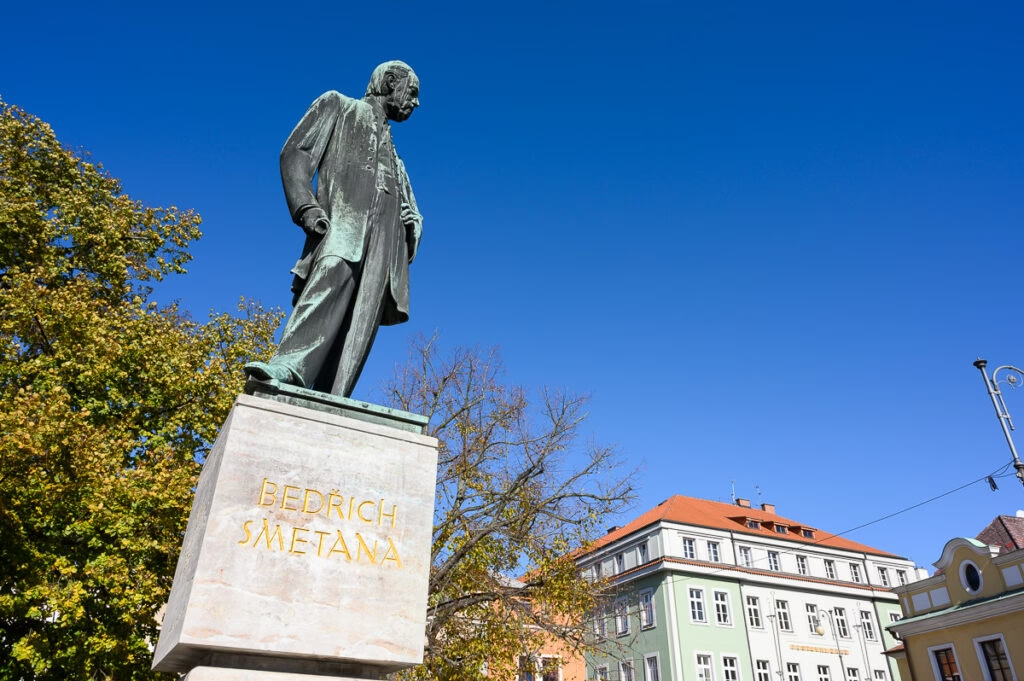
At the top of the square stands the Marian Column with statues of St Wenceslas and St John of Nepomuk, designed by architect Giovanni Battista Alliprandi. At the lower end you’ll find a statue of Bedřich Smetana by Jan Štursa and Pavel Janák.

House of the Knights (Dům U Rytířů)
One of the most striking buildings on the square is the Renaissance House of the Knights from 1540 — its façade is decorated with reliefs of fantastical animals, bearded heads and figures of knights.
During a 1970s renovation, a unique coffered ceiling was discovered and restored inside.
The House of the Knights serves as the Municipal Gallery, but it’s currently (2026) undergoing further renovation and is closed. Reopening is planned during 2027.
Piarist Church of the Finding of the Holy Cross
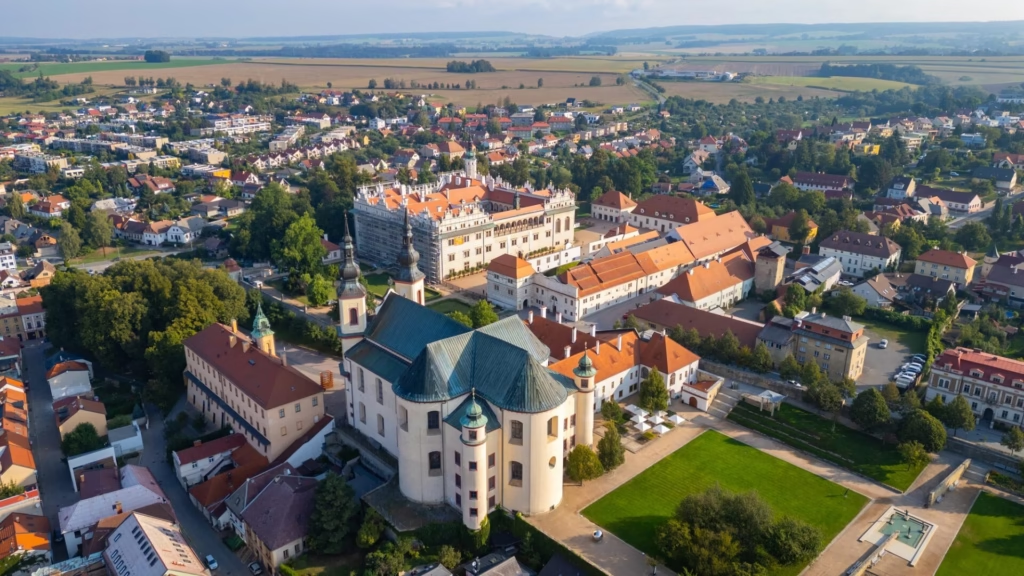
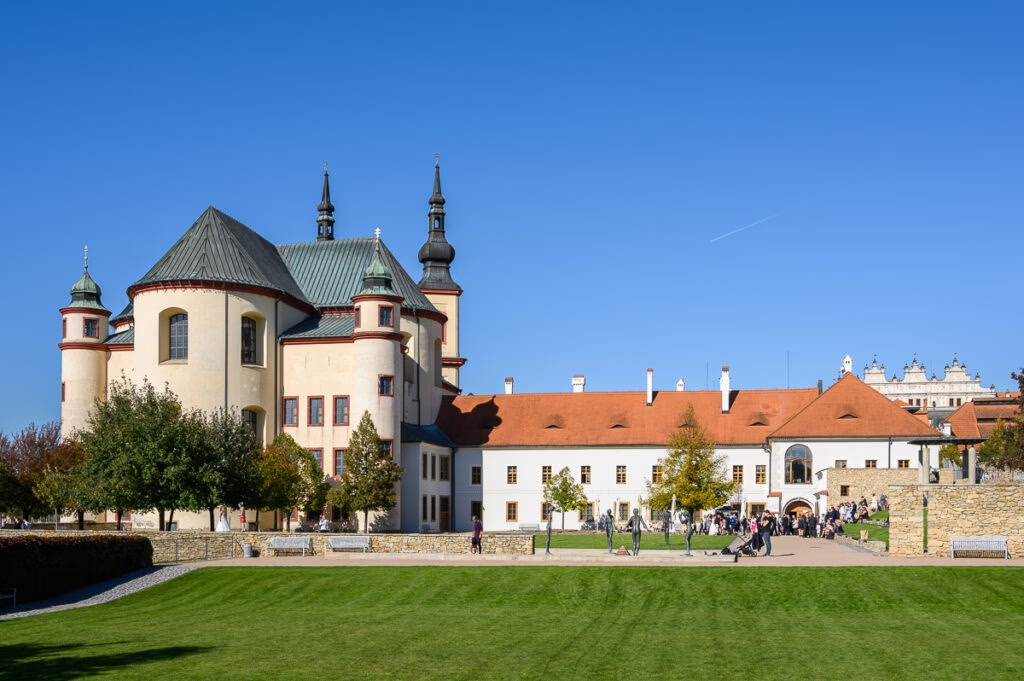
This baroque church stands on the château hill right above the historic centre, next to the Piarist grammar school. It was built between 1716 and 1726 to a design by Italian architect Giovanni Battista Alliprandi, completed by František Maxmilián Kaňka.
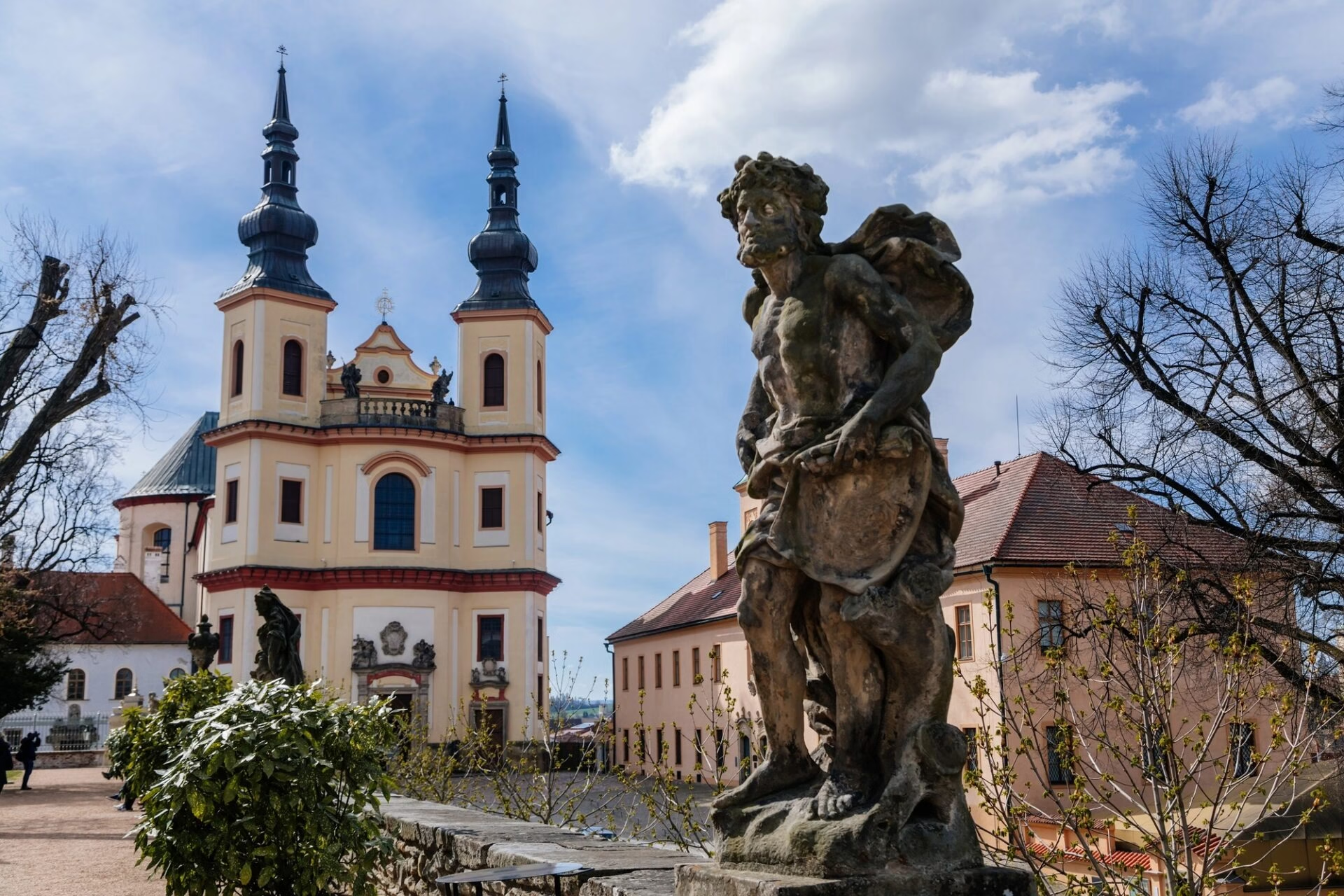
The interior underwent a full renovation between 2010 and 2014. Architects Marek and Vanda Štěpán took an approach that lets the spatial quality of the building speak: walls in grey, light shaping the interior, and a minimalist walkway running across the north transept connecting exhibition spaces on the gallery, where sacred works of art from the Hradec Králové diocese are on display.
From the south tower, a wooden spiral staircase leads to a viewing terrace between the two towers. The view from here over the château and historic centre is one of the best in Litomyšl.
The château cellars — Olbram Zoubek exhibition
Beneath the château grounds lies an extensive cellar, now open as an exhibition space. It houses the largest public collection of sculptures by Olbram Zoubek in the Czech Republic, complemented by an installation titled Heart for Václav Havel.
The cellars also age a unique line of wines called Chateau Litomyšl, produced as a limited edition by Moravian winemakers. So you can combine your visit with a wine tasting.

The monastery gardens
Between the Piarist Church of the Finding of the Holy Cross, the Piarist College and the provost Church of the Elevation of the Holy Cross lies a year-round publicly accessible garden complex with views over the town.
Here too you’ll find several sculptures by Olbram Zoubek.

Bedřich Smetana’s birthplace
Bedřich Smetana was born on 2 March 1824 in the château brewery — his father was the estate brewer. Today the building hosts a museum dedicated to the composer’s childhood and early musical steps.

The exhibition recreates the Smetana family’s period apartment, with historical photographs and documents. It’s not a large space and doesn’t match Portmoneum as an experience — but for those with a connection to Smetana’s music, it’s worth a visit.
The Door and VýhledNa
The mirrored wall called The Door and the lookout tower VýhledNa, built from decommissioned shipping containers, are small examples of the town’s modern architecture.
At the very least I recommend stopping by The Door — it’s an easy walk even without a car.
Jewish cemetery
A small Jewish cemetery from the second half of the 19th century. It has undergone partial restoration, but unfortunately the marks of past theft and vandalism are still visible.
What to experience in Litomyšl
Smetana’s Litomyšl festival
Every year at the turn of June and July, one of the biggest classical music festivals in the Czech Republic takes over the château courtyard and the town. It runs for roughly three weeks.
Founded in 1946, it’s the second-oldest music festival in the country. Each year brings leading world orchestras and soloists to Litomyšl — the Czech Philharmonic, London Symphony Orchestra and similar names are regular guests.

The programme covers operas, symphonic concerts and chamber performances. Some events take place in the Piarist church and other venues around town.
The festival atmosphere goes beyond the concerts themselves — the so-called Festival Gardens run in the park, accompanied by exhibitions in the Smetana’s Visual Arts Litomyšl series.
Tickets to the main events go on sale well in advance, and popular performances tend to sell out within days. Pre-sale traditionally starts in the first week of March.
Current programme and tickets at www.smetanovalitomysl.cz.


ArchiMyšl — architecture festival
The first weekend of October each year, Litomyšl turns into a town of guided architecture tours, exhibitions, lectures and panel discussions.
ArchiMyšl started as a local tribute to World Architecture Day and has grown into a multi-day festival with a programme for both professionals and the general public.
Litomyšl is a natural setting for this kind of event: it’s home to several outstanding works of modern architecture and bold yet sensitive renovations.
Walking tour of modern architecture
Among architects, Litomyšl is well known for its approach to modern buildings in a historic setting.
The SmetaNový Hall by Josef Pleskot (2025), the revitalisation of the bus station in Bělila by RAW studio (Rusín, Wahla, Vágner), or the student facilities for the Faculty of Education by Burian and Křivinka — these are buildings architects talk about.
Just walk from the square down to the Loučná River and then back up over the château hill. The town is small and easy to cover on foot.
Toulovec’s Holiday Fridays
Every Friday in July and August, a fairy tale for children plays at 6 pm on Toulovec Square, followed at 7.30 pm by a folk or country concert.
It’s a local tradition and admission is free.

Events and cultural programme throughout the year
Beyond the main Smetana’s Litomyšl festival and October’s ArchiMyšl, the town hosts plenty of other events — food and culture festivals, Christmas markets on Smetana Square, performances in the château theatre and chamber concerts in the Piarist church.
The château regularly opens for special evening tours and seasonal exhibitions.
For the current calendar, check the town website litomysl.cz or the portal zameckenavrsi.cz, which manages the château complex programme.

Around Litomyšl: day trips
If you have more time in Litomyšl, it’s worth heading into the surroundings. Within 20 minutes by car you’ll find the beautiful Orlice valley landscape, the rococo Nové Hrady château and the legend-shrouded Toulovcovy maštale sandstone area.
You can do any of these as a half-day trip from Litomyšl.
Růžový palouček (the Rose Meadow)
About 8 km northeast of Litomyšl, between the villages of Újezdec and Morašice, lies a nature reserve tied to one of the best-known post-White Mountain legends.
According to it, the Czech Brethren prayed here in 1620 before being forced into exile, and the tears that fell on the ground turned into tiny rose-coloured flowers that still grow here — the white cinquefoil (Potentilla alba).
The site became a popular destination for national pilgrimages from the 19th century, and the 1922 pavilion was designed by architect Dušan Jurkovič.
It’s easily reached by car, bike, or on foot from Morašice railway stop.
Nové Hrady Château
Sometimes nicknamed the “Czech Versailles” — a rococo château with a French garden, a water canal and a labyrinth, about 25 km southeast of Litomyšl.
It was built between 1774 and 1777 as a summer residence by Count Jean-Antoine Harbuval-Chamaré.

Today it houses several themed museums (cycling, hunting, gastronomy), and the grounds feature outdoor chess, skittles and falconry shows.
For families with kids, it’s an ideal alternative to the château in Litomyšl.
Toulovcovy maštale
A sandstone rock area about 15 km west of Litomyšl, named after the legendary knight Vavřinec Toulovec (the same one Toulovec Square in the centre of Litomyšl is named after). Sandstone cliffs, overhangs, the narrow passages called “Maštale” and waymarked loops of around 4–7 km start from car parks at Budislav or Vranice.
Along the way you’ll pass the so-called Town Stables — massive rock overhangs where, according to legend, Toulovec’s treasure was hidden.
Great for a half-day trip, and a refreshing escape from the heat in summer.
More trips from Litomyšl
- Vysoké Mýto
- Polička
- Svitavy
- Ústí nad Orlicí
Food and restaurants in Litomyšl
For its size, Litomyšl is a great food destination. I happily stop in just for a meal or a coffee on my way further into Bohemia. You’ll find several quality cafés with specialty coffee and homemade desserts, plus ambitious modern restaurants that would hold their own in any capital.
Here are a few specific personal picks.
Cafés
- Kafemysl — for me, probably the best coffee in Litomyšl, very friendly staff, lovely little cakes.
- Dvorek Litomyšl — a gorgeous space, both inside and out on the courtyard. Recommended for light meals and especially their homemade croissants and other luxurious sweet pastries.
- Kavárna DOMA v muzeu — a pleasant place with homemade desserts.
- el café — a modern café that does good breakfasts and brunches.
- Kavárnička Dudýsek — a new family-friendly café a bit further from the centre.
Restaurants
- Havran restaurant penzion — Mediterranean cuisine right on Smetana Square — shrimps, calamari and other seafood.
- PLUMS Restaurant & Pension — a small restaurant with excellent modern gastronomy, just a short walk from the centre.
- Bohém Restaurant Litomyšl — the restaurant of Hotel Aplaus near the monastery gardens. Czech and international cuisine, an outdoor terrace; the second-highest-rated restaurant in Litomyšl on Tripadvisor.
- Co by kdyby — a bowling alley with surprisingly good food, beer and drinks.
- Restaurace U Kolji — an established Ukrainian restaurant, highly recommended.
- Pivovar a restaurace Veselka — classic Czech pub fare with good local beer.
- Redneck platz Litomyšl — a stand with seriously good burgers, worth a stop.

Where to stay in Litomyšl
Centre and château hill
Most accommodation in Litomyšl consists of apartments in historic houses around Smetana Square or on the château hill — everything is just minutes away on foot.
- Luxusní velký apartmán s terasou v centru Litomyšle — A spacious apartment with a terrace right on Smetana Square, 600 m from the château. Private parking; pricier than average.
- Zámecké apartmány Litomyšl — Three themed apartments (Smetana, Zoubek, Jirásek) in a historic building 70 m from the château, right above Bedřich Smetana’s birthplace.
- Apartments Marinka Litomyšl — Modern apartments with a fitted kitchen and balcony, 5 minutes’ walk from the centre. Free parking.
- Domus Nö58 — Four design rooms in a family house on a quiet lane, 5 minutes from Smetana Square. Breakfast made from local ingredients on request.
- Podkrovní byt v centru Litomyšle — A cosy attic flat in a renovated house in the centre.
Outside the centre and around
If you’re driving, it can make sense to stay in nature near the town. Or try the local upscale campsite.
- PRIMÁTOR Camping Resort Litomyšl — Year-round campsite with heated cabins, glamping tents and caravan pitches, 12 minutes’ walk from the centre. On-site restaurant; right next to a sports hall with squash, bowling and footgolf.
- Wellness chata Sloupnice — A secluded cabin by the forest with a private Finnish sauna with panoramic views, a barrel hot tub and a private pond with a canoe. 6.5 km from Litomyšl.
- Klidný Kout glamping — Glamping with a large yurt, sauna and swimming biotope on a large plot between a pond and forest. About 16 km from Litomyšl, near Vysoké Mýto.
Practical information
How to get to Litomyšl
By car is the most convenient way to reach Litomyšl. From Prague it’s 160 km via the D11 and D35 motorways — a drive of 1.5 to 2 hours.
From Brno it’s about 90 km — roughly 1 hour 20 minutes outside rush hour.
Paid parking in the centre is available directly on Smetana Square (paid) and in nearby streets.
You can park for free on Zahájská Street near the château, but on weekends it’s usually full. Another large car park is at the bus station.
By train you’ll change at Choceň, where express trains from Prague and Brno stop. Between Choceň and Litomyšl, however, you’ll bumble along a slow local line.
Alternatively, switch to a bus at Česká Třebová (from Prague, Olomouc and Ostrava) or Svitavy (from Brno) — the connections to Litomyšl from there are faster than the local train from Choceň.


Money and prices
Litomyšl is a small Czech town with standard local prices — noticeably cheaper than Prague. A good lunch out runs about €8–14, a coffee around €2.50–3.50.
Card payments are accepted in almost every venue, including the château and Portmoneum.
Frequently asked questions
What is there to see in Litomyšl?
The main landmark is the Renaissance château from the late 16th century, listed on the UNESCO World Heritage List and famous for its sgraffito façade and historic château theatre. Don’t miss Portmoneum either — the Josef Váchal museum, whose walls and furniture the painter decorated by his own hand in the 1920s. The half-kilometre-long Smetana Square with its arcades, the Piarist church with a viewing terrace, the monastery gardens and Toulovec Square round out the picture of an exceptionally well-preserved historic centre.
What to do around Litomyšl?
Nearby, it’s worth visiting the rococo Nové Hrady château about 25 km southeast, the Růžový palouček (Rose Meadow) nature reserve tied to the legend of the Czech Brethren, or the Toulovcovy maštale sandstone area — ideal for a half-day trip into nature. Nearby Vysoké Mýto, Polička and Ústí nad Orlicí also make good side trips.
How long should you spend in Litomyšl?
A weekend works well — arrive Friday or Saturday morning and leave Sunday afternoon. That gives you time to tour the château at a relaxed pace, see Portmoneum, walk the historic centre, visit the monastery gardens, catch a cultural event and enjoy a good dinner. A day trip is possible (4–5 hours covers the essentials), but the rush shows.
When is the Smetana’s Litomyšl festival?
The festival is held every year at the turn of June and July and traditionally lasts about three weeks. The main venue is the arcaded courtyard of the château, and since 2025 the new SmetaNový Hall by Josef Pleskot. Ticket pre-sale usually starts in the first week of March, and popular performances tend to sell out within days.
What does the name Litomyšl mean?
The name comes from the Old Czech personal name Lutomysl, composed of l’utý (fierce, wild) and mysl (mind, will). It probably referred to the founder or owner of the original settlement. The first written mention of Litomyšl’s hill fort comes from 981 in Cosmas’s chronicle, when it served as a border point between Bohemia and Moravia.
Is Litomyšl worth visiting?
Yes — few small Czech towns offer so much in one place: a Renaissance UNESCO château with a sgraffito façade among the largest and best-preserved in Europe, the world-unique Portmoneum museum decorated by Josef Váchal, one of the country’s biggest classical music festivals (Smetana’s Litomyšl), a half-kilometre arcaded square and the monastery gardens with sculptures by Olbram Zoubek — and all of it without the tourist crowds. For anyone interested in urbanism and architecture, Litomyšl should be a must-stop.
How to get to Litomyšl from Prague?
By car is the most convenient way: Prague to Litomyšl is 160 km via the D11 and D35 motorways, a drive of 1.5 to 2 hours. Paid parking is available on Smetana Square; you can also park for free on Zahájská Street near the château, though it fills up on weekends. By train, you’ll change at Choceň where express trains from Prague stop, then continue on a slow local line — or, for a faster onward connection, switch to a bus at Česká Třebová instead.