This post is also available in:


Where the Elbe leaves the sandstone canyon and enters the wider Saxon plain lies the German town of Pirna. You might pass through it on the way to the famous Bastei viewpoint, and you will certainly cross it by train heading to Dresden. It would be a shame not to stop, at least for a moment.
Personally, the town and its surroundings surprised me very pleasantly — and this Pirna Germany travel guide pulls together everything worth seeing.
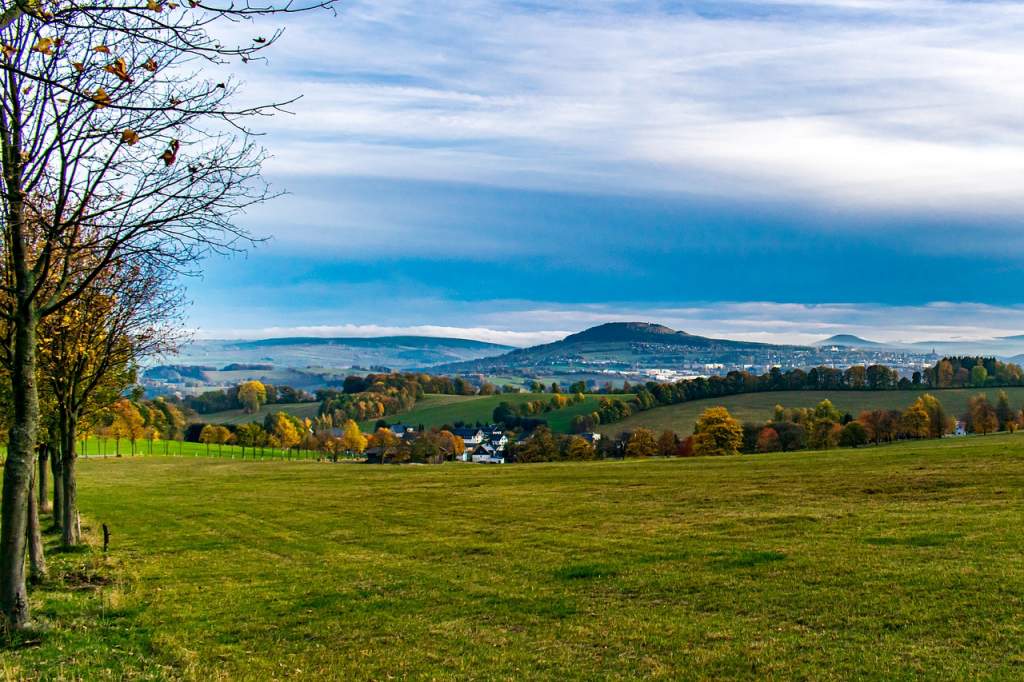
Pirna likes to call itself the gateway to Saxon Switzerland — and it serves perfectly as a base for exploring the national park. Thanks to its strategic location, you can also use the suburban train for day trips to Dresden.
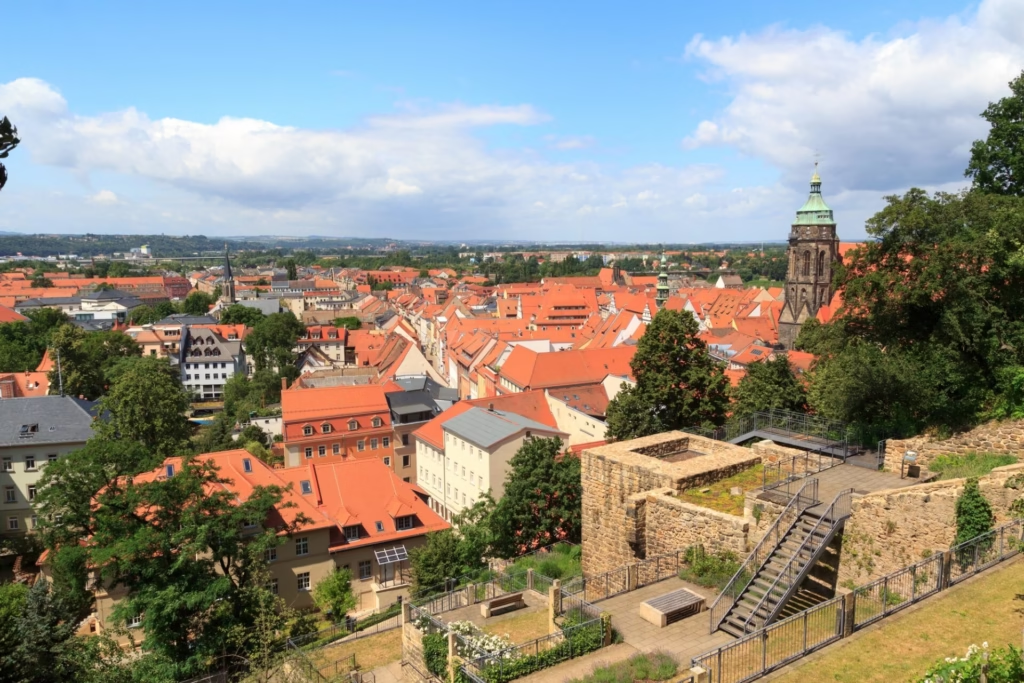
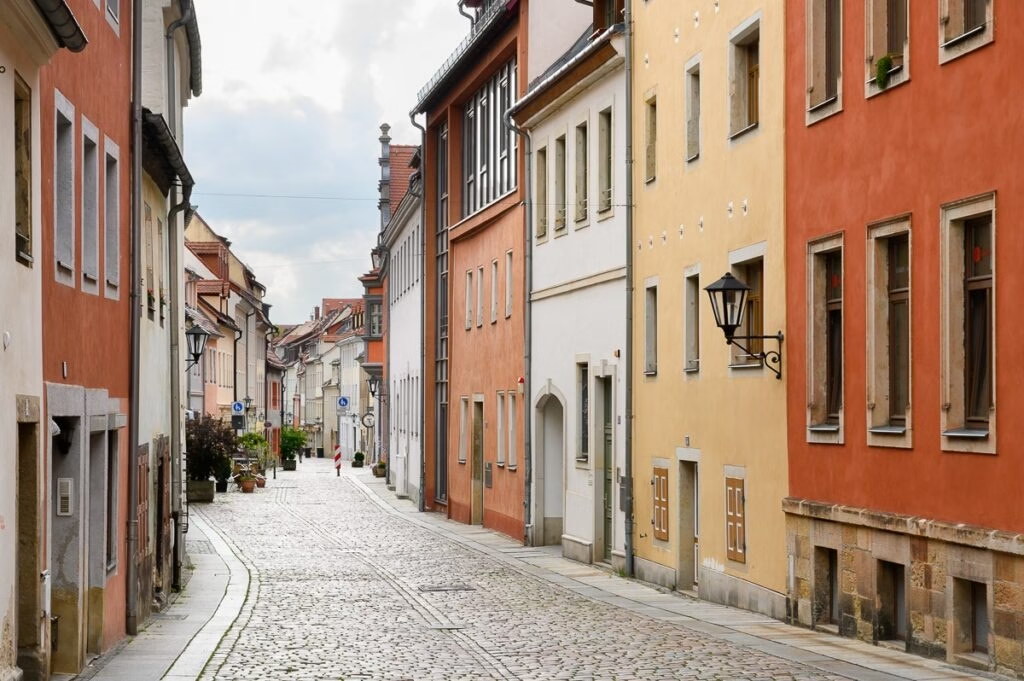
Pirna’s historic centre is also among the best preserved in all of Saxony. While Dresden lost much of its historic fabric during WWII, Pirna survived the war practically untouched.
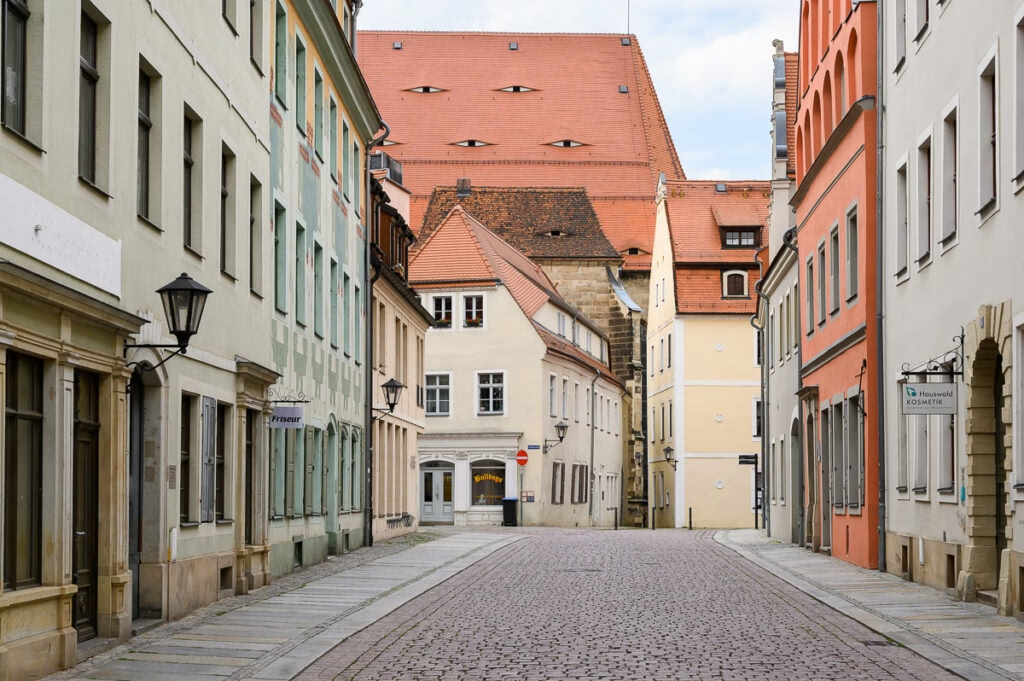
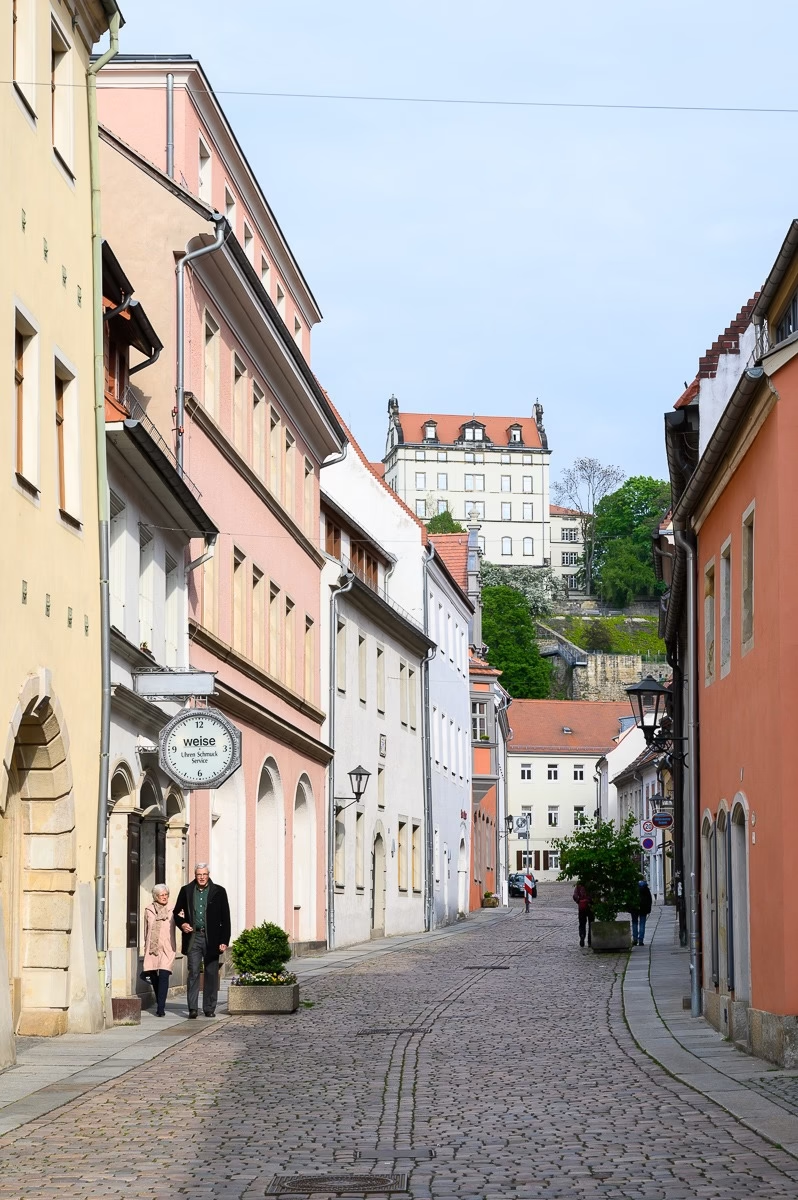
The result is a compact historic core where Renaissance and Gothic burgher houses still stand exactly as their owners had them built four or five hundred years ago. The streets, portals and inner courtyards — most of what you see is not a post-war reconstruction. It’s the historical original.
Compared to Dresden or Bastei, Pirna sees only a fraction of the tourists, and most of those who come stop only for lunch. That means you can explore the whole centre and the castle in peace.
Why visit Pirna
Pirna is one of the few places in Saxony where the historic centre looks roughly the same as it did in the mid-18th century, when painter Bernardo Bellotto — nicknamed Canaletto — captured it on canvas.
Bellotto spent about two years in Pirna and produced eleven large vedute of the town. The most famous, a view of the Marktplatz, can be placed side by side with a photograph of today’s square — and the difference is surprisingly small.
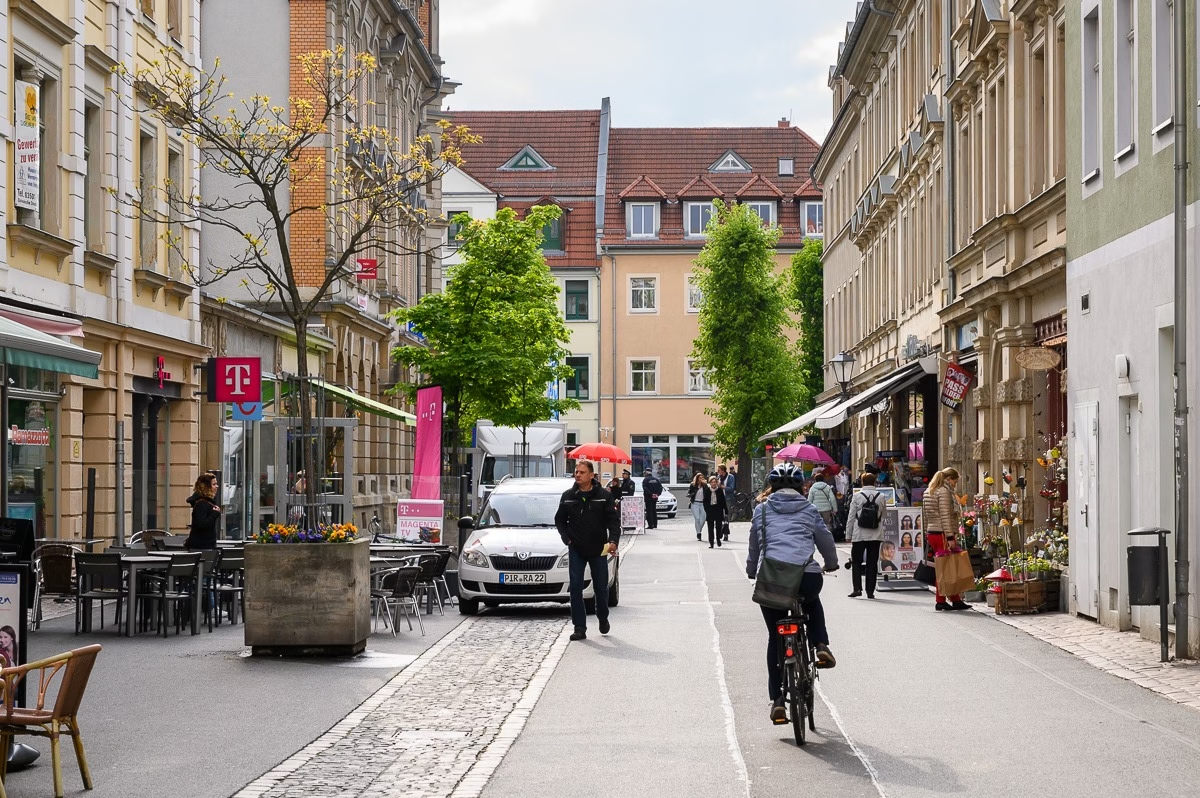
The town has kept its layout and building character for centuries — through the Thirty Years’ War, WWII, industrialisation and the GDR era, when the East German government let historic centres across the country fall into disrepair.
Pirna survived thanks to the commitment of locals and the gradual restoration that followed after 1990.
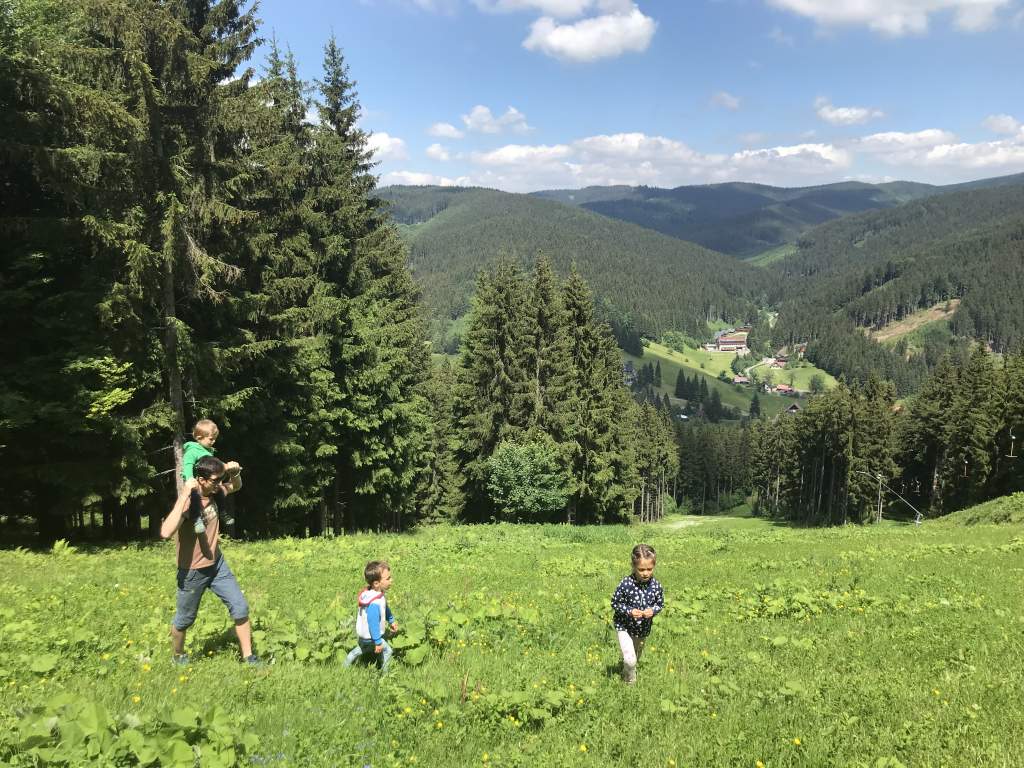
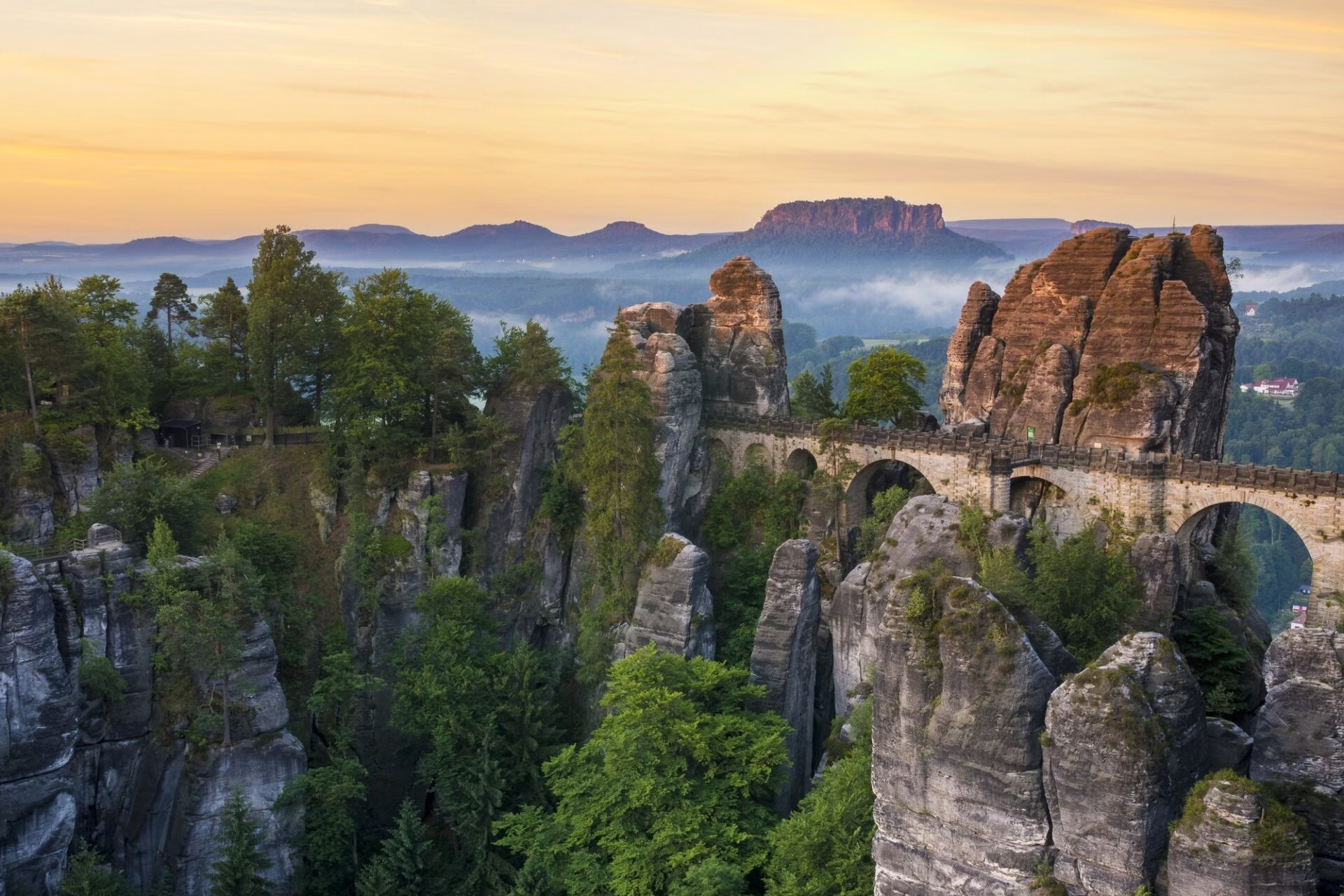
Pirna is also a natural base for Saxon Switzerland — Bastei, the rock cities, the Malerweg trail.
Anyone planning more than a one-day trip into the national park will find that Pirna offers significantly more accommodation options than the surrounding villages, while still being just 20 minutes by car or train from the park’s entrance.
The third reason is less obvious: Sonnenstein. The castle complex above the town hides one of the darkest stories of modern German history — a site where the Nazi Aktion T4 programme killed over 13,000 people, most of them with mental disabilities.
The memorial at Sonnenstein is restrained, thoughtful and worth visiting even for those who usually skip museums and memorials.
Nearby you’ll also find the Baroque garden Großsedlitz, known as the Saxon Versailles, the beautiful Weesenstein castle, several smaller chateaux and summer palaces, and sites connected to the composer Richard Wagner.
Pirna is very easy to reach from Central Europe. From Dresden it’s just 25 km, and the town also lies on the Elberadweg — the Elbe cycle path — which makes it an easy ride from the Czech border at Hřensko or Dolní Žleb.
That accessibility makes it an ideal destination for a long weekend or a stopover on a longer Saxon trip.
How long to stay
For Pirna itself, one day is plenty. If you’re wondering what to see in Pirna without any side trips, you can walk through the historic centre in 1–2 hours, and the Sonnenstein fortress with its memorial in another hour. Add a stroll along the Elbe or a short bike ride if you have time.
An overnight stay makes sense if you want to combine Pirna with Saxon Switzerland, or if you’d like plenty of time to explore the surrounding castles and the Großsedlitz garden.
If you’re travelling from Dresden by train, Pirna is an easy day trip — the S-Bahn runs roughly every 30 minutes and the journey takes just under half an hour.
Top things to do in Pirna
Before getting into the details, here are eight things in Pirna it’s not worth missing:
- Marktplatz – the square where historic Pirna shows itself at its best. The town hall, Canalettohaus, fountain and sandstone paving form an image that has changed remarkably little since Bellotto’s paintings.
- Stadtkirche St. Marien – a late Gothic church with the largest church roof in Saxony and a remarkable interior that rewards a closer look.
- Sonnenstein Fortress – a complex above the town with views over the Elbe and Pirna. Alongside the architecturally interesting castle complex, it houses a memorial site dedicated to the victims of Nazi euthanasia.
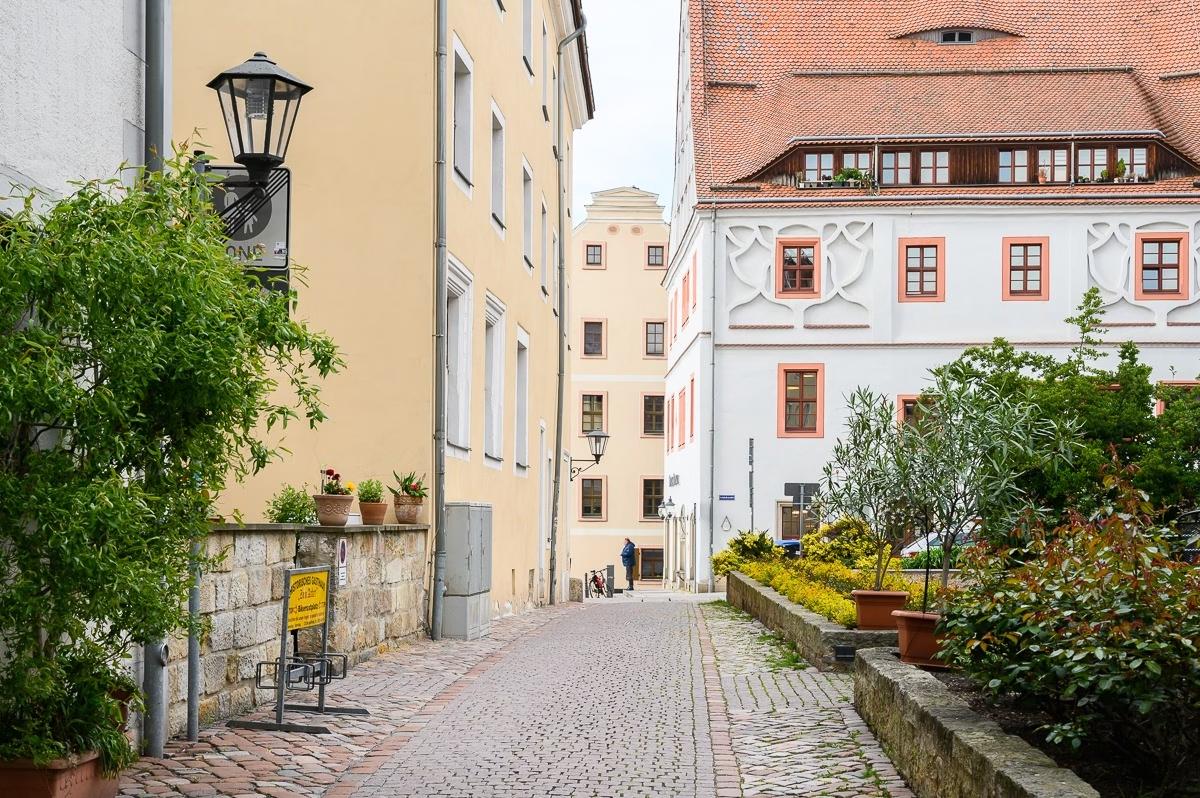
- Historic burgher houses – the most valuable thing in Pirna isn’t a single building, but the ensemble. Walk slowly, look at the portals, oriels, gateways and inner courtyards.
- Canalettohaus – the house on the square that now houses the tourist information centre and a small exhibition about the painter Bellotto and his Pirna paintings.
- Stadtmuseum Pirna – a permanent exhibition in the premises of a former Dominican monastery.
- Elberadweg – the Elbe cycle path runs straight through Pirna. Ride even a short section and you’ll get a completely different perspective on the town.
- Hofnacht – if your visit falls in August, don’t miss this annual event when otherwise inaccessible historic burgher courtyards open to the public. One of the most authentic ways to experience Pirna.
Stops worth making around Pirna:
A few more tips within a 15-minute drive:
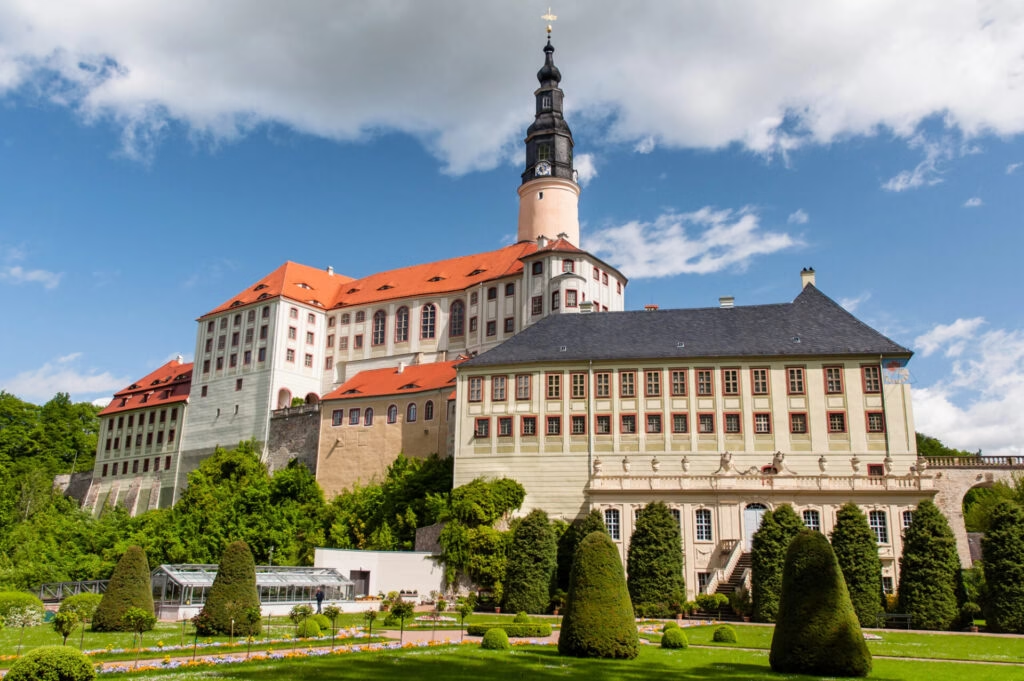
- Weesenstein Castle – a beautiful castle in the hills above Pirna.
- Großsedlitz Baroque Garden – a French-style garden known as the Saxon Versailles.
- Pillnitz Castle – a unique Renaissance palace with gardens and parks right by the Elbe — officially already on the edge of Dresden.
- Feldbahnmuseum Herrenleite – a technical museum with an industrial narrow-gauge railway and steam locomotives.
- Die Kleine Sächsische Schweiz – a miniature park of Saxon Switzerland.
- Pirna-Zuschendorf Castle – a smaller chateau with beautifully maintained gardens and greenhouses.
- Jagdschloss Graupa – a hunting lodge with an exhibition about the composer Richard Wagner.
- Saxon Switzerland – the national park with the famous Bastei viewpoint hardly needs an introduction, but it’s worth mentioning for completeness.
As you can see, with its surroundings Pirna easily offers a varied programme for a long weekend.
What to see in Pirna
Marktplatz and surroundings
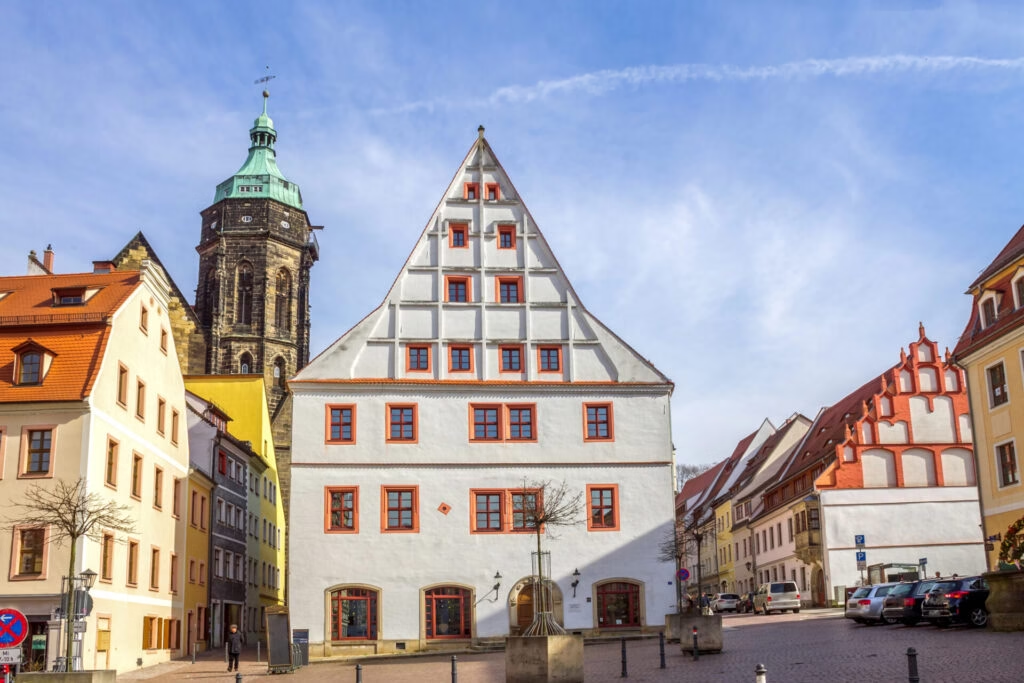
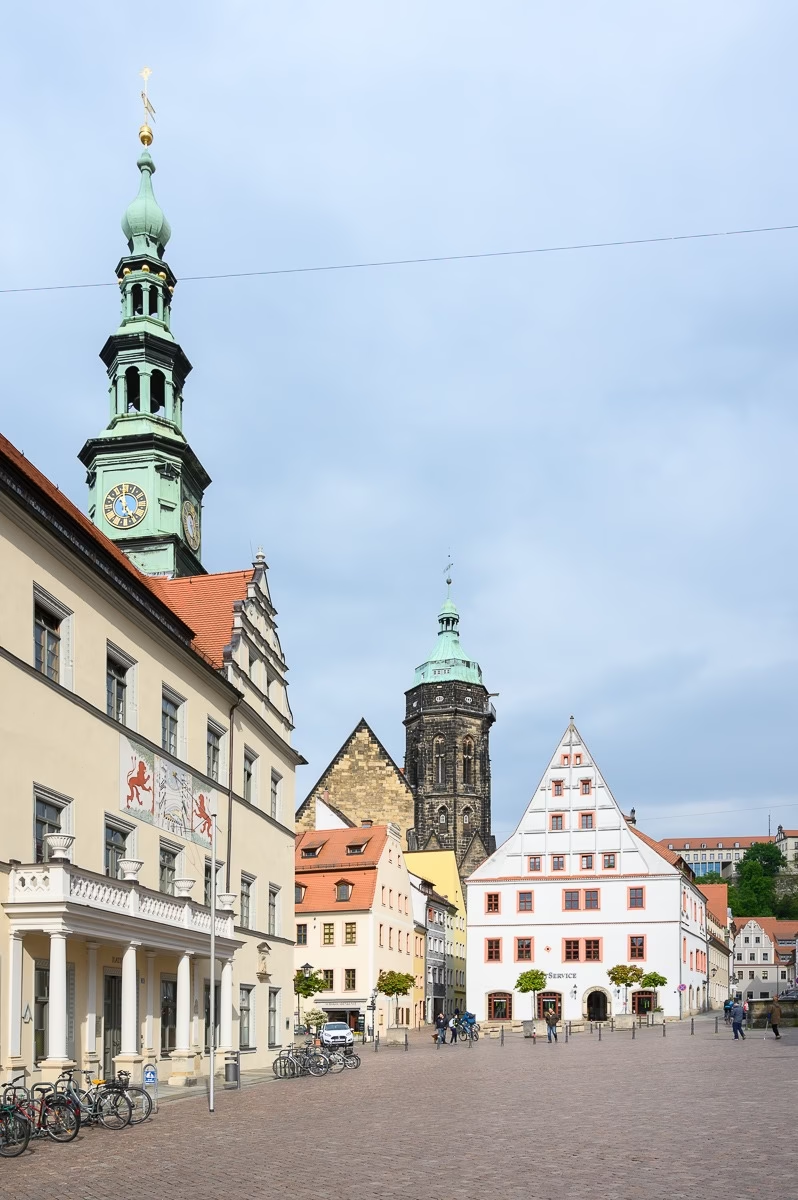
Pirna’s market square is relatively small — and part of its charm lies in that. It isn’t a vast Baroque expanse but a more intimate rectangular space where the buildings stand close enough together to make the whole square readable at a glance.
In the middle stands the medieval town hall, first mentioned in 1396. Its current form, including the Baroque clock tower with sundial and lunar phase symbols, was shaped during the 18th century.
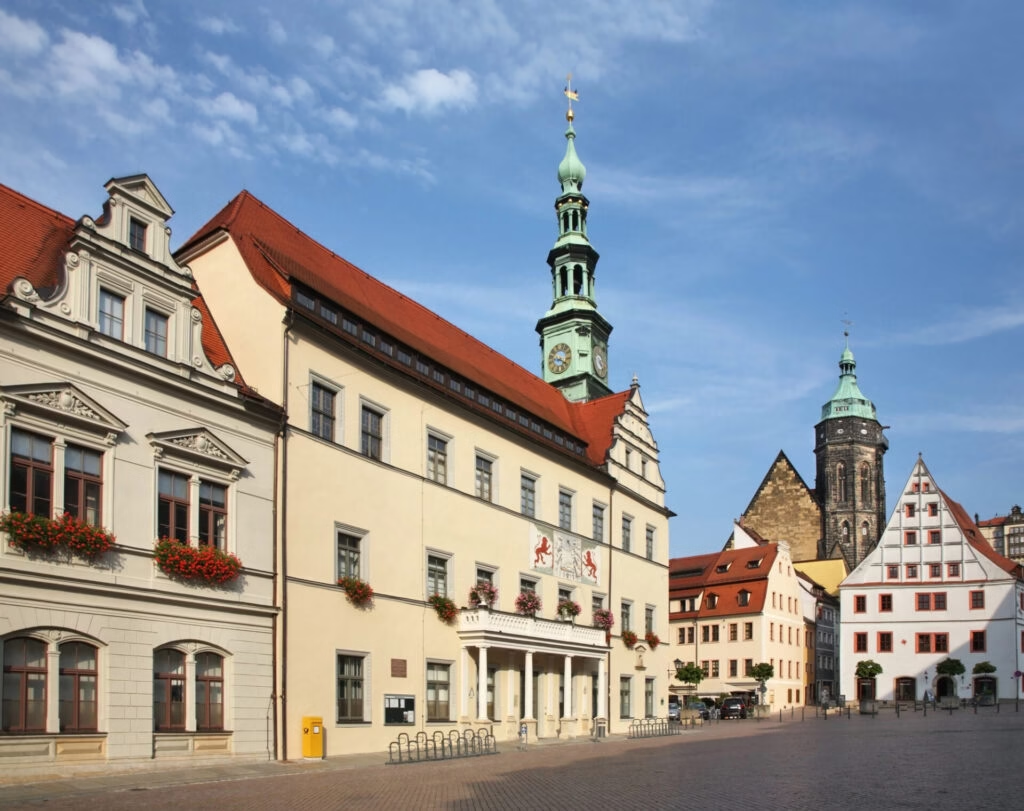
On the north side of the square stands the Canalettohaus — the building that appears directly on Bellotto’s most famous Pirna painting from 1753. Its current Renaissance form dates from around 1520.
Today it houses the TouristService Pirna and a small free exhibition dedicated to the painter and his Pirna vedute. It’s worth a brief stop, especially if you’re interested in the wider historical context of the town.
Every year in April, the square hosts Lebendiges Canalettobild — a living painting in which local amateur actors in period costume take up the exact positions of the figures from Bellotto’s painting, and for a few moments the entire square freezes.
Where to Stay in Pirna
Pension Donatus
A guesthouse on Niedere Burgstr. with its own parking. Vegetarian buffet breakfast and apartments for up to 4 people right in the historic centre.
Check availabilityHortensiensuite
A 55 m² apartment in a stone house right by the Elbe. Sauna, infrared cabin and a water bed — an unusual choice for couples, 10 min walk to the centre.
Check availabilityDesign ElbOase
A 60 m² designer apartment in the old town, 300 m from the square. Fully equipped kitchen, washing machine and pet-friendly — ideal for a longer stay.
Check availabilityAlte Brennerei Zehista – Akelei
A generous 110 m² apartment for 8 people in a sensitively restored old distillery. Private garden, outdoor pool and sauna — ideal for families and groups with a car.
Check availabilityGrafschafft
Modern 96 m² apartment with two bedrooms, balcony and underground garage. 15 min by train to Dresden and to the rocks of Saxon Switzerland.
Check availabilityStadtkirche St. Marien
The church stands at the northern edge of the historic centre and dominates Pirna from every direction. The late Gothic building was constructed between 1502 and 1546 — a relatively short and coherent building period, which shows in the consistency of the architecture.
The most remarkable structural element is the roof. With its ridge at 40 metres and the largest roof surface of any church in Saxony, it’s a technically demanding construction that has survived the centuries and was last restored in 2004.
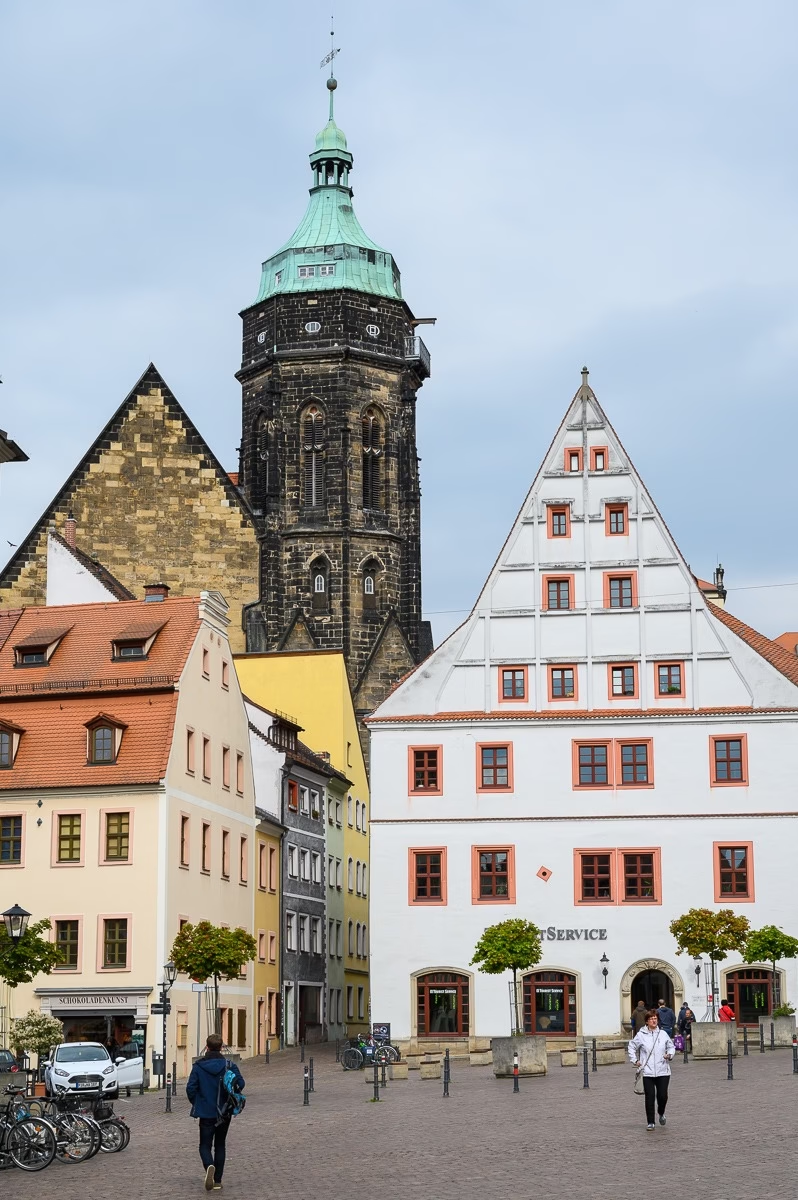
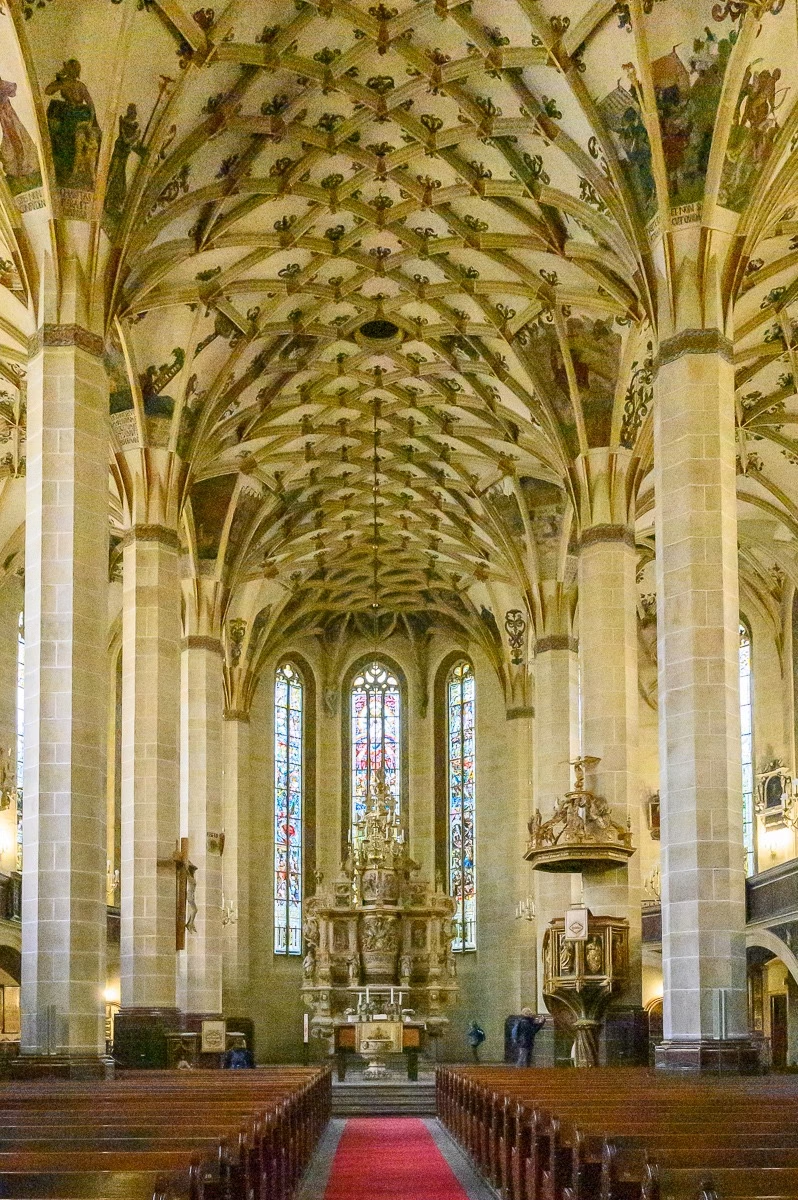
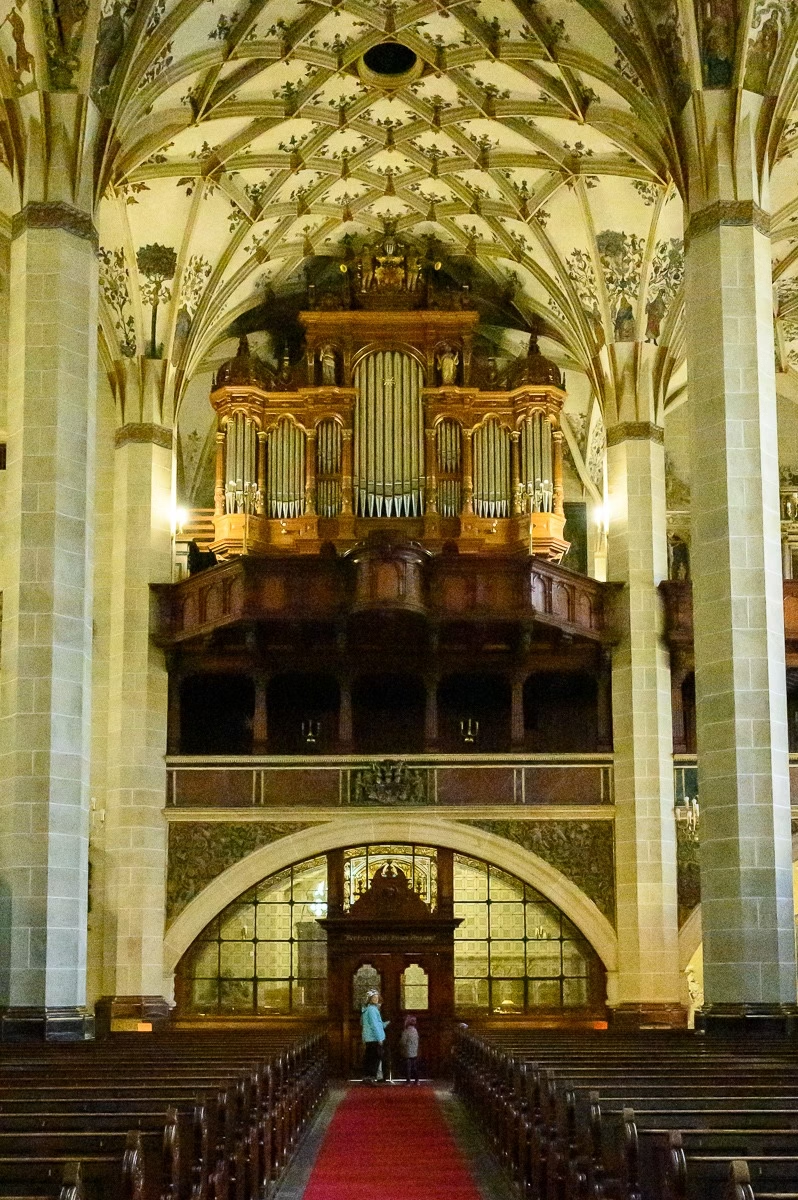
The interior is worth a closer look — especially the richly ribbed vaulting and the painted figural scenes on the walls, known as the Pirnaer Bilderbibel (Pirna picture Bible).
The church is also linked to the Reformation: it was among the first churches in Saxony to convert to Lutheranism, and that historical layer is still legible in its decoration.
Sonnenstein Fortress and Castle
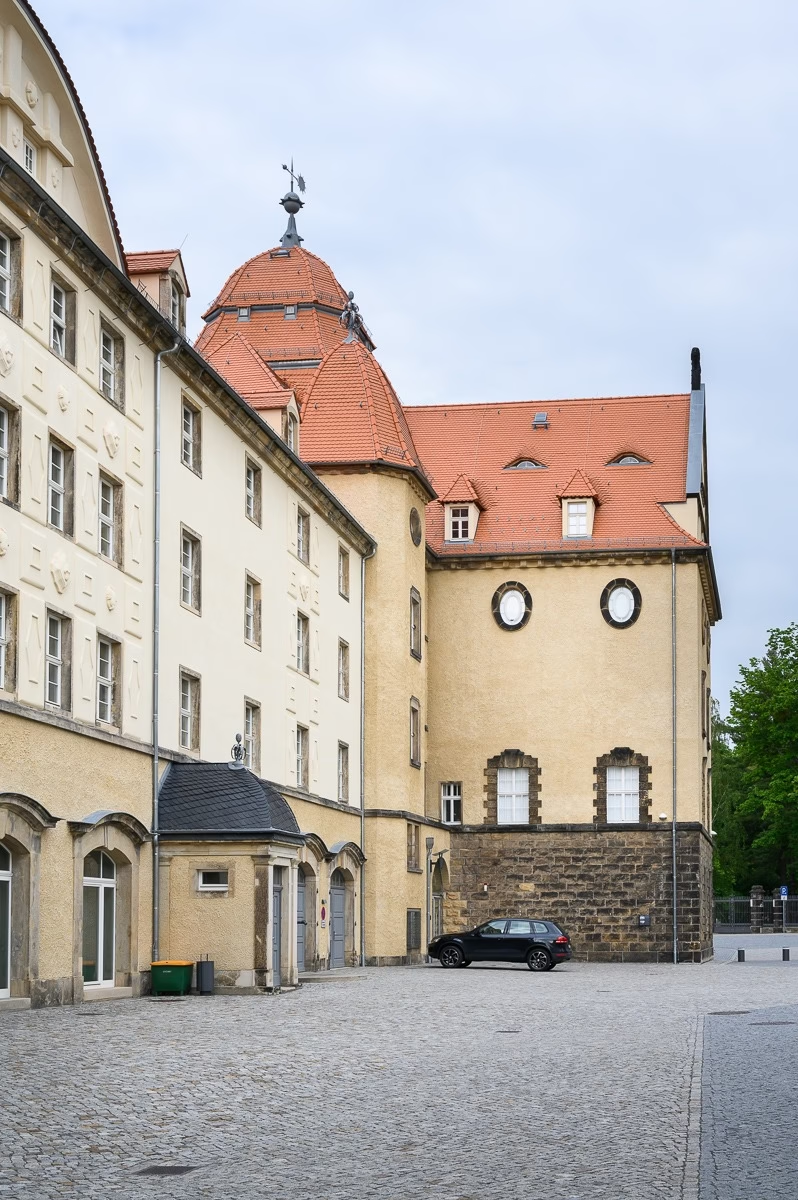
Sonnenstein Fortress sits on a rocky promontory directly above the historic centre. You can walk up from the square in 10–15 minutes and you’re rewarded with views over Pirna, the Elbe and Saxon Switzerland in the background.
The site has a complex and at times deeply troubling history. The original 13th-century castle, then on the border between the Kingdom of Bohemia and the Margraviate of Meissen, was gradually transformed into a Renaissance fortress.
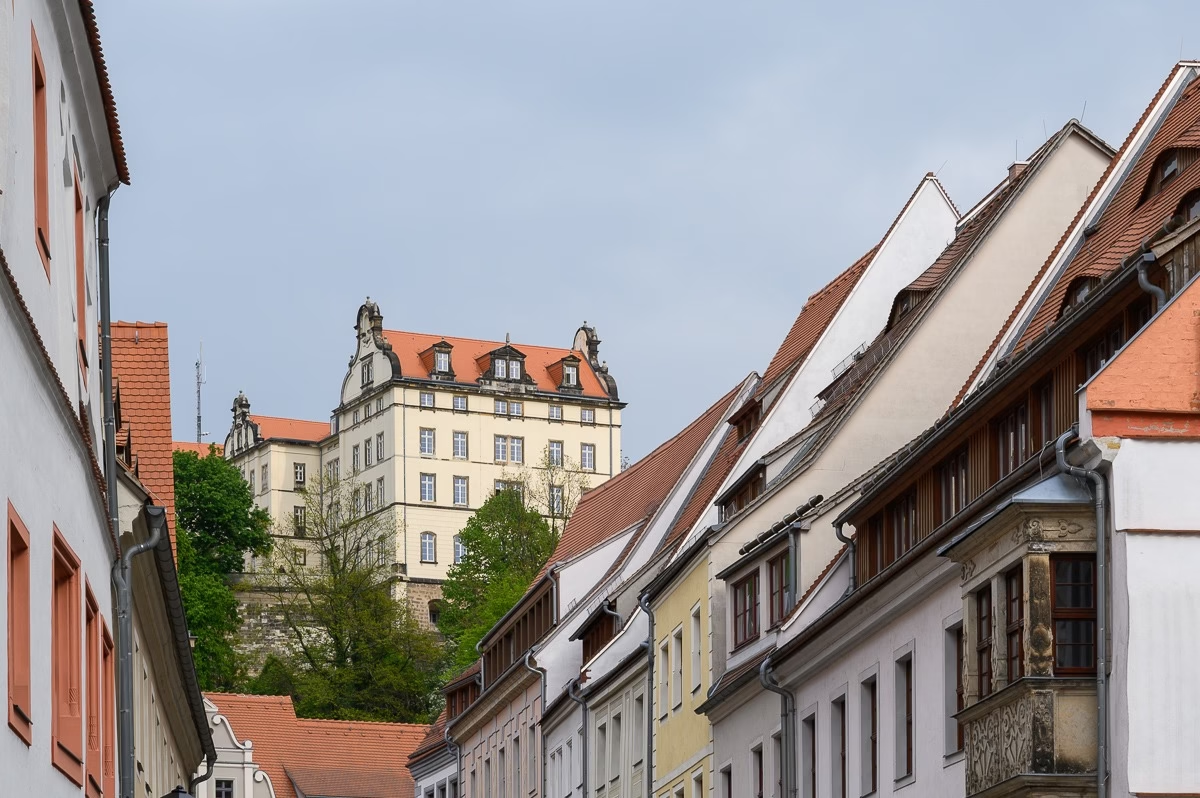
In the 19th century it underwent what appeared to be a civilising transformation — one of the first modern psychiatric institutions in Germany was established here. That tradition was later abused under the Nazi regime in a way that made this site one of the darkest in the entire country.
In 1940 and 1941, under the Nazi programme Aktion T4, more than 13,000 people were murdered at Sonnenstein — people with mental illness, physical disabilities, or those who simply didn’t meet the Nazi criteria of “racial usefulness”. It was one of six systematic killing centres that the T4 programme operated in Germany.
The Pirna-Sonnenstein Memorial now occupies part of the original site. The exhibition covers both the historical context of the programme and the individual fates of victims.
Admission is free and some of the texts are also available in English.
The remaining part of the complex — the castle and the 18th-century bastions — is freely accessible, although unfortunately you can’t enter the castle interiors.
During the summer months the site hosts Skulpturensommer Pirna, an open-air sculpture exhibition in the original military fortifications.
Stadtmuseum Pirna
The museum is housed in the premises of a former Dominican monastery, whose medieval architecture provides a natural frame for the collections on the town’s history.
The building itself is worth attention — the combination of preserved cloister spaces and modern exhibition elements has won architectural awards in the past.
The permanent exhibition covers Pirna’s development from the Middle Ages, through its commercial boom on the Elbe, industrialisation and into the 20th century.
Special attention is paid to the quarrying and processing of sandstone from the Elbe sandstone hills, which fundamentally shaped the town’s identity and wealth for centuries. Pirna sandstone travelled by boat down the Elbe to Dresden, where it became the main building material for the city’s Baroque palaces and churches.
DDR Museum Pirna
Less than a kilometre southeast of the historic centre lies one of the most distinctive museums in Saxony — the DDR Museum Pirna.
This private collection brings together over a hundred and twenty thousand objects from the period of the German Democratic Republic (DDR/GDR), spread across roughly two thousand square metres.
Inside you’ll find a school classroom, a period grocery shop, a fully furnished 1980s apartment, Trabant and Wartburg cars, and endless shelves of everyday objects that shaped life in East Germany over three decades.
Check opening hours and admission on ddr-museum-pirna.de
Historic burgher houses
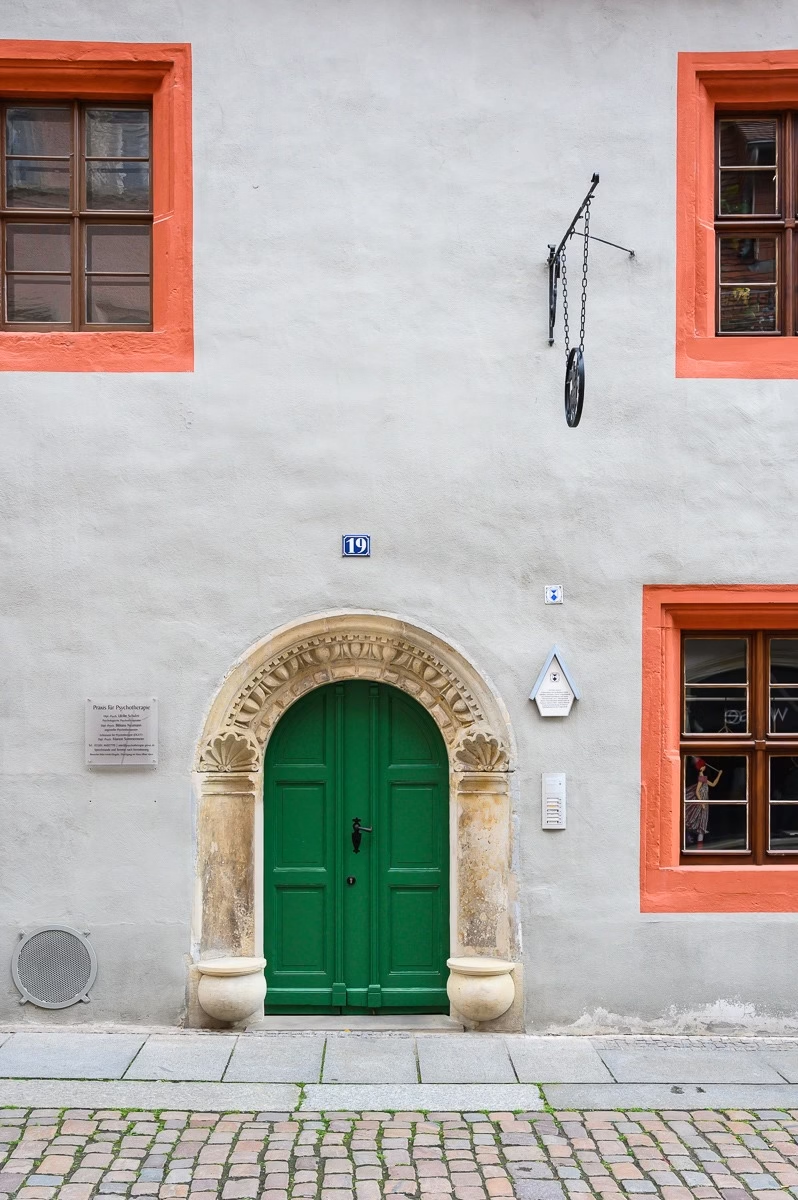
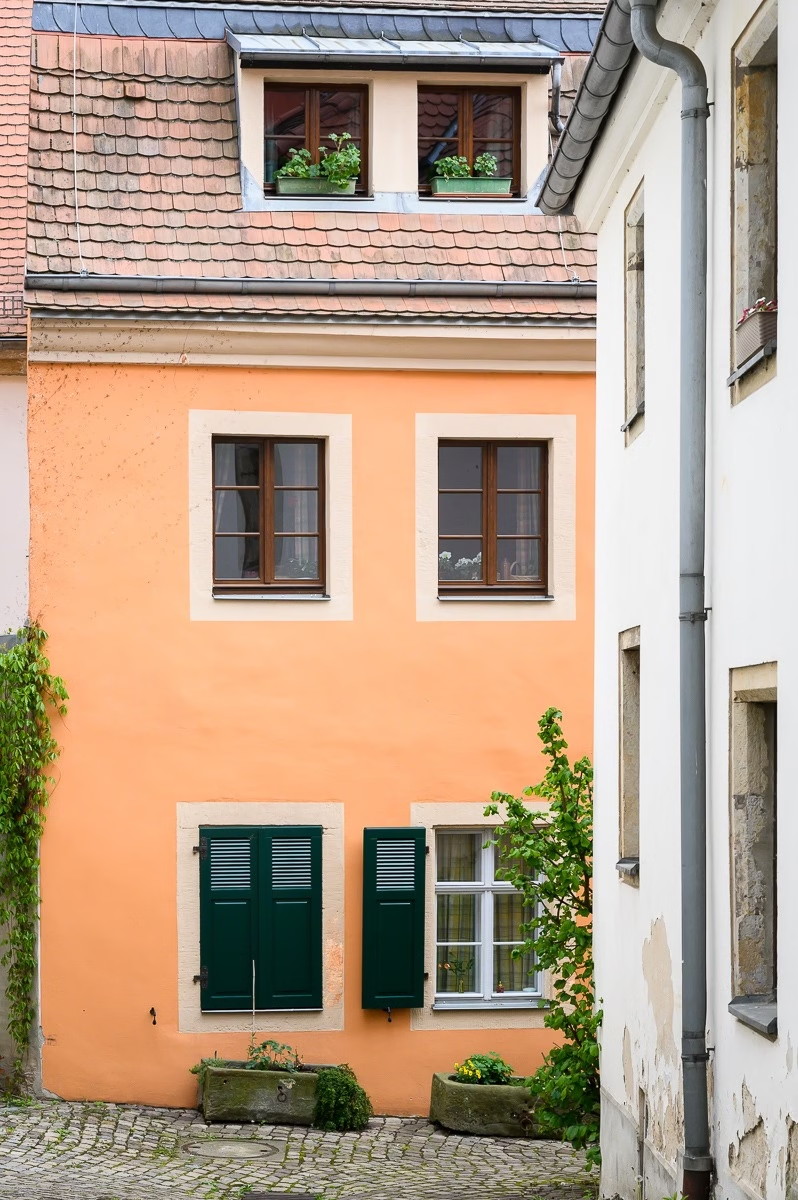
The houses in the centre are largely Renaissance and early Baroque, decorated with sandstone portals, seat niches and oriels of various shapes.
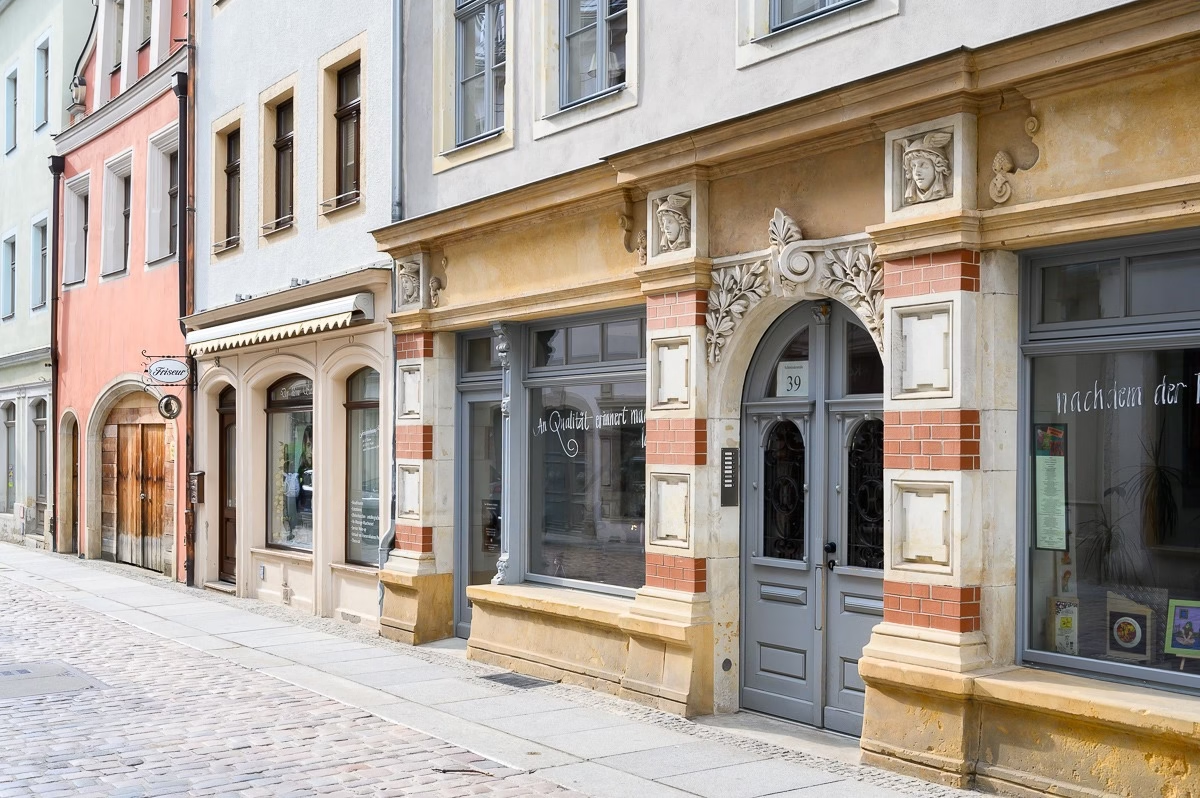
Two deserve special attention: Teufelserkerhaus on Obere Burgstraße has an oriel supported by three devil figures — one of the strangest and most entertaining architectural details in all of Pirna. As a counterpart, Engelserker, an oriel with angels, sits just a short walk away.
The inner courtyards (Höfe) in Pirna are exceptionally well preserved and represent some of the best the town has to offer. They are usually accessible through passageways on the ground floors of houses.
If you visit in August, Hofnacht — the night of open courtyards — is the best opportunity to see them in full glory, with music, food and lighting.
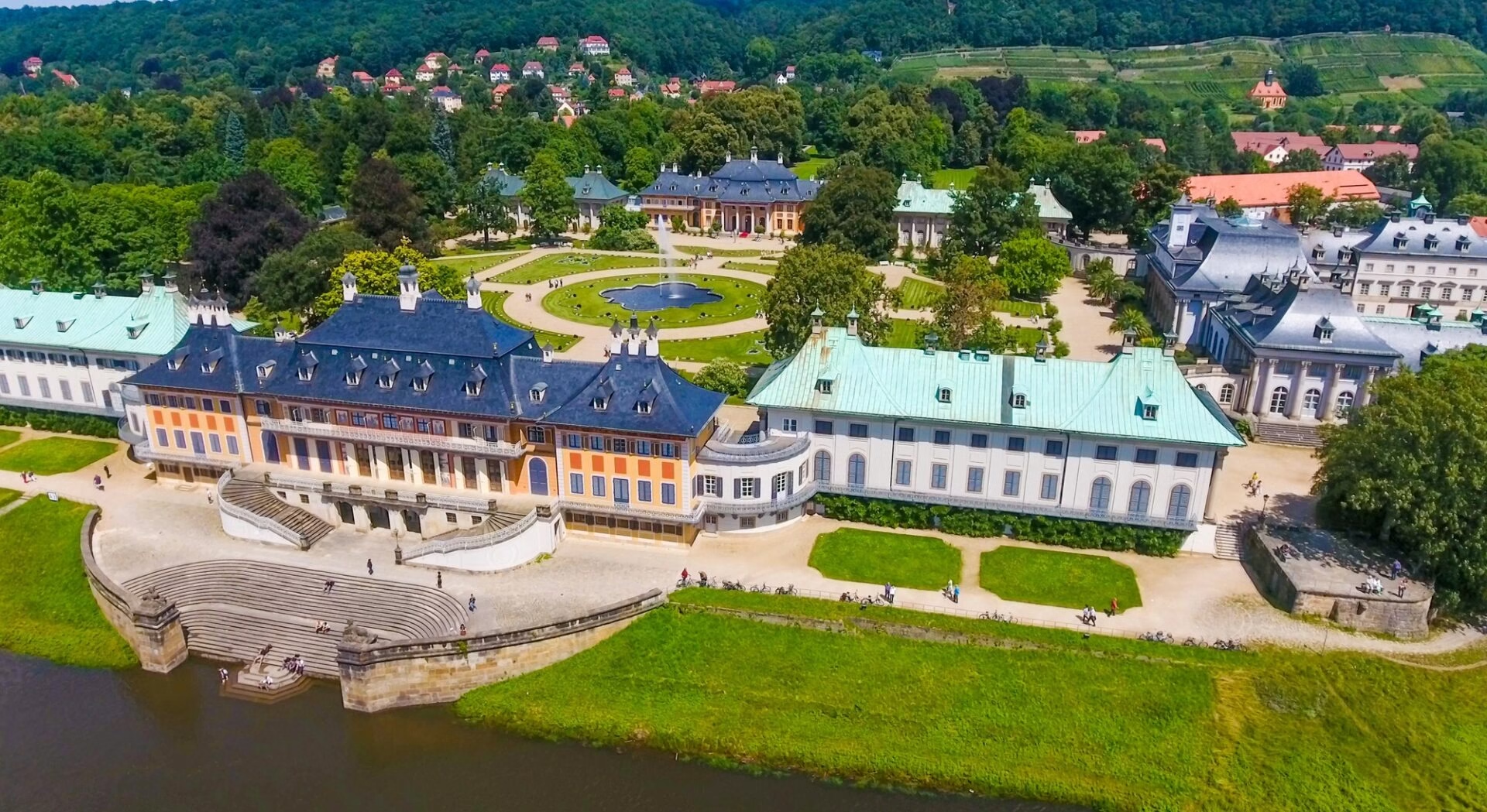
Friedrichschlösschen and Barockgarten Großsedlitz
Four kilometres northwest of central Pirna, on the edge of the village of Heidenau, lies one of Saxony’s most important Baroque gardens — Barockgarten Großsedlitz.
It is also nicknamed the Saxon Versailles.
The garden was created in the first third of the 18th century as a prestige project of the Saxon electors, designed in a strict French style with symmetrical paths, water terraces, trimmed bosquets and about sixty Baroque sculptures.
The architectural centrepiece is Friedrichschlösschen — a small summer palace from 1727 that served as an orangery and a representative pavilion. The second orangery, Obere Orangerie, now houses a café with a garden terrace.
The garden is open year-round, with hours that follow the season. Check the exact times on barockgarten-grosssedlitz.de
Admission is €6 for adults and €5 reduced.
From central Pirna you can drive here in about ten minutes.
What to experience in Pirna
Elberadweg – cycling along the Elbe
The Elberadweg, the Elbe cycle path, is one of the most popular long-distance bike routes in Germany. The German section alone stretches for about 860 kilometres.
For Pirna visitors, what matters is that the route runs directly through the town centre and offers an easy ride either towards Dresden (about 20 km) or in the opposite direction into Saxon Switzerland and on to the Czech border at Hřensko or Dolní Žleb.
The route along the Elbe is largely on dedicated cycle paths or low-traffic roads, so even families with children can manage it. And you’re cycling on the flat — it is, after all, a river valley.
Cruising the Elbe
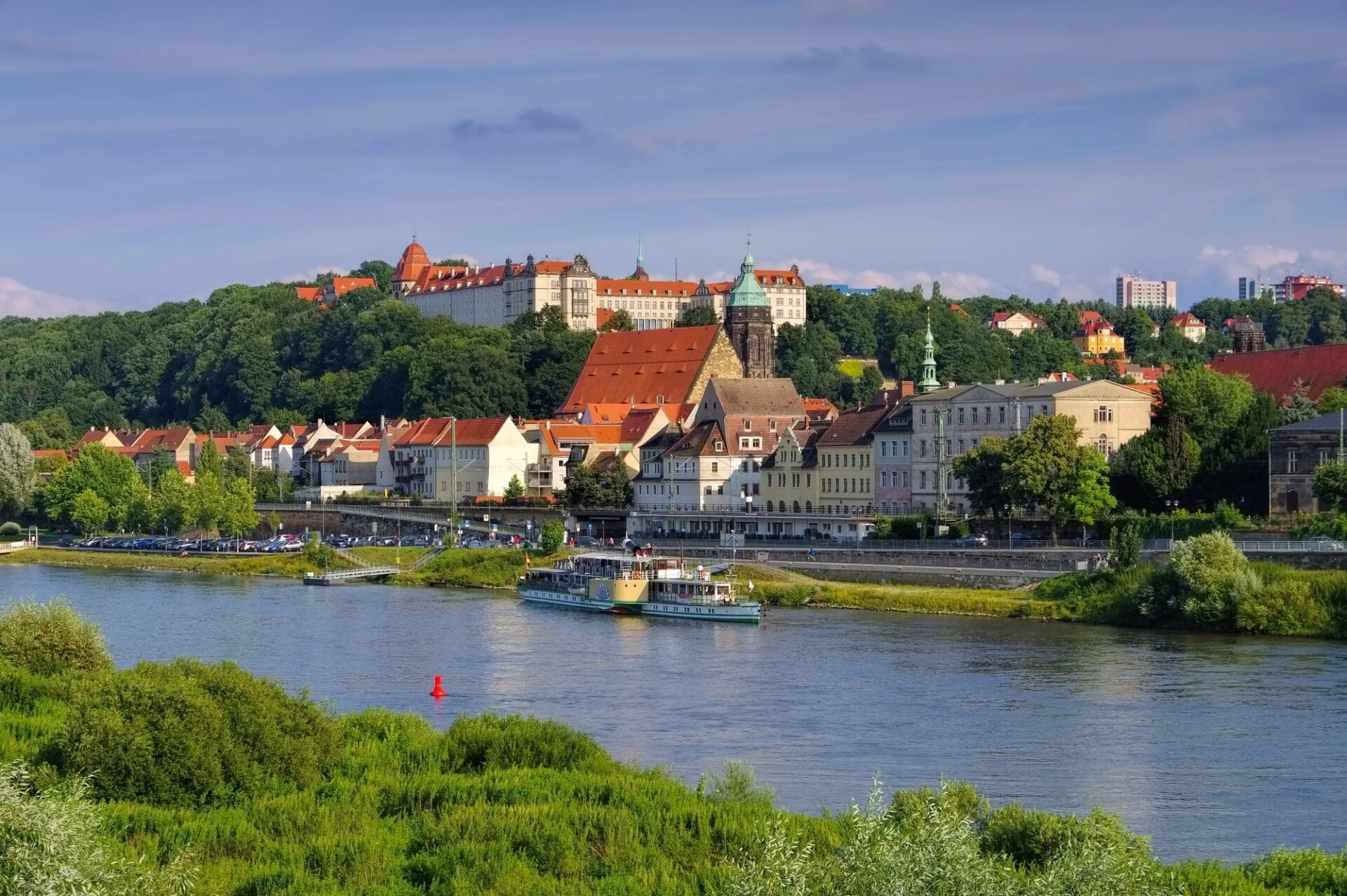
The historic paddle steamers of Sächsische Dampfschiffahrt form the largest and oldest fleet of working paddle steamers in the world — nine ships, some of them in operation since the late 19th century. Several other tourist lines also run on the Elbe.
Pirna is one of the main stops on the line between Dresden and Saxon Switzerland, so a cruise from here makes sense in either direction: upstream to Bastei and Bad Schandau, or downstream to Dresden and Pillnitz Castle.
The journey from Pirna to Dresden takes about two hours downstream, and roughly an hour longer in the opposite direction (the boat is fighting the stronger current). A cruise to Bad Schandau, with several stops in Saxon Switzerland, takes approximately three to three and a half hours.
Sächsischer Weinwanderweg
The Saxon Wine Trail winds through the countryside southeast of Pirna and combines views over the Elbe valley with vineyards and historic villages.
Part of the route is open to cyclists, part is reserved for hikers only.
You can get information about the trail and its sections from the tourist centre in the Canalettohaus.
Hofnacht
Hofnacht — literally “night of the courtyards” — takes place every August and is a unique chance to look behind the façades of Pirna’s houses. The owners of historic courtyards and gardens open up spaces that are otherwise closed to the public, and offer food, drink and culture.
The event draws sizeable crowds, so if you’re planning to attend, book your accommodation well in advance.
Canaletto Markt – Pirna’s Christmas market
Pirna has its own Christmas market tradition, with a name that nods directly to Bellotto’s paintings of the town — hence Canaletto Markt. The market takes place on the Marktplatz from late November to 23 December and is noticeably smaller and quieter than Dresden’s Striezelmarkt or the markets on Altmarkt.
That’s precisely its main advantage: no queues, space to move around even with a pram, and the backdrop of an authentic historic square.
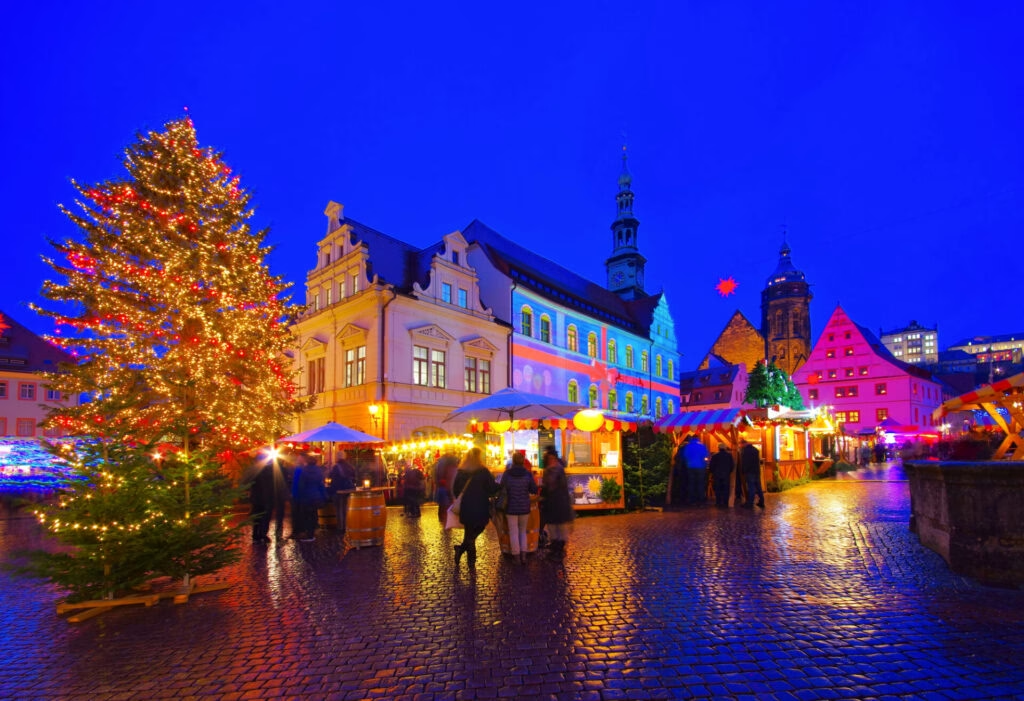
During Advent, Pirna pairs beautifully with Dresden: spend the morning at Dresden’s Striezelmarkt, then move on to the more relaxed Pirna in the afternoon. Staying overnight in Pirna instead of Dresden also works out considerably cheaper.
The Christmas market is the main reason to come to Pirna in winter, and paradoxically one of the few times when the town gets a little busier.
Food and drink in Pirna
Pirna isn’t a culinary destination on the level of Dresden, but for a town of its size it has a surprisingly solid offering. The centre is compact, so all the places listed here are within walking distance — no need to think about transport.
Where to get coffee
- AltstadtEule Pirna – A tiny café in the old town’s lanes. Good espresso and homemade desserts.
- Café Bohemia – A quiet café near the square. Specialty coffee, cakes and homemade lemonades.
- Canaletto Pirna – A café referencing the painter Bellotto, just off the Marktplatz. Also serves a solid breakfast.
Where to eat
- Restaurant Schifftor – Saxon cuisine in a burgher house a short walk from the Marktplatz. Classics like roast pork, dumplings and local beer.
- Restaurant Felsenbirne – More modern German cooking with a regularly changing seasonal menu. Compact menu and an emphasis on local ingredients.
- AMARE italienisches Restaurant – An Italian bistro with homemade pasta and wood-fired pizza. A reliable choice when you need a break from German cuisine.
- Landgang Pirna – A specialist in fish and seafood — an unusual accent in otherwise meat-oriented Pirna. Short menu, fresh ingredients.
- Ambar Restaurant – Honest Indian cooking. Classic curries, tandoori and a vegetarian menu.
- Restaurant Lazy Laurich – A restaurant on the other side of the Elbe in the Copitz district, well worth crossing the bridge for. Contemporary cuisine with a seasonal menu, river views and a quiet spot away from the old-town foot traffic.
Where to stay in Pirna
Pirna has a relatively modest but well-functioning accommodation offer. The biggest concentration of guesthouses and smaller hotels is in or right next to the historic centre — for visitors without a car, that’s really the only sensible choice.
Prices are significantly lower than in Dresden, even though the two town centres are only 20 kilometres apart.
Recommended places to stay in Pirna:
- Pension Donatus – A guesthouse on Niedere Burgstr., one of the streets leading straight to the Marktplatz. Generous rooms and apartments for up to 4 people, a vegetarian buffet breakfast, and on-site parking — a rare combination in the centre of Pirna.
- Hortensiensuite – A 55-square-metre apartment in a beautiful old stone house right by the Elbe, ten minutes’ walk from the historic centre. The amenities include a sauna, infrared cabin and a water bed — an unusual choice for couples.
- Design ElbOase – A 60-square-metre two-room designer apartment in the old town, three hundred metres from the square. Fully equipped kitchen, washing machine, parking near the station and a pet-friendly policy — a practical pick for a longer stay.
- Alte Brennerei Schloss Zehista – Akelei – A 110-square-metre apartment for eight guests in a sensitively restored old distillery three kilometres outside town. Private garden, outdoor pool, sauna and a grill — ideal for families or a group of friends with a car.
- Grafschafft – A modern apartment with two bedrooms, a balcony and underground garage in a quiet residential neighbourhood. Fifteen minutes by train to Dresden or to the rocks of Saxon Switzerland — a good base for day trips without having to deal with parking in the centre.
How to get to Pirna
By car, Pirna is very easy to reach since it’s on the A17 motorway from Dresden to Prague.
From Prague the route runs along the D8 motorway, across the Cínovec/Tellnitz border crossing and onto the German A17 straight into Pirna. The distance is about 140 kilometres and the drive takes around an hour and a half depending on traffic.
From Děčín it’s just under 40 kilometres, and from Ústí nad Labem about 60 kilometres.
By train from Dresden, take the S-Bahn S1 or S2 directly to Pirna. The journey takes 20 minutes and trains run at least every half hour, usually more often.
From Prague, take a direct EuroCity train to Bad Schandau or Dresden and continue on the S-Bahn to Pirna.
Pirna’s train station is about a 10-minute walk from the historic centre.
Frequently asked questions about Pirna
What can you see in Pirna in one day?
In a single day you can cover the entire historic centre (Marktplatz, Canalettohaus, Stadtkirche St. Marien, the burgher houses including Teufelserkerhaus), climb up to Sonnenstein fortress for views over the Elbe valley, and take a short walk along the Elberadweg. Start at the square and head up to Sonnenstein in the afternoon. With more time, continue to the surrounding castles or into Saxon Switzerland.
How do I get to Pirna from Dresden?
The easiest way is the S-Bahn S1 or S2, which runs at least every half hour and reaches Pirna in about 20 minutes. By car, take the A17 motorway — the trip takes around 25 minutes.
Is Pirna worth visiting?
Yes, especially if you enjoy historic centres without the crowds. Pirna is one of the best-preserved Renaissance and Baroque towns in Saxony — it survived WWII practically untouched — and its Marktplatz still looks much like it did in Bellotto’s paintings from the mid-18th century. The surrounding area also has several beautiful castles, and Pirna serves as the gateway to Saxon Switzerland.
What is Sonnenstein in Pirna?
Sonnenstein is a fortress complex above Pirna’s historic centre. Alongside the architecturally interesting 18th-century castle, the site houses the Pirna-Sonnenstein memorial, dedicated to the victims of the Nazi Aktion T4 programme — between 1940 and 1941, more than 13,000 people with mental illness or disabilities were murdered here. Admission to the memorial is free.
How far is Pirna from Dresden?
About 18 km as the crow flies, just under 25 km by car, and 20 minutes by S-Bahn S1 or S2 (running at least every 30 minutes). Pirna is therefore an easy day trip from Dresden — or, conversely, a cheaper base from which travellers head into Dresden on day trips.
When is the Pirna Christmas market?
The Canaletto Markt on the Marktplatz runs from late November to 23 December. Opening hours are usually 11 a.m. to 9 p.m. on weekdays and from 10 a.m. on weekends. The market is much smaller and quieter than Dresden’s Striezelmarkt — ideal for families with children or anyone who isn’t a fan of crowds.
Where is the best place to stay in Pirna?
The biggest concentration of guesthouses and smaller hotels is directly in the historic centre. Prices start around €70 for a double room and go up to about €130 per night depending on the season. Pension Donatus and Design ElbOase are good central picks; for something different, Hortensiensuite sits right on the Elbe and is ideal for cyclists on the Elberadweg.
Related articles on Czech Travellers
- Dresden Travel Guide
- Děčín Travel Guide