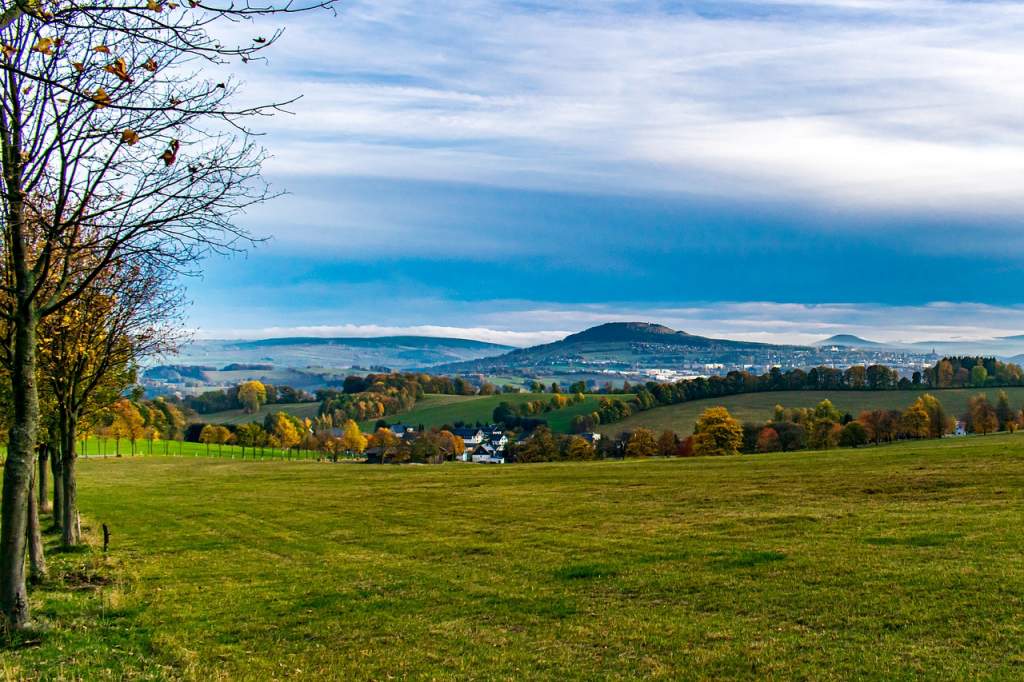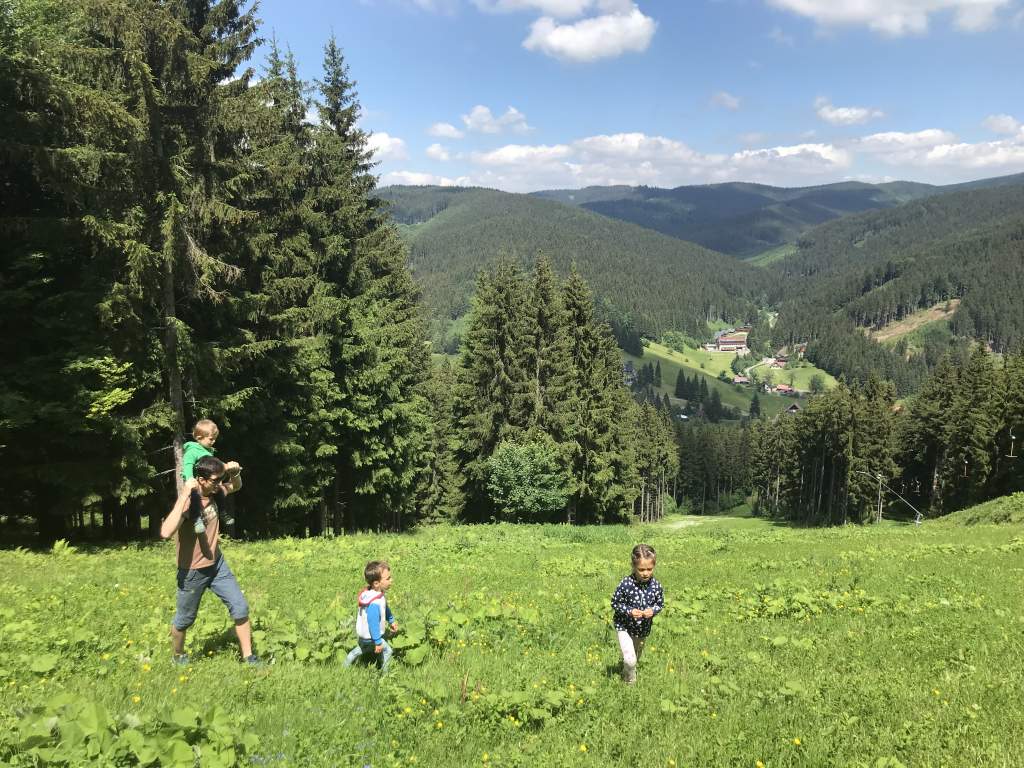
Lithuania is the largest and southernmost of the Baltic states — and still a bit overlooked. The country has coastline, gorgeous beaches, stunning forests and lakes, a history thick with legend, architecture that will take your breath away, plus a lively nightlife and an incredible sports-match atmosphere. You can fly to Vilnius in under two hours from Central Europe, the currency is the euro, and it works whether you have three days or two weeks.
Lithuania at a Glance
- Capital: Vilnius (about 600,000 people); the second-largest city is Kaunas.
- Currency: euro, adopted 1 January 2015. You can pay by card almost everywhere.
- Documents: Lithuania is in the EU and Schengen, so an ID card or passport is enough.
- Time zone: one hour ahead of Central European Time.
- Language: Lithuanian, one of the most archaic living Indo-European languages. English is surprisingly widely spoken.
- Best time to go: cities and sights May to September; Baltic Sea swimming really only works in July and August.
- Time needed: 3–4 days for Vilnius and Trakai, 8–10 days for the whole country including the coast.
- Daily budget: modest €50–60, comfortable €90–120 per person per day.
Why Visit Lithuania
Lithuania has a way of becoming a personal favourite, and there are plenty of reasons to visit. It isn’t among the most popular tourist destinations — which is exactly why it still has its own unique charm. Between the deep forests, churches and castles that hint at a grand past, the great food and the warmth of the locals, it’s a place where you quickly feel at home.
Add to that some practical perks: prices below the Western European average, compact distances (it’s just 300 kilometres from Vilnius to the sea), and the fact that tourists tend to cluster around two or three spots — step outside them and you’ll have the lakes and dunes practically to yourself. Lithuania also combines easily with the other Baltic states in one trip; direct buses run between the capitals.
Things to Do in Lithuania: 14 Places Worth the Trip
Lithuania is small but varied. This selection ranges from the capital through castles and dunes to lakeside national parks and spa towns. The first six spots fit into a one-week loop; the rest are for those with more time.
Vilnius from Every Angle
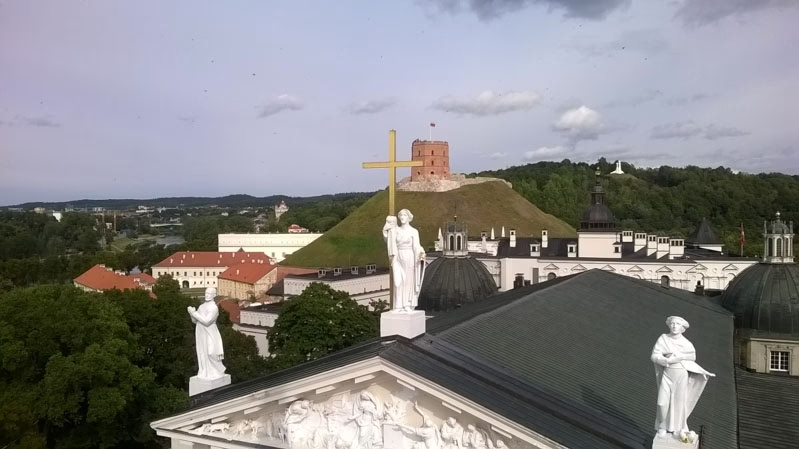
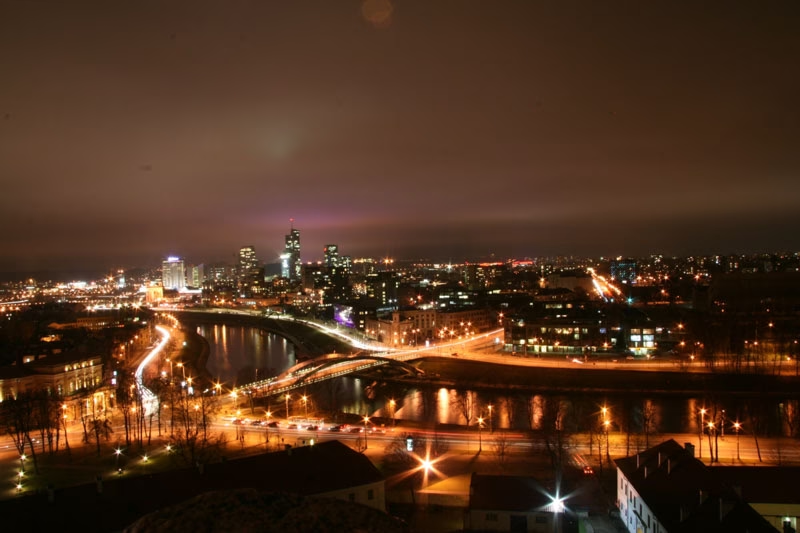
A magical old town, a cathedral, churches, Gediminas’ Castle, the Three Crosses, a street lined with bars, and much more — it’s all here in the capital. If you love history, or simply enjoy beautiful cities with rich culture and nightlife, give Vilnius several days.
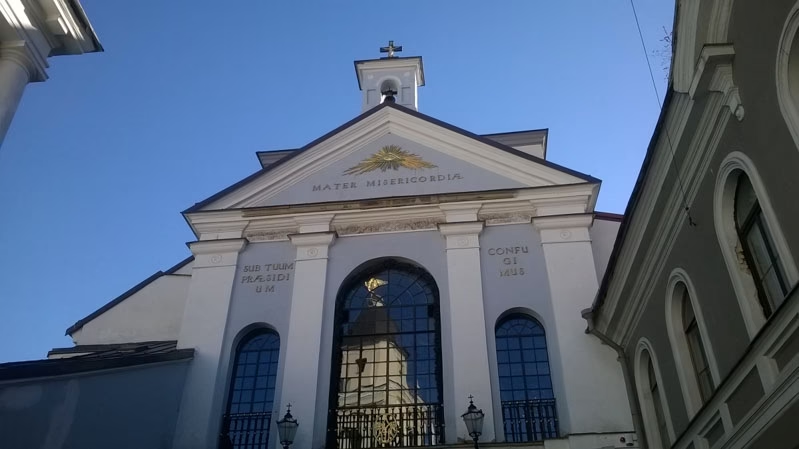
Vilnius’s old town is one of the largest in Europe and has been a UNESCO World Heritage Site since 1994. The best views are from Gediminas’ Tower and the Three Crosses, reached by a pleasant walk through a small forest. Don’t miss the Gate of Dawn (Aušros vartai) with its chapel to the Virgin Mary, the red-brick St. Anne’s Church — which Napoleon supposedly wished he could carry back to Paris in the palm of his hand — and the Bernardine Cemetery above the Vilnia River.
Užupis
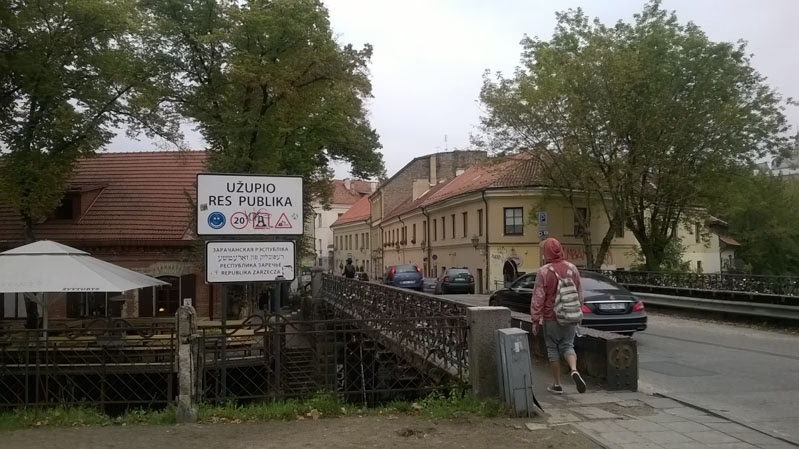
A tiny republic of artists and dreamers across the river in Vilnius. Since 1998 it’s genuinely operated as its own “state,” complete with a constitution, flag and president. The walls are covered in murals, the streets are full of art installations, and a giant swing hangs from a bridge. In the main square you can read the constitution’s text in several languages. Wandering around, stopping at local pubs and chatting with residents makes for a lovely day.
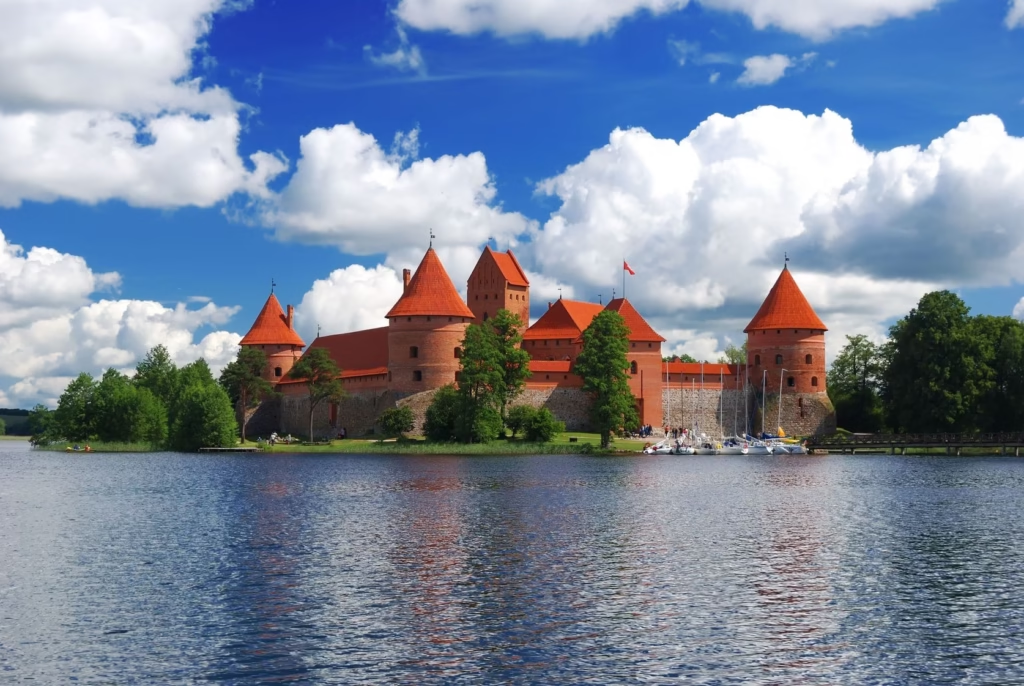
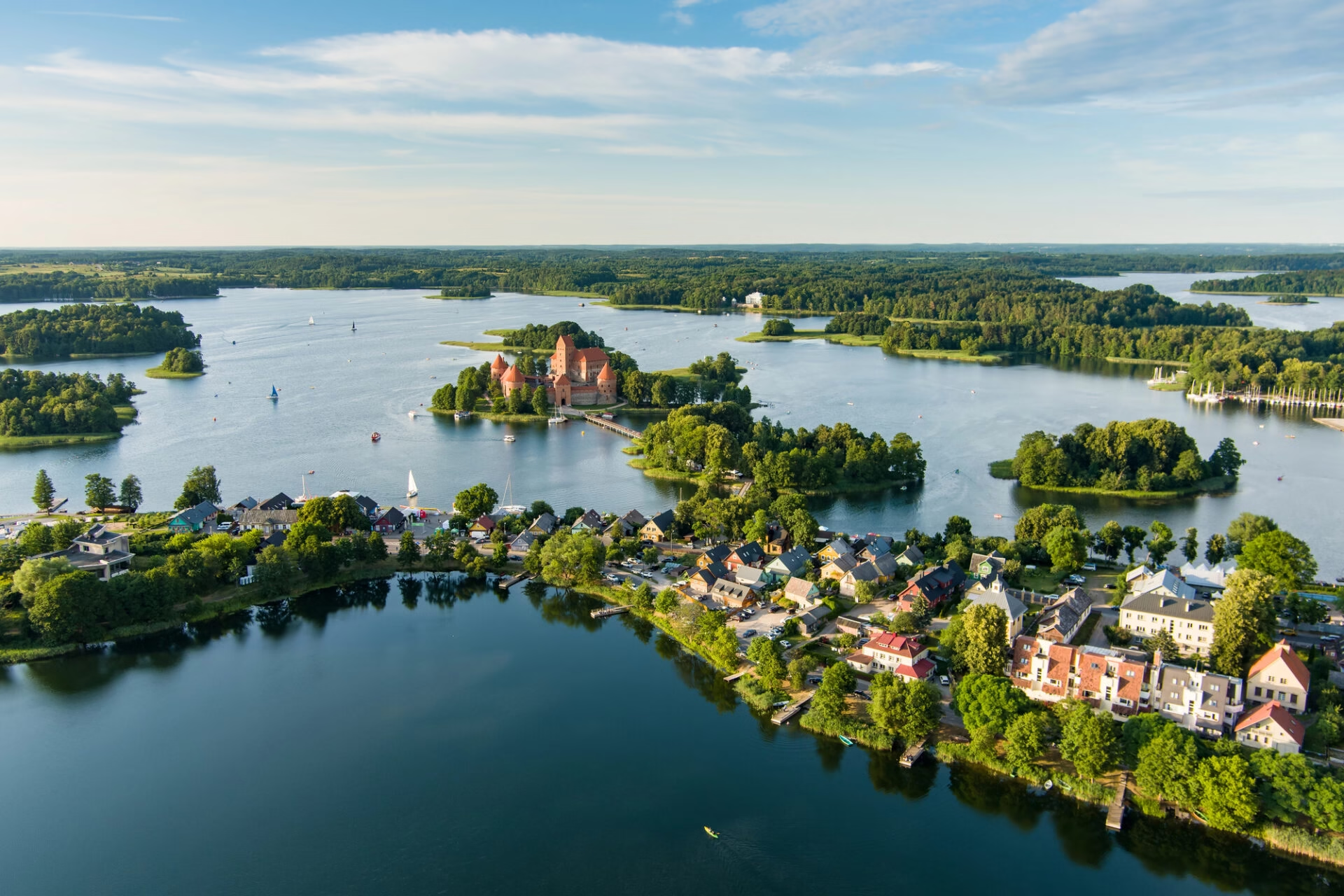
Trakai Island Castle
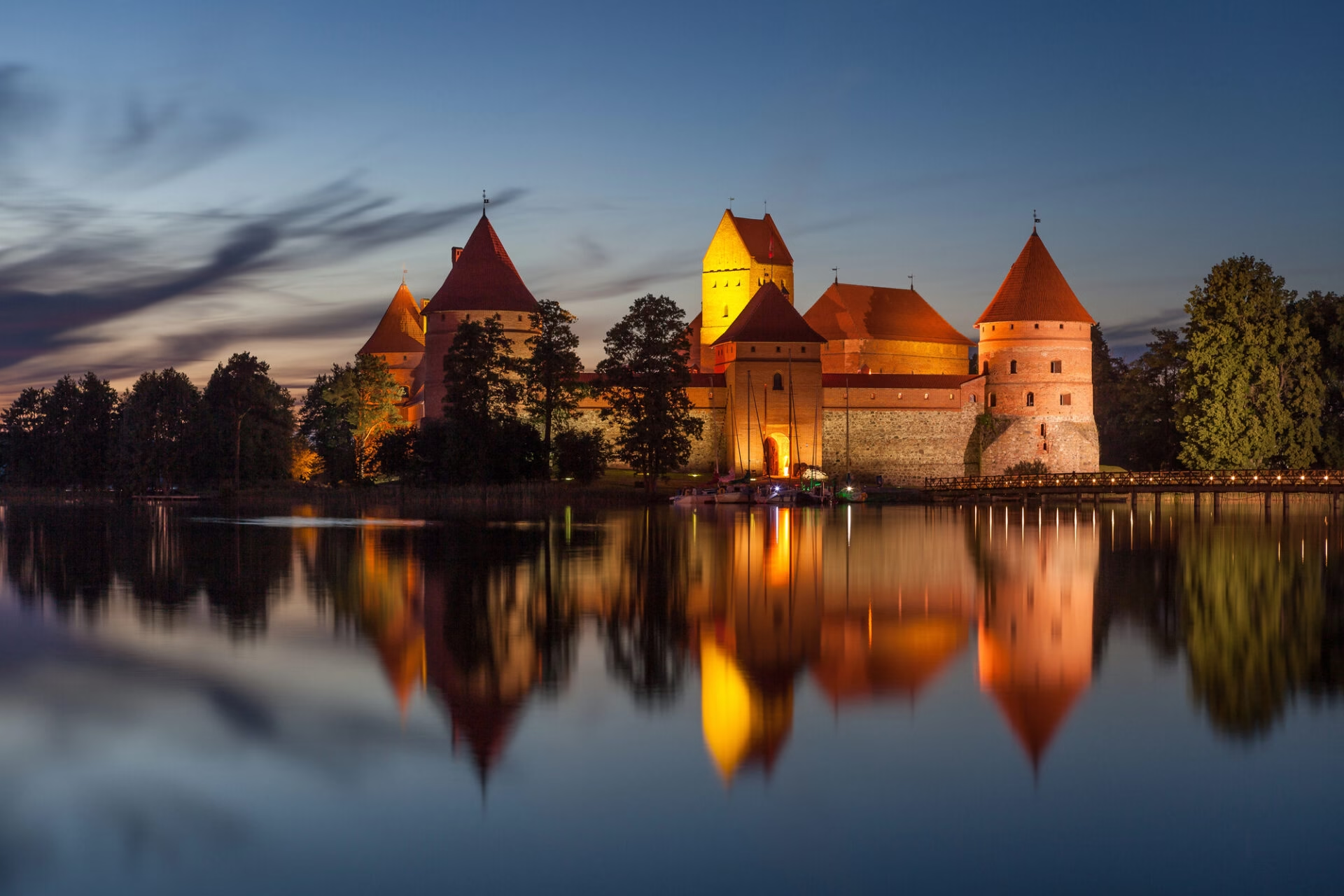
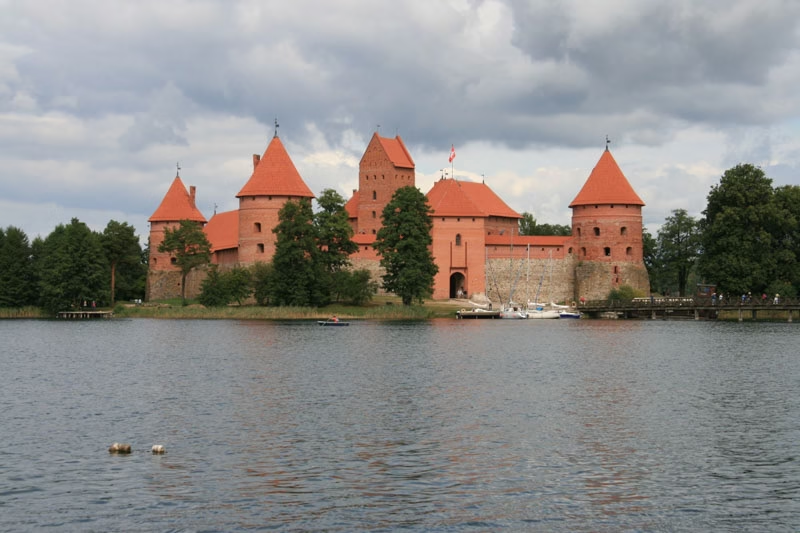
Located 30 km from Vilnius. Walking around the castle is free; there’s an entry fee to go inside. The castle sits right on the lake, so you can also view it from a boat. Locals say people cross-country ski and skate around it every winter — though during my visit the winter wasn’t cold enough for that.
2026 admission: the island castle is €14 (April–September), €12 off-season, with half-price for students and seniors. The peninsula castle costs €10 separately, and a combined ticket for both is €17. In high season it’s open daily 10:00–19:00. Trakai is also home to the Karaite minority — a Turkic people brought here in the 14th century by Grand Duke Vytautas. Try their kibinai, meat-filled pastries.
Kaunas
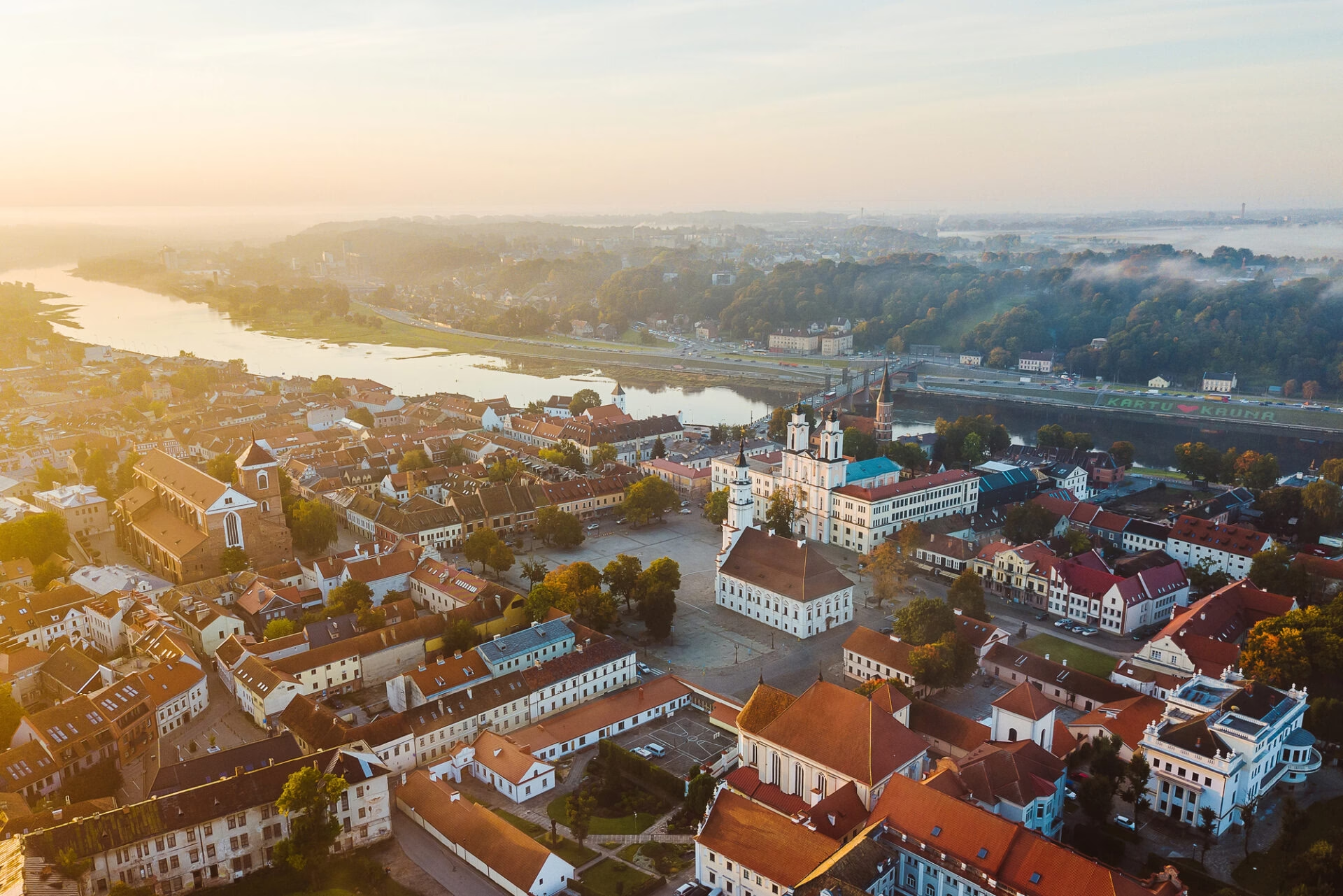
Lithuania’s second-largest city and its temporary capital between the world wars. That era gave the city its biggest draw today — interwar modernist architecture, added to the UNESCO World Heritage list in 2023. The centre is the pedestrian street Laisvės alėja, lined with cafés, leading into the old town where the Nemunas and Neris rivers meet. Kaunas has a reputation for having even more going on than Vilnius — street art, clubs, festivals.
Klaipėda and the Road to the Sea
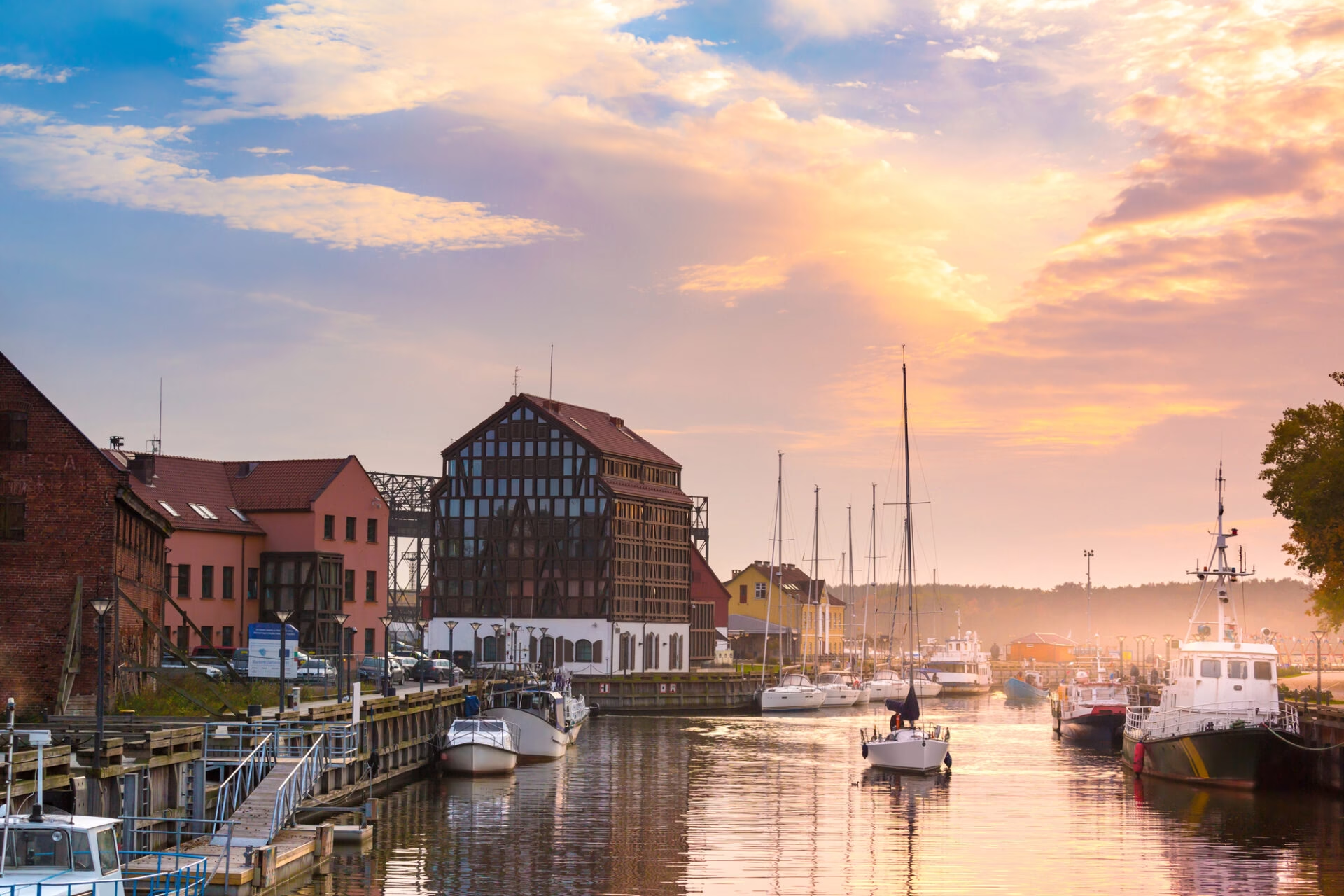
Lithuania’s third-largest city and its only port. Until 1923 it was called Memel and was the northernmost city of Germany, something still visible in the old town’s half-timbered houses. Klaipėda is mainly known as the gateway to the Curonian Spit — the ferry to Smiltynė departs from the centre and takes just a few minutes.
Curonian Spit (Neringa)
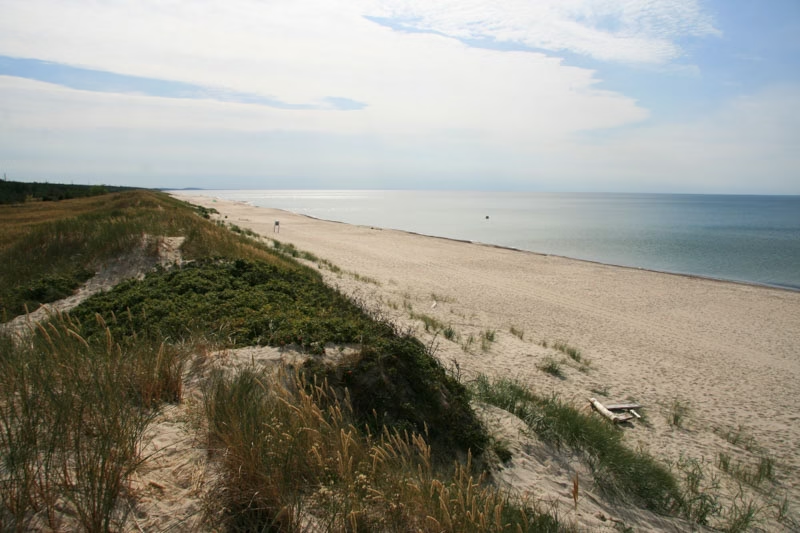
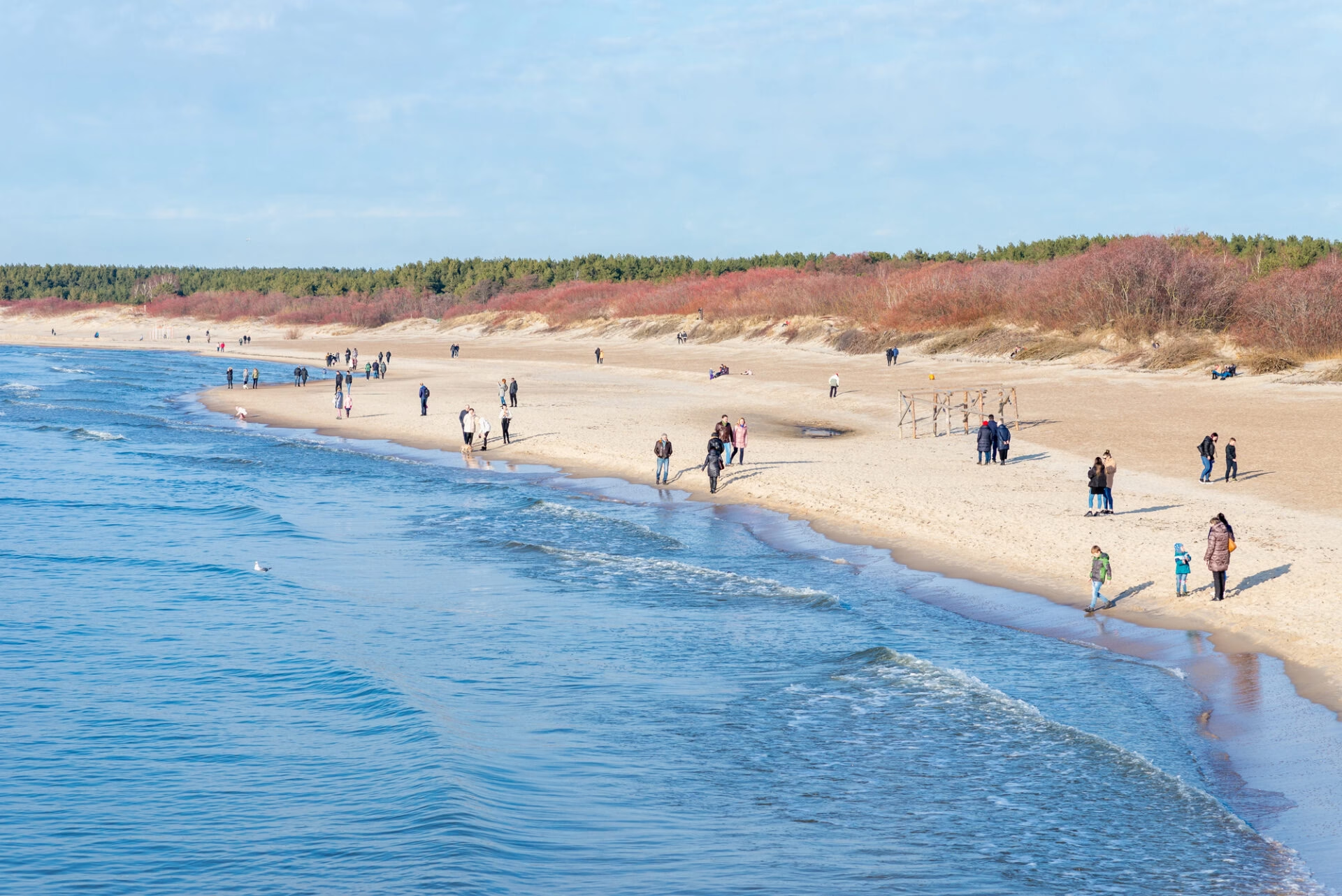
A narrow peninsula, half Russian, half Lithuanian. Thanks to its endless, beautiful dunes it’s nicknamed the “Baltic Sahara.” The local architecture is enchanting too, echoing the traditions of the now-extinct Curonians, said to have been some of the world’s boldest pirates. The magical atmosphere of this place will completely draw you in.
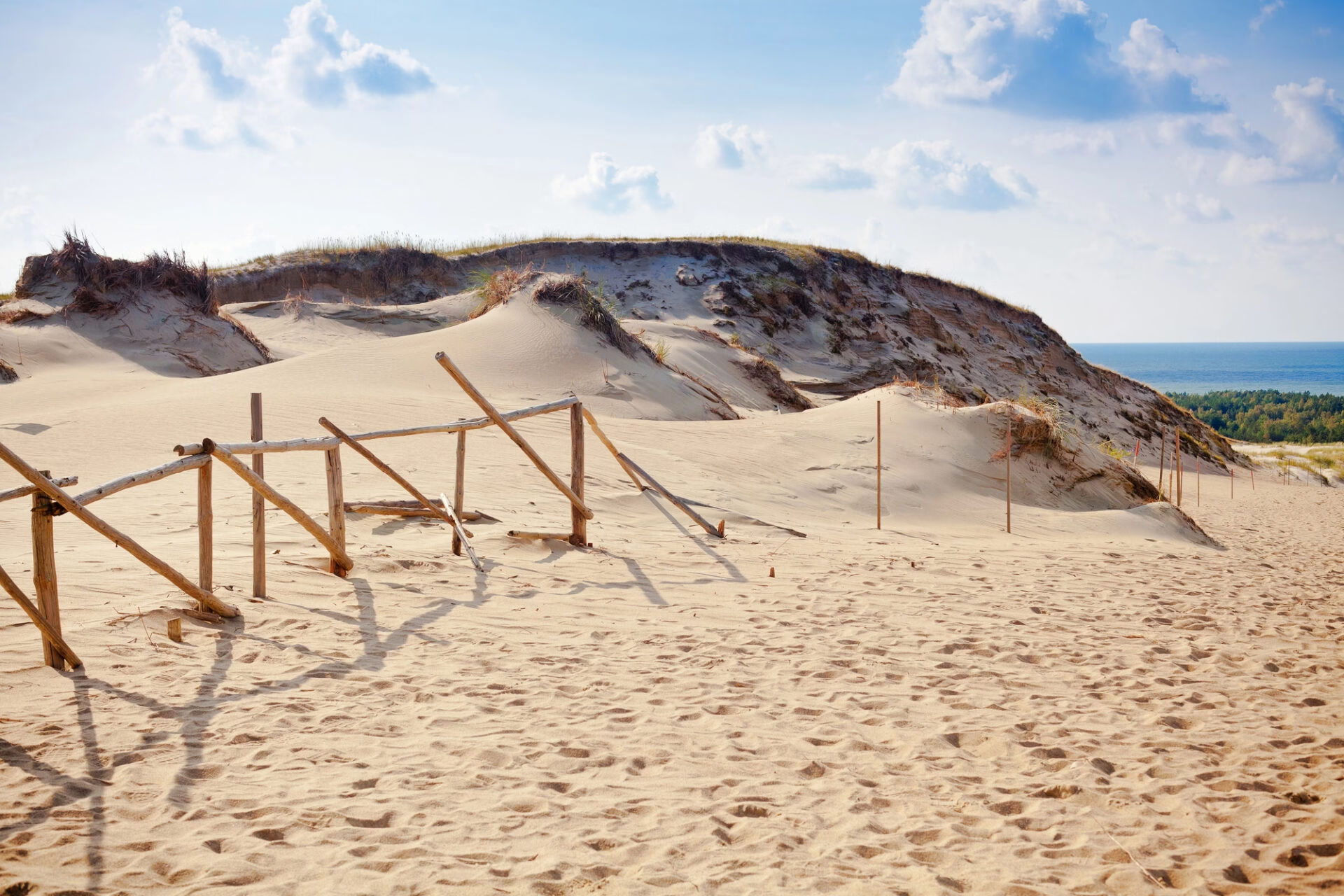
One important update: the Russian half of the spit is now off-limits to international tourists — the Nida–Morskoje border crossing is only for local residents. The Lithuanian side remains fully accessible and is worth the whole trip on its own. Budget for a car entry environmental fee: €50 from 20 June to 20 August, otherwise €10 (half price or free for electric vehicles). Pay at the Alksnynė checkpoint or online in advance.
Nida
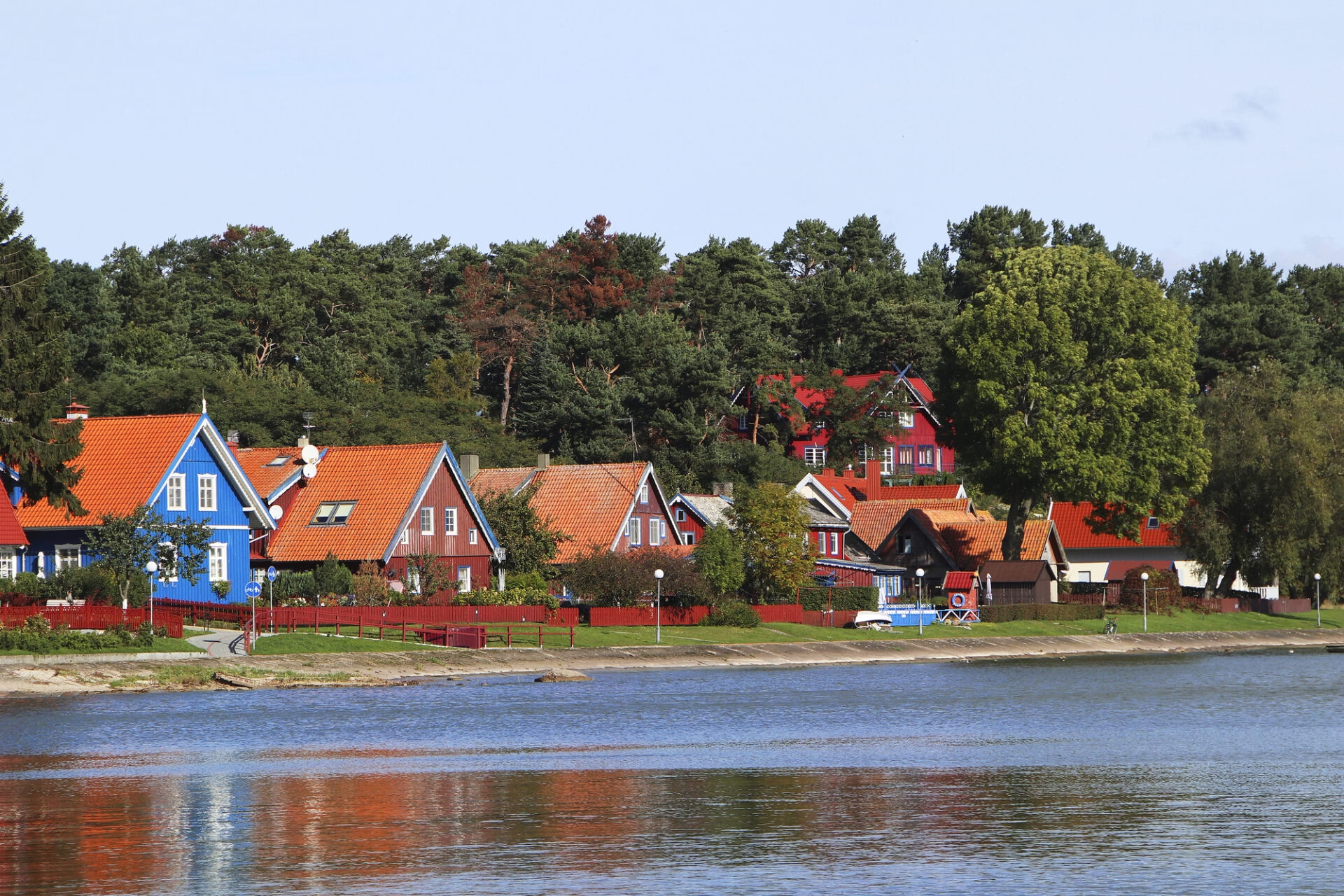
The most photogenic village on the Curonian Spit and the best base for exploring it. Blue-and-white wooden fishermen’s houses, an amber gallery, and towering above it all, the Parnidis Dune with its sundial — from the top you can see clear across to the Russian border. Thomas Mann bought a summer house here; today it’s a museum.
Palanga
Lithuania’s main seaside resort and a lively spot in summer with all the trimmings: a long sandy beach, a wooden pier where everyone gathers for sunset, and the Basanavičiaus promenade lined with stalls. The town has a quieter side too, in the Tiškevičius Palace and its botanical park, home to the Amber Museum — the country’s largest collection of Baltic gold.
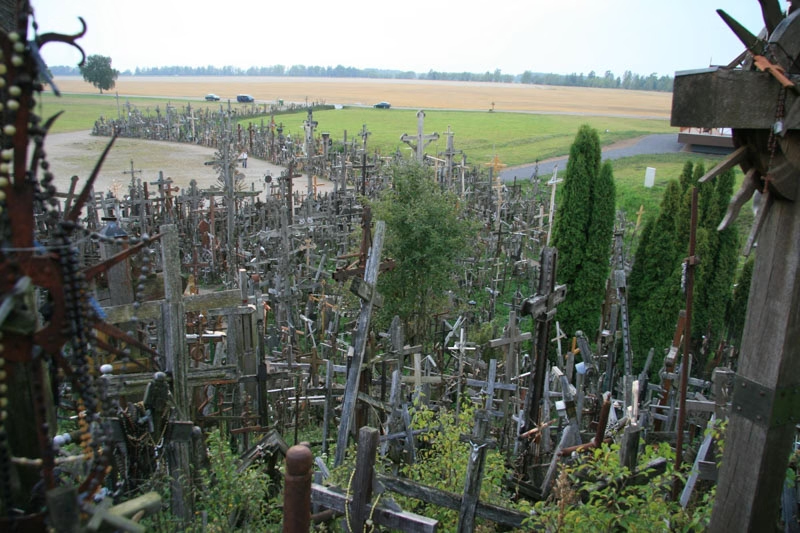
Hill of Crosses (Kryžių kalnas)
Just outside Šiauliai lies this significant pilgrimage site, which became a symbol of Lithuanian resilience. It’s two hills covered with an astonishing number of crosses of every size and material, creating a genuinely eerie atmosphere. Standing here, you feel deep respect, admiration for the strength of ordinary people, and an almost mystical mood.
Soviet forces bulldozed the hill three times; each time, crosses reappeared within days. Today there are over two hundred thousand of them. Admission is free, it’s 12 km north of Šiauliai, and it makes a logical stop between Vilnius and the coast.
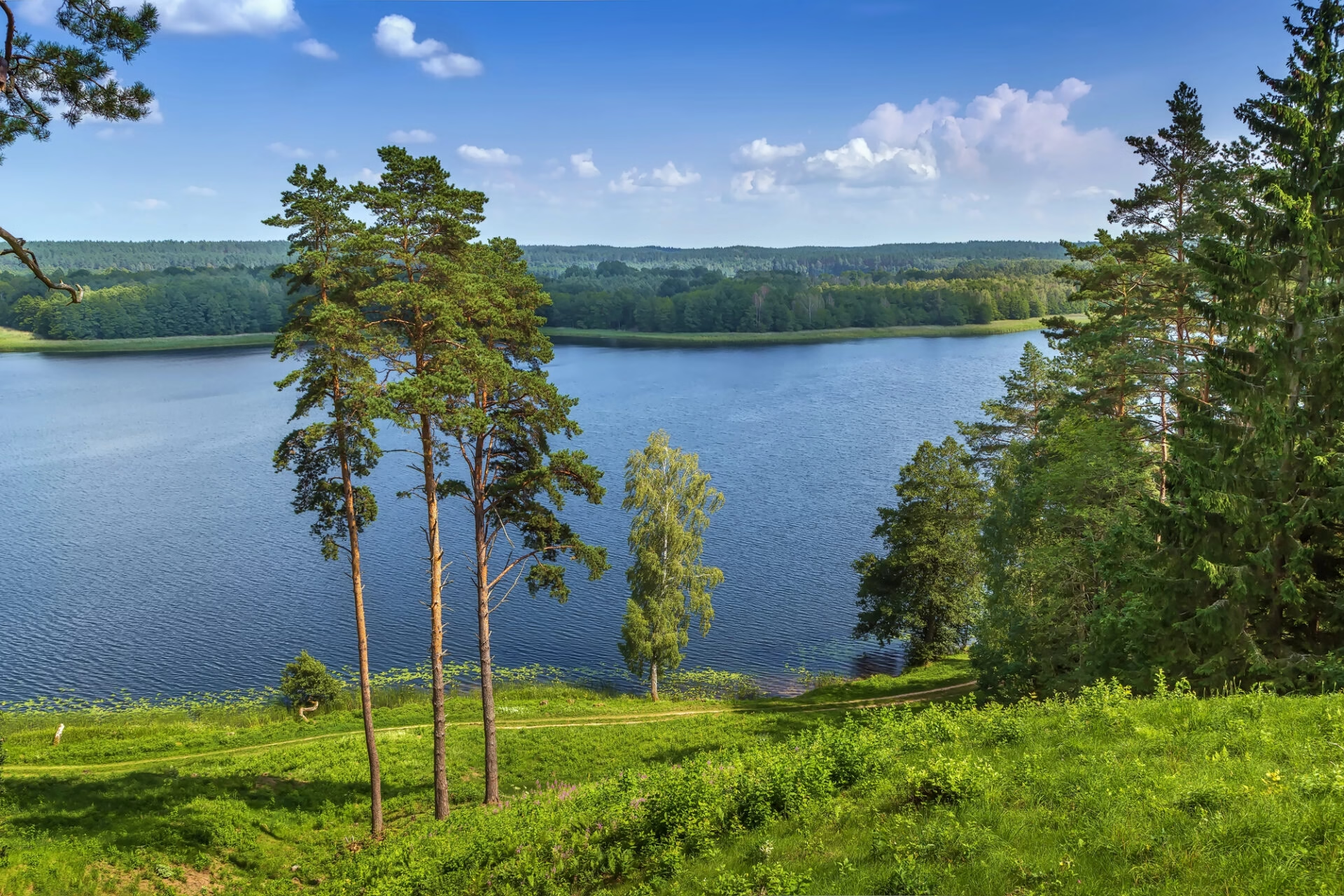
Lake Apvalasai
A lake on the northeastern border with Latvia that’s a favourite among locals. Partly for its shape, which strikingly resembles the outline of the country itself, but mostly for the gorgeous nature and the calm and quiet that come from very few tourists having found it yet. Nearby stands a castle ruin also worth a visit.
Aukštaitija National Park
Lithuania’s oldest national park and proof that this is a country of lakes: there are 126 of them here, many connected by channels, so you can paddle a kayak route over several days. Add pine forests, wooden villages, and the Ginučiai ethnographic village with a working water mill.
Žemaitija and the Plokštinė Missile Base
The national park around Lake Plateliai hides one of the Baltics’ most unusual sights — the Soviet Plokštinė missile base. Silos hidden in the forest, once built for ballistic missiles aimed at Western Europe, are now a Cold War museum you descend into directly through the shaft.
Druskininkai and Grūtas Park
A spa town near the Belarusian border with mineral springs, a water park and a cable car over the Nemunas. Nearby is Grūtas Park — a bizarre open-air museum where Lithuanians collected the statues of Lenin and Stalin that vanished from town squares after 1990. It comes across as part mockery, part memorial.
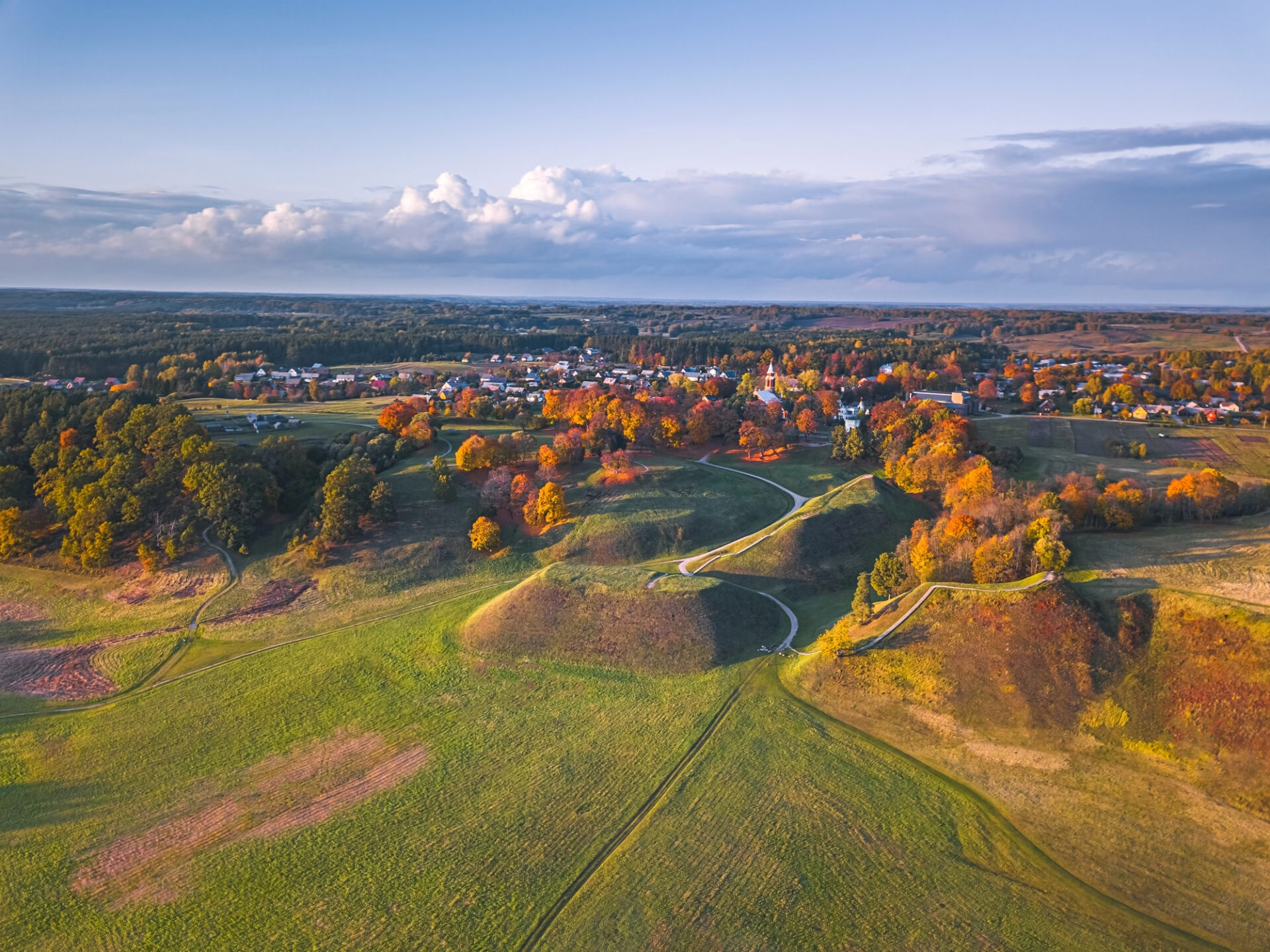
Kernavė
A UNESCO archaeological site and the first capital of the Lithuanian state, nicknamed Lithuania’s Troy. All that remains of the original city are five grassy hillforts above the Neris valley — the place in all of Lithuania where its pagan past feels most alive.
Šiauliai
Lithuania’s fourth-largest city serves mainly as a base for visiting the Hill of Crosses, but it has its own quirk too: a series of unusual museums devoted to bicycles, cats and chocolate. Half a day here is more than enough.
If you’re planning a Baltic loop, it’s under four hours by car from Vilnius to Latvia’s capital — read what to see in Riga and how to plan your visit.
Lithuania in Five Days: A Sample Itinerary
If it’s your first visit and you want to see the essentials, this route works well. It assumes a car, though the first two days can be done without one.
- Day 1 — Vilnius. Old town on foot, Gediminas’ Tower for the view, evening in Užupis and the bars around it.
- Day 2 — Vilnius and Trakai. Morning at the Gate of Dawn and St. Anne’s Church, afternoon trip to the island castle. Back to Vilnius for dinner.
- Day 3 — Kaunas and the Hill of Crosses. Morning exploring interwar Kaunas, afternoon drive north to the Hill of Crosses and on to the coast. Overnight in Klaipėda.
- Day 4 — Curonian Spit. Ferry to Smiltynė, drive to Nida, Parnidis Dune and the beach. Overnight in Nida.
- Day 5 — Palanga and return. Amber Museum, the pier, then back to Vilnius in the afternoon (under four hours).
With eight days, add kayaking in Aukštaitija and the Plokštinė missile base. With just two days, stay in Vilnius and don’t rush — the city alone is worth a long weekend.
When to Visit Lithuania
The best time to visit Lithuania is May to September, when it’s warmest and driest. But if you love winter and snow, October to April has its own charm too.
More specifically: July is the warmest month, with daytime highs typically 22–25 °C, and over 30 °C during heatwaves. Days stretch to up to 17 hours in June, so evenings on the dunes never seem to end. Winter is harsher than in Central Europe — January hovers around −6 to −3 °C, and snow covers the ground for 40 to 50 days a year. December has its own appeal though: the Christmas markets on Cathedral Square are among the prettiest in the Baltics, and the sights are empty of crowds.
The Baltic Sea is realistically swimmable only in July and August, when the water sits around 20 °C. The annual average is just under 10 °C, so outside peak summer expect beach walks rather than swims. The best balance of weather, prices and crowds is late May, early June, and September.
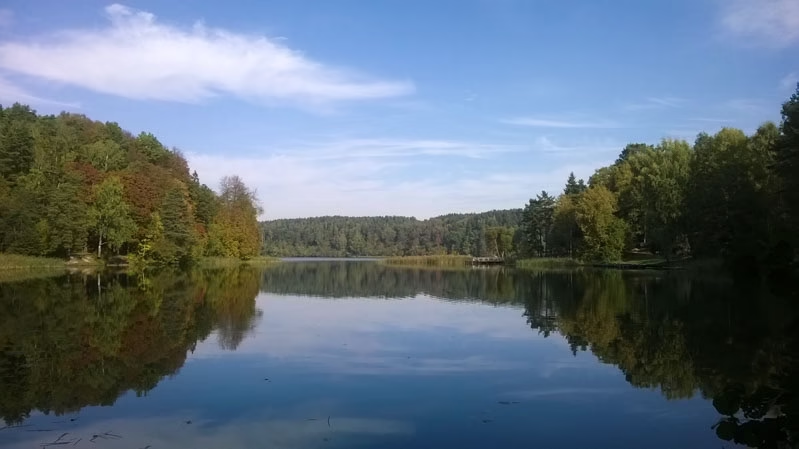
How to Get to Lithuania
The fastest option is to fly. Unlike in the past, there’s now a direct connection to Vilnius operated by airBaltic and Wizz Air; the flight takes roughly an hour and forty-five minutes. The route tends to be seasonal with limited frequency, so check dates directly in the booking system. A one-way fare runs €40 to €90 depending on dates, and can be much less during sales. If a direct flight isn’t running, connections are usually via Riga, Warsaw or Vienna.
If you have your own car and plan to explore Lithuania in depth, pack up and head north on your own route. The drive covers roughly 1,230 km and 15 to 16 hours of pure driving time. The whole route runs through Poland — via Wrocław, Łódź or Warsaw, where it’s worth stopping overnight, then on to Białystok and Suwałki along the Via Baltica to the Budzisko or Lazdijai border crossing. Detouring via Belarus or Kaliningrad is not an option today. If you’d rather not drive the whole way, ride-sharing services like BlaBlaCar are an option.
Lithuania is also reachable by bus, sometimes very cheaply. Direct services run with Ecolines and FlixBus, with the journey taking 16 to 19 hours. Tickets start around €35 with early booking, typically running €50 to €55.
Also read our overview of the top bus operators in Europe
The train remains the least common way to reach Lithuania, and it’s still really a route for enthusiasts. There’s no direct connection — you travel via Warsaw and must change trains at Mockava on the Lithuanian border due to a different rail gauge. The Warsaw–Vilnius leg alone takes about 6.5 hours and costs from €15.90. The whole trip can take 18 to 24 hours total. High-speed Rail Baltica trains aren’t planned until after 2030.
Getting Around Lithuania
All major cities have regular public transport buses or trolleybuses. In Vilnius a 30-minute ticket costs €1, an hour €1.25, a day pass €7.50, and a three-day pass €13.50. The old Vilniečio kortelė now runs under the JUDU kortelė brand, but you don’t really need to worry about it — you can pay via the JUDU or Trafi app, or with a contactless card directly on board. Students, pensioners and people affected by the occupation get discounts.
In Vilnius, when the weather cooperates, a bicycle is a great way to get around. The docked Cyclocity system with its orange bikes still runs, with the season lasting roughly April to November. In practice, though, it’s been overtaken by the Bolt and RIDE apps with e-bikes and scooters that aren’t tied to docking stations. For a short visit, these are all you need.
If you’re planning a sightseeing-heavy trip, consider the Vilnius Pass (formerly the Vilnius City Card). It includes entry to over 60 museums and walking tours; 24 hours costs €39, with public transport included €46.50, 48 hours €49, and 72 hours €59. It only pays off if you genuinely plan to hit the museums — you don’t need it for wandering the old town.
Taxis charge by distance, at prices comparable to Central Europe. In practice, though, almost everyone books through the Bolt or Uber apps, which is cheaper and avoids any haggling.
The best way to travel around Lithuania is with your own or a rental car. Rentals cost a bit more than in Central Europe, and petrol runs around €1.67 a litre. Distances are short, roads are in good condition, and expressways connect the main cities — you can drive Vilnius to Klaipėda in under four hours.
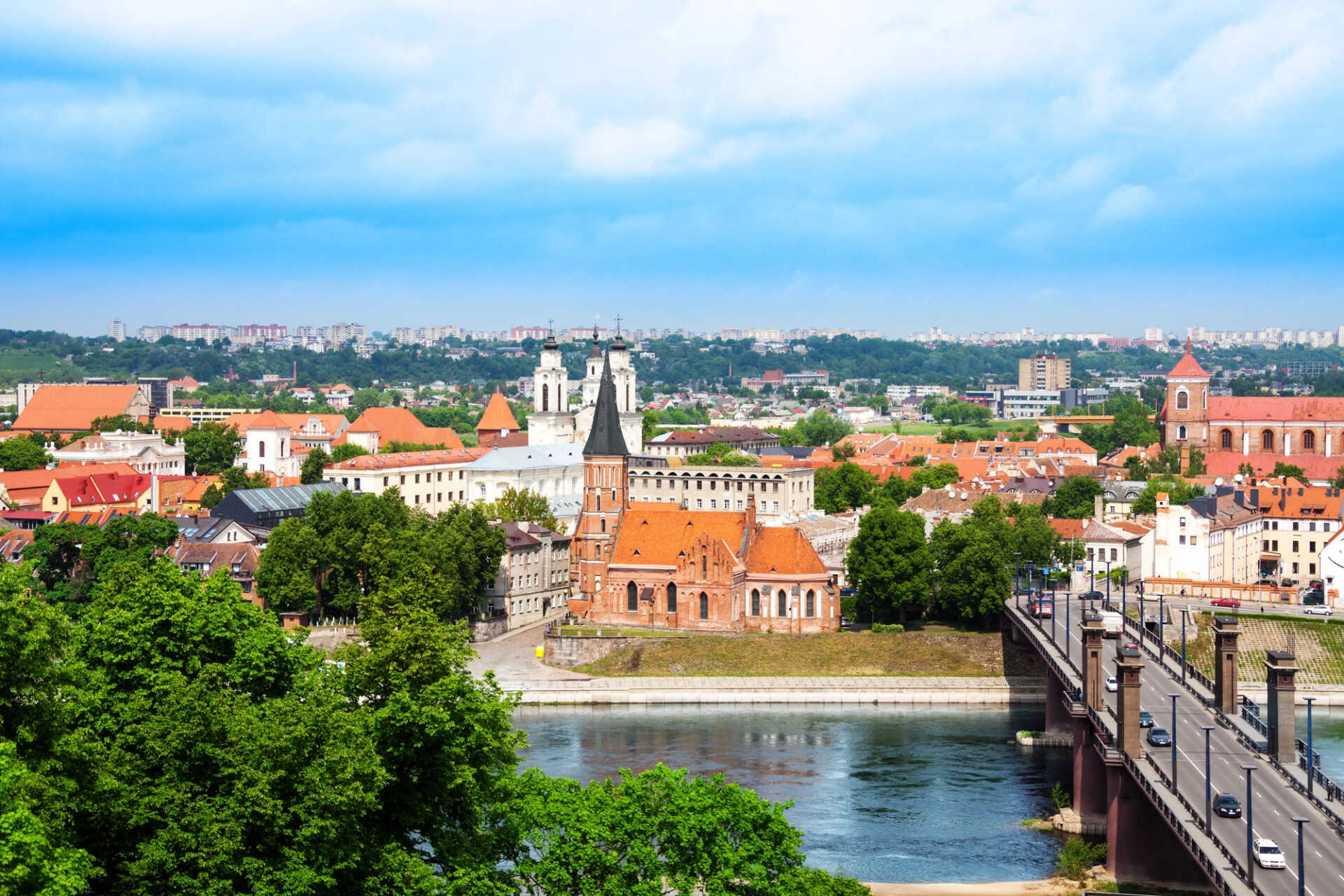
You can also use trains and buses to travel between the bigger cities. A train from the capital to the coast at Klaipėda costs €15–20. The rail network is limited, though, with infrequent trains that don’t reach everywhere. For the coast, buses are a better bet: on the Vilnius–Klaipėda route, tickets run €10 to €20 depending on time of day, with early morning departures usually cheaper.
Prices in Lithuania 2026
Lithuania uses the euro. You can pay by card almost everywhere, including public transport, but it’s still good to carry some cash as backup. ATMs and exchange offices are on nearly every corner; avoid Euronet, and always decline dynamic currency conversion when withdrawing — the rate is usually a few percent worse.
Lithuania hasn’t been a budget destination for a while. Food and service prices are comparable to Central Europe or slightly higher, and Vilnius restaurants lean toward the higher end. On the flip side, long-term rentals can be cheaper. One tip: apartment-hunt alongside a local — prices quoted to foreigners are often on a completely different scale.
- Accommodation: hostel bed €6–20 a night, double room in a budget hotel €40–70.
- Food: lunch at a casual restaurant around €12, fast food €7–9. Budget €20 for lunch with a drink and soup or dessert.
- Drinks: draft beer in a restaurant €3–5, cappuccino €3.30, bottled water in a supermarket under €1.
- Vilnius public transport: single ticket €1, day pass €7.50, three-day pass €13.50.
- Petrol: roughly €1.67 a litre.
- Admission to sights: Trakai Castle €14 in season, most museums €4–10. Discounts for students, families and seniors are common, but prices shift year to year — check online in advance.
- Car entry fee for the Curonian Spit: €50 in high season, otherwise €10.
Rental car agencies operate at Vilnius Airport and in the city centre. Book ahead — in July and August, cars in Klaipėda and Palanga tend to be booked out weeks in advance.
Where to Stay in Lithuania
The selection is wide and still reasonable compared to Western Europe. The key is picking the right neighbourhood or town — distances are short, but getting to the Curonian Spit can add real travel time.
In Vilnius, the old town is the most convenient base: everything is walkable and you’ll have cafés right outside your door. You’ll pay the highest prices for it, plus bar noise in summer. Užupis, just across the river, is quieter and cheaper, a ten-minute walk from the centre. Those driving will appreciate Naujamiestis around the train station — parking is realistic and prices lower, though the vibe is noticeably more ordinary.
On the coast, you’re choosing between two locations. Palanga is a busy resort with the widest choice of hotels and nightlife, though crowded and loud in August. Nida on the Curonian Spit is the opposite: wooden guesthouses, quiet, dunes right behind the house. Capacity is limited, though, and it sells out months ahead in peak season — book early and factor in the car entry fee.
Outside the cities, it’s worth considering rural homesteads called sodyba, which locals rent out by the lakes. In Aukštaitija or around Plateliai you’ll pay less than a city hotel and get your own dock and sauna thrown in.
Current listings and prices by destination:
- Accommodation in Vilnius – old town, Užupis and around the train station.
- Accommodation in Kaunas – the cheapest of the big cities.
- Accommodation in Klaipėda – base for the ferry to the Curonian Spit.
- Accommodation in Nida – wooden guesthouses on the Curonian Spit, booked out months ahead in season.
- Accommodation in Palanga – the widest choice on the coast.
- Accommodation in Trakai – lakeside guesthouses a short trip from Vilnius.
Lithuanian Cuisine: What to Try
Lithuanian food is traditionally very hearty. The main ingredients are potatoes, meat, dairy (especially sour cream, curd cheese and kefir), beetroot and dill. Frying is a favourite technique, and Lithuanians also love fish prepared in various ways.
Soups here are extremely filling — often a meal in themselves. Take it from me: it’s not wise to order a typical soup, a main course, and expect to have room for dessert, or to head out on a long hike right after.
A traditional delicacy is cepelinai, potato dumplings stuffed with minced meat (or mushrooms or another filling), served with sour cream and often fried onion or bacon.
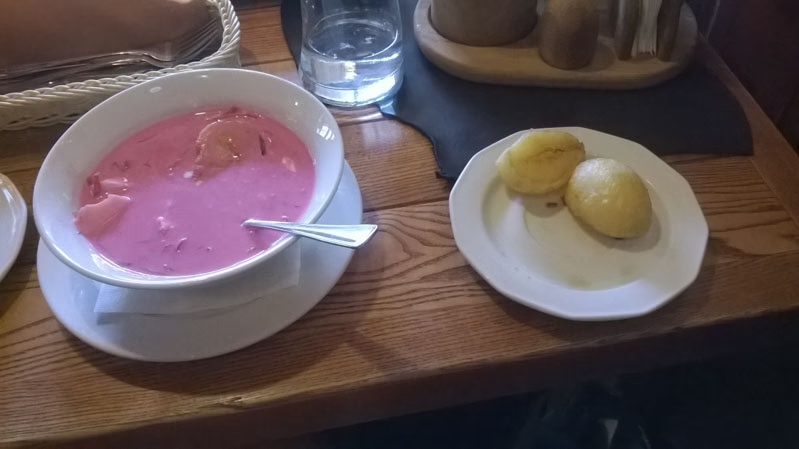
Traditional Lithuanian cuisine isn’t especially vegetarian-friendly, but everyone can find something to love. I’d recommend trying as much as possible to find your own favourites. Mine is šaltibarščiai, a vividly pink cold soup made from beetroot and other vegetables, similar to borscht.
Other things not to miss: kibinai (Karaite pastries from Trakai), kugelis (potato-and-bacon bake), skilandis (a protected-designation smoked sausage), juoda duona — dense black rye bread that Lithuanians consider a national symbol — and šakotis, a baked “tree cake” with its distinctive spikes, a fixture at every wedding.
Fun Facts About Lithuania
Lithuania is a country surprisingly little known internationally, despite sharing so much history with the rest of Europe. Here are twelve things worth knowing about it.
- Lithuania was the last pagan country in Europe — it didn’t adopt Christianity until 1387, nearly four centuries after most of the continent.
- In the 14th and 15th centuries, the Grand Duchy of Lithuania was the largest state in Europe, stretching from the Baltic to the Black Sea.
- Basketball is the national sport and is taken more seriously than almost anything else. Lithuania has won three Olympic bronze medals in basketball and regularly sends players to the NBA.
- Vilnius’s Užupis district declared independence on 1 April 1997. Its constitution has 41 articles, one of which guarantees the right to be happy — followed immediately by the right to be unhappy.
- According to calculations by France’s National Geographic Institute, the geographic centre of Europe lies 26 km north of Vilnius. Lithuanians take this extremely seriously — there’s a monument marking the spot.
- Lithuanian is one of the most archaic living Indo-European languages — it retains forms close to Sanskrit, making it a living fossil for linguists.
- Amber has been collected here for thousands of years and is known as Baltic gold. After storms, the sea still washes it up on the beaches around Palanga.
- Lithuania has the highest density of white storks in the world — a nest atop a roadside pole is a completely ordinary sight, and the stork is the national bird.
- The Hill of Crosses was bulldozed three times during the Soviet era. Each time, the crosses reappeared within days.
- In 1989, people across the Baltic states formed the Baltic Way — a human chain of two million people stretching 675 km from Vilnius through Riga to Tallinn.
- Lithuania was the first republic to declare independence from the Soviet Union, on 11 March 1990.
- A 2018 anti-alcohol reform worked: consumption dropped from former record highs to 8.7 litres of pure alcohol per capita (2025), the lowest in a decade.
Religion, Holidays and Traditions
Most Lithuanians identify as Christian, there’s also a notable Orthodox minority of Russians, and some people still keep up old pagan traditions. Lithuanians are very tolerant, so on the streets you’ll come across prayer halls of various faiths and often hear Hare Krishna chants and similar. Churches are frequently open late into the night — and, notably, they’re full of people.
Ask Lithuanians about their faith or religion, though, and you’ll often hear that it’s basketball. The whole country lives and breathes this sport. During the World Championship, it can feel like the street is still busy at three in the morning — everywhere you look, people in jerseys and flags, singing and chanting together, and that might just be for a quarterfinal. If you get the chance to watch a match with locals, or better yet, be part of the crowd, don’t hesitate for a second. You won’t find that kind of atmosphere just anywhere.
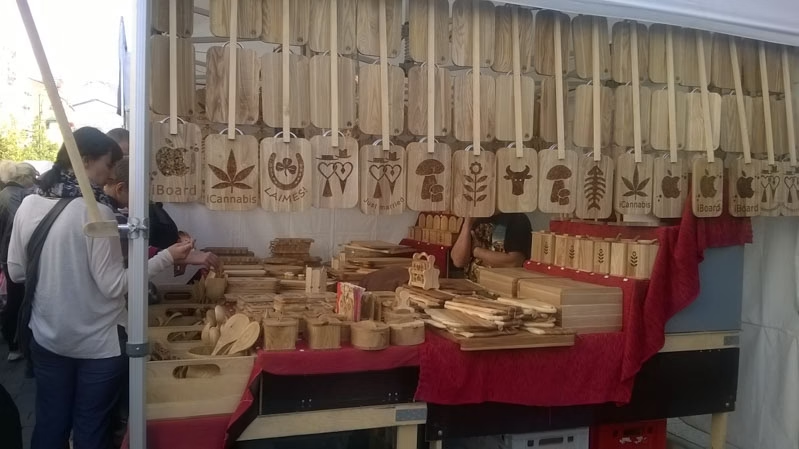
In Vilnius and other cities, you’ll never be bored. There’s always an open-air festival, a concert, a theatre festival, street markets and more going on. Beekeeping and wood carving both have strong traditions here too, so there’s no shortage of related festivities. Just pick one.
Since Lithuania is a majority Christian country, it’s well worth timing a visit around Easter or Christmas. All the major cities run their own markets, squares fill with people, churches host concerts and services, and the overall atmosphere is well worth experiencing.
Two dates stand out. On 4 March, Vilnius fills with the Kaziuko mugė fair — the largest crafts market in the Baltics, held since 1604. And on 23 June, Lithuanians celebrate Joninės, St. John’s Eve, with bonfires, wreaths and searches for a blooming fern — the most visible night of the whole year.
Practical Information
Visas and Entry Requirements
Lithuania is part of the European Union and the Schengen area, so a valid ID card or passport is all you need. You’ll rarely use your documents, mostly for things like renting a car. Check your own country’s foreign ministry website for the latest requirements.
Health and Insurance
Lithuania poses no unusual health risks, tap water is safe to drink, and no vaccinations are required. As anywhere in the EU, it’s worth carrying a European Health Insurance Card if you’re eligible, though it only covers essential care in state facilities — not repatriation, dental work or trip cancellation. If you’re heading out for kayaking in Aukštaitija or cycling the Curonian Spit, a commercial travel insurance policy is a good idea; compare options in our guide to the best travel insurance.
Safety
Overall, Lithuania is a very safe country, comparable to other parts of Europe. That said, there are a few areas or streets better avoided at night. Pickpocketing is largely limited to tourist spots in Vilnius and the train station; otherwise, walking around the cities in the evening is generally fine.
Alcohol and Driving
Rules have tightened significantly since 2018. Shops sell alcohol Monday to Saturday, 10:00–20:00, and only until 15:00 on Sundays — outside those hours, it’s simply not for sale anywhere. The minimum age is 20, not eighteen, and there’s a complete ban on alcohol advertising. Restaurants and bars aren’t affected by these hours.
The drink-drive limit is 0.4‰, but for drivers with less than two years of experience, professional drivers and motorcyclists, it’s zero tolerance. Our advice: just don’t drink and drive — fines here tend to be steeper than back home.
A Few More Things Worth Knowing
- Remember the time difference — Lithuania is one hour ahead of Central European Time.
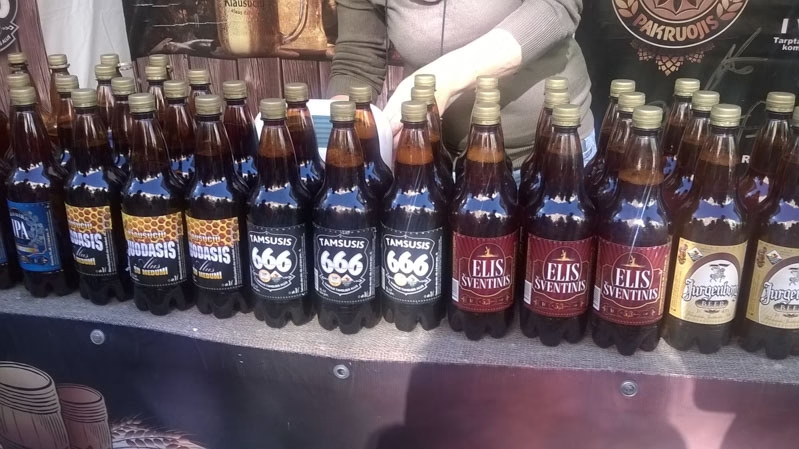
- Lithuania has a huge brewing and beer-drinking tradition, so be careful if you’re tempted to challenge a local to a drinking contest. Hundreds of small family breweries make styles you won’t find anywhere else — try kaimiškas, an unfiltered country-style beer.
- Lithuanians can seem reserved and closed-off at first, but don’t let that put you off. Once you break through the poker face, they’re extremely helpful, warm, and happy to invite you home and cook for you. A surprisingly large share of Lithuanians speak decent English, which can be more than international visitors expect.
- Lithuania shares a rich history with much of Central Europe, and there are plenty of cultural similarities — many Lithuanians know the region well.
- Don’t be surprised if Lithuanians tell you they’re in Central Europe, or even at its exact centre. Geographically speaking (counting all the islands), that’s technically true, and there’s no point arguing about it.
- Tipping works much like elsewhere in Europe — a few euros will never go wrong.
Frequently Asked Questions
When is the best time to visit Lithuania?
For cities and sights, May to September, when it’s warmest and driest. Swimming in the Baltic Sea really only makes sense in July and August, when the water sits around 20 °C.
The best balance of weather, prices and crowds is late May, early June, and September. December offers Christmas markets and empty sights instead.
How many days do you need in Lithuania?
Plan on three to four days for Vilnius plus a trip to Trakai Castle. Add Kaunas, the Curonian Spit and the coast, and you’ll want eight to ten days.
The country is small — Vilnius to Klaipėda is under four hours by car, so you can cover a lot of ground.
How much does a week in Lithuania cost?
On a modest budget, expect €50 to €60 per person per day; comfortably, €90 to €120. A week works out to roughly €400–850 excluding transport there.
Main costs: hostel bed €6–20 a night, restaurant lunch around €12, Vilnius day transport pass €7.50.
How do you get to Vilnius?
The fastest way is by air — airBaltic and Wizz Air operate a direct route, taking roughly an hour and forty-five minutes. The route is often seasonal, so check dates in the booking system.
Direct Ecolines or FlixBus coaches take 16 to 19 hours from €35. By car, it’s 1,230 km entirely through Poland, or 15 to 16 hours of driving.
Does Lithuania use the euro?
Yes, Lithuania adopted the euro on 1 January 2015. You can pay by card almost everywhere, including public transport, where contactless cards work directly on board.
Cash is handy for small markets and smaller towns. Always decline currency conversion when withdrawing from an ATM.
Is Lithuania safe?
Yes, Lithuania is a very safe country, comparable to other parts of Europe. Pickpocketing is mostly limited to tourist spots in Vilnius and the train station.
Even so, some streets are best avoided at night. Tap water is safe to drink and no vaccinations are required.
What food should you try in Lithuania?
Cepelinai — potato dumplings stuffed with minced meat, served with sour cream and bacon. And šaltibarščiai, a vividly pink cold beetroot soup.
Also worth trying: kibinai from Trakai, the potato bake kugelis, black rye bread, and the wedding cake šakotis.
Can you visit the Russian side of the Curonian Spit?
No. The Nida–Morskoje border crossing is only for local residents, and the Russian half of the spit is off-limits to international tourists.
The Lithuanian side is fully accessible by ferry from Klaipėda. Driving in requires paying an environmental fee — €50 from 20 June to 20 August, otherwise €10.
Where to Find More Info
- Lithuania – the official tourism site: event calendar, experiences sorted by interest, restaurants and more.
- Vilnius – plenty of great tips: what to do in the rain, current events, transport, restaurants…
- Buses – timetables, connections, routes.
- Trains – train timetables and routes.
- Cyclocity Vilnius – registration info, bike rental, prices, station map.
- JUDU – the official Vilnius public transport site with current fares and a route planner.
Lucie Džurdženiková
Lithuania is a country close to my heart. What started as a study exchange turned into discovering how much I loved remote work and travelling in general. I went on to New Zealand and Thailand, and I’m now planning trips to South America and Iceland. You can find me on Facebook.
Practical details, prices and transport connections updated by the Czech Travellers editorial team in August 2026.