This post is also available in:

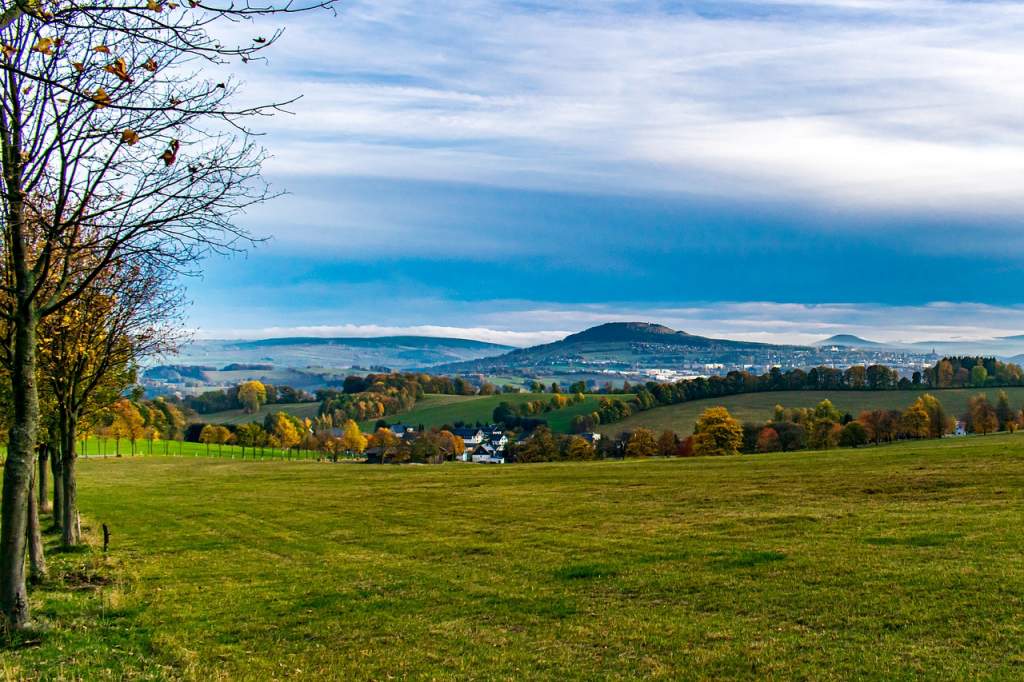
The Faroe Islands consist of 18 small islands located in the North Atlantic between Iceland, Scotland, and Norway. Most tourists only stay here for a few hours on the ferry to Iceland. If you stay longer, you will discover many beautiful places and friendly people. It’s no coincidence that National Geographic magazine rated the Faroe Islands as the most beautiful archipelago in the world.
We have a practical guide for traveling around the Faroe Islands so that you can see and experience the maximum for the minimum amount of money.
You will find all the practical information you need for your planned independent holiday here. From transport and gastronomy to car rentals and tips for the most beautiful places and experiences.

Why visit the Faroe Islands
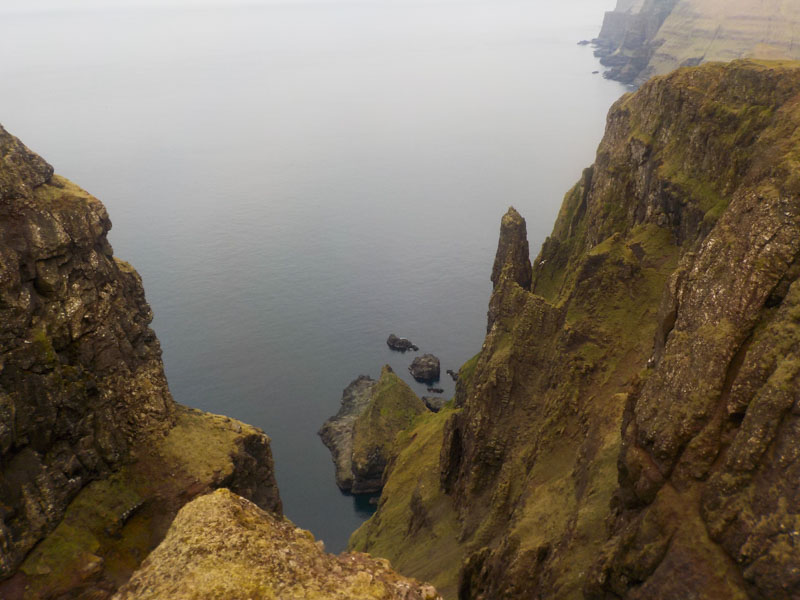
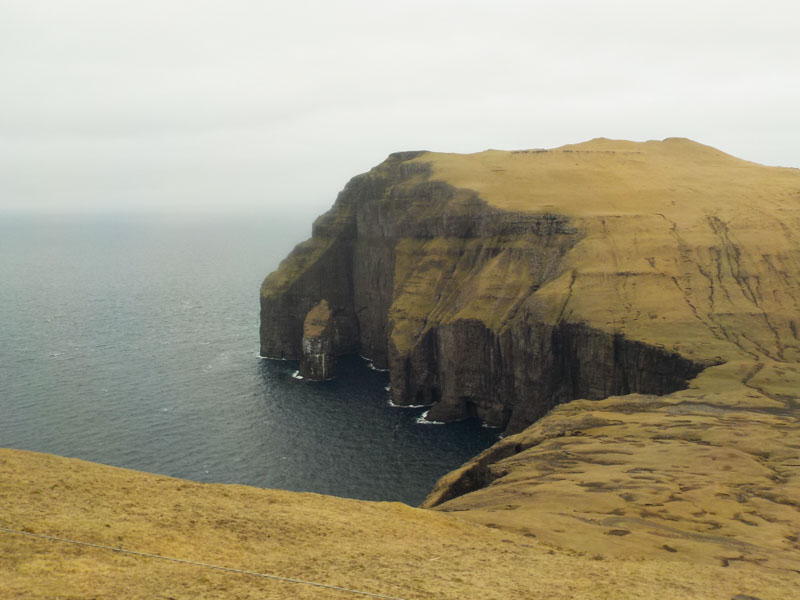
The Faroe Islands offer beautiful views from the car as well as from high mountains and cliffs accessible only on foot. Nature and geology lovers will enjoy the unique landscape.
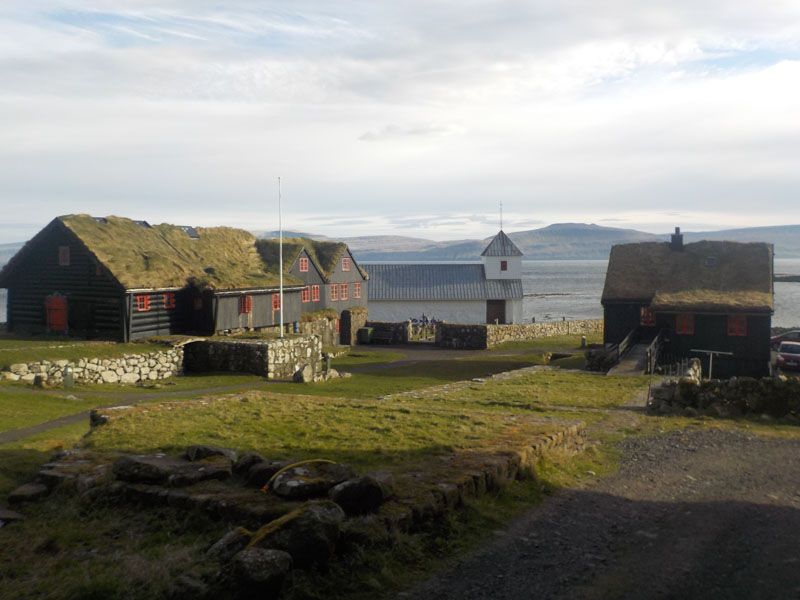
Fans of unusual architecture will love the historic stone or wooden houses covered with grass. Birdwatchers will feel like they’re in paradise while observing gannets, puffins, and many other birds.

How to get to the Faroe Islands
By air
There is only one small airport, Vagar, on the islands, which is used by Atlantic Airways. They fly to the Faroe Islands several times a day, usually cheapest from Copenhagen.
Flights are also available from the Danish cities of Aalborg and Billund, Edinburgh in Scotland, Bergen in Norway, Reykjavík in Iceland, and several other places in Europe. Return ticket prices usually start above €250.
By ferry
The Norröna ferry operated by Smyril Line connects the Faroese capital Tórshavn with the ports of Hirtshals in northern Denmark and Seyðisfjörður in eastern Iceland.
If you travel by ferry, prepare for a very long journey. During the sailing from/to Denmark, you will spend two nights and a full day on the ship.
The journey to or from Iceland takes about 20 hours (boarding in the evening, arrival in the afternoon). The price depends on whether you are traveling with a car, what kind of food or accommodation you want (shared cabin for 9 people / room without a window / room with a window), and the season – low season (late September to late April), mid season (May and first half of September), high season (June–August).
When to go and why at this time
The weather in the Faroe Islands is rainy all year round, windy, and often foggy. Winter temperatures are around 3°C and there isn’t much snow; in summer (May–September), it’s usually around 10–12°C and rains a bit less. If you plan to visit museums and historic interiors, they are often open only in July and August.
In winter, the days are very short and during the nights you can, with a bit of luck, observe the Northern Lights. In summer, it gets dark around midnight and you won’t even see real darkness.
All in all – due to the weather, it’s best to go between May and August. September is already off-season, some tourist sites are closed, and transport may not run as regularly as in previous months. If you want to avoid tourists, don’t go in July and August.
Visas and entry requirements
Although the Faroe Islands are part of Denmark, they are not in the European Union or the Schengen Area, so even as an EU citizen, you will need a passport. Don’t forget to arrange valid travel insurance.
Money and approximate prices
Both Faroese and Danish krone are used here. Both currencies have the same exchange rate and the same coins. You can exchange banknotes at any bank for Danish ones (free of charge) or another currency at the end of your stay. Of course, you can exchange money similarly upon arrival.
Cards are accepted almost everywhere. Cash is needed for paying bus fares. You can withdraw Faroese banknotes from ATMs without a fee. You’ll pay approximately 3.3 CZK for one Danish (DKK) / Faroese (FOK) krone.
The Faroe Islands are among the most expensive countries in the world.
- Accommodation: in a hostel/guesthouse from €40.
- Restaurant meal: from €20.
- Public transport: free in cities.
- Drinks: bottled water about €4 for 1.5 l (but you can drink from any tap or stream), 0.5 l of beer in a shop €3, in a pub about €6
- Groceries: bread €6/kg, fruit and vegetables €4-5/kg.
- Sights: most natural beauties can be visited for free; for Mykines island or some historic houses and museums, you pay €7 to €15.

Local transport
Local transport is provided by buses, boats and helicopters. In Tórshavn and Klaksvík, city bus lines are free.
If you plan to travel mainly by bus and ferry, buy a Travel Card, which allows unlimited travel on all routes except Mykines for 700 DKK (approx. $100) for 7 days (or 500 DKK for 4 days) per person.
You can buy the card at the terminal in Tórshavn and at the international airport. Except for the ferry to Mykines, which I recommend booking in advance especially in summer, seats cannot be reserved. If you want to take a car on the ferry, arrive 15–30 minutes early.
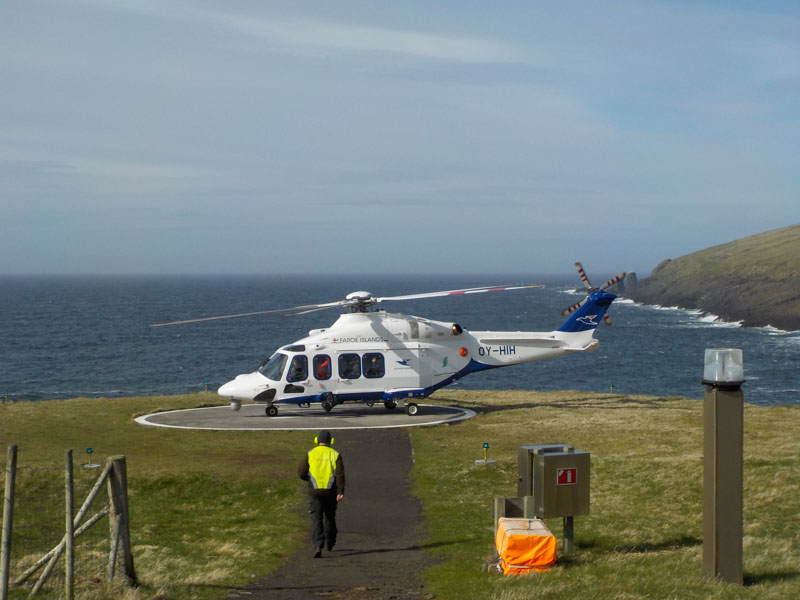
Helicopter transport is only slightly more expensive than the ferry (85–360 DKK). It must be booked in advance online. I recommend scheduling ferry trips to Mykines and Suðuroy and helicopter flights at the beginning of your stay – they are often canceled due to weather, and you might end up having to stay longer.
If you plan to travel by your own or a rented car (we wrote about how to rent a car and avoid all possible inconveniences in the article How to rent a car abroad and what to watch out for), expect fees for ferries and subsea tunnels (100 DKK for a round trip).
There are 600 km of asphalt roads of two types on the islands. Main roads (red on the map) connect towns and larger villages and usually have more traffic. Green roads lead to smaller villages, tourist destinations, or are older mountain roads you can take instead of a tunnel.
If you plan to hitchhike, expect very little traffic on the green roads.
Food
The national dish here is sea-wind-dried mutton called Skerpikjøt – have it with bread and butter, or on its own. Another traditional dried food is fish – usually cod or herring. Locals usually eat dried fish with butter as a snack. Fish and lamb are always fresh and of high quality here.
A traditional food is also pilot whale, but you won’t find this whale in restaurants or shops. Commercial whaling is banned here, and all meat is for locals only.
Accommodation
Wondering where to stay and which island will be the best base? The answer will depend on your itinerary, but you will very likely spend at least one night near the Faroese international airport, in the town of Sandavágur.
- If you are looking for cheap but not miserable accommodation, book Giljanes Hostel, which is clearly the best value, especially for solo travelers.
- Are non-traditional experiences key for you? The Cottages by the Sea provide a cozy atmosphere with a great view.
In the capital, we recommend Hotel Brandon with a sauna and a truly luxurious breakfast.
Diseases and hygiene
You don’t need any vaccinations. In the summer months, there are many insects, so don’t head out without a proper repellent. There are no dangerous diseases, and you can safely drink water from every tap and almost all streams.

Safety
The Faroe Islands are among the countries with practically no crime. The biggest danger is the weather, which changes rapidly. If you get caught in fog on a hike, you should carefully follow the markers. If you can’t see them, stop your journey. There are high cliffs and steep, slippery mountain slopes.
Camping is allowed only in campsites, though there aren’t many of them. I solved this problem by asking to sleep in a garden, which locals had no problem with. Your tent and clothing should be high quality and wind and water-resistant.

Religion, holidays, traditions
The religion here is Protestant.
The national holiday is Ólavsøka (Saint Olaf’s Eve). It is celebrated on 28. July 28 and 29. Parliament opens, and members of the government, parliament, and other prominent people march in a procession from the parliament to Tórshavn Cathedral. Many concerts with traditional dances and sports competitions also take place in Tórshavn. As part of these celebrations, the most important rowing race is held in Tórshavn on July 28.
A reason to visit (or not visit) the Faroe Islands might be grindadráp – traditional whaling, where boats drive whales into a bay where they are killed, turning the sea red with their blood. This hunt takes place several times during the summer.
In the Faroe Islands, you can visit various festivals focused on the sea, boats, and seafood, or even knitting, or races on traditional wooden rowing boats.
What else you should know
- Alcohol can only be bought in certain bars and restaurants or a few state-run shops in towns and larger villages. I recommend buying it cheaper at the airport or on the ferry in international waters.
- You can connect to Wi-Fi in most shops, restaurants, and petrol stations.
- Tipping is not required.
- Calling with a European SIM card will be expensive – the Faroe Islands are not in the same zone as EU countries and Iceland.

A few personal tips on where to go
Saksun
is a village with historic houses, a church, and a beautiful beach. In good weather, I recommend a half-day hike over the mountains to Tjørnuvík with beautiful views.

Gjógv
This gorge (more of a bay), after which the village was named, is on the coast and contains a tiny harbor. Ideal for quiet walks and relaxation.

Suðuroy
On the southernmost island, the high cliffs of Beinisvørð and Ásmundarstakkur, the Akraberg lighthouse at the southern tip of the Faroe Islands, and the geological unique Hvannhagi are worth a visit. The island offers many hiking opportunities, from short walks to a two-day crossing of the entire island with beautiful views of the islands Lítla Dímun and Stóra Dímun. Locals are trying to get Suðuroy recognized as a UNESCO geopark. You only pay for the ferry on the way back – if you choose a helicopter for the return trip, you’ll save money.
Gásadalur
Gásadalur is a small village with a beautiful waterfall falling into the sea. It is probably the most photographed place in the archipelago. Until the tunnel opened (in 2006), the village was accessible only by helicopter or on foot. You can hike here in 2 hours from the village of Bøur via a mountain trail and try the same path the local postman walked 3 times a week in all weathers until 2006.

Mykines
The entire Faroe Islands are a bird paradise, but this is doubly true for Mykines island. You can see the world’s largest nesting site of northern gannets, puffins, several species of gulls, and many other birds.

Sørvágsvatn
A walk along the largest Faroese lake offers a unique view of the lake ending in a waterfall into the ocean.
Drangarnir
Drangarnir, the most famous rock formation in the Faroe Islands, is a breathtaking natural wonder right in the North Atlantic, near Vágar island and the dramatic islet of Tindhólmur.
This imposing sea arch, rising to a height of 70 meters, consists of two rock stacks known as Stóri Drangur (Large Sea Stack) and Lítli Drangur (Small Sea Stack). The area is a paradise for birds, especially from May to September, when they nest on the basalt rocks.

Tórshavn
In one of the smallest capitals in the world, be sure to visit the old harbor, where you’ll find the Skansin military fortress, Tinganes (one of the oldest parliaments in the world), the historic cathedral, and the pier from which you can look across to the neighboring island of Nólsoy with its two lighthouses, small village, and plenty of birds and sheep.
Just a few minutes’ drive or less than two hours’ walk from Tórshavn lies historic Kirkjubøur, where you’ll find traditional grass-covered houses, the old St. Olaf’s Church, and cathedral ruins. Along the way, you’ll have a beautiful view of the islands Koltur, Hestur, and Sandoy.

Vestmanna
is probably the only place on the islands where you can buy a boat trip, weave between bird cliffs about 400 m high, and sail through a cave. Above the village, you can find lakes used as reservoirs for local hydroelectric power plants.

Kalsoy
Of the six northern islands, Kalsoy is particularly worth a visit, with its five tunnels, the statue of the seal woman Kópakonan from a local legend, and a lighthouse in the north of the island offering one of the best views of the archipelago, including the highest cliffs in the world – the 750-meter high Enniberg.

Helicopter flight
In the Faroe Islands, a helicopter flight is perhaps the most affordable in the world. For a trip, I recommend these three routes:
- Vágar–Mykines or Mykines–Vágar. For the other leg, choose the ferry and see the beautiful islands of Mykines, Vágar, and Tindhólmur from both water and air.
- From Froðba (on Suðuroy) to Tórshavn or Klaksvík (if you fly to Suðuroy and take the ferry back, you will pay for the ferry). Along the way, you’ll have several stopovers on small islands inaccessible by boat.
- From Tórshavn or Klaksvík to the villages of Hattarvík or Kirkja on Fugloy island. On this route, you’ll get a view of the mountainous northern islands and experience a stopover on Svínoy island. Before taking the ferry back across the (usually rough) ocean, you can walk to the second of these (only) two villages on the island.
Where to find more information
The Faroe Islands, Faroe Islands Tourist GuideNicely designed official tourist sites.
ISSUU
Brochure with information about Faroese birds.
ISSUU
Brochure with selected hiking trails.
Hiking.fo
Website about hiking tours with the option to book a local guide.
Transport
International air travel and domestic helicopter flights
Ferry from Iceland and Denmark
Jan Krejčí
After nine months on Erasmus in Akureyri, Iceland, he decided to leave Iceland by boat and visit the Faroe Islands for two weeks on the way. He spent a week hiking and a week through Workaway with a great local family. You can contact Honza by email at jan.kre@seznam.cz or on Facebook, where he’s happy to give advice on the Faroe Islands or Iceland.