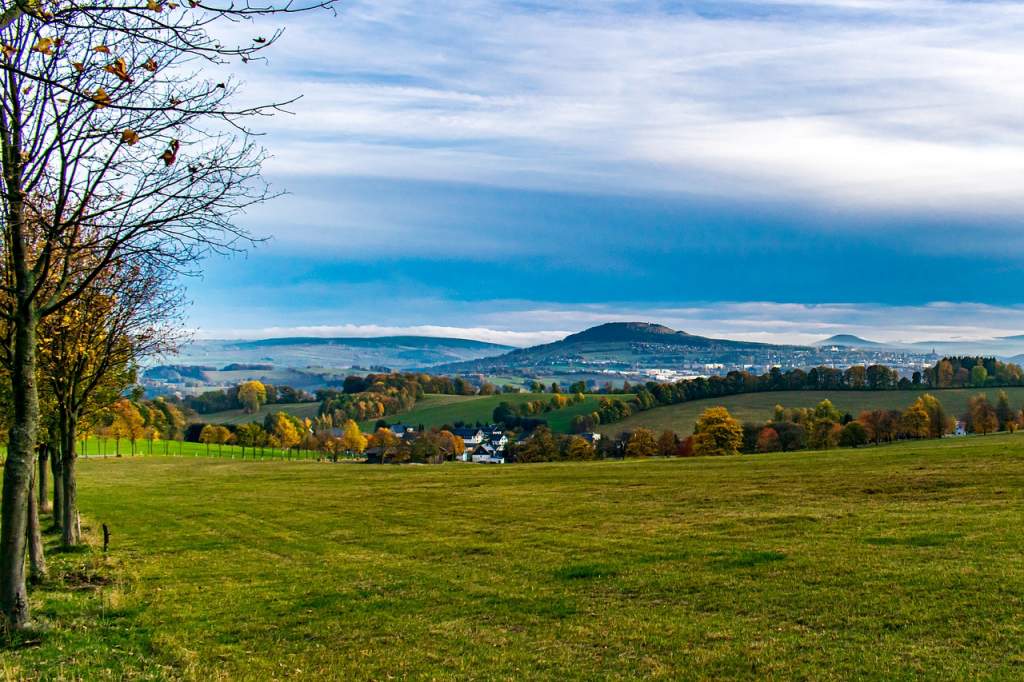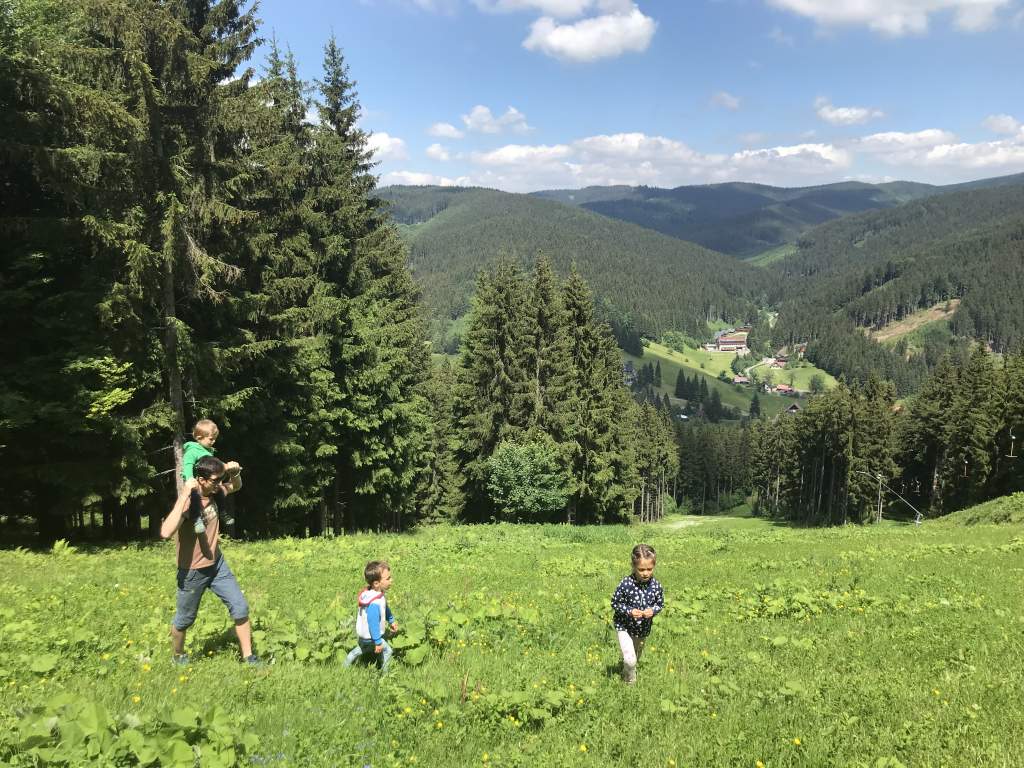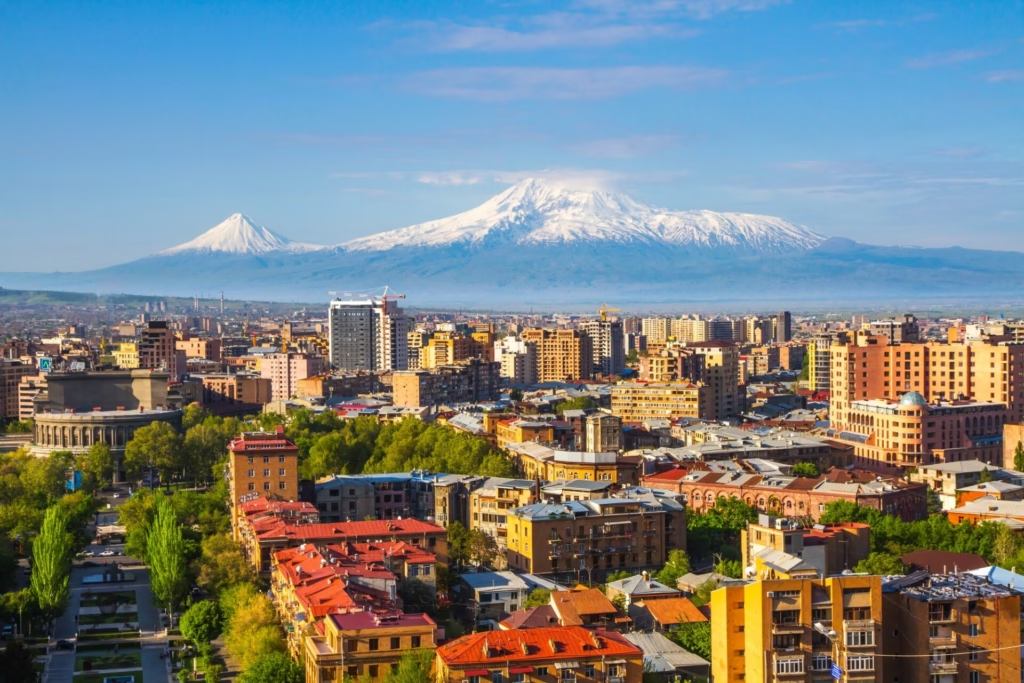
Armenia is a country of stunning nature, ancient buildings, old culture, great wine, excellent food, and above all, warm-hearted people. As you travel around Armenia, things will happen to you that would be nearly impossible anywhere else.
Visit Armenian churches, climb the country’s highest mountain, take a train, hitchhike, soak in hot springs, taste local specialities. And best of all: Yerevan has direct flights from a number of European cities, so getting to the Caucasus can take as little as four hours in the air.
We last reviewed and updated this guide in August 2026 — prices, transport connections and the security situation reflect that date.
Why visit Armenia
Armenia is a small, relatively poor country with a modest capital, no sea coast, and as such it often stays off tourists’ radar. And that’s exactly what makes it great — no giant tour buses, locals don’t see visitors as walking wallets, and if you meet other travellers, you’ll almost certainly strike up a conversation.
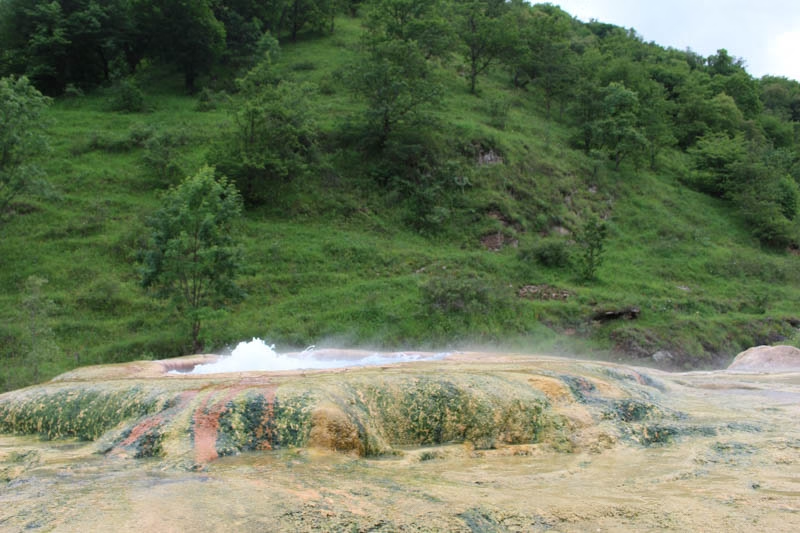
Armenia has absolutely gorgeous nature — there’s the 4,000-metre Aragats and plenty of 3,000-metre peaks. Wide plains alternate with hills and mountains, where you might stumble on hot springs along the way.
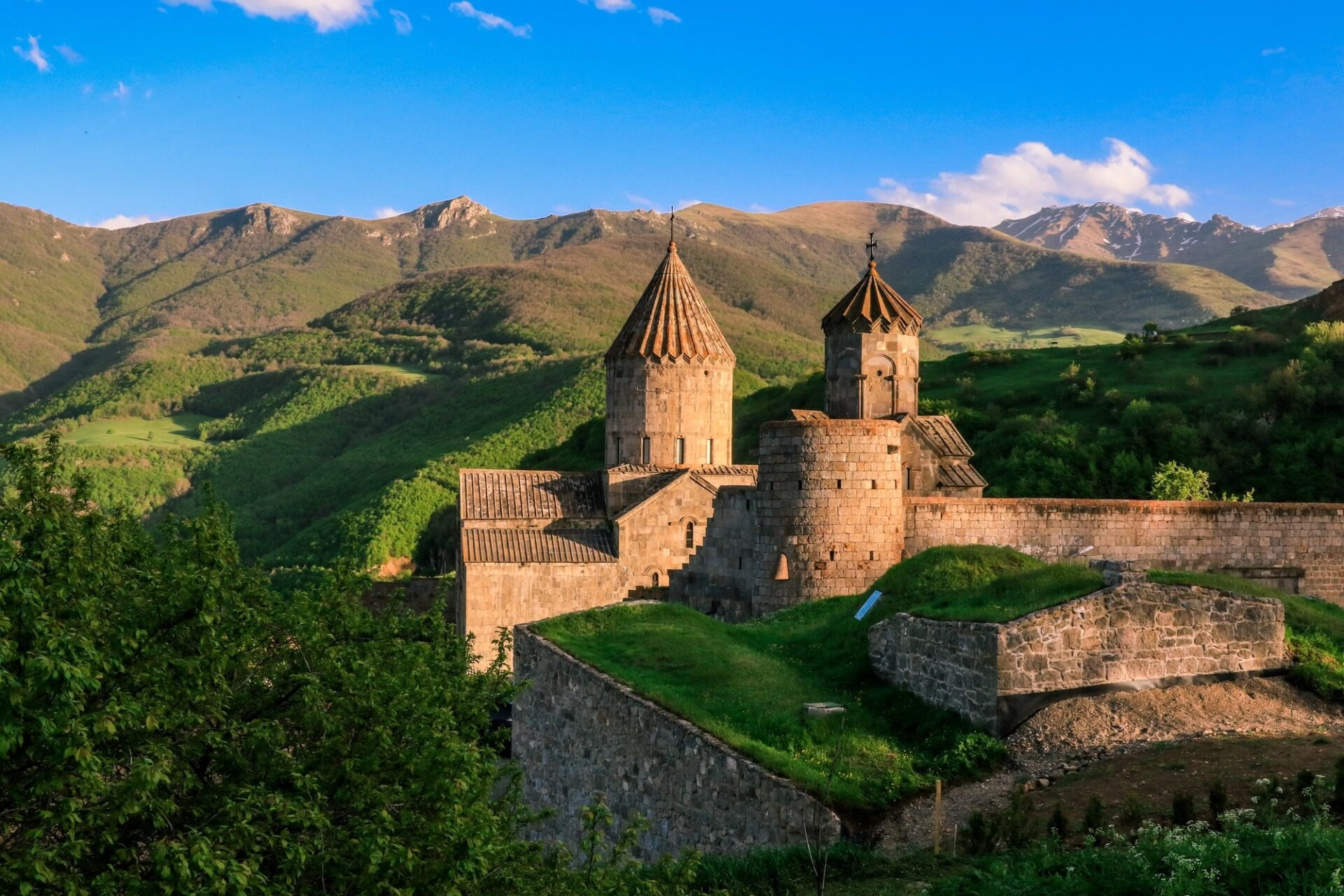
Add to that lakes, river canyons, ancient churches of the world’s oldest Christian nation, and old fortresses that once protected the country from invaders.
Locals are absolutely wonderful and rank among the most hospitable people in the world — you’ll be welcomed warmly almost everywhere you go.
And then there’s the argument that matters more in 2026 than ever — the value for money. A day in Armenia costs a fraction of what you’d spend in southern Europe, yet you can travel through a country where semi-desert, vineyards, mountain meadows and a 13th-century monastery perched above a thousand-metre gorge all appear within a single hour’s drive.
Who Armenia is for: travellers who want mountains, history and real contact with locals, and who don’t mind older infrastructure or need a beach or polished service. Who it’s not for: all-inclusive holidays, seaside breaks, or anyone expecting Western European comfort and English everywhere.
Is Armenia safe? The 2026 situation
This is by far the most common question we get about Armenia, and the short answer is: the vast majority of the country is safe for tourists, including Yerevan, Lake Sevan, Dilijan, Gyumri, and all the main monasteries. The problem is a narrow strip along the border with Azerbaijan — and that’s easy to avoid.
Nagorno-Karabakh and the peace process
In September 2023, Azerbaijan took military control of Nagorno-Karabakh, and by January 1, 2024, the self-declared Republic of Artsakh had ceased to exist. Practically the entire Armenian population left the region. Nagorno-Karabakh is now inaccessible from Armenia and has ceased to exist as a travel destination.
On August 8, 2025, Prime Minister Nikol Pashinyan and President Ilham Aliyev initialled a peace agreement text and signed a joint declaration in Washington, mediated by the US president. Watch out for how media reports this: the agreement is initialled, not signed or ratified. Armenia needs constitutional changes for it to take effect, which are set to go to a referendum planned for 2027. The declaration also includes a transport corridor through southern Armenia (TRIPP), whose actual implementation is still an open question.
For travellers, this means one thing: full-scale war isn’t looming, and the atmosphere is significantly calmer than in 2020–2023, but the border with Azerbaijan remains closed, and sporadic shooting still occurs along it.
Where not to go
Western government travel advisories consistently warn against travel to roughly a 15-kilometre zone along the entire Armenia–Azerbaijan border, including simply passing through. In 2024 and 2025, there were local skirmishes and attacks on civilian infrastructure — specifically around Artanish, Goris, Ishkhanasar, Jermuk, Kapan, Sotk and Vardenis.
Specific areas to avoid:
- Tavush: the strip between Aknaghbyur–Jujevan and Aknaghbyur–Aygepar, and the area east of Navur
- Gegharkunik: everything east of Vardenis (i.e. the eastern shore of Sevan beyond Vardenis)
- Ararat: the village of Yeraskh
- Vayots Dzor: the area east of Getik
- Syunik: areas adjacent to the Azerbaijani border
In practice, this restricts two things. First, the eastern shore of Sevan beyond Vardenis — go around the lake via the western and northern side, where all the campsites and Sevanavank are anyway. Second, the road south to Tatev and Kapan, which runs close to the border in places; the main Yerevan–Goris–Kapan route is generally passable and served by shared minibuses, but it’s worth checking the current status before travelling and avoiding side roads heading east from it.
If your country offers a traveller registration service (such as STEP in the US or similar services from European foreign ministries), register before you leave — it’s free, and the embassy will know about you if something happens. Most European countries and the US have representation in Yerevan. Always check the current advisory from your own foreign ministry, as the situation can change.
General safety, crime and solo travel
Outside the border zone, Armenia is a very safe country with low street crime. Violent attacks on tourists are very rare; pickpockets occasionally appear at markets and in the Yerevan metro. The usual rules apply — don’t walk alone at night in deserted areas, keep an eye on your belongings in crowds.
- Solo women travellers: Armenia is one of the most pleasant destinations in the region for female travellers. Harassment is rare — you’re more likely to encounter excessive concern for your wellbeing. In rural areas, more conservative clothing is practical.
- Scams: most commonly taxi drivers without meters at the airport and near tourist sites. The solution is simple — use an app and agree on the price beforehand.
- Traffic: the biggest real risk in Armenia is the driving style. Overtaking on bends is common, and seatbelts are used less. Buckle up even in the back seat.
- Earthquakes: Armenia sits in a seismically active zone. Strong tremors are rare, but weaker ones occasionally occur.
The unified emergency number in Armenia is 911, and the European 112 also works.
When to visit Armenia
Armenia has a sharp continental climate with big differences between seasons and between the lowlands and mountains. Yerevan sits in a basin and stays hot in summer, while an hour’s drive away in the mountains it’s pleasant. The best months are May, June, September and early October.
- April and May — green, blooming plains, the rainiest period of the year. Yerevan sees 15–25°C, while snow still lies in the mountains. High mountain passes tend to stay closed until the end of May.
- June — in our view, the best month. Dry, long days, mountains already accessible, a bearable 25–30°C in Yerevan.
- July and August — Yerevan regularly hits 35–40°C and gets stuffy; being in the city during the day is barely bearable. On the plus side, it’s the only time you can swim in Lake Sevan and hike the high mountains, including Aragats. The trick: mountains by day, Yerevan in the evening.
- September — the second-best month. Heat eases off, it’s grape harvest time, and the mountains are still accessible.
- October — colourful autumn in Dilijan, cold nights. Snow can already fall in the mountains in the latter half of the month.
- November to March — sub-zero temperatures, heavy snow in the mountains, many mountain roads closed. Ski season in Tsaghkadzor and Jermuk; otherwise it’s more of a Yerevan-and-museums trip. Accommodation is the cheapest of the year.
Events worth planning around: Vardavar is an all-day water fight where absolutely everyone in the streets gets soaked, including tourists — it falls on the 14th Sunday after Easter, which was July 12 in 2026. Areni Wine Days, a wine festival in the village of Areni, was scheduled for October 3 in 2026. Armenian Christmas is celebrated on January 6, Genocide Remembrance Day falls on April 24 (the whole country holds a silent march that day, and many institutions close), and Independence Day is September 21.
How to get to Armenia
The main gateway into the country is Zvartnots Airport (EVN), about 12 kilometres from central Yerevan. The second international airport in Gyumri handles only a handful of routes and isn’t worth planning around for most trips.
Wizz Air has its own base in Yerevan and, together with domestic carrier FlyOne Armenia, operates direct routes to a number of European cities. The offering changes fast, though — whole destinations appear and disappear from season to season, so always check current schedules and search using a “nearby airports” option. The difference between your home airport and one a bit further away can be significant.
When a direct flight doesn’t fit, you’ll connect. The most common hubs are Istanbul (Turkish Airlines or Pegasus via Sabiha Gökçen), Warsaw with LOT, Vienna with Austrian Airlines, and Athens with Aegean; from the Gulf, flights go via Dubai and Doha. Connecting tickets tend to cost more than a budget direct flight but offer better timings and checked baggage included.
One thing holds true across budget airlines: expect a late-night arrival. Planes often land in Yerevan after midnight, so sort out your first night’s accommodation and airport transfer in advance.
Via Georgia
The classic backpacker option is to fly into Georgia and continue overland. From Kutaisi to Tbilisi is about 4 hours, and from Tbilisi to Yerevan a shared minibus or overnight train takes roughly 6–10 hours. It works out similarly priced to a direct flight but you get two countries in one trip. A dedicated guide covering travel around Georgia will help you plan a combined trip like this.
Overland: which borders are open
Armenia has four neighbours, but only two land borders are open:
- Georgia — open. The main and most-used crossing is Bagratashen/Sadakhlo on the Tbilisi–Yerevan route; Bavra/Ninotsminda and Gogavan also operate. Processing usually takes tens of minutes, longer on weekends and in peak season.
- Iran — formally open, but don’t go there. The Agarak/Nordooz crossing in the far south is functioning, but travel to Iran is off the table in 2026 — see the warning below.
- Azerbaijan — closed. Despite the 2025 peace declaration, the border has not yet opened.
- Turkey — closed. The border has been closed since April 1993. Armenia has rebuilt the Margara crossing and there is an agreement to open it for third-country citizens, but a permanent opening keeps being postponed — in June 2026, Margara was open for just ten days to allow humanitarian aid through.
In practice, this means Armenia and Turkey can’t be combined in a single overland trip — you’d need to go around via Georgia. If you’re planning to combine this with a trip to Turkey, budget for a flight or a big detour. Travel to neighbouring Azerbaijan is also directly impossible from Armenia and also runs via Georgia. The only genuinely usable overland route into and out of Armenia remains Georgia.
Don’t travel to Iran from Armenia in 2026
The route across the southern border into Iran used to be a popular backpacker trail, and in theory the crossing is still open. In 2026, though, it’s not a trip anyone should recommend. Following US–Israeli strikes on Iranian targets, the country is effectively in a state of war, air travel is suspended, and leaving Iran is practically only possible overland. Both the US and European governments have Iran under the highest “do not travel” warning and are urging their citizens to leave the country.
For travellers, this has three key consequences:
- Travel insurance won’t cover you. Armed conflict and travel to countries your government advises against are standard exclusions in insurance policies. In practice, this means you’d pay for any treatment, evacuation or repatriation yourself.
- Consular assistance is limited. Most embassies warn that their ability to assist their own citizens would be very limited if tensions escalate again.
- Risk of detention. Foreigners in Iran are often suspected of espionage and detained. There’s a documented history of EU citizens detained or prosecuted on fabricated charges.
We describe what the trip used to look like, and what it might look like again once things settle down, in a separate guide to Iran. Before heading there, always check your government’s current travel advisory — and until the warning stands, plan your Armenia trip without Iran.
Visas, documents and entry requirements
Entering Armenia is simple for most Western travellers. You don’t need a visa. Citizens of EU countries, the UK, US, Canada, Australia, New Zealand and many other countries can stay in Armenia visa-free for 180 days within one year — this arrangement has applied to EU citizens since 2013. You’ll get a passport stamp at the border or airport, and that’s it.
- A passport is required — you cannot enter Armenia with just a national ID card.
- Police registration: a formal requirement to register within three days of entry technically exists under Armenian regulations, but it’s currently not enforced in practice. Hotels and hostels also handle it automatically, so it’s nothing to worry about.
- Travel insurance isn’t mandatory at entry, but don’t travel to Armenia without it — no public health insurance from Europe or elsewhere is valid here, and you’ll pay for treatment yourself.
- An Azerbaijani stamp in your passport won’t complicate entry into Armenia. The reverse isn’t true, though: forget entering Azerbaijan with proof of a visit to Nagorno-Karabakh.
Always check entry requirements for your specific nationality with your own foreign ministry’s travel advisories.
How much does a trip to Armenia cost: 2026 prices
The currency is the Armenian dram (AMD). For a quick reference, roughly 400 AMD equals about €1. Conversely, €1 gets you around 400 dram. The exchange rate has been stable long-term, with the dram holding steady rather than weakening in recent years.
Armenia remains a cheap country, although prices in Yerevan have risen noticeably since 2022. Transport, entry to sights and food at local eateries are still very cheap; accommodation in the capital’s centre isn’t quite the bargain it once was.
Rough prices
Accommodation per night:
- Dorm bed in Yerevan: 5,000–8,000 AMD (~€12–19)
- Double room in a guesthouse: from 10,000 AMD (~€24)
- Three-star hotel in Yerevan: around 17,000 AMD (~€41)
- Rural guesthouse (Dilijan, Goris, Sevan): 8,000–15,000 AMD (~€19–36), often including breakfast
Food and drink:
- Shawarma or filled pastry from a stall: 800–1,500 AMD (~€2–4)
- Meal at a cheap local restaurant: around 3,800 AMD (~€9)
- Dinner for two at a mid-range restaurant in Yerevan: around 19,000 AMD (~€46)
- Local beer (0.5 l) at a restaurant: around 800 AMD (~€2)
- Coffee at a Yerevan café: 700–1,200 AMD (~€1.70–2.90)
- Bottle of Areni wine at a shop: from 2,500 AMD (~€6)
Transport:
- Yerevan metro: 150 AMD (~€0.36) per ride
- 180-minute combined ticket (metro, bus and trolleybus): 300 AMD (~€0.72)
- Taxi around Yerevan: 600–2,000 AMD (~€1.45–4.85) depending on distance
- Taxi from the airport to the centre: 2,500–3,500 AMD (~€6–8.50)
- Shared minibus Yerevan–Gyumri: around 1,500 AMD (~€3.60)
- Shared minibus Yerevan–Goris: around 3,000 AMD (~€7.25)
- Petrol: 450–500 AMD (~€1.10–1.20) per litre
Entry fees for sights:
- Garni Temple: 1,500 AMD (~€3.60)
- Symphony of Stones in Garni Gorge: 200 AMD (~€0.48)
- Geghard Monastery and most other monasteries: free
- Matenadaran: 3,000 AMD (~€7.25)
- Wings of Tatev cable car: 6,500 AMD one-way, 9,000 AMD round-trip (~€15.70 / €21.70)
- Armenian Genocide Museum at Tsitsernakaberd: free
Daily budget guide
- Backpacker (dorms, shared minibuses, food from shops and stalls): €22–32 per day
- Standard traveller (guesthouse, restaurants, occasional taxi or trip): €44–80 per day
- Comfortable travel (hotel, rental car, guides): from €130 per day
A week in Armenia on a shoestring comes to roughly €280, or typically around €480–600 including flights. The biggest one-off expenses are the flight and any car rental — the stay itself is cheap.
Cards, ATMs and cash
Cards are widely accepted in Yerevan today — in supermarkets, hotels, cafés and most restaurants. Contactless payments work fine, including Apple Pay and Google Pay, and nobody will blink at a Revolut or similar multi-currency card. Outside the big cities, it’s different: in rural areas, on shared minibuses, at markets and small guesthouses, cash is king.
ATMs are available even in smaller towns and work reliably. It’s better to withdraw larger amounts at once, since withdrawal fees tend to be flat. Always decline the ATM’s currency conversion and let your bank charge you in dram — the rate offered on-screen is significantly worse.
Bring some cash reserve in euros or dollars — exchange offices will change them anywhere, and rates in Armenia tend to be good, often better than an ATM withdrawal. The best rates are found at exchange offices in central Yerevan and at the GUM market. If you’re heading from Yerevan into the mountains, exchange more cash in advance, as exchanging money in rural areas can be tricky. A multi-currency card like Revolut is handy here too, letting you top up in euros or dollars and spend with low FX fees.
Tipping in Yerevan today commonly runs around 10%; in nicer restaurants it’s often already added to the bill as a service charge — check, so you don’t pay twice. At local eateries, with taxi drivers and minibus operators, tipping isn’t expected.
Getting around Armenia
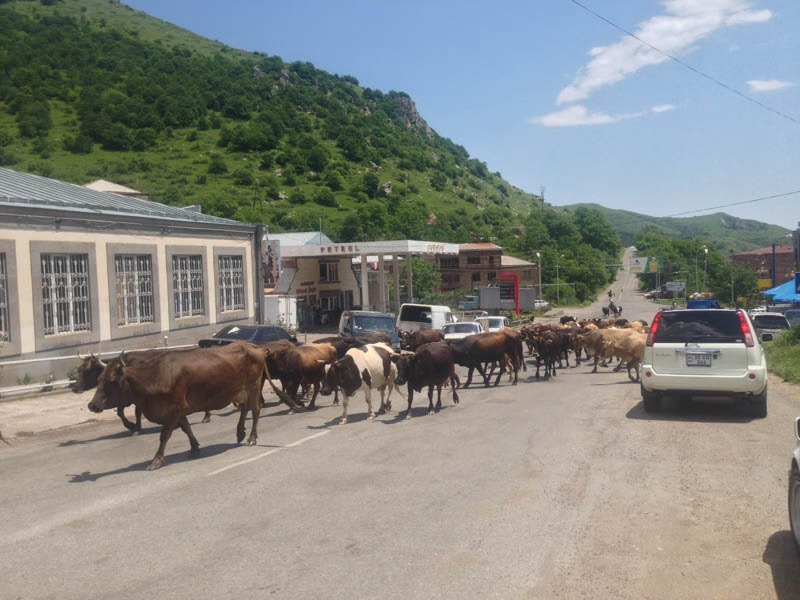
Armenia is small — from Yerevan you can reach practically anywhere in a day. Public transport is cheap and dense, but timetables exist mostly as a rough guide, and services to more remote places tend to run only in the morning.
Shared minibuses and buses
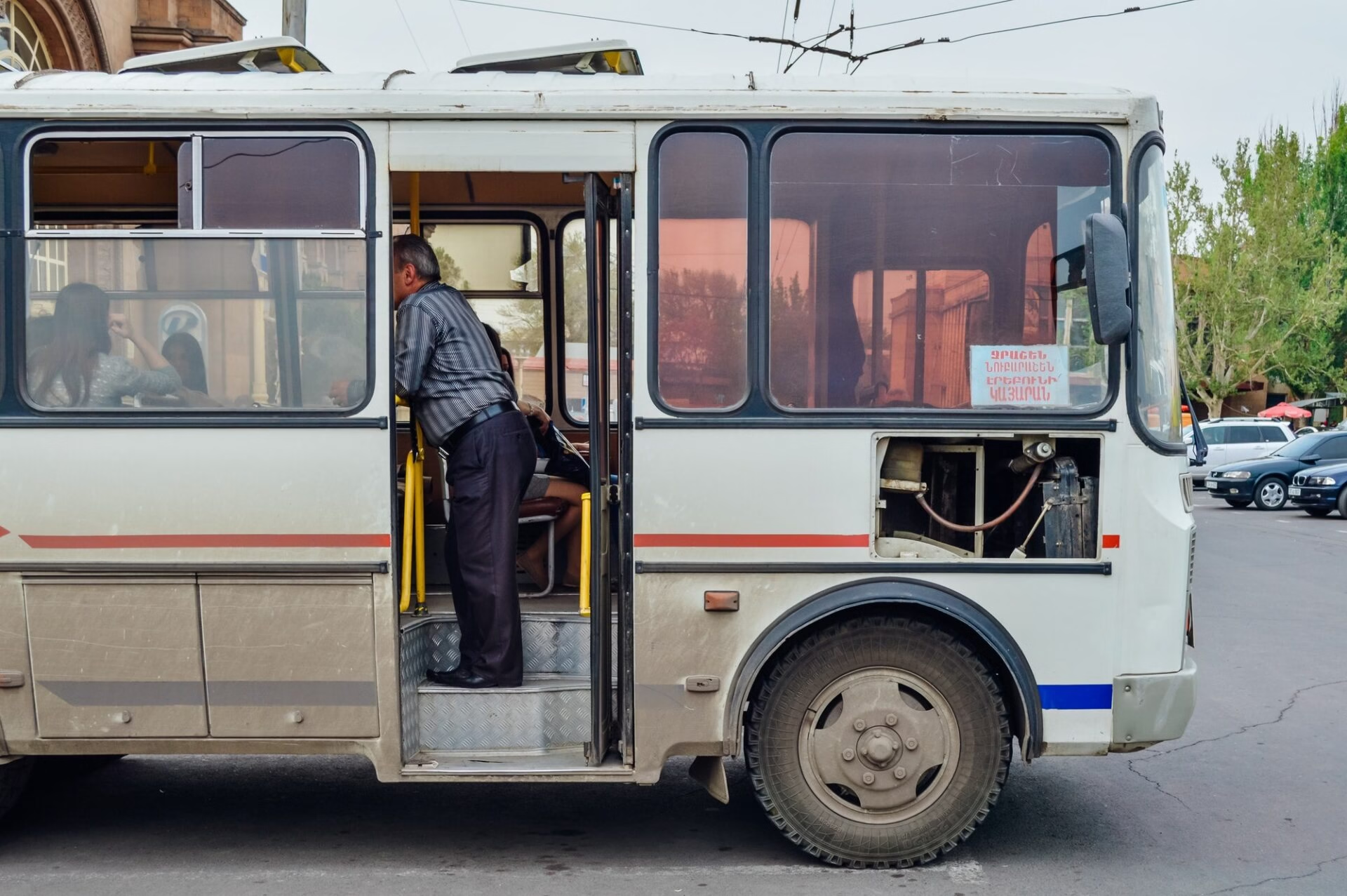
The marshrutka (shared minibus) is the backbone of Armenian transport, running fixed routes. They run often, cost next to nothing, and leave only once full, not on a schedule. To more distant places, they mainly depart in the morning — in the afternoon you’ll often find nothing going anywhere, which is the most common planning mistake.
Yerevan has two main bus stations: Kilikia for routes south and into Georgia, and Gai for northern and eastern routes. The trip to Gyumri takes about 2.5 hours, to Sevan 45 minutes, and to Goris in the south budget 5–6 hours.
Trains
The rail network is sparse and all lines radiate out from Yerevan, but train travel in Armenia is pleasant. The most interesting route is the electric train to Gyumri, which covers the distance in 2.5 hours for around 2,500 AMD (~€6). The line continues all the way to Tbilisi in Georgia; the overnight train with sleeper cars takes about 10 hours and is the classic traveller’s way to move between the two countries. Services tend to be seasonal, so check before you travel.
Rail travel is generally slower but cheaper and more comfortable than shared minibuses. In summer, there’s also a popular recreational train from Yerevan to Lake Sevan.
Taxis and apps
Uber doesn’t operate in Armenia. Two apps are used instead — GG Taxi and Yandex Go. Both run round the clock in Yerevan, show the price upfront, and take card or cash. Installing one of these is probably the single most useful piece of trip prep.
Taxis in Armenia are incredibly cheap. A short ride around Yerevan costs 600–900 AMD (~€1.45–2.20), and a trip across the whole city 1,200–2,000 AMD. Because of this, something that would be crazy back home actually makes sense here — hiring a taxi for a full day trip. Drivers commonly offer to take you to Garni and Geghard, or to Sevan, and wait while you look around; split among three or four people, it works out cheaper than an organised tour.
Outside of the apps, you’ll come across plenty of unofficial taxis without a meter. That’s not a problem, but agree the price beforehand, ideally before getting in and confirmed out loud. The most common place tourists get overcharged is the arrivals hall at Zvartnots.
Public transport in Yerevan
Yerevan’s city transport has undergone major modernisation. The metro has a single line with ten stations; a ride costs 150 AMD (~€0.36) and is the fastest way to move along the city’s main axis. Since November 2024, payment is by QR code, contactless bank card or Telcell card — tokens are a thing of the past.
Buses, trolleybuses and marshrutkas have fallen under a unified payment system since 2025. The best value is the 180-minute combined ticket for 300 AMD (~€0.72), which lets you transfer freely between metro, bus and trolleybus. Just tap the same payment card each time.
Renting a car
Your own car is the best way to explore Armenia — the most beautiful spots sit on side roads where public transport doesn’t run, or runs just once a day. You’ll need a driving licence, an international driving permit, and enough money for a refundable deposit. Most rental agencies are in Yerevan and at the airport.
A regular car starts from around $25 a day (roughly €23), while an SUV/4×4 costs $35–50. Heading into the mountains, up Aragats, or onto the rougher roads of Syunik, a 4×4 genuinely helps — main routes are good, but side roads can be rough, and mountain roads are often unpaved. For an extra fee, you can drop the car off in a different city, including Tbilisi; agree on crossing into Georgia in advance though, as not every rental company allows it.
Hitchhiking
I’d go so far as to say Armenia is one of the most hitchhiker-friendly countries in the world. The rule of thumb: the fewer cars on the road, the faster you’ll get picked up — as long as some traffic exists at all. Armenia is a country I hitchhiked across almost entirely, and it was a great decision.
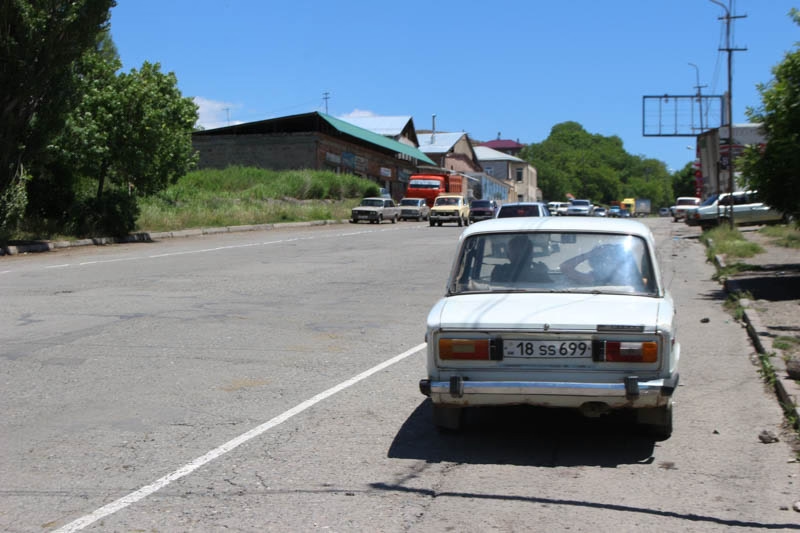
Thanks to hitchhiking, we met tons of great people and had unforgettable experiences. Armenians would stop even when we were just standing around or walking without actually hitchhiking. Cars going the other direction sometimes stopped too, and a taxi driver picked us up for free more than once.
One thing to watch out for: some drivers treat hitchhiking as a paid service, especially with tourists. Ask right at the start whether it’s free. And if you’re still deciding whether to try hitchhiking, check out our ultimate hitchhiking guide — the basic rules apply just as much in the Caucasus as in Europe.
Yerevan: what to see in the capital
With a population of around a million, Yerevan is clearly the country’s largest city, home to roughly a third of all Armenians. It’s one of the oldest continuously inhabited cities in the world — the fortress of Erebuni, from which it grew, was founded in 782 BC, a good thirty years before Rome. You wouldn’t guess that antiquity at first glance, though: today’s Yerevan is a sprawling Soviet-era city built from pink tuff, with a circular boulevard, huge squares, and cafés on every corner.

The centre is surprisingly small and entirely walkable — it’s a fifteen-minute walk from Republic Square to the Cascade. Set aside two days for Yerevan itself, or four to five if you include day trips into the surrounding area.
Republic Square and the singing fountains
The city’s ceremonial heart, surrounded by government buildings of pink and beige tuff. The main draw, though, happens after dark: the singing fountains dance to classical music with a light show every evening from late spring to early autumn. Half the city turns up, it’s free, and it’s one of the best ways to spend a summer evening in Yerevan. On the square you’ll also find the History Museum of Armenia, home to the oldest surviving leather shoe in the world, roughly 5,500 years old.
The Cascade and Cafesjian Center
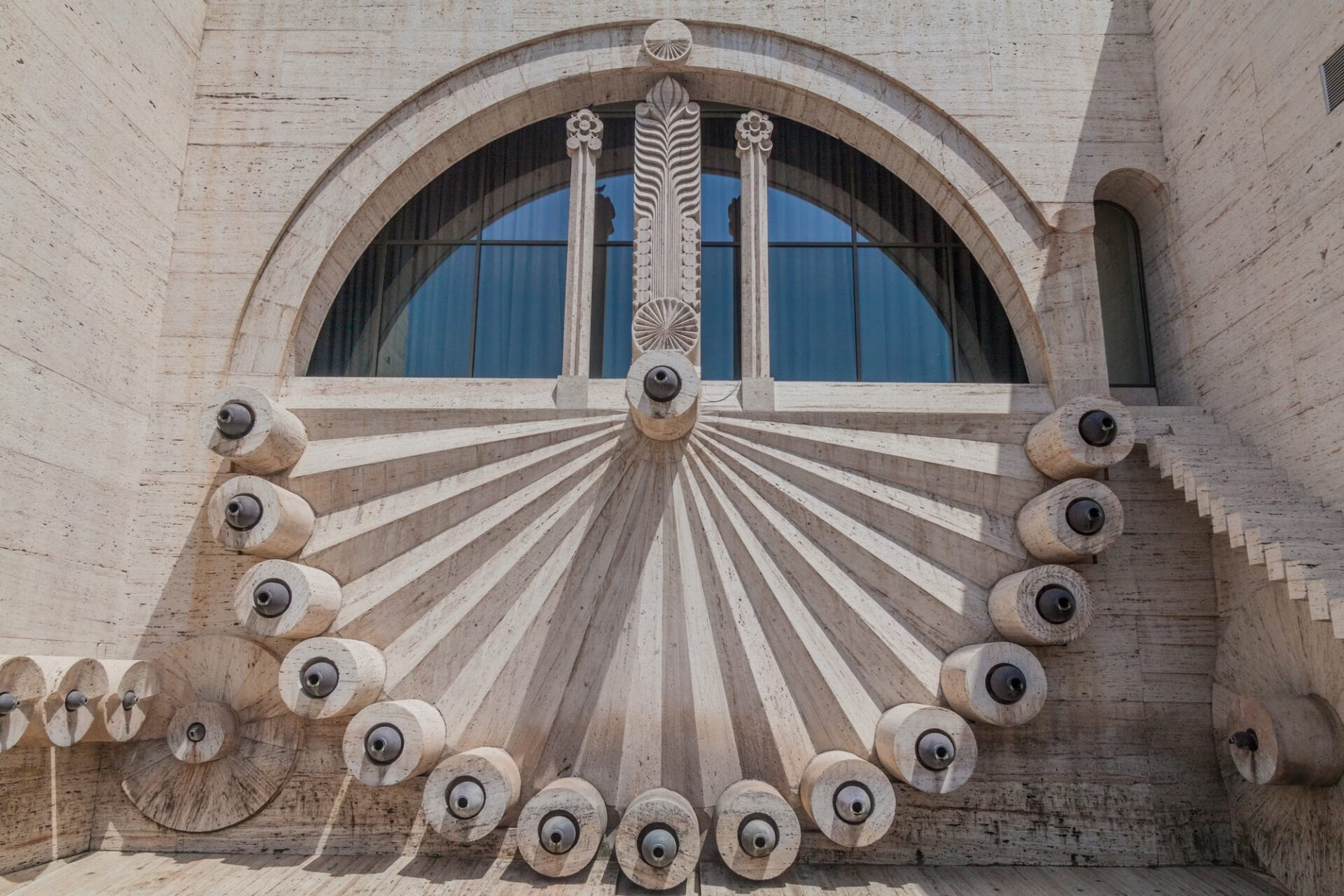
A giant white limestone staircase rising above the city centre is Yerevan’s most photogenic spot. Inside the Cascade is the Cafesjian Center for the Arts, with a modern art collection, a sculpture garden, and — the best part — free admission. Escalators inside will carry you up without having to climb every step.
At the top awaits your reward: a view over the whole city with Ararat in the background. And here’s a practical tip — Ararat is best seen in the morning and after rain. In summer, daytime haze almost always hides it, and plenty of visitors leave Armenia without ever getting a good look.
Matenadaran
The Institute of Ancient Manuscripts at the top of Mashtots Avenue matters more for understanding Armenia than any church. The collection holds over 17,000 manuscripts, the oldest dating from the 5th century, shortly after the Armenian alphabet was created. Entry costs 3,000 AMD (~€7.25), open Tuesday to Saturday, 10 am–5 pm. It’s worth paying for a guide — without commentary, it’s just beautiful books behind glass.
Tsitsernakaberd — the Genocide Memorial
The memorial and museum for the victims of the Armenian Genocide of 1915–1923 stands on a hill above the city. A split stele, twelve leaning slabs around an eternal flame, and beneath them a museum with free admission. It’s the most powerful and difficult place in Yerevan, and also the most important one if you want to understand why Armenians react to certain topics the way they do. Set aside an hour and a half, and expect to leave in a sombre mood.
Markets: Vernissage and GUM
Vernissage is a large open-air flea market with antiques, carpets, Soviet trinkets, duduks and handicrafts. One key detail that trips up a lot of visitors: it’s only in full swing on weekends; on weekdays it’s half-empty. Bargaining is expected, but keep it polite.
The GUM market, by contrast, is a genuine food market — dried fruit, nuts, sujuk, spices, cheeses, honey and pickled vegetables. Vendors will invite you to sample absolutely everything and want nothing in return. It’s the best place for edible souvenirs and doubles as the cheapest lunch in the city.
Other things worth your time
- Erebuni Fortress — the Urartian foundations of the city from 782 BC and a museum at the base of the hill.
- The Blue Mosque — Armenia’s only functioning mosque, Persian, built in the 18th century, with a peaceful garden amid the bustle of Mashtots Avenue.
- Victory Park and the Mother Armenia statue — a city view from the opposite side to the Cascade, best at dusk.
- Ararat Brandy Factory — a tour of the historic Armenian brandy brand, including a tasting. Book ahead, as it’s done in groups.
- Kond neighbourhood — the last surviving pocket of old Yerevan to escape the Soviet rebuild. Crooked lanes, murals, and an entirely different city just two streets over.
- Northern Avenue and the Opera House — the evening promenade where the whole city gathers.
Food, coffee and evenings in Yerevan
Yerevan punches above its weight with an unexpectedly strong café and restaurant scene, which has grown further since 2022. It’s densest around Northern Avenue, Saryan Street and Amiryan Street, and near the Cascade. You usually don’t need reservations, though it’s worth it on weekend evenings.
- For traditional food, head to “tavern”-style places around the centre — khorovats, tolma and khash are made there the way they’re eaten at home.
- For wine, the best spot is Saryan Street, nicknamed “wine street” — wine bars side by side, Armenian wines by the glass, and outdoor seating in summer.
- For coffee, you’ll find two different worlds: modern cafés with Western-standard espresso, and traditional surch, finely ground coffee brewed in a jezve, poured for you everywhere, including petrol stations.
- The cheapest lunch is shawarma from a stall or a plate at the GUM market.
Yerevan also has a surprisingly lively jazz scene — jazz has been a homegrown genre here since Soviet times, with live music playing downtown several times a week.
Day trips from Yerevan
Yerevan makes an ideal base — most of Armenia’s best sights lie within two hours’ drive. The most cost-effective option is hiring a taxi for the whole day, or joining one of the many organised day tours that leave from the centre.
- Garni and Geghard (40 minutes) — the classic day trip, easily combined with Garni Gorge. Half a day.
- Khor Virap (45 minutes) — a monastery right beneath Ararat, best in the morning for the view.
- Etchmiadzin and Zvartnots (30 minutes) — the country’s spiritual centre and a ruined 7th-century cathedral, both UNESCO-listed.
- Lake Sevan (1 hour) — with Sevanavank Monastery on a peninsula, and swimming in summer.
- Amberd and Aragats (1.5 hours) — a fortress at 2,300 metres and the country’s highest mountain.
What to see in Armenia beyond Yerevan
Armenia is a country of monasteries. There are literally hundreds of churches and monasteries, and after three days they start blurring together — so we’ve picked out the ones that offer something beyond just a church: location, views, the journey there. Almost all of them are also free. You’ll get the most out of them with a rental car, since the most beautiful monasteries sit at the end of roads that shared minibuses don’t reach.
Khor Virap
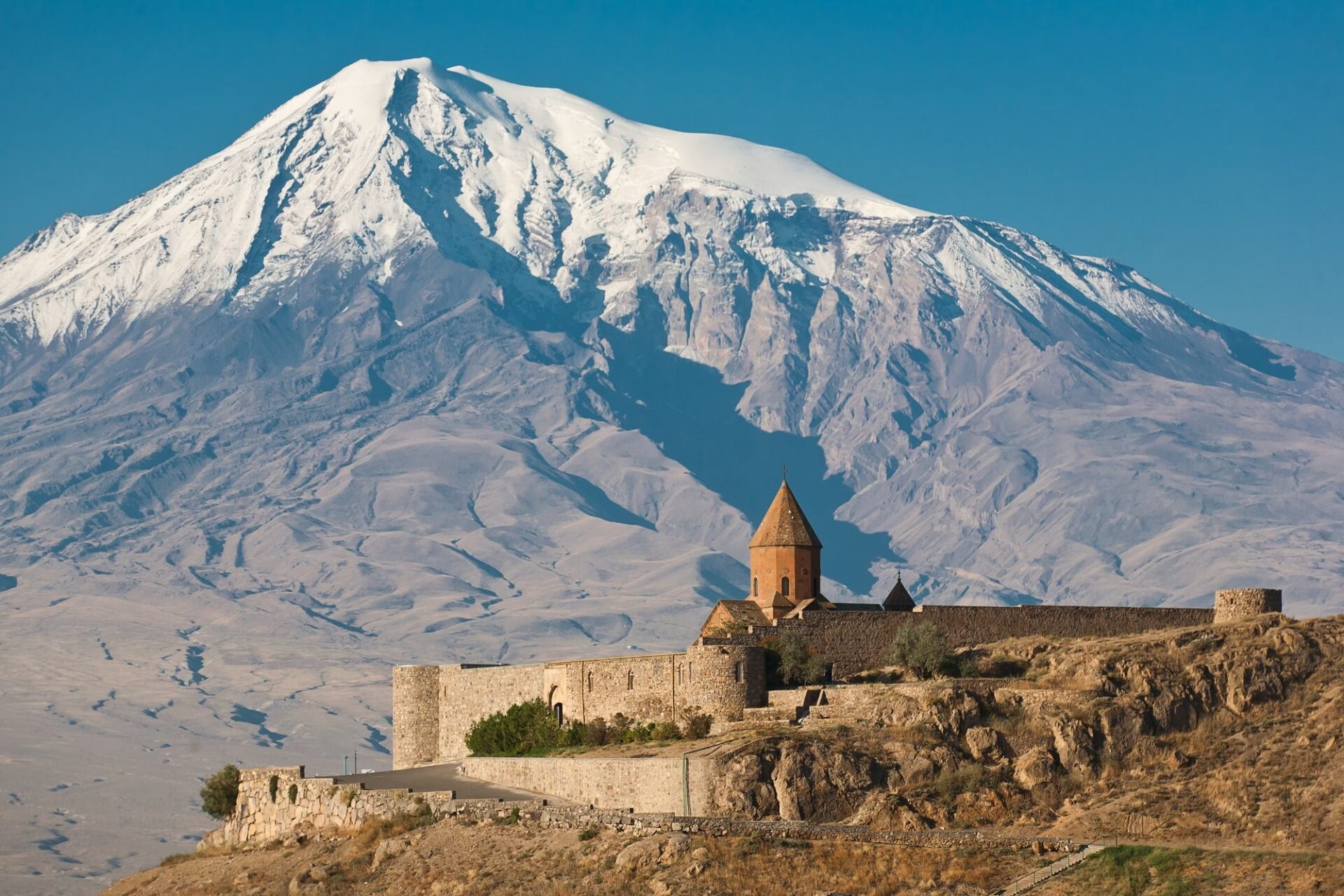
Armenia has dozens of beautiful churches, and it’s hard to pick just one. Khor Virap earned our affection thanks to Ararat, which you can see beautifully from here. The monastery sits close to Yerevan, near the border with Turkey.
Historically, it’s also the birthplace of Christian Armenia: legend holds that Saint Gregory the Illuminator was imprisoned for thirteen years in the pit here before he converted the king to Christianity. You can climb down into the pit by ladder. Go early in the morning — Ararat disappears into haze during the day, and without it, Khor Virap is just an ordinary hilltop monastery.
Garni and Geghard
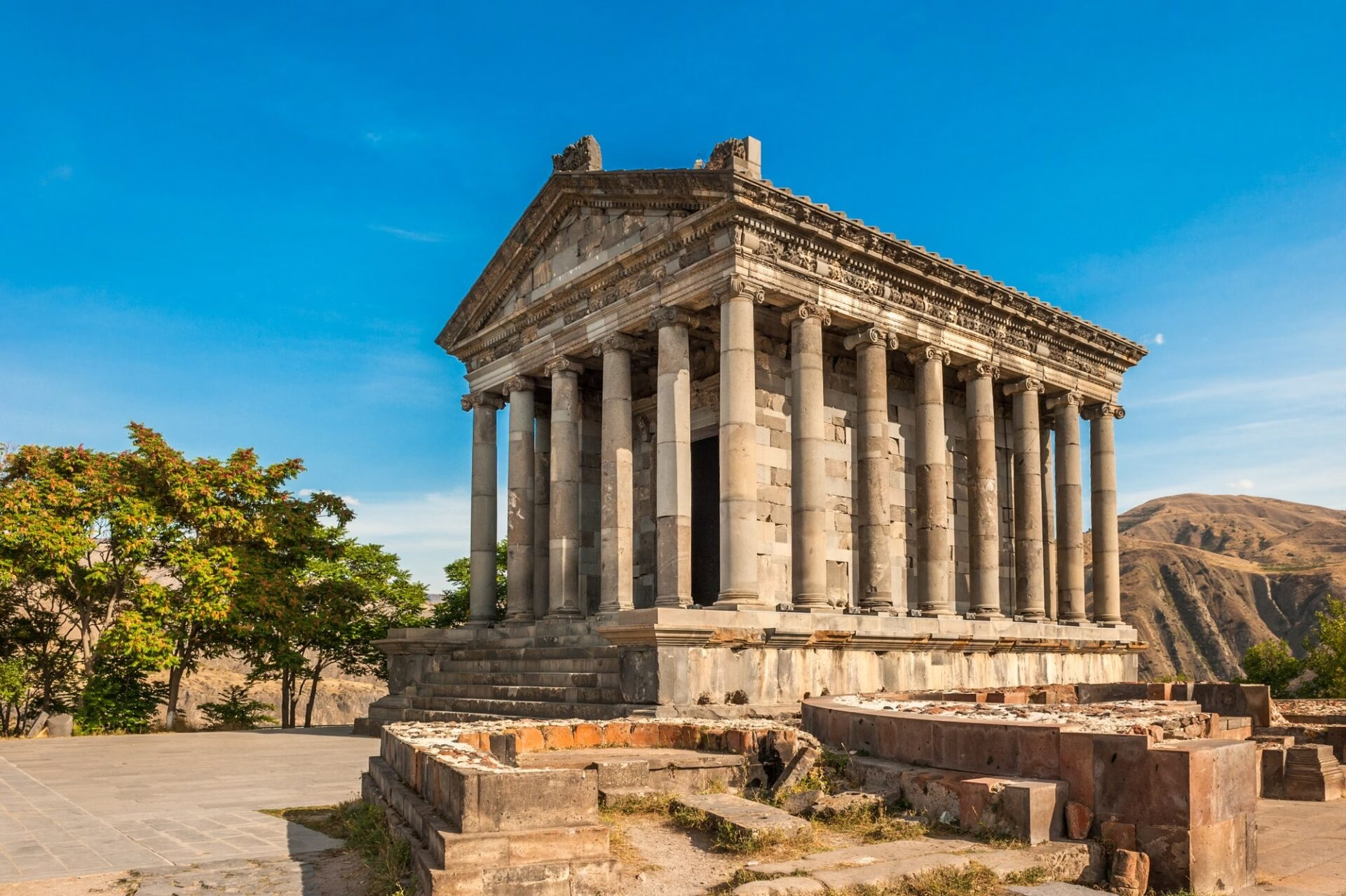
A pair usually visited together, an hour from Yerevan. Garni is Armenia’s only surviving pagan temple — a Hellenistic structure from the 1st century that survived both the shift to Christianity and earthquakes. Entry 1,500 AMD. Below the temple, in Garni Gorge, hides the Symphony of Stones, a wall of regular basalt columns; entry to the gorge costs a token 200 AMD, and plenty of visitors don’t even know it’s there.
Geghard is a UNESCO-listed monastery, partially carved directly into the rock. The stone chapels inside have phenomenal acoustics, and choirs often sing there — if you catch one, stay and listen. Entry is free.
Etchmiadzin
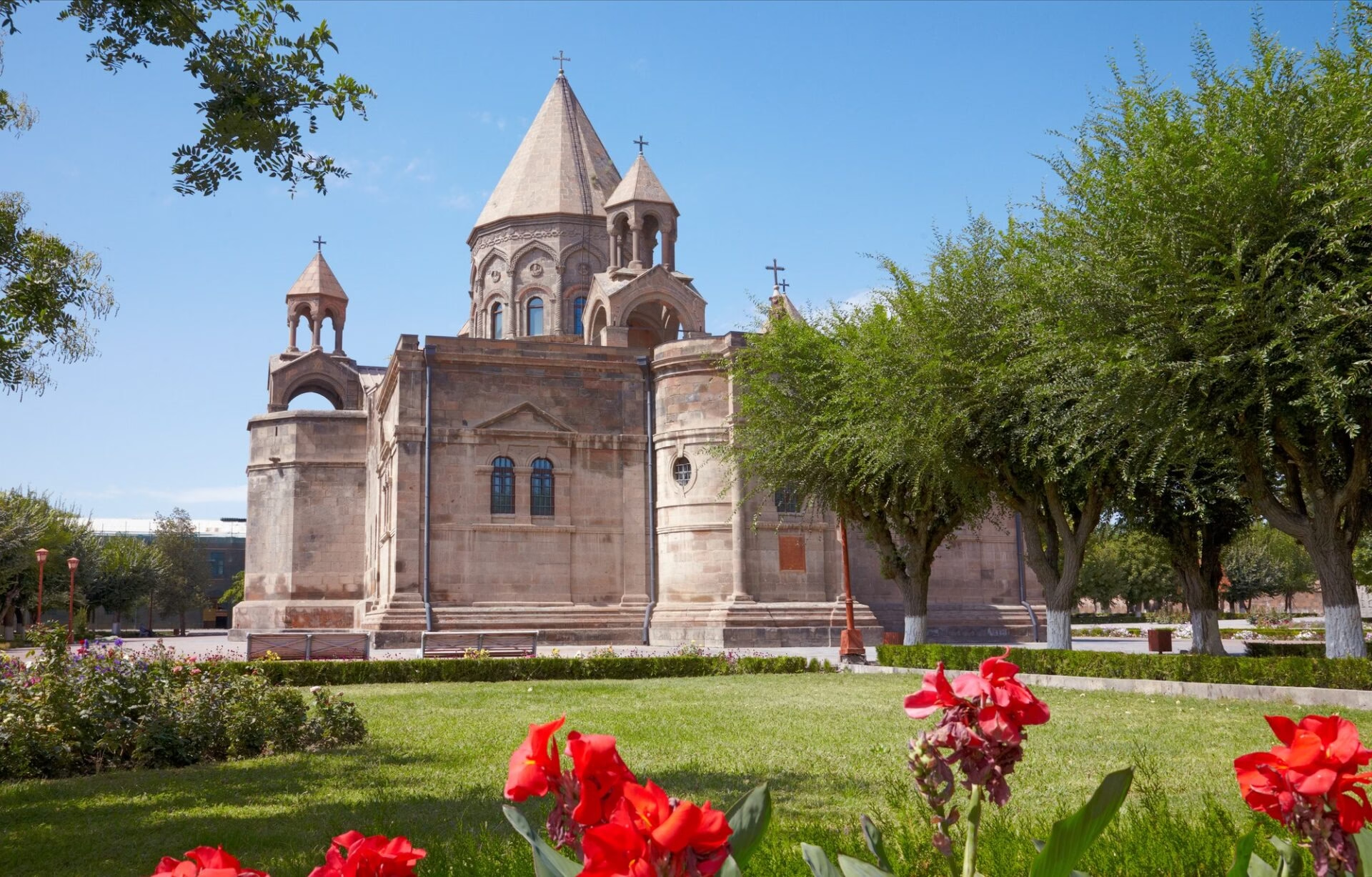
The seat of the head of the Armenian Apostolic Church and the oldest cathedral in the world — its foundations date to the early 4th century. The whole complex is UNESCO-listed alongside the nearby 7th-century ruins of Zvartnots temple. It’s half an hour from Yerevan and, for understanding Armenian Christianity, the single most important place in the country.
Tatev and the longest cable car
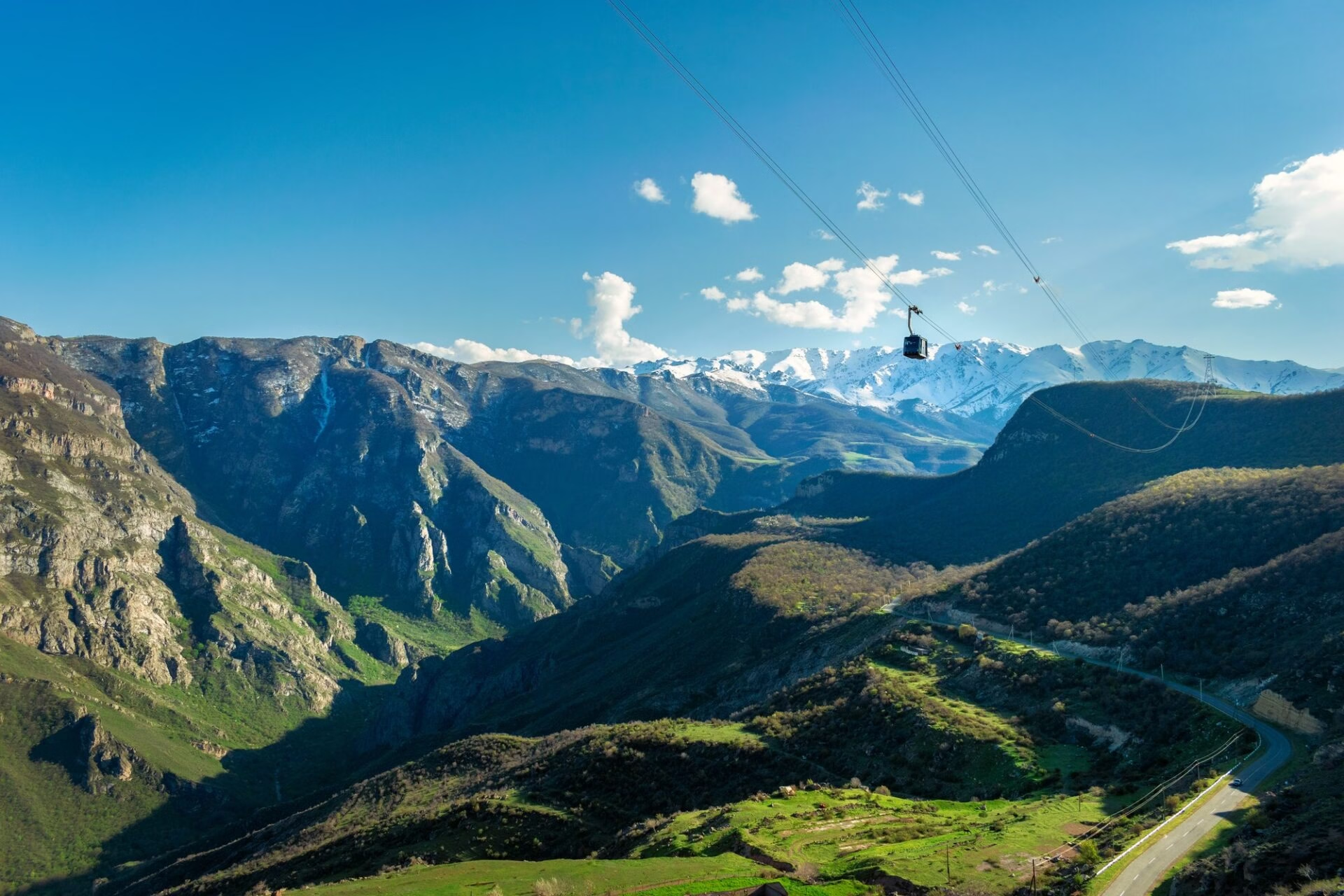
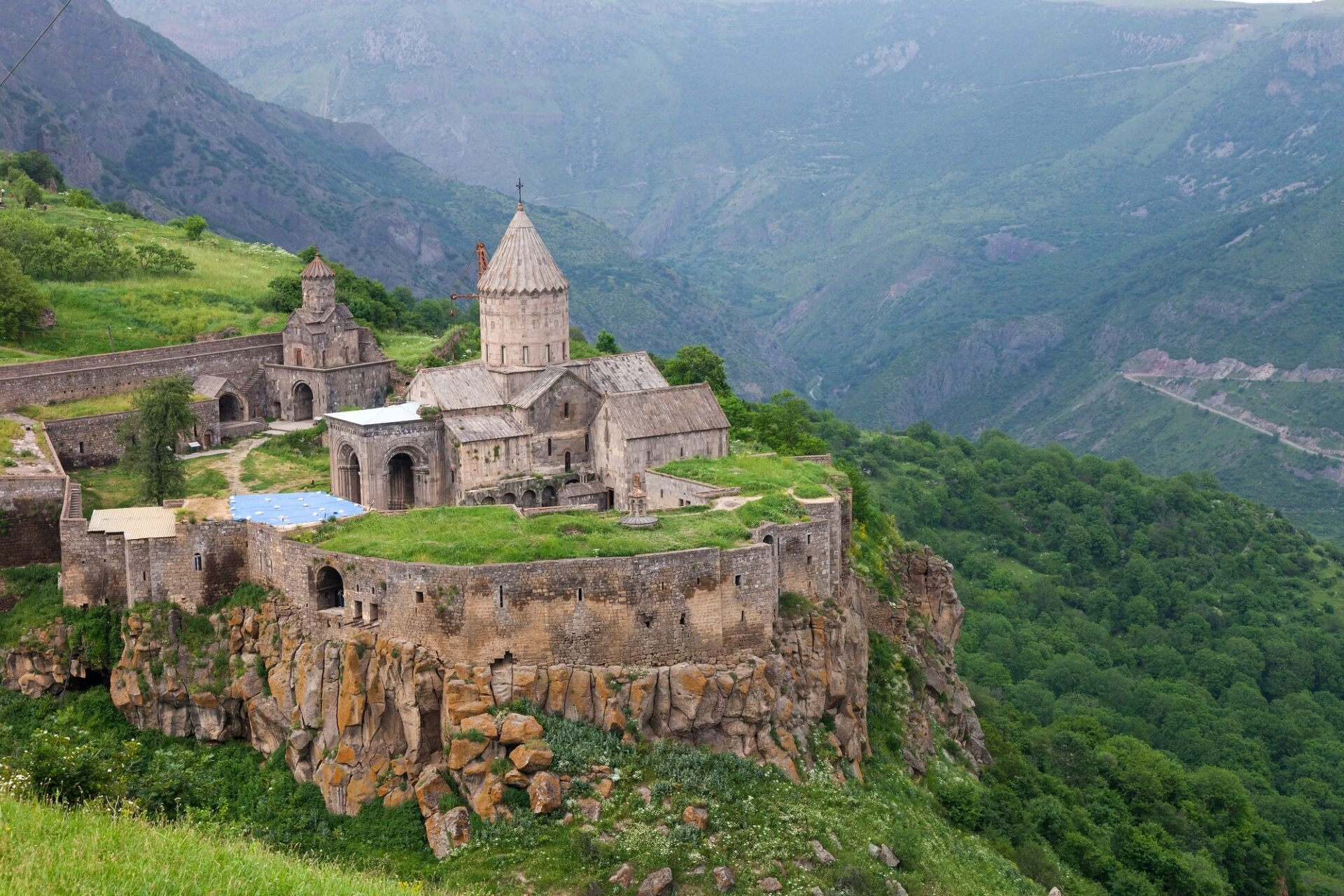
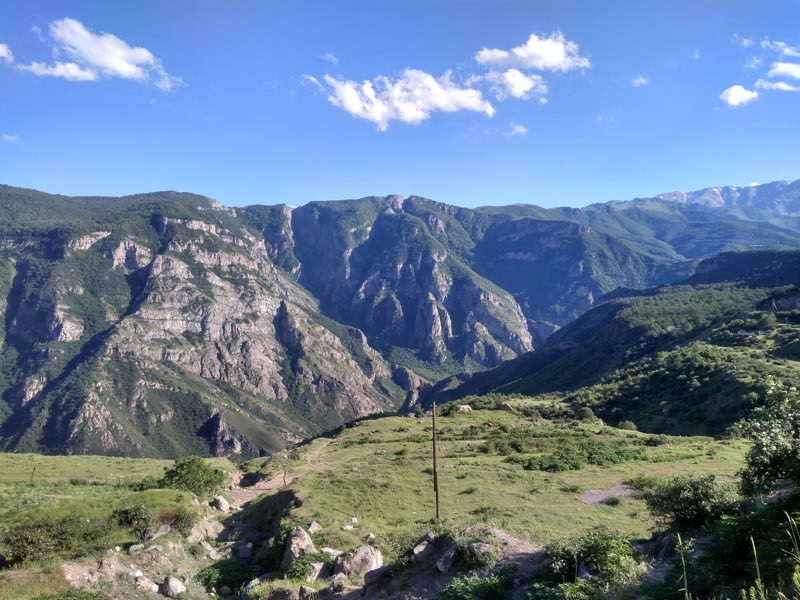
In Tatev, you’ll find absolutely stunning nature with hot springs and a gorgeous monastery perched above a gorge, crossed by a nearly 6-kilometre-long cable car (the world’s longest reversible cable car with a double-cable system).
The Wings of Tatev cable car measures 5.7 kilometres and spans the Vorotan River canyon. A ticket costs 6,500 AMD one-way and 9,000 AMD round-trip (~€15.70 / €21.70), slightly cheaper in winter. One key thing to remember: it’s closed on Mondays for maintenance. From May to August it runs roughly 10:30 am–7 pm, and the rest of the year 11 am–6 pm.
Tatev sits in the south, and it’s about 4 hours’ drive from Yerevan, so it’s borderline for a day trip. Better to stay overnight in Goris, from where the cable car is a twenty-minute taxi ride away.
Find accommodation in Goris near Tatev
Noravank and Areni
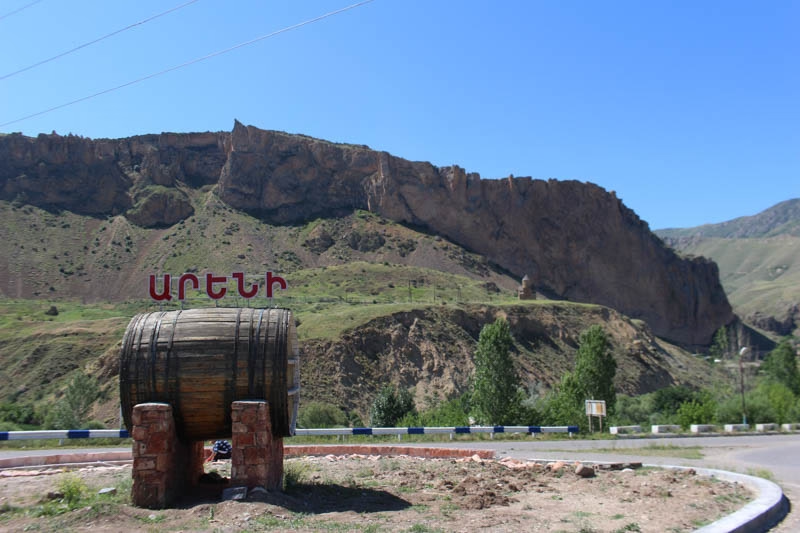
Noravank is, in our view, the most beautiful monastery in the country — it stands at the end of a narrow canyon between brick-red cliffs that practically glow at sunset. Go late in the afternoon; the difference compared to midday light is huge.
Along the way you’ll pass through Areni, the heart of Armenian winemaking. According to many (though not all — try saying this in Georgia) historians, this is where the world’s oldest known winery once operated. Stop and see the heart of Armenian wine production for yourself.
That claim rests on solid archaeological evidence: in the Areni-1 cave right by the village, archaeologists found a winepress roughly 6,100 years old, and in the same cave, the world’s oldest known leather shoe. Wineries in the area routinely offer tastings, and the Areni Wine Days festival falls in early October. The main variety is the red Areni Noir; among whites, Voskehat is worth trying.
Find accommodation in Vayots Dzor near Noravank
Lake Sevan
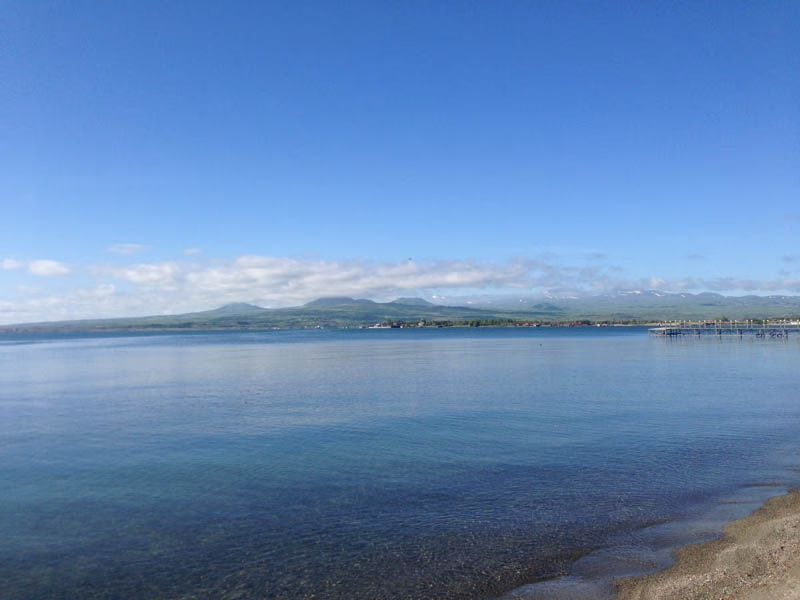
Take a swim in Armenia’s largest lake, sitting at 1,900 metres above sea level. You can spend a few days camped in one of the many lakeside campsites and visit a monastery or two while you’re at it.
Sevan is one of the largest high-altitude lakes in the world and serves as Armenia’s substitute for a missing coastline. Due to its elevation, the water only really warms up in July and August, and even then it stays fresh. The most visited spot is the peninsula with Sevanavank Monastery and views over the whole lake. Beaches and campsites are mainly on the western and northern shore — which is fortunate, since the eastern shore past Vardenis is advised against by travel advisories. The local speciality is grilled Sevan trout, ishkhan, along with crayfish.
Find accommodation by Lake Sevan
Dilijan
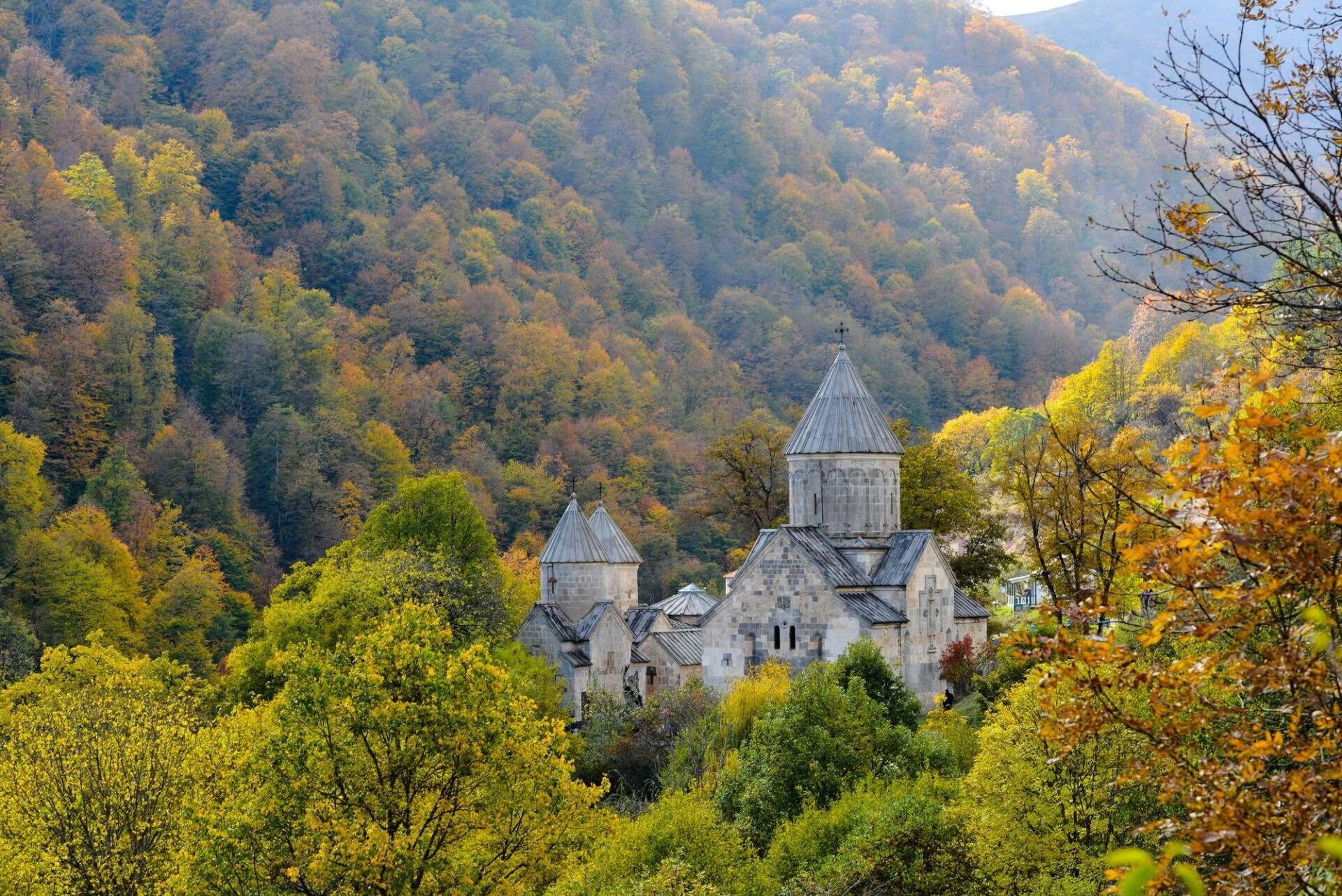
Nicknamed Armenian Switzerland, it’s the one corner of the country where deep deciduous forests grow instead of bare hills. Dilijan National Park is the best place for short hikes, with marked trails leading to the monasteries of Haghartsin and Goshavank. The town itself has a restored old lane full of craft workshops. It’s at its most beautiful in October, when the forests turn colour.
Amberd and Aragats
Visit an ancient 7th-century fortress that rises not far from Yerevan at an elevation of 2,300 metres, and take in a spectacular view of the surrounding landscape.
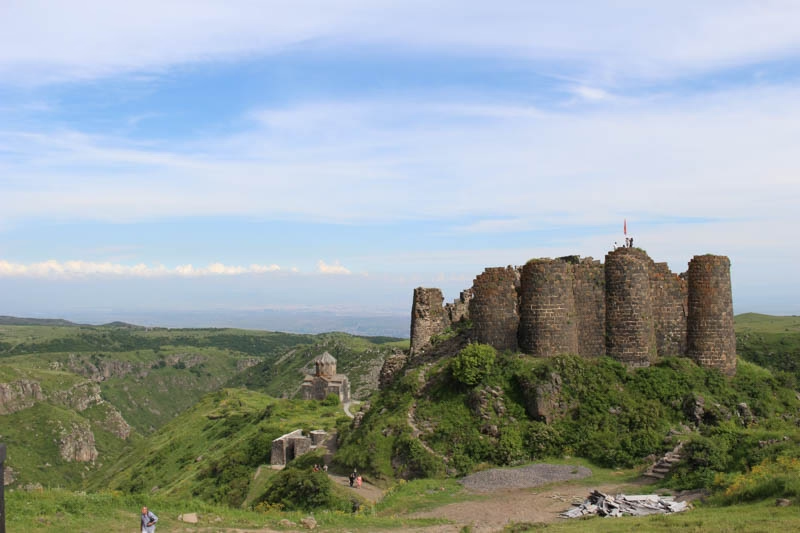
Above the fortress rises Aragats, Armenia’s highest mountain. It has four peaks arranged around a volcanic crater; the highest, the northern peak, reaches 4,090 metres, but most hikers climb the southern peak (3,888 m), which is undemanding and manageable for any reasonably fit hiker in 4–5 hours round trip. The climb starts at Lake Kari, at 3,200 metres, which is reachable by road.
Two things to keep in mind: the season only runs from July to September; outside that, snow covers the slopes and the road to Kari is often closed. And factor in the altitude — driving from Yerevan at 990 metres straight up to 3,200, you’ll definitely feel the difference. For the northern peak, hire a mountain guide.
Gyumri, Jermuk and the north
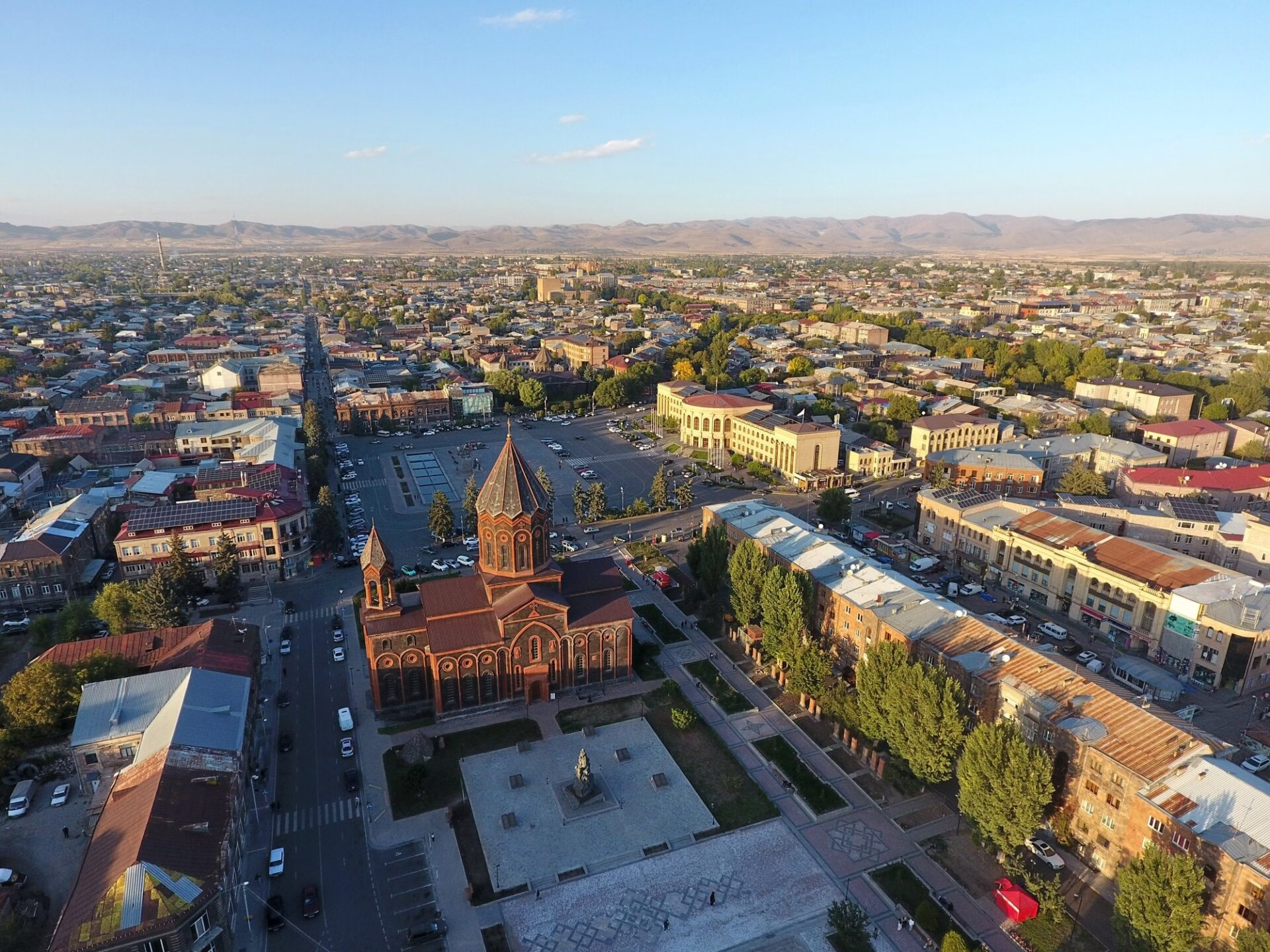
- Gyumri — the country’s second-largest city, two and a half hours by train from Yerevan. It has a completely different vibe from the capital: a preserved historic district of black tuff, a reputation as a city of culture and humour, and still-visible scars from the 1988 earthquake.
- Jermuk — a mountain spa town, known for its mineral water of the same name, a waterfall, and sanatoriums. Skiing here in winter.
- Haghpat and Sanahin — a pair of 10th-century monasteries in the north near Alaverdi, both UNESCO-listed. They lie on the route from Georgia, so they’re easy to fit in en route.
- Tsaghkadzor — the main ski resort, an hour from Yerevan, with a chairlift and slopes up to around 2,800 metres.
Trekking and mountains: the Transcaucasian Trail
Armenia is 90% mountainous, and in recent years it’s become a serious trekking destination. Much of the credit goes to the Transcaucasian Trail (TCT) — a long-distance route across the Caucasus, whose Armenian section was the first to be completed and has been fully walkable since 2022.
The Armenian section runs roughly 820 kilometres, from the northern border with Georgia down to Syunik in the south. Walking it in full takes 25 to 40 days. Most people just hike a section, though — the most popular are Dilijan National Park, the Geghama Mountains with petroglyphs and a crater lake, and the Vayots Dzor and Syunik regions.
Be realistic about expectations, though. This isn’t a densely marked trail network like the Alps. Sections run off-path and require your own navigation, marking is inconsistent, and infrastructure is essentially non-existent — you carry your own water, food and tent. Download offline maps and GPS tracks in advance. The season runs roughly from June to September, with snow lingering at higher elevations well into summer.
For those who’d rather not sleep in a tent, there’s an easier option: day loops from Dilijan to the monasteries, the climb up southern Aragats, or shorter hikes around Tatev and Goris, where you can always return to a guesthouse for the night.
Armenian cuisine
Eating in Armenia is cheap and really good. Yerevan and the bigger cities offer plenty of restaurants with wide-ranging menus. Smaller towns often have just a few restaurants offering one or two dishes. Small shops are everywhere too — at worst, you’ll always be able to find bread and cheese.
Street food isn’t especially widespread in Armenia. What passes for it are various kinds of filled pastries or shawarma (the term used for kebab across the former USSR), sold at plenty of stalls in bigger cities.
Armenian cuisine isn’t especially spicy — herbs are used far more than chilli. All kinds of meat are eaten, including lamb, typically served with potatoes or bread, sometimes bulgur or rice. Legumes are common too, and dairy products — butter, cheese and yoghurt — are hugely popular. Tomatoes and cucumbers are the go-to vegetables.
Many cuisines overlap here — traditional or common Armenian dishes are just as common in neighbouring countries. For some dishes, it’s genuinely unclear where they originated, and more than one nation claims them as part of its own heritage.
What to try:
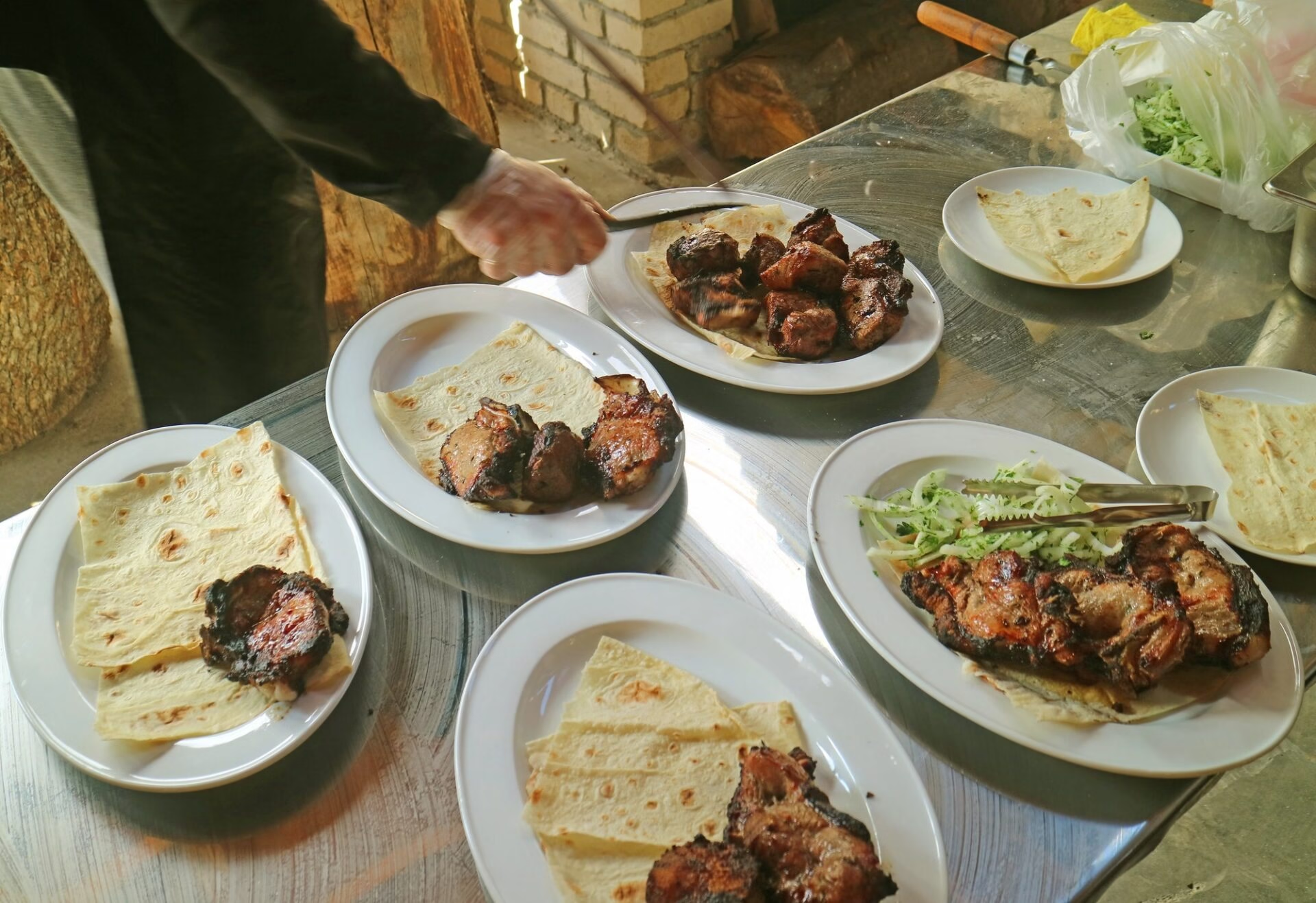
- Lavash is traditional Armenian bread — a very wide, long, soft flatbread that goes with basically anything, in any way. Usually it’s used to wrap food, or torn and eaten alongside a dish, or sometimes mixed straight into a dish. It’s inscribed on the UNESCO Intangible Cultural Heritage list.
- Tolma are traditional Armenian grape leaf rolls filled with lamb, beef or pork, onion, garlic, herbs and rice. There are countless variations around the world, from Greece to India, but Armenians claim this dish as their own.
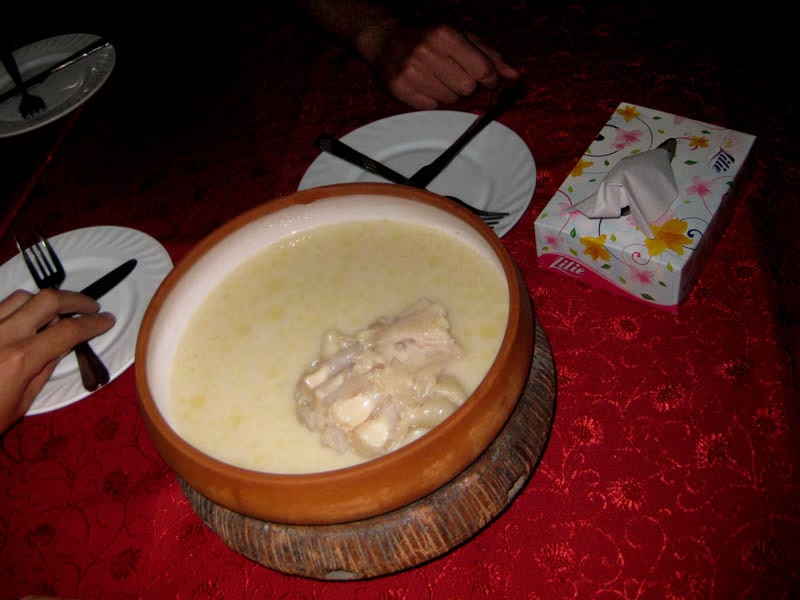
- Khash is today the national dish, though it originally started as food for the poor, used to keep warm in winter. Khash is made by boiling beef legs; once thoroughly cooked, garlic, vinegar, salt, lemon and other seasonings are added. Served with lavash.
- Khorovats is Armenian barbecue and a social event in one — meat and vegetables grilled over an open flame. If someone invites you to khorovats, cancel your plans.
- Shawarma is essentially a kebab.
- Shashlik is lamb, mutton, beef, pork or chicken grilled on skewers.
- Ghapama is a whole pumpkin stuffed with rice, dried fruit and nuts, then baked — a festive dish, especially around New Year.
- Ishkhan is Sevan trout, best grilled right by the lake.
- Gata is the best-known dessert — a sweet pastry filled with, for example, walnuts.
- Sujukh is a candy made from walnuts strung together and coated in thickened grape must, shaped into a sausage form.
- Among drinks, alcohol dominates — excellent Armenian wine or brandy. Aside from alcohol, Jermuk mineral water from the Armenian mountains is hugely popular.
Vegetarians have it better than they’d expect. Thanks to Orthodox fasting traditions, Armenia has an entire layer of meat-free cuisine — zhingyalov hats (a flatbread stuffed with a mix of up to twenty herbs), spas (yoghurt soup), lecho, bean and lentil dishes, pickled vegetables, chechil and lori cheeses, and mountains of fruit. Vegans will find it trickier, since dairy shows up absolutely everywhere. One word that helps is “lenten” (fasting) — locals will immediately know what you mean.
To drink, Armenia is synonymous with brandy (often called “cognac” locally — brands like Ararat and Noy), wine from the Areni Noir and Voskehat grapes, the fruit spirit oghi made from mulberries or cornelian cherries, the yoghurt drink tan, and thick surch coffee. If someone invites you to their table, expect toasts — they follow a set order, typically to family, peace, and the guests.
Where to stay in Armenia
Accommodation in Armenia is easy to find, and for most of the year you don’t need to book long in advance — the exceptions are July and August, and the area around Lake Sevan, which fills up in season.
In Yerevan, it’s worth staying in the centre, the Kentron district. It’s a small loop around Republic Square, the Cascade and Northern Avenue, from which you can walk almost everywhere and skip transport costs. Neighbourhoods further out are cheaper, but the price difference usually isn’t worth the lost time.
Outside the capital, a family-run guesthouse is your best option. They tend to be cheap, almost always include a home-cooked breakfast and often dinner too, and they’re where you genuinely connect with Armenia — hosts will sit you down at the table and want to know everything about you. Dilijan, Goris, Gyumri and around Sevan have plenty of them.
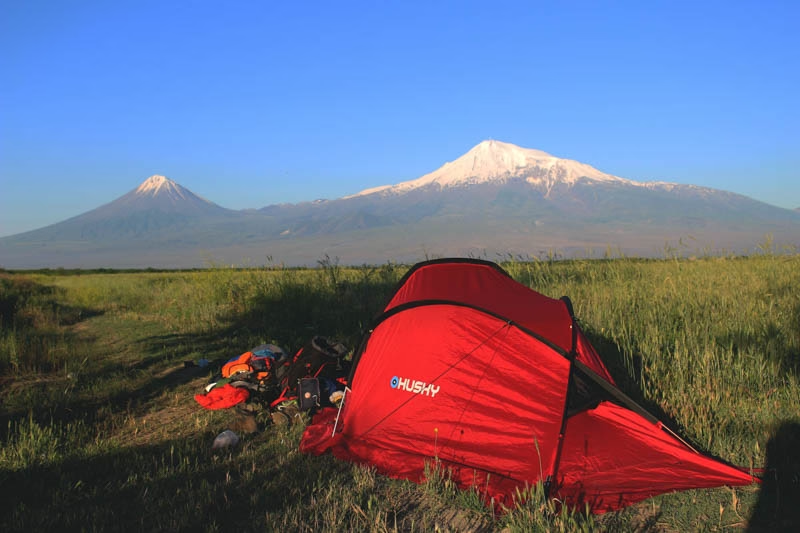
Camping is common in Armenia and pretty much unrestricted in the mountains. There are several paid campsites around Sevan, and elsewhere you can pitch a tent freely with a bit of common sense.
Browse accommodation options in Yerevan
Religion, holidays and traditions
Armenia became the world’s first Christian nation in the year 301, something Armenians are very proud of (alongside supposedly inventing wine and shoes). The majority of the population belongs to the Armenian Apostolic Church.
In churches, modest dress is required (covered shoulders and legs), and standard etiquette applies (no chewing gum, no loud behaviour). Photography tends to be frowned upon.
Armenians celebrate Christmas at the start of January, specifically on January 6. Another notable religious holiday is the Exaltation of the Holy Cross, which falls in September each year, though on a moving date. Vardavar is also a moving date — a nationwide water fight day fourteen weeks after Easter — falling on July 12 in 2026.
Armenians are proud of their country, history, and food and drink (wine, brandy). It’s best not to belittle any of it. The most sensitive topics are the Armenian Genocide from the early 20th century and the current political situation with Azerbaijan. While Armenians probably won’t bring up the genocide themselves, they may well start telling you about the war and injustices (partly to make sure you’re on their side). It’s best not to dig too deep into such conversations, and don’t bring up these topics yourself.
Since losing Nagorno-Karabakh in 2023, this topic has become even more sensitive than before. Almost every family knows someone who lost someone or had to leave their home. Listening is fine, judging isn’t. Tread just as carefully around opinions on Russia and the EU — society is divided on this, and people tend to hold strong views.
Armenians are extremely hospitable and friendly — don’t take advantage of it. People will drive you around for free, feed you, invite you into their homes. Of course you shouldn’t refuse (you might offend someone), but always find some kind of limit. If someone hosts you at home, cooks you dinner and breakfast, and gets you a little drunk along the way, at least give them something as a gift. Leave at the right time.
Health, vaccinations and water
Armenia doesn’t require any mandatory vaccinations for entry. Among recommended ones, Hepatitis A makes sense for most travellers. Vaccination against typhoid, rabies and Hepatitis B is only recommended in specific situations — longer stays, trips off the tourist track, or work with animals. For a standard two-week trip around the monasteries, you don’t need them. Get exact advice from a travel medicine clinic based on your trip type.
Tap water is drinkable everywhere in Armenia, thanks to excellent mountain sources found across the country. We also drank straight from streams and springs without any issues, though we can’t confidently recommend that to everyone. In Yerevan, you’ll also come across pulpulaks — small public drinking fountains, hundreds of them across the city, commonly used for drinking. They’ll save you a lot of money on bottled water.
There are some mosquitoes in Armenia to a degree, but malaria risk is negligible. What to genuinely watch out for:
- Heat and sun — Yerevan regularly tops 35°C in summer, and the basin traps humidity. Drink plenty, and stay in the shade around midday.
- Altitude — you can drive from Yerevan up to 3,200 metres in two hours. Head up Aragats well-rested and take your time.
- Stray dogs — found everywhere and mostly harmless, but around villages, packs are best given a wide berth.
- Healthcare — decent in Yerevan, with private clinics at Western standards; rural areas are patchier. European health insurance cards don’t cover Armenia, so travel insurance is your only protection against a hefty bill.
Pharmacies are found in every town, and many medications are available without a prescription. If you’re planning a trek or going into the mountains, check that your short-term travel insurance covers mountain hiking and any potential mountain rescue.
Practical information
- Language: Armenian, with its own alphabet dating from 405 AD. Russian remains the main second language, spoken by practically everyone over thirty. English is common among the younger generation in Yerevan and people working in tourism, but rare in rural areas. It’s worth downloading an offline translator app.
- Plugs: same as continental Europe (type C/F, 230V), no adapter needed.
- Time zone: GMT+4 year-round — Armenia doesn’t observe daylight saving. That puts it two hours ahead of Central European summer time, three hours in winter.
- SIM cards and data: the operators are Viva-MTS (best coverage), Ucom and Beeline Armenia. A tourist package with unlimited data costs 2,500 AMD (~€6) for 15 days with Viva-MTS or Ucom. You can buy a SIM at the airport or in the city; you’ll need your passport. An eSIM is an alternative you can set up before you even leave home.
- Wi-Fi is available in every hotel and most restaurants and cafés.
- Emergency number: 911, with 112 also working.
A few useful words (phonetic spelling):
- Barev dzez — hello
- Shnorhakalutyun — thank you (the shorter and more common version is merci, borrowed from French)
- Khndrem — please / you’re welcome
- Ayo / voch — yes / no
- Inch arzhi? — how much does it cost?
- Vortegh e…? — where is…?
- Kenats! — cheers
- Bari akhorzhak — bon appétit
- Tsavt tanem — literally “let me take away your pain,” an Armenian expression of affection you’ll hear constantly
- Ts’tesutyun — goodbye
Itineraries: what to fit in 5, 10 and 14 days
5 days — Yerevan and surroundings
The shortest version that still makes sense. You can do it all from Yerevan without changing base, using public transport and taxis.
- Day 1 — Yerevan: Republic Square, the Cascade, Vernissage (on a weekend), singing fountains in the evening
- Day 2 — Yerevan: Matenadaran, Tsitsernakaberd, GUM market, brandy factory
- Day 3 — Garni, the Symphony of Stones and Geghard
- Day 4 — Khor Virap early morning for Ararat, Etchmiadzin and Zvartnots in the afternoon
- Day 5 — Lake Sevan and Sevanavank, with Dilijan on the way back
10 days — the classic loop
The best balance of time and experiences. Ideally with a rental car, though it’s doable with shared minibuses too — just plan around morning departures.
- Days 1–3 — Yerevan and day trips as above
- Day 4 — drive north, Haghpat and Sanahin monasteries, overnight in Dilijan
- Day 5 — Dilijan National Park, hike to Haghartsin
- Day 6 — Lake Sevan, western shore, swimming and Sevanavank
- Day 7 — drive south via the Selim Pass, Noravank in evening light, overnight in Areni or Yeghegnadzor
- Day 8 — wineries in Areni, drive to Goris
- Day 9 — Tatev and the cable car (not on a Monday!)
- Day 10 — return to Yerevan
14 days — Armenia and Georgia
Combining both countries in one trip makes the most sense, since the border is open and crossing is easy. You can even do it as an “open jaw” trip — fly into Yerevan and out of Tbilisi or Kutaisi.
- Days 1–9 — the Armenian loop as above, just at a more relaxed pace
- Day 10 — travel from Yerevan to Tbilisi (shared minibus or overnight train, 6–10 hours)
- Days 11–14 — Tbilisi, Kazbegi or Kakheti
If you have a month and enjoy walking, the biggest highlight would be swapping part of the loop for a section of the Transcaucasian Trail — for instance, the Geghama Mountains or Vayots Dzor.
Frequently asked questions
Is Armenia safe for tourists?
Yes, the vast majority of the country is safe for tourists, including Yerevan, Lake Sevan, Dilijan, Gyumri and all the main monasteries. The exception is roughly a 15-kilometre strip along the border with Azerbaijan, which Western government travel advisories warn against visiting, even for a simple pass-through.
Nagorno-Karabakh has been inaccessible from Armenia since 2023. Street crime is low, and Armenia is one of the most pleasant countries in the region for solo female travellers.
Do I need a visa for Armenia?
No. Citizens of EU countries, the UK, US, Canada, Australia and many other countries can stay in Armenia visa-free for 180 days within one year — you just need a passport stamp on arrival or at the border. You need a passport; you cannot enter Armenia with just a national ID card.
A formal requirement to register with the police exists on paper, but it’s not enforced in practice, and hotels handle it automatically anyway.
When is the best time to visit Armenia?
The best months are May, June, September and early October. June and September bring dry weather, long days and pleasant temperatures.
July and August regularly push Yerevan to 35–40°C, but it’s the only time you can swim in Lake Sevan and climb Aragats. From November to March, snow covers the mountains and many roads close, though accommodation is at its cheapest.
How do I fly to Yerevan?
The main gateway is Zvartnots Airport (EVN), about 12 kilometres from central Yerevan. Wizz Air has a base here and, together with domestic carrier FlyOne Armenia, flies direct to a number of European cities, though routes change season to season, so check current schedules.
Connecting flights most commonly go via Istanbul, Warsaw, Vienna or Athens, and via Dubai or Doha from the Gulf. A cheaper alternative is flying into Georgia and continuing overland — from Tbilisi to Yerevan there’s both a shared minibus and an overnight train. Most budget flights land in Yerevan after midnight, so plan your first night’s accommodation accordingly.
How much does a week in Armenia cost?
On a shoestring — dorms, shared minibuses, food from shops — a day costs roughly €22–32. Standard travel with guesthouses and restaurants runs €44–80 per day.
A week in Armenia including flights comes to roughly €480–600, or under €280 on a very tight budget. The biggest one-off costs are the flight and any car rental.
How many days do you need in Armenia?
Five days is enough for Yerevan and its closest surroundings — Garni, Geghard, Khor Virap, Etchmiadzin and Sevan. Ten days is ideal for a classic loop that also includes Dilijan, Noravank and Tatev in the south.
Fourteen days makes the most sense combined with Georgia, since the border between the two countries is open and easy to cross.
Can I travel overland from Armenia to Turkey or Azerbaijan?
No. The border with Turkey has been closed since April 1993, and despite normalisation talks, it still hasn’t opened for regular tourists. The border with Azerbaijan is closed too.
The only practically usable border is with Georgia, mainly the Bagratashen crossing on the Tbilisi–Yerevan route. The crossing into Iran in the far south is technically open, but Western governments warn against travel to Iran and are urging citizens to leave, so don’t plan on using it in 2026.
Combining Armenia and Turkey in a single overland trip therefore isn’t possible without a detour through Georgia.
Will I get by in Armenia with English?
In Yerevan and in tourism-related services, usually yes, especially with the younger generation. Outside the capital, English is rare.
Russian remains the main second language, spoken by practically everyone over thirty. It’s worth downloading an offline translator and learning a few basic phrases — Armenians will appreciate the effort.
Where to find more information
The official Armenian tourism website — destinations, transport, accommodation, and more.
Lonely Planet
Some people still like a good old-fashioned paper guidebook.
Travel is my great passion — at university I got the chance to study for half a year in Taiwan, I worked for a few months in the US, and for the past 2 years I’ve worked as a tour guide, mainly in Southeast Asia, Sri Lanka, Nepal, China and Mongolia. I hitchhiked across Armenia over several weeks with a friend, and I simply fell in love with the country. You can follow me on my website Patrik Balcar, on Instagram @balcarpatrik, and on Facebook.
Editor’s note: we expanded and updated Patrik Balcar’s original article in August 2026 — we verified prices, transport connections, entry requirements and the security situation as of that date. Always check the current travel advisory from your own government before your trip.