This post is also available in:


Thanks to its location and world-class airport, Singapore is often called the “gateway to Asia,” and many travelers spend just a few hours in transit before heading onward. But this tiny city-state has far more to offer than meets the eye — four cultures on one island, Michelin-starred street food, and the best airport in the world, where you could easily spend a full day.
Why Visit Singapore
Singapore sits at a very convenient spot on the map, so if you’re traveling around Asia, chances are your route will take you through here at some point. If you have a layover, don’t be afraid to leave the comfort of Changi Airport and go explore. Singapore isn’t just an ultramodern oasis of the developed world surrounded by much less developed countries in Southeast Asia — it’s also a place where countless cultures collide, together forming a textbook example of multiculturalism. It shows in the lifestyle, the architecture, the food… basically everything. And the best part is, it all works.
In terms of size, Singapore is slightly smaller than New York City and home to around 6 million people. In practice, that means you can get between any two interesting spots in under 45 minutes by metro. It’s one of the few major destinations you can genuinely explore properly in just three days.
How to Get to Singapore
Singapore has a single international airport, Changi, and it’s also one of the biggest aviation hubs in Asia — handling over a hundred airlines with direct connections to roughly 150 destinations worldwide. The home carrier, Singapore Airlines, long ranked among the world’s best airlines, flies direct from many European cities, including London, Paris, Frankfurt, Munich, Zurich, Milan, Barcelona, Amsterdam, and Copenhagen. Its budget sister airline, Scoot, runs a direct route from Vienna on a Dreamliner, taking around 12 hours.
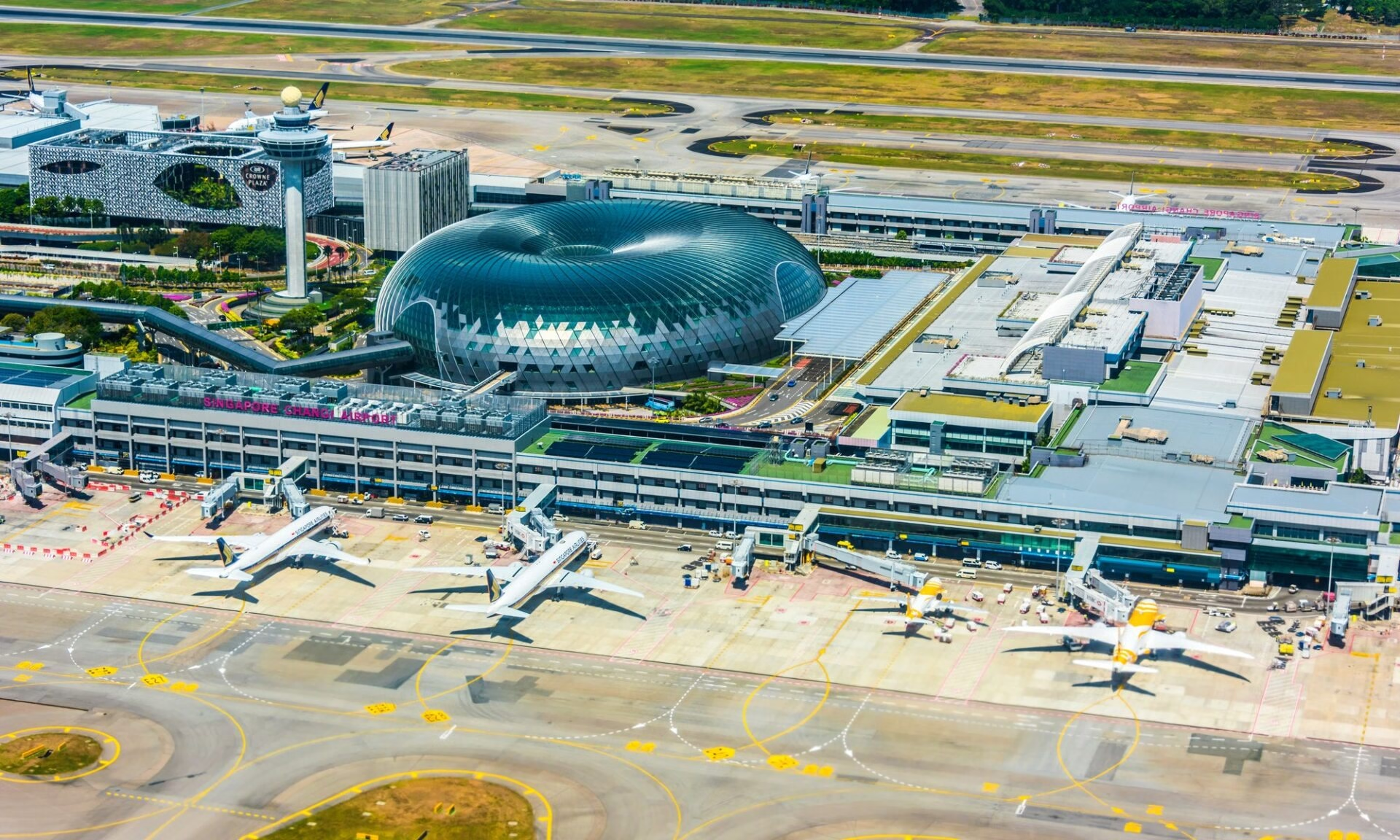
Changi: The World’s Best Airport, With a Waterfall Inside
Changi isn’t just a transit point — it’s an attraction in its own right, whether you have an eight-hour layover or you’re heading straight into Singapore. At its heart is Jewel, a glass dome connected to the terminals, with the Rain Vortex falling in the center — a forty-meter indoor waterfall, the tallest in the world. Entry is free, it’s open daily from 10:00 to 22:00, and there’s an evening light show at 19:30, 20:00, and 21:00, plus an extra show at 22:00 on weekends.
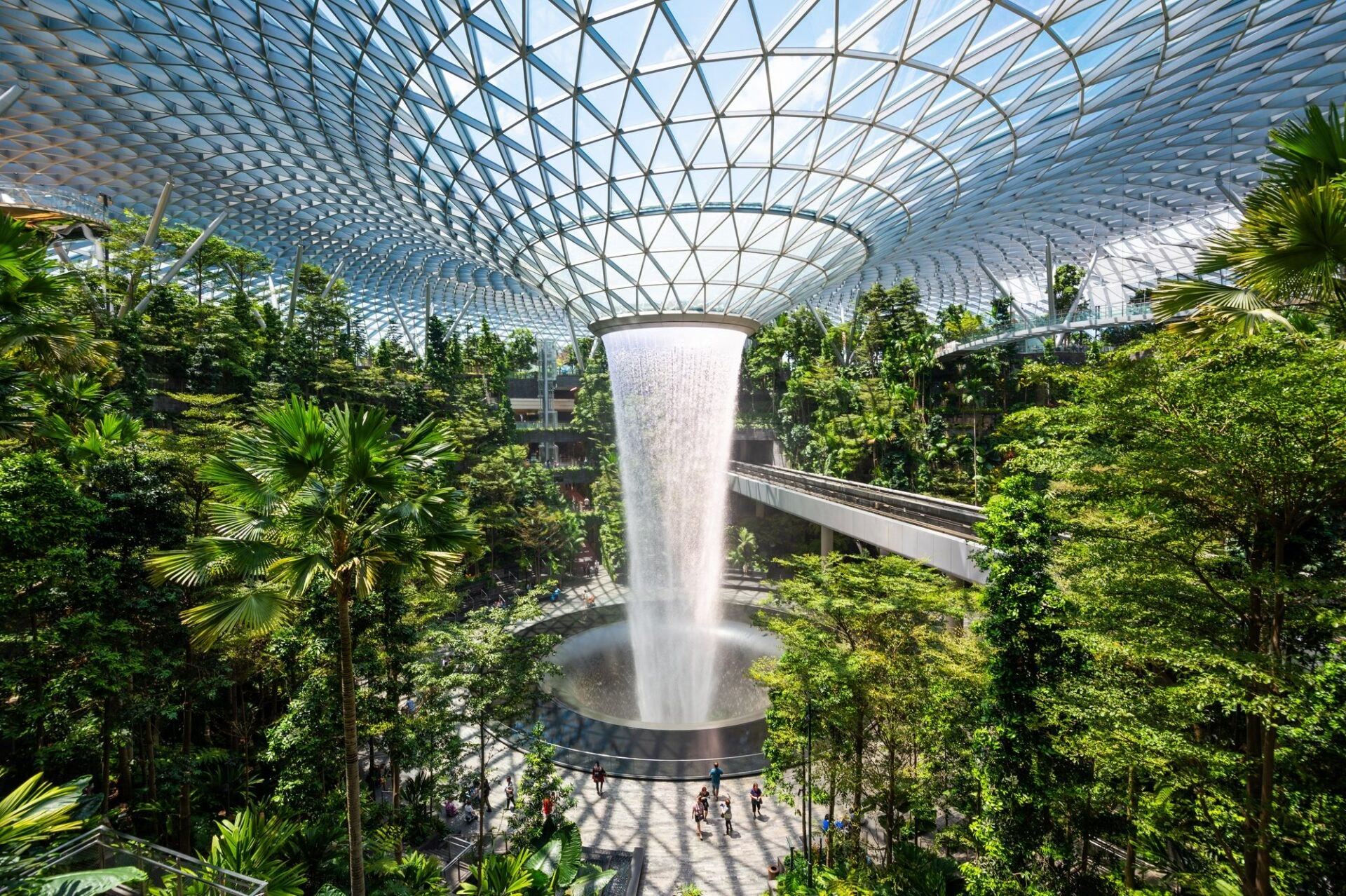
Wrapped around the waterfall is Forest Valley, a four-story garden that’s also free to walk through. You only pay for the Canopy Park on the top level — a mirror maze, nets suspended above the hall, and rope bridges. Basic entry starts around 10 SGD, with individual attractions costing extra.
Practical note for transit passengers: Jewel sits beyond passport control, so on a short layover you can’t reach it without officially entering the country. If your layover is longer than about six hours and you’re eligible for visa-free entry, it’s worth clearing immigration, visiting Jewel, and even hopping on the metro into the city center.
Getting From the Airport to the City Center
The metro (MRT) runs directly from the terminals — you take it to Tanah Merah, transfer to the green East West Line, and the whole trip to downtown takes 35 to 40 minutes for less than 2 SGD. A taxi covers the same route in 20 to 30 minutes but costs 25 to 45 SGD including the airport surcharge, which rises to 8 SGD between 17:00 and midnight. The metro from the airport runs roughly from 5:30 to midnight; if you land later, your options are a night bus or a taxi.
Overland From Malaysia
The only alternative to flying is traveling overland from neighboring Malaysia — by bus or train, typically from Kuala Lumpur or the border town of Johor Bahru. With buses especially, be careful: an enormous number of people cross the Causeway border every day, and passport control queues can be brutal. It’s not unusual for a passenger to miss their bus while stuck in line. Plenty of bus companies run this route, so check in advance that the one you pick is reliable. Before heading to the border, check out our Malaysia guide for tips on where to stop along the way.
The Causeway queues should soon be a thing of the past thanks to the RTS Link, a four-kilometer railway connecting Singapore’s Woodlands North with Bukit Chagar in Johor Bahru. The crossing will take five minutes, fares should run around 5 to 7 SGD, and service is expected to launch in January 2027. Until then, budget as much as two hours for the border crossing — more on weekends.
From Changi, you can hop cheaply almost anywhere in Southeast Asia — budget airlines fly here from across the region. The most common add-ons are Bangkok, a two-hour flight away, the Philippines, about three and a half hours, or Indonesia, practically next door.
Best Time to Visit Singapore
Sitting almost right on the equator, Singapore has no real seasons — temperatures stay consistent year-round, and high, hovering around 30°C (86°F). There’s only a distinction between the dry season, roughly March to August, and the rainy season from September to February, though neither is entirely predictable. The heaviest rain falls from November to January.
Even during the dry season, rain shows up, and regardless of season, it mostly falls in the evening or at night. Humidity sits around 80% year-round, so a 30°C day here hits much harder than a 30°C day at the beach. Plan around that — two big outdoor attractions a day is the ceiling; slot something air-conditioned in between.
If you can choose your dates, February to April offers the best mix of lowest rainfall and more bearable humidity.
Haze: When the Air Quality Is at Its Worst
During the dry season, so-called haze can appear — smog drifting in from fires in nearby Indonesia, which worsens air quality and reduces visibility. It’s most common from August to October. The government tracks current conditions with the PSI index, available online and via a mobile app; readings above 100 mean sensitive groups should limit time outdoors. Haze can only be forecast roughly, so check a few days ahead.
Holidays and Major Events
The timing of your trip can completely change the city’s atmosphere — and hotel prices too:
- Chinese New Year (late January/early February) — Chinatown at its most spectacular, though many businesses close for several days.
- Hari Raya Puasa (end of Ramadan) — night markets in Kampong Glam and the best food of the year.
- Deepavali (October/November) — Little India lights up, with celebrations lasting several weeks.
- Singapore Grand Prix — a night F1 race on the Marina Bay Street Circuit, running this year from October 9 to 11, with a sprint race for the first time. Downtown accommodation is two to three times more expensive that week and needs booking months in advance.
Visas and Entry Requirements
Citizens of the EU, UK, and US get visa-free entry to Singapore for 90 days. Your passport must be valid for at least six months beyond your planned stay, and it’s smart to have proof of an onward flight out of Singapore — border officials ask to see it fairly often.
The paper immigration card you once had to hand back on departure no longer exists. It’s been replaced by the electronic SG Arrival Card (SGAC), which also includes a health declaration. You can submit it up to three days before arrival (including the day of arrival), and it’s free — either through the ICA’s official e-service or the MyICA app.
Watch out for paid third-party sites. Commercial websites that charge dozens of euros to “fill out” the SGAC often show up high in search results. The ICA explicitly doesn’t endorse them — you can complete the form yourself in five minutes.
Always check current requirements with your home country’s foreign ministry and directly with Singapore’s ICA.
How Much Does Singapore Cost
Everyone will tell you Singapore is expensive. From my own experience, that reputation is a bit overblown. Sure, Singapore costs noticeably more than Thailand or neighboring Malaysia, but it’s far from being outrageously priced. Unless you’re specifically chasing luxury — and there’s plenty of it here — you can get by on a very tight budget.
Currency, Payments, and Taxes
The currency is the Singapore dollar (SGD), worth roughly €0.68. There are plenty of currency exchange counters around the city and they’re generally fair, but I’d only recommend exchanging cash if you’re carrying some Southeast Asian currency, especially Malaysian ringgit. You can withdraw cash directly from ATMs, which are everywhere and have no trouble with foreign cards.
Card payments are standard in Singapore even in places you wouldn’t expect — including most hawker center stalls. Cash is mainly useful for small purchases and older stalls. Add 9% GST to listed prices; restaurants often also add a 10% service charge, so your bill can end up a fifth higher than the menu suggests. At hawker centers, there’s no extra charge, and tipping isn’t expected.
Ballpark Prices
- Accommodation: a hostel bed from around €16, a double room in a standard hotel from about €65. Just for perspective: a room at Marina Bay Sands runs €400 a night and up.
- Food: hawker center meal €3.50–6.50, a regular restaurant from €14.
- Drinks: bottled water €1, a beer at a bar €8 and up (alcohol is heavily taxed here).
- Public transport: one metro ride €0.85–1.70 depending on distance.
- Gardens by the Bay: both conservatories together around €30, the outdoor gardens free.
- Marina Bay Sands SkyPark: 32 SGD daytime, 36 SGD evening (roughly €21–24).
- Universal Studios: from 83 SGD, roughly €55.
Daily Budget Estimates
Excluding flights and accommodation, per person:
- Budget — hawker centers, metro, only free attractions: €20–28 a day.
- Mid-range — one paid museum or garden entry a day, occasional restaurant meals: €48–72.
- No holding back — rooftop cocktails, Universal Studios, taxis: €120 and up.
The biggest savings aren’t in accommodation, but in food. Eat at hawker centers and three meals a day will cost you about the same as a single main course at a Marina Bay restaurant.
Getting Around Singapore
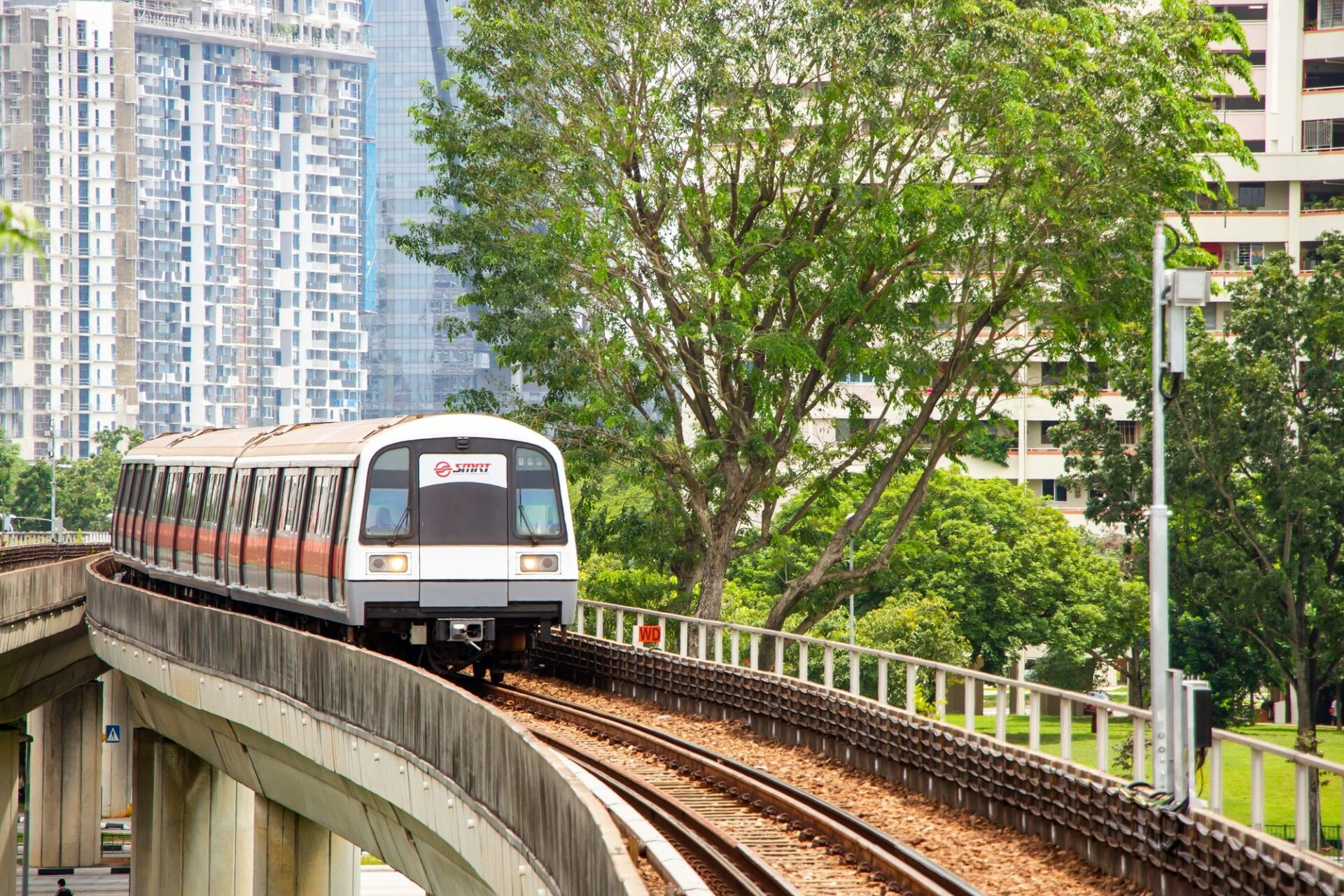
Singapore isn’t just a small country — it’s a fairly small city too. All the interesting spots are clustered close together downtown, so you can comfortably get anywhere by metro, bus, or on foot.
The MRT metro is clear, comfortable, and cheap. A single ride costs 1.28 to 2.57 SGD depending on distance, and transfers within 45 minutes count as one journey. The easiest option is to tap your contactless payment card directly at the gate — the SimplyGo system calculates the fare automatically. Foreign cards are charged a 0.60 SGD daily administrative fee.
Don’t waste money on the multi-day Singapore Tourist Pass — you won’t realistically ride enough to break even. A one-day pass costs 17 SGD, a five-day pass 45 SGD, while a regular ride costs around two dollars. To make the one-day pass worthwhile, you’d need to take about ten rides in a single day.
Buses run everywhere in huge numbers and are a solid option, even if they’re a bit less intuitive for tourists than the metro. Stops are well marked and connections frequent. You pay with the same card as on the metro.
Taxis are fairly reliable, but ride-hailing apps tend to be cheaper. Uber left Southeast Asia back in 2018, and Grab took over as the top player here today. Alongside it, you’ll find Gojek, TADA, and CDG Zig — for longer rides, it’s worth comparing prices, since the differences can be significant.
Don’t rent a car. Singapore limits the number of vehicles through quotas and the ERP toll system, so both rental fees and parking are absurdly expensive — and with metro coverage this dense, a car would be useless anyway.
Food: Three Cuisines and Hawker Centers
The three main ethnic groups that make up Singapore’s population are Chinese, Indian, and Malay. So it’s no surprise that — food-wise — you basically get a choice of three cuisines: Chinese, Indian, and Malay.
As a young country whose culture is still taking shape, Singapore doesn’t really have an original, homegrown traditional dish (and indeed, “Singapore noodles” share nothing but a name with the country — you won’t find them on a menu here). Instead, you get Singaporean spins on dishes originating from those same three cultures.
From the Chinese side there’s Hainanese chicken rice and Hokkien mee (noodles with meat in a distinctive sauce); from Indian cuisine, the popular rice dish biryani or the classic breakfast flatbread roti; and Malay food is represented by laksa soup and nasi lemak (rice cooked in coconut milk, served on a banana leaf with various sides). But since Singapore is such a genuine multicultural hotspot, you’ll find food from every corner of the world here too. Similar flavors, just with local variations, await a bit further south in Indonesia.
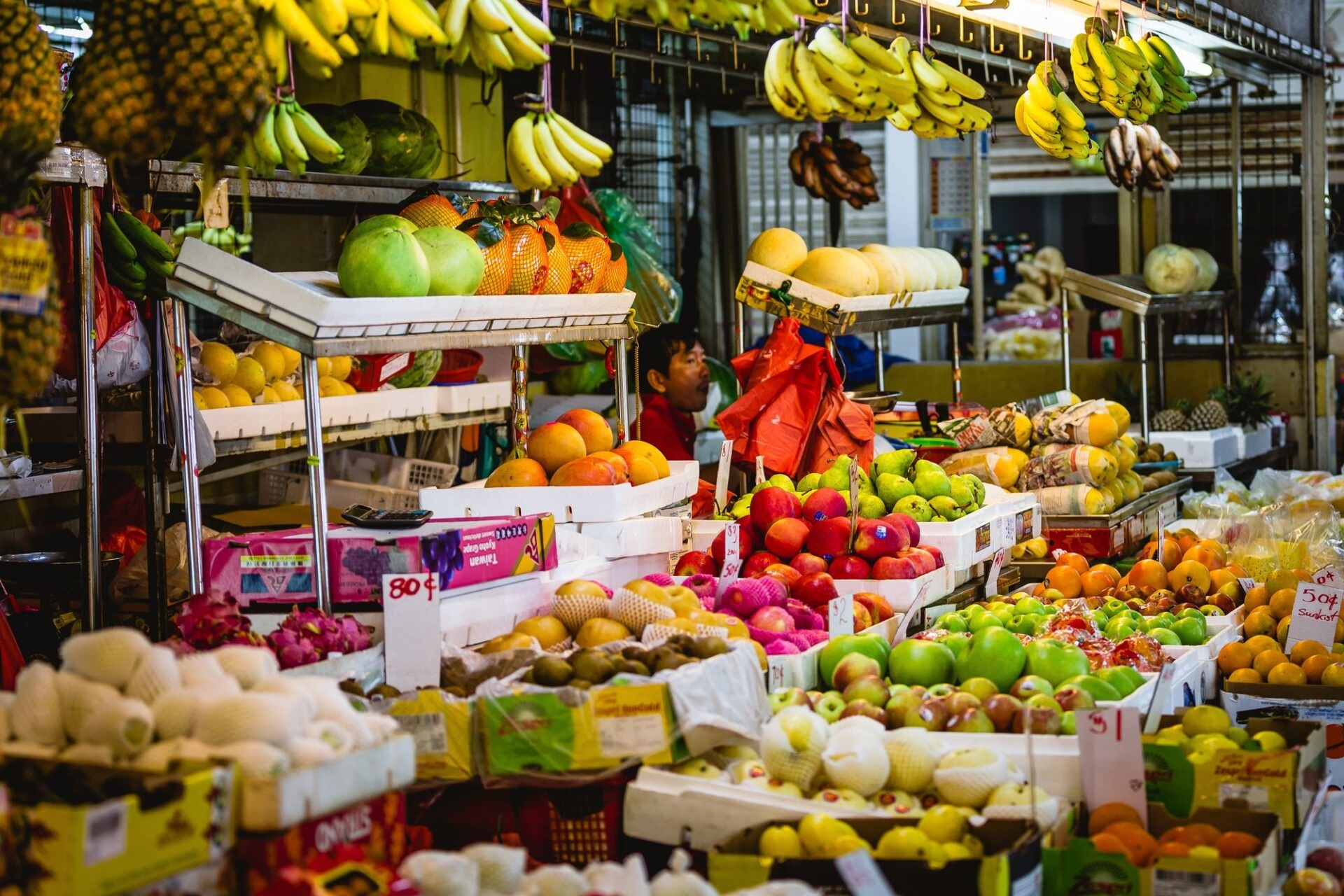
The best — and cheapest — place to eat is at so-called hawker centers, food courts packed with dozens of small vendors. These centers have largely replaced street food carts, offering more comfort and better hygiene while staying authentic. UNESCO has recognized them as Intangible Cultural Heritage since 2020.
Where to hawker:
- Maxwell Food Centre (Chinatown) — the most visited, with a permanent queue for Tian Tian Hainanese Chicken Rice.
- Lau Pa Sat (financial district) — a 19th-century cast-iron hall; in the evening, the adjacent street closes off and satay gets grilled right outside.
- Old Airport Road Food Centre — the favorite among locals, with the fewest tourists.
- Tekka Centre (Little India) — the best address for Indian and Malay food.
- Chinatown Complex — over 200 stalls, the biggest in the country.
What to try, wherever you end up:
- Hainanese chicken rice — poached chicken with rice cooked in chicken broth, the closest thing to a national dish.
- Chilli crab — crab in a sweet-spicy sauce, the one pricey item on this list (expect 60 SGD and up) and the one dish worth actually sitting down at a restaurant for.
- Laksa — coconut noodle soup, with Singapore’s version noticeably spicier than the Malaysian original.
- Kaya toast with two eggs — the national breakfast: toast with coconut jam, served with soft-boiled eggs, soy sauce, and white pepper. Around 5 SGD.
- Char kway teow — stir-fried flat noodles, greasy and absolutely essential.
- Ice kacang — a mountain of shaved ice with syrup, beans, and corn. Sounds strange, but in Singapore’s heat it’s exactly right.
Given the number of vegetarians here — whether by choice or for religious reasons — eating meat-free in Singapore is no problem at all. Indian cuisine in particular offers vegetarian versions of almost every dish.
On the flip side, thanks to the influence of cultures where quite literally everything gets eaten, you’ll sometimes spot strange things on menus, like shark fin soup. Definitely skip it — even Singaporeans themselves increasingly recognize it’s not a delicacy but an ethical problem.
Top Singapore Attractions
Marina Bay Sands and Gardens by the Bay
The iconic building houses a luxury resort, complete with a high-end shopping mall and a massive casino. On its ship-shaped rooftop sits the world’s most famous infinity pool — though it’s only accessible to hotel guests. Everyone else can head up to the SkyPark Observation Deck on the 56th floor, where entry costs 32 SGD during the day and 36 SGD during evening peak hours.
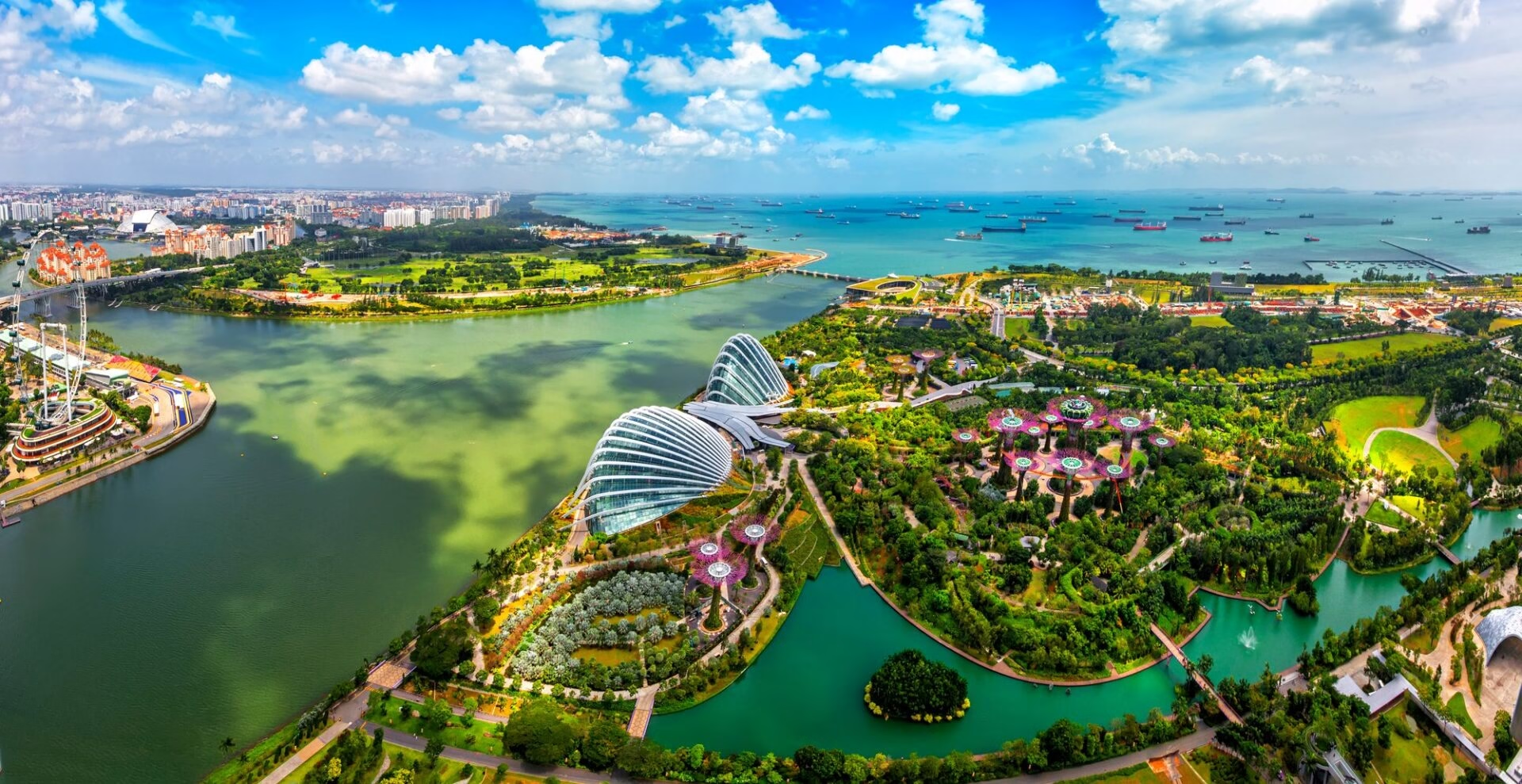
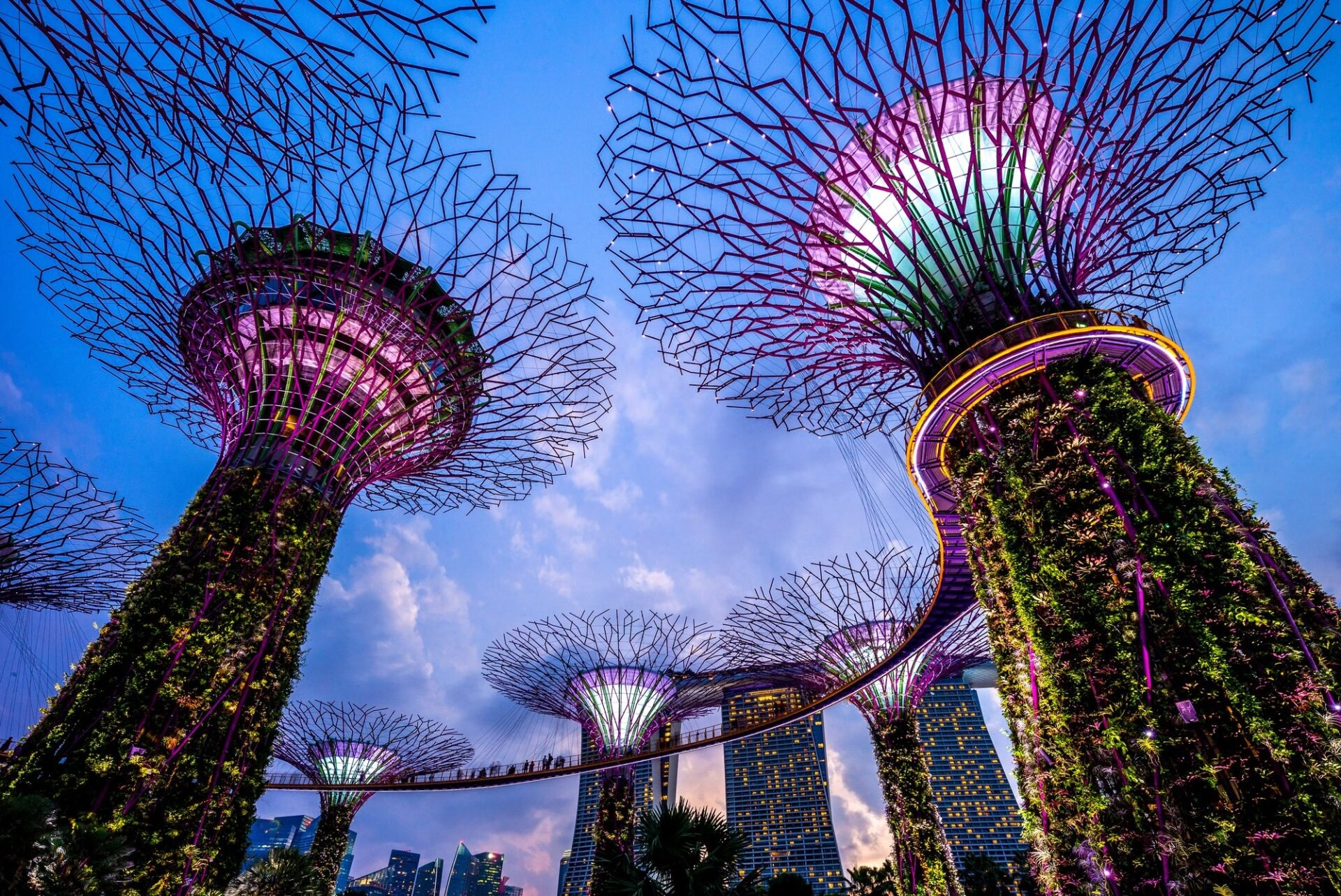
Right behind the hotel sits the famous Gardens by the Bay, where nature meets modern architecture. The outdoor gardens and Supertree Grove are free; you pay for the Flower Dome and Cloud Forest conservatories, the Supertree Observatory viewpoint, and the OCBC Skyway walkway through the Supertree canopies. Open daily from 9:00 to 21:00.
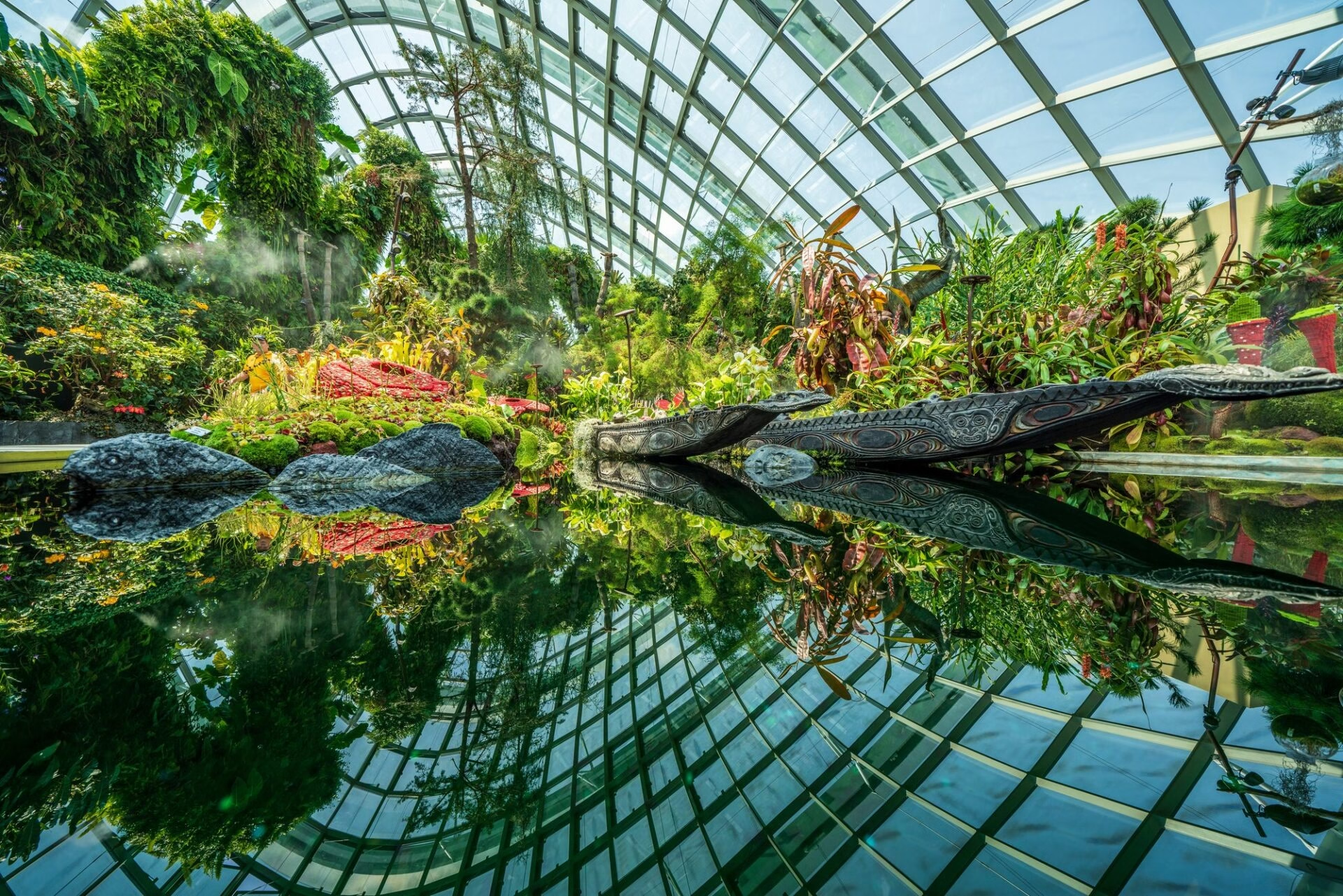
Every evening, the gardens and the area in front of Marina Bay Sands host a light show set to music, drawing tourists and locals alike — and it’s free. The best value-for-experience combo is watching the free Supertree Grove at sunset, then visiting one of the conservatories; of the two, Cloud Forest with its indoor waterfall is the more impressive.
ArtScience Museum
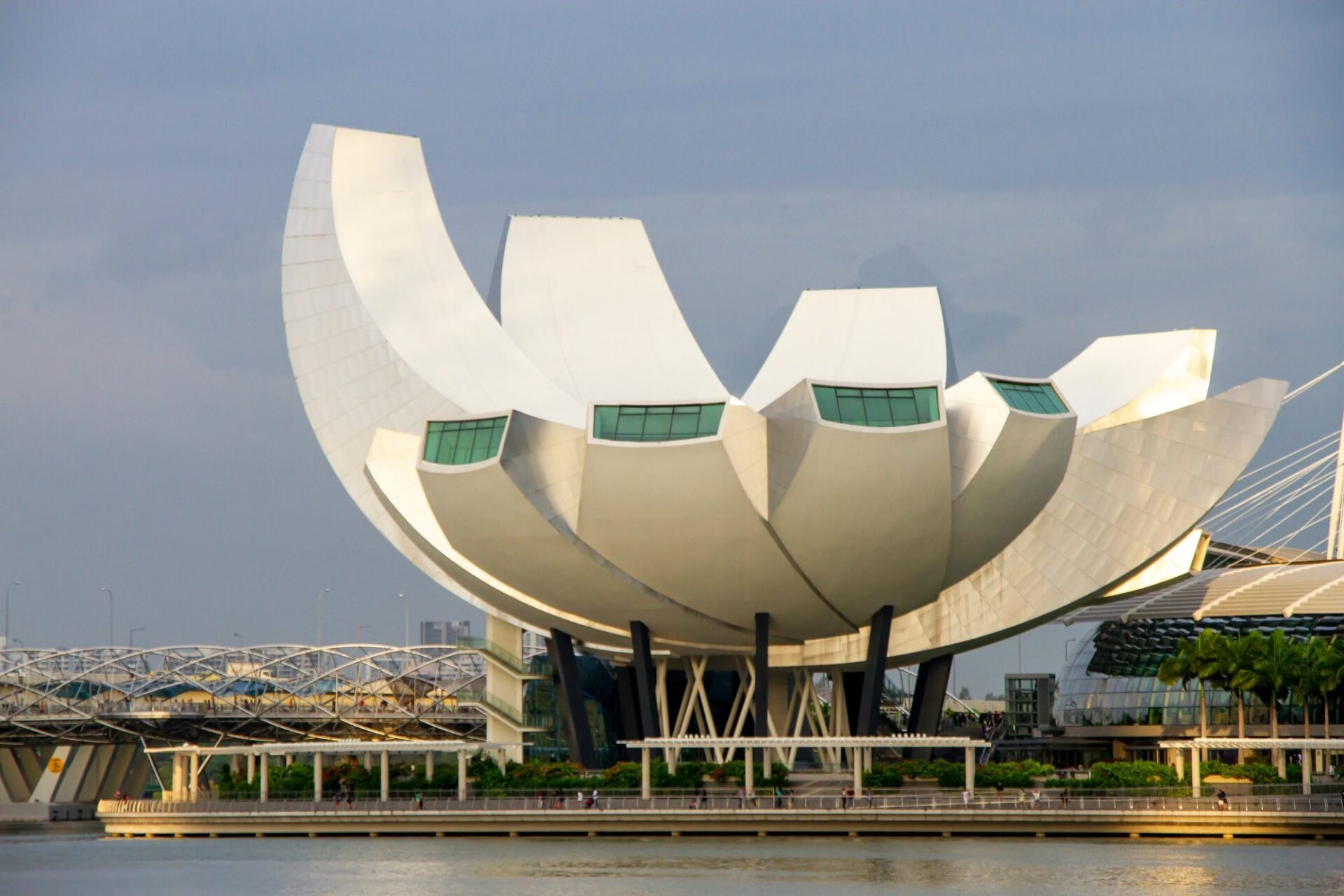
Next to Marina Bay Sands stands a striking lotus-shaped building housing the ArtScience Museum. It hosts exhibitions on all sorts of topics, but the standout is Future World, a high-tech light exhibit — digital installations you can move through and that react to touch. It’s one of the few attractions in the city worth booking ahead for, since weekends get packed.
Sentosa
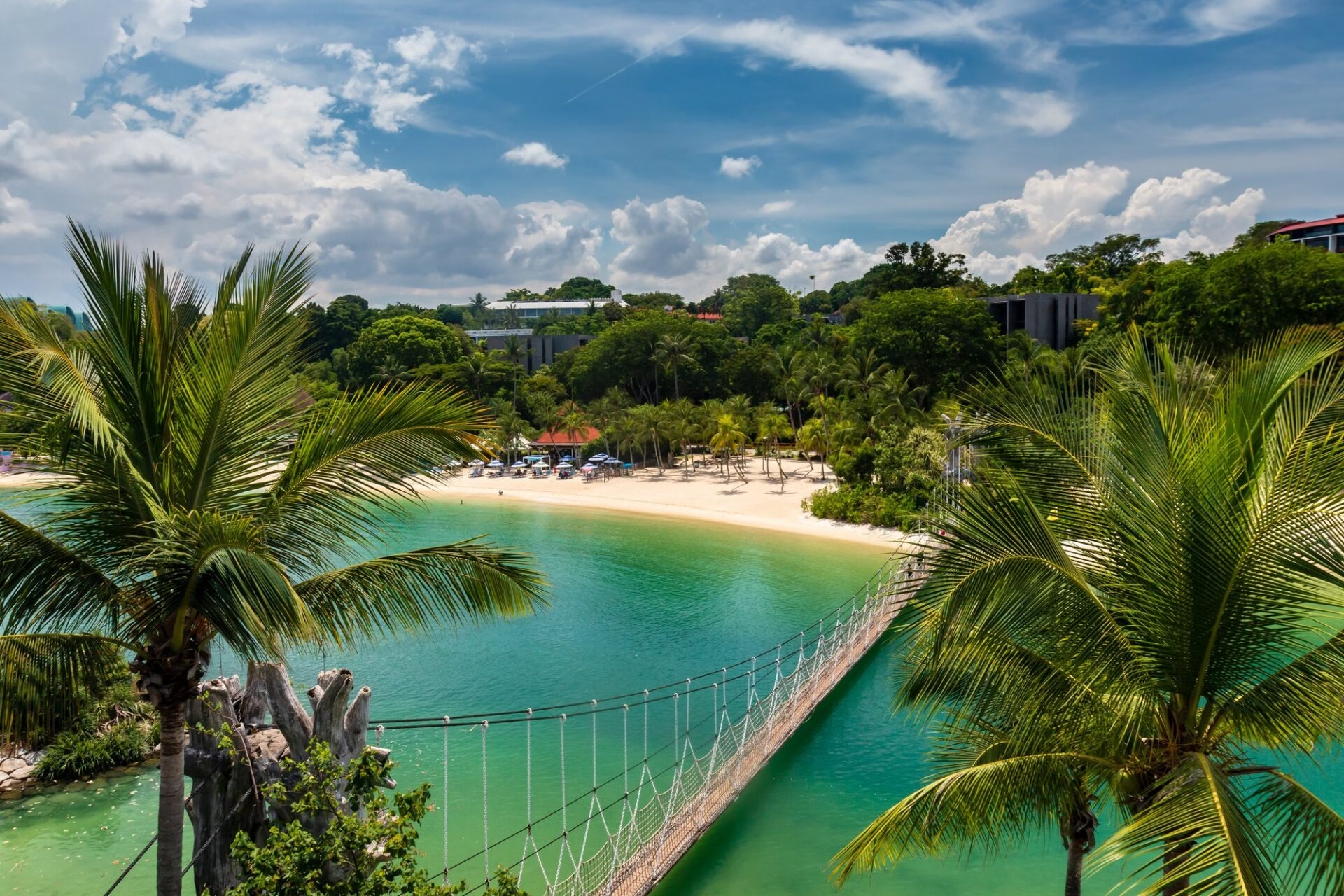
A small island just off the main one, Sentosa isn’t just an entertainment hub — it’s also nearly the only place in urbanized Singapore where you’ll find a slice of tropical paradise in the form of beaches. Besides those, there’s Universal Studios, a water park, an adventure park with a ropes course and zipline, and a 19th-century British fort.
You can reach the island via a cable car with city views, the Sentosa Express monorail from the VivoCity mall, or the Sentosa Boardwalk — a 700-meter covered walkway with moving walkways that takes about fifteen minutes to cross on foot, for free. Universal Studios tickets start at 83 SGD, while the beaches and a walk around the island cost nothing.
Chinatown, Little India, and Kampong Glam
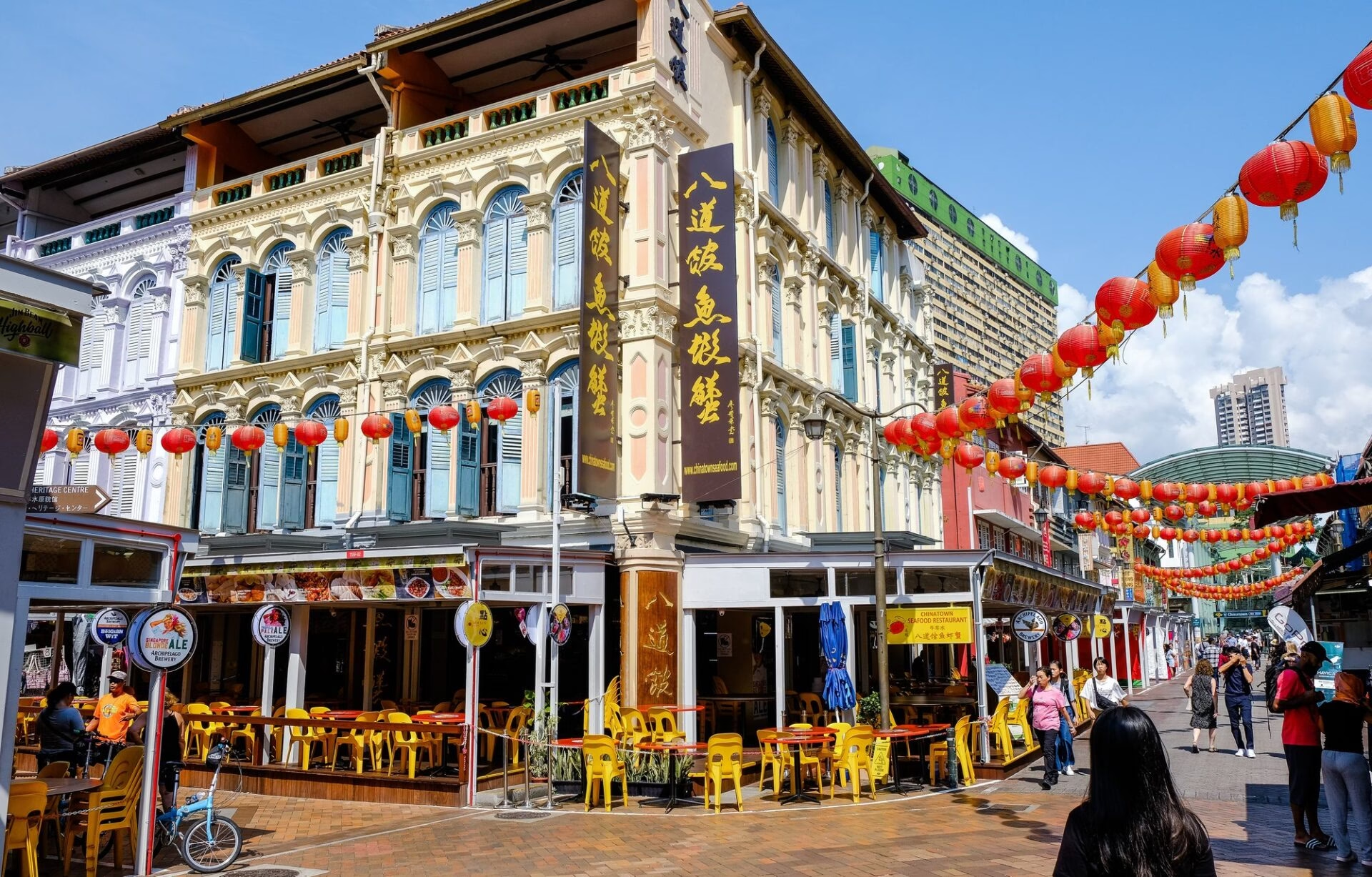
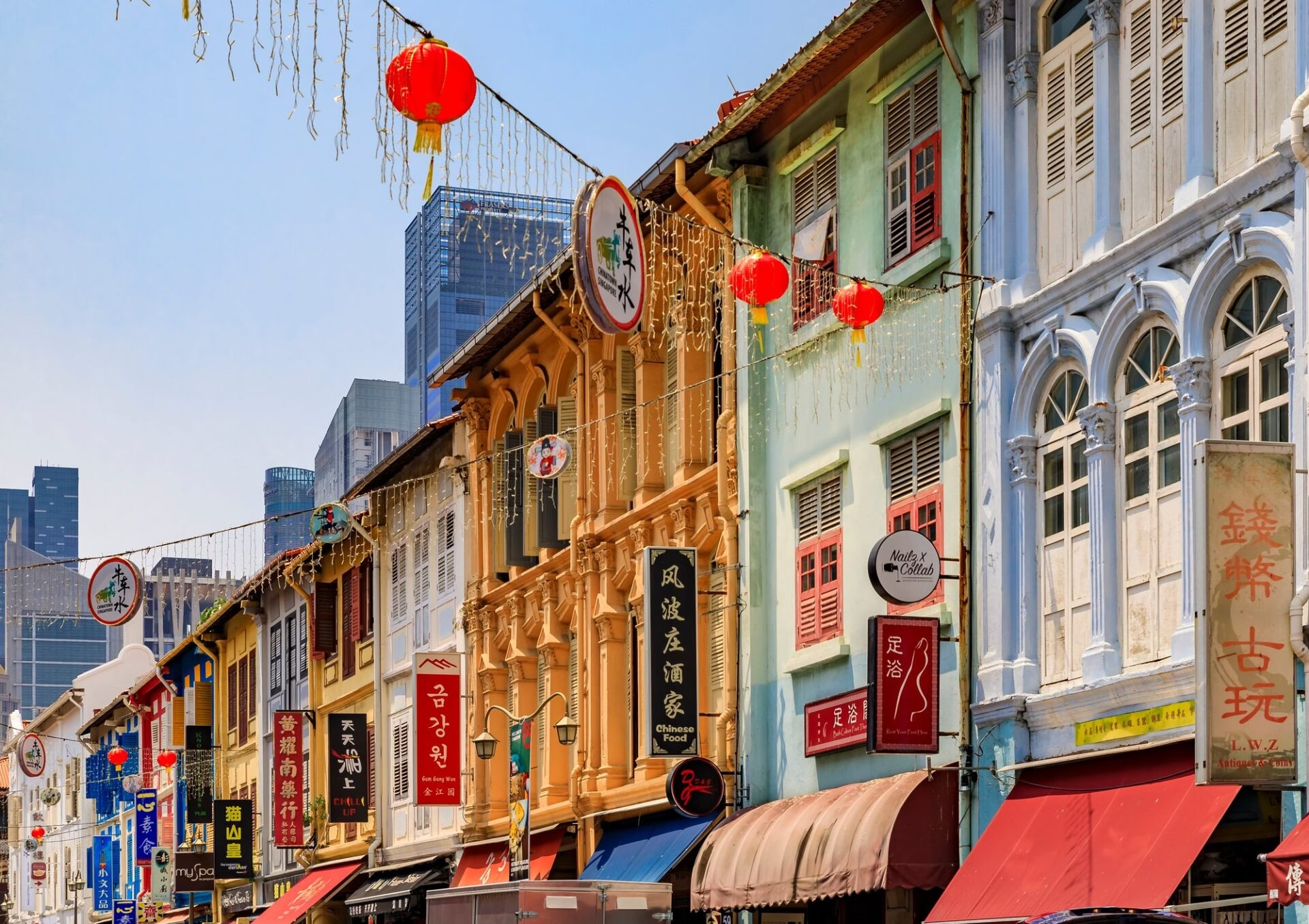
Like every country with a sizable Chinese community, Singapore has its own Chinatown. It looks a lot like every other Chinatown in the world, but between the cheap shopping and great food, it’s well worth a visit. Don’t miss the Buddha Tooth Relic Temple, and the hawker centers a few streets over, where locals — not tourists — actually eat.
Tucked between the shophouses, you’ll find a surprising amount of street art. Unlike in most cities, though, none of it appeared without permission — the murals are painted by artists with the building owners’ consent, often telling the history of the street they’re on.
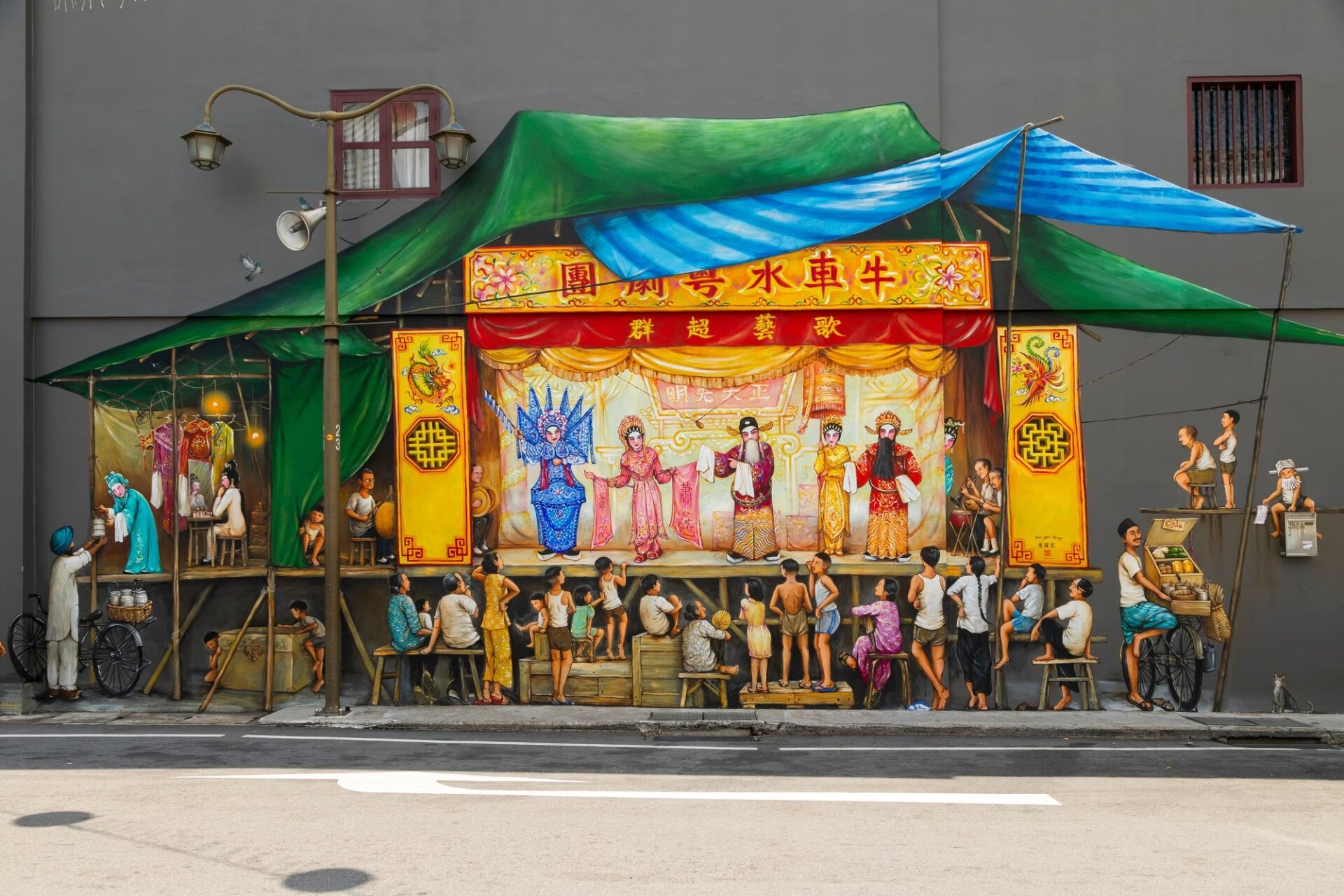
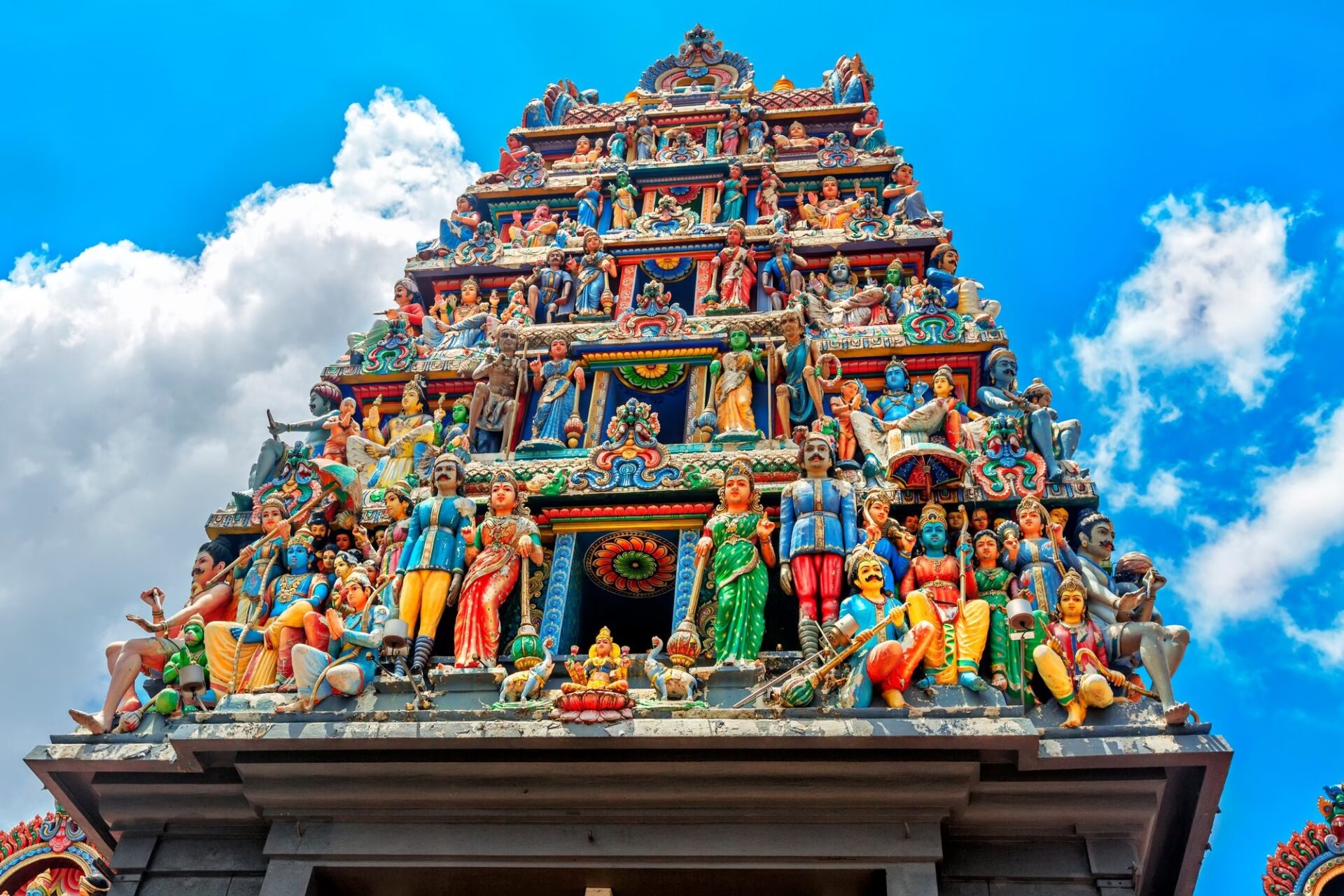
Little India, in contrast, is home to the city’s Indian community. Popular with tourists for its colorful houses, street art, and once again excellent Indian food. It’s worth visiting the Sri Veeramakaliamman Temple and the Mustafa Centre — a department store open 24 hours a day that sells absolutely everything.
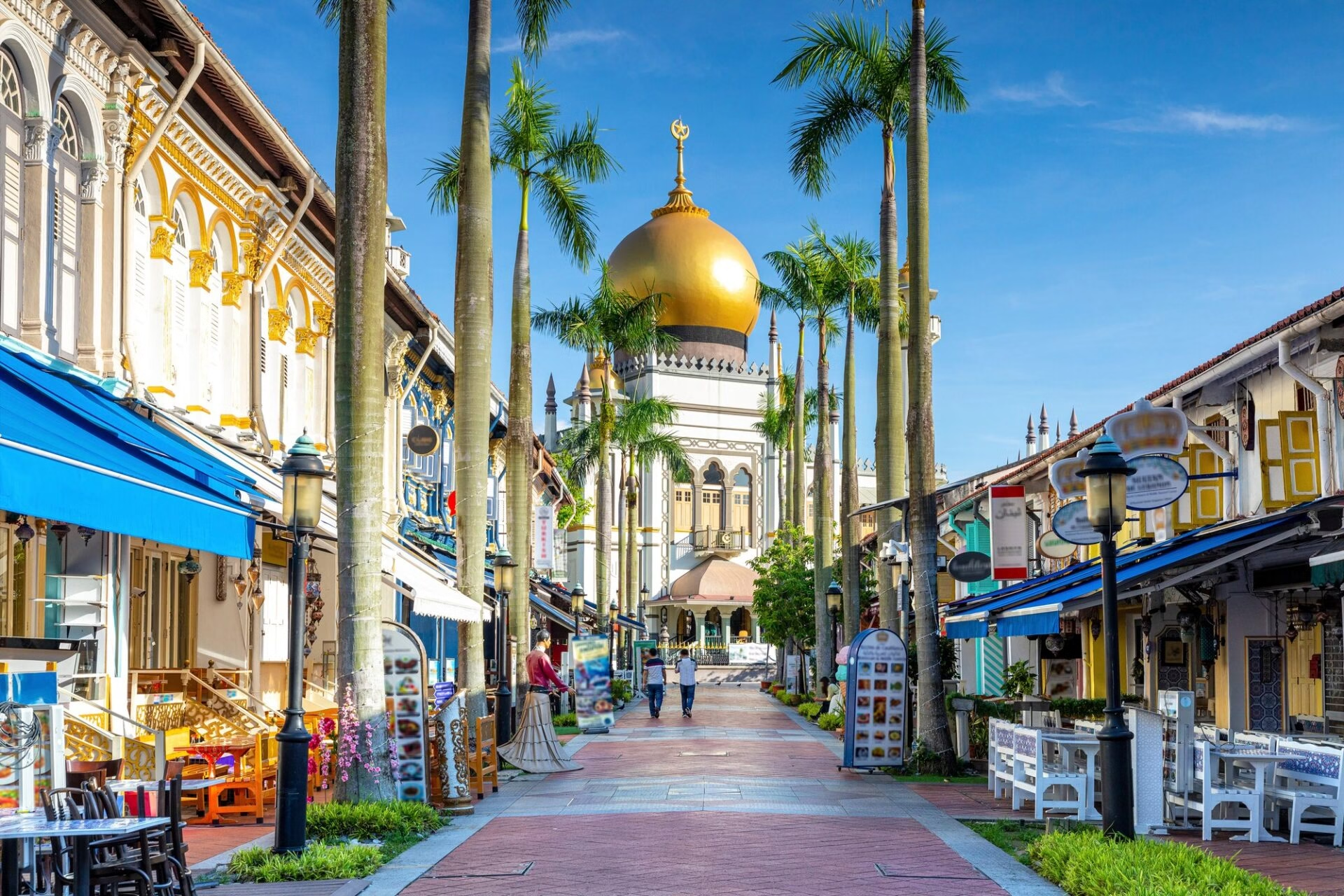
The third and least-visited district is Kampong Glam, the historic heart of Singapore’s Malay and Muslim community. It’s dominated by the golden dome of the Sultan Mosque, the largest in the country; outside of prayer times, visitors can go inside as long as shoulders and knees are covered.
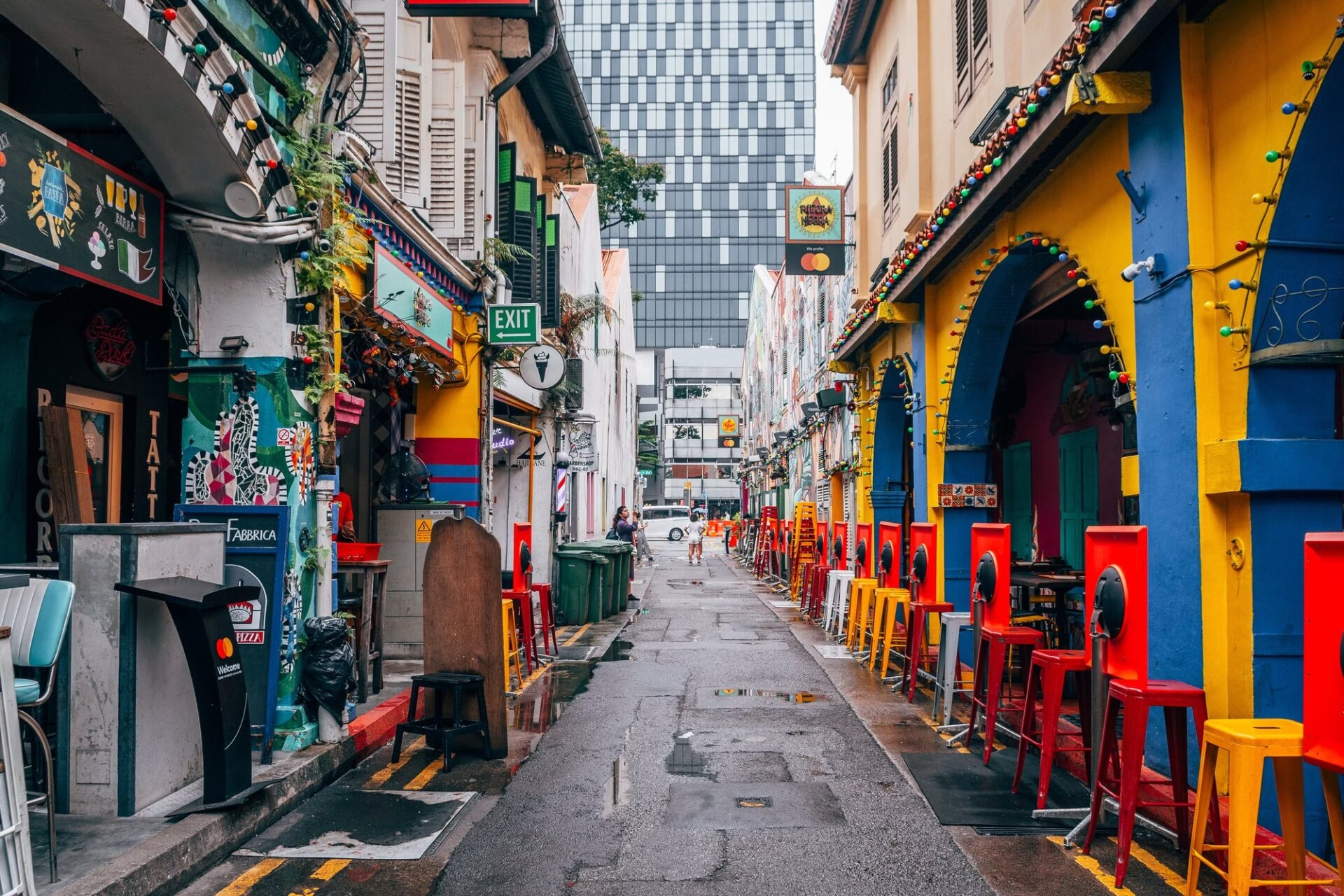
Just off the mosque runs Haji Lane, the city’s narrowest street, entirely covered in murals and lined with independent shops, tattoo studios, and bars. Of the three districts, this is the most enjoyable one for aimless wandering — and by evening, it becomes one of the liveliest spots in Singapore.
Find accommodation in Kampong Glam
Mandai: Zoo, Night Safari, and Bird Paradise
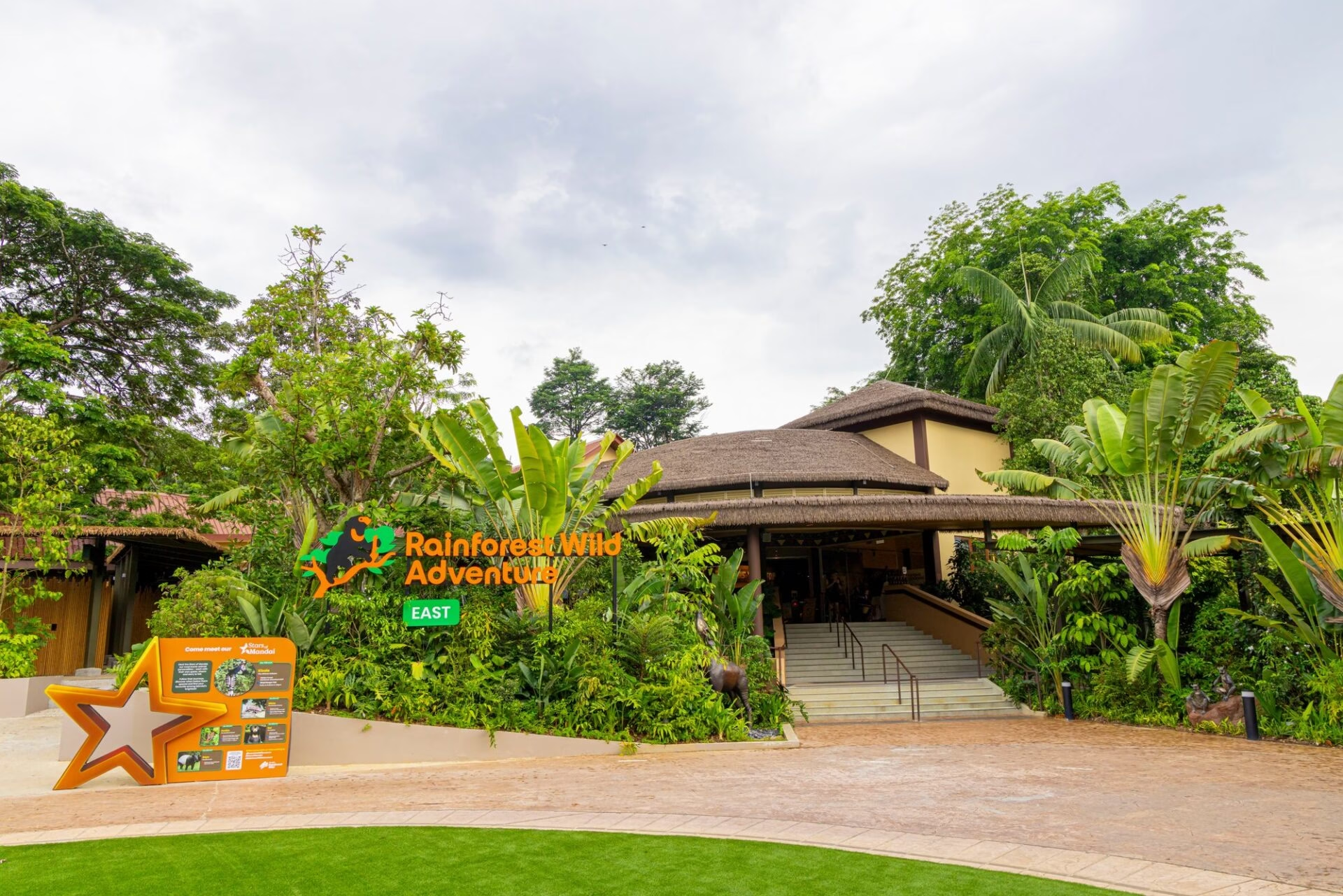
In the north of the island lies the Mandai Wildlife Reserve, a complex of five wildlife parks that ranks among the best in the world. Singapore Zoo pioneered the concept of moat-separated, cage-free enclosures. Night Safari was the world’s first nighttime zoo and remains the most famous. River Wonders focuses on river ecosystems, and Bird Paradise, opened in 2023, is the largest bird park in Asia — home to 3,500 birds across eight walk-through aviaries.
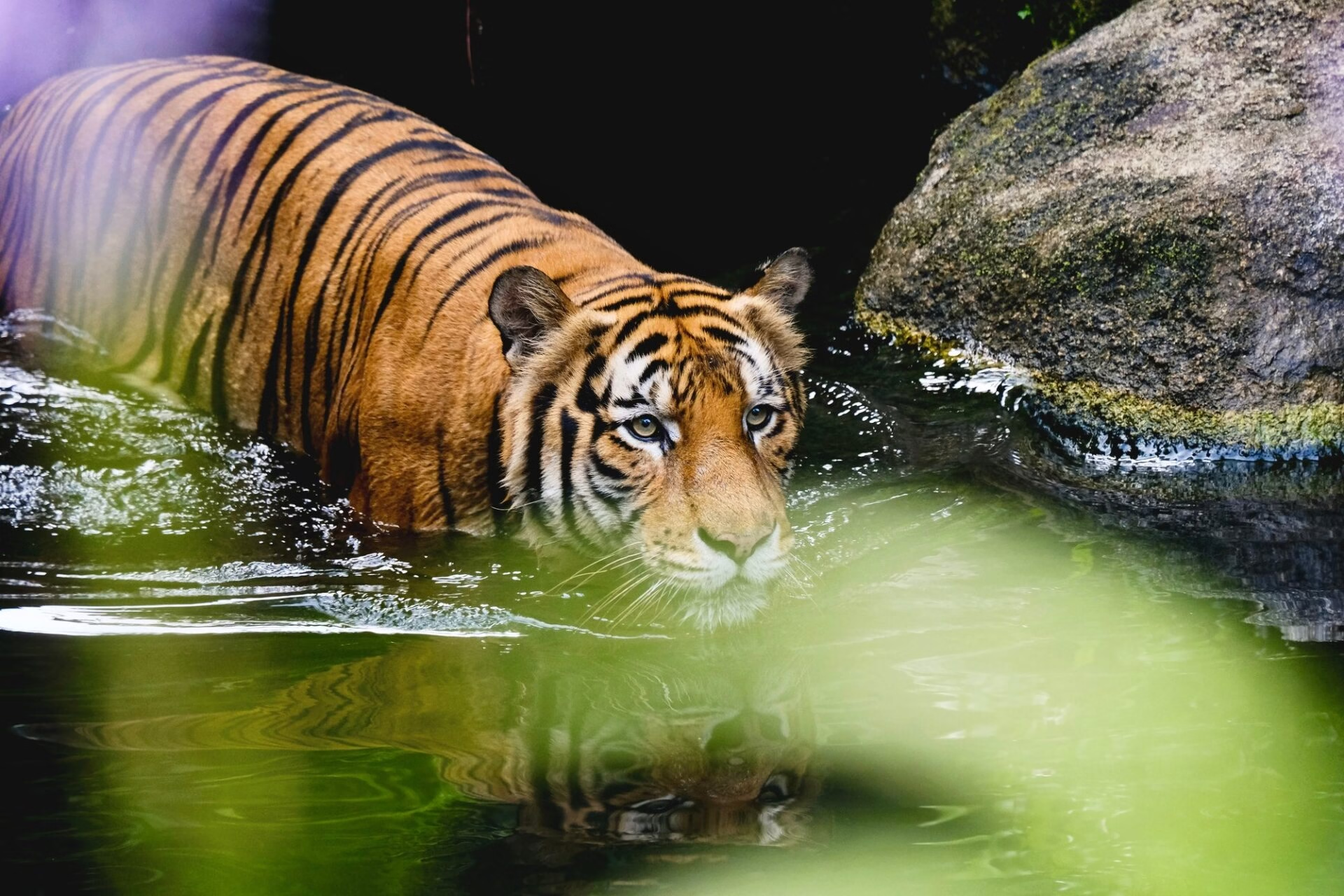
Individual entry runs roughly 43 to 56 SGD per park, while the combined Destination Pass covering multiple parks works out significantly cheaper. Plan on half a day per park, plus about an hour to get there from downtown by metro and bus.
Merlion Park and the Bay Promenade
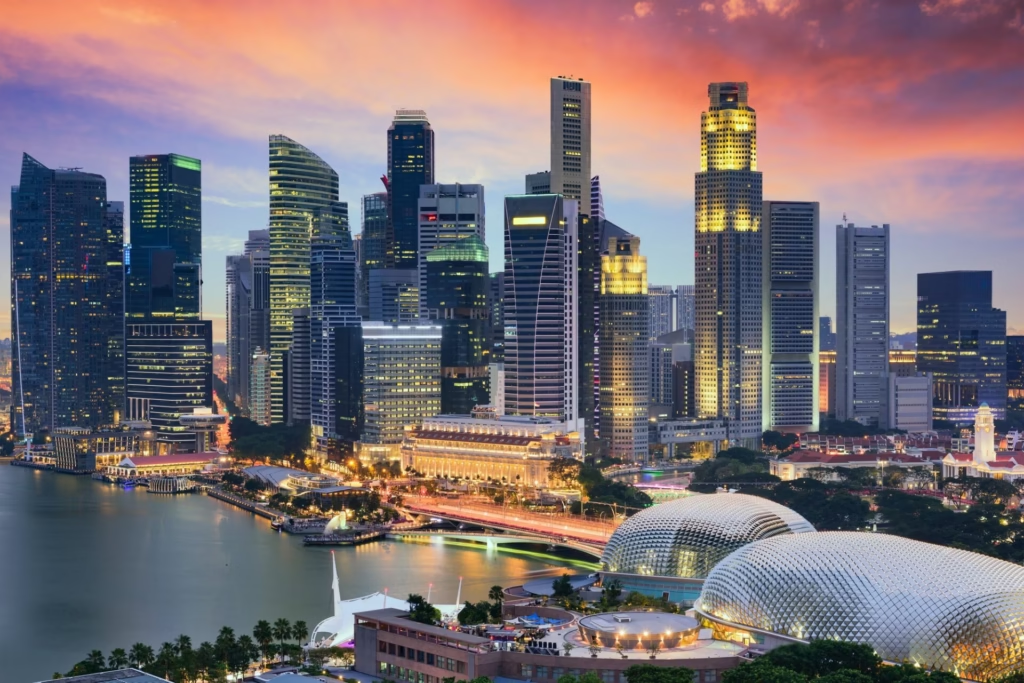
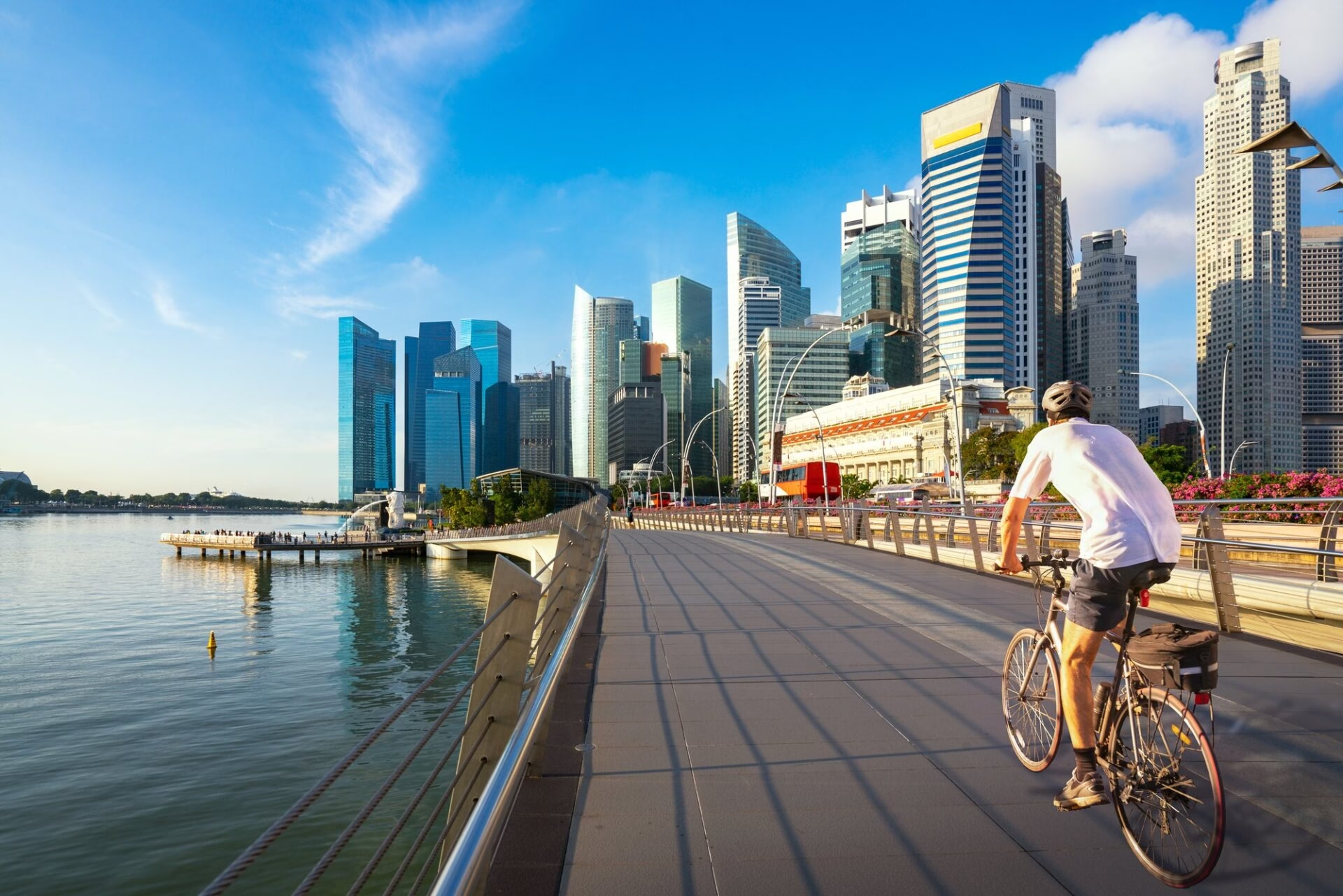
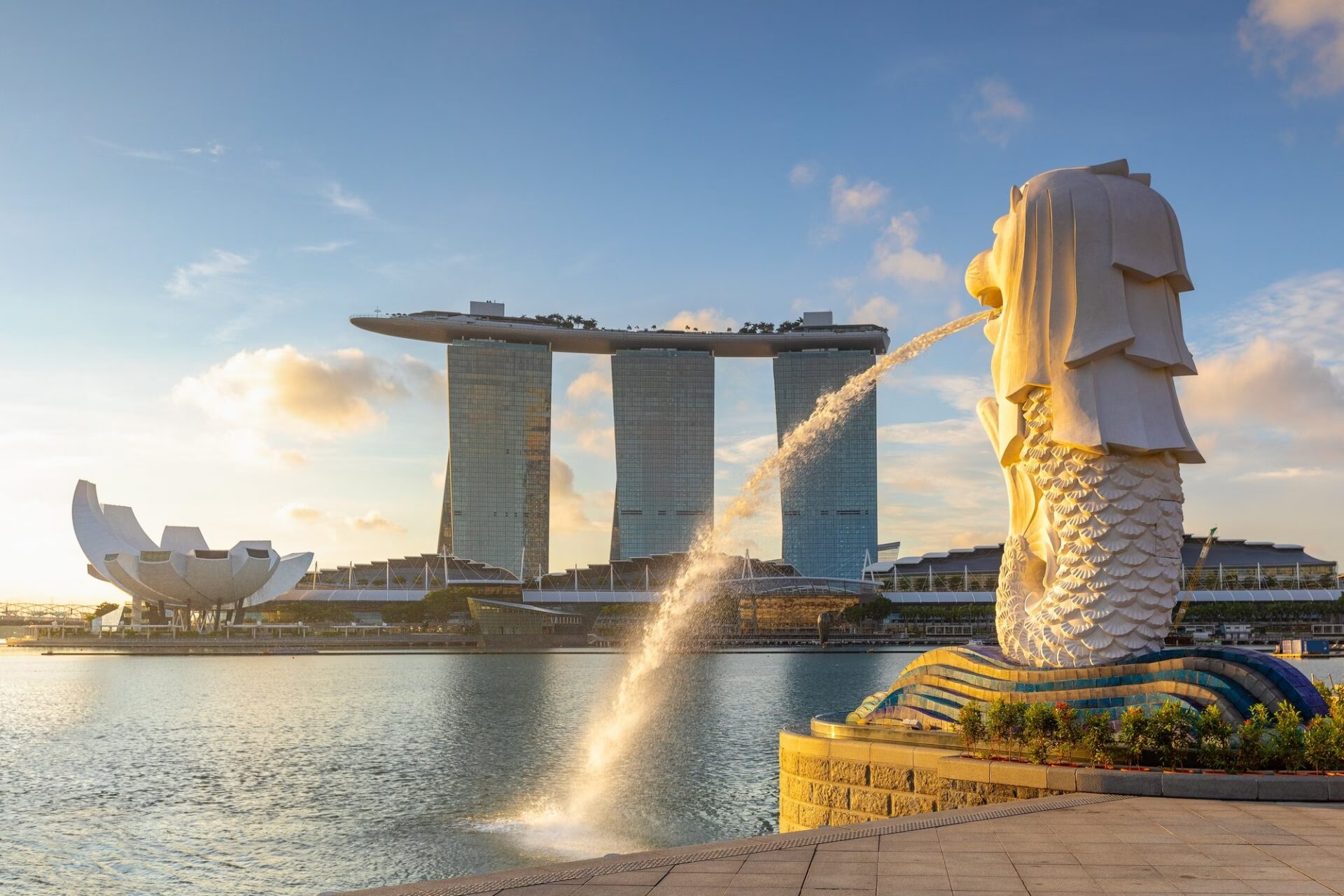
The Merlion — a lion with a fish tail — is the city’s mascot, and its most famous statue stands in Merlion Park on the north bank of the bay. The statue itself is a tourist cliché, but it’s still the best spot for a skyline photo with Marina Bay Sands in the background. Come about half an hour before sunset, when the skyscrapers light up and it’s not yet fully dark.
From here, a promenade wraps all the way around the bay — the full loop is just under 4 kilometers and takes about an hour on foot. Along the way you’ll pass the Esplanade (a durian-shaped concert hall), the Singapore Flyer wheel, and Marina Barrage, a dam with a rooftop lawn where locals fly kites and tourists almost never go.
Oddities You Won’t Find Anywhere Else
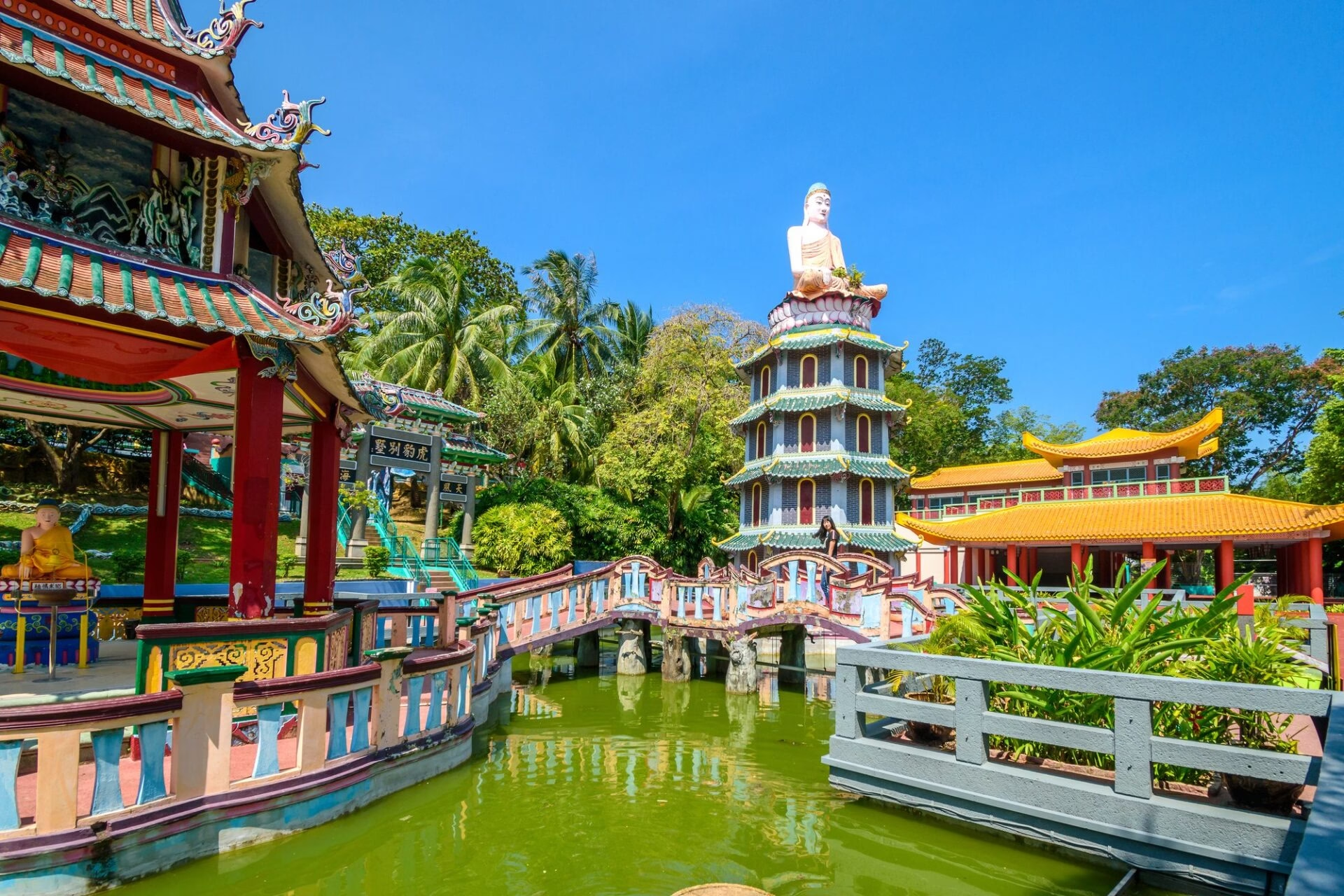
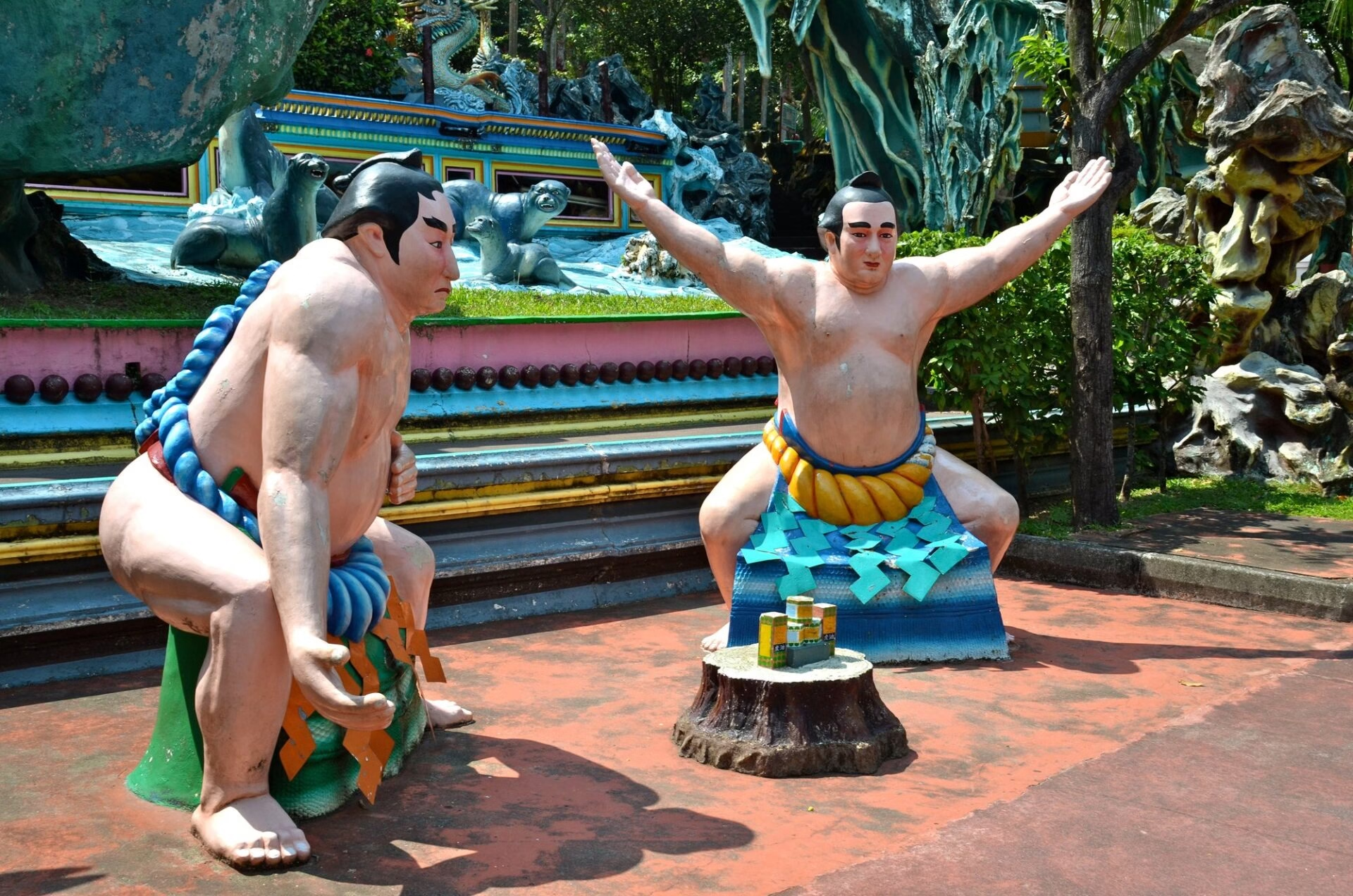
Haw Par Villa is a sculpture park built by the founder of Tiger Balm — over a thousand vividly colored figures scattered across a hillside, depicting scenes from Chinese mythology, pagodas, dragons, and sumo wrestlers. It feels like a horror movie shot in a candy store, and entry is free.
The famous Ten Courts of Hell, which vividly illustrate exactly what punishment awaits which sin, now falls under Hell’s Museum and costs 20 SGD. It’s not recommended for children under nine — for good reason.
Pulau Ubin is the exact opposite of the rest of the country: an island off the northeastern coast, reached by a wooden bumboat from Changi Village, home to the country’s last remaining kampong, a traditional stilt village. No skyscrapers, no shops — just bike rentals, dirt roads, and wetlands. A half-day trip that feels like a different country entirely.
Green Spaces People Forget About
Singapore calls itself “a city in a garden,” and it’s not just a slogan. Singapore Botanic Gardens has been a UNESCO World Heritage Site since 2015 — the only tropical botanic garden to achieve this. Entry is free; you only pay to enter the orchid garden.
For a free view, head to the Southern Ridges — a ten-kilometer ridgeline trail crossing several parks, with the most photographed section being the undulating Henderson Waves bridge. And right in the city center, Fort Canning Park hides the famous spiral staircase in a light-filled tunnel, which now draws a small queue just for photos.
Where to Stay in Singapore
Singapore is small and the metro is fast, so picking a neighborhood is more about vibe than travel time. You’re practically anywhere in the city center within twenty minutes.
Marina Bay is the most prestigious and priciest option — you’re right in the middle of the action, with skyline views and a few minutes from Gardens by the Bay.
Find accommodation in Marina Bay
Chinatown and Little India offer the best value-for-location combo, the most hostels, and the best food right outside your door. For a first visit, this is the smartest choice.
Browse accommodation in Chinatown
Kampong Glam is a quieter alternative with boutique hotels, cafés, and bars along Haji Lane. Orchard Road is the shopping strip — plenty of hotels, but the least atmosphere of the bunch. And Sentosa is worth it mainly if you’re traveling with kids — just expect a commute into the city.
Singapore in 1, 2, or 3 Days
One day (or a long stopover):
- Morning in Chinatown, with lunch at Maxwell Food Centre.
- Afternoon at Gardens by the Bay — Cloud Forest, then the outdoor gardens.
- Merlion Park before sunset for the bay views.
- Evening light show at Supertree Grove and a walk around Marina Bay.
Two days — add:
- Little India and Kampong Glam, with lunch at Tekka Centre.
- Singapore Botanic Gardens or the Southern Ridges.
- Evening at Lau Pa Sat with grilled satay on the adjacent street.
Three days — pick one:
- Sentosa — beaches and Universal Studios, ideal with kids.
- Mandai — Singapore Zoo or Night Safari, plan for a full day.
- Jewel and Changi — if you’re flying out in the evening, you can spend your last day right at the airport.
There’s no need to stretch Singapore beyond three days — day four is a good time to fly onward, whether to Malaysia or one of Indonesia’s islands.
Practical Info at a Glance
- Time difference: Singapore doesn’t observe daylight saving, so it’s 6 hours ahead of Central European summer time and 7 hours ahead in winter.
- Outlets: British-style Type G, three flat pins, 230V. Don’t forget an adapter — hotels only sometimes have loaners.
- Internet: a tourist SIM from local carriers costs around 12 SGD and can be bought right at the airport; an eSIM is usually even cheaper. The free Wireless@SGx network covers the metro, libraries, and malls.
- Language: English is an official language, and you’ll get by everywhere, including hawker centers and taxis.
- Water: tap water is safe to drink, so bring your own bottle.
- Tipping: not expected — restaurants already include a service charge on the bill.
- Opening hours: shopping malls run 10:00–22:00, including Sundays; hawker centers open early morning, some around the clock.
- Documents: crime is minimal, but keep a photo of your passport on your phone anyway — border officials and hotels ask to see it often.
Health and Hygiene
Compared to its neighbors, Singapore’s hygiene standards are exceptionally high. No vaccinations are mandatory, though hepatitis A and typhoid are recommended — the standard set for tropical travel. Many travelers don’t realize that tap water is safe and 100% drinkable — a rarity in Southeast Asia.
Even though health risks here are minimal, remember it’s still a tropical country, and mosquito-borne illness is a possibility, so pack repellent. Beyond dengue fever, which pops up in the city regularly, Singapore is also classified as a Zika risk area. There’s no active outbreak, but pregnant travelers are advised against visiting — if that applies to you, talk to a doctor beforehand.
Healthcare is excellent, but very expensive. An ER visit can run into the hundreds of dollars, and hospitalization into the thousands — flying to Singapore without travel insurance, even just for a stopover, isn’t worth the risk.
Traveling with a multi-currency card like Revolut makes spending across Southeast Asia painless — low FX fees mean you’re not losing money every time you swap currencies at the border.
Safety and Laws to Watch Out For
Local mentality combined with strict laws makes Singapore one of the safest cities in the world. Theft and scams are rare, the odds of being mugged are close to zero, and drug possession carries the death penalty. Even so, it’s smart to stay alert, especially at night and in quieter parts of the city. With its combination of strict laws and high living standards, Singapore has something in common with another small state in the region — Brunei.
That said, I’d argue you’re far more likely to unknowingly commit a minor offense yourself than to become a victim of crime. It’s worth getting familiar with Singapore’s laws before you even think about spitting on the street.
Four things that trip up visitors most often:
- E-cigarettes are completely banned — not just selling them, but possessing and importing them too. Airport checks are thorough and fines are steep. Leave your vape at home; this is currently the most common violation among European tourists.
- Drinking alcohol in public is banned from 22:30 to 7:00, and takeaway alcohol sales are also banned during those hours. First-offense fines can reach 1,000 SGD.
- Smoking is banned in most public spaces, including many streets and bus stops.
- Chewing gum can’t be sold or imported in bulk. Chewing it is legal, though, and a few pieces in your pocket won’t raise any eyebrows — you only get fined for spitting it out on the street.
Religion, Holidays, and Traditions
Singapore has no single dominant religion or unified “Singaporean” culture. Buddhists, Muslims, Hindus, Christians, atheists, and followers of smaller, lesser-known faiths all live side by side. Traditions here follow the individual cultures and beliefs of each community.
The biggest holiday celebrated in Singapore, unsurprisingly given the dominant Chinese population, is Chinese New Year in late January or early February. The best advice for a smooth visit is simply to respect everyone regardless of their beliefs and treat followers of each religion with consideration.
A Few More Things Worth Knowing
- One of the other things almost everyone knows about Singapore is its notoriously strict laws. The famous chewing gum ban is just the start — you can get fined for spitting, littering, or even hopping onto someone else’s wifi.
- All pornography is illegal, and so is public nudity. That said, not everything is quite as squeaky-clean as it seems — I’ve personally seen Singaporeans smoke and spit.
- Singapore has four official languages — English, Chinese, Malay, and Tamil. You’ll have no trouble communicating in English anywhere. The everyday way locals talk to each other is often Singlish, a highly simplified form of English that borrows expressions from the other common languages.
- Singaporeans commonly reserve seats at food court tables by leaving tissue packets or other small items on them. Don’t sit down at a table with tissues on it.
- If you’re still not convinced hawker centers are the best place to eat, here’s one more argument: Singapore is home to a Michelin-starred street food stall. Hill Street Tai Hwa Pork Noodle on Crawford Lane has held the star continuously since 2016, when it was one of the first two street food stalls in the world to ever receive one.
- The city’s mascot is the Merlion, a lion with a fish’s tail, and you’ll spot the symbol all over town. The most famous version stands in Merlion Park as a giant water-spouting statue. The whole area makes for a great stroll, with a beautiful panoramic view over the Bayfront district.
- Singapore pairs well with other stops in the region — most commonly Malaysia, Indonesia, or a longer flight onward to South Korea.
Frequently Asked Questions
What is the capital of Singapore?
Singapore is a city-state, so the city and the country are one and the same — Singapore’s capital is Singapore. It covers about 730 km² and has a population of around 6 million. Administratively, the country isn’t divided into regions in the usual sense, but into 5 regions and 55 planning areas; what tourists call “downtown” is the Downtown Core area around Marina Bay.
Do I need a visa for Singapore?
No. Citizens of the EU, UK, and US get visa-free entry for 90 days. Your passport must be valid for at least six months beyond your stay, and before arrival you need to submit the electronic SG Arrival Card — free of charge, up to three days before landing, via the ICA website or the MyICA app.
How many days do you need in Singapore?
Two to three days. In one day you can cover Chinatown, Gardens by the Bay, and the evening light show; a second day adds Little India, Kampong Glam, and the botanic gardens. A third day is worth setting aside for Sentosa or the zoo in Mandai. Beyond that, it’s usually worth flying onward.
Is Singapore expensive?
Pricier than Thailand or Malaysia, but far cheaper than its reputation suggests. On a tight budget, a day costs around €20–28 excluding accommodation; mid-range travel runs €48–72. The most expensive items are alcohol, taxis, and restaurants — hawker center meals cost just a few euros.
Can you drink tap water in Singapore?
Yes, tap water is safe and drinkable — a rare exception within Southeast Asia. Bring your own bottle; there are plenty of refill spots around the city, and given the humidity, you’ll drink more than you’d expect.
When is the best time to visit Singapore?
February to April. Temperatures hover around 30°C year-round, but this period brings the least rain and the most bearable humidity. November to January sees the heaviest rainfall, and from August to October, haze — smog from fires in Indonesia — can occasionally roll in.
Where to Find More Info
The official website of the Singapore Tourism Board. You’ll find all the info on sights, restaurants, events, and festivals in the city.
Check out YouTube channels from both Singapore natives and long-term expats living in the city. One example is Georgia, whose channel is packed with videos about everyday life in Singapore.
I’m a chemical engineering student who spends free time traveling mostly solo and volunteering in hostels. Singapore was one stop on my nearly three-month trip through East and Southeast Asia. I’m not blogging right now, but you can find me on Instagram as @stellaprotisvetu, where I share my travels with as little sugar-coating as possible.