This post is also available in:


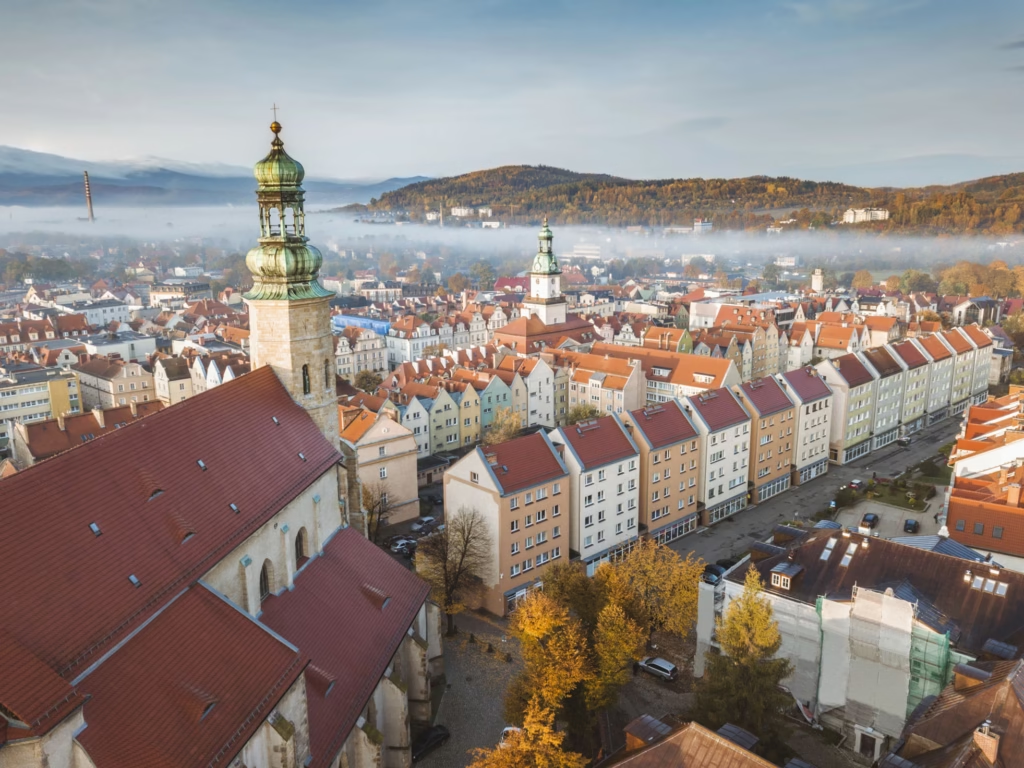
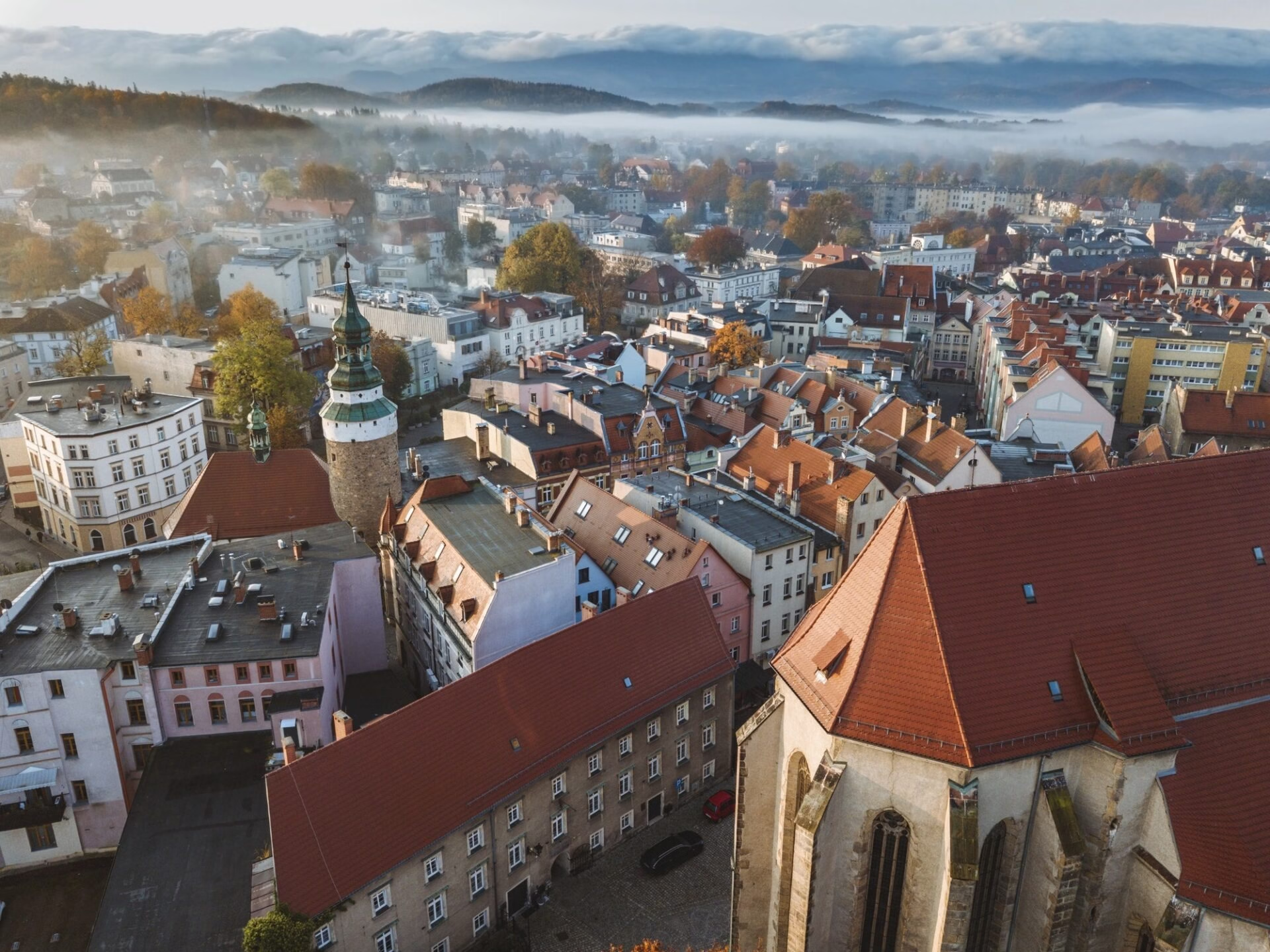
Jelenia Góra sits within sight of the Karkonosze Mountains in Lower Silesia, Poland. Its centre — with baroque arcades and an old town hall — would be the pride of any larger Polish city.
For most international travellers, this is a surprisingly overlooked destination. Most visitors who do come are heading to Karpacz, below Mount Śnieżka — and Jelenia Góra is, at best, a lunch stop. That’s a shame, because the town has far more to offer than a quick drive-through suggests.
This guide is written to be useful in three different scenarios:
- as a one-day trip destination,
- as a base for a multi-day stay combining spas and mountains,
- as a meaningful stopover on the way to Karpacz or back.
You’ll find tips on what to see, what to do, where to stay, where to eat and grab a coffee, plus great spots in the surrounding area.
Why Jelenia Góra is worth the trip
The town has more than 75,000 residents, making it one of the largest in Lower Silesia. Architecturally, it carries a strong imprint of its German past — until 1945 it was called Hirschberg and was predominantly German-speaking.
That’s why you’ll find baroque churches, Art Nouveau apartment buildings and spa-town architecture here that would feel more at home in a classic European spa resort than in central Poland.
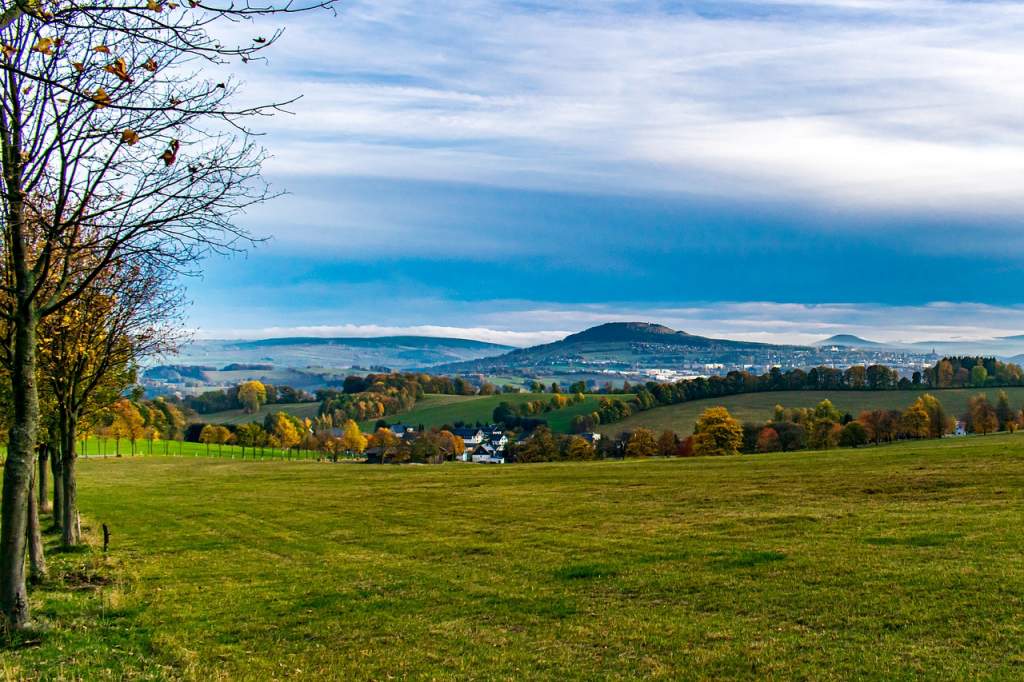
Look at a map and one thing stands out: Jelenia Góra is the natural centre of an area surrounded by mountains on three sides. The Karkonosze (Giant Mountains) to the south, the Jizera Mountains to the south-west, and the Rudawy Janowickie to the south-east.
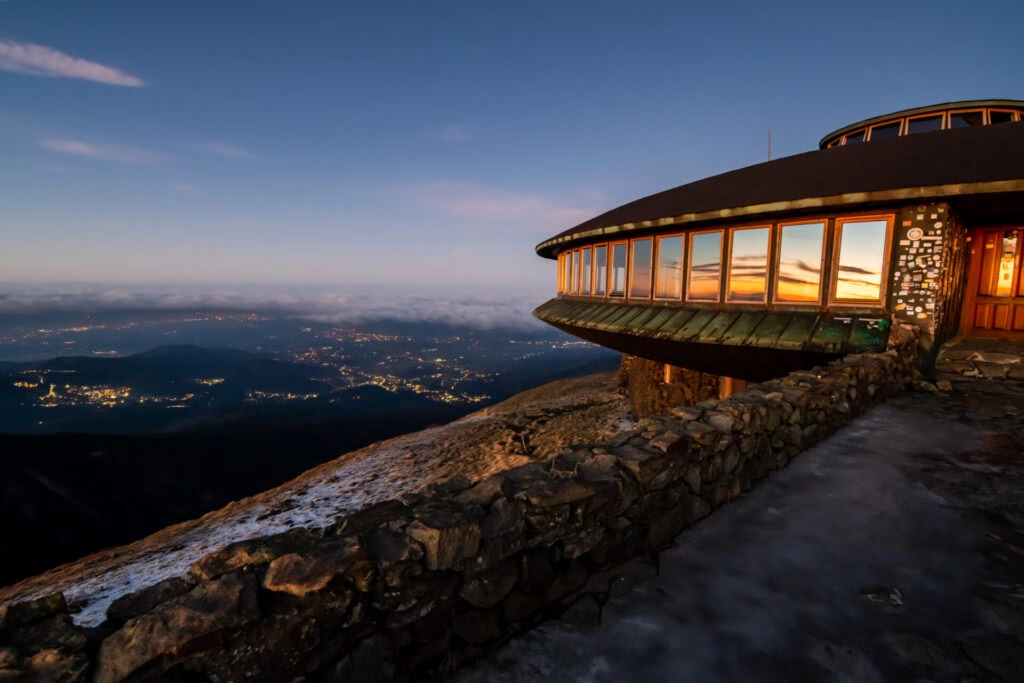
Karpacz is 14 km away, Szklarska Poręba 20 km. If you want to get to know the region in depth, you probably won’t find a better base.
Karpacz is the most-visited destination in the Polish Karkonosze, and Jelenia Góra is its natural gateway. If you don’t want to pay the premium for staying right in the mountain resort, you can sleep in Jelenia Góra and drive over to Karpacz — the journey takes less than 20 minutes.
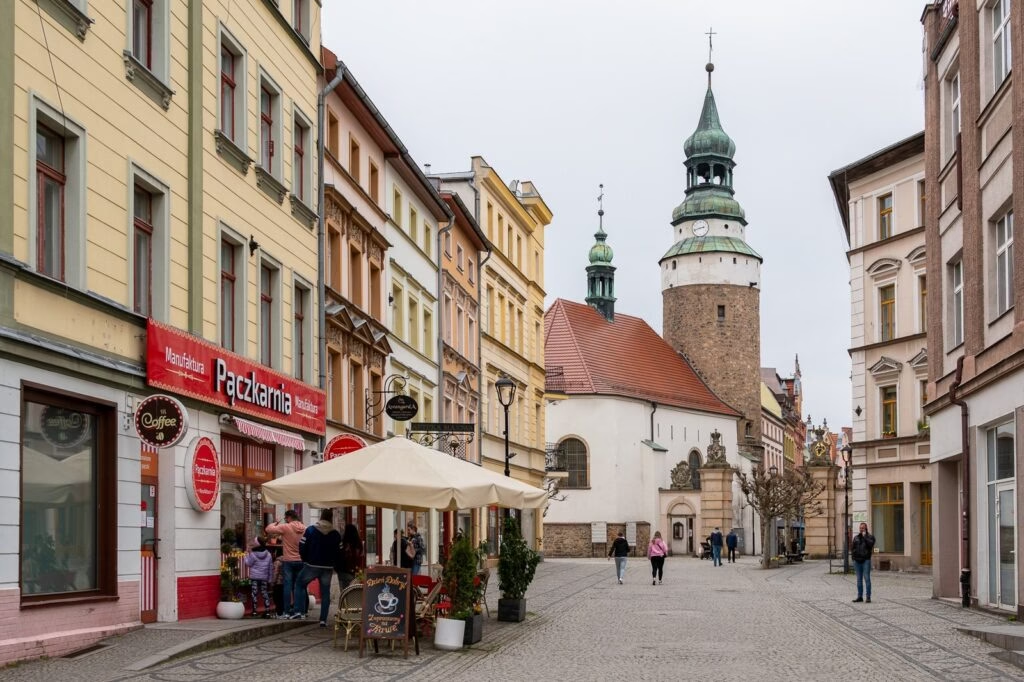
And the town itself isn’t just a transit hub. The Town Hall Square with its arcaded houses is among the prettiest in the entire region. The Gothic castle of Chojnik, perched on a hill above the Sobieszów district, is worth a trip in its own right.
And the Cieplice spa district — today formally part of Jelenia Góra — is one of Poland’s oldest spa towns, with a thermal water park that justifies a multi-day stay even in winter.
How long to stay and how to plan your days
Most people visit Jelenia Góra as a day trip. In a single day you can cover the centre, Chojnik Castle and a stroll through Cieplice — a full but not overwhelming programme.
Two days make sense if you want to explore the centre more thoroughly, add a trip to the Bóbr Valley or Bolczów Castle, and especially if you’re planning to visit the thermal baths — they deserve at least half a day.
Three days or more is the right call if you want to combine the town with mountain hiking or skiing in Karpacz — or if you’re coming in winter mainly for the thermal spa.
Jelenia Góra then serves as a quieter base with better food and more accommodation choice than the packed mountain resorts in high season.
Suggested one-day itinerary:
- morning in the centre and the Church of the Holy Cross,
- lunch and coffee on or near the square,
- afternoon hike up to Chojnik Castle or a stroll through Cieplice,
- dinner back in town.
Top 10 things to see and do in Jelenia Góra
Before we get into the details, a quick overview of what’s worth your time in Jelenia Góra and the surrounding area:
- Town Hall Square (Plac Ratuszowy) – the heart of the town with its baroque arcades
- Church of the Holy Cross – an architectural gem of Lower Silesia
- Deer Trail (Szlak Jelonków) – tiny bronze deer statues that lead you through the historic centre
- Chojnik Castle – Gothic ruins with views over the entire valley
- Cieplice – the spa park and promenade – the oldest spa in Poland
- Termy Cieplickie – a thermal water park with healing mineral water
- Karkonosze Museum (Muzeum Karkonoskie) – for those who want to understand the region better
- Gates of Time (Bramy Czasu) – an underground tour for fans of historical storytelling
- Bóbr Valley (Dolina Bobru) – a hike to the Perła Zachodu mountain hut through a rocky gorge
- Bolczów Castle – fewer tourists, romantic ruins in the Rudawy Janowickie
What to see in Jelenia Góra
Town Hall Square (Plac Ratuszowy)
The square is the genuine centre of social life — and considerably livelier than in comparably sized Polish towns.
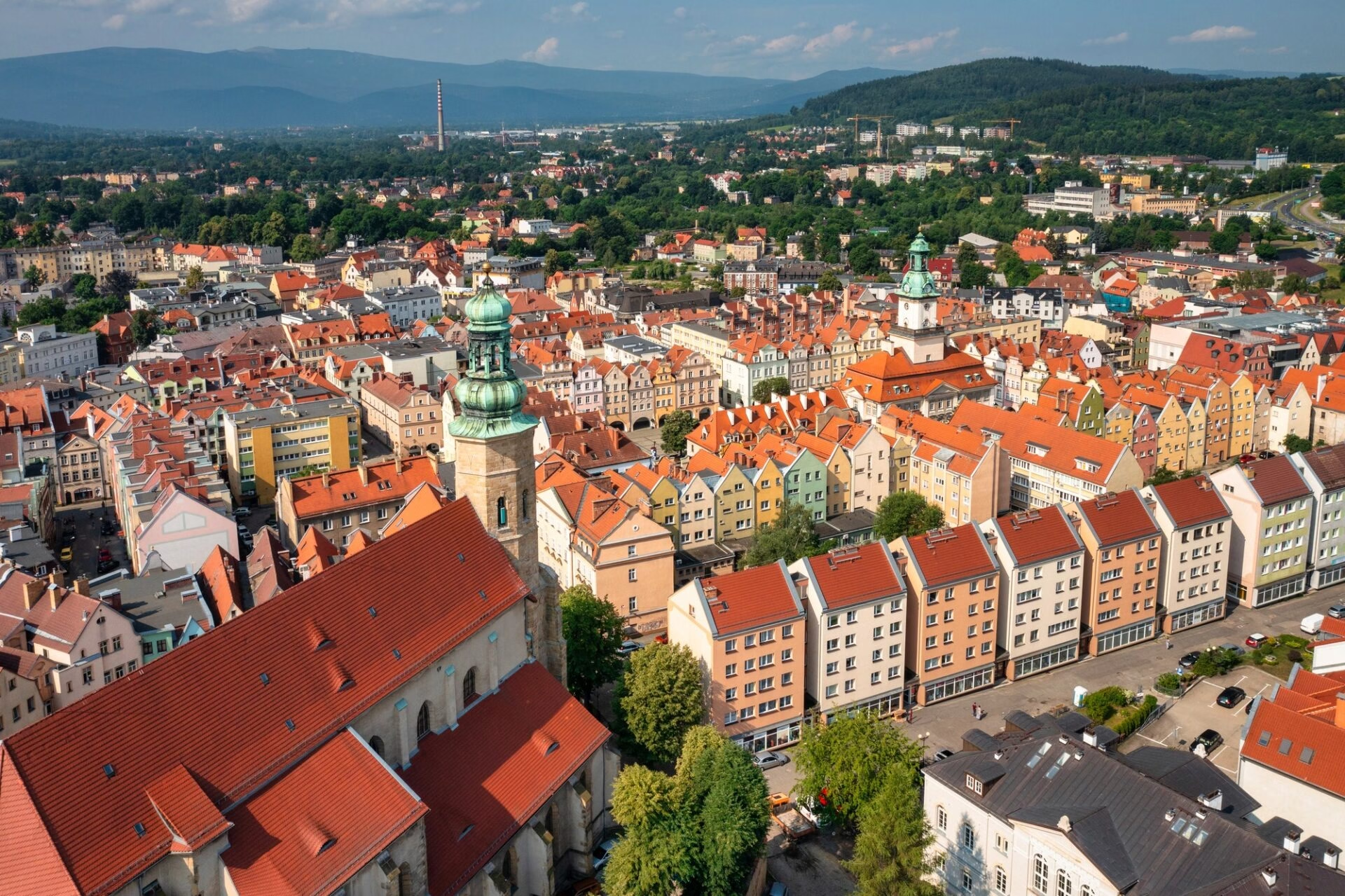
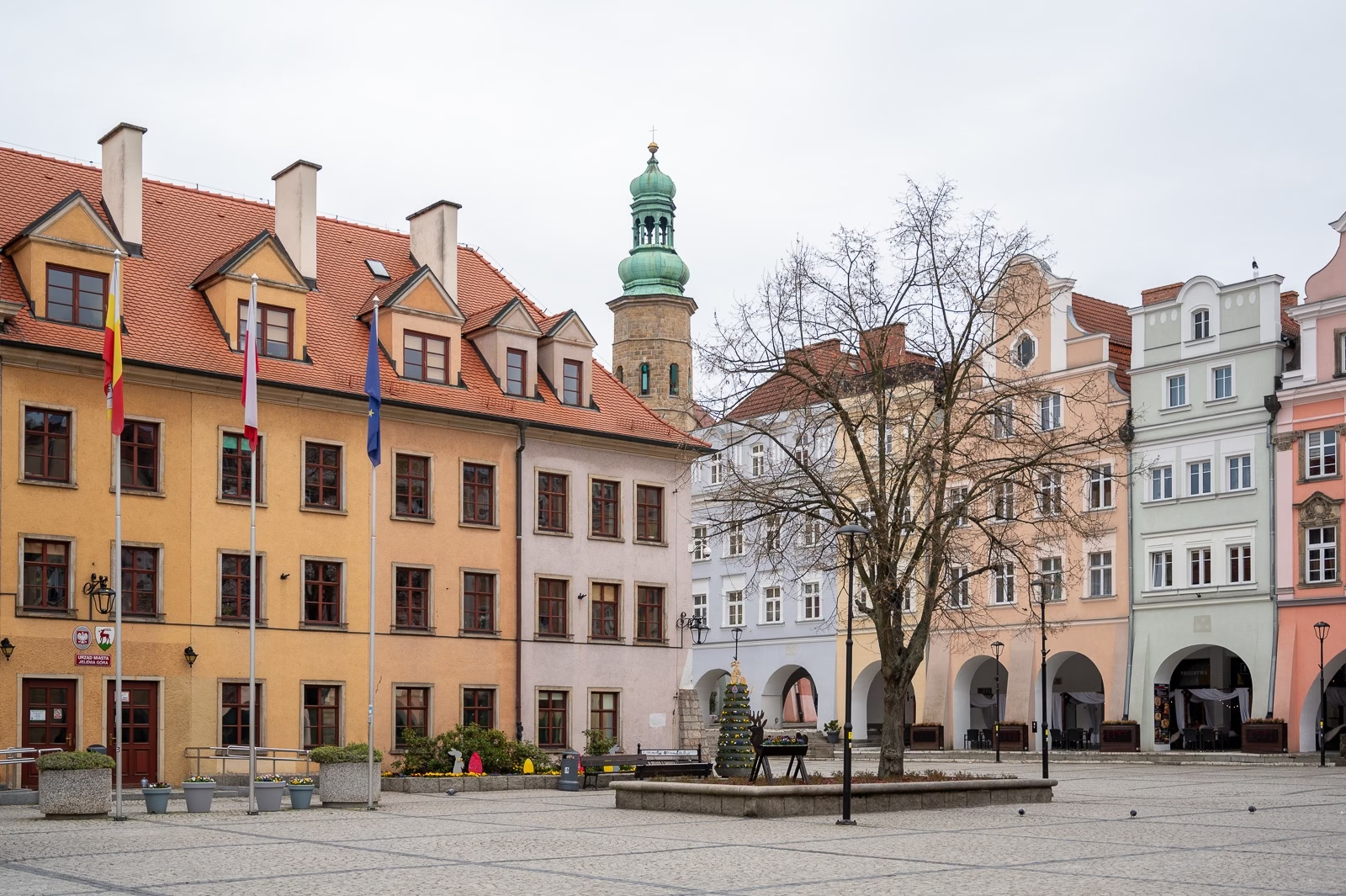
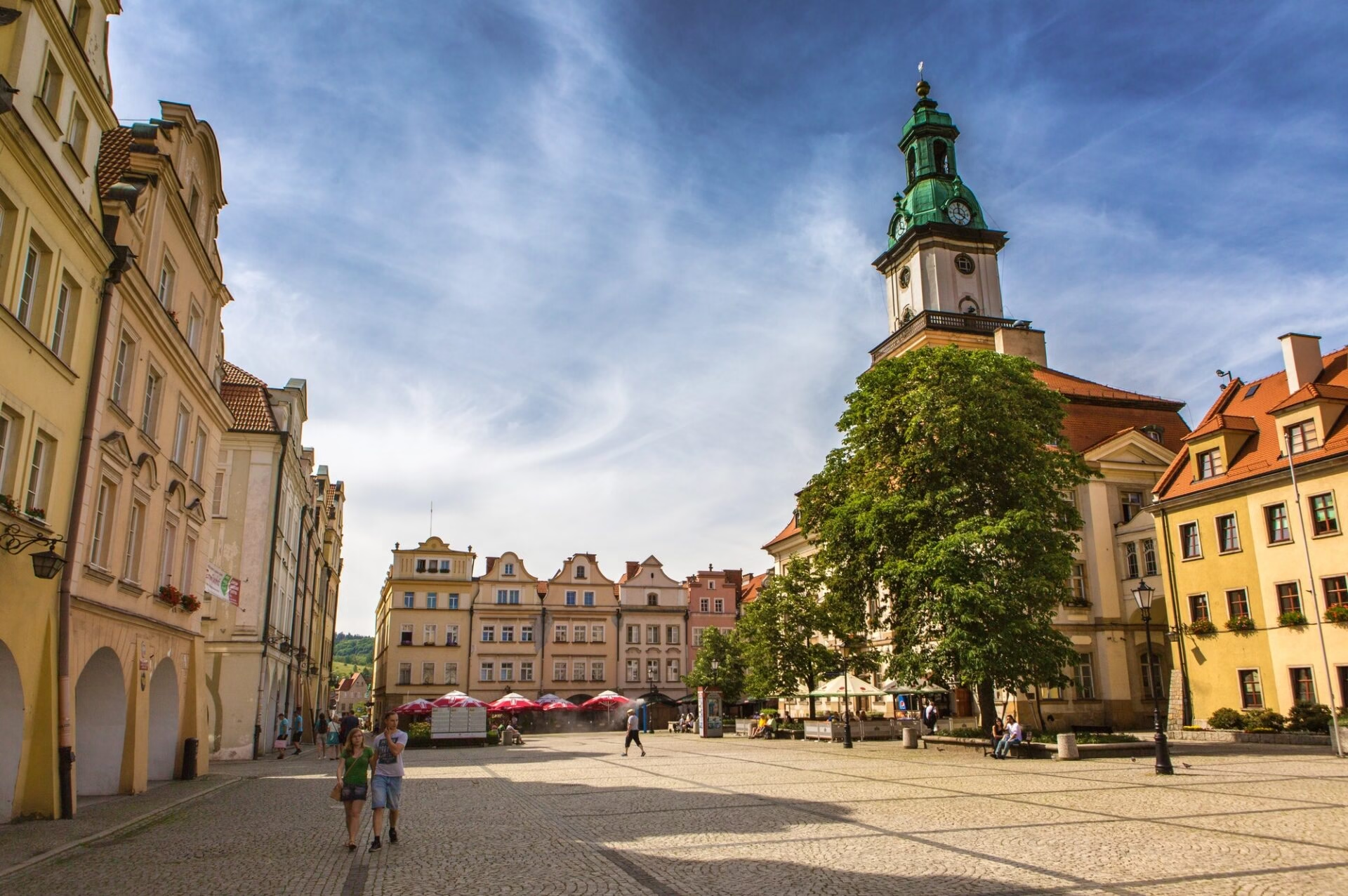
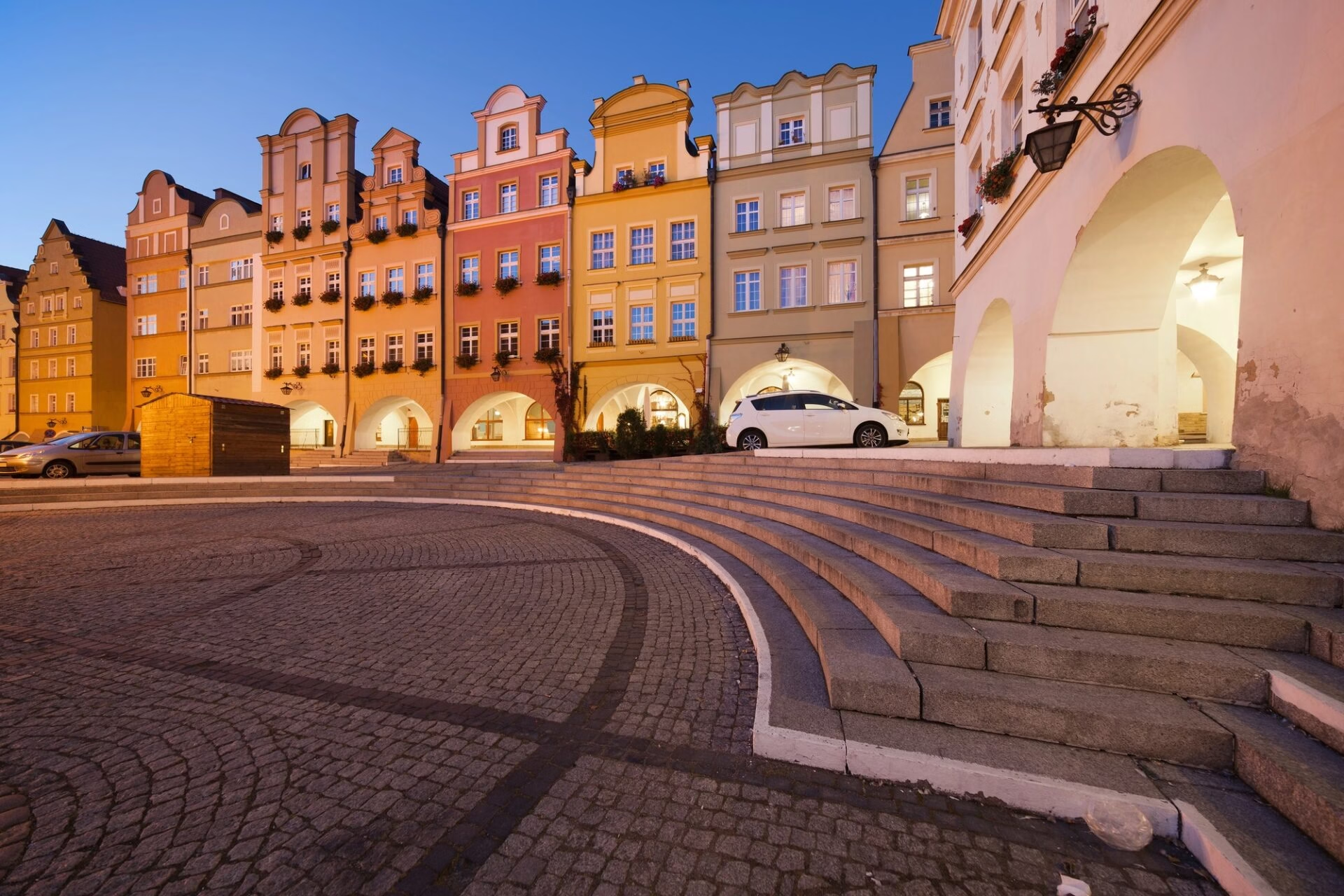
The arcaded houses lining the square are what visually defines Jelenia Góra: ground-floor archways sheltering cafés, restaurants and small shops run all the way around the perimeter, creating a natural promenade protected from the rain.
In the middle stands the classicist town hall, built between 1744 and 1749, with a 17th-century sandstone Neptune Fountain in front of it — a symbol of the town’s mercantile wealth.
Next to the town hall stands an old red tram — a reminder of the line that once connected the centre with Cieplice. Today it serves as the tourist information centre and souvenir shop.
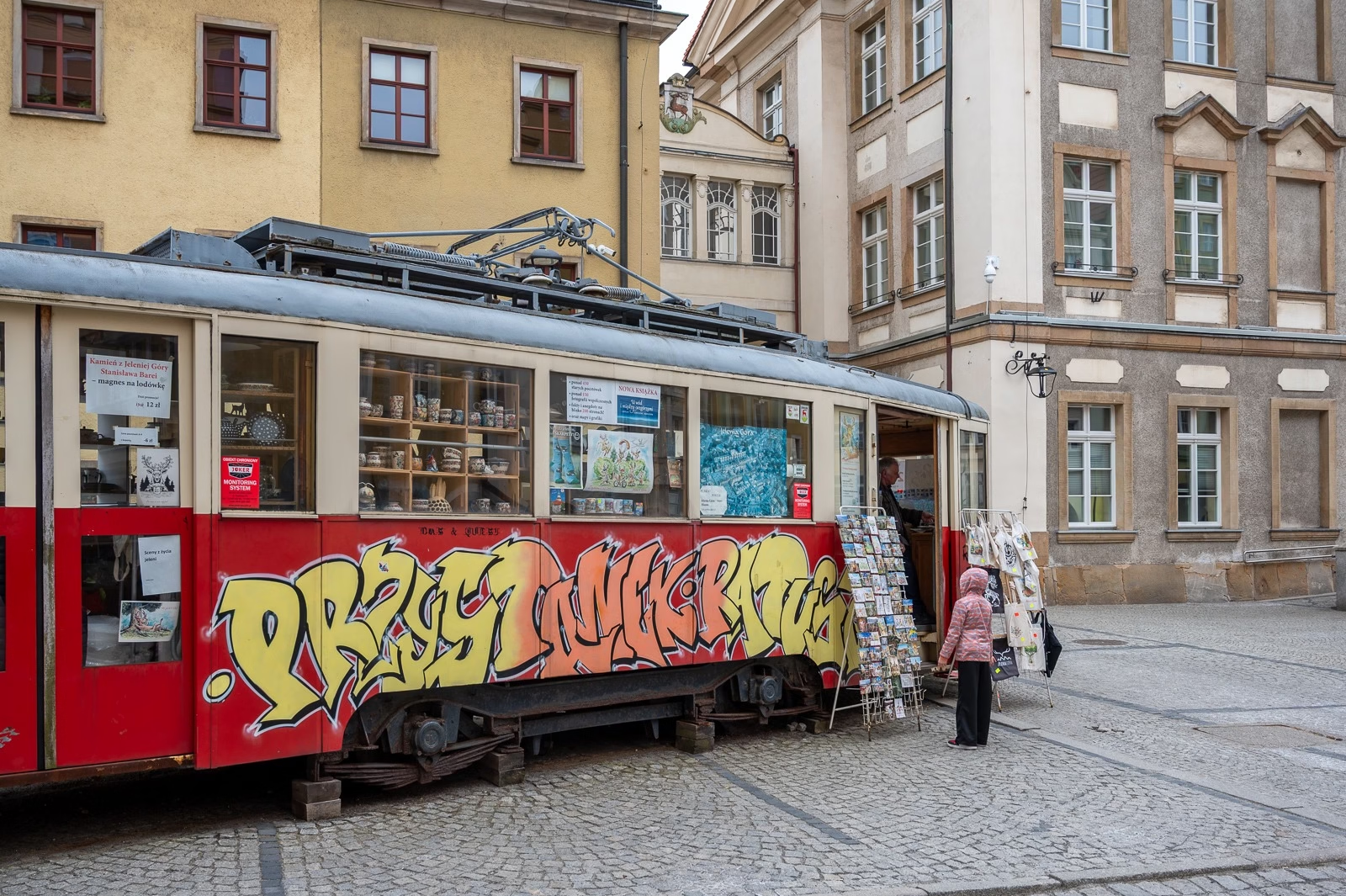
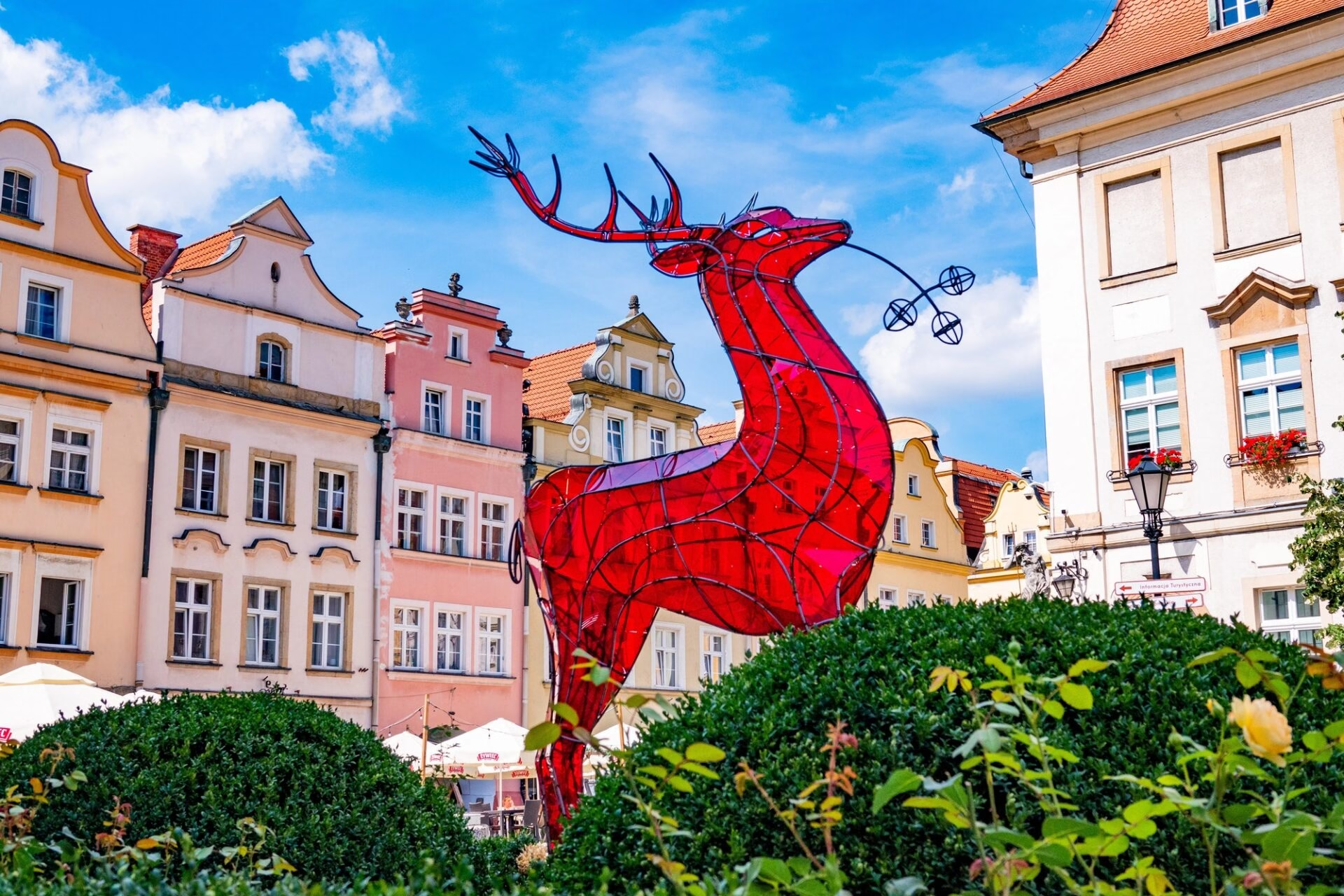
The tourist information centre, by the pink deer sculpture (the town’s symbol), is open weekdays, with shorter weekend hours.
The square and surrounding streets host regular markets. The most popular are the Christmas markets in December, when the square takes on a traditional Advent feel with stalls, mulled wine and handmade crafts.
Throughout the year, a market with fruit, vegetables and local produce runs in the centre — most often on Thursdays and Saturdays.
Church of the Holy Cross (Kościół Podwyższenia Krzyża Świętego)
This Protestant church is one of the reasons it’s not enough to just drive through Jelenia Góra.
Built in the shape of a Greek cross at the turn of the 17th and 18th centuries, the church is exceptional for one specific reason: alongside the religious motifs on the altar, you’ll also find secular elements depicting Jelenia Góra and the Silesian region. It’s the only such case in the world.
The interior was financed by local Protestant merchants, and the decoration reflects that: rich stucco and painted ornamentation, galleries running around the entire space, and a height that creates a real sense of monumentality.
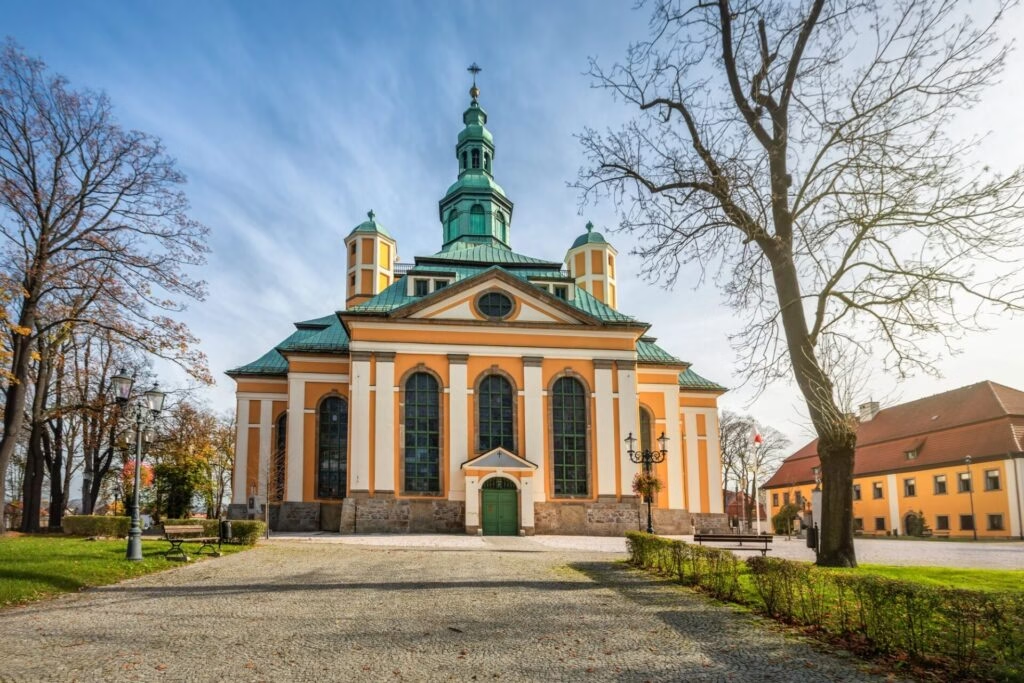
The church stands in the middle of a park that was originally a cemetery — old German tombs and chapels are still preserved along the wall. It’s worth a walk through the entire grounds.
Admission is by voluntary donation; the church is usually open in the morning and afternoon, with restricted access during services.
Basilica of Saints Erasmus and Pancras (Bazylika św. Erazma i Pankracego)
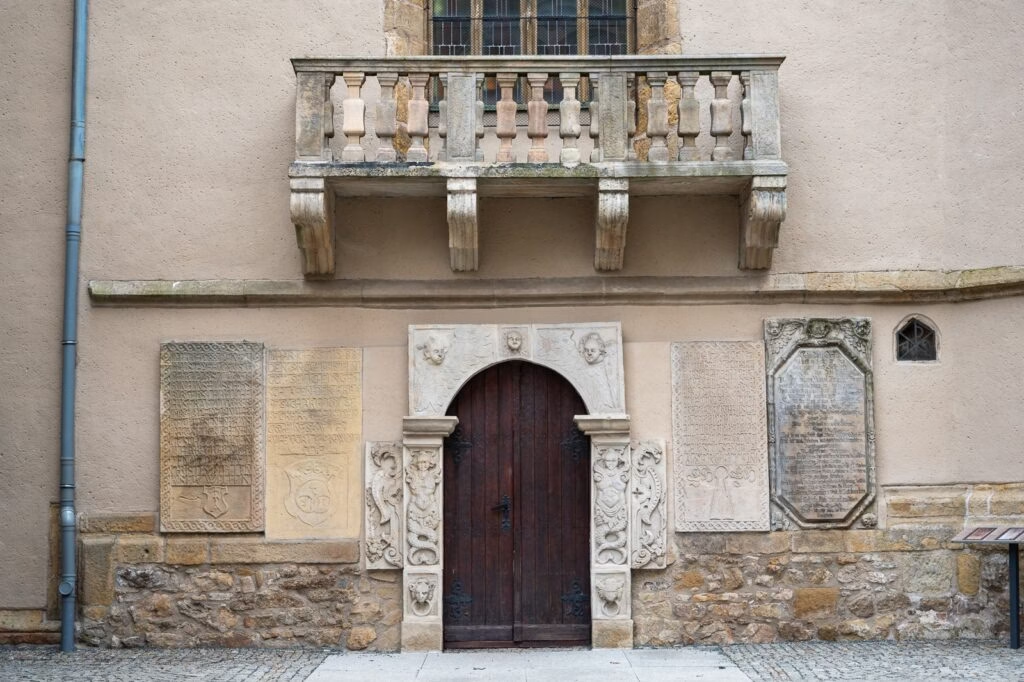
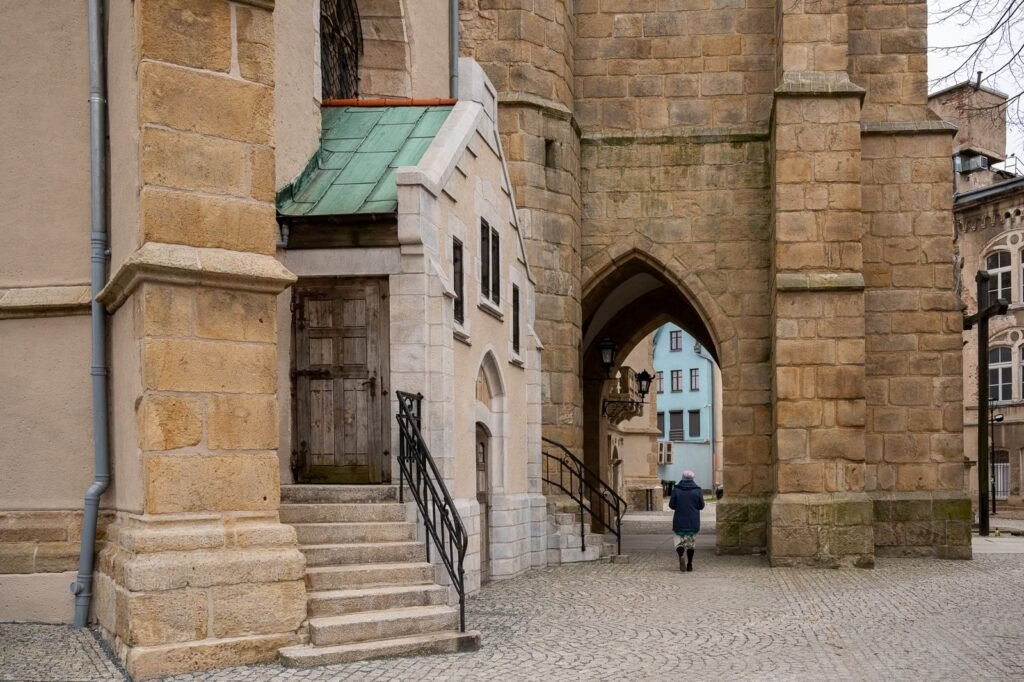
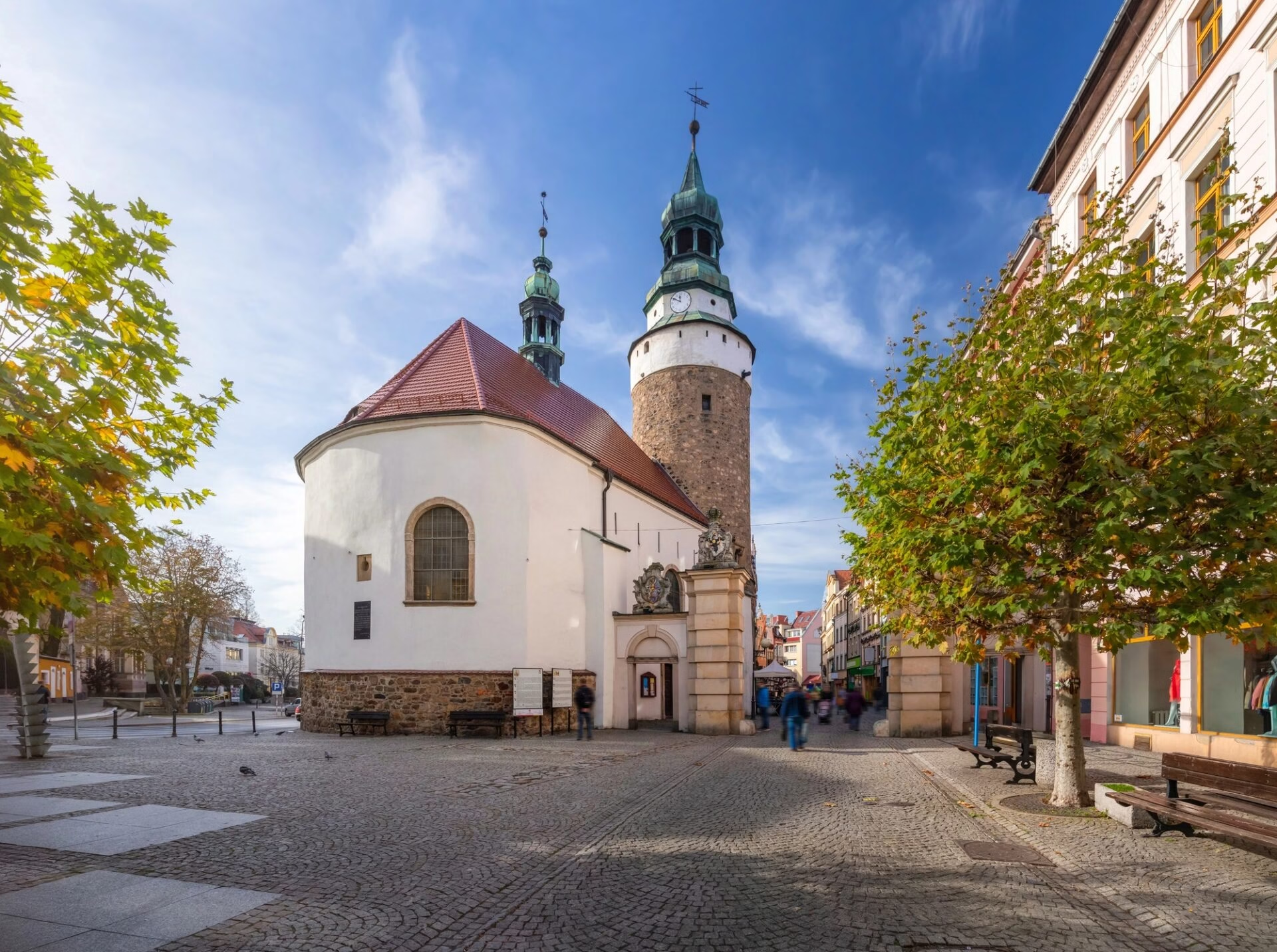
The oldest sacred building in Jelenia Góra stands on Church Square (Plac Kościelny), just a few steps from the Town Hall Square. It’s an originally Gothic three-nave basilica that later gained a baroque altar and decoration.
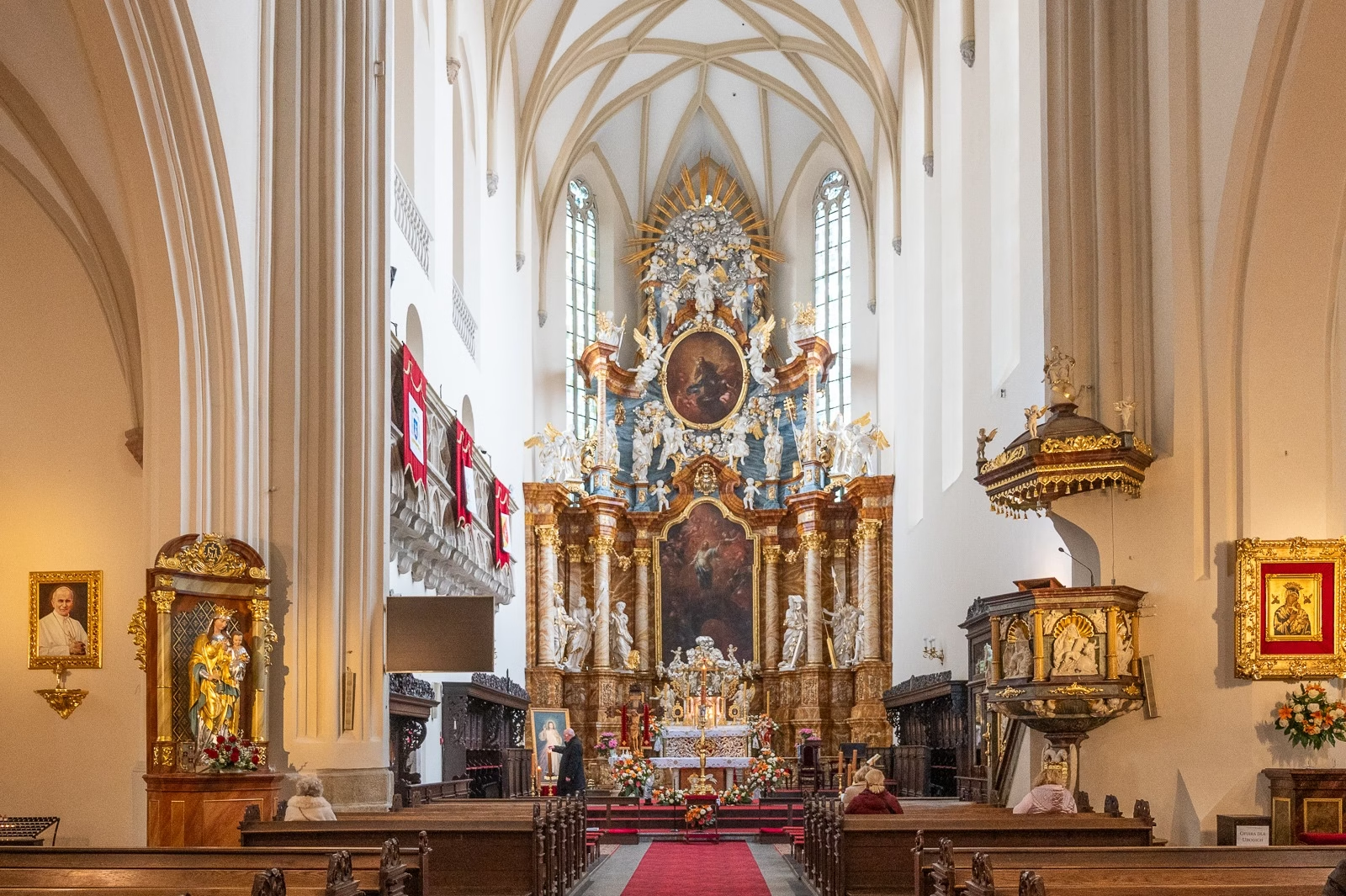
On the southern façade, a Gothic portal with a tympanum has survived — one of the most valuable stone-carving details in the region.
The basilica is freely accessible during the day, with restricted entry during services.
Castle Tower (Baszta Zamkowa)
The only surviving fragment of the medieval castle that once stood inside the town. Following its restoration in 2011, it now serves as a viewing point with a circular panoramic platform.
The view over the centre, surrounding hills and distant ridges of the Karkonosze is worth the short detour.
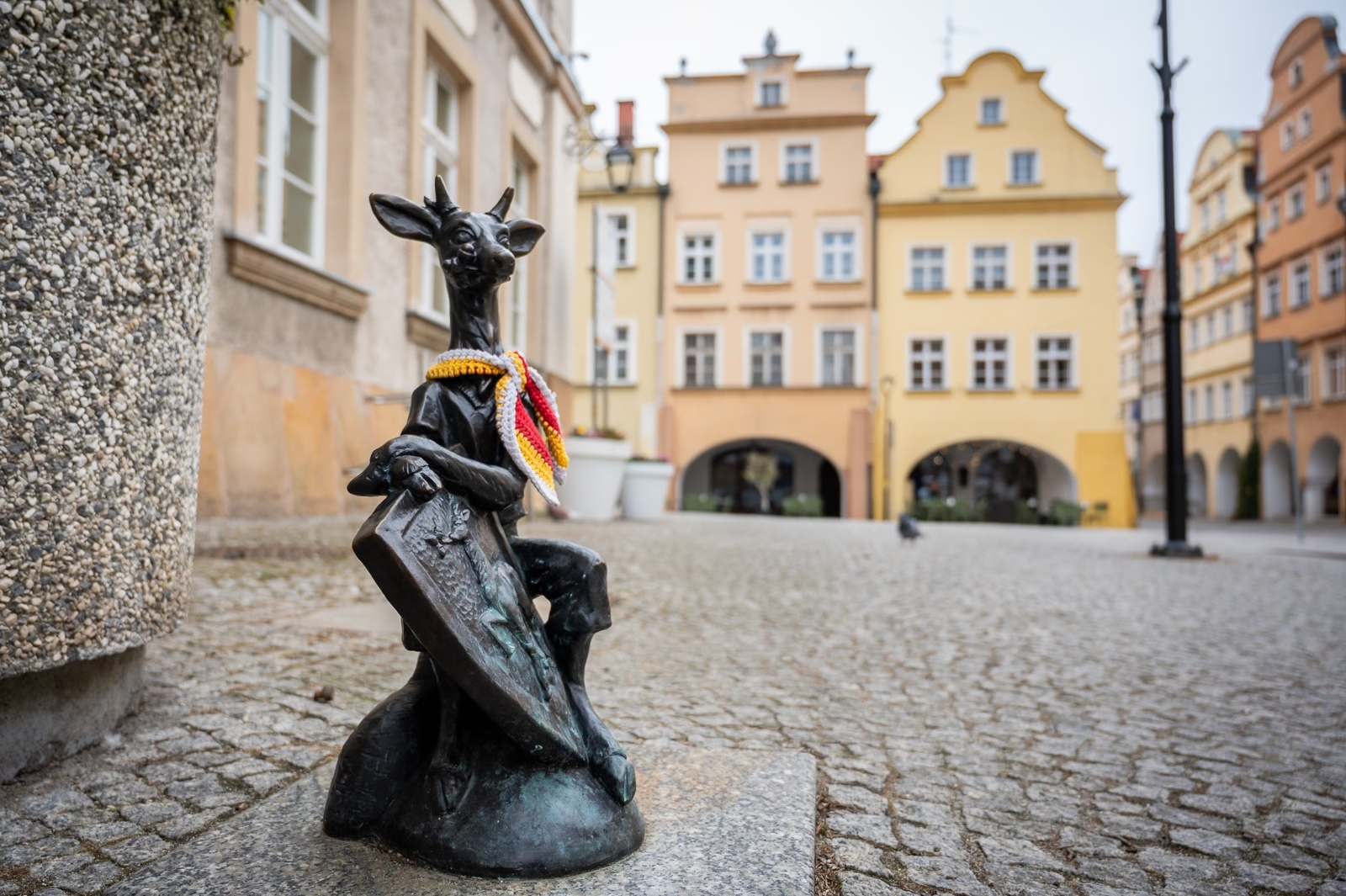
The Deer Trail (Szlak Jelonków)
Just like Wrocław has its dwarves, Jelenia Góra has its little deer. Small bronze figurines scattered across the centre play on the town’s name and the legend of its founding — according to which Bolesław III Wrymouth killed a deer on this very spot.
The figurines depict deer in different poses and professions, and are made by students and teachers of the local school of arts and crafts.
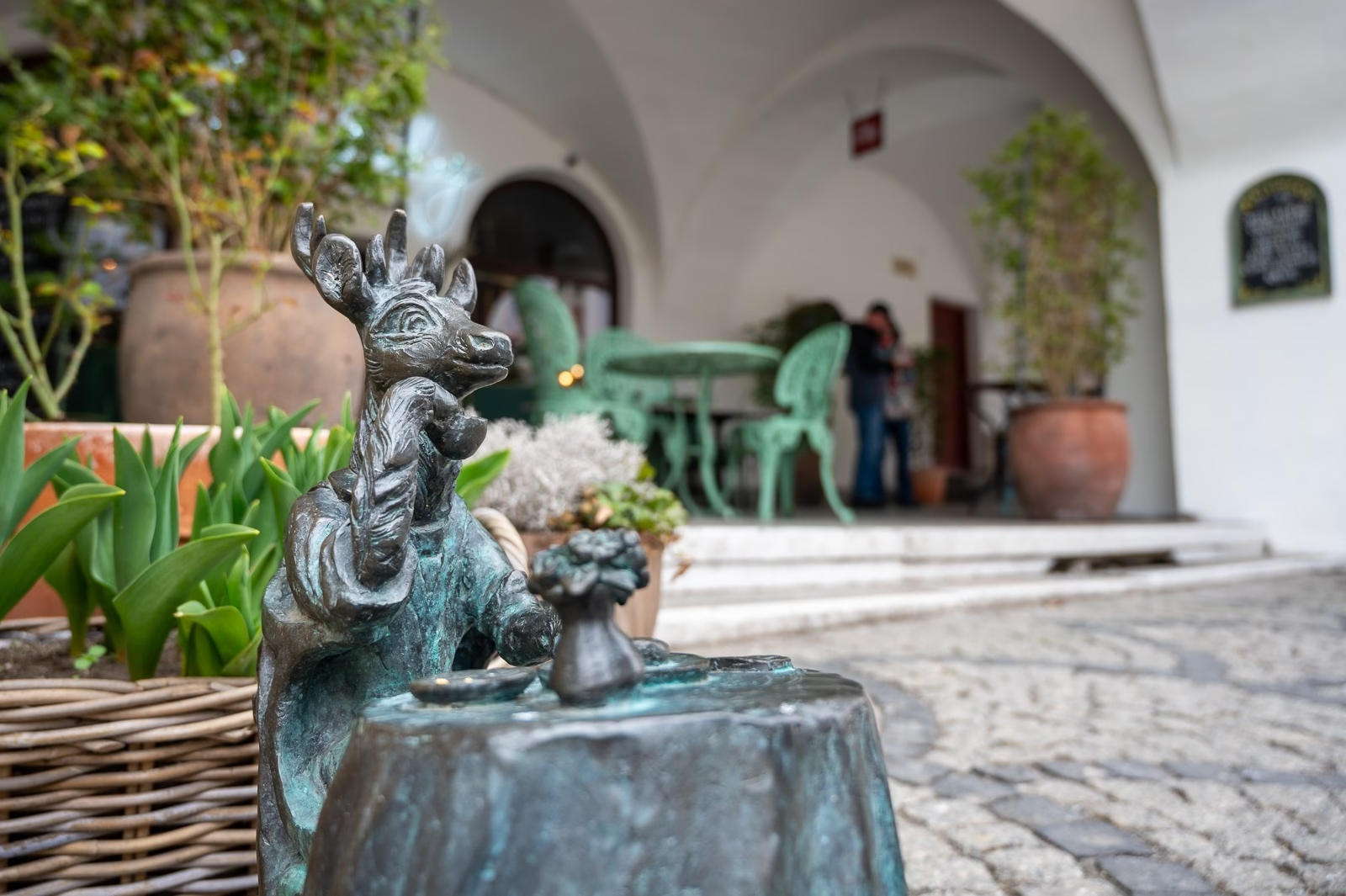
At the tourist information centre, you can pick up a map marking all the locations — there are currently more than 18, with new ones added each year.
Hunting for the deer is a fun activity that adds extra fun to exploring the centre — not only for kids.
Gates of Time (Bramy Czasu)
An underground tour route running through historic cellars and tunnels beneath the town centre. Guides lead visitors through a dramatised history of Lower Silesia across 1,200 metres of corridors with scenes from different eras — from the Middle Ages to World War II.
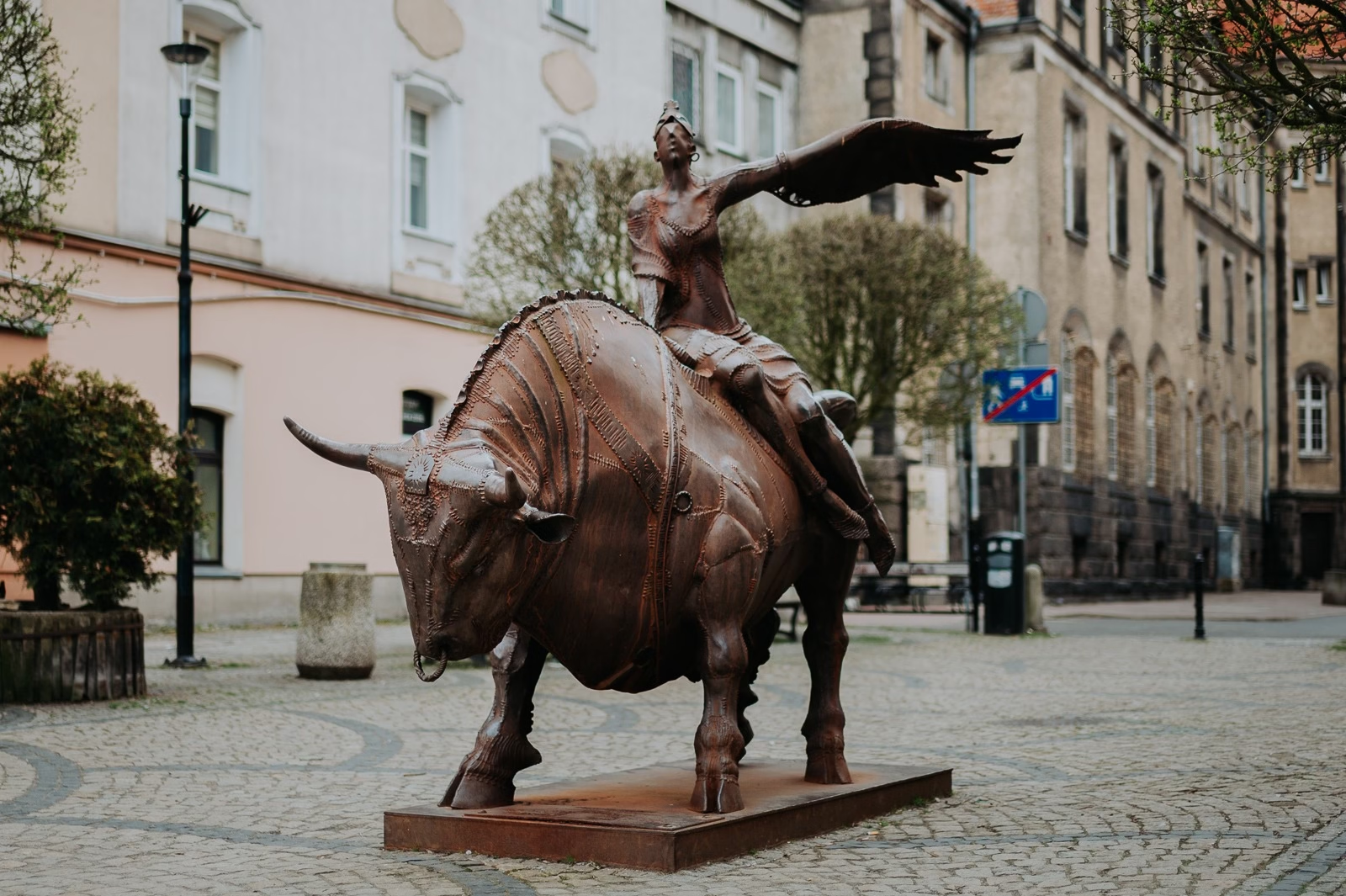
The guides tell stories with humour and energy, the atmosphere of the tunnels adds authenticity, and the slightly kitschy scenes are more of a strength than a weakness.
We recommend bringing warm clothing — the corridors stay around 10 °C year-round. The route isn’t suitable for those with claustrophobia.
Admission for the historical tour is 45 PLN (around €10), with free entry for children under 6.
Open daily from 10:00 to 17:00.
Tours run at fixed times with a guide; in high season, online booking via timegates.pl is recommended.
Tours are only available in Polish, but English, German and other translations can be loaded via QR code.
Karkonosze Museum (Muzeum Karkonoskie)
A regional museum with exhibitions on the history, nature and culture of the Karkonosze, and — most notably — the largest collection of artistic glass in Poland.
If you’re interested in context — the German past of the region, post-war resettlement, crafts or mountain geology — the museum will take about one to two hours.
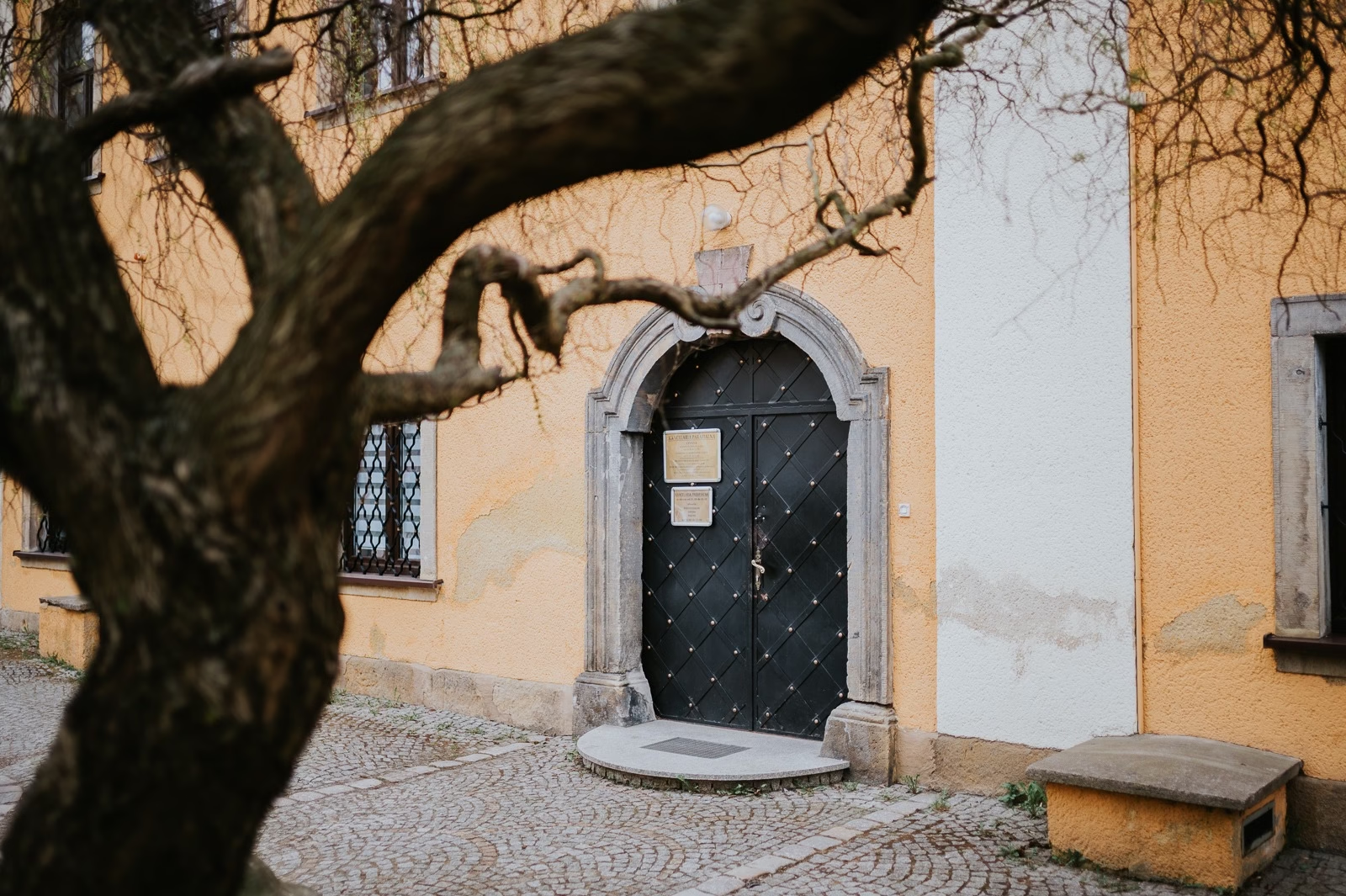
Open Tuesday–Sunday (closed Mondays). Summer season (April–September): 9:00–17:00; winter season (October–March): 9:00–16:00.
Admission for adults is 20 PLN (around €4.60).
Thermal spas in Jelenia Góra – Cieplice and Termy Cieplickie
Cieplice Śląskie-Zdrój is now administratively part of Jelenia Góra, but in atmosphere it’s a different place altogether.
People have been using the thermal springs here since the 13th century — Cieplice is the oldest spa town in Poland, and in the Middle Ages European nobility came here for treatment.
In the 18th and 19th centuries, when the spa was controlled by the Schaffgotsch family, famous guests included Johann Wolfgang Goethe, the Prussian king Frederick William III, and the future US president John Quincy Adams.
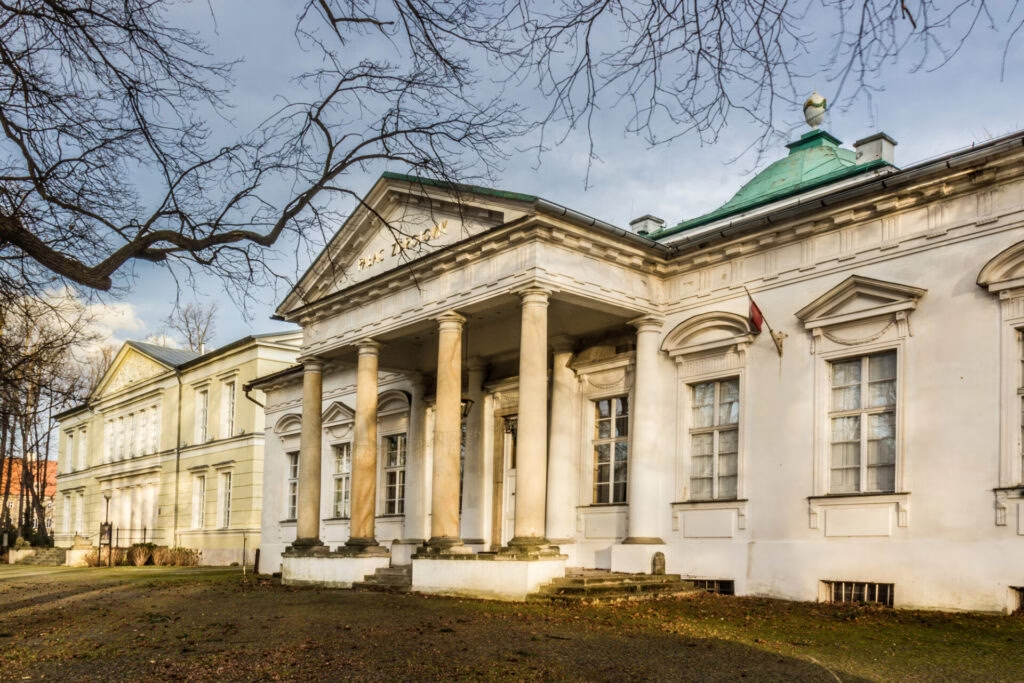
The centre of the spa district consists of two park zones — the Spa Park and the Norwegian Park. The Norwegian Park is named after the Norwegian-style timber architecture built here at the turn of the 19th and 20th centuries, which feels somewhat unexpected in the middle of a Silesian town.
The parks, the spa theatre and the classicist façade of the Schaffgotsch Palace along the pedestrian zone form an ensemble that’s pleasant to wander through with no particular destination in mind.
Termy Cieplickie
The thermal spas of Jelenia Góra are concentrated in Cieplice — and Termy Cieplickie is the largest thermal water park in the region.
Especially outside the summer season, it’s one of the main reasons for a multi-day stay. The complex uses mineral thermal water with a distinctive chemical composition.
Available are thermal pools at temperatures of 27–36 °C, sports pools, water slides, a children’s zone, jacuzzis, and a spa with Finnish, steam and infrared saunas plus a snow cave.
Open every day from 8:00 to 22:00.
Admission for two hours varies by time of day, ranging from 27 to 54 PLN (about €6–€12).
An all-day pass costs 83 PLN (around €19) — these prices don’t include access to the SPA zone, which is somewhat more expensive.
A family ticket costs 75 to 139 PLN (€17–€32) for two hours, again depending on the time of day.
An all-day family ticket costs 219 PLN (around €50).
Children under 4 enter free.
The price list is updated regularly — check current prices at termycieplickie.pl.
Natural History Museum (Muzeum Przyrodnicze)
The Natural History Museum is housed in the historic part of Cieplice and holds mineralogical, zoological and botanical collections, with a focus on the Karkonosze region.
For families with children, it’s a nice complement to the spa — the visit takes an hour to an hour and a half.
Day trips from Jelenia Góra
Chojnik Castle
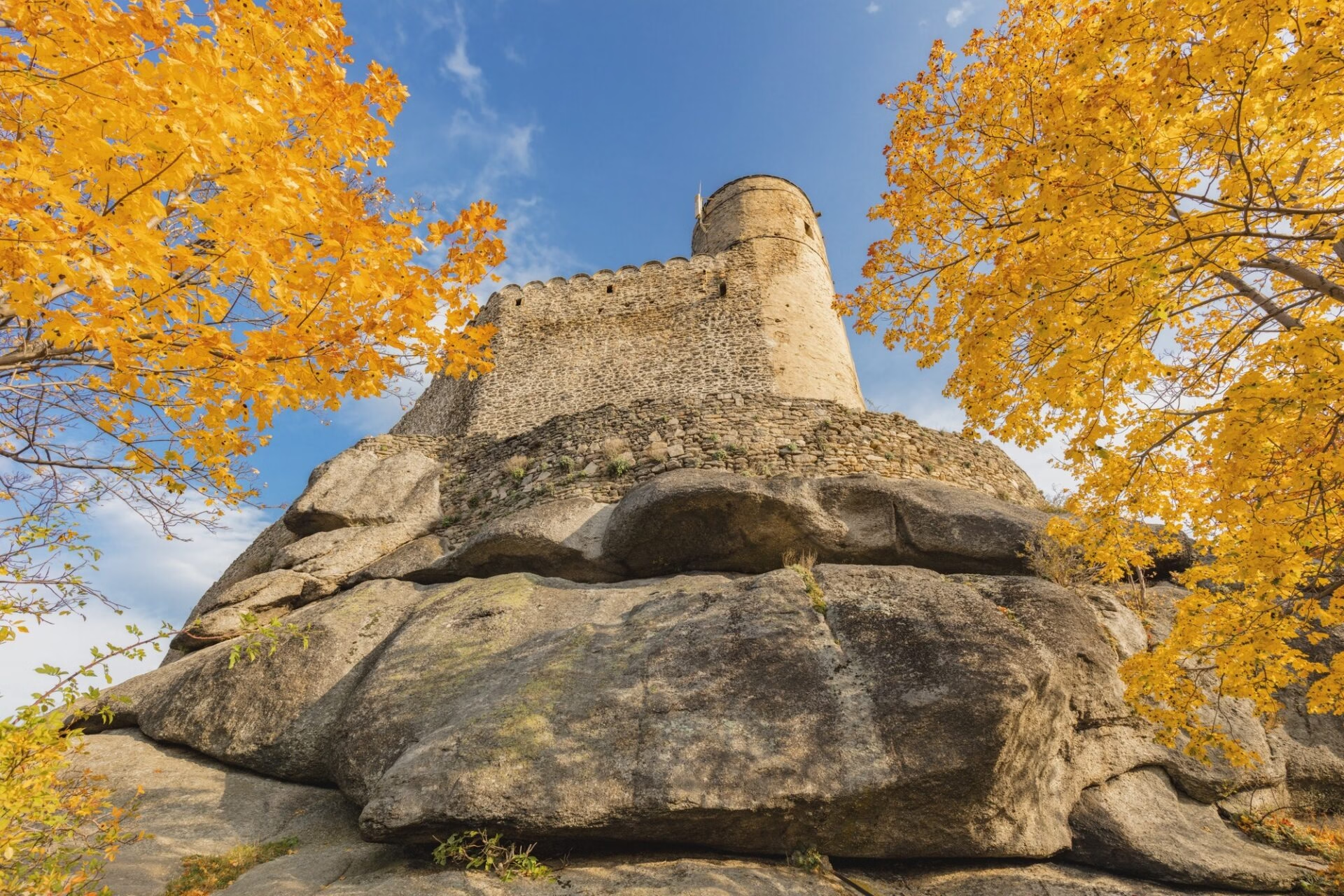
The Gothic ruin atop its namesake hill (627 m) above the Sobieszów district is the most popular day trip from Jelenia Góra — and deservedly so. The view from the castle tower over the Jelenia Góra valley, the surrounding ridges and distant peaks more than compensates for every metre of the climb.
A legend tells of Kunigunde, the beautiful daughter of the castle’s lord, who promised to marry the man who could ride three times around the castle’s parapet on horseback. Every suitor fell to his death in the gorge — except one. But he then refused her, and in despair she leapt into the chasm herself. The cliffs below the castle have been called the Hellish Valley ever since.
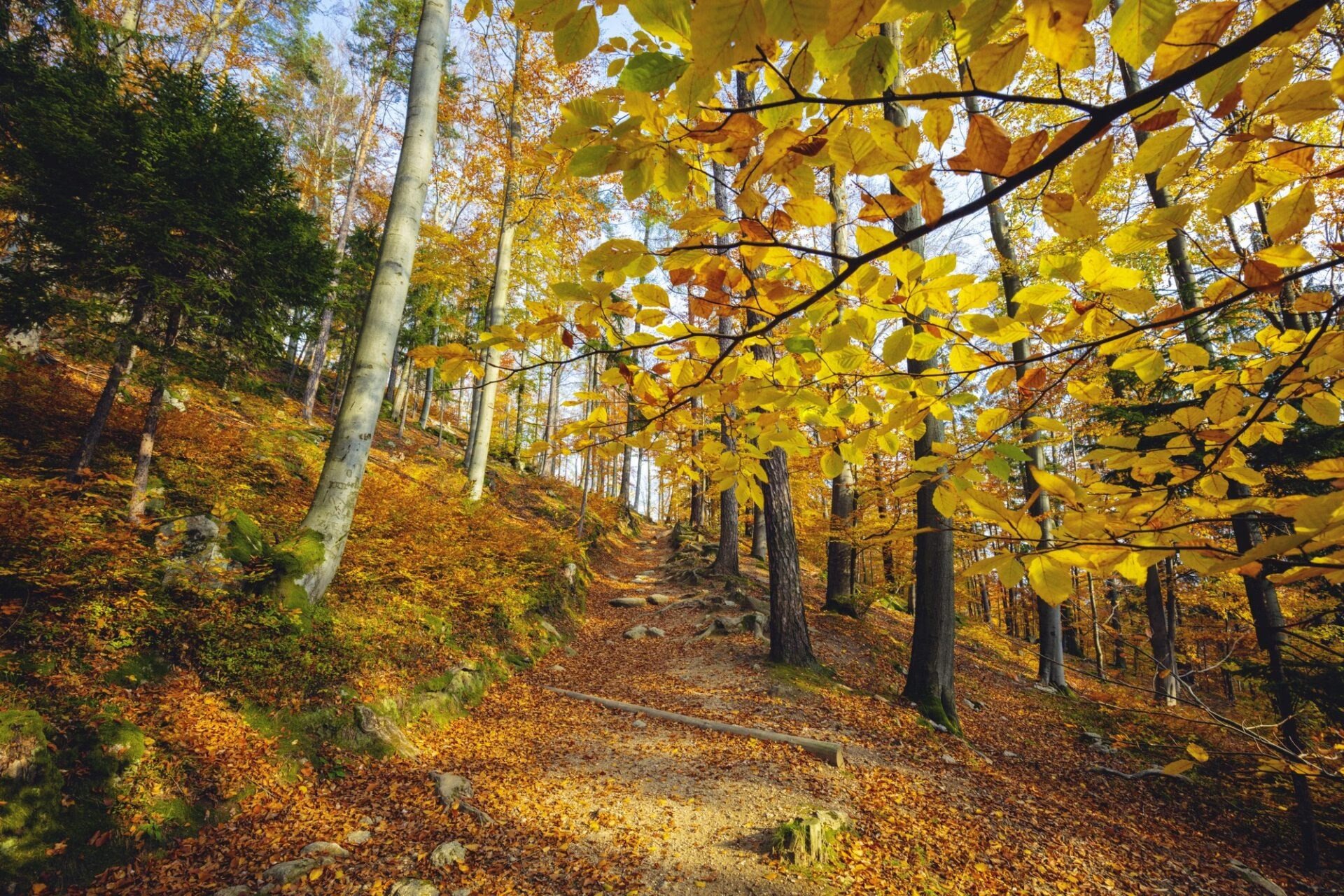
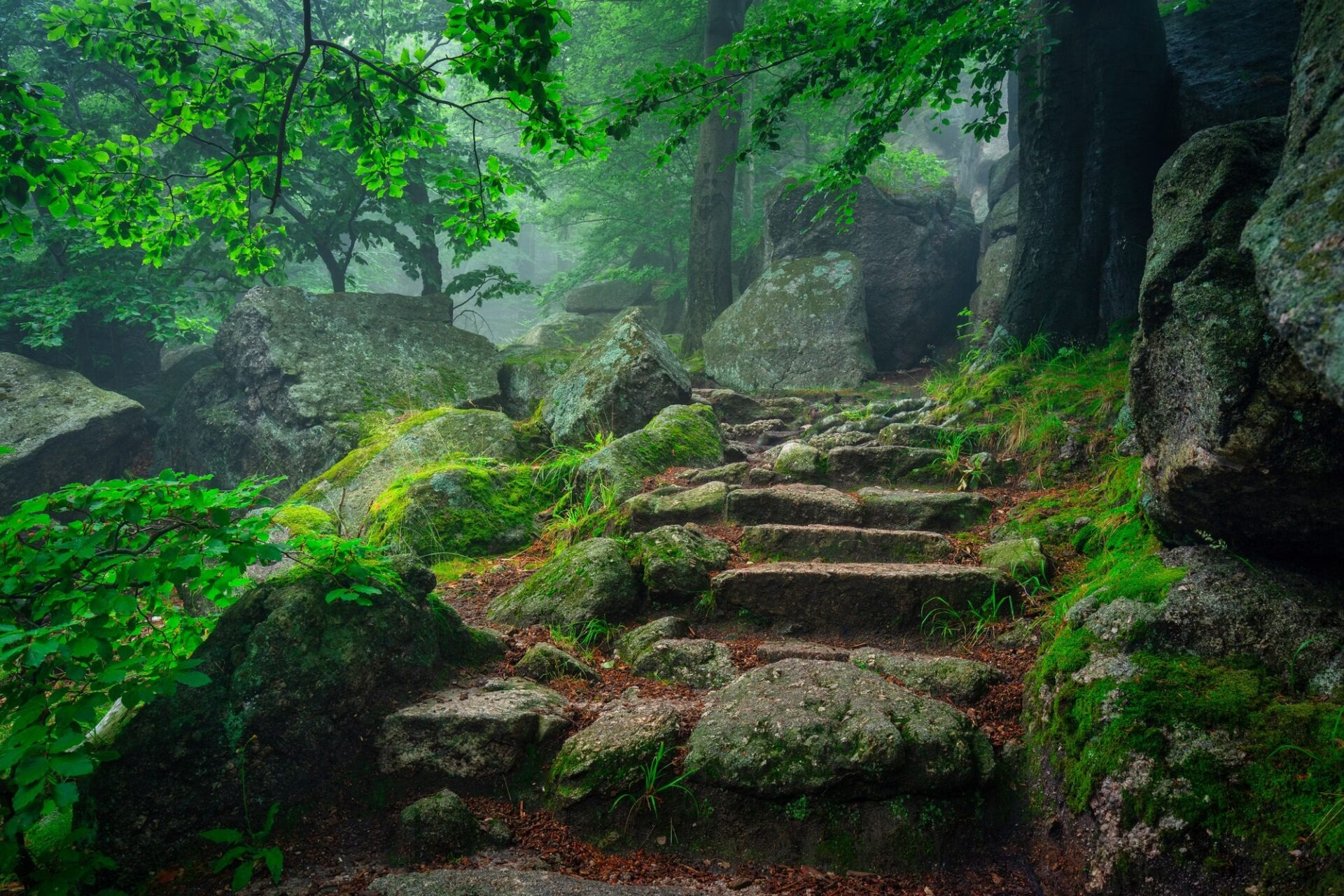
Marked hiking trails lead to the castle — the most popular starts from the car park in Sobieszów, and the climb takes about 30–45 minutes. The path is steep and rocky in places, and slippery in wet weather.
Admission consists of two parts: castle entry costs 15 PLN standard / 8 PLN reduced.
On top of that, you’ll need a one-day Karkonosze National Park (KPN) pass – 10 PLN standard / 5 PLN reduced.
Total: 25 PLN (around €5.70) per adult. The KPN pass is valid for the whole day.
Opening hours change with the season: summer (June–August) 10:00–18:00; spring and autumn (April, May, September, October) 10:00–17:00; winter (January–March, November, December) 10:00–16:00.
Up-to-date info at chojnik.pl.
From Jelenia Góra, you can reach Sobieszów by city bus (lines 4, 6, 9, 14, 17, 26 — Pod Koroną stop), or about 10 minutes by car.
Bolczów Castle
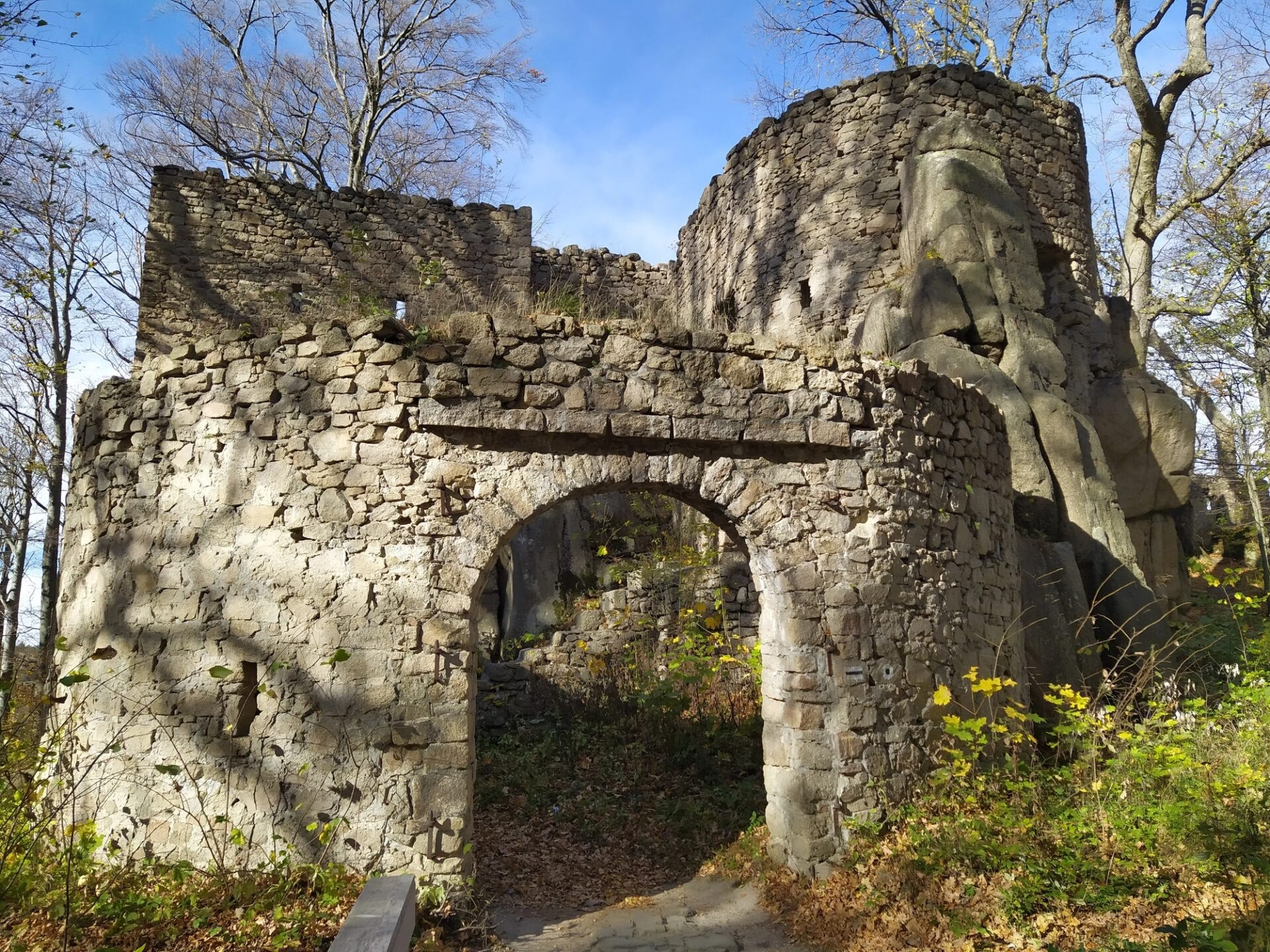
While Chojnik draws the crowds, Bolczów stays relatively quiet. The medieval castle ruin lies in the Rudawy Janowickie above the village of Janowice Wielkie, about 15 km from Jelenia Góra.
The castle is less well preserved than Chojnik, but the surrounding landscape — wooded hills with rocky outcrops — is arguably even more beautiful.
The hike from Janowice Wielkie takes about 40–50 minutes; entry is free.
By car from Jelenia Góra, it’s about a 20-minute drive.
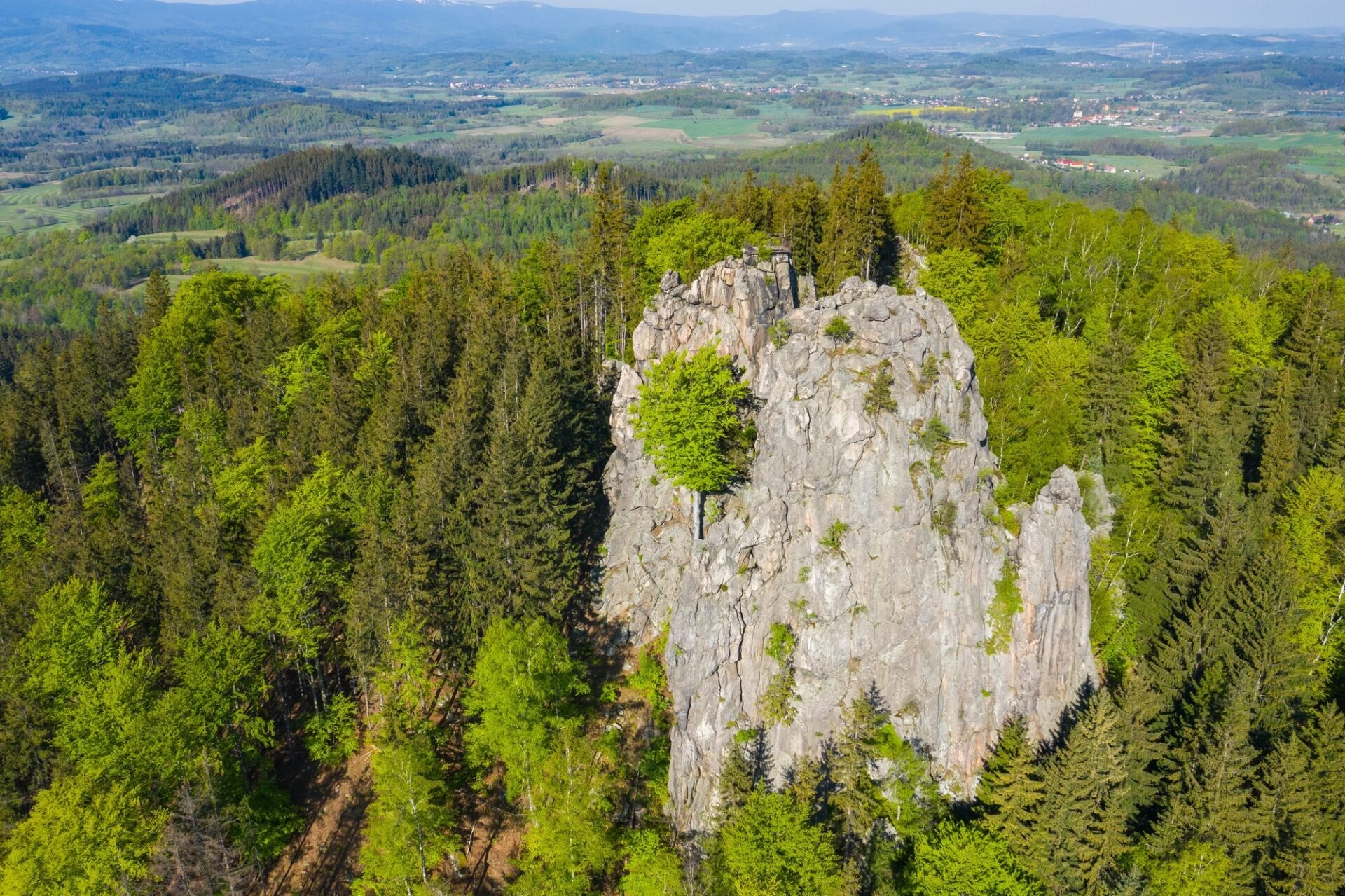
The combination of Bolczów and a hike in the Rudawy is a great option for active travellers spending a few days in Jelenia Góra.
Bóbr Valley (Park Krajobrazowy Doliny Bobru)
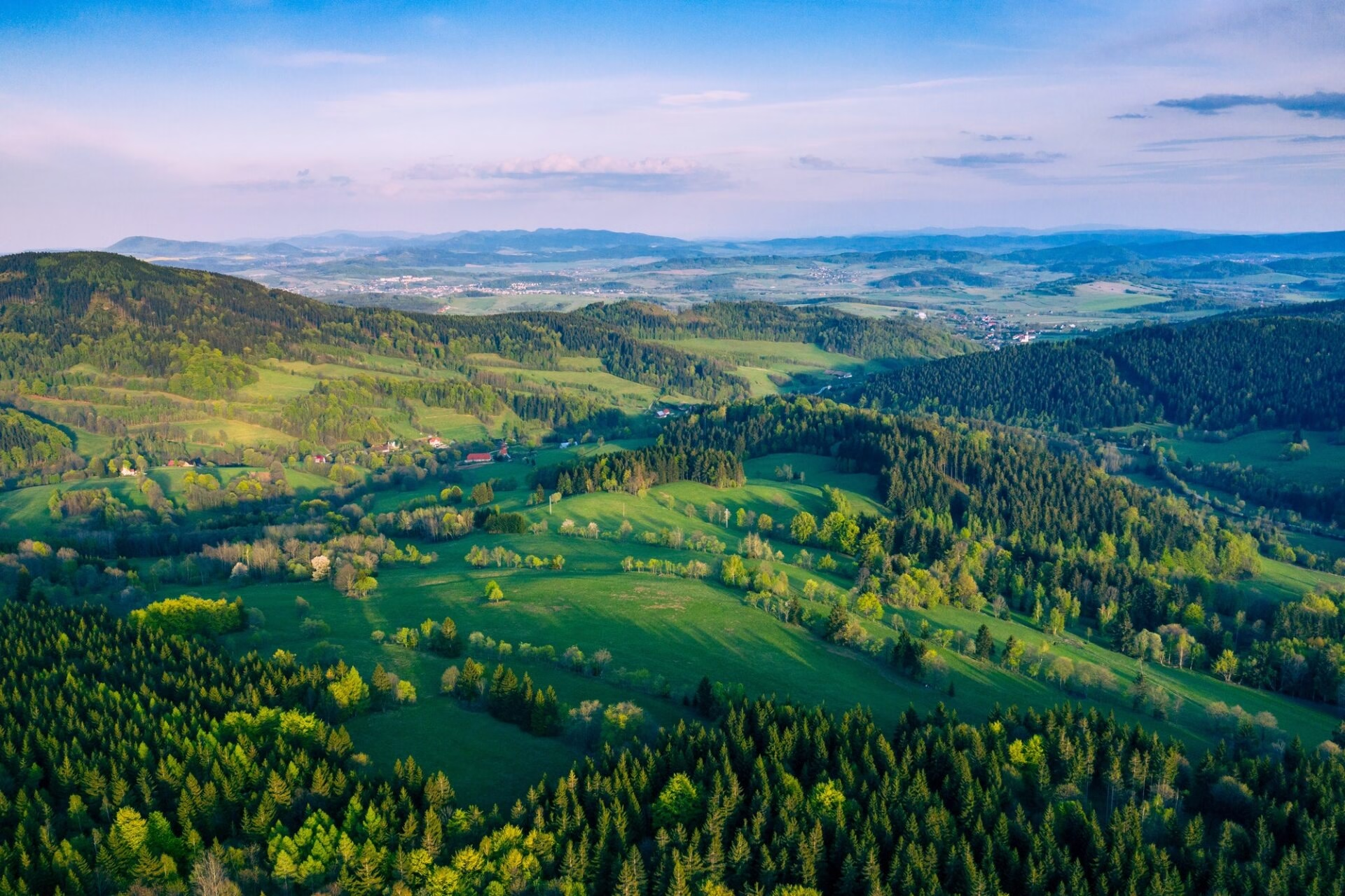
The Bóbr River flows through Jelenia Góra, and to the north-west of town it carves a rocky gorge lined with forest.
The walking trail starts in the Borowy Jar district, runs along the river past rock formations and the Blue Lake (a reservoir built between 1924 and 1925), all the way to the Perła Zachodu (Pearl of the West) mountain hut from 1927.
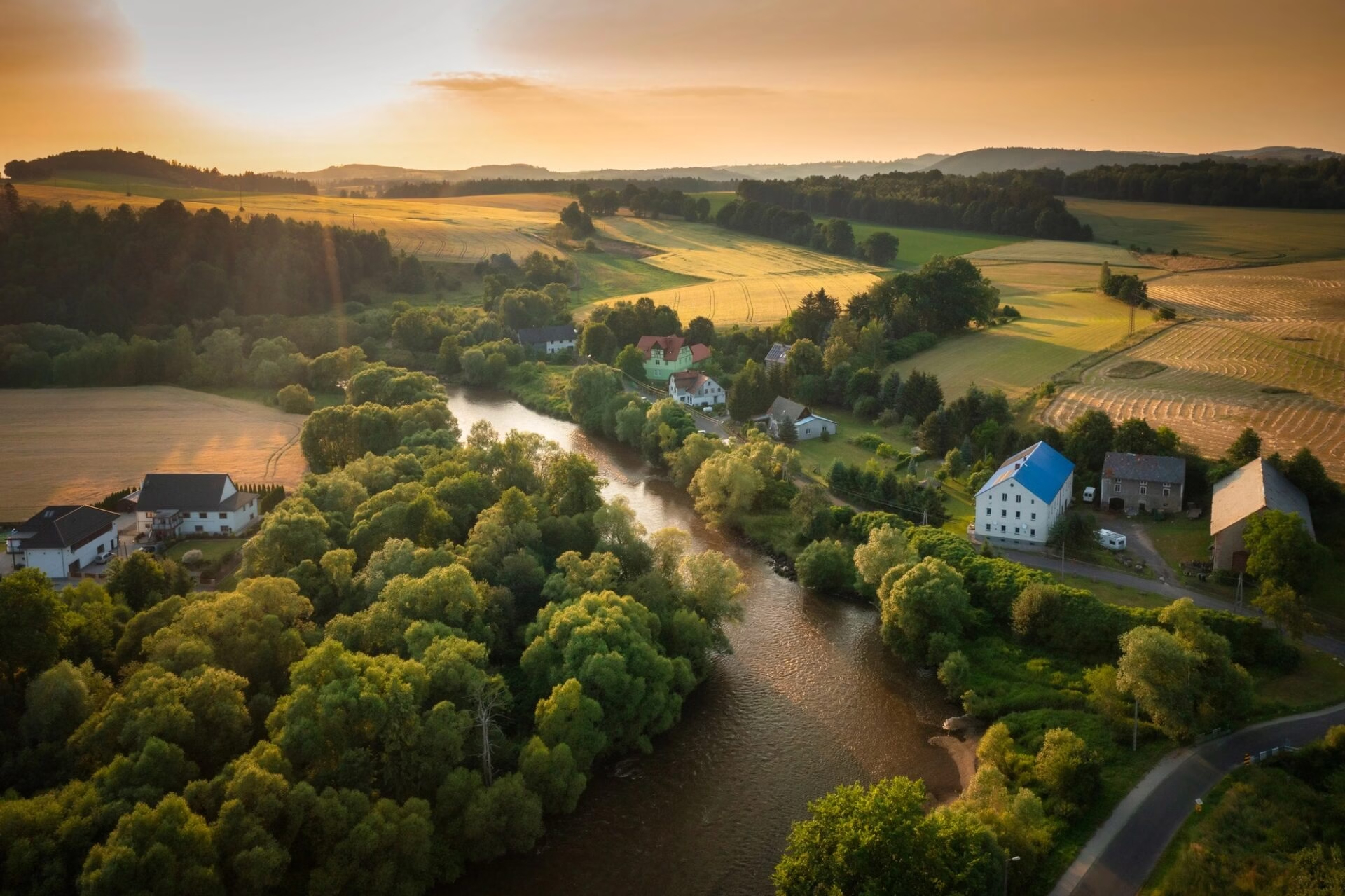
Along the way, you’ll pass a railway bridge spanning the gorge 33 metres up, and the island of Koniec Świata (End of the World) with the remains of an old paper mill.
The trail is easy and accessible to families and less experienced hikers. There and back, allow about three hours.
Food and drink
Jelenia Góra isn’t a foodie destination in the strict sense, but for a town its size it offers a solid selection — from classic Polish cuisine through casual bistro food to decent Italian pizza. Coffee lovers will be happy too.
Where to eat:
- Drama restobar – A cosy restobar in the centre, a great stop for Polish classics like żurek and pierogi.
- I Love Pasta – Just outside the centre, but the fresh pasta and good prices make it an easy choice.
- Kucie Smaku – A traditional Polish restaurant with home-style cooking, a good choice for a hearty lunch.
- Cytrynowy Pieprz – Italian restaurant right in the centre — solid pizza and pasta at reasonable prices.
- I Love Pizza – The best wood-fired pizza in Jelenia Góra, great value for money.
- Restauracja “Kaczka na Wodzie” – Outside the centre, but their cooking is worth the short detour.
- Figo Fago Pizza&Cafe – A family pizzeria in Cieplice with thin-crust oven pizza and other Italian dishes.
- The Norwegian Pavilion – A historic Norwegian pavilion from the 1900 Paris Exhibition – unique setting and good food.
- ZapiekAnki – A small bistro in Cieplice focused on Polish zapiekanki and homemade breakfasts — run by genuinely passionate owners.
Where to grab a coffee:
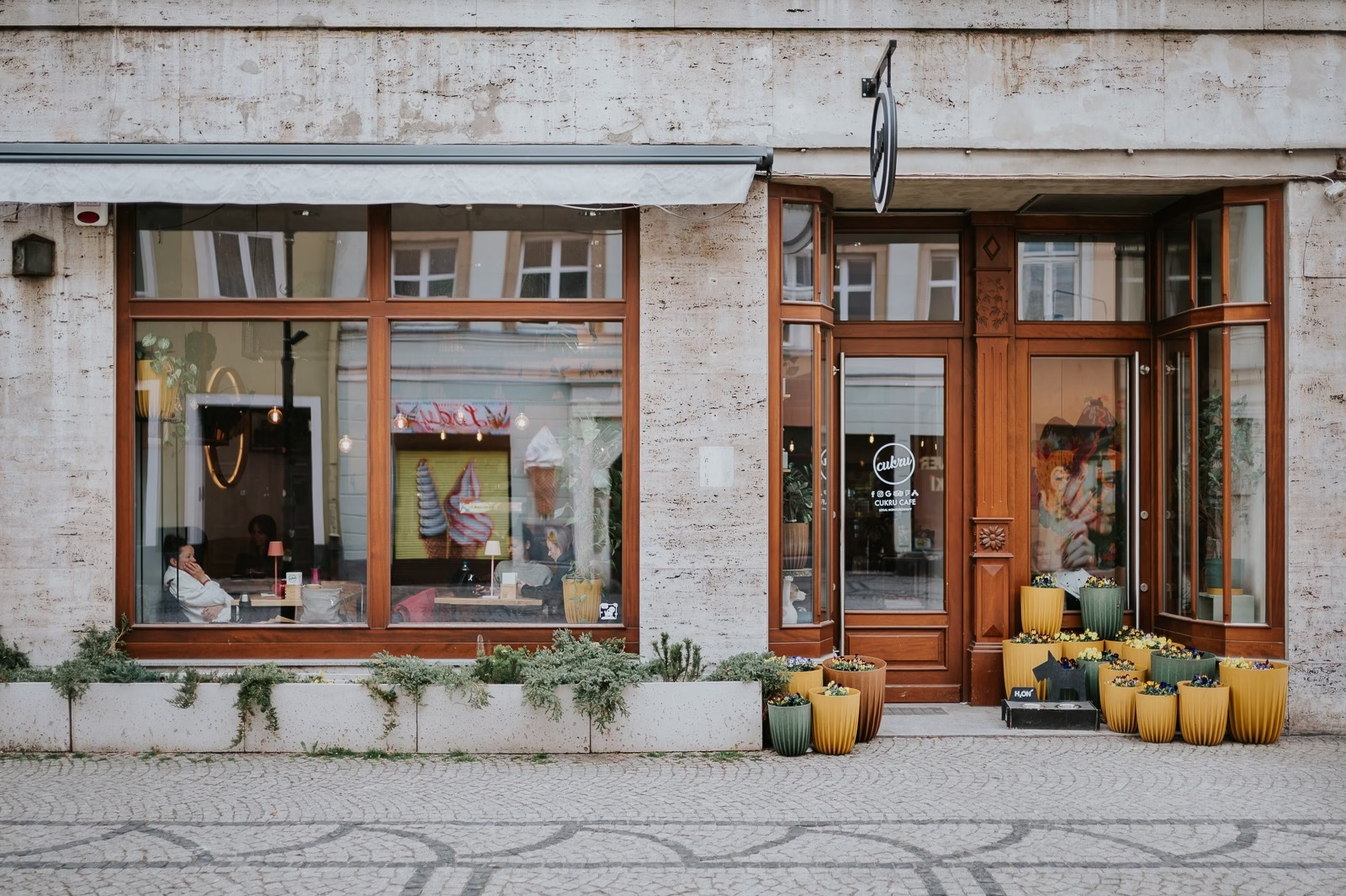
- cukru.cafe – A pleasant café with excellent filter coffee and espresso, popular brunches at weekends.
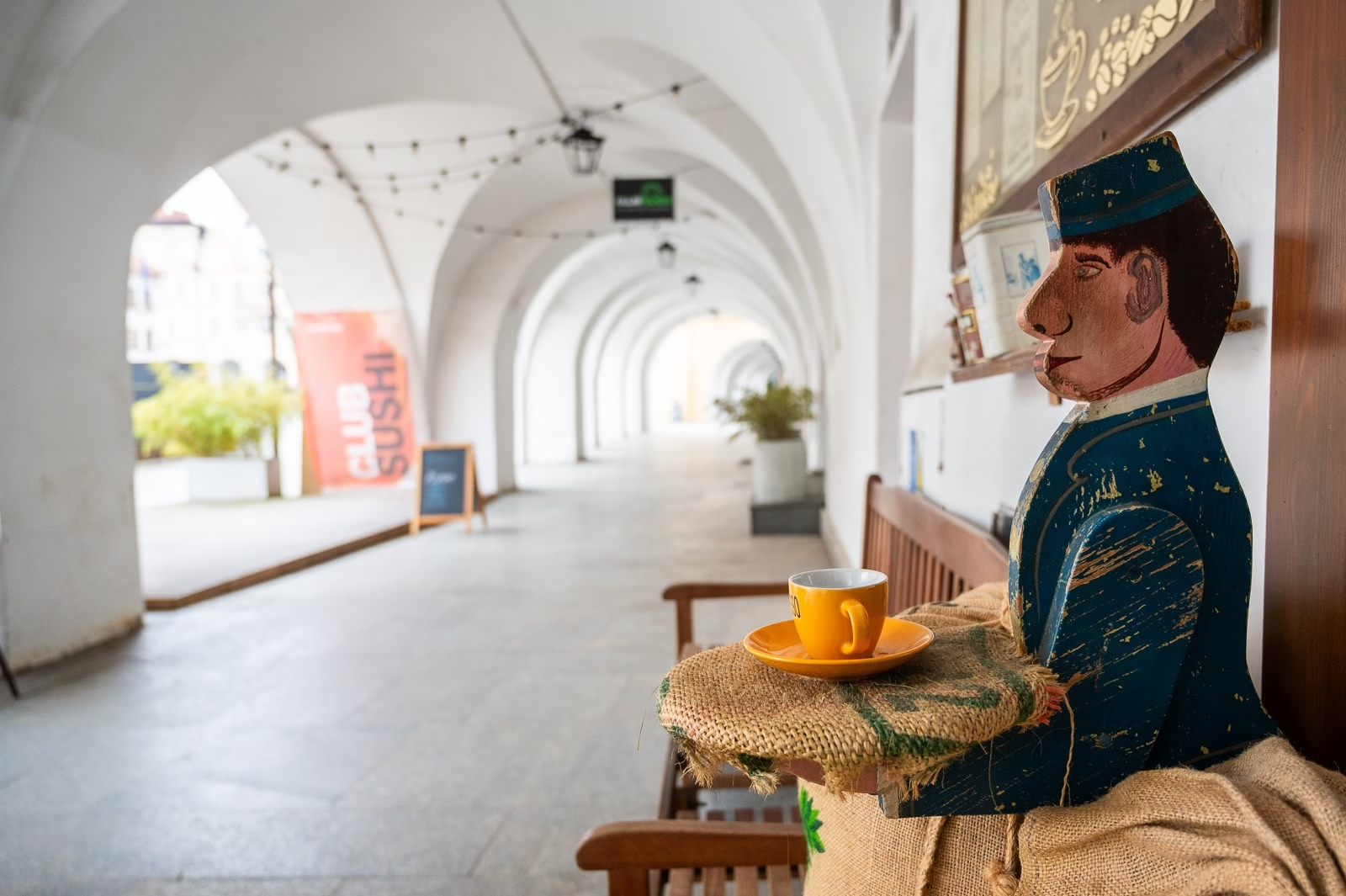
- Palarnia kawy Aroma Cafe – A roastery and café right on the square — their own freshly roasted coffee and good breakfasts.
- Caffe.Pati – Italian style from espresso to desserts, a wide selection of cakes and tarts, a pleasant spot in the centre.
Where to stay in Jelenia Góra
The basic choice is between the centre of Jelenia Góra and Cieplice.
The centre is livelier, closer to restaurants and the evening scene. Cieplice offers a quieter setting, a spa-town atmosphere and direct access to the thermal water park — it makes most sense if the spa is the main reason for your stay.
Central Jelenia Góra
- Apartament Green Wall – Modern apartment in a 2018 building, two minutes’ walk from the Town Hall Square. Parking included.
- Apartamenty EDK – Apartments in the historic centre with parking in an enclosed courtyard. Popular with returning international guests.
- Apartement Starówka – Right on the Town Hall Square with views of the town hall. Spacious 69 m² apartment, free parking.
- Apartament Ratuszowy DeLuxe – Also right on the square, 10/10 location score. Free parking, family-friendly.
Cieplice – the quieter option
Several guesthouses and smaller hotels of varying quality operate in the spa district. Indicative prices per night with breakfast range from about €35 to €60, depending on season and the specific property.
- Mountain Villa View Apartment – Art Nouveau villa from 1900 with a garden and mountain views.
- Apartament przy Termach Cieplickich 2 – A peaceful address with terrace and garden, a 25-minute walk from Termy Cieplickie.
- Apartament Kasprzaka – Karkonoski Azyl – A newly renovated apartment in a quiet part of Cieplice, close to shops and the spa.
- Apartament w Cieplicach Gold – A modern apartment with a balcony and mountain views, facilities rated 9.9/10.
- Brzoza i Świerk – Loft apartment with views of the Snow Cauldrons and Chojnik Castle, private pool, 5 minutes’ walk from Termy.
Surrounding area
- Brzoza i Świerk – Loft apartment in Cieplice with views of the Snow Cauldrons and a private pool, 5 minutes’ walk from Termy.
- Lazy Deer – Camp – Wooden cabins in the village of Staniszów between Jelenia Góra and Karpacz. Garden with a fireplace, playground, peace in nature.
- Słoneczne Wzgórze – Family houses with a swimming pool and mountain views in Jeżów Sudecki.
If you’re looking for something beyond the standard hotel offer: the area within 10–15 km of Jelenia Góra is home to several historic palaces converted into hotels — for example Pałac Wojanów or Pałac Łomnica. They aren’t cheap, but they’re a stay in a different category of experience.
Practical information
How to get to Jelenia Góra
Within Poland, Jelenia Góra is well connected — there are long-distance trains and buses running from here. By car, you can quickly reach the S3 expressway and continue further inland.
By car
For most travellers from Central Europe, driving is the most practical option, since you probably want to explore the surrounding area.
From Wroclaw it’s 1 hour 45 minutes, from Dresden it’s 2.5 hours; from Prague just under 3 hours (via the direct route through Harrachov), and 4 hours 45 minutes from Wroclaw.
Parking in central Jelenia Góra is paid: roughly 3–7 PLN (€0.70–€1.60) per hour depending on the zone, with plenty of car parks. You pay via the EasyPark app.
By bus
There are limited direct bus connections from bigger Polish cities, although train is usually a better option.
FlixBus also runs direct services from Prague to Jelenia Góra — the journey takes around 3.5 hours, with tickets from about €15. The bus stops right by the railway station in the centre. Definitely book online in advance.
By train
There are direct trains from Wroclaw, Poznan, Warsaw or Gdansk. All running with modern railcars and with reasonable speeds. Book online in advance to get better prices.
You can also reach Jelenia Góra by train from Germany, with one change in Görlitz or Wroclaw.
Money and prices
The currency is the Polish złoty (PLN). The exchange rate is roughly 1 EUR ≈ 4.3 PLN (always check the current rate).
You can pay by card in the vast majority of restaurants and shops; smaller stalls or parking machines may require cash.
Indicative daily costs per person:
- Lunch at a restaurant: 30–50 PLN (€7–€12)
- Coffee: 10–15 PLN (€2.30–€3.50)
- Chojnik Castle entry (castle + KPN): 25 PLN (€5.70)
- Karkonosze Museum: 20 PLN (€4.60)
- Termy Cieplickie (2 hours, peak time): 52 PLN (€12)
For an active day with lunch, a castle visit and one museum, you’ll spend about 100–150 PLN (€23–€35) per person, excluding accommodation.
Shopping
Jelenia Góra is a popular shopping stop for visitors from neighbouring countries — Polish prices on sporting goods, electronics and groceries tend to be lower than in much of Central Europe.
In town you’ll find Decathlon (sports gear), Castorama (DIY and garden), and supermarket chains Biedronka and Kaufland. The Galeria Sudecka shopping centre is reachable by bus from the centre.
Note the Sunday trading restrictions in supermarkets — tourist attractions and restaurants operate normally.
Jelenia Góra with kids
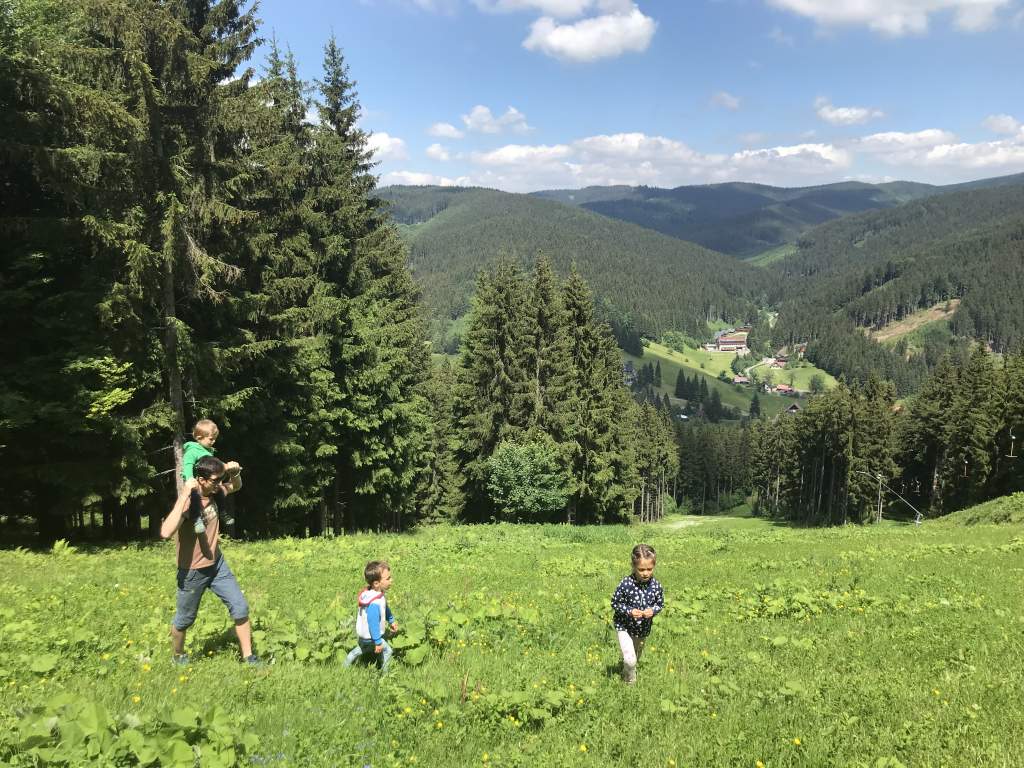
Jelenia Góra is a family-friendly town, and people mostly come here with children for the Cieplice thermal baths. The water park has a children’s zone with a pool for the youngest, slides, water tubes and other attractions for kids of all ages.
The hike up to Chojnik Castle is more physically demanding, but fit children can manage it without a problem.
The Karkonosze Museum has interactive sections for children.