This post is also available in:

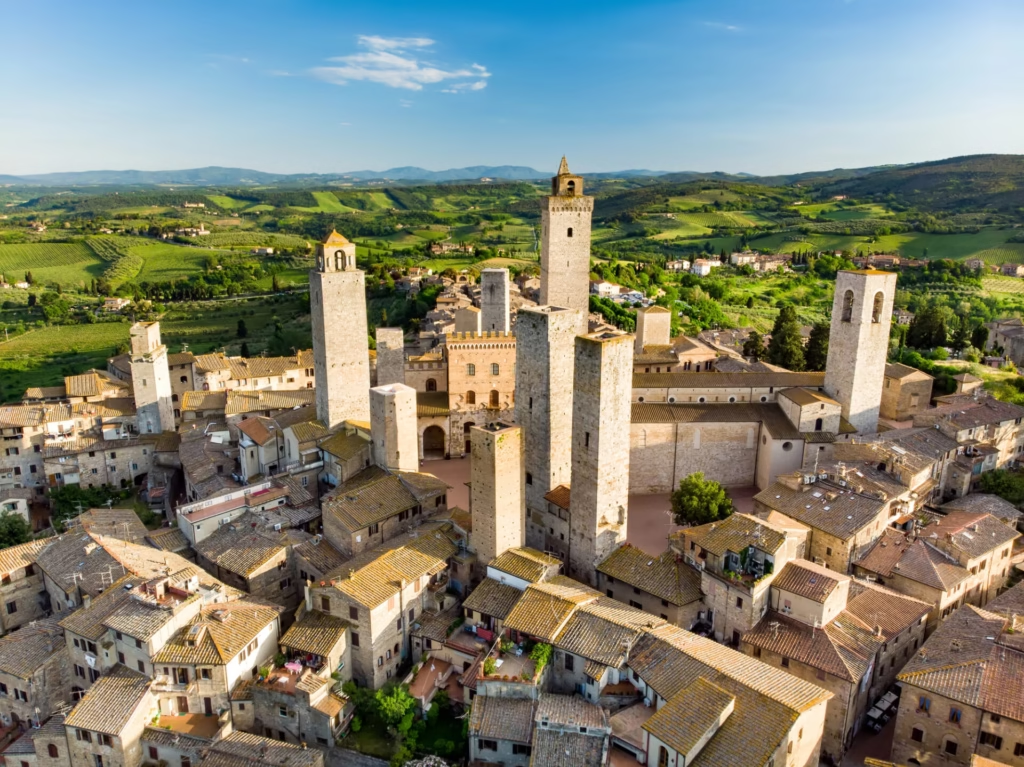
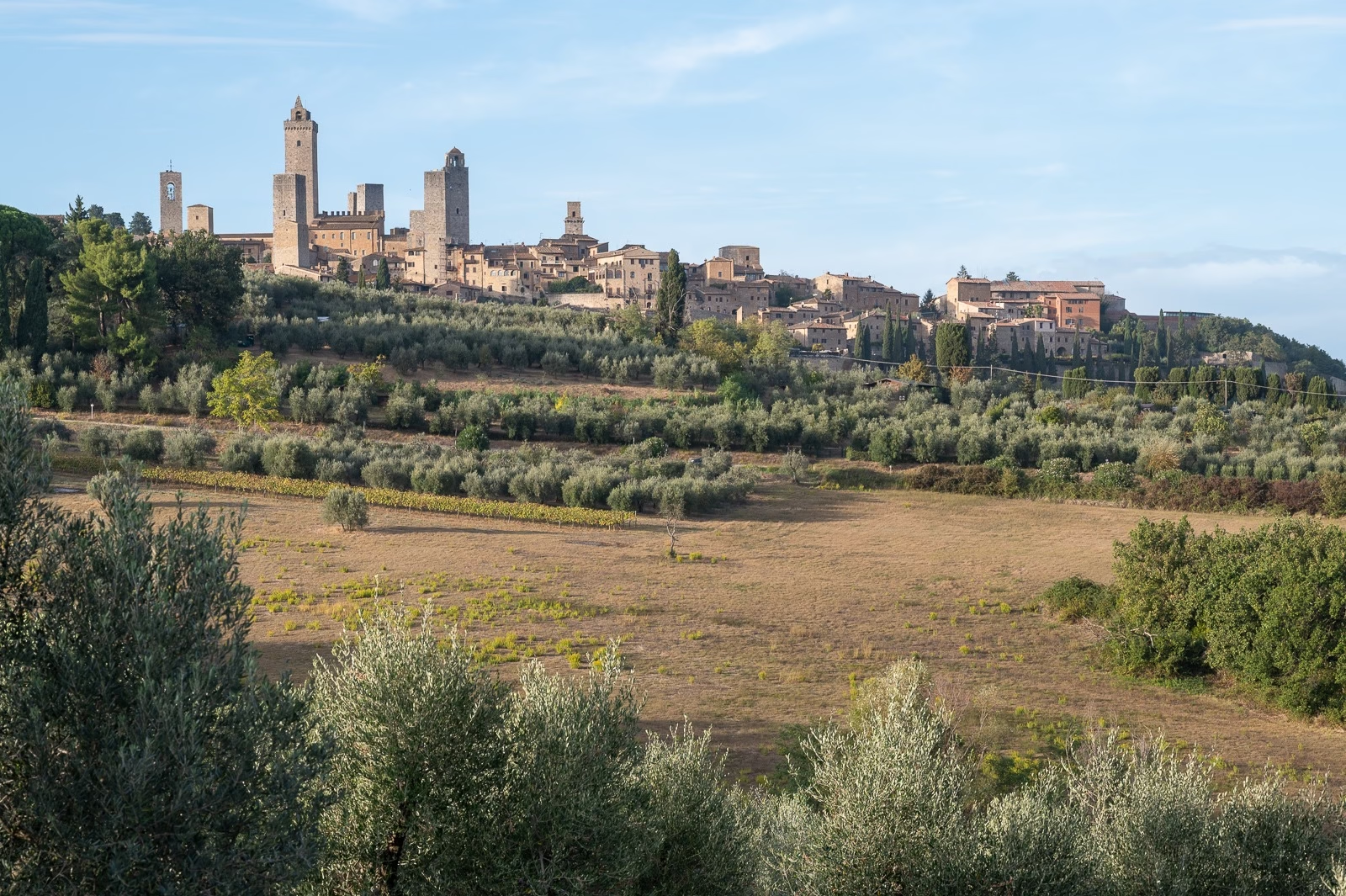
The towers of San Gimignano Italy rise above the Tuscan countryside like the set of a medieval novel. Then you walk through the gate in the city walls and realise the set is real. If you’re visiting Tuscany, San Gimignano is one place you absolutely shouldn’t skip.
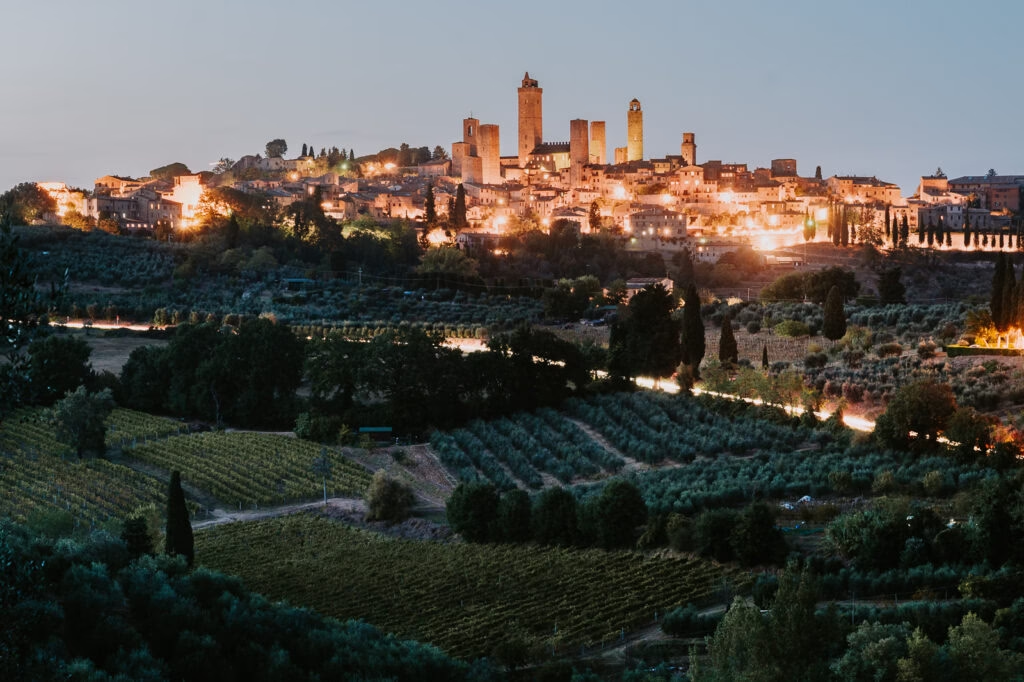
San Gimignano sits in the province of Siena, about an hour’s drive south of Florence.
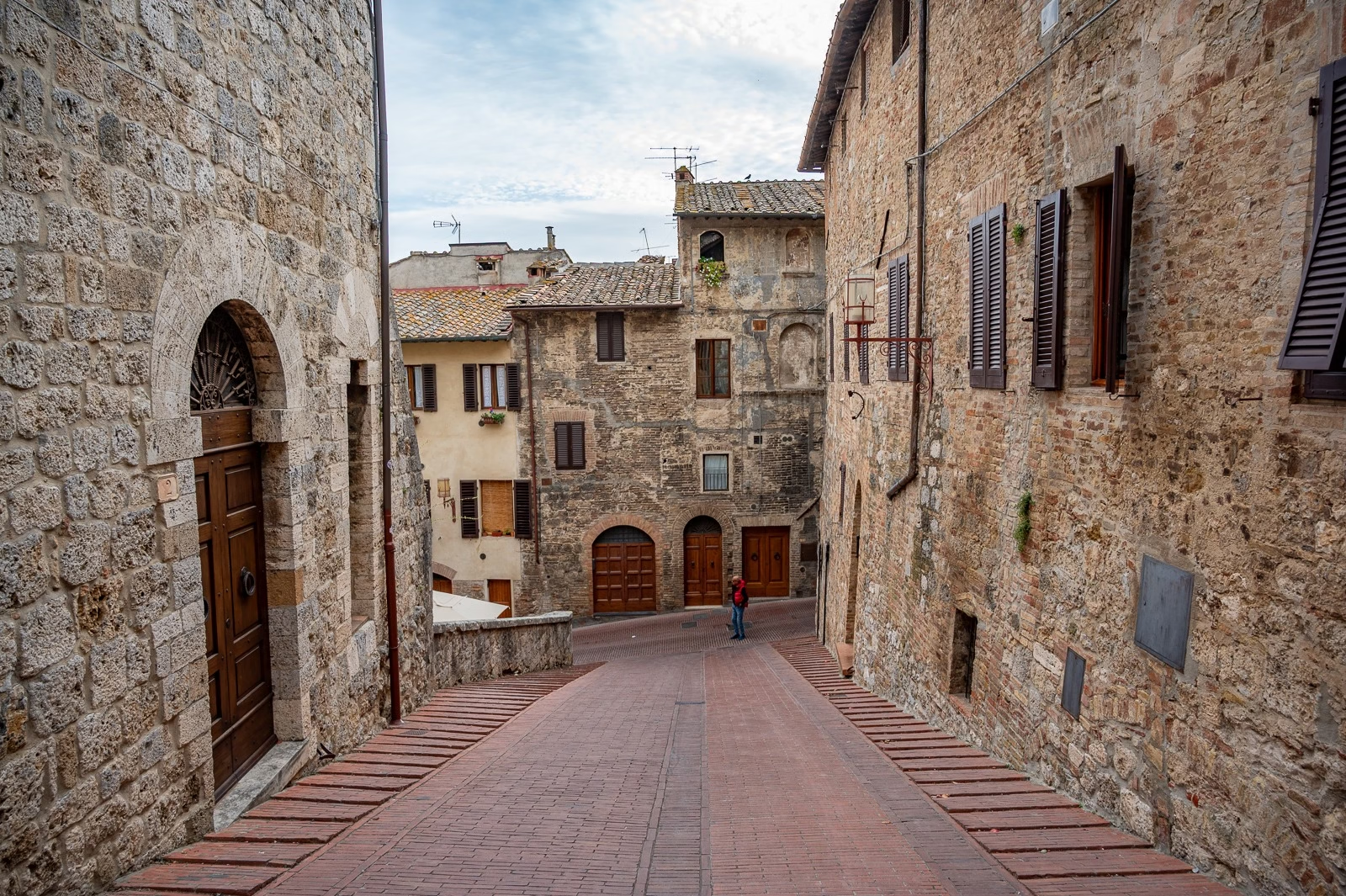
It’s a small historic town – fewer than eight thousand people live here today – that has preserved a unique skyline since the Middle Ages, one you won’t find anywhere else in Italy.
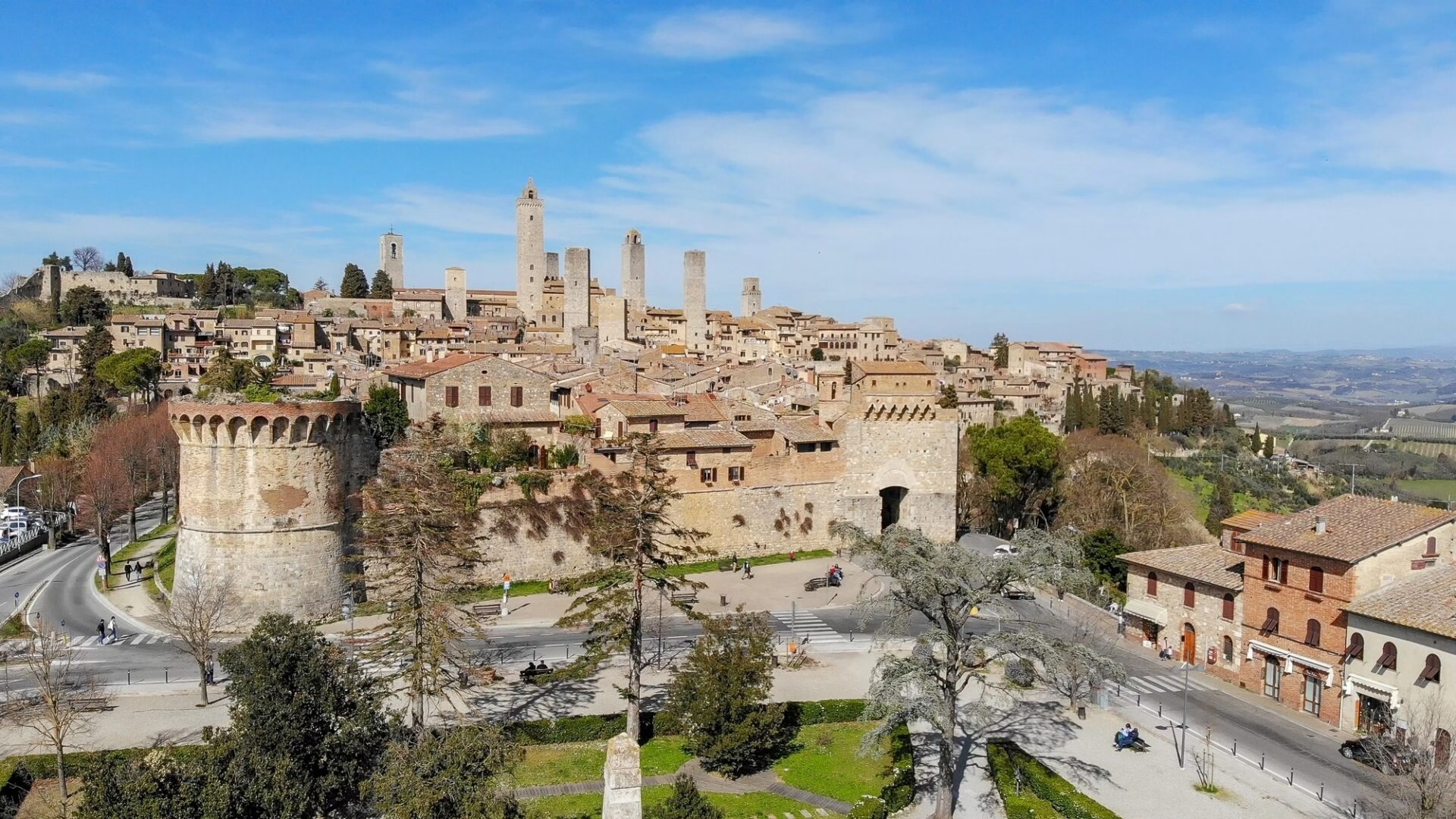
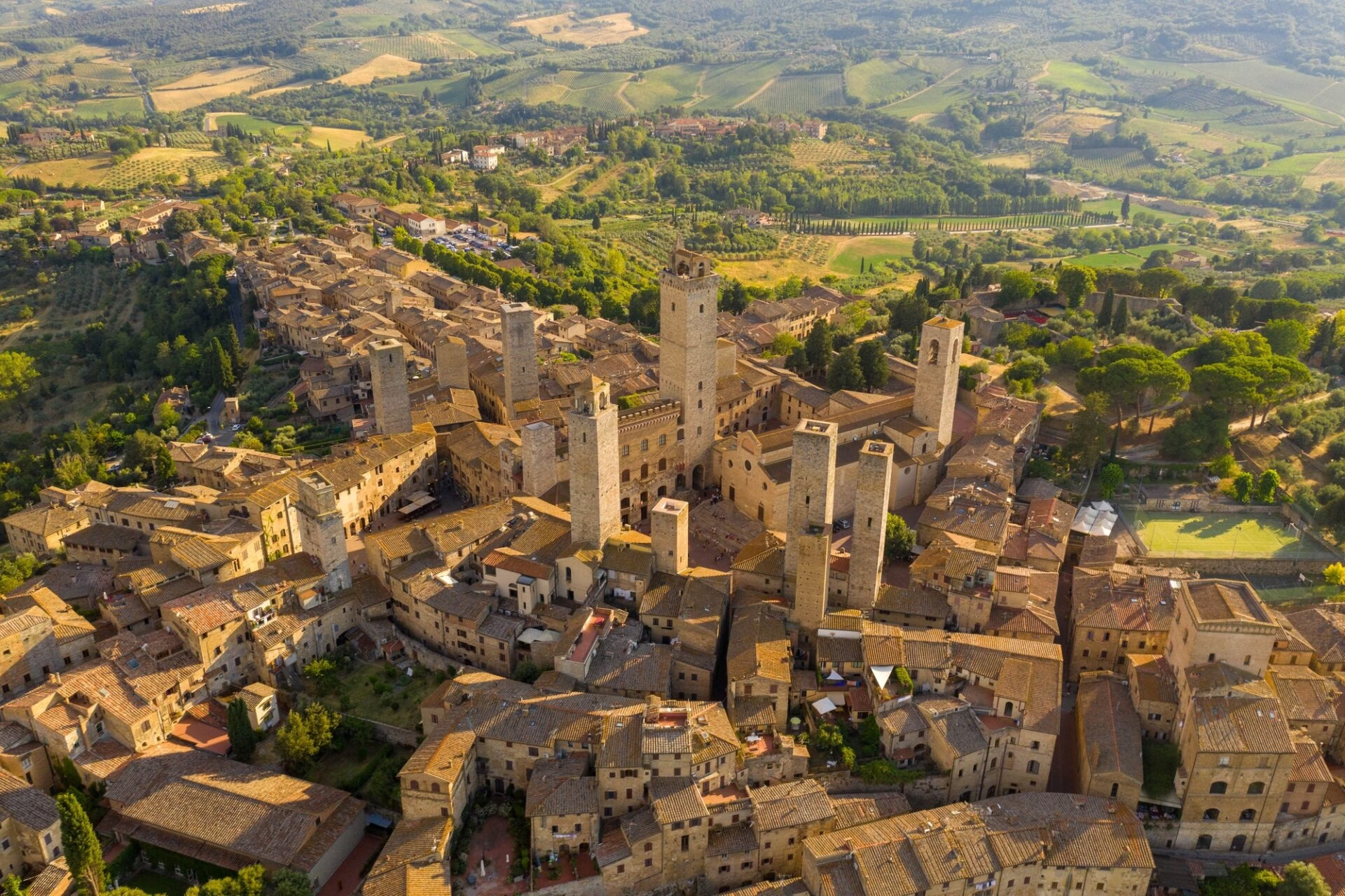
Fourteen surviving towers, narrow cobbled lanes, two connected squares and a historic core inscribed on the UNESCO World Heritage list. All of it on a footprint you can walk across in under an hour.
San Gimignano’s problem is well known: crowds of day-trippers pile in, the main square gets packed and prices reflect it. But the town has a second face – calmer, more accessible, reserved for those who arrive early in the morning or stay overnight.
We stopped here during an autumn road trip in our campervan, at a time when it was still a pleasant 25°C but many of Tuscany’s most famous spots were half-empty. I can highly recommend Tuscany in autumn.
This guide is aimed mostly at independent travellers who want more than just crossing Piazza della Cisterna, rushing up one tower and moving on.
Why visit San Gimignano
The towers are reason number one. And their story is more interesting than you might think.
In the Middle Ages there were as many as 72 of them. They weren’t military fortresses so much as displays of power and wealth: the taller your tower, the more influential your family. The result was a grotesque construction race that gave the town its iconic skyline.
Alongside the towers, San Gimignano offers one of the best-preserved collections of medieval frescoes in Tuscany. The Collegiata di Santa Maria Assunta hides 14th-century paintings that have survived centuries almost unchanged. That alone is worth the stop.
Add in the local food scene – a cuisine built around wild boar, saffron and Tuscan cured meats. Then throw in Vernaccia di San Gimignano, a white wine with roots in the Renaissance that in 1966 became the first Italian wine to earn DOC status.
San Gimignano is also the home of the famous Gelateria Dondoli, whose gelato has racked up international awards.
Visiting makes sense as part of a Tuscany road trip, as a day trip from Florence, or as a standalone overnight stop.
How long to spend in San Gimignano
You can walk through San Gimignano in a morning. But walking through and actually soaking up the atmosphere are not the same thing.
If you’re coming for the day, expect that everything is busiest between 10:00 and 16:00. Skip weekends in high season (June–September) entirely if you can.
The advice is simple: arrive as early as possible. The Collegiata and Torre Grossa open at 10:00, but before that you can calmly enjoy the surrounding lanes and views from the walls.
Have lunch either early or wait until late afternoon, once part of the crowd has moved on.
Personally, I recommend staying overnight. That’s how you get the best of San Gimignano: the evening town after the buses leave, sunset from the Rocca or from a viewpoint on the walls, and a morning on the square without a single tourist. One day and one night is the ideal combination.
Two days and two nights only make sense if you want deeper museum visits, wine tastings with local producers, or simply to slow down. The town itself isn’t enough for more than a couple of days – beyond that you’d need to combine it with the surrounding area.
Things to do in San Gimignano
Top 7 highlights
- Torre Grossa – the tallest surviving tower (54 metres); the climb offers the best panoramic view over the countryside and the rooftops of the historic centre.
- Collegiata di Santa Maria Assunta – a church whose interior is covered in 14th-century frescoes; one of the visually most striking churches in all of Tuscany.
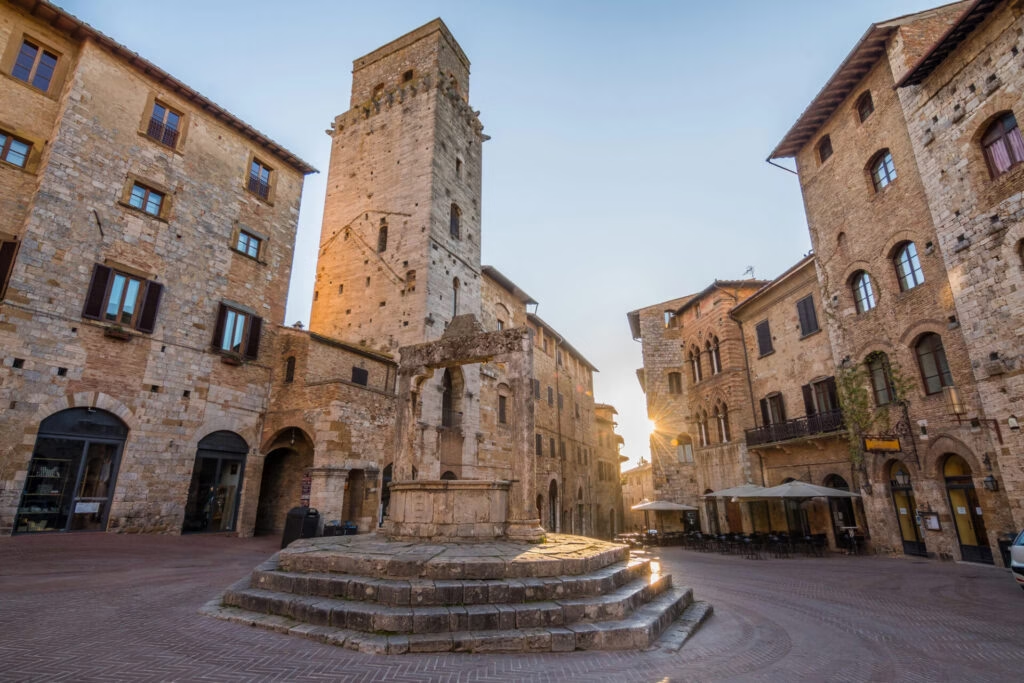
- Piazza della Cisterna – the triangular square with a historic well and medieval houses, the heart of public life in town.
- Torre e Casa Campatelli – a rare chance to step inside an authentic medieval tower house.
- Galleria Continua – a world-renowned contemporary art gallery housed in medieval premises right in the centre.
- Rocca and viewpoint – the remains of a medieval fortress with views over the towers and vineyards; a quiet spot away from the main tourist flow.
- Gelateria Dondoli – multiple-time world gelato champion; the saffron-flavoured Crema di Santa Fina is the local speciality.
The San Gimignano towers and their story
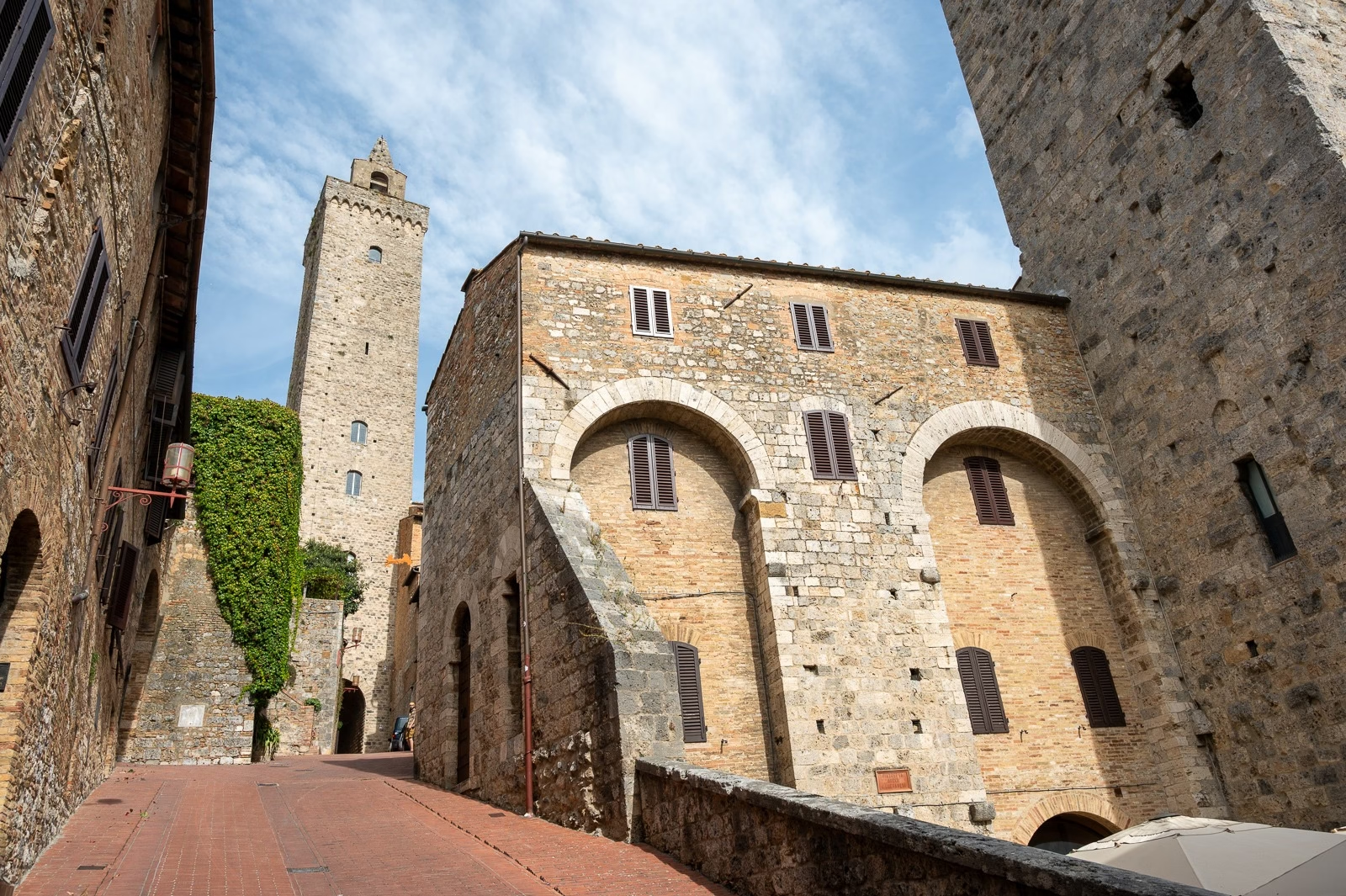
The fourteen surviving San Gimignano towers are what give the town its unmistakable character. They went up between the 11th and 13th centuries as symbols of family power and prestige – the taller the tower, the higher the status. At its peak, the town had up to 72 of them, some topping seventy metres.
The town government eventually capped the race by law: no private tower could exceed the height of the municipal Torre Rognosa. Construction continued anyway, and San Gimignano earned the skyline that draws travellers from all over the world today.
Today, two towers are open to the public.
Torre Grossa
The most important is Torre Grossa, the municipal tower built in 1300 and standing 54 metres tall.
The climb is more than 200 steps, and at the very top you need to go up a ladder – it’s not for everyone, but the view over the rooftops, surrounding hills and Tuscan vineyards is exceptional.
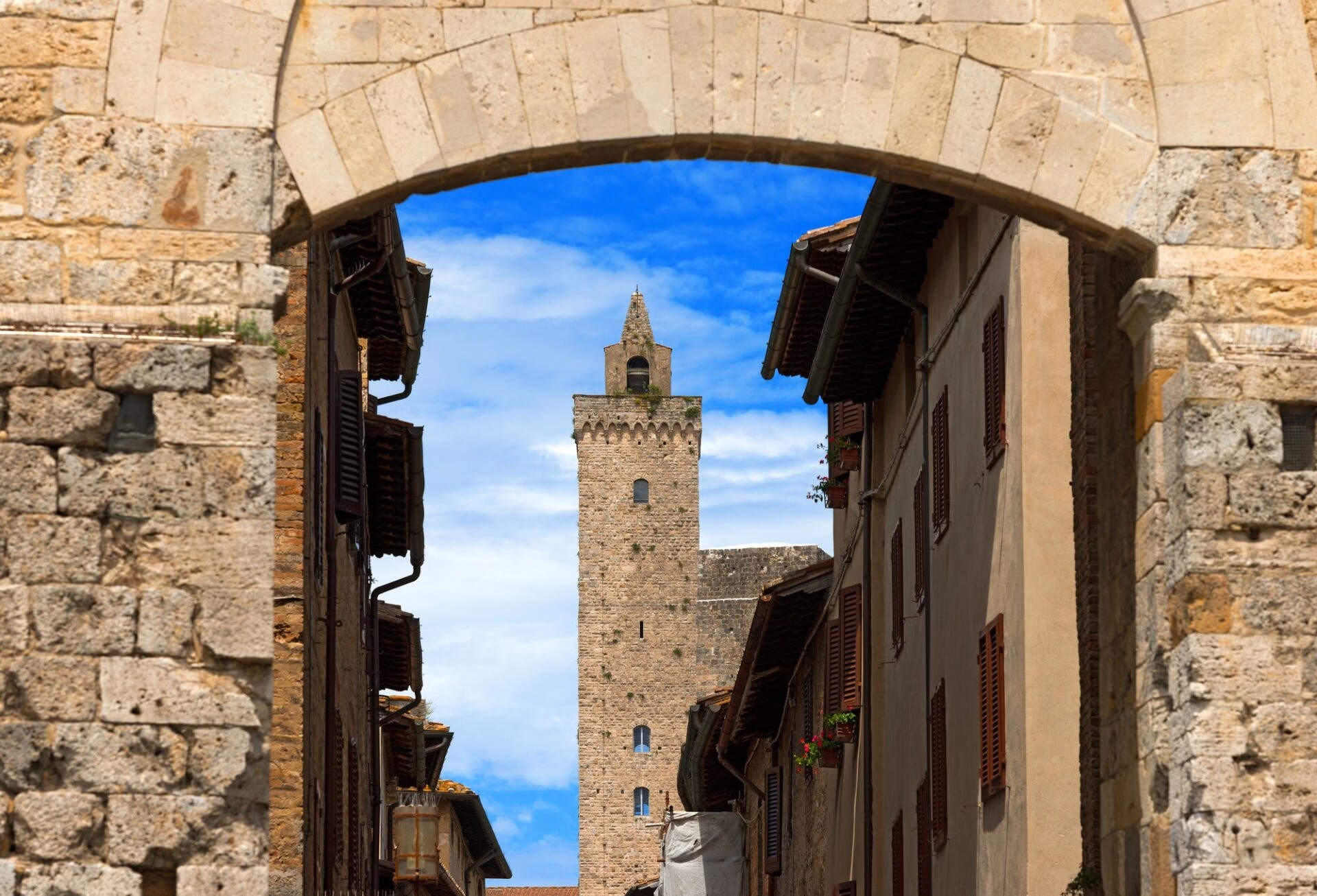
Be ready for queues and a bit of a crush inside.
Entry is included in the San Gimignano Pass.
Torre e Casa Campatelli
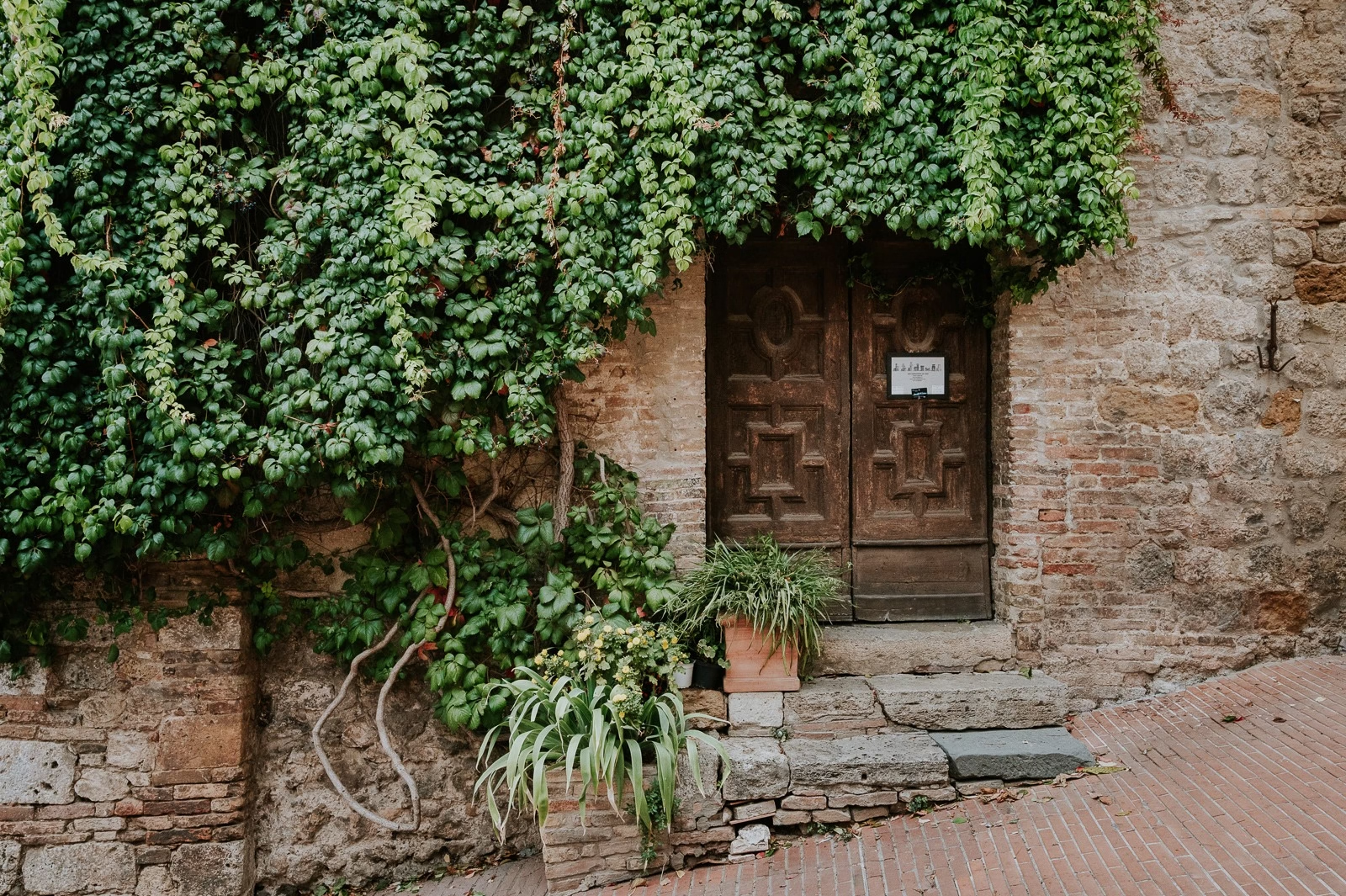
Torre e Casa Campatelli on Via San Giovanni offers a slightly different experience. The 12th-century tower functions as a museum.
It shows what life inside a medieval tower looked like – from the work spaces on the ground floor to the living quarters higher up. It’s one of the few ways to actually get inside a medieval house rather than just walking past one.
Piazza della Cisterna and Piazza del Duomo
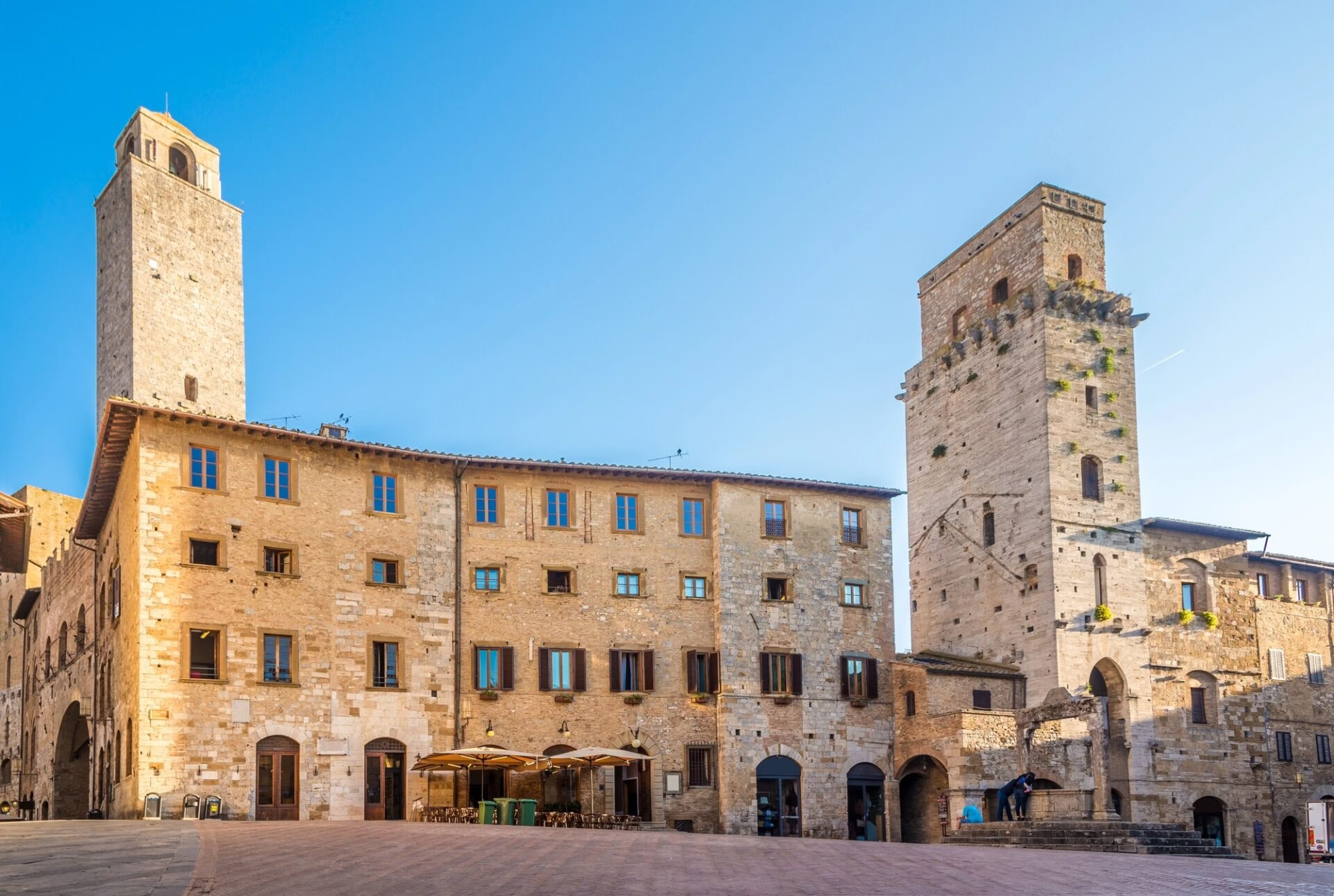
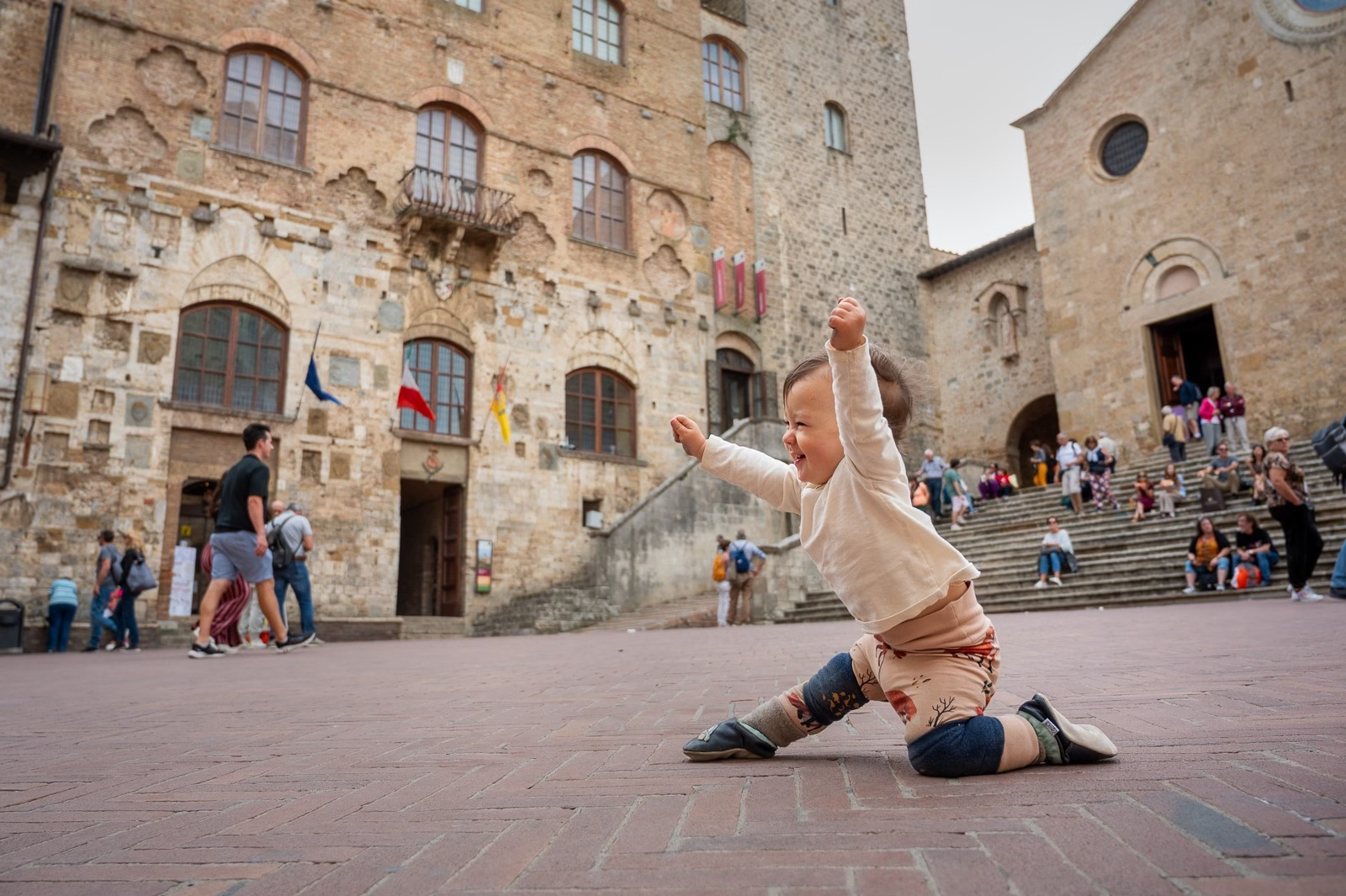
Two connected squares form the centre of historic San Gimignano.
Piazza della Cisterna is triangular, with a well from 1287 at its centre that supplied the town with water for centuries.
The square is ringed by medieval houses and the towers of the Ardinghelli family and Torre del Diavolo – the Devil’s Tower, named after a local legend about a building that mysteriously grew overnight.
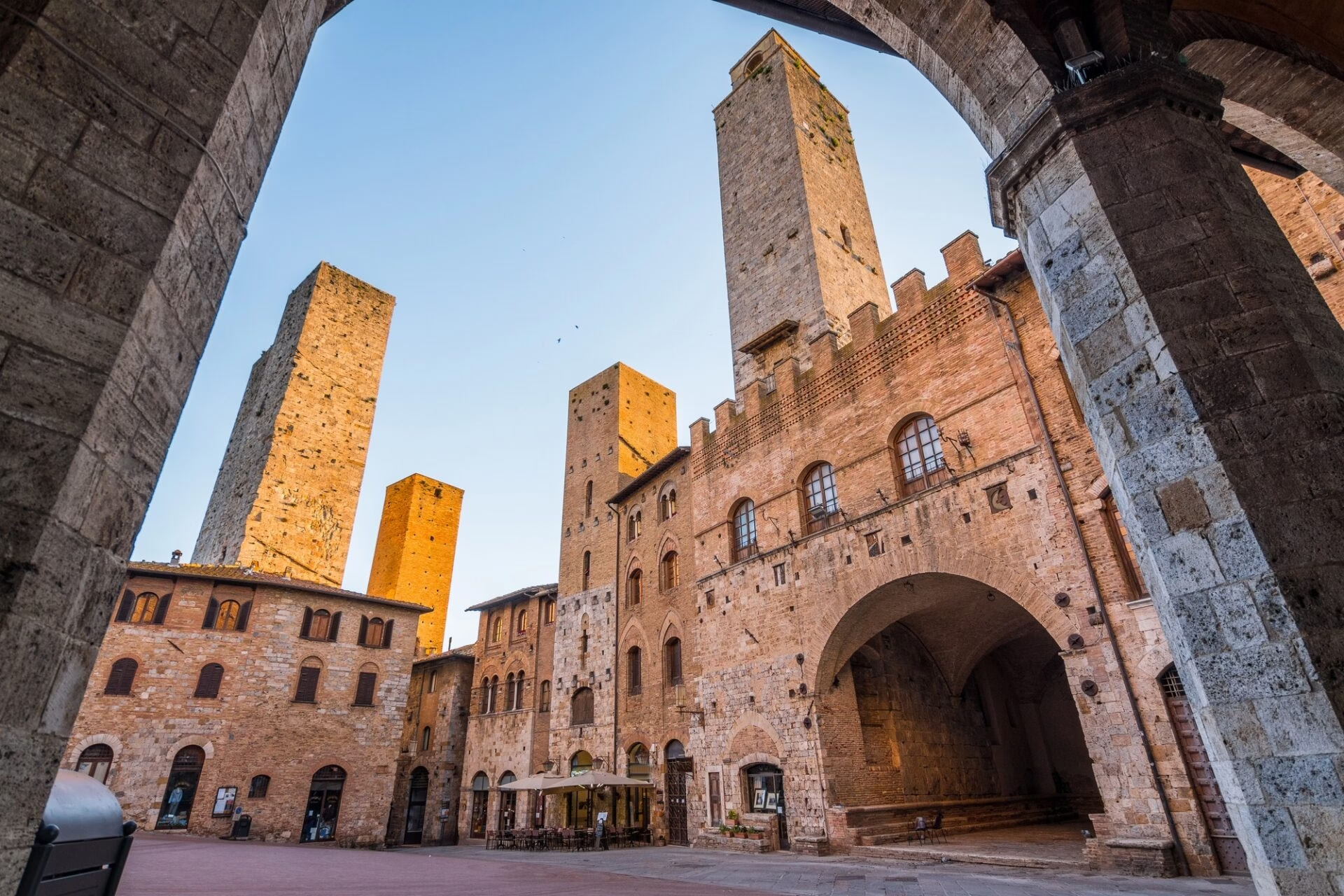
Right next to it is Piazza del Duomo, the political and religious heart of the town.
On the eastern side stands the Palazzo del Podestà with the old civic tower Torre Rognosa; opposite stands the Palazzo Comunale with Torre Grossa.
A staircase in the middle leads up to the church – from the top you get one of the best views of the whole square.
Collegiata di Santa Maria Assunta
The Collegiata in San Gimignano doesn’t look like much from outside – a bare Romanesque façade, simple stone walls.
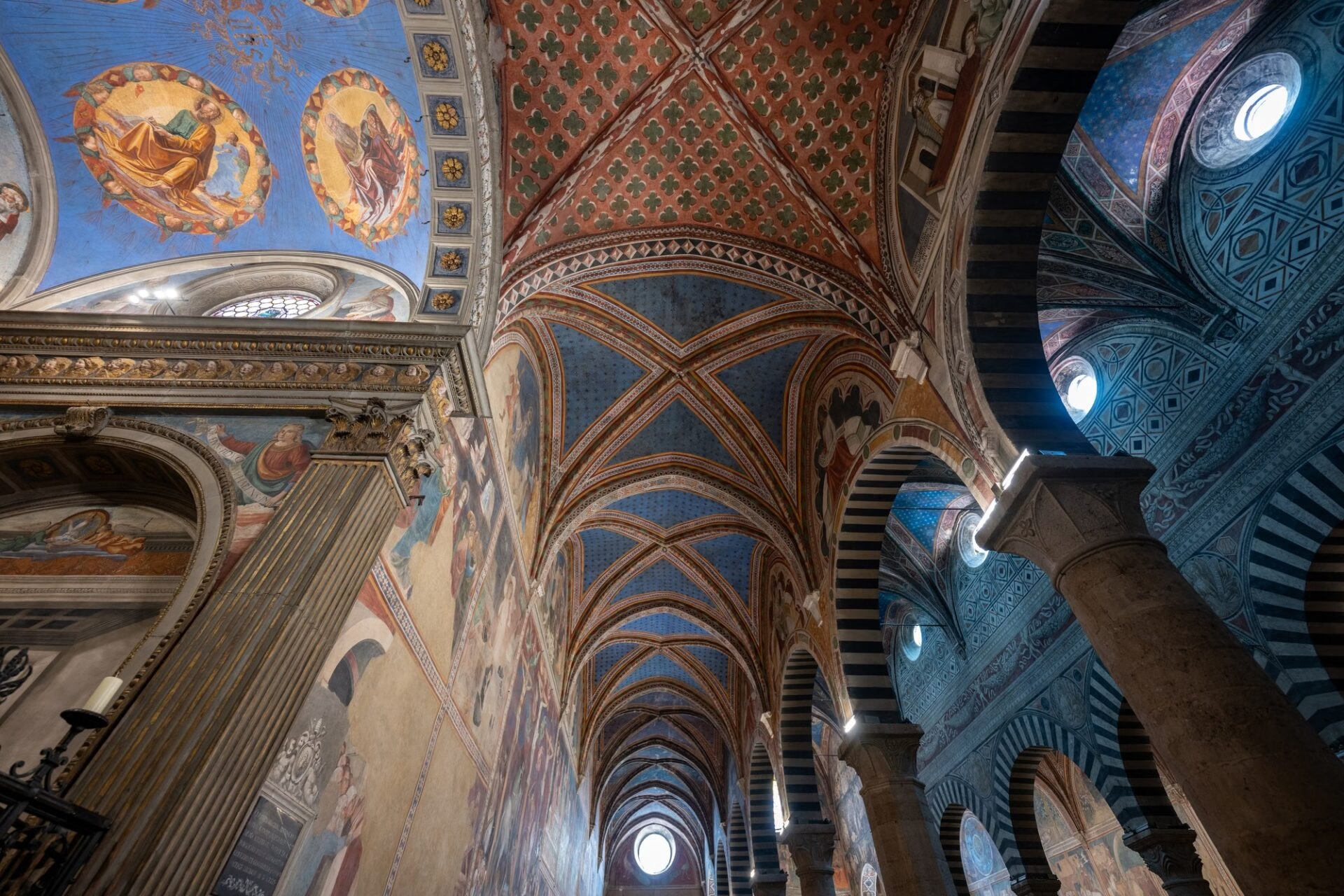
But the moment you step inside, you understand why it’s on the UNESCO list. The walls and vaults of its three naves are covered floor to ceiling with 14th-century fresco cycles.
The northern nave depicts scenes from the Old Testament by Bartolo di Fredi; the southern nave shows stories from the New Testament by Barna da Siena.
The whole space functioned as a medieval picture Bible – the paintings were made at a time when most worshippers couldn’t read.
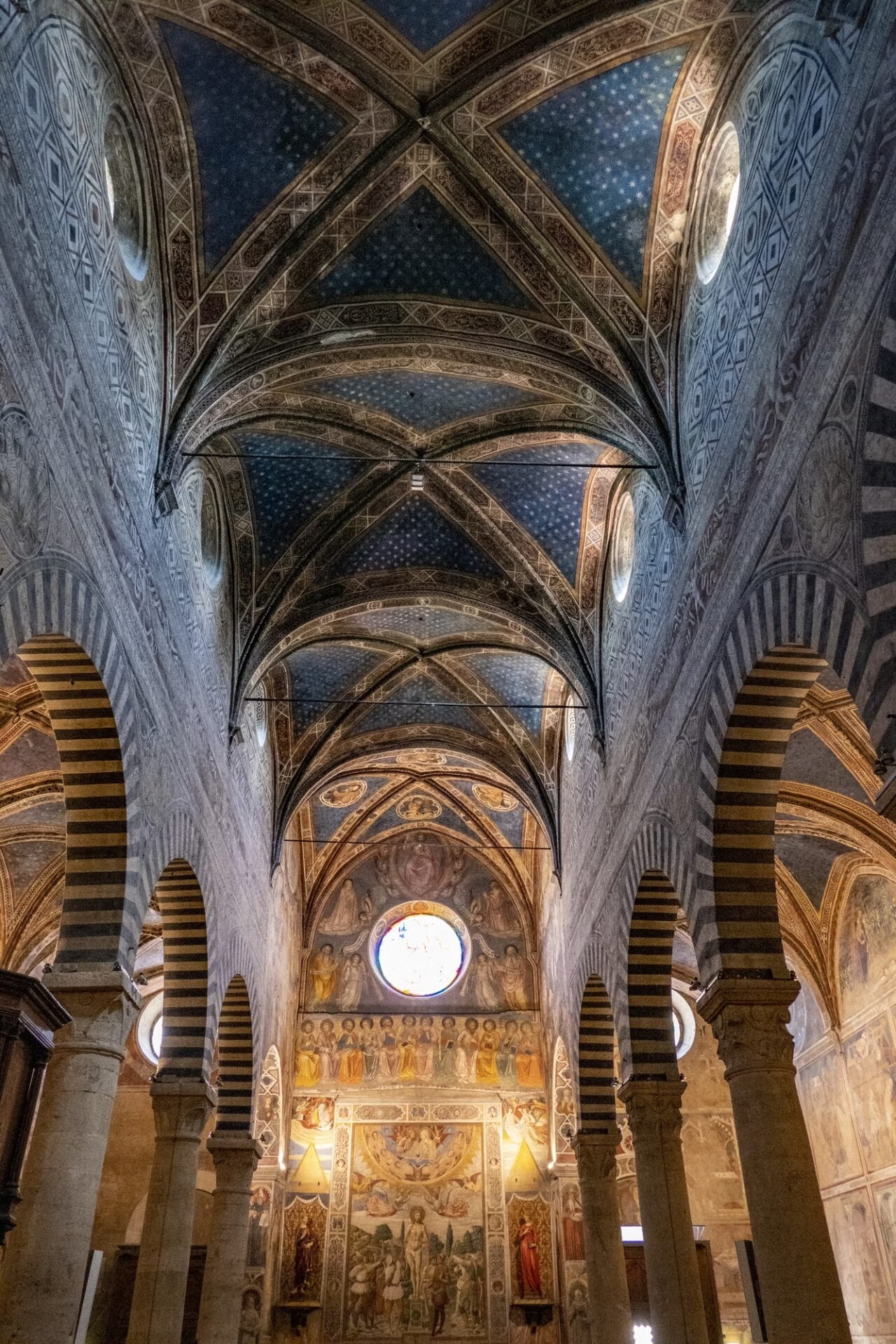
Also worth attention is the Chapel of Santa Fina on the right side of the nave – a Renaissance jewel designed by architect Giuliano da Maiano, sculptor Benedetto da Maiano and painter Domenico Ghirlandaio.
Saint Fina died aged 15 in 1253 and became the town’s patron; legend says that at the moment of her death, yellow violets bloomed on her wooden bed.
Admission: The church is accessible with the San Gimignano Pass or a separate ticket.
Cost is €5 for adults and €3 for children.
The church is closed from 16 January to 15 February, on 12 March and on 25 December.
Travel tip: Visit the church in the morning, when natural light pours in and the frescoes show at their best.
Museo Civico and Palazzo Comunale
Palazzo Comunale on Piazza del Duomo is home to the town hall and to San Gimignano’s most important museum collection.
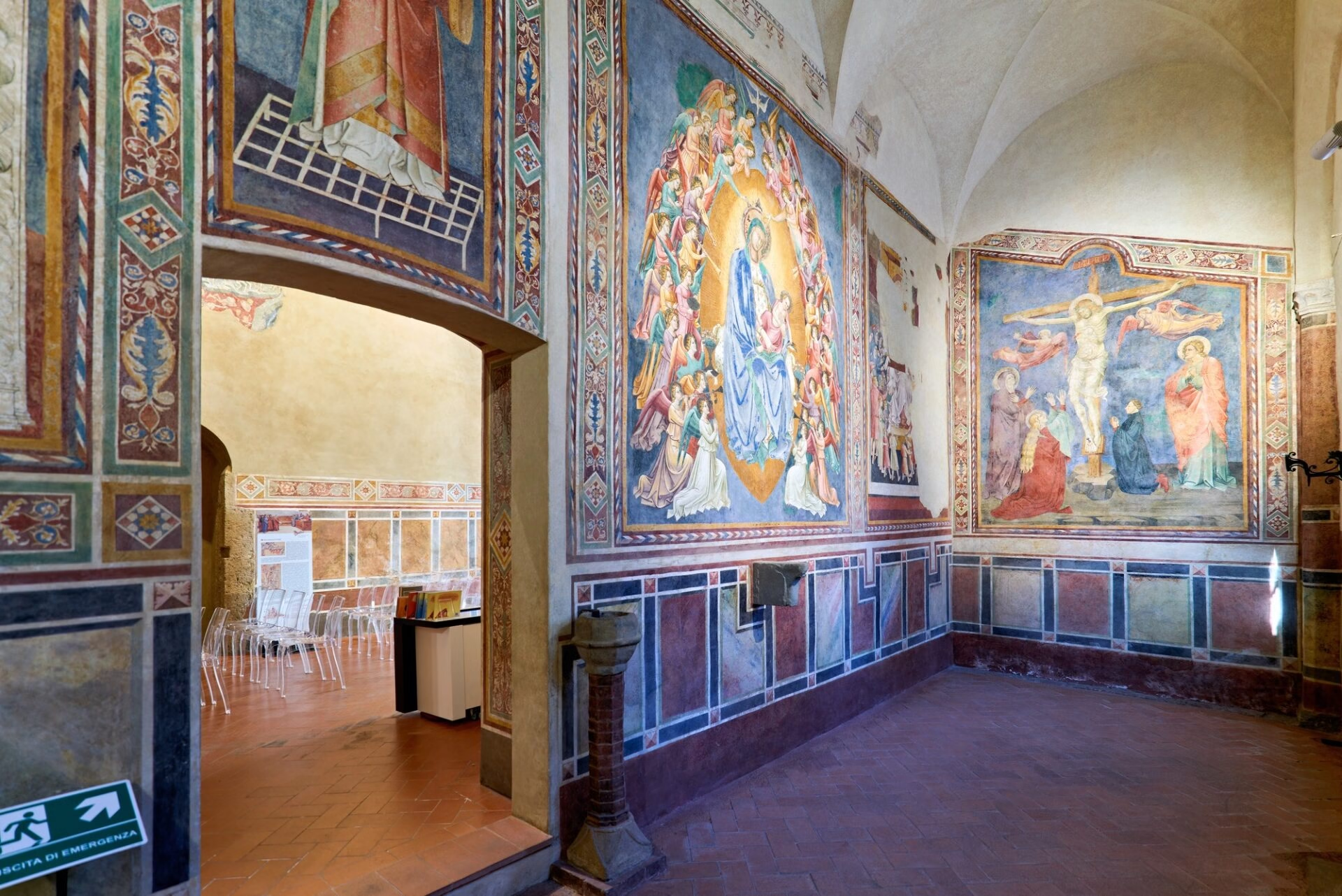
On the first floor you’ll find the famous Sala di Dante – a room named after Dante, who spoke here in 1300. The walls are covered with frescoes featuring knights and hunting scenes, and a central Maestà by Lippo Memmi from 1317.
The upper floors house the Pinacoteca, with a collection of Tuscan paintings from the 13th to 17th centuries.
Artists on display include Benozzo Gozzoli, Filippino Lippi and Pinturicchio – works that would draw far more attention in any other Italian town.
Palazzo Comunale is also where you climb Torre Grossa.
Everything is included in the San Gimignano Pass.
Sant’Agostino
The church of Sant’Agostino stands on the square of the same name in the northern part of town, away from the main tourist flow. The exterior is modest, but the interior is a pleasant surprise.
The presbytery is decorated with frescoes by Benozzo Gozzoli from 1464–1465, depicting scenes from the life of Saint Augustine – 17 scenes from his student years through his conversion to Christianity to his death.
Gozzoli was working at the same time for the Medici at Palazzo Medici Riccardi in Florence, and his stylistic signature is unmistakable: bright colours, lively faces and the architectural detail of Renaissance Italy.
The church is free to enter.
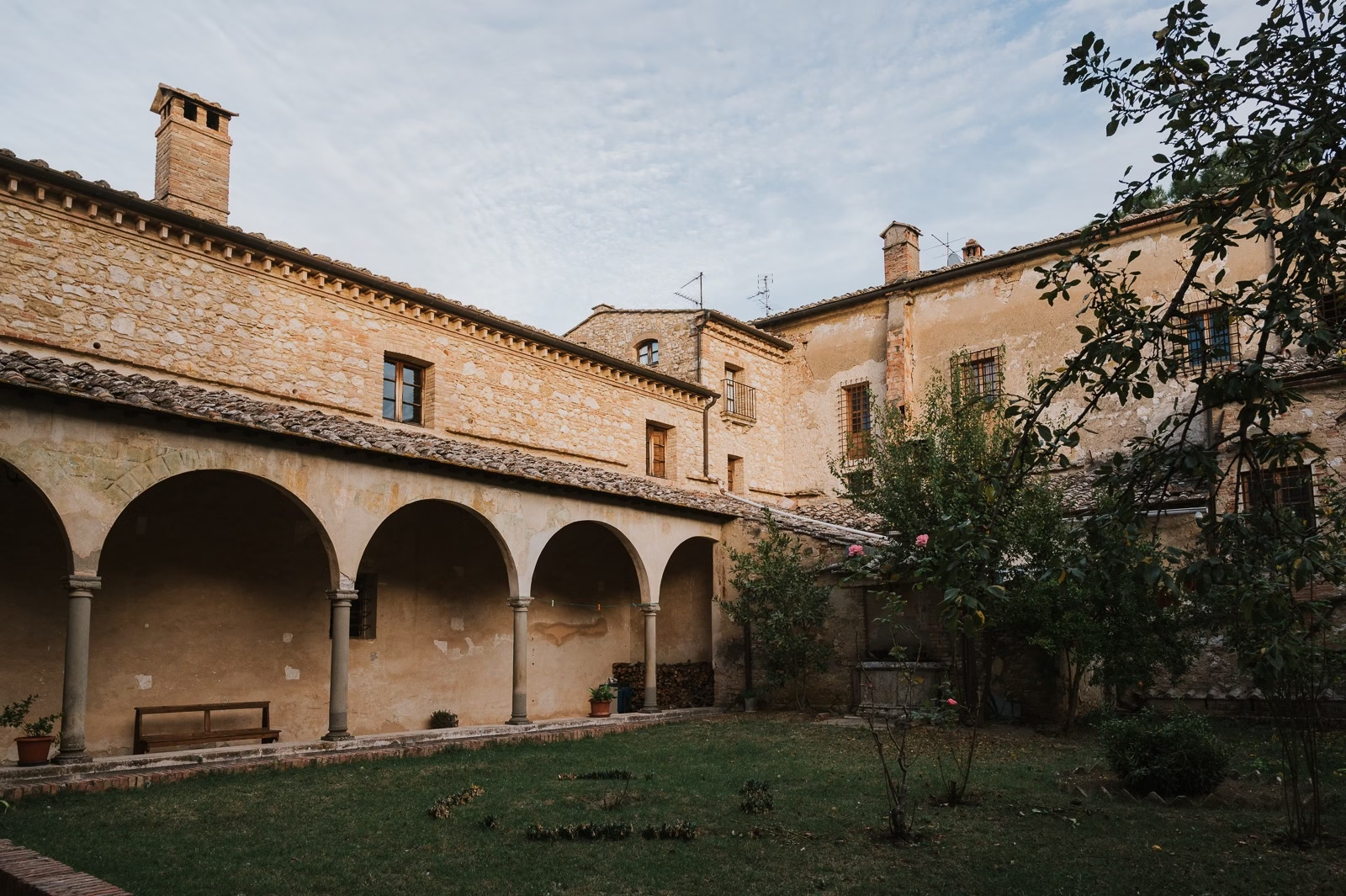
The Rocca and viewpoint
The remains of the medieval Rocca fortress stand on the highest point of the historic centre. The structure itself dates to the 14th century; today only parts of the fortifications and one tower remain. Inside the walls is a small amphitheatre used for cultural events in summer.
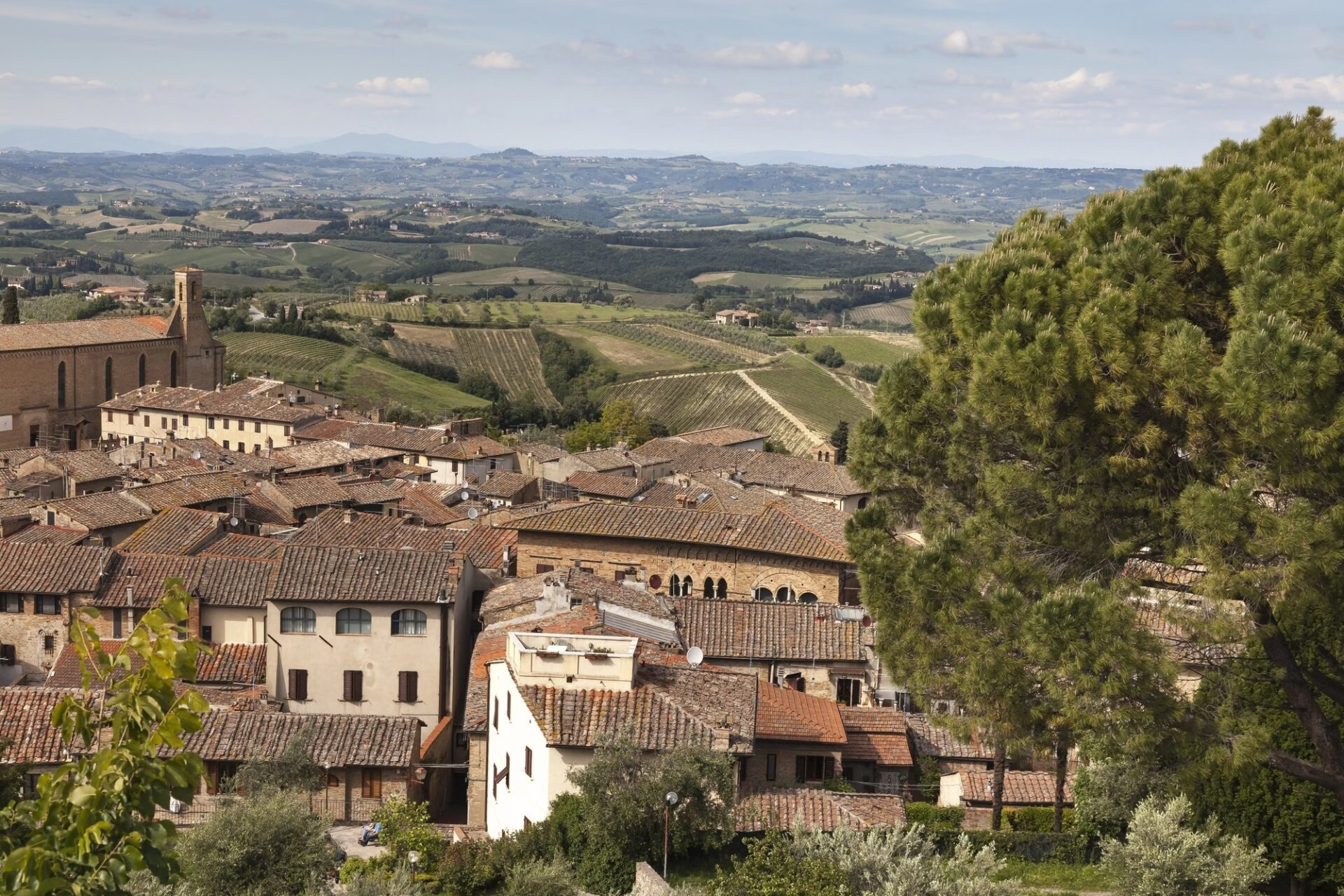
But you’re most likely coming here for the view. You’ll get the full San Gimignano tower panorama from above, along with the classic Tuscan countryside of vineyards and cypresses.
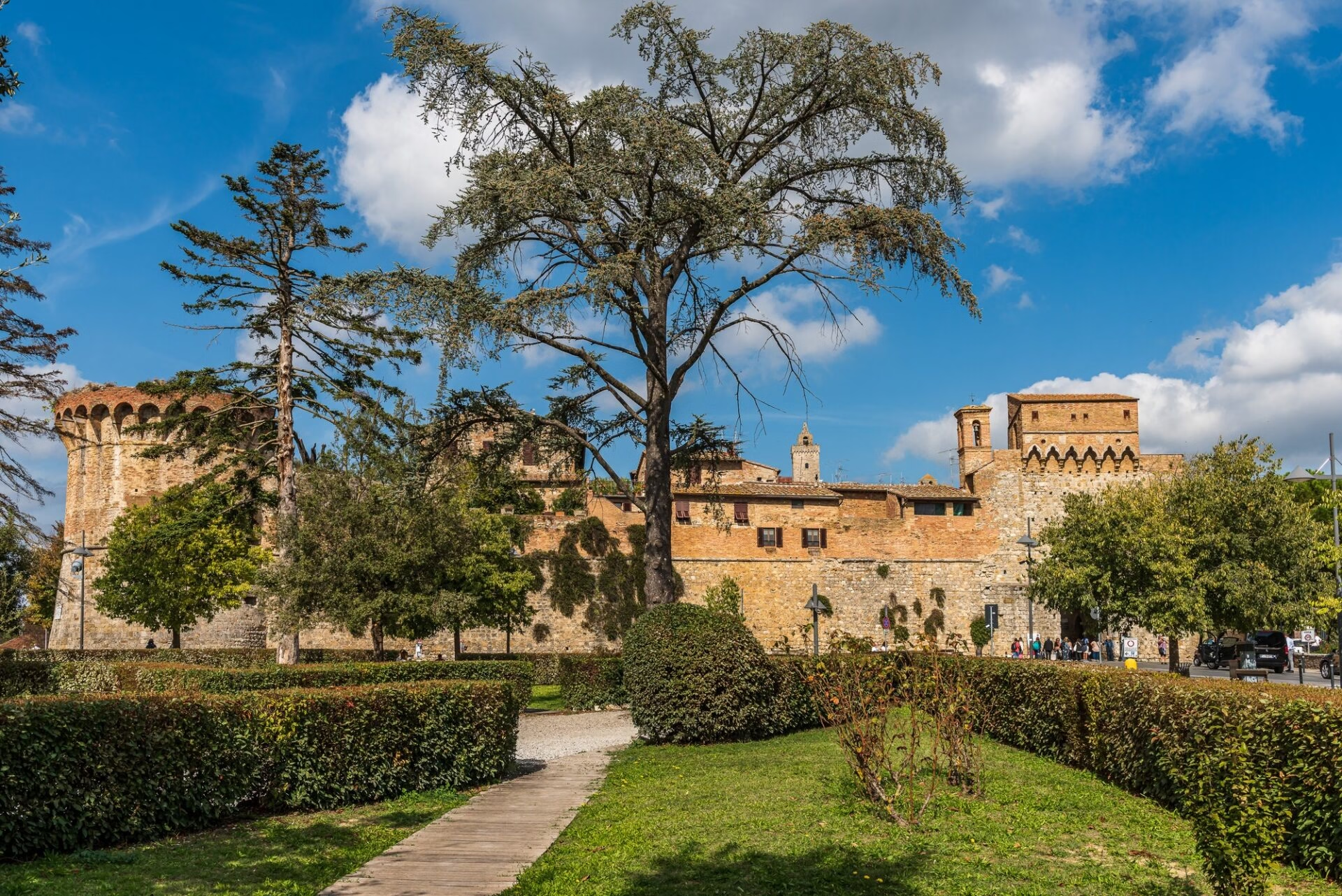
Entry is free and the site doesn’t close.
San Gimignano 1300
Slightly off the usual itinerary is the small San Gimignano 1300 museum on Via San Giovanni.
It houses a detailed model of the town as it looked in the late 13th century – all 72 towers, every house, every street and square – at a 1:100 scale.
The model is based on archival and archaeological sources and gives a solid sense of what the town looked like at its peak.
It’s not an essential stop, but if you’re into architecture and medieval urbanism, it’s 30 minutes well spent.
Galleria Continua
One of the most remarkable things in San Gimignano isn’t medieval at all.
Galleria Continua, founded in 1990, is today one of the most influential contemporary art galleries in Italy – with branches in Paris, Beijing, Rome and São Paulo.
It occupies medieval premises in the town centre, including a former cinema on Via San Giovanni.
Exhibitions rotate, but artists regularly represented include Ai Weiwei, Anish Kapoor, Kiki Smith and Daniel Buren. Entry is free.
For art lovers, it’s one of the most interesting places in all of San Gimignano.
Experiences in San Gimignano
The town after the crowds leave
The biggest benefit of spending the night in San Gimignano is simple: after five in the afternoon the overwhelming majority of day-trippers leave and the town changes completely.
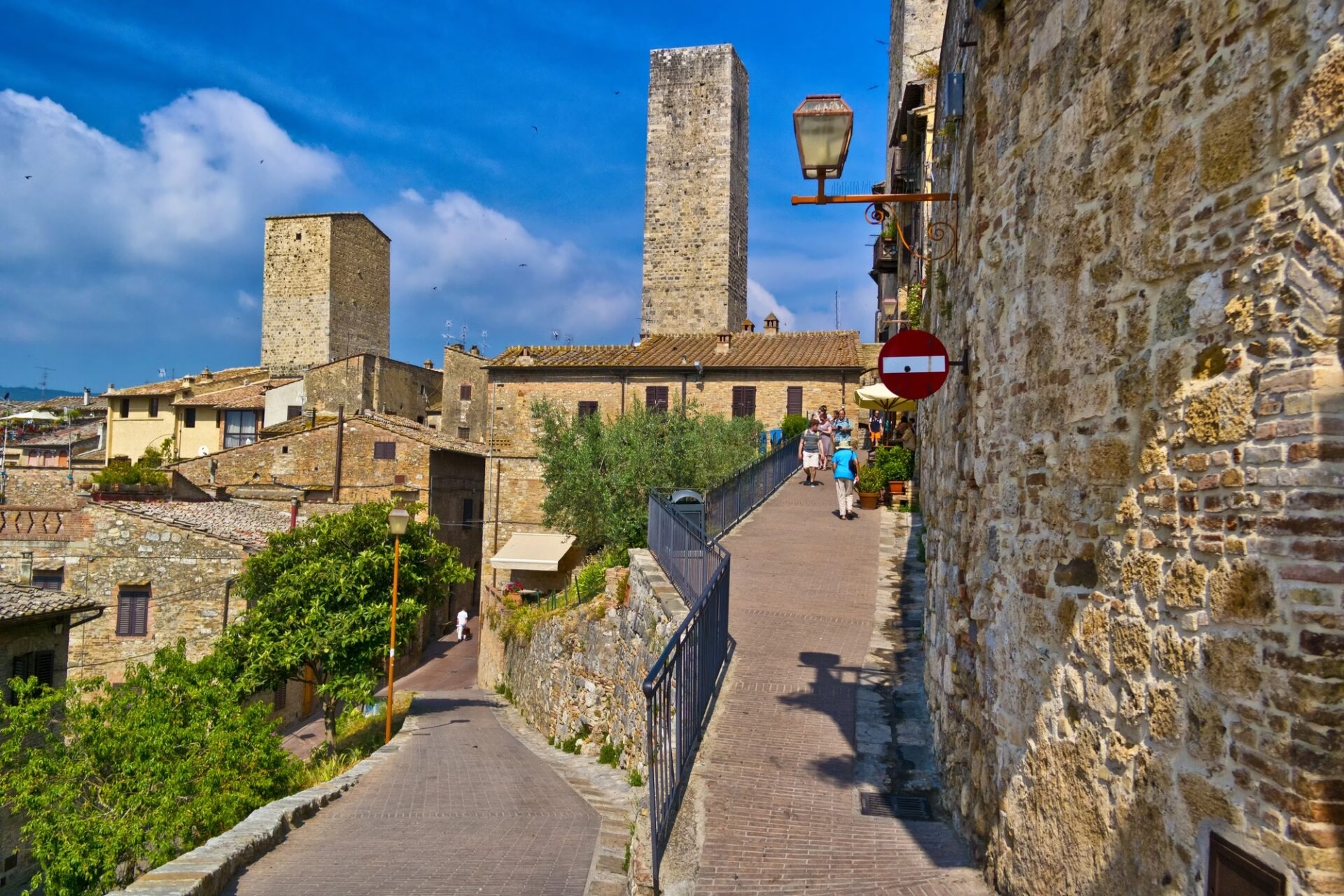
Piazza della Cisterna, which can barely hold all the visitors in the afternoon, goes almost empty. Lights come on in the windows, locals head out to dinner across the cobblestones, and the bars and enotecas fill up.
This is the San Gimignano most visitors never see.
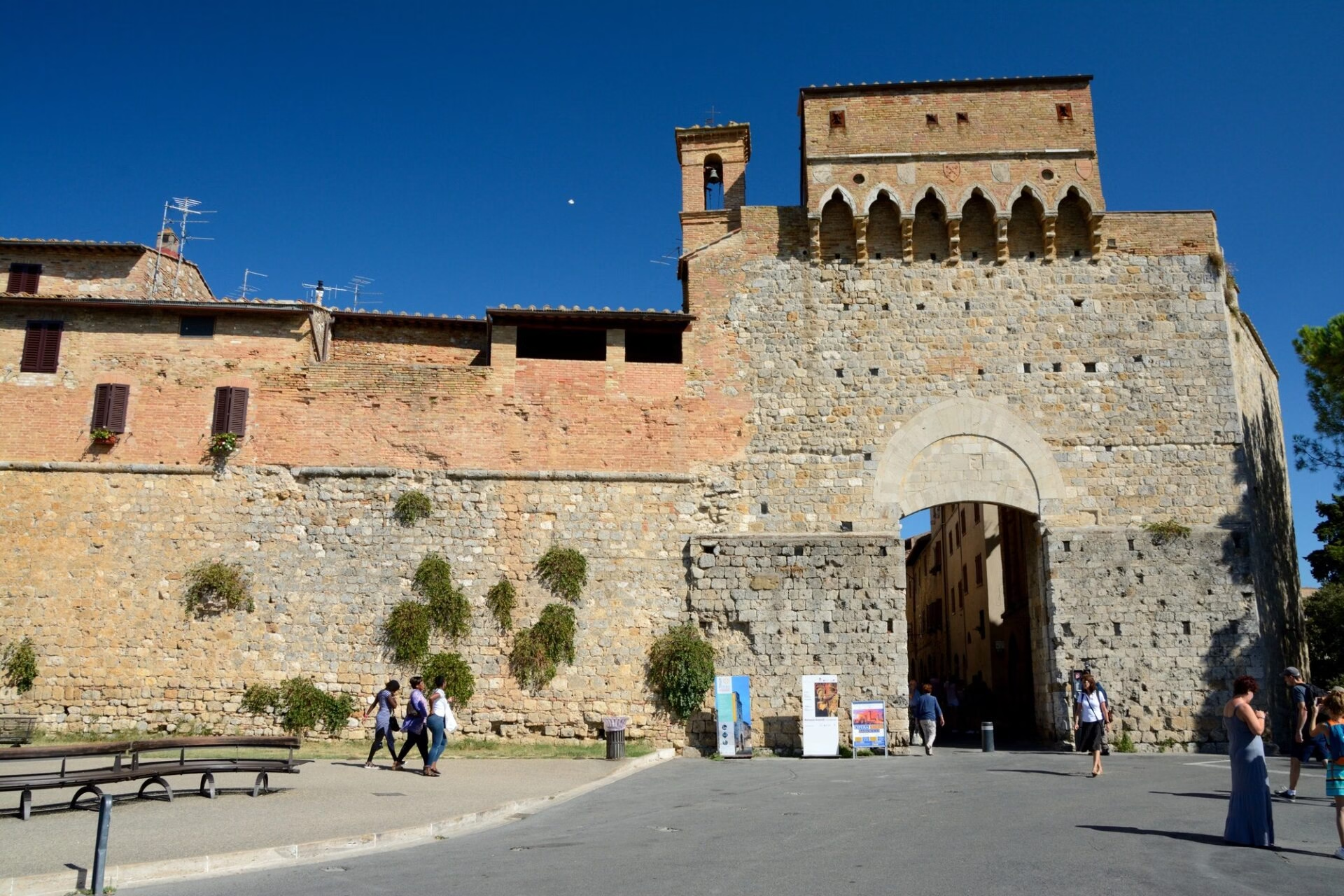
An evening walk along the walls or down Via San Matteo to the northern gate, Porta San Matteo, is one of the best things you can do here – no ticket, no queue, no crowd.
Vernaccia wine tasting
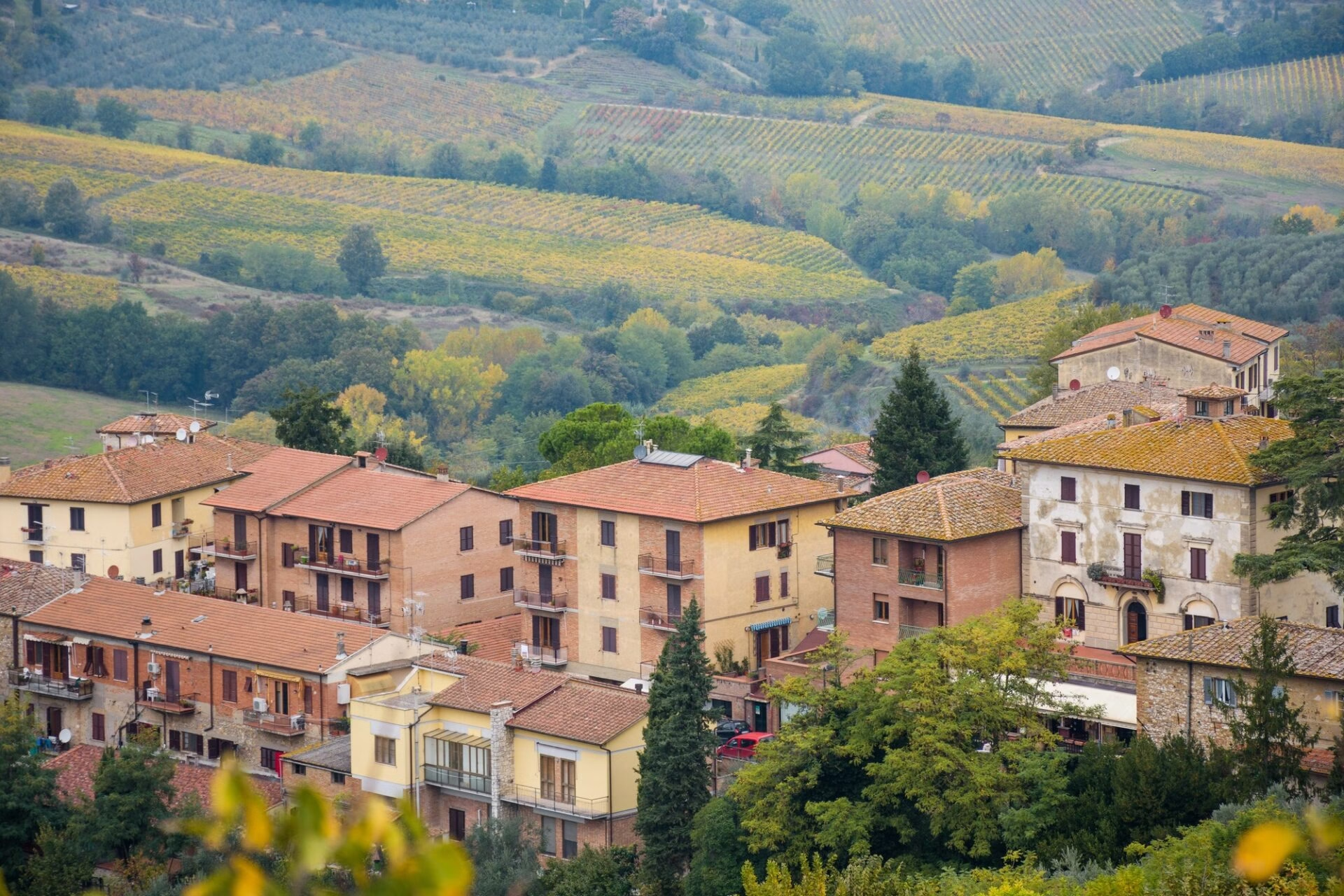
Vernaccia di San Gimignano is the white wine grown on the vineyards surrounding the town.
It was the first Italian wine to receive DOC status in 1966, upgraded to DOCG in 1993. It’s a mineral, dry wine with good ageing potential.
You can taste it in several enotecas in town. Gustavo Mescita Vini on Piazza della Cisterna is popular for its friendly staff and honest selection of local bottles.
La Vecchia Nicchia on Via San Martino serves your glass with a plate of local cheeses and cured meats.
If you’d rather taste at a winery, Azienda Agricola Palagetto at Via Racciano 10 offers tasting menus with Tuscan dishes from €37 per person.
Following the saffron trail
San Gimignano has a long history with saffron – in the Middle Ages the local saffron was one of the most prized trade commodities in the region, passing through the town on the Via Francigena.
It’s still grown here on a small scale today, and you can buy it at local markets or speciality shops to take home as a practical souvenir with a story.
The Torture Museum
Museo della Tortura in the town centre is one of San Gimignano’s most visited attractions – and one of the most controversial.
The collection of medieval and early-modern torture instruments is extensive and thoroughly documented.
Whether you find it historically instructive or a cheap attraction is down to taste. For me it’s the latter, and I wouldn’t recommend taking children under 12.
Where to eat and where to go for gelato
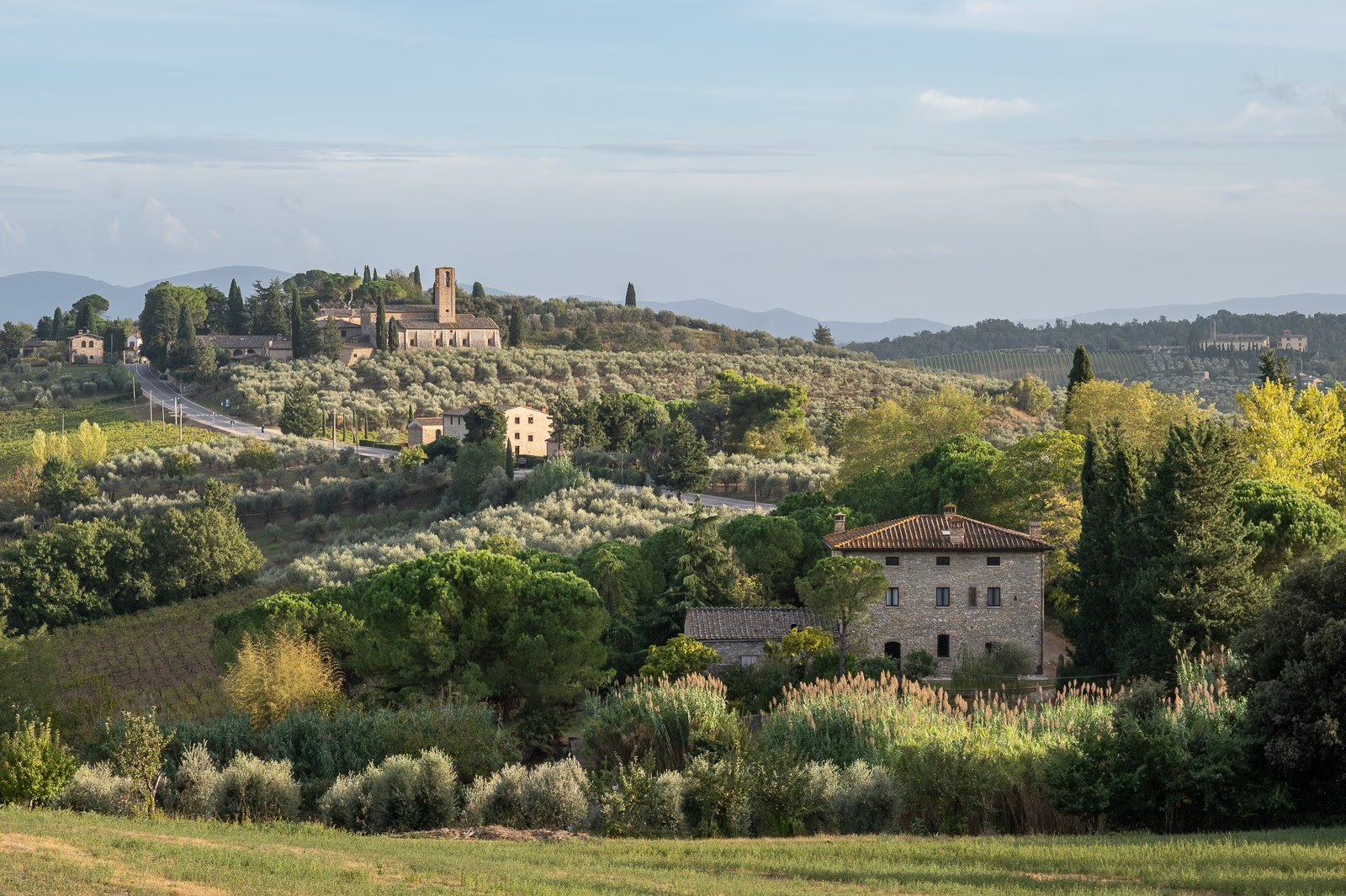
Tuscan cuisine is represented in San Gimignano across the whole spectrum – from affordable enotecas with a cheese board and a glass of wine to sophisticated Michelin-starred restaurants with tasting menus.
The foundation of the local kitchen is wild boar (cinghiale): as ragù on pappardelle, as a roast, or on the cured-meat board. Another unmistakably local ingredient is saffron, which finds its way into pasta, sauces and even gelato.
Local cheeses are mostly pecorino, smoked or fresh; cured meats include finocchiona (a fermented salami with fennel) and the golden cotto all’oro ham, aged with saffron.
Where to eat
- Da I’ Mariani – a tiny spot with Tuscan specialities and wine
- La Locanda del Tagliere – a trattoria built around Tuscan taglieri, cheese and cured meats
- Ristorante Fuoriluogo – a Tuscan restaurant with honest home cooking
- Vinaino Fiorenza – a wine bar serving sandwiches and a selection of Tuscan wines
- Cum Quibus – a respected Tuscan fine-dining restaurant
Gelato: Gelateria Dondoli
Gelateria Dondoli sits on Piazza della Cisterna and is a local institution with global reach.
Maestro Sergio Dondoli has repeatedly won the world gelato championship; his original flavours like Crema di Santa Fina (saffron and pine nuts) or Champelmo (pink grapefruit and prosecco) have become legendary.
There’s usually a queue at any time of day, and in high season I’d actually go elsewhere for gelato. Off-season, though, it’s absolutely worth the stop.
Where to stay in San Gimignano
First thing to know: most accommodation will be booked out months in advance.
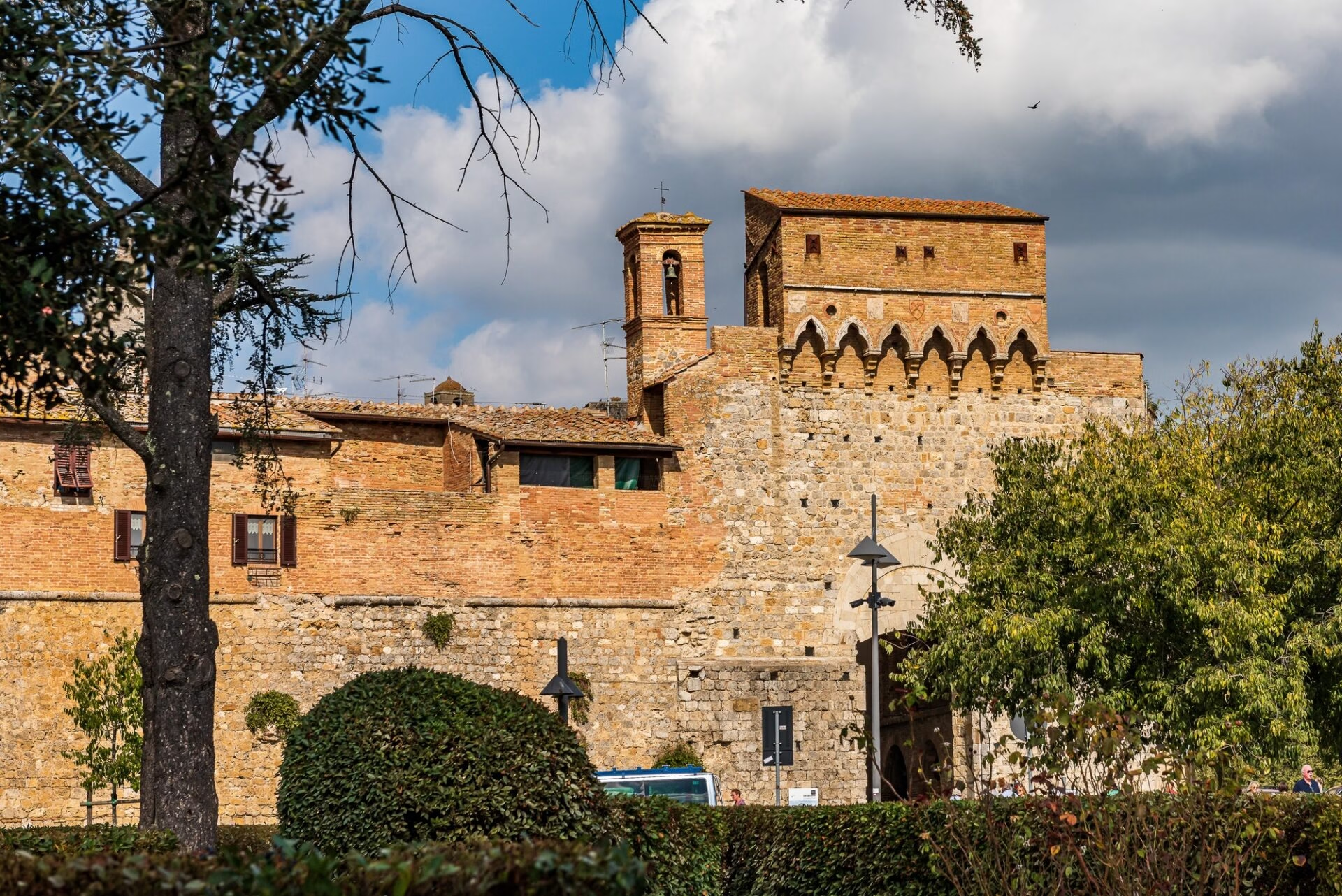
Staying in the historic centre gives you the best evening atmosphere and walkable access to every sight, but you’ll pay a premium.
It’s worth also checking pensions, apartments and agriturismos in the surrounding area. With a car it’s easiest, but if you stay near a bus stop you’ll manage perfectly well without one.
In the historic centre
- Hotel Bel Soggiorno – right by the main entrance gate, with countryside views. Solid location, reliable service, a restaurant with a terrace.
- Hotel Leon Bianco – probably the best location in San Gimignano, directly on the main square. Comfort is solid and the setting itself is exceptional.
- Casa dell’Erbe – a two-storey apartment right on Piazza dell’Erbe; medieval towers out the window and church bells you can hear from bed. Guests compare it to staying in a historic residence.
- Zaffiro Bianco – an apartment on the city walls with views over the Tuscan landscape, described by guests as “charming at every hour of the day.” A quiet part of the centre, a few steps from the main squares.
Outside the centre
- Casa Milena – a family-run guesthouse with a terrace, garden and olive grove a few minutes from the historic centre. Guests repeatedly praise the friendly host and the spacious rooms with balconies.
- Hotel La Collegiata – Adults Only – a luxury adults-only hotel in a Renaissance monastery from 1587, with a pool, Italian garden and restaurant. Guests highlight the beautifully maintained historic spaces and exceptionally attentive staff.
- Podere Bellavista – a renovated hillside farmhouse 5 km from the centre, surrounded by vineyards, with a pool and a family-run restaurant. Guests rave that the food and breakfast are among the best in all of Tuscany.
- Agriturismo Casanova di Pescille – a 19th-century Tuscan stone farmhouse 2 km from the centre with tower views and a pool. Guests write that the on-site restaurant Zafferano “could easily compete with Michelin-starred restaurants.”
- Bed & Breakfast Casale Gregoriano – a family B&B in the hills with a pool and tower views; a shuttle to the centre stops at the door every 30 minutes. Host Paola gets outstanding reviews for her hospitality and Tuscan breakfast.
- Casa Vacanze Etrusco – quiet apartments surrounded by olive trees with panoramic views, 6 minutes’ drive from the centre. Good value – best for travellers with a car who want peace and quiet.
Practical information for San Gimignano
The San Gimignano Pass
The San Gimignano Pass is a combined ticket valid for two consecutive days. It covers every major paid site in town.
Price:
- €15 (full price)
- €12 (reduced, children 6–17)
- Children under 6 free
You can buy the pass on the spot at the church ticket office or at Palazzo Comunale, or online via the official booking system (with a small surcharge).
If you plan to visit several paid attractions, start your morning at the church, where you can pick up the pass.
The two-day validity is handy for those staying overnight who want to enjoy their visits without rushing.
Parking
The historic centre of San Gimignano is a pedestrian zone – only residents and delivery vehicles are allowed inside the walls.
Visitors must park at paid car parks outside the centre. From there it’s a 5–15 minute walk to the main entrance gate. From the most distant ones you can hop on a shuttle bus.
All car parks are signposted on the access roads into town. Real-time availability is shown at statoparcheggi.comune.sangimignano.si.it.
- P1 Giubileo – 315 spaces, accessed from the south (from Porta San Giovanni).
The largest and closest to the main gate.
2026 rates: €2 first hour, €2 second hour, €1.50 each additional hour. Max €7 per 24 hours, night rate (20:00–08:00) €1. Second day €6, third day onward €5. - P2 Montemaggio – 155 spaces, accessed from the south.
Prices are higher: €3 first hour, €2.50 second, €2 onwards. Daily max €15, night flat rate €5.
- P3 Bagnaia Superiore and P4 Bagnaia Inferiore – accessed from the north, useful for those arriving from Florence, Empoli or Pisa.
P4 has 231 spaces and is closest to the northern gate, Porta San Matteo.
Parking for campervans
There’s one designated, official spot:
- P5 Santa Lucia (Strada Comunale di Santa Lucia 43) – the municipal campervan car park, about 3 km from the historic centre.
- Capacity 50 spaces on a paved surface, no electricity or water hook-ups.
- Open year-round, card or cash payment via machine, €11 per night.
- Right next door is a free water refill station and grey water dump. The car park is CCTV monitored.
There’s a bus stop next to the car park – line SG1 runs year-round, every 30 minutes in summer and hourly off-season. Your parking ticket can be combined with a bus ticket.
You can also walk into the centre in about 30 minutes along a road with a pavement and tower views.
In summer, P5 Santa Lucia often fills up – if you’re arriving in July or August, plan accordingly and ideally arrive early in the morning.
How to get to San Gimignano
San Gimignano is a classic day trip from Florence or Siena – both cities are roughly 50–60 km away, and combining them with a half- or full-day visit to San Gimignano is a Tuscan staple.
By car is the most convenient option. Coming from the north (Florence), take the Firenze–Siena motorway and exit at Poggibonsi Nord; from there it’s 11 km along the signed road to San Gimignano. From the south (Siena) the approach is the same, just from the other direction.
By bus the connection is slower and requires a transfer. From Florence or Siena, head first to Poggibonsi, where lines 130 or 131 run directly to San Gimignano (about 20 minutes). Frequency is good in high season and thinner off-season.
By train there’s no direct connection to San Gimignano. The nearest station is Poggibonsi, with a bus onward.
Weather and when to visit
The best months to visit are April–June and September–October. The weather is pleasant (20–28°C), the landscape is either green or golden depending on the harvest, and tourist numbers are lower than in summer.
July and August are hottest (30°C and up) but also the most crowded. Car parks tend to fill before 10:00 and there are queues even for the church. If you’re visiting in summer, arrive as early as possible or plan for late afternoon.
Winter (December–February) is quiet with lower accommodation prices, but some restaurants and shops operate on reduced hours or close altogether. The church shuts for several weeks in January and February.
Safety and what to watch out for
San Gimignano is a safe tourist town. Crime is rare, but occasional pickpocketing occurs in high season – especially on the main squares and in the crowds at the tower ticket office.
Watch the prices at the most tourist-heavy venues. A coffee or water on Piazza della Cisterna costs significantly more than in a side-street spot. Restaurants with multilingual menus and photos of dishes at the entrance are a reliable signal of tourist pricing.