This post is also available in:


Hamburg is Germany’s second-largest city, one of Europe’s most important ports, and the undisputed capital of the north. Sitting on the Elbe roughly a hundred kilometres from the North Sea, the city’s identity is still deeply shaped by trade, its harbour, and its Hanseatic past — and that’s a big part of what makes things to do in Hamburg so varied and rewarding.
Unlike smaller historic towns, Hamburg has no single compact centre where you can tick off all the main sights in a few hours. It’s a sprawling city, and each of its neighbourhoods has a distinctly different feel.
This Hamburg travel guide covers everything you need: what to see, where to stay, what to eat, how to get around, and what to watch out for when planning your trip.
Why Visit Hamburg?
Hamburg is one of the most compelling cities in northern Germany. It has a vast working harbour, the brick-built Speicherstadt warehouse district on the UNESCO World Heritage list, the striking modern Elbphilharmonie concert hall, lively neighbourhoods, and a surprising amount of green space. It’s that combination of water, architecture, history, and urban energy that makes it such a great destination for a long weekend.
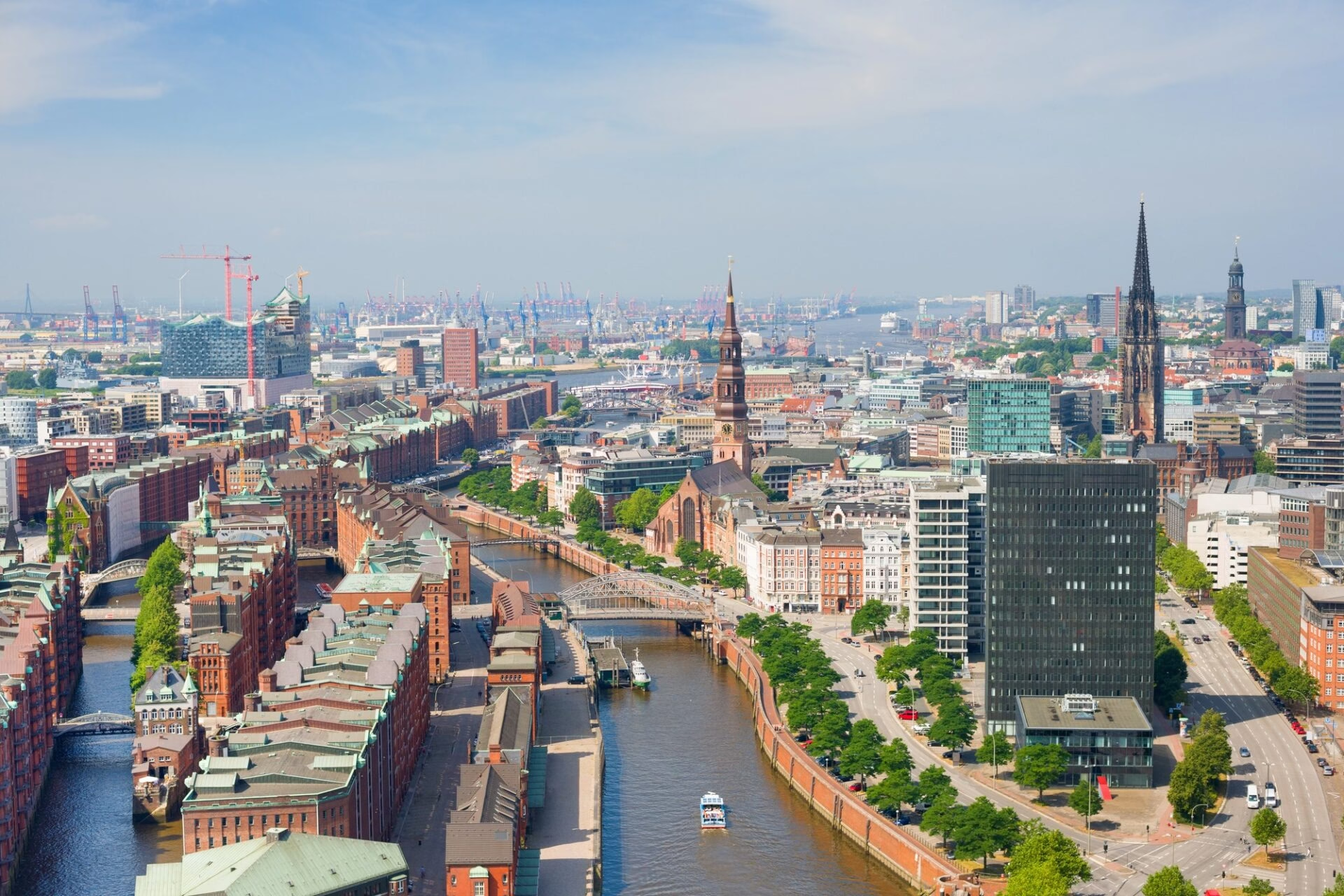
What’s great about Hamburg is that it offers far more than a checklist of landmarks. You can wander between old warehouses and canals, ride a public ferry along the Elbe, grab a fish sandwich by the water, or end the day in the bars around St. Pauli and Sternschanze. If you like exploring cities beyond the obvious tourist trail, Hamburg has plenty to offer.
Top 10 Things to Do in Hamburg: Don’t Miss These
For a quick overview — here are the places and experiences that make most sense on a first visit to Hamburg:
- Speicherstadt and Kontorhausviertel – historic warehouses, canals, brick architecture, and one of the best introductory walks in the city.
- Elbphilharmonie Plaza – Hamburg’s modern icon and a great viewpoint over the harbour, the Elbe, Speicherstadt, and HafenCity.
- Landungsbrücken – the harbour piers, a key transport hub, and the best starting point for exploring Hamburg from the water.
- Alter Elbtunnel – a short, free experience under the Elbe, with great views back across the harbour from the other side.
- Ferry Line 62 along the Elbe – a budget-friendly alternative to a paid harbour cruise.
- Miniatur Wunderland – the city’s most famous indoor attraction.
- St. Pauli and Reeperbahn – Hamburg’s most vibrant evening neighbourhood.
- Fischmarkt – the Sunday morning market by the harbour.
- Planten un Blomen – a large park near the city centre, with water and light shows in summer.
- Blankenese and Treppenviertel – a half-day trip to the Elbe, ideal if you’re staying longer.
How Long to Spend in Hamburg
Hamburg can be done in a single day, but it really shines as a long weekend in Hamburg. The sweet spot is 2–3 days, which gives you enough time to cover the main harbour area, take a ride along the Elbe, explore a neighbourhood or two, and still have room for a slower afternoon.
If you’re planning a weekend in Hamburg for the first time, count on two full days and one shorter arrival or departure day. The city is bigger than it looks on a map, so it’s better not to try cramming the city centre, the harbour, St. Pauli, Alster, and the outer neighbourhoods all into one day.
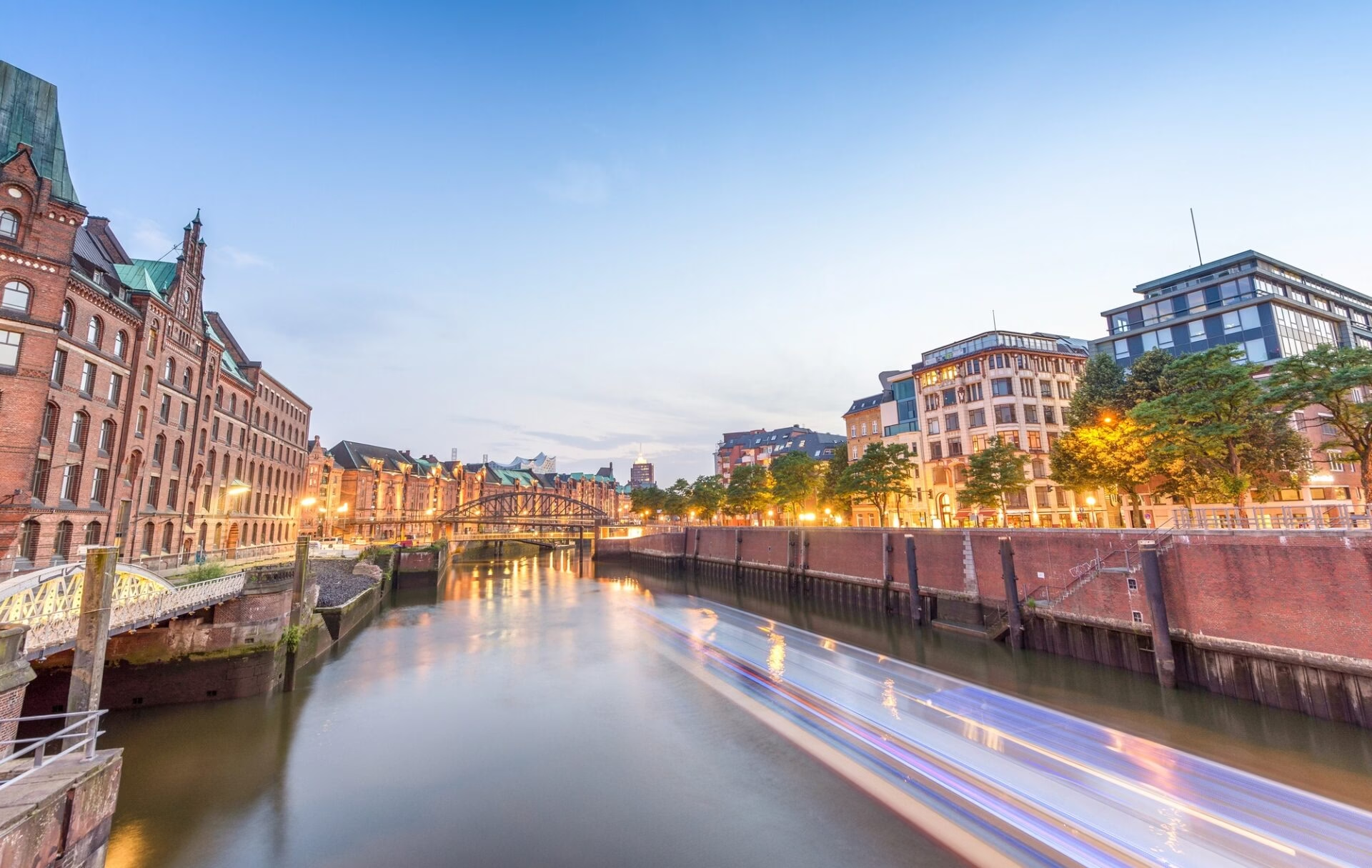
1 day is enough for a basic circuit. Walk the city hall, Binnenalster, Speicherstadt, HafenCity, Elbphilharmonie, Landungsbrücken, and Alter Elbtunnel. If time allows, add a short ride on Ferry 62 or an evening in St. Pauli.
2 days are significantly better for a first visit. Spend day one in the centre, Speicherstadt, HafenCity, and the harbour. On day two, add Miniatur Wunderland, Kunsthalle, Planten un Blomen, Sternschanze, Karolinenviertel, or St. Pauli, depending on the weather and your interests.
3 days allow a more relaxed pace. On top of the main sights, you can add Blankenese, a longer walk along the Elbe, more time around the Alster, additional museums, or deeper exploration of the neighbourhoods. Three days also give you buffer for Hamburg’s notoriously changeable weather.
4 days or more makes sense if you’re travelling slowly, with children, heading to a festival or Christmas markets, or planning day trips into the surrounding region. In that case, Lübeck, Lüneburg, or a trip to the North Sea coast are all worth adding.
Hamburg Map and Neighbourhoods: Where to Start
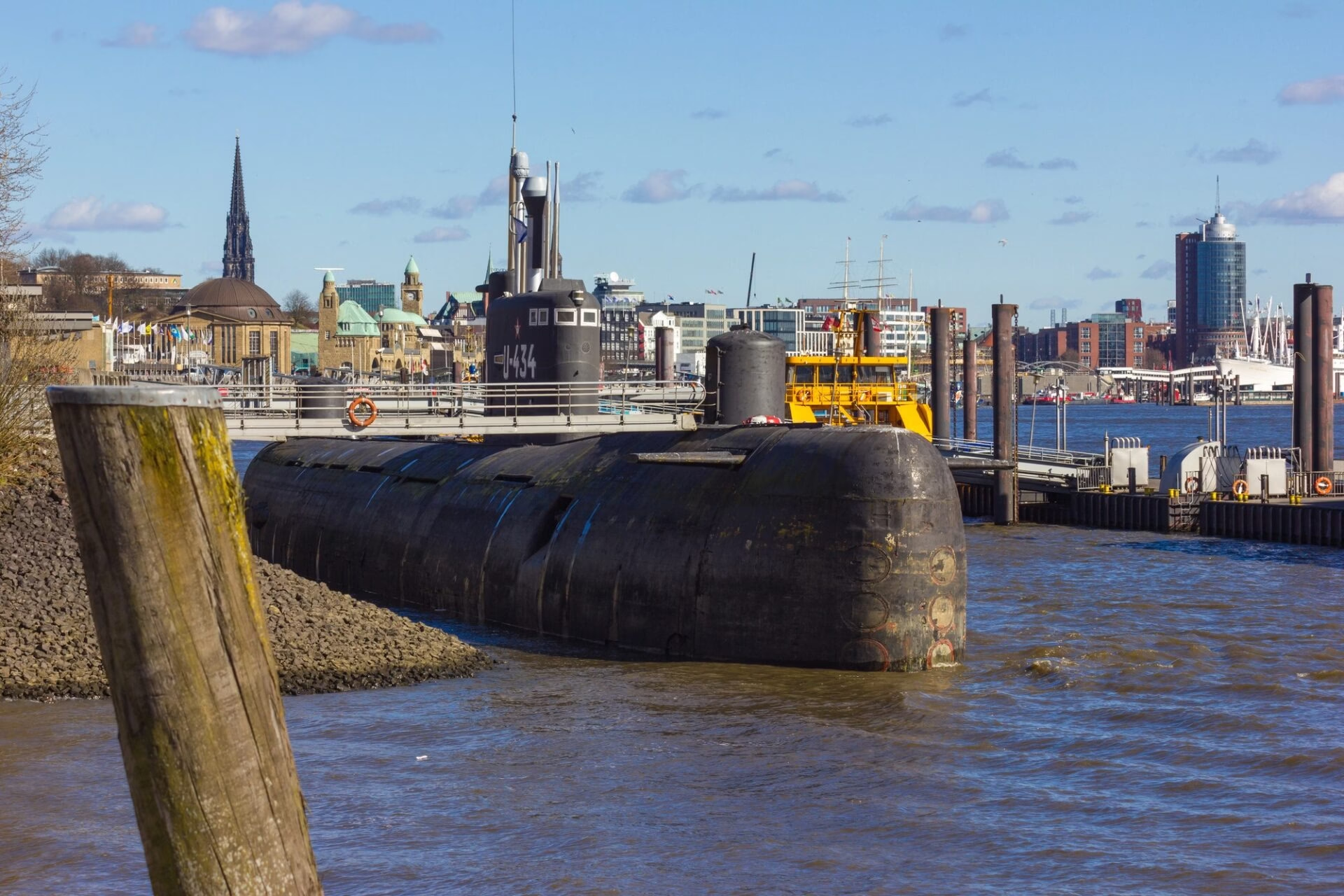
At first glance, the Hamburg map can feel a bit overwhelming, because the main attractions don’t cluster in one small historic core. The easiest way to orient yourself is to think of the city in strips: the centre around the city hall and Binnenalster, the historic Speicherstadt and Kontorhausviertel, the modern HafenCity, the harbour at Landungsbrücken, and the lively evening districts of St. Pauli and Sternschanze.
If it’s your first time in Hamburg, it makes most sense to start in the centre or at Speicherstadt and work your way towards the harbour from there. That way you’ll naturally connect the main sights, transport links, and neighbourhoods without unnecessarily criss-crossing the city.
Top Attractions and Experiences in Hamburg
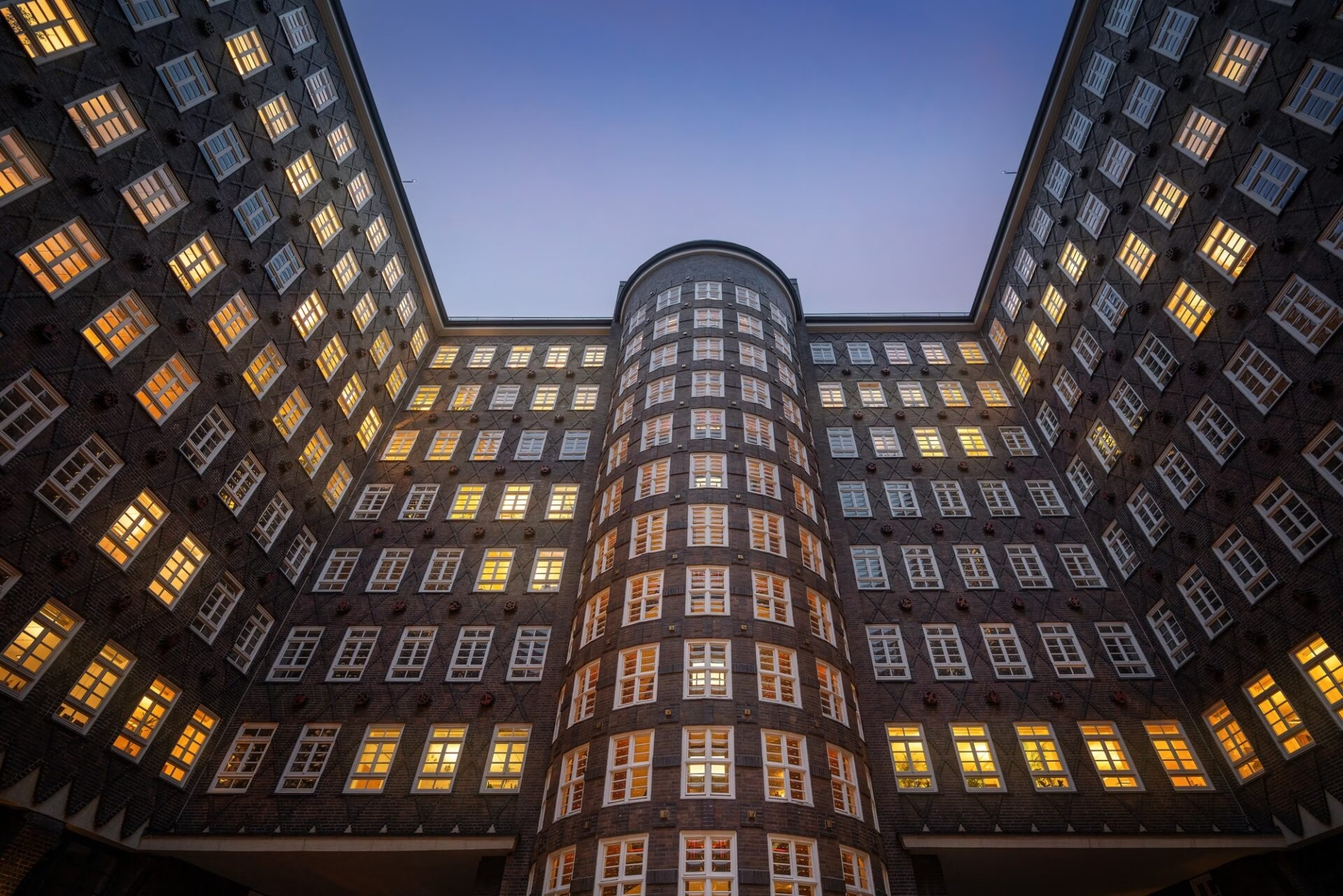
Speicherstadt, Kontorhausviertel and Chilehaus
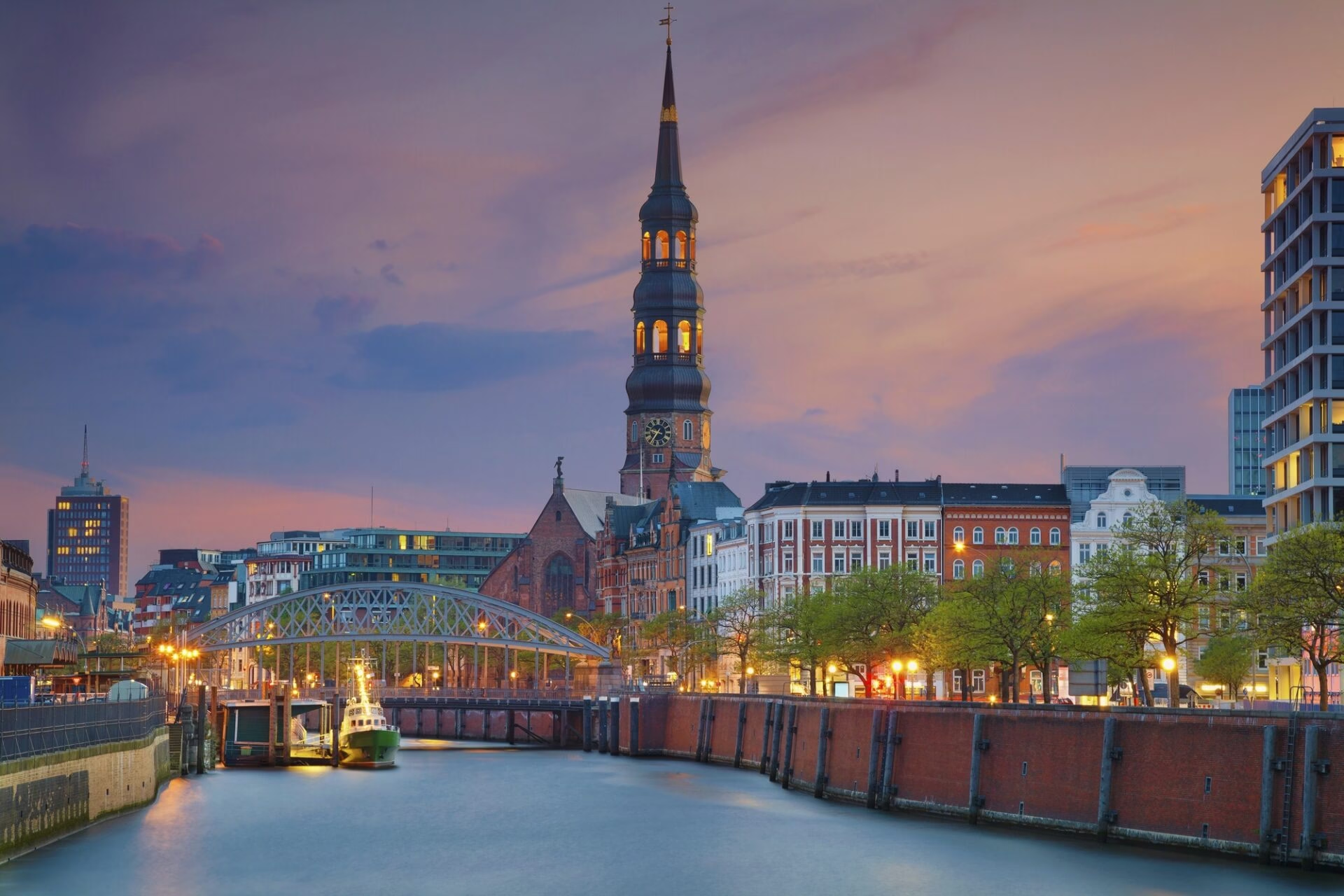
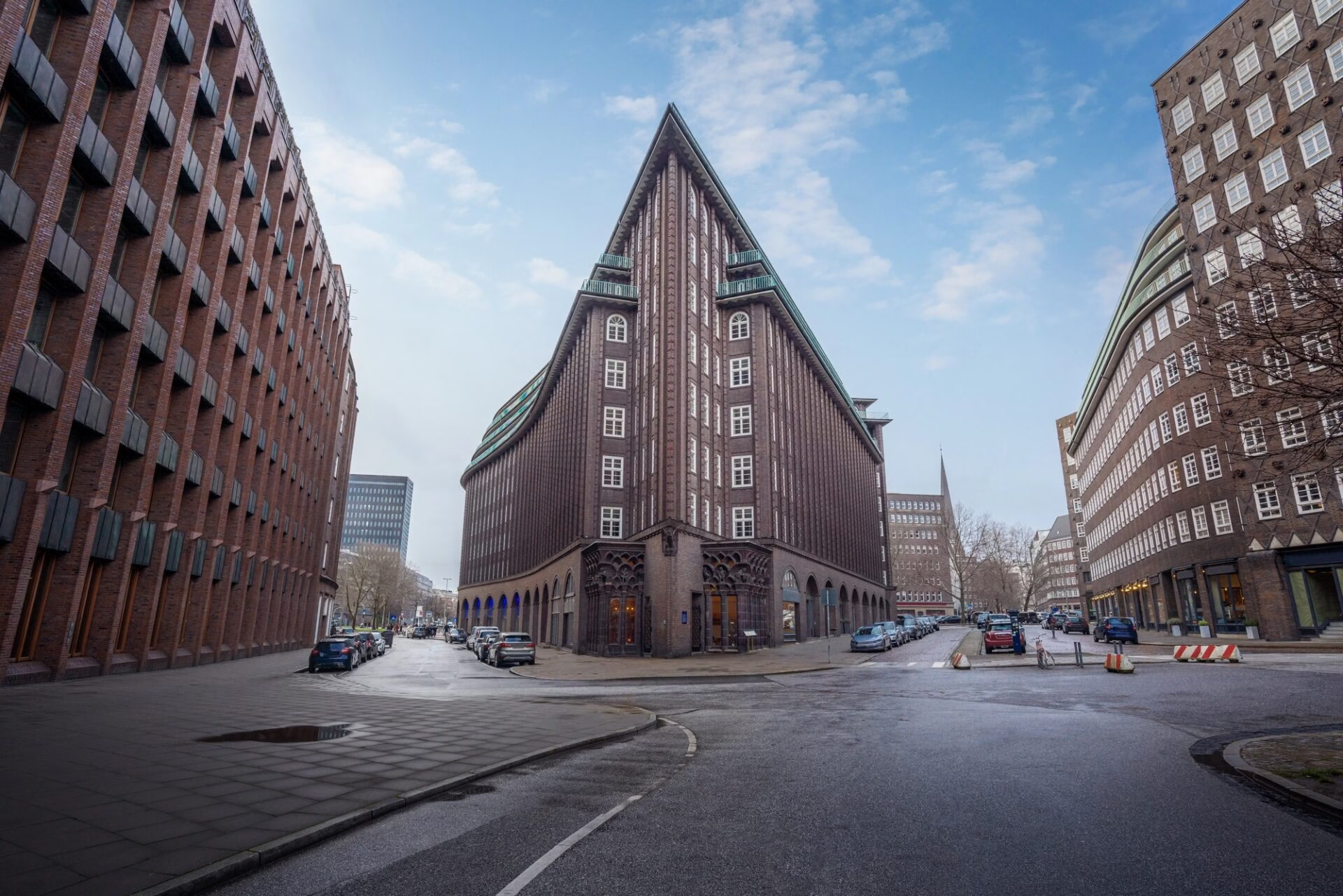
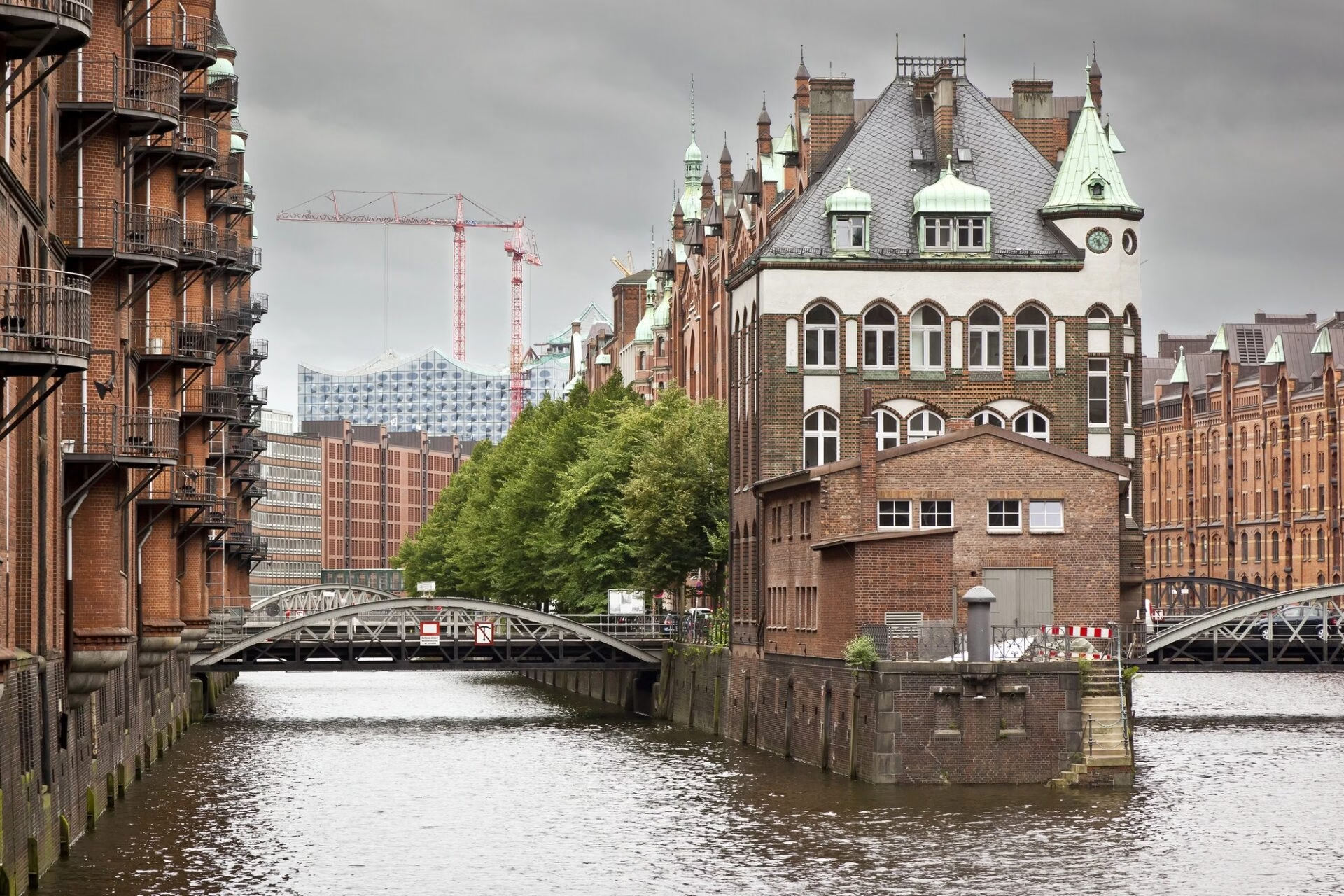
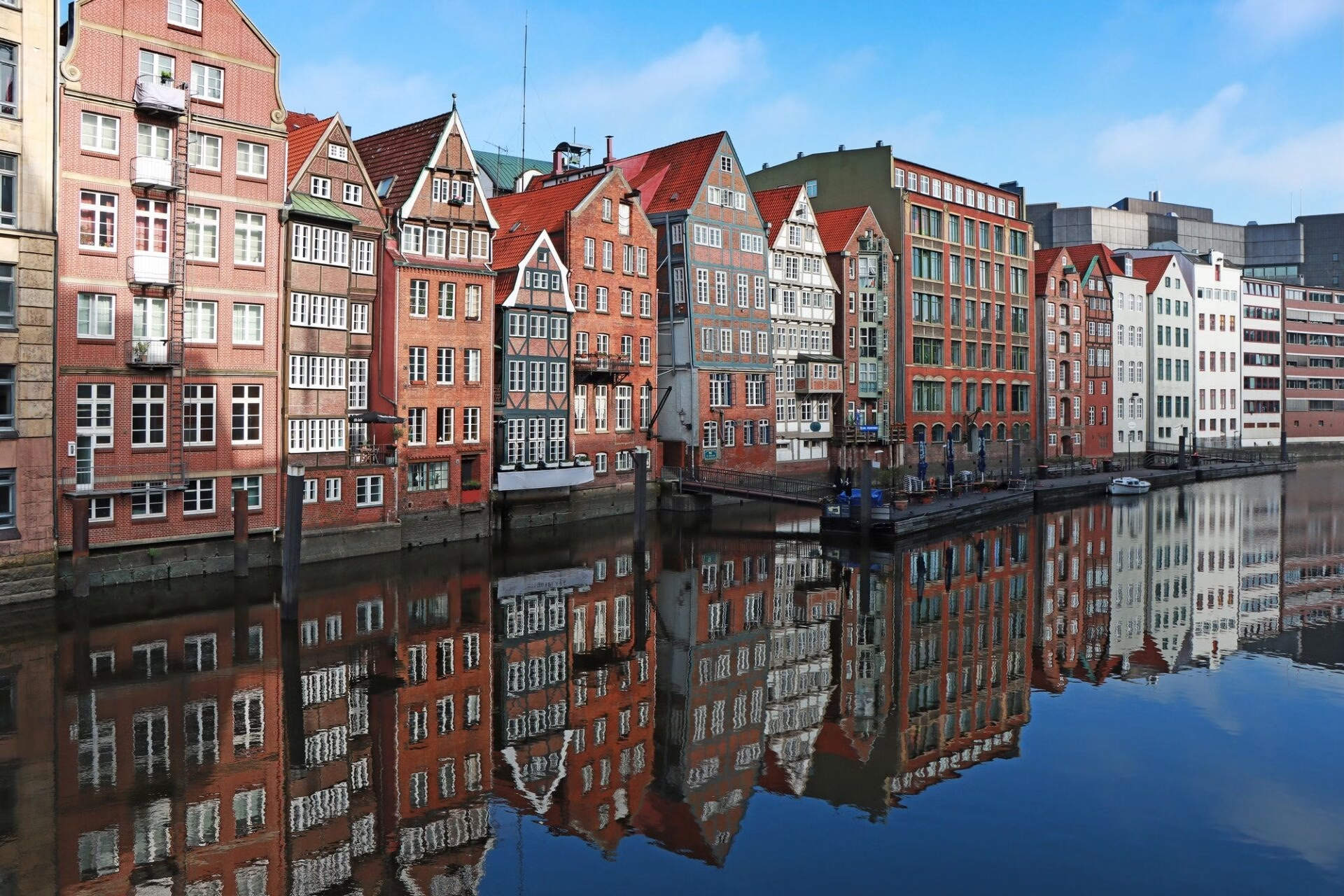
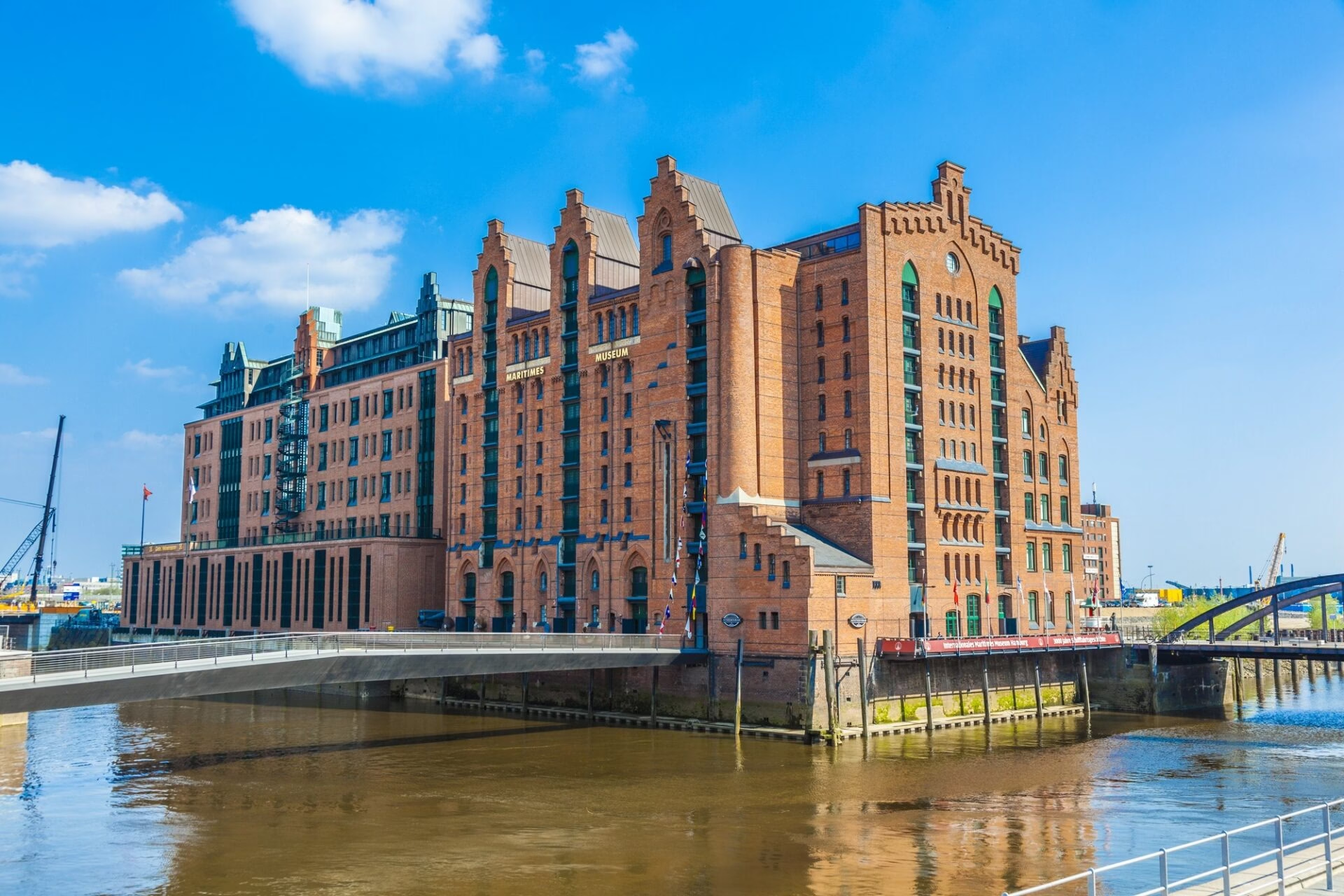
Speicherstadt is the historic warehouse district alongside the canals, where coffee, tea, spices, and carpets imported through Hamburg’s port were once stored. Kontorhausviertel sits right next to it and is defined by brick office buildings from the early 20th century. The most famous of these is Chilehaus, a striking building with a sharp corner that resembles the prow of a ship.

Speicherstadt and Kontorhausviertel together form a single UNESCO World Heritage Site. On a first visit, it makes sense to walk both areas in one go. Start at Chilehaus or around Meßberg station, continue through Kontorhausviertel into Speicherstadt, and then carry on towards HafenCity and the Elbphilharmonie. Allow roughly 1–2 hours for the walk itself.
If you add Miniatur Wunderland, Dialoghaus, or the International Maritime Museum, this part of the city can easily fill an entire morning or afternoon.
HafenCity
HafenCity picks up directly where Speicherstadt leaves off, but feels entirely different. While Speicherstadt evokes old mercantile Hamburg, HafenCity shows its modern face: new architecture, wide waterfront promenades, apartments, offices, restaurants, and above all, the Elbphilharmonie.
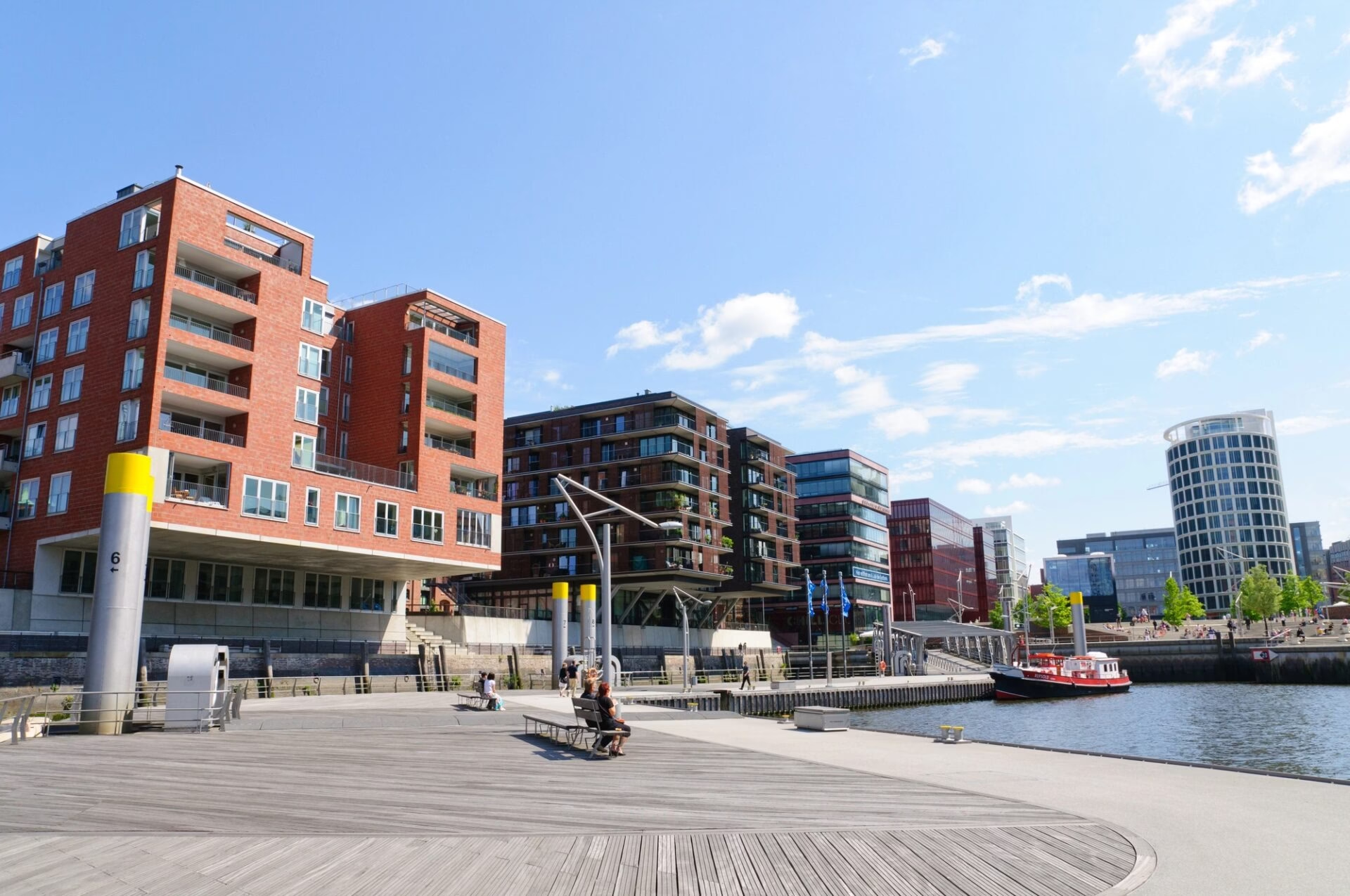
HafenCity is best experienced as a continuation of your walk through Speicherstadt. You don’t need to dedicate a separate half-day to it, but on the way to the Elbphilharmonie it’s worth slowing down, strolling along the waterfront, and taking in the contrast between the old warehouses and the new construction around them.
Elbphilharmonie and the Plaza
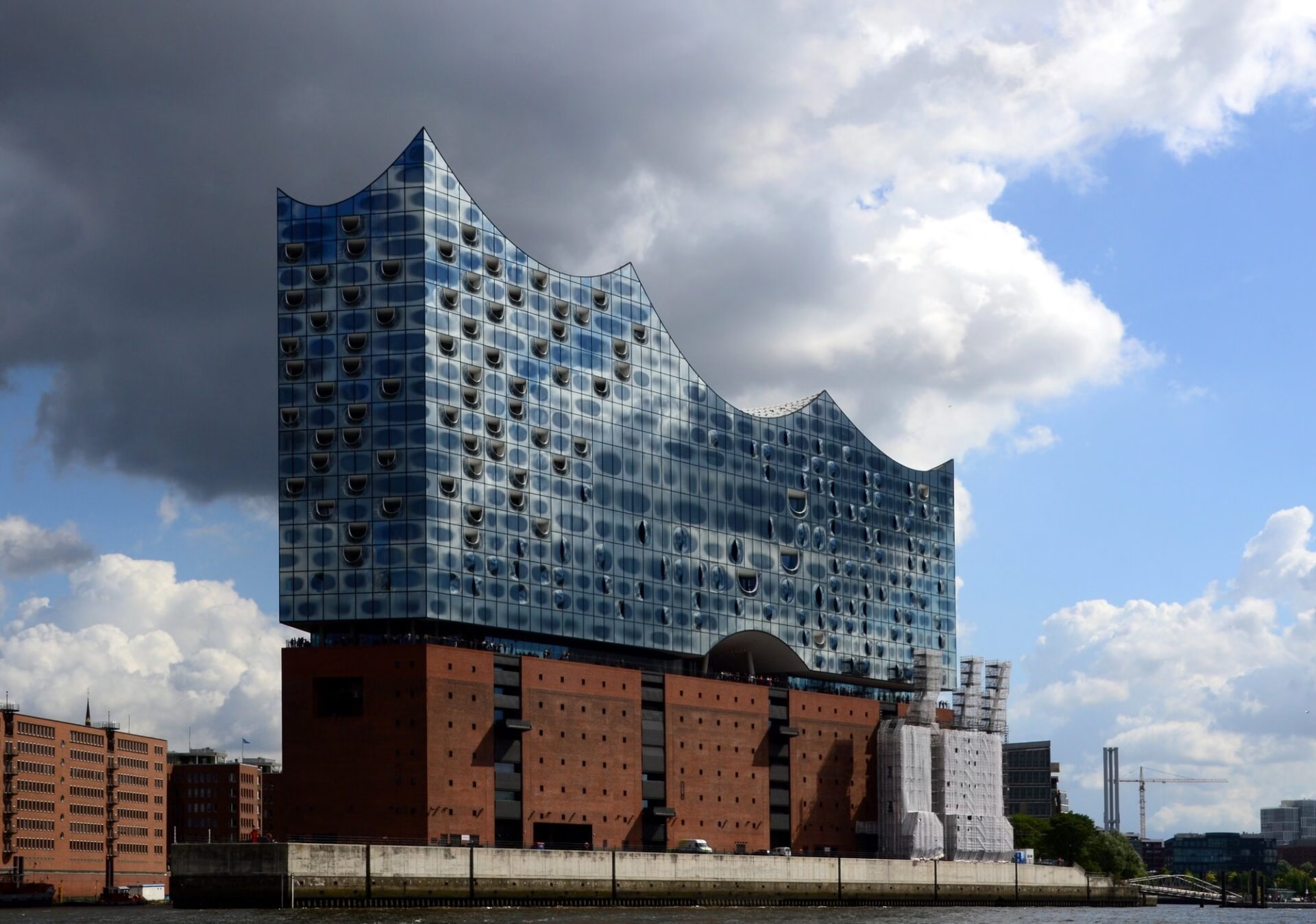
The Elbphilharmonie is a modern concert hall in HafenCity and the most distinctive contemporary building in Hamburg. Built by converting an old harbour warehouse, its glass upper section has become one of the city’s defining symbols.
Even if you’re not attending a concert, it’s worth visiting the Plaza — the publicly accessible viewing level between the original warehouse and the new glass section. From the Plaza you get excellent views over the harbour, the Elbe, Speicherstadt, and HafenCity.

Entry to the Plaza is free, but visitor numbers are limited. If you’re visiting in peak season, on a weekend, or want to guarantee a specific time slot, it’s worth booking a ticket in advance. A timed-entry ticket costs €3. Another option is a guided tour with commentary.
Miniatur Wunderland
Miniatur Wunderland is an enormous miniature world and one of the largest model railways on the planet. You’ll find intricately detailed models of cities, landscapes, an airport, trains, and everyday scenes that are constantly in motion.
It might look like a kids’ attraction at first glance, but it genuinely entertains adults too. The sheer level of detail is what makes it fascinating — from tiny street-level stories to a working airport and the alternation of day and night cycles.

Allow at least 2–3 hours, and more if you’re visiting with children. Adult tickets cost €22 and children under 16 pay €13. Children under 1 metre tall get in free when accompanied by a paying adult.
It’s best to book tickets in advance, especially on weekends, during school holidays, and on rainy days, when time slots fill up fast.
Landungsbrücken
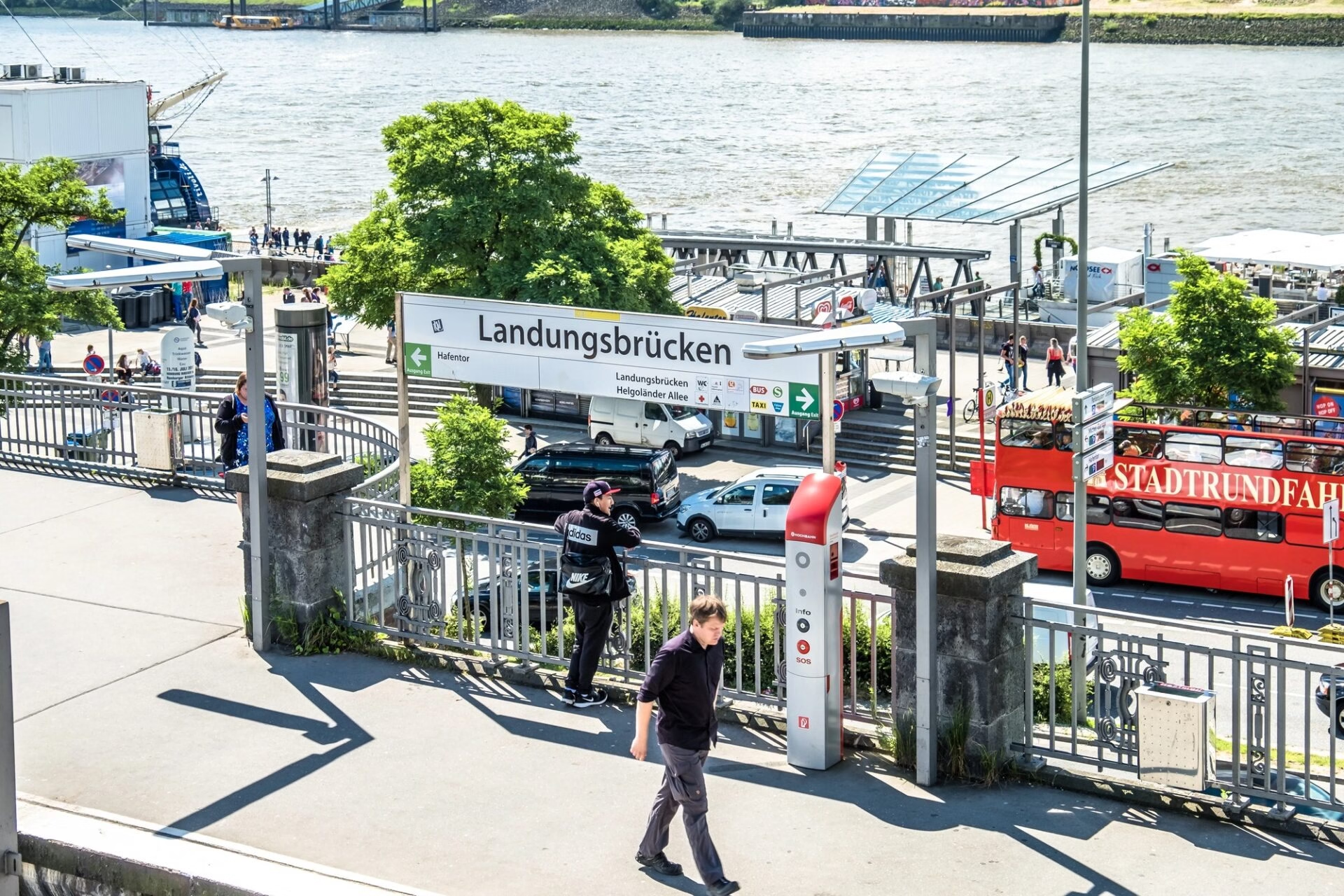
Landungsbrücken are the harbour piers at the edge of St. Pauli and one of the main jumping-off points for exploring Hamburg from the water. They’re not a landmark you’d spend hours at on their own, but they’re extremely useful for a first-time visitor.
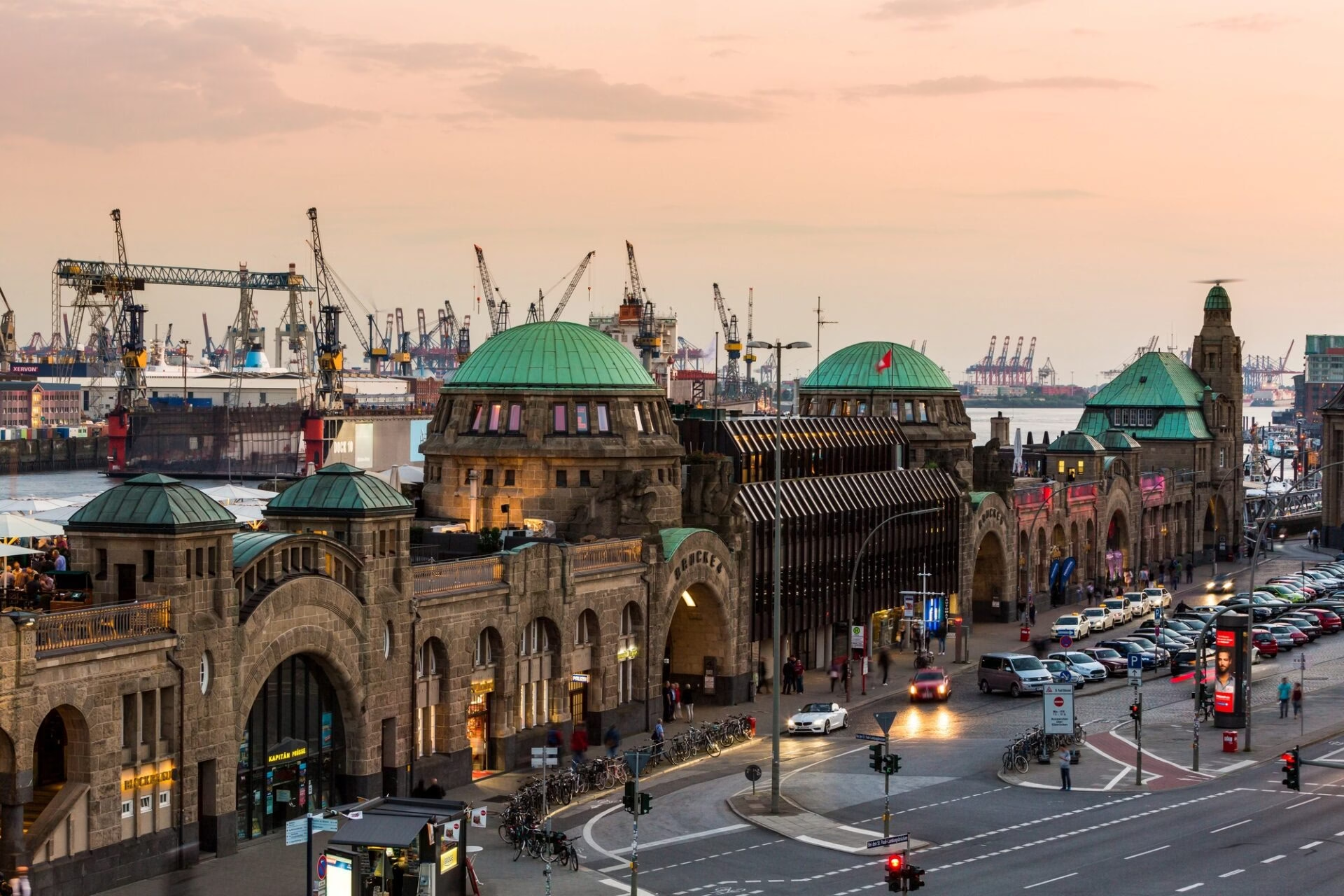
This is where tourist harbour cruises and regular public ferries depart, including Ferry Line 62 along the Elbe. The entrance to Alter Elbtunnel is right nearby, and you can walk on from here towards HafenCity, St. Pauli, or the Fischmarkt.
If you’re just passing through the waterfront, 20–30 minutes is enough. If you plan to take a ferry, join a harbour cruise, or walk through the Elbe tunnel, allow more time.

Rickmer Rickmers
Rickmer Rickmers is a historic sailing ship moored at Landungsbrücken. Today it serves as a museum ship and is one of the most striking vessels you’ll see in Hamburg’s harbour. You can explore her interior.
The visit reveals what life looked like for the crew and officers aboard a large cargo sailing ship. It’s most appealing for those interested in ships, maritime history, or anyone who wants to add a themed stop to their walk along Landungsbrücken.
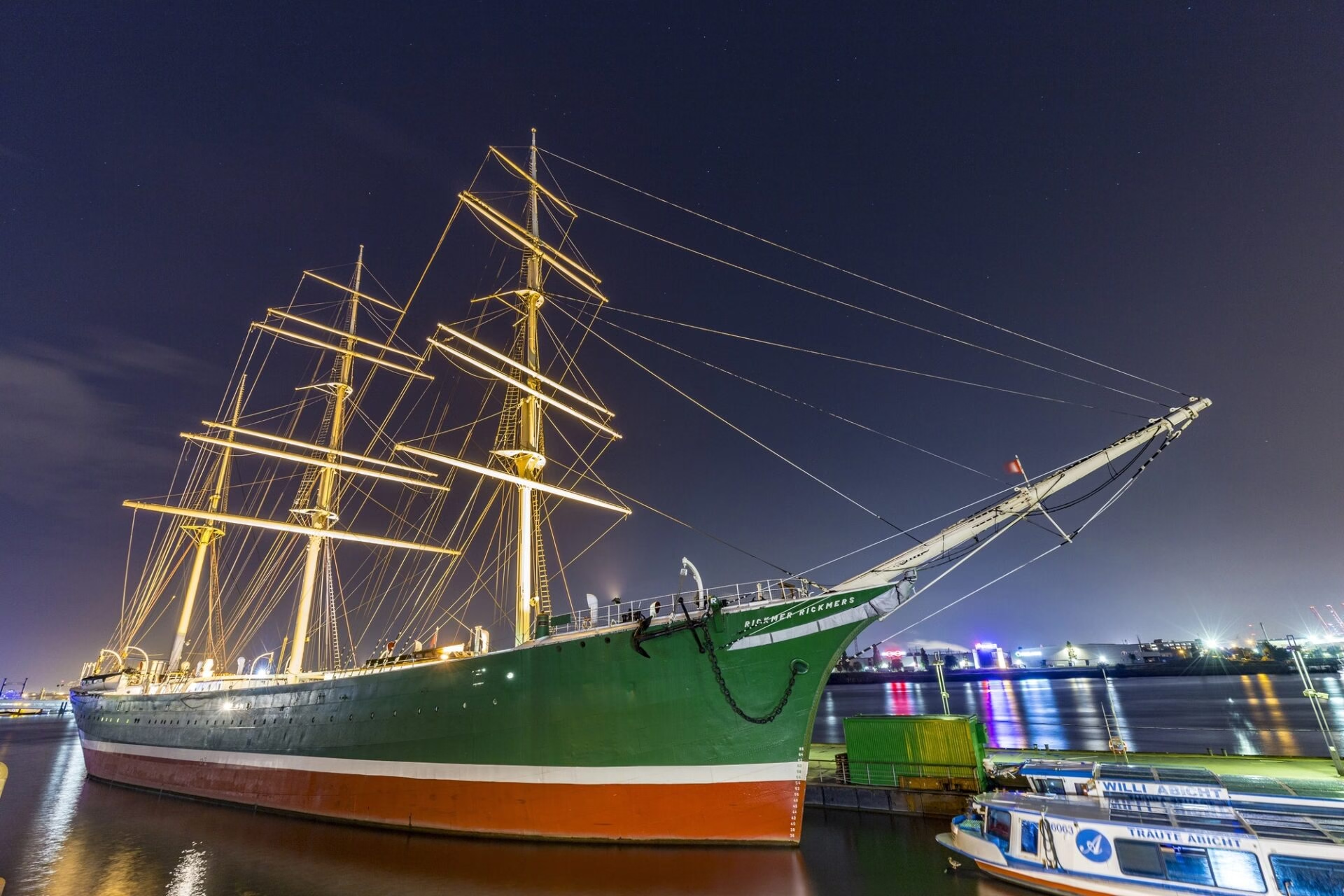
Admission is €7 for adults, €6 for students and school children, and a family ticket costs €18.
Alter Elbtunnel
Alter Elbtunnel is an old tunnel under the Elbe connecting Landungsbrücken with the Steinwerder district on the opposite bank. It’s free for pedestrians and cyclists and is one of the best short detours in the harbour area.

The tunnel itself isn’t long, but it’s definitely worth walking all the way to the other side. From there you get a lovely view back across to Landungsbrücken, the Elbphilharmonie, and the harbour skyline. Allow about 30–60 minutes in total.
Public Ferry Line 62
If you want to experience the Elbe without paying for a tourist cruise, take public Ferry Line 62 — it’s a regular Hamburg public transport route, so you can ride it with a standard HVV ticket or a Hamburg Card.
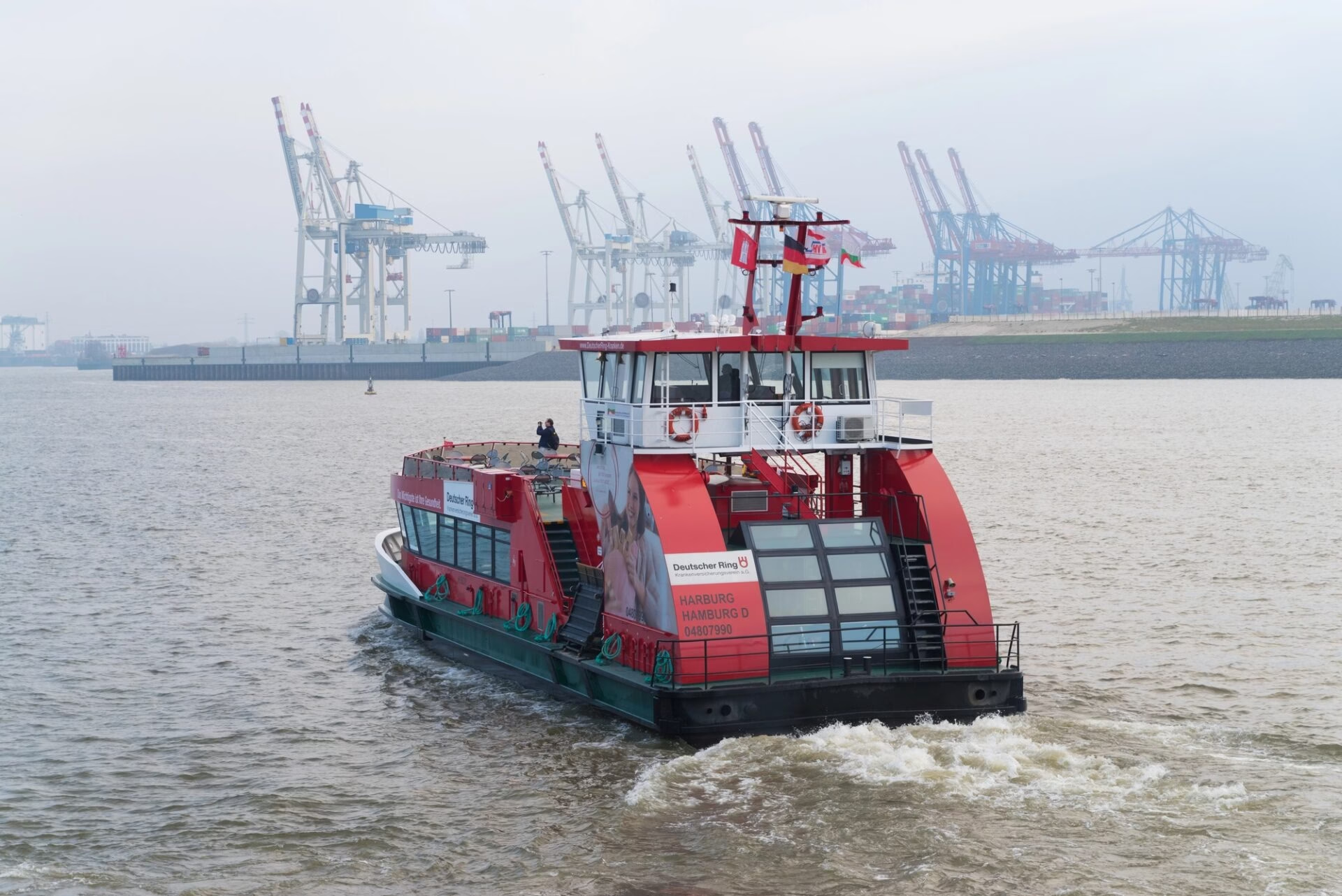
The ferry leaves from Landungsbrücken and heads towards Altona, Övelgönne, and Finkenwerder. You could ride to Övelgönne, walk along Elbstrand, then catch the ferry back. Along the way you’ll see the harbour, ships, waterfront, and the quieter stretches of the Elbe.
If you’re interested in the harbour’s history, technical details, and background context, a paid guided harbour cruise will be a better fit.
Fischmarkt
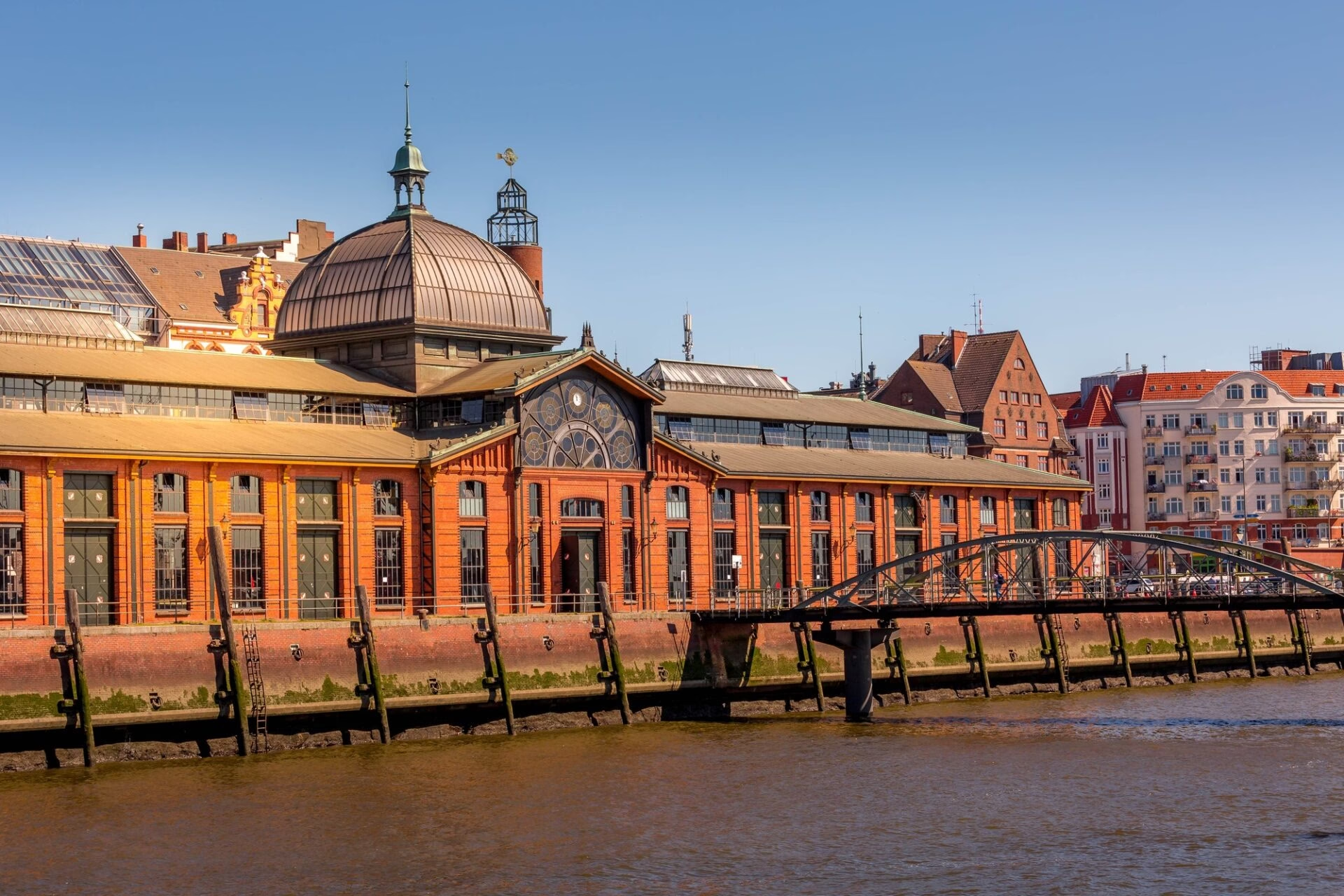
Hamburg’s Fischmarkt is a Sunday morning market by the harbour and one of the city’s most famous traditions. From April to October it runs 5:00–9:30am; from November to March 7:00–9:30am.
Don’t expect a quiet farmers’ market. Fischmarkt is loud, lively, and in places quite touristy. You’ll find fish, bread, fruit, vegetables, flowers, and various odds and ends, with vendors loudly calling out to customers forming a big part of the atmosphere.
Hamburg City Hall, Rathausmarkt and Binnenalster
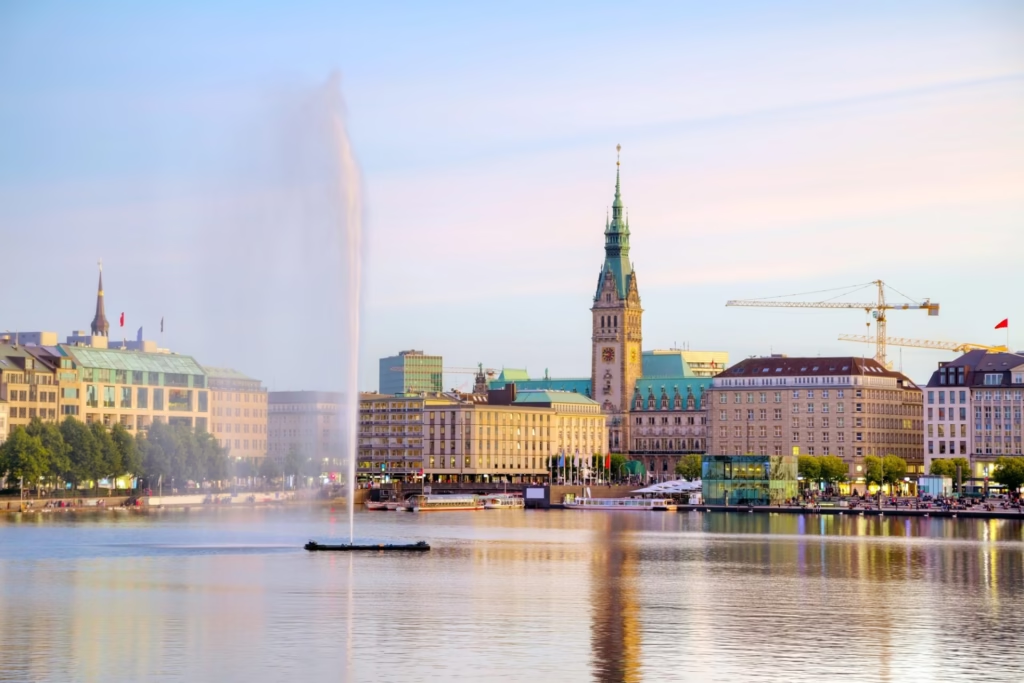
Hamburg’s city centre is easy to combine into one pleasant short walk. The best starting point is Rathausmarkt, the large square in front of the Hamburg city hall. The Rathaus itself is one of the city’s most striking historic buildings — a reminder of Hamburg’s days as a wealthy trading centre.

From the city hall it’s just a few minutes’ walk to Binnenalster, the smaller inner section of the Alster lake right in the city centre. A pleasant urban promenade runs around it, along with Jungfernstieg, a boulevard lined with shops and cafés and a fine view across the water towards Hamburg’s more elegant quarter. You can then continue towards Kontorhausviertel, Chilehaus, and on into Speicherstadt.
St. Michael’s Church
St. Michael’s Church, known locally as Michel, is one of Hamburg’s main historic landmarks. This Baroque church is recognisable by its tall tower with a clock and a copper spire, visible from many points in the city centre and the harbour.
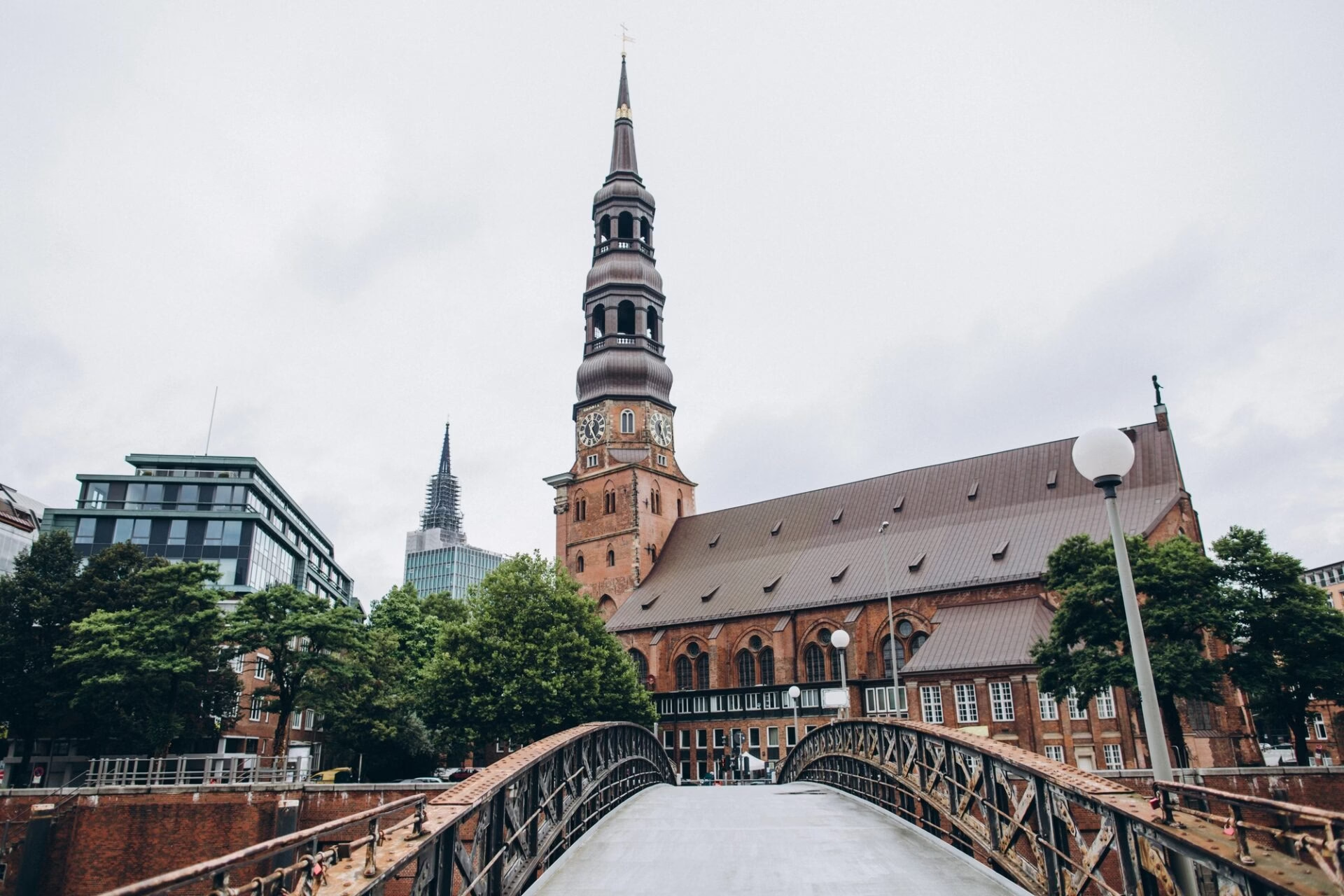
Entry into the church itself is free; the tower viewing platform has an admission charge. The viewpoint sits at 106 metres and offers classic views over the centre, the harbour, the Elbe, and the Alster. Tower admission costs €8 for adults, the crypt €6, and a combined tower-and-crypt ticket costs €10.
St. Nikolai Memorial
St. Nikolai Memorial is a monument within the ruins of the former Church of St. Nicholas, destroyed during the bombing of Hamburg in the Second World War. The original church’s tall tower and sections of ruin remain standing, serving as a reminder of the city’s wartime history.
The memorial includes a small museum in the former crypt beneath the church. The exhibition covers the history of the church, the bombing of Hamburg, and the aftermath of the war. A lift also takes visitors up the tower, from where there are views over the centre, Speicherstadt, the Alster, and the harbour.

St. Nikolai sits between the city hall and Speicherstadt, so it fits naturally into a walking route through the centre. A ticket covering both the museum and the viewing tower costs around €5–6. Allow about 45–60 minutes.
St. Pauli and Reeperbahn
St. Pauli is one of Hamburg’s most well-known neighbourhoods. It sits close to the harbour and has long been associated with nightlife, music, bars, theatres, and the city’s seafaring history. Its most famous street is Reeperbahn, the heart of Hamburg’s entertainment scene — especially after dark.
Beyond the Reeperbahn itself, it’s worth exploring the surrounding streets. Große Freiheit is tied to the neighbourhood’s musical heritage and is home to clubs, bars, and live music venues. Spielbudenplatz is a wider open space with theatres, venues, and various events. Moving towards Karolinenviertel and Sternschanze, the tourist crowds thin out and give way to independent bars, cafés, shops, and more everyday city life.
Bunker St. Pauli
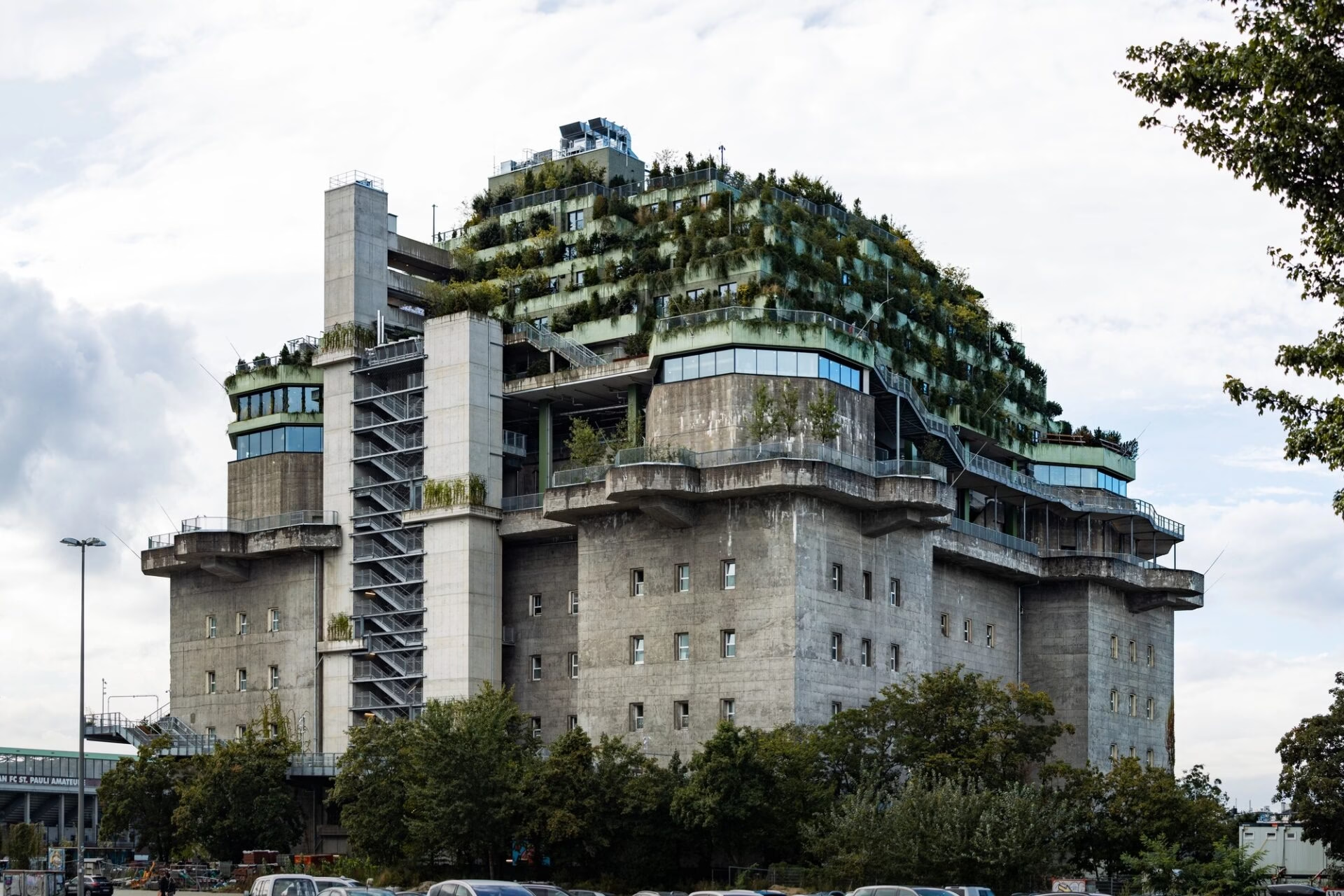
Bunker St. Pauli is a former Second World War air-raid shelter on Feldstraße, close to St. Pauli and Sternschanze. For years it stood as a massive concrete structure in the middle of the city; it has since been transformed and extended with a new green rooftop section.
The main draw is the publicly accessible rooftop garden, reached via an outdoor path winding around the building. Along the way and at the top, you get views over St. Pauli, the harbour, the city centre, and the surrounding neighbourhoods. Inside the complex you’ll also find a hotel, restaurants, and cultural spaces. If you’re interested in the site’s history, you can also book a guided tour.
Planten un Blomen
Planten un Blomen is a large park near the exhibition centre and the neighbourhoods of St. Pauli and Sternschanze. You’ll find manicured gardens, ponds, greenhouses, children’s playgrounds, and plenty of spots to take a break from the city.
The park works well as a breather between sightseeing, especially once you’ve already covered the centre, Speicherstadt, or the harbour. It’s also a good option when travelling with children, as it offers more open space and calm than the busier parts of the city.

In summer, the park regularly hosts water and light shows.
Alster
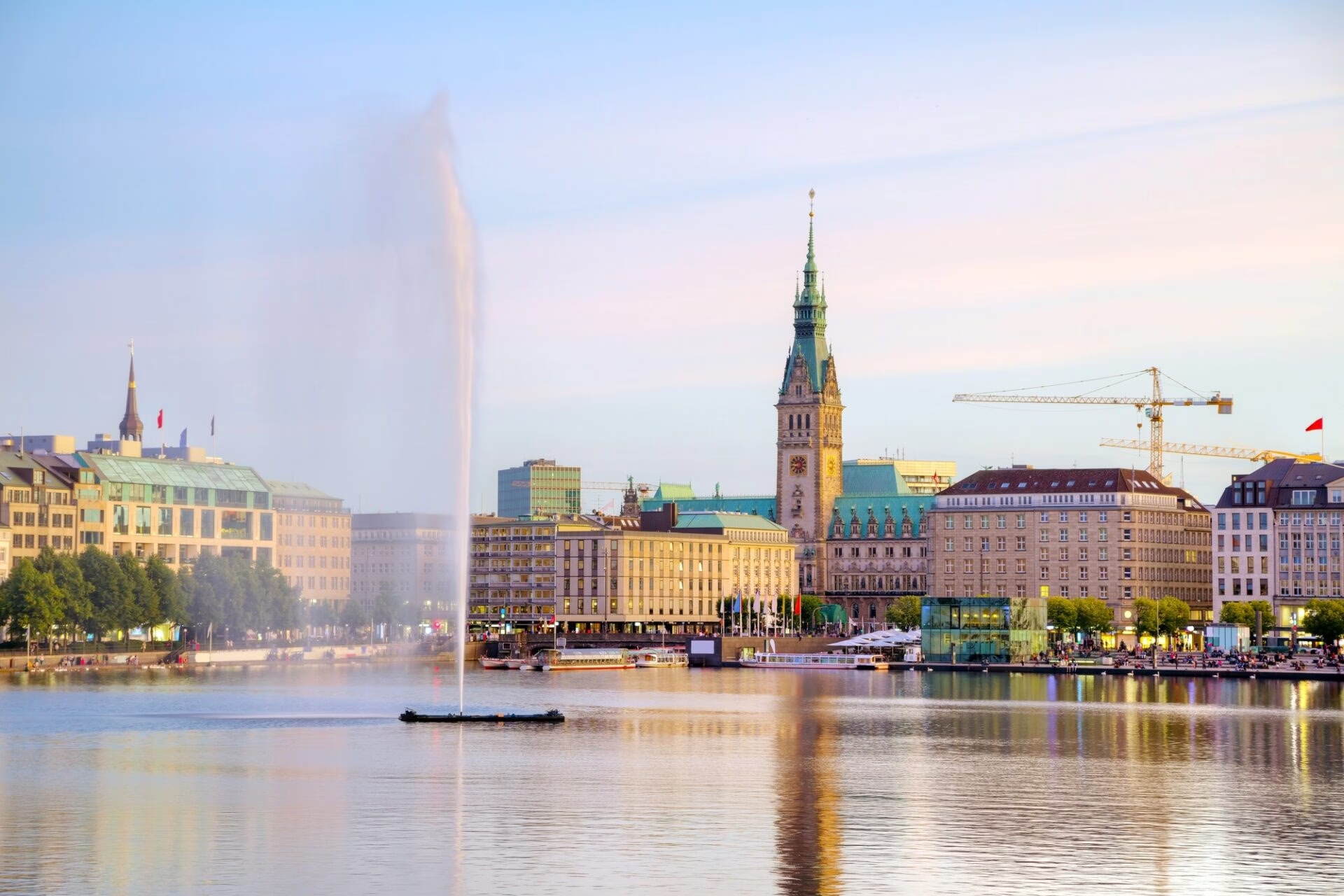
The Alster is a lake right in the heart of Hamburg, created from the Alster river. It’s divided into the smaller Binnenalster near the city centre and the larger Außenalster, which lies a little further from the main sights. Together they form one of Hamburg’s most pleasant green and waterside areas.
You’ll naturally come across the smaller Binnenalster while walking along Jungfernstieg, past the city hall, or through the shopping streets in the centre. The larger Außenalster is better suited to a longer walk, a run, a picnic, or a quiet afternoon away from the busiest tourist spots. You can also hop on one of the sightseeing boats that run across the Alster.
Blankenese and Treppenviertel
Blankenese is a residential neighbourhood in the west of Hamburg, right on the Elbe. It’s about half an hour by train from the centre and feels completely different from the harbour, Speicherstadt, or St. Pauli. It’s quieter, greener, and famous above all for the area known as Treppenviertel — a hillside district of staircases, narrow lanes, sloping houses, and river views.
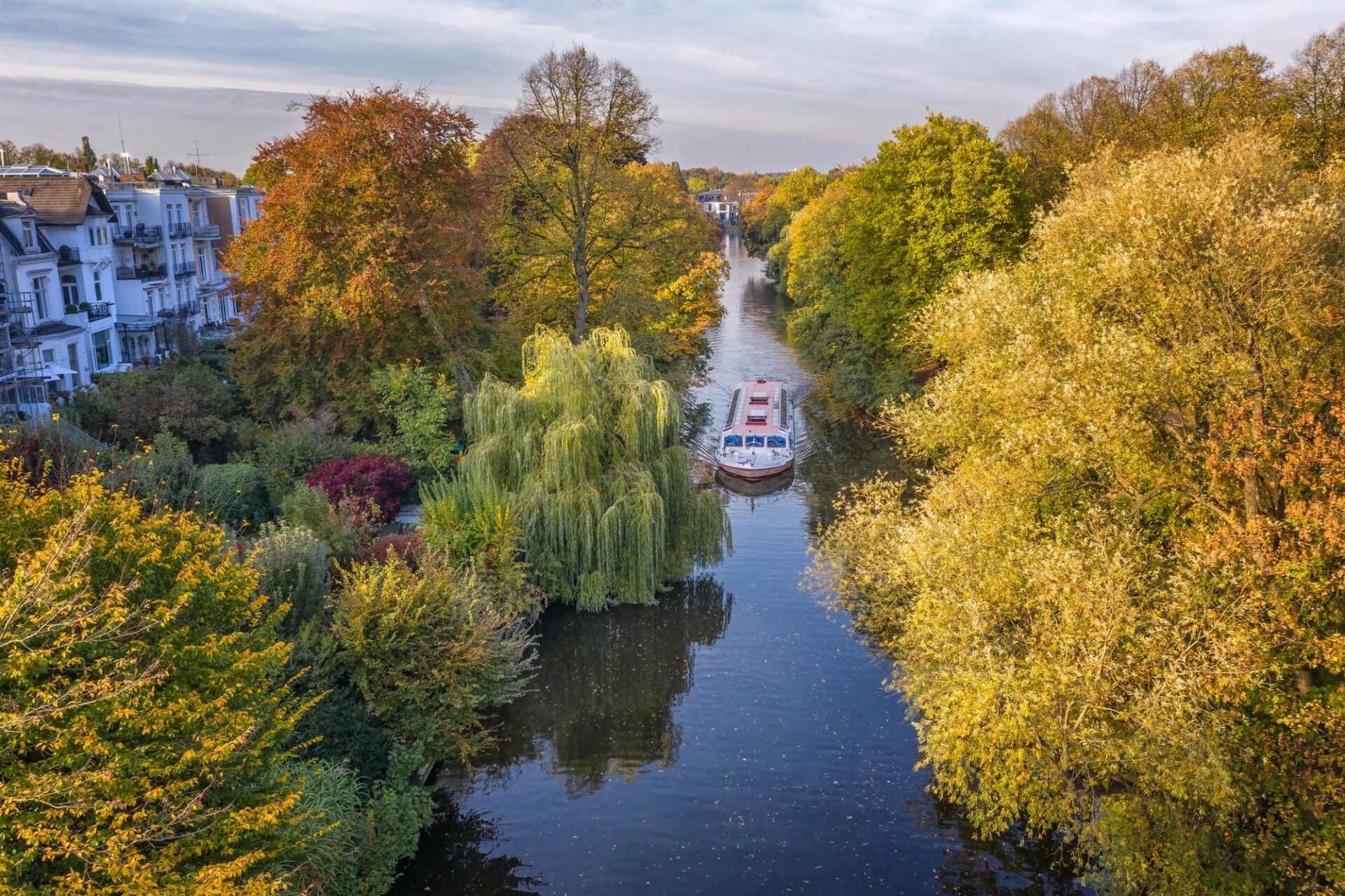
From here you get lovely views of the Elbe, passing ships, and the opposite bank. It’s best visited on a fine day, and the pace here is naturally slower.
Hamburger Kunsthalle
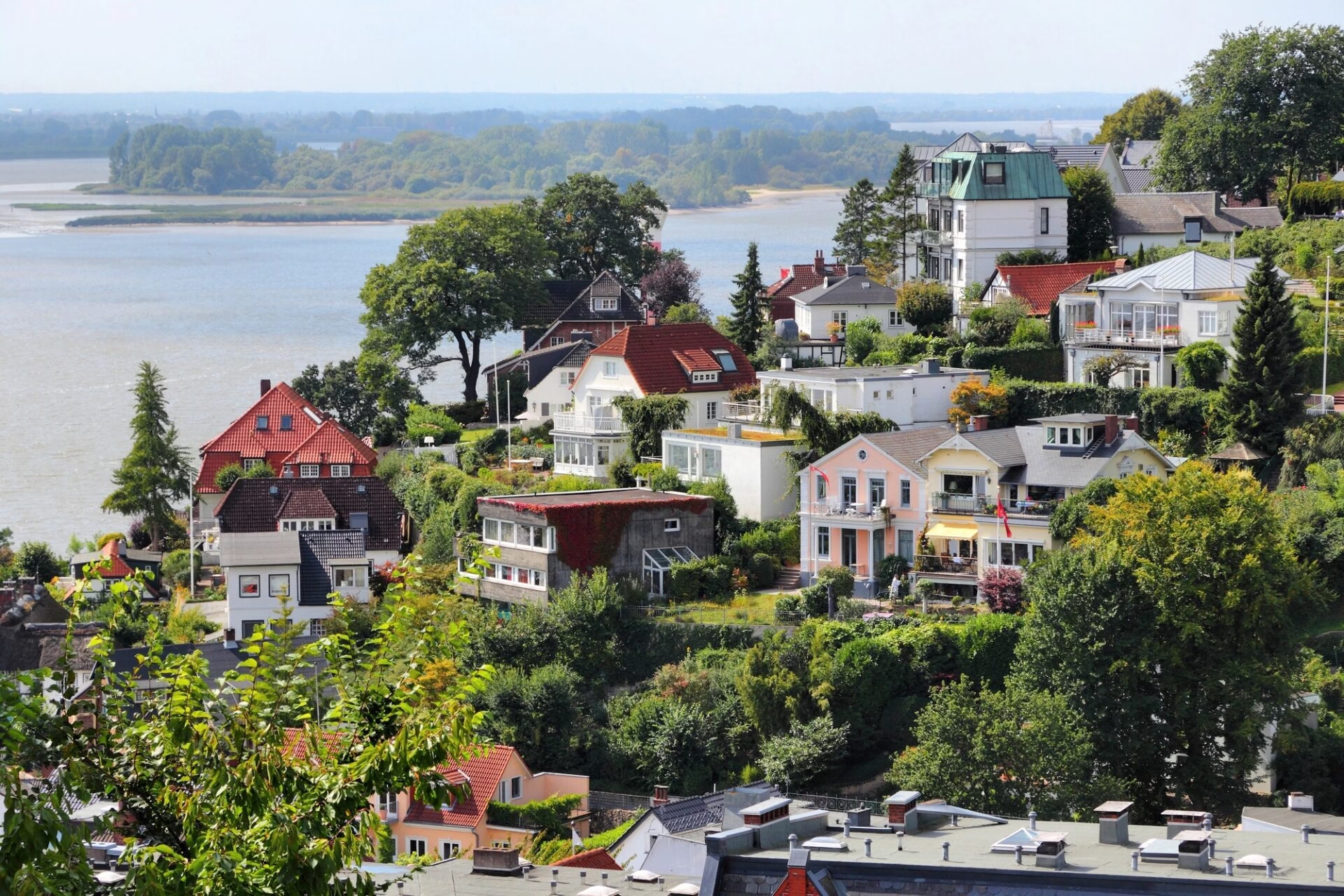
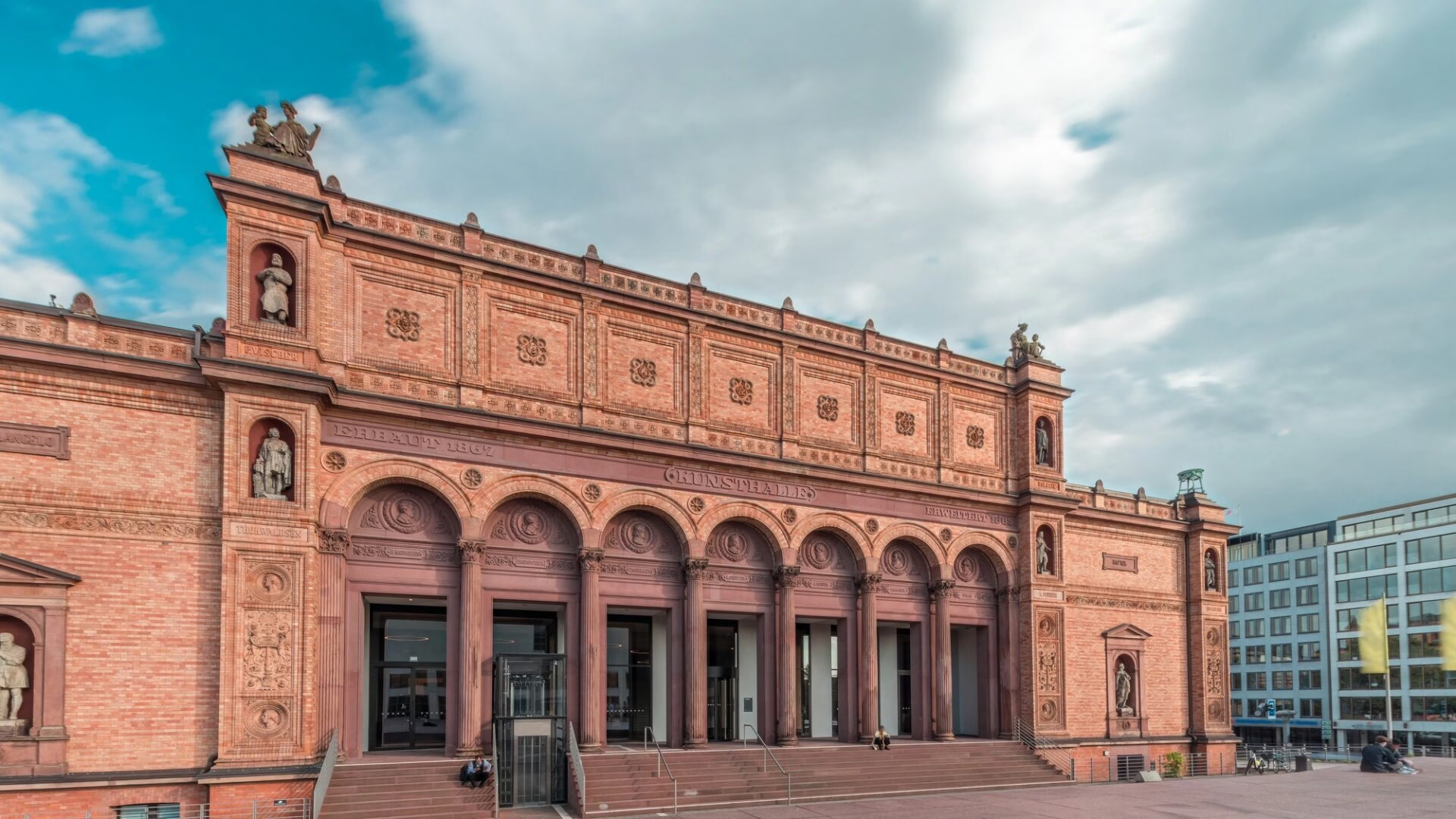
Hamburger Kunsthalle is Hamburg’s main art gallery and one of the most important museums in the city. You’ll find it close to the main train station and the Alster, making it easy to include in a day spent in the centre.
The collections span older European painting, German Romanticism, modern art, and contemporary works. Kunsthalle is best suited to travellers who enjoy galleries and want a slower, more cultural day in Hamburg.
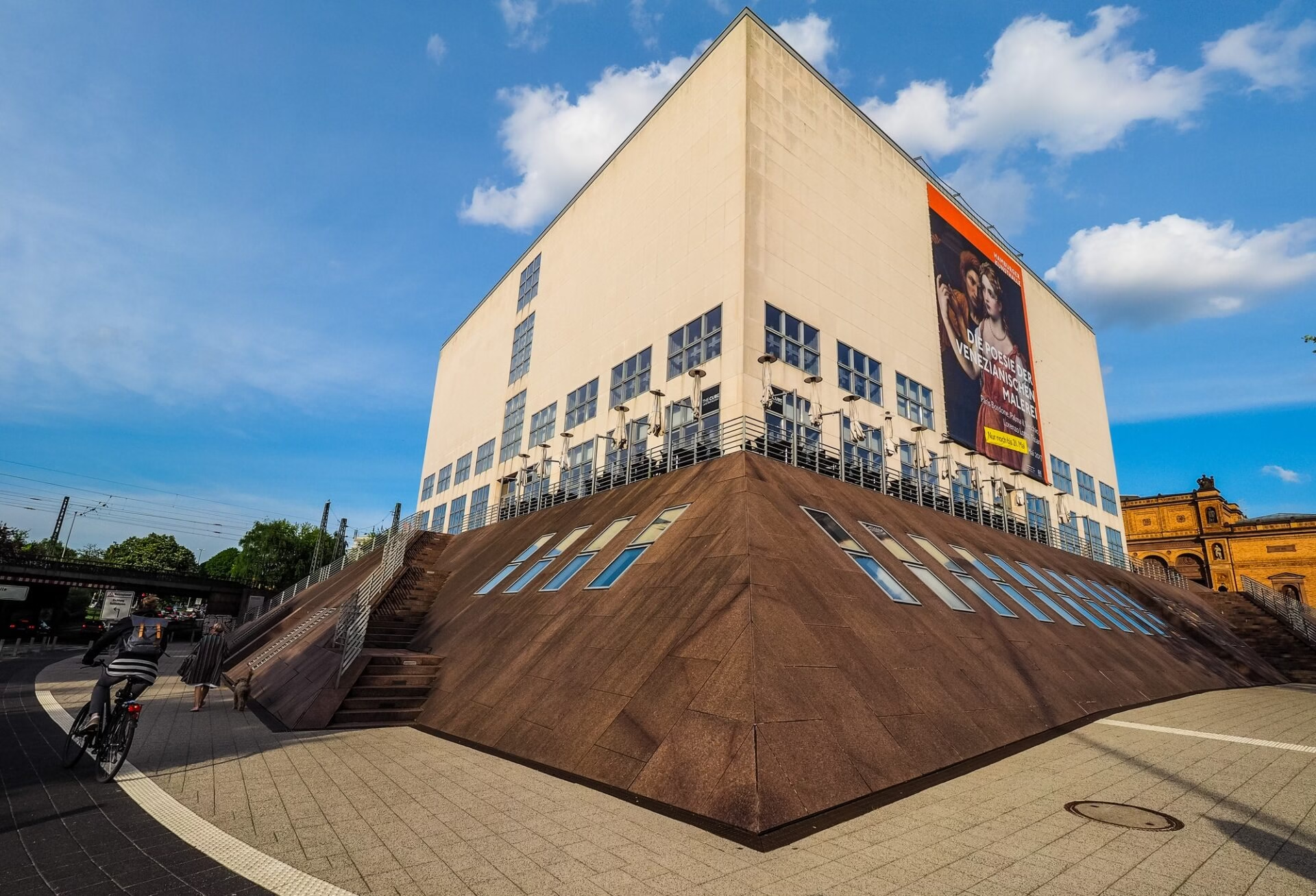
Admission costs €18 for adults, €9 concessions, and entry is free for visitors under 18. Allow at least 2 hours. Further details are available on the gallery’s official website.
International Maritime Museum
The International Maritime Museum is a large maritime museum in HafenCity, close to Speicherstadt. It’s housed in the historic Kaispeicher B warehouse and covers ships, maritime transport, maps, trade, ports, and the history of seafaring.
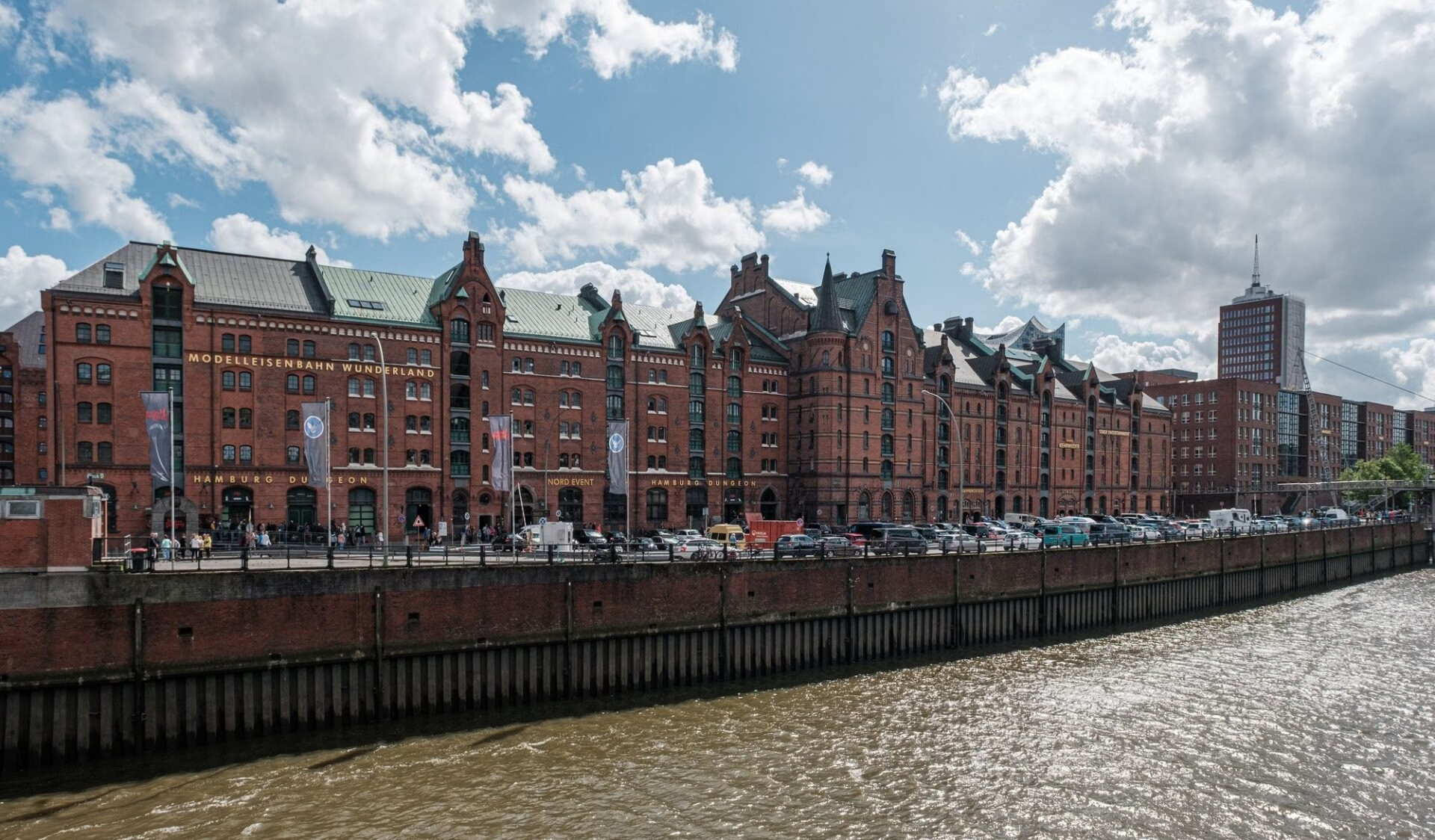
The museum fits naturally into a Hamburg itinerary given the city’s strong port heritage. Inside you’ll find ship models, navigation instruments, maps, uniforms, paintings, and other objects from the maritime world. It’s most rewarding for those with an interest in ships, engineering, trade routes, or port history.
Admission costs €18 for adults and €13 for concessions. Allow at least 2–3 hours. More information is available on the museum’s official website.
Dialog im Dunkeln
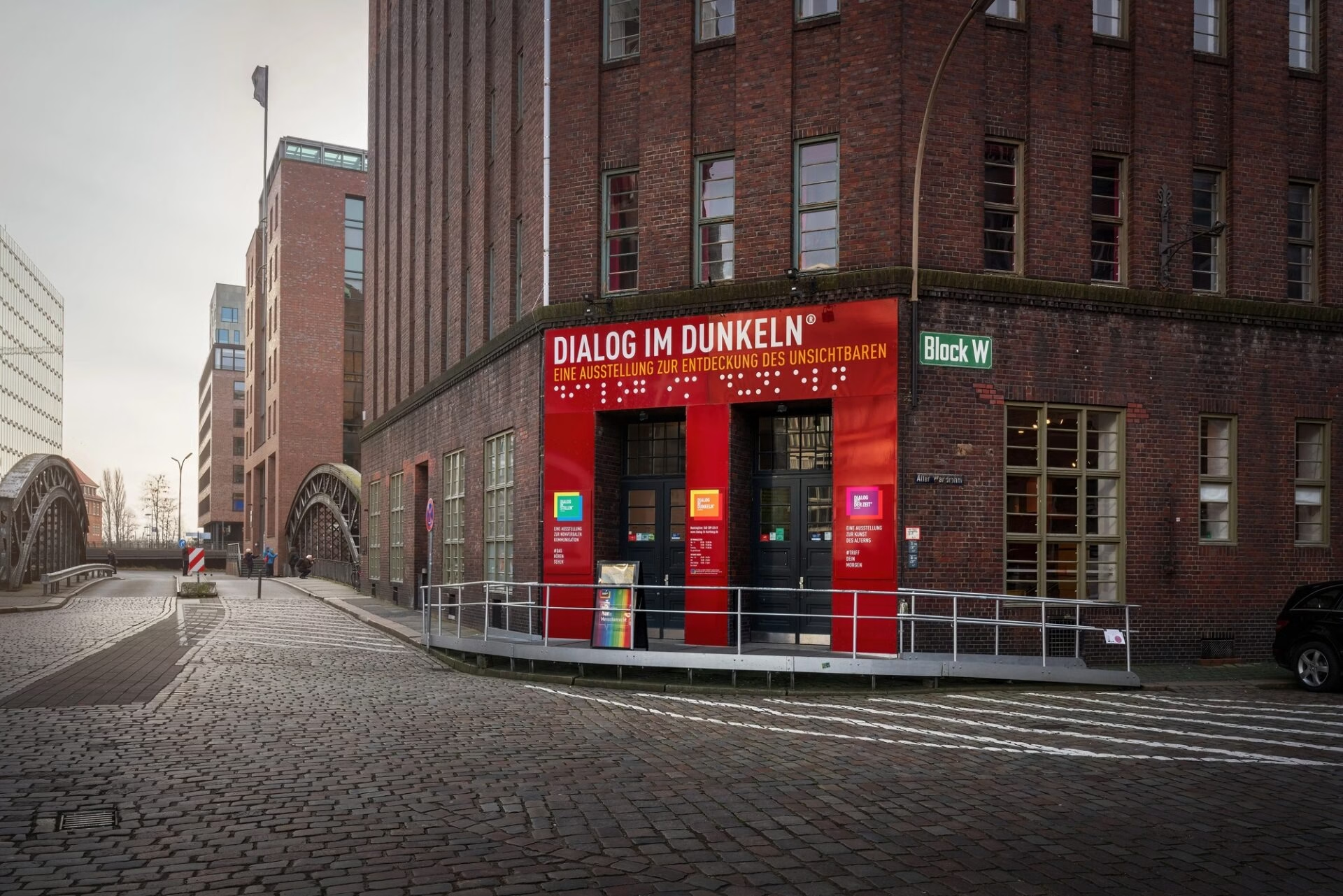
Dialog im Dunkeln is an experiential tour at Dialoghaus Hamburg in Speicherstadt. Visitors move through environments in complete darkness, guided by a blind person. The point isn’t to look at exhibits, but to experience everyday situations through other senses.
Tours run at specific times, so it’s best to book your ticket in advance. Make sure to check the tour language before booking. The German-language Dialog im Dunkeln tour costs €18.50.
BallinStadt
The BallinStadt museum is dedicated to emigration and the stories of people who passed through Hamburg on their way out into the world — often to America. If you’re interested in European history, family stories, migration, or the broader context of port cities, BallinStadt can make a worthwhile addition to your trip.
I wouldn’t rank it among the essential stops on a first visit to Hamburg, but for a longer stay or if the subject genuinely interests you, it’s an interesting complement to the rest of the programme.
Admission costs €13.90 for adults, €12 concessions, and €7.50 for children aged 5 to 13.
U-Boot Museum
The U-Boot Museum is a tour of the real submarine U-434, moored at St. Pauli Fischmarkt near the harbour. You can walk through its interior and see the conditions in which the crew lived and worked.
Admission costs €9 for adults, €6 for children, school pupils, and students, and €7 for seniors aged 65 and over. A guided tour costs extra. Be aware of the tight passageways and confined spaces — if that kind of environment bothers you, it’s best to skip the submarine.
Hamburg Dungeon
Hamburg Dungeon is an entertainment attraction combining live-action scenes, darker chapters of Hamburg’s history, spooky effects, and dark humour. Don’t expect a traditional museum — it’s a guided show in which visitors move between individual scenes.
A standard ticket starts from €22 for adults aged 15 and over, and the experience lasts roughly 90 minutes. Check the language before booking: tours are mostly in German, and English-language sessions may be cancelled if fewer than 4 people sign up.
How to Get to Hamburg
Hamburg sits in northern Germany, so it’s a bit further from Central Europe than cities like Dresden, Berlin, or Munich. That said, it’s still very accessible. You can get there by train, car, bus, or plane. The best option depends on where you’re travelling from, how much time you have, and whether you want to combine Hamburg with other stops in Germany.
By Train
The train is one of the most comfortable ways to reach Hamburg from Central Europe, particularly from cities along the Dresden–Berlin corridor. A number of EuroCity services run through Dresden and Berlin, with some continuing all the way to Hamburg.
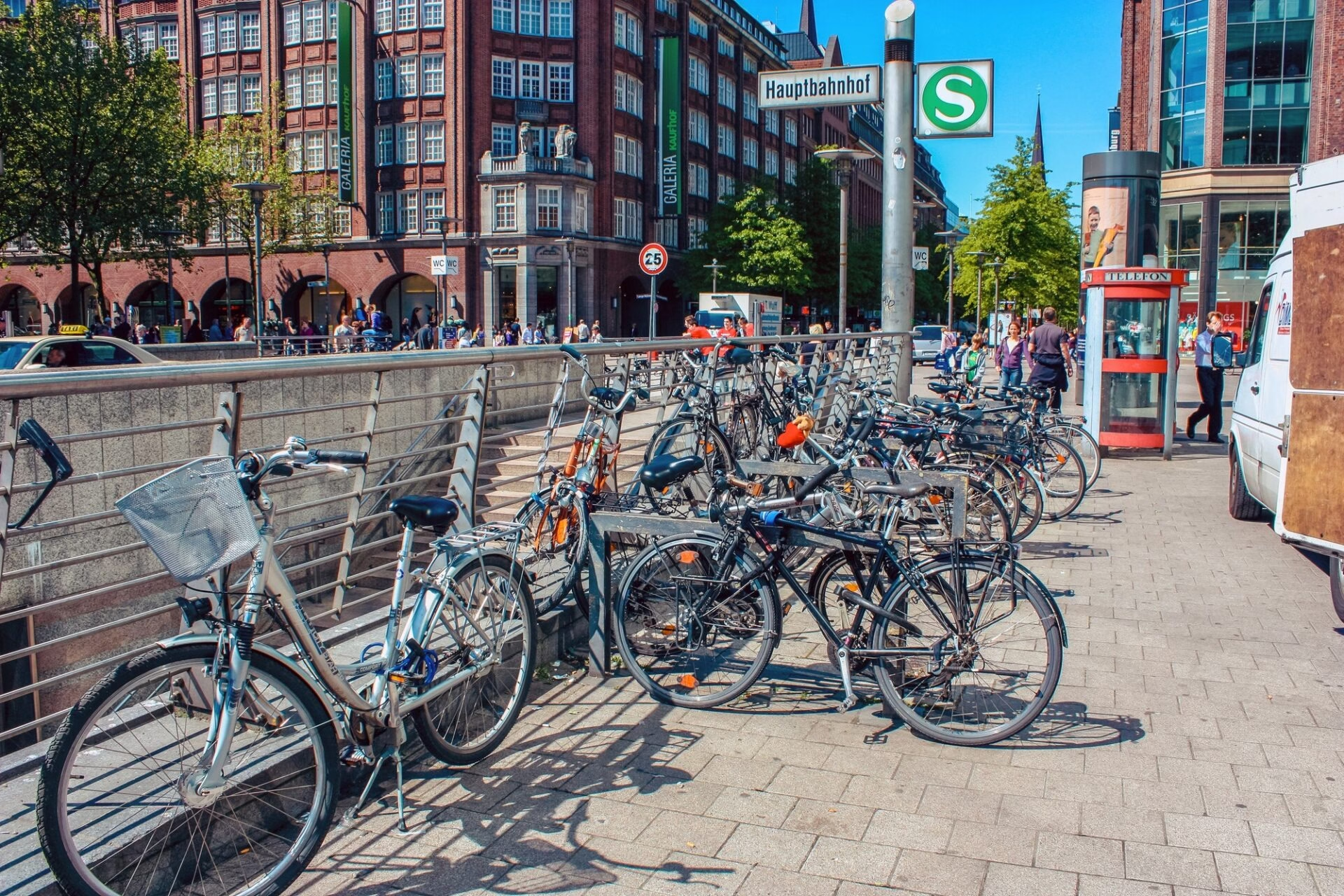
Journey times from Central European cities to Hamburg vary, but figure on roughly 6.5–7 hours from destinations like Prague. That’s not a short ride, but the big advantage is that you arrive directly at Hamburg Hauptbahnhof — the main station right in the city centre, from where the U-Bahn, S-Bahn, or a short walk will get you to Binnenalster, the city hall, and the rest of the centre.

By Car
Driving makes most sense if you’re travelling in a group, want to make stops along the way, or plan to continue further into northern Germany. Count on roughly 6–7 hours of driving time from Central Europe, more in reality once you factor in breaks.
Once you’re in Hamburg, you won’t need the car. The city has excellent public transport and the main tourist areas combine well on foot, by metro, S-Bahn, and ferry. Central parking is also expensive and inconvenient.
If you do arrive by car, choose accommodation with parking or leave the car further from the centre and get around by public transport.
By Plane
Hamburg Airport is relatively close to the city centre. The easiest way in is the S-Bahn S1, which connects the airport directly with Hamburg Hauptbahnhof, or a taxi. The station is right at the terminals and the journey into the centre takes around 25 minutes.
Direct flights between Central European cities and Hamburg aren’t always available year-round. From autumn 2026, easyJet is due to launch a Prague–Hamburg route several times a week. From other cities, connections typically require a stopover.

By Bus
The bus is usually the cheapest way to reach Hamburg from Central Europe. There are direct services running to Hamburg several times a day, including both daytime and overnight options — useful if you want to save on a night’s accommodation.
Journey times vary considerably depending on the service: the fastest direct connections take around 6 hours 40 minutes, while slower routes stopping at additional cities can take 7–10 hours.
The main advantage of the bus is price, and on some services the journey is direct with no changes. The downsides are less comfort than the train, less legroom, and on overnight services, generally poor sleeping conditions.
Getting Around Hamburg
Hamburg is very easy to navigate without a car. You can reach most of the main sights by combining walking, the metro, S-Bahn, buses, and harbour ferries. Those ferries, in particular, are one of the things that makes Hamburg feel unique.
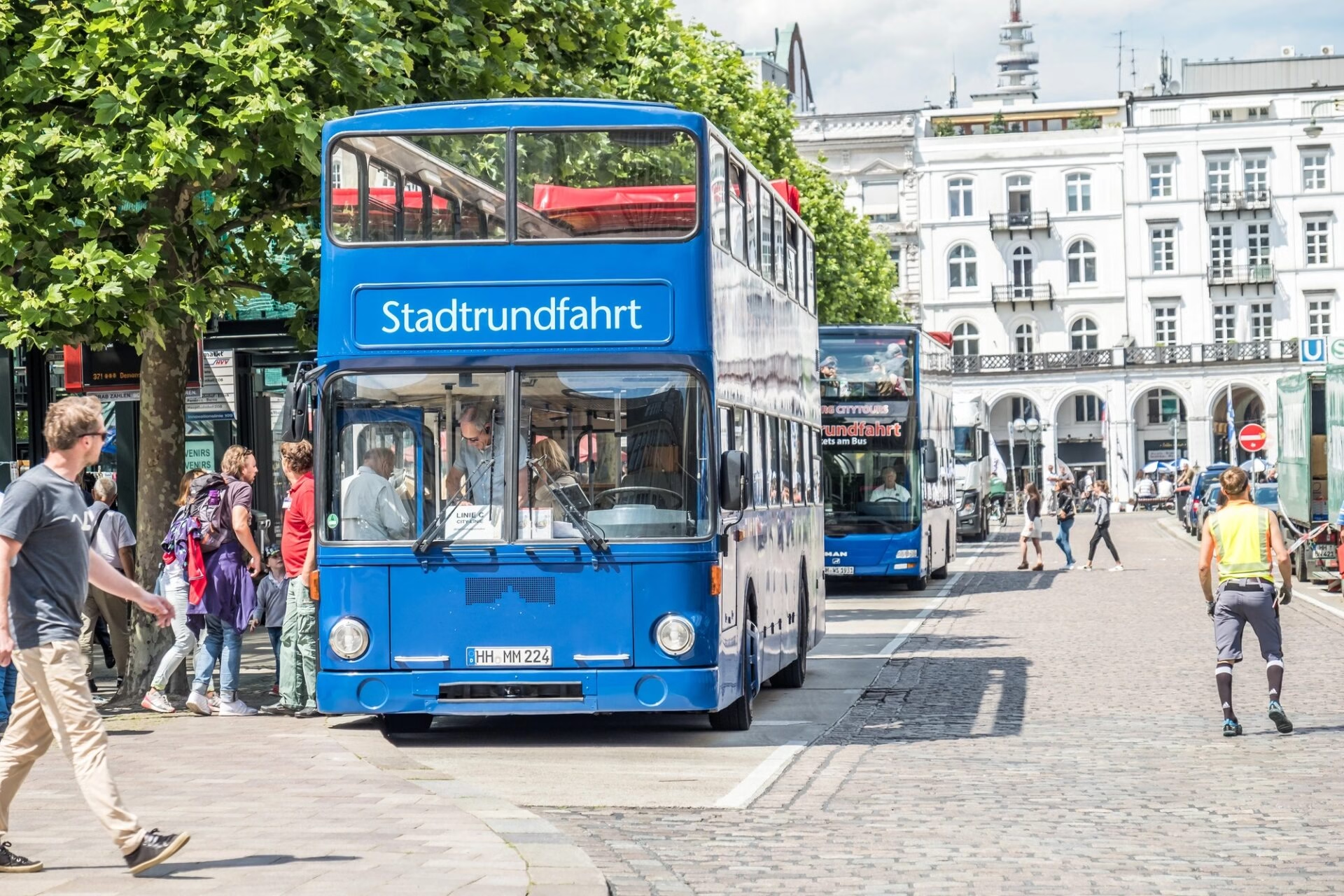
Hamburg Public Transport: U-Bahn, S-Bahn, Buses and Ferries
Public transport in Hamburg is operated by the integrated HVV network. A single ticket is valid across different transport types: the underground U-Bahn, urban and suburban trains S-Bahn, buses, and harbour ferries.
For most visitors, the Hamburg AB zone covers everything you need — the city centre, the harbour, St. Pauli, Speicherstadt, HafenCity, the Alster, the airport, and most other places you’ll visit. This zone also covers Ferry Line 62 along the Elbe.
Tickets and Day Passes
Hamburg offers several ticket types: single tickets, day passes, and the Hamburg Card.
For short hops in the centre a single ticket may be fine, but if you’re planning several journeys in a day, a day pass usually works out cheaper. The Hamburg Card combines unlimited public transport in the Hamburg AB zone with discounts on attractions, museums, harbour cruises, and other tourist services. It covers U-Bahn, S-Bahn, buses, and harbour ferries. A one-day card starts from €11.90 for an individual or €20.90 for a group of up to 5 people.
You can buy tickets via the HVV app, at ticket machines, or through other official channels. The app is the simplest option, as it shows connections and suggests the right ticket for your specific journey.
Exploring Hamburg on Foot
Hamburg’s main tourist areas are very walkable, but Hamburg is not a small city. If you want to cover the centre, the harbour, St. Pauli, Sternschanze, the Alster, and Blankenese in a single day without using public transport, you’ll waste a lot of time and energy getting between them.
The best approach is to combine shorter walking stretches with public transport. Walk the Speicherstadt, HafenCity, Landungsbrücken, St. Pauli, Sternschanze, Planten un Blomen, the Alster waterfront, or Blankenese on foot. For longer cross-city transfers, use the metro, S-Bahn, bus, or ferry.
By Bike
Hamburg can also be explored by bike, though you don’t strictly need one on a first visit. Cycling works particularly well around the Alster, in parks, along the Elbe, or on a longer stay. In the busier parts of the centre, around the harbour, and through Speicherstadt, walking is usually more practical.
The most widely used bike-share system is StadtRAD Hamburg. You pick up and return bikes at stations across the city, making it most useful for shorter trips. The annual membership (€8.90) includes 30 free minutes per ride, after which you pay €0.10 per minute. Most visitors will opt for the Light tariff with no annual fee, where rides are charged from the start — currently €0.14 per minute.
Taxi and Ride-Hailing Apps
Taxis are most useful in the evening, in bad weather, with heavier luggage, or when you’re heading somewhere awkward to reach by public transport. For a normal daytime programme around the city, they’re generally unnecessary.
The main apps for ordering rides in Hamburg are FREENOW and Uber, both of which connect you with licensed taxis. There’s also Hansa-Taxi, Hamburg’s local taxi company, available via app and by phone.
Driving in the City
You don’t need a car in Hamburg. Public transport, walking, and ferries cover the city far more practically, and central parking is expensive.
Consider renting a car mainly if you want to continue further into northern Germany, head to the North Sea coast, or reach destinations that are harder to get to by public transport.
Where to Stay in Hamburg
For a short stay, Altstadt, Neustadt, HafenCity, Speicherstadt, or St. Georg are the best areas. You’ll be close to the main sights, the main train station, the Alster, the harbour, and good public transport links. Prices tend to be higher here, but you’ll save time on transfers.
If you want a livelier atmosphere, look for accommodation in St. Pauli, Sternschanze, or Karolinenviertel. You’ll be closer to bars, cafés, independent shops, and the evening scene. Just check the specific location within St. Pauli — directly on Reeperbahn it can get noisy at night.
For a quieter stay, Altona or the area around the Alster are good options. These neighbourhoods suit travellers who have more than one night in Hamburg and don’t mind a short commute to the main sights.
Recommended Hotels in Hamburg
For Backpackers and Solo Travellers
- Generator Hamburg – a large hostel in a great location right by the main train station.
- Superbude St. Pauli – a stylish hotel-hostel hybrid in one of the city’s most vibrant neighbourhoods.
- MEININGER Hotel Hamburg City Center – a budget-friendly hotel/hostel near Altona station.
- Pyjama Park St. Pauli – simple accommodation right in the middle of the St. Pauli action.
Mid-Range
- Motel One Hamburg-Fleetinsel – a good balance of price, location, and quality.
- Ruby Lotti Hotel Hamburg – a stylish city-centre hotel close to the waterfront, city hall, and main walking routes.
- 25hours Hotel Hamburg HafenCity – a modern hotel in HafenCity, steps from Speicherstadt and the Elbphilharmonie.
- HENRI Hotel Hamburg Downtown – a pleasant city hotel in the centre, well placed for shopping streets, the city hall, and the main train station.
Luxury
- Fairmont Hotel Vier Jahreszeiten – a classic luxury hotel right on Binnenalster.
- The Fontenay – a modern five-star hotel on Außenalster. Ideal for a relaxed luxury stay with spa facilities and water views.
- The Westin Hamburg – a hotel inside the Elbphilharmonie building itself. The best choice if you want an extraordinary location and views.
- Hotel Atlantic Hamburg – a traditional grand hotel on the Alster, close to the main train station.
For Families
- Adina Apartment Hotel Hamburg Speicherstadt – an apartment-style hotel in a well-placed spot between the centre, Speicherstadt, and HafenCity.
- Citadines Michel Hamburg – an apart-hotel near St. Michael’s Church and the city centre.
- Adina Apartment Hotel Hamburg Michel – another solid apartment-style option near the centre, St. Pauli, and Landungsbrücken.
- Fraser Suites Hamburg – a more spacious and premium option in the city centre with apartment-style rooms.
What to Eat in Hamburg
Restaurants in Hamburg are as diverse as the city itself. Alongside fish and north German classics, you’ll find thriving Portuguese dining, modern bistros, excellent cafés, bakeries, and bars in neighbourhoods like Sternschanze, St. Pauli, and Karolinenviertel.
If you want something distinctly Hamburger, focus on the dishes tied to the harbour and northern Germany. Fish dishes and quick street food options are the most common, alongside places where local cooking meets international influences.
- Fischbrötchen is a fish sandwich in a bread roll and the simplest harbour food you can try in Hamburg. It’s perfect for a quick lunch or snack when you’re spending time around Landungsbrücken and the harbour.
- Franzbrötchen is a sweet cinnamon pastry found in bakeries all over the city. Great with coffee, for breakfast, or as a quick sweet stop during the day.
- Labskaus is a traditional north German sailor’s dish made from potatoes, salted meat, beetroot, onion, egg, and often pickled fish. It’s not for everyone and doesn’t look particularly pretty on the plate, but if you like trying local specialities it’s one of the most authentically Hamburgian things you can eat.
- For a proper dinner, it’s worth heading to the Portuguese quarter around Ditmar-Koel-Straße, between St. Michael’s Church and Landungsbrücken. You’ll find a cluster of Portuguese and Spanish restaurants serving grilled fish, meat, seafood, and wines from Portugal and Spain.

For a first visit, three areas work especially well for eating out: places around the harbour and Speicherstadt, the livelier food scene in Sternschanze and Karolinenviertel, and the evening bars and smaller spots in St. Pauli. In the busiest tourist zones around Landungsbrücken and Reeperbahn, choose carefully — it’s worth venturing a few streets away from the main drag.
Cafés, Bistros and Restaurants in Hamburg
Cafés
- Speicherstadt Kaffeerösterei – a café and roastery right in Speicherstadt. A good stop during a canal walk or after visiting Miniatur Wunderland.
- Nord Coast Coffee Roastery – a popular spot for coffee, breakfast, or brunch between the centre and Speicherstadt.
- Playground Coffee – a small roastery in St. Pauli. Good for a quick coffee while passing through St. Pauli or Karolinenviertel.
- Public Coffee Roasters – a Hamburg roastery with several locations. A good choice if you’re looking for specialty coffee away from the main tourist spots.
Bistros and Casual Food
- Brücke 10 – a reliable spot for Fischbrötchen at Landungsbrücken. Perfect for a quick fish sandwich right by the harbour.
- Azeitona – a relaxed spot with falafel and Middle Eastern food, good for a quick lunch or dinner in Sternschanze.
- Mutterland Stammhaus – a café, bistro, and shop selling local produce, close to the main train station.
- Altes Mädchen – a lively spot in Sternschanze next to the Ratsherrn brewery.
Restaurants
- Bullerei – a well-known restaurant in Sternschanze. Good for a nicer lunch or dinner without being overly formal.
- Bistro Carmagnole – a French bistro in Sternschanze, a solid choice for a relaxed evening meal.
- Olá Lisboa – a Portuguese restaurant in the Portugiesenviertel, a great option for fish, meat, seafood, or wine near the harbour.
Best Time to Visit Hamburg
Hamburg Weather Throughout the Year
Hamburg weather is unpredictable year-round, and that’s the most important thing to keep in mind when planning your trip. The city is close to the North Sea, which means even in summer you should expect wind, passing showers, and rapid changes within a single day.
Pack layers, a waterproof jacket, and plan a programme that mixes outdoor time with museums or cafés as a backup. On fine days, Hamburg is best enjoyed at the harbour, on the ferries, and in the parks. When the weather turns, it’s easy to shift the plan indoors.
The best period to visit Hamburg is May to September. The days are longer, the city feels more alive outdoors, and you’ll get far more out of the harbour, the ferries, parks, and walks along the Elbe. Even in this period, rain and wind can arrive unexpectedly.
Spring is great for walks and smaller crowds. In May, the Hafengeburtstag harbour festival gives the city a celebratory atmosphere — but also brings larger crowds and higher accommodation prices.
Summer is the best time for ferries, Elbe walks, the Alster, Elbstrand beach, and evenings outdoors. It’s also the most popular period, so accommodation gets more expensive and some places busier.
Autumn is quieter, particularly September and early October. In September, the Reeperbahn Festival is a highlight for music fans, and the weather is often more pleasant than high summer.

Winter makes most sense if you’re drawn by the Christmas markets, museums, and café culture. The weather is cold, damp, and often windy, so it’s worth combining outdoor walks with galleries, museums, and indoor activities.
Events and Festivals in Hamburg
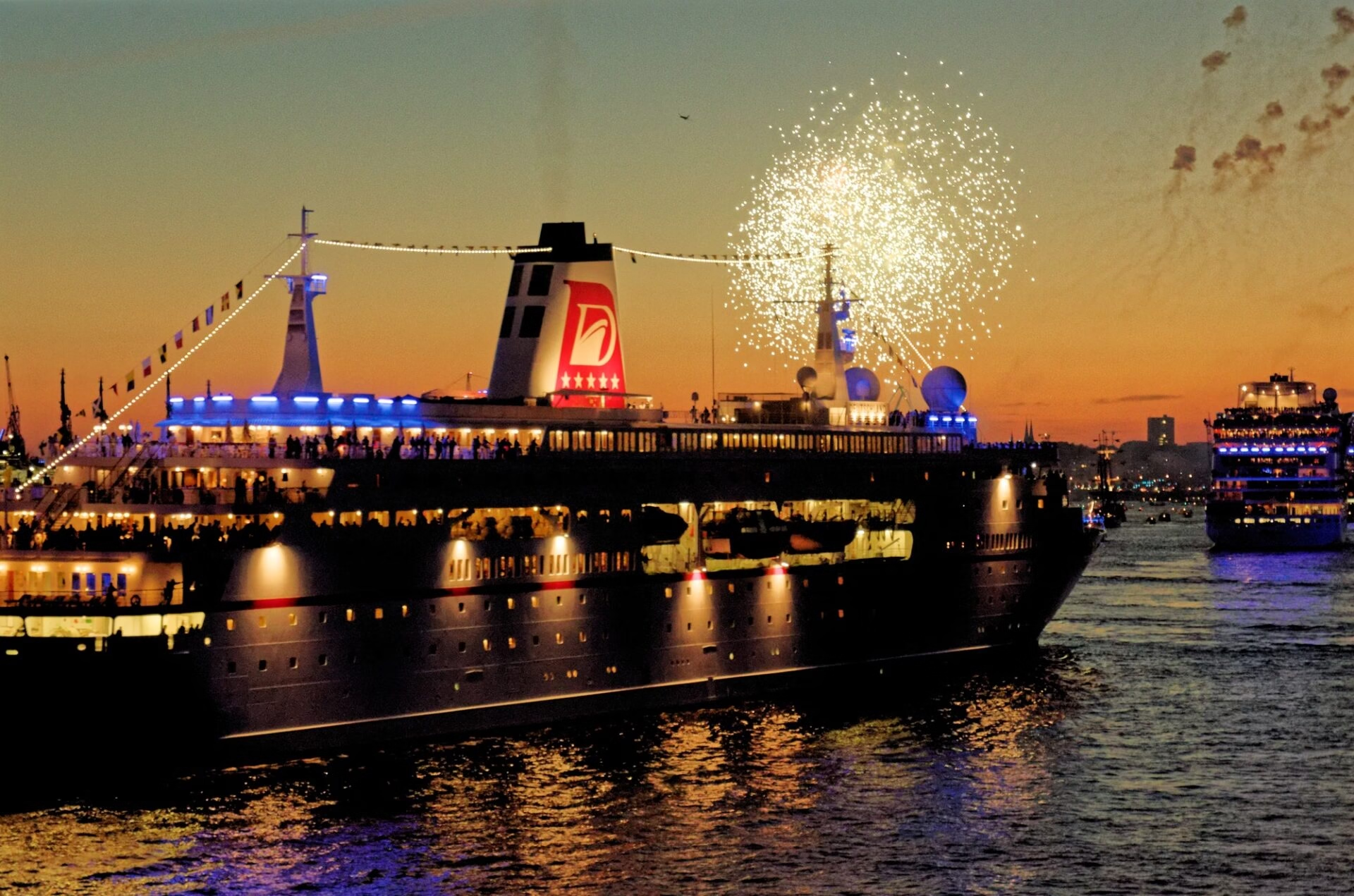
Hafengeburtstag – a large May harbour festival on the Elbe. Ships arrive from across Europe, the waterfront comes alive with entertainment, and the city has a festive buzz. Expect bigger crowds, higher accommodation prices, and a busier harbour area. In 2026 it ran from 8–10 May.
Hamburger DOM – Hamburg’s largest funfair, held on Heiligengeistfeld in St. Pauli. It takes place three times a year, typically in spring, summer, and autumn or winter. Entry to the grounds is free; individual rides and attractions are paid separately.
Reeperbahn Festival – a September music festival centred on St. Pauli. During the festival the area around Reeperbahn gets significantly busier and accommodation in St. Pauli fills up fast. In 2026 it runs from 16–19 September.
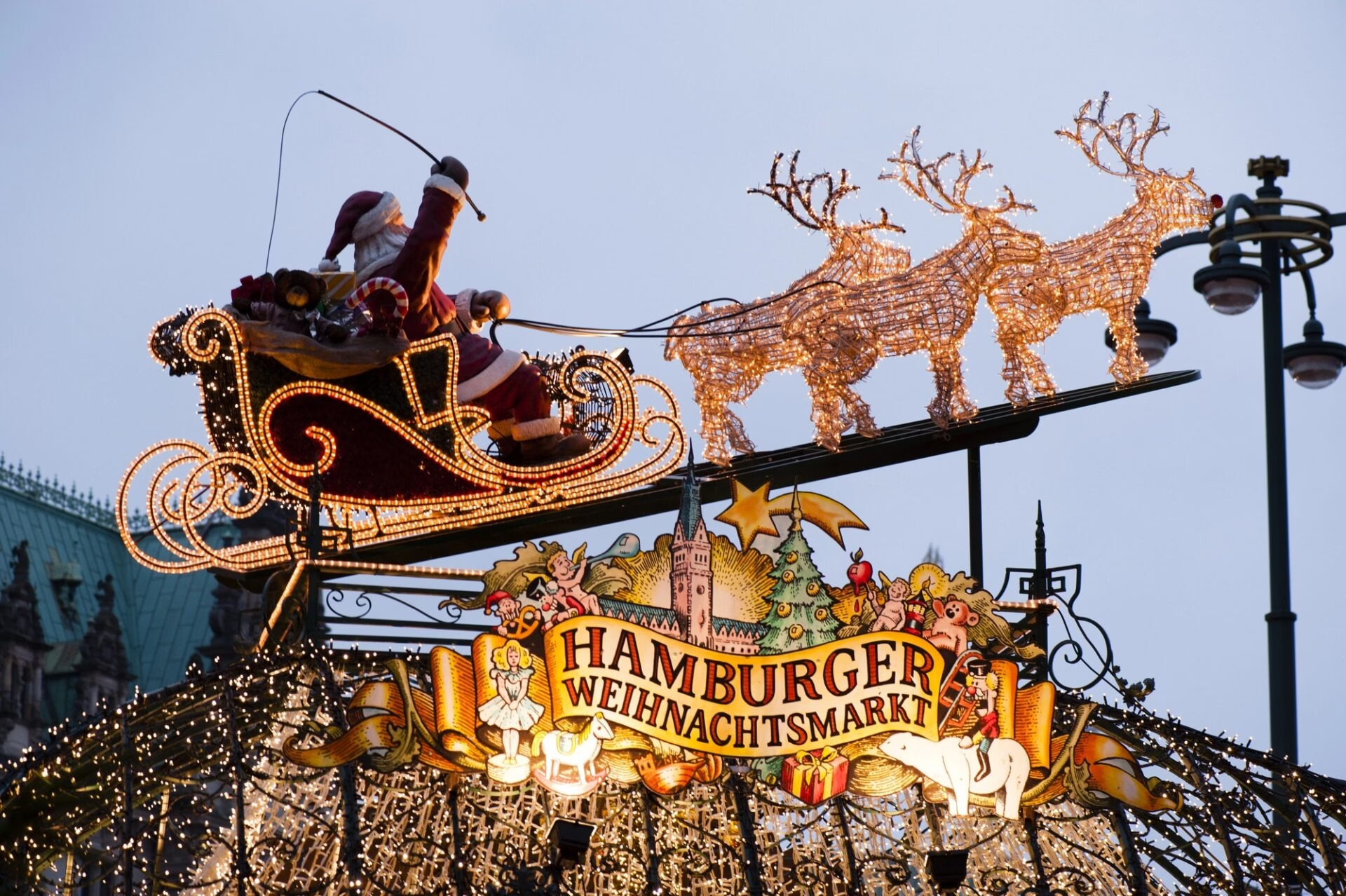
Christmas Markets – usually open from late November through to Christmas. The main markets are in the city centre, but the Santa Pauli market on Reeperbahn is also worth a visit. Advent weekends are busier and pricier, so booking accommodation well in advance is recommended.
Hamburg Cruise Days – a major maritime event featuring cruise liners and the Blue Port light installation. It doesn’t happen every year; the next edition is planned for 17–19 September 2027.
Altonale – a June cultural festival in Altona with music, theatre, film, literature, street art, and outdoor events. In 2026 it ran from 12–21 June.
Hamburg Travel Costs
Hamburg isn’t the cheapest German city, but with good planning it’s very manageable. Your budget will be most affected by accommodation, the time of year you visit, and how many paid attractions you include. Prices can rise significantly during major festivals, Advent weekends, and peak summer season.
For public transport in 2026, count on roughly from €2.10 for a short journey and from €3.50 for a local trip within the Hamburg AB zone. If you’re making several journeys a day, a day pass or the Hamburg Card will usually save you money.
For attractions, budget around €20 or more for larger museums and indoor experiences. Miniatur Wunderland costs from €22 for adults and from €13 for children aged 4–15. Hamburger Kunsthalle is around €18 for adults.
Food costs depend entirely on your style. Bakeries, fast food, or a Fischbrötchen by the harbour won’t dent your budget much; restaurants in the centre, HafenCity, or near tourist hotspots will cost more. To save money, mix bakeries, bistros, markets, and local spots away from the main tourist trail.
Hamburg with Kids
Hamburg is a great choice for travelling with children, thanks largely to the ships, parks, public transport, and covered attractions. Just don’t overload the itinerary — the city is bigger than it looks on the map.
The safest bet is Miniatur Wunderland, which genuinely entertains both children and adults. Ferry Line 62 along the Elbe, Alter Elbtunnel, a walk through Speicherstadt, the park at Planten un Blomen, and in season the Hamburger DOM funfair are all firm hits with younger visitors.
Also worth considering is CHOCOVERSUM, an interactive chocolate museum close to Kontorhausviertel and Chilehaus. The visit is a guided tour during which children learn how chocolate is made, get to taste various samples, and can create their own chocolate bar. It’s best suited to children roughly aged 6 and up.
For pushchairs, the most manageable areas are HafenCity, Speicherstadt, Planten un Blomen, and the Alster waterfront. Blankenese and Treppenviertel, with their many staircases, are impractical with a pram.
If you’re travelling with children, choose accommodation close to public transport and resist the urge to cover too many neighbourhoods each day. One main activity in the morning, a break, and a shorter afternoon programme works much better.
If you have more time in Hamburg and want a day trip with the kids, consider Heide Park or Wildpark Eekholt. Heide Park is a large theme park near Soltau, best for families with older children who enjoy rides and roller coasters. Wildpark Eekholt is a quieter nature park about an hour from Hamburg where you can see local wildlife including wolves, otters, birds of prey, and explore forests and wetlands.
Things to Do in Hamburg When It Rains
Rain in Hamburg is nothing unusual, so having a solid indoor back-up plan is always a good idea. Miniatur Wunderland is a natural first choice — just keep in mind that time slots fill quickly on wet days.
Museums and galleries are another strong option. Hamburger Kunsthalle suits art lovers, the International Maritime Museum is perfect for those interested in the harbour, ships, and maritime history. The Museum of Arts and Crafts, known as MK&G, sits close to the main train station and covers design, applied arts, fashion, photography, and everyday culture.
For something a little different, try Dialog im Dunkeln. For lighter entertainment rather than a classic museum visit, Hamburg Dungeon fits the bill. A brief shower is also easily waited out in the cafés of Sternschanze, St. Pauli, Speicherstadt, or the city centre.
If it’s not raining all day, there’s no need to cancel your outdoor plans entirely. Speicherstadt, HafenCity, Landungsbrücken, and Alter Elbtunnel are all manageable in worse weather if you have a good jacket or umbrella. In Hamburg, it’s better to plan for variable conditions than to wait for a perfectly sunny day.
This blend of outdoor and indoor options is part of what makes Hamburg a good destination even on an off day. If you want to play it safe, book at least one indoor attraction in advance and keep the rest of the day flexible according to the forecast.
Hamburg Travel Tips: Things to Watch Out For
Hamburg is not a compact city. The main areas are all accessible, but if you structure your itinerary badly you’ll waste a surprising amount of time commuting. Plan by neighbourhood rather than jumping from the city centre to Blankenese and back in the same day.
Choose accommodation carefully based on the exact location. Right on Reeperbahn, expect noise — especially evenings and weekends. Near the main station, read reviews and pay attention to the specific street.
Book popular attractions in advance. This especially applies to Miniatur Wunderland, Elbphilharmonie Plaza, harbour cruises, and hotels during busy periods.

Some museums are closed on Mondays or offer special late-night opening hours. Hamburger Kunsthalle offers free admission on the first Thursday of every month from 6:00–9:00pm in 2026.
Hamburg weather changes fast. A waterproof jacket, layers, comfortable shoes, and a backup indoor option are essential — wind and rain can arrive even in the middle of an otherwise fine day.
Major events push prices up and fill the city. If you’re visiting for Hafengeburtstag, the Reeperbahn Festival, or the Advent weekends, book accommodation and key attractions well ahead of time.
Frequently Asked Questions
What are the best things to do in Hamburg for a weekend?
A weekend in Hamburg works best across two full days. Spend the first on the city centre, Speicherstadt, HafenCity, the Elbphilharmonie, and the harbour. On the second day, add Miniatur Wunderland, St. Pauli, Planten un Blomen, or a quieter neighbourhood depending on the weather and your interests.
When is the best time to visit Hamburg and what is the weather like?
The most popular period is May to September, when the harbour, ferries, and Elbe walks are at their best. Hamburg weather is changeable year-round though, so pack layers, a waterproof jacket, and a backup indoor plan even in summer.
Where should I stay in Hamburg on a first visit?
For a first visit, Altstadt, Neustadt, HafenCity, Speicherstadt, or St. Georg are the best bets. You’ll be close to the main sights, the main train station, the harbour, and good public transport links — saving time on transfers.
How do you get around Hamburg without a car?
Getting around Hamburg without a car is very easy. A combination of walking, U-Bahn, S-Bahn, buses, and harbour ferries within the HVV network covers virtually everything visitors need. A car only really makes sense if you’re continuing further into northern Germany or heading to the North Sea coast.
Is Hamburg good for families with children?
Yes, Hamburg is a great family destination, particularly thanks to Miniatur Wunderland, ferry rides, parks, and a range of indoor attractions. Just don’t overpack the itinerary — the city is larger than it looks on the map.
What should I eat in Hamburg and where are the best restaurants?
Classic Hamburg foods include Fischbrötchen (fish sandwich), Franzbrötchen (sweet cinnamon pastry), and the more adventurous Labskaus. For restaurants, head to Sternschanze, Karolinenviertel, St. Pauli, the Portugiesenviertel, or the spots around Speicherstadt and the city centre.
Day Trips from Hamburg
Lübeck
Lübeck is the best day trip from Hamburg. Its historic centre is a UNESCO World Heritage Site and offers exactly what Hamburg itself doesn’t have in abundance: well-preserved medieval lanes, brick Gothic churches, city gates, merchant houses, and a distinctly Hanseatic atmosphere. Getting there takes around 45–60 minutes.

Lüneburg
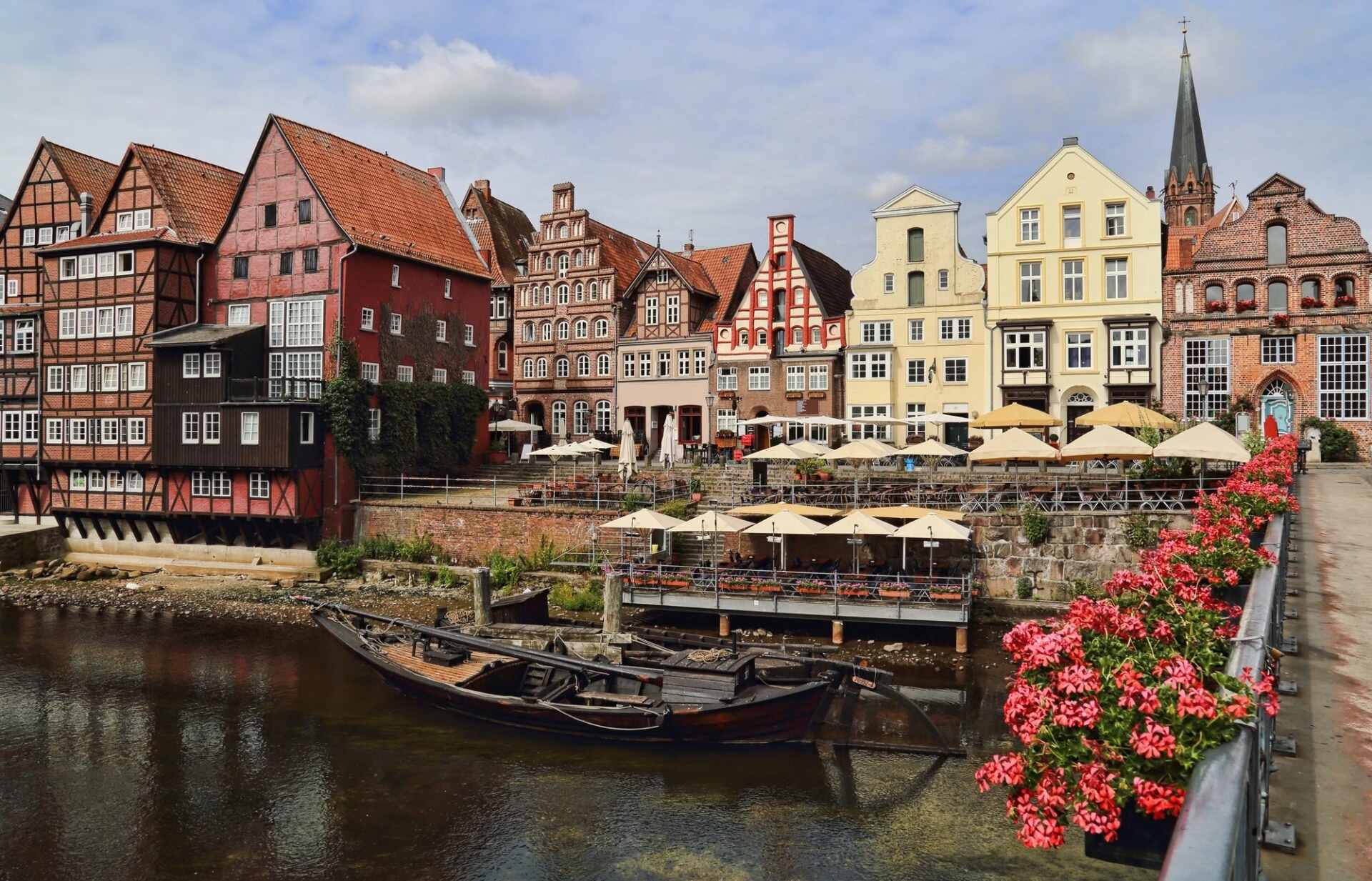
Lüneburg is a smaller historic town south of Hamburg. It has brick-built houses, narrow streets, cafés, and a quieter atmosphere than the big northern German cities. Its compact centre is very easy to explore on foot without any elaborate planning. The journey from Hamburg takes around 35–45 minutes.
Bremen
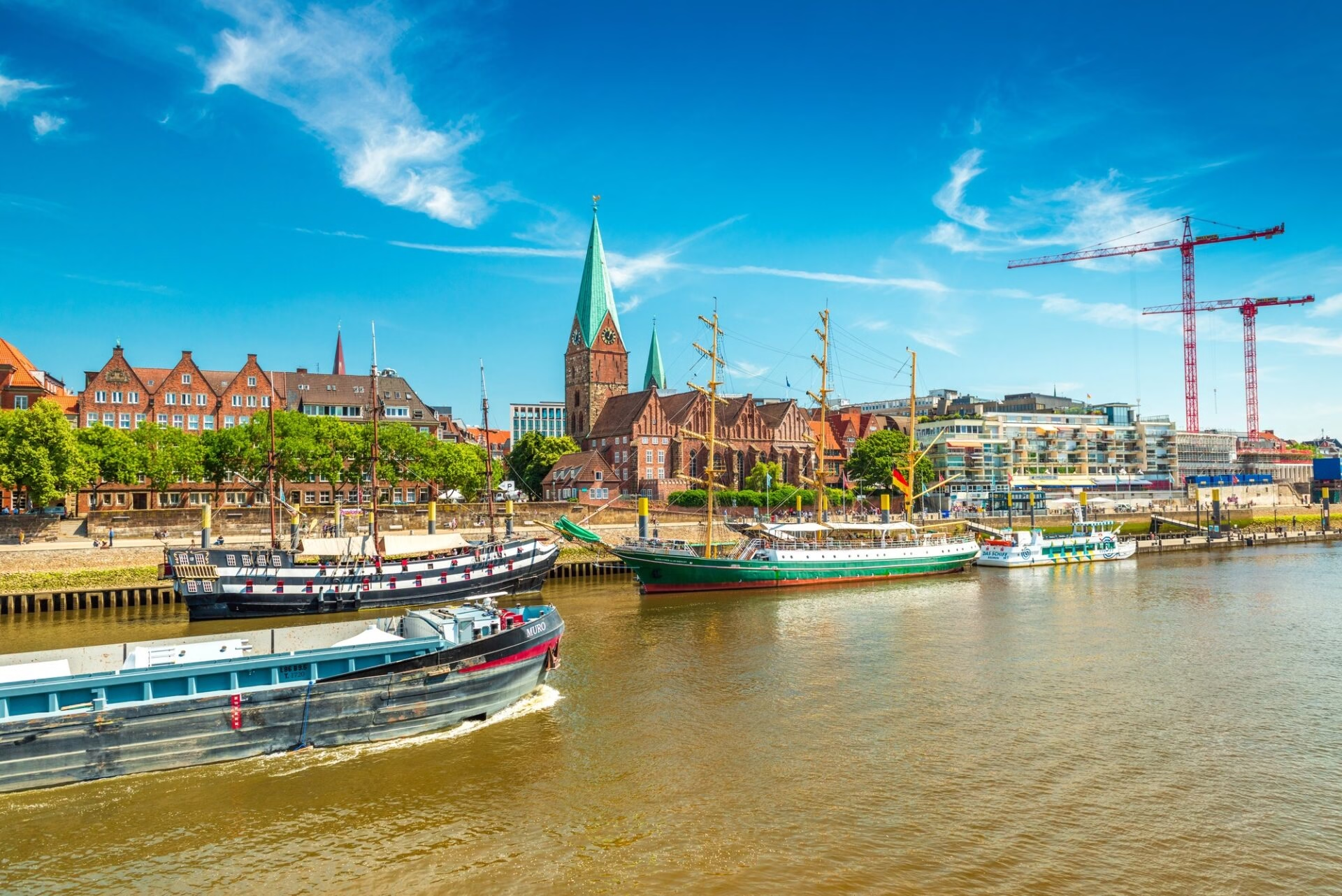
Bremen is a bigger urban day trip that warrants a full day. The most famous highlights are the historic centre with its city hall, the Bremen Town Musicians statue, and the Schnoor quarter — a neighbourhood of narrow lanes, tiny houses, independent shops, and cafés.
Compared to Lübeck and Lüneburg, Bremen is further away and feels more like a standalone destination than a quick detour from Hamburg. The journey takes roughly 1–1.5 hours, depending on connections.
Schwerin
The main attraction in Schwerin is its fairy-tale castle on an island, surrounded by water, gardens, and a quiet town. If you want a day trip from Hamburg to a smaller city with a genuinely impressive landmark, Schwerin makes a pleasant change from the port and big-city neighbourhoods.
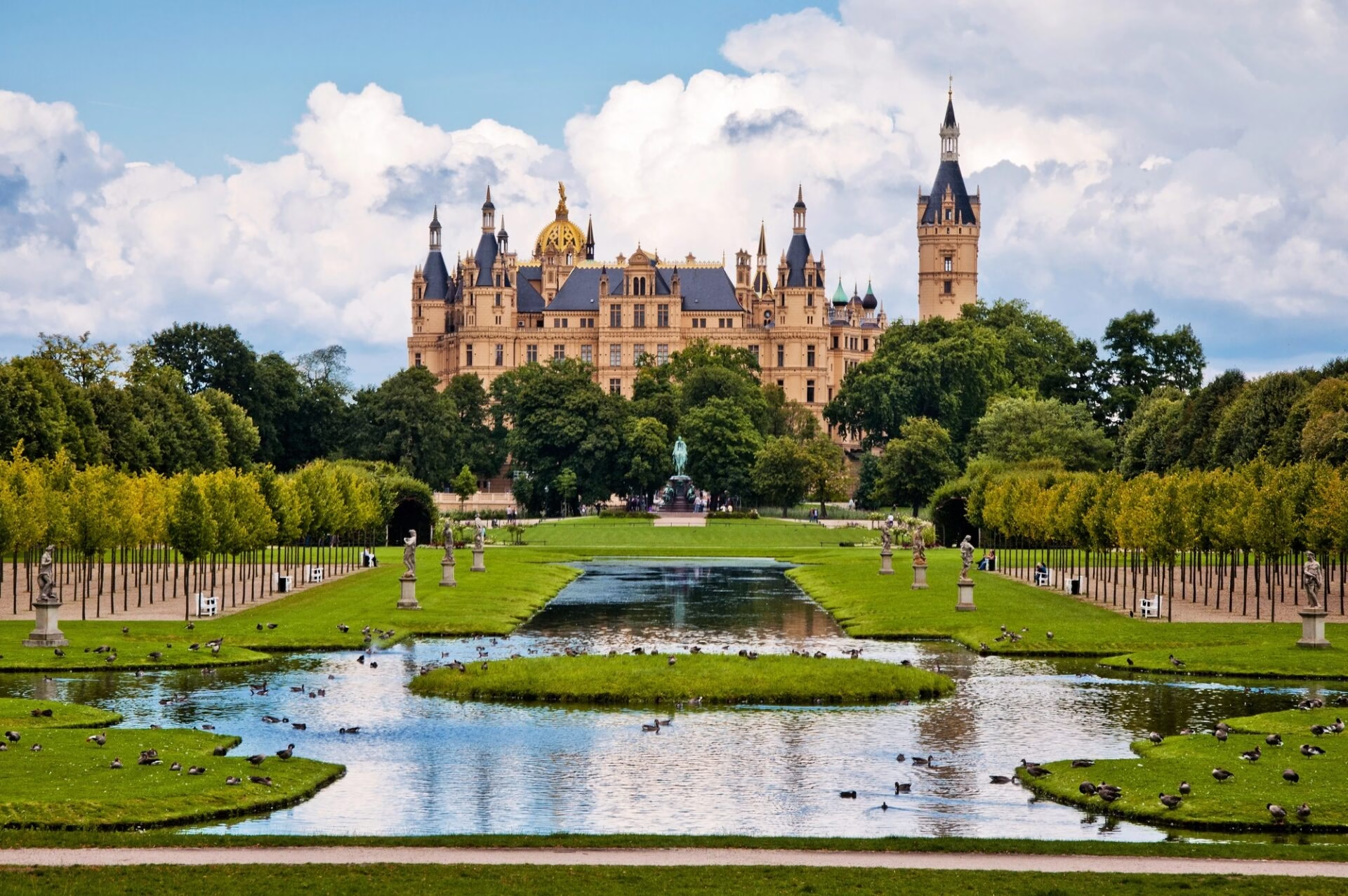
The journey from Hamburg usually takes 1–1.5 hours. It’s best appreciated on a fine day, when you can combine a visit to the castle with a walk around the lake.
Cuxhaven and the North Sea Coast
Cuxhaven sits on the North Sea and offers a completely different kind of day trip from Hamburg’s historic towns. Instead of landmarks, expect coastline, wind, harbour atmosphere, and beaches. At low tide the sea retreats to reveal the wide sandy and muddy flats typical of this stretch of coast. It’s best enjoyed in summer or as part of a longer stay.