This post is also available in:


Coimbra is one of those cities that often appears in Portugal itineraries as a one-day stop between Lisbon and Porto. That was my plan too — but I’m glad I ended up staying a few days longer.
Coimbra has a lot to offer: a UNESCO university with seven hundred years of history, one of the most beautiful Baroque libraries in the world, a buzzing student scene, great bars and restaurants, and genuinely warm people. As a bonus, you’ll hear a unique style of fado sung exclusively by men in black capes.
Coimbra sits right on the main rail line and motorway between Lisbon and Porto — you can reach it by train from either city in an hour to an hour and a half. Anyone planning a bigger trip around Portugal simply can’t skip it.
This guide covers what to see in Coimbra, what to experience, what to eat, and how to plan a 1–3 day visit.
Why Visit Coimbra
The university is the most famous draw — its atmosphere is said to have inspired J. K. Rowling’s vision of Hogwarts in Harry Potter.
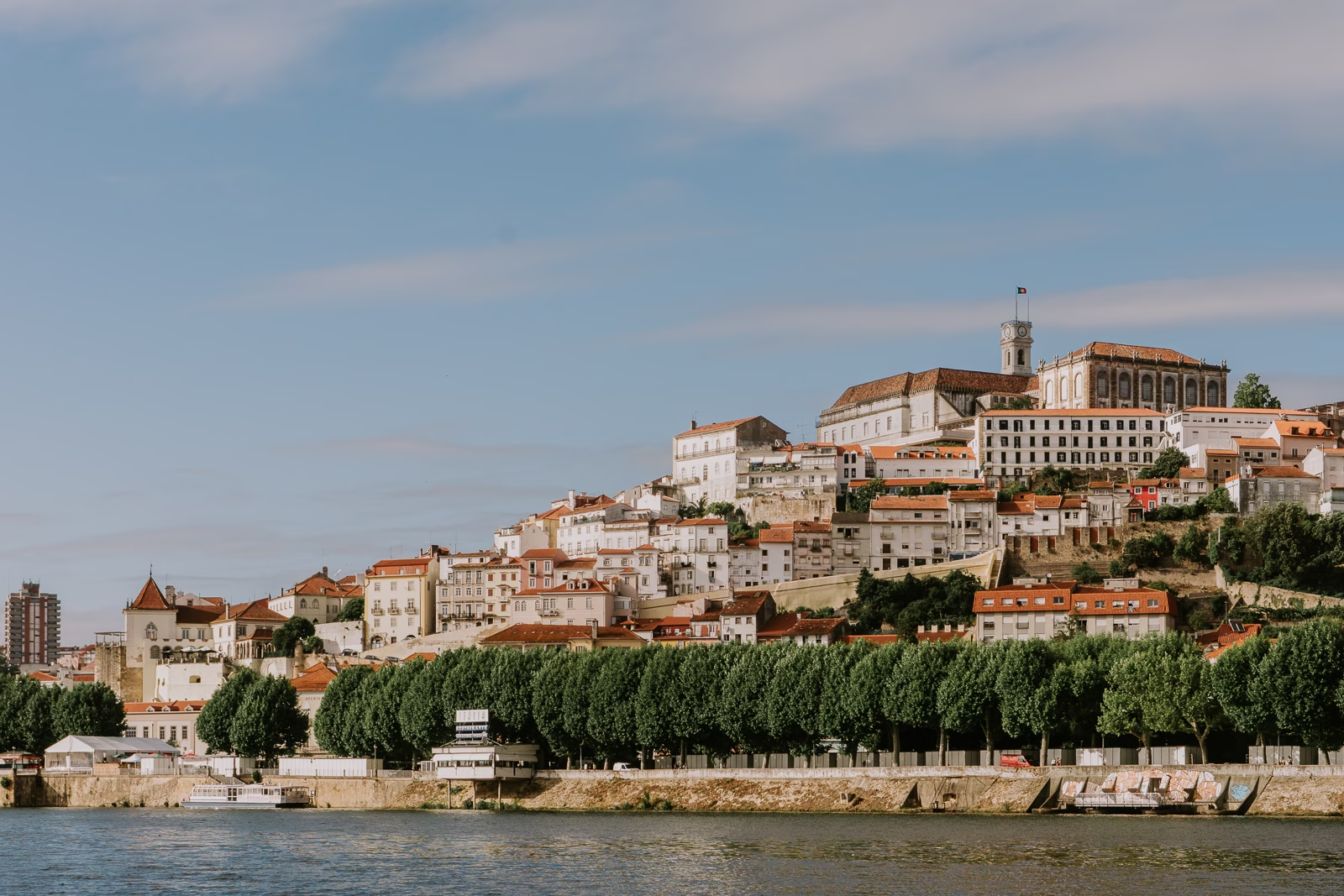
It’s not a single building, but an entire hilltop quarter called Alta, which has evolved since the 13th century and still serves its original purpose. Students still wear traditional black capes, only adding to the gravitas of an institution that has functioned without interruption for over 700 years.
The university’s library — the Biblioteca Joanina — rightfully ranks among the most beautiful libraries in the world. Photography is not allowed inside, so you’ll have to judge its splendour with your own eyes.
The city’s historic architecture alone is reason enough to visit, and even in high season you’ll enjoy it without the tourist crowds that descend on Lisbon and Porto.
Then there’s fado. Lisbon fado and Coimbra fado are two very different things. Coimbra’s version grew out of the 19th-century student world, is performed exclusively by men, and follows strict conventions — from dress code to the way the audience shows appreciation.
For me personally, Coimbra was mostly about the people. At the shared apartment where I was staying through Airbnb, I met several Erasmus+ students who swept me into the whirlwind of the city’s student life for three nights in a row.
I spent several days catching up on sleep after that — and one morning I woke up having bought a flight to Japan, somewhere I hadn’t planned on going at all. Absolutely worth it.
Coimbra also works well as a natural base for day trips. Places like Aveiro, Buçaco, the coast at Figueira da Foz, or Tomar with its Templar monastery are all within an hour’s drive. If you want to explore central Portugal, this is your ideal starting point.
How Long to Stay & How to Structure Your Days
You can see Coimbra in one day — but you’ll only be ticking off a checklist. Two to three days is the sweet spot. Thanks to the students, the city really comes alive in the late afternoon and evening, so it’s a shame to leave early.
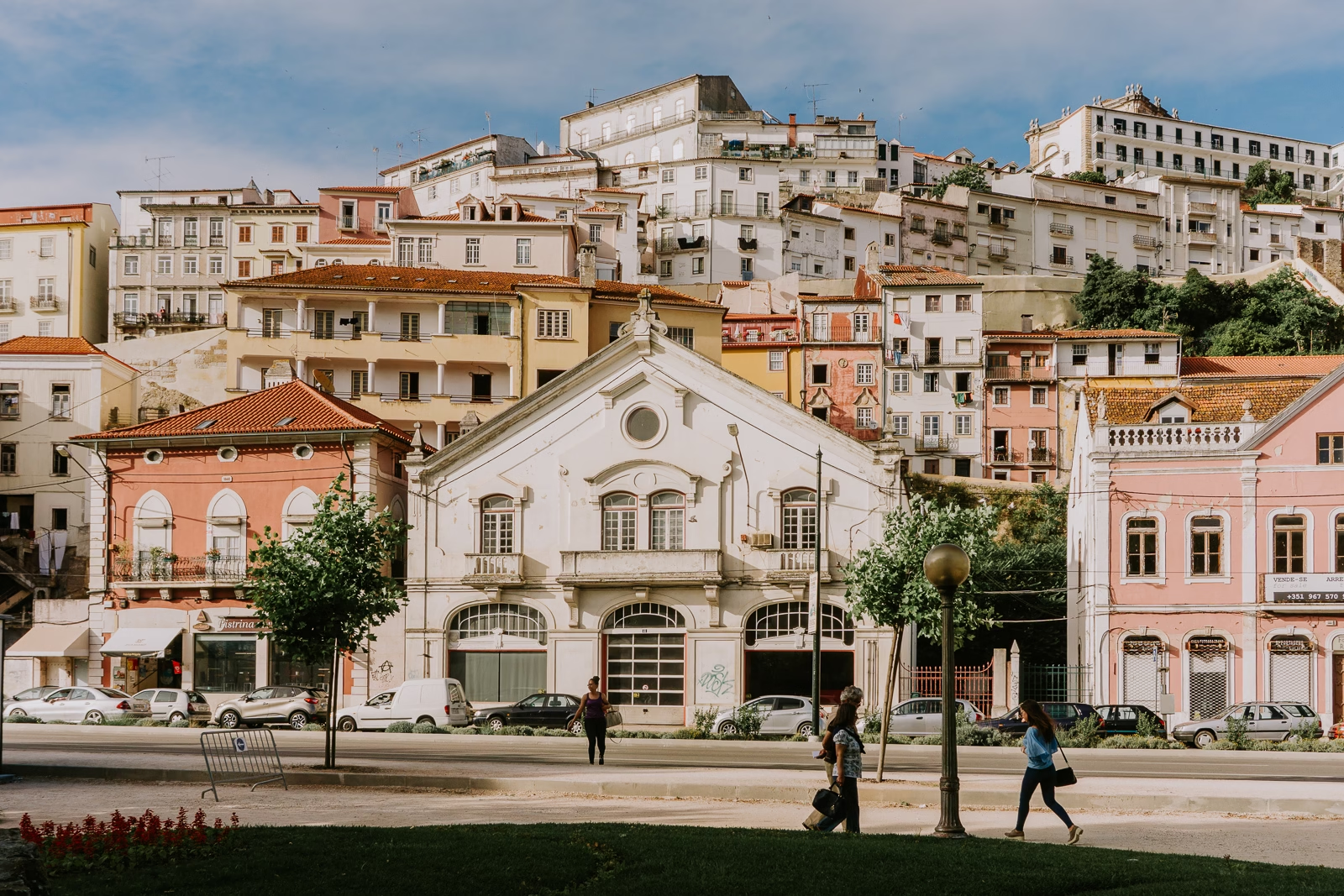
Two days are enough for a thorough visit.
Day one: Alta, the university campus, and the Mosteiro de Santa Cruz; in the afternoon, a stroll through the park and a glass of wine on the riverfront; in the evening, either fado or simply joining the students in their celebration of life.
Day two: sights on the other side of the river — Convento São Francisco, the gardens of Quinta das Lágrimas, or the miniature park Portugal dos Pequenitos. You can also fit in one shorter day trip; I’d recommend Buçaco.
Three days allow you to add a second, longer day trip (Tomar or Figueira da Foz) and still keep a more relaxed pace throughout.
Top Things to Do in Coimbra
- Biblioteca Joanina — one of the most beautiful Baroque libraries in the world; timed-entry tickets required, max. 50 visitors per slot
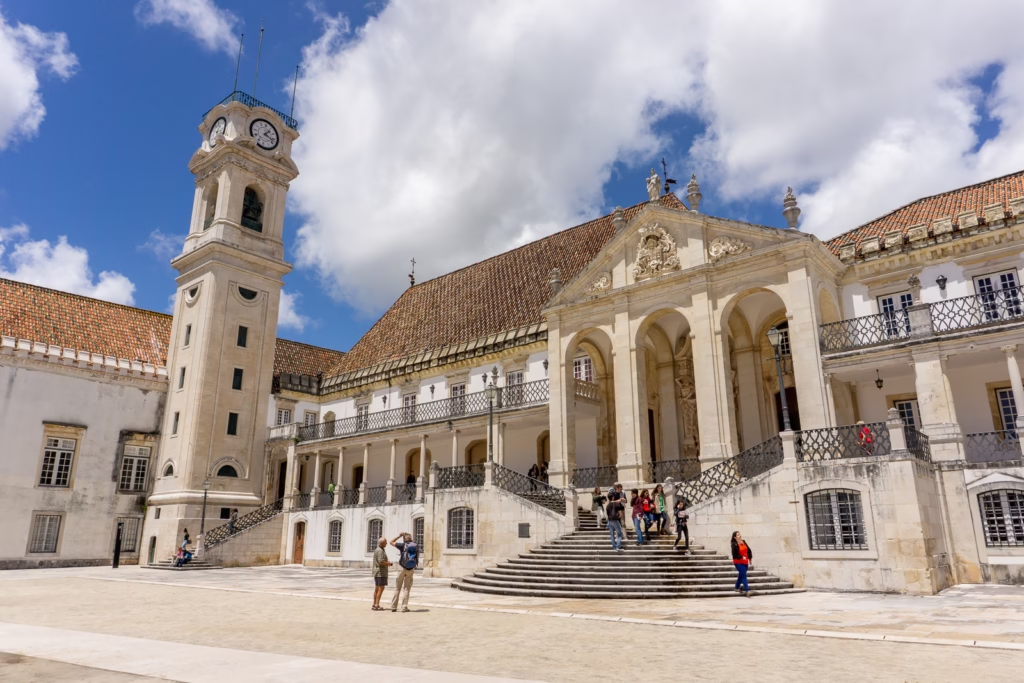
- Universidade de Coimbra — UNESCO campus including the Royal Palace, St Michael’s Chapel, and the university tower
- Sé Velha — 12th-century Romanesque cathedral, one of the best-preserved on the Iberian Peninsula
- Fado ao Centro — daily Coimbra fado concerts from 6 pm; a reliable introduction to the local musical tradition
- Mosteiro de Santa Cruz — monastery in the heart of Baixa, burial site of Portugal’s first two kings
- Museu Nacional Machado de Castro — national museum in a Gothic palace above Roman underground passageways
- Quinta das Lágrimas — garden steeped in the legend of Inês de Castro; a peaceful contrast to the busy campus
- Jardim Botânico — one of the oldest botanical gardens on the peninsula, great for a relaxed wander
- Walk along the Mondego — riverfront promenades on both banks, with the ruined monastery of Santa Clara-a-Velha
- Day trip to Buçaco — a forest and palace that feel like they belong to another world, just 30 minutes away
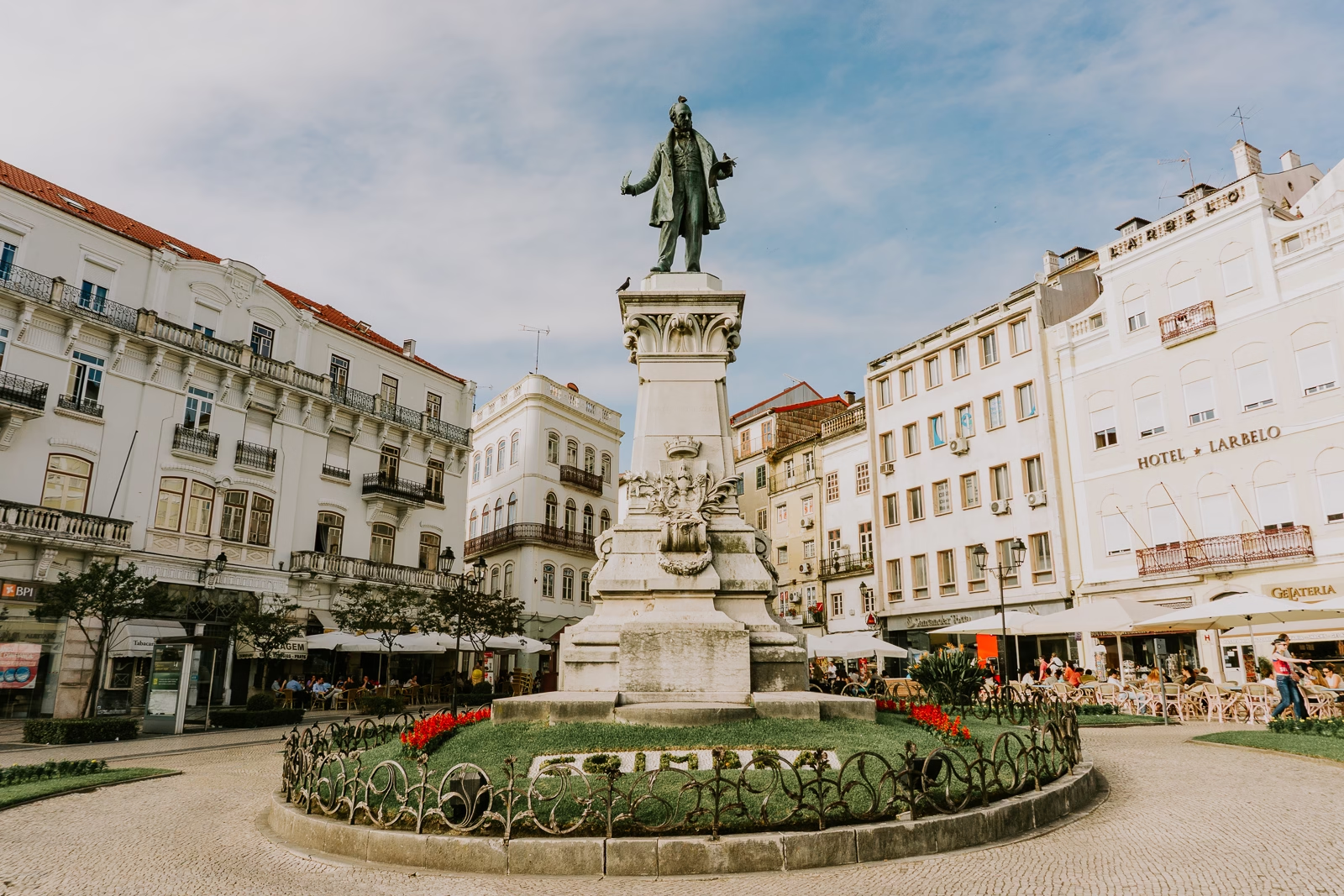
What to See in Coimbra
University of Coimbra & Biblioteca Joanina
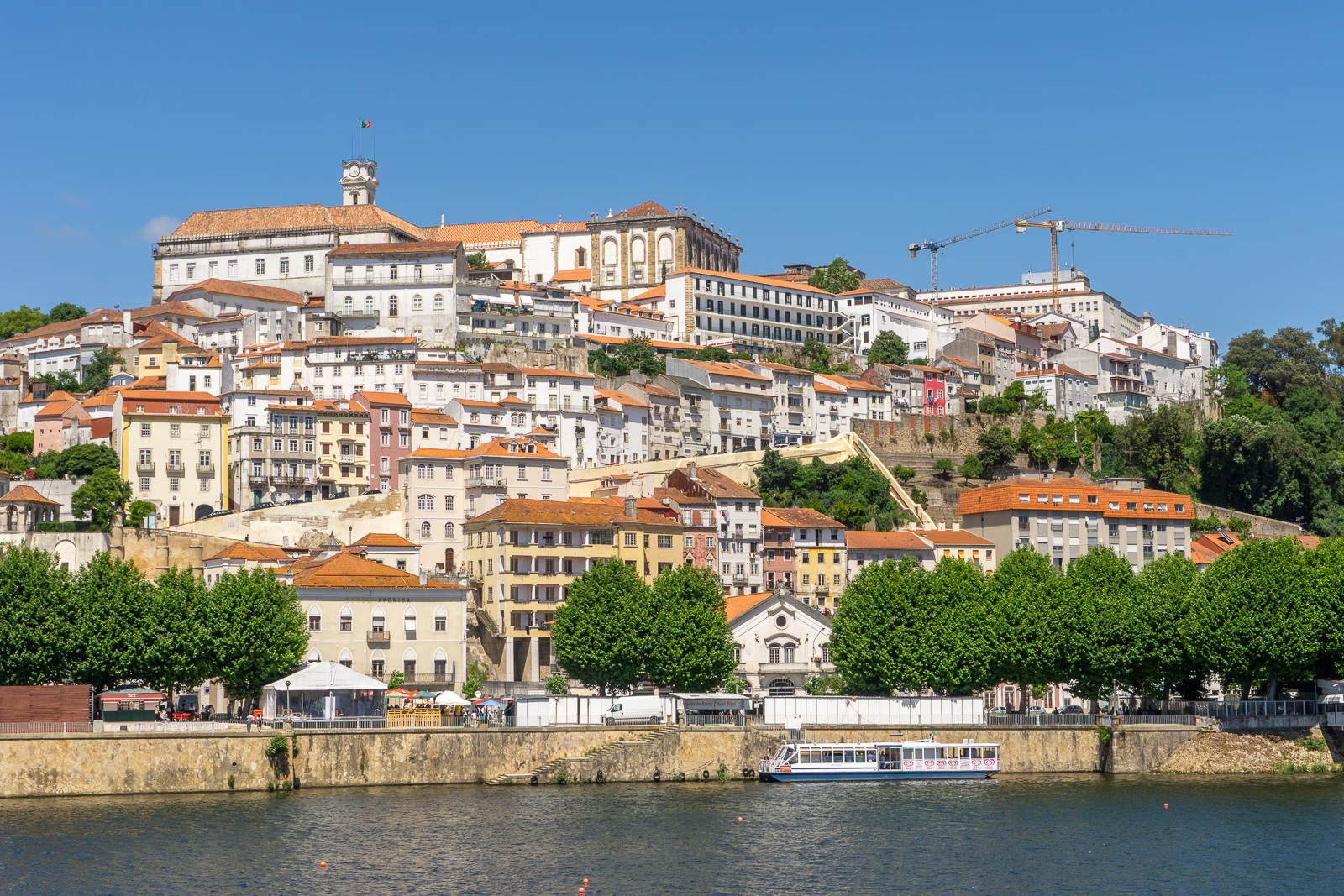
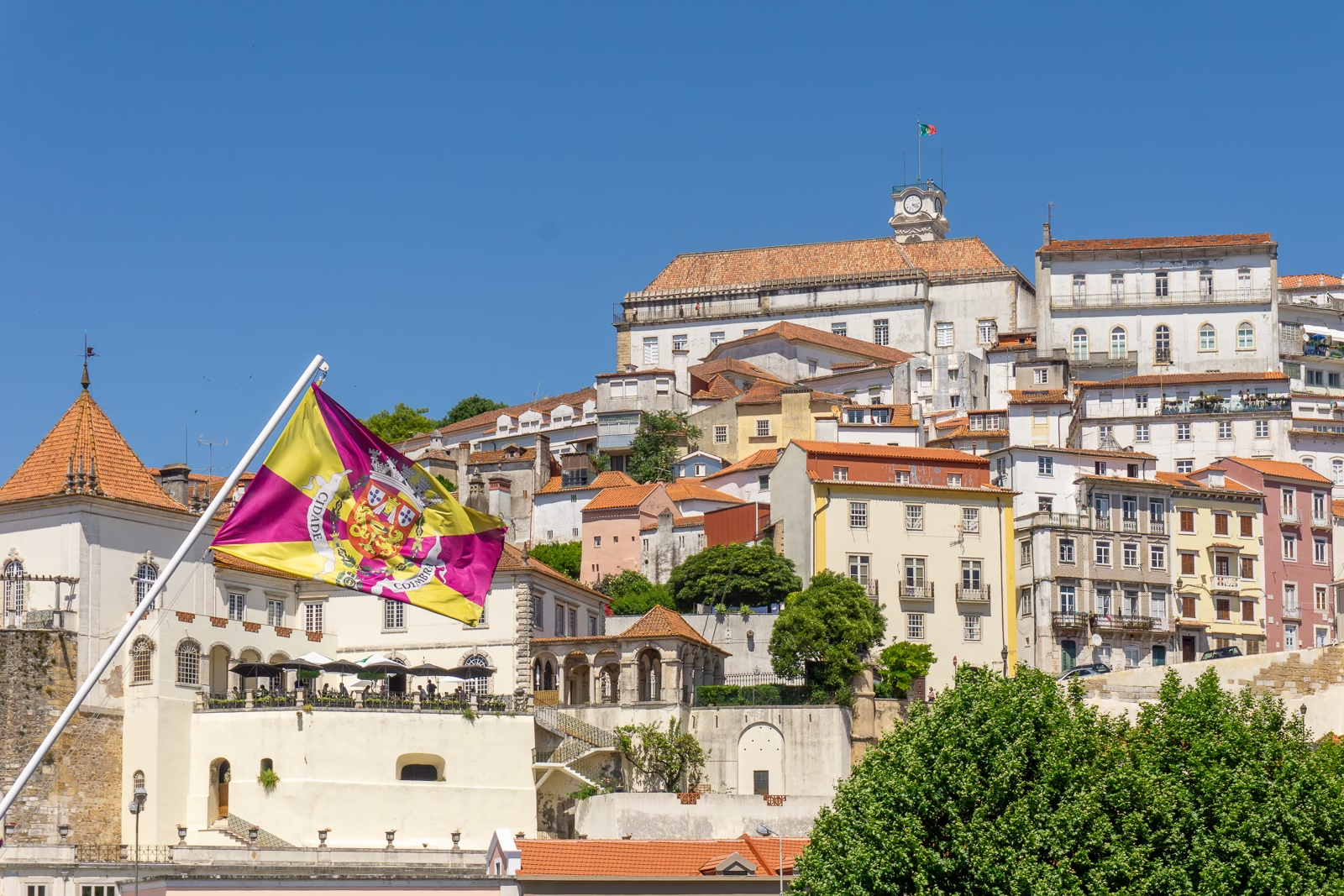
The university occupies the highest point in the city above the river and forms the entire Alta quarter. You enter through the Porta Ferrea — a 17th-century iron gate adorned with symbols of knowledge.
Beyond the gate opens the Pátio das Escolas, the central courtyard with sweeping views over the Mondego and the city below.
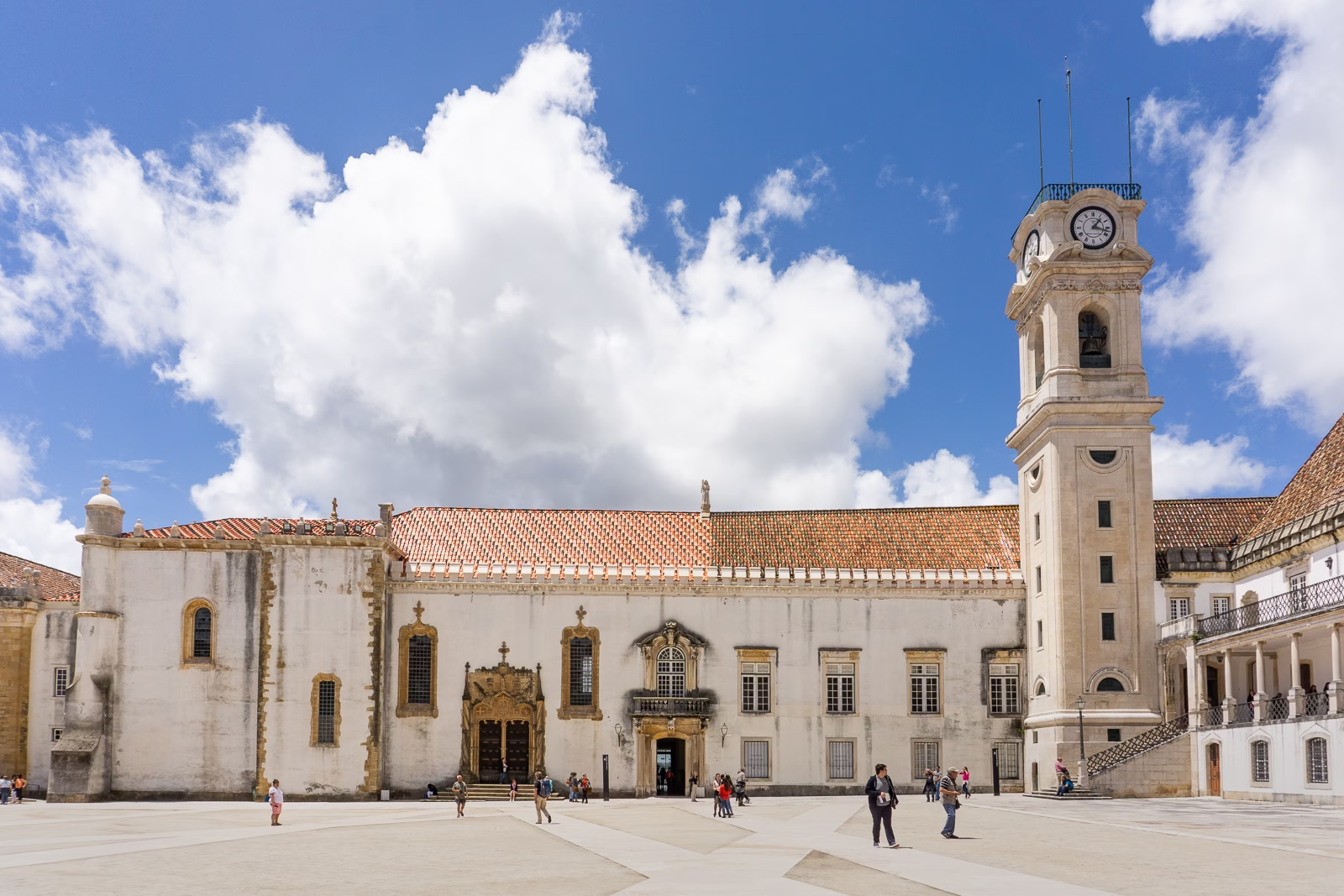
The university was founded by King Dinis in 1290, making it the first university in Portugal and one of the oldest in the world. It moved between Coimbra and Lisbon several times over the centuries before settling permanently in Coimbra in 1537.
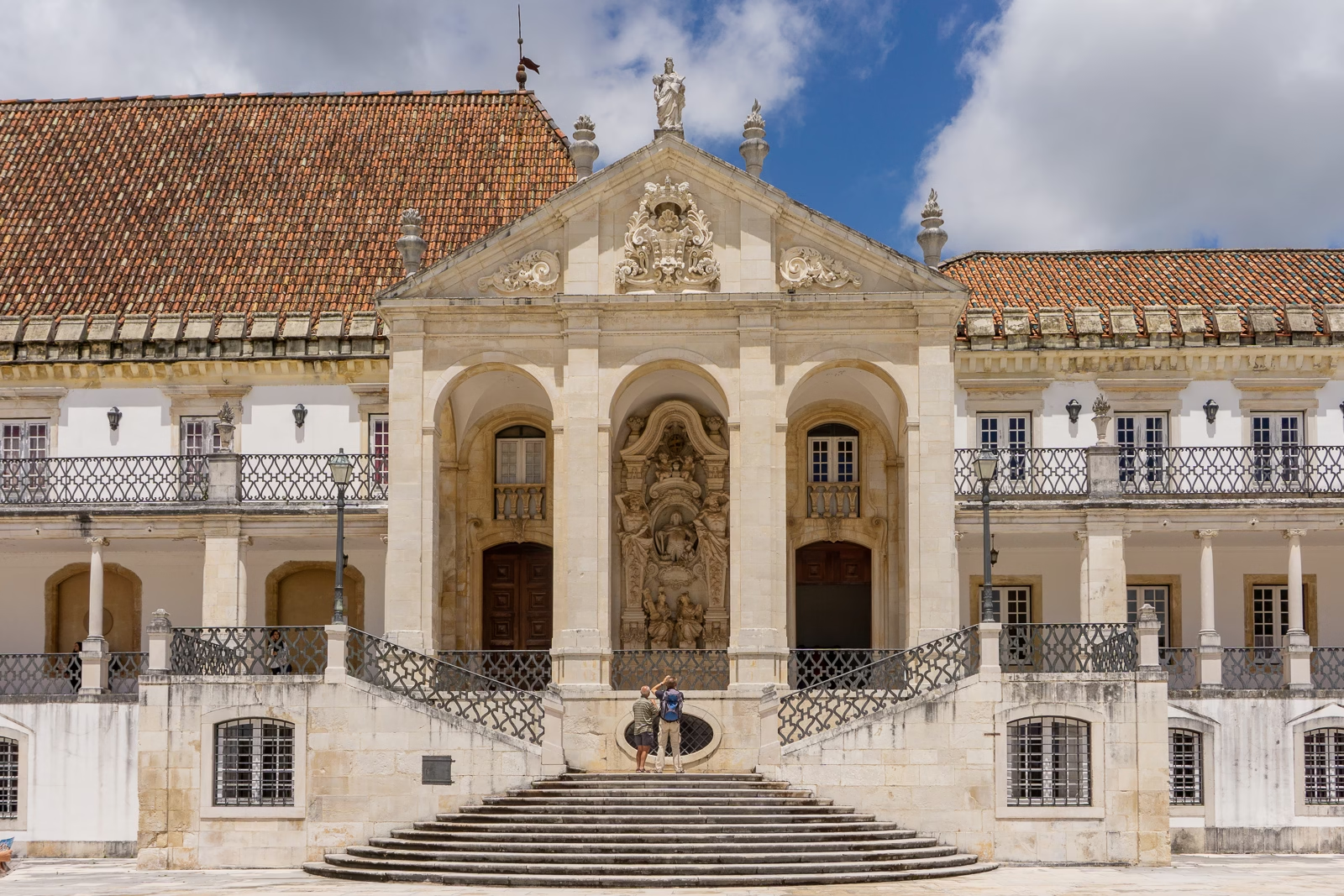
Biblioteca Joanina
The heart of any visit is the Biblioteca Joanina — a Baroque library from the early 18th century, named after King João V.
Three interconnected halls with gilded decoration, ceiling frescoes, and three tiers of shelving packed with books from the 16th to 18th centuries. The collection holds over 60,000 volumes in total.
Entry to the library passes through the Academic Prison — the room where the university historically disciplined unruly students.
Entry is tied to a specific time slot on your ticket, with a capacity of just 50 visitors per session. Book online in advance at the university’s website.
The combination ticket covering the Royal Palace, the chapel, the university tower, and the library costs €16.50.
Other Parts of the University Campus
The university has far more to offer visitors than just the library. Some areas are free, some are included in the standard ticket, and others require separate entry. You’ll find a clear breakdown at visit.uc.pt.
Climb the University Tower for a spectacular view over the river and the entire city. St Michael’s Chapel houses an organ with around 2,000 pipes — one of the most important on the Iberian Peninsula.
Also worth visiting are the botanical garden, the cabinet of curiosities, and the academic museum.
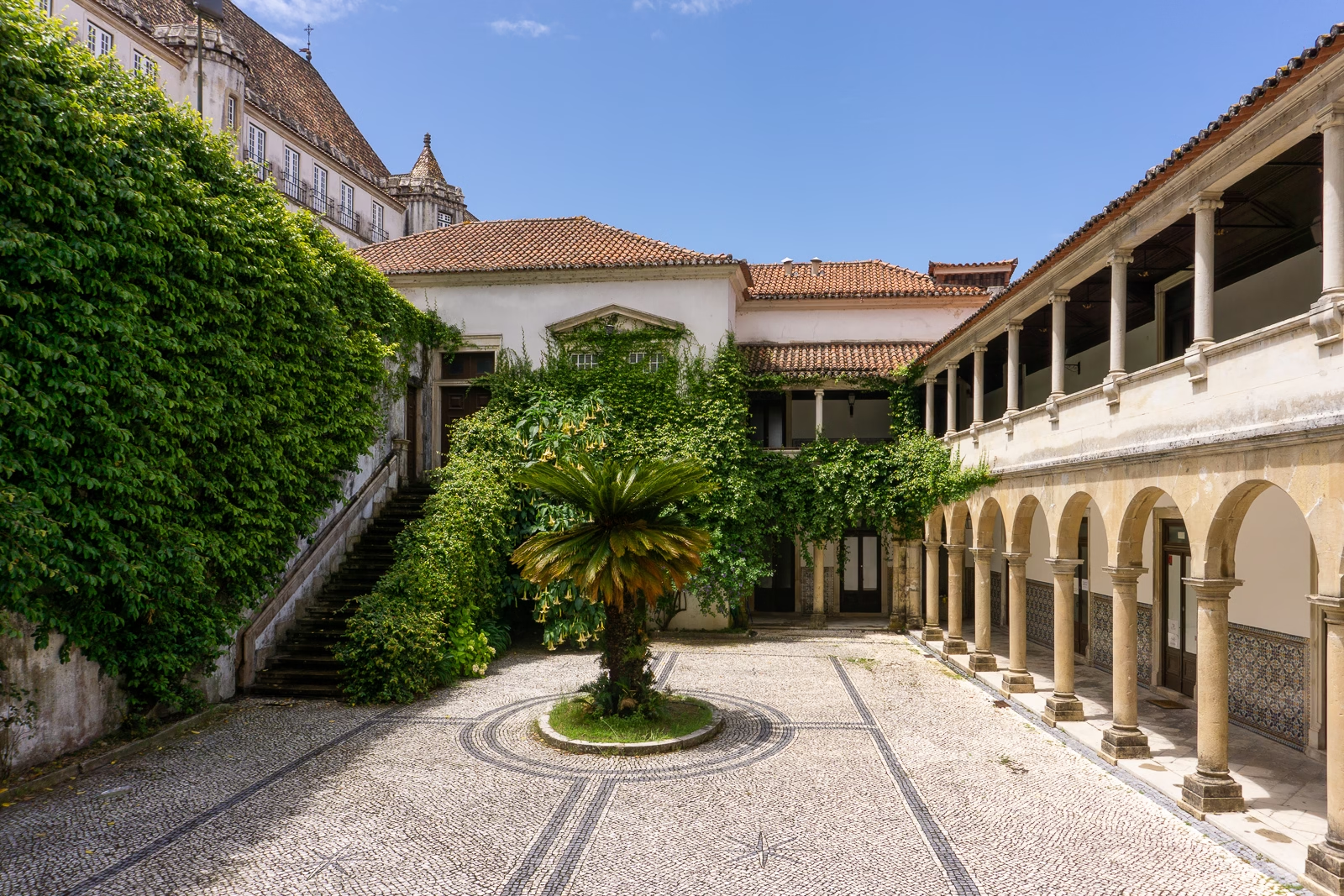
If you’re travelling with children, don’t miss the interactive science centre and museum UC Exploratório.
The Old Town — Alta & Baixa
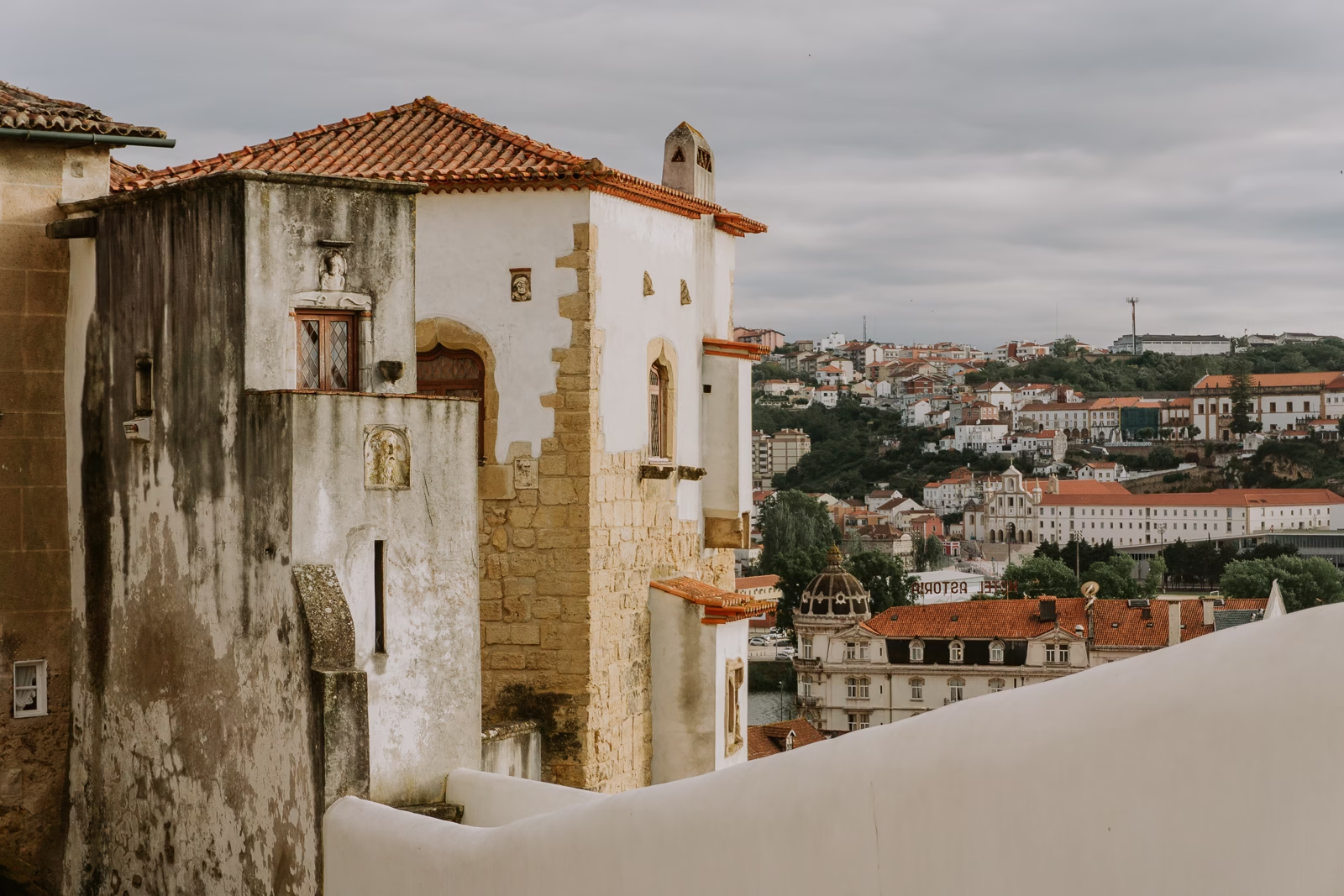
Even “old” Coimbra can feel like two different cities. The Alta quarter on the hill is a university world — narrow lanes, monasteries, cafés full of students. The Baixa quarter down by the river is everyday Coimbra: shops, restaurants, a market, the riverfront.
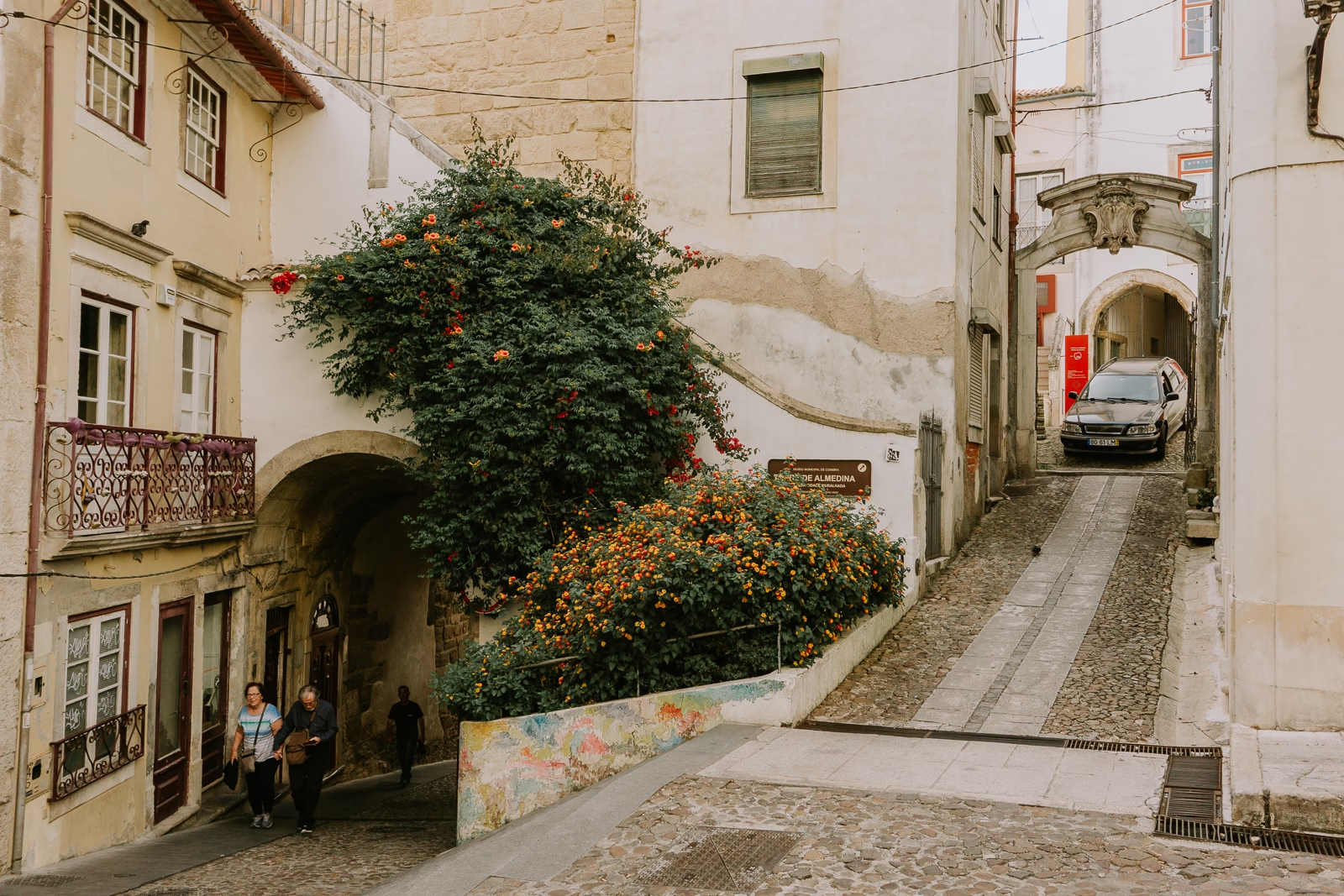
The most famous connection between them is the steep street and staircase of Rua Quebra Costas — the “street of the broken back.” You pass through a gate in the original city walls and alongside the stone Torre de Almedina.
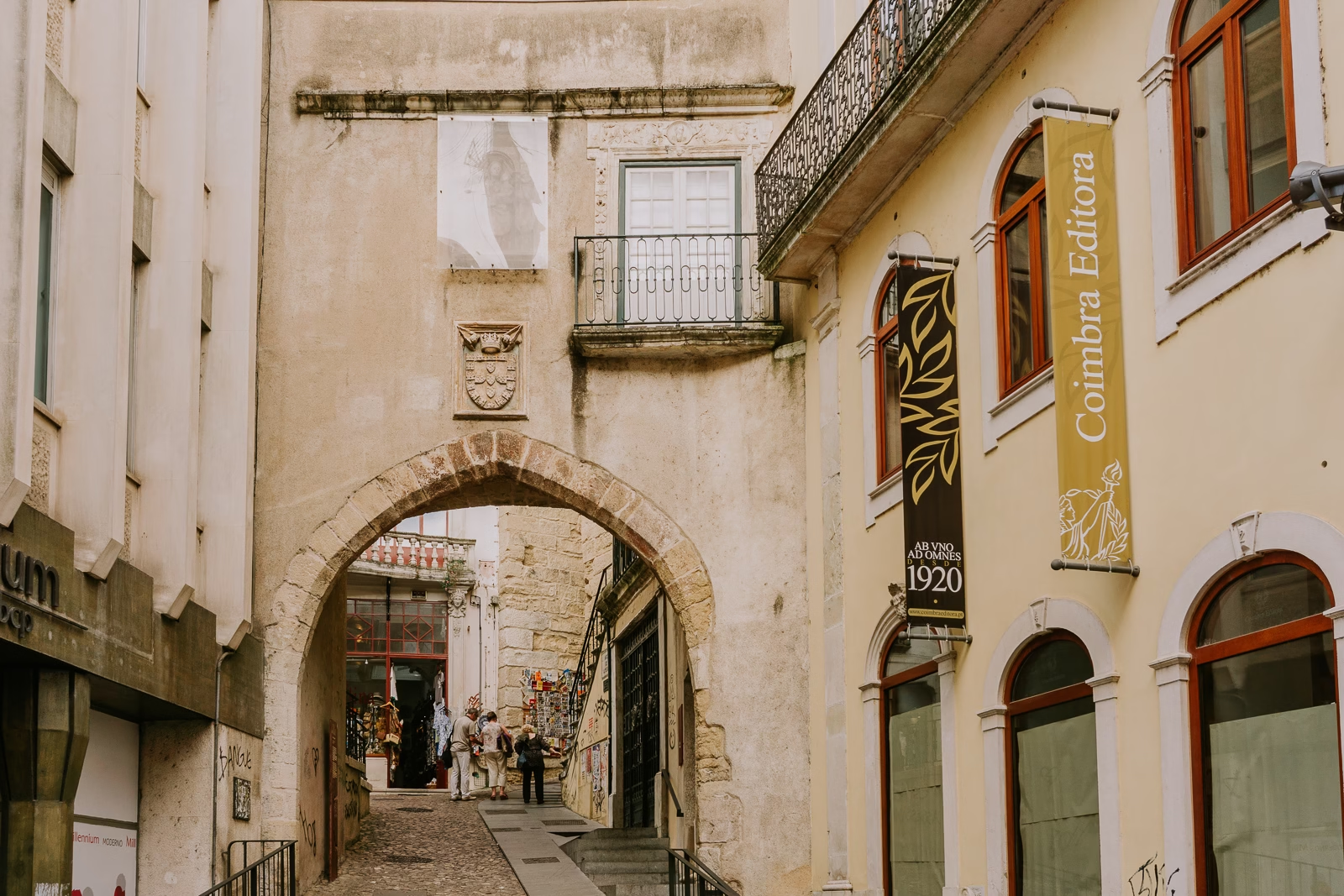
Both quarters reward a wander without a fixed agenda. You’ll find several churches, historic palaces and townhouses, remnants of the old fortifications, and photogenic viewpoints.
Keep an eye out for street art, several large murals, and usually some street musicians too.
Baixa adds a lively everyday pulse: markets at Praça do Comércio and the main shopping street of Rua Ferreira Borges.
Sé Velha
The old cathedral sits on the hillside between Alta and Baixa. It was built in the 12th century during the reign of Afonso Henriques, the first King of Portugal. Its stone façade, with few large windows, looks more like a fortress than a church — some historians believe that was intentional.
The interior blends a Romanesque core with a Gothic chancel and a 17th-century Baroque altarpiece. The gilded reredos of the high altar came from a Flemish workshop and is one of the most valuable of its kind in Portugal.
Sé Nova
The new cathedral stands right beside the Pátio das Escolas in Alta and forms a natural part of the university ensemble. It was built as a Jesuit church in the 16th century but was left empty after the Jesuits were expelled from Portugal in 1759.
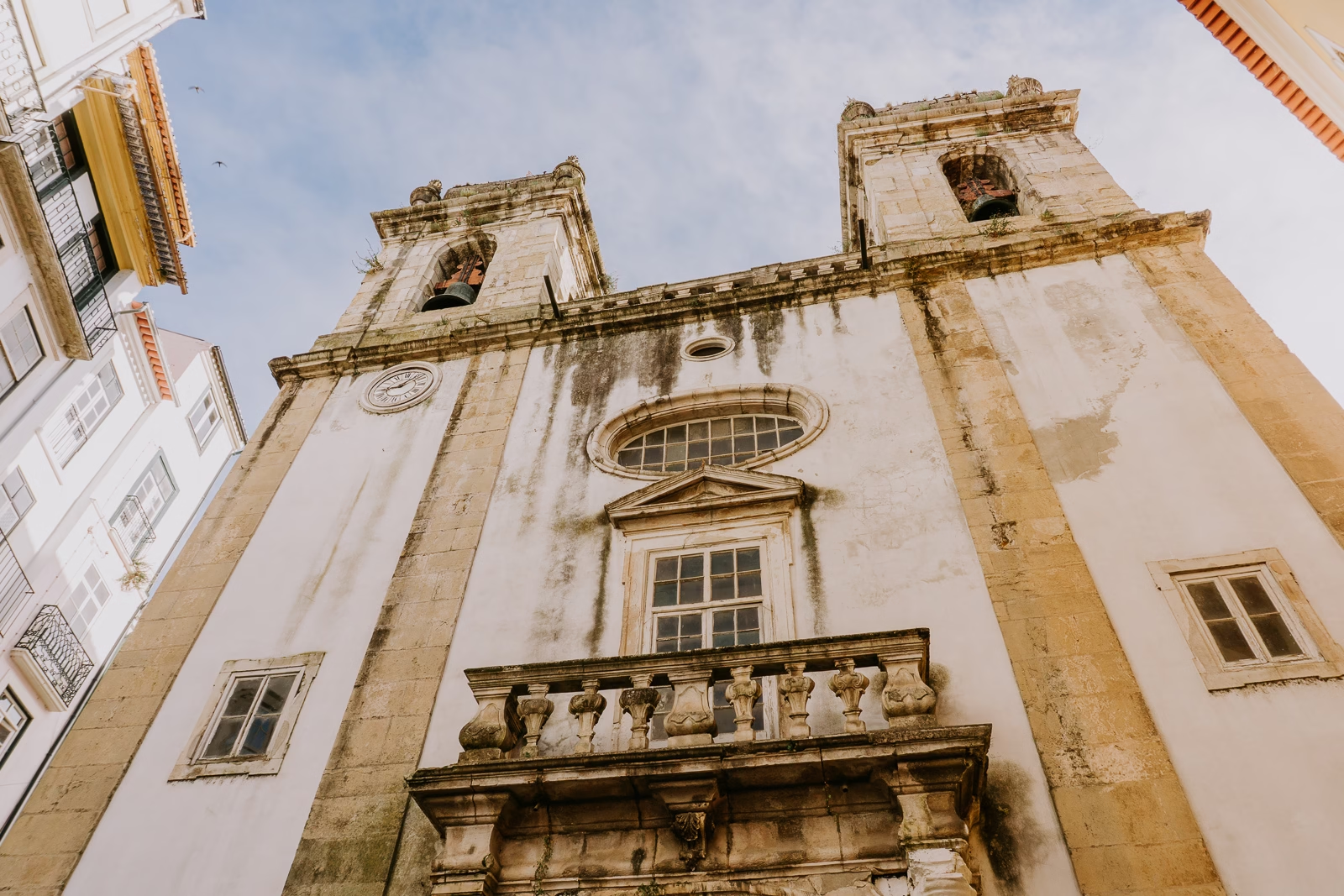
In 1772, the Marquis of Pombal moved the bishop’s seat here from Sé Velha — and from that point on, the older Romanesque church below became the “old” cathedral, and this one the “new.”
The façade combines two periods: a Mannerist lower half with four statues of Jesuit saints, and a Baroque upper half completed in the early 18th century.
The interior is richer than the exterior suggests — a gilded reredos, magnificent Baroque organ, and Gothic choir stalls transferred from Sé Velha.
Entry is free.
Mosteiro de Santa Cruz
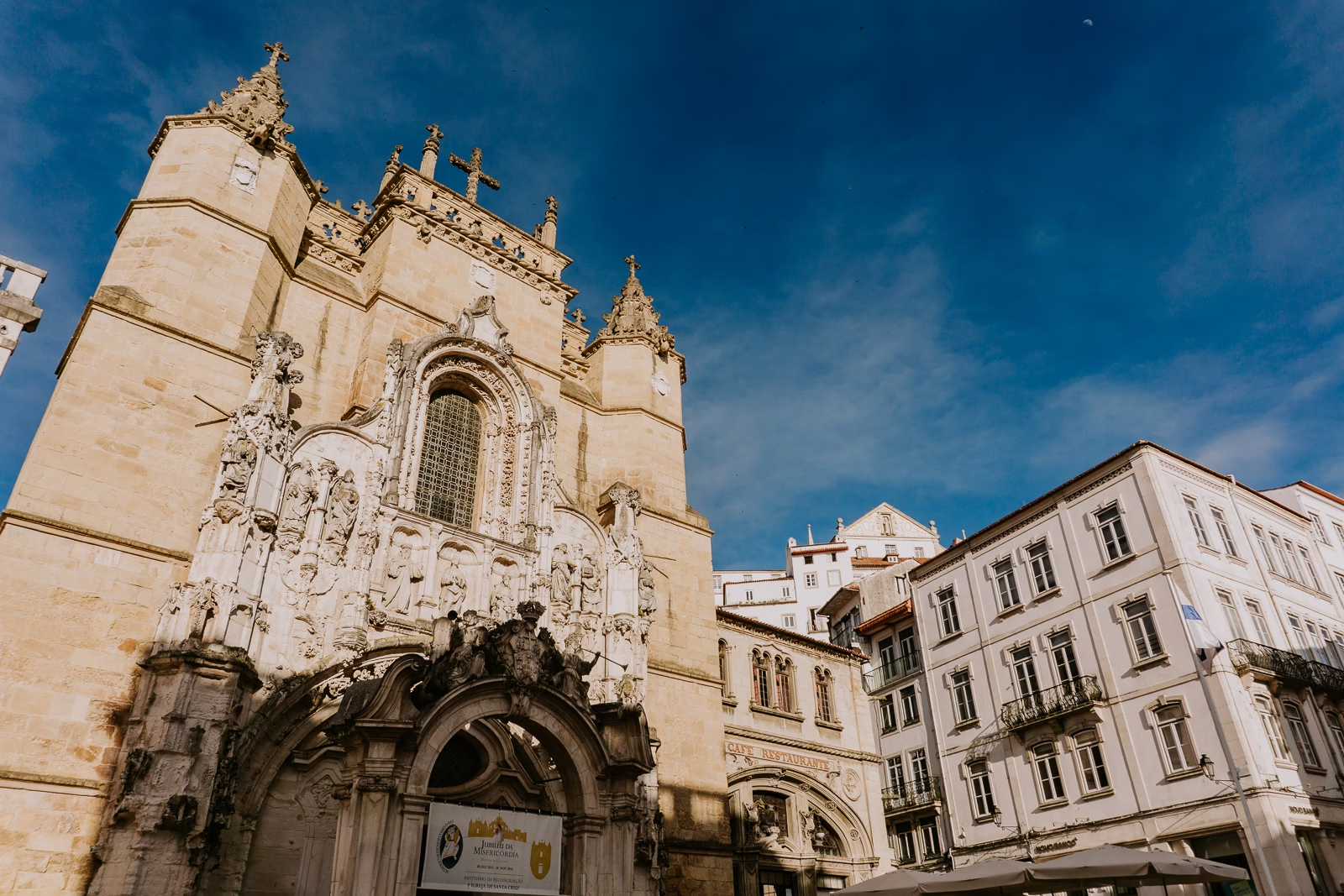
The Monastery and Church of the Holy Cross sits in the heart of Baixa. It predates Sé Velha, and its history goes back to the time when Coimbra was Portugal’s first capital.
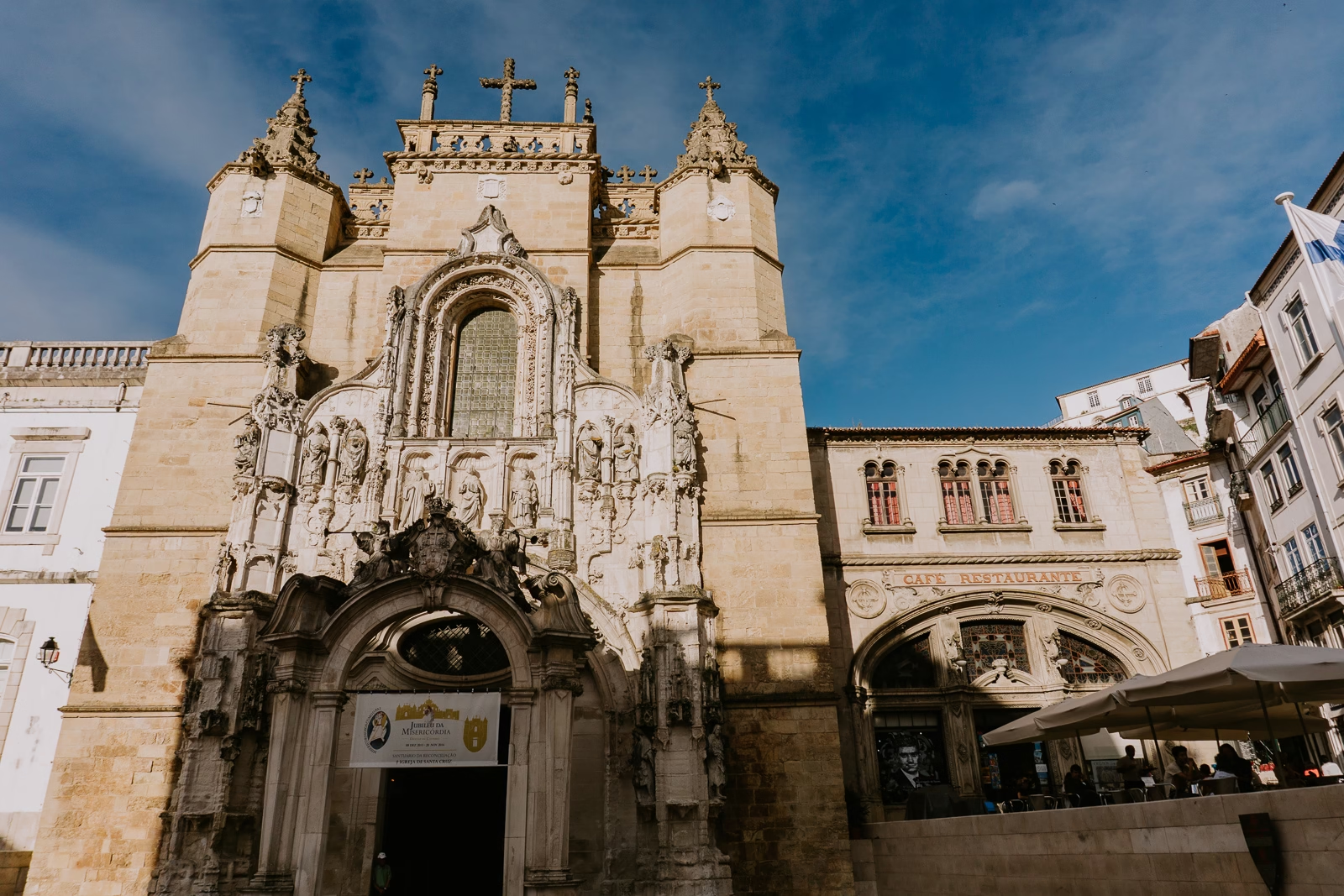
The present façade dates from the early 16th century — pure Manueline style with its characteristic ornamentation drawn from maritime motifs.
Inside are buried Afonso Henriques and Sancho I, the first two kings of Portugal. Their tombs in the chancel are exceptionally well preserved. The monastic garden, Jardim da Manga, tucked behind the nave, is a tranquil oasis with a fountain at its centre.
Igreja de São Tiago
The Romanesque Church of St James stands on Praça do Comércio in Baixa and is one of the finest examples of Romanesque architecture in the city. The original structure predates 957; the current form dates from the late 12th century.
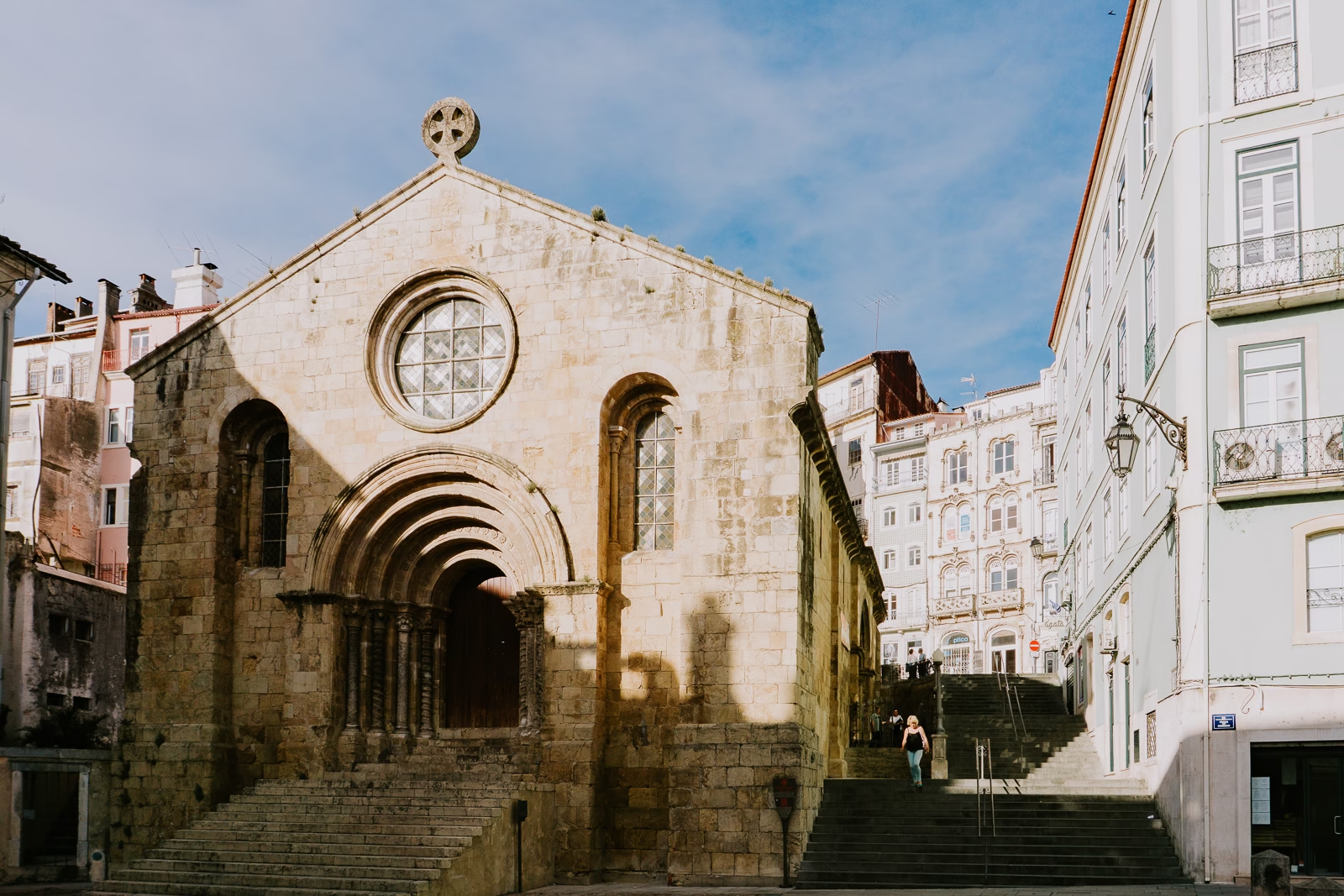
The greatest value lies in the portals: the southern one with vine and plant motifs, and the main four-arched portal decorated with capitals featuring both vegetal and animal carvings.
Igreja de São Tiago is also the official starting point of the Camino de Santiago on the Portuguese route.
Portugal dos Pequenitos
This miniature park on the left bank of the river was created as an educational project for children.
The complex contains over 130 scale replicas of Portuguese buildings — from rural cottages of Minho and Trás-os-Montes to major historical monuments, as well as examples of architecture from Brazil, Macau, Angola, and other countries of the former Portuguese colonial empire.
It’s an ideal stop for families with children.
Quinta das Lágrimas
The garden and villa on the left bank of the Mondego are tied to one of the most famous romantic legends of medieval Portugal. Inês de Castro, the lover of Crown Prince Pedro, lived here and was murdered in 1355 on the orders of King Afonso IV.
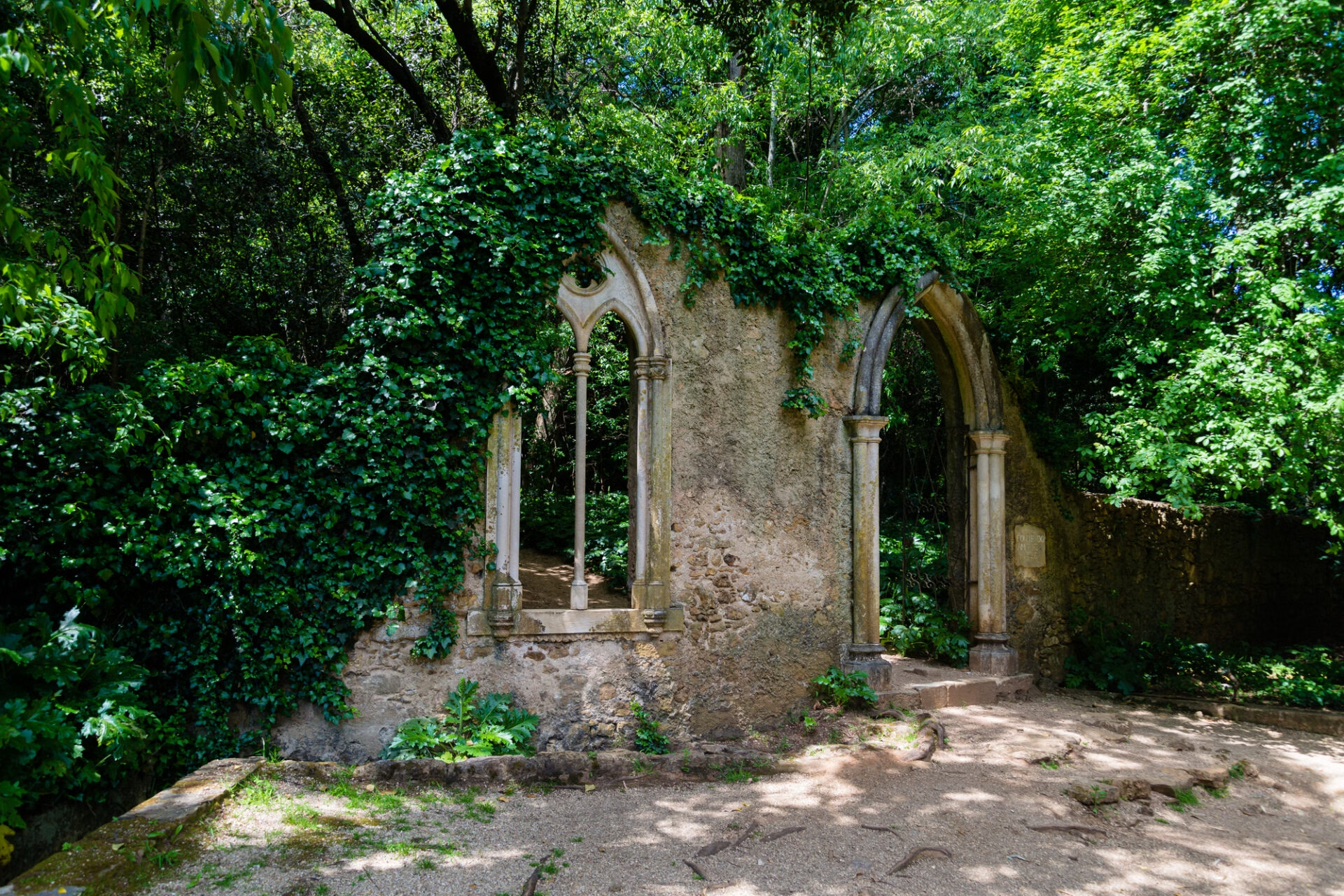
Legend has it that her tears sprang up in the garden as streams of water — hence the name Quinta das Lágrimas, the Garden of Tears.
The garden is open to the public and carries a quietly melancholic atmosphere: old trees, shade, fountains, and the Fonte das Lágrimas spring.
The villa on the grounds operates as a hotel; the garden can be visited independently. There’s a pleasant riverside walk back to the centre from here.
Jardim Botânico
The university’s botanical garden was established in the second half of the 18th century as part of the Enlightenment reforms of the Marquis of Pombal. It spreads across the hillside below the campus and is organised by the geographic origin of its plants.
It’s also simply a great place to slow down. After the climb into Alta, the shaded paths between old trees make for a welcome change of pace.
Museu Nacional Machado de Castro
The museum is housed in a Gothic bishop’s palace, beneath which lies an extensive network of Roman cryptoporticoes from the time when the ancient city of Aeminium stood here. The underground passages are part of the tour and represent one of the most impressive traces of Roman presence in central Portugal.
The collection includes Romanesque and Gothic sculpture, goldsmithing, tapestries, and Renaissance paintings. It’s one of the best museums in Portugal, yet receives far fewer visitors than the university campus.
Where to Stay in Coimbra
CBR Boutique Hotel
A four-star boutique hotel right on Largo da Portagem in the heart of the city. Book-themed design, a rooftop terrace with river views, and breakfast plus afternoon tea included.
Check availabilitySapientia Boutique Hotel
A boutique hotel steps from the university with a rooftop bar overlooking the university and river, and an excellent breakfast.
Check availabilityPátio Da Gata
A guesthouse with the atmosphere of old Coimbra townhouses, right next to the university and both cathedrals. Pets welcome.
Check availabilityTop View Apt at Historical Center
A spacious apartment for up to six guests with river views and free parking, five minutes from the main square.
Check availabilityCasa dos Aromas
A design aparthotel in a sensitively restored former soap factory from 1871, with a kitchenette and free parking.
Check availabilityPenedo da Saudade Suites & Hostel
A villa in a quiet neighbourhood near the university with a breakfast terrace and parking; offers both comfortable suites and budget hostel beds.
Check availabilityWhat to Experience in Coimbra
Coimbra Fado: Where to Hear It
Coimbra and Lisbon fado share the same instruments and a common root, but they are different worlds.
Lisbon fado grew out of the tavern culture of the 19th century and has always had room for women. Coimbra fado was born in the academic world, is an exclusively male tradition, and carries a more sober, formal character, rooted more deeply in poetry.
Singers and musicians must have — or should have — a connection to the university. They perform in traditional academic dress: black suit, cassock, and a cape over the shoulders. A defining feature is the guitarra de Coimbra, a special guitar that is larger and tuned differently from its Lisbon counterpart.
Audience approval is not expressed by applause but by a distinctive collective clearing of the throat.
For a first encounter with Coimbra fado, the most accessible option is Fado ao Centro at Rua do Quebra Costas 7 — daily performances from 6 pm, with a glass of port wine included in the ticket price.
It’s a tourist-oriented venue, but the musical quality is high and newcomers get context before the show starts.
For a more authentic experience, try À Capella — a bar set in a 14th-century Gothic chapel with live music every evening. Spontaneous serenades in the parks and courtyards of Alta are a matter of luck and timing — most likely late at night or during academic festival periods.
The biggest celebration, Queima das Fitas (Burning of the Ribbons), takes place every year in May when final-year students mark the end of their studies. During this time, fado fills the streets and the city takes on a different rhythm from the rest of the year.
Student Traditions & Academic Life
Around 25,000 students study in Coimbra, more than 20% of whom are international. Their presence shapes the character of the entire city.
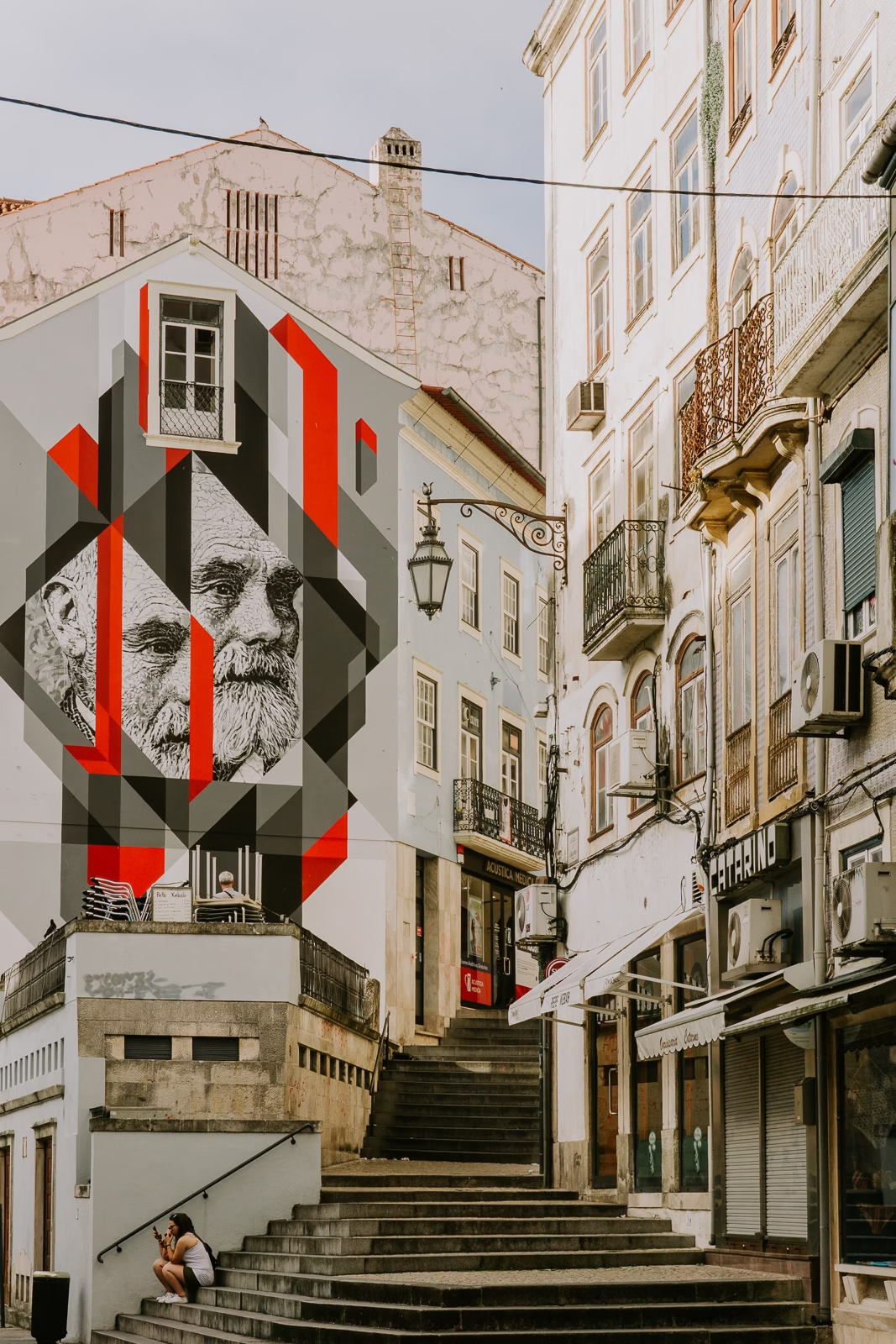
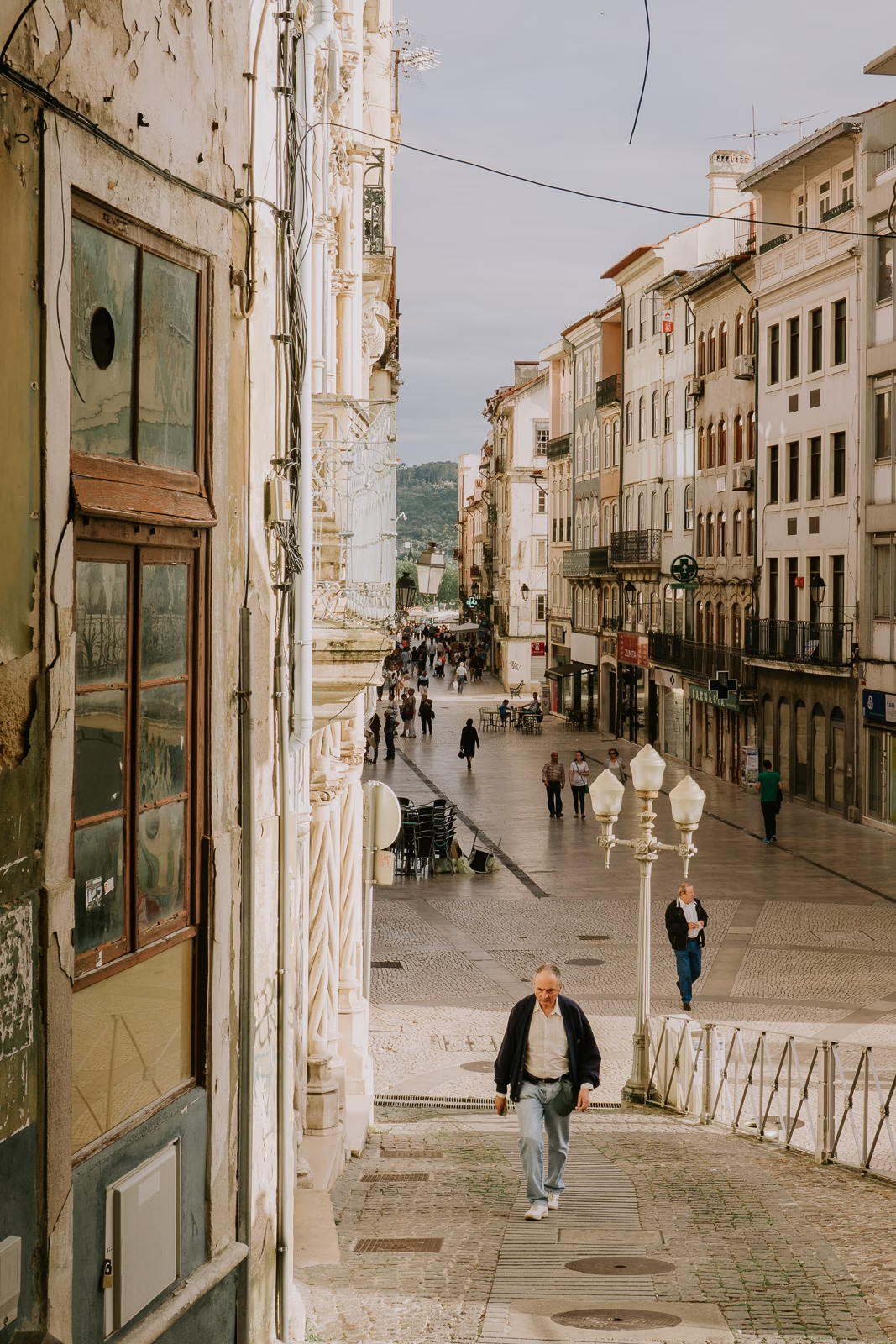
The most visible element is the black cape, the capa negra, which students wear from their first year. The tradition dates back to the 16th century, and most students uphold it — especially at academic events.
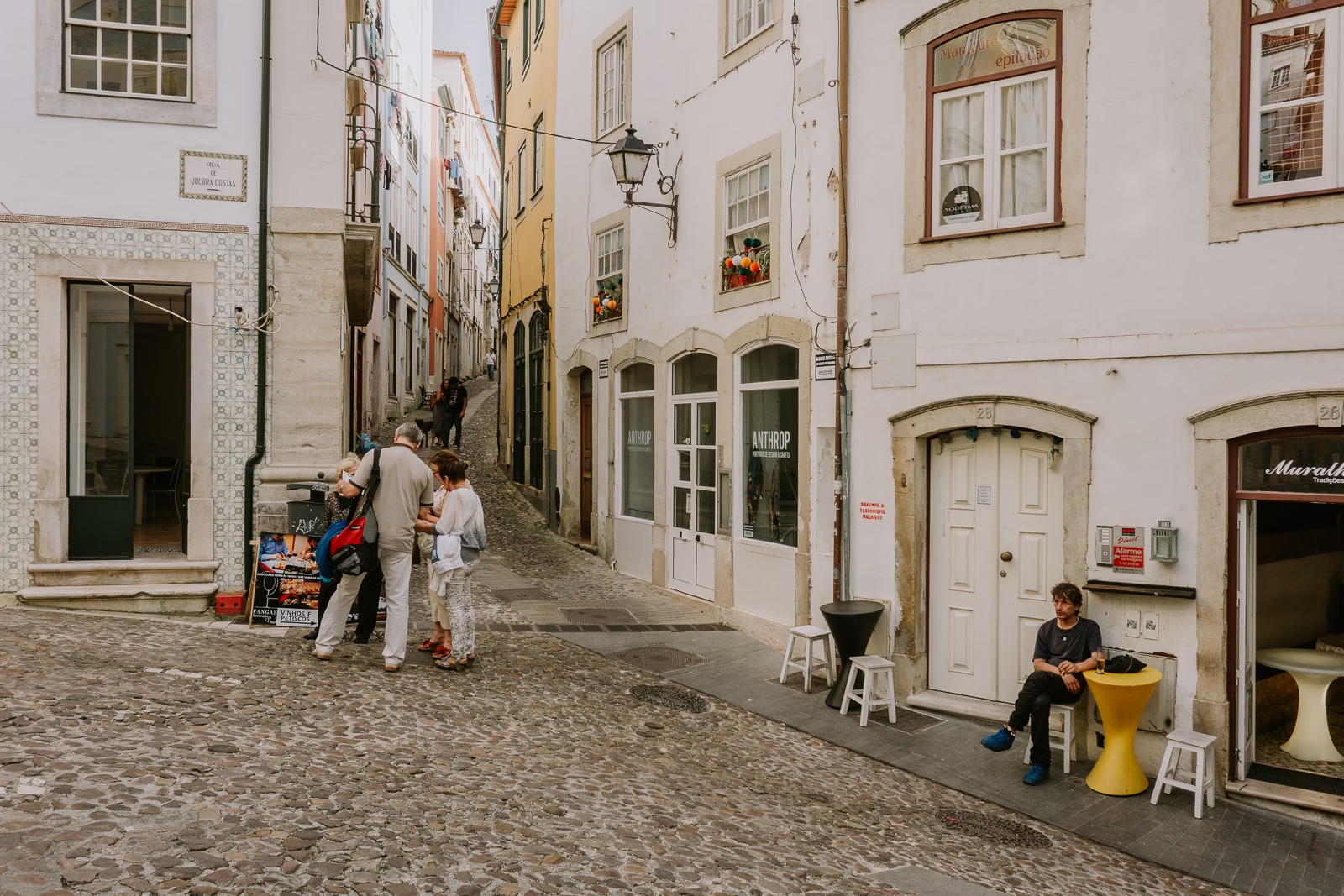
At the start of the academic year (early October), the Festa das Latas welcomes freshers into student life through rituals ranging from the symbolic to the absurd.
There’s no shortage of festivals, concerts, and parties throughout the year. It’s one of the main reasons to stay overnight.
Walk Along the Mondego
The Mondego flows through Coimbra from north to south. The right bank along Baixa offers riverside promenades and cafés; the left bank is quieter and leads to Quinta das Lágrimas and the ruined monastery of Santa Clara-a-Velha.
Food & Restaurants
Coimbra is a student city, and that shows in the food scene — you’ll find plenty of specialty coffee shops, brunch spots, and affordable restaurants sitting alongside traditional Portuguese classics. Here’s a selection of tried-and-tested places, grouped by type.
Cafés & Patisseries
Where to go for coffee and dessert:
- Pause Coffee — Specialty café on Largo Terreiro da Erva with a cosy interior and friendly staff. A great spot for coffee or a glass of wine in the afternoon.
- Nau Coffee — Specialty coffee on the main drag of Rua Visconde da Luz. Excellent flat whites, brunch options, and homemade desserts in a welcoming space.
- Zaza Café Bar — Café and bar on Rua das Flores with Turkish tantuni wraps, vegetarian and vegan options, and opening hours stretching into the night.
- Nah Cakes Confeitaria & Brunch — Patisserie and brunch spot near the train station with a wide spread of cakes, savoury bites, and Brazilian sweets. Cosy seating.
- DOPPO Gelataria — Gelateria right on Praça do Comércio with dozens of flavours including pistachio and vegan options. Outdoor seating on the square.
- The Living Room — Family café in the Celas neighbourhood with a homely atmosphere, a children’s corner, and big tables. Good coffee, bagels, and brownies.
Restaurants
Where to eat:
- Bodega Brasileira Mercado — Brazilian restaurant with feijoada, picanha, and caipirinhas in a welcoming setting. Good value for money, around €10–15 per person.
- Restaurante MA — Japanese fine-dining restaurant with an omakase menu and wine pairings. An intimate high-end experience (from €50 per person); booking essential.
- Bistrô d’Alegria — Bistro near the botanical garden serving duck, cod, and a daily set menu. Accommodating to larger groups and dietary requirements; roughly €10–30 per person.
- Pregos & Co — Restaurant and cocktail bar in the centre focused on the Portuguese prego (steak sandwich) and signature cocktails. Friendly owners; €10–30 per person.
- No Tacho — Traditional Portuguese cooking — chanfana, grilled octopus, and cod prepared several ways. Intimate space; around €20–40 per person.
- DIYA Cafe & Restaurant — Nepali and Indian cuisine with momos, pani puri, and curries, including vegetarian dishes. Very affordable (€10–15).
- Coisas DA LENA — Home-style Portuguese cooking with francesinha, bacalhau, and vegetarian options. Generous portions at reasonable prices (€10–15).
- Hey Sunday — Brunch restaurant open from the morning — eggs Benedict, pancakes, açai bowls, and vegan options. Around €10–15 per person.
- Devaneio Gastropub — Gastropub with a fire-dining concept, tasting menu, ceviche, and wine pairings. Higher-end with occasional live music.
Wine Bars & Bars
Where to go for a drink:
- Noster Taberna & Wine Bar — Wine bar with Portuguese wines, tapas, and cheese boards. The owner is excellent at recommending pairings by region; around €15–30 per person.
- Taberna 58 — Rock bar in the historic quarter with draught mead (hidromel), local and craft beers at good prices. Open late into the night.
- Wine Bar | Garrafeira Baga — Wine bar and bottle shop with a carefully curated selection of Portuguese wines, tastings, and local Coimbra beer. Bottles available to take away.
Day Trips from Coimbra
Aveiro
Aveiro lies 50 km north of Coimbra and is reachable by train in under half an hour.
The label “Portuguese Venice” is a bit of an exaggeration, but the canals with colourful moliceiro boats have their own charm and the centre is a pleasant place for an afternoon stroll.
The main attraction is the canal network and harbour, where you’ll find the moliceiros — now tourist-oriented, but still looking authentically the part; they were originally used to harvest seaweed for fertiliser. The city also has interesting Art Nouveau architecture from the turn of the 19th and 20th centuries, built when big fishing money was rolling in.
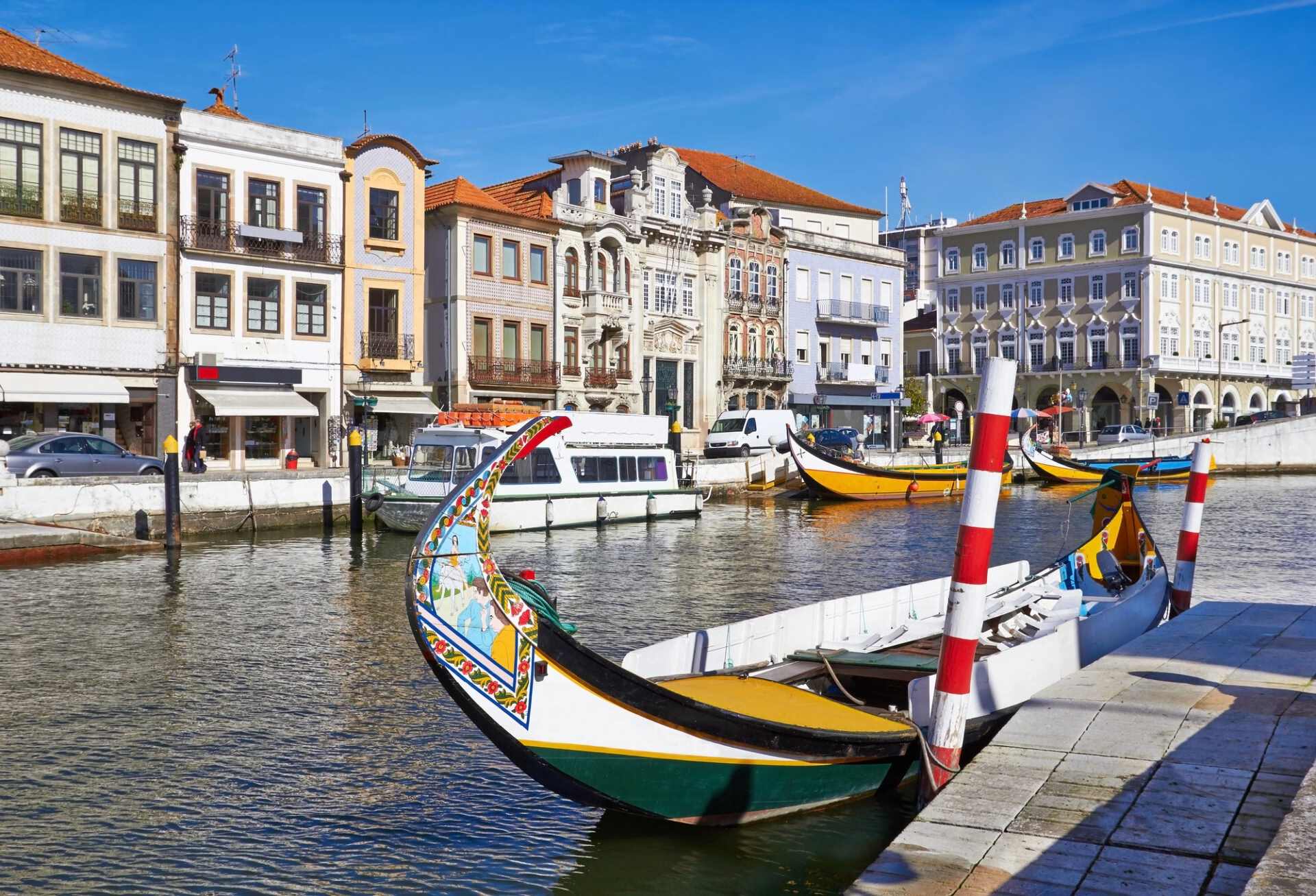
Also worth a visit is Costa Nova — a fishing village 8 km from Aveiro’s centre, famous for its wooden houses painted in pastel stripes.
The Alfa Pendular express train takes just 26 minutes, so you can easily make this an afternoon trip.
Serra do Buçaco & Palácio do Buçaco
Buçaco lies about 30 km north of Coimbra — roughly 40 minutes by car or bus.
Here you’ll find one of the most remarkable forests in Portugal and an ornate Neo-Manueline palace that looks as if it was lifted straight from a fairy tale.
The Mata Nacional do Buçaco forest was established under Carmelite monks in the 17th century. The monks walled off the forest, planted hundreds of tree species brought from around the world, and obtained a papal decree threatening excommunication for anyone who felled even a single tree.
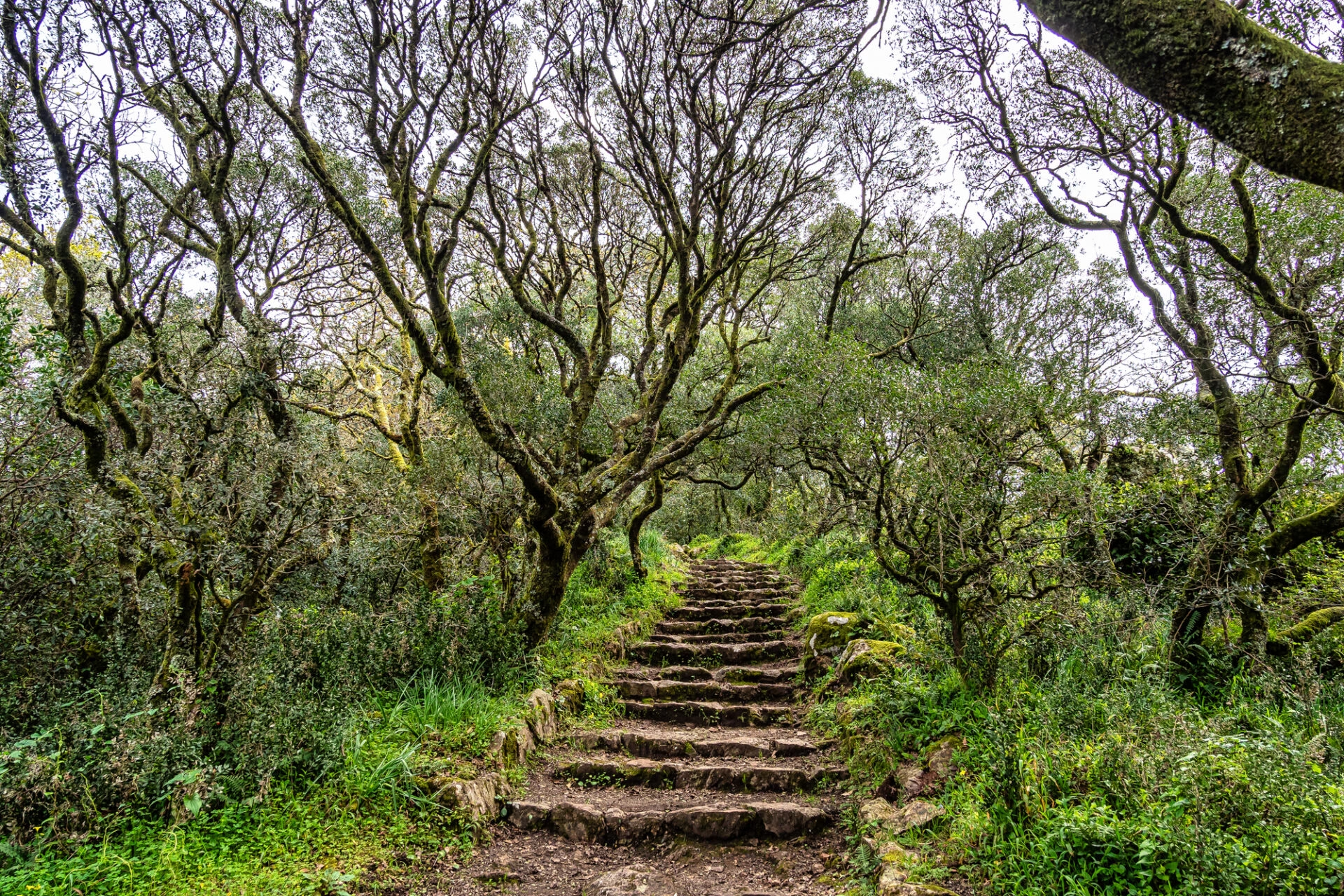
The result is 105 hectares containing more than 700 tree species — Lebanese cedars, sequoias, araucarias, giant ferns. Time moves differently here and you quickly forget you’re in Portugal.
At the heart of it stands the Palácio do Buçaco, a Neo-Manueline hunting lodge built at the turn of the 19th and 20th centuries for Portugal’s last king, Carlos I.
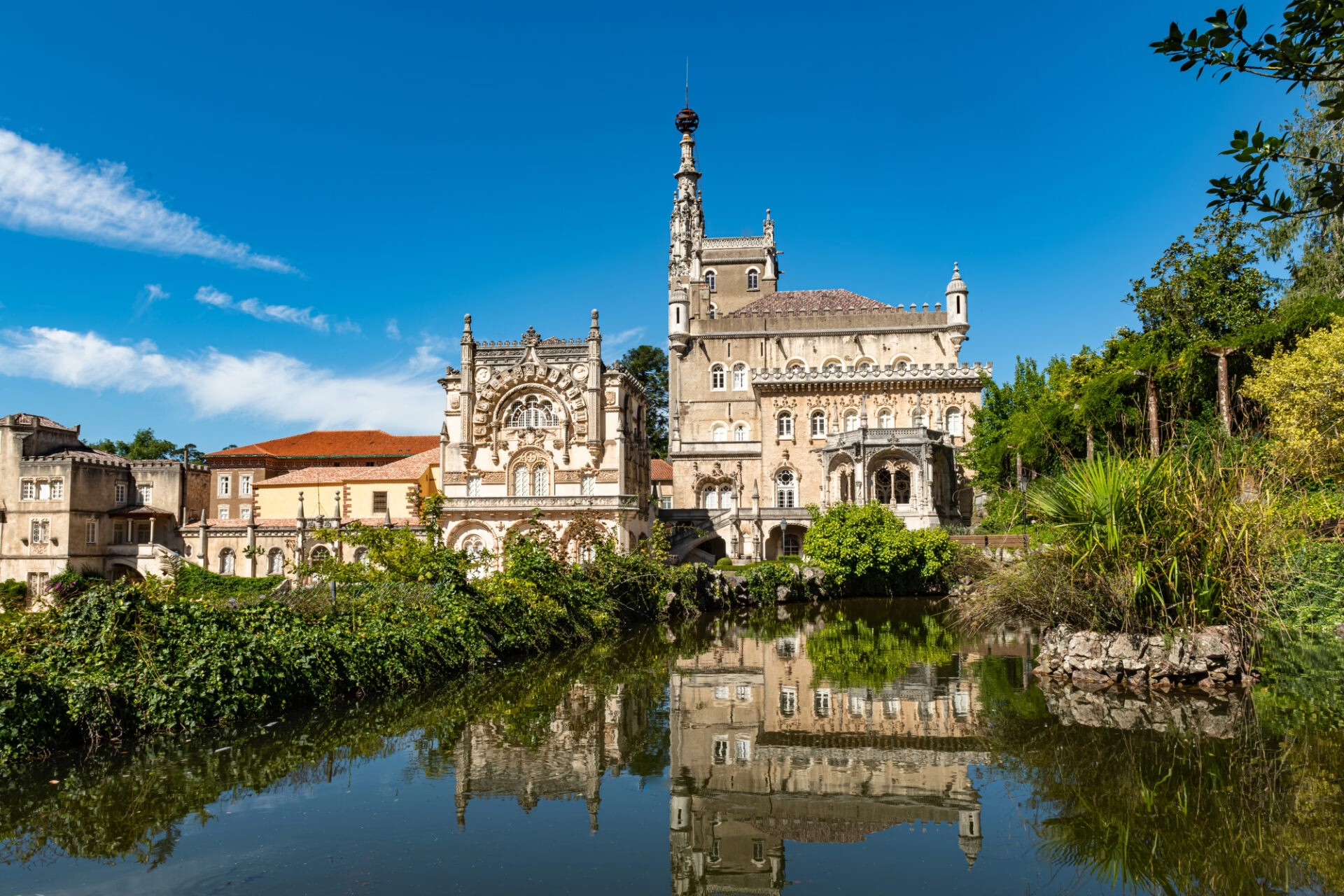
Today it operates as a hotel, but even without an overnight stay it’s worth a visit — the façade with its intricate lacework stone carvings, surrounded by misty forest, is one of the most photogenic sights in central Portugal. From the Cruz Alta viewpoint, on a clear day you can see all the way to the Atlantic.
You can get to Buçaco by train — travel to Luso station on the Coimbra–Porto line, then it’s about 2 km uphill on foot to the forest. By car it’s more convenient; there’s a car park at the main entrance.
Figueira da Foz
Figueira da Foz lies 40 km west of Coimbra, where the Mondego meets the Atlantic. It’s the largest coastal resort on central Portugal’s coastline — and one that the tourist industry hasn’t yet managed to spoil.
The main beach is impressive: 2 km of golden sand so wide that the walk from the promenade to the water’s edge takes a full five minutes.
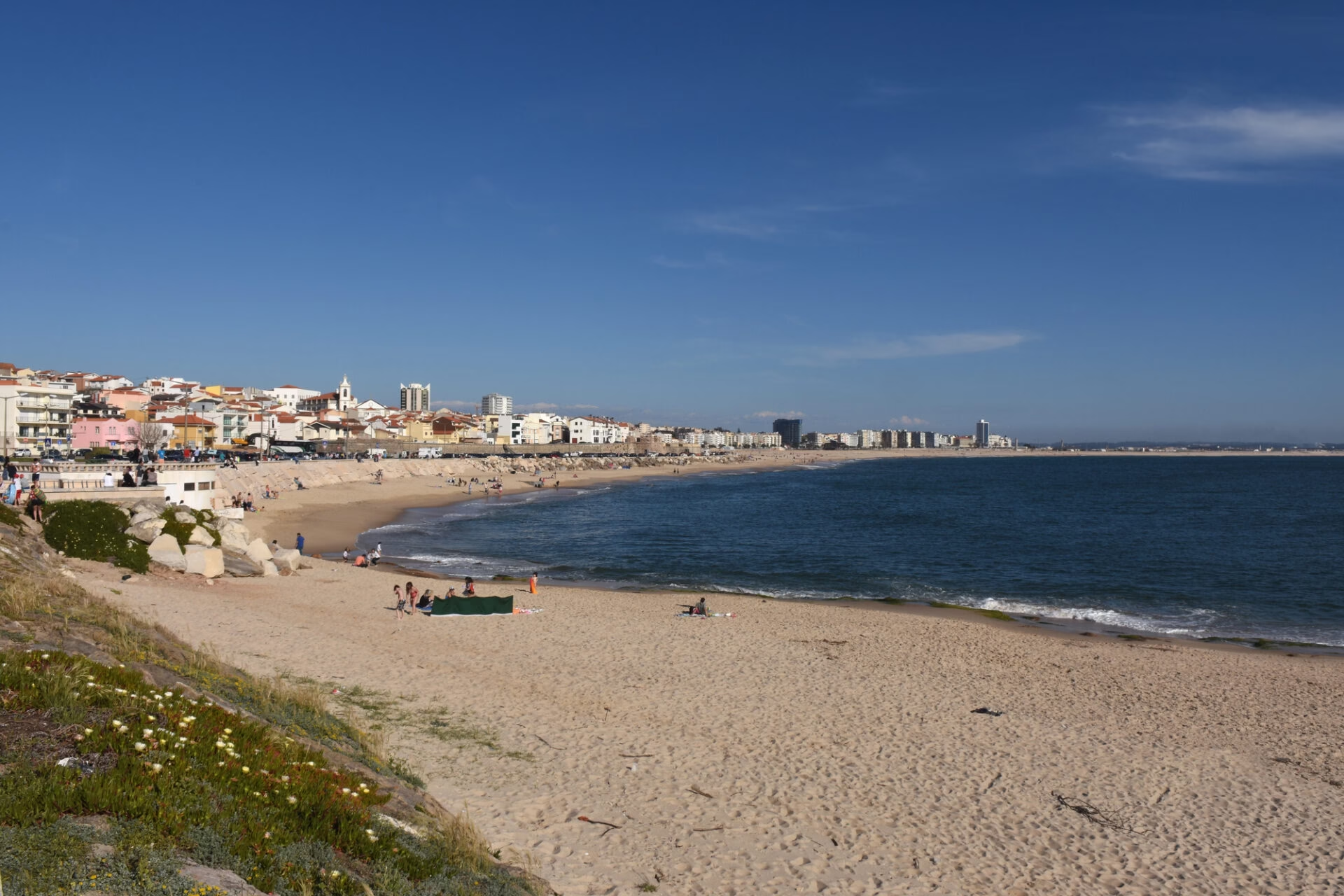
The crowds here are mostly Portuguese, which gives the place a pleasantly local feel. The water is cooler than in the south, but perfectly swimmable from June to September.
The coastline north of Figueira — Quiaios, Murtinheira — is among the wildest and most deserted stretches of central Portugal’s Atlantic shore; surfers come here from across Europe for the waves.
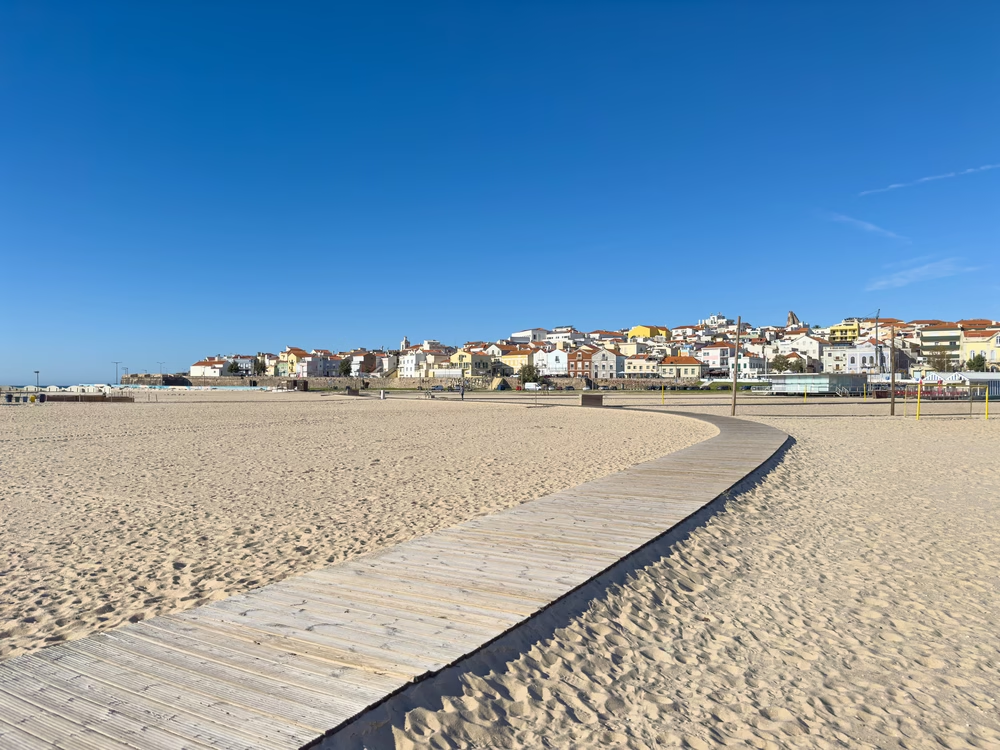
Figueira da Foz makes for a perfect relaxing day trip. A direct train from Coimbra takes about an hour.
Tomar
Tomar lies about 75 km southeast of Coimbra — an hour by car, or around an hour and fifteen minutes by train with a change at Entroncamento. It’s a longer day trip, but one of the most rewarding in all of central Portugal. It’s also roughly halfway to Lisbon, so it makes perfect sense to stop off for half a day if you’re making the journey between the two cities.
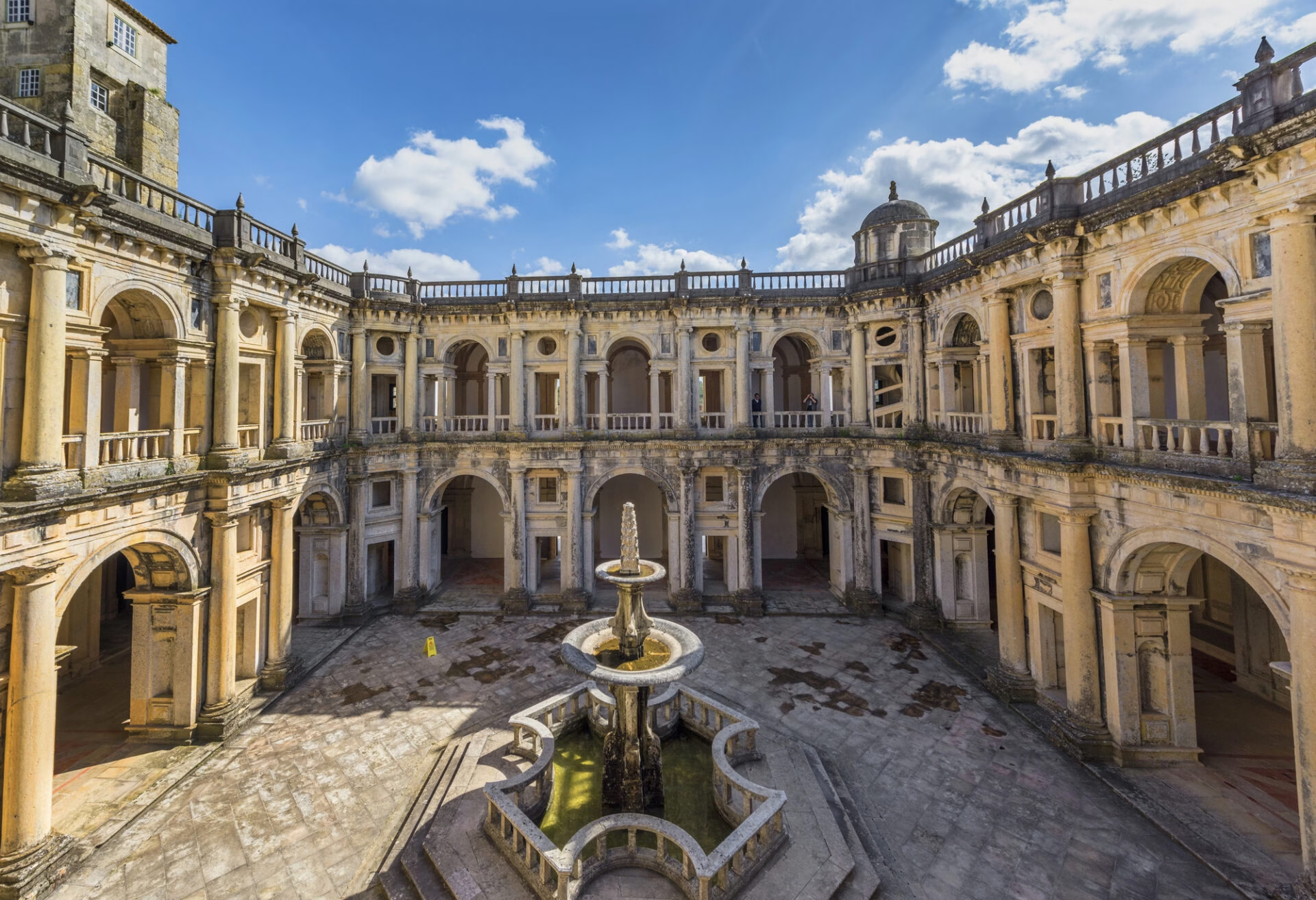
The heart of the town is the Convento de Cristo — the Templar monastery listed as a UNESCO World Heritage Site since 1983. It was founded as a Knights Templar fortress in the 12th century; after the dissolution of the Templars it passed to the Order of Christ and became the spiritual and financial headquarters for Portugal’s Age of Discovery.
The complex encompasses eight different monastic cloisters, each reflecting a different historical period and architectural style — from Romanesque through Gothic to Renaissance.
Two places in the complex are unmissable: the Charola, the Templars’ circular chapel from the 12th century where knights heard mass on horseback, and the Manueline Window of the chapter house — one of the most elaborate examples of Manueline decoration anywhere, a complete encyclopedia of maritime symbolism carved in stone.
Where to Stay in Coimbra
Coimbra is compact, so location matters less than in, say, Lisbon — from most accommodation in the centre or nearby, you can walk to both the university and the riverfront. The main distinction is whether you want to be right in Alta or Baixa, or a little further out with your own parking. Here’s a selection of reliable options.
Accommodation in the Centre & Alta
Specific options:
- CBR Boutique Hotel — A four-star boutique hotel right on Largo da Portagem in the heart of Coimbra. Book-themed design, a rooftop terrace with river views, and breakfast plus afternoon tea included. Best location of all.
- Sapientia Boutique Hotel — A boutique hotel steps from the university in Alta. Rooftop bar with views over the university and river, an excellent breakfast, and a charming storytelling concept — you’ll receive a chocolate and a story at bedtime.
- Pátio Da Gata — A guesthouse with the atmosphere of a classic Coimbra townhouse, right next to the university and both cathedrals. Thoughtfully furnished rooms, a shared kitchen, and a welcoming host; pets welcome.
- Avenue Garden — Modern apartments with air conditioning and a terrace about 700 m from the centre, close to the university. Kitchenette and minibar included; excellent value for money.
- 7Min to Uni Sé-Velha — A cosy B&B seven minutes’ walk from Sé Velha with fast Wi-Fi (300 Mb), a work desk, and a balcony with city views. Ideal if you need to keep working while you travel.
Accommodation with Parking & in Quieter Areas
Specific options:
- Top View Apt at Historical Center — A spacious 100 m² apartment for up to six guests with river and park views, five minutes from the main square. Free private parking — ideal for families and groups with a car.
- Casa dos Aromas — A design aparthotel in a sensitively restored former soap factory from 1871 on the left bank of the Mondego. Kitchenette, balconies, and free parking; the old town is just a bridge away.
- Penedo da Saudade Suites & Hostel — A villa in a quiet hillside neighbourhood near the university with a breakfast terrace and on-site parking. Offers both comfortable suites and budget hostel beds — a good pick for tighter budgets.
Practical Information
How to Get to Coimbra
By Train
Coimbra is excellent by train, and for me it’s the best option.
From Lisbon, the fastest Alfa Pendular services take approximately one and a half hours, with fares starting at €25. Trains from Lisbon depart from Oriente station.
From Porto, the journey takes 1 hour 10 minutes; the fastest Alfa Pendular fares start at €18 in second class.
Buy tickets in advance online at cp.pt — promotional fares are significantly cheaper than buying on the day.
NOTE: All express trains stop at Coimbra-B station, not at the central Coimbra station. From Coimbra-B you can walk to the centre in about 20 minutes, or take a local bus. Several lines run to the centre at least 5 times per hour.
By Bus
You can also reach Coimbra from Lisbon and Porto by comfortable express coach; operators on the route include FlixBus, Rede Expressos, and ALSA.
Bus fares are lower than train fares (promotional tickets under €10), and the journey time is slightly longer. From Lisbon it takes 2 hours 20 minutes; from Porto approximately 1 hour 30 minutes.
By Car
Coimbra sits just off the A1 motorway between Porto and Lisbon. From Porto it’s just under an hour and a half; from Lisbon, around two and a quarter hours.
Parking in Coimbra is generally straightforward — I’d recommend leaving your car in the Santa Clara neighbourhood and continuing on foot to the old town on the other side of the river.
Getting Around the City
Coimbra’s centre is compact and most places are walkable. Just be prepared for some serious uphill stretches.
Useful public transport options:
- Elevador do Mercado funicular connects Rua Quebra Costas in Baixa with the upper part of the city.
- Bus no. 29 runs from the centre to the university campus.
Money & Prices
Portugal uses the euro; cards are accepted in most places, with no issues in the tourist centre.
Coimbra is more affordable than Lisbon or Porto.
Rough price guide:
- Coffee €1–1.50,
- lunch at a local restaurant (prato do dia) €8–12,
- dinner at a mid-range restaurant €15–25 per person without drinks,
- university campus ticket (including the library) €16.50.
Weather in Coimbra & Best Time to Visit
Coimbra has an oceanic climate with hot, dry summers and wet winters. Average temperatures in summer reach 27–30 °C; in winter, around 10–15 °C during the day.
Spring (April–June) is the ideal time to visit. Temperatures are pleasant (18–24 °C), the city is lively thanks to the academic year in full swing, and in May the Queima das Fitas — the biggest student festival of the year — takes place.
Rain is possible in April and May, but heavy downpours are infrequent.
Summer (July–August) is the driest season, but also the hottest and most crowded. At 35 °C, a walking tour of the city is not much fun. If you visit in summer, plan your main sightseeing for the morning or early evening.
Autumn (September–October) is another great option — still warm but rarely too hot, and with far fewer tourists. Festa das Latas welcomes new students in October. Rainfall starts to increase from October onwards.
Winter (November–March) is cold, rainy, and sometimes quite grey. The city carries on and the university is in session, but the atmosphere is quieter and things tend to move indoors.
If you want to avoid the crowds at Biblioteca Joanina, choose a date outside school holidays and book your ticket as soon as the booking window opens (typically one month in advance). In July and August, slots fill up within a matter of hours.
Safety
Coimbra is a safe city. Standard precautions apply in crowded spots and around major tourist sites. In the evenings the centre is lively thanks to the students, the nighttime atmosphere is welcoming, and you can walk around without concern.
Frequently Asked Questions
Is Coimbra worth visiting?
Yes. Coimbra is home to Portugal’s oldest university, whose UNESCO campus with the Baroque Biblioteca Joanina is one of the most fascinating historical complexes in the country. Its student life is an experience in itself. It also has its own distinctive style of fado, and the city makes an excellent base for day trips to Aveiro, Buçaco, Figueira da Foz, or Tomar.
How long should I spend in Coimbra?
Two to three days is the sweet spot. One day only gives you a quick pass through the university and the old town. Two days let you add the Mosteiro de Santa Cruz, Quinta das Lágrimas, an evening of fado or the city’s bars, and one half-day trip (Aveiro or Buçaco). Three days allow for a second longer excursion (Tomar or Figueira da Foz) and a more relaxed pace.
How do I get from Lisbon to Coimbra?
The fastest option is the Alfa Pendular train — the journey takes approximately 1 hour 36 minutes, with tickets from €25. The coach (FlixBus, Rede Expressos) takes around 2 hours 20 minutes. Note: express trains stop at Coimbra-B station, about 2 km from the centre; walk in or take a local bus.
How do I get from Porto to Coimbra?
The Alfa Pendular express from Porto Campanhã to Coimbra-B takes approximately 1 hour 10 minutes, with second-class fares from €18. The coach from Porto takes about 1 hour 30 minutes at a lower price; promotional tickets start from €10.
How much does entry to the Biblioteca Joanina cost?
The library can only be visited as part of a combination ticket for the university campus. The standard ticket (Royal Palace, St Michael’s Chapel, university tower, and Biblioteca Joanina) costs €16.50. Entry to the library is timed and limited to 50 visitors per slot — book online at least one month in advance, especially in peak season.
When is the best time to visit Coimbra?
Spring (April–June) and autumn (September–October) are ideal — temperatures of 18–26 °C, fewer tourists, and the university in full swing. May brings Queima das Fitas, the biggest student festival. Summer (July–August) is hot (35 °C) and the climb up to Alta in the midday heat is punishing. Winter is quiet, rainy, but cheaper.
What’s the difference between Lisbon fado and Coimbra fado?
Lisbon fado grew out of tavern culture in the 19th century and is performed by both men and women. Coimbra fado was born in the city’s academic world, is performed exclusively by men in traditional black capes, and always features the classical guitar and the larger guitarra de Coimbra. Its character is more formal, more restrained, and more rooted in poetry. Audience approval is expressed not by applause but by a distinctive collective clearing of the throat.
Related Articles
- Portugal travel guide: what to see and where to go
- Lisbon Travel Guide
- Porto Travel Guide