Altogether, I’ve spent more than two years in Thailand, most of it in the north of the country. Chiang Mai is my second home and I’ll always love coming back here. Set aside more than the usual two or three days to explore the city and its surroundings. It deserves much more. Here are the best things to see, do and experience.
What to see and experience in Chiang Mai
The city of Chiang Mai not only serves as a great base for trips, but it also offers plenty to see itself. And, of course, plenty to taste.

How long should you stay in Chiang Mai?
As with all of northern Thailand, visiting Chiang Mai makes sense whether it’s for a few days or even several months. I spent several winters in the city as a digital nomad and absolutely fell in love with it.
Usually, I worked for three weeks out of the month and spent the rest of the time on a motorbike, heading out for longer trips into the mountains. Over the weekends, I either explored the nearby surroundings or flew to Bangkok for a meetup or just to hang out with friends.
For longer stays, it’s definitely worth looking into weekly and especially monthly rentals, which are much more cost-effective compared to standard tourist accommodation.
But let’s get into the specific reasons why you should head to Chiang Mai.
Temples and the historic center
The historic center of Chiang Mai is worth a visit just for its unique atmosphere and architecture. It’s surrounded by historic walls and is full of small, organically winding alleys where you can easily wander for half a day.
I also highly recommend renting a bicycle to explore the historic center and its surroundings.
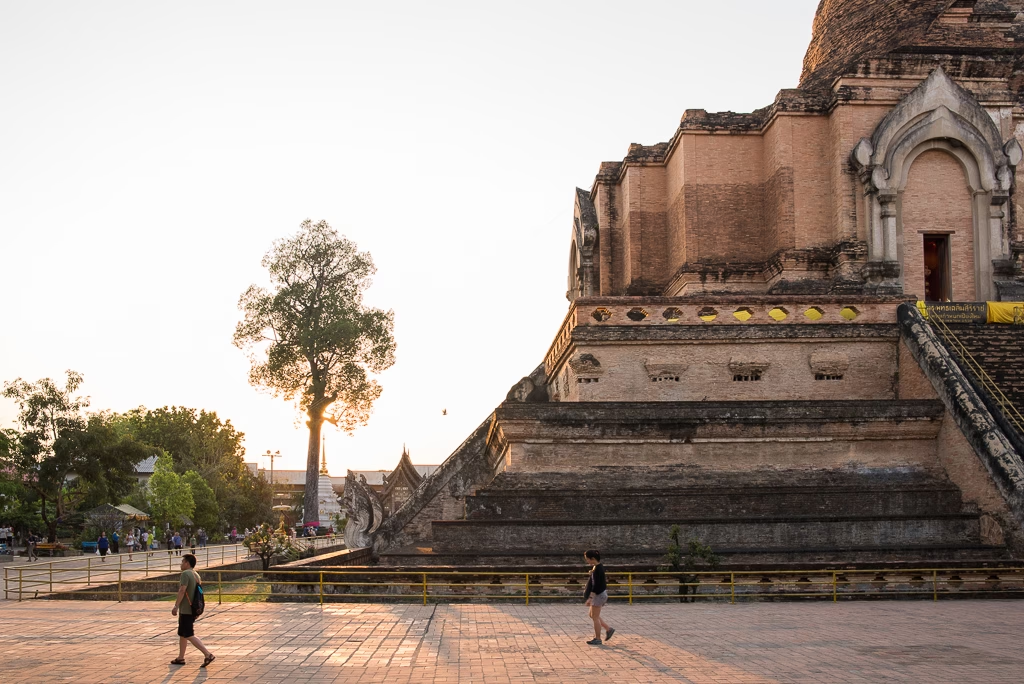
Wat Chedi Luang
An impressive temple in the very heart of the historic center that’s hard to miss – and you definitely shouldn’t skip it. A massive 14th-century stupa (chedi) stands in the middle, surrounded by several smaller temples.
Wat Chedi Luang is also a place where you can chat with local monks or novices and discuss not only Buddhism but also their life in the monasteries or meditation. Thai monks usually speak surprisingly good English and are often very open to sharing even quite intimate details of their lives.

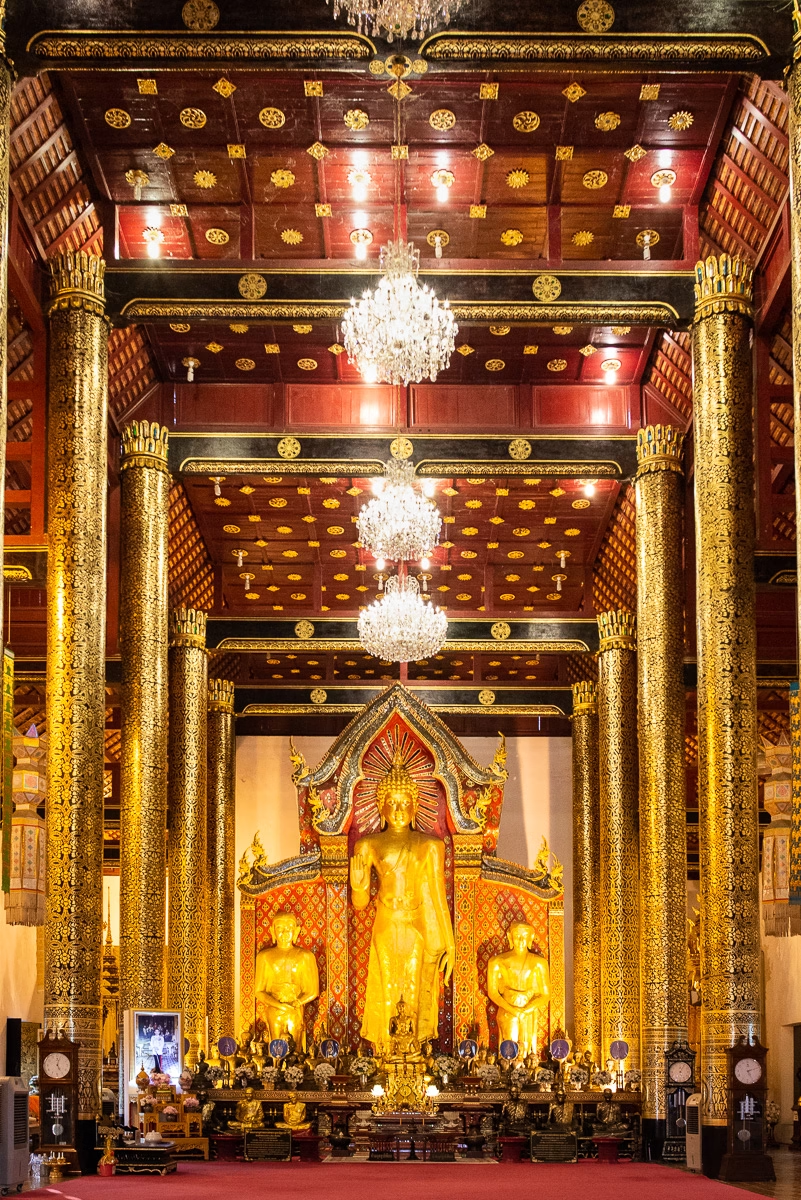
Wat Phra Singh
A beautiful temple in traditional Lanna architecture, an empire that spanned northern Thailand and parts of Laos between the 13th and 18th centuries. You’ll see several large golden Buddha statues within the temple complex.
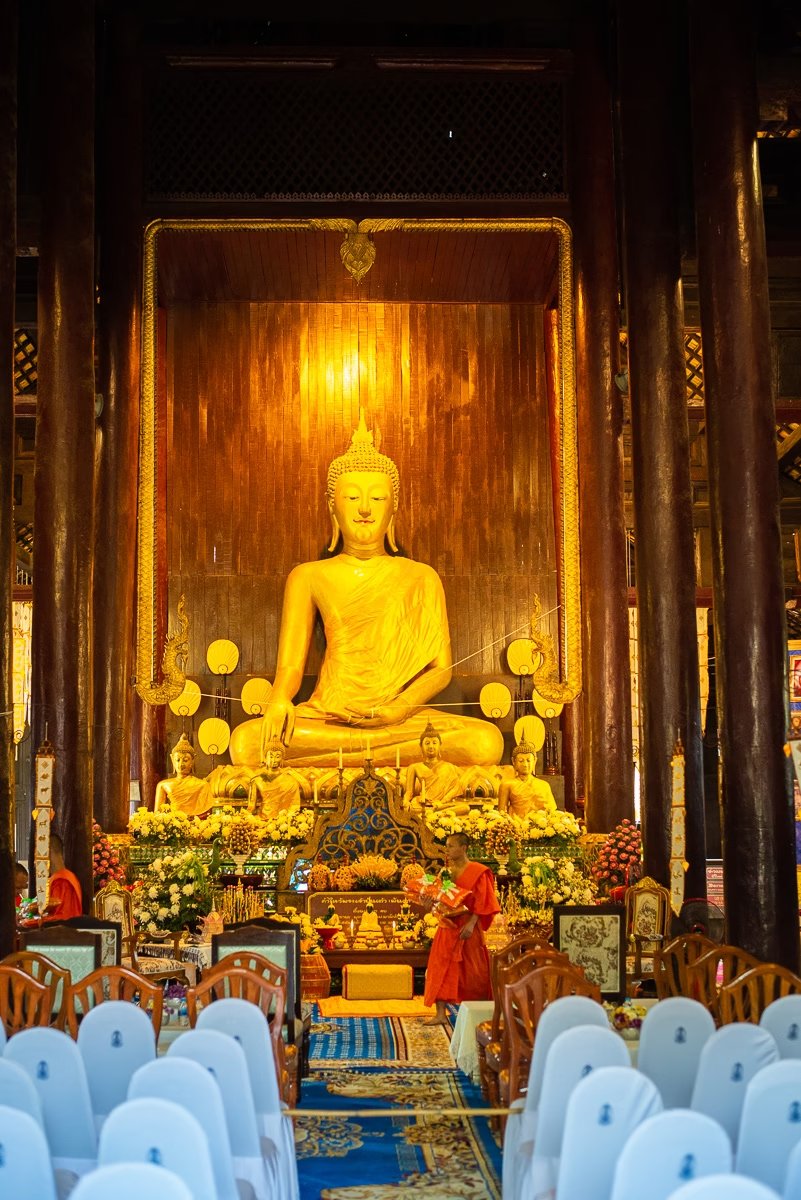
Wat Phan Tao
An inconspicuous teak wood temple near Wat Chedi Luang, and my favorite in all of Chiang Mai. Especially its garden – a brilliant place for rest and contemplation with a unique atmosphere.
I experienced perhaps the most beautiful moments of the Loi Krathong festival there, when it was all wonderfully decorated with lanterns and colorful ribbons. Incense sticks were burning, candles floated on the water, people walked quietly, and an endless stream of lanterns rose into the sky in the background.

Wat Lok Moli
An overlooked temple at the northern end of the historic center. Yet it definitely deserves a visit, if only for the large stupa in its center, which is one of the oldest in the city. Inside the main temple, you’ll find beautifully decorated Buddha statues and colorful frescoes telling stories from Buddha’s life.
Sunday Walking Street
Every Sunday, Ratchadamnoen Street turns into a bustling market where you can find everything from handicrafts and local food to elephant t-shirts and backpacks from China. Ten or more years ago, it was a cool meeting spot; for a while now, unfortunately, it’s just a street that slightly resembles Prague’s Royal Route or other super famous streets. It’s still worth one short visit.

Doi Suthep Mountain and National Park
You can’t miss Doi Suthep. A majestic jungle-covered mountain that towers right above the city to a height of 1,676 meters. For context – the average elevation of Chiang Mai is 310 m above sea level. That’s quite a difference.
Most people head to Doi Suthep just for a short afternoon trip, but the mountain offers activities for several days.
Personally, I highly recommend dedicating at least one full day to it. Start with a walk in the jungle or a stop at the waterfalls, continue with coffee in Doi Pui village and exploring its surroundings, and later in the afternoon move to the Wat Phra That temple.

How to get to Doi Suthep?
You basically have four options, excluding walking for now. The cheapest and most popular way is the red songthaew pick-up. You’ll find them mainly around the North Gate and Chiang Mai Zoo.
Agree on the price with the driver beforehand; it’s usually fixed, but sometimes someone will try it on, and it’s hard to haggle once you’re getting out. You’ll likely be riding with other passengers.
The second and, for me, ideal option is to rent a scooter or a car. It’s much easier to get further than just Wat Phra That and stop wherever you feel like it. You can, of course, hire a regular taxi, but that can get quite expensive.
The last option is an organized tour; they’ll surely advise you at your hotel reception. Alternatively, book online at GetYourGuide.
Sunset from Wat Phra That Doi Suthep
One of the places you should definitely see in Chiang Mai. Besides being a beautiful and very important temple for Buddhists, there’s also a wonderful view of the entire city and the mountains behind it.
The best time to visit is just before sunset, or even better, just after sunrise.
Hmong Doi Pui Village
A mountain village that is home to the Hmong ethnic group. Although everyone here has adapted a lot to tourism, the village still offers a glimpse into the traditional lifestyle and culture of the ethnicity, as well as being a nice spot surrounded by beautiful nature. Visit the local markets, have a coffee, taste some food, and enjoy the relaxed atmosphere.
Trails and treks on Doi Suthep
As I briefly mentioned, you can head out on several types of treks in the Doi Suthep National Park. Whether it’s a fairly demanding hike from the city to the temple, or even to the summit, or just a smaller walk through the jungle.
If you don’t have experience with jungle trekking, I recommend doing your first major trail with a guide, or at least a partner. Fortunately, northern Thailand doesn’t hide too many poisonous or dangerous creatures in its nature, but jungle trips still have many specifics compared to European forests.
You can find an overview of hiking trails on Doi Suthep on the AllTrails portal, for example.
Wat Umong
A unique “tunnel” temple in the forest, somewhat away from all the action in Chiang Mai. Ideal for meditation and relaxation.
Chiang Mai Zoo
Right at the foot of Doi Suthep lies a large zoo park where you can see many species of tropical animals up close. For me, it’s one of the nicest zoos I’ve been to. Ideal for a trip with kids or a break from the city bustle.
Huai Kaeo Waterfall
One of the natural gems of Chiang Mai. You’ll find it just a short distance above Chiang Mai Zoo, reachable by a short walk from the main road to Doi Suthep.
The great thing about it is that you’re still almost in the city, yet fully surrounded by jungle. At the same time, students from the nearby university often come here for a picnic or just to relax. So you have a good chance to strike up a conversation with locals.
Activities and Gastronomy
For me, the biggest charm of Chiang Mai lies in the community of digital nomads and young Thais, and the absolutely amazing food and coffee. I don’t just mean Thai cuisine, but also Korean, Japanese, Chinese… or various modern fusion.
Food
Choose anything from street barbecue and divine local eateries where lunch will cost you about 2 USD, to luxury restaurants worthy of a Michelin star. I most often test places around Nimmanhaeminda Road, so I’ll recommend the most in that area.
However, that doesn’t mean you won’t find plenty of great food in other parts of the city, including the historic center.
Google Maps ratings usually work as a good guide, but it’s even better to follow the locals. Either literally – meaning go where it’s most crowded and doesn’t look like tourists at first glance – or ideally, ask local young hipsters. For example, behind the bar of one of the cafes we’ll get to in a moment.

Personal tips on where to stop for food:
- Nimman
- Cherng Doi Roast Chicken – great grilled chicken for very reasonable money
- J-Yay Organic Vegetables – an “ordinary” street eatery where I’ve eaten at least dozens of great lunches
- ป้าแดง ขนมเส้นในซอย – another divine street eatery on Nimman, great for breakfast or a quick lunch for a few bucks – they have great Khao Soi
- RAWtruckr Nimman – extreme chicken indulgence, aka absolutely brilliant Korean fried chicken that you order by the kilo and eat with plastic gloves. Only open in the evening
- Beast Burger – a lifesaver when you’re fed up with rice
- Maya Kitchen Foodcourt – popular food stalls in the Maya shopping mall, taste whatever smells best to you
- Others
- Tomimaki – very good Japanese restaurant with very favorable prices, far from just sushi
- Jeong Atmosphere – modern Korean-fusion restaurant leaning more towards a fine-dining experience
You can also find interesting tips in the Michelin Guide; it’s definitely not just about expensive fine-dining restaurants.
Coffee
Young Thais in particular are passionate coffee lovers, and if you enjoy specialty coffee, you’ll be in paradise in Chiang Mai. Especially in the area around Nimman Road and lately also around the Ping River. However, you’ll find great places in the historic center and scattered around the city too.
My absolute favorite by far is Nine One Coffee on Nimman Soi 11. The home cafe of one of the first Thai specialty coffee farms.

Other recommended cafes:
- Farm Story House
- Roast8ry Lab
- Diciotto SlowBar Coffee
- Cottontree
- Thor-Phan Coffee Roaster
- Coffee Telling
- Graph Quarter
- Akha Ama and Akha Ama Phrasingh
How to get to a coffee farm in Thailand?
I was lucky enough to visit the Nine One Coffee farm directly, which lies about 50 kilometers from the center of Chiang Mai towards Chiang Rai. The owner himself showed us around, and it was an experience that significantly changed my perception of coffee.
The philosophy of Nine One Coffee is based on long-term sustainability and shows that specialty coffee is one of the ideal crops for growing directly in the northern Thai jungle. At the same time, you’ll see with your own eyes on the farm how much hard work actually goes into your one morning cup.
If you want to get to the farm, ideally contact Nine One Coffee in advance. You can even stay overnight on the farm, and it’s an experience that really appeals to me.
Alternatively, you can try to arrange it directly at their cafe in Chiang Mai. Or take a risk and drive straight to their second cafe near the farm; you’ll find it right on Highway 118 from Chiang Mai to Chiang Rai.
You have the best chance just before the start of the harvest, which is usually in the first half of December.
Another place where you can arrange an excursion is one of the Akha Ama farms.
In the mountains of northern Thailand, however, so-called farm stays are generally increasing – accommodation directly on the farm where they’ll be happy to introduce you to everything they grow. Some of them are coffee farms; look for them directly on Google Maps.
Cooking courses
For me, a great way to better know and understand not only Thai cuisine but also the culture and mentality. There are several courses operating in and around Chiang Mai; you can find them on GetYourGuide, for example.
Book a cooking lesson with locals
Besides the cooking itself, you’ll usually visit a local market to taste and buy fresh ingredients. You’ll also learn which ingredients can be replaced with European alternatives.
If you want to dedicate a larger part of the day to the course, ideally choose one held directly on a farm. You’ll see pineapples, for example, which grow completely differently than most of us imagine.
Markets
The vast majority of Thai markets have the advantage of combining shopping with food. It’s just that in some places you’ll find more food and in others more clothes, jewelry, souvenirs, suitcases, flowers, backpacks, plush toys, or even rice cookers.
You’ll find dozens of markets in and around Chiang Mai, so I’m picking just a few of the most famous and my favorites.
- Chang Phuak Gate Night Market
- A small night market with only food, right by the north gate of the old city. One of those places where I always love to take someone for dinner.
- Chiang Mai Gate Market
- An indoor market at the south gate of the old city. It has the most street food, but you can also buy fresh fruit and vegetables and some clothes.
- Rincome night market
- A night market behind Maya Shopping Mall, good for dinner before sitting on the Maya roof with a beer.
- Chiang Mai University Night Market
- A large night market opposite the university – mainly with food, but not only that.
- Mueang Mai Market
- One of the more traditional indoor markets, primarily with food including meat and fish.
- Warorot Market (Kad Luang)
- A large three-story market with clothes, fruit, vegetables, street food, and household products.
- Chiang Mai Night Bazaar
- A famous night market, for me already too touristy. Not as much as the Sunday Walking Street Market in the historic center, but you definitely have better places to choose from.

Shopping
For shopping lovers, Chiang Mai might not be such a paradise as Bangkok or Singapore, but you’ll still definitely find what you’re looking for.
- Maya Shopping Mall
- The most famous and most accessible modern shopping mall at the intersection of Nimmanahaeminda Road and Suthep Road, less than a kilometer from the historic center. It offers a mix of international and Thai brands, a great food court, a useful Rimping supermarket with “Western” offerings, and a roof with a view and cool bars.
- Nimmanahaeminda Road
- Right opposite Maya, you’ll find one of the most “hip” areas of the entire city. I’ve already mentioned it regarding food, but every year new shops, boutiques, and spaces for small stalls pop up both on the main road and in the side alleys. Primarily for Chinese, Korean, and Thai tourists, which doesn’t mean you won’t find something there too.
- Central Plaza Chiang Mai Airport Mall
- Another large shopping center, this time near the airport. You’ll find more small local shops and fewer international brands than in Maya.
- Central Chiang Mai
- A large shopping mall on the opposite side from the airport – specifically at the turn-off from the city ring road to Chiang Rai. You’ll find a mix of larger stores and established brands with various small shops and stalls, including a food court.
- Historic center
- Of course, you can also shop between visiting individual temples. You’ll find countless different shops in the center.
Thai massages, spa & wellness
If you want to be pampered, relax, recharge, or get worked over (in a good way) during a proper Thai massage, you’re in the right place.
In Chiang Mai, you can choose from many massage salons, as well as wellness & spa hotels and resorts. In most of them, you don’t have to stay there to use their spa – for a fee, of course.
Some of the resorts aren’t right in the city, but the trip to them is well worth it. Here are a few specific tips:
- Fah Lanna Spa
- One of the best spas with Thai massages in Chiang Mai. It specializes in traditional Thai massage, as well as oil massages, foot reflexology, and various other wellness packages.
- Women’s Massage Center by Ex-Prisoners
- Several massage salons where you’ll be massaged at reasonable prices by former female prisoners who received professional training and work as a form of rehabilitation. You’ll be supporting a good cause, and the quality of the massages is among the better ones.
- Zira Spa
- One of the best-rated spas in the city. It combines traditional Thai massage with modern wellness techniques like aromatherapy, hot stones, and therapeutic massages.
- Cheeva Spa
- Another great choice for those looking for a luxury spa experience.
- Siripanna Villa Resort & Spa
- One of the larger spa resorts with professional service and a pleasant environment at a still very reasonable price.
- Veranda High Resort Chiang Mai – MGallery
- A very nice resort at the foot of Doi Suthep, priced in the range over €200 (5,000 CZK) per night, but perfect for a romantic weekend.
- Four Seasons Resort
- A stunning 5* hotel with views of the jungle and rice fields, with a pool and organic spa. Prices start at €750 (nearly 20,000 CZK) per night, but maybe you’re flying for an occasion where you deserve such luxury.
Where to go for a drink in Chiang Mai
As a student and tourist city, Chiang Mai naturally comes alive in the evening. Whether in the center and by the river, or of course on Nimman and near the university. I don’t just mean bar drinking. Live music plays in many places – sometimes very good. Elsewhere you can experience wild Asian karaoke or extra loud disco.
I don’t seek out bars and evening parties much myself; I usually sat with friends in front of the Manung bar, which unfortunately closed. My other favorite is now only accessible to guests of the hotel it belongs to.
From personal experience, I’ll only recommend an evening sit-down with a view on the roof of the Maya shopping mall; you have several bars to choose from there.
But I’ve collected tips from several friends, mainly for bars with good live music and decent drinks:
- The Good View Bar & Restaurant – with a river view, live music, food, and good drinks.
- Boy Blues Bar – one of the most famous bars for musicians, sometimes a bit too touristy.
- The North Gate Jazz Co-Op – another very renowned musician bar.
- Radost Czech-German Pub – in case you need some Czech beer.
Prepare for relatively high prices, especially for foreign alcohol and wine. Thais have both a high tax and import duty on alcohol.
Festivals and events
Besides the spring Songkran festival, I’ve been lucky enough to experience all the main festivals in Chiang Mai. And I’d definitely love to do it again.

Loi Krathong and Yi Peng festivals
Loi Krathong and Yi Peng are two related but distinct festivals. They take place around the 11th full moon of the year, usually in the first half of November.
During the Loi Krathong festival, people release small boats made of banana leaves, known as “krathongs,” decorated with flowers, candles, and a few small banknotes onto the water. This ritual symbolizes washing away bad luck and negative energy.
Yi Peng, characteristic of northern Thailand, is known for releasing thousands of large lanterns. In Chiang Mai, they are mostly released from the Ping River, but they are beautifully visible from almost any elevated spot in the city – like the roof of the Maya Shopping Mall.

Songkran festival
The Thai New Year, celebrated in April, is one of the biggest festivals in all of Thailand. In Chiang Mai, it’s celebrated grandly, with many days full of water battles where people splash each other with water as a symbol of purification and welcoming the new year. Traditional ceremonies in temples, parades, and cultural performances also take place.
Chinese New Year
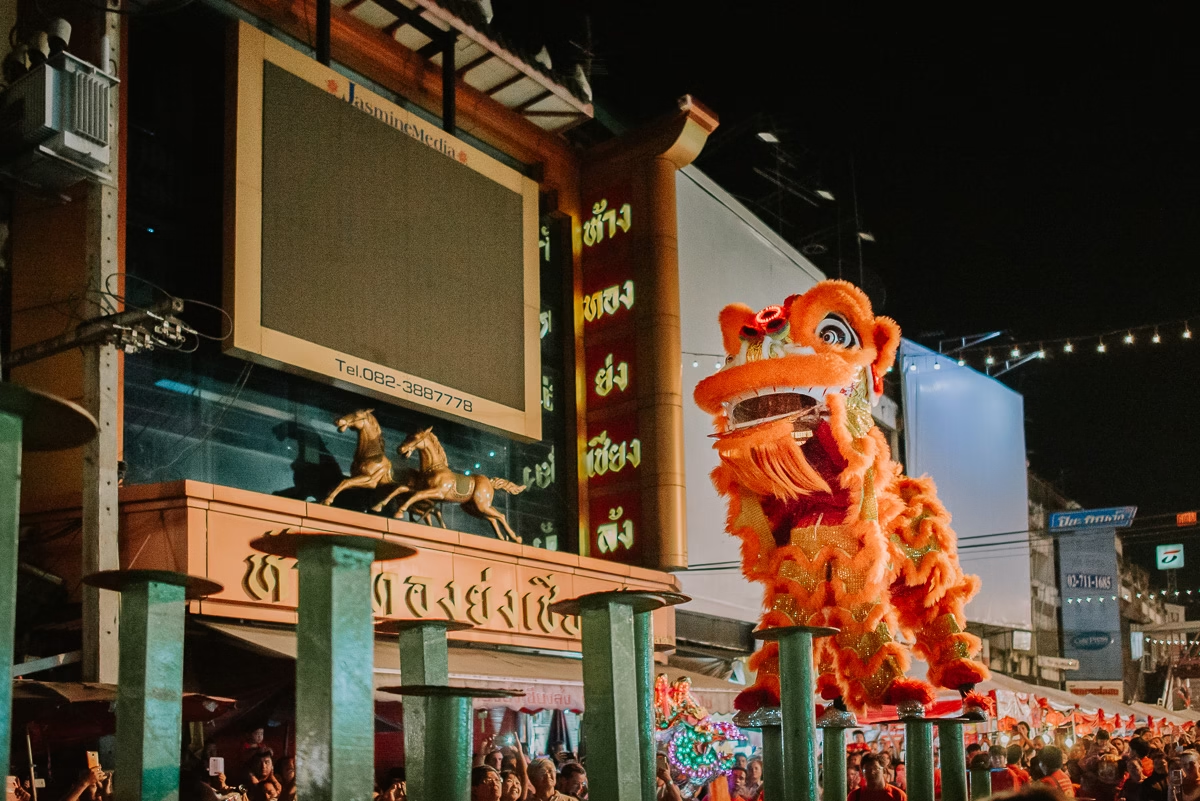
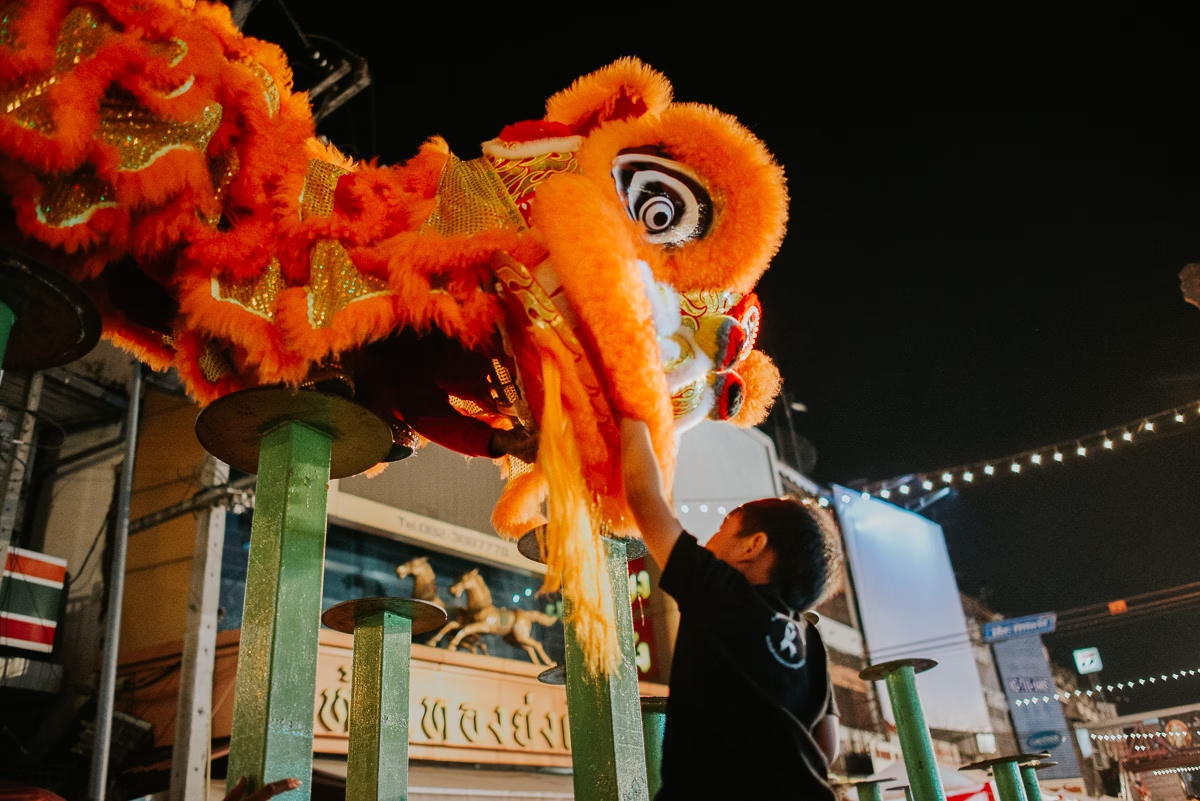
While not a Thai holiday, as in all of Southeast Asia, you’ll find a large Chinese minority in Chiang Mai who celebrate the Chinese New Year in February. And just like everywhere in the world, they celebrate it very pompously and loudly.
The streets fill with red lanterns, the sounds of firecrackers, fireworks, and traditional Chinese music. I definitely recommend attending the main parade, where you’ll see dragon and lion dances, other cultural performances, and then overeat on great food from street stalls.
Where to stay in Chiang Mai
If you plan to have a scooter available for your entire visit, it almost doesn’t matter where you stay. For a short visit, however, I most recommend the old town, or the Nimman area and the area around the Ping River. For a longer visit, it depends a lot on your preferences.
Living in the historic center of Chiang Mai
In the center, you’ll find the most family guesthouses, often at surprisingly friendly prices. But don’t expect any extra luxury in them. Of course, you can find very nice hotels in the center too.
Accommodation tips:
- THEE Kashatharn
- A beautiful hotel at friendly prices. You can get even better prices if you book a room directly through their website, where a discount for longer stays (from three nights up) also awaits you.
- Sylvis Hostel Chiangmai
- A stylish hostel that offers everything that comes in handy on the road – fast internet, laundry, and free parking. But it’s lively here at night, so if you like your peace and are a light sleeper, you’d better look for quieter accommodation.
- All in 1 Guesthouse
- Simple but sufficient accommodation at popular prices right in the heart of the city.
- Rendezvous Classic House SHA Extra Plus
- Stylish accommodation with a pool, a beautiful garden, and free parking for when you miss a bit of luxury on your travels.
- Love CNX Guesthouse
- A very cheap but clean guesthouse that has a fully equipped kitchen.
Living in Nimman and near the university
The most hip part of the city has already been mentioned several times. I looked for all my longer rentals right here; I like the area best. But it’s far from suitable for everyone.
Look for apartments rather than hotels.
Advantages:
- Plenty of the best food, coffee, and drinks within reach.
- Great accessibility to Doi Suthep.
- You can communicate in English almost everywhere.
- A mix of tourists, digital nomads, retirees mainly from Japan, Germany, and Australia, and Thai students.
Disadvantages:
- You have the aircraft takeoff runway right over your head. They have a few hours’ break at night, but if you’re sensitive to noise, you’d better look for housing elsewhere. It’s slightly better in the alleys closer to the center.
- Prices are generally higher than in other parts, especially for short-term rentals.
Accommodation tips:
- The Nimmana
- Nimman & Me
- Another fairly new apartment complex; they officially offer monthly rentals too (most apartments start at three months). Shorter ones can again occasionally be found on Booking or Airbnb.
- Chomdoi House Hotel
- A very cheap, yet actually sufficient option. A discount can be negotiated for weekly rentals, and a very decent one for a month. Just write an email.
- Cochet de Nimman
- Bungalows surrounded by greenery, yet essentially right opposite Maya Shopping Mall, at nice prices.
- Nimman Forest Hostel
- A cheap yet beautiful, modern, and clean hostel. Just be prepared that it will likely be full of Chinese and Koreans.
Other parts of Chiang Mai
The Santitham district to the north and northwest of the old town is also becoming increasingly popular. You’ll find many nice accommodations in the Suthep district between the university and Wat Umong too. Alternatively, between the old town and the railway station – whether right around the Ping River or in the surrounding streets.
Living in nature
You’ll find plenty of beautiful housing – and often at surprisingly low prices – all around the perimeter of Doi Suthep National Park. You can choose between luxury resorts, villas with pools, guesthouses, bungalows, and campsites.
While you’ll need your own transport for trips to the center of Chiang Mai, you’ll be living away from the city bustle, with beautiful nature within reach. Plus, you’ll get out of city traffic significantly faster on trips in some directions.
Accommodation tips:
- Vanilla hill (hill lodge)
- You’ll pay extra for this luxury accommodation in the treetops, but the views you get first thing in the morning are really worth it.
- Proud Phu Fah Hip & Green Resort
- This resort is a perfect sanctuary for those looking for peaceful and luxury accommodation in the middle of nowhere. You have a choice of several villas that differ in the level of services offered.
- Bulunburi Resort
- An affordable resort offering peaceful accommodation in colorful cottages surrounded by rice fields.

Day trips around Chiang Mai
Chiang Mai is the perfect starting point for exploration. I could easily come up with dozens of day trips for you. Whether for a specific destination or just cruising the luxury roads on a motorbike – or even a car. Here are some of the best.

Doi Inthanon – Thailand’s highest mountain
If you were to go on only one longer trip from Chiang Mai, choose the summit of Thailand’s highest mountain and the national park of the same name. You’ll look out from a height of 2,565 meters above sea level, with a comfortable road leading up to about 2,500 meters.
Just below the summit, you’ll see two stupas (pagodas) built in honor of the Thai King and Queen, which are surrounded by beautiful gardens and offer unforgettable views.
My favorite is the short Ang Ka Luang Nature Trail through the mountain cloud forest, which you just run down to from the parking lot below the summit and walk through in about half an hour. You’ll feel like you’re in Fangorn – the Ent forest from Lord of the Rings.

Alternatively, walk the roughly two-hour Kew Mae Pan nature trail, which starts right above the pagodas and leads you to more beautiful views.
Be prepared that it can be quite cold in the entire national park and sometimes the weather is very different from Chiang Mai. In winter, temperatures drop as low as five degrees. At the same time, you can experience a beautiful inversion here.
You can even stay overnight directly in the national park. You’ll find several equipped campsites, glamping, and a few bungalows there.
Just like on Doi Suthep, you can undertake various one-day and multi-day treks on Doi Inthanon, and if you have time and love mountains as much as I do, I highly recommend heading out on at least one.
How to get to Doi Inthanon
The national park lies about 90 km from Chiang Mai and the journey takes between one and two hours. It mostly depends on how quickly you get out of the city and how fast you are in the curves.
As with the trip to Doi Suthep, you have several options. Most often, people head out with an organized tour in an air-conditioned van; you can book it online at GetYourGuide.
Alternatively, ask at your accommodation reception or at any tourist office. Dozens of them head out from Chiang Mai every day. Just watch out for weekends: it can be full.
Book a guided tour
The second – and for me the ideal – option is to rent a motorbike, scooter, or car. The curves on the way through the national park are among the best I’ve ever driven. At the same time, you’ll get to places where organized tours won’t take you, which applies to most of the nicest waterfalls too.
You can also enjoy a huge advantage at the pagodas – you have the chance to arrive before all the tours or leave after them. Sometime around half past four in the afternoon, everyone jumps into the vans to make it back for dinner at their accommodation. You thus have the best views almost to yourself.
The third and usually cheapest option is to use the yellow covered songthaew pick-up, which I don’t recommend due to the distance and discomfort.
Entrance fee to Doi Inthanon National Park:
- Adults: 300 THB.
- Children: 150 THB.
- Cars: 30 THB.
- Motorbikes: 20 THB.
You pay the entrance fee directly at the national park gate.
The most beautiful waterfalls
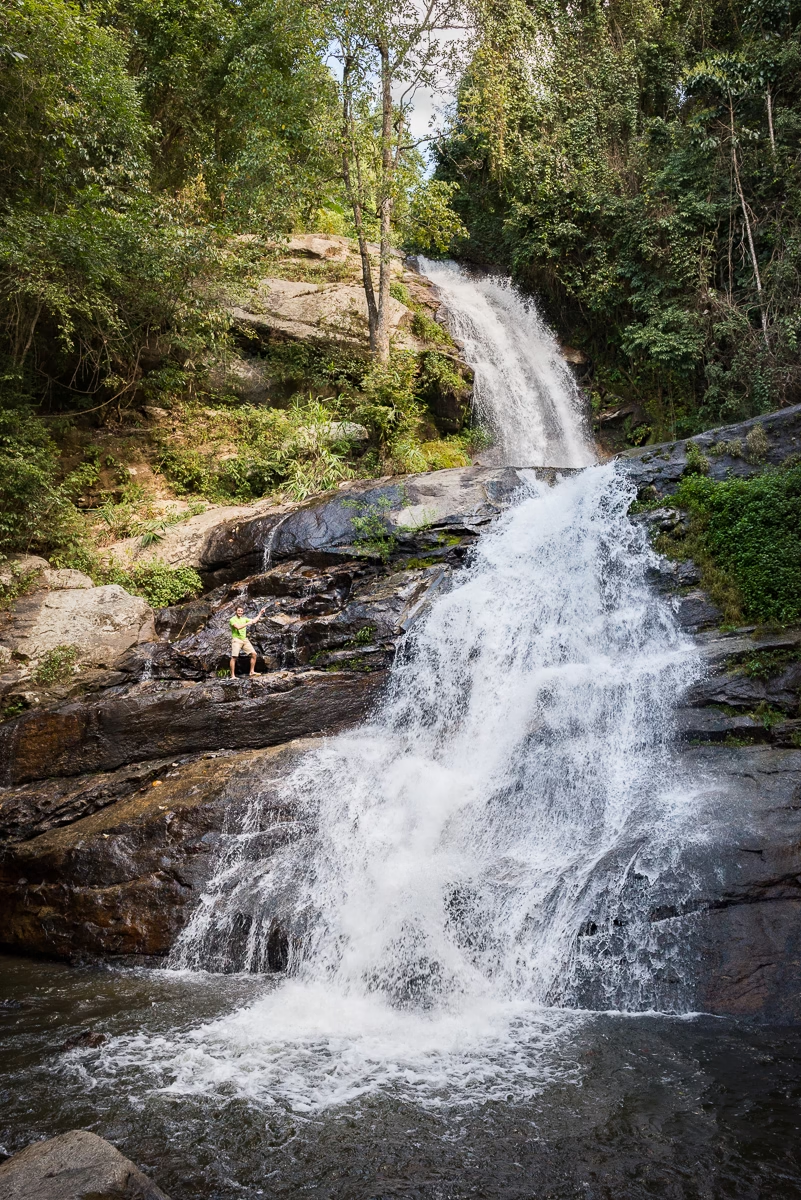
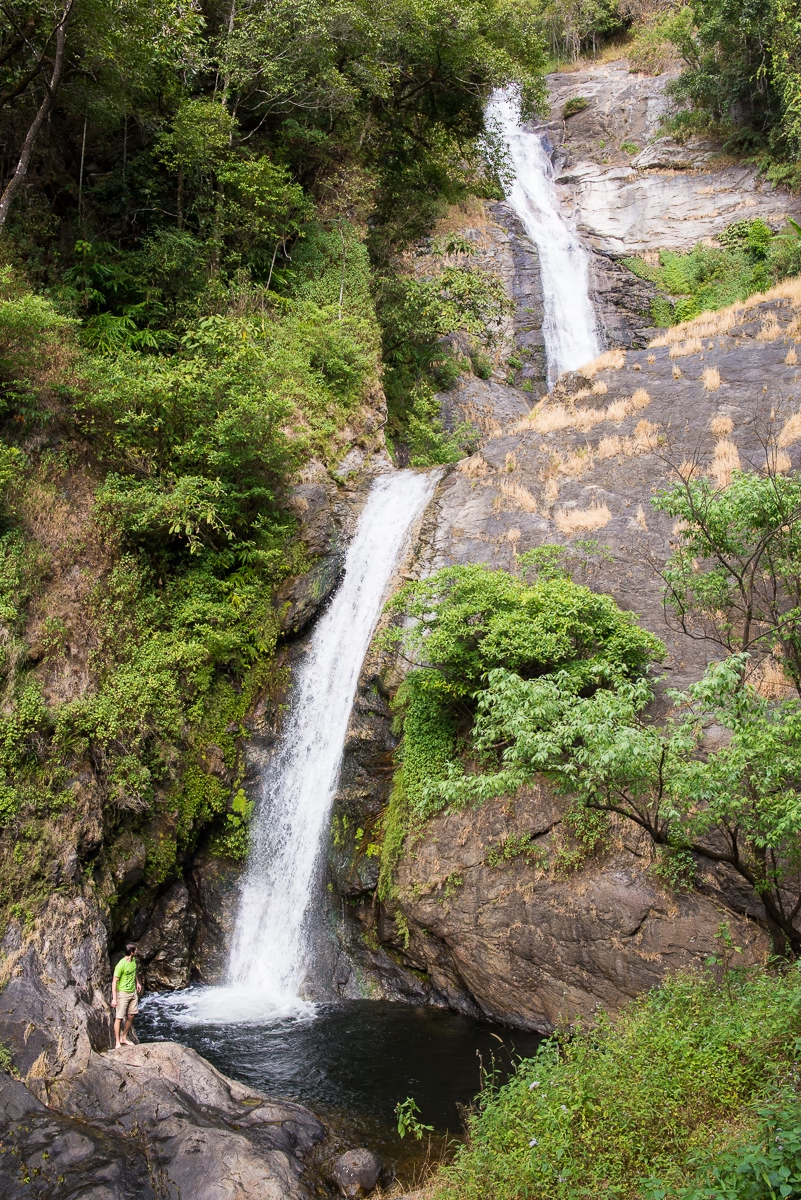
Most tours stop at Mae Klang waterfall on the very edge of the national park. Or a bit further at Wachirathan waterfall right next to the main road. They are worth a look, yes, but further inside the park, much nicer ones await you. Plus, often completely without people.
- Mae Ya
- One of the largest and certainly most beautiful waterfalls in Thailand, with a reported height of 280 meters.
- Mae Pan
- For me, probably the nicest waterfall in the whole park. Maybe also because, thanks to its location off the main road and the need for a proper walk to it, you can have it all to yourself even in high season and take a dip in it.
- Siriphum
- A majestic waterfall on a steep hill covered in jungle. You’ll see it from afar.
Scenic loop via Samoeng
A beautiful loop around Doi Suthep that takes you from the city into beautiful nature and to plenty of divine views in no time. Head out on a scooter or motorbike, or even a bicycle.
Stop at the Mae Sa waterfall, in the smaller Ma Sap karst cave, for lunch at one of the local eateries in the town of Samoeng, and for coffee at Cypress Lanes, for example.

Chiang Dao
For me, one of the nicest places in all of Thailand and definitely the nicest mountain. I love coming back here, even to the exact same spots.
The most famous is the local Wat Tham cave temple in a large karst cave with stalactites. A bit higher on the foot of the mountain, also visit the Wat Tham Pha Plong rock temple with a shrine in a smaller cave and beautiful views. Just be prepared for a serious load of stairs.
I’ve been trying to get myself to hike to the summit of Doi Chiang Dao at 2,175 meters for years. Ideally for both sunset and sunrise – you can actually stay overnight in a camp just below the summit. Unfortunately (unlike many other Thai camps), you need your own tent and equipment, and also a permit.

The town itself has a very relaxed atmosphere, and you can easily stay here for a day or two. Stop for a great coffee at Hoklhong Cafe, head for a walk among the rice fields with a view of the mountain, and soak your feet in the hot springs.
How to get to Chiang Dao?
A fairly modern public bus runs here from Chiang Mai every hour. It departs from Chiang Mai Bus Terminal 1 (Chang Phueak Bus Terminal), the journey takes 1.5 to 2 hours and costs around 50 THB. You buy the ticket directly on the bus.
Another option is, of course, a trip by car or scooter, or as part of an organized tour.
Mae Kampong
A beautiful tourist village deep in the jungle in the mountains west of Chiang Mai. Touristy in this case means a positive thing, though – mainly because it’s primarily Thai tourists.
Head to the local waterfall and to the Kew Fin summit with a view of more and more mountains.
Thep Sadet
An area in the mountains just north of Mae Kampong. You’ll find several ziplines through the jungle and other adrenaline-filled experiences here. There’s also great coffee, as several coffee farms are located nearby. Consider stopping at The First Valley – Coffee Academy.
Alternatively, head out on a longer trek into the mountains, such as the Doi Lanka Noi Trail; the path is clearly visible on Mapy.com.
If you’re riding a motorcycle or scooter around Chiang Mai, definitely head to Thep Sadet. Roads 1252 and 4063, which make for a relaxed one-day loop, are among the best I’ve ridden in the immediate vicinity of the city.
More tips on where to go around Chiang Mai
I don’t want to completely overwhelm you, so I’m just adding a selection of interesting places and activities in bullet points. You can find more information about them on Google Maps, or ask at tourist offices. For transport to almost all the places mentioned below, you’ll need a car, scooter, or motorcycle.
Water parks and amusement parks
- Grand Canyon
- The Sun Water Park
- Pong Yaeng
Adventure park with a mountain coaster and zipline.
Nature and national parks
- Doi Khun Tan
One of the larger mountain parks with vast jungle and waterfalls. The railway line to Bangkok runs through it. - Pha Singh Leaw
A small park with unique sandstone natural formations. - Phachor (Mae Wang National Park)
Similarly unusual sandstone formations. - Golf
- If you’re a fan of the sport, you’ll find several large golf courses around Chiang Mai.
- Queen Sirikit Botanic Garden
- A vast and beautifully landscaped garden with greenhouses.
- Siam Insect Zoo
- A small museum with preserved and live exotic insects, butterflies, and reptiles.
What to avoid
Unfortunately, I have to mention a few places that are advertised on every corner in the old town, but I strongly recommend not visiting them. Mainly for ethical reasons.
Tiger Kingdom
A center that lures you in with the promise of cuddling a tiger and taking a photo. Even with a white tiger. Or a lion. For animals to cooperate like this and not tear you to pieces, they must be drugged with medication to calm and completely dull them. Furthermore, they live in very inadequate conditions.
Karen Long Neck Village
Literally a human zoo. You can find several Karen ethnic villages in northern Thailand where women gradually put gold rings around their necks to lengthen them. These are refugees from Burma who cannot work legally in Thailand, so they offer their handicrafts and services to tourists. So far, so good.
At the most easily accessible villages—one is right next to Tiger Kingdom near Chiang Mai—the whole thing unfortunately operates quite sadly. Their ethnic inhabitants still live in very poor conditions, and it’s mainly those who bring tourists to the village who profit from the tourism.
If you want to get to know this ethnic group more ethically and closely, look for villages deep in the mountains where they’ll be happy to let you stay overnight for a small fee. Staying in the village for a while, eating, and sleeping there is absolutely essential for truly supporting the locals.
For example, Thailand Hilltribe Holidays offers the chance to stay in ethnic villages with locals.
Where to see elephants around Chiang Mai
An experience with elephants is one of those things you shouldn’t miss in Thailand. But you can choose an experience with elephants and… suffering for elephants. Unfortunately, you can still find plenty of places across northern Thailand that offer elephant rides. They often hide behind the facade of a “rescue station” and other supposed charitable purposes. Don’t be fooled; it’s a dirty business that hurts elephants very, very much.
With “rescue stations” and “eco-centers” that don’t offer rides but are still run purely for profit from tourism, it’s a bit more complicated. I recommend reading more on the subject, for example on my friend Ivana Grešlíková’s blog.

You’ll find most of the best rescue stations a bit further from the city—if only because they need plenty of space for the elephants. Several are located about an hour’s drive away, and some are even further. Reservations often need to be made several weeks in advance. Alternatively, you can sign up as a volunteer and stay with the elephants for a month.
Recommended ethical elephant centers:
- Elephant Nature Park
- Elephant Freedom Project
- Into The Wild Elephant Camp
- Happy Elephant Home
- BEES – Burm & Emily’s Elephant Sanctuary
Where to next in Northern Thailand?
Planning to spend more time in the region? Good choice.
We are gradually preparing detailed guides for other popular destinations and also planning tips for beautiful places that foreign tourism has so far avoided.
- Pai
- Chiang Rai
- Mae Hong Son
- Other trips in Northern Thailand