This post is also available in:


Porto, Portugal’s second-largest city, won my heart during my very first visit. Its relaxed atmosphere reminds me a lot of my home city Brno, just with the added bonus of the ocean. I then came back many times both to visit friends and for business.
That’s why I’m bringing you a very detailed and practical guide, including a few hidden tips on places and establishments I’ve discovered.
You’ll find out the best time to go, where to stay, what to see not only in Porto but also in the surrounding area, where to eat great food, and how much the whole trip will cost you.
Tip: Pairing Porto with the capital? Don’t miss our complete Lisbon travel guide.

Why visit Porto?
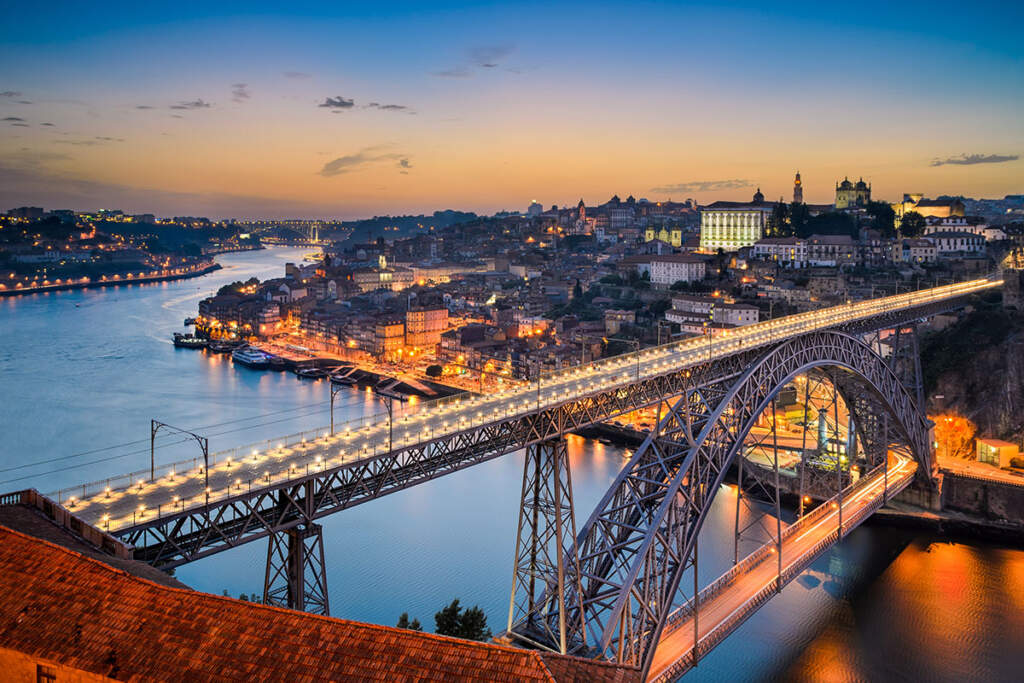
I spent several months in Portugal, and Porto—also known as Oporto in English—is the place that grew on me the most. Its cobbled streets on the steep slope above the river, houses with tiled facades, the panorama of the Dom Luís I Bridge, morning mists from the ocean, beautiful gardens and parks, luxury sunsets, great food, coffee, and especially wine. And I don’t just mean Port wine.
At the same time, I really like the local people. I’ve experienced this in many countries: the residents of the second-largest city try their hardest to prove they are better than the largest one. Or at least that they deserve a place on the map. That’s probably why it feels so much like Brno.

Architecture, history, and an unforgettable atmosphere
Ribeira—Porto’s historic center—is a UNESCO World Heritage site, and it’s worth flying to Porto for that alone. You can admire traditional Portuguese azulejos tiles on the building facades, visit the Sé do Porto Cathedral, or climb to the top of the Clérigos Tower to enjoy the view of the city.
Or just wander through the streets, discovering hidden corners and the diverse architecture of churches, palaces, and ordinary houses, occasionally stopping to listen to street musicians or hopping on a historic tram for a short ride. A big advantage of Porto is that you can comfortably walk through the entire center on foot.

Rich cultural and gastro scene
Culture in Porto is as diverse as its architecture. Lovers of museums and galleries—whether featuring traditional or contemporary art—will definitely find something they enjoy. Especially in spring and autumn, there’s a festival happening almost all the time.
Porto is also a foodie paradise. Various small bistros, affordable fine-dining restaurants, and rising stars of the European gastro scene compete for the recognition and favor of guests. You’ll also come across some very interesting and great bars.

Wine cellars and vineyards in the Douro Valley
The cellars where Port wine matures are definitely worth a visit as well. With a tasting, of course. But an even better experience is a trip upstream the Douro River to the wineries where the wine actually originates.

Ocean, beaches, and surfing
Porto is located on the Atlantic coast and offers both ideal conditions for surfing and surprisingly beautiful beaches. Whether we’re talking about the urban Matosinhos beach or the remote sand dunes in the Parque Natural do Litoral Norte reserve.
Are you tempted enough? Let’s get to the specific tips.

What to see, visit, and experience in Porto
I believe everyone will find something they enjoy in Porto. Whether you always want to see everything from the guidebook, or you just prefer sitting over a cup of coffee or a glass of wine in a local café and watching life go by.
TOP 10 places and activities in Porto
Below you will find a massive load of tips. If you primarily need to get oriented quickly and pick the best, I have a quick list for you. All points link to descriptions further down in the text.
- Palácio de Cristal Parks and Jardim dos Sentimentos
- Wine cellars or the WOW – World of Wine complex
- Sé do Porto Cathedral
- Cais da Ribeira Waterfront
- Clérigos Tower
- Ponte Luís I
- Livraria Lello – the most beautiful bookstore in the world
- Igreja do Carmo Twin Church
- Sunset on one of the beaches
- Trip to the Douro Valley

UNESCO landmarks and historic architecture in Porto
Historic architecture, along with wine, will probably be the first thing you associate with Porto. Let’s start there.
Ribeira – Porto’s historic center
The heart of the city and its oldest part – Ribeira. It is listed as a UNESCO World Heritage site. This is where you’ll find the most landmarks and most of the narrow romantic streets. Take your time just wandering through the streets and occasionally peeking into the most tucked-away alleys that might lead nowhere, but still hold the true spirit of Porto.

Sé do Porto Cathedral and the Episcopal Palace
The majestic Romanesque cathedral from the 12th century stands on a hill above the river and is one of the oldest and most significant buildings in Porto. You definitely won’t miss it. The courtyard offers a beautiful view of other parts of Porto’s center and the Douro River.

Clérigos Church and Tower (Igréja e Torre dos Clérigos)
A Baroque church with a 75-meter-high tower, which many consider the symbol of Porto. You’ll get a bit out of breath climbing the tower, but the reward will be the best panoramic view of the city.
I also really like the adjacent Jardim da Cordoaria park with its plane tree alley and the final stop of the historic tram.

Palácio da Bolsa
A former stock exchange palace from the 19th century, built in neoclassical style. It is mainly known for its magnificently decorated interior, especially the Arabian Hall.
I’ve never been inside myself, but for all lovers of historic architecture, the tour is supposedly well worth it. Just be sure to make a reservation in advance.
Livraria Lello – the most beautiful bookstore in the world
A famous bookstore that was allegedly one of the inspirations for J.K. Rowling when writing Harry Potter. It’s true that a truly beautiful interior awaits you, but at the same time, be prepared for a real squeeze. It’s the connection to Harry Potter that attracts crowds of people here.
There is an entry fee, but you can use the value of the ticket as a voucher for a book purchase. I recommend buying the ticket online in advance; the cheapest option costs €8. For double that, you’ll be guaranteed priority entry without queuing (which is very useful in high season).

Ponte Luís I (Dom Luís I Bridge)
An iconic double-deck steel arch bridge that must be in almost every photo of Porto’s panorama. Unless, of course, you’re taking a photo of the city from it.
It connects the historic center with the Vila Nova de Gaia district. The local metro-tram runs on its upper deck, while a road runs on the lower one. You can walk across both on foot – and the view from the upper deck never gets old.

Igreja do Carmo Twin Church
A Baroque church with a magnificent tiled facade, right at the terminus of the historic tram. Moreover, upon closer inspection, you’ll find that it is actually two interconnected churches.
Church of Saint Francis (Igreja de São Francisco)
A Gothic church right below the Bolsa Palace. It is striking mainly due to its highly decorated (even over-decorated) Baroque interior, carved mostly from wood. Part of the church complex also includes access to the local catacombs.

Mosteiro da Serra do Pilar Monastery
A large complex opposite the historic center, reachable via the upper deck of Ponte Luís I. It is a Renaissance fortified monastery that, among other things, played an important role during the siege of Porto.
Directly in its underground, you’ll find some of the extensive wine cellars that we’ll get to in a moment.

Sao Bento Station
I have a bit of a thing for railway stations; generally, they are much more interesting places than they seem at first glance. Hand on heart – who among you has properly looked at the original Fanta building of Prague’s main station after its renovation? It’s beautiful!
Porto Sao Bento is not nearly as majestic, but it has its own specific atmosphere, tile mosaics and paintings, and when the trains disappear into the tunnel during the morning mist, the heart of a romantic photographer rejoices.
Moreover, you can stay directly at the station in a stylish hostel with a view of the trains.
Maria Pia Bridge
Another unique steel bridge, just a bit further upstream. This time it’s a purely railway bridge from 1877, designed directly by Gustave Eiffel. Unfortunately, you can no longer ride a train across it, but it definitely belongs to the city’s historical heritage. You can see it well, for example, from the Miradouro das Fontainhas viewpoint.

Port wine and its history
Sweet, dense Port wine actually comes from the beautiful wine region around the Douro River. However, it reached the whole world through the port in Porto, which is why it bears its name.
Vinho do Porto is created by a process called fortification, which involves adding clear grape spirit at the moment when fermentation needs to be stopped. Unlike regular wines, it has not only a higher proportion of residual sugar but also alcohol – usually between 18 and 22%.
The slopes around the Douro River are still riddled with cellars in Porto where Port wine matured and from where it set off by sea to its customers. Most of them are no longer actively used, but you can visit quite a few, learn more about Port wine, and especially taste its different types.

I’ve only been to the Burmester winery myself, whose cellars run under the Mosteiro da Serra do Pilar monastery. It was great!
I’ve also heard good things about the Cálem, Taylor’s, Ferreira, and Poças wineries. I’ve been planning to visit the World of Wine (WOW) complex of museums, cellars, and restaurants for a long time; it’s supposedly well worth a visit.

I recommend making a reservation online in advance for all cellars during the high season; tours in English tend to be hopelessly sold out. You can find tours with tastings for almost all of the above-mentioned cellars on the GetYourGuide portal.
Modern art, architecture, and culture
So we don’t just stick to landmarks and history, I also have a few tips for galleries and modern architecture.
Serralves Museum
A museum of contemporary art in a minimalist villa, surrounded by magnificent gardens and a park. Its collections include works by artists such as Andy Warhol, Joan Miró, Keith Haring, Steve McQueen, and Gerhard Richter. In addition to the permanent exhibition, they also host temporary exhibitions, concerts, and other cultural events.
Casa da Música
One of the most significant modern buildings in Porto, it serves mainly as a concert and cultural center.
Porto Cruise Terminal (South Terminal)
A famous modern building in the port of Leixões; you’ll see it, among other places, from Matosinhos beach.

Best Beaches near Porto, Portugal
Few people imagine Porto as a typical beach destination. And that’s a good thing. I would also rather head to the Algarve, for example, purely for beaches.
But that doesn’t mean the beaches in the immediate vicinity of Porto aren’t worth a visit, a drink with a book in hand, a few hours on a surfboard, or even a swim. Just a short trip by train, metro, or bus separates you from beautiful sandy beaches with a relaxed atmosphere and usually great bars and restaurants.

Definitely expect the weather here to be unpredictable. In February, you can sometimes easily spend the whole day on the beach in shorts, while in July, there are days when it’s windy and pouring with rain.
Praia de Matosinhos
A very popular wide sandy beach, easily accessible by the blue metro line from the city center, or by buses 500, 501, and 502. You can swim and surf here, but you won’t enjoy much peace or romance in high season.
Beaches in Foz do Douro
You can also find several smaller beaches right at the mouth of the Douro River in the Foz do Douro district. No miracles, but it’s worth a walk and a drink at sunset. You can get here either by historic tram or by bus 500.
Praia da Sereia and Praia de Salgueiros
Quiet beaches a short distance south of Porto, ideal for a walk or a run with an ocean view. I’m happy to recommend the local restaurant and bar Brasão Salgueiros.
Praia de Miramar and Praia do Senhor da Pedra
Probably the nicest beaches in the immediate vicinity of Porto. Don’t expect any fancy restaurants or party bars; people come here mainly for peace, sports, and beautiful scenery.
You can get here by local train from Campanha station. Get off at the Miramar stop, or a bit further in the fishing village of Aguda, from where you can take a nice walk along the ocean.

Beaches in Espinho
Even further south, still on the train line from Porto-Campanha to Aveiro and Lisbon, you’ll find the slightly livelier resort of Espinho, where you could easily spend several days. The beaches here serve for swimming and sunbathing as well as surfing – from complete beginners to advanced.
Beaches in Vila do Conde and Povoa de Varzim
North of Porto, you can visit two neighboring resorts – the quieter town of Vila do Conde with its historic center and the more modern and livelier Povoa de Varzim.
Both can be reached by the red metro line B, or even better, the express Bx. Even so, be prepared for a lengthy, roughly hour-long journey. Fortunately, the metro runs above ground for most of the route.

Parks, promenades, and the best views
Right after wandering through the streets with occasional stops for coffee or a porto tonico – white Port with tonic – what I like most about Porto are its beautiful parks and viewpoints. Here are the nicest of them.
Cais da Ribeira Waterfront and Diogo Leite Promenade
An evening walk along the banks of the Douro River and a glass of wine in one of the local wine bars or bars is definitely a must. I really recommend visiting both banks; the historic Cais da Ribeira has a much nicer atmosphere, but on the other side, a beautiful view of the city awaits you. You can cross between them via the lower deck of the Dom Luís I Bridge.

Palácio de Cristal Parks and Jardim dos Sentimentos
For me, one of the most beautiful places in all of Porto. An extensive terraced park and gardens with beautiful views of the river and the city, with fountains, peacocks, and plenty of spots for a small picnic or sitting. In the park, you’ll also find the circular Super Bock Arena, where they’ll let you on the roof for a fee – they promise a view, but I haven’t been there and I think it won’t be much better than from the gardens.

Praia das Pastoras and promenade in Foz do Douro
The oceanfront promenade in the Foz do Douro area is one of the best places to enjoy the sunset. A view of the lighthouse and ships sailing from the ocean to the river and from the river to the ocean awaits you.
You can get here by historic tram along the riverbank – perhaps directly from the following park, which you’ll find at its other terminus.
Miradouro das Fontainhas
A viewpoint above the river from where you can beautifully see both iconic steel bridges and the Mosteiro da Serra do Polar monastery. Another great place to head for the sunset.
Jardim da Cordoaria
A very nice park with a plane tree alley right next to the main building of the local university and the Clérigos Tower. You can continue straight into the neighboring terraced gardens of Parque das Virtudes, which lead all the way down to the river.

Other interesting places to visit
I’m adding a few more places and activities. They might not exactly be “classic” tourist destinations, but you should know about them.
The Chocolate Story Museum
An interactive museum where you’ll learn everything about cocoa cultivation, its journey to Europe, and chocolate production. Of course, a small tasting awaits you as well. The museum is part of the WOW complex.
Street art in Porto
Lovers of murals, graffiti, and all sorts of street installations will find plenty to enjoy in Porto. For me, it’s one of the reasons why I love aimlessly wandering the city streets. I recommend joining one of the walking tours, or looking for a street art map.
Boat trip on the Douro River
A roughly hour-long cruise will take you past six significant bridges, and you’ll see a large part of the main local landmarks from the boat. Some companies offer lunch or dinner on board, and there are also bar party boats. An “ordinary” cruise will cost you €15 to €20 per person.
Rotunda da Anémona
A unique installation near Praia de Matosinhos. It’s meant to resemble fishing nets and changes shape in the wind.

Discover Porto with locals
The truly non-traditional places are best discovered with locals.
Porto Food Guide: What to Eat and Best Restaurants
As I mentioned at the beginning, Porto is a great gastronomic destination, and you can enjoy it quite a bit even on a smaller budget. I recommend not sticking to traditional Portuguese cuisine for too long. Taste what it offers, and then rather choose various fusion bistros, Brazilian restaurants, or tapas (petiscos).
What to taste from traditional Portuguese dishes
Francesinha
A toasted sandwich with several different types of meat, covered in cheese and smothered in a hot brown sauce. Usually served with fries or chips (I really mean potato chips, commonly from a bag). Locals are extra proud of it… but between us, don’t expect any miracle.
Other sandwiches
You’ll find “sandwich shops” on every corner. And unlike the francesinha, you can buy truly good sandwiches in them for either a snack or even a small lunch. Try, for example, pernil com queijo – a sandwich with pulled pork and melted cheese. Or a local hot dog with cheese and a slightly spicy sauce, they call it cachorrinhos.
Bacalhau (cod)
Bacalhau is the national dish of Portugal, and even in Porto, you can taste it in countless variations: from bacalhau à brás (cod with eggs and potatoes) to bacalhau com natas (baked cod with cream).
Fresh fish and seafood
When my colleagues and I aren’t discovering modern cuisine or stuffing ourselves to bursting with meat from a Brazilian restaurant, we actually prefer going for an “ordinary” grilled fish with fresh salad and bread. I recommend choosing restaurants focused directly on fish – they are called marisqueiras, and you can be sure the fish is fresh.
Gambas a l’ajilo (garlic prawns)
A simple dish that I could easily have every day. Sautéed prawns with garlic in olive oil or butter, with a few fresh herbs and a few drops of lemon. The best part, of course, is mopping up the plate with fresh bread at the end.
Arroz de marisco
Rice in a strong seafood broth, usually with mussels, sometimes also prawns or crab meat.
Tripas à moda do Porto
A stewed mixture of beef tripe, beans, and various types of meat and sausages. Surprisingly, it tastes a lot better than it sounds and looks.
Pastel de nata
An extra addictive Portuguese puff pastry dessert with a custard filling. Locals most often have it standing up with an espresso and often a small glass of Port. Even in the morning; they don’t skimp on wine here. And because it’s a truly typical Porto delicacy, you’ll find dozens of Pastel de nata workshops in English across the city.
Porto tonico
A refreshing drink that might sound strange at first, but give it a chance. It’s great! It’s mixed from white Port wine and tonic.

Best restaurants
The center of Porto, in particular, unfortunately suffers from a similar ailment as most tourist cities: many restaurants that look nice at first glance are actually rubbish. That’s why it’s useful to know where to go, or rather to avoid the center entirely for larger meals.
Unfortunately, I haven’t had the chance to test many high-end and fine-dining restaurants yet, but I plan to fix that gradually. Porto has a lot to offer in this segment as well.
Taberna Cais das Pedras
A classic Portuguese family restaurant on the riverbank. We had fish, stewed meat, grilled meat, garlic prawns, dessert, and a few glasses of local white wine. Everything tasted great and didn’t cost much.
maps.app.goo.gl/vKXqfEzzTkCDtwNa9

Chama
A modern fusion restaurant that, in my opinion, successfully attempts to take traditional Portuguese cuisine further.
maps.app.goo.gl/s8ritSLkrJFLDhBG6
The Door
Another modern restaurant that tries to take the best of Portuguese cuisine, add inspiration from around the world, and wrap it all into affordable, very satisfying dishes.
maps.app.goo.gl/vRE4UZD4BPtq1ACVA
P4 na Baixa
The last in the series of fusion restaurants; I especially enjoyed their great playful appetizers. The grilled meat as a main course certainly didn’t disappoint either.
maps.app.goo.gl/YShqu3gxm7E1NcPj8

Porcão Gourmet
A great Brazilian restaurant where they gradually serve you various types of grilled and roasted meat. Leave enough room in your stomach.
maps.app.goo.gl/dkPK9Z96WCEErbj17
Bota&Bira
Another very meat-oriented restaurant, this time closer to the center and more in the Portuguese style. Great value for money.
maps.app.goo.gl/fkingEGUyHRip7ndA
Shiko
Sushi is very popular in Porto, and you’ll rarely go wrong. Shiko was recommended to me by locals – and I didn’t regret it. Their gyoza dumplings, in particular, are great. Just be sure to make a reservation, ideally a few days in advance. Alternatively, visit one of the Subenshi restaurants.
maps.app.goo.gl/SMPdrWGsg4yh5Win6
Churrasqueira kinay
Grilled chicken and fish are generally among the best things in Portugal. In Porto, too, you’ll find many places where they grill over charcoal, but you have to know a bit where to look and usually head outside the center. Churrasqueira kinay is located on the edge of the Bolhão district, and you can eat great food here for a few euros.
maps.app.goo.gl/Kkys65JarySFjuuB7
A Cozinha do Manel
One of the places to taste traditional Portuguese cuisine, especially various roasted and stewed meats and cod (bacalhau) dishes.
maps.app.goo.gl/ywL4v1Yk2a4TYhoPA
Casa dos Presuntos “Xico”
A classic eatery – have one of the sandwiches with cured ham, or a few small dishes as tapas.
maps.app.goo.gl/LXvV2NuPCi6eK3H26
Sempr’Assar II
A great fish and seafood restaurant in Matosinhos. Be sure to ask for a wine recommendation and ideally taste some of the appetizers as well. Prepare €35–60 per person.
maps.app.goo.gl/PDs3ugPmNrBnWw5Q7
Where to go for good coffee and desserts
Coffee culture in Portugal is generally among the best in Europe. Whether we’re talking about an “ordinary” espresso in a random corner bar or modern cafés with specialty coffee. Portuguese desserts are also world-renowned, and even I, as someone who isn’t a big fan of sweets, have a hard time not spending all my time in a café stuffing myself with one pastel after another.
So Coffee Roasters
A specialty roastery that operates several cafés in Porto. I’m not picking any specific one on purpose; they are all fine.
Fábrica Coffee Roasters
A small chain of cafés from the Lisbon roastery of the same name. Here, too, you are guaranteed great specialty coffee.
C’alma Coffee Room
A slightly tucked-away, peaceful café in a historic building near São Bento station. Here, a perfect cup of espresso or filter coffee really comes first.
maps.app.goo.gl/vkSKMN6jwGAka2ir7
Majestic Café
A historic café in a beautiful Art Nouveau interior, located right across from C’alma Coffee Room. Don’t expect anything extra from the coffee, but the desserts are phenomenal.
maps.app.goo.gl/zjoDtkC1tSTFhfP76
Nata Lisboa
An ideal place to taste more types of pastels than just the most famous pastel de nata. They also offer smaller savory dishes for a snack or light lunch.
maps.app.goo.gl/HEYFjkmdGoRAC1gc9

Where to go for a drink and nightlife
A big advantage of Porto is that you can hardly go wrong with wine anywhere. But you can also head out for great drinks, local beer, or live music.
Base Porto
A renowned outdoor bar and lounge in the Passeio dos Clérigos park, where many tourists and locals gather in the late afternoon and evening. I recommend a visit just for the architecture of the entire square and the chance to sit on the grass with a drink.
maps.app.goo.gl/J3BDKnVYi9ii9MTV8
Rua da Galeria de Paris
One of the popular party streets with plenty of pubs, bars, food, and street musicians.
maps.app.goo.gl/qnxSuMLekHi7pG3e9
Art’s Bar – Gins & Cocktails
One of the very best bars in the Boavista district. Besides the gins, I can highly recommend the mixed drinks – like the margarita. You might not be in Rio de Janeiro, but who else should be closer to Brazil than the Portuguese?
maps.app.goo.gl/DFsPp3ZZ5yEveUJD7
Curioso Cocktail Bar
Another great cocktail bar, this time right in the historic city center. It also offers small bar snacks and tapas.
maps.app.goo.gl/rp6UeYU9fbLVer279
EDDIE.S.KLUB – Bar & Whisky Boutique
My favorite type of bar – an introvert’s paradise. A few chairs and armchairs, a slightly autistic bartender, and a solid stock of whisky bottles along with a few unusual gins, rums, and cognacs. You might even find some absinthe.
maps.app.goo.gl/xBNXJLLdmFbLHESL9
Honey Bee
A very local bar-pub where you can also dance. I don’t usually seek out these types of places, but sometimes it’s nice to soak up a truly authentic atmosphere.
maps.app.goo.gl/tGZYSxyEsuXqGjni7

Shopping, Markets, and Market Halls in Porto
You’ll enjoy shopping in Porto most in the small shops scattered throughout the center. Don’t expect any large, glitzy shopping malls with luxury stores, though you can certainly find high-end brands here too.
Mercado do Bolhão
A large historic market hall with plenty of fresh fruit, vegetables, meat, and other groceries. You can taste local specialties, cheese, and wine here.
Rua de Santa Catarina
The main shopping street in Porto with a variety of stores – from international brands to local boutiques. A great place for buying gifts and souvenirs.
Mercado Ferreira Borges
A beautiful original building of an old market right next to the Bolsa Palace. Today, you’ll mainly find bars, restaurants, and a music club inside.
CC Bombarda
A small shopping center with original shops, whether it’s vintage clothing, local products, or handmade jewelry. You’ll also find a shop for movie fans and, of course, a classic Portuguese café. The center is located on Miguel Bombarda Street in the city’s art district.

Douro Valley and Other Day Trips from Porto
When visiting Porto, it would be a great shame to limit yourself to the city itself. Within about an hour’s drive, besides beaches, you’ll find historic towns, picturesque villages, and especially a beautiful hilly landscape with many viewpoints that is perfect for a road trip or trekking. Moreover, many places are easily accessible by public transport.
Just a bit further away, you’ll find some decent mountains. For example, the peaks in the Peneda-Gerês National Park north of Porto rise to over 1,500 meters. Less than two and a half hours southeast, you’ll find the highest mountain range in mainland Portugal – Serra da Estrela, with the highest peak, Torre, at 1,993 meters.
Douro Valley
If you were to take only one trip from Porto, I definitely recommend the heart of the local wine region: the Douro Valley. You can expect not only stunning scenery and views but also a visit to one of the wineries.
You can choose between a boat cruise, an organized van or bus tour, or renting a car. Alternatively, take the local train; while it’s the least flexible option, you’ll get to enjoy a ride on one of the most beautiful railway lines in Europe.

Personally, I recommend either a boat cruise or renting a car. However, a car has one major drawback, at least for the driver – they will have to skip tasting the local wines. And I don’t just mean Port wine.
In my opinion, the “classic” red and white wines from this region are among the best in the world, especially considering the price-to-quality ratio. You hardly have a chance to buy Portuguese white wine back home, so take the tasting seriously. :-)
Guimarães
A lovely historic town with a well-preserved medieval center and, most importantly, an impressive castle on the hill above it. You’ll find a much different atmosphere here than in Porto and a piece of Portuguese history.
To get there, use either the local train from São Bento station or a Flixbus. The journey takes about an hour.
Braga
A historic city in the hills about an hour north of Porto, famous mainly for the Bom Jesus do Monte church with its gardens and unique staircase.
The best way to get here is by train – either a local one from São Bento station or a long-distance one from Campanhã. You can combine the trip with a visit to Guimarães in one day.
Aveiro
The Venice of Portugal. A historic city with several canals where you can ride in traditional moliceiros boats, which were formerly used for harvesting seaweed. You’ll also find sand dunes, nice beaches, and many pools used for extracting sea salt.
You can get to Aveiro from Porto by train or bus. I recommend the train just for the ocean views; the journey takes about 45 minutes.

Events and Festivals Worth Visiting
I feel like every time I come to Porto, there’s a festival running or something being celebrated. There’s certainly no shortage of cultural events here. I’ll mention a few specific festivals and events.
São João Festival
Probably the biggest party of the year. It takes place every year on June 23rd from early afternoon until late into the night. It celebrates the eve of St. John the Baptist, but the holiday has pagan roots and still combines Christian celebrations with street concerts, dancing, plenty of food and wine, and fireworks.
Queima das Fitas do Porto
For final-year university students, the biggest party of the year happens in May. They organize concerts, various other performances, and a parade through the city. And, of course, they celebrate the end of their university studies in style. Other students are more than happy to join in – you know how it goes.
Fantasporto
An annual international film festival, primarily for fans of fantasy, sci-fi, and horror. However, it also showcases various independent and experimental films from other genres. It takes place in the first half of March; you can find the program on the official festival website.
Essência do Vinho
A wine and food festival at the turn of February and March in the Palácio da Bolsa. You can taste more than 3,000 types of wine from all over Portugal. But don’t worry, other wine-related festivals and events in Porto run almost non-stop throughout the year.

Practical Tips for Travelers
How to Get to Porto
You will very likely fly by plane, either to the airport in Lisbon (LIS), or directly to Porto (OPO).
There are direct flights to Porto from almost any capital in Europe, and even some from overseas.
To get to Porto from Lisbon, just take a direct train that will take you there in less than three hours. Or take a bus, taking about three and a quarter hours.
If you’re planning a trip to Madeira, I highly recommend considering a stopover in Porto. If you’re lucky, you might even get a significantly better price on your ticket during the season.
Tip: From Porto, you can set off on one of the routes to Santiago de Compostela. In my opinion, the most beautiful one. Read our practical article 9 Tips for Preparing for the Camino de Santiago: Routes, Preparation, Accommodation, and Food

How to Get from the Airport to Porto City Center
The journey from Porto airport is very simple. The airport is pleasantly small, and you can’t really get lost. Plus, a direct metro line runs from there to the center – just don’t be surprised, it runs mostly above ground and looks more like a long tram.
- To get to the center, use the purple Line E. It runs every 20 to 40 minutes and the journey takes about 40 minutes. A ticket costs 2.15 € and you can just use a contactless payment card (Visa or Mastercard) – so you don’t need a local Andante card. The ticket is valid for transfers to other metro lines, but you must tap your card against the validator again before each boarding. The best transfer station is Trindade, where Line E ends.
- For some parts of the city and the coast, it’s more worthwhile to use the bus. Line 601 runs to the center, and at night, lines 3M and 602.
- If you’re carrying more luggage or staying far from a public transport stop, consider either a taxi or a shared airport transfer. You can book it in advance through GetYourGuide.
You can find more information on the airport website.
You can also rent a car directly at the airport. You’ll find the best conditions on the Rentalcars search engine.
Find a car on Rentalcars
Transport in Porto: Public Transport, Andante Card, and Historic Tram
If you plan to use public transport more often, the Andante card will come in handy. Contactless card payments don’t work everywhere yet (though I expect that to change soon). The Andante card costs €0.60 and you top it up as needed.
The easiest way is to buy the card at one of the metro stations or at a tourist information office. A single ride then costs between €1.25 and €2. Alternatively, load ten rides at once – and you’ll get the eleventh for free. The ticket must always be validated before boarding.
Another option is to buy a special Andante Tour card valid for 24 or 72 hours. It costs €7 and €15, respectively.

As I mentioned, you can easily walk through the entire center of Porto. Usually, only the historic tram and the cable car by the Luís I Bridge are worth a ride – the Andante card is not valid for either. A ticket for the historic tram costs €3.50.
To get to the coast, use either the blue Metro A (Praia de Matosinhos), the red Metro B (to the north), or the local train (to the south).
You can also take the train to the Douro Valley; the line goes all the way to the town of Pocinho, near the border with Spain. It’s one of the most beautiful scenic routes in Europe, but unless you’re a railway enthusiast, you’ll probably rent a car or go on an organized tour for the sake of time and flexibility.
Accommodation in Porto
Recommended Neighborhoods
In Porto, you basically have three options to choose from; for me, the third one wins – it’s just a bit further from the center.
- Ribeira
- The historic city center, ideal for exploring. Accommodation here tends to be the most expensive.
- Bolhão
- The area around the Mercado do Bolhão market hall.
- Boavista
- A more modern part of the city with great restaurants, bars, and easy access to the metro.
If you’re planning to surf, it’s ideal to stay right by the ocean. Going for an evening tour of the center is much more convenient than traveling from the center to the beach with a surfboard every day.
Specific Recommended Accommodation
- The Passenger Hostel
- A beautiful hostel located in the center within the São Bento train station building, with truly great reviews. Superb accommodation for individuals, couples, and families with children.
- Wine Hostel
- A pleasant themed hostel in a historic building with an absolutely ideal location right in the city center.
- Mo House, Alojamento Local
- A very nice 3* hotel with a great breakfast, friendly staff, and the option of apartments with a kitchenette.
- The Poets Inn
- A cozy guest house with great facilities and at reasonable prices.
- Look At Me
- Truly stylish and tastefully furnished apartments with a fully equipped kitchen, private washing machine, parking spaces, and a garden.
- The Rebello Hotel & Spa
- More luxurious living with a wonderful view of the river and bridge and an absolutely great price-to-quality ratio, especially outside the main season. It includes a pleasant pool and spa; look forward to very professional and friendly staff and a great breakfast. The hotel is also suitable for families with children.
Money and Prices
In Porto, you pay in euros (€) and cards are accepted almost everywhere. Cash is useful mainly for markets, some entrance fees, and certain restaurants.
You can easily withdraw it from many ATMs, but I recommend avoiding the “tourist” Euronet network, which will charge your account at a very unfavorable exchange rate. Better to use an ATM of any Portuguese bank.
Prices in Porto are very favorable by European standards. Only some hotels and tourist restaurants and bars in the center are expensive.

When to Go to Porto – Weather and Best Seasons
The best months to visit are definitely April, May, September, and October.
Thanks to its location by the ocean, it’s not extra cold in winter, but the city can be completely shrouded in fog for several days, and it often rains heavily. At the same time, you might get lucky and experience five beautiful sunny days in January, just as you might have a week in April when it pours non-stop.
In summer, you’ll likely encounter problems with sold-out accommodation, higher prices, and generally a large number of tourists.
How Long to Go to Porto For
If you’re only interested in the city itself, three days will be enough. If you also set out to explore the surroundings, better allow at least a week. And believe me, you’ll want to come back anyway.

Where Can I Find More Information
A clear website with practical tips, useful information, and places to visit.
Another useful practical website with everything important.

FAQ – Frequently Asked Questions about Traveling to Porto
What is the best time to visit Porto?
The best seasons to visit Porto are spring (April to June) and autumn (September to November), when the weather is pleasant and the city is not overcrowded with tourists.
Is Porto expensive?
Porto is relatively affordable compared to many European cities. Prices for accommodation, food, and transport are lower than in Western Europe, though you can still encounter tourist spots with higher prices.
How do I get from the airport to Porto city center?
The best way to get from Francisco Sá Carneiro Airport to the city center is by metro. Line E (purple) will take you directly to the center of Porto in approximately 40 minutes. A ticket costs €2.15 and you can just use a contactless payment card.
Which neighborhoods are best for accommodation in Porto?
Ribeira for history and atmosphere lovers, Baixa for nightlife and shops, Boavista for a more modern and quieter environment.
What are the best beaches around Porto?
Praia de Matosinhos for surfers and families, Praia de Miramar for romantic walks, Praia de Foz do Douro for atmosphere and nightlife.
What are the most important cultural and historic landmarks in Porto?
Don’t miss the Sé do Porto Cathedral, the Dom Luís I Bridge, the Lello Bookstore, the São Francisco Church, and the Palácio da Bolsa.
Is Porto safe?
Porto is generally a safe city, though standard caution doesn’t hurt, of course.